










Nattō: Sticky Soybeans, and One Way to Cook With Them
This article is about store-bought, ready-to-eat stringy natto and one way to cook with it: a Miyagi natto miso soup. It is not a guide to making natto at home. Natto is not only a soup ingredient. The soup here is one regional example among many ways of eating it.
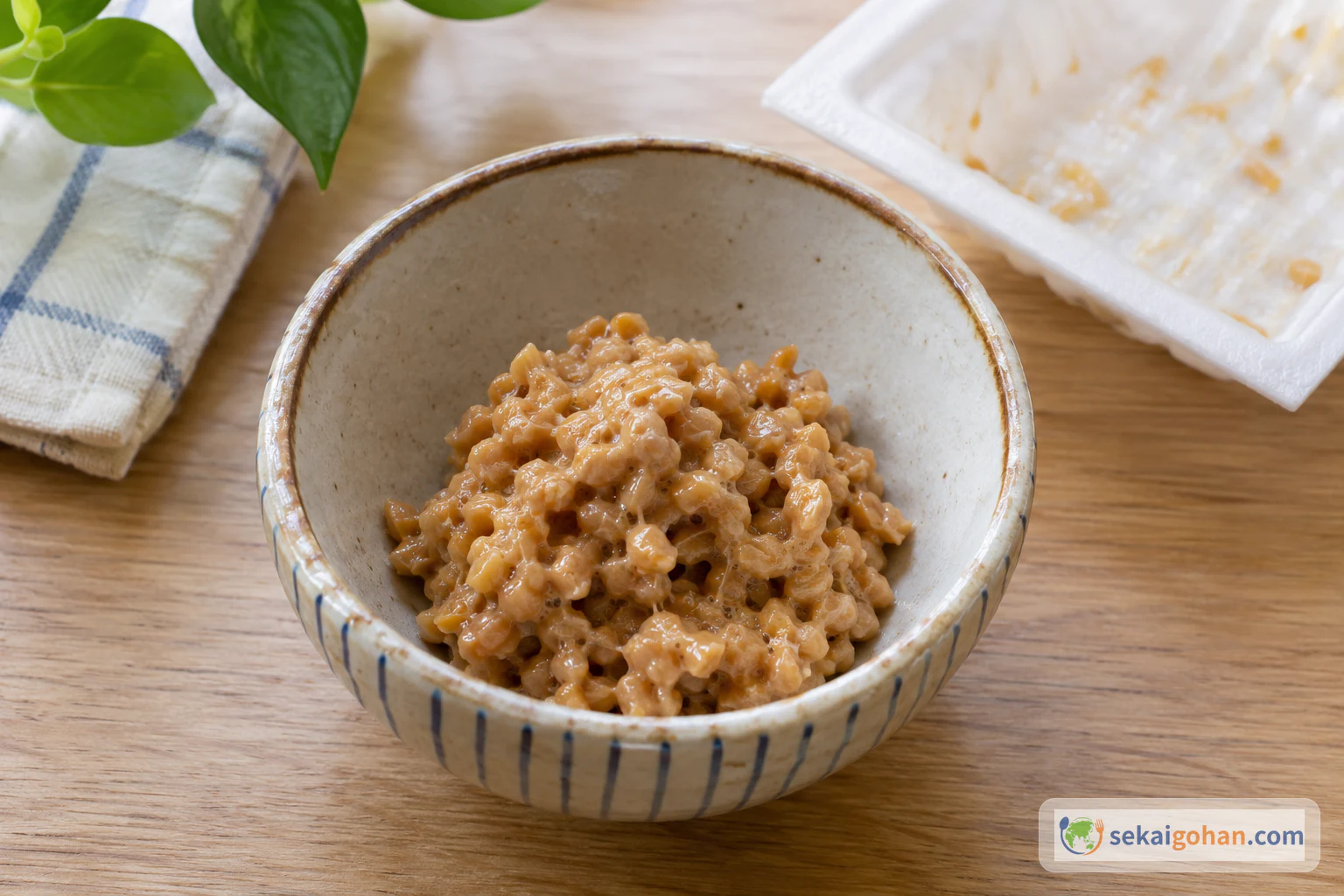
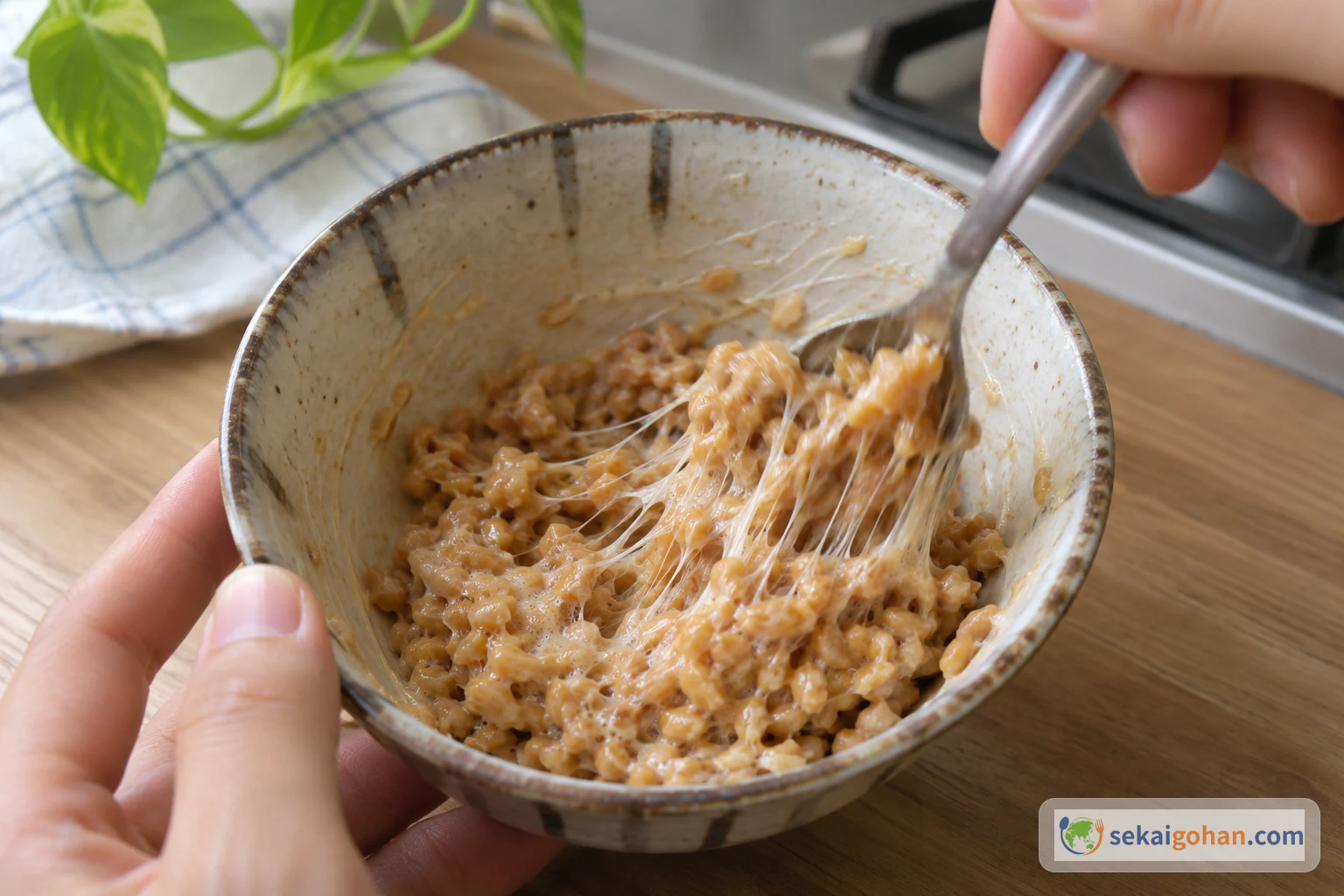
Lift a spoon out of a bowl of natto and fine, sticky threads stretch after it. Nattō is a Japanese food made from fermented soybeans and is available ready to eat. The whole-bean kind keeps each soybean intact. Hikiwari natto is made from chopped, split soybeans, so it comes as small irregular fragments.
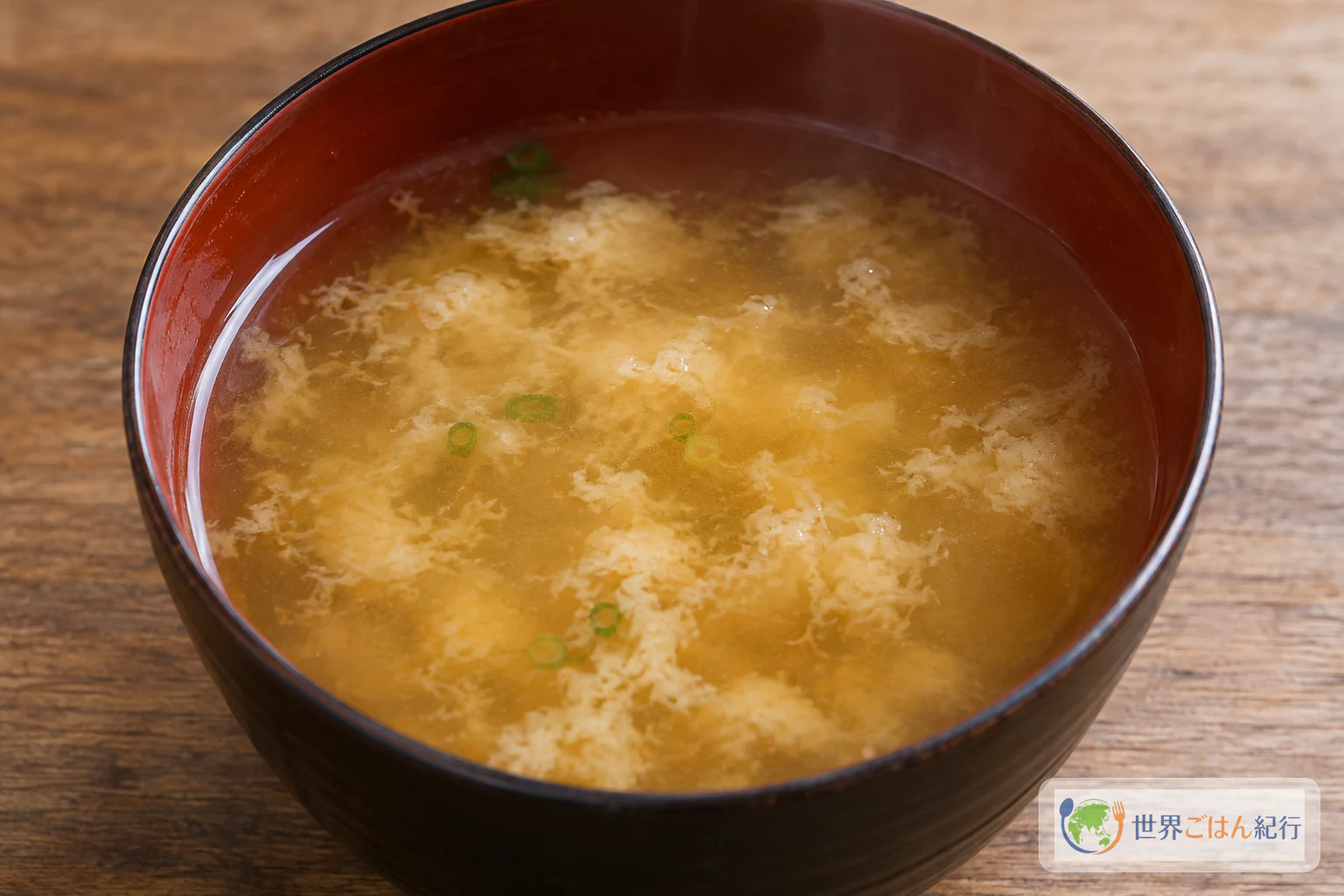
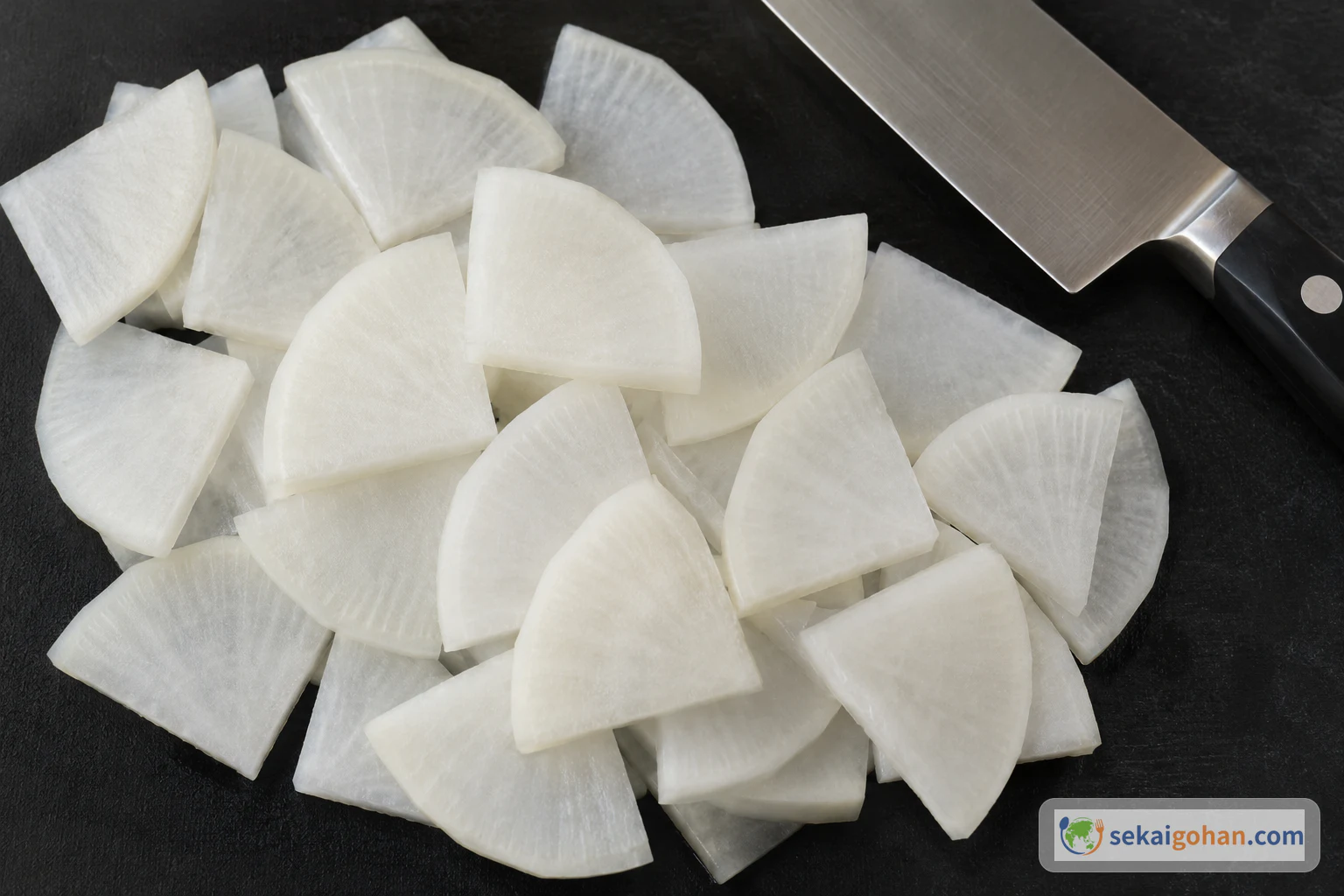
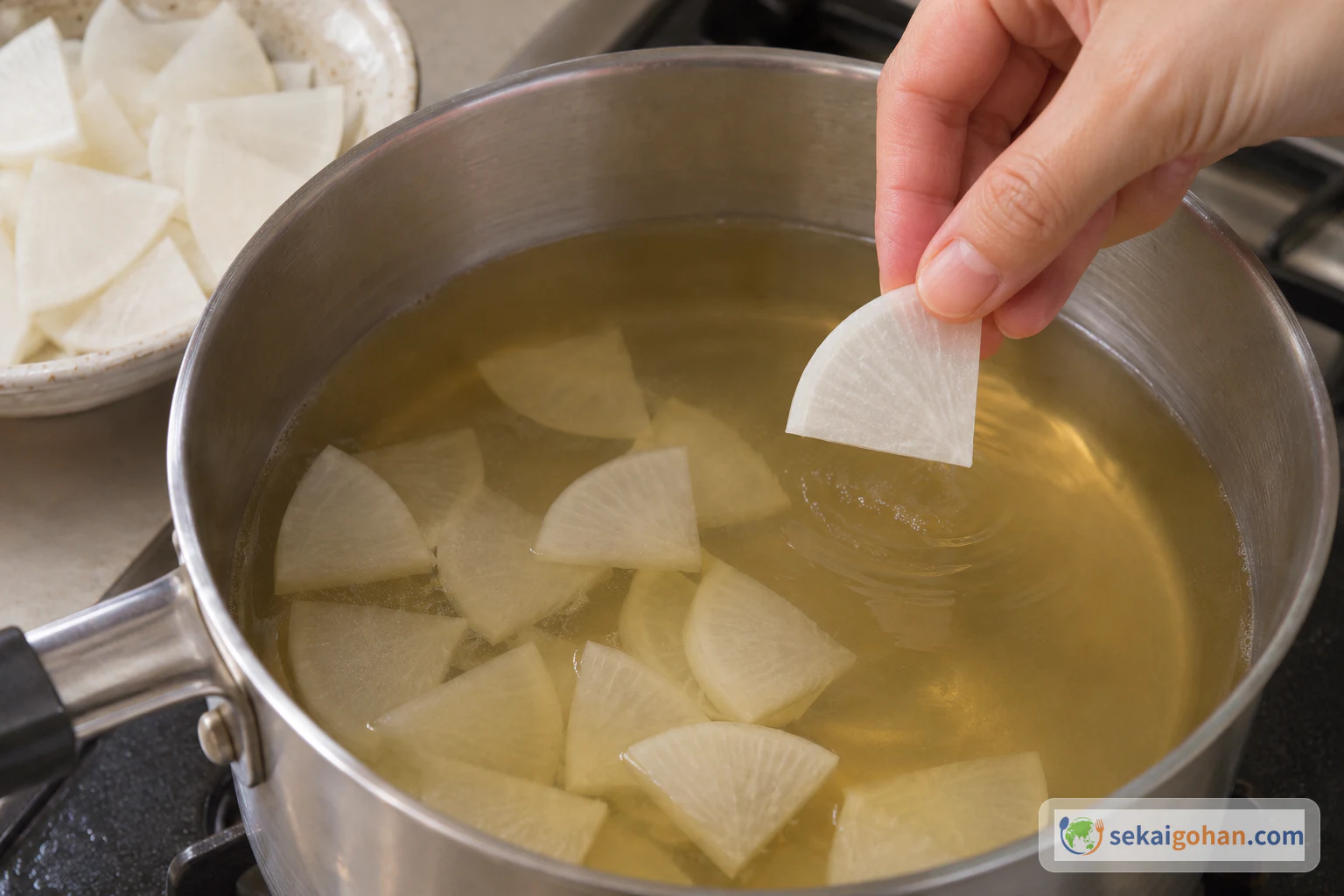
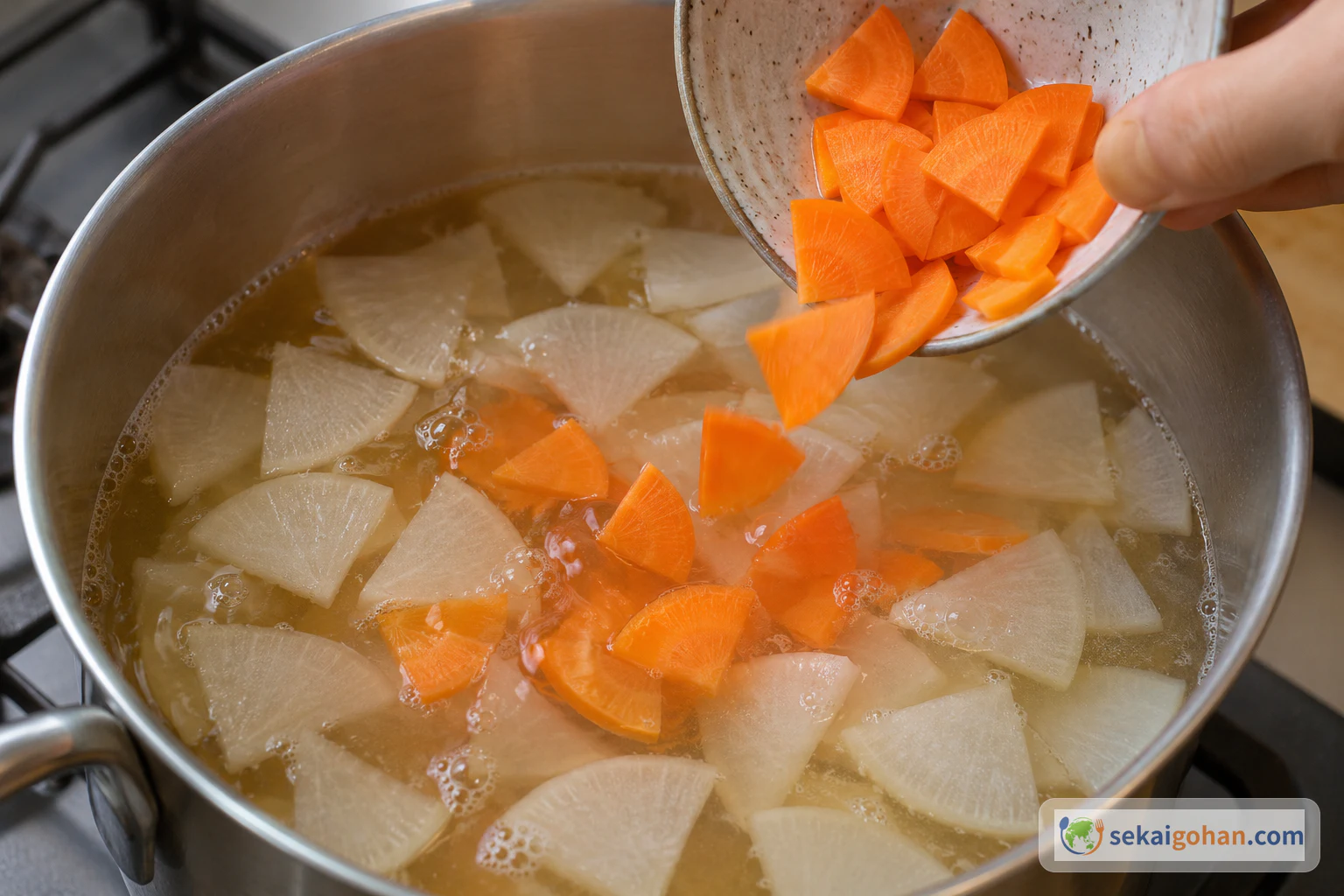
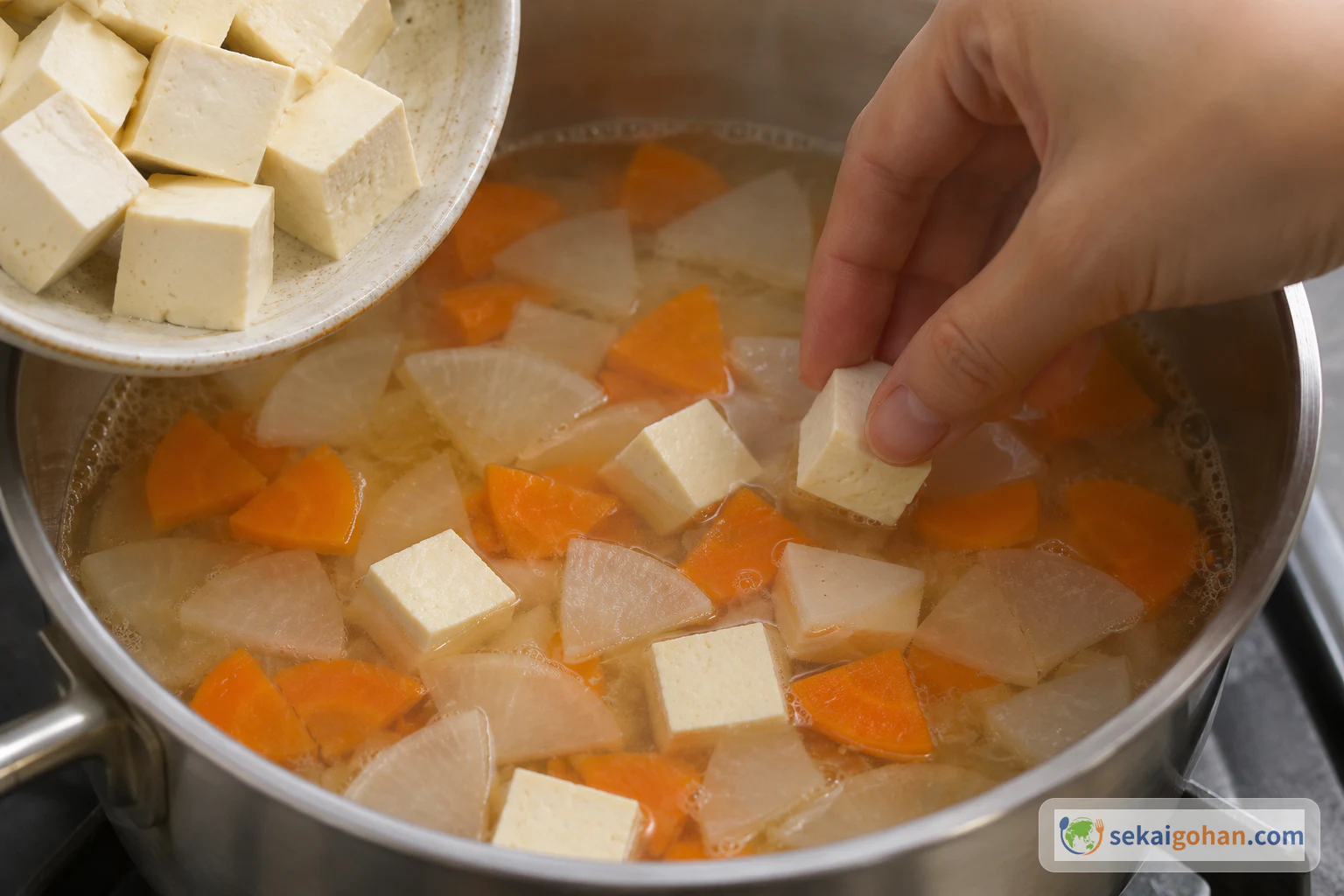
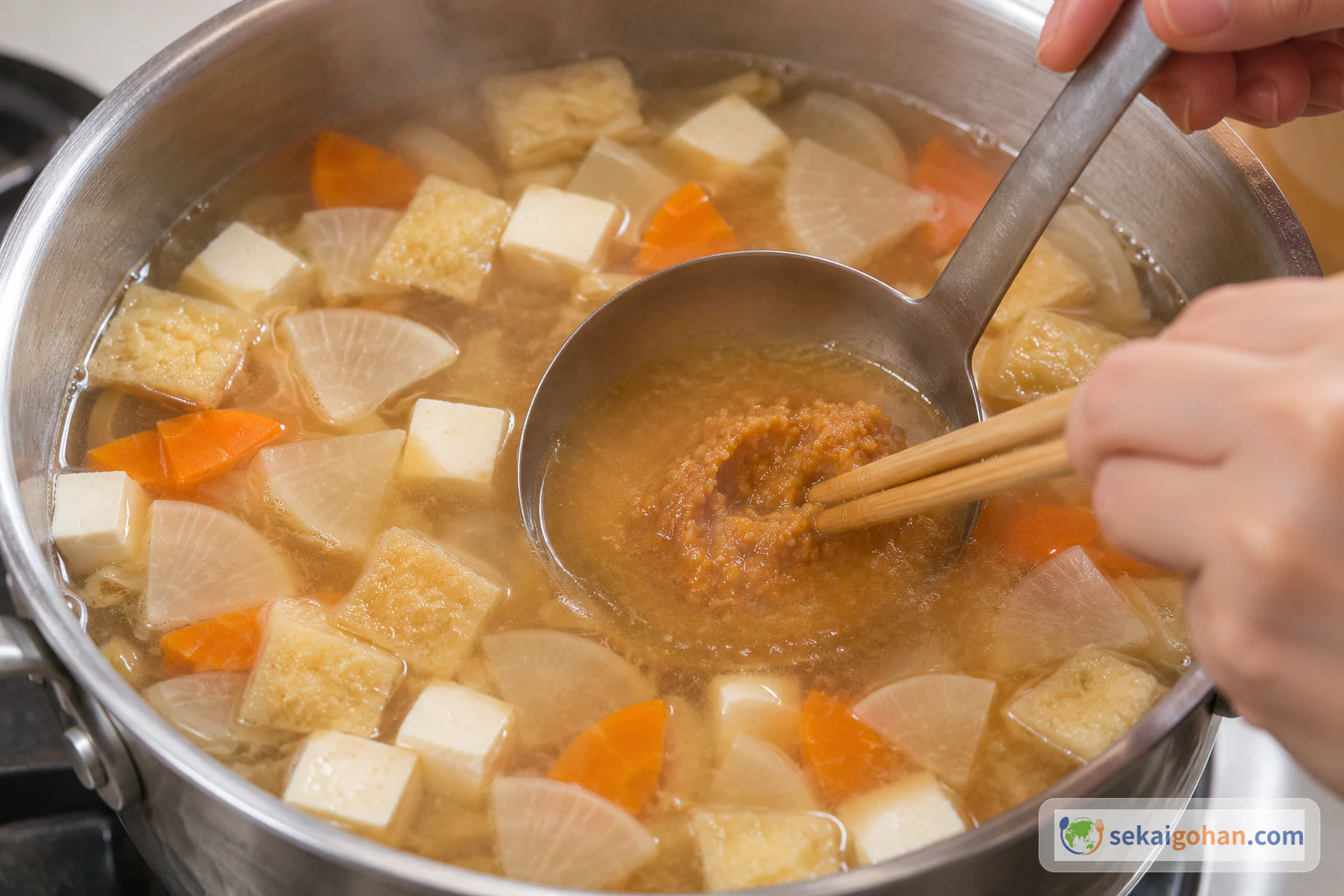
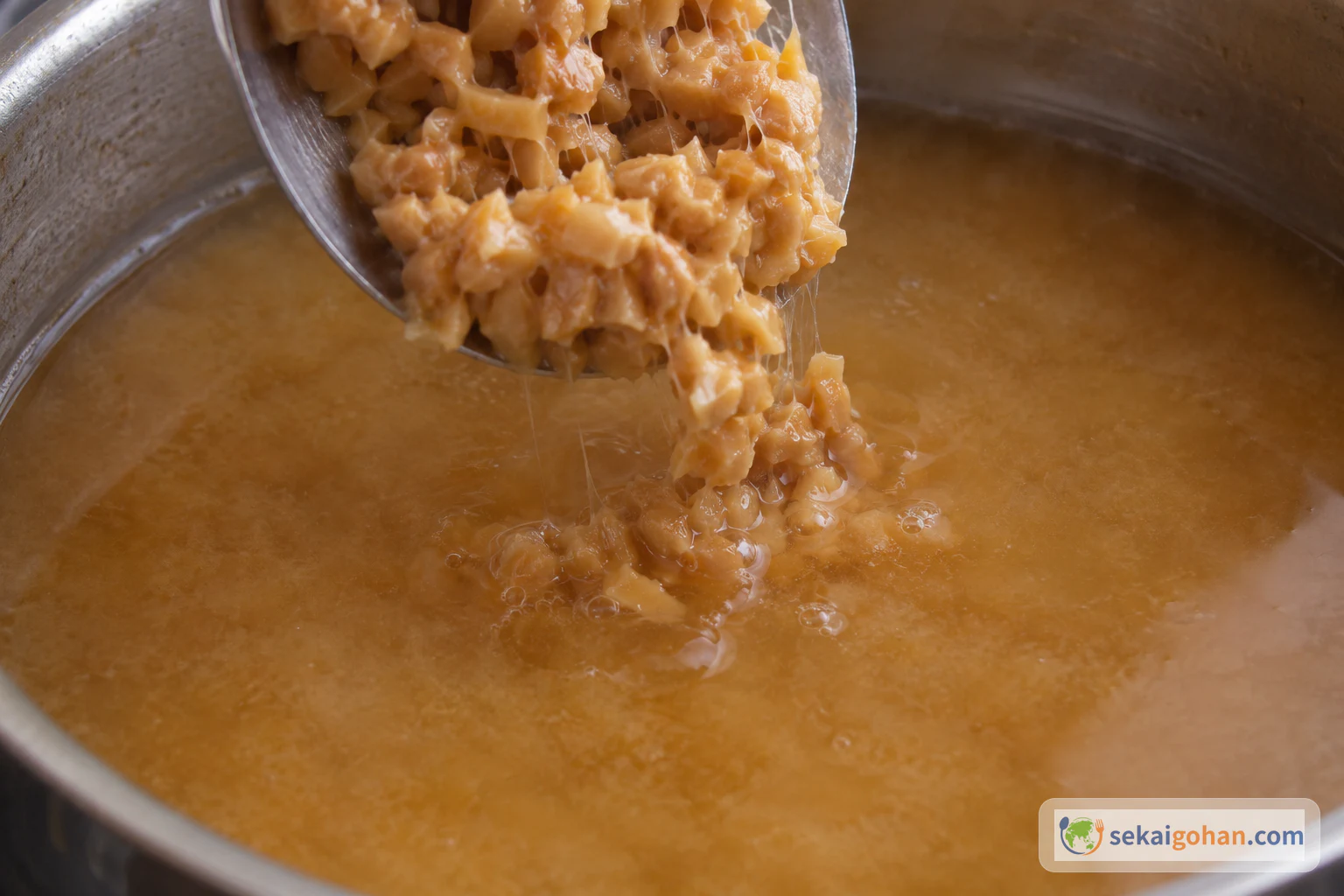
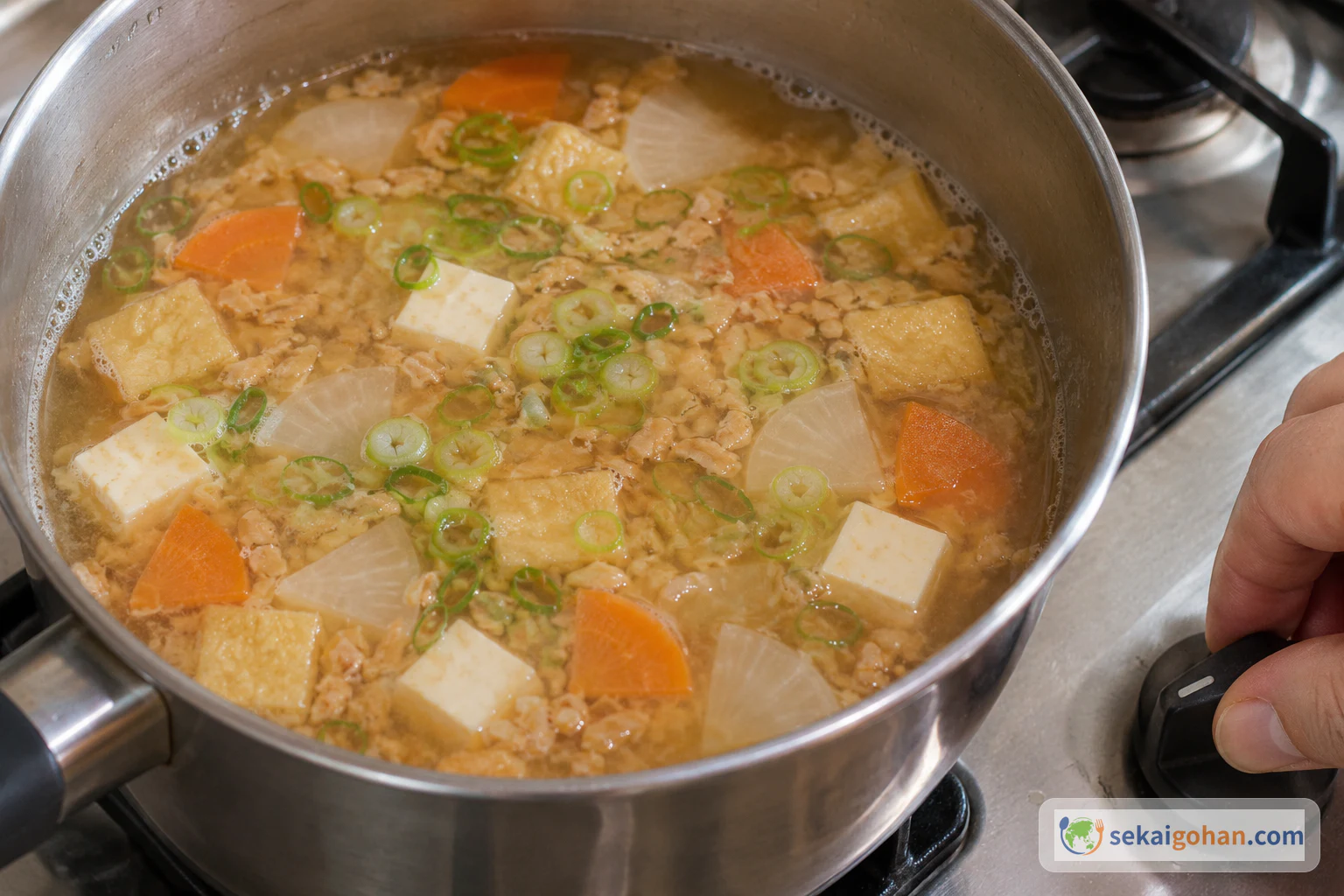
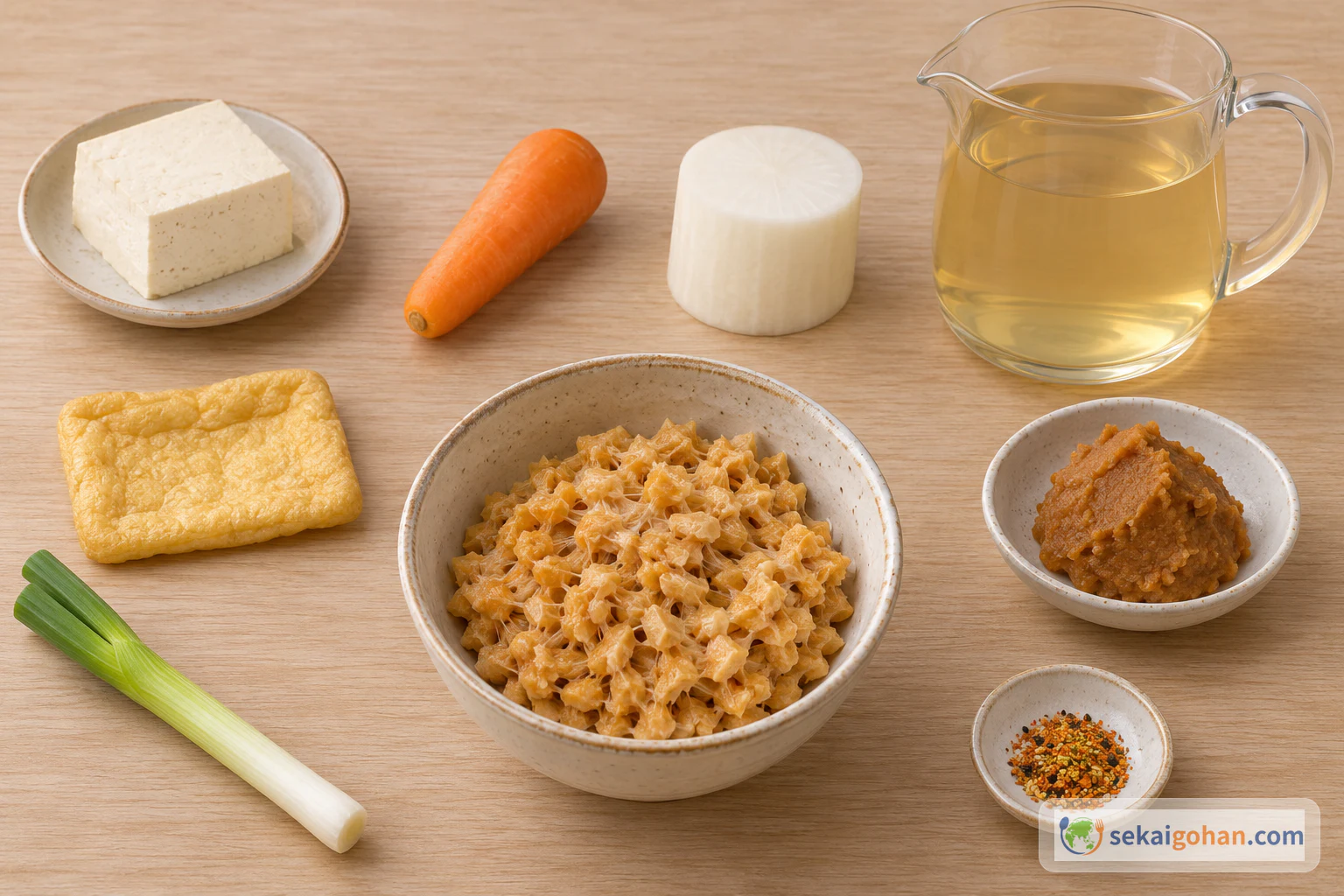
In Miyagi Prefecture, natto also goes into the soup pot. Japan's Ministry of Agriculture, Forestry and Fisheries (MAFF) publishes a natto soup for five in its guide to traditional Japanese foods, with the recipe provided by Makiko Takasawa. The soup uses store-bought hikiwari natto with tofu, carrot, daikon, aburaage, scallion and Sendai miso in dashi. The root vegetables are softened first, followed by the tofu and aburaage, then the miso. The well-stirred natto follows, and the scallion goes in just before the pot boils. The recipe below follows that example. Sekai Gohan has not kitchen-tested this recipe as a whole.
The method below gives no simmering times, temperatures or storage periods. You judge the vegetables by tenderness and the finish by the pot just before it boils. For more dishes from the same country, see Japan.
Stringy Natto and Temple Natto: Two Different Foods
Not every food called "natto" in Japan is the sticky, stringy kind. MAFF's classification of processed bean foods describes stringy natto (itohiki natto) as a food made from steamed soybeans and natto bacteria. It describes temple natto (tera natto) as a separate category, made with koji mold and salt water, that does not form threads. MAFF's own temple natto page likewise presents it as a different food from bacteria-fermented stringy natto. This article uses only the stringy kind, bought ready to eat.
Making natto commercially is an industrial process. The National Federation of Natto Cooperative Associations describes the factory stages as washing, soaking and steaming the soybeans, spraying on natto bacteria, filling the containers, fermenting, and then cooling and maturing. That is a description of commercial production, not a home fermentation method. This article does not cover making natto at home.
| Stringy natto (itohiki natto) | Temple natto (tera natto) | |
|---|---|---|
| Made with | Steamed soybeans and natto bacteria | Koji mold and salt water |
| Threads | Sticky threads | No threads |
| In this recipe | Yes, as store-bought hikiwari natto | Not used |
Natto Soup as One Miyagi Example

MAFF's Miyagi natto page presents natto soup as one local way of using natto. The same page also mentions eating it as natto rice and natto mochi. The soup is a cooked dish made with finished natto. It is neither the definition of natto nor a way of producing it.
Other regions have their own forms. MAFF's Ibaraki natto page describes local examples such as small-bean natto (kotsubu natto) and soboro natto. It also records an origin story for natto there, presented as a legend rather than established history. Those Ibaraki examples are separate from the Miyagi recipe and do not change its ingredients.
Ingredients for Miyagi Natto Soup (Serves 5)
Equipment
- Cutting board and knife
- Pot
- Ladle
- Small bowl and a spoon for stirring the natto
- Serving bowls
Choosing Natto, Miso and Dashi
Natto. Look for packs of hikiwari natto, the chopped kind. Whole-bean natto differs in bean shape and texture.
Sendai miso. Use Sendai miso. If you cannot find it, another miso can be used as an editorial substitute. It is not the same product, and the flavor of the soup will differ.
Dashi. Use the dashi you normally make or buy.
Natto, tofu, aburaage and miso are all soy foods. Check the labels on your natto, miso and dashi products for soy and any other allergens that matter to the people you are cooking for.
Method: Roots First, Natto After the Miso, Heat Off After the Scallion
Simmer the roots until tender. Add the tofu and aburaage, then dissolve the miso. Add the well-stirred natto, add the scallion just before the pot boils, and turn off the heat.
Troubleshooting: Keeping the Order Straight
| What happened | What to do |
|---|---|
| The carrot and daikon are still firm | Keep simmering before you add the tofu and aburaage. The roots should be tender first |
| The natto went into the pot as one sticky lump | Next time, stir it well in a small bowl first, and add it only after the miso is dissolved |
| You are not sure when to add the scallion | Watch for the moment just before the pot comes to a boil. Add the scallion then, and turn off the heat |
| You only have whole-bean natto | Choose hikiwari natto for this soup; whole-bean natto differs in bean shape and texture |
| You cannot find Sendai miso | Use another miso as a substitute and expect a different flavor |
Variations That Keep the Dish Recognizable
- Whole-bean and hikiwari natto. These differ in bean shape and texture; the Miyagi soup here uses hikiwari natto.
- A different miso. Sendai miso is what the recipe names. Any other miso changes the flavor, so treat it as a substitute rather than the same soup.
- With or without shichimi. The chili blend is optional, sprinkled on after serving.
- Natto off the stove. MAFF's Miyagi page also mentions natto rice and natto mochi. Its Ibaraki page describes small-bean natto and soboro natto. Natto is far from only a soup ingredient.
Frequently Asked Questions
Are nattō and temple natto the same thing?
No. MAFF's classification of processed bean foods describes stringy natto as steamed soybeans with natto bacteria. Temple natto (tera natto) is made with koji mold and salt water and does not form threads. MAFF's temple natto page also presents it as a different food. This recipe uses stringy hikiwari natto.
Is this a recipe for making natto?
No. The soup uses ready-to-eat natto bought from a shop. The National Federation of Natto Cooperative Associations describes how natto is produced commercially, but that is factory production, not a home method. This article does not cover making natto yourself.
When does the natto go in?
After the tofu and aburaage are in and the miso is dissolved. Stir the natto well in a small bowl first, then add it to the pot.
When do I turn off the heat?
Add the scallion just before the soup comes to a boil, then turn off the heat.
Does the recipe give simmering times, temperatures or storage periods?
No. MAFF's Miyagi recipe gives no cooking times, temperatures or storage guidance, and this article does not add any. Simmer the root vegetables until they are tender. Use the moment just before the boil as the cue for the scallion and for turning off the heat.
How big is a "cup" of dashi, and how much does half a block of tofu weigh?
MAFF's recipe gives the dashi as 5 cups and the tofu as 1/2 block, without stating a cup volume or a tofu weight. They are kept that way here.
What does the 0.8% next to the miso mean?
MAFF's recipe page shows a 0.8% figure in parentheses with the miso entry, but it is not clear what that figure refers to. Do not read it as the salt content of the miso itself, and do not use it to calculate salt or nutrition.
Sources
- Ministry of Agriculture, Forestry and Fisheries (MAFF), "Natto (Miyagi Prefecture)," Nippon Traditional Food Guide. The natto soup for 5 using store-bought hikiwari natto (recipe by Makiko Takasawa): ingredients, cuts and order of additions, plus local ways of eating natto such as natto rice and natto mochi. https://www.maff.go.jp/j/keikaku/syokubunka/traditional-foods/menu/nattou_miyagi.html
- National Federation of Natto Cooperative Associations, Natto PR Center, "How Natto Is Made." The stages of commercial natto production. Not a home fermentation method. https://www.natto.or.jp/make/
- Ministry of Agriculture, Forestry and Fisheries (MAFF), "Natto (Ibaraki Prefecture)," Nippon Traditional Food Guide. Regional examples such as small-bean natto and soboro natto, and an origin story recorded as legend. https://www.maff.go.jp/j/keikaku/syokubunka/traditional-foods/menu/natto_ibaraki.html
- Ministry of Agriculture, Forestry and Fisheries (MAFF), "Classification of Processed Bean Foods." Stringy natto as steamed soybeans with natto bacteria. Temple natto as a separate, non-stringy food made with koji mold and salt water. https://www.maff.go.jp/j/keikaku/syokubunka/traditional-foods/bunrui/mamerui-kakou.html
- Ministry of Agriculture, Forestry and Fisheries (MAFF), "Tera Natto (Temple Natto)." Temple natto described as a different food from bacteria-fermented stringy natto. https://www.maff.go.jp/j/keikaku/syokubunka/traditional-foods/menu/tera_natto.html