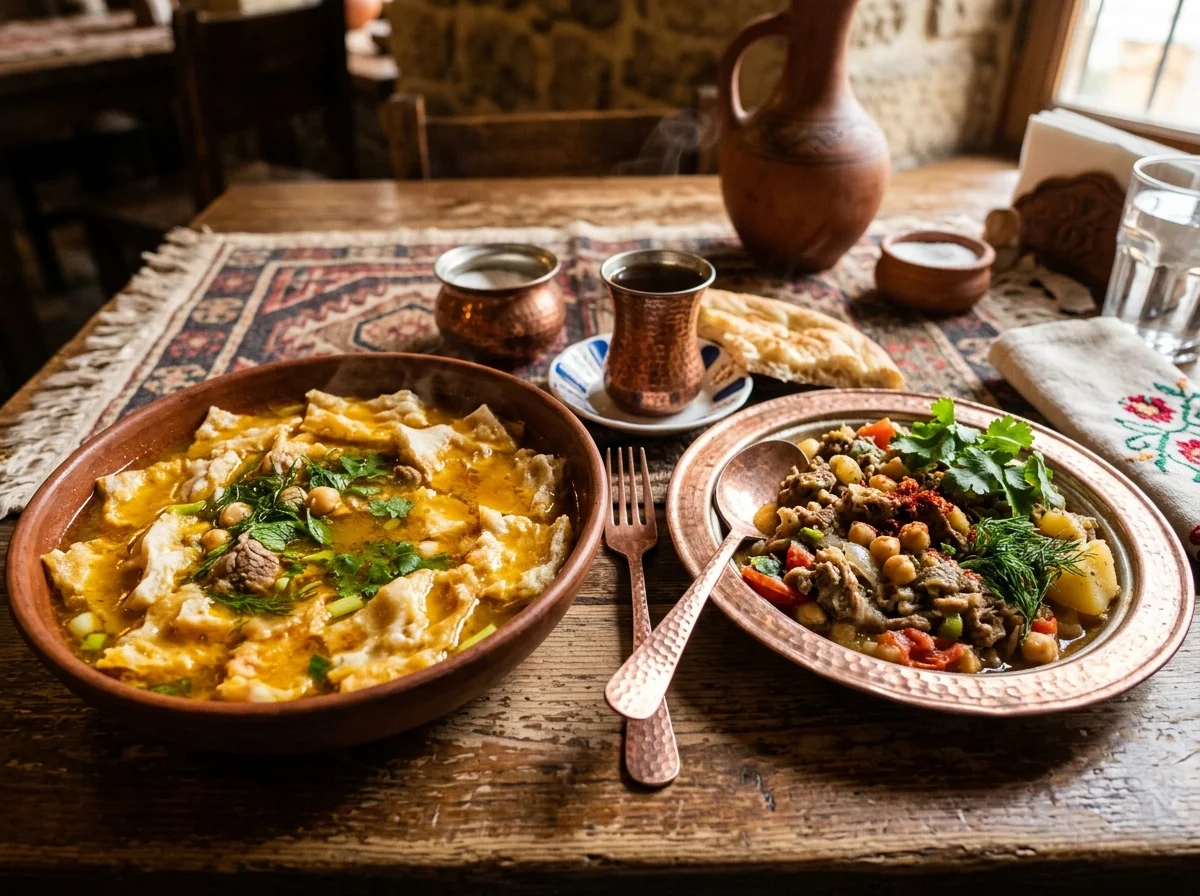
The golden broth first, the lamb and beans after
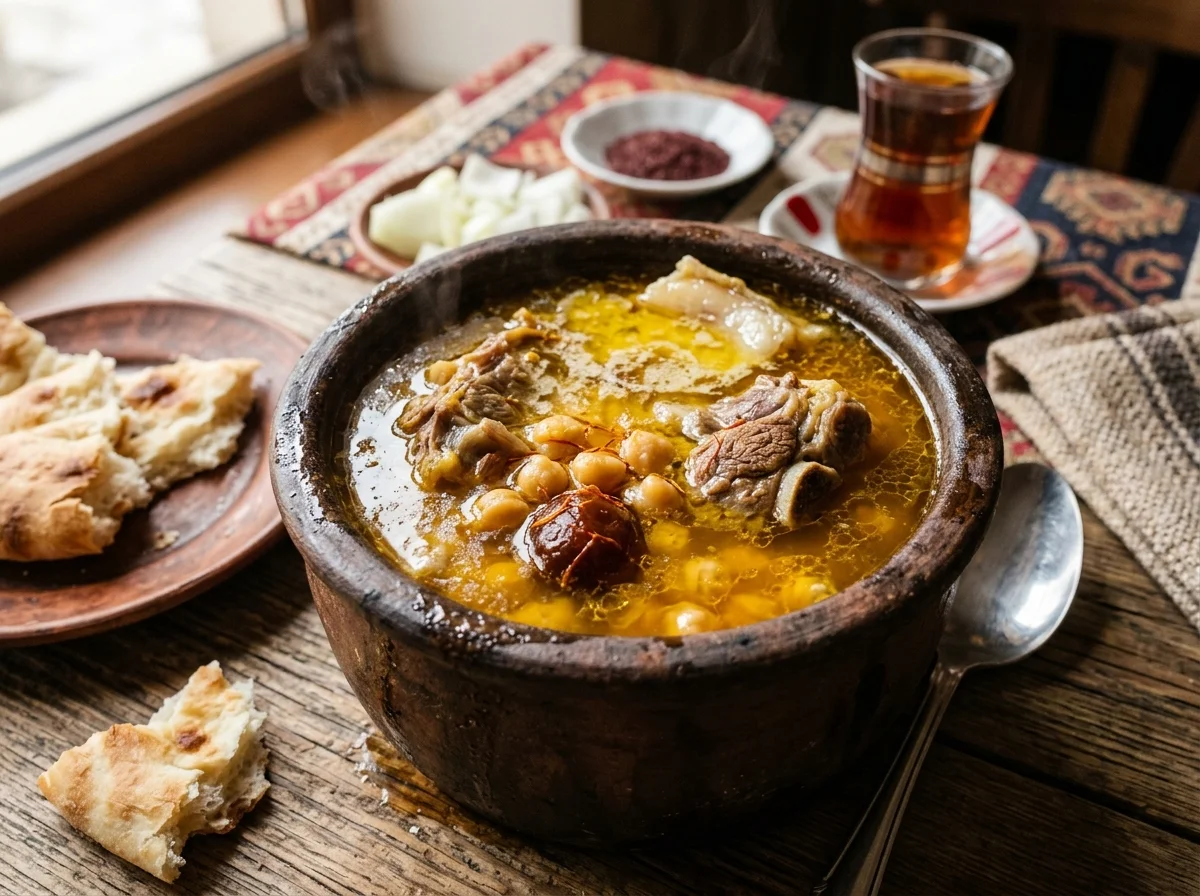
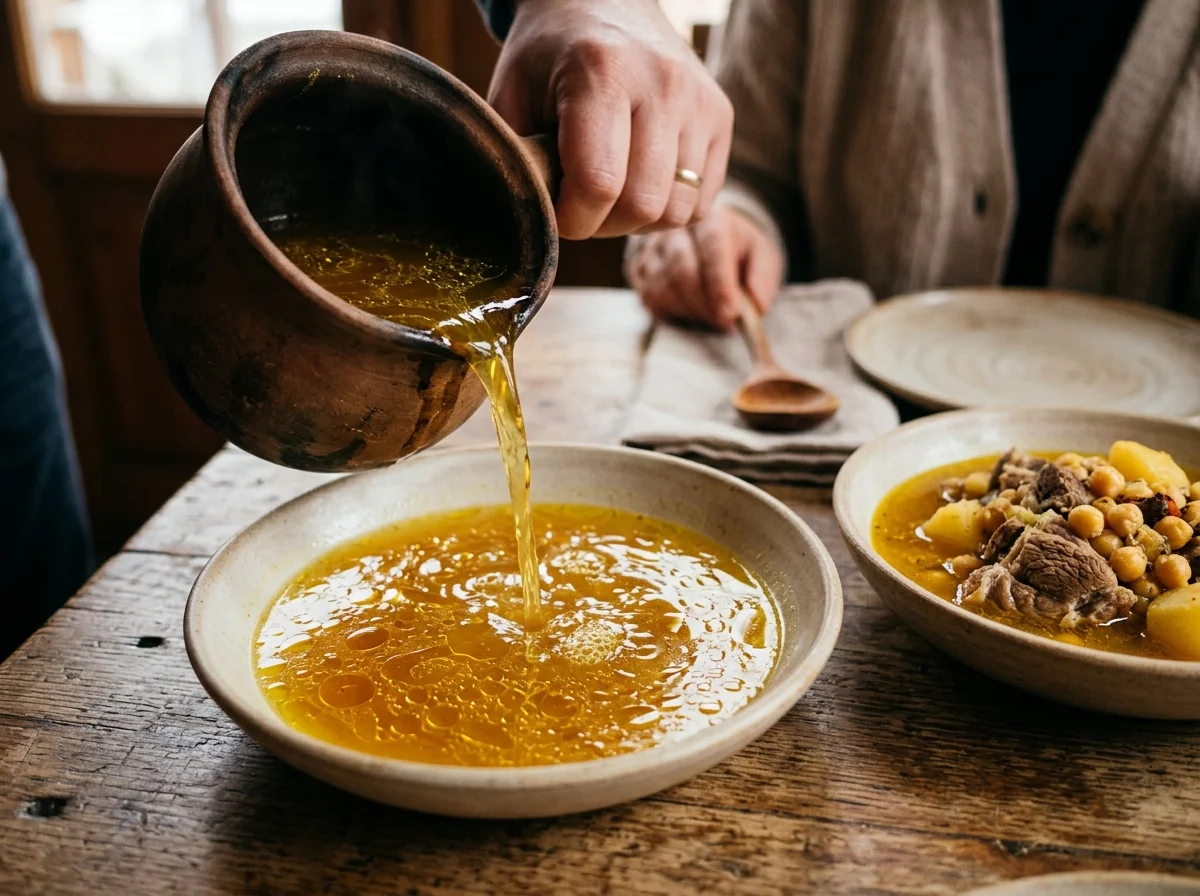
Lift the lid and, beneath a golden broth with lamb fat floating on it, chickpeas and meat appear. First you tear bread and dunk it in the broth, then you coarsely mash what's left in the pot. This order is part of what makes piti one dish in a single pot.
Piti, the specialty of Sheki in northwestern Azerbaijan, is a dish of lamb and chickpeas stewed slowly in a clay pot. Saffron is used not just to add color but to move a dry floral aroma into the fatty broth. A small amount of sour dried plum ties together the sweet fat of the lamb and the floury flavor of the beans.
What's easy to get wrong at home isn't the number of ingredients. It's keeping the broth from getting too thick, not letting the solids fall apart, and carrying through to the two-stage way of eating. Rather than adding tomatoes or garlic to strengthen the flavor, keeping the order of meat fat, beans, sourness and saffron gets you closer to a Sheki plate.
You can make it without a clay pot, in a tightly lidded ovenproof cocotte or a heavy pot. Individual pots let you serve one portion each at the table, but even in one large pot you can reproduce the two-stage service. If you also want to try a dish that wraps meat or herbs in a thin dough, putting qutab (in Japanese), also from Azerbaijan, beside it makes a flour-based table different from the stew.
Tourist guides to Sheki describe piti as the town's specialty, served in a clay pot and eaten in two stages. What is inscribed as a World Heritage Site is not piti itself but the Historic Centre of Sheki with the Khan's Palace. Treat the dish's cultural background and the World Heritage listing as separate matters.
What one pot from Sheki tells us about the table and the region
Sheki lies at the foot of the Greater Caucasus, and its historic center was shaped by old trade routes and the production and distribution of silk. UNESCO's recognition is not only for the town's buildings. It is for the structure of a "town where people live and produce," combining a system that distributes mountain water to houses and gardens, gardens that include mulberry trees, and merchants' houses and caravanserais. Even when picturing piti eaten from an individual pot, it comes closer to the real thing to include the house garden and the market and the time spent around a long stew, rather than isolating the dish.
The Azerbaijan state registry entry on piti lists lamb, chickpeas, onion, tail fat, saffron, dried mint, salt, pepper, and fresh or dried sour plums. Piti is recorded as a dish cooked over low heat in a special earthenware vessel, with the broth and the solids eaten separately. Rather than forcing a home dish into a single fixed recipe, it reads as having a shared axis in how fat and sourness are placed.

Individual pots in Sheki, family pots in Ganja
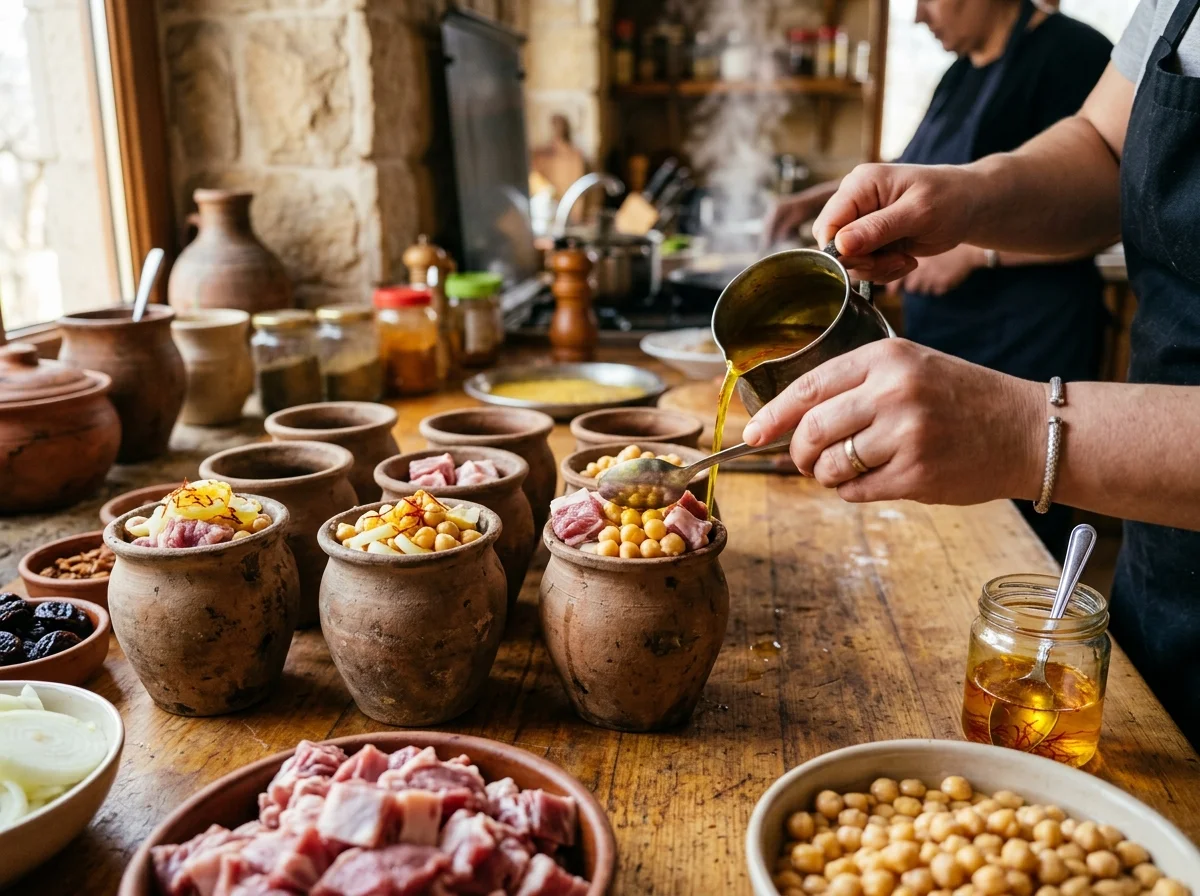
The piti presented to visitors in Sheki is notable for being served in a one-portion clay pot, with the broth and solids enjoyed in two stages. On the other hand, the state registry entry also records that in Ganja a "family piti" was once made in a large clay pot for five to eight people. Because of this regional difference, you can't declare the individual pot the only "authentic" form.
The seasonal ingredients vary too. In the registry and an English-language recipe by an Azerbaijani chef, small sour plums, dried mint and saffron are treated as the basic combination, and examples of adding chestnuts, quince or tomato by season are shown. Dried prunes, widely sold elsewhere, are easy to find but taste sweet before sour. Rather than treating them as identical from the start, it's safer to reduce the amount and make up the sourness at the table with sumac or lemon.
The culinary researcher Tahir Amiraslanov, who examined sources from the 9th to 12th centuries, explains that the piti recorded then was not the same as today's. A dish having an old name doesn't mean you can project today's combination of lamb and chickpeas onto the Middle Ages. Rather than stacking claims to make the history look long, it's more honest to set out the way it's made in the region now alongside how it differs from the past.
| Region or setting | Notable features | Judgment for recreating it at home |
|---|---|---|
| Sheki's specialty dish | Individual clay pots, broth and solids eaten in two stages | Finish one portion each in four ovenproof containers |
| Ganja family pot | Large clay pot for five to eight, served to the family | Combine in a heavy 2.5–3 L pot and portion out at the table |
| Seasonal piti | Examples that add chestnuts, quince, tomato and others | Make the base first, add just one thing and check sourness and sweetness |
| Iranian abgoosht | Belongs to a similar lineage of stews but is not the same dish | Don't confuse "piti-style" with abgoosht |
What to keep and what you can replace
The ingredients that build piti's flavor are these five. Lamb fat is the base, chickpeas give body, saffron gives aroma, sour plums give the aftertaste, and bread and sumac shape the outline at the table. When you replace any of them, decide what you lose and what you keep in exchange.
| Flavor axis | Role locally | Choice at home | What changes |
|---|---|---|---|
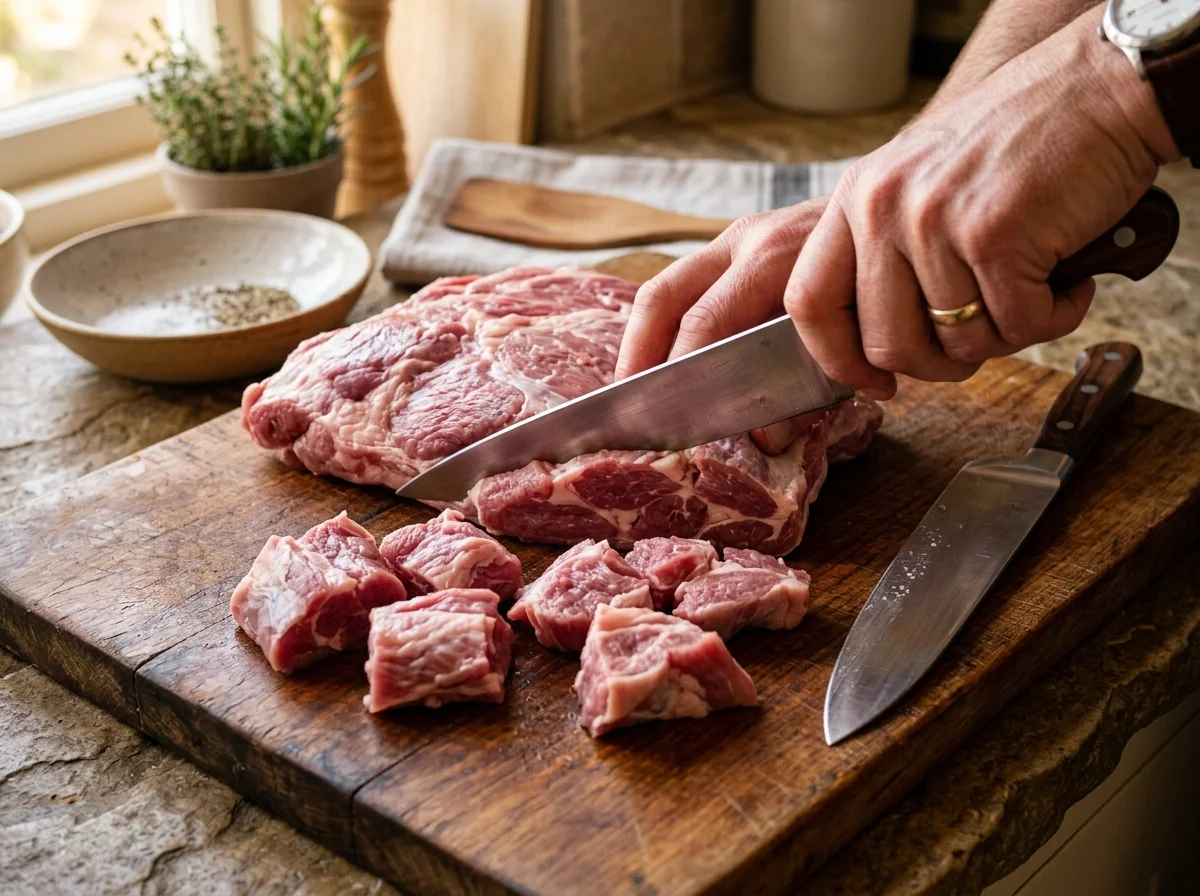
| Lamb shoulder | Passes fat and meat aroma into the broth | Lamb shoulder in 3–4 cm cubes | Switching to beef shank loses the lamb aroma and makes the broth heavier |
| Tail fat or lamb fat | Gives roundness to the broth even in small amounts | Leave the fat on the shoulder. If short, use a little tail fat | Vegetable oil alone makes the meat aroma and mouthfeel lighter |
| Dried plum | Sourness that tightens lamb fat | Dried alycha if you have it; otherwise half the amount in prunes | Prunes are sweet, so add sumac at the table |
| Saffron | Golden color and dry floral aroma | Steep the threads in hot water before adding | Turmeric substitutes for color only; the aroma doesn't carry over |
| Clay pot | Receives gentle heat and is served in the vessel | An ovenproof cocotte or heavy pot | The look of the vessel changes, but keeping the lid on and the heat gentle brings the texture close |
Choose saffron for aroma, not color
If you leave out the saffron and use turmeric alone, the broth turns yellow but the dry floral aroma when you lift the lid doesn't appear. You need only a little, and even if you make piti once, choose saffron threads if you want aroma to be the star. The best reason to buy it is that you plan to use it in paella, saffron rice or Iranian tahchin (in Japanese) and can use up 1 g. If you only want to color it once, or aroma isn't essential, you can skip saffron and switch to a "piti-style" dish built around dried plum and sumac. In that case, don't present it as tasting the same as the saffron version; accept that the aromatic axis has changed.
Ingredients (serves 4)
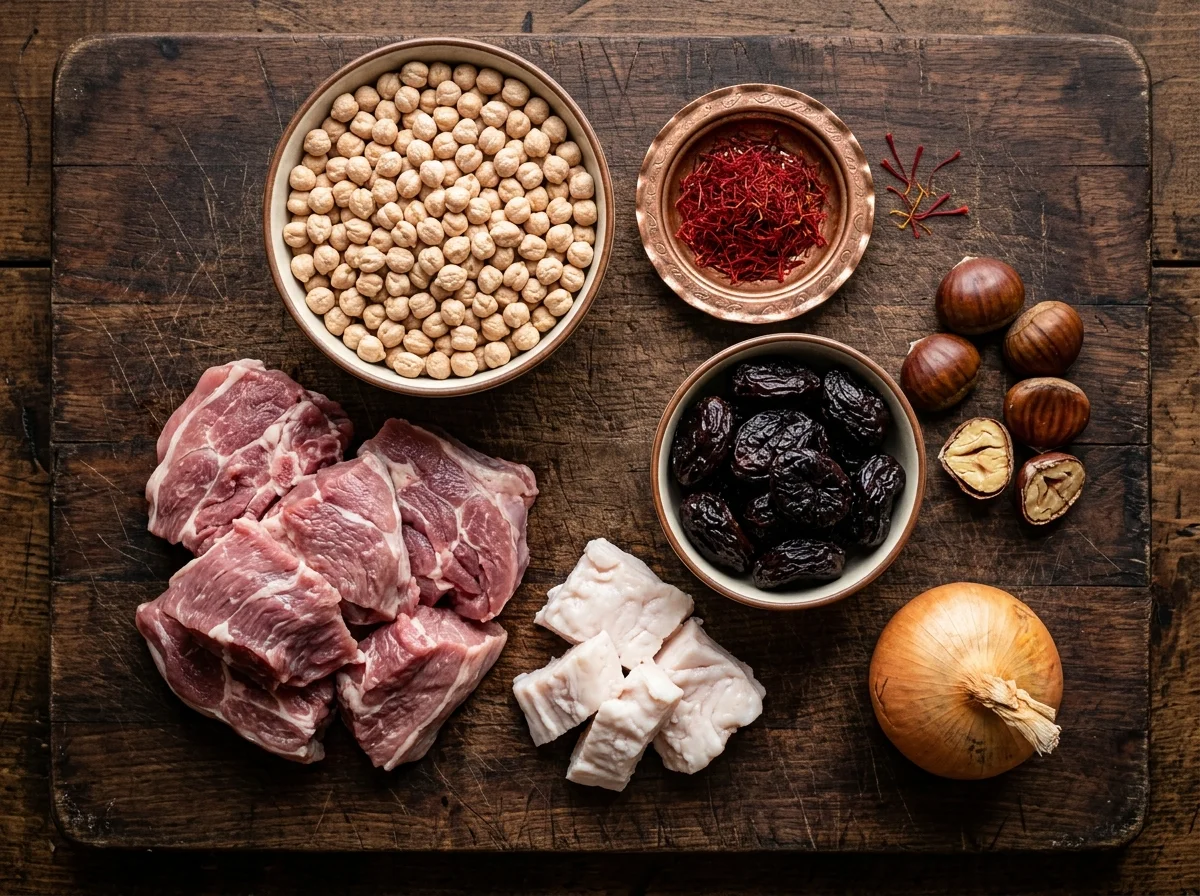
This uses lamb, chickpeas, dried fruit, sumac and bread as a side. Bread contains wheat, so if you need to avoid it, check the labeling and switch to a wheat-free one. Dried fruit and imported spices have different preservative and ingredient labeling by product. If you replace the chickpeas with another bean, don't treat it as the same; check how it holds up in cooking and its allergen labeling.
Dried chickpeas need soaking from the night before, but the bean aroma goes into the broth and they give a floury texture when mashed. Canned is good for weekdays, but the skins split easily if cooked long, so rather than putting them in the pot from the start, add them in the second half with the potatoes.
Judging doneness: check the broth, beans and meat separately
Piti is a dish where you stew ingredients until soft, but if you mix everything together and then decide the flavor, it becomes hard to adjust. When it's finished, look at these three separately.
| What to look at | Finished state | If it's not there yet |
|---|---|---|
| Broth | A clear yellow with a thin layer of fat on the surface | If watery, remove the lid and reduce 10 minutes; check the concentration before adding salt |
| Lamb | The fibers come apart when pressed with a fork | Put the lid back, add a little boiling water and extend 20–30 minutes |
| Chickpeas | Crush through to the center when pressed with a finger or spoon | If hard, cover and extend the heating without breaking up the meat |
| Potatoes | No core in the center and the outside hasn't dissolved into the broth | Stop the heat while they still hold shape and finish with residual heat |
| Dried plum | The skin swells and a little sourness has moved into the broth | If sweetness is strong, use less next time and add sumac on the plate |
The broth is thin or too little
If the broth is like water with weak fat and aroma, you may have added too much water at the start. Without removing the ingredients, remove the lid and heat in a 150°C (300°F) oven for 10–15 minutes, to return to a concentration where the surface quivers lightly. Adding salt first just hides thinness with saltiness. If the broth is too little, add 50 ml boiling water and a little saffron water, put the lid back and rest for 10 minutes before tasting.
The beans are hard but the meat is soft
Cooking time changes with insufficient soaking, the harvest season of the beans and the temperature difference of the vessel. Take out only the meat and soak it in a little broth so it doesn't dry out, then add boiling water to the beans and remaining broth and cover. Extend 30 minutes at a time at 150°C (300°F) and return the meat once the bean centers are no longer chalky. Adding baking soda to soften them quickly changes the flavor of the broth and the shape of the beans, so this recipe doesn't use it.
The lamb smell is strong
You don't need to remove all the fat, but trim thick subcutaneous fat and any bloody parts. Covering it with garlic or chile shifts the axis of piti's aroma, so first reduce the fat on the shoulder slightly and adjust the sourness of dried plum and sumac. Soaking a little broth into bread as you eat spreads out the heaviness of the fat.
The dried plums are too sweet
Dried prunes are sweeter than sour alycha, so don't swap them in at the same amount from the start. Keep to about 45 g for 4 servings and sprinkle sumac at the table. If it has already turned sweet, don't pour a lot of lemon juice into the broth; add a few drops at a time to the portions on the plate. Acid added to the whole pot of broth sharpens even the fat of the meat and the aroma of the saffron.
The clay pot cracked or leaks
If you notice a crack or a leak during heating, turn off the heat and don't move the vessel forcibly. If the food can be moved to another pot, move it into an ovenproof pot and continue heating, but if bits of clay or fragments got into the broth, don't eat it and discard it. Next time, check the heat-resistant marking, sudden temperature differences and whether it was heated empty.
Once the piti is done, after setting aside what you'll eat, move the rest to a shallow container and let it cool slightly. Don't leave it at room temperature for long; plan to eat it within 3 days in the refrigerator. Reheat in a pot until bubbling through to the center, and add the bread, onion and sumac just before eating. If freezing, separate the broth and solids, plan on about 2 weeks, and heat it thoroughly once after thawing.
Choose the saffron-crushing tool by how often you'll use it
Saffron can be used just by steeping it in hot water, but lightly crushing the threads with a pinch of sugar makes it easier to divide the aroma among four pots. A mortar is an aid for this and not a condition for making piti. The case for buying one is that you regularly handle black pepper, dried mint, dried chile and other spices as well as saffron, and have a place to keep a heavy vessel.
If you make piti only once, or already have a mortar, you can go without buying one by lightly crushing the saffron with a rolling pin through a bag, or loosening it with your fingers and moving it to the hot water.
Six variations that preserve the regional range
Make sourness central with dried alycha
If you can find dried alycha or small sour plums, use 60 g for 4 servings. They are less sweet than prunes and bring a thin sourness against the lamb fat. Adding a lot of the soaking liquid as is can muddy the flavor, so rinse the surface quickly and add only the fruit. If they have pits, remove them before eating.
Add just one of chestnut, quince or tomato
To try seasonal additions, choose one of 100 g peeled chestnuts, 1/2 quince, or 1 small tomato. Reducing the potatoes slightly and adding them in the second half keeps the amount of broth and sweetness from changing much. Increasing chestnuts and prunes at the same time stacks up sweetness, so limit the first try to one change.
Lean toward Ganja's family pot
Instead of individual containers, stew everything together in a heavy 2.5–3 L pot. You can make it with the ingredients as they are, but widen the base of the pot so the ingredients don't pile up, and extend the stewing time by 20–30 minutes. At the table, serve the broth first into deep bowls, move the solids to a platter and let each person take them with bread. You lose the look of individual pots but keep the regional difference of a family pot.
Make it on weekdays with canned beans
On days you can't spare time to soak dried beans, use 480 g drained weight of canned chickpeas, and stew only the lamb and onion for the first 90 minutes. Add the beans at the same time as the potatoes, dried plums and saffron water, and stop in about 60 minutes while the beans still hold their shape. The bean aroma that goes into the broth is lighter than with dried beans, so serving a smaller first bowl for dunking bread keeps the flavor from blurring.
Use beef shank to avoid lamb
If you don't like lamb, you can switch to 700 g beef shank. But this is not a substitute that keeps piti's aroma; it's a beef version that keeps the way of eating from a pot stew. Beef shank takes a long time for the sinew to soften, so if it's still tough at 3 hours, extend 30 minutes at a time and reduce the plums slightly. Keeping the saffron and sumac keeps the dish's outline from blurring even with beef.
Make a sour pot stew without saffron
If you won't buy a highly aromatic spice, leave out the saffron and use dried plum and sumac. The color of the broth is paler, but the structure of lamb, beans, sourness and bread eaten in two stages remains. If you add turmeric to turn it yellow, keep it to 1/4 tsp and don't expect the same aroma as with saffron.
Completing piti at the table
Piti isn't a dish whose flavor is settled inside the pot alone. Setting out the combination that appears in Sheki's guides and the state registry (deep bowls, bread, sumac and peeled onion) shows why the broth and the solids are separated.
| Order served | What goes on the plate | Key to eating it |
|---|---|---|
| 1 | Broth, bread, a little sumac | Dunk the bread in the broth and taste the fat and saffron aroma first |
| 2 | The pot's meat, beans, potatoes | Mash coarsely and set on bread. Don't make a complete paste |
| 3 | Onion, herbs, extra sumac | Use heat and sourness to adjust the heaviness and sweetness of the fat |
If the onion is too pungent, soak the wedges briefly in water and pat dry. Sumac goes on the plate rather than in the stew pot in large amounts, so the sourness doesn't cover the saffron aroma. If the bread is thick and absorbs little broth, tear it small and dunk it in a deep bowl a little at a time.
To add one more dish to the Caucasian table, Georgian khachapuri (in Japanese), baked bread wrapped around herbs and cheese, or Azerbaijani shah plov (in Japanese), which carries saffron into rice, are candidates. There's no need to bring them toward the flavor of piti; the pairing sets the texture of flour or rice against the bean-and-lamb broth.
FAQ
Q1. Is it still piti without a clay pot?
Yes. You can make it in individual ovenproof cocottes or a heavy pot with a tight lid. The atmosphere of serving one portion in a clay pot changes, but the steps of softening meat and beans under a lid at low temperature and separating the broth from the solids remain. Don't use ordinary mugs or vessels without a heat-resistance marking, which may crack.
Q2. How many hours should I soak dried chickpeas?
Soak for 8–12 hours as a guide, until the beans swell to about double. In warm weather, soak in the refrigerator, and the next day drain and rinse. Beans that are still hard in the center after soaking should be heated extra before the other ingredients go in. If you switch to canned, adding them in the second half keeps the skins from breaking down.
Q3. Can I substitute turmeric for saffron?
For color alone, yes, but you can't reproduce the aroma of saffron. If you use turmeric, start from about 1/4 tsp, and thinking of the dish as "piti-style" lets you take the difference in taste correctly. If you use saffron, steep the threads in hot water for 20–30 minutes and add it in the final stewing to keep the aroma.
Q4. What if the dried prunes are too sweet?
Reduce the initial amount to about 45 g and add sumac at the table. If sweetness bothers you after it's done, don't pour a lot of lemon juice into the whole pot; add a few drops at a time to the broth on your plate. If you can get sour dried alycha, switching to that next time is the most natural fix.
Q5. Can I replace lamb with beef?
You can, but the aroma that lamb fat creates is lost. If you use beef shank, extend the cooking time until the center of the meat isn't tough and the sinew cuts with chopsticks. It isn't the same flavor as a stand-in for lamb; it's a different pot stew that keeps the two-stage way of eating, the saffron and the sourness.
Q6. How do I store leftover piti?
Separate the broth and solids, move them to shallow containers and refrigerate, planning to eat within 3 days. Reheat in a pot until bubbling through to the center and prepare fresh bread and sumac. If freezing, separate the broth and solids and plan on about 2 weeks, and avoid refreezing after thawing.
Wrap-up
The appeal of piti isn't only in stewing lamb and beans until soft. By moving the broth that sits in Sheki's clay pot onto bread first and coarsely mashing the solids afterward, one pot becomes two textures.
The dried alycha can become prunes and the individual pot an ovenproof cocotte. But prunes are sweet and a cocotte has a different character as a vessel. If you keep the aroma of saffron and adjust the sourness at the table, you keep piti's guiding judgments without hiding what you've replaced.
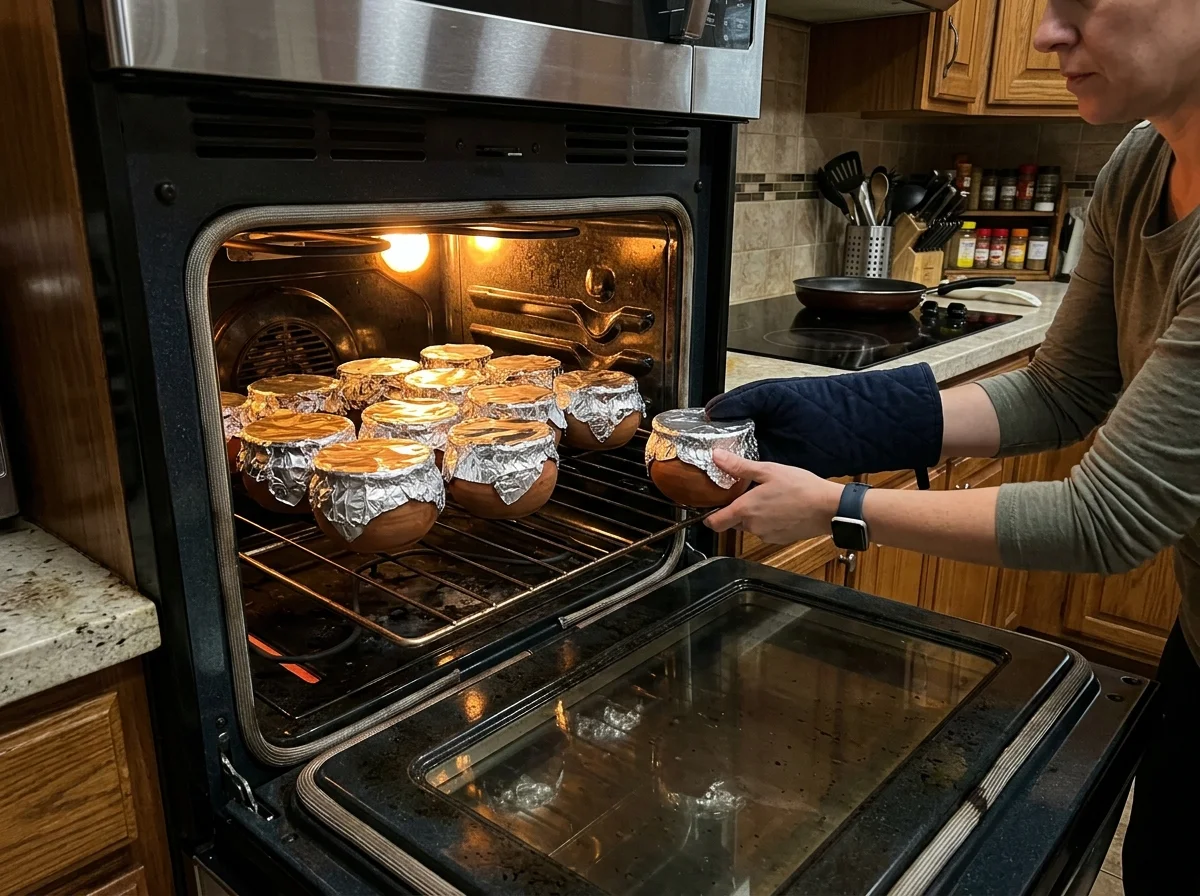
Soak the beans on a day off and divide the ingredients among four pots before they go into the oven, and even the time of ladling the broth at the table becomes part of the cooking. Whether to buy saffron or add a mortar is something to decide by looking ahead at what else you'll cook next.
Sources
- UNESCO World Heritage Centre, Historic Centre of Sheki with the Khan's Palace (on the structure of the town tied to trade routes and silk production, inscribed 2019. Accessed and link checked: 2026-09-04 JST)
- Azerbaijan Travel, Sheki DMO Visitor Map (on Sheki's specialty of piti served in a clay pot and eaten in two stages. In English. Accessed and link checked: 2026-09-04 JST)
- Chef İlhamə, Piti recipe — ingredients & step-by-step method (an English recipe using lamb, chickpeas, tail fat, saffron, dried mint and sour plums. Accessed and link checked: 2026-09-04 JST)
- Azerbaijan International, Azerbaijani Chefs Abroad (Tahir Amiraslanov's explanation of how piti in old sources differs from the modern dish. Summer 2002. In English. Accessed and link checked: 2026-09-04 JST)
- Azərbaycan Respublikası Mədəniyyət Nazirliyi, Piti — Azərbaycan qeyri-maddi mədəni irs nümunələrinin dövlət reyestri (on the special earthenware vessel, long cooking over low heat, separation of broth and solids, and the Sheki and Ganja regional differences. In Azerbaijani. Accessed and link checked: 2026-09-04 JST)