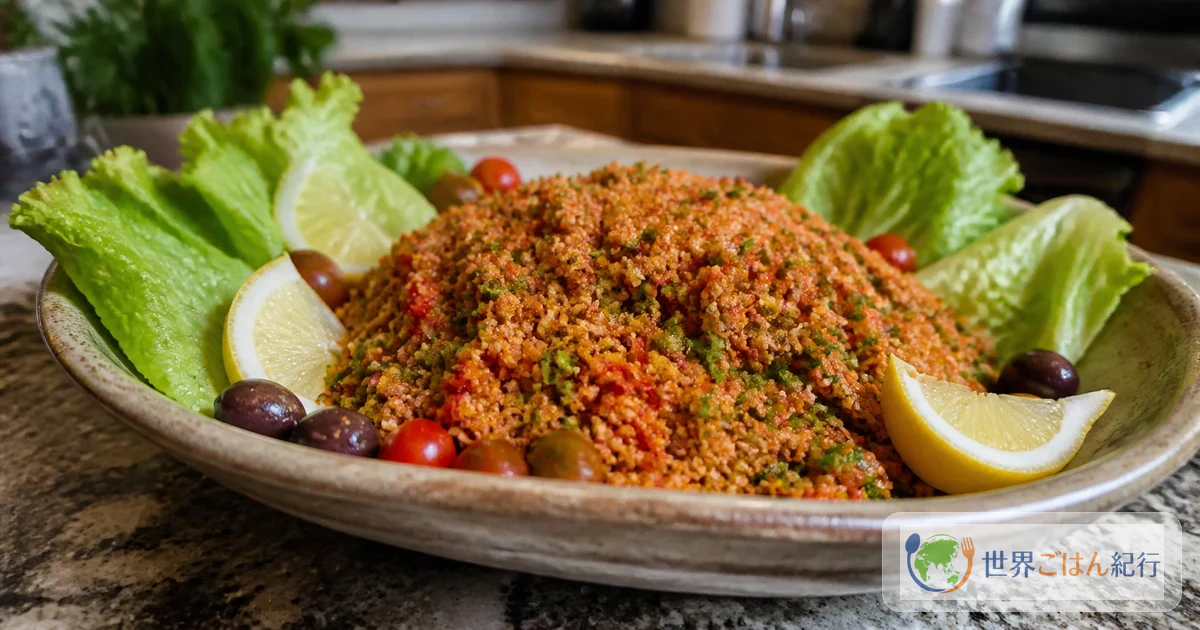
Open the Paper and the Aroma of Meat and Vegetables Rises
Let the packet from the oven rest a little, then open the edge of the paper. Out comes a sudden waft of tomato, onion, meat fat and red spice. Kağıt kebabı is, from the Turkish word kağıt, "paper," a kebab cooked wrapped in paper. Unlike çağ kebabı (in Japanese) on skewers or köfte, which are grilled ground meat, here the paper becomes a small pot.
The English version of the Turkish Ministry of Culture and Tourism presents it as an Ottoman dish: bone-in breast or leg meat combined with onion, salt, pepper, pimento and sweet basil, wrapped in oiled paper and cooked over a low fire. In current home recipes, a form that wraps diced meat with potato, carrot, beans, peppers and tomato in paper and bakes it is also common. This article keeps the structure of the paper packet and makes a version with diced meat and vegetables that is easy to reproduce in a home oven.
The Turkish ğ is not pronounced strongly, so the word can sound closer to "kah-uht." The title uses the simplified spelling for searchability, with Kağıt kebabı given alongside in the text.
What to Keep to Make It Kağıt Kebabı
Kağıt kebabı is not just a baked stew. Wrapping in paper keeps too much moisture from escaping, and the sweetness of the vegetables and the fat of the meat return to the same packet. The aroma stays in more than in a pot, and it comes out more tender than something grilled over open fire.
There are three points to keep. Cut the meat and vegetables to about the same size, do not increase the liquid inside the paper too much, and do not tear the packet so the steam is held until the end. Adding a lot of canned tomato makes it look red but tends to turn watery inside the paper. Conversely, with oil alone the potatoes dry out and the edges of the paper scorch easily.
| Role | Closer to the local style | Where to draw the line in your kitchen |
|---|---|---|
| Meat | Lamb, bone-in meat, breast or leg | Lamb shoulder, lamb leg or beef chuck roll in 3 cm cubes |
| Aroma | Pimento, sweet basil, pepper | A little allspice, dried basil or thyme |
| Paper | Oiled paper, cooking paper | Parchment inside, supported by aluminum foil outside |
| Heat | Slow, low fire | Start at 210°C, then steam-bake at 190°C |
| Eating | Served hot with the paper opened | Catch the juice with lavash, thin bread or rice |
To bring it closer to a Turkish table, put a spicy, sour ezme alongside and the sweetness of the braise tightens. Serve red lentil mercimek çorbası first and finish with a sweet baklava (in Japanese), and even a home dinner comes together like a small course meal.
Ingredients (serves 4)

If you can get lamb, lamb shoulder or lamb leg is recommended. On days when someone in the family dislikes the aroma of lamb, beef chuck roll also works. Even then, lean meat alone tends to dry out, so choose chuck roll or stewing cubes rather than shank.
This dish uses lamb or beef. Lavash and bread contain wheat. Keep the cutting board, knife and bowl that touched the meat separate from those for raw vegetables or for the table. Check that diced meat reaches an internal temperature of 63°C or higher and rest it for 3 minutes. If you make it with ground meat, or serve it to children or elderly people, aim for 71°C or higher.
Shopping: Decide the Aroma and Temperature Before the Paper

The meat, potatoes, carrots, onion and tomato can all be found at an ordinary supermarket. What deserves a look is the paprika that builds the aroma inside the paper packet, the allspice that stands in for the pimento of the Ministry's version, and an instant-read thermometer that makes it easy to check doneness before you open the packet.
Paprika looks like a powder that is only for color, but inside the paper it matters a lot. With only the red of tomato paste, the acidity comes forward; add paprika and a sweet aroma rides on the meat fat.
Allspice is a practical option for handling the pimento mentioned in English-language sources. 1/4 teaspoon is enough. Rather than using a strong hand, stop at the point where, when you open the paper, you notice "some warm fragrance."
Because you cannot see the center of a paper packet until it is opened, the first time measure the biggest piece of meat with a thermometer, and you can adjust without relying only on browning and steam.
Method: Steam-Braise in the Paper
All the ingredients go into the paper at once. This is not a dish you open and stir midway, so the first mix and the wrapping decide the result. You succeed if you make a small steam chamber in the paper, and when you finally open it the liquid is not a thin soup but a red sauce clinging to the vegetables.
Causes of Failure: Do Not Turn the Inside of the Paper into Soup

The most common failure with kağıt kebabı is the inside of the paper turning into soup. In a pot you can take the lid off and reduce, but if you open a paper packet midway the steam escapes. It is steadier to hold back the water from the start and take out some of the tomato seeds if there are many.
| Failure | Cause | How to fix |
|---|---|---|
| Lots of thin liquid at the bottom of the paper | Too much water from the water, tomato or frozen peas | Use 50 ml water and take out some of the tomato seeds |
| Meat is tough | Only lean meat, or cut straight after cooking | Use shoulder and rest 3 minutes after opening |
| Only the potatoes are hard | Cut too big, or the mound is too thick | Cut 2.5 cm cubes and spread 4 to 5 cm thick |
| The edges of the paper scorch | Liquid or oil on the edges, or the temperature is high | Leave a 6 cm margin and lower to 180°C if a burnt smell appears |
| Aroma is flat | Too little paprika or herb | Add 1 tsp paprika and a little basil and adjust next time |
| Steam is scary when opening | Opened from the near side while hot | Rest 5 minutes and open from the far side |
A paper packet is home cooking in appearance, but there is a bit of staging in the eating. If you completely remove it from the paper before serving on a plate, the rise of the aroma is weaker. Opening the paper a little at the table and serving once the steam settles keeps the kağıt kebabı feel.
Substitutes and Regional Differences
The Ministry's version is a concise form: bone-in meat, wrapped in oiled paper and cooked over a low fire. Modern home versions have a range: those combining meat and vegetables, those spreading small pieces of meat on the paper, and those introduced under regional names. The version in this article is a home compromise that steam-braises meat and vegetables in a paper packet.
The origin of the dish's name is kağıt, the Turkish word for "paper." The dish is not defined by particular meat or vegetables alone; the cooking method of wrapping in paper to hold moisture and aroma is the core of the name. That is why introductions that make bone-in meat the star and home versions pairing diced meat with vegetables stand side by side. Without pressing these regional differences into one right answer, I have chosen the latter, for which ingredients are easier to gather.
If you stay with lamb, the aroma when you open the paper is much closer to Turkish. However, buying lamb shoulder every time may be difficult. When switching to beef chuck roll, reduce the allspice to 1/8 teaspoon and increase the black pepper a little so it does not clash with the aroma of beef. If you use chicken thighs, cut them in 3 cm pieces and check for an internal temperature of 74°C or higher. In that case it is more natural to think of it as a Turkish-style paper-wrapped chicken braise than a kebab.
Wrapping in parchment alone can leak onto the baking sheet. Parchment inside and aluminum foil outside keep the paper-like way steam reaches the food and make it easier to handle in a home oven. Wrapping in foil alone puts the liquid directly against metal, and the pleasure of opening the paper is weaker.
Storage and Eating It the Next Day

Take leftover kağıt kebabı out of the paper and move it to a shallow storage container. Once it has cooled slightly, cover and refrigerate, and finish within 2 days. Stored in the paper, the paper absorbs moisture and its edges tear easily when reheated.
It is better not to finish reheating with the microwave alone. Spread the filling on a heatproof plate, sprinkle on 2 teaspoons of water, cover loosely with plastic wrap and heat in a 600 W microwave for 1 minute 30 seconds. Then put a frying pan over medium-low heat and turn the filling for just 1 minute, and the aroma returns. Reducing it again over high heat breaks down the potatoes and toughens the meat.
The next day it goes better with rice than bread. Put the warmed filling over rice, squeeze on a little lemon and serve yogurt separately, and the heaviness is cut. On days when you want to add heat, mix in a small amount of the tomato-chili type of kebab sauce, and the paper-packet braise turns into lunch the next day.
FAQ
Can I make it with beef alone if I don't have lamb?
Yes. Use beef chuck roll or stewing cubes, choosing a cut with a little fat, not only lean. Beef has a milder aroma than lamb, so making the paprika, black pepper and lemon a little stronger keeps it from being monotonous. Beef shank is suited to long braising, and in the 65 minutes of this recipe it tends to stay firm.
Can I wrap it in parchment alone?
You can, but it leaks easily. Parchment inside and aluminum foil outside for support keeps the steam inside the paper and makes it less likely to dirty the baking sheet. With foil inside, it moves a little away from the feel of the name "paper packet," so keep the paper on the inside.
Can I make it with canned tomatoes?
Yes. If you use canned diced tomatoes, limit them to 150 g and add no water. Adding a lot of the canning liquid turns the inside of the paper into soup. Canned tomatoes are quite acidic, so add 1 teaspoon more paprika and go easy on the lemon after baking.
Is allspice essential?
Not essential. But to approach the pimento of the Ministry's version it is worth adding a little. Beyond 1/4 teaspoon it leans toward the aroma of sweets, so go light the first time. If you have none, increase the black pepper slightly and keep the dried basil or thyme.
May I open the packet midway and stir?
I do not recommend it. Opening lets the steam escape and weakens the point of cooking in the paper. If you worry about uneven cooking, the key is to spread the filling 4 to 5 cm thick at the start and not to mound the meat and potatoes only in the center. Only when additional cooking is needed, close the paper lightly after opening and bake briefly at 190°C.
External Sources
- Republic of Türkiye Ministry of Culture and Tourism. "Paper-Clad Kebab." https://www.ktb.gov.tr/EN-98826/paper-clad-kebab.html (accessed 2026-06-03)
- Wikipedia contributors. "Kağıt kebabı." https://en.wikipedia.org/wiki/Ka%C4%9F%C4%B1t_kebab%C4%B1 (accessed 2026-06-03)
- FoodSafety.gov. "Cook to a Safe Minimum Internal Temperature." https://www.foodsafety.gov/food-safety-charts/safe-minimum-internal-temperatures (accessed 2026-06-03)