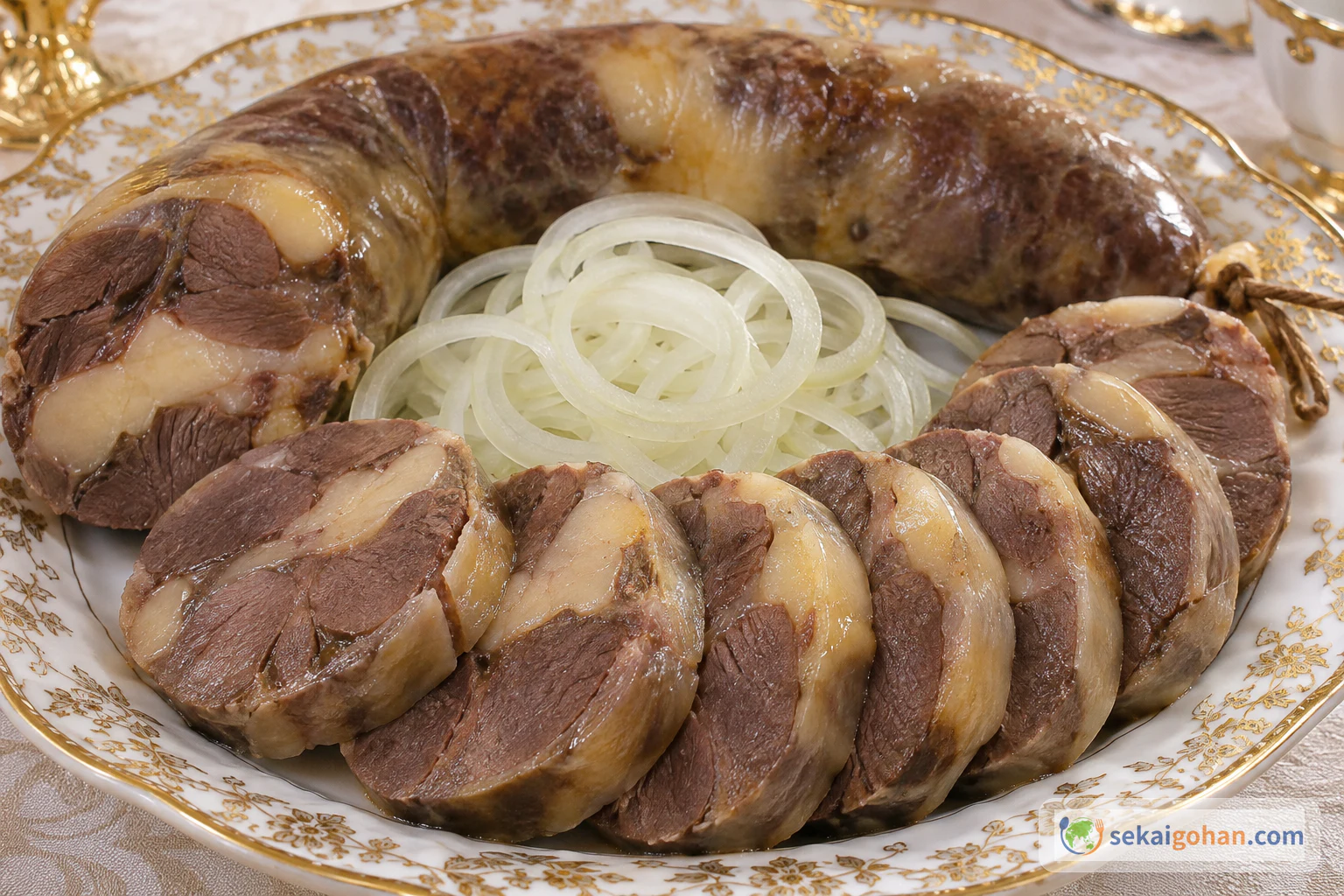
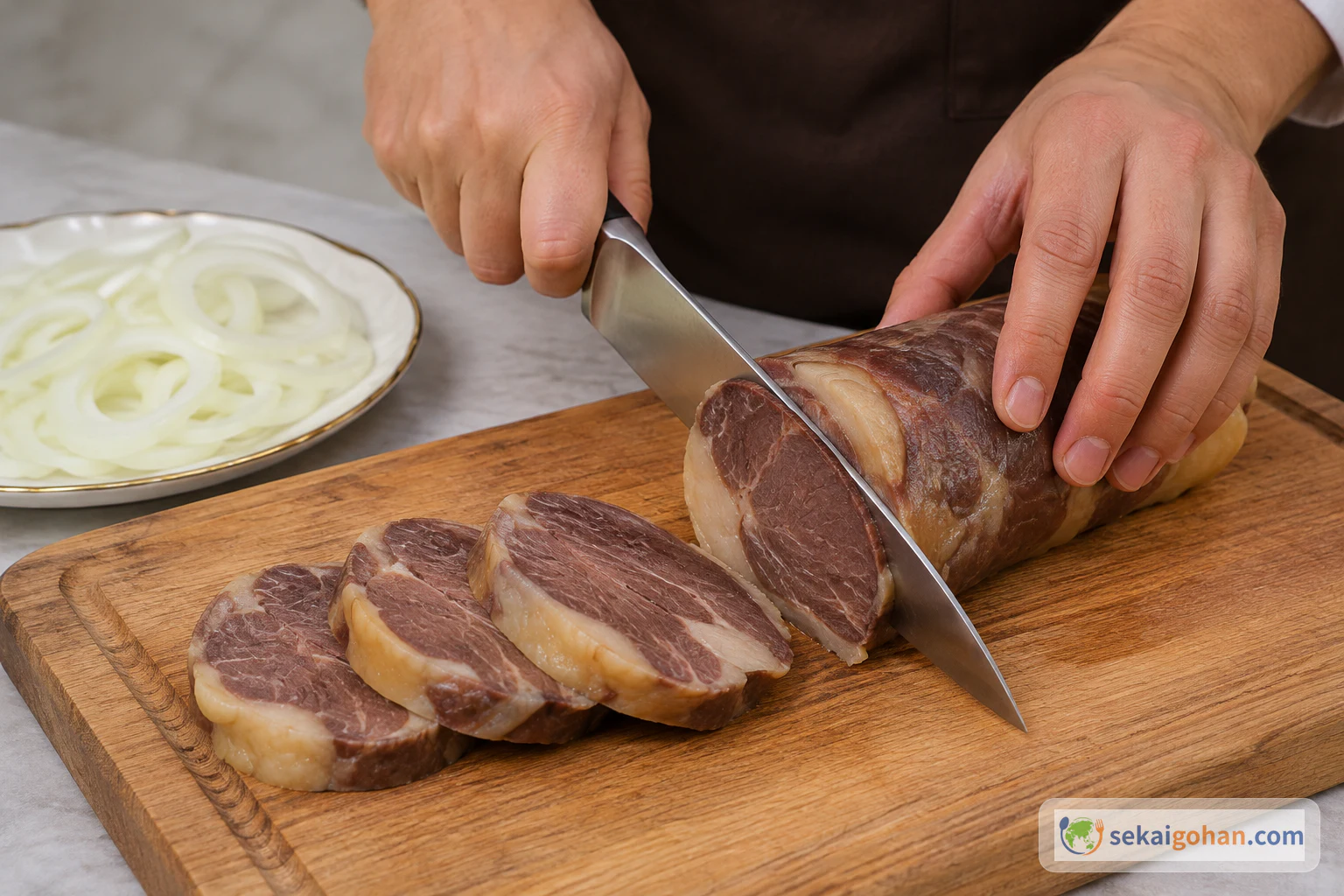
The knife goes down through the cooled sausage, and each round falls open to show dark, fibrous horsemeat wrapped in broad bands of white fat. A plate of raw onion rings waits beside the board, sharp enough to cut through all that richness. This is kazy, the horsemeat sausage of Kazakhstan. Whole strips of meat and fat go into a casing and boil slowly in plain water. The taste is salt, garlic and black pepper carried by deep, clean meat and soft, melting fat.
Kazy at the Kazakh Table
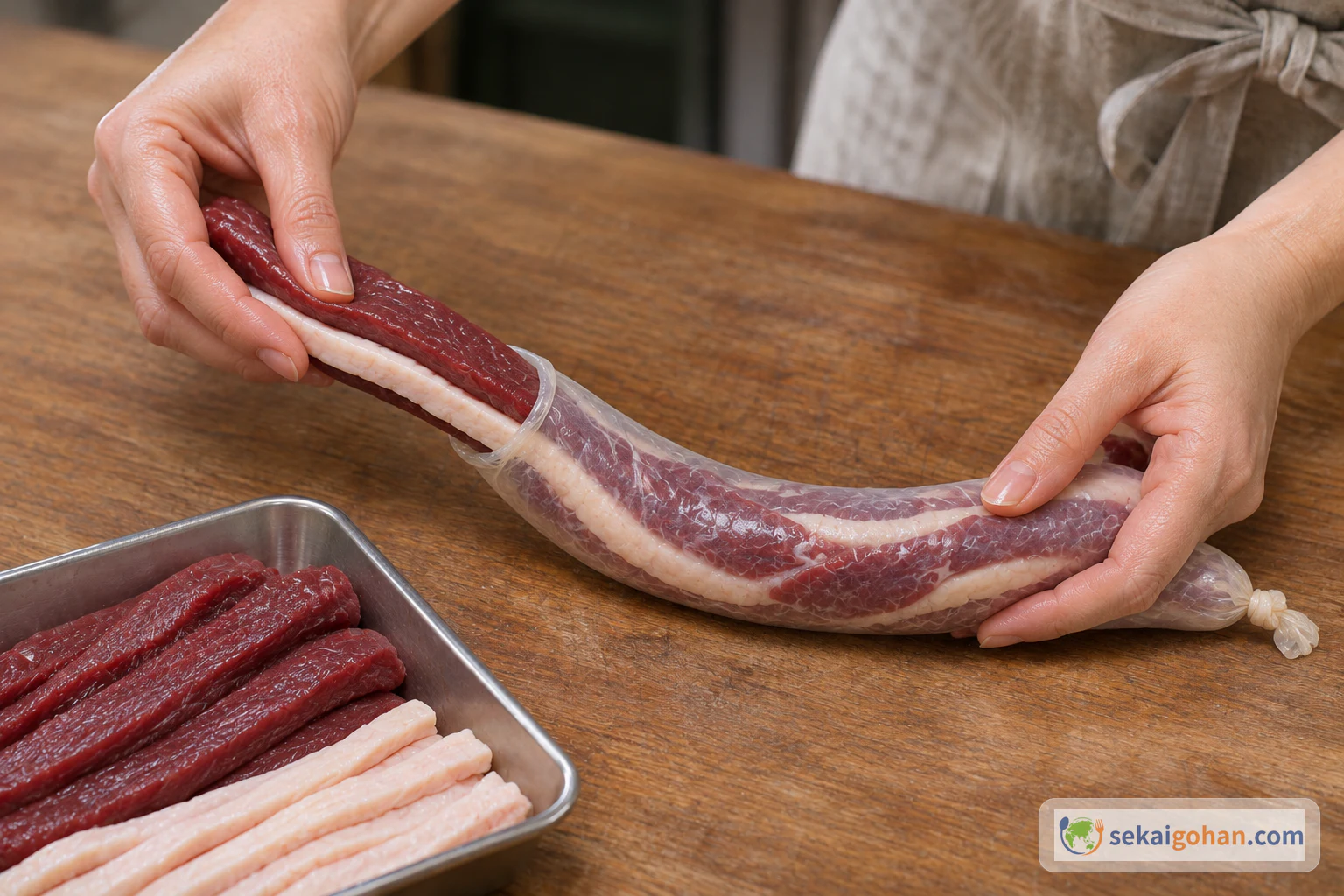
Kazy is built from whole muscle, never mince. The meat is cut into long strips, seasoned, and threaded into the casing alongside equally long strips of fat, so every slice is a cross-section of the two. That is what you look for on the plate: meat and fat in distinct layers, not a uniform pink paste like a ground-meat sausage.
How much fat goes in is a matter of the household and of the guests at the table. Some families want it lean, others want the fat to dominate each round, and the cook adjusts the ratio to the people being fed. Kazy is a Muslim dish, which is why pork casing has no place in it, and it belongs to the wider Kazakh table you can explore from the Kazakhstan country page.
There are smoked and dried kazy as well, but the one here is the fresh-boiled kind: salted briefly, stuffed, simmered for a couple of hours, then cooled and sliced. It goes to the table with nothing more than onion rings.
In Kazakh the dish is written қазы. In English you will see it as Kazy or Qazy, and both spellings point to the same horsemeat-and-fat sausage.
Ingredients
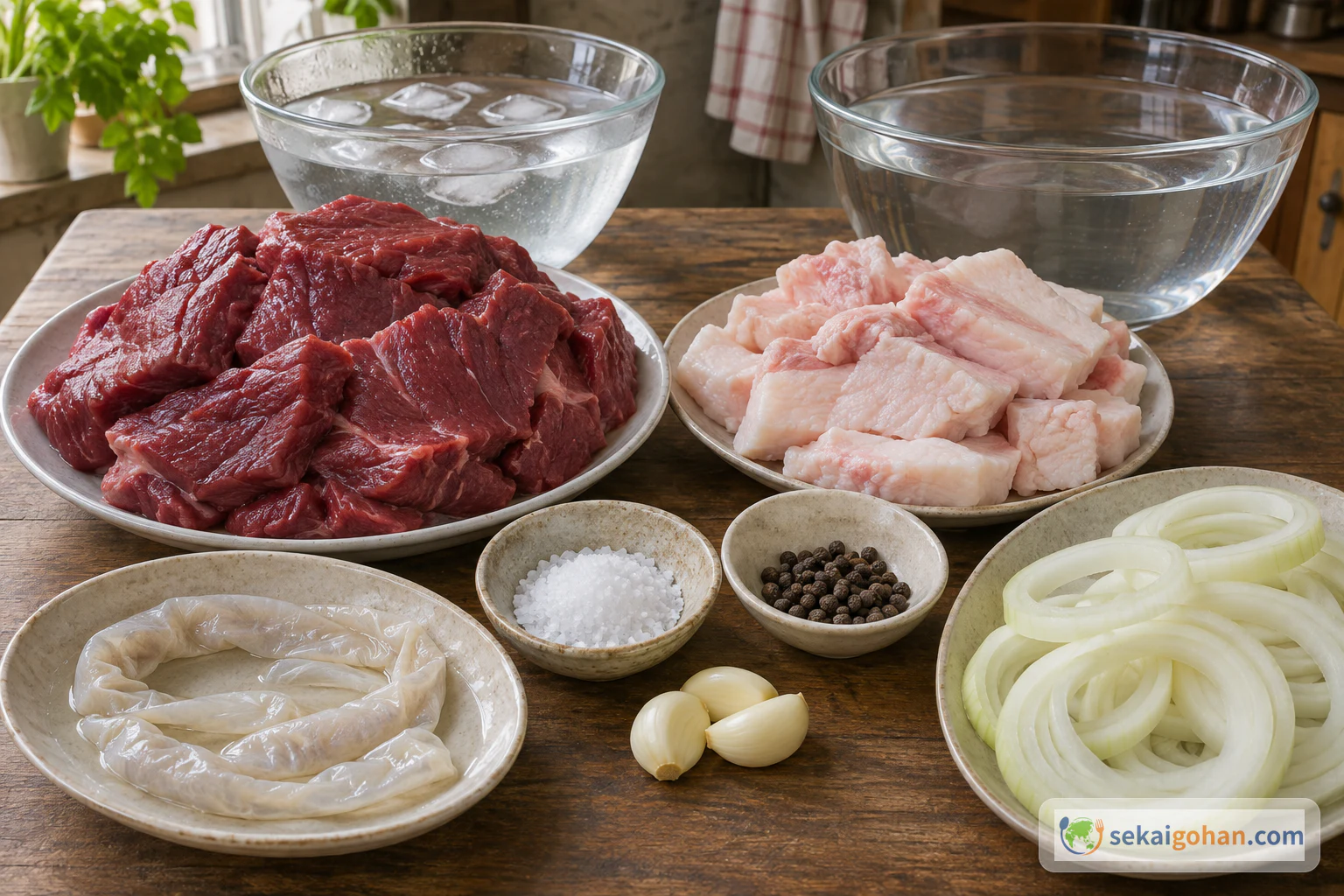
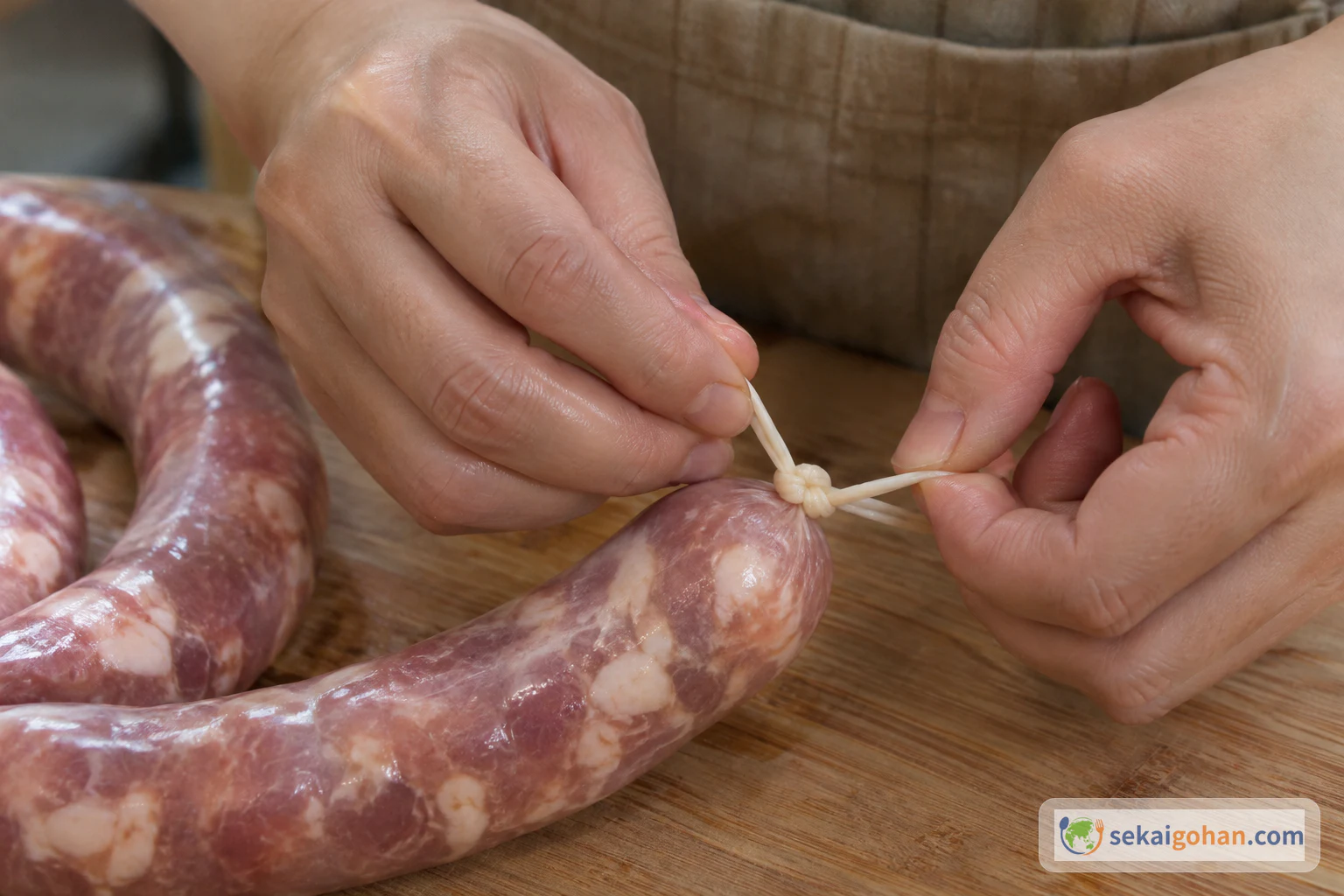
Stop stuffing while the casing is still soft enough to press. An overpacked casing splits in the pot, and the fat leaks into the water.
Equipment
- Covered containers that fit in your refrigerator
- A mixing bowl
- Kitchen string
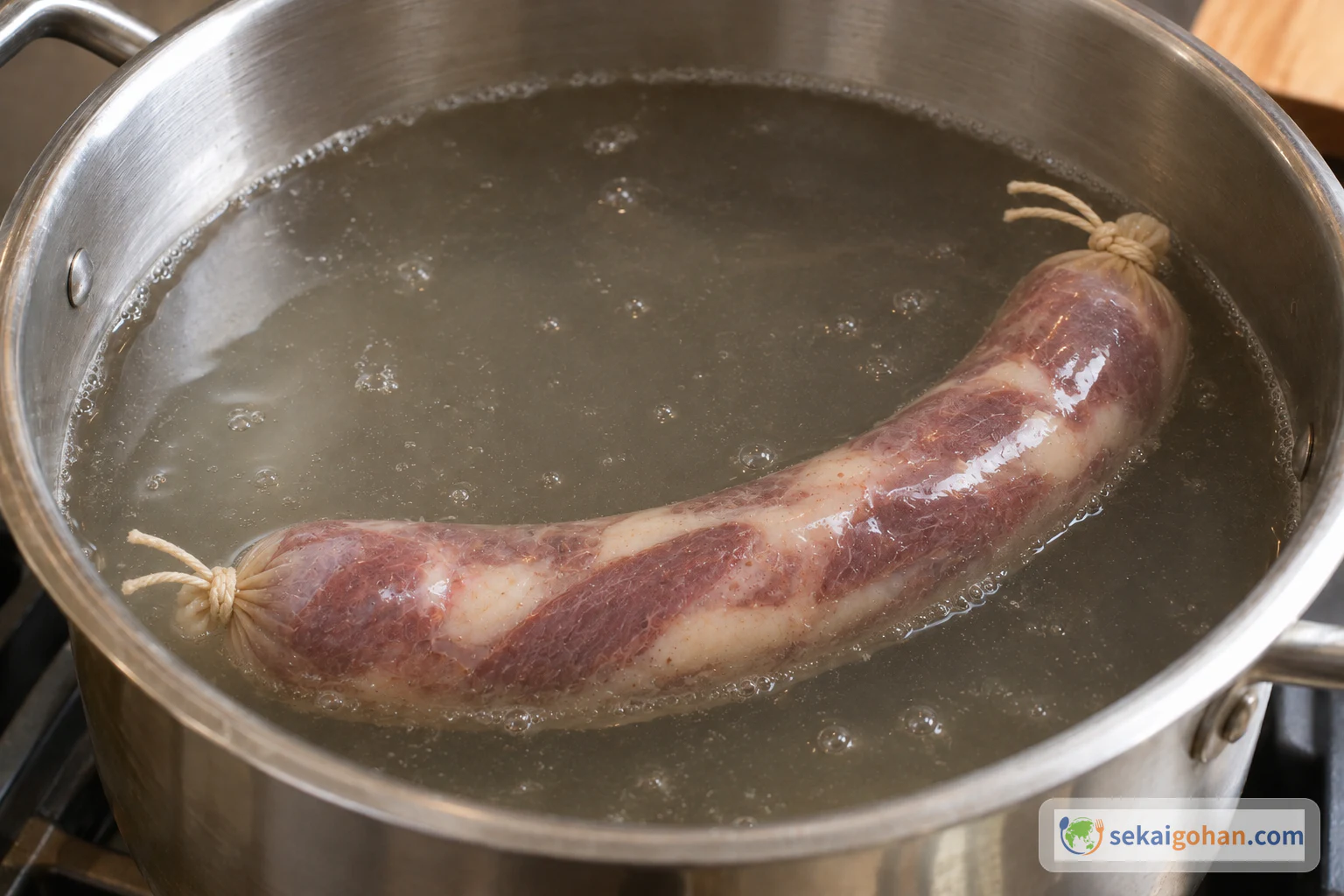
- A wide pot that holds the sausage lying flat under water
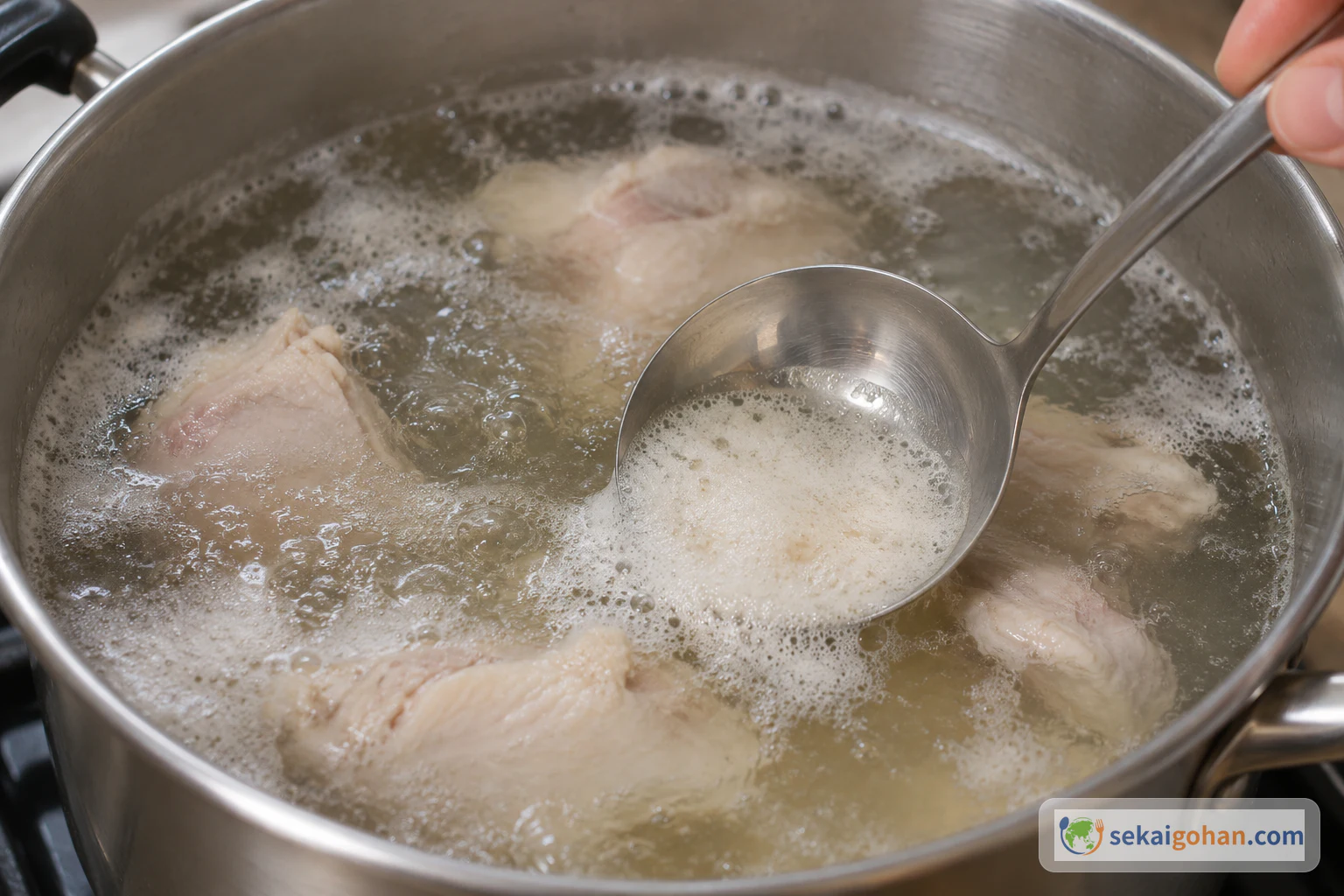
- A ladle or skimmer
- A clean skewer or needle for pricking
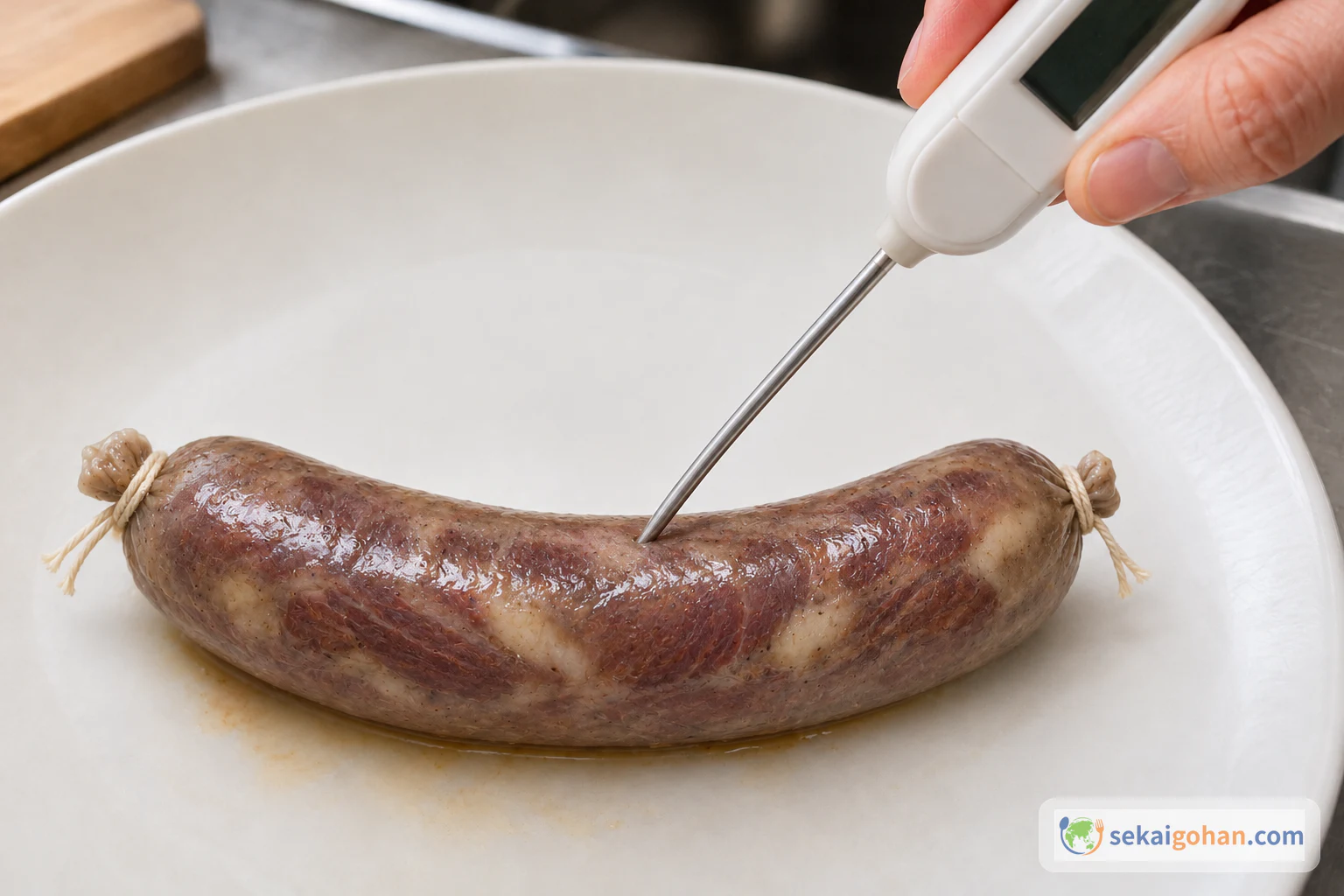
- An instant-read thermometer with a clean probe
- A sharp knife and a clean cutting board
- Shallow containers for leftovers
Choosing Horsemeat, Fat and Casing
Buy horsemeat and fat that are sold as food from a butcher who handles horsemeat or from a trusted online meat seller. Choose white fat; it gives the clean pale bands that make the slices look right. If your horsemeat arrives frozen, thaw it in the refrigerator.
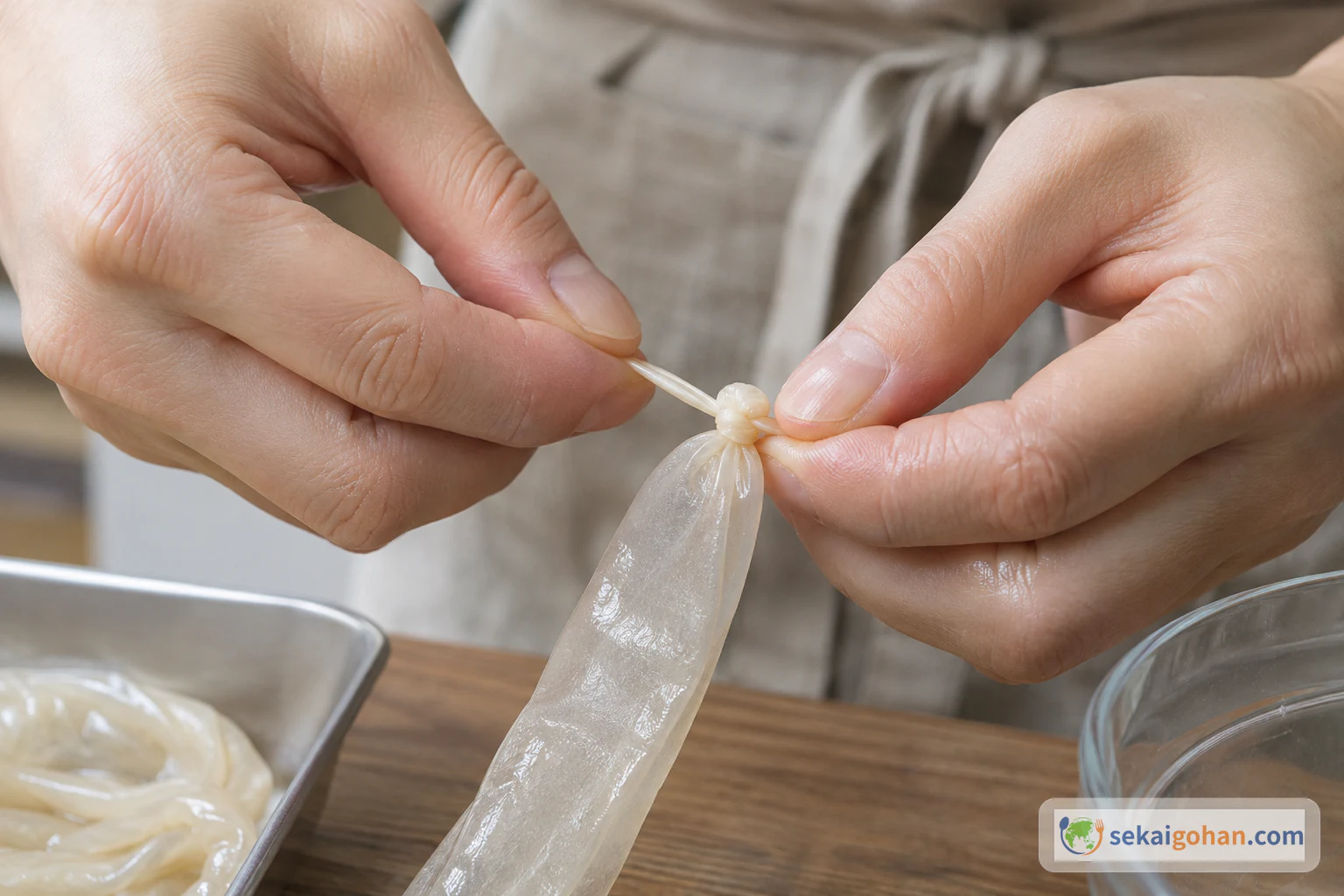
Horse casing is much harder to find than horsemeat. Look for it from sausage-making suppliers and butchers, and buy only casing sold as food-grade and already cleaned. Prepare it exactly as the supplier's label says. Beef casing is the working swap when horse casing cannot be found; it changes the wrapper, not the meat inside, so the slices still taste of horse. Skip pork casing entirely, since kazy is a Muslim dish. Artificial casing or food film also hold the filling, and they give a smoother, less natural outer skin.
The horsemeat itself is what keeps this kazy. Swapping in another meat turns it into a different sausage.
Method
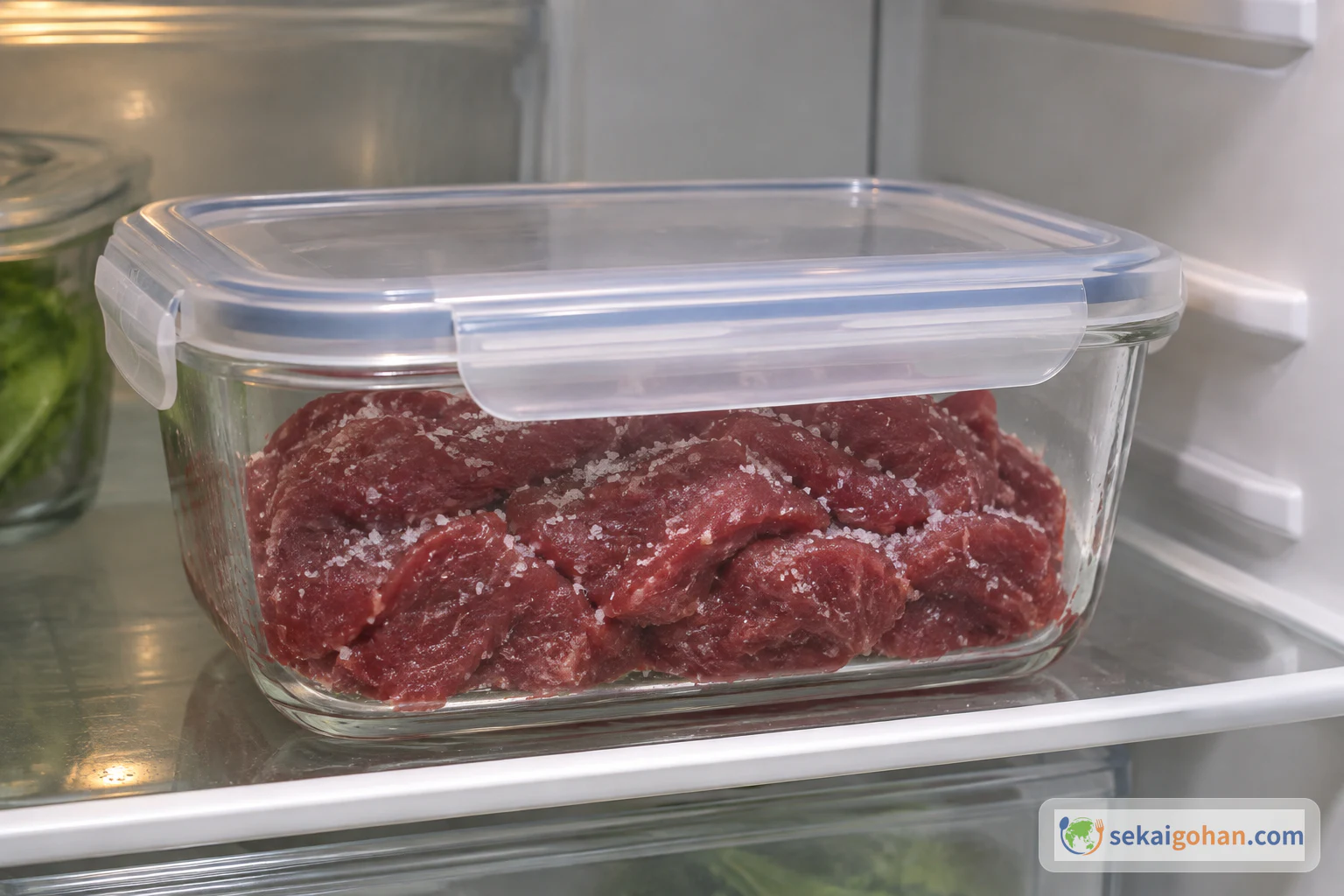
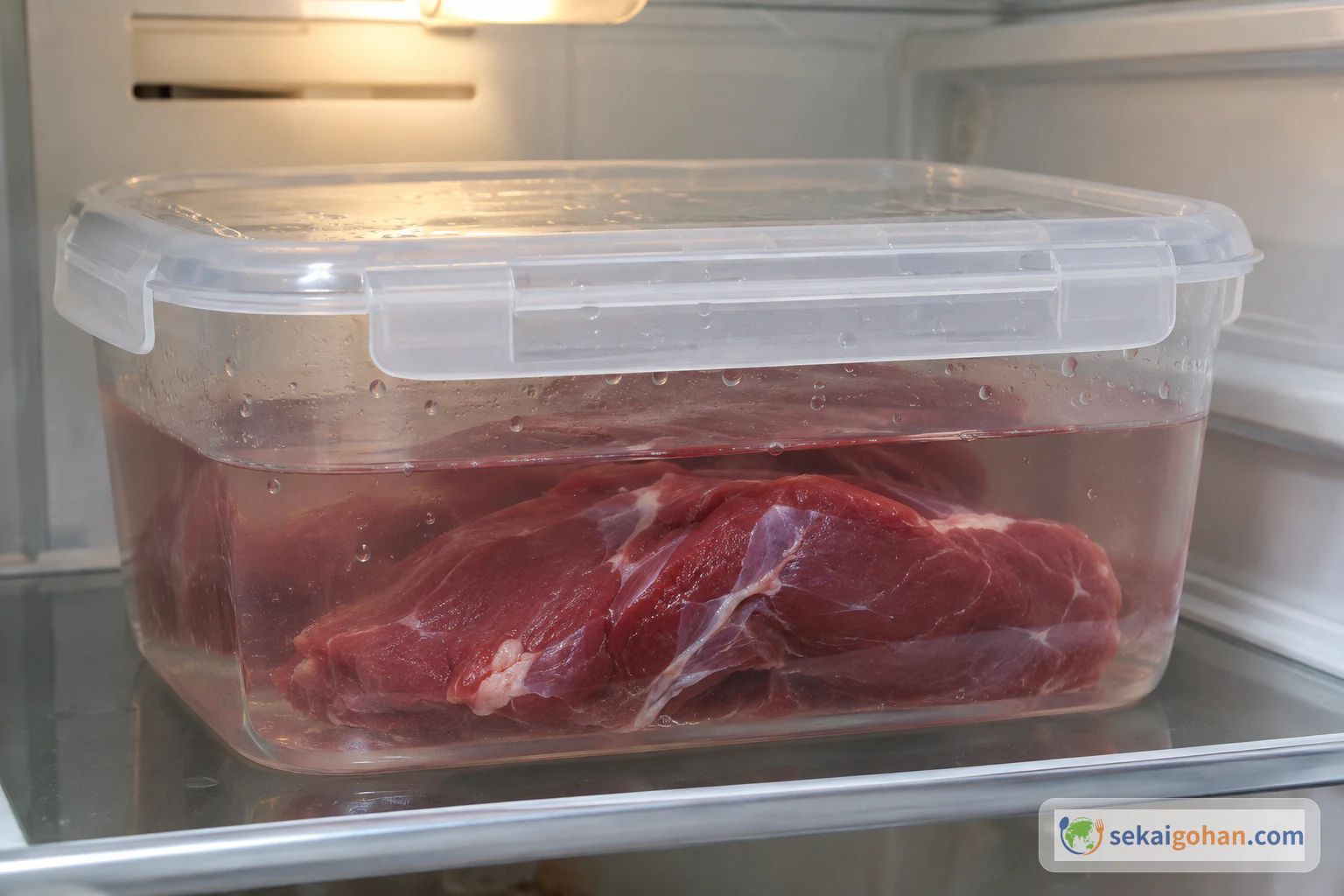
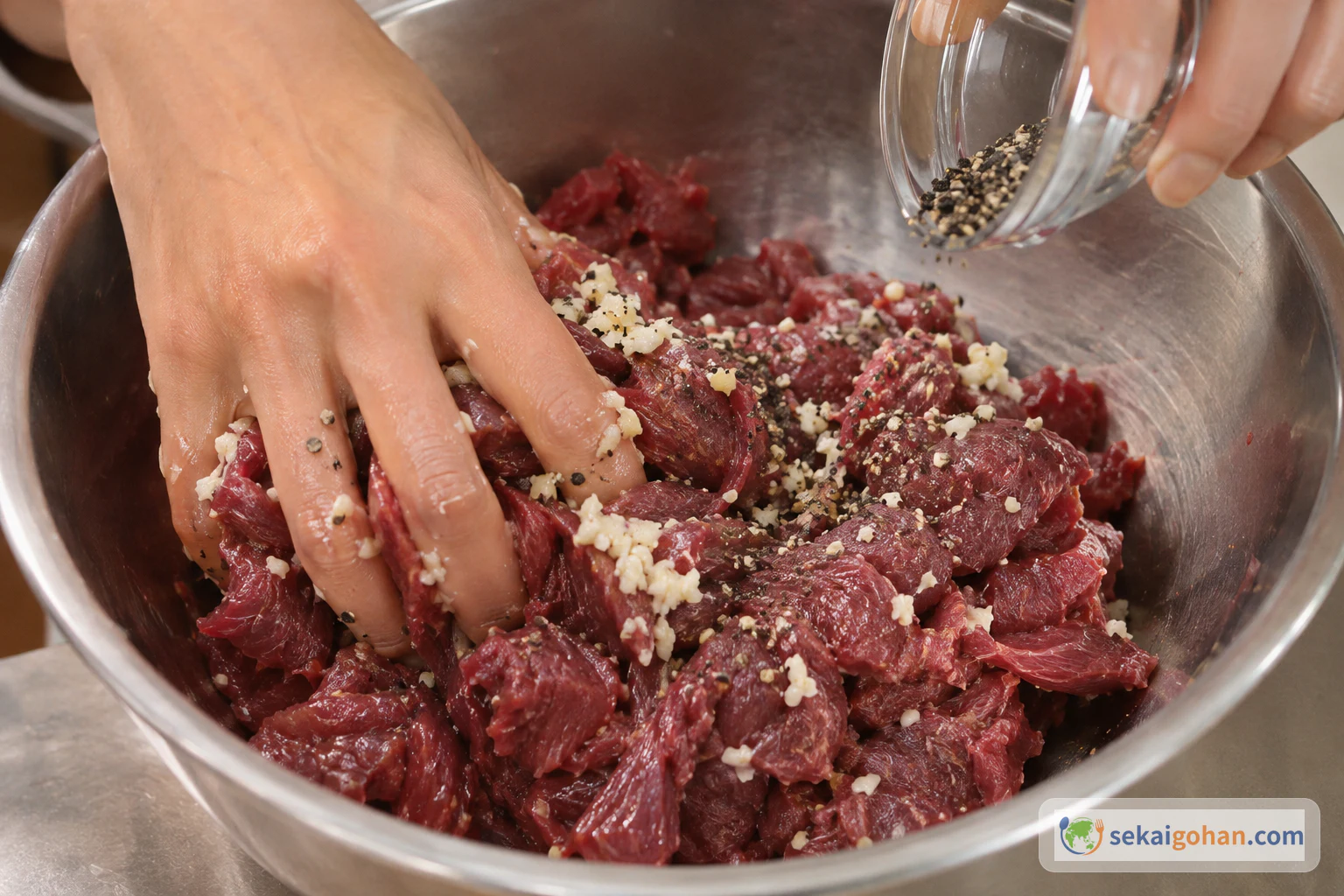
The work splits into three stretches. First comes the cold work, salting, soaking and seasoning, all of it in covered containers in the refrigerator. Then the hands-on part, cutting and stuffing the casing. Last is the long, quiet simmer, where your only jobs are skimming and pricking before the thermometer has the final word.
Keep the raw meat, fat and casing cold, in covered containers in a refrigerator at 50°F (10°C) or below, and never leave them out at room temperature. Use boards, knives and bowls kept apart from other food. Treat the casing like raw meat. Wash every tool it touches, then pour boiling water over them, and wash your hands after handling. Horsemeat can carry parasites that thorough cooking deals with, so the center check in step 9 is never skipped.
The 2 hours sets the rhythm of the pot, but the center reading is what tells you it is done. Check the thickest part every time, even when the sausage looks finished.
When It Goes Wrong
| What you see | Why | What to do |
|---|---|---|
| The casing splits in the pot | Overpacked, or the water boiled hard | Lower the heat to a bare simmer. Next time, stop stuffing while the casing is still soft |
| A thick grey foam builds up | Proteins rising from the meat as it heats | Keep skimming with the ladle through the simmer until the surface stays clear |
| The center reads below 167°F (75°C) | The thickest part has not caught up with the outside | Return it to the pot, heat again and repeat the full one-minute check |
| Slices smear and the fat tears | Cut while still too hot | Let it cool until it is easy to handle, then slice with one clean stroke |
| Thin, gappy slices along one stretch | Uneven stuffing | Press the filling evenly along the length before tying the second end |
Serving and Leftovers
At the table
Kazy goes to the table sliced into rounds with raw onion rings, and nothing else is needed. The onion's bite cuts through the fat in each slice. Lay the rounds out so everyone can see the meat and fat in each cut.
Variations
- More or less fat. Change the balance in step 5. More fat gives softer, richer rounds, while less gives a firmer, meatier slice.
- Beef casing. It stands in when horse casing cannot be found, and it changes only the skin around the slices.
- Garlic level. Garlic is to taste, so you can push it forward or keep it in the background behind the pepper.
Leftovers
Do not leave cooked kazy sitting out at room temperature for long. Cool what is left quickly in shallow containers, cover them, and refrigerate.
Frequently Asked Questions
Can I use horsemeat sold for eating raw?
Yes, but cook it exactly the same way. The full simmer and the 167°F (75°C) center check stay in place whatever the label says.
Does freezing the horsemeat first make it safer?
No. Some parasites found in horsemeat survive freezing, so freezing cannot replace cooking. Thaw frozen horsemeat in the refrigerator, then cook it until the center holds the temperature for the full minute.
Why is the fat cut into strips instead of chopped?
Long strips run the length of the sausage. That is what gives each round its separate bands of meat and fat. Chopped fat scatters through the filling and loses that look.
How lean or fatty should my kazy be?
Lean or fatty is up to you. The amounts in the table are a starting point, and households shift them toward lean or rich to suit the people at the table. Keep the total amount of filling about the same so the casing still closes without overpacking.