Waiting for the Layers of Cheese in Front of the Oven
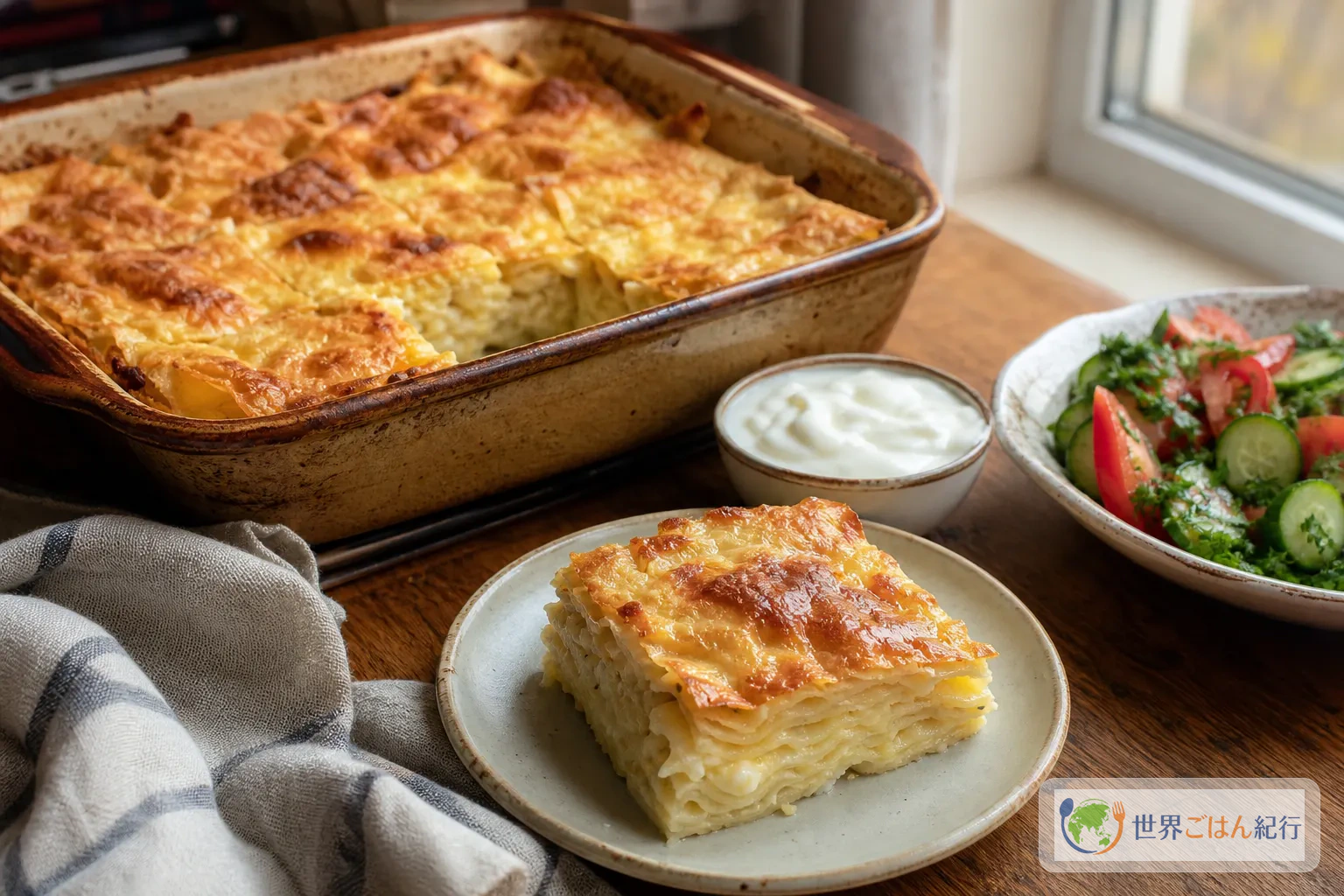
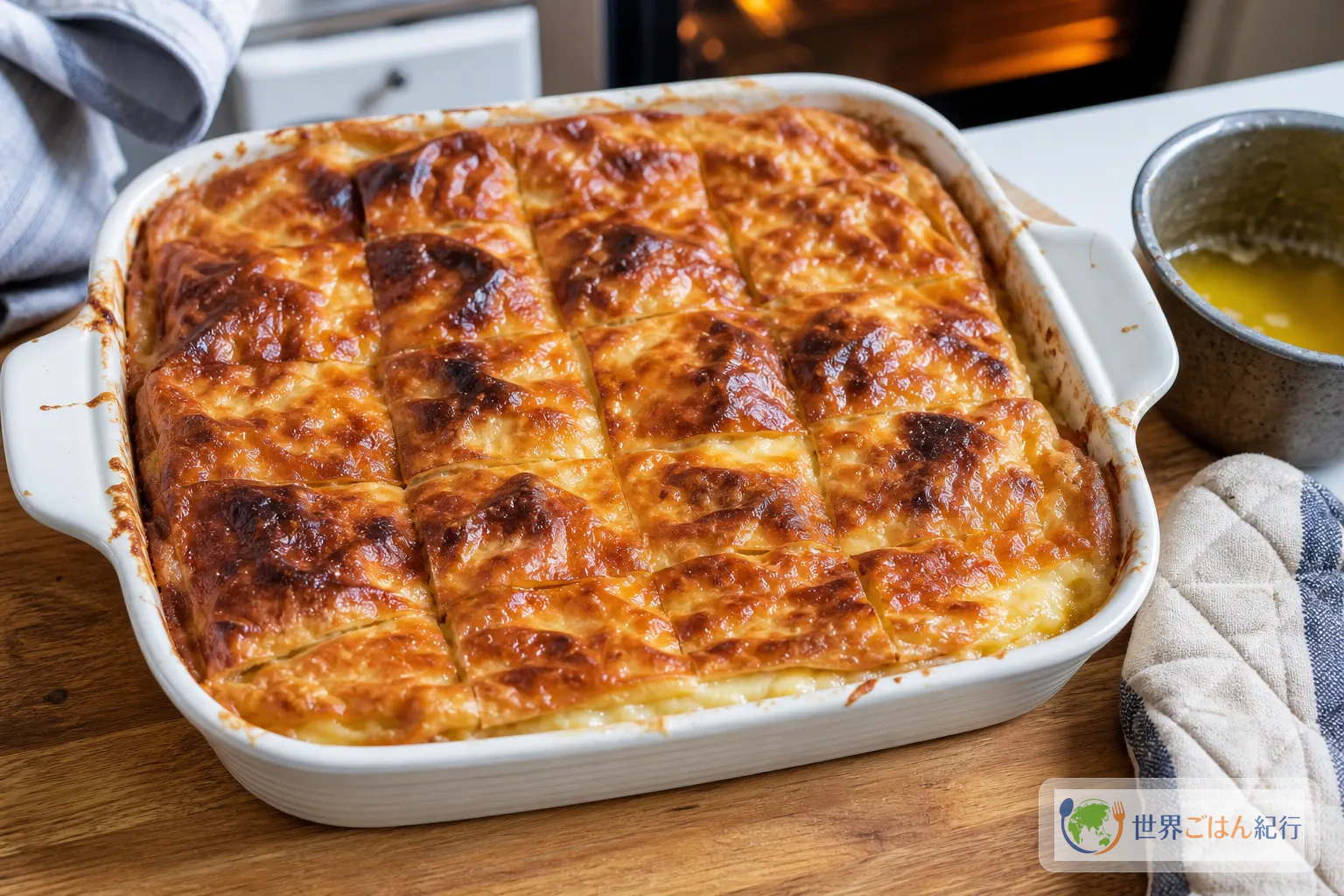
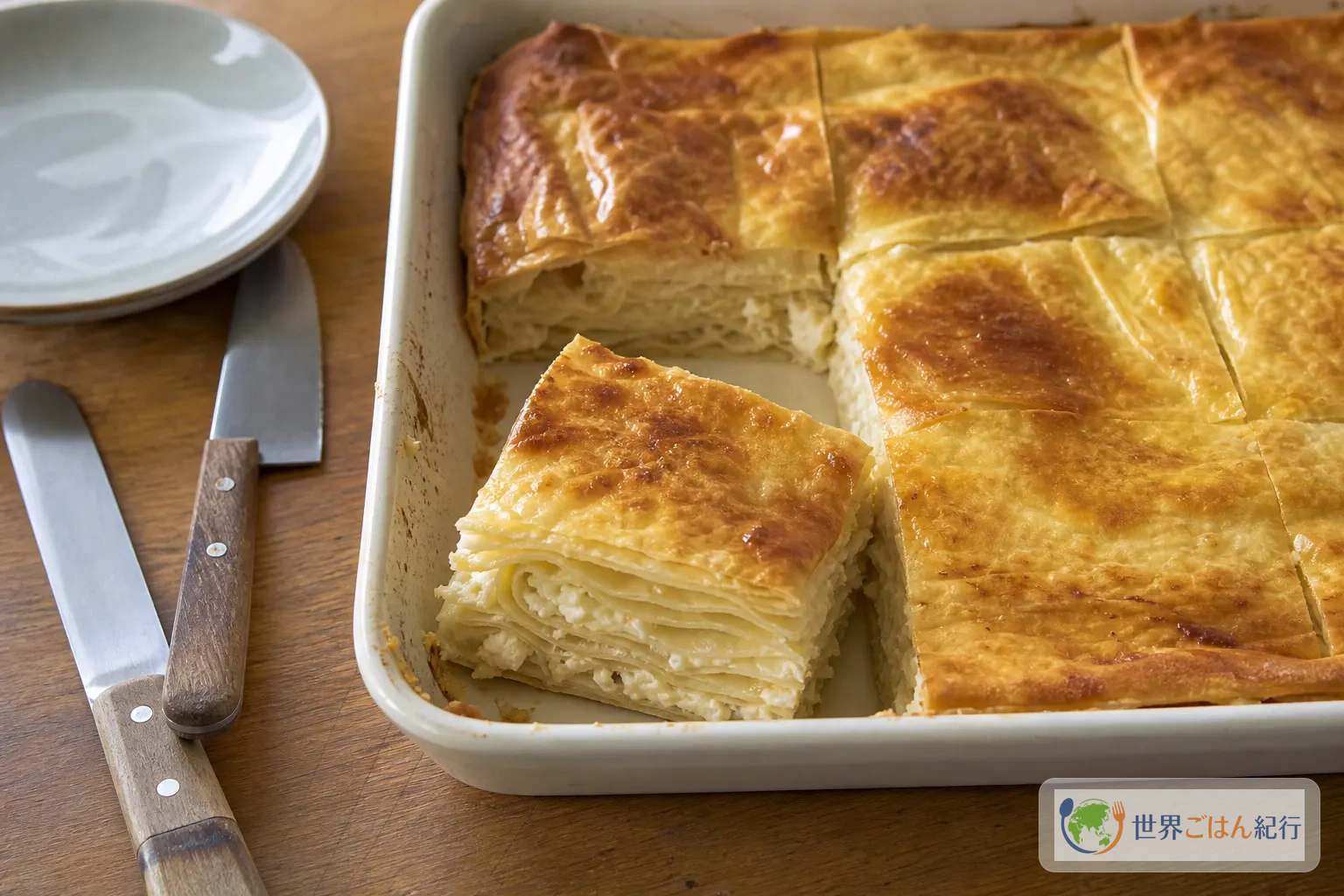
When you take the square dish out of the oven, the dough on top has puffed in places and butter is bubbling finely at the edges of the dish. Cut in, and the top is toasty while inside, boiled dough and cheese lie loosely stacked. It is neither bread nor lasagna, yet it calls up a little of the memory of both.
Achma (აჩმა / achma) is a layered cheese pie beloved in Georgia. It is sometimes introduced as a kind of khachapuri, but rather than wrapping cheese in a rounded bread dough, the big difference is that thin sheets of dough are briefly boiled, then baked in many layers with butter and cheese. In the English-speaking world it is sometimes called "Georgian lasagna," but it is a plate that wins you over not with tomato sauce or the weight of meat but with salty cheese, butter, and the tenderness of boiled dough.
The difficulty elsewhere is that Georgia's sulguni and Imeretian cheese are hard to get. Here, low-moisture mozzarella, feta, cottage cheese, and a little yogurt separately make up for stretch, saltiness, tang, and how it breaks apart. Dairy itself is easy to buy at an ordinary grocery, so the shopping notes are narrowed to tools for handling thin dough and the baking pan.
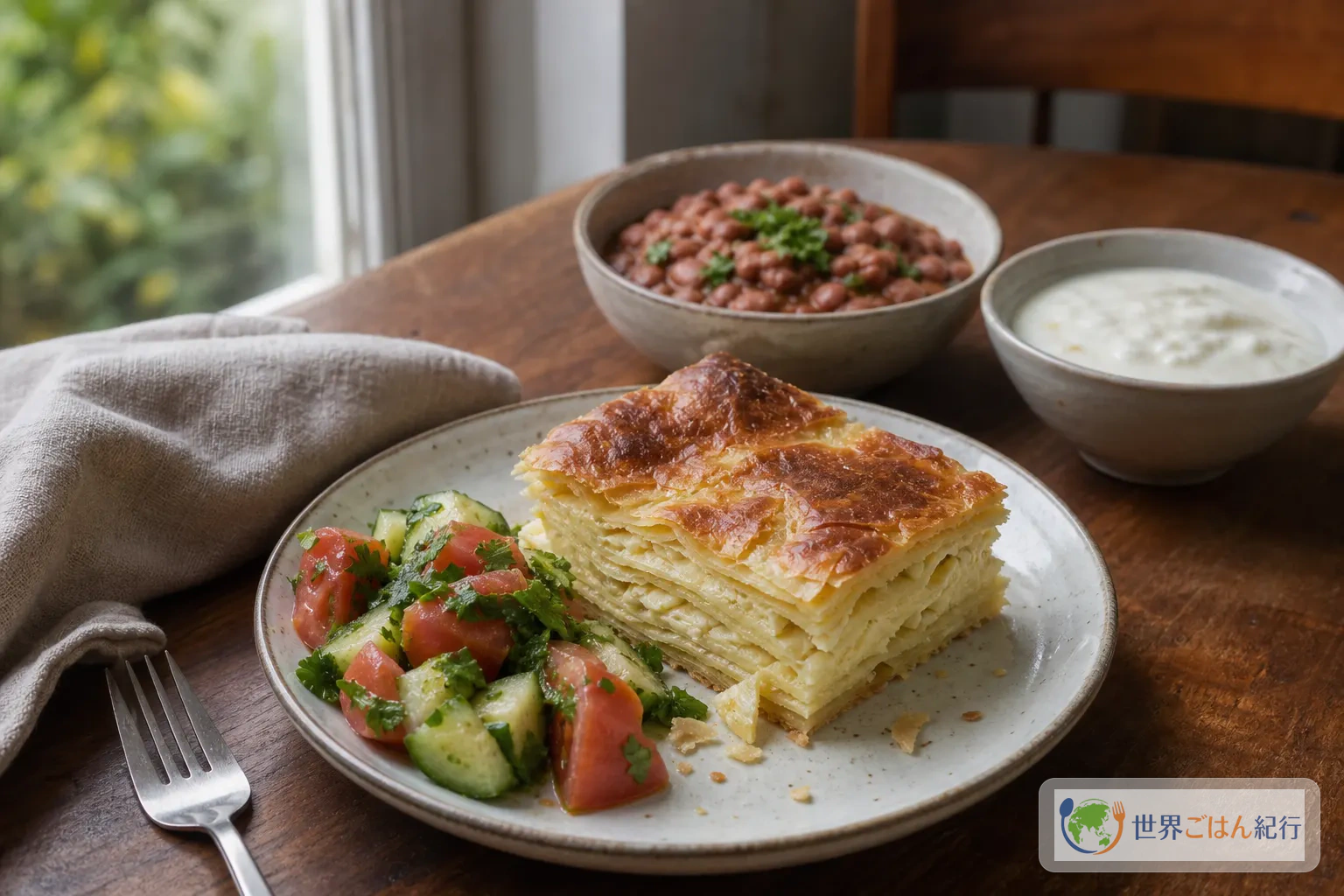
For a Georgian table, pair it with the bean dish lobio (in Japanese), the walnut-sauce satsivi (in Japanese), and the juicy khinkali, and it won't lean only on cheese. On a day you want to push the aroma a step further toward Georgia, a little Svan salt sprinkled on roasted vegetables or salad lines up the direction of the table.
What Is Achma? Layers of Cheese with Boiled Dough
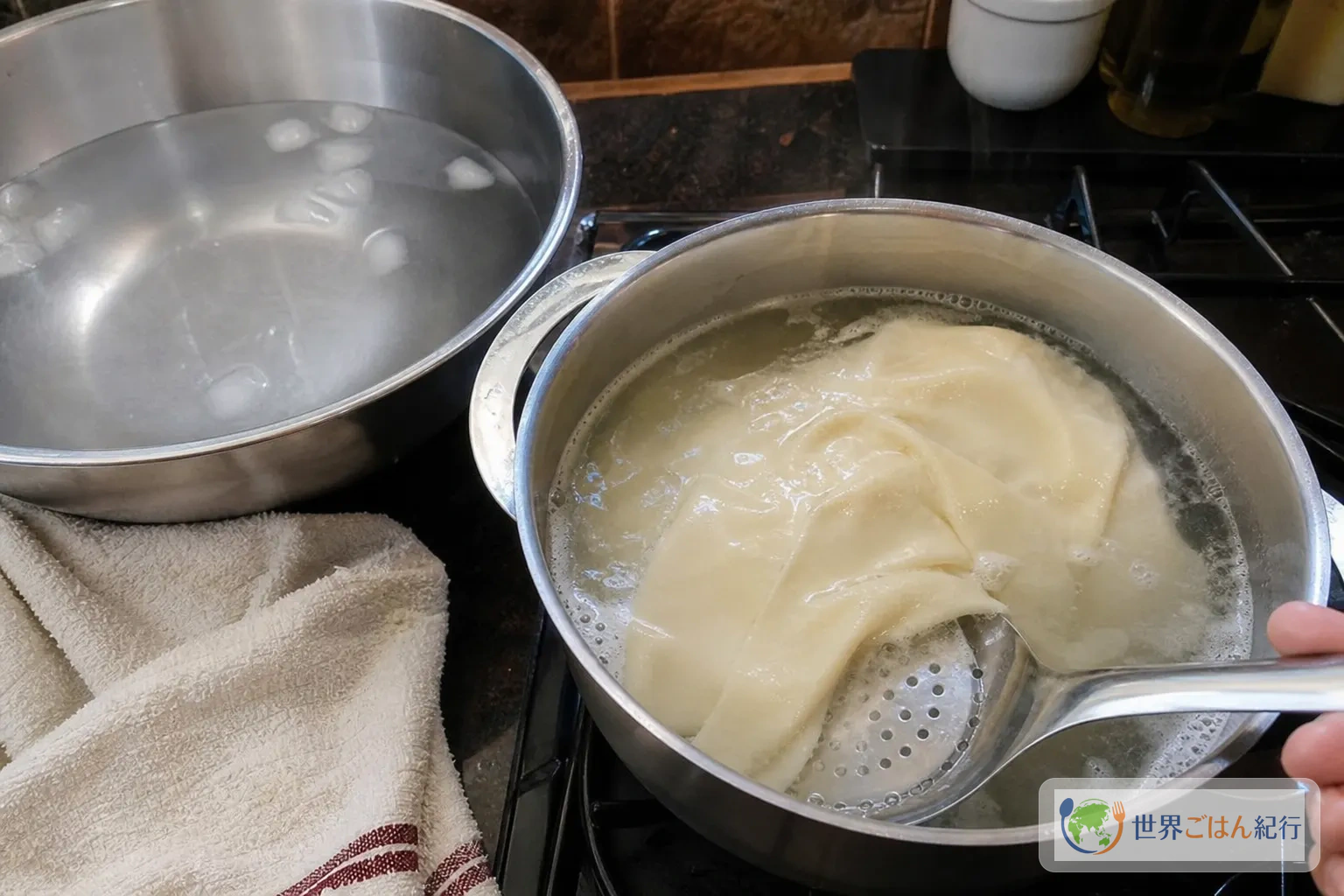
Achma is a dish in which thin-rolled wheat dough is boiled, then stacked with cheese while being brushed with butter, and baked. Because the dough is boiled once, the inside is chewier than a baked-only pie and the bite is lighter than lasagna. The surface browns and the edges are a little crisp, while the ideal is for the center to stay moist as cheese and dough blend.
| Dish compared | What it shares | How it differs |
|---|---|---|
| Khachapuri | A Georgian dish starring cheese | Achma does not wrap; it stacks boiled thin dough |
| Lasagna | Layered and baked | No tomato sauce or meat; eaten with cheese and butter |
| Börek | A regional dish of stacked thin dough | Achma is thicker than phyllo and is boiled midway |
| Gratin | Baked in a square dish and shared | Not a white sauce; salty cheese is the backbone |
There are two peaks when making it at home. One is not panicking if the dough tears from rolling too thin. The other is not adding too much moisture to the cheese. Torn dough can be used for the inner layers, but watery cheese pools at the bottom and makes the bake heavy.
Ingredients (serves 4, one 20 cm square pan)
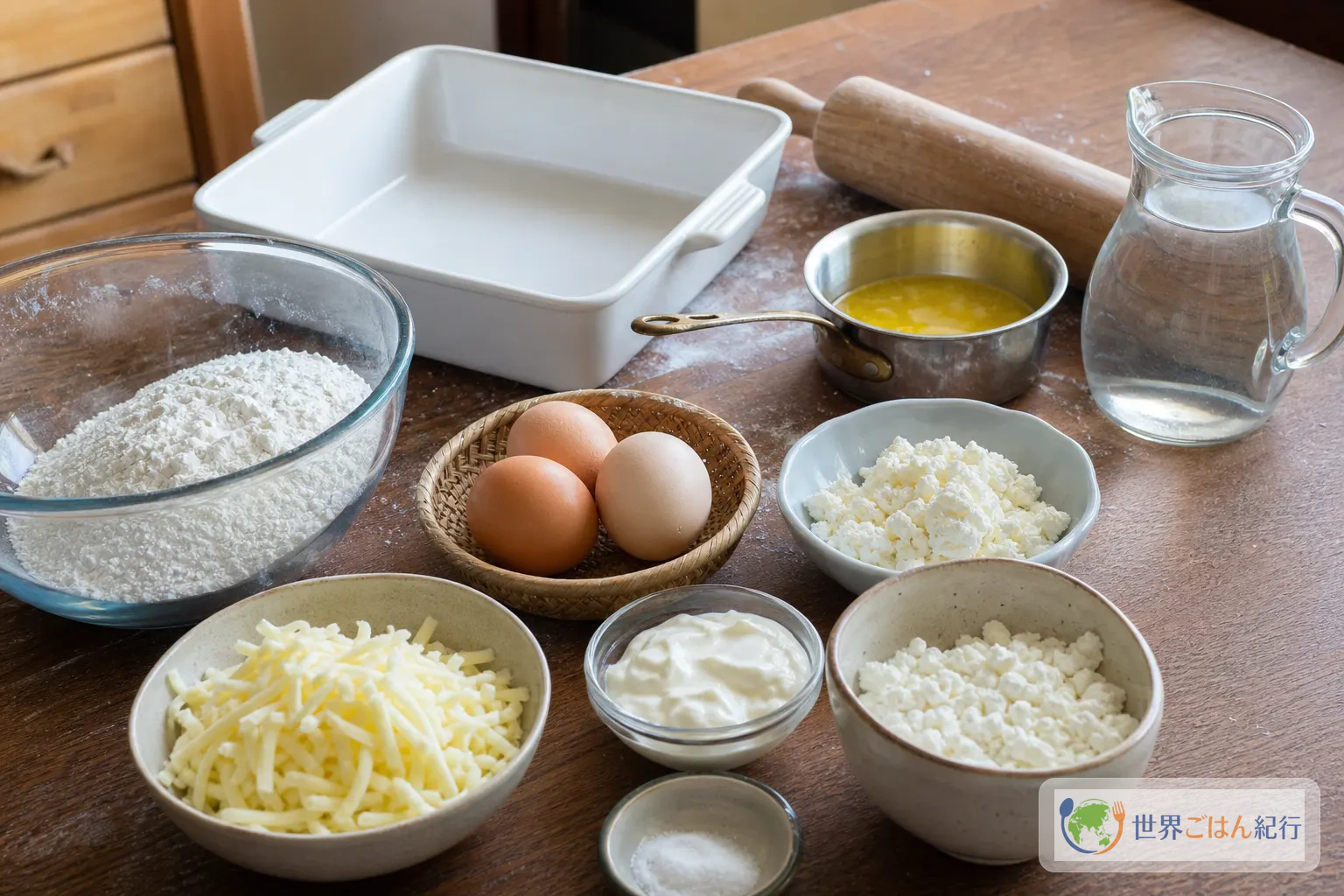
This dish contains wheat, egg, and milk. Feta and mozzarella differ in milk type and saltiness by product. Substituting dairy changes the texture greatly, so if you have an allergy, do not force a substitute and choose another dish.
How to Think About It Without the Local Cheese
Sulguni is a Georgian cheese with stretch and saltiness. Because it is not always available elsewhere, trying to imitate it with a single cheese tends to fail. Low-moisture mozzarella gives stretch, feta saltiness, cottage cheese crumbly milk curds, and yogurt a light tang, making layers that are not too heavy even in a home oven.
If the feta is quite salty, cut it into cubes, soak in water for 10 minutes, and blot with paper towels before using. Conversely, with only mild mozzarella, it bakes up neat but tastes blurry as you go on eating. Building the flavor with the combination of cheeses causes less unevenness in the layers than adding salt afterward.
Tools Worth Wondering About
What is worth buying for achma is not the cheese itself but tools for handling thin dough without tearing it. Sulguni and Imeretian cheese are hard to find in many places, but with this recipe's blend you can build it from ordinary dairy. Conversely, starting with a rolling pin that is too short or a pan that is too deep stacks small strains through rolling, boiling, layering, and baking.
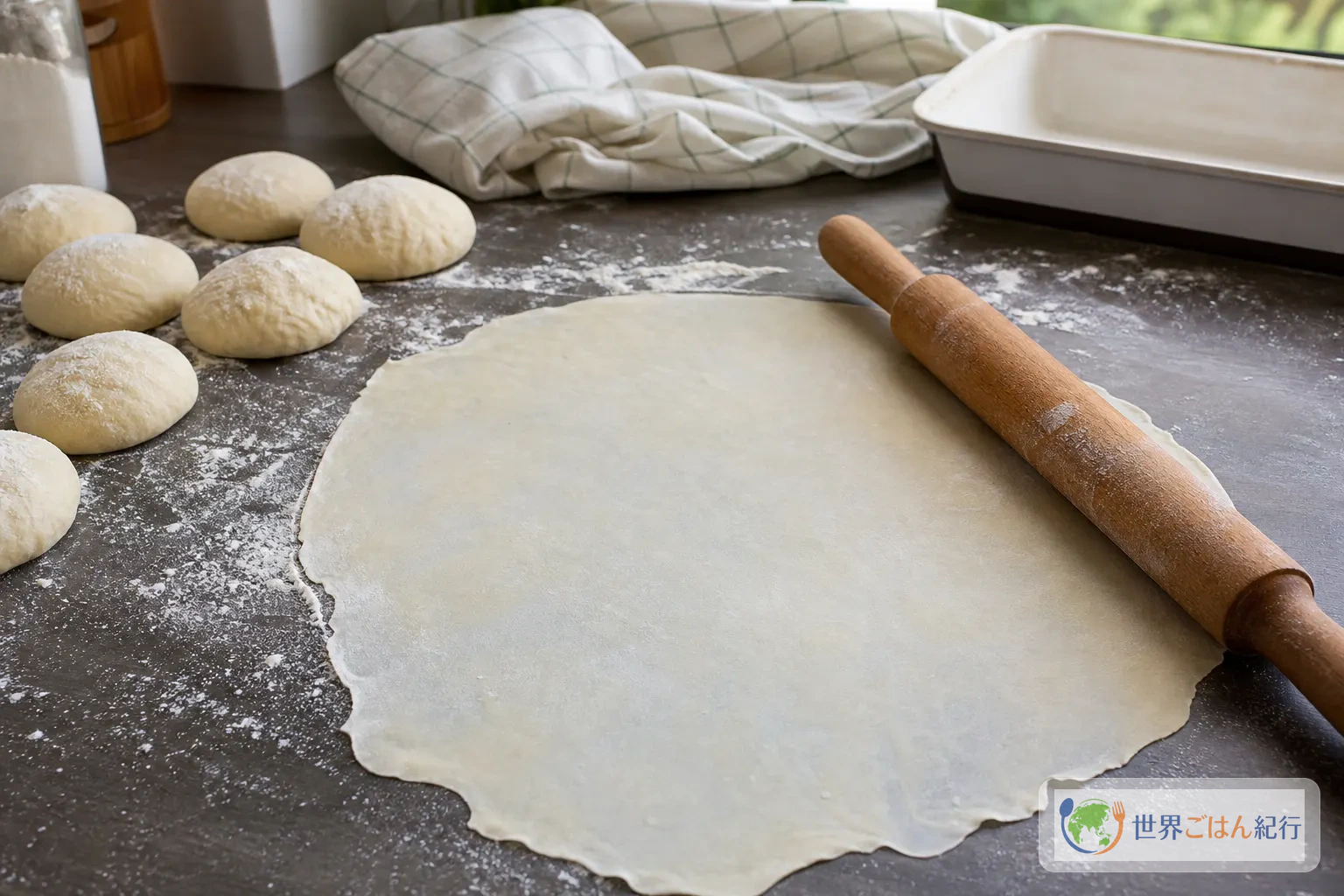
A rolling pin around 30 cm is a convenient length for rolling dough one size larger than a 20 cm square pan. Torn dough can go to the inside, but if it is small and thick from the start, the layers turn heavy after boiling.
A 20 cm square baking dish is the tool for keeping the thickness of the bake even. Too wide and the layers are thin and dry; too deep and only the center stays white and heavy. A shallow square pan about 4 cm high makes it easier to judge extra baking by watching the bubbles at the edge and the jiggle at the center.
On days you want to hold the lukewarm water around 35°C or are unsure whether the center of the bake is still cold, a thin instant-read thermometer speeds judgment. Achma is not a meat dish, but one thermometer as a tool for reading the quirks of a home oven also serves for bread dough and baked sweets.
| Priority | What to prepare | What to look at | Substitute |
|---|---|---|---|
| High | A rolling pin around 30 cm | Long enough to roll dough larger than the square pan | Use a washed wine bottle. It is heavy and hard to get even thickness |
| High | A 20 cm square baking dish | About 4 cm high. Too shallow lets butter overflow; too deep makes the center heavy | 18 cm round pan. Allow 5 minutes longer baking |
| Medium | A cooking thermometer | Useful for lukewarm water, the center temperature after baking, and reheating | For water, hot but not painful to a finger; for doneness, watch the bubbles at the edge and the jiggle at the center |
| Medium | A heatproof pastry brush | Brushes butter thinly so layers do not get heavy | Drip a little at a time with a spoon and spread with the back |
For Cheese, Manage Moisture Rather Than Buying More
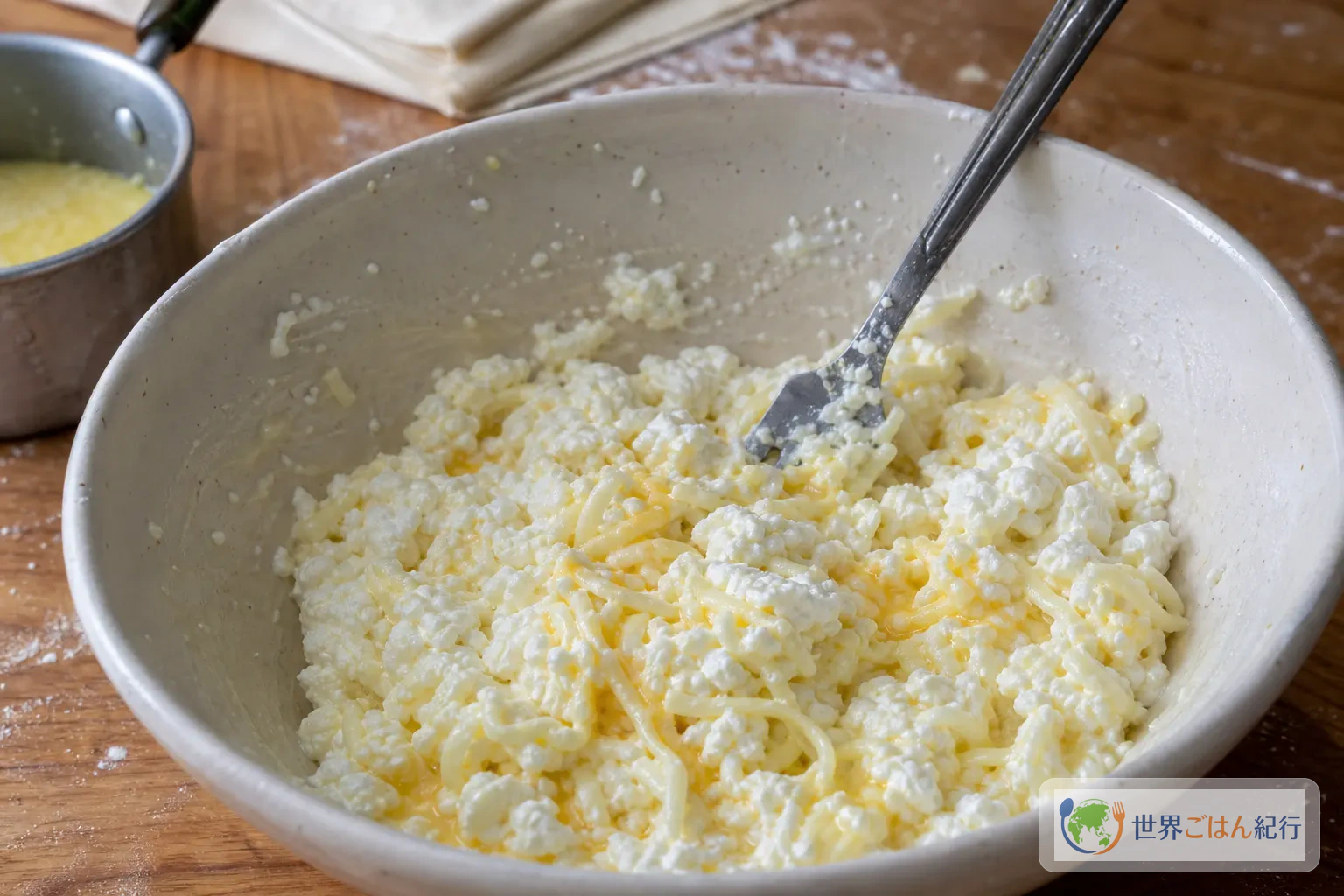
Rather than continuing to hunt for local sulguni, adjusting the moisture of cheese you can get is more likely to succeed at home. After taking low-moisture mozzarella out of the bag, blot the surface with paper towels; if feta is salty, soak it only 10 minutes and wipe it thoroughly. If the cottage cheese container has much white liquid, simply letting it sit in a tea strainer for 5 minutes reduces stickiness at the bottom.
If you mix the cheese into a smooth cream, it runs easily out between layers as it bakes. Break it up roughly with a fork and scatter it as a damp crumble, and the layers of dough show when you cut. When shopping, rather than "buy a rare cheese," look in this order: "choose a low-moisture mozzarella," "add a little salty cheese," and "don't overdo the yogurt," and failures decrease.
Method: Stack Boiled Dough and Bake
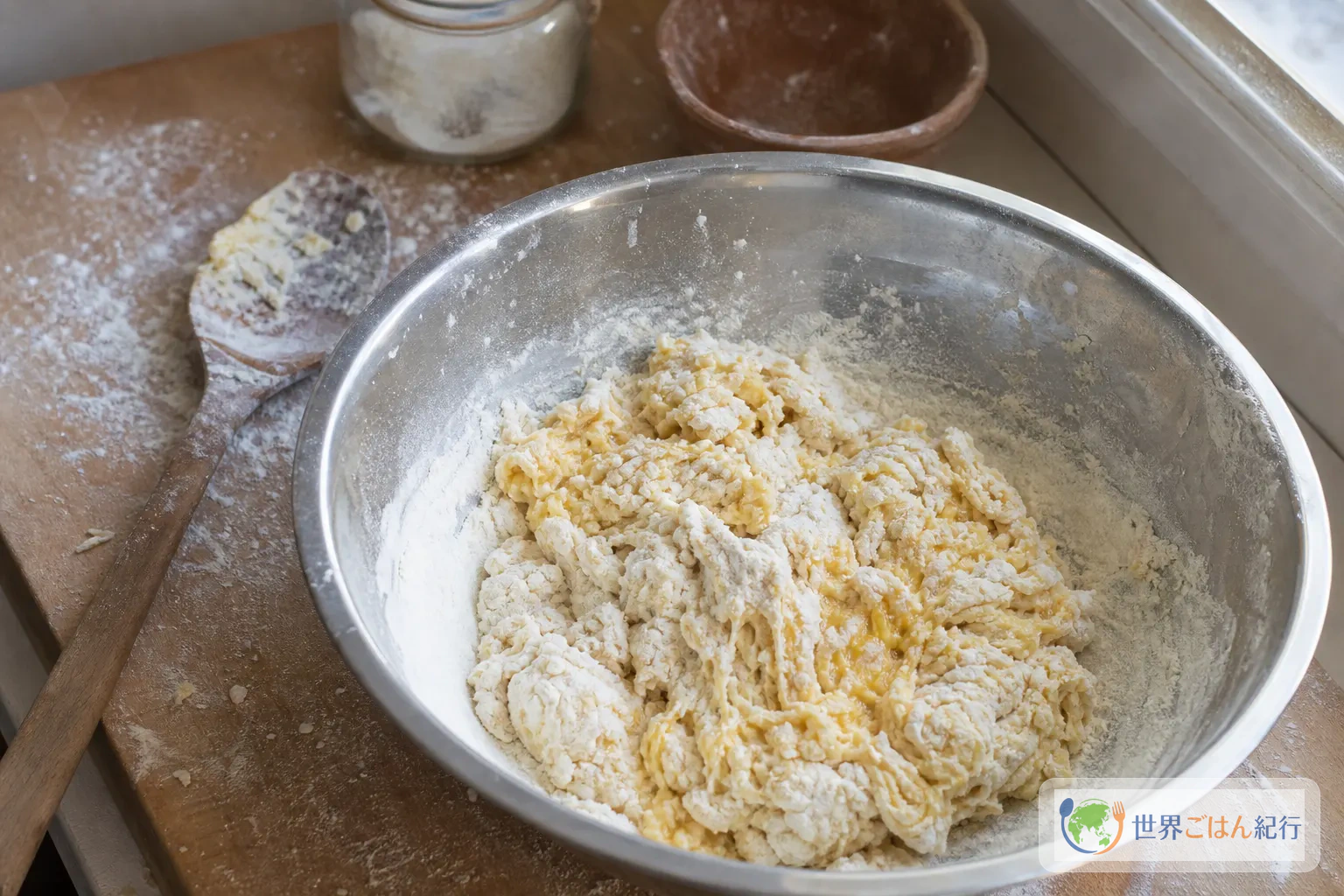
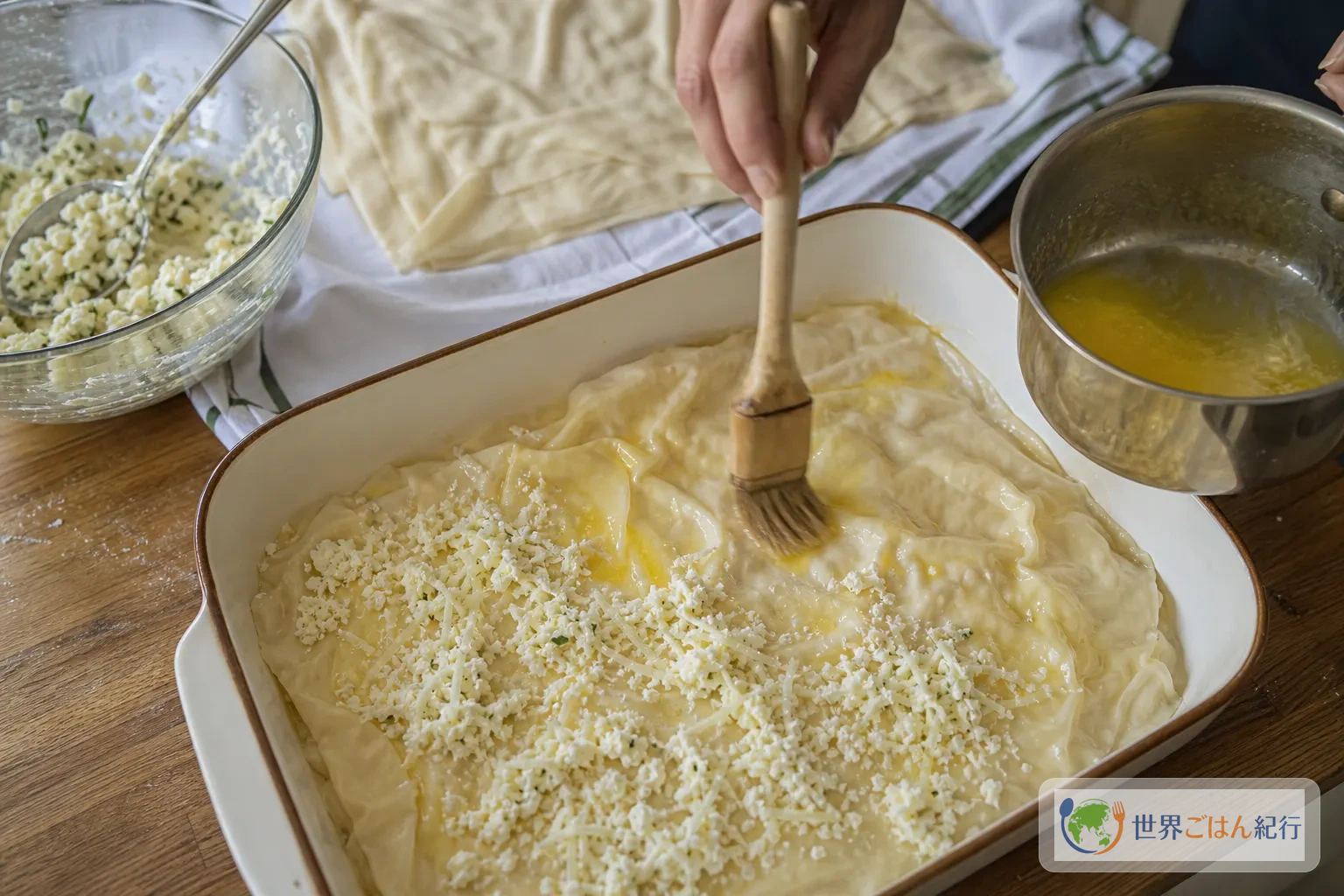
Knead the dough fairly stiff, rest it, and roll it thin. Not every sheet needs to be perfect. Keep only the two sheets for the outside large, and send torn dough to the inner layers, which eases the mind at home.
Causes of Failure and Fixes
Because the ingredients are simple, failures in achma show up in the dough, moisture, saltiness, and baking time. Home ovens in particular have large temperature differences inside, so judge baking time not only by color but by the bubbles at the edge and the jiggle at the center.
| Condition | Cause | Immediate response | Adjustment next time |
|---|---|---|---|
| Watery bottom | Cheese has too much moisture, or boiled dough was not drained enough | Bake 5 to 8 minutes more at 180°C | Drain the cottage cheese on paper for 5 minutes |
| Only the surface scorches | Top heat is strong, or the pan is too close to the top | Tent with foil and move down to the middle rack | Bake longer at 180°C |
| Tough layers | Dough boiled too long, or rested too little | Serve with yogurt before eating | Boil 30 seconds and rest 40 minutes |
| Too salty | Feta is very salty | Eat with a salad or bean dish | Soak the feta in water and reduce to 70 g |
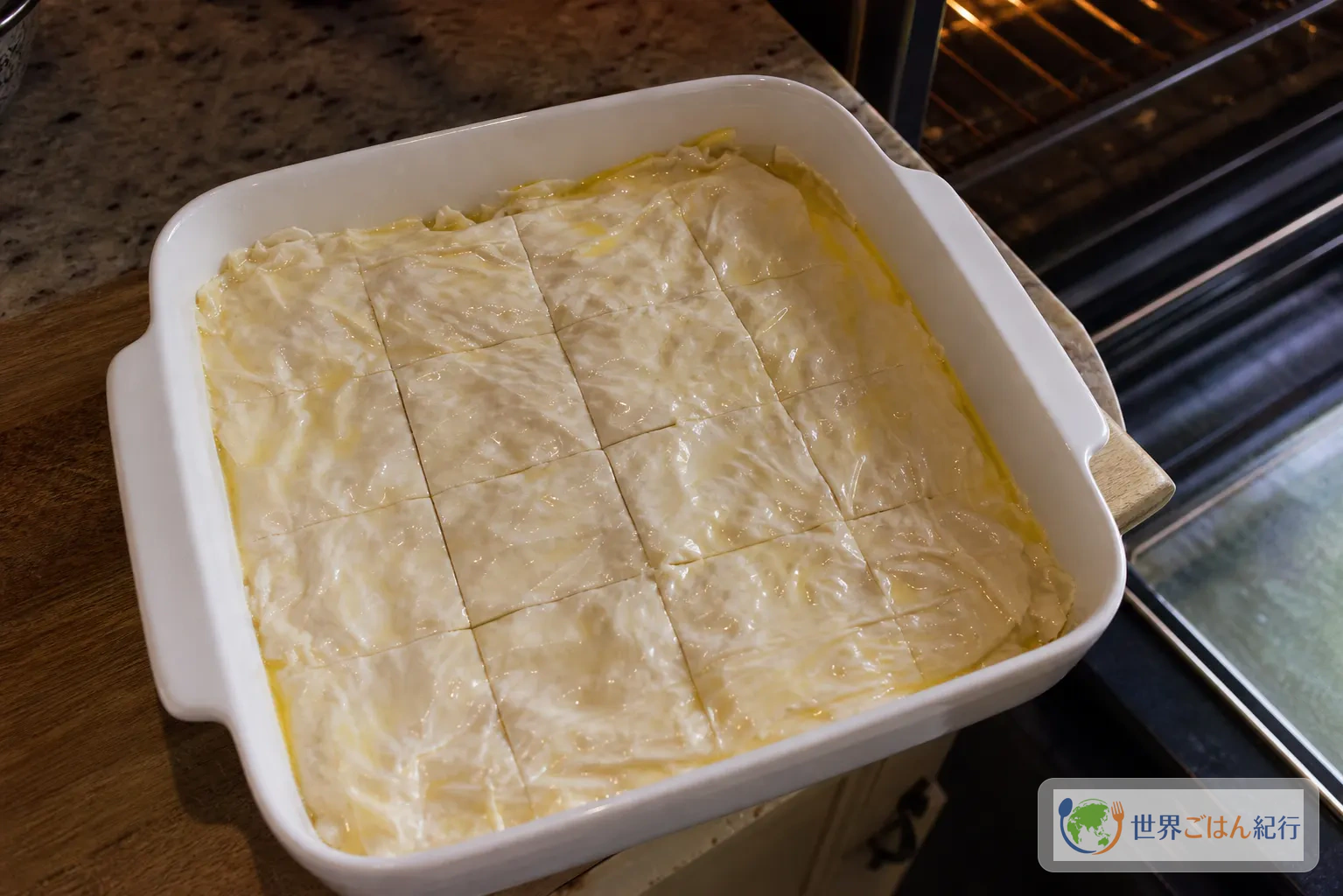
| Collapses when cut | Rest time was short | Leave it in the pan 10 more minutes | Score before baking and rest 15 minutes |
The most common failure in the process is throwing away torn dough. As long as the top and bottom outer two sheets are large, the inner ones may be torn. In fact, wrinkles hold the cheese and butter and give the bake a layered unevenness.
Serving, Storing, and Reheating
Achma is easiest to cut and has the best cheese aroma 15 minutes after baking. It is less a dish to eat in big bites piping hot than one to cut after it settles a little and serve with a sour side dish or bean dish so you don't tire of it.
| Occasion | What to pair | Why |
|---|---|---|
| Light lunch | Salad of cucumber, tomato, and herbs | Moisture and sourness catch the weight of dairy |
| A Georgian-style table | Lobio (in Japanese), pickles, herbs | Beans and sourness support a cheese dish |
| Starter for guests | Small cut achma, yogurt, red wine | Layers remain even when cold and it is easy to portion |
| A meat day | Shashlik, roasted vegetables | The layers of cheese and bread catch the fat of skewered meat |
For storage, cool slightly, wrap each piece in plastic wrap, and put in a container in the refrigerator. To reheat from the refrigerator, warm in a 180°C toaster oven for 8 minutes, or microwave at 600 W for 40 seconds and then toast for 3 minutes, and the softness inside and the toastiness of the surface come back more easily. This article does not give storage-day guidelines because no source for them could be confirmed.
To freeze, wrap each piece individually. Without thawing, microwave at 600 W for 1 minute 30 seconds, remove the foil, and toast for 5 minutes. After freezing the elasticity of the layers drops a little, so it suits everyday breakfast or snacks better than guests.
FAQ
Can I make it without sulguni?
Yes. Combining low-moisture mozzarella, feta, and cottage cheese lets you approximate stretch, saltiness, and crumbliness separately. Increasing only feta makes it salty and using only mozzarella flattens the taste, so at home using several cheeses in small amounts is steadier.
Can I substitute store-bought lasagna sheets?
On a hurry day you can, but achma's characteristic wrinkles and softness are weaker. If using them, boil dried lasagna sheets 1 minute less than the package time and stack with more butter. The sheets are thick, so use slightly less cheese and bake at 180°C for 35 to 40 minutes to keep it from getting heavy.
Does phyllo get closer?
Phyllo is thin and convenient, but the texture moves toward baklava and börek. Achma is characterized by being "thin but with the chewiness of boiled dough," so handmade dough is recommended the first time. If making it with phyllo, don't boil; brush with butter and stack, and shorten the baking time.
Can I prepare it the day before?
Yes. Once layered, press plastic wrap against the surface and leave overnight in the refrigerator. Bring to room temperature 30 minutes before baking, brush the surface with a little more melted butter, and bake at 190°C for about 40 minutes. If baked cold, the center heats slowly and only the top colors.
Can I make it without an oven?
You can make something close in a skillet, but keep the layers modest in height. Stack about 4 layers in a 24 cm skillet, cover, and cook 18 minutes over low heat, then flip and cook 8 minutes over low heat. It scorches easily, so line the bottom with parchment and use less butter. For building solid layers in a square pan, the oven is steadier.