
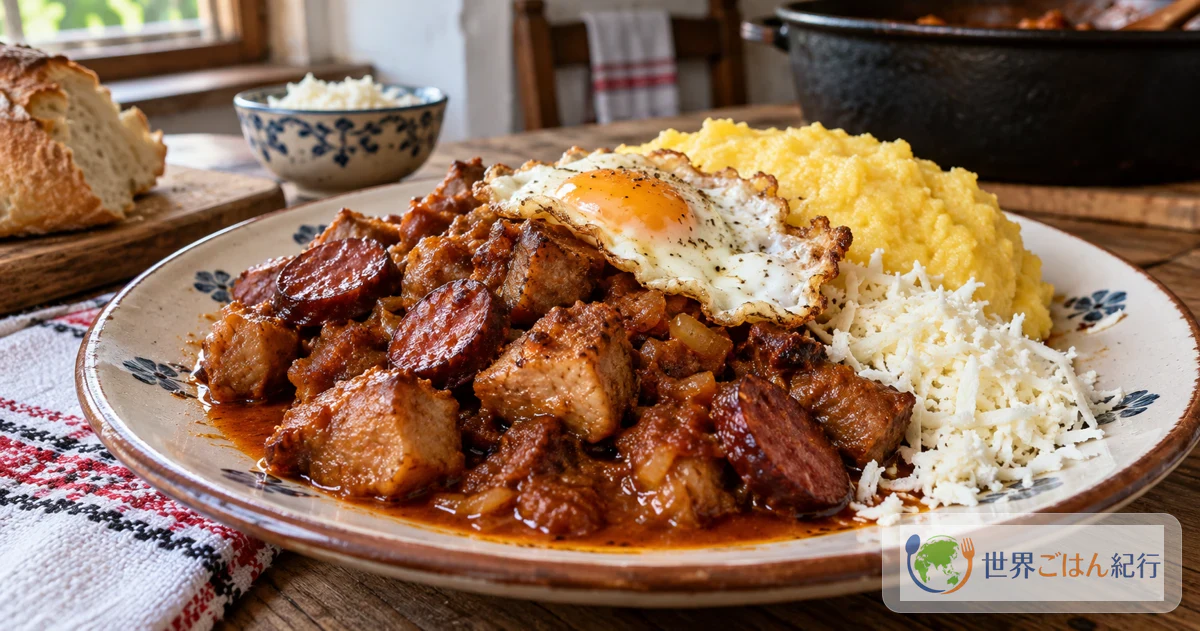
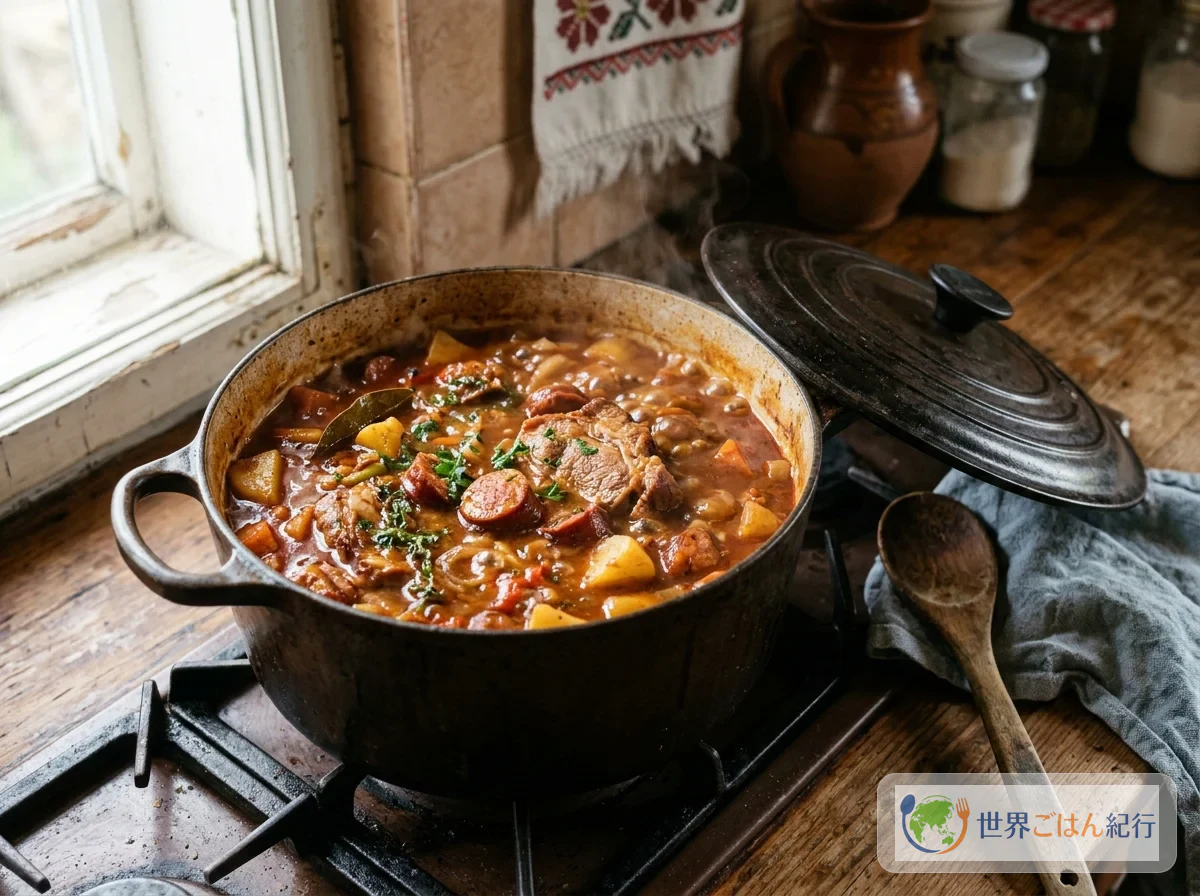
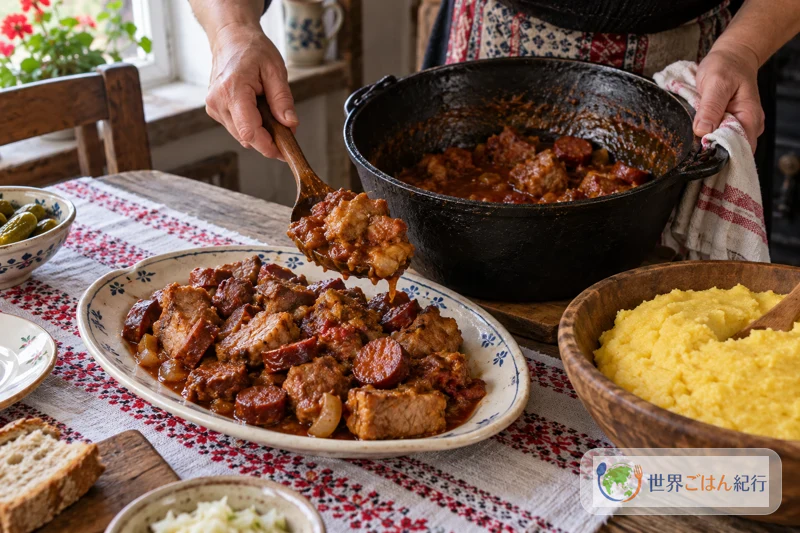
On one side of a big platter sits steaming yellow cornmeal porridge, mămăligă. Beside it is a heap of pork and sausage stew glossed with reddish-brown fat, topped with a soft fried egg. Last of all, salty sheep's cheese is grated over everything like snow. This is tochitură moldovenească, known as a village dish of Moldavia in eastern Romania.
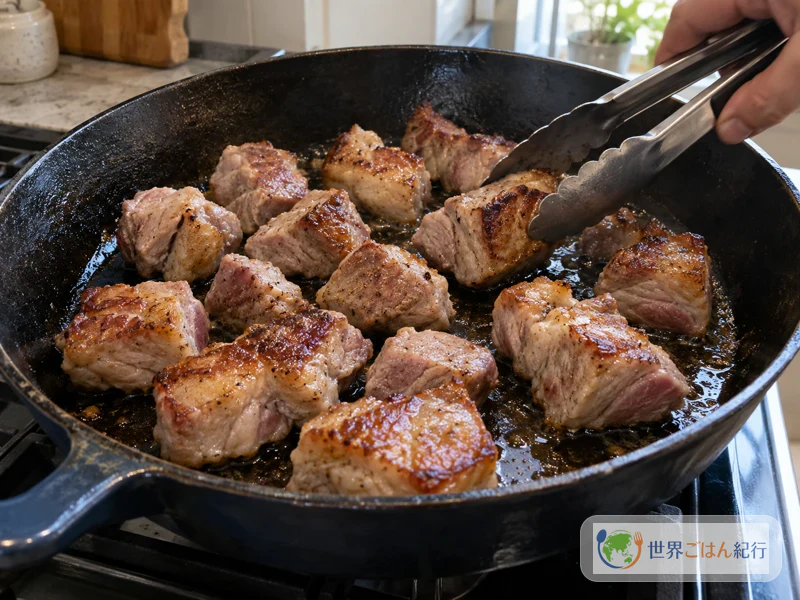
Meat, sausage, porridge, egg, and cheese all on one plate: it is a thoroughly robust dish. The Romanian magazine Newsweek România counts it among the country's representative dishes, but also writes that it is so familiar that it easily turns greasy, dry, or muddled in flavor. Two things to remember for making it well are searing the surface of the pork properly and using white wine to dissolve the flavor stuck to the bottom of the pot.
A Feast Platter from a Moldavian Village
"Moldavia" in Romania is a historical region in the northeast of the country, sharing its name with the neighboring Republic of Moldova. Tochitură has been described as a rustic dish that reflects the life and traditions of the villages of this region. It is a home dish made with local ingredients and without sparing effort, and it is said that there are as many recipes as there are cooks.
The Moldavian style uses only pork. Newsweek România recommends combining cuts such as shoulder, leg, and loin, choosing parts with a moderate amount of fat. The fat melts out during the stew and gives the sauce richness and body. Using only lean meat leaves it dry and bland. Pairing it with smoked sausage and pulling the whole dish together with pork fat and smoke is the taste of this region.
In Romania, December 20, the day of Saint Ignatius (Ignat), has traditionally been the day of slaughtering the pig. According to ethnologist Marcel Lutic, the custom of slaughtering pigs took place around the winter solstice and was tied to an old belief about helping the sun's strength in the season of short days. Pork was an important ingredient supporting the table from winter through Christmas.
There are ways to make tochitură with and without tomato. In the Moldavian-style recipe published on the Australian news site InDaily, it is explained that leaving out the tomato and making the sauce from pork fat and meat juices alone is more traditional. The Romanian newspaper Jurnalul's recipe, on the other hand, adds a little tomato paste for color and acidity. Without tomato the fat and meat flavor come forward; with tomato it feels a little lighter. This recipe follows Jurnalul's proportions and uses tomato paste, but you may leave it out.
Ingredients (serves 4)
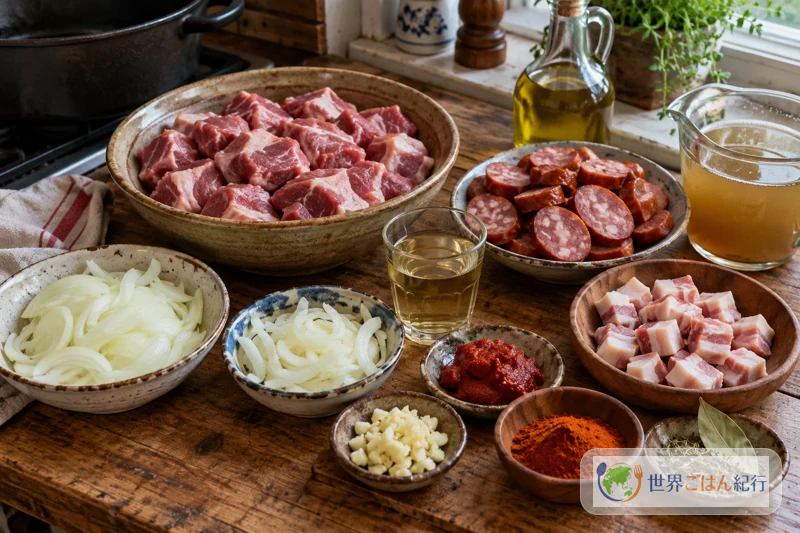
This is a home version of Jurnalul's recipe for tochitură moldovenească, adapted to easy-to-find ingredients.
Romanian telemea is a salty sheep's cheese that can be hard to find outside the region. Feta, available at import shops and many supermarkets, is the closest substitute for saltiness and tang. For the smoked sausage, choose one with a strong smoky aroma. According to Newsweek România, Moldavian sausages are strongly smoked and well spiced. Fresh sausage is considered unsuitable, so be sure to use a smoked one.
If you make it with only lean pork such as tenderloin or leg, it turns dry even after stewing. Choose a cut with veins of fat, like shoulder, and the fat melts into the sauce for a moist texture.
How to Make Tochitură
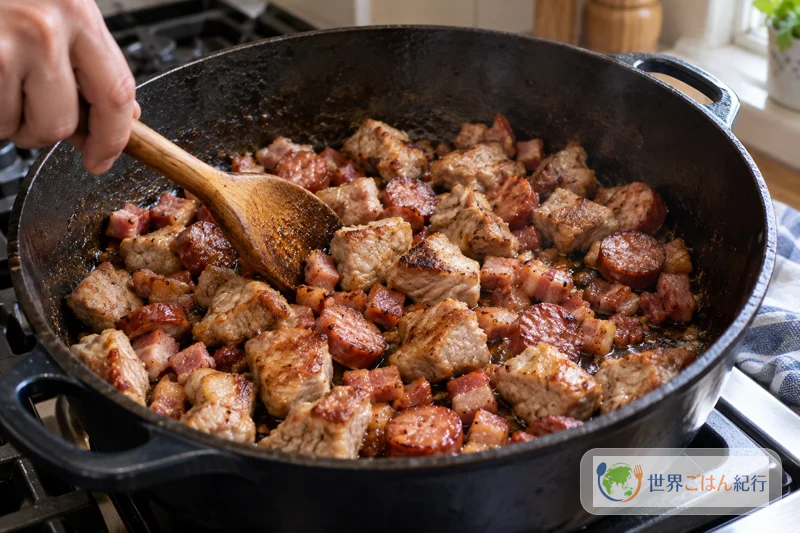
Prep takes about 15 minutes, searing and sautéing about 20 minutes, and stewing about 1 hour. While it stews, prepare the mămăligă to go with it.
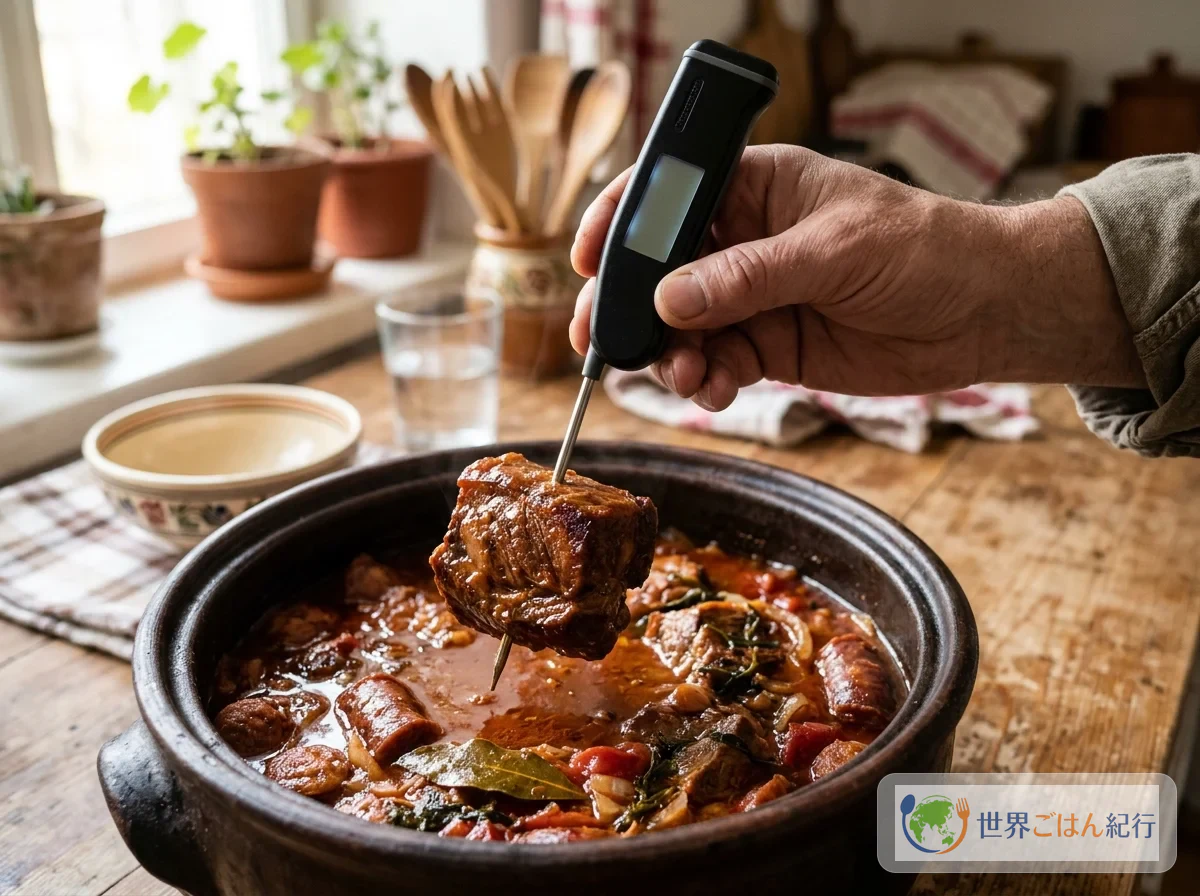
Cook pork all the way through to the center. Japan's Ministry of Health, Labour and Welfare advises that heating the center of meat at 75°C for at least 1 minute kills pathogens such as enterohemorrhagic E. coli. Some Romanian recipes add pork liver and leave the inside slightly pink, but in Japan eating pork liver or pork raw is prohibited, and it must be cooked through. This recipe does not use liver.
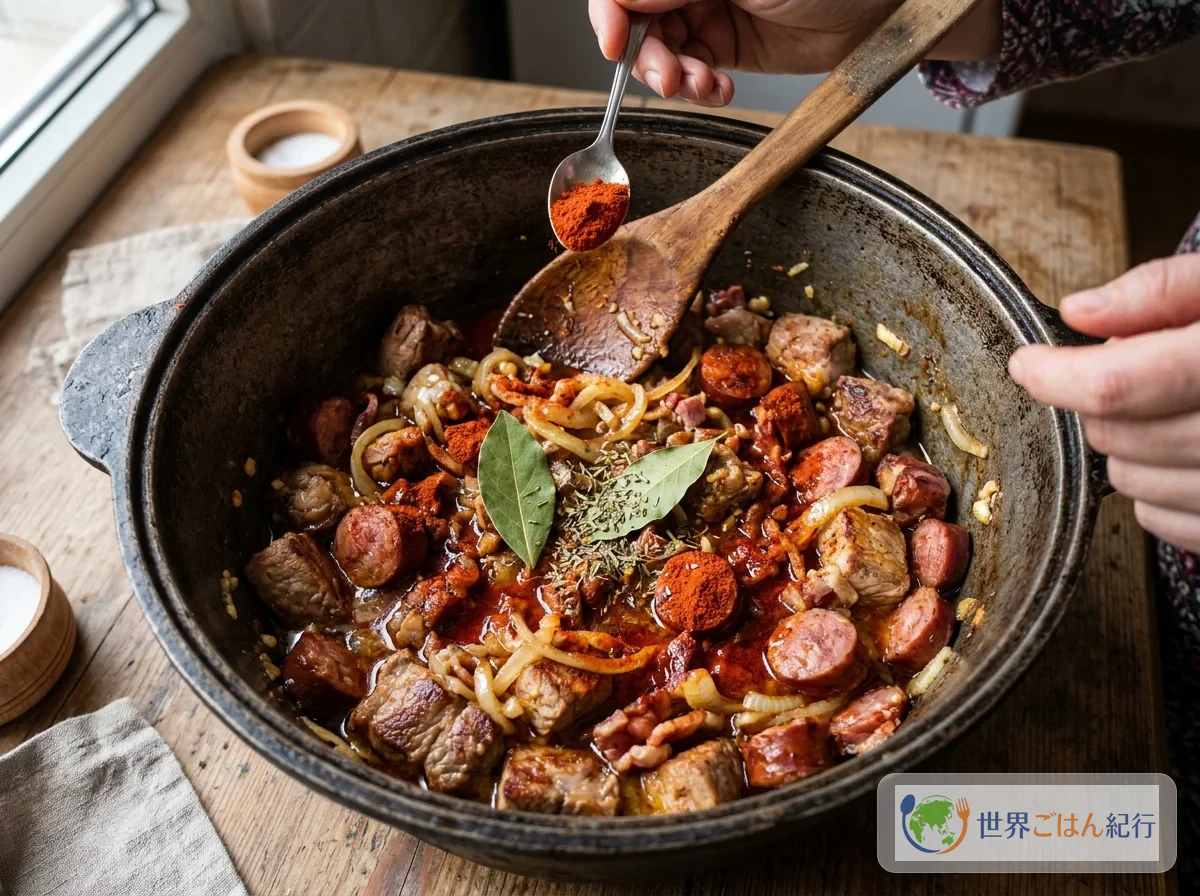
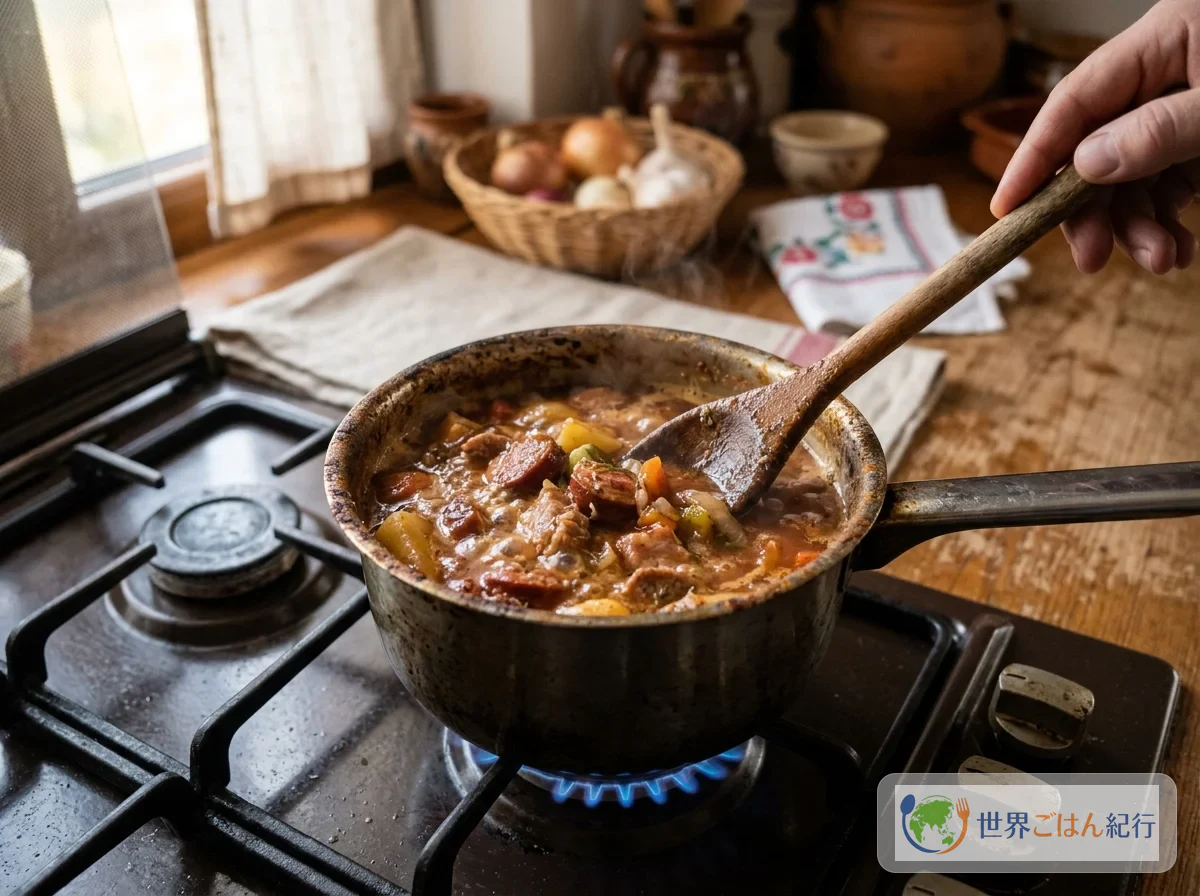
Once the white wine is in, the trick is to boil until the smell of alcohol is gone before adding liquid. The acidity of the wine softens the heaviness of the pork fat, and the browned bits at the bottom become the sauce's deep color and aroma.
Make the Mămăligă Softer Than Usual
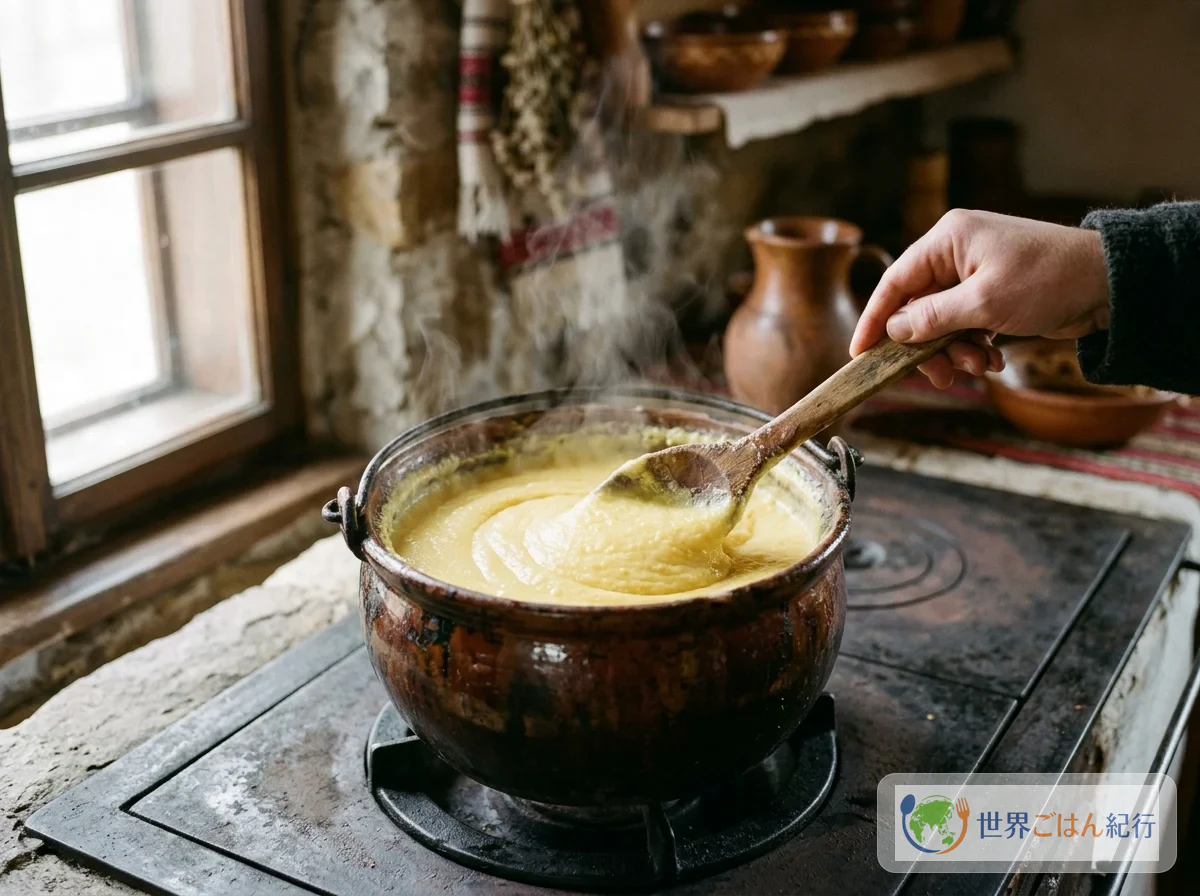
The mămăligă served with tochitură is a staple of Romania and Moldova, made by cooking cornmeal with hot water and salt. It is normally made firm enough to be cut with a string, but Jurnalul recommends making it soft, so it blends with the sauce, when serving with tochitură. Use medium-grind cornmeal or polenta flour, sprinkle it a little at a time into hot water, and keep stirring over low heat. Detailed instructions are in the Moldovan mămăligă recipe (in Japanese). On the day you serve it with tochitură, use about 10% more water than in the recipe so it comes out soft enough to scoop with a spoon.
For the fried egg, a set white with a runny yolk blends well with the sauce and mămăligă. As in the InDaily recipe, there is also a way of topping with a poached egg instead of a fried one. Grate the cheese or crumble it finely by hand and scatter it generously over the egg and mămăligă.
Newsweek România names dry red wine or well-chilled țuică (Romanian plum brandy) as drinks to go with tochitură.
Served on a Platter for Everyone
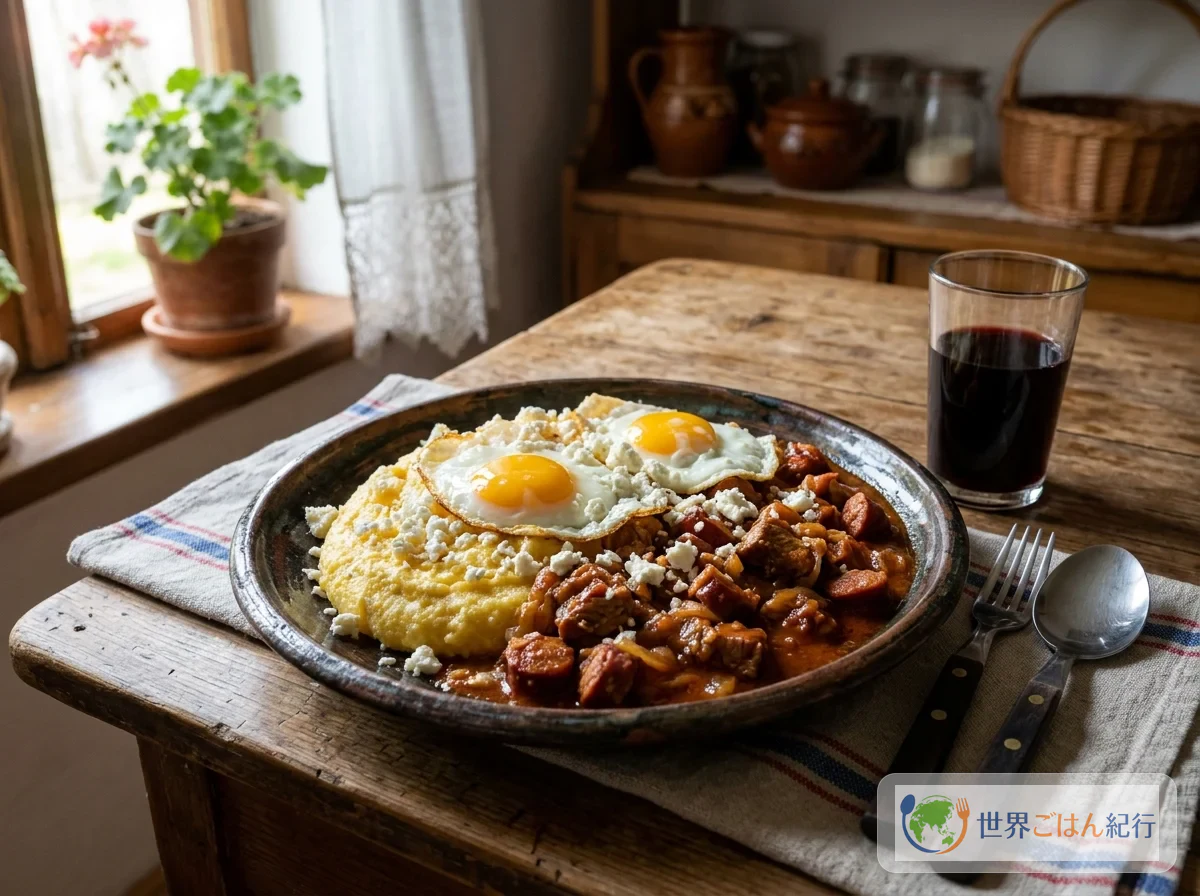
Spread the mămăligă on a large plate and heap the tochitură, sauce and all, beside or on top of it. Top with a fried egg and scatter cheese, and it is ready. To eat, break the yolk, mix it with the sauce, and bring it to your mouth coated onto the mămăligă. The richness of the fat, the acidity of the wine, the saltiness of the cheese, and the mellowness of the egg layer up with every bite.
It is filling on one plate, so a refreshing side such as pickled vegetables or a cabbage salad goes well. If you want to cook another Romanian dish, mititei (in Japanese), skinless grilled sausages cooked over charcoal, is a good choice; you will see how the same pork shows a different face depending on whether it is grilled or stewed.
FAQ
Can I make it without white wine?
Yes. Use the same amount of stock in place of the white wine, and add 1 tsp wine vinegar or vinegar at the end to get closer to the acidity of the wine. If someone who does not drink alcohol will eat it, give the alcohol plenty of time to cook off after adding the wine.
What happens if I leave out the tomato paste?
You get a more traditional taste made with only pork fat and meat juices. The color is less red and more brownish, and the flavor of the meat and sausage comes forward.
I would like to add pork liver.
If you add it, put it in 10 minutes before the end and cook until completely done through the center. In Japan, eating pork liver raw is prohibited. Do not eat it with the inside left red.
What if I don't have feta?
Any salty cheese will do. Grated hard cheese also works, but the saltiness and tang are somewhat weaker.
Can I make it ahead?
The stew can be reheated. Cool it and refrigerate, and when reheating, heat thoroughly until it is bubbling throughout. Make the fried egg and mămăligă right before serving. This article does not give a storage-day guideline because no source for one could be confirmed.
Sources
- Jurnalul, Andreea Tiron, "Tochitura moldovenească, preparat tradițional românesc celebru," 18 June 2024. Accessed and checked 22 October 2026. https://jurnalul.ro/timp-liber/culinar/tochitura-moldoveneasca-preparat-traditional-romanesc-celebru-967985.html
- Newsweek România, Adrian Costin, "Tochitura moldovenească: cum se face corect și ce greșeli să eviți," 20 April 2026. Accessed and checked 22 October 2026. https://newsweek.ro/timp-liber/tochitura-moldoveneasca-cum-se-face-corect-si-ce-greseli-sa-eviti-p
- InDaily, "A taste of Moldavia," 26 February 2015. Accessed and checked 22 October 2026. https://www.indailysa.com.au/news/archive/2015/02/26/a-taste-of-moldavia
- Newsweek România, Florentina Enache, "20 decembrie, Ignatul porcilor," 18 December 2024. Accessed and checked 22 October 2026. https://newsweek.ro/actualitate/20-decembrie-ignatul-porcilor-semnul-care-prevestea-cum-va-fi-iarna-la-taierea-porcului
- Ministry of Health, Labour and Welfare (Japan), "Cook beef and pork liver and pork thoroughly through the center" (poster for restaurants, in Japanese). Accessed and checked 22 October 2026. https://www.mhlw.go.jp/file/06-Seisakujouhou-11120000-Iyakushokuhinkyoku/innsyokutenn.pdf


