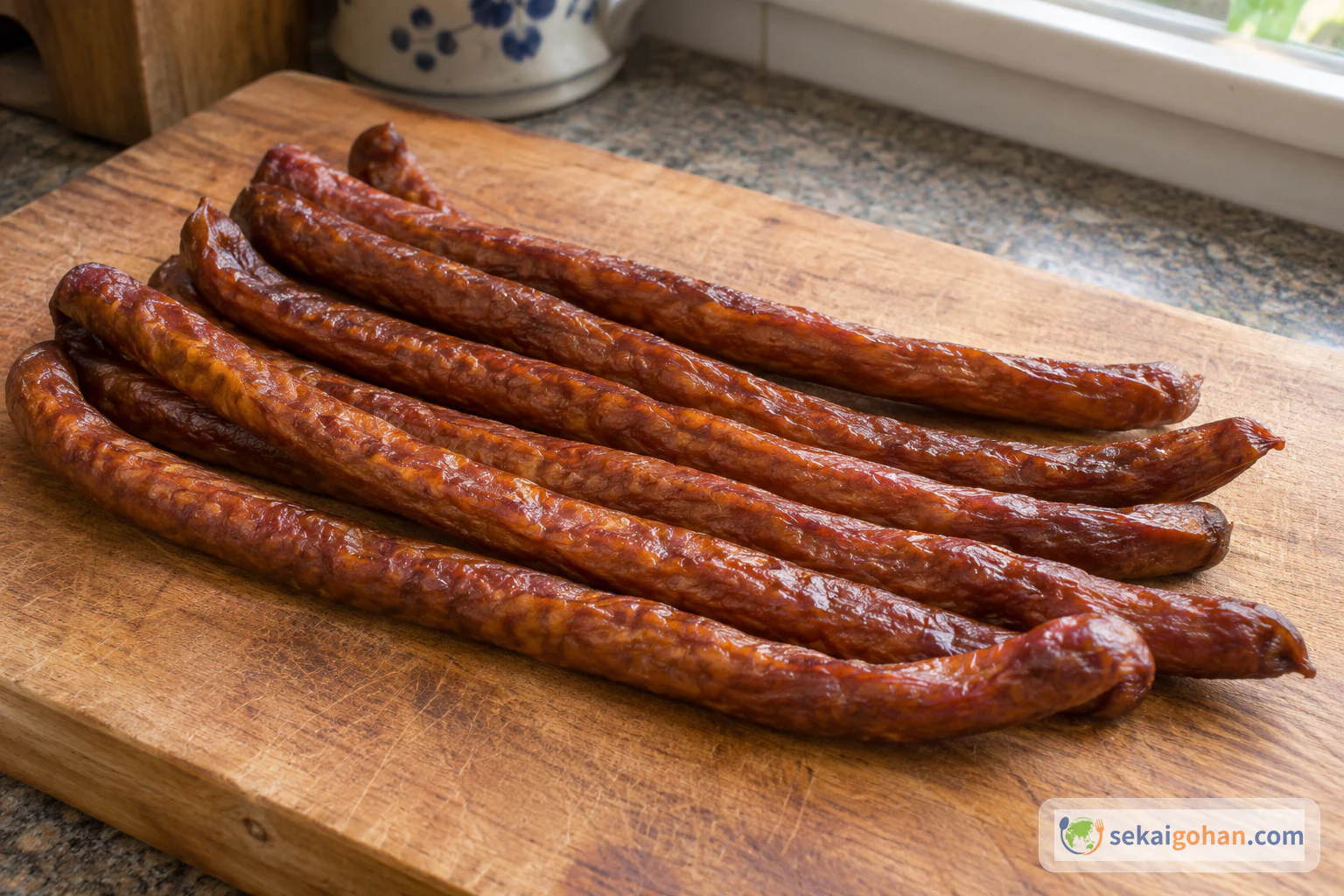
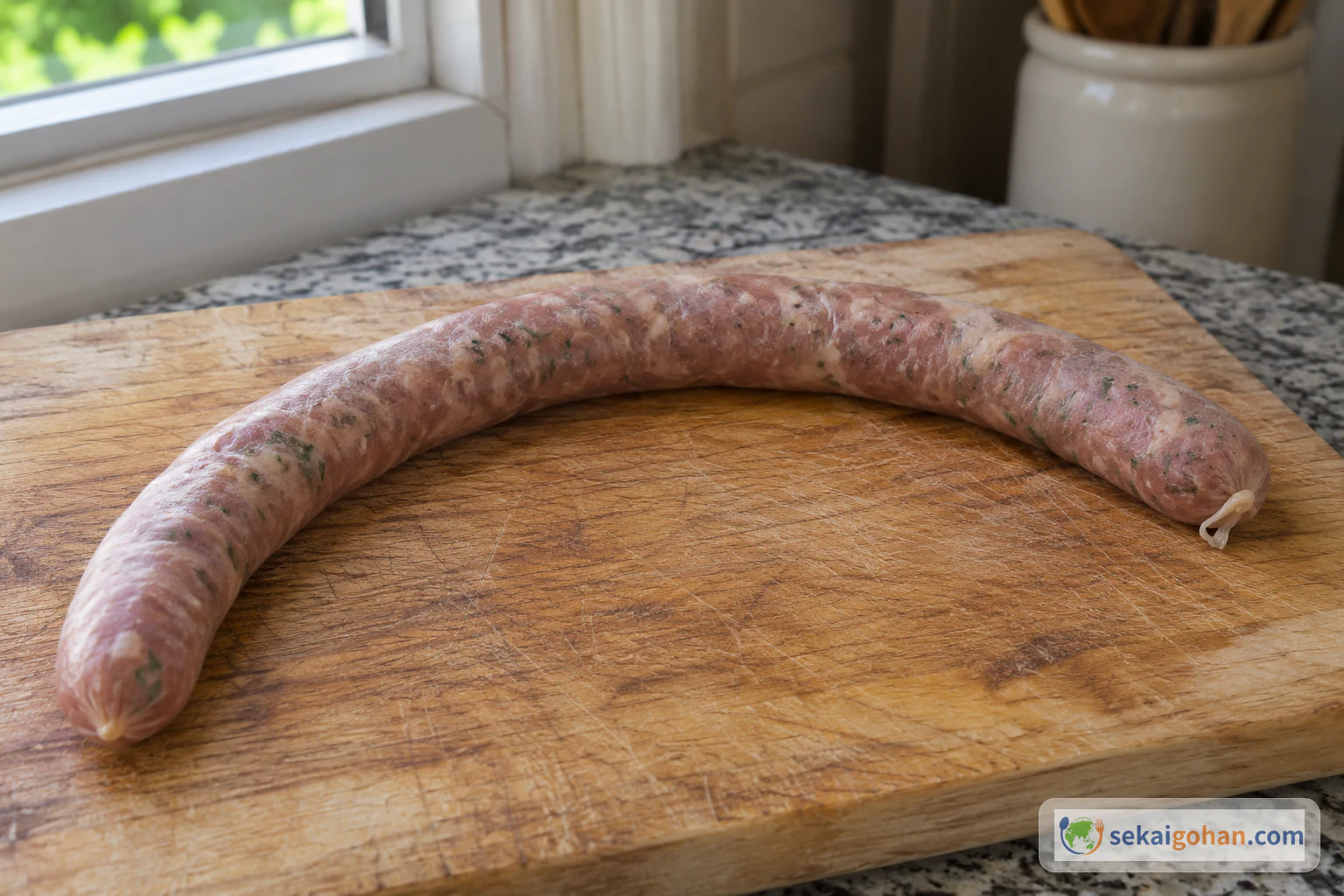
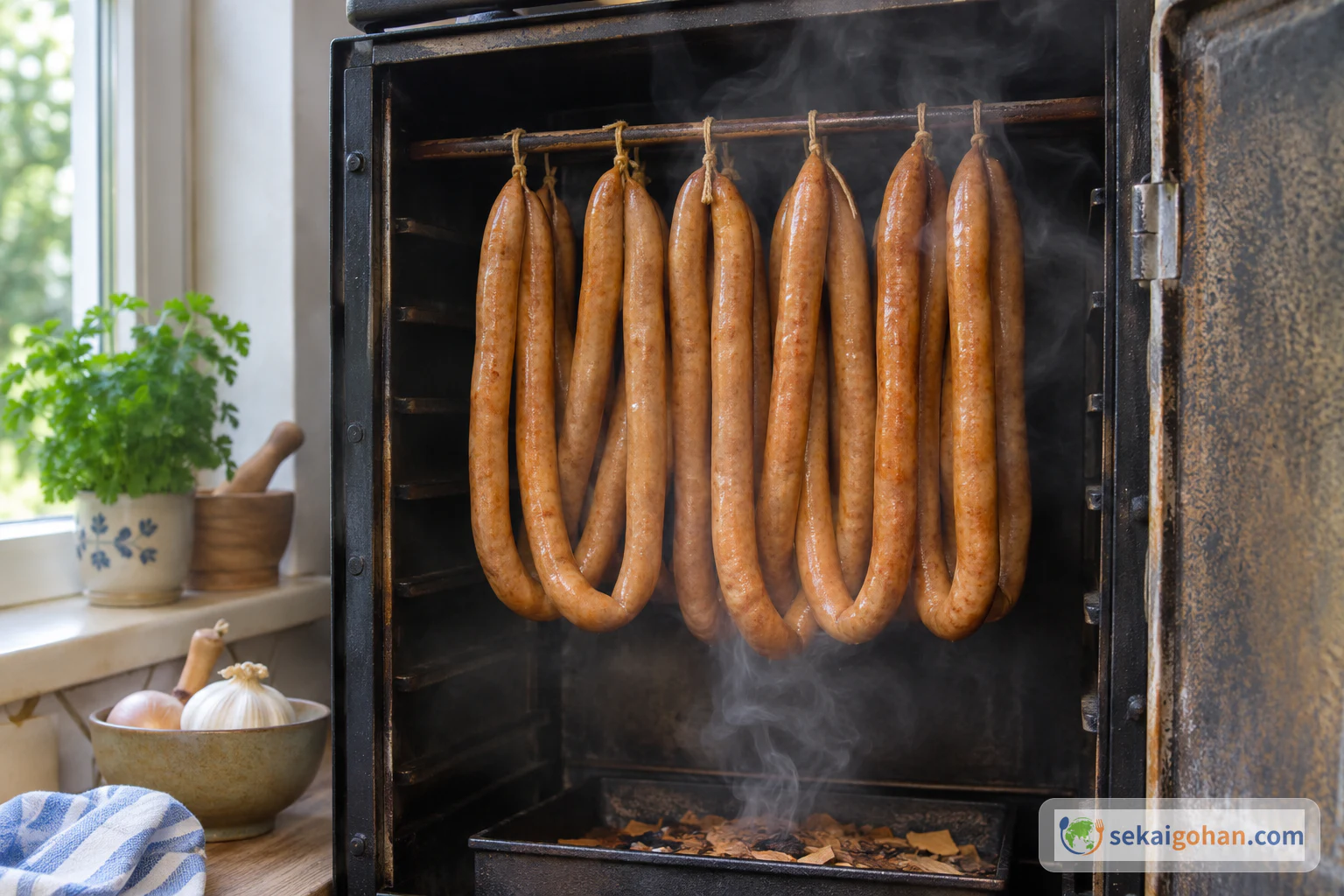
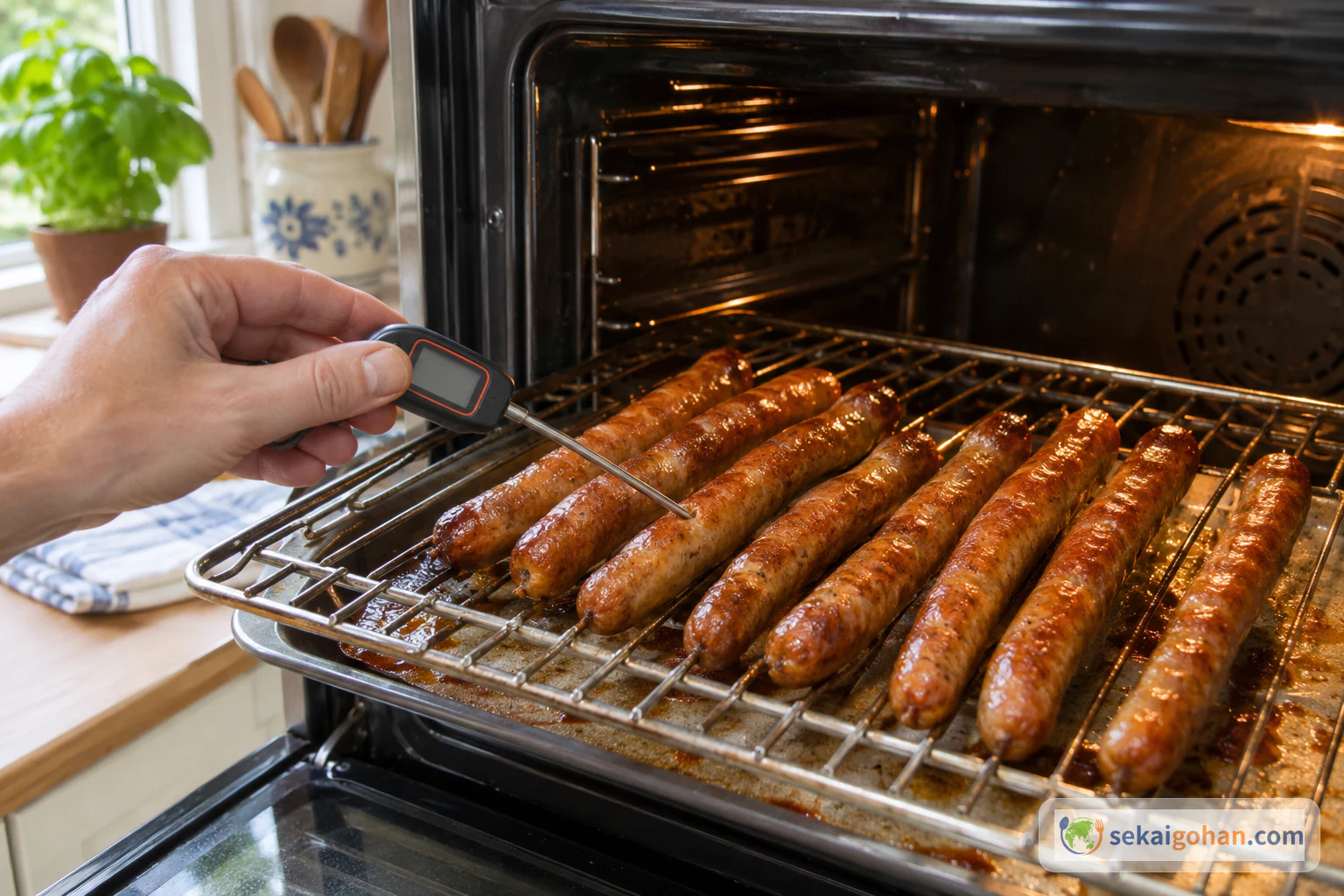
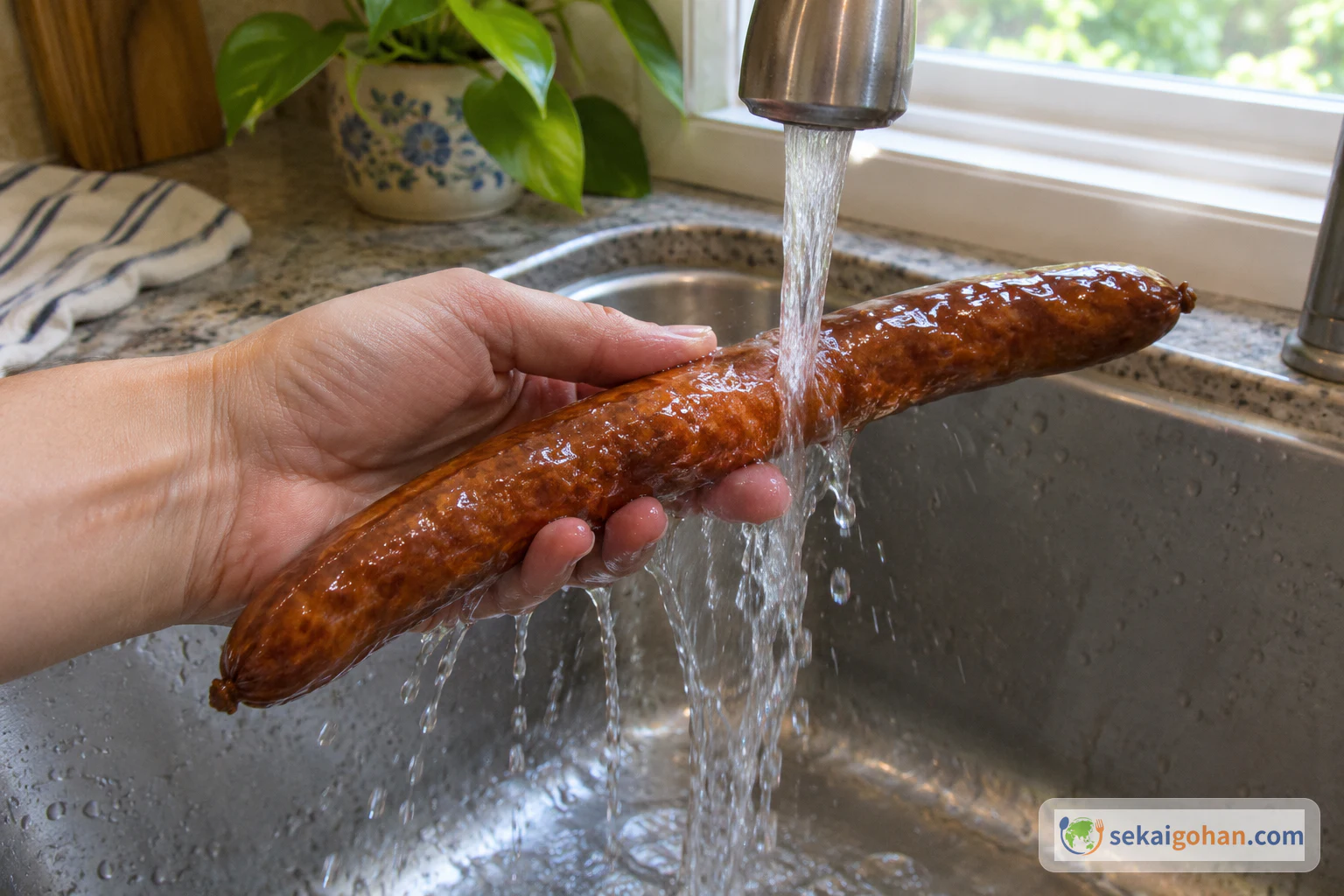
When you lift the rope of sausage off the smoker rod, the thin casing has gone from pale to light brown. It feels dry under your fingers and smells of wood smoke, nutmeg and caraway. A short bake in a low oven darkens it further and pulls it tight, and a thermometer pushed into the center tells you when it's done. Kabanosy (one stick is a kabanos) are Poland's long, narrow smoked pork sausages, stuffed into sheep casings and seasoned with black pepper, nutmeg and caraway. Made at home and eaten fresh, they're firm and springy, with a sweet, woody spice behind the smoke. The dried sticks sold in Poland are harder, and they snap cleanly when you bend them.
From Kabanek to Kabanosy: Poland's Narrow Smoked Stick
The name comes from the pig. In 19th-century eastern Poland, a region that included part of today's Lithuania, a kabanek was a young pig fattened mostly on potatoes and raised to about 265 lb (120 kg) at most. The thin sausage made from that meat took its name, and kabanosy is now registered across the EU as a Traditional Speciality Guaranteed, a protected name for a traditional Polish product.
Kabanek is the young potato-fed pig. Kabanos is a single sausage, and kabanosy is the plural, which is the word you'll see on menus and packs. In Australia and New Zealand the same idea travels as cabanossi or kabana.
What sets the Polish stick apart is the order of the work. The sausage is smoked first, then baked, and then traditionally dried. Drying after baking is what lets kabanosy keep without refrigeration, and a well-made dried stick breaks with an audible snap. The traditional form is about 10 inches (25 cm) long, made in casings of about ¾–⅞ inch (20–22 mm). The sticks are tied at one end and hung folded over a pole, which leaves a faint mark at the bend.
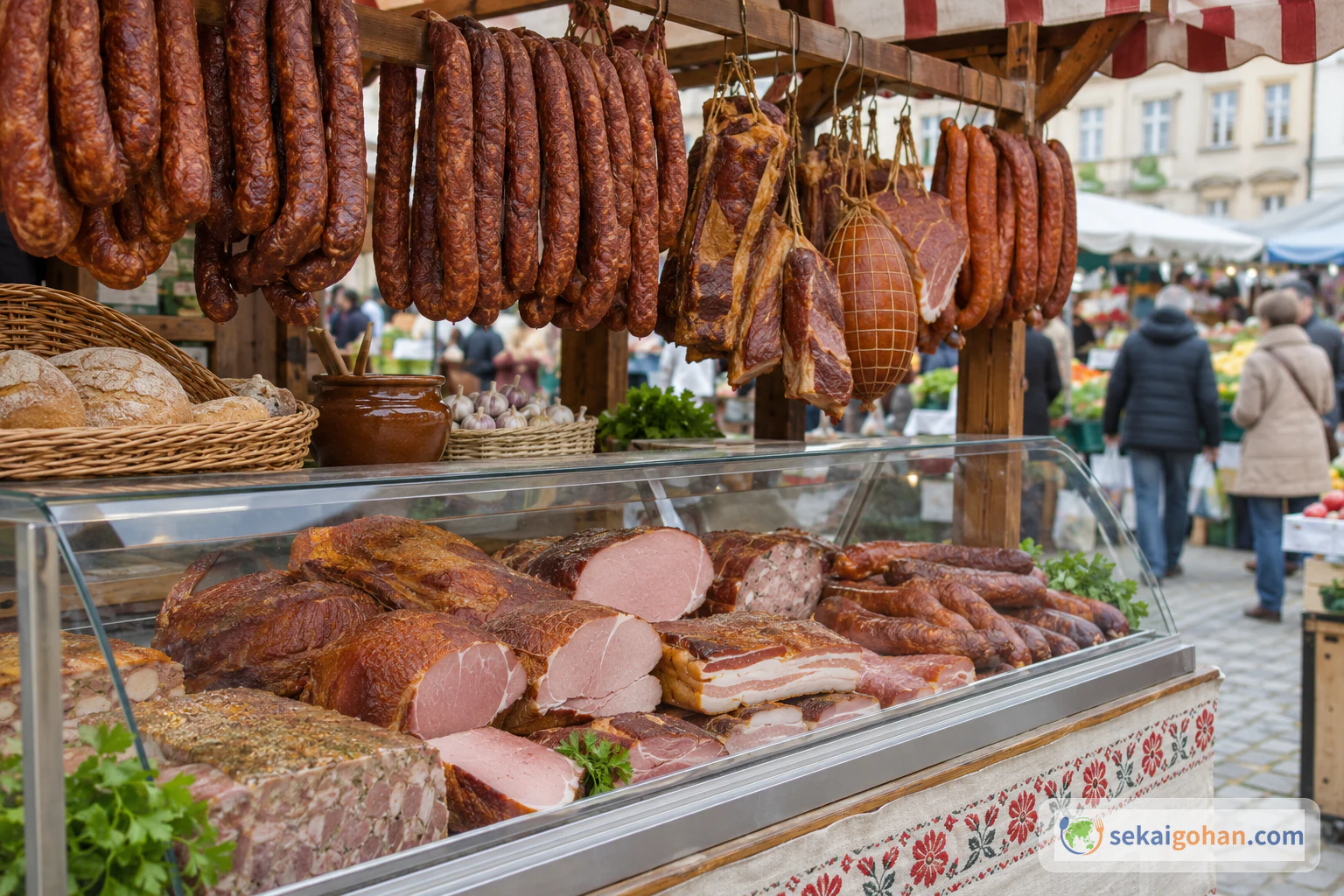
In post-war Poland, kabanosy became a national food made to an official recipe and exported alongside ham and bacon. After 1990 the rules loosened, and thin sausages made from beef, chicken or horse meat began to be sold as kabanosy too. Polish home cooks vary as much as the shops do. Some work a little beef paste into the pork, and some use even narrower casings of about ¾ inch (18–20 mm). The version here is all pork, smoked and baked, and stops before the drying stage. That makes it a fresh cooked sausage that lives in your refrigerator.
The Australian cousin
Cabanossi, or kabana, is an Australian and New Zealand adaptation of the Polish kabanos, and the differences show up in every part of it. It's made in wider sheep casings, swaps caraway for cumin and adds ginger. Shop versions often bind the meat with tapioca starch, soy protein and emulsifiers. In Australia it's sold as a snack and lunchbox sausage. Keep the two recipes apart: Australian spices or casing sizes push the Polish stick toward a different sausage.
| Polish kabanosy | Australian cabanossi / kabana | |
|---|---|---|
| Casing | Sheep, about ¾–⅞ inch (20–22 mm) | Sheep, about 1 inch (24–26 mm) |
| Spices | Black pepper, nutmeg, caraway | Black pepper, nutmeg, cumin, ginger |
| Finish | Smoked, baked, traditionally dried until it snaps | Smoked, cooked, chilled |
| Shop versions | Pork, salt and spices at heart | Often include starch, soy protein and emulsifiers |
You'll find more of the country's cooking on the Poland page.
Ingredients (serves 10)
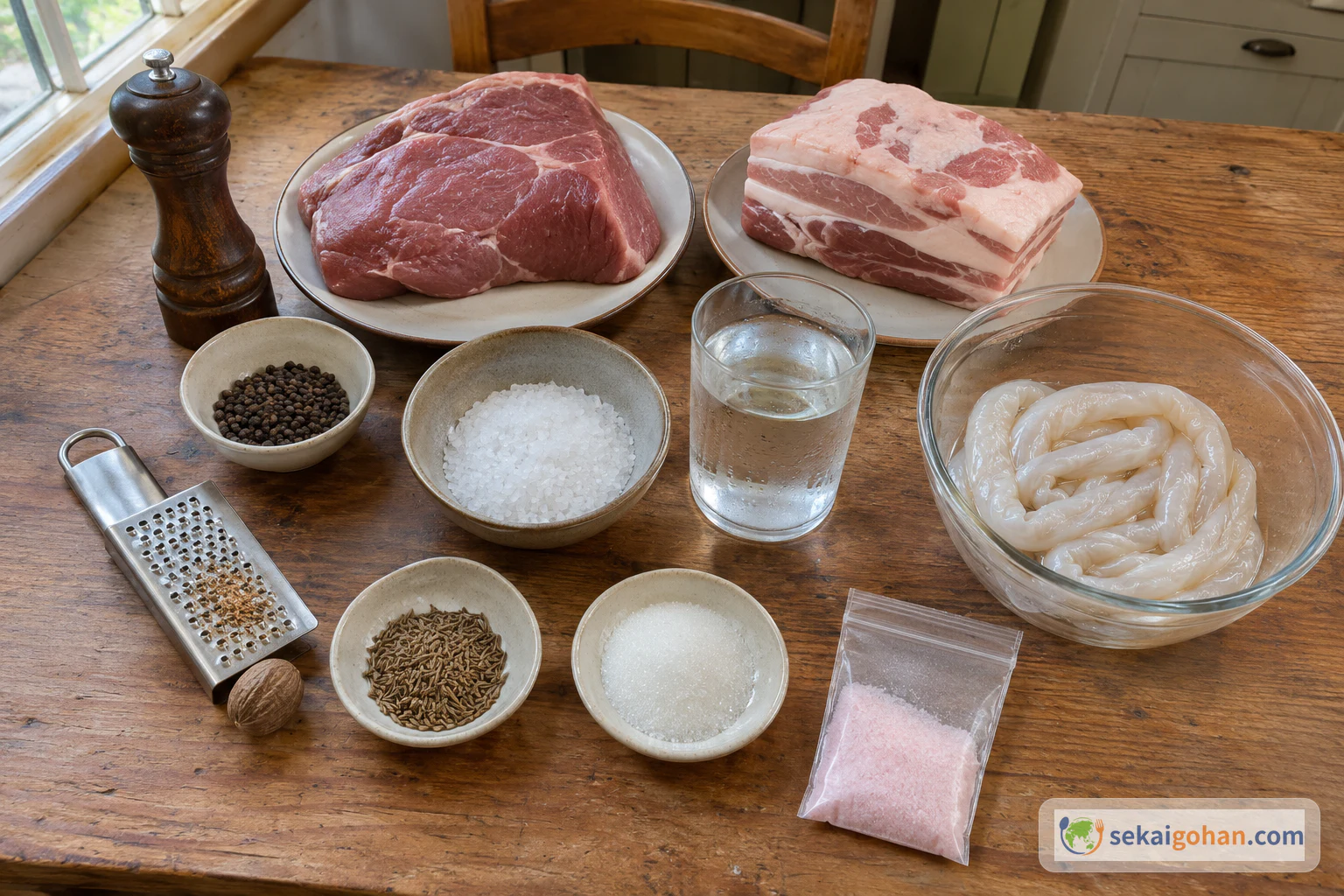
The cure and spices come in single grams, so use a digital scale for them, not a guess. The cure dose follows the product label. Never make up for a missing cure with extra salt. Salt doesn't give the color or the protection.
The recipe uses pork, salt, curing salt, spices, sugar, water and sheep casings. Check the cure's label for anything else it contains.
- Use fresh pork, never meat that has been frozen. Keep it at 39°F (4°C) or below until you grind it.
- Make this only if you have a probe thermometer. Every sausage must reach 158°F (70°C) or higher in the center.
- Never eat the mix or the sausage raw.
- Traditional Polish kabanosy are dried after baking, but drying at home is not recommended. Refrigerate the baked sausages instead.
Equipment
- Meat grinder with a 3/8-inch (8 mm) plate and a 3/16-inch (5 mm) plate
- Large bowl, kept cold
- Sausage stuffer
- Needle for pricking air bubbles
- Smoker that holds 104–122°F (40–50°C), plus wood chips
- Oven, or a smoker that reaches 140–194°F (60–90°C), for baking
- Digital probe thermometer
- Digital kitchen scale that weighs single grams accurately
- Rack and a clean container for chilling
Choosing and Substituting
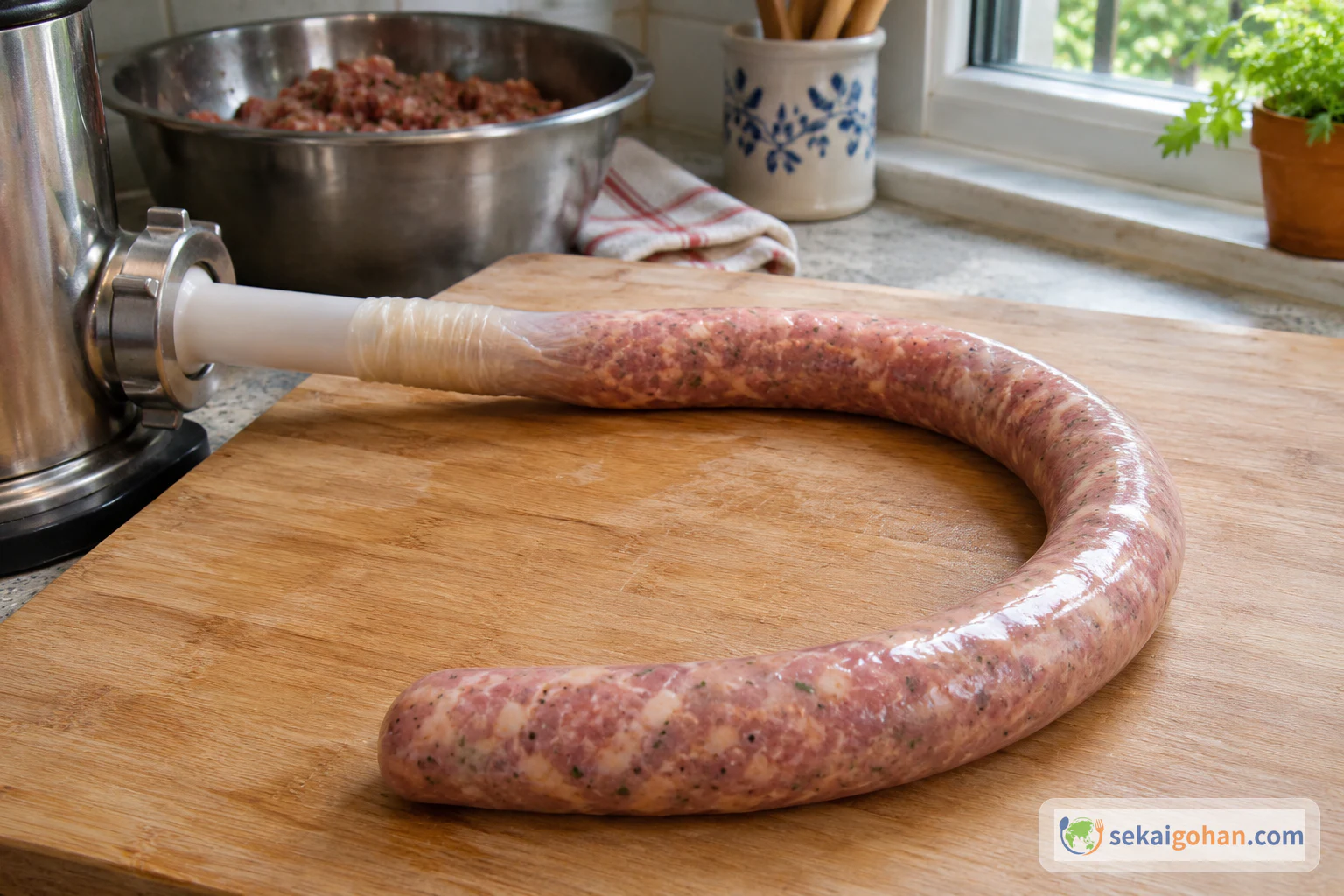
The casing decides what you end up with. Look for salted sheep casings (also sold as lamb casings) of about ⅞ inch (22 mm) from butcher-supply shops or online. Hog casings are much wider. They turn the sausage into something else, and the heating time changes with them.
Cure #1 comes from sausage-making suppliers online. Polish curing salt (peklosól) is a different product, used at a much higher dose, so never swap the two gram for gram. Follow the label of whichever one you buy.
Caraway is the spice that makes the stick taste Polish, and supermarkets often don't stock it. Buy whole seeds from a spice shop or online and grind them just before mixing. Swapping in cumin moves the flavor toward Australian cabanossi. Leaving caraway out gives you a plainer pepper-and-nutmeg sausage.
For the pork, buy shoulder or leg for the lean part and fattier shoulder or belly for the rest. All-lean meat bakes up dry. The salt, pepper, nutmeg and sugar come from any supermarket. Grind the pepper fresh for a sharper bite.
Method
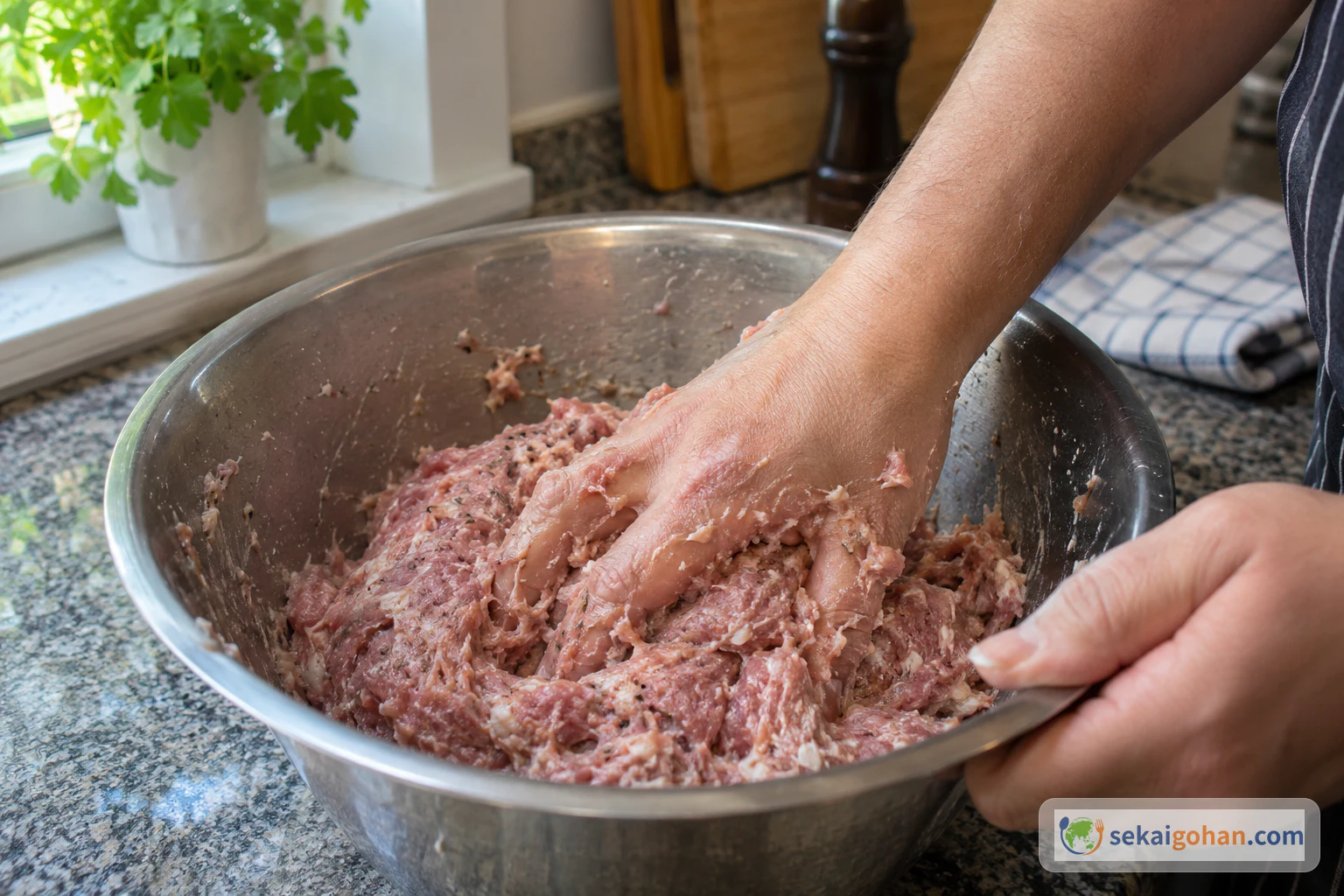
The work runs from cold to warm. Grinding, mixing and stuffing all happen while the meat is chilled. Then comes a hands-off stretch of resting and smoking, so light the smoker while the rope rests. The baking is short, and the thermometer, not the clock, decides when it ends.
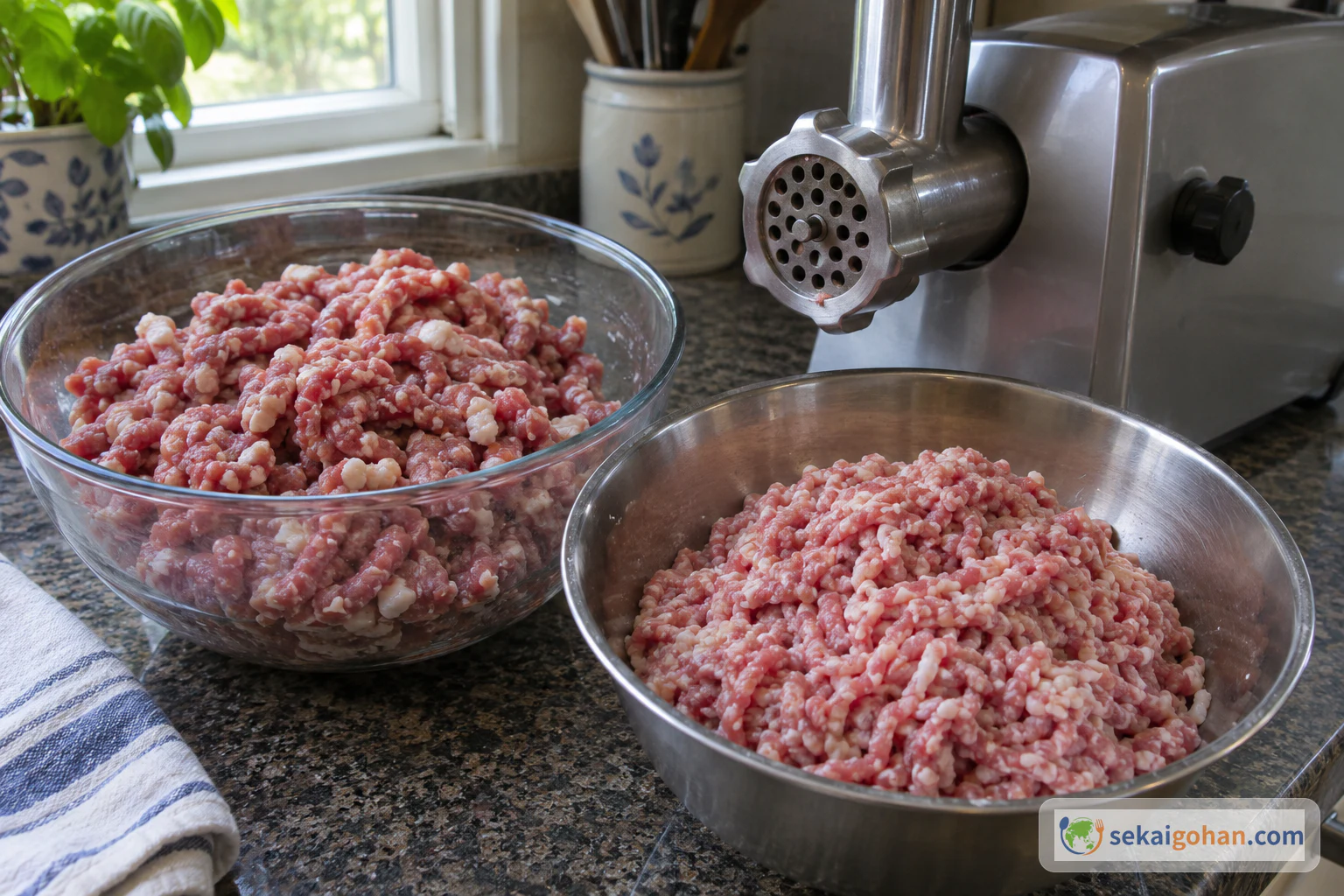
Fat that warms up smears instead of staying in distinct white flecks, and the finished sausage weeps grease. Keep the first meat through the grinder below 50°F (10°C). Put the bowl back in the refrigerator between batches.
The smoke gives color and aroma, and the bake makes the sausage safe. Probe a link in the center of its thickest part. Stop only at 158°F (70°C) or above, however done the casing looks.
When It Goes Wrong
| What you see | Why | What to do |
|---|---|---|
| The inside stays dull and grayish instead of pink | Too little cure, or it wasn't mixed in evenly | Weigh the cure to the label's dose and knead until it's spread through the whole paste. Never top up with salt |
| Grease runs out and the texture is crumbly | The meat warmed up while grinding | Chill the meat before grinding and again afterwards, and work in smaller batches |
| The casing splits while stuffing or baking | The casing wasn't soaked long enough, or it was packed too tight | Soak the casings longer and stuff to an even, firm fullness, not tight |
| The center won't reach 158°F (70°C) | The baking heat is too low, or you stopped after the smoke | Keep baking within the range and probe again. Smoke alone never cooks the center |
| The sticks bend instead of snapping | They weren't dried, which is how homemade ones should be | Enjoy them as fresh sausage. The snap comes from drying, and drying is not for the home kitchen |
Serving, Variations and Storage
At the table
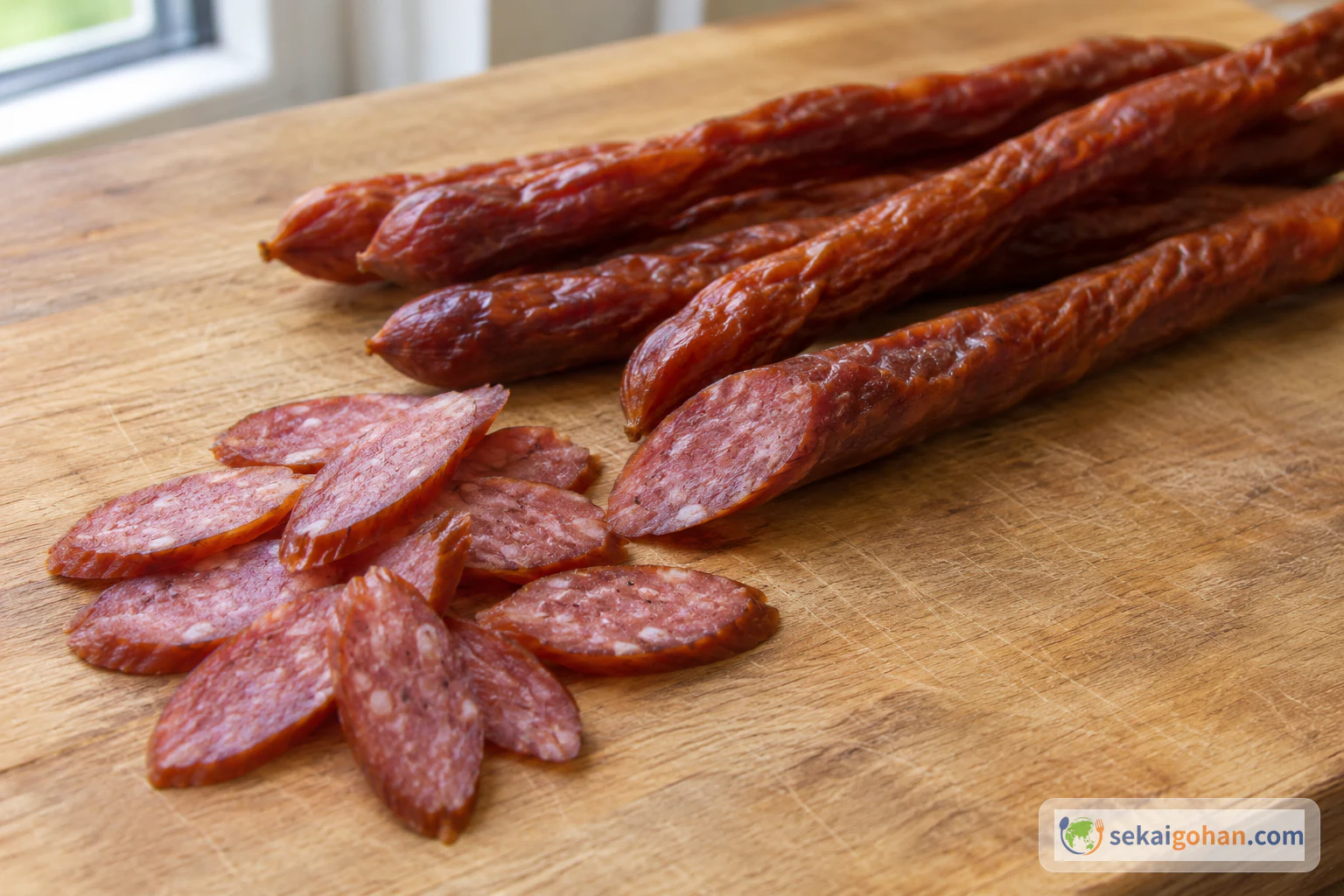
Kabanosy are eaten as they are, with no further cooking. Cut the links into short pieces and pile them on a board everyone can reach. The thin casing gives a little resistance and then a clean bite, and the caraway comes through after the smoke. That's why it's worth cutting just before eating, while the aroma is still fresh.
Variations
- Caraway out, cumin in. This version leans toward Australian cabanossi, warmer and earthier, with less of the Polish character.
- Polish-length sticks. After stuffing, cut the rope into 10-inch (25 cm) pieces and bake them separately, closer to the traditional shape. Shorter pieces heat through on a different schedule, so go by the probe reading of 158°F (70°C) or higher, not the clock.
- Oven only, no smoker. Skip the smoke and go straight to baking after the rest. The sausage tastes of pepper, nutmeg and caraway with only a faint smoky edge, and it still has to reach 158°F (70°C) in the center.
Storage
Keep the sausages refrigerated at 39°F (4°C) or below. Eat them within 24 hours if you can, and within 48 hours at the latest. For anything longer, freeze them. The kabanosy that keep for weeks on Polish shop shelves have been commercially dried, and a homemade undried stick stays a fresh cooked sausage.
Frequently Asked Questions
Can I use Polish curing salt instead of Cure #1?
Polish peklosól is a different product, used at a much higher dose per pound of meat, so the amounts aren't interchangeable. If that's what you have, follow its own label and leave the Cure #1 amount out of the calculation. Never mix doses between products.
I want sticks that snap like the ones from Poland. Can I dry them?
The traditional snap comes from days of drying in cool, humid air, until the sausage has lost close to half its weight. That needs a room where temperature and humidity are held steady the whole time. A home kitchen can't hold those conditions well enough to keep mold and bacteria in check, so stop after baking and keep the sausages in the refrigerator.
Can I use hog casings if I can't find sheep casings?
Hog casings are much wider. You'd end up with a thick smoked sausage, not a kabanos, and it would take longer to heat through. Hold out for sheep casings of about ⅞ inch (22 mm), which are easy to order online from sausage-making suppliers.