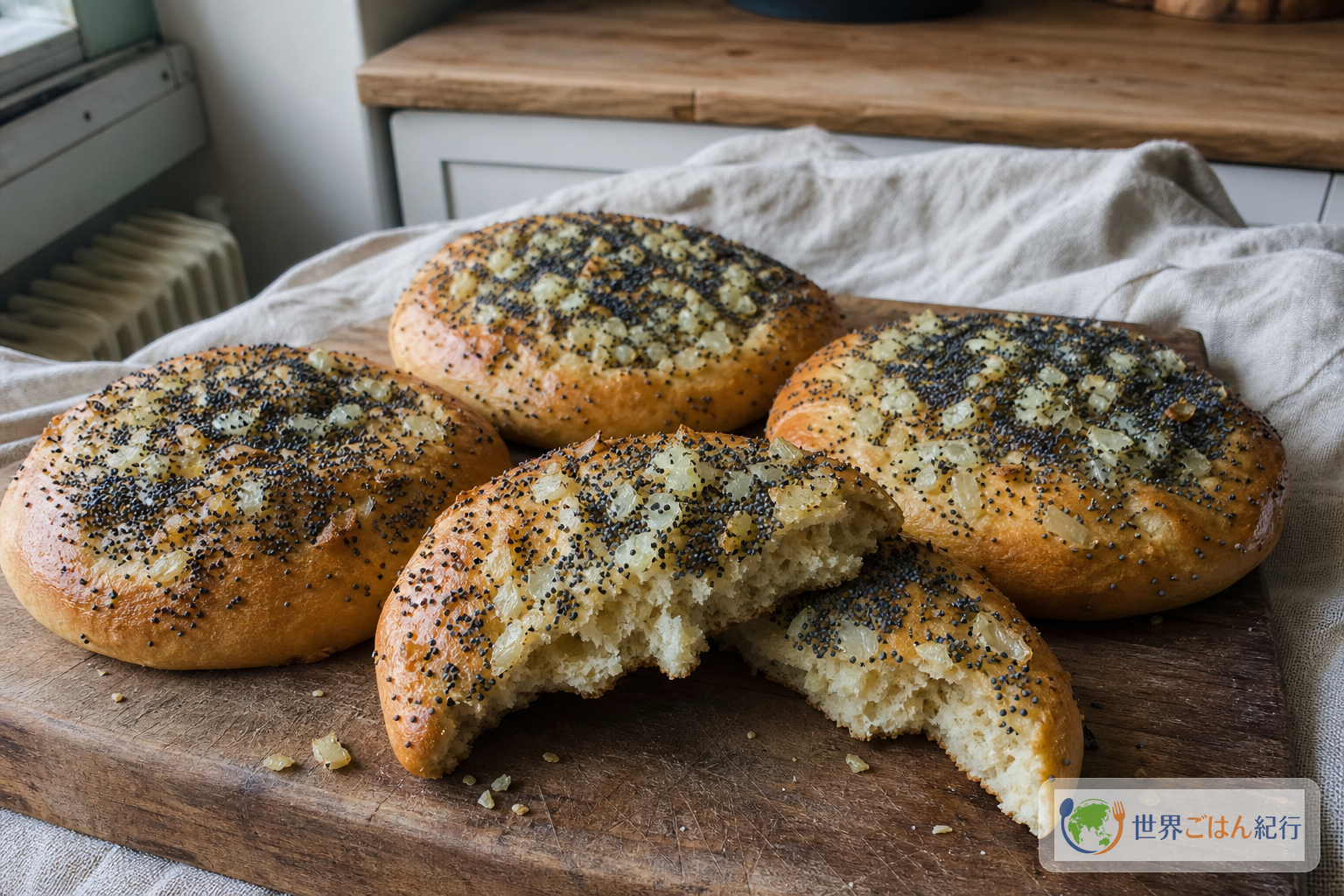
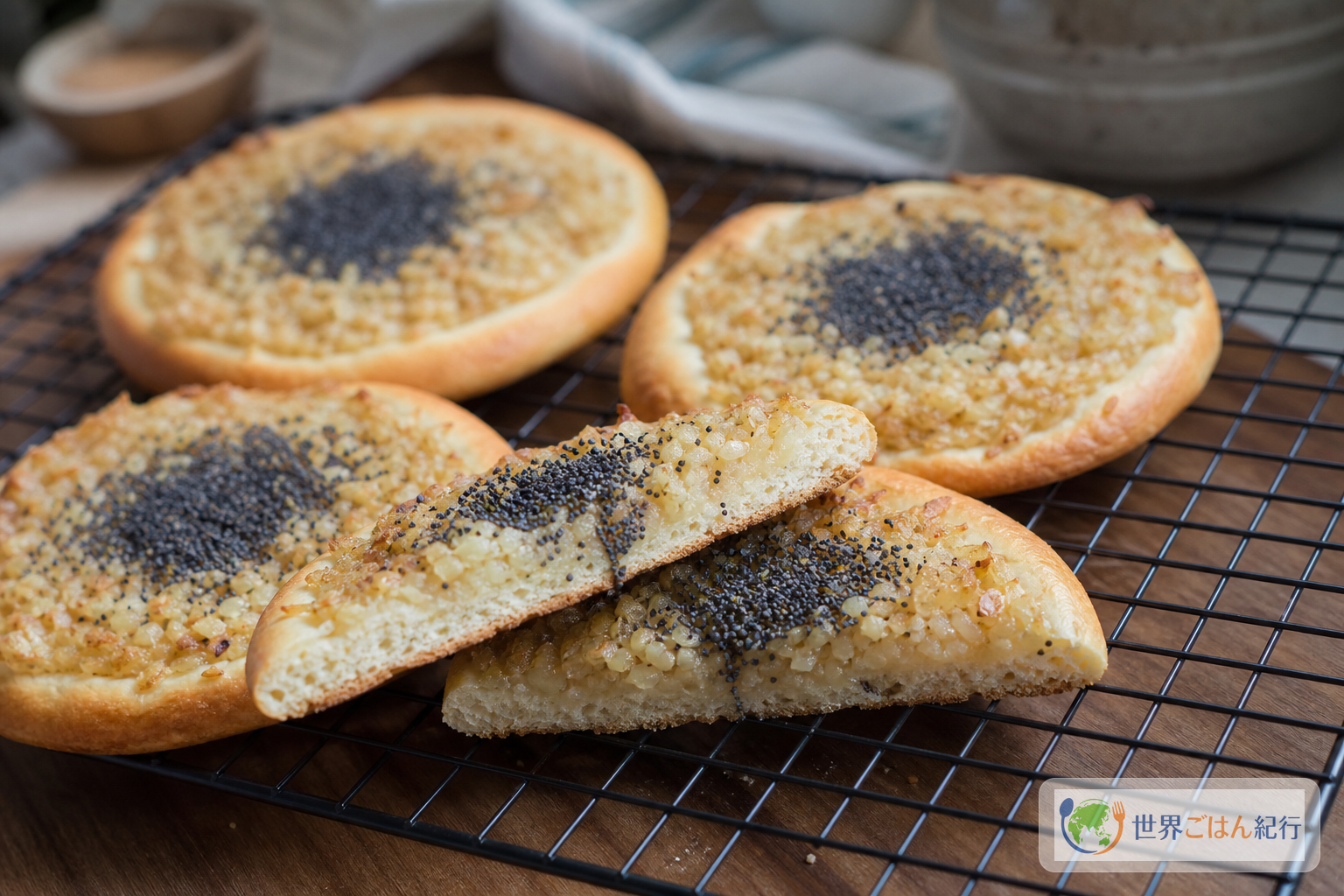
Chop an onion and toss it with salt and oil, and the air in the kitchen shifts toward a bakery in the morning. Stretch wheat dough into rounds, spread sweetened onion and blue poppy seeds across the middle, and slide it into a hot oven. It is not as showy as pizza when it comes out, but the rim puffs, the center is moist, and the scent of onion rises softly.
Cebularz, in Polish Cebularz, is best known in the form of Cebularz lubelski from around Lublin in eastern Poland, whose regional character and method are defined even in the EU's protected geographical indication. This article is a "Lublin-style" recreation baked in a home oven. It does not claim to be the certified product itself; it focuses on what to hold on to in a home kitchen to get close to the character of that onion bread.
If you are branching into Polish cooking, set it on the same table as the stew bigos or the chewy pierogi (in Japanese), and warm bread, sourness, and the weight of a stew line up together.
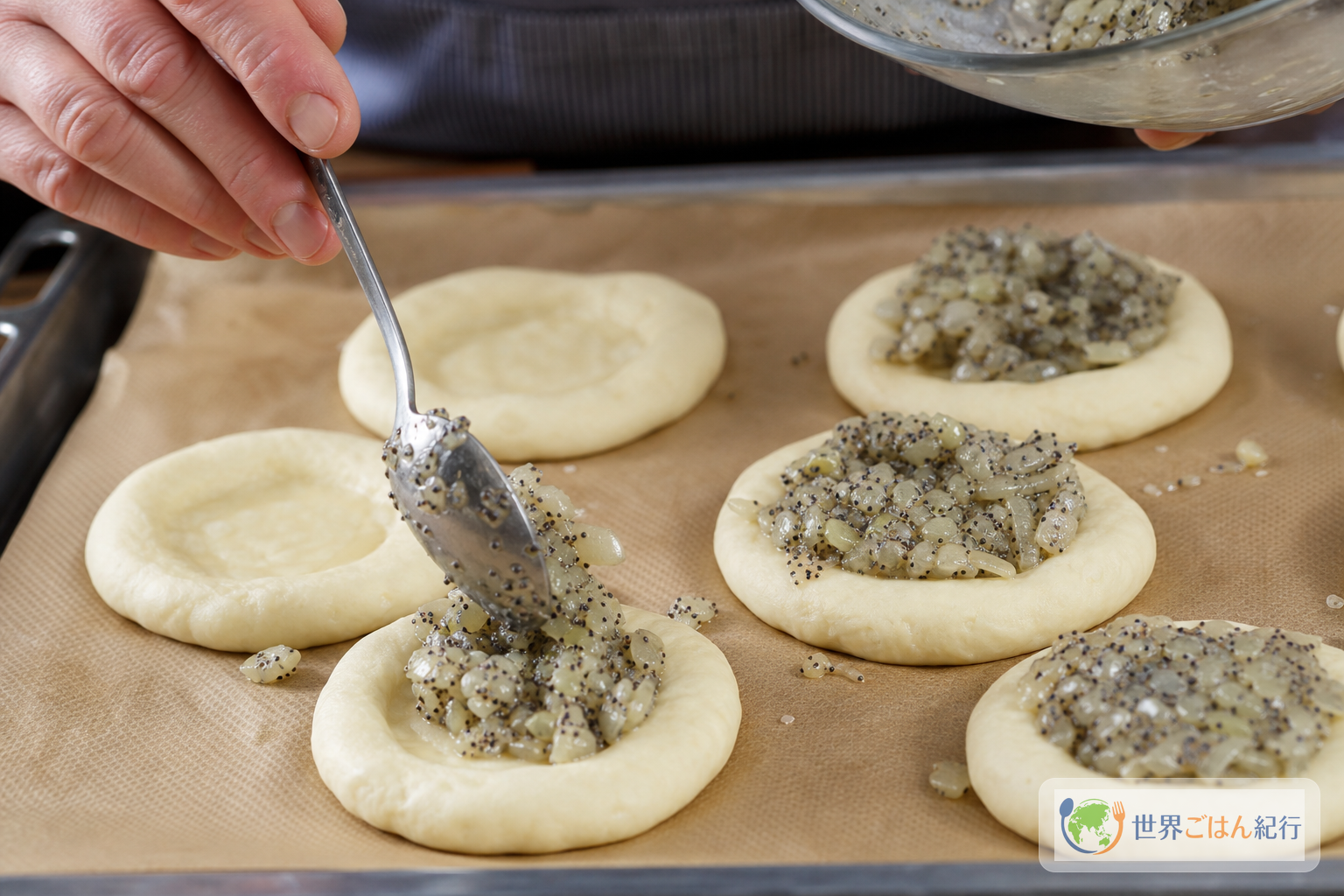
It is easiest to make cebularz if you think of it as a round wheat bread topped with onion. Four things to hold on to: rest the onion with salt and oil so its moisture settles, include the poppy seeds for aroma, spread the topping in the center and leave the rim bare, and bake briefly at high heat.
Ingredients (8 pieces, serves 4)
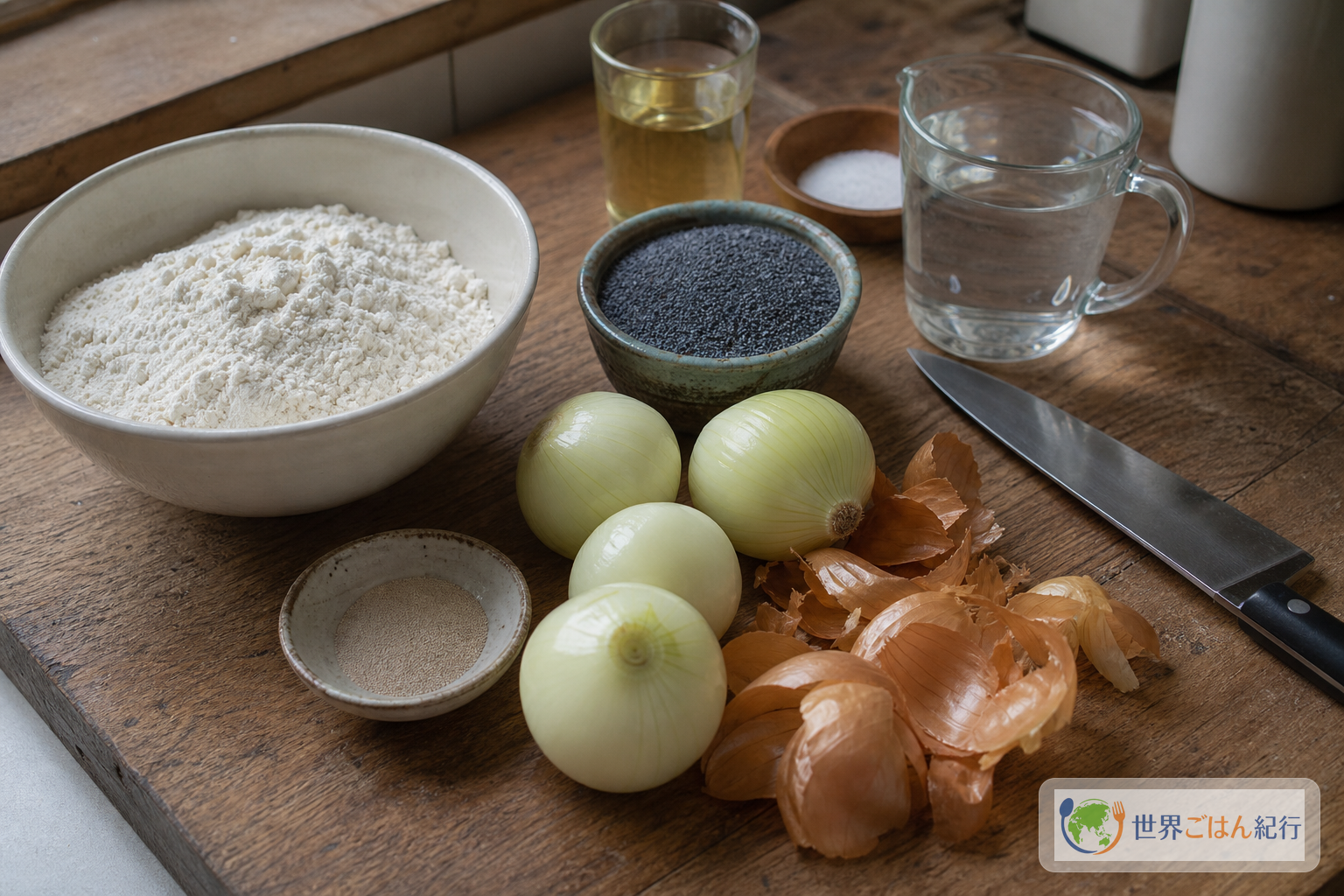
The nutrition figures above are estimates for two pieces as one serving. Because flour is the main ingredient, carbohydrates are on the high side. If you cut the oil, the dough dries out more easily and the onion aroma does not come up as well.
This dish contains wheat. Use poppy seeds sold for food use, and if you react to nuts or seeds, judge from a small amount.
Shopping Notes
Onions, flour, oil, and dry yeast are fine from a neighborhood supermarket. The only thing to hunt for in cebularz itself is food-grade poppy seeds. Filling in with black sesame gives a strong aroma and drifts toward a savory Asian-style bun, so first look for blue poppy seeds in the baking aisle or spice shelf. On a day you really cannot find them, bail out the first time with 8 g of white sesame, and do not add too much, so that the sweetness of the onion remains.
You do not need a pastry brush or a pizza stone for the first time. Oil on the rim can be applied thinly with a small folded paper towel. For browning on the bottom, preheat a thick baking sheet in the oven at 230°C and you get fairly close. Prioritize draining the onion's moisture and not piling the center too thick before any equipment.
To bring it closer to a Polish table, it is more natural to add a few things alongside rather than to the cebularz itself: sweet onion bread, a sour side dish, smoky meat, and the spices of a stew. With this combination, you get the scene of eating it as a midday snack rather than the bread alone.
Kielbasa is not a topping for cebularz but something to warm and set beside it. When the sweet onion bread alone makes lunch too light, a smoky sausage gives the table a center of gravity. It also goes into bigos, so it is worth stocking from a Polish or Eastern European grocery if you keep cooking Polish food.
Allspice does not go in the cebularz dough. But if you are also making bigos or a clear meat soup the same day, it is the aromatic core of the stew side that catches the onion bread. Using a little whole allspice makes it easy to move toward a sweet-and-sour Polish-style menu.
Dill is the green aroma for the sour side dish. Salting cucumbers, dressing them lightly with vinegar, sugar, and a little oil, and scattering dill at the end is enough to cut the sweetness of the onion bread. Any leftover also goes to knish (in Japanese) and Eastern European potato dishes.
Baking-Day Schedule
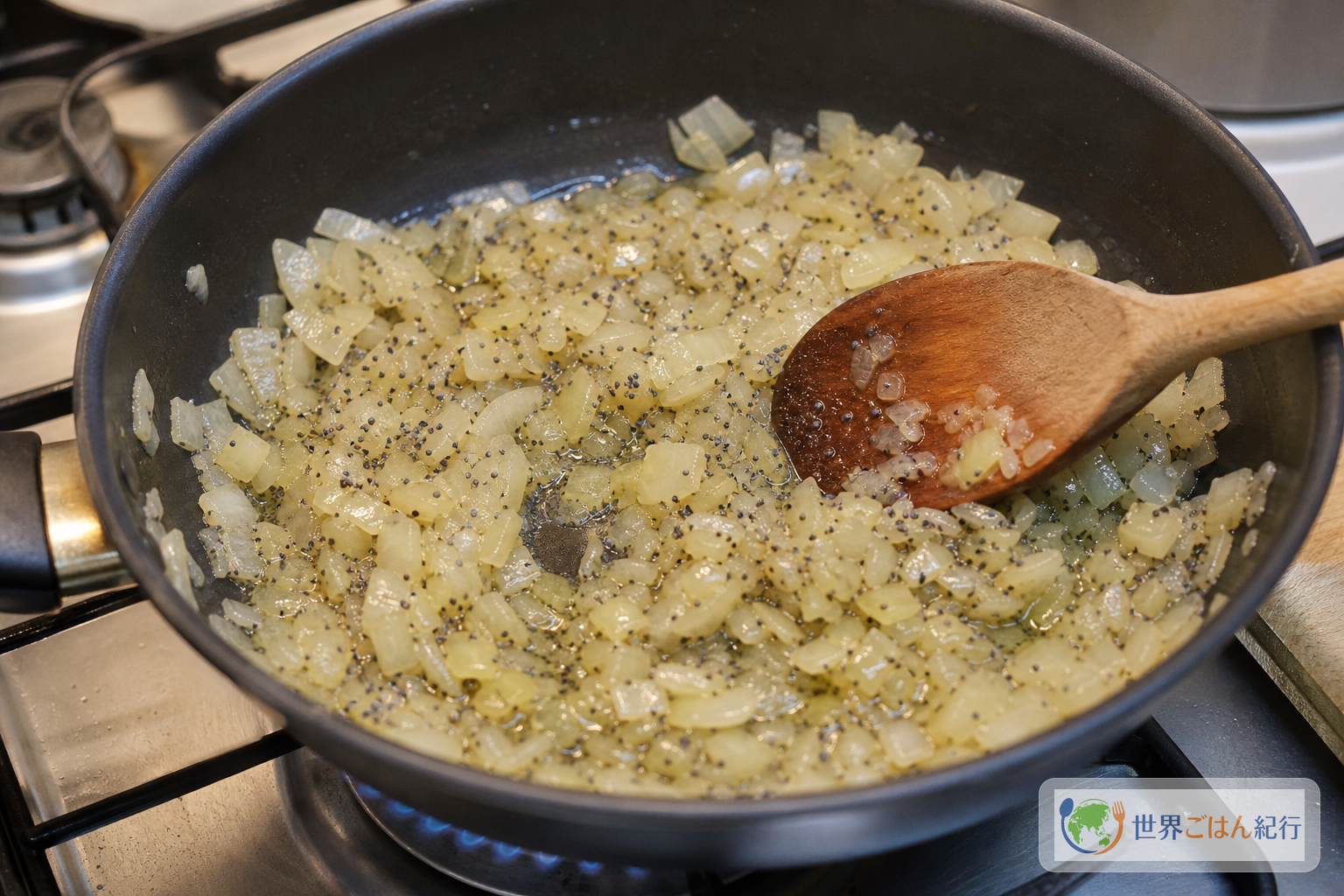
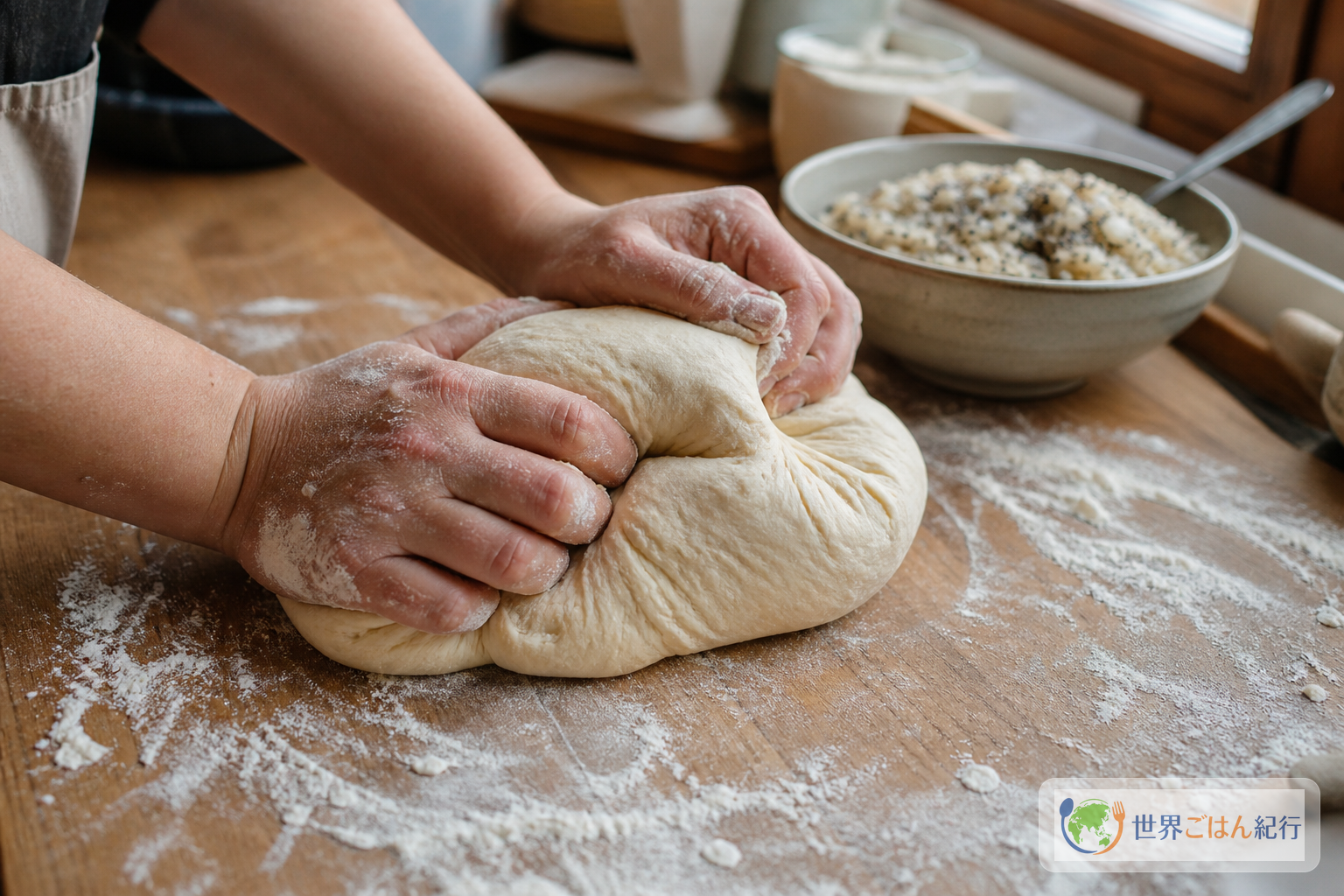
If you are not used to yeast bread, the 60 minutes of resting the onion can look long. In practice, overlapping it with making the dough keeps the kitchen from standing still. Chop the onion first, toss with salt and oil, and as you start it resting, knead the dough. By the time the dough goes into its first proof, the onion has released moisture, so warm it briefly over low heat and cool it. That way the onion and dough reach the next step at about the same time.
| Approximate time | Task |
|---|---|
| 0 min | Chop the onion, mix with salt, oil, and poppy seeds, and rest |
| 10 min | Start kneading the dough |
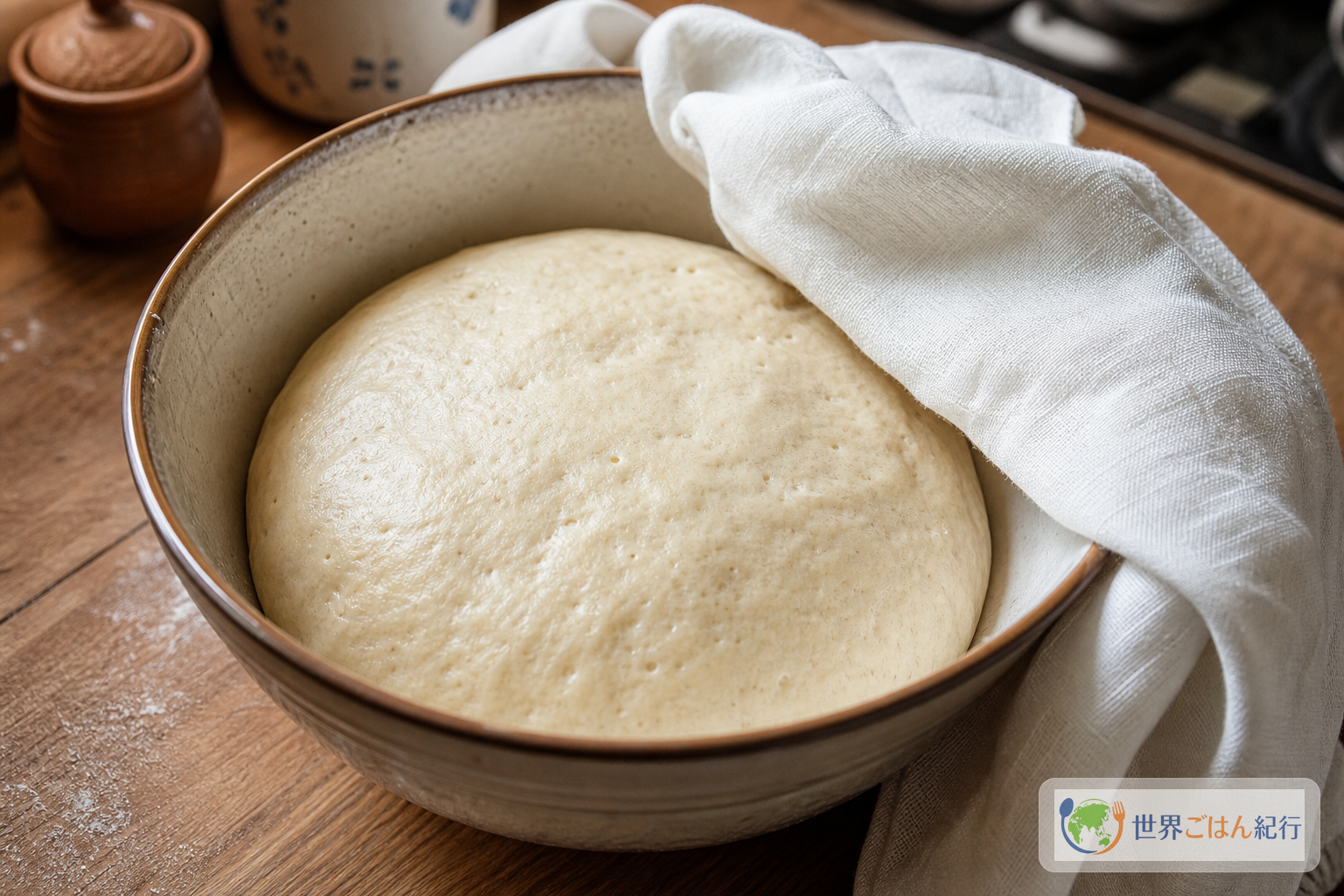
| 25 min | Put the dough into its first proof |
| 60 min | Briefly warm the onion over low heat, then cool |
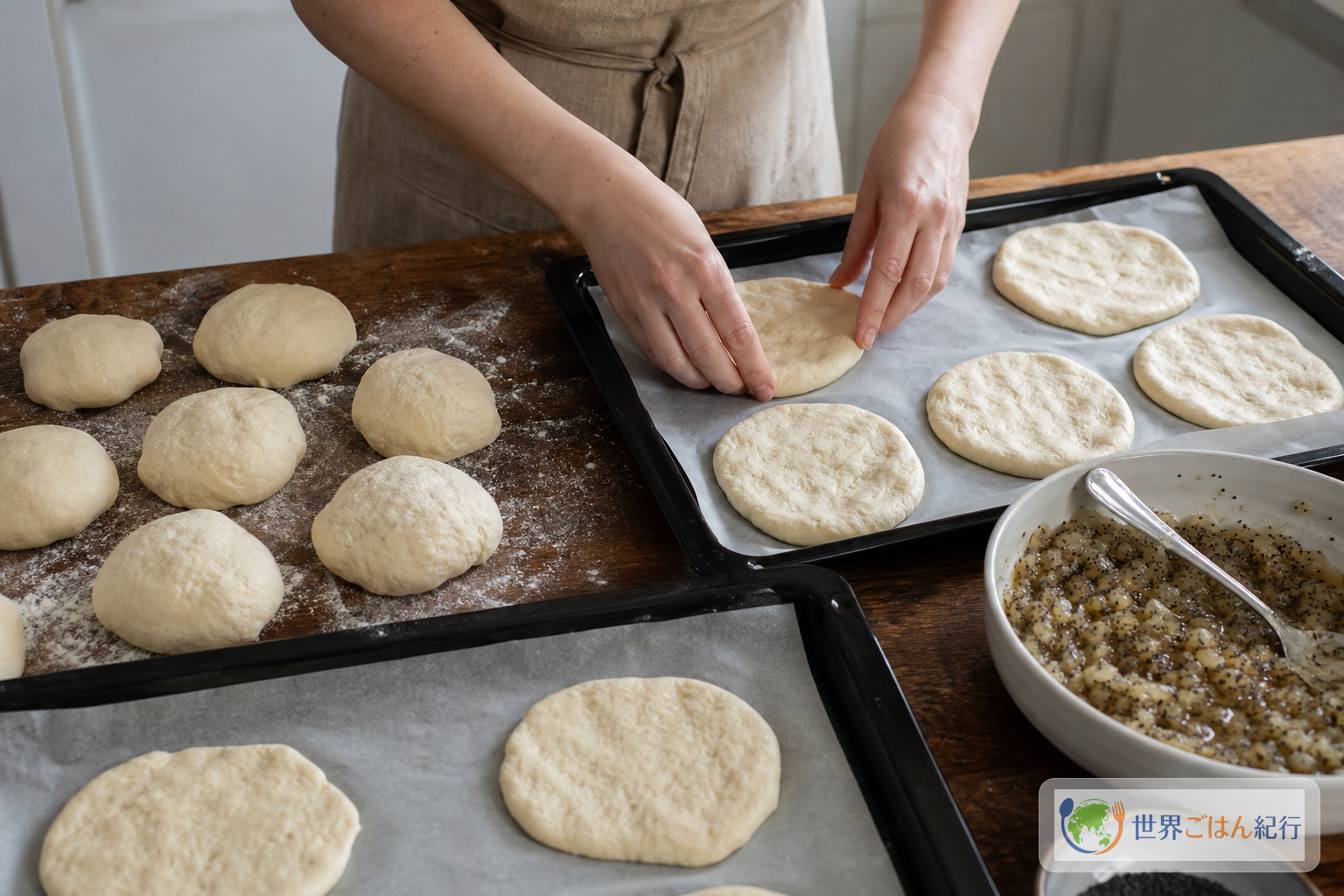
| 75 min | Shape and add the onion topping |
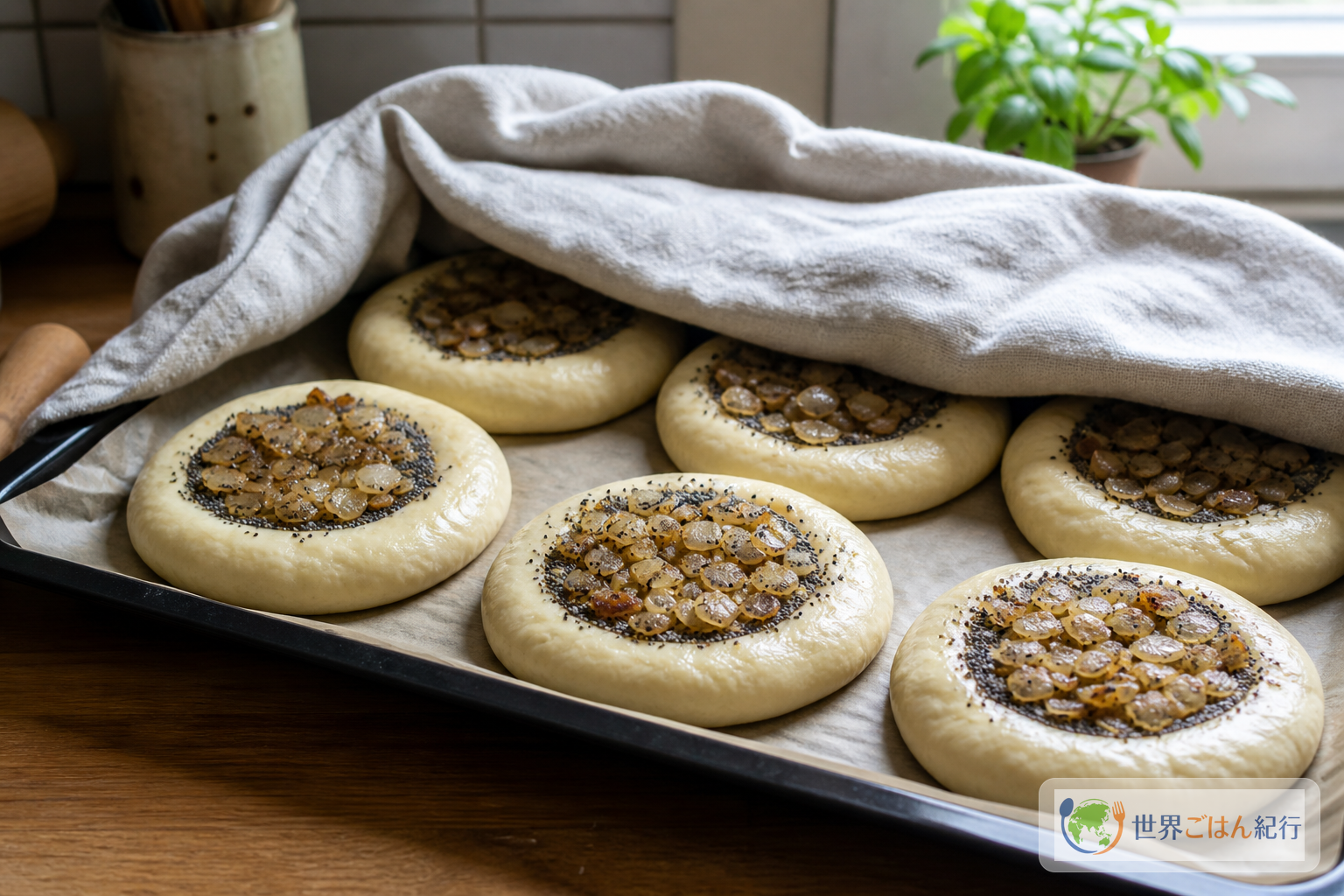
| 90 min | Second proof and oven preheat |
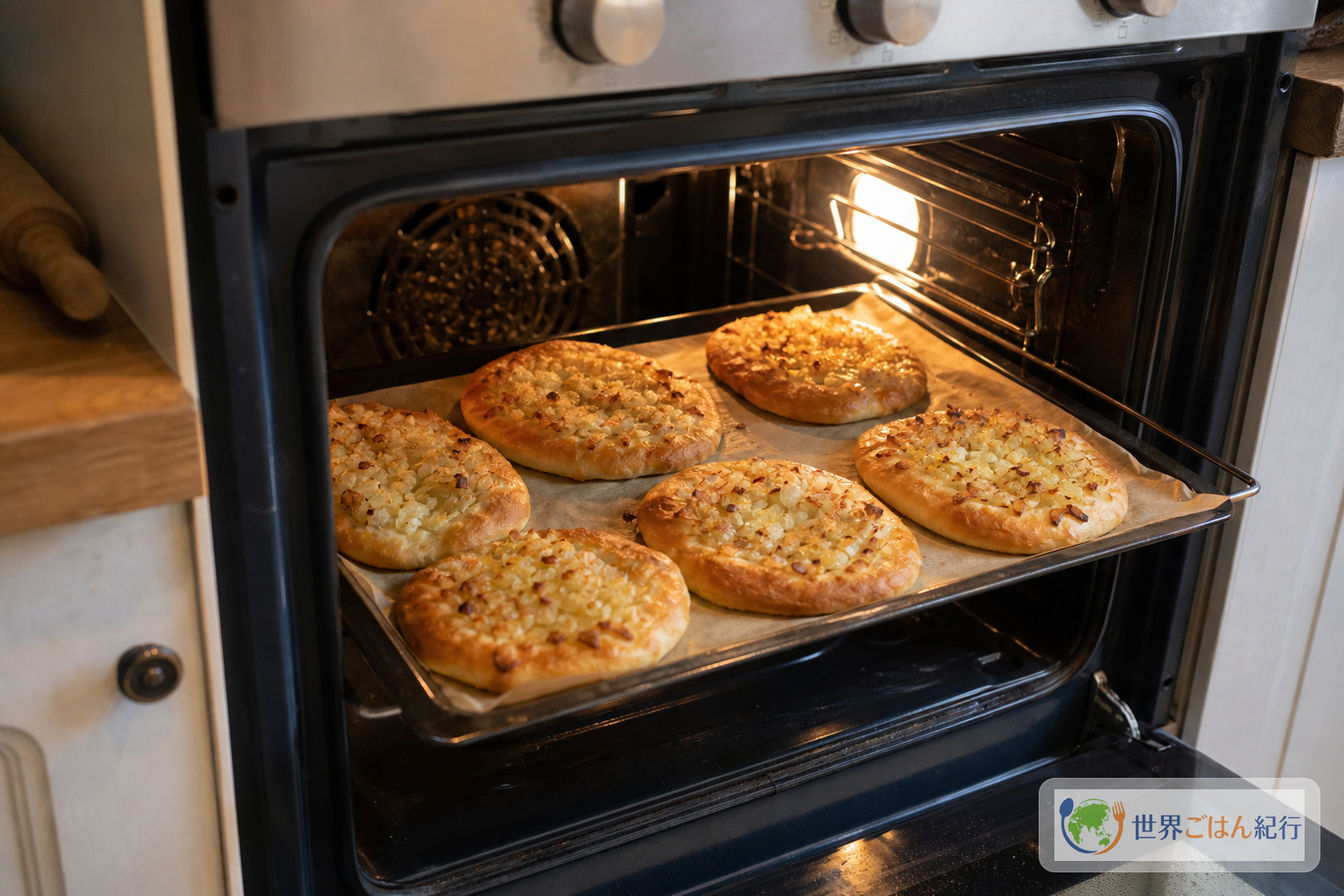
| 120 min | Start baking |
Method
Salting the onion and the dough's first proof can partly overlap. To move fastest, after setting the onion to rest with salt and oil, knead the dough in the meantime and set it to proof. There isn't much hands-on work up to the bake, but managing the onion's moisture is steadier if you don't rush it.
Choices for a Home Kitchen
| What you wonder about | What to protect | A realistic choice at home |
|---|---|---|
| Flour | A dough that rolls round and puffs at the rim | Bread flour 7 : cake flour 3 to approximate medium-strength flour |
| Poppy seeds | Small grains that scent along with the onion | Use poppy seeds. Black sesame has a strong aroma, so use a little if substituting |
| Onion | No raw edge, no scorching | Rest with salt and oil, then warm briefly over low heat and cool |
| Oven | High heat bakes bottom and rim in a short time | 220–230°C, preheat a thick baking sheet or pizza stone |
| Shape | Topping in the center, rim puffed | Roll with the center 6–8 mm and a 1 cm rim |
The official specification details the points of a round wheat dough topped with onion and poppy seeds, the regional name, and the features of the process. At home, prioritizing settling the onion's moisture and shaping with a rim, rather than matching the diameter exactly, brings the impression closer when you eat it.
Where Things Go Wrong
| What happens | Cause | Fix |
|---|---|---|
| Center is damp | Onion has too much moisture, or topping piled thick | Drain the liquid after salting and limit to 35–40 g per piece |
| Onion scorches | Cooked over high heat, or baked on the upper rack | Cook the onion briefly over low heat and start baking from the middle rack |
| Hard rim | Too little water, underproofed, or overbaked | Make the dough a little softer than an earlobe and proof a second time until the rim puffs |
| White bottom | Cold baking sheet or low oven temperature | Preheat a thick sheet in the oven and push the first bake toward 230°C |
| Poppy seeds fall off | Not blended with the onion | Mix them first with the onion, oil, and salt, and press lightly onto the surface |
Serving, Menus, and Storage
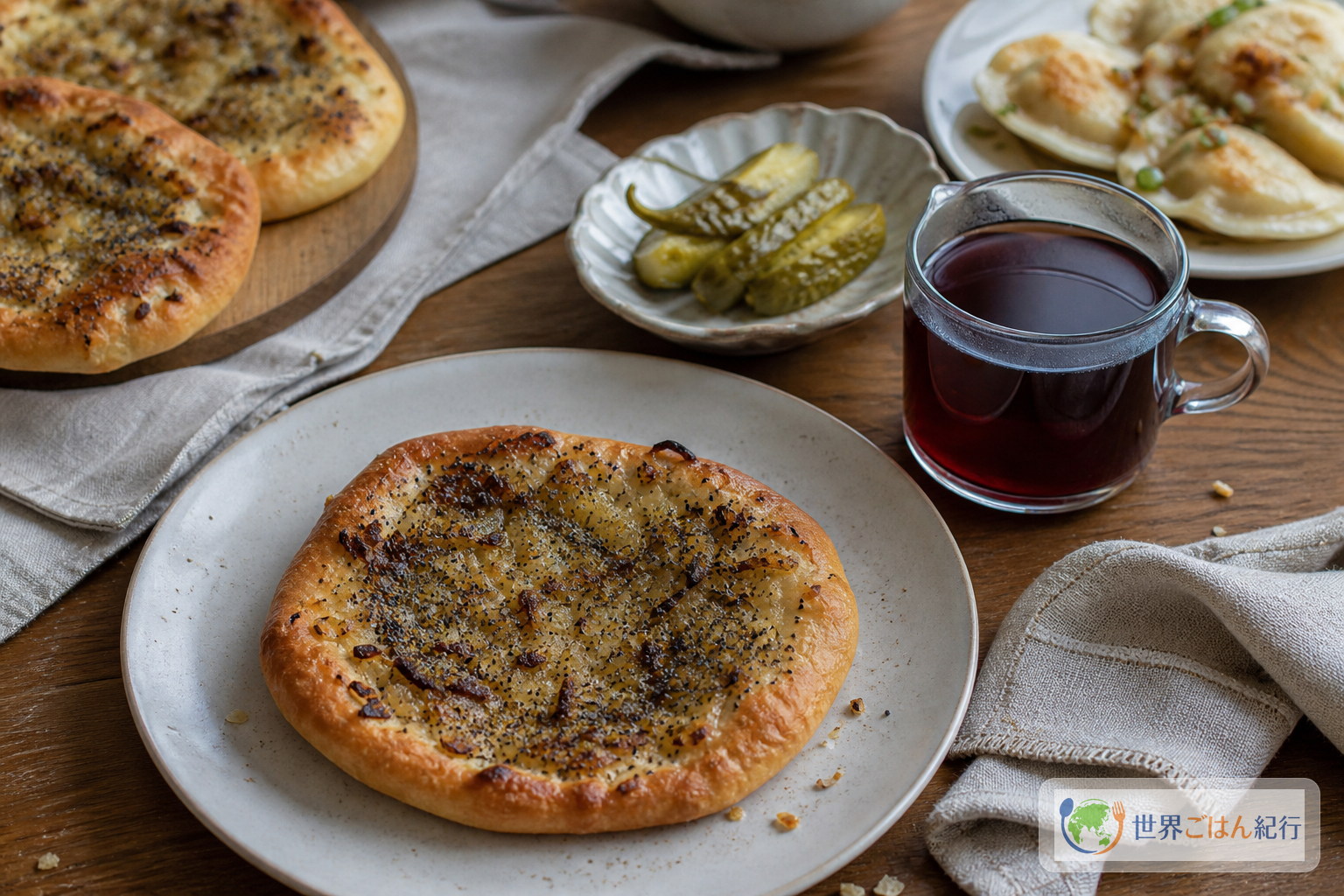
Freshly baked cebularz is easy to use as breakfast, a light lunch, or a bread set next to soup. Even without a large meat dish at the center of the plate, pickles with some sourness, beet soup, or a clear meat soup keep the sweetness of the onion from getting too heavy. At a table anywhere, lightly pickled cucumbers nudged a bit toward vinegar go quite well too.
It is also a bread whose impression changes with the temperature at which it is eaten. Fresh from the oven, the rim is light and the onion aroma is forward. After 20 minutes the dough settles and it is easier to pack in a lunch or make ahead. Rather than eating it cold as is, briefly re-baking to drive off moisture from the bottom brings back the aroma of the onion and poppy seeds.
| Occasion | What to pair | How to eat |
|---|---|---|
| Freshly baked lunch | Pickled cucumbers, a salad with dill | Cut the onion's sweetness with sourness |
| Beside soup | Borscht, clear meat soup | Eat it in bites rather than dunking in the soup |
| Polish-leaning menu | Kielbasa, bigos | Keep the bread light and add satisfaction with the stew and smoky aroma |
| The next morning | Fried egg, sour vegetables | Bring the bottom back in the toaster before serving |
For an Eastern European menu, Ukrainian borscht (in Japanese) and Georgian khachapuri are also useful comparisons. Even among doughy foods, unlike khachapuri, which wraps cheese inside, cebularz bakes the onion on the surface, so it eats lightly. To keep it within Poland, a small serving of bigos alongside lets sourness and smoky aroma sit nicely next to the onion bread.
If you freeze them, wrap each piece in plastic wrap once fully cooled, then put them in a storage bag. Wrapping while warm traps the onion's steam inside and the center turns sticky after thawing. When re-baking, first restore the inside at a lower temperature and finish at high heat to dry the rim and bottom, which makes it harder to fail. Leave cooked pieces uncovered at room temperature only briefly, and refrigerate leftovers; this article does not give storage-day guidelines because no source for them could be confirmed.
Warming only in a microwave makes the onion watery and does not bring the bottom back to crisp. When you are in a hurry, warm for only 20 seconds in a 600 W microwave and then re-bake the rim in a toaster oven to keep the texture. The onion aroma settles by the next day, so if you serve it at breakfast, adding pickles or sour vegetables keeps the sweetness from being vague.
Why It Has Been Eaten in Lublin
What is interesting about cebularz is that, with such everyday ingredients, it carries the name of a place. Onion, flour, oil, and poppy seeds: not special meat or expensive cheese, but ingredients that keep easily and are easy for a bakery to handle. It is often described as a snack baked in the town of Lublin, and some sources link it to the bread-making of the region's Jewish residents.
What matters in the Cebularz lubelski specification is not adding lavish toppings. It is a round, thin wheat dough, onion spread in the center, grains of poppy seed, a shape that leaves a rim, and a flow of short baking at high heat. This home recipe is not the certified product itself, but if you do not depart from those points, it is easier to serve as Lublin-style cebularz rather than just "bread topped with onion."
Cooking at home in your own kitchen, you will want to add cheese or bacon. For enjoying it as a savory bun, of course that is free, but for the first time, baking with only onion and poppy seeds shows the outline of this dish. Sweet onion, restrained oil, fragrant grains, a light rim. Since you aren't adding showy toppings, browning and handling of moisture decide the flavor.
One more thing to protect is not cooking the onion down to amber. The impression of Lublin's bread is not of deep caramel flavor but of chopped onion turning sweet on the dough and lightly colored in places. Think of it in two parts: in the skillet, only settle the moisture, and add the toasty finish in the oven.
FAQ
Can I make it without poppy seeds?
You can, but the aroma changes a lot. If you really cannot get them, reduce to 8 g of white sesame and use whole seeds rather than ground. Black sesame has a strong aroma and drifts toward a savory Asian-style bun. If you plan to buy poppy seeds later, practicing the shape and bake with white sesame the first time and checking the difference in aroma next time is realistic.
Can I put the onion on without cooking it?
It will bake raw too, but in a home oven the center tends to stay damp and the onion's sharpness lingers. Resting it with salt and oil and warming it over low heat for just 2–3 minutes settles the moisture and the sharpness.
Can I bake it without a pizza stone?
Yes. Leave a thick baking sheet in the oven and preheat at 230°C for 30 minutes, then put the dough on its parchment onto it. If you only have a thin sheet, baking on the lower rack helps the bottom color.
Can I prepare it the day before?
The onion topping can be made a day ahead. Refrigerate it and take it out 30 minutes before using to take off the chill. If you ferment the dough overnight, reduce the yeast to 3 g, leave it in the refrigerator for 8–10 hours, and bring it back to room temperature for 30 minutes before shaping.
Is it the same as the certified Cebularz lubelski?
It cannot be called the same. What is protected as Cebularz lubelski is a name with conditions on region and specification. This article is a recreation recipe for a Japanese home oven. For home cooks, prioritize onion and poppy seeds, the round shape, shaping with a rim, and short baking at high heat.
What should I add to make it a Polish table?
Sour cucumbers, beet soup, warmed kielbasa, and a small amount of bigos are easy to pair. Cebularz itself is light with wheat and onion, so putting sourness and a smoky aroma alongside is easier to keep eating than pouring a heavy sauce on the same plate.
Can I top it with cheese or bacon?
As home cooking it's up to you, but I recommend baking the first time with only onion and poppy seeds. Cheese adds saltiness and fat that obscures the lightness of Lublin's onion bread.
Summary
Cebularz is a bread whose goodness changes with small differences in process rather than rarity of ingredients. Rest the onion without scorching it. Knead a soft dough, with the center thin and a rim left. Bake briefly at high heat and let the bottom steam escape. Once that flow is set, even in a home kitchen it becomes a piece you can be fully satisfied with using just onion and poppy seeds.
If you continue with Polish cooking, moving on to pierogi (in Japanese) and bigos, which are easy to set on the same table, makes it easy to build combinations of dough, stew, and sourness.
Sources
- UK Department for Environment, Food & Rural Affairs, Product specification: Cebularz lubelski
- Polish Ministry of Agriculture and Rural Development, Cebularz lubelski
- Wikipedia, Cebularz