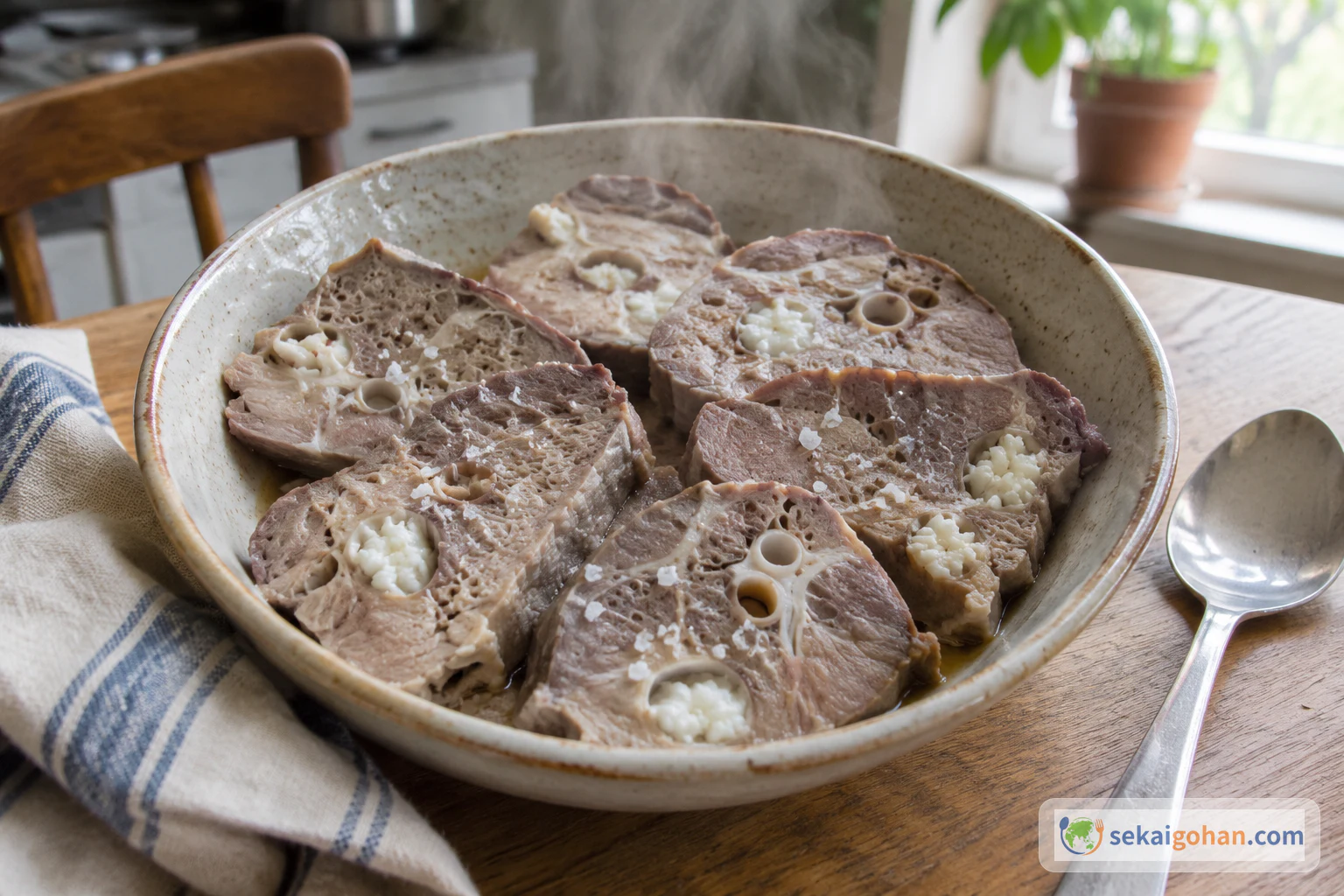
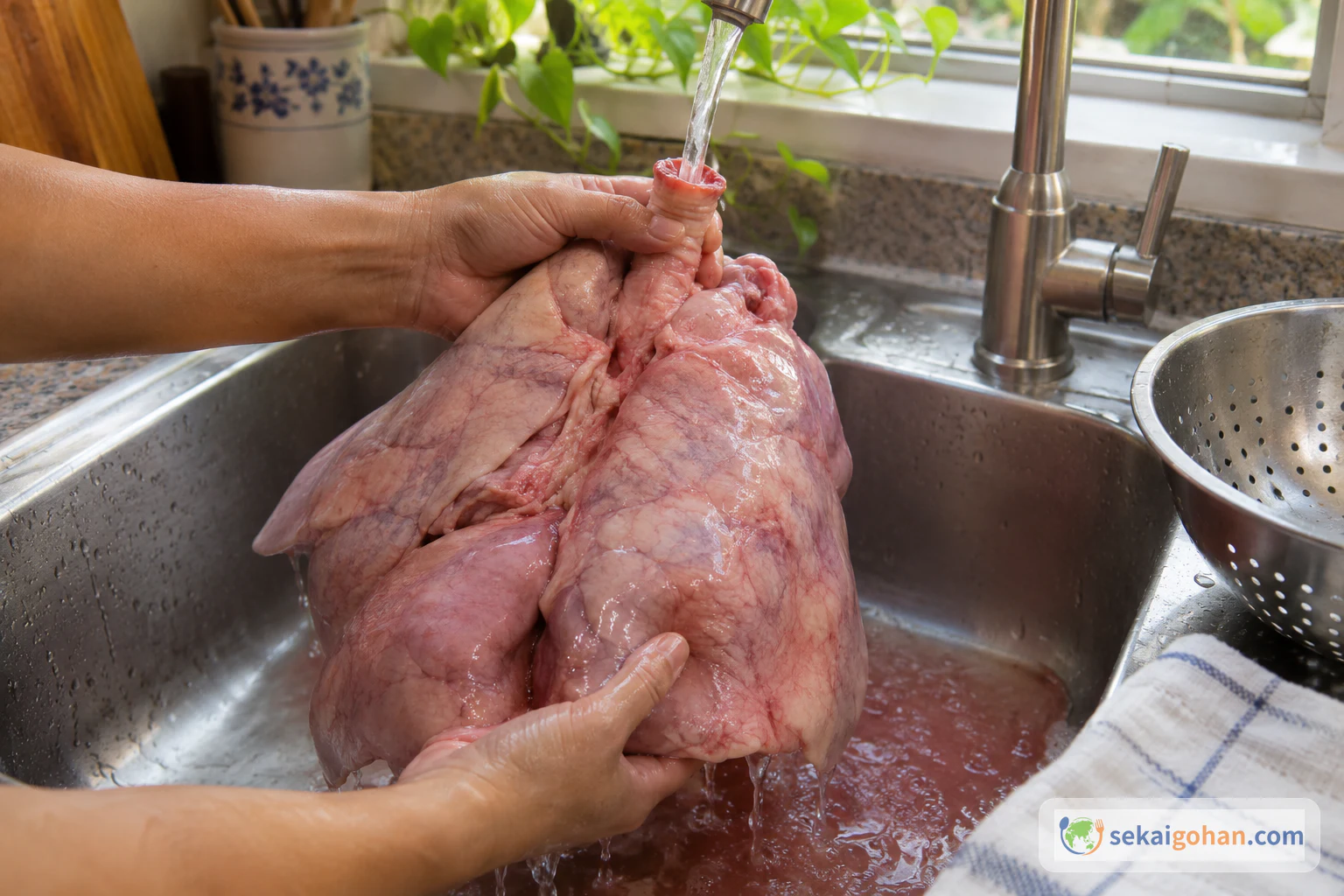
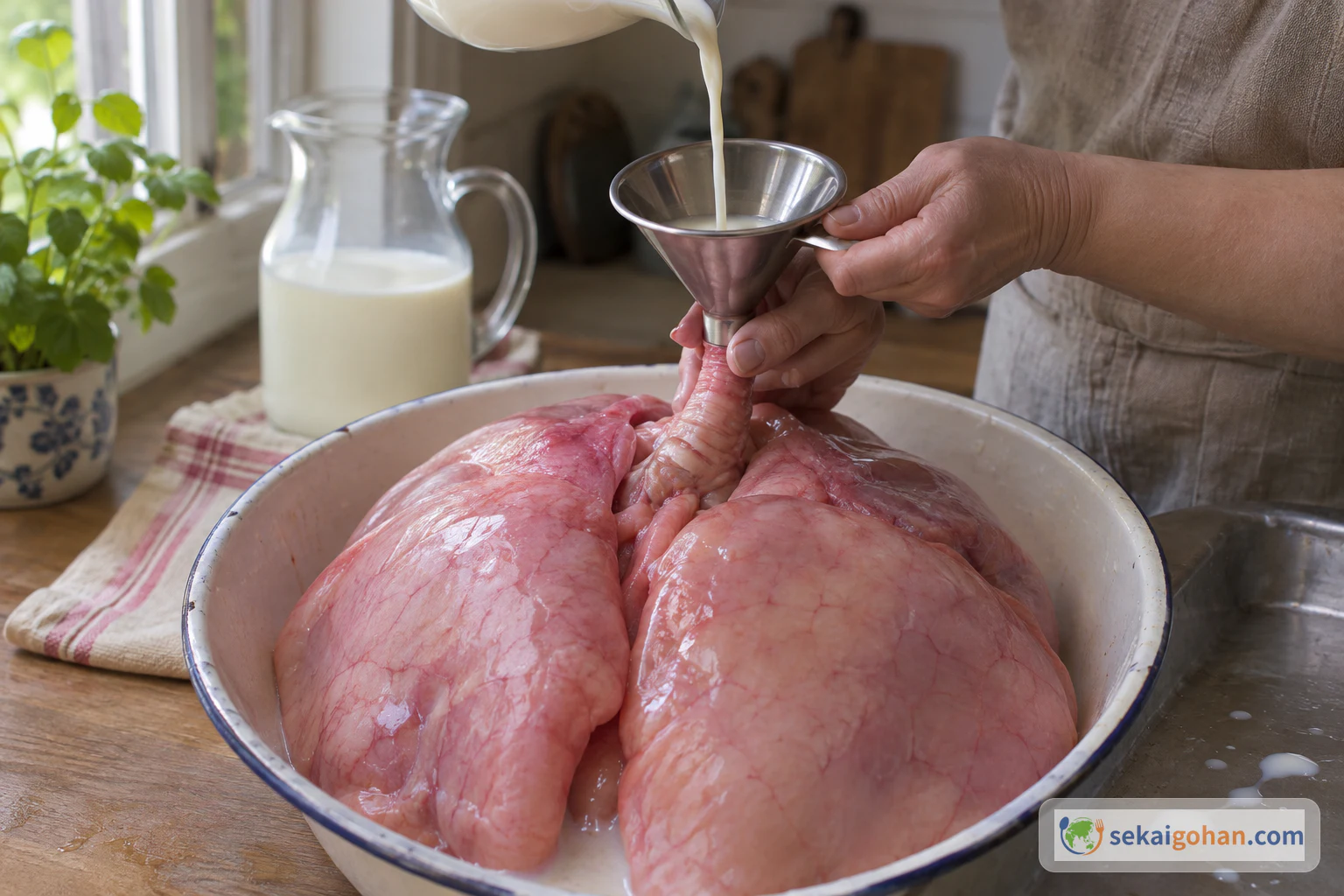
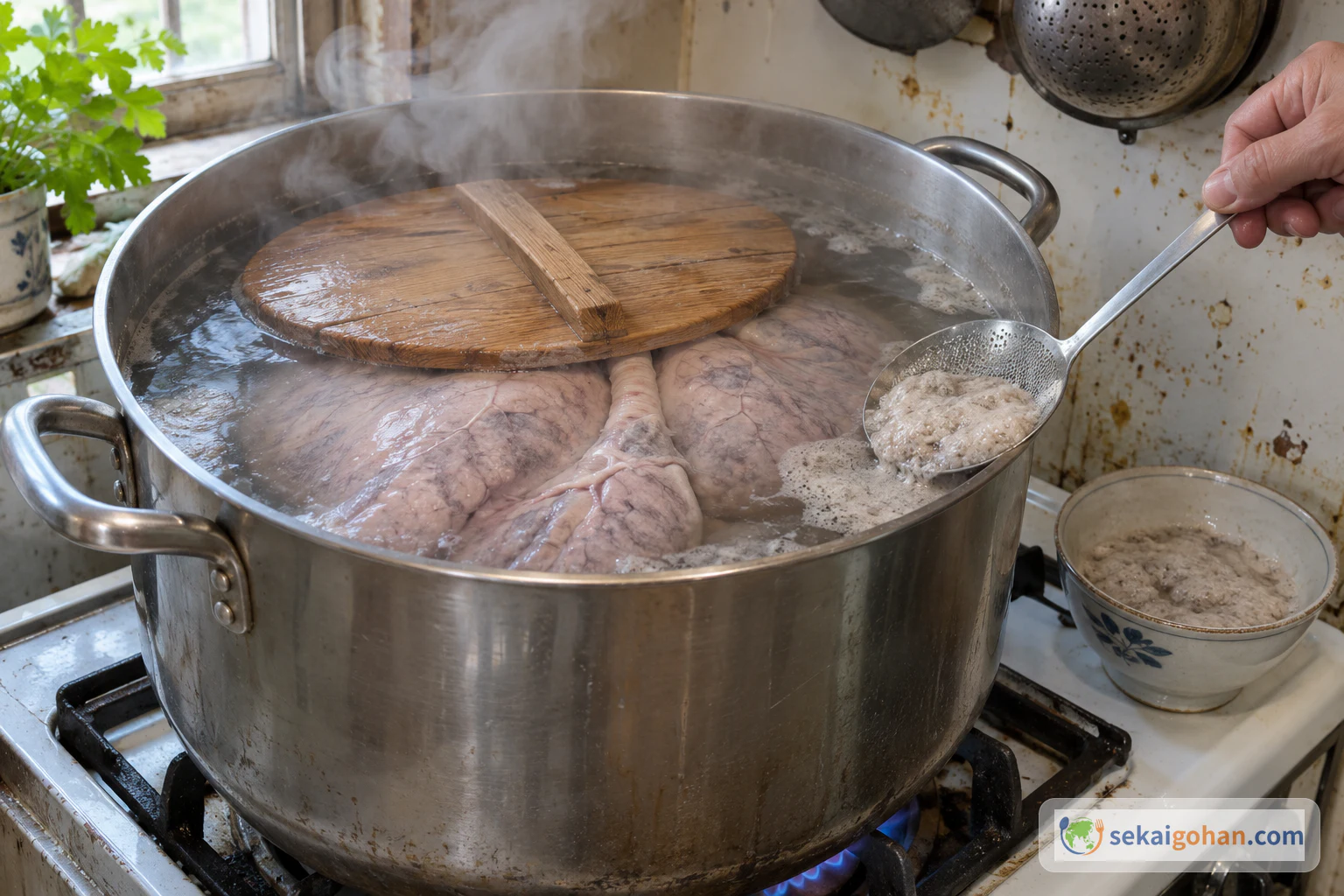
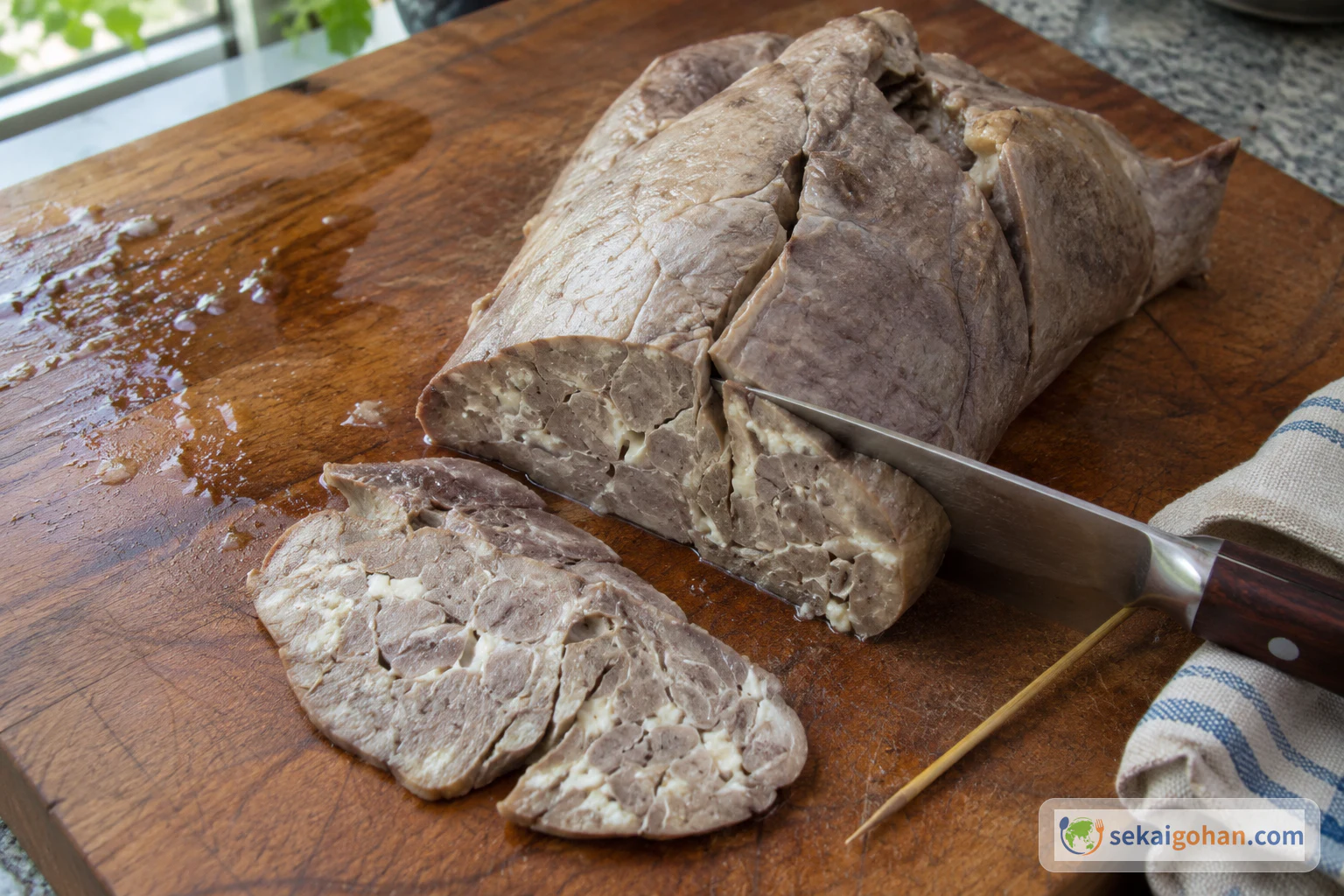
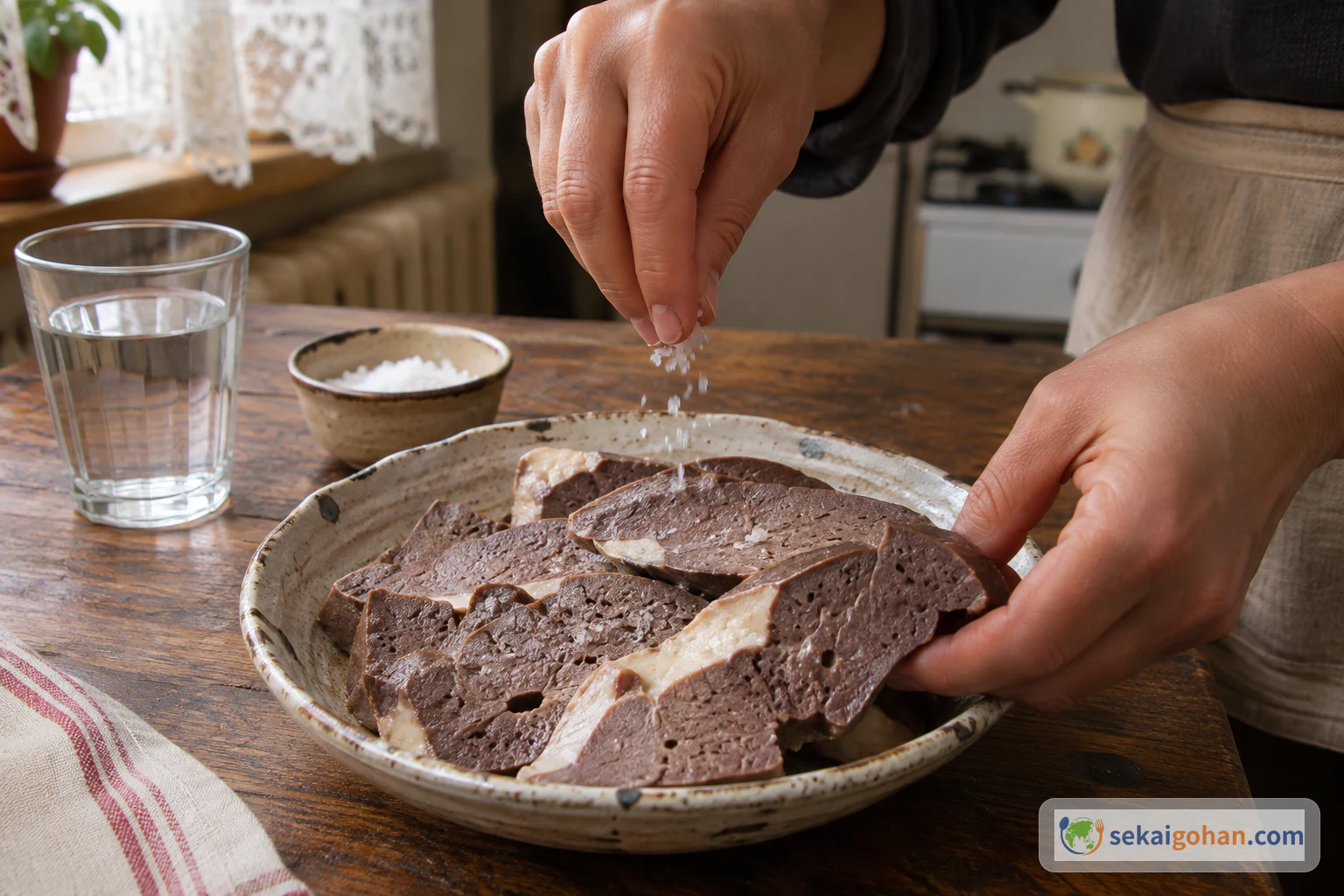
You set a funnel in the open windpipe and pour in milk slowly. The pale lung swells and gets heavy in your hands until it is full. Then the whole lung goes into a pot of boiling water and stays there for six or seven hours. When it comes out it is firm, and every slice shows soft white curd in the spongy cut face. That is upka, also called shishbashir. It belongs to the herders of Tajikistan and the people up on the summer pastures, and it is served to honoured guests and at weddings.
There are only two ingredients, lung and milk. Nothing goes into the water and nothing is fried. What you taste is the lung itself, the mild set milk caught inside it and the springy bite of the airways. Salt goes on at the table.
Upka on the Summer Pastures, at the Guest's Place and the Wedding Table
Upka comes from herding country. It was recorded in 2016 in three places: Asht in the mountains of Sughd region, Lakhsh in the Rasht valley, and Murghob on the Pamir plateau. It is listed in Tajikistan's national inventory of intangible cultural heritage under the two names shishbashir and upka, as an active tradition. The people who make it most are herders and families who move up to the ailoq, the high summer pastures.
The dish also has a second, more formal life. The same pot is made for a guest of honour and for a wedding. So upka is both: an everyday pastoral dish, and the thing you cook to show respect. Dairy and mutton carry the ordinary Tajik table, and upka sits right where the two meet.
Sheep, goat or cow, and whether to soak
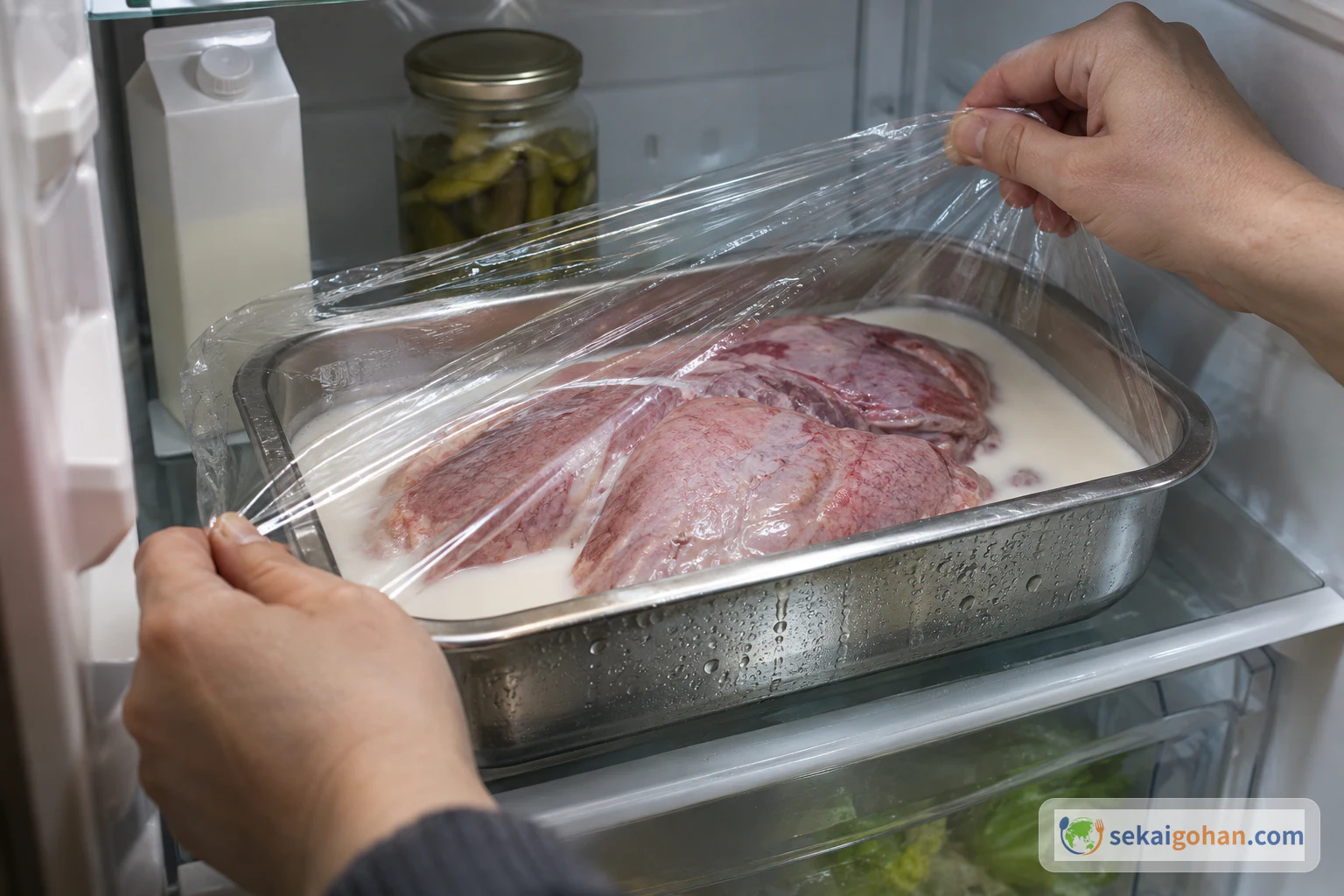
The usual lung is sheep or goat. In some places it is cow, and that is still upka. Households also differ in one step. Some leave the milk-filled lung soaking in milk for a full day and night before boiling it the next morning. Others skip the soak and go straight to the pot. That is a difference in method, not in ingredients: every version is the same lung, the same milk and plain boiling water. In a home kitchen today, do the soak overnight in the refrigerator.
The fried lung dish next door
Tajik cooks use lung another way too. At slaughter time, lungs, liver and sometimes heart are fried in oil with onion and potatoes, a dish called shushho va jigar, and it is served at celebrations. It shares the main ingredient with upka and nothing else. Upka is never fried and never seasoned in the pot. Its whole character comes from milk sealed inside the lung and a very long, gentle boil. For more dishes from the same country, see Tajikistan.
Shishbashir and upka are recorded side by side as names for the same dish. Upka is also simply the word for "lung" in Tajik and Uzbek, so the dish carries the name of the organ it is made from.
Ingredients
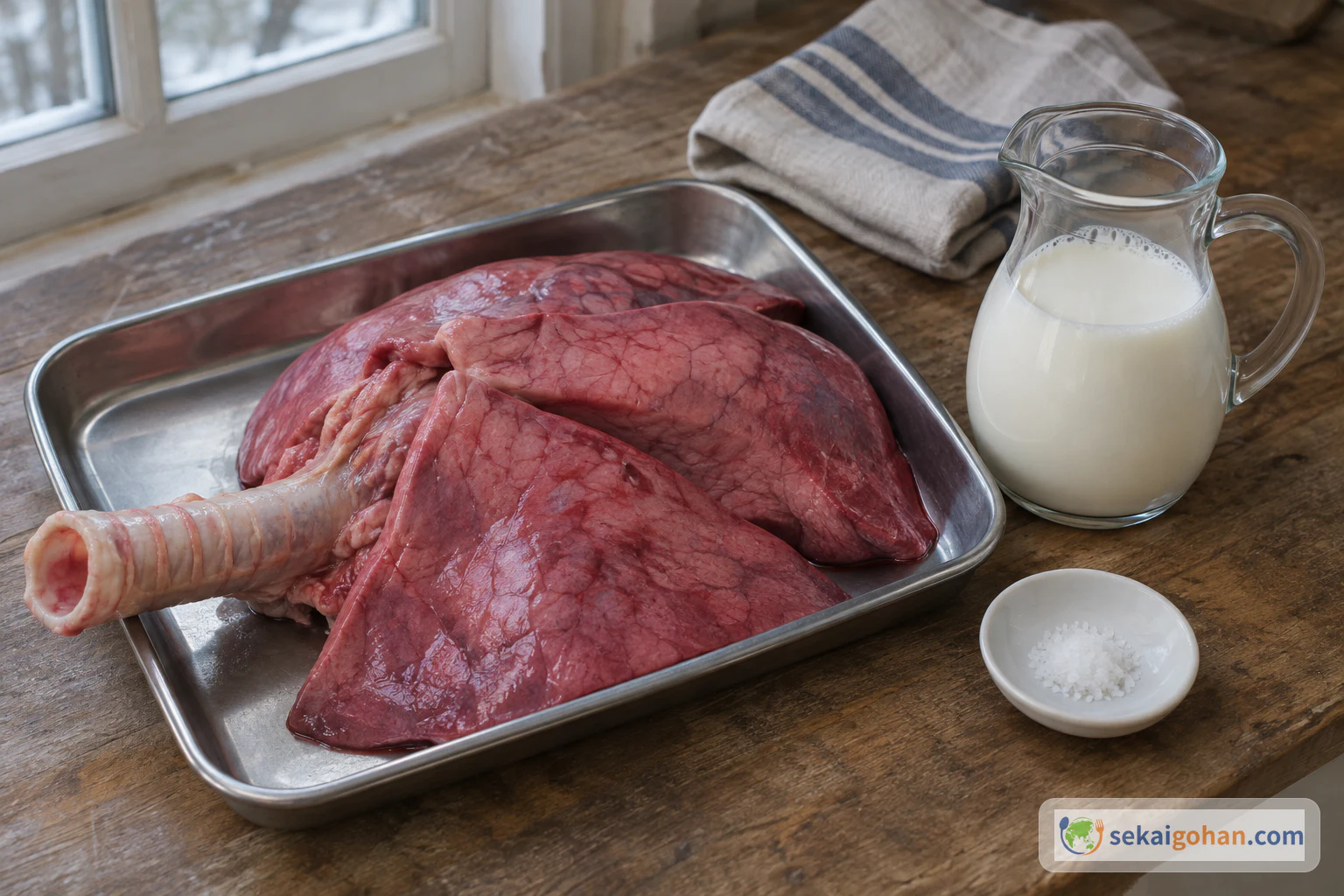
Milk is the core of this dish. Anyone with a milk allergy cannot eat it, and no swap fixes that. Treat lung as offal that must be fully cooked: bacteria can get inside organ meats, not just onto the surface. Never eat it raw or underdone. Cook until the centre reaches 167°F (75°C) and stays there for at least 1 minute. Wash your hands, the sink, the tray and every tool well after handling raw lung.
Equipment
- A large pot, 6½ quarts (6 L) or larger, big enough to hold the lung whole
- A funnel, or a kettle with a narrow spout
- A shallow tray and cling film
- A drop-lid, or a plate that fits inside the pot
- A skimmer
- A bamboo skewer
- A colander
- A cutting board and a sharp knife
- A food thermometer, if you have one
Buying the Lung and Keeping It Tajik
Lung is the hard part to buy. One animal gives only about 1–2 kg of it, and supermarkets and ordinary barbecue restaurants rarely carry it. Look for it at a butcher, an offal wholesaler or an online meat supplier, and ask for it whole with the windpipe still on. Lamb and goat lung, the usual animals in Tajikistan, are even harder to find. Beef lung is the realistic choice and it is a genuine version, because cow's lung is used for upka in some places. Expect a chewier bite from the bronchial cartilage that runs through it.
Use ordinary pasteurised whole milk from the store, not raw milk. Any table salt or flaky salt works.
| Keep this | Why |
|---|---|
| Milk poured inside through the windpipe | Milk poured over the outside or added to the water makes a different dish |
| Plain boiling water | Stock, onion, garlic or spices in the pot move it away from upka |
| The lung kept whole until after boiling | Cut raw, the milk runs straight out |
Soy milk and other plant milks set differently and make another dish entirely. If you try one, treat it as an experiment rather than as upka.
A lung with the windpipe cut off short cannot be flushed or filled. When you order, ask the butcher to leave as much of the windpipe attached as possible.
Method
The work runs over two days. On day one you clean the lung, fill it with milk and chill it overnight. On day two it boils for six to seven hours while you do almost nothing except keep the pot at a quiet simmer and skim now and then.
When It Goes Wrong
| What you see | Why | What to do |
|---|---|---|
| An off, bloody smell after cooking | The blood was not fully flushed out | Next time, flush through the windpipe until the water runs clear. During the boil you can pour off the water once and refill with fresh boiling water |
| The top of the lung floats and dries out | Air trapped inside | Hold it under with a drop-lid or a plate for the whole boil |
| Little or no white curd in the slices | The lung was not filled all the way, or it was cut before boiling | Fill until the lung is full and heavy all over, and keep the lung whole until it is cooked |
| Rubbery, hard texture | Not cooked long enough | Keep simmering until the skewer slides in. Do not raise the heat to speed it up |
| The lung breaks apart in the pot | The water was boiling hard | Keep it at a gentle simmer from start to finish |
| It tastes flat | The pot has no salt in it | Salt at the table. Do not salt the boiling water from the start |
Serving, Variations and Leftovers
On the table
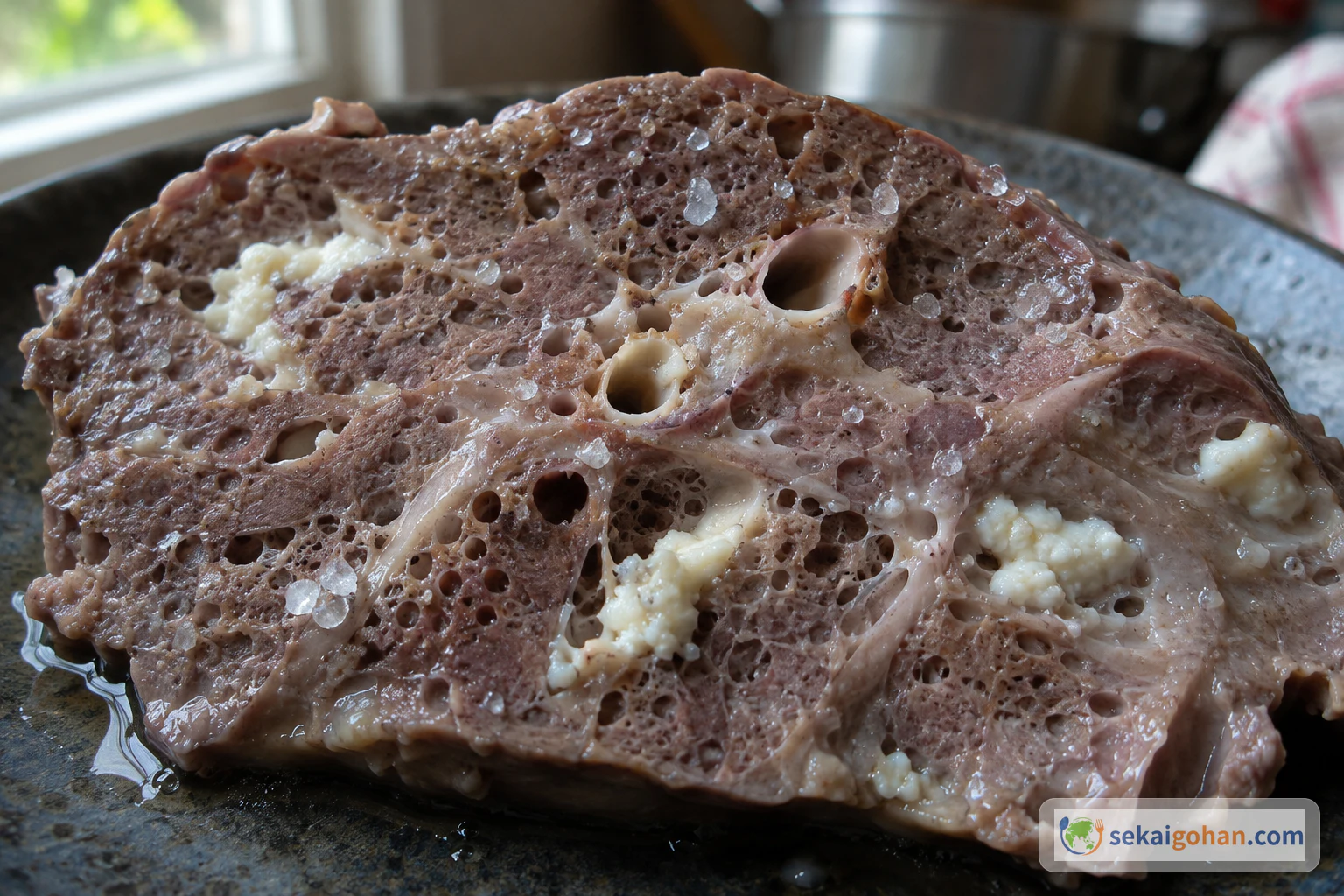
Upka is served the way it comes off the board: sliced, in a dish, with salt. Each slice has three textures in it. There is the soft, porous lung, the tender curd where the milk set in the airways, and the firm, springy rings of the bronchial tubes, which beef lung has plenty of. Because nothing else went into the pot, the flavour is clean and mild, and the salt is the only seasoning.
Variations
These are our own suggestions, not part of the recorded dish.
- Salt and black pepper. Pepper is the most natural thing to add to an unseasoned dish, and it gives the mild curd a little bite.
- Seared slices. Brown the cut pieces briefly in a hot pan. The outside turns crisp and toasty against the soft inside, which moves the dish away from the plain boiled version.
- With bread. Flatbread is the usual partner at a Central Asian meal and makes the slices a fuller plate.
Leftovers
Cool the lung quickly, then refrigerate it promptly, either in some of its cooking water or in a sealed container. Eat it by the next day. It tastes best the day it is made, so cook it to eat that day rather than to keep. Reheat it in a pot or a frying pan until the centre is hot all the way through, at 167°F (75°C) for at least 1 minute. If you use a microwave, stop and stir partway through, because it heats unevenly.
Frequently asked questions
Why does the milk go in through the windpipe?
The lung is a sponge of airways, and the windpipe is the only way into them. Milk poured down it fills the whole lung from inside and sets there as it boils, which is where the white curd in every slice comes from. Milk poured over the outside or added to the water gives you lung boiled in milky water, which is a different dish.
Can I make it with lamb or goat lung?
Yes, and sheep and goat lung are the usual choices in Tajikistan. Flush it, fill it and boil it exactly the same way. A smaller lung can be done sooner, so start testing with the skewer early and stop when it slides through to the centre.
What do I do with the cooking water?
By the end, the water has some flavour from the lung and the milk. Season it with salt and serve it in a separate bowl as a simple broth alongside the slices. If you poured off the water once partway through, keep only the second batch.
How do I stop the kitchen smelling during the long boil?
Most of the smell comes from blood and foam. A lung flushed until the water runs clear, plus steady skimming, keeps the pot clean. Keep the heat low the whole time, because a hard boil throws up more foam and more smell.