
The sizzle of a Polish Sunday lunch
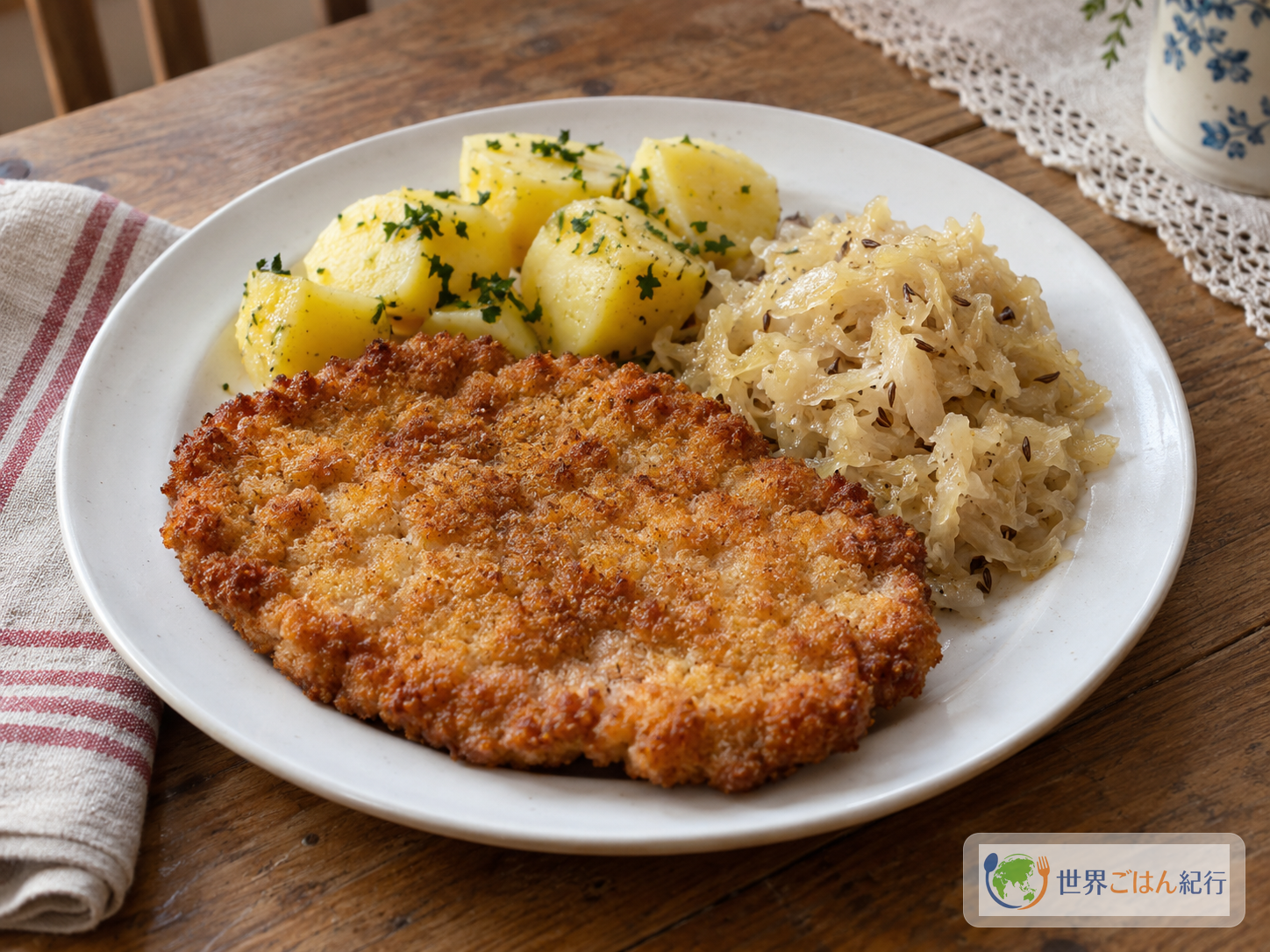
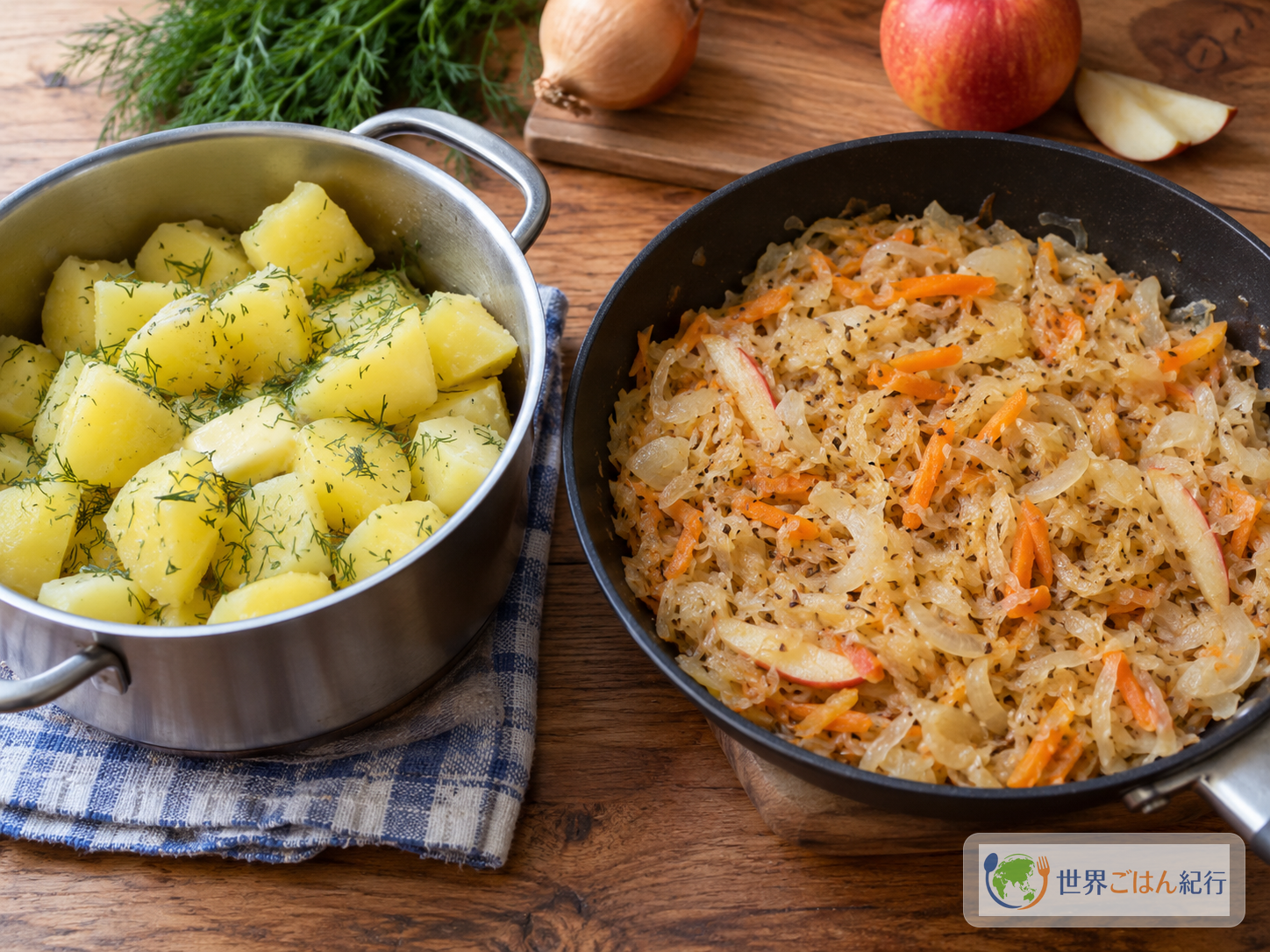
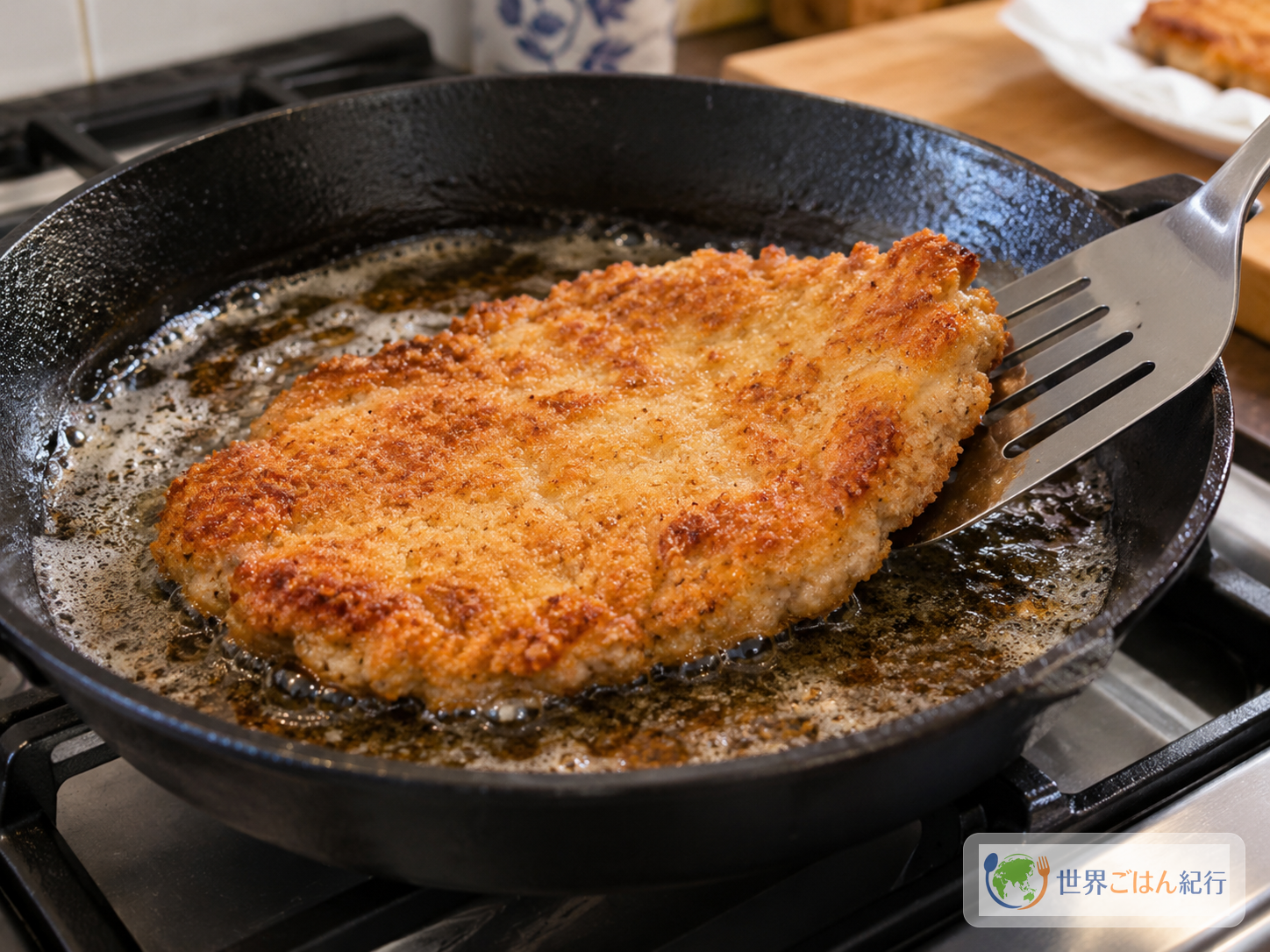
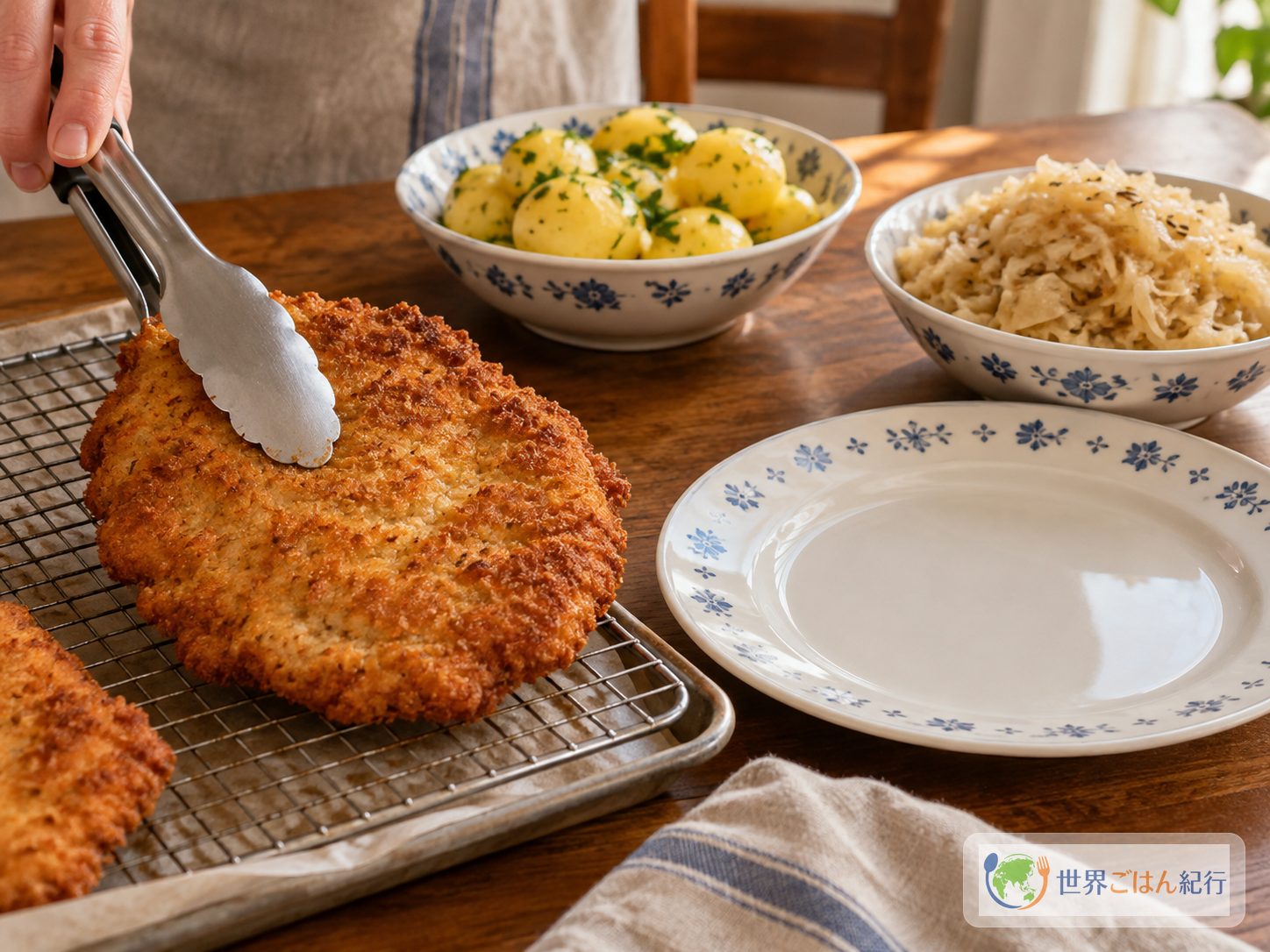
Thump, thump: the sound of meat being pounded fills the kitchen. Hands move from flour to egg to breadcrumbs, and soon the coating starts to sizzle in hot fat. On the plate, boiled potatoes and tangy cabbage are already waiting side by side for the meat to arrive. This is the classic table scene of kotlet schabowy, described as a Polish Sunday home-cooked dish. A breaded pork cutlet that crackles in the pan is less a quick weeknight dinner than a signal that the family is sitting down to lunch.
Pork loin is pounded thin, coated in egg and breadcrumbs, and fried until golden in lard or another fat. Up to this point it is close to Japanese tonkatsu, and "Poland's tonkatsu" is an easy way to picture it. The difference is how you eat it. The traditional partners are potatoes and sour cabbage, and instead of being doused with sauce, the richness of the meat is balanced by potatoes and tangy cabbage as you work through the plate. It lives on in restaurants and homes alike, and it is best known as a Sunday lunch dish.
Culture.pl describes kotlet schabowy as a breaded pork cutlet. The origin of the name is not clearly established, and the pronunciation Culture.pl gives is offered only as a guide. The stars are pork, egg, breadcrumbs and the fat used for frying. Caraway is not an essential spice in the cutlet itself; it belongs to the cabbage on the side.
This article is written for a home kitchen, so the ingredients, method and regional differences read as one continuous story. It sets the bone-in version recorded in official sources alongside a boneless working version that is easier to handle at home. The fermented cabbage with caraway on the side is one regional example, not a fixed standard across the whole country. Rather than judging by golden breading alone, you check doneness by the thickness of the meat, the heat and the internal temperature. Thinness and cooking control decide the texture of this dish.
How the cutlet took root on Polish plates
When this dish arrived in Poland can't be stated with certainty. According to Culture.pl, it may have come to Poland in the 19th century as a pork version of Wiener schnitzel. That is only a possibility; the origin is not settled. Nor has pork always held the same weight at the center of the table. As the old aristocratic cuisine declined and pig farming spread in the modern era, the pork version that arrived in the 19th century gradually became an everyday dish.
The older form can be found in cookbooks. The Polish Ministry of Agriculture's "Kanon kuchni polskiej" includes an 1860 example from Lucyna Ćwierczakiewiczowa: bone-in meat pounded, seasoned with salt and pepper, coated in egg and breadcrumbs, and fried in hot butter or lard. There are mentions of onions and sauce, but they are not treated as ingredients every household needs today. The core of meat, egg, breadcrumbs and lard remains, and the old style breaded right up to the bone is the ancestor of today's boneless plate.
Sources place breaded pork dishes in the state-run milk bars (bar mleczny) of the PRL era in the second half of the 20th century. They also explain that the spread of pig farming after the war helped make it a familiar meat dish. Think of milk bars not as cafés in today's sense but as public canteens of their time.
In the present day, Culture.pl presents pork breaded and fried in lard as a family Sunday lunch and a main course in Polish restaurants. It is a restaurant standard too, and plating and sides vary. It isn't so uniform that every household in the country eats it the same way every Sunday. Still, the scene that comes to mind is not a weekday meat dish but a midday plate for the gathered family.
Bone and breading: choices for the home cook
The historical sources record a bone-in version. Bone-in pork loin keeps the feel of old recipes and the thickness of the meat, but it fits a frying pan less easily, and it's harder to check that the center is cooked through. So this 4-serving recipe is a working version that divides 600 g of boneless pork loin into 4 pieces and evens the meat out to about 1 cm thick. Bone-in is culture; boneless is reliability. Switching to pork shoulder or chicken makes a different cutlet, so the base of kotlet schabowy here stays pork loin.
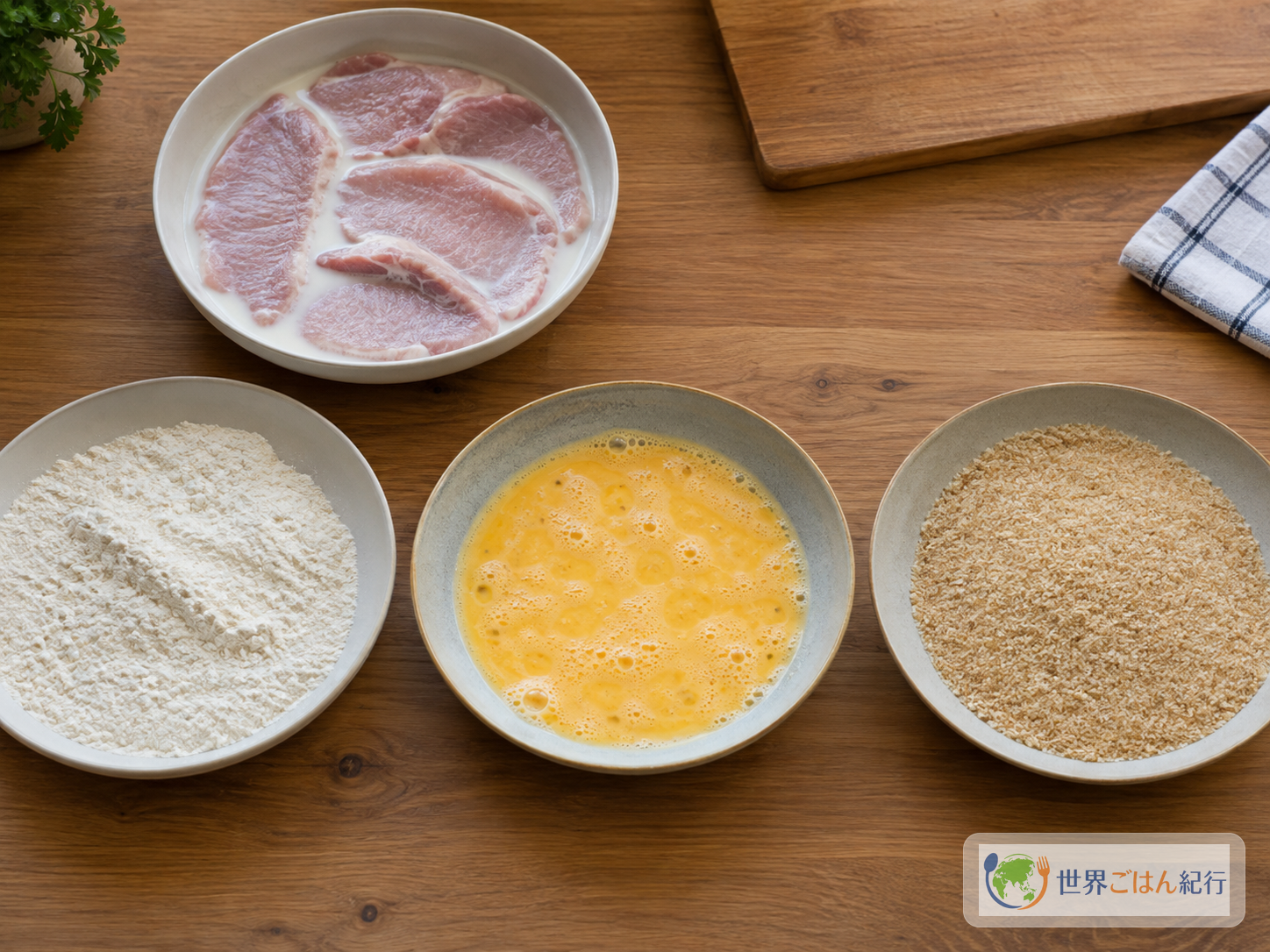
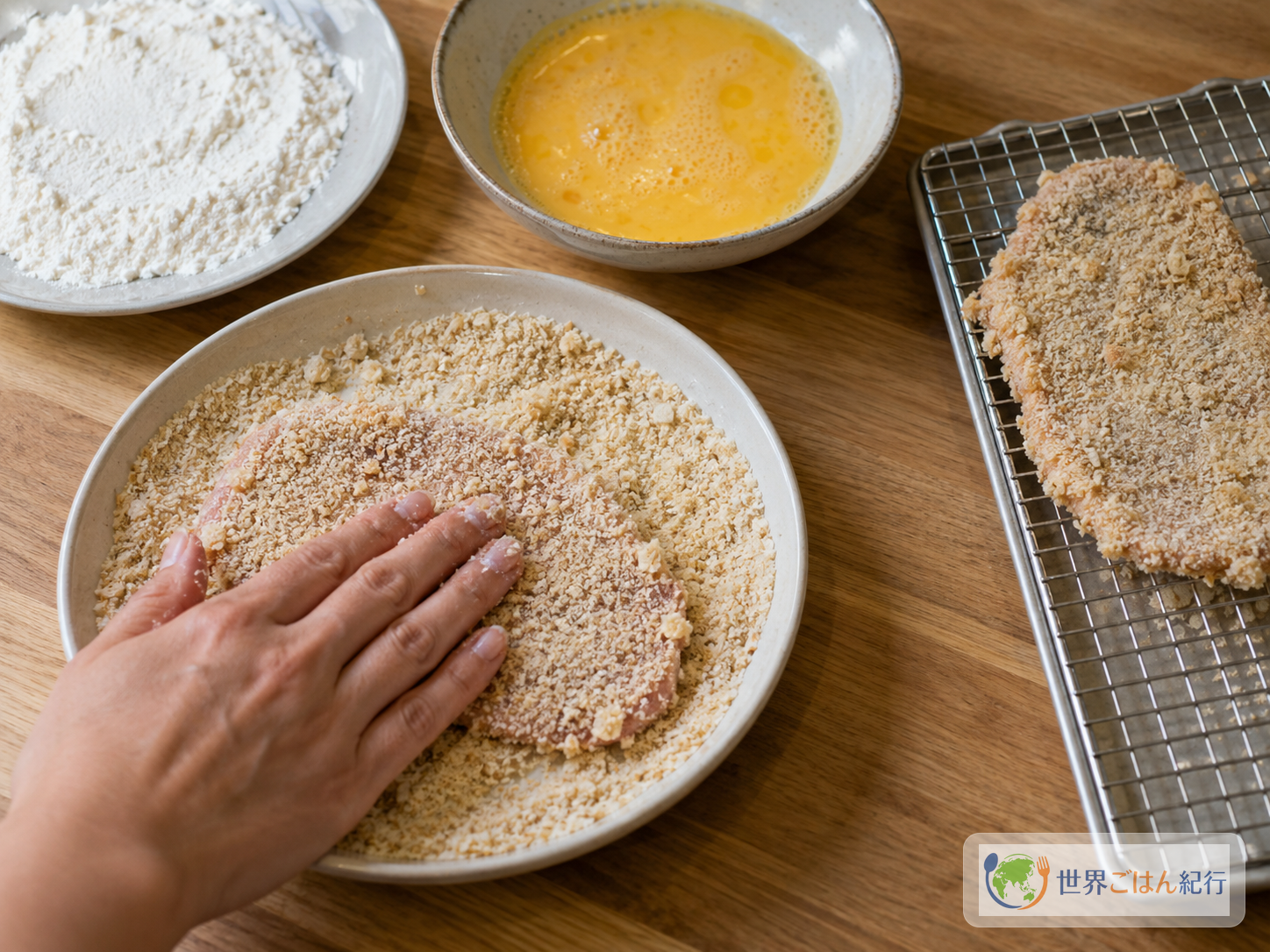
Now the coating. The official modern interpretation grates dry wheat rolls for the crumb. This working version replaces them with dried breadcrumbs. Coarse dried breadcrumbs give the surface texture and a lively sizzle in the pan; very fine crumbs tend to form an even, hard shell. The order is flour, egg wash, then breadcrumbs, and you pat the surface of the meat dry before you start. Some home versions use flour, egg and milk, and soaking the meat in milk is a home technique. It is neither the single tradition of all Poland nor a guaranteed way to tenderize the meat. Pressing on coarse crumbs and letting the coating rest is the foundation of the texture.
What about the fat? Lard is the traditional choice confirmed in the sources, and it gives the coating aroma and richness. Without it, you can use a mix of unsalted butter and vegetable oil, or a neutral frying oil, though the aroma and how greasy it feels will change. Whatever the fat, keep the heat at medium, never so hot that the crumbs blacken at once. Too low, and the coating soaks up fat instead. Lard is a choice of aroma, not a requirement. Whatever fat you have at home will work.
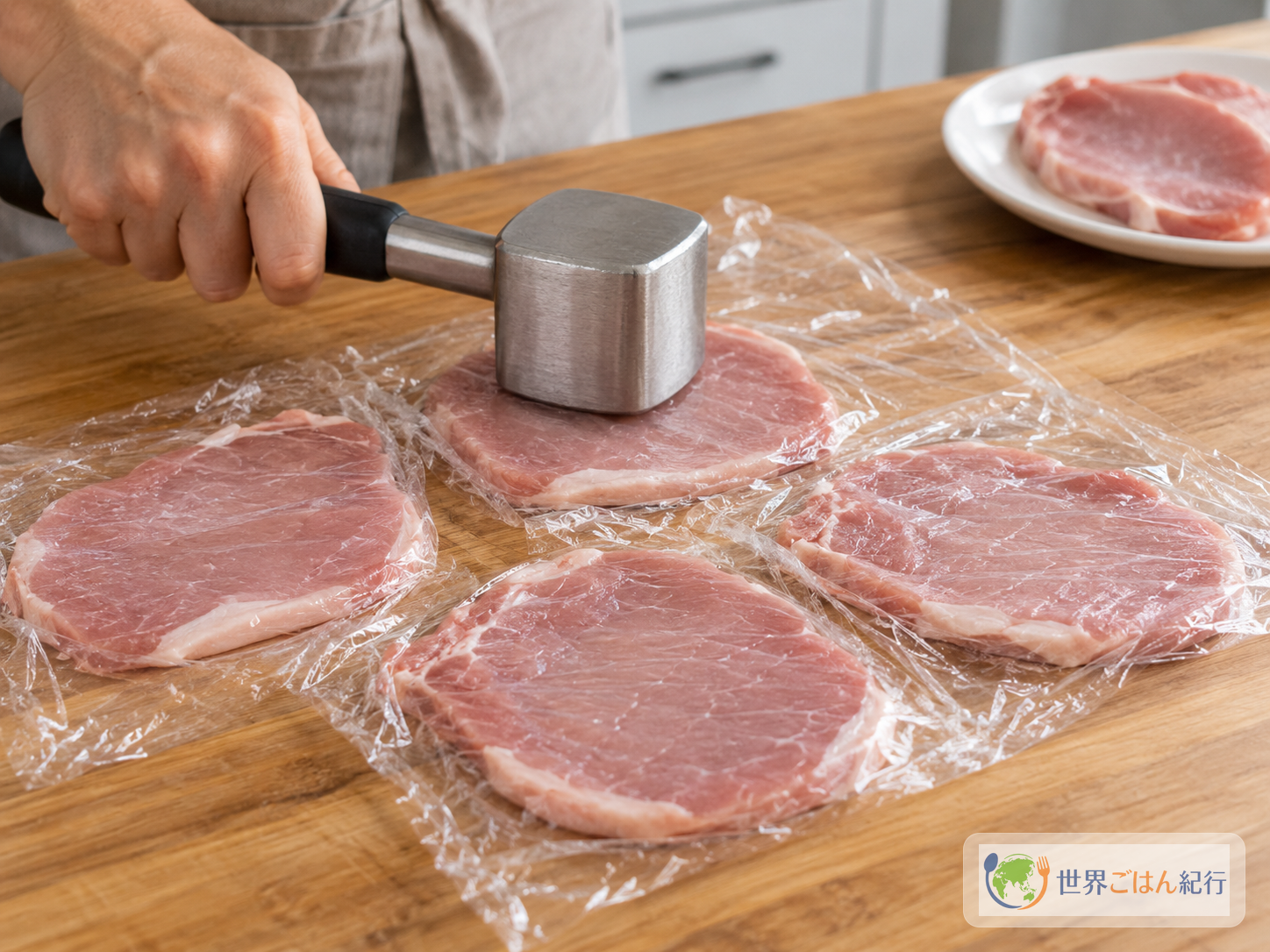
Sandwich the 1 cm thick meat between plastic wrap or in a bag, and pound evenly from the center outward with the flat side of a meat mallet. Aim for a final thickness of about 7–8 mm (roughly 1/3 inch). Pound it paper-thin and the juices escape. Avoid breaking down the fibers too much, and before frying, check from the side that all 4 pieces are the same thickness.
A word on the side dish. A Gov.pl document from the Lasowiacy (Lasowiak) area describes fermented cabbage made with carrot and caraway, with apple or onion added in some homes. The cabbage is described as a regional preserved food that can be eaten raw or cooked and that pairs well with fatty pork. In this recipe's side, 1 tsp (about 2 g) of caraway seeds brings out the aroma, but it never goes into the cutlet itself. Caraway stays with the cabbage; that's the rule.
Ingredients (serves 4)
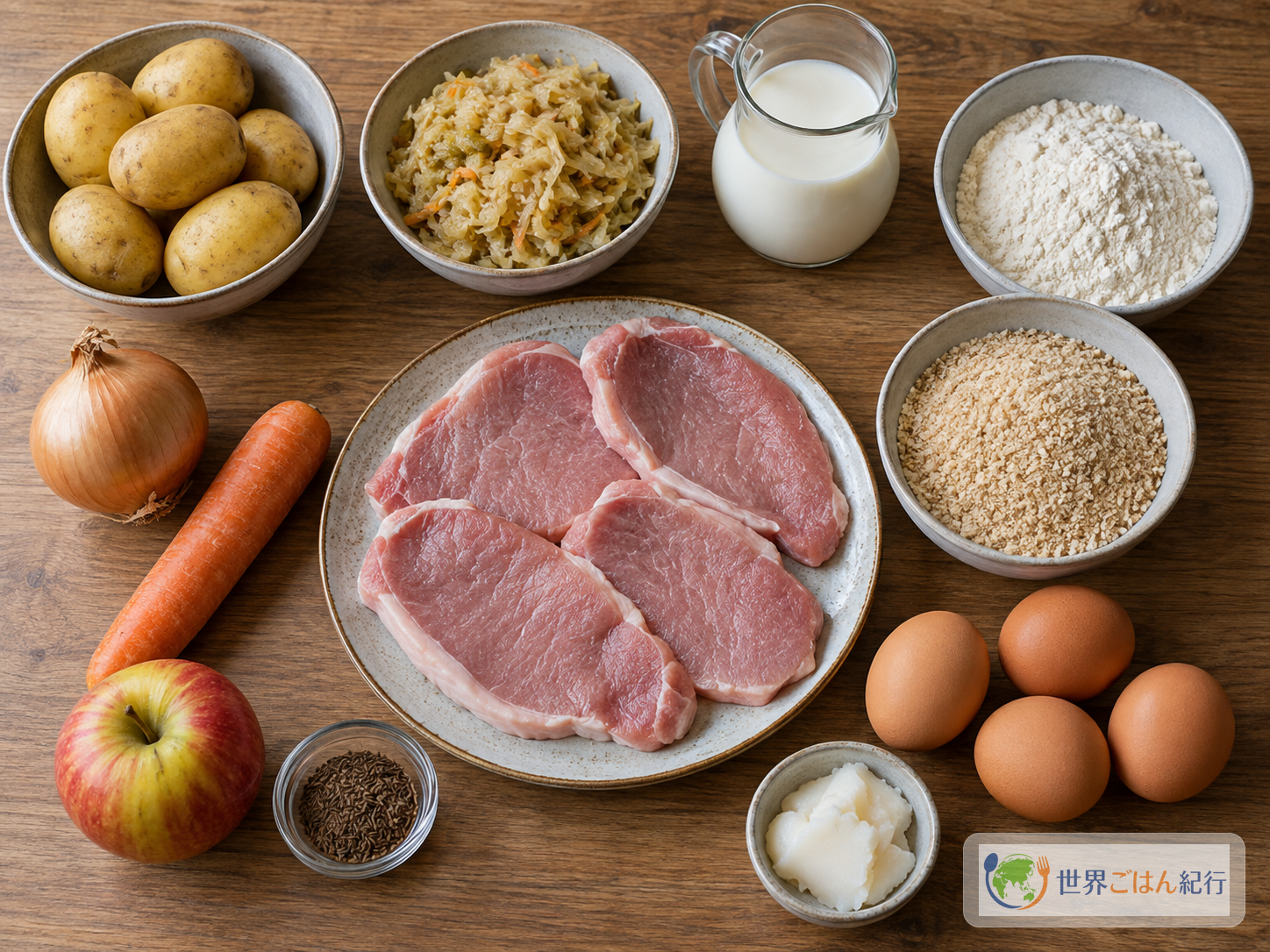
For 4 servings, this working version divides 600 g of pork loin into 4 pieces of about 150 g and pounds them from about 1 cm thick. It keeps the backbone of the official modern interpretation: 600 g of meat, 4 eggs and lard. The amounts of breadcrumbs, flour and milk are adjusted for home cooking. The fermented cabbage and caraway are a regional example for the side and never go into the pork coating. Evening out all 4 pieces to the same thickness is where everything starts.
Most of the shopping is supermarket basics: pork loin, eggs, milk, flour, breadcrumbs, potatoes and onion. The only specialty item is caraway seeds, found in the spice aisle or at Eastern European grocers. Be careful not to mix them up with cumin. Lard can be replaced with whatever vegetable oil you have, so no particular product is required. Seek out the caraway; protect the tang and the aroma.
This recipe uses wheat (flour and breadcrumbs), eggs and milk. If you have allergies, check not only the substitutes in the ingredient table but also the labels on store-bought breadcrumbs. Don't use cutting boards, tongs or plates that touched the raw pork for the potatoes or cabbage you serve. Don't rinse raw meat; wash your hands and tools after handling it, and cook it thoroughly to the center.
Method
First, take the meat out of the refrigerator and pat its surface dry. While it sits, get the cabbage and potatoes ready. Tools: a meat mallet, plastic wrap or a food bag, 3 shallow plates, a tray with a wire rack, a heavy frying pan and a thermometer. Keep the sides warm and fry the cutlets last, so the sizzle of the coating and the juices make it all the way to the table. Sides first, cutlets last. Remember that order.
Sour cabbage to balance the richness of pork
The lactic tang of sauerkraut cuts cleanly through the fat of the lard and coating. The potatoes gently soak up the salt and the meat juices. In the Lasowiak cabbage example, carrot and caraway are joined in some homes by apple or onion. The cabbage in this article is a plate inspired by that regional example, not a fixed presentation shared across all of Poland. Thinking of it as tang that's there to cut the fat makes the role of the side dish clear.
The Gov.pl document treats cabbage as an everyday ingredient that keeps well, and describes the dish as one passed from home to home, from mother to daughter. That fermented cabbage can be eaten raw or cooked and pairs well with fatty pork is what this regional source says. This recipe's approach, warming the cabbage lightly to keep its tang rather than stewing it sweet, is exactly why it suits a breaded pork cutlet. A preserved food lightens the Sunday plate.
Here is how the plate comes together. Rest the cutlet on a rack so the coating stays crisp, and serve the cabbage beside it without letting its juices run onto the coating. Coat the potatoes thinly with butter, and pile the cabbage, with its caraway seeds visible, in a small mound. Dill and apple are optional aroma and sweetness, not requirements of the dish. A triangle of crust, tang and potatoes comes together on the plate.
What you can change at home, and what to keep
What to keep: pork loin, the step of pounding it thin, the egg and breadcrumb coating, and the pairing of potatoes and cabbage. Going from bone-in to boneless, from dry wheat rolls to dried breadcrumbs, and from lard to vegetable oil are all acceptable for a home version. Replacing caraway with cumin changes the aroma, so if you can't find caraway, leaving it out does less damage to the character of the dish. Without milk, use a little water in the egg wash; to avoid dairy, swap the butter for vegetable oil. That said, no allergy substitute can simply be declared safe. The meat and the coating are what make it this dish.
| Situation | What to protect first | What can change | What changes |
|---|---|---|---|
| Pork | Pork loin, pounded evenly from 1 cm thick | Bone-in to boneless | Bone-in has more character, but cooking time and checking the center are harder |
| Coating | A two-layer coat of egg and breadcrumbs | Dry wheat rolls to coarse dried breadcrumbs | The finer the crumbs, the more even and harder the coating |
| Frying fat | Enough fat and medium heat to fry the coating golden | Lard, butter + vegetable oil, vegetable oil | Lard has a deeper aroma; vegetable oil is lighter |
| Cabbage | Keep the tang and pair it with the pork fat | Rinse the sauerkraut lightly; add apple or onion | The strength of sourness and sweetness changes |
| Aroma | Don't confuse caraway with cumin | Leave out the caraway | Without it the aroma is milder, but the breaded pork still works |
For the cabbage, store-bought sauerkraut or any well-soured fermented cabbage is fine. Evening out thin slices of pork loin does more for consistent results than changing the cut. There's no need to buy lard just for this; make it with vegetable oil the first time and decide on the fat once you've tried the aroma. If you can't find caraway, you can leave it out of the side and the main dish is still complete. The one extra worth seeking out is a pinch of caraway.
For leftovers, let the cooked cutlets cool slightly, then seal and refrigerate within about 2 hours. Don't leave them at room temperature for long. Refrigerate until the next day as a rule, keeping the cabbage and potatoes in separate containers. Reheating in a microwave alone makes the coating soggy, so use a toaster oven or an oven at 160–180°C (320–355°F), on a rack, until hot all the way through. Check the internal temperature after reheating, and avoid refreezing or reheating more than once. Rack for the crust, separate containers for storage.
Fixing common problems
If the coating falls off, check in this order: pat the meat dry, use less flour, press the crumbs on, rest for 5 minutes, and don't move it right after it goes into the fat. If the coating is dark but the center is raw, lower the heat, move it to a rack, and finish in an oven at about 160°C (320°F) or over low heat until the center reaches 75°C for 1 minute. If the coating is pale and greasy, the fat may be too cool; before the next cutlet, check that a breadcrumb bubbles. Don't reuse burnt fat. If the meat is tough, the basics are: don't pound it paper-thin to begin with, don't overcook it, and rest it before cutting. Once cut, it's easier to eat together with the tangy cabbage. If the cabbage is too salty, rinse it briefly in water, squeeze, and add onion or apple to round off the sourness and saltiness. Don't add more salt. If it burns, lower the heat; if the coating falls off, suspect moisture. That's the rule to fall back on.
| What happened | Check first | Fix it now | Next time |
|---|---|---|---|
| Coating falls off | Moisture on the meat, thickness of flour, moving it right after adding | Don't try to stick the coating back on; prioritize cooking the center | Pat the meat dry, use less flour, press on the crumbs and rest 5 minutes |
| Coating dark, center raw | Heat too high, meat too thick | Move to a rack and cook through at a lower temperature | Hold 160–170°C and make all 4 pieces the same thickness |
| Coating pale and greasy | Weak bubbling around the breadcrumbs | Raise the heat a little and drain the surface on a rack | Heat the fat well and don't crowd the pan |
| Meat is tough | Pounded too thin, overcooked | Rest, then slice thinly and eat with the cabbage | Aim for 7–8 mm and check from 3 minutes per side |
| Cabbage is too salty | High-salt fermented cabbage | Rinse quickly, squeeze hard, add apple or onion | Check the salt on the product you buy and go easy on salt for the meat and potatoes |
Frequently asked questions
Is it not kotlet schabowy unless it's bone-in?
The 1860 example uses bone-in meat, but the official modern interpretation works with pork loin about 1 cm thick. Even boneless, if you keep the core (pork loin, pounded thin, egg and breadcrumbs, potatoes and cabbage) it stands as a home version. Bone-in changes the cooking time, so don't mechanically apply the same 3 minutes per side.
Is the milk soak essential?
Soaking for 10–15 minutes in milk is a home technique, not a requirement for the dish to work. To skip it, pat the meat dry and go straight to the egg wash. If you have a dairy allergy, don't improvise substitutes; check ingredient labels. Soaking too long weakens how well the coating sticks, so pat the surface dry after lifting the meat out.
Can I make it with only vegetable oil if I don't have lard?
Lard is the traditional choice confirmed in the sources, but the coating fries fine in vegetable oil. Butter alone burns easily at high heat, so if you use it, combine it with vegetable oil or drop to medium-low heat. The fat changes the aroma and how greasy it feels. Checking the internal temperature applies whatever fat you use.
Can I substitute cumin for caraway seeds?
Caraway adds a fresh, cooling aroma to fermented cabbage, while cumin is earthy and warm; they are not the same. Rather than forcing cumin in, leaving out the caraway and relying on onion and tang alone is less likely to throw off the pork plate.
How should I store it after cooking?
Let it cool slightly, then refrigerate the cutlets, cabbage and potatoes in separate containers, and plan to eat them by the next day. To serve, use a toaster oven or oven with the cutlets on a rack, until hot to the center. The microwave alone tends to make the coating soggy. Don't leave refrigerated pork at room temperature for long, and don't store anything again after reheating.
If I don't have a thermometer, can I judge by the color of the coating?
A thermometer is the most reliable: insert it from the side into the thickest part and measure the center. Without one, cut one cutlet open and check the thickest part. Don't treat the absence of pink or clear juices alone as proof of safety. If the coating darkens first, lower the heat and finish at a lower temperature; never serve it undercooked. Prioritize the internal temperature standard from Japan's Ministry of Health, Labour and Welfare and preventing cross-contamination.
One more Polish home-cooked dish
If you want to enjoy sour cabbage as a stew, try bigos. To see family handiwork beyond meat dishes, try pierogi. To follow the aroma of wheat and onion to a snack from eastern Poland, try cebularz. Seeing the same table from another plate widens the Sunday lunch scene a little more.
- Bigos (in Japanese): fermented cabbage and meat stewed together, a dish for understanding layers of preserved foods
- Pierogi (in Japanese): Polish dumplings wrapped as a family, and a way into regional fillings
- Cebularz (in Japanese): everyday food from eastern Poland, seen through the aroma of onion and wheat
Sources
- Polish Food 101: Kotlet Schabowy — Culture.pl / Adam Mickiewicz Institute. Accessed and checked October 2, 2026.
- Kanon kuchni polskiej — Ministerstwo Rolnictwa i Rozwoju Wsi / Gov.pl. Accessed and checked October 2, 2026.
- Kanon kuchni polskiej PDF — Ministerstwo Rolnictwa i Rozwoju Wsi / Gov.pl. Accessed and checked October 2, 2026.
- Kapusta z kaszą jęczmienną po lasowiacku — Ministerstwo Rolnictwa i Rozwoju Wsi / Gov.pl. Accessed and checked October 2, 2026.
- 豚のお肉や内臓を生で食べないでください — 厚生労働省 (Ministry of Health, Labour and Welfare, Japan). Accessed and checked October 2, 2026.
- Kotlet Schabowy — World Food Story. Accessed and checked October 2, 2026. Home-cooking reference for the milk step and breading order.


