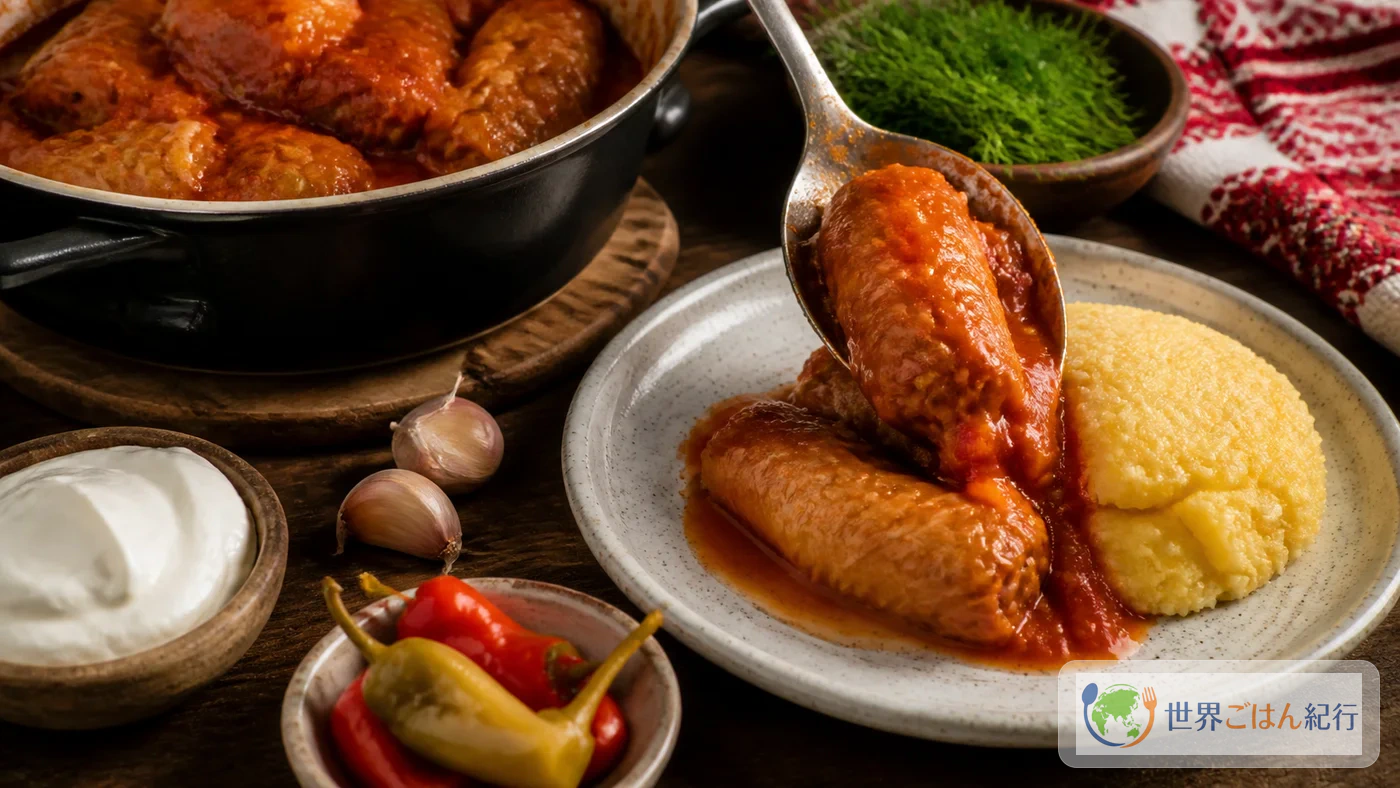
Lift the lid, and sour, smoky steam rises
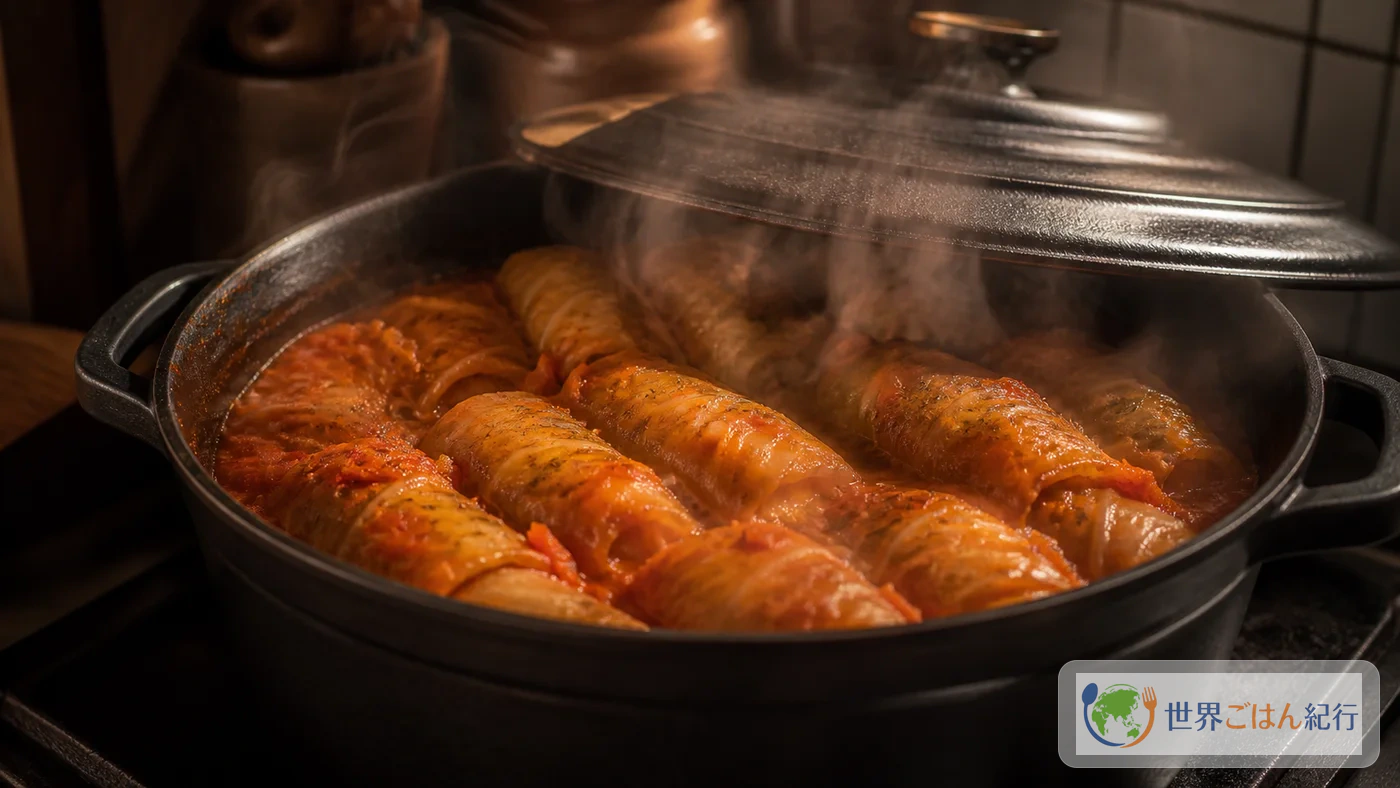
On a cold day, slide the lid of the stew pot aside a little, and behind the sweet steam of tomato you catch the sourness of fermented cabbage. It is similar to a Western cabbage roll, yet the aroma heads in an entirely different direction. Not sweet bouillon, but sour cabbage, pork, rice, dill and a little smoke. It is a taste that makes you want yellow mămăligă beside it rather than white rice.
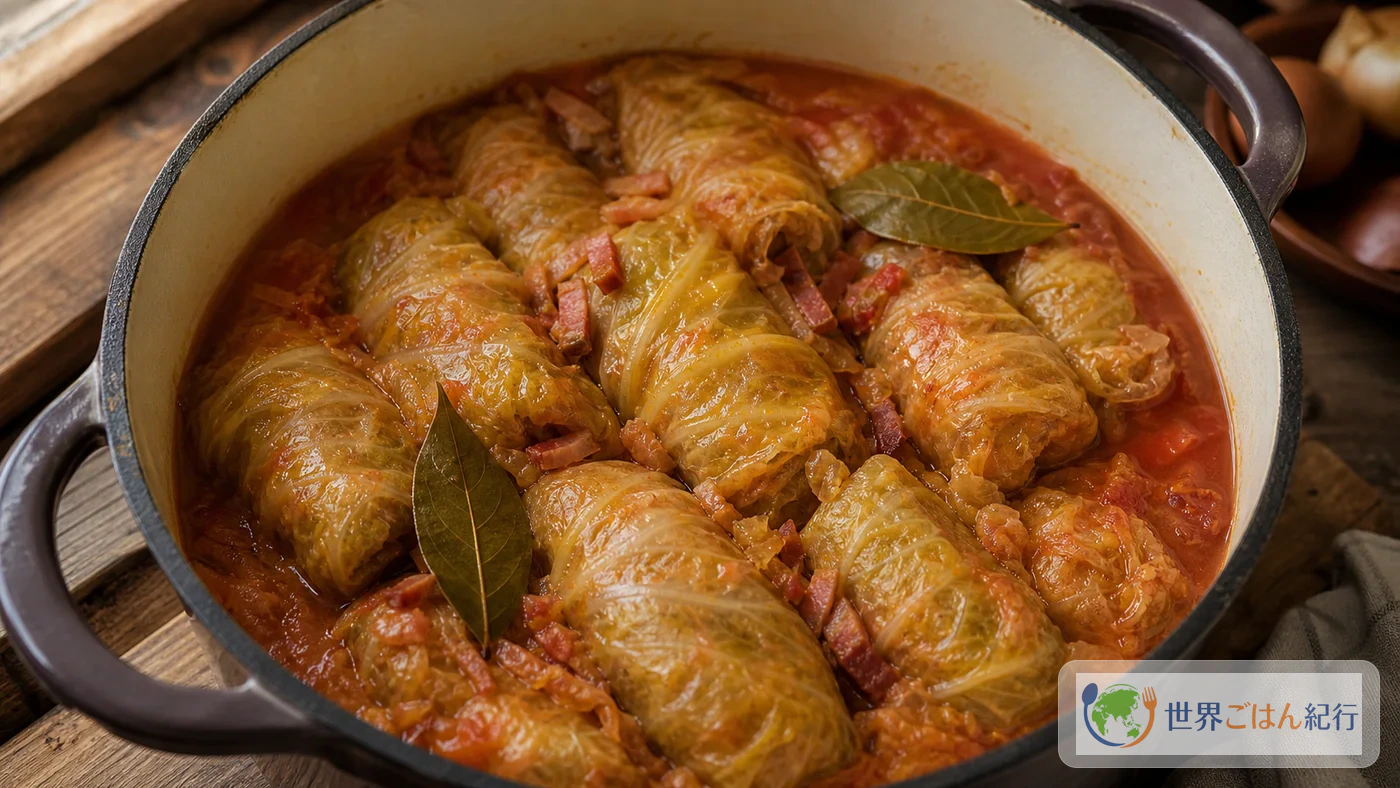
Sarmale are Romanian fermented-cabbage rolls. A filling of meat and rice is wrapped in sour cabbage leaves and simmered slowly with tomato, shredded cabbage and smoked meat. They appear at gatherings such as Christmas, Easter, weddings and christenings, but in the home they are also loved as a dish you cook the day before so it is better the next day.
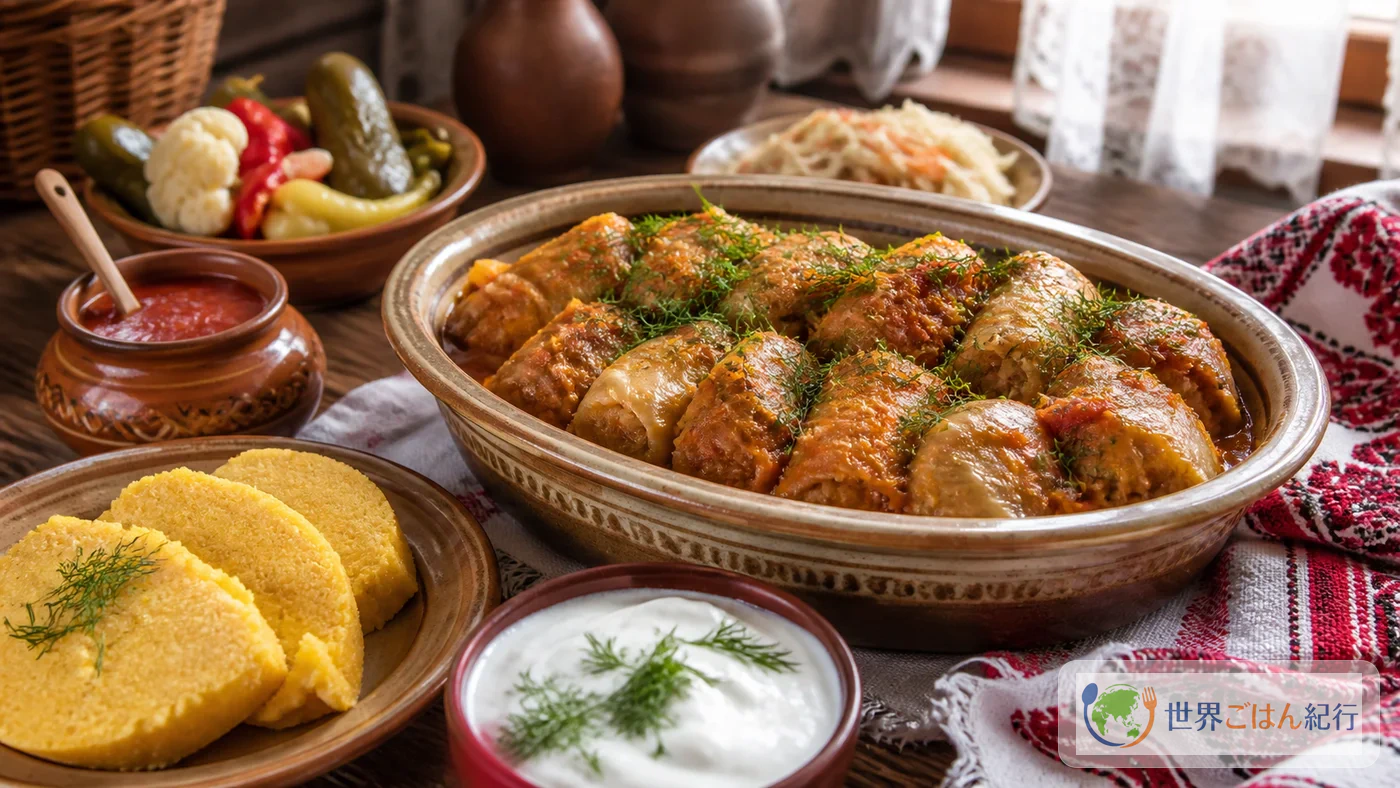
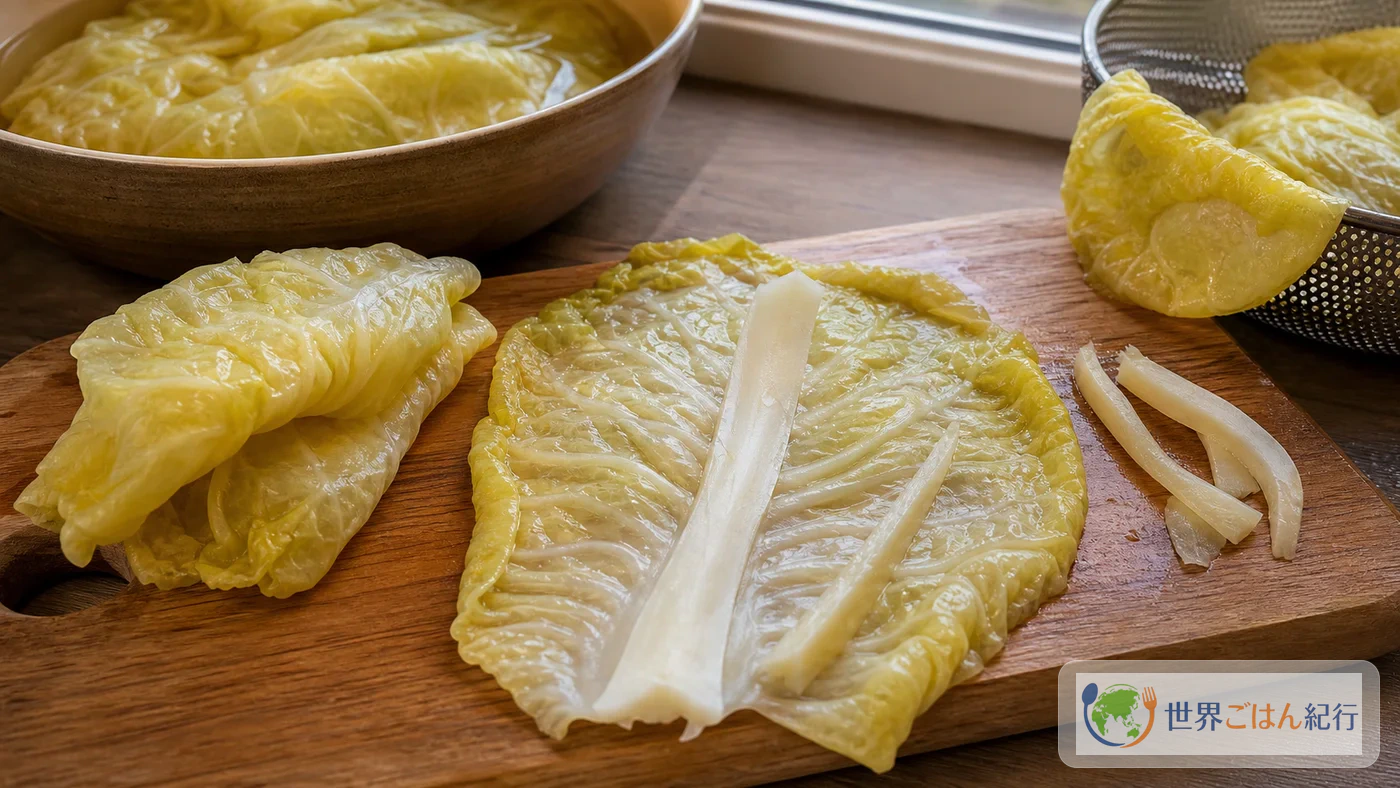
The hard part in a home kitchen is the sour cabbage leaf. Rolling in ordinary cabbage still gives a good dish, but the character of sarmale lies in the sourness. This recipe combines two methods: shredding jarred sauerkraut to line the pot, and giving ordinary cabbage a quick sour boost with vinegar and salt. It is not fully fermented cabbage, but it makes it much harder to end up with "just cabbage rolls" on the first try.
For another Eastern European braise, the layering of sourness and meat is close to bigos (in Japanese), and among wrapped dishes it can be compared with dolma (in Japanese). If you continue with Romanian food, serving the cheese pie plăcintă (in Japanese) alongside makes a very pleasant menu.
In Romanian it is written sarmale. The singular is sarma, but because the dish arrives as several pieces, it is usually called sarmale. This article uses "sarmale."
Where sarmale comes from, and the table in Romania
Sarmale are easiest to understand not as something confined to Romania but as part of a large family of "leaf-wrapped dishes" running from the Balkans to the Middle East. The name sarma survives in Turkish-speaking and neighboring regions as a dish name evoking "something rolled." But what stays with you at a Romanian table is less the wrapping technique itself than the way sour cabbage, pork, rice, smoked meat and mămăligă all come together in the same pot and on the same plate.
In Romanian winters, cabbage preserved by salting or fermentation is a strength in the kitchen. At gatherings such as Christmas, New Year, weddings and christenings, it is also a plus that you can prepare a big pot the day before and serve it reheated the next day, when the flavors have settled. The filling varies from home to home: mostly pork, mixed ground meat, versions with a strong smoked-meat presence, even a fasting-season version with mushrooms and rice. Accounts of Transylvania stress the smoky note, and some households closer to Moldova roll them small and thin.
What matters when recreating them is not gathering every unusual ingredient. If you simply braise ordinary cabbage sweetly, it drifts toward a Western cabbage roll. So lay jarred sauerkraut on the bottom of the pot and prepare the leaves in vinegar-spiked water to set the direction of sourness first. Smoked meat is the same: rather than hunting for pricey imported sausage, a small amount of ordinary bacon with smoked paprika filling in the gaps is easier to keep up at home. The character of sarmale lies not in how rare the shopping is but in the combination of sourness, rice-and-meat filling, slow low simmering, and the way they are eaten with mămăligă.
Ingredients (serves 4): think of the sour leaves and the rice-and-meat filling separately
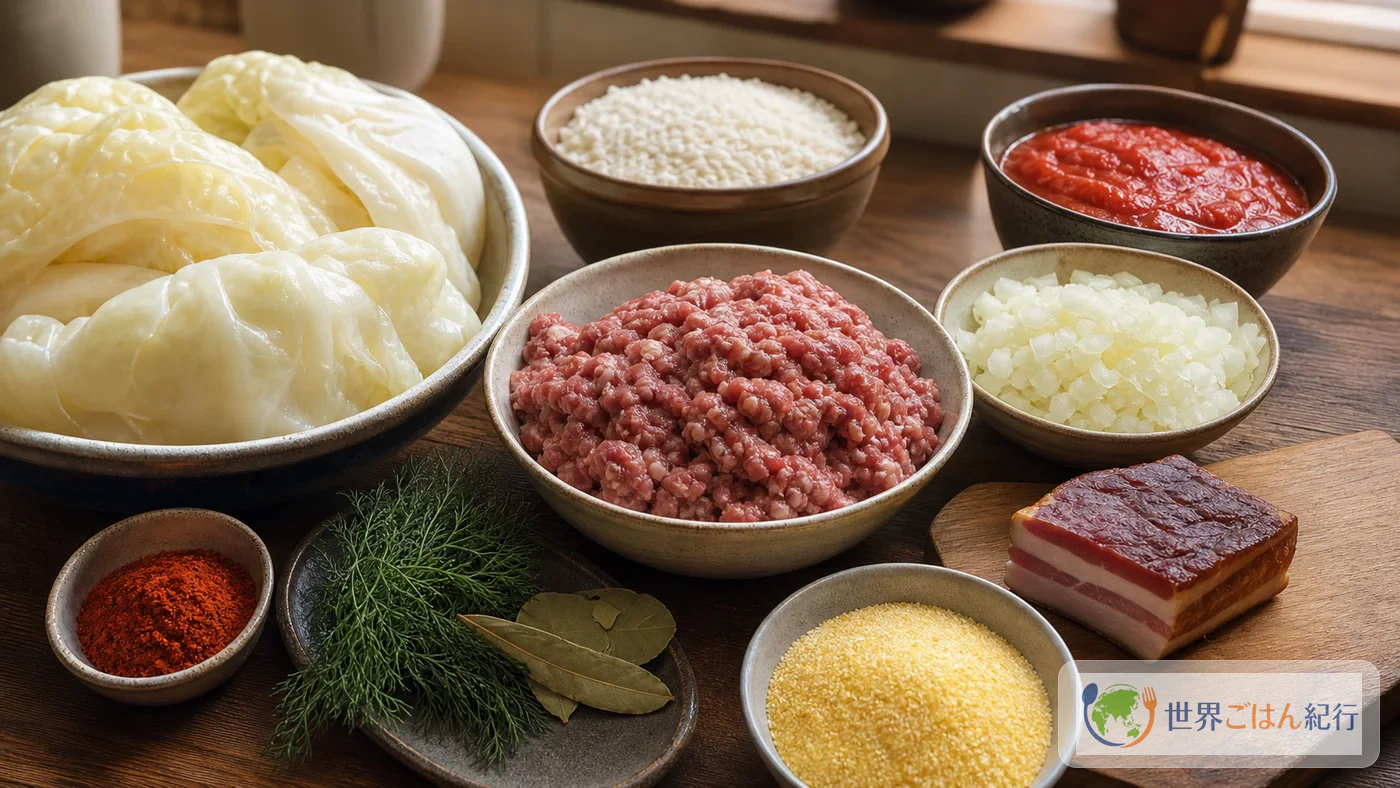
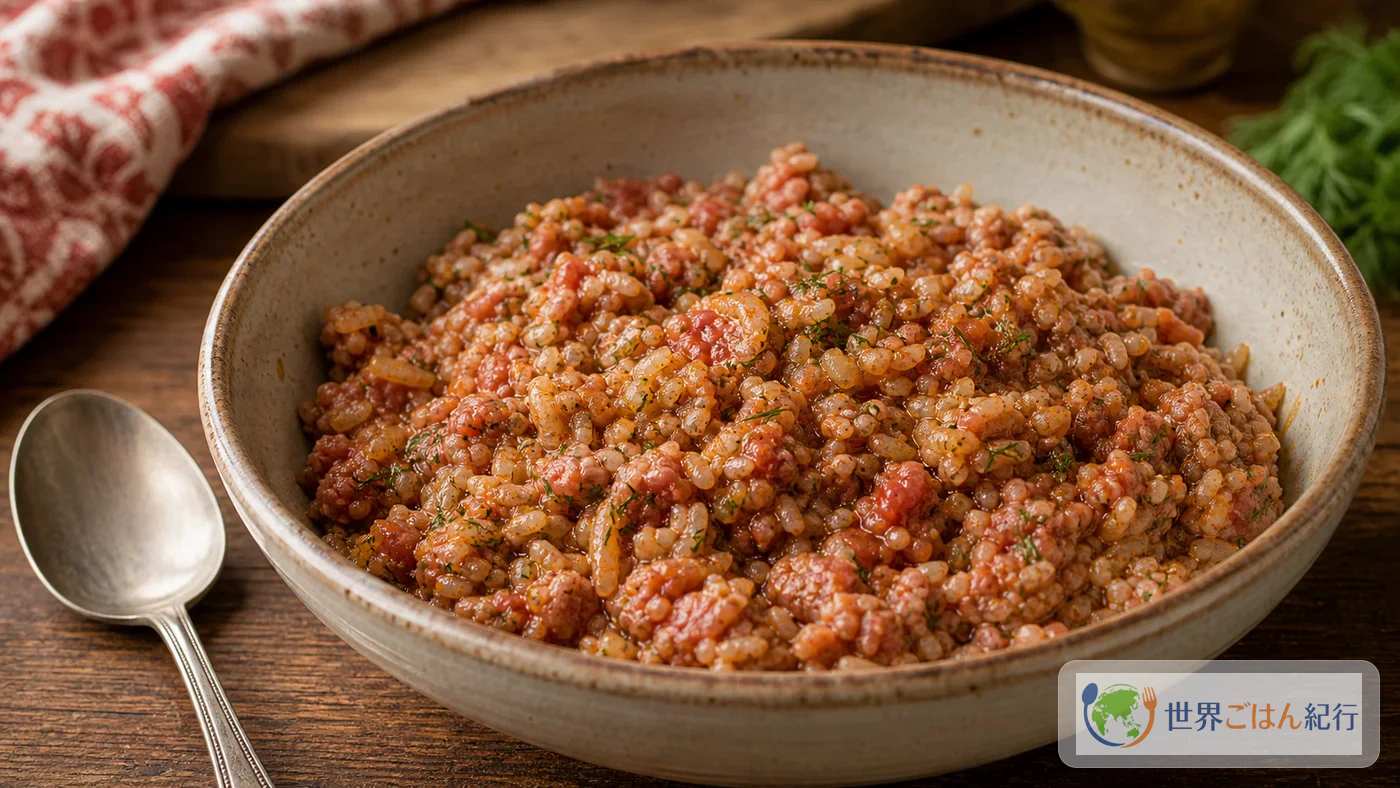
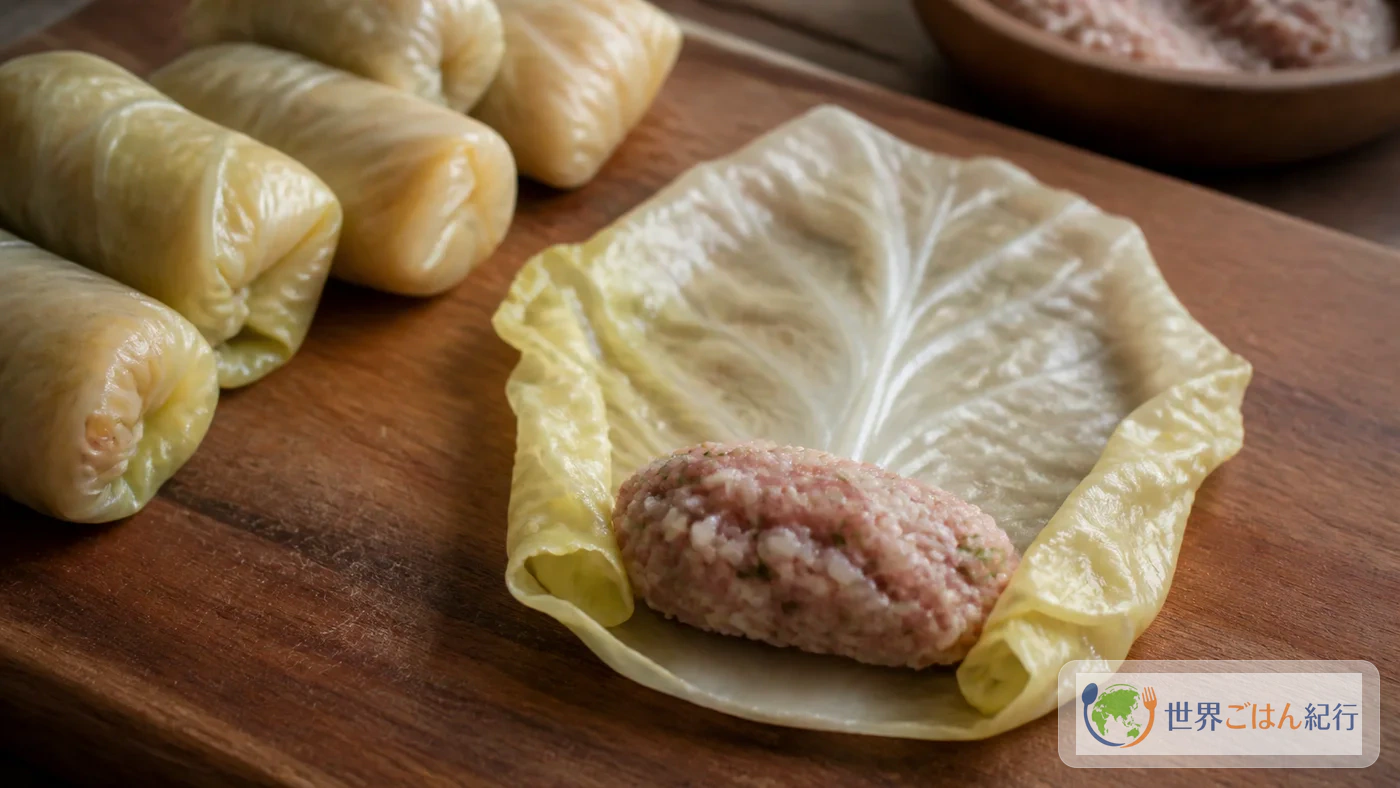
This makes about 16 fairly small sarmale for 4 people. Romanian households often make much more, but for a home pot this amount is easy to handle. Because the filling contains rice, it swells a little more after cooking than when rolled. Do not roll too tightly; leave room inside the leaf for the rice to expand.
This dish contains pork, beef, bacon (which may contain soy or wheat) and sour cream (dairy). Salt levels and allergen labeling of sauerkraut and bacon differ by product, so check when you buy. Because it is a ground-meat dish, aim for an internal temperature of 71°C (160°F) or higher.
What to buy for this dish
What is worth buying specially for sarmale is not the ordinary meat or dairy but the ingredients that support the sourness, the smoke, the flour for mămăligă (in Japanese), a pot that can take a long braise, and a way to check that the filling is cooked through. Choose bacon and ground meat at an ordinary supermarket.
Ordinary paprika will do, but trying to get smoke from bacon alone makes the saltiness run ahead. Smoked paprika adds aroma in a small amount, so it is easy to use in other braises too.
Mămăligă can be replaced with plain white rice, but the job of softly cushioning the sour cabbage and rich meat is different. With fine polenta flour on hand, even the side can be assembled closer to Romania.
Braised for nearly two hours in a thin pot, the bottom tends to scorch while the leaves on top stay tough. A heavy pot holds a low heat steadily and keeps the rolls from breaking when you shake the pot.
A dish of wrapped ground meat can leave you unsure about the center even when the outer leaf is tender. The first time, or when using frozen meat, an instant-read thermometer for checking the center also helps prevent overcooking.
Method: do not roll too tightly, and finish slowly in the pot
Sarmale tear if you rush them over high heat. Keep the leaves supple, the filling tender, and the pot at a steady stream of small bubbles. If you keep those three, it is much easier than it looks.
Getting closer to Romania with what you have at home
The authenticity of sarmale is not decided by gathering every imported ingredient but by the combination of sourness, rice-and-meat filling, low simmering and mămăligă. Deciding first what to keep and what to replace makes mistakes less likely.
| Ingredient or step | Closest to Romania | Practical home solution | Verdict |
|---|---|---|---|
| Cabbage leaves | Whole fermented sour cabbage | Blanch ordinary cabbage in vinegared water and line the pot with sauerkraut | Sourness is essential. Ordinary leaves alone drift toward a Western cabbage roll |
| Filling | Mostly pork, with rice | Mixed ground meat with more pork | Ground chicken alone is too light |
| Smoke | Smoked meat called afumătură | Thick-cut bacon, smoked sausage | A little is enough; too much turns salty |
| Herbs | Dill, thyme, cimbru | Dried dill and thyme | Parsley alone is flat |
| To serve | mămăligă and smântână | Polenta flour and sour cream | Rice alone is edible, but it changes how the sourness is cushioned |
Sarmale vary in rolling style and size by region and household. Some homes near Moldova roll them small and thin, and in Transylvania the smoked meat can be more prominent. There is also a version rolled in grape leaves, but cabbage is easier the first time. If you have already made mămăligă (in Japanese), the same flour can go to the side.
The biggest fork for cooks outside Romania is whether to ferment the leaves. Whole fermented cabbage can sometimes be found online or at Eastern European grocers, but waiting for it every time means making this less often. Jarred sauerkraut plus a vinegar blanch at least protects the direction of the sourness. Rather than being afraid of the sourness and adding sugar, rounding it with sour cream and mămăligă is closer to how Romanians eat it.
What goes wrong, storage and FAQ
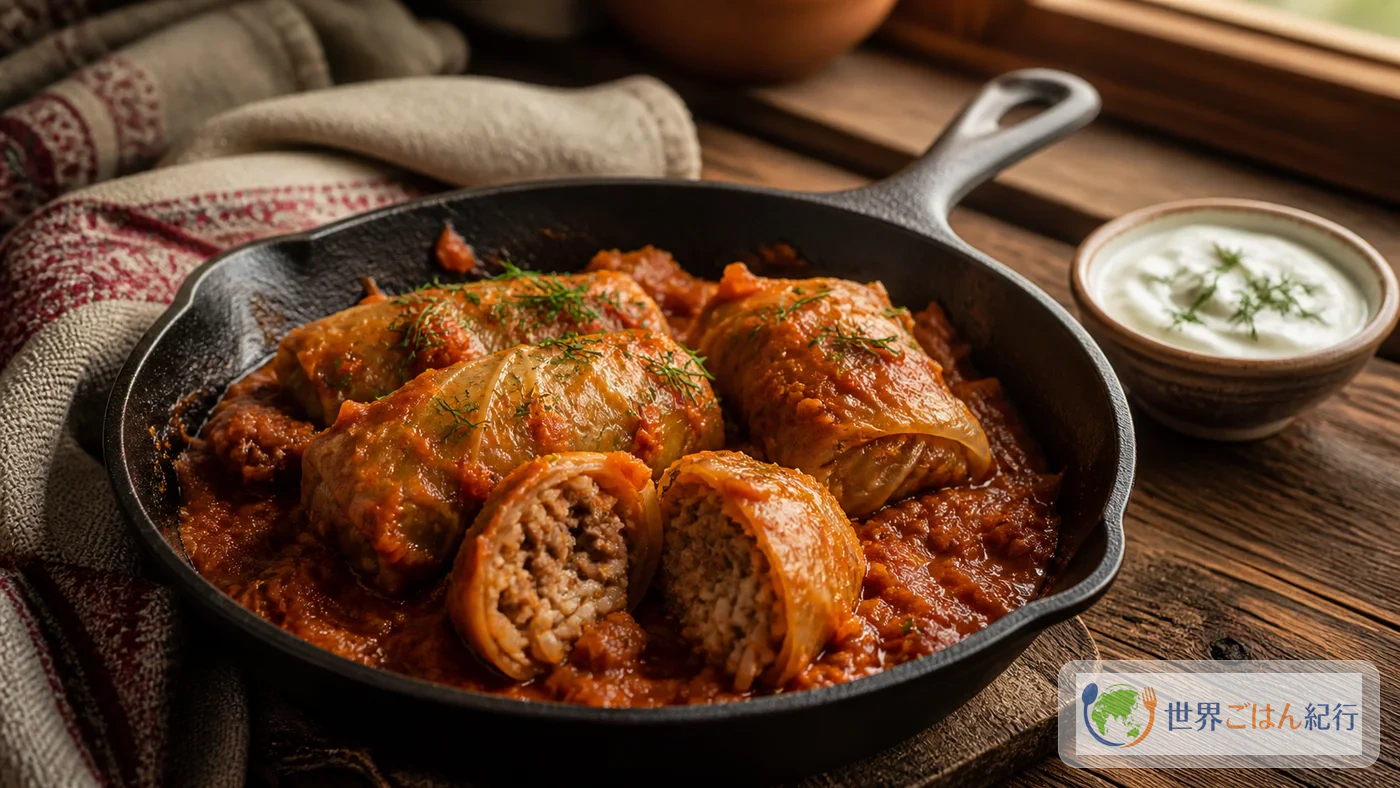
Why do the leaves tear?
Either the leaves are tough, the rib is thick, the rolls are too tight, or the pot boiled too hard. Cook the cabbage over medium heat until translucent and shave the rib to about 2 mm. When wrapping, leave room for the rice to expand, and do not let the braise boil hard. Torn leaves can go on the bottom of the pot, so nothing is wasted.
The filling turns tough
Overmixing, too little liquid, or lean meat are the causes. Stop mixing at about 2 minutes and always add 50 ml water. Making pork the main meat keeps it tender; beef alone tends to tighten. Rice added already cooked has no room to absorb liquid and tends to give a dense texture, so use raw rice.
How is it different from ordinary cabbage rolls?
The big differences are sourness and rice. Western cabbage rolls are often simmered in sweet cabbage and broth, but sarmale are layered with sour leaves, a rice-and-meat filling, tomato and smoke. The center of the flavor is fermented cabbage, not bouillon.
How do I store and reheat?
Let cool, then move to a container with the braising liquid and eat within about 3 days in the refrigerator. Freezing works for about 1 month. To reheat, return to a pot and warm over low heat for 10 to 12 minutes, until the liquid barely bubbles. If the liquid has tightened, add 2 to 3 tbsp water. USDA FSIS recommends keeping leftovers in the refrigerator for 3 to 4 days and reheating them to a sufficient temperature.
What goes with it?
At first, sarmale, mămăligă, sour cream and pickles are enough. If you add one more dish, cut the Romanian plăcintă (in Japanese) small as a starter. To widen the Eastern European table, cook borscht (in Japanese), pierogi (in Japanese) and goulash (in Japanese) on other days, and the differences in how each uses sourness and braising become clear.
Can I eat it without sour cream?
You can. But because it softens the sour cabbage and rich filling, it pulls things together better when included. If you avoid dairy, strained unsweetened soy yogurt, or tofu cream with a little olive oil mixed in, can stand in. Avoid sweetened yogurt, which spoils the dish's flavor.
Sources
- Romania Tourism. "Romania Gastronomy. Popular dishes and artisan foods of Romania." https://romaniatourism.com/romanian-food-wine.html (accessed 2026)
- Jo Cooks. "Romanian Cabbage Rolls (Sarmale)." https://www.jocooks.com/recipes/sarmale/ (accessed 2026)
- BBC Good Food. "Sarmale (Romanian cabbage rolls)." https://www.bbcgoodfood.com/recipes/sarmale-romanian-cabbage-rolls (accessed 2026)
- Chef's Pencil. "Sarmale (Romanian Cabbage Rolls)." https://www.chefspencil.com/sarmale-romanian-cabbage-rolls/ (accessed 2026)
- Savori Urbane. "Sarmale in foi de varza murata - reteta mamei mele din Ardeal." https://savoriurbane.com/sarmale-in-foi-de-varza-murata-reteta-mamei-mele/ (accessed 2026)
- AP News. "Stuffed cabbage rolls recipe." https://apnews.com/article/stuffed-cabbage-rolls-recipe-kapusta-cookbook-9606cfefc6f5ba0b5de2aeab64bf078e (accessed 2026)
- USDA Food Safety and Inspection Service. "Safe Minimum Internal Temperature Chart." https://www.fsis.usda.gov/food-safety/safe-food-handling-and-preparation/food-safety-basics/safe-temperature-chart (accessed 2026)
- USDA Food Safety and Inspection Service. "Leftovers and Food Safety." https://www.fsis.usda.gov/food-safety/safe-food-handling-and-preparation/food-safety-basics/leftovers-and-food-safety (accessed 2026)