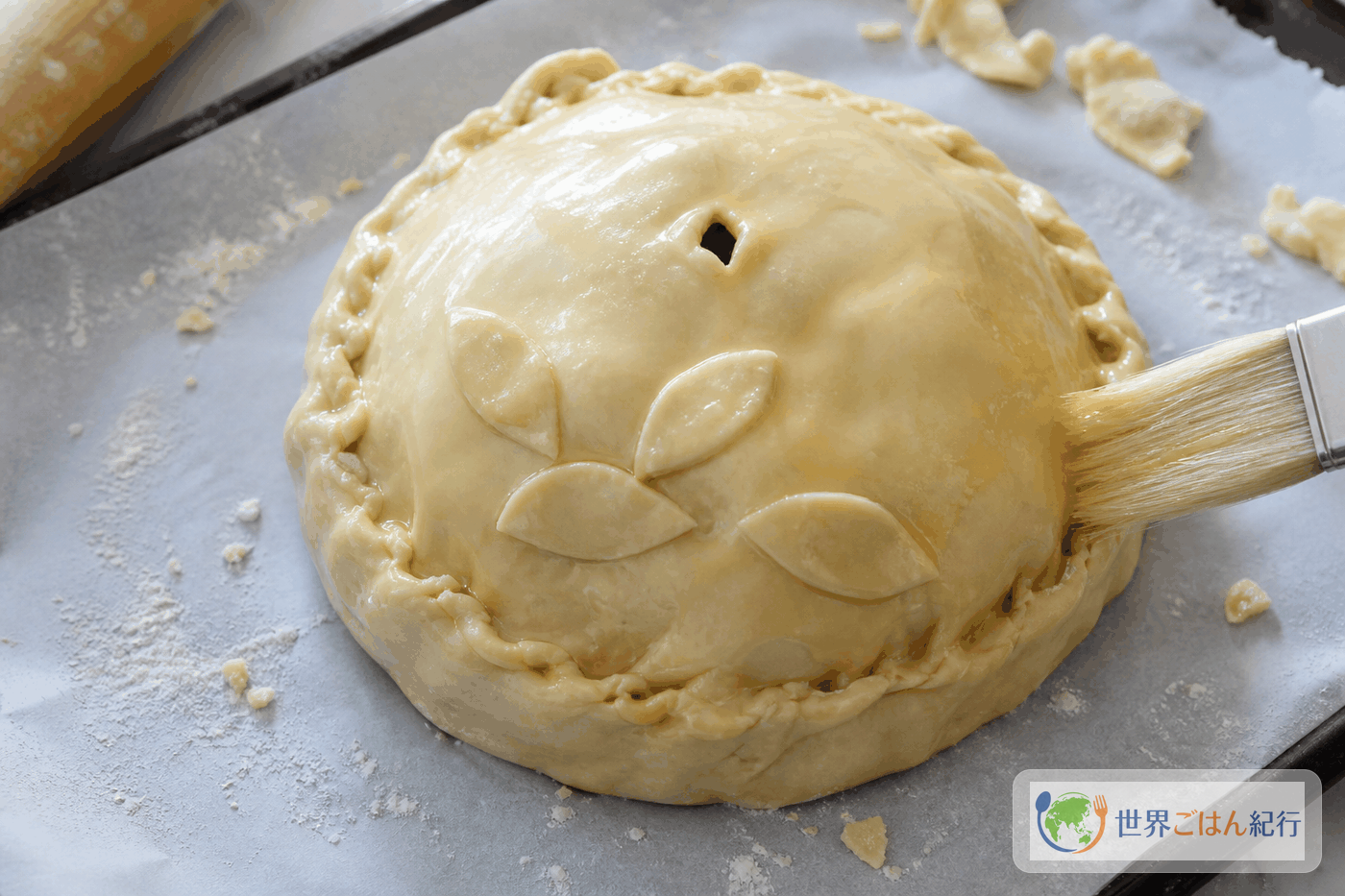
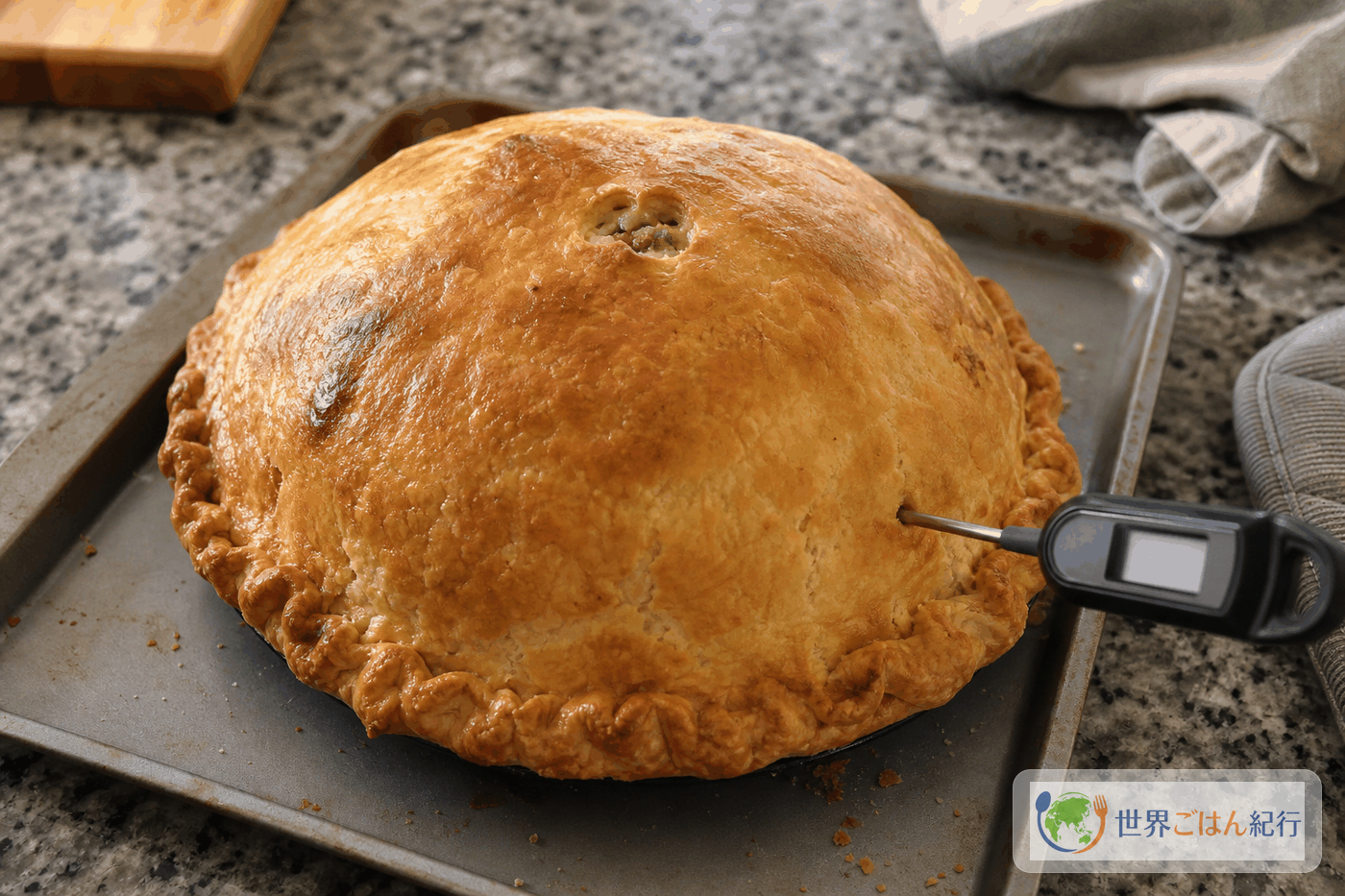
Cut the Dome, and the Layers Show Before the Steam
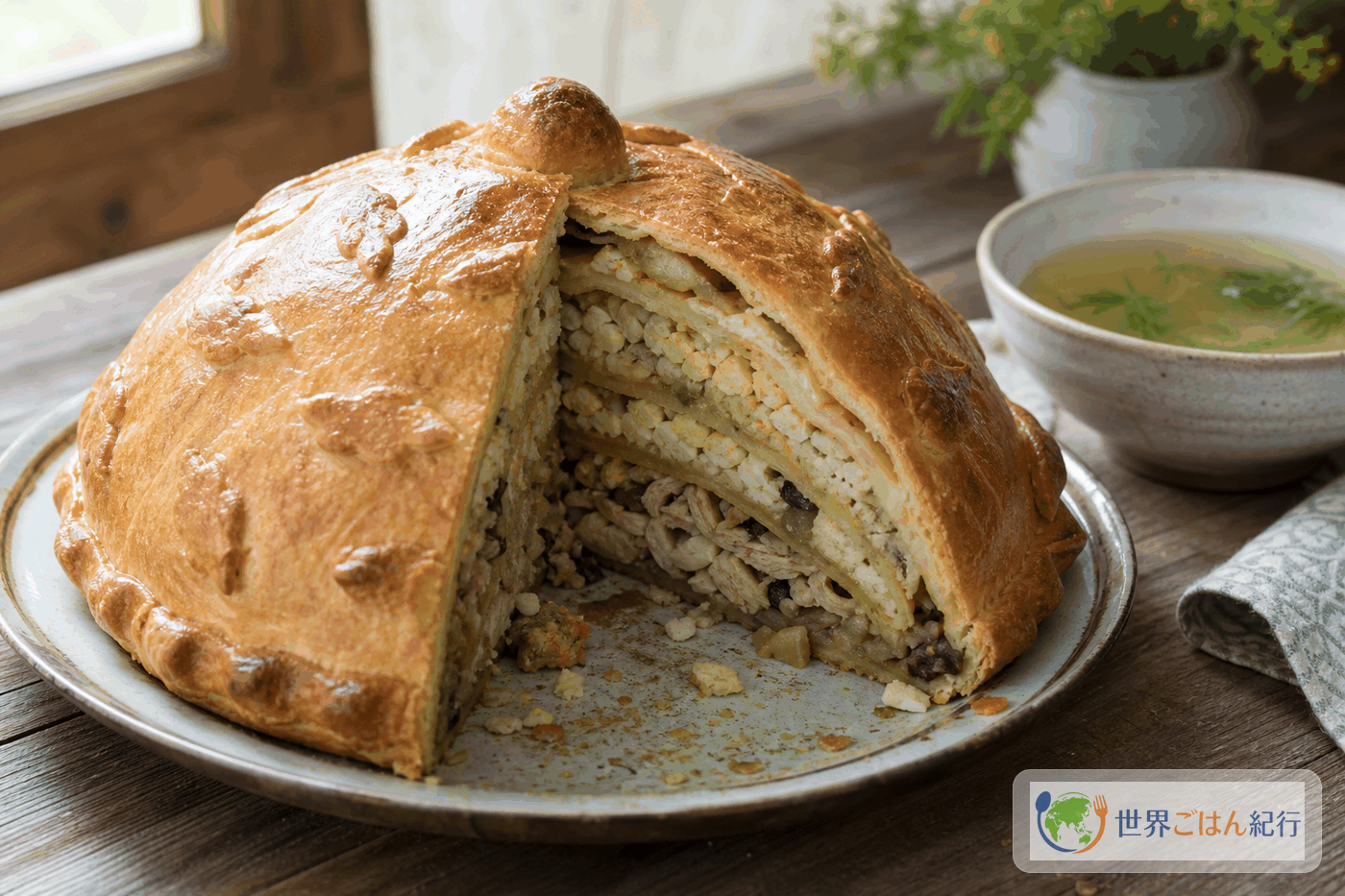
A kurnik out of the oven feels a little more serious than an ordinary chicken pie. Put a knife into the round, golden dome and the outside shatters, revealing layers of chicken, rice, mushrooms, egg, and thin blini. If a slice stands up without collapsing, the kitchen already feels like a small celebration.
Kurnik (Курник) is a Russian dome-shaped chicken pie. English-language sources usually call it a Russian chicken pie, and the name is said to be related to the Russian word for chicken. Wikipedia describes it as a festive pirog filled with chicken, eggs, onion, and kasha or rice. In the Great British Chefs recipe, chicken, rice, eggs, and herbs are layered, and it is served with hot chicken broth on the side.
This article centers on a rice version that is easy to make at home. Rather than tracking down buckwheat kasha, you are less likely to fail by first keeping the rice, mushrooms, dill, thin blini, and crisp sour cream dough. If pelmeni (in Japanese) are small wrapped dumplings, kurnik is a big dish made from the same Russian flour tradition, cut up and shared by the family. Set next to cold okroshka (in Japanese), you can see the Russian pattern of wrapping in dough and cutting richness with sourness and herbs.

What Is Kurnik?
| What to look at | Its place in Russia | How to think about it when cooking at home |
|---|---|---|
| Local name | Курник. Known as a chicken pirog | Usually romanized as kurnik |
| Shape | A large domed baked pie | Without a deep mold, you can build the dome on a baking sheet |
| Filling | Chicken, egg, onion, rice or kasha, mushrooms, etc. | For a first try, use rice and mushrooms for cohesion |
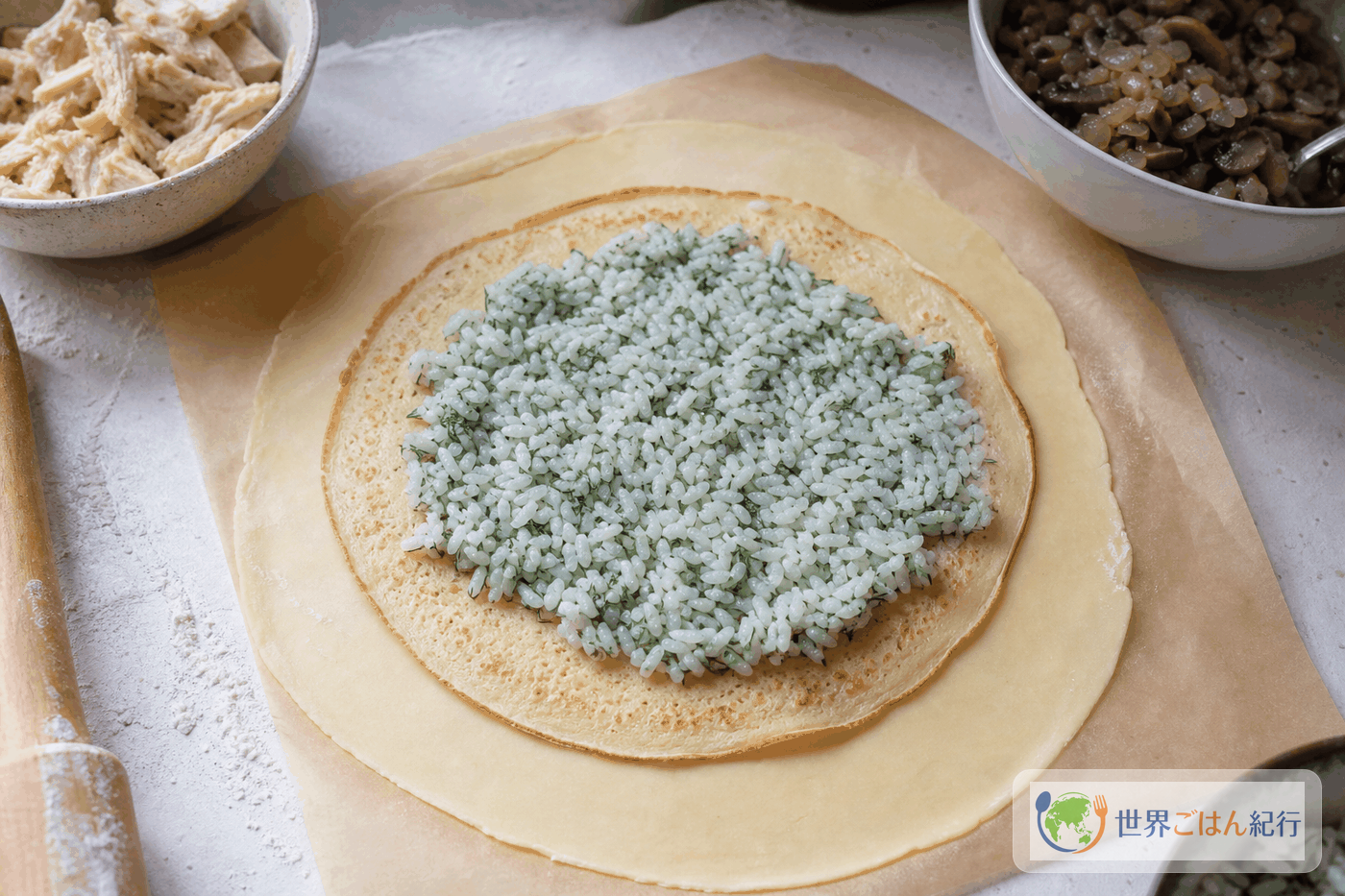
| Layers | Some versions separate fillings with thin blini | Three thin crepes keep the cross-section stable |
| How it is eaten | Spoken of as a festive, wedding, and guest dish | A weekend main. Serve with soup and a sour side dish |
| Hard parts | Dough, filling moisture, managing baking time | Cool the fillings before layering and measure the core temperature |
Seeing kurnik only as a "Russian chicken pot pie" is slightly off. It is not a dish filled with a thick creamy stew; it is a dish of layered fillings whose cut face is the point. If the filling is too wet, the bottom turns soggy as it bakes and the rice and chicken collapse when cut. If you make it too dry, the big pie sticks in your throat.
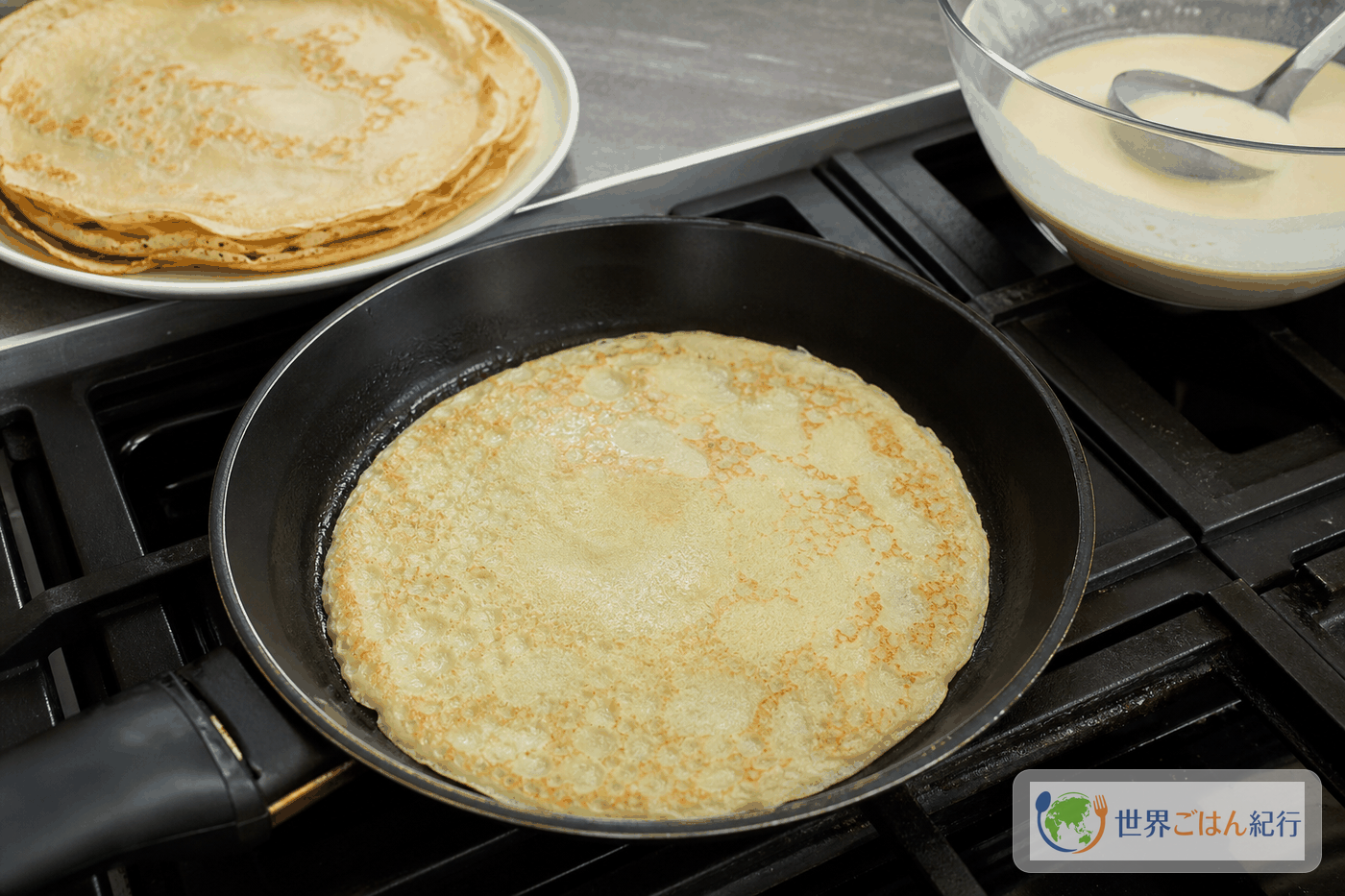
At home, use an easy-to-handle sour cream dough and layer cooled fillings. Don't overthink the blini: they are unsweetened thin crepes. Thick pancakes make the layers heavy, so cook them thin at around 20 cm across and use them as dividers between the fillings.
Ingredients (serves 6, about 20 cm across)
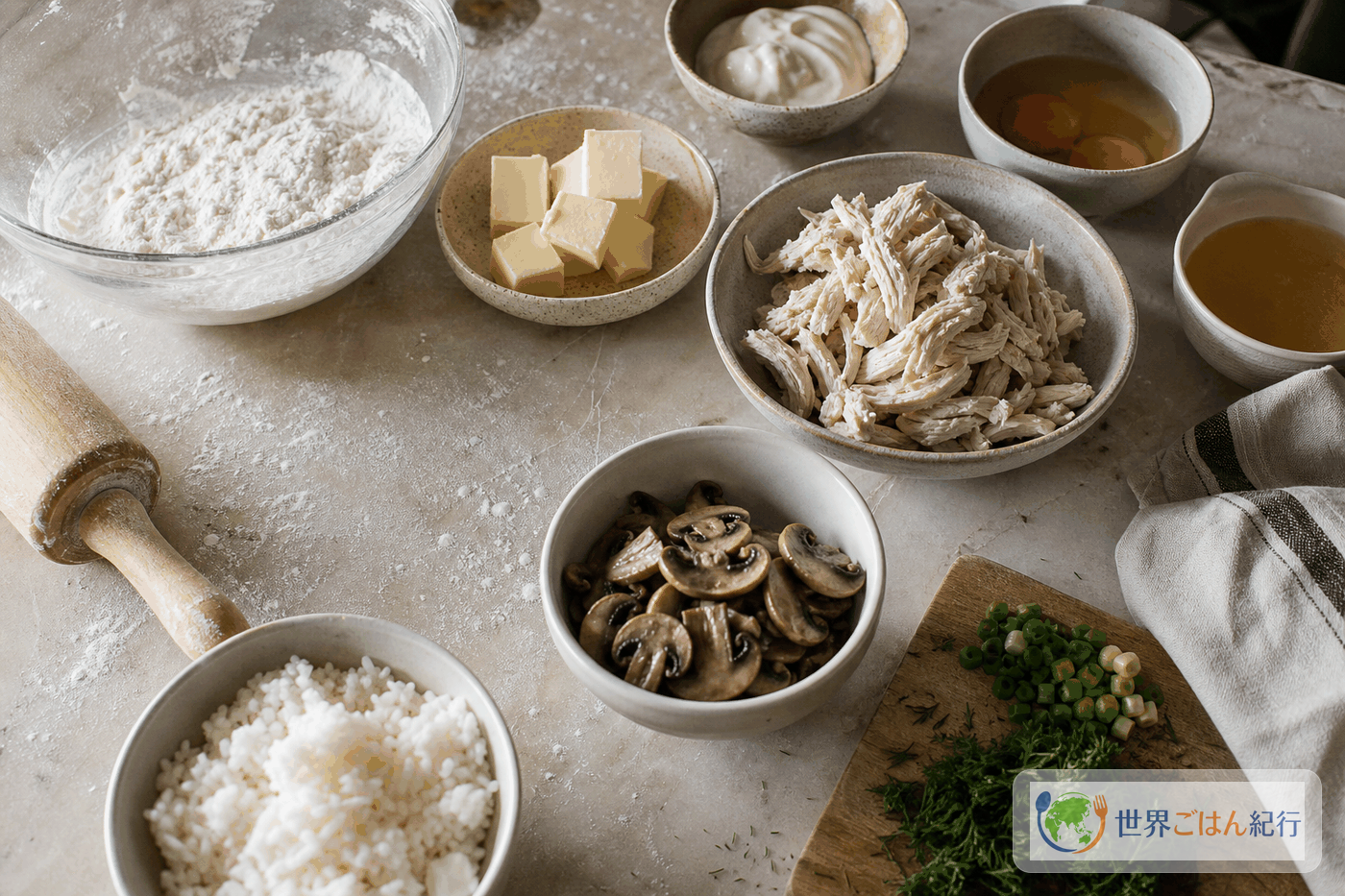
This recipe uses wheat, egg, milk, and chicken. Chicken is hard to judge for doneness by color, and a pie with layered fillings is slow to heat in the center. Following the FoodSafety.gov standard for casseroles containing meat and poultry, confirm a core temperature of 74°C when it comes out of the oven.
What Is Worth Looking for When Shopping
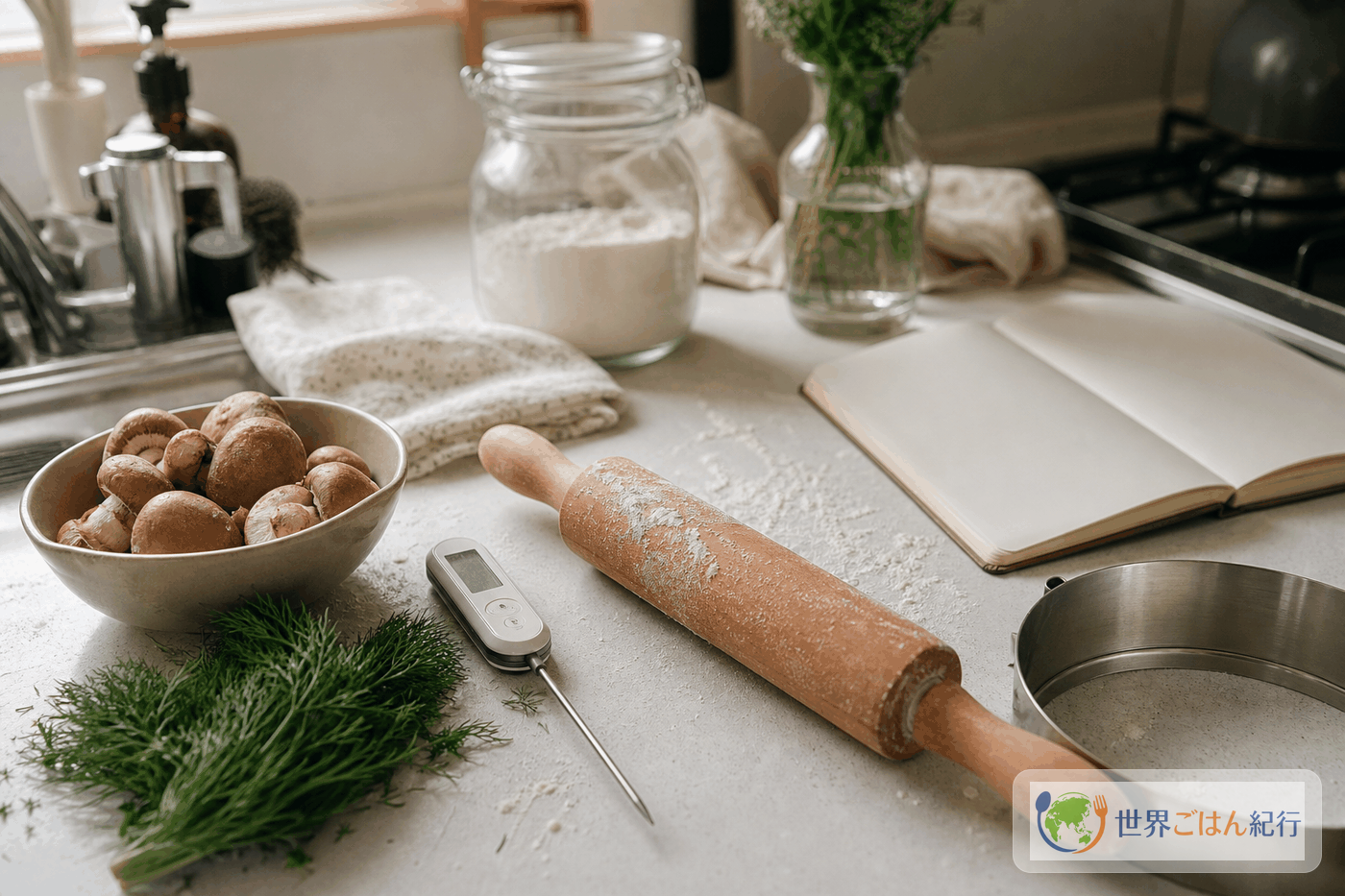
Chicken, eggs, rice, onion, mushrooms, and butter are all fine from an ordinary grocery store. What is worth seeking out are a rolling pin for stretching the dough thin, an instant-read thermometer to check safety at the end of baking, and dill to add the aroma that makes it taste Russian. Fresh dairy and meat are not worth ordering online.
Because kurnik dough is rolled out large, a short rolling pin tends to leave only the edges thick. With a pin around 30 cm long, it is easier to match the thickness of the bottom and lid.
Even when the chicken is poached first, the center of the layers is slow to warm up. Don't judge by color alone; checking the core temperature tells you whether to bake 10 more minutes or rest it and cut.
Even a little dill lightens the weight of rice and chicken. If you can't find fresh, mix in freeze-dried at the end and do not cook it for long.
Nutrition
| Item | Per serving (approx.) |
|---|---|
| Energy | about 680 kcal |
| Protein | about 27g |
| Fat | about 34g |
| Carbohydrates | about 66g |
| Dietary fiber | about 4g |
| Salt equivalent | about 2.2g |
These figures are estimates assuming the pie is cut into six pieces and made with sour cream dough, chicken thighs, rice, eggs, and butter. It is a heavy main dish, so pairing it with a sour soup or vegetables makes it easier to eat.
Method
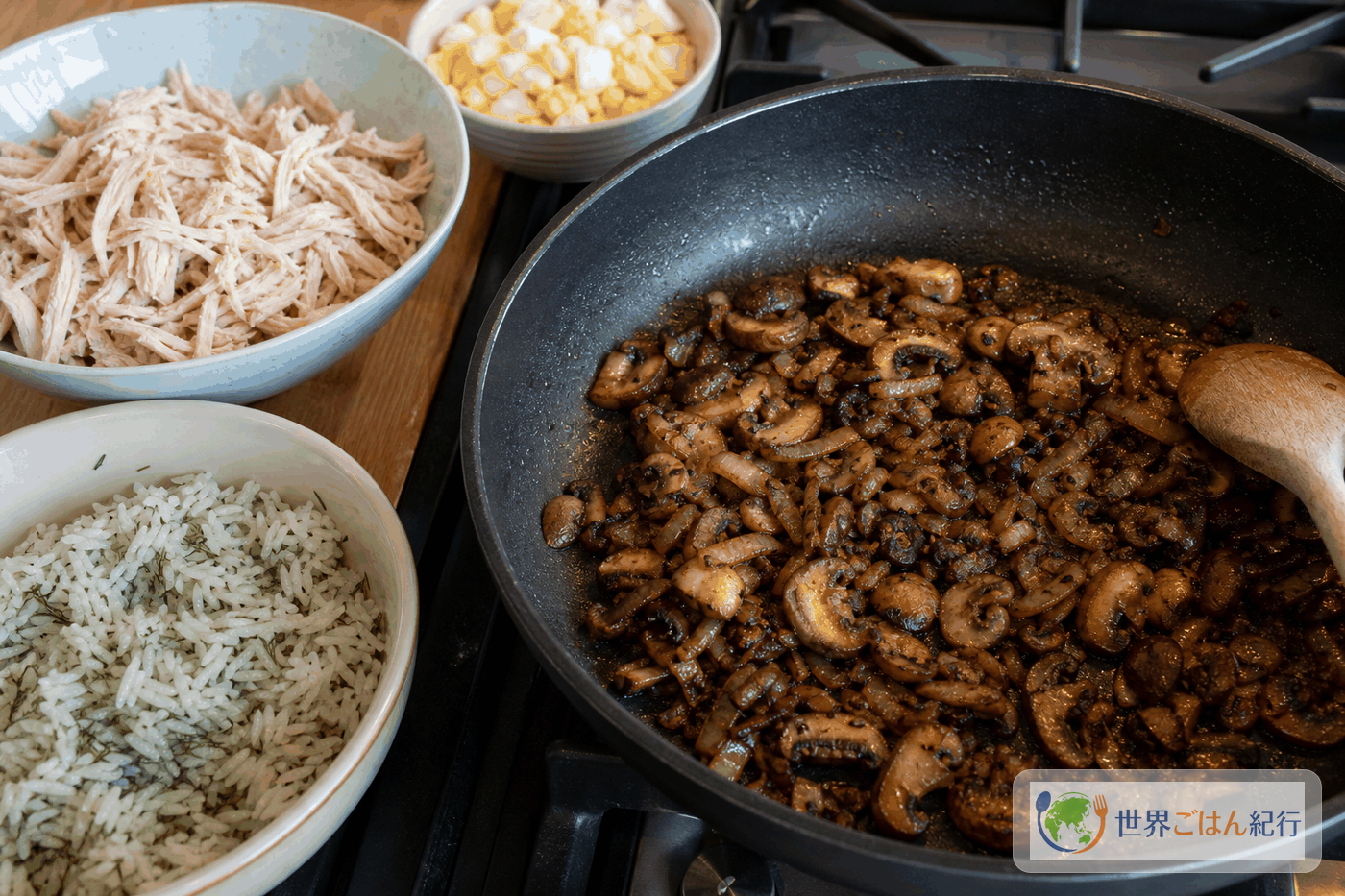
With kurnik, the key is not to wrap the filling while it is hot. Make the dough, filling, and blini separately and layer them after they have cooled slightly. If you rush and assemble it warm, the bottom dough softens and the layers do not hold even after baking.
Choices for Getting Closer to the Original in a Home Kitchen
| Ingredient or tool in question | Closer to the original | Realistic at home | Effect on the dish |
|---|---|---|---|
| Grain | Buckwheat kasha | Rice | Less toasty flavor, but the layers hold together better |
| Mushrooms | Forest mushrooms, dried mushrooms | Button mushrooms, shiitake | Cooking off the moisture brings out the aroma |
| Herbs | Dill, chives, tarragon | Dill and scallion greens | Keeping the dill gives it a Russian outline |
| Dough | Rich butter dough | Sour cream dough without folding | Easy to handle even from a home fridge |
| Mold | Shaped in a deep bowl | Build a dome on a baking sheet | A little lower but harder to fail |
| How to eat | Served with hot chicken broth | Warm a small amount of the poaching liquid to serve | Makes up for dryness of the pie |
There are things you can substitute and things you want to keep. Rice can stand in for buckwheat, but if you leave out the dill completely, it drifts toward just a pie with chicken rice in it. The blini can be omitted, but without thin dividers between the layers, the chicken and rice mix and the fun of the cross-section fades.
Mushroom moisture needs care. Whether button mushrooms or shiitake, liquid comes out while sautéing. If you layer them with that liquid, the bottom turns soggy, so cook until almost no moisture is left in the pan and the edges of the mushrooms are browned.
Common Failures and Fixes
| What happened | Cause | Fix for next time |
|---|---|---|
| Soggy bottom | Filling is warm or too wet | Cool the filling and cook the mushrooms over medium heat for 8 minutes to drive off moisture |
| Cross-section collapses | Rice too soft, or cut without resting | Boil the rice firm for 11 minutes and rest 15 minutes after baking |
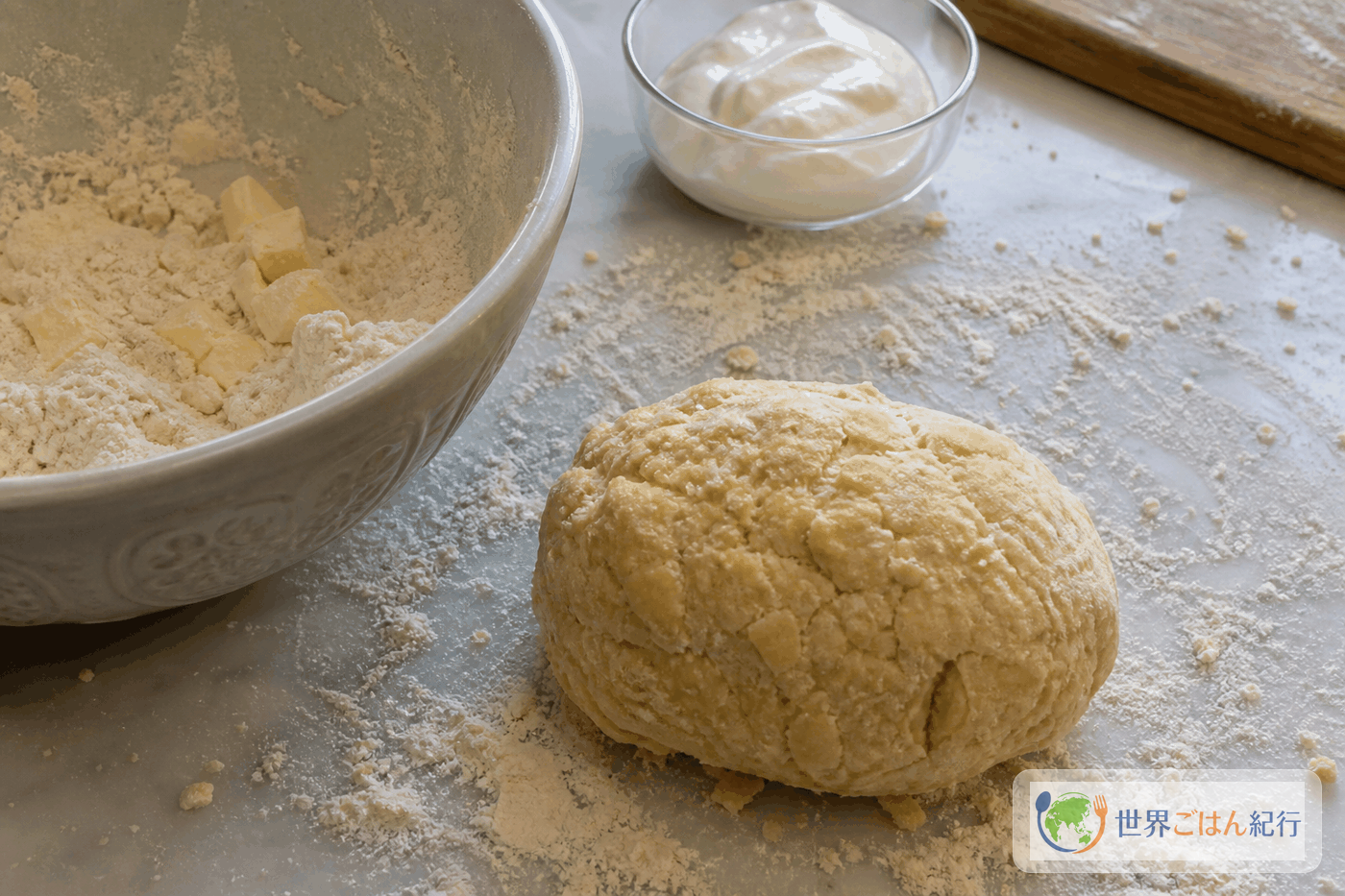
| Tough dough | Overworked, or butter melted | Stop once it comes together as a floury mass and chill 30 minutes |
| Only the surface scorches | The oven's top heat is strong | Rotate the sheet at 35 minutes and tent with foil if it is dark |
| Lukewarm center | Dome is thick, or baking time short | Confirm 74°C with a thermometer, and add 8 minutes if short |
| Aroma feels heavy | Too little herb, no sourness | Keep the dill and put a sour soup on the menu |
The biggest mistake is to be greedy and stack the filling too high. A taller dome looks impressive, but a home oven struggles to heat the center. Keep it around 18 cm across and no more than 8 cm high at the center for stable baking time and slicing.
Another is to handle the pastry dough too long trying to make it look neat. Once the butter melts, the bake is not crisp and turns out like a hard cookie. Small flecks of butter on the surface are fine. In fact, those flecks form the layers while baking.
Storing and Serving
Refrigerate any leftovers; rewarm uncut pie at 160°C for about 15 minutes. For cut pieces, wrap each one and refrigerate, and reheat in the oven rather than a toaster. To freeze, wrap each piece in plastic and reheat at 160°C for 20 to 25 minutes. Assembled but unbaked pie should be kept chilled, and brush the surface with beaten egg just before baking. This article does not give storage-day guidelines because no source for them could be confirmed.
To eat, serve warmed poaching liquid in a small cup alongside, which loosens the heaviness of the rice and dough. The Great British Chefs kurnik also presents serving with hot chicken broth. At home, add a little salt and black pepper to the reserved 150 ml of poaching liquid and spoon it over at the table.
For a menu, something sour keeps the meal from tiring you. Borscht (in Japanese) brings beet sourness and sweetness, okroshka (in Japanese) the lightness of cold fermented dairy, and pierogi (in Japanese) a side-by-side look at related flour-based cooking. Rather than adding bread or rice, a cucumber pickle, a cabbage salad, or a sour soup pulls the whole meal together. If you want a little sweet at the end, medovik, layering honey cake and tangy cream, is a dessert that pairs well with tea after a heavy pie.
FAQ
How is kurnik different from an ordinary chicken pie?
Kurnik is a Russian pirog baked with layers of chicken, rice or kasha, egg, mushrooms, and so on. Rather than a chicken pie filled with creamy stew, the layers on cutting and the dome shape matter. In versions with blini between the layers, the fillings do not mix and the cross-section is clear.
Can I leave out the blini?
You can bake without them, but the layers mix more easily. If you are short on time, cook just 2 and put them between the rice and chicken and between the chicken and mushrooms. The key is to make them thin like crepes, not thick pancake batter.
How much should I use for buckwheat kasha?
Use 120 g buckwheat groats in place of 120 g rice. Toast in a dry skillet over medium-low heat for 3 to 4 minutes until fragrant, then boil in water for about 8 minutes. The grains break easily, so stop before they are completely soft, while a little bite remains.
Can I use store-bought puff pastry?
Yes. Use the sheets for both bottom and lid, overlapping seams by 1 cm and rolling them out. However, puff pastry is weak against moisture in the layers, so be sure to cool the filling and cook the moisture out of the rice and mushrooms. Start checking after about 45 minutes at 180°C.
Can I prepare it the day before?
The dough, poached chicken, rice, sautéed mushrooms, and blini can be prepared a day ahead. If you assemble it the day before as well, aim for within 6 hours refrigerated and brush with beaten egg just before baking. Left longer, the bottom dough easily absorbs moisture.
What is the trick for slices that do not collapse?
Cool the filling, boil the rice firm, and rest the pie 15 minutes after baking. If you cut right away while hot, the steam in the layers cannot escape and the rice and mushrooms shift. Use a bread knife with a long blade and small sawing motions rather than a thin knife to avoid crushing the cross-section.