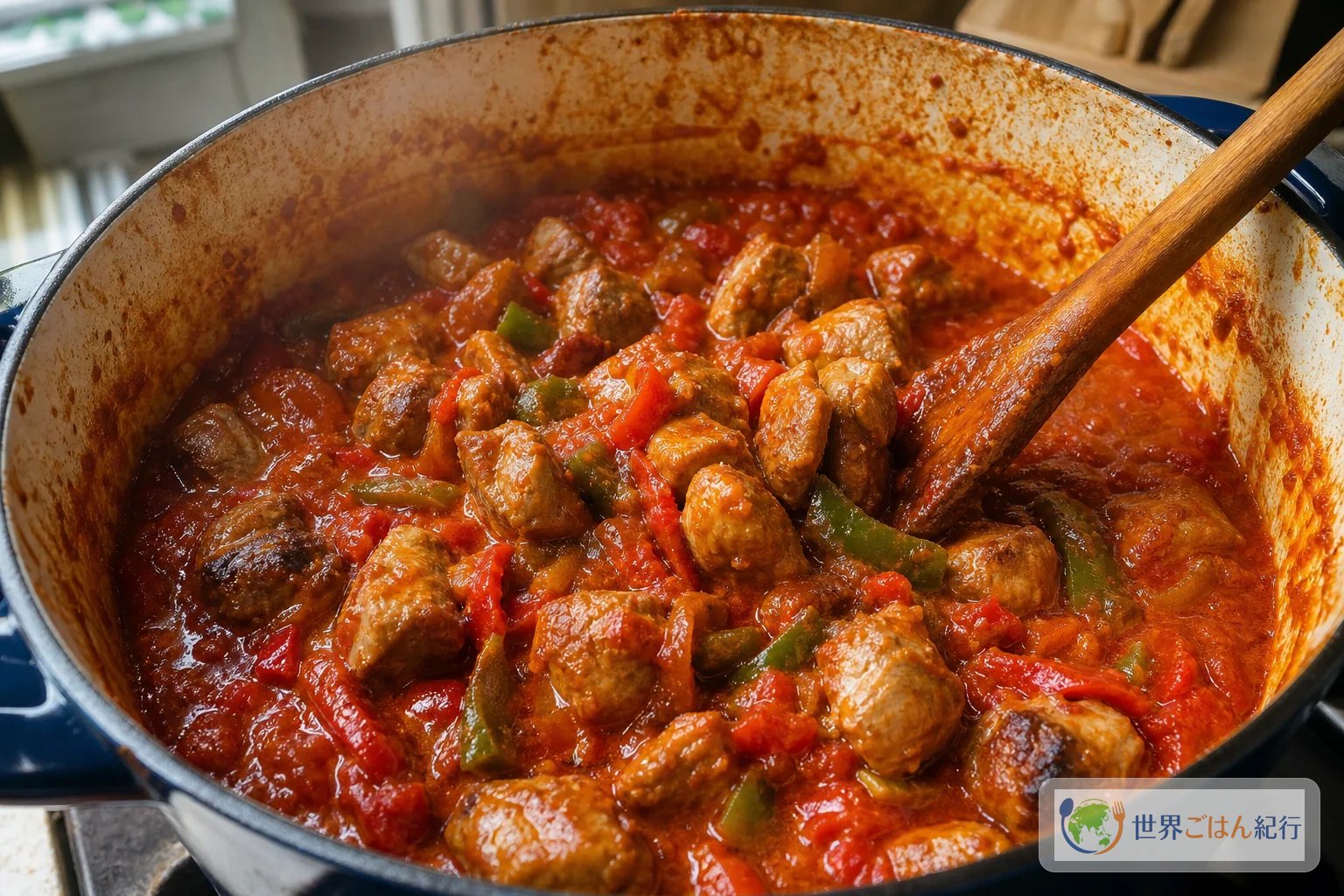
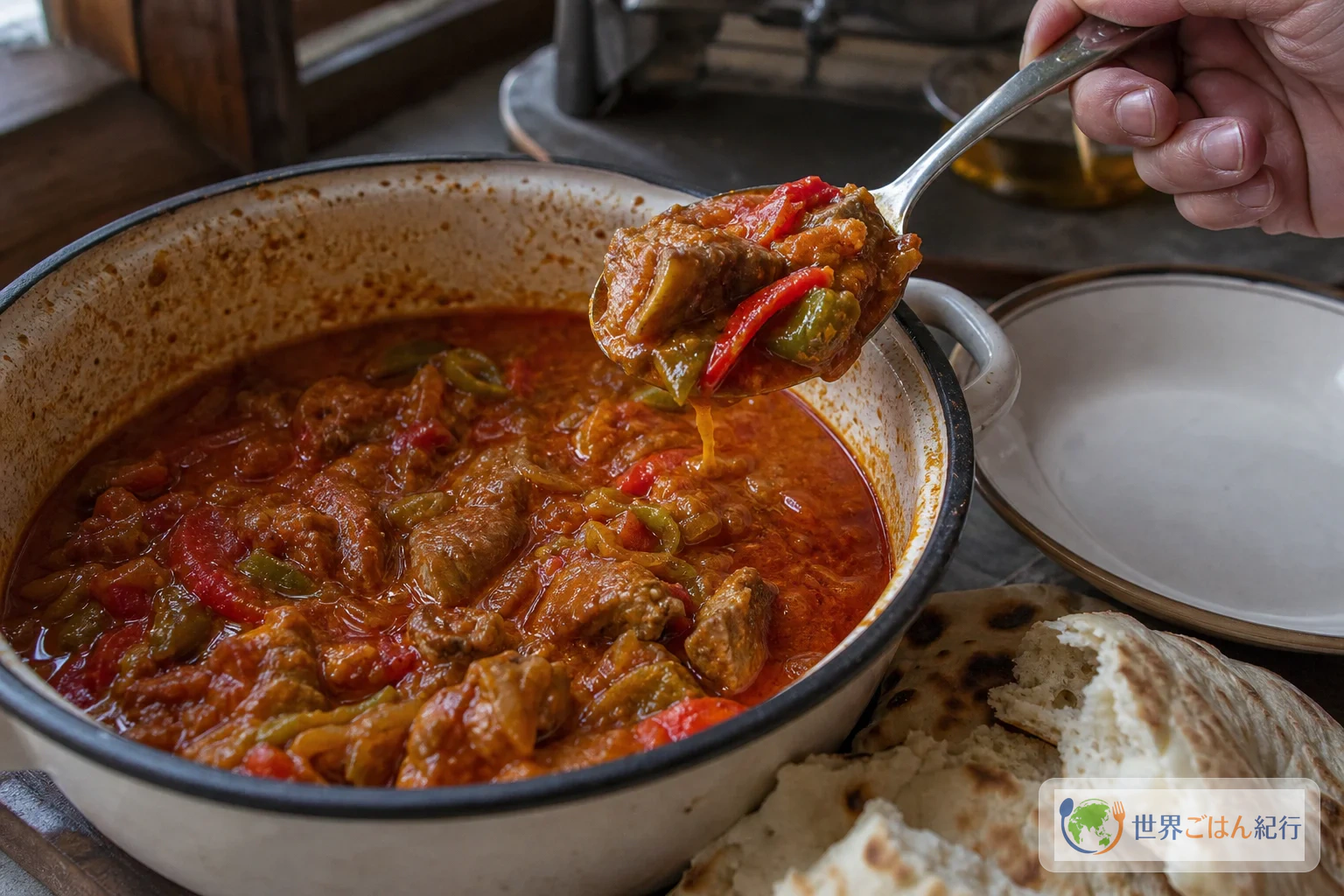
Keep the aroma of grilled meat in the pot, then simmer
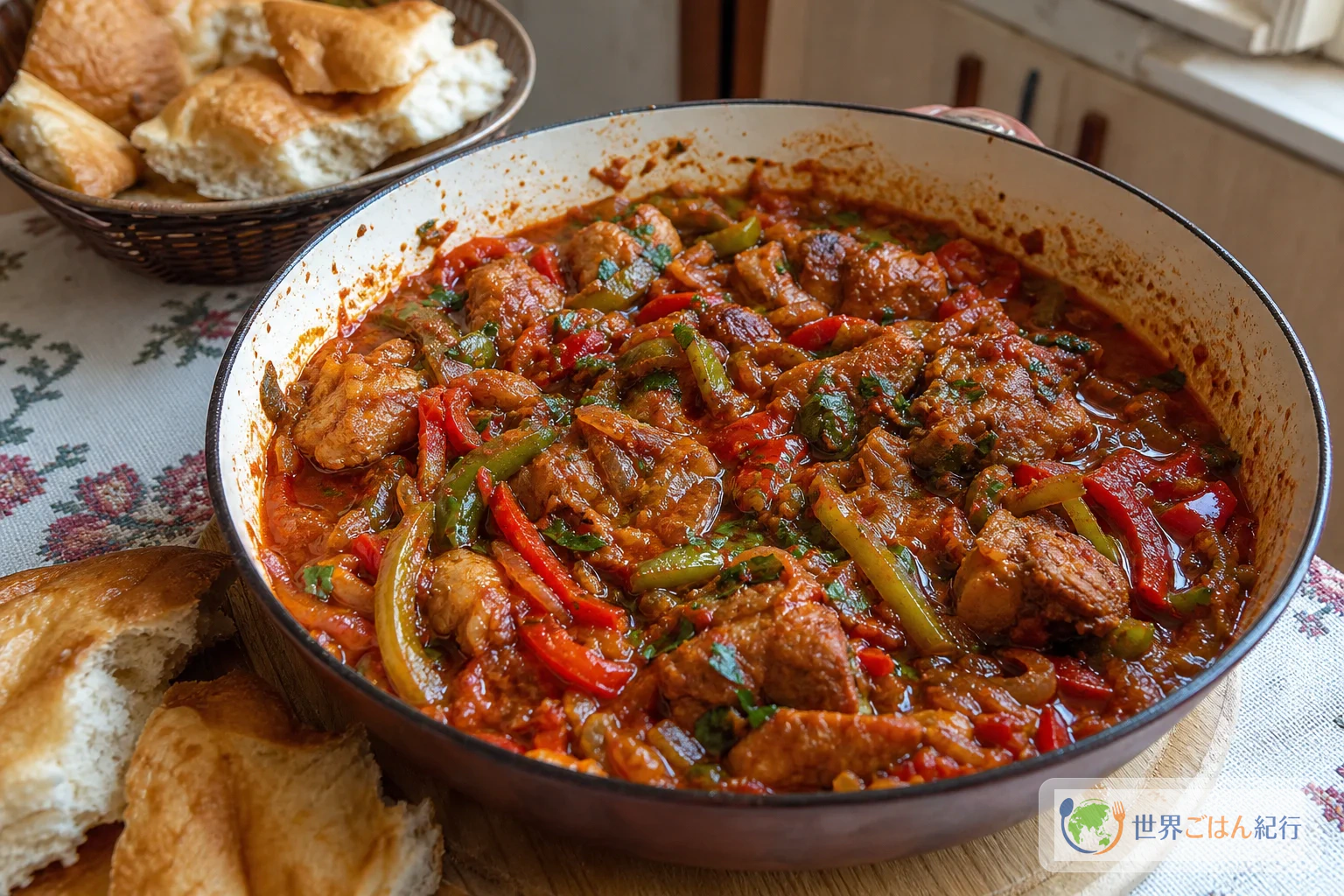
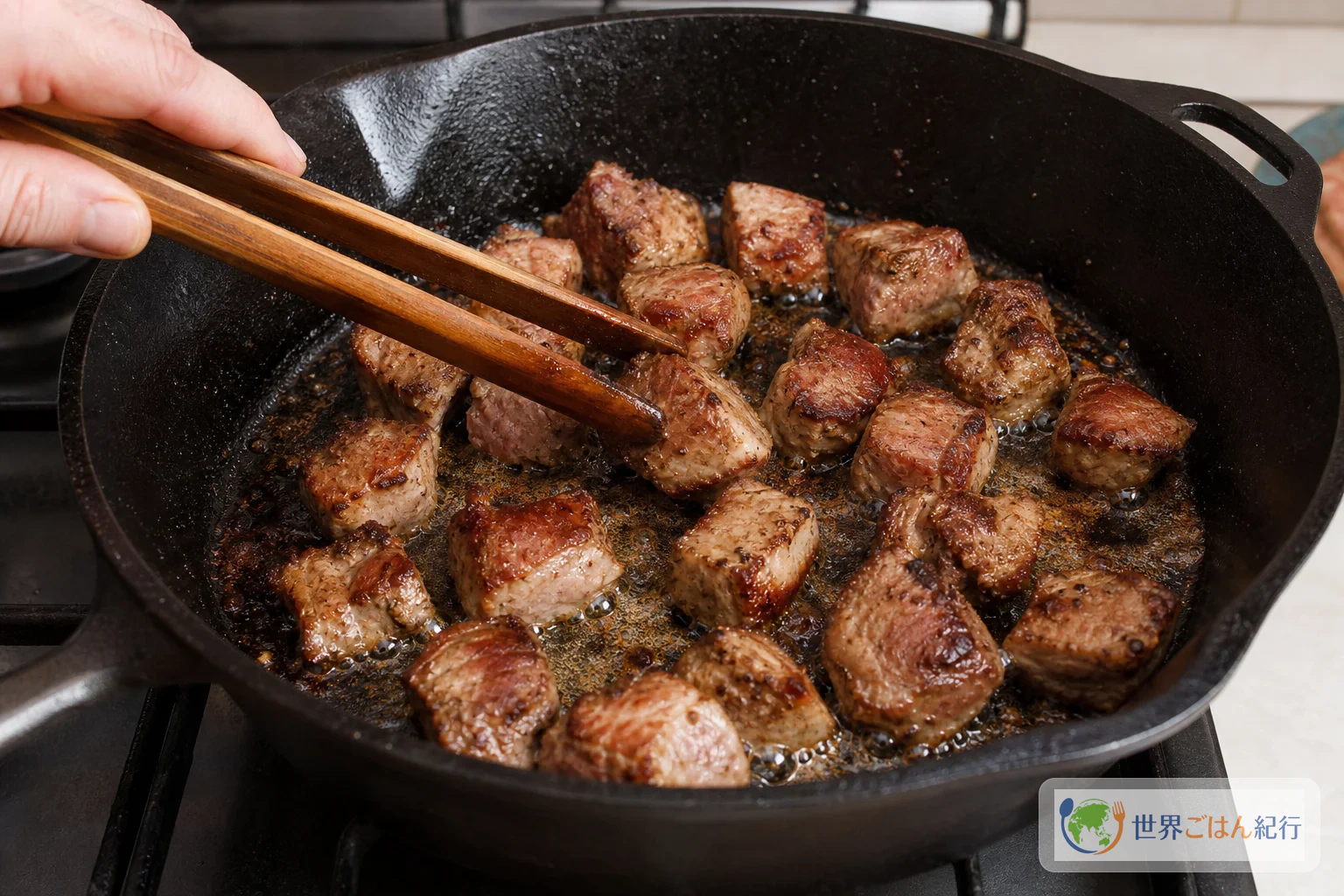
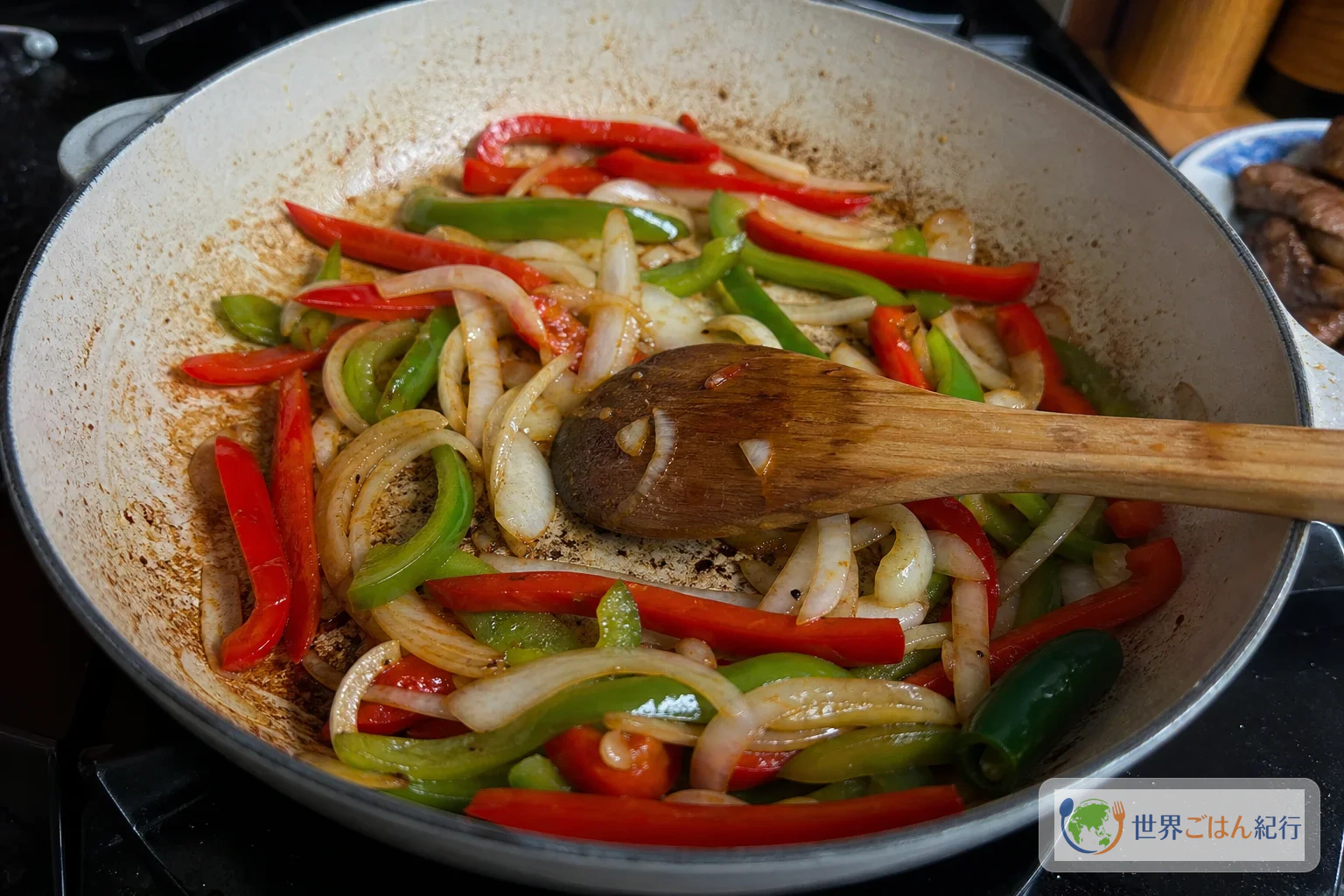
Sear pork hard in an evening kitchen and brown bits stay on the bottom of the pan. The moment onion and peppers go in, the sweet vegetable moisture sizzles and lifts that toasty flavor. Mućkalica is a dish that carries this first sear into a red sauce instead of throwing it away.
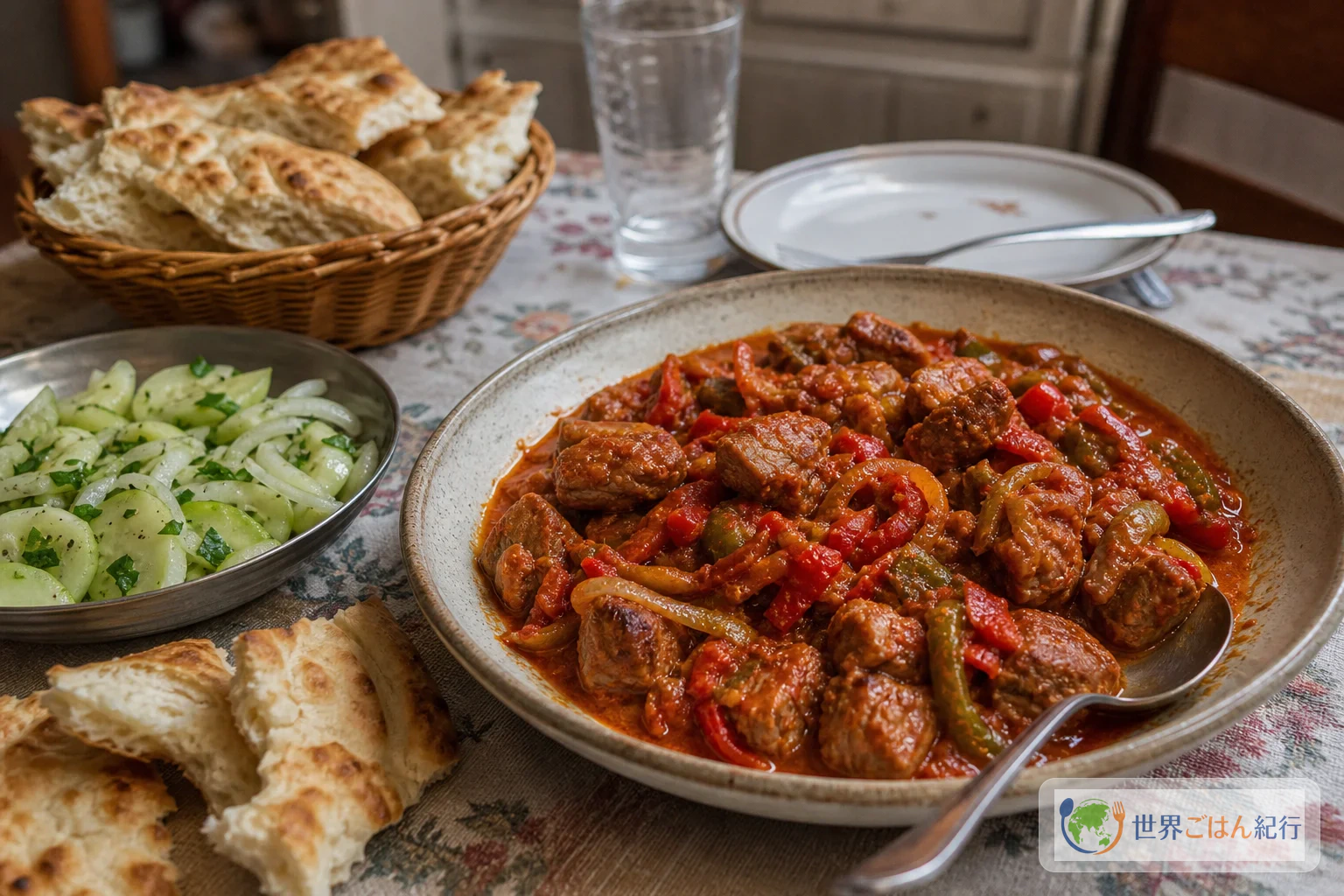
Mućkalica is a stew of meat, onion, pepper, and tomato most often associated with the area around Leskovac in southern Serbia. Leskovac is known as a town of grilled food, and English-language introductions describe mućkalica as a dish that combines grilled meat with vegetables.
At home you can't bring leftover charcoal-grilled meat from the source. So this article sears pork shoulder well in a skillet and reclaims the flavor on the bottom of the pan with onion and peppers. The things to keep: sear the meat first, bring out the sweetness of the peppers, and don't let the sauce turn into soup.
The Serbian name Mućkalica (Мућкалица in Cyrillic) has a root that is sometimes explained as a verb close to "to stir" or "to shake," so it is easy to remember as a name for a dish that combines grilled meat and vegetables in a pot.
Background
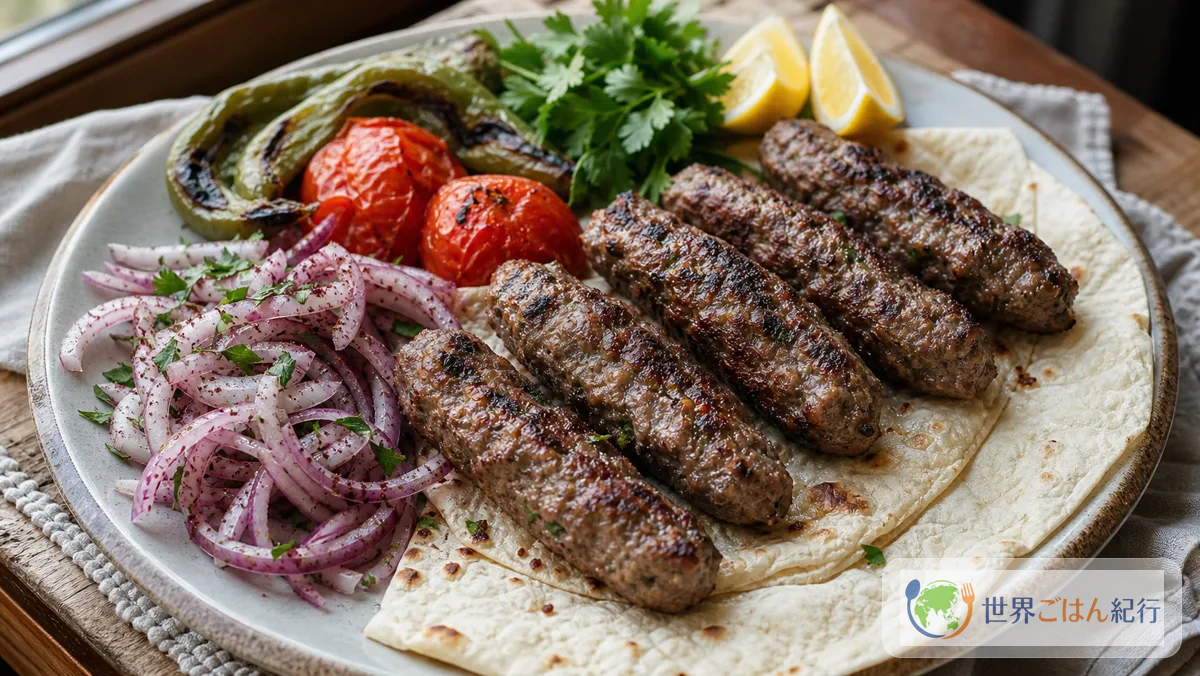
Among Serbian cuisines, Leskovac is introduced as a land with a strong grilling culture. Picture grilled dishes like ćevapi and pljeskavica and you can see where mućkalica sits. It is not a simple tomato stew but a dish that returns grilled meat to a pot of red vegetables.
Local introductions most often describe pork or grilled meat, onion, pepper, tomato, and chili. Some restaurants push the heat, but for home cooking it is safer to build the sear on the meat and the sweetness of the peppers before any heat.
Among other Balkan meat dishes, Serbian ćevapi puts the aroma of charcoal grilling in front. Mućkalica is a step closer to the home kitchen, catching the toasty flavor of grilled meat in onion and red sauce. As a paprika-based stew it can be compared with Hungarian goulash, but mućkalica puts the sear on the meat much more forward.
Ingredients (serves 4)
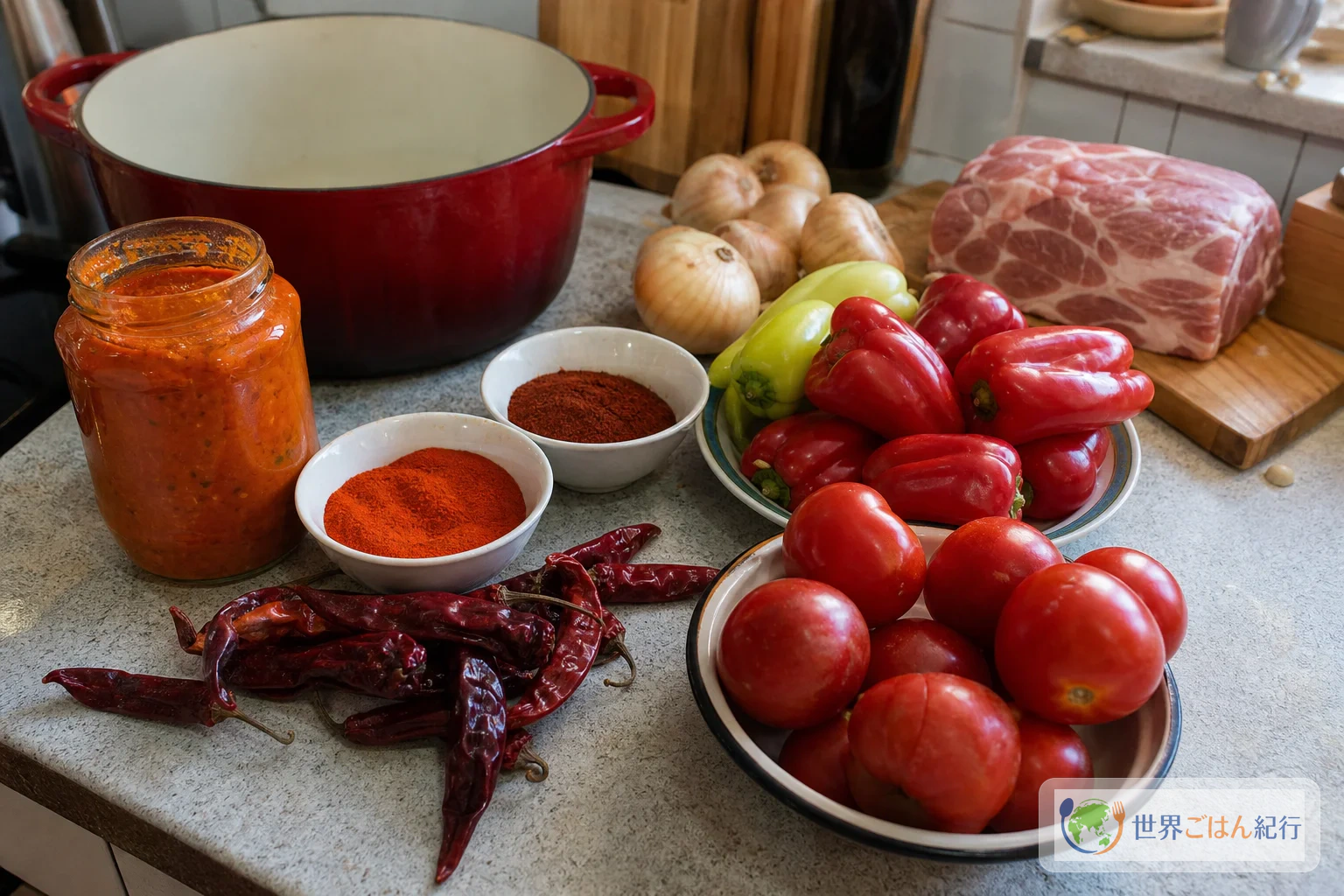
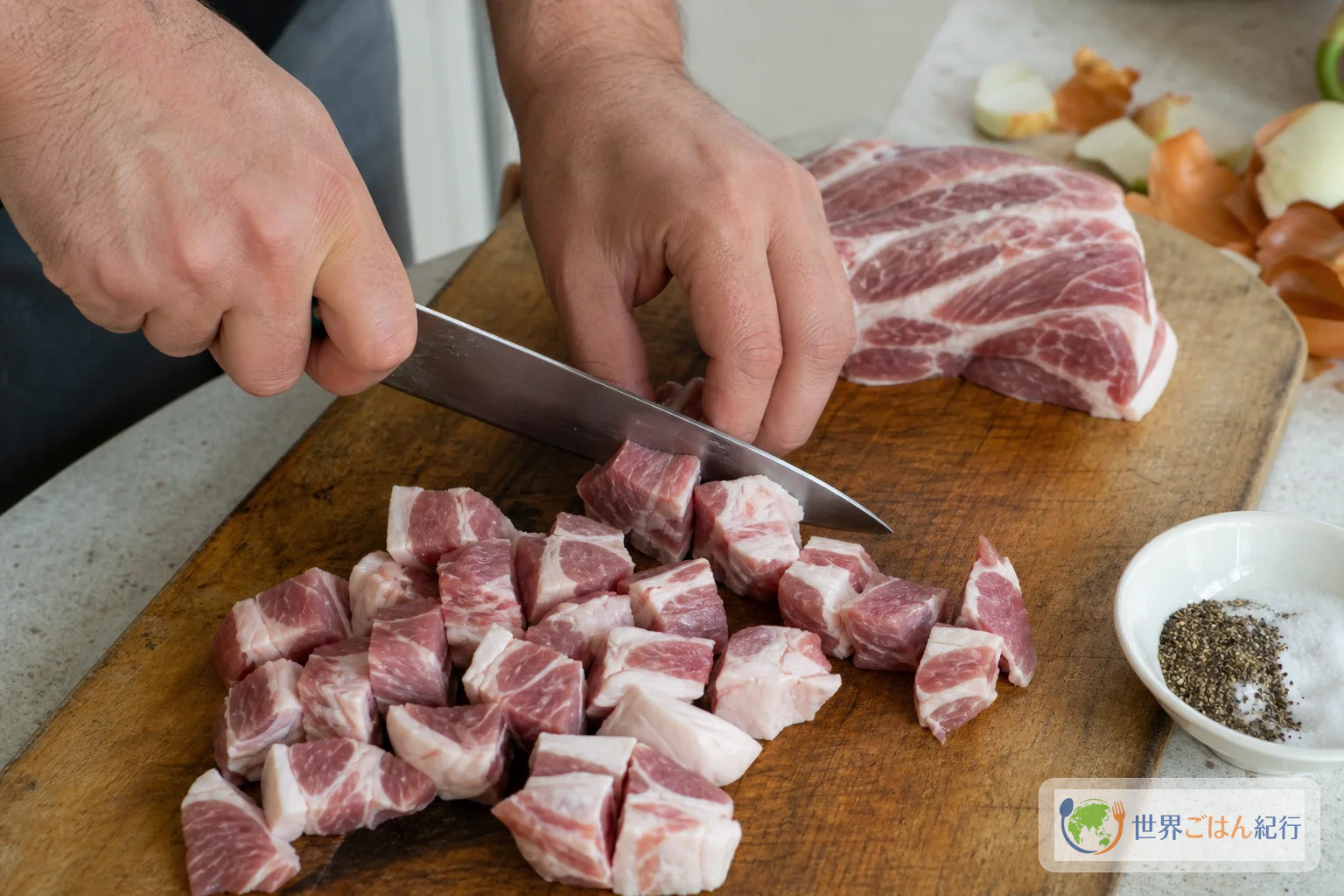
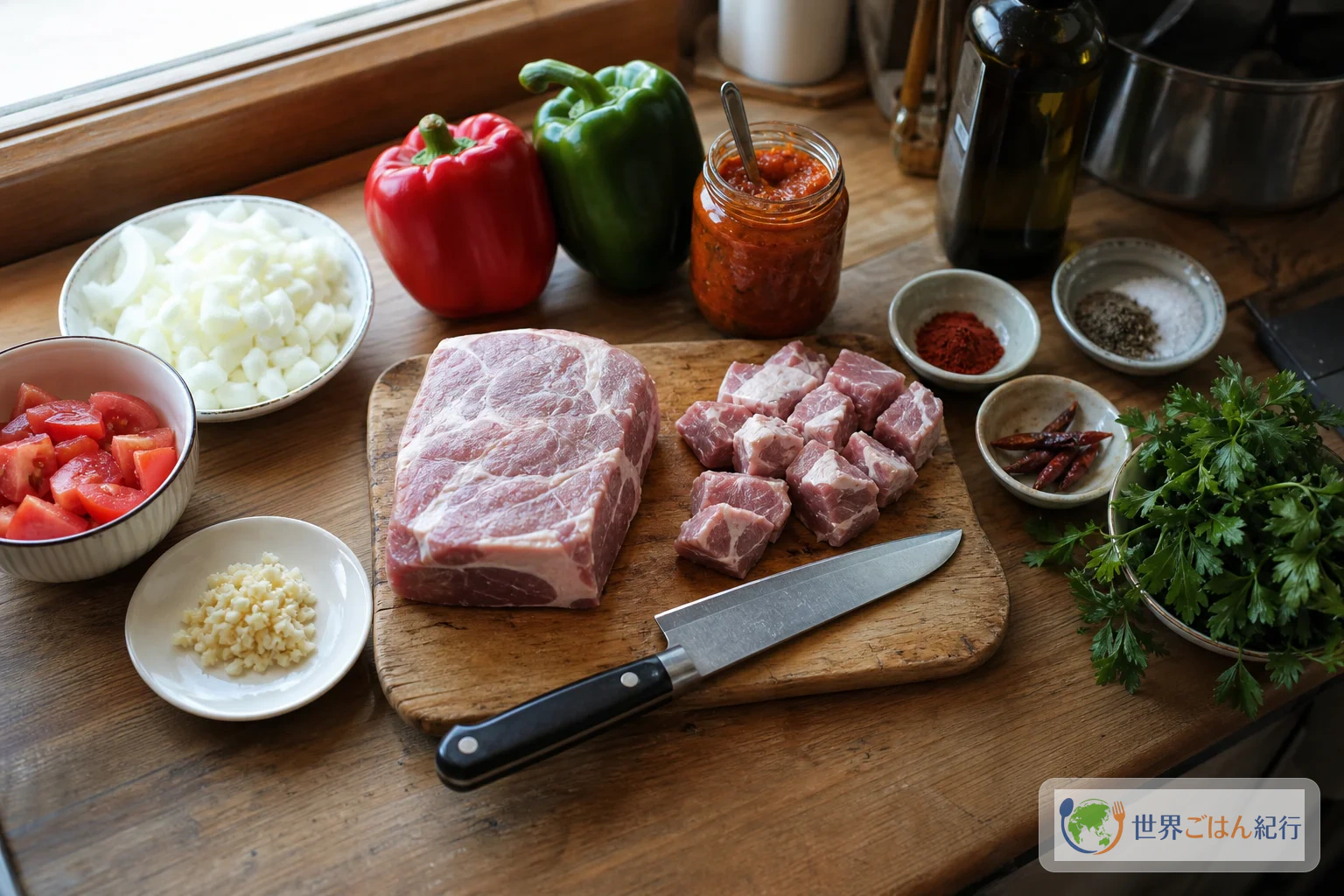
This quantity serves 4 as a dinner with bread and salad. Rather than more meat, plenty of onion and peppers make the red stew more like mućkalica. Pork shoulder block is best; thick-cut pork loin also works, but avoid thin slices, which shrink and toughen in a stew.
This recipe uses pork and wheat. If you avoid wheat, replace the flour with 2 tsp rice flour. Cook pork through to the center; if in doubt, check with a thermometer for 75°C or above at the center.
Sourcing the ingredients
Meat, onion, peppers, and tomatoes come from a nearby supermarket. The items worth seeking out are ajvar, smoked paprika, and a thermometer to check the meat. Ajvar is the Balkan red pepper paste, and adding it moves the dish from "tomato stew" toward "pepper stew."
You don't need all of it the first time. Sweet paprika is essential, smoked paprika helps with a charcoal note, and ajvar adds thickness to the red vegetables. In order of priority: paprika first, then ajvar, then smoked paprika.
Smoked paprika supplies the charcoal note that skillet cooking lacks. Too much brings out a smoky powderiness, so stop at 1 tsp.
Pork can be hard to read by sight for doneness. If you often cook block meat, a thermometer is useful for more than this dish.
How to make it
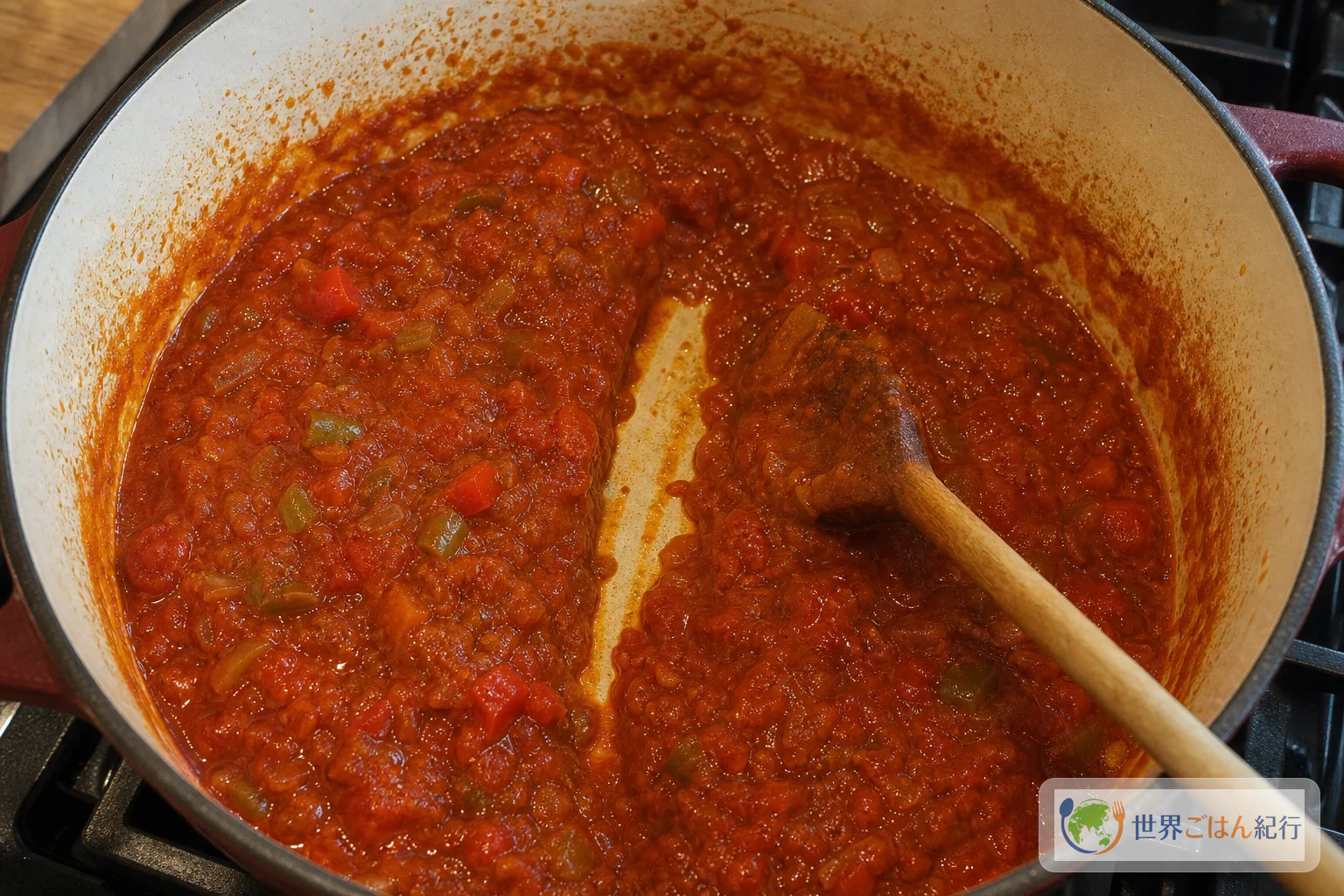
Mućkalica is not a dish where everything goes into the pot to stew. Sear the meat hard, scour the bottom of the pot with vegetables, reduce the tomato and paprika briefly, and only then return the meat. Separating the stages makes it a "stew of seared meat" even on a home stove.
Getting close to the original in a home kitchen: a decision table
| Point of doubt | Closer to the source | Practical home answer | Direction to avoid |
|---|---|---|---|
| Meat | Grilled pork or mixed meat | Sear pork shoulder hard, then stew | Stewing thin slices from the start |
| Peppers | Plenty of fleshy red peppers | Red bell peppers plus green peppers | Green peppers only, tasting green |
| Red thickness | Roasted pepper or ajvar | 3 tbsp store-bought ajvar | Sweetening with ketchup |
| Smoke | Charcoal grilled meat | 1 tsp smoked paprika | Too much smoked flavor |
| How to eat | Bread, salad, pickles | Baguette, potatoes, or white rice | Thinning the sauce into soup |
The most important thing to keep at home is the order of searing the meat. Sink the pork in liquid before cooking and you drift toward a tomato pork stew. What makes it mućkalica is the aroma of the first-seared meat moving into the sweetness of onion and pepper.
The other is how you use ajvar. 3 tbsp brings the aroma up, but too much lets the taste of a store-bought paste run the dish. Treat ajvar not as the star but as a seasoning that makes up for missing red peppers, and it comes together naturally.
Common problems and how to fix them
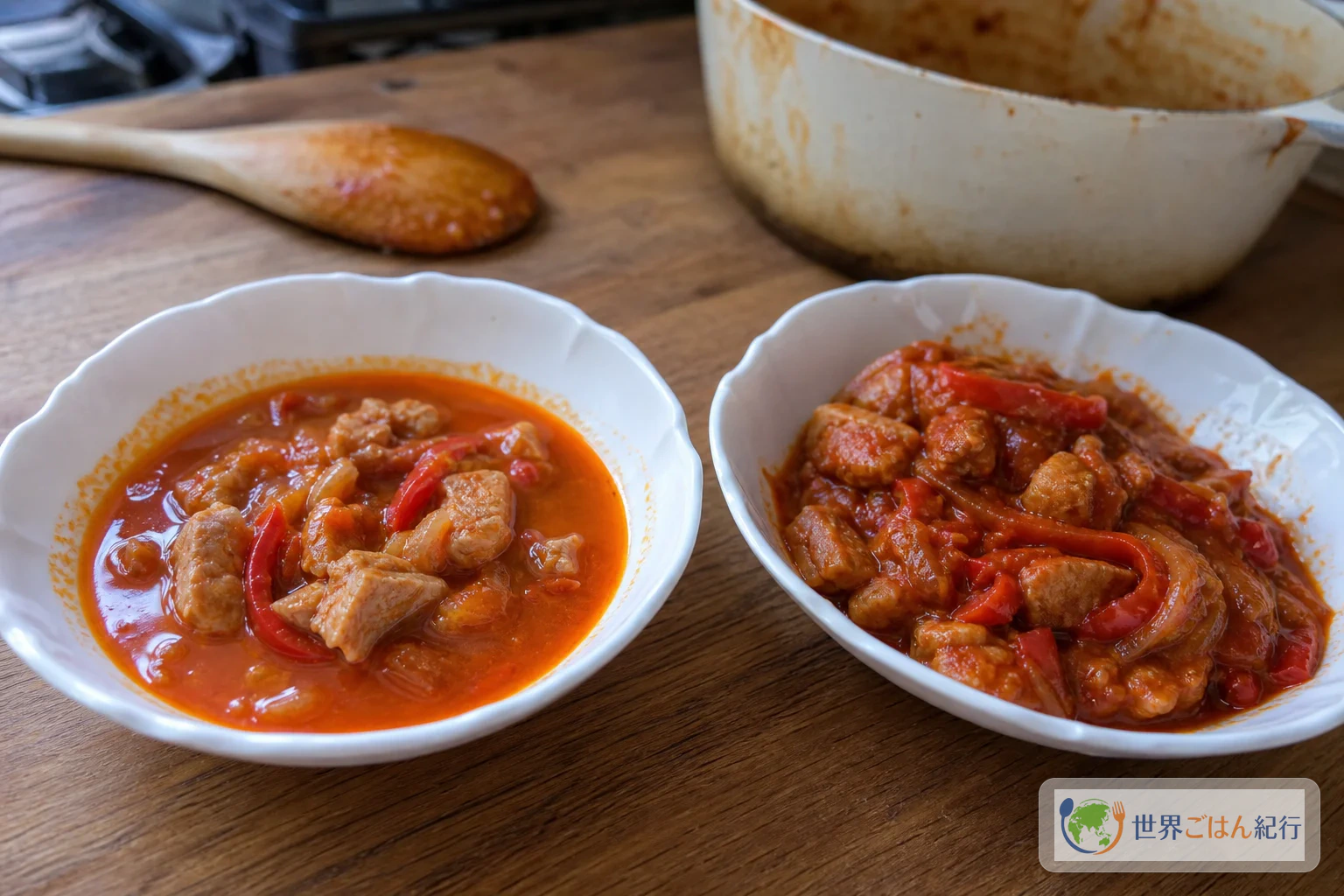
| Symptom | Cause | Fix |
|---|---|---|
| Watery | Meat returned before reducing the tomato and stock | Remove the lid and reduce over medium-low heat for 5 minutes |
| Tough meat | Kept at a hard boil, or used thin slices | Lower the heat, add 3 tbsp water, and cook as if resting for 10 minutes |
| Scorched smell | The sear scorched | Don't scrape the burnt part; move the vegetables and meat only to another pot |
| Too sweet | Used ketchup or a sweet pepper paste | Tighten with 1 tsp lemon juice, a little black pepper, and a pinch of salt |
| Raw green taste | Made with green peppers only, or too little sautéing | Add red bell pepper and cook 5 more minutes over medium heat to bring out sweetness |
People tend to think a stew is better the longer it cooks, but mućkalica is not a long stew. Sear the meat for aroma, wrap it in vegetables and sauce, and let it settle briefly. Watch two things: a low bubble and a thick sauce. Then it is thick enough to want to mop up with bread.
Serving, storage, and using it the next day
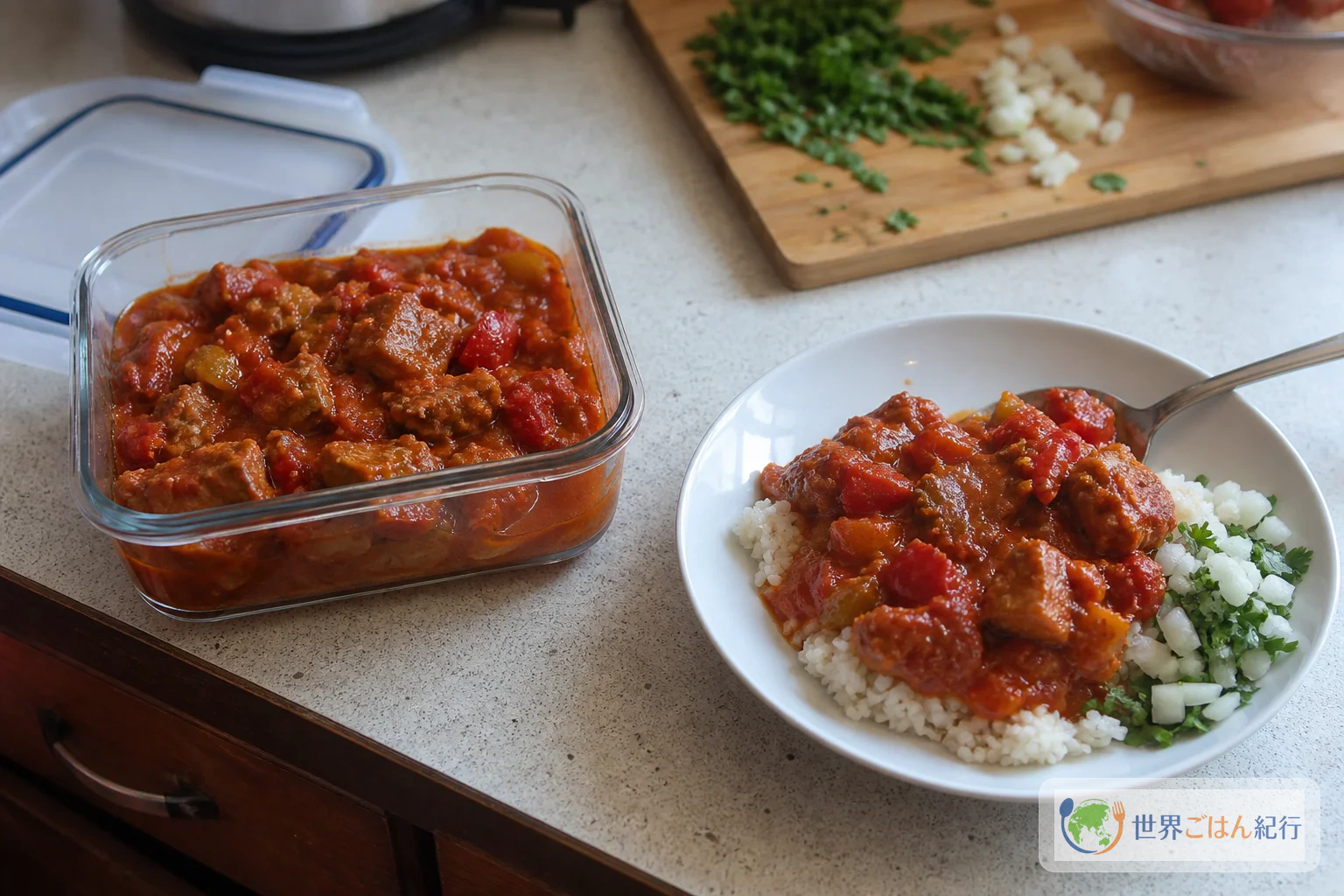
For a feel close to the source, serve with bread, onion, pickles, and a simple salad. At a home table, baguette, boiled potatoes, or white rice can also take the sauce. Over white rice, a little more lemon juice at the end keeps it from feeling heavy.
To store, cool slightly, move to a shallow container, and refrigerate for up to 2 days. It is a pork stew, so don't leave it long at room temperature. To reheat: in a pot, 6 minutes on low; in a microwave, one serving at 600 W for 1 minute 30 seconds, stir once, then 40 seconds more. The sauce tightens when cold, so adding 1 to 2 tbsp water brings it back.
The next day you can make a warm sandwich with it in bread. Melting cheese on top makes it easier to eat but loses some of the Serbian character. To keep the direction, add chopped onion, parsley, and lemon to restore the outline of the red sauce.
FAQ
Can I make it with beef or chicken?
Yes. With beef chuck, use the same steps and extend the simmer to about 20 minutes. With chicken thighs, shorten the sear to 2 minutes per side and the simmer to 10 minutes. But local introductions to mućkalica lean toward pork and grilled meat, so pork shoulder is the easiest for a first try.
What if I don't have ajvar?
Substitute a mix of 1 tbsp tomato paste, 1 tsp sweet paprika, and 1 tsp olive oil. Roasting red bell peppers over a flame or under the broiler, peeling and chopping them gets closer. Avoid ketchup, whose sweetness and vinegar easily pull it off the mućkalica track.
Can I make it without heat?
Yes. Leave out the dried chili and finish with black pepper only. If only the adults want heat, don't add chili to the whole pot; adjust with chili flakes or chili oil on a small dish.
Canned or fresh tomatoes?
Fresh tomatoes in summer, canned diced tomatoes out of season, are both fine. Fresh tomatoes have a softer acidity; canned ones give steadier color. Canned ones are watery, so reduce 2 minutes longer in step 4.
Is it good made the day before?
Yes. The next day the flavor settles, though the pepper aroma rounds off a little. After reheating, a few drops of lemon juice and a little chopped parsley bring back the outline of freshly made.
Local sources consulted
- National Tourism Organisation of Serbia, "Soulfood Serbia": https://www.serbia.travel/wp-content/uploads/2025/05/SOLUFOOD-eng.pdf
- Wikipedia, "Mućkalica": https://en.wikipedia.org/wiki/Mu%C4%87kalica
- TasteAtlas, "Leskovačka Mućkalica": https://www.tasteatlas.com/leskovacka-muckalica
- World Food Story, "Leskovacka Muckalica": https://worldfoodstory.co.uk/recipe/leskovacka-muckalica
- Kuvarancije, "Leskovačka mućkalica": https://www.kuvarancije.com/leskovacka-muckalica
What to cook next
To continue with Serbian meat dishes, first compare the direction of grilled meat with ćevapi. To move on to a calmer stew of paprika and beans, North Macedonia's tavče gravče (in Japanese) is a good choice. If you like a table where red sauce is caught with bread, Albania's fërgesë (in Japanese) offers a similar pleasure.