
A red soup is made red at the end
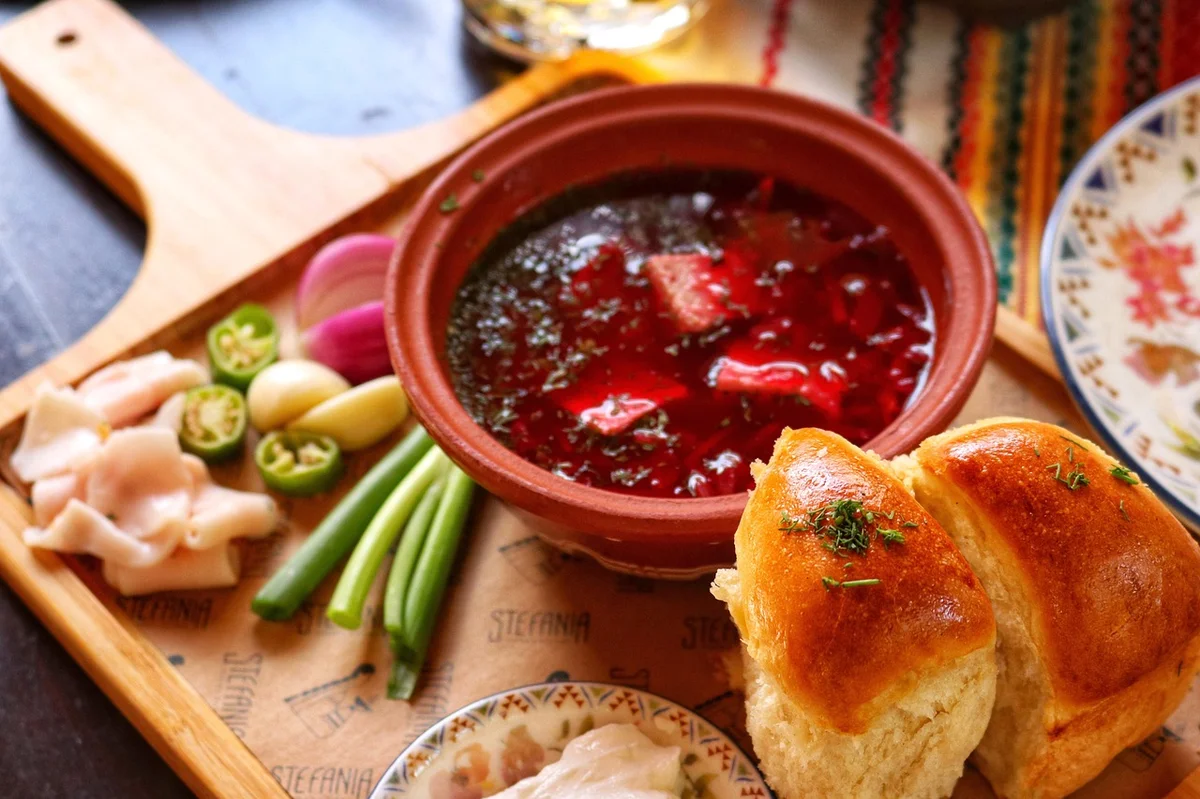
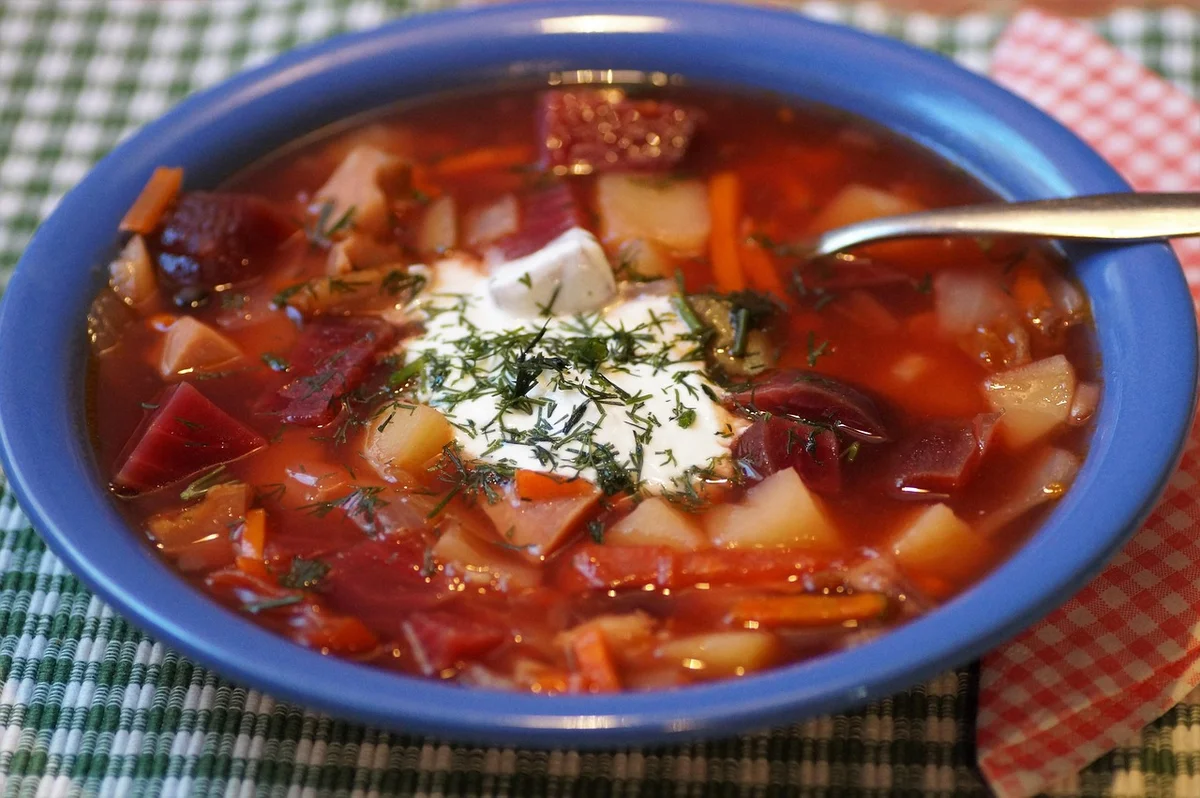
Lift the lid of the pot a little and the earthy scent of beets joins the steam of the beef. Then the sweetness of cabbage, the sourness of tomato, the green aroma of dill. Ladle it into a bowl and drop a spoonful of sour cream on top, and a white swirl unfurls across the deep crimson surface.
Borscht is not a soup that is done by putting all the ingredients in and simmering. The red color and the sweetness both change depending on when you add the most important ingredient, the beets. Make a stock with the beef first, simmer the potatoes and cabbage, and bring the sautéed beets back near the end. In this order, even a home pot can build the axis of flavor: sweet, sour and the umami of meat.
This article presents a method for six servings using canned or jarred beets. It also covers the points that tend to cause hesitation before shopping: swapping in fresh beets, adjustments when using pickled beets, choosing sour cream and dill, and deciding between refrigerating and freezing.
Why borscht stays on the table: culture and history
Borscht (борщ) is less a signature dish of a single restaurant than a food culture passed down in homes and regions. Between the type of meat, how sourness is added, whether there are beans or mushrooms, and even the bread served alongside, it is natural for every pot to differ. So rather than thinking "it fails without this ingredient," it is easier to grasp the dish by looking at how the stock, sourness and herbs are layered around the sweet, earthy aroma of beets.
In 2022, UNESCO inscribed the "Culture of Ukrainian borscht cooking" on the List of Intangible Cultural Heritage in Need of Urgent Safeguarding. What was inscribed is not a single recipe or ownership of a dish. It is the practice itself, in which homes, communities and cooks choose ingredients, gather around the pot and hand down the method to the next generation. It is accurate to read it as recognizing the meaning of protecting the knowledge of the table while war shakes people's movement and lives. You can confirm the details on UNESCO's inscription page.
An explanation prepared in cooperation with Ukraine's Ministry of Culture also presents borscht as a dish that appears in homes, canteens and restaurants of all regions, in everyday meals and at celebrations. In other words, what to aim for in making Ukrainian borscht elsewhere is not copying a plate from a distant land exactly, but borrowing the idea of "every household's own pot" that is valued there. This beef version is also one in that range.
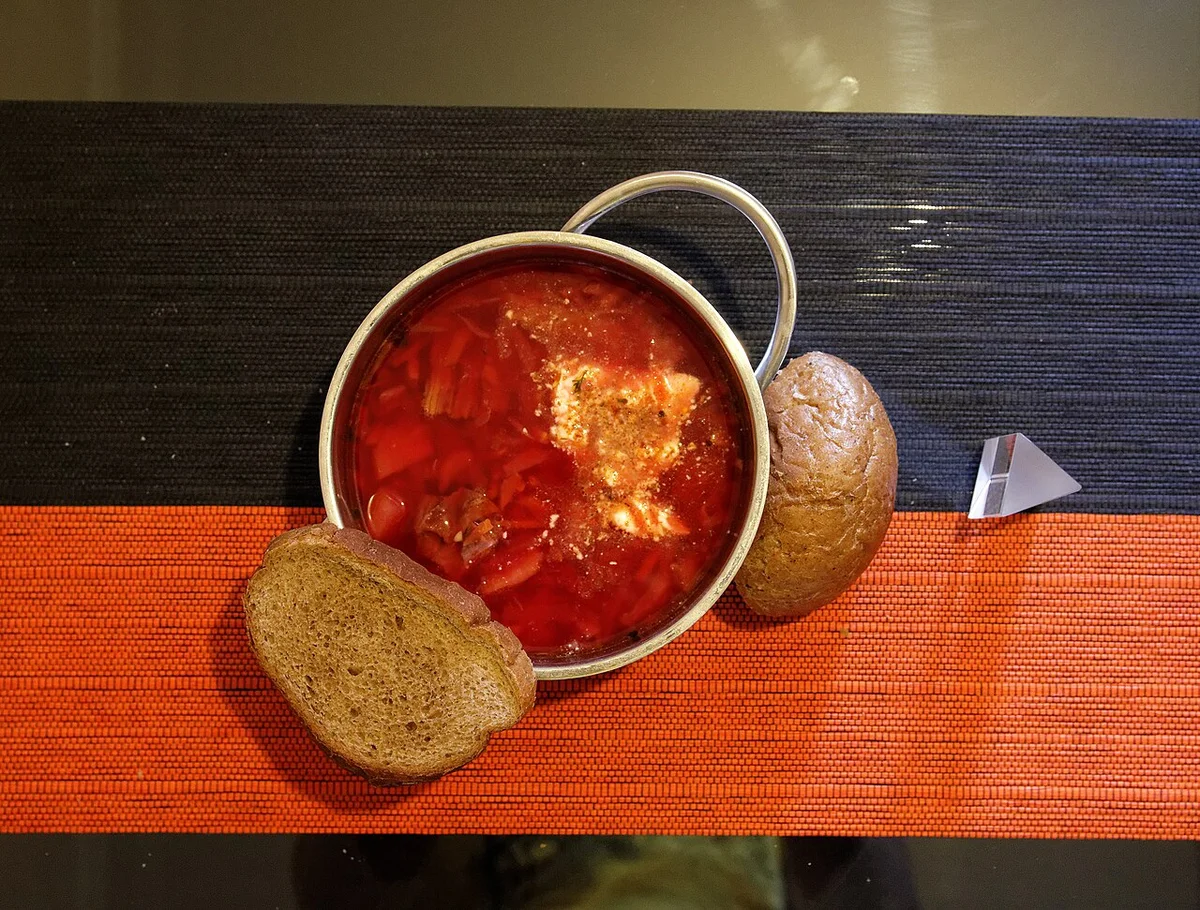
In 2022, UNESCO inscribed the "Culture of Ukrainian borscht cooking" on the List of Intangible Cultural Heritage in Need of Urgent Safeguarding. That the ingredients and the way of adding sourness differ by household and region is also a characteristic of this food culture.
Decide first: three axes of flavor
The flavor of this recipe is built in three layers.
- Stock: simmer beef short rib or beef shank over low heat to make a base that holds the vegetables.
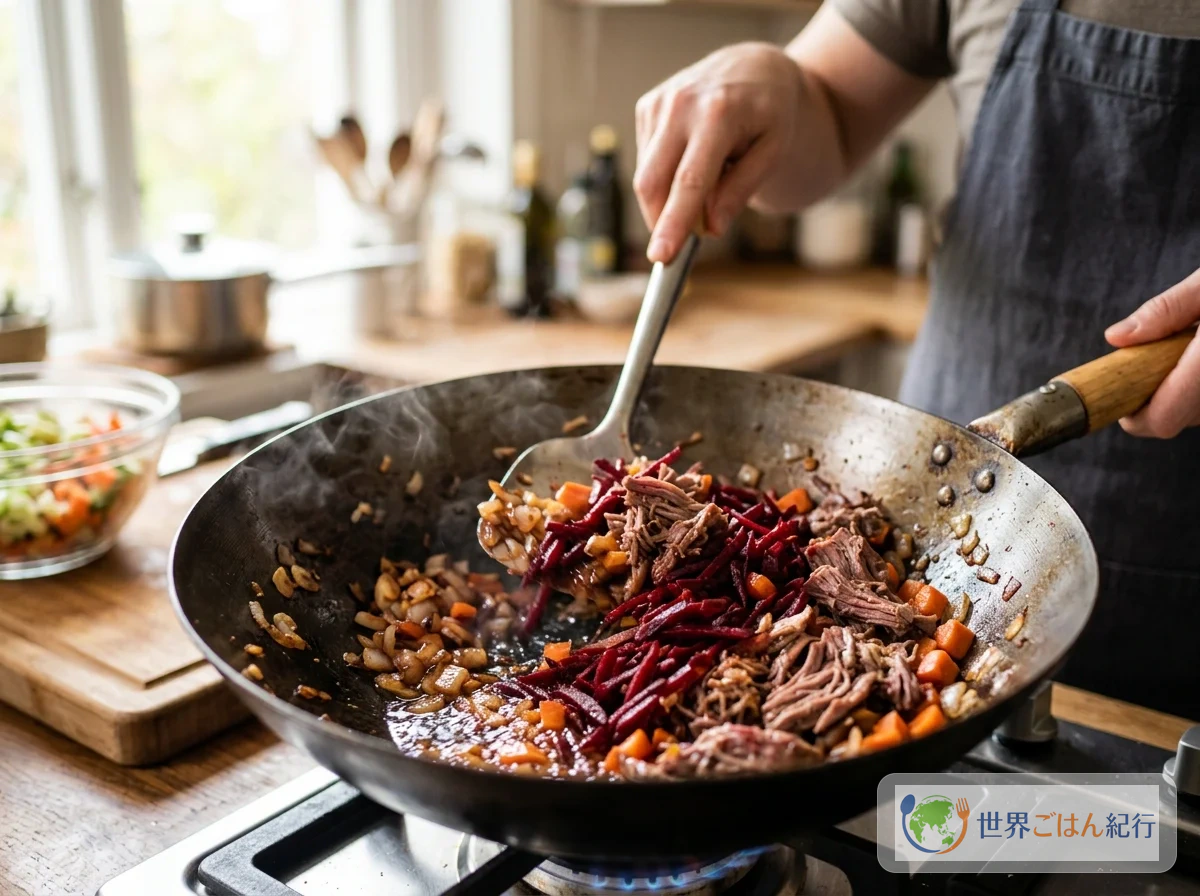
- Sweetness and color: sauté beets, onion, carrot and tomato paste, and add a toasty note.
- Sourness and aroma: put the vinegar in the pan where the beets are sautéed, and serve dill and sour cream at the end.
Once you understand this, you will not panic when you have no celery, no dark bread, or the fresh dill is sold out. Celery can be omitted. Ordinary bread is fine in place of dark bread. Dill alone changes the impression of the aroma greatly, so think in this order: if you have no fresh, use a little dried.
Ingredients (serves 6)
If you choose boiled beets, there is less preparation and the way the color comes out is easier to read. If the label says "pickled," sourness and sugar are already in it, so do not put in the full amount of vinegar and sugar from the start. First taste a little of the liquid and adjust only if the sourness is short.
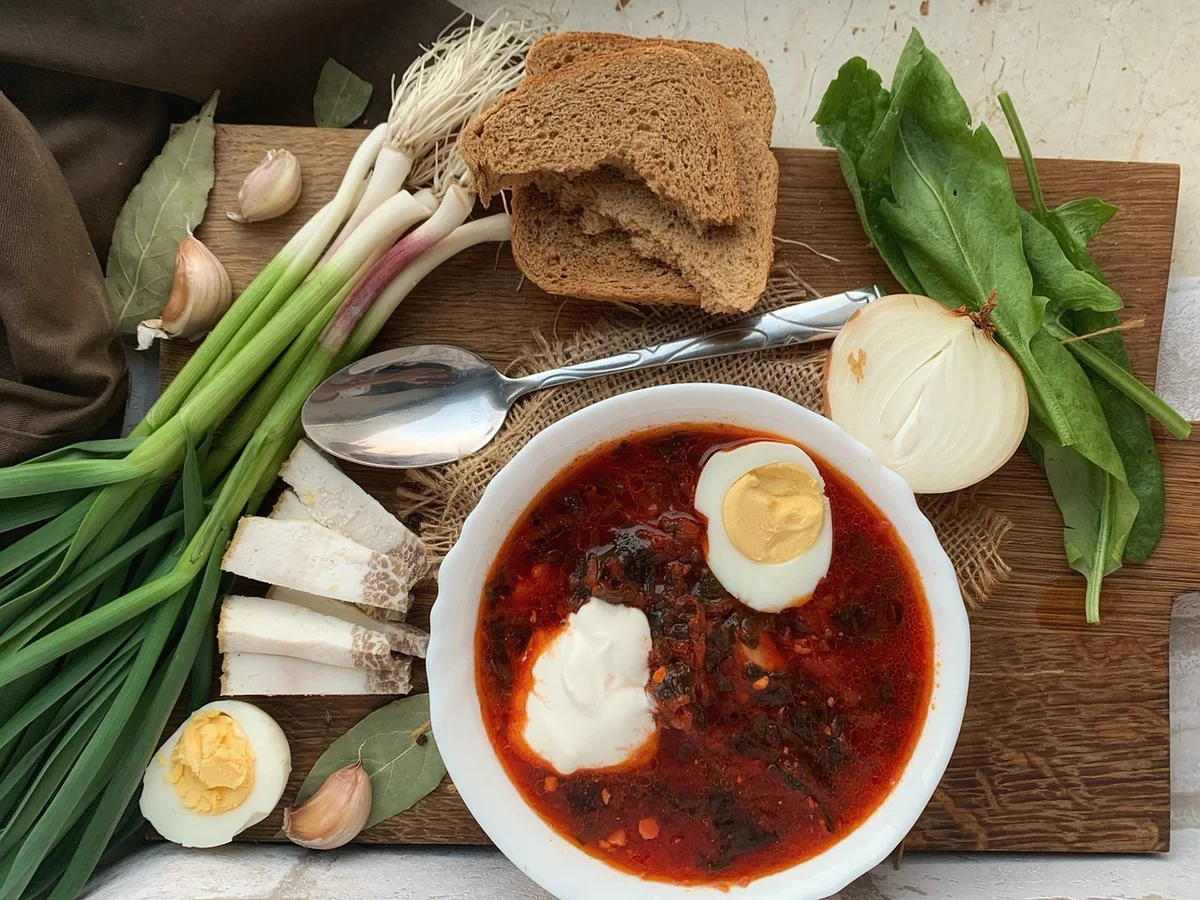
The soup itself uses no wheat, but the bread served alongside may contain wheat or rye. Because it uses sour cream or heavy cream, also check the dairy. Processed beets and seasonings differ in ingredients by product, so check the label if needed.
The order that protects the red of the beets
The trick to a red soup is not simmering the red ingredient for a long time. The beets go in near the end. Putting them in first seems as if it would give more flavor, but long heating dulls the color and buries the sweet aroma in the stock.
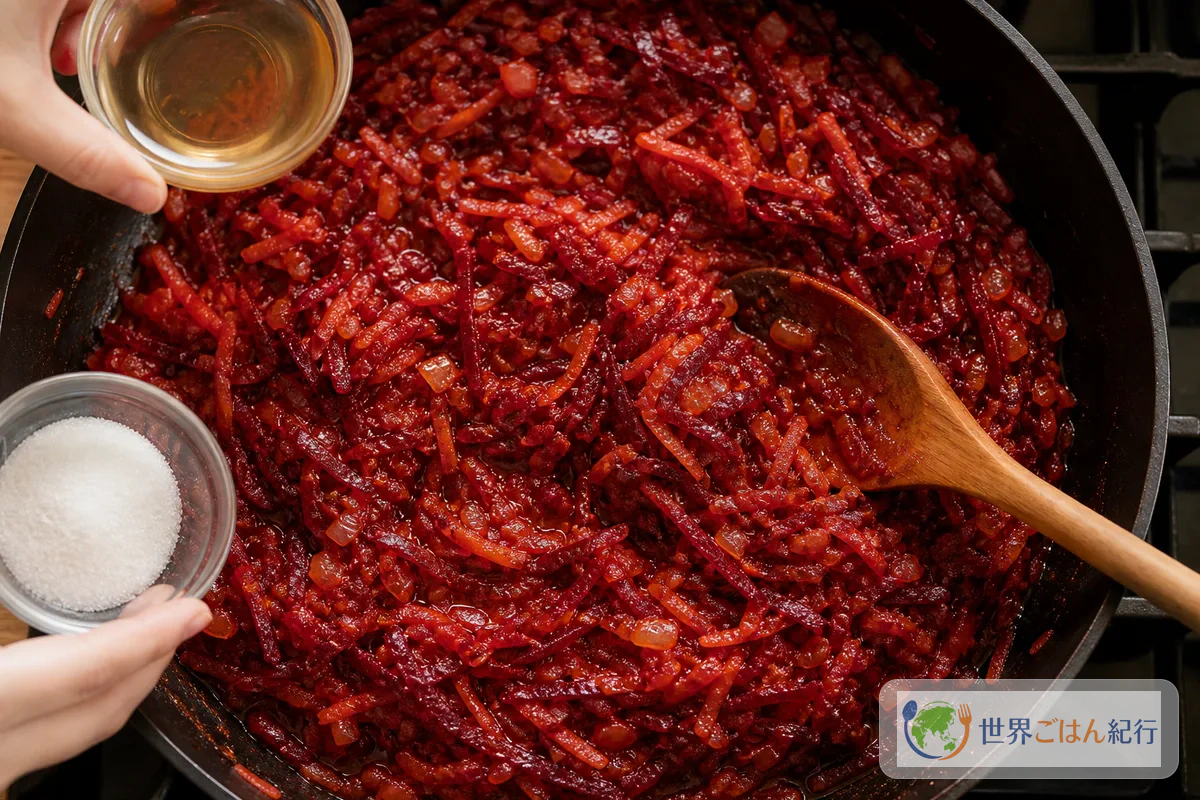
The beet's main pigments, betalains, are affected by pH, heat and oxygen. A food science review summarizes that betanin is relatively stable under mild acidity (around pH 4–5), and that the longer the heating, the more breakdown and browning proceed. Drawing on the International Journal of Food Science & Technology review, adding vinegar does not solve everything; two operations matter: briefly sautéing the beets with acidity added, and returning them to the soup at the end.
Canned, fresh and pickled compared
- Boiled, canned or jarred: the base for this recipe. Keep the liquid and cut the beets into matchsticks. Use the liquid for the final adjustment of sourness and color.
- Fresh beets: roast unpeeled at 180°C for a guide of 40–60 minutes, and cool after a skewer goes through. Peel and cut into matchsticks. Time varies with size, so judge by tenderness rather than the clock.
- Pickled beets: the liquid is strong in sourness and sweetness. Do not put in the full vinegar and sugar from the start; add the beets and liquid, then set the flavor a little at a time.
When you handle fresh beets, red juice stays on cutting boards and cloth. Lay down a disposable sheet or choose a board that can take staining, and wear gloves if you have them. This is not a matter of taste but of cleanup. If this is a concern, choosing boiled beets is a perfectly smart choice.
White distilled vinegar or rice vinegar is plenty, but choosing red wine vinegar gives the sourness a fruity roundness. It is for people who plan to use it in dressings and braises beyond borscht. For this one pot alone, use the vinegar you have.
Briefly sauté the beets with vinegar, then return them to the soup at the end. Boiling hard for a long time after the beets go in tends to dull the red color.
Dill and the pot: to buy or to skip
Dill is a purchase for "when you cannot find fresh"
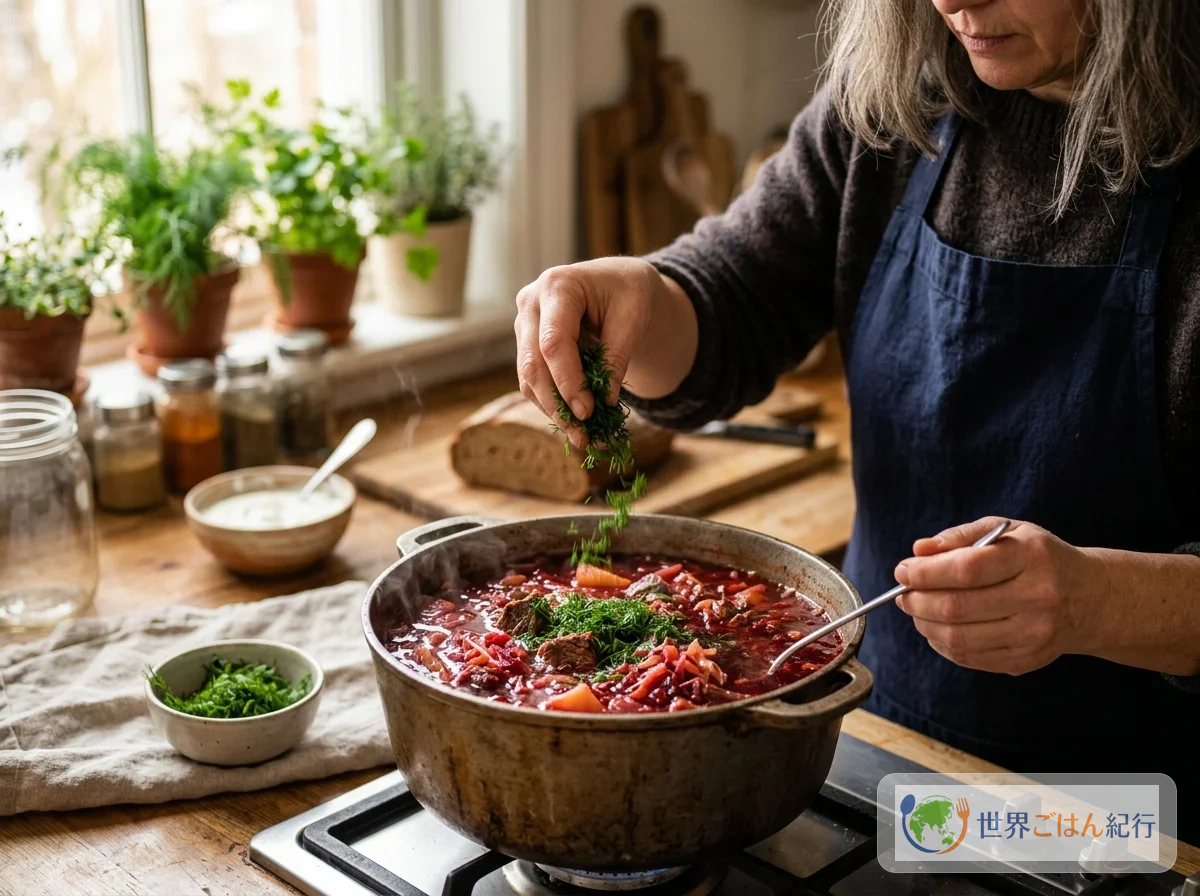
If you can find fresh dill nearby, it is the ingredient that most easily creates the outline of the aroma. But you do not need to search far for a single bunch. Dried dill, added at 2 tsp right before turning off the heat, can make a green escape for the heaviness of meat and beets.
The condition for buying dried is that you plan to use it in other dishes too, such as fish soup, potato dishes and cucumber salad. If you want to try it once, or can buy fresh dill nearby, skip it and a little parsley scattered at the end is fine. Check on the label whether it is freeze-dried, the package size and the ingredients.
Do not buy a cast-iron pot "for this one bowl"
If you are just simmering beef, an ordinary heavy lidded pot will do. The merit of an enameled cast-iron pot is that it keeps low heat easily and can go straight to the table for big-pot dishes. On the other hand, considering weight and price, it is not a tool you need just to make borscht once.
The condition for buying is that you will make soups and braises many times and use a pot of around 22 cm regularly. If you already have a heavy pot and just want to try this once, skip it.
Serving: put the white sourness on the side
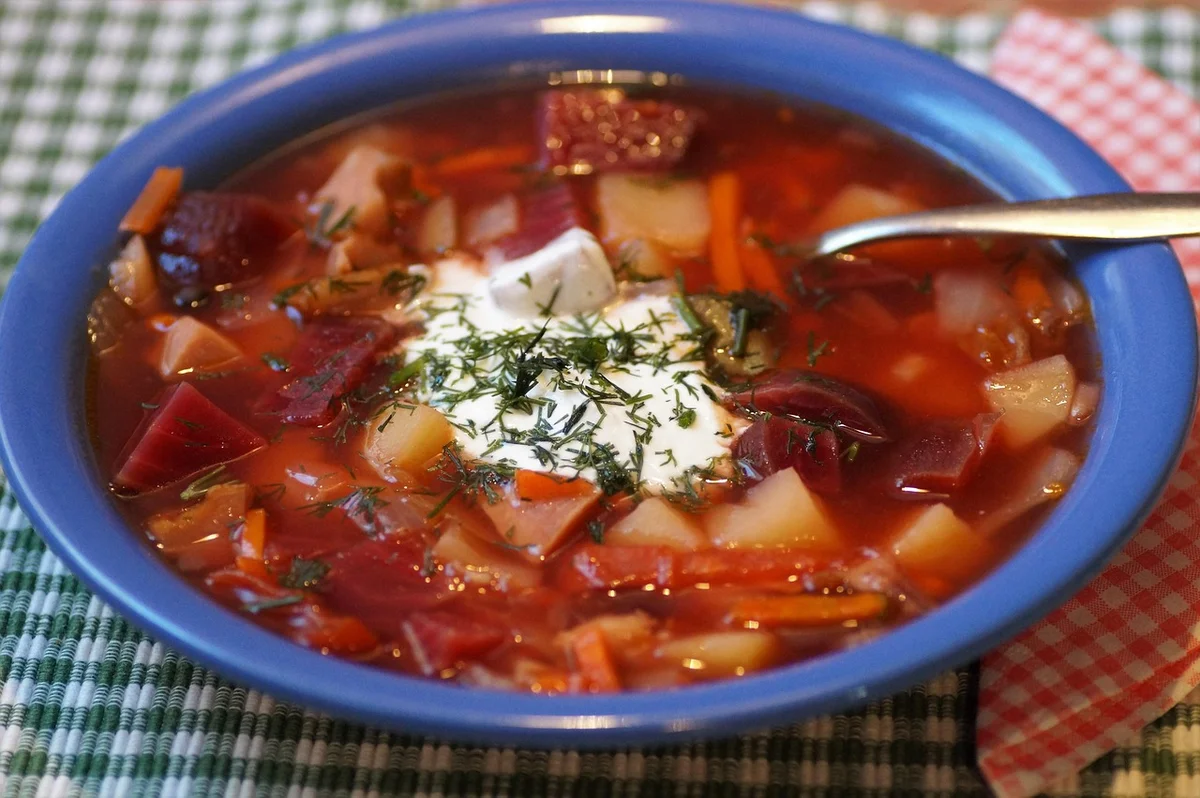
Pour the hot borscht into deep bowls and place 1–2 tbsp sour cream on top. Do not dissolve it completely at the start; put your spoon in while red and white are still marbled, and the strength of sourness changes with each bite. Even when you use the substitute of unsweetened yogurt and heavy cream, add it in the bowl, not in the pot.
Explanations of Ukrainian food culture present borscht as eaten in a deep plate with bread, bread rubbed with garlic, and herbs such as dill and parsley. In some households, garlic, onion and salo (salt-cured pork fat) accompany it. If you have no dark bread, a sour rye bread or ordinary bread is enough. Dipping the bread in the soup takes up the sweetness of the beets.

If you want to compare how meat and sourness layer on another Eastern European table, Belarusian machanka is an interesting dish. On a day you serve something light with eggs and vegetables, Bulgaria's mish-mash too can be compared as an Eastern European home flavor different from a red braise. On a day you lean toward a cold soup, the difference from Russia's okroshka (in Japanese) will also become visible.
Borscht varies by region: do not make one right answer
What is interesting about borscht is that regional difference is not an "exception" but built into the structure of the dish. A guide prepared with Ukraine's Ministry of Culture shows a range in which meat, poultry or a mild fish stock, beets or beet kvass, potatoes and cabbage are the basis, with local ingredients such as mushrooms, fish and sweet peppers added. The sourness too varies: tomato, fermented milk, sour cream, vinegar, lemon and others.
When you substitute, keep the role of each ingredient and the flavor does not fall apart.
- The beef version is a rich soup centered on the umami of meat. Combined with cabbage and potatoes as here, it comes together easily as a meal.
- A version without meat adds body with mushrooms and white beans. If you switch to a stock of kombu and dried shiitake, think of it not as reproducing one Ukrainian home dish but as a plant-based arrangement built in your own kitchen.
- Green borscht is not simply red borscht with the beets taken out. It is known as a different line of soup using sorrel, leafy greens and eggs, so when you approach it with spinach and lemon, enjoy it as a "green sour soup."
Even if you cannot buy beets, you do not need to think a soup made red with tomato alone is the same flavor. Make it well as a tomato soup, and on the day you find beets, move on to borscht. That sort of distance makes choosing ingredients easier.
Storage and reheating: safety before color
For what you cannot finish, do not leave it in the pot at room temperature; divide it into shallow storage containers and cool it quickly. The U.S. Department of Agriculture (USDA) gives a guide of 3–4 days refrigerated and 3–4 months frozen for cooked leftovers, and advises reheating to 74°C (165°F). Use the USDA's leftovers safety guide as the standard.
When you want to keep the color, do not boil the whole pot again and again; warm only one serving in a separate pot. For safety heat it thoroughly to the center, and put the sour cream and fresh dill in the bowl. Potatoes turn crumbly when frozen, so for the portion you will freeze, use fewer potatoes, or boil them separately on the day you eat and add them, and the texture is easier to restore.
Common failures and how to put them right
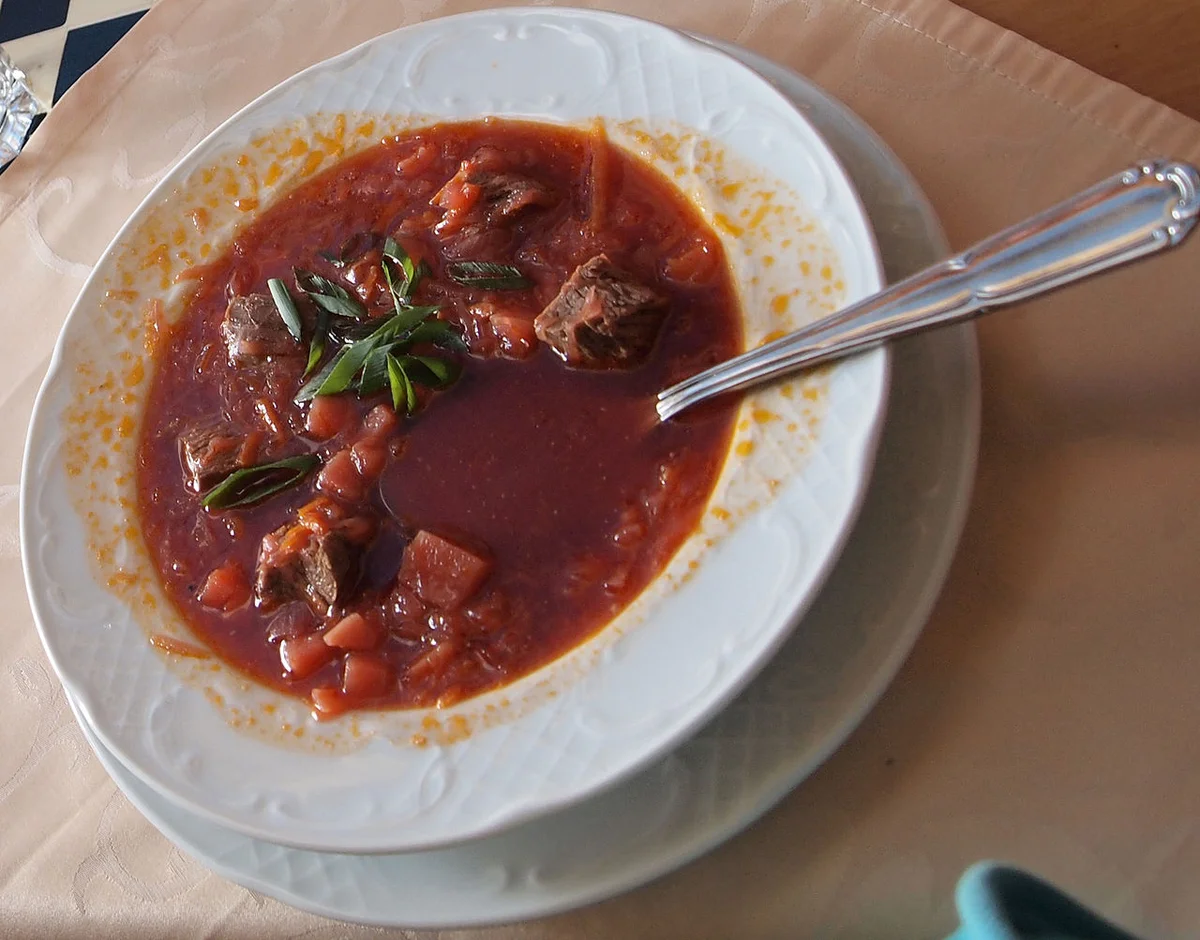
The color is brownish
The beets may have gone in too early, or been boiled hard near the end. Next time, sauté the beets and bring them back for the last 8–10 minutes. To rescue this pot, briefly warm a small amount of beets with 1 tsp vinegar and mix it in after turning off the heat. The sourness increases, so recheck the salt and sugar a very little at the end.
The flavor is thin
Often more than 2 L of stock remains, or the salt is short. Before suddenly increasing the seasoning, take off the lid and drive off water for only 5–10 minutes over low heat, then add salt a pinch at a time. If the aroma of the meat is weak, from next time do not cut the beef too small, and keep low heat after skimming.
Too sour
This happens when the whole liquid of pickled beets goes in. Add hot stock or water a little at a time, and a pinch of sugar to round it. Sour cream in the bowl adds more sourness, so start with a little.
An earthy smell remains
Either the beets were cut too large, the sautéing was too short, or the smell of the canned liquid is strong. With boiled beets, keep only 1–2 tbsp of the liquid, cut them into matchsticks and coat them with the onion and tomato paste. For fresh beets, the method of roasting to bring out the sweetness suits.
The cabbage is too soft
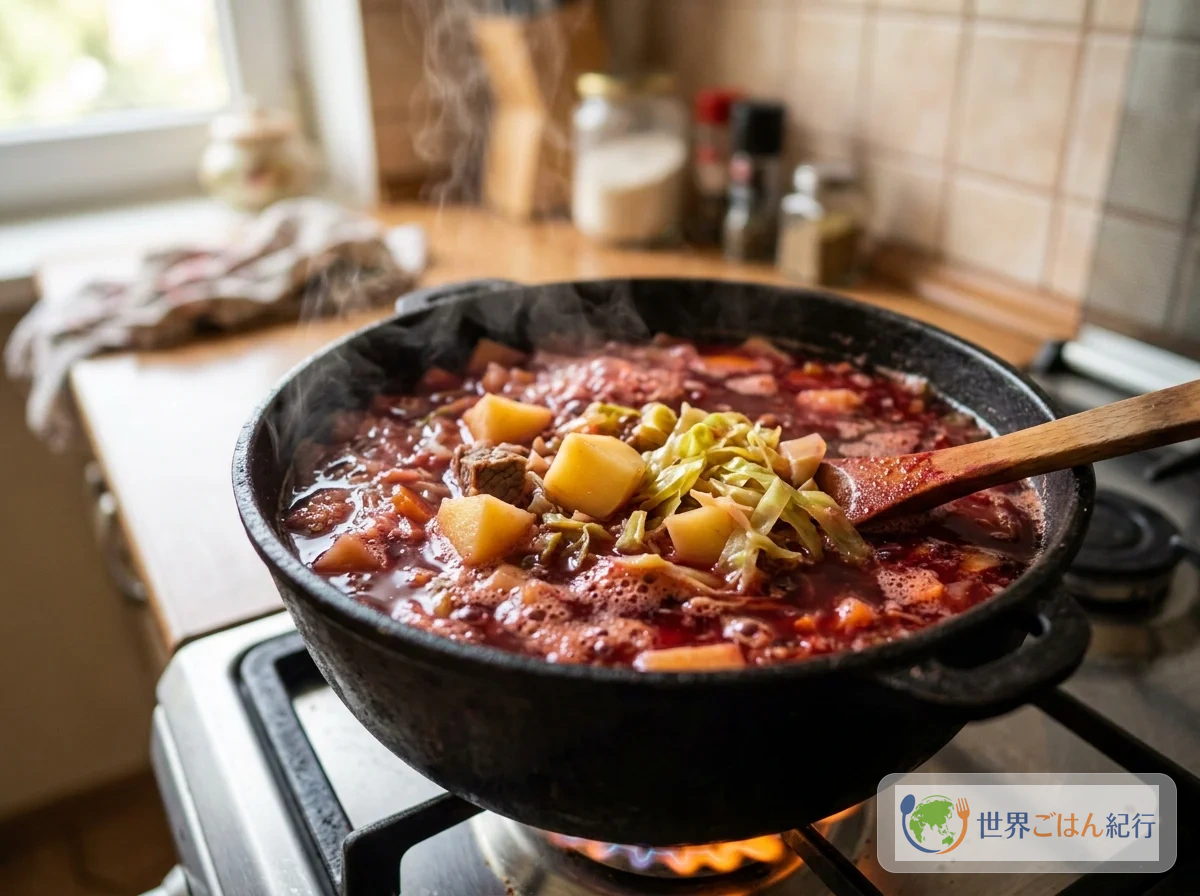
It was simmered too long. Separate them: potatoes are the ingredient that cooks first, and cabbage is the ingredient added later to keep texture. For the portion to be reheated the next day, a slightly firm texture on the day is just right.
FAQ
Q. Can I simmer the beef in a pressure cooker?
For the stock step alone, yes. Follow the manual and bring the meat to the point where it shreds, including the natural pressure release after pressurizing. After the beets are added, do not pressurize; use an ordinary pot over low heat. Someone without a pressure cooker does not need to buy one just for this recipe.
Q. How do I choose between boiled and pickled beets?
For a first time, boiled ones are easier to handle. Pickled ones let you use the sourness and sweetness of the liquid, but you need to cut the recipe's vinegar and sugar. Judge the taste by the label and do not substitute mechanically by quantity.
Q. I cannot get dill.
You can make the soup without it. A little parsley makes up the green aroma, but it is different from the sweet, cool aroma peculiar to dill. Rather than hunt for fresh, it is realistic to decide between choosing a dried one you can use in several dishes, or skipping it this time.
Q. I have no sour cream.
Mix 3 tbsp unsweetened yogurt and 1 tbsp heavy cream and place it in the bowl. Yogurt alone is edible too, but the sourness tends to be strong, so start with 1 tsp. Putting it into a pot that is still cooking tends to make it separate, so always add it after serving.
Q. How many days can I eat the borscht?
As a guide, 3–4 days refrigerated and 3–4 months frozen; cool it quickly in shallow containers. Reheat one serving at a time, so the center reaches 74°C. If you are unsure of the storage condition, do not eat it, rather than judging by days alone.
Summary: make it or skip it
Borscht is not a dish to make on impulse on the day you find beets. If you have time to make a beef stock and intend to eat six servings through the next day, there is the pleasure of flavor developing in the pot. Conversely, on a day you want to make a single meal in 30 minutes, a day you dislike sour soup, or a day you do not want to prepare beets, it is a dish you may skip. Just choosing boiled beets removes many of the hard parts.
Finally, remember just the order in which the ingredients go in.
- Do not keep the beef stock at a hard boil; keep it on low heat until the meat shreds.
- Sauté the beets with the sourness on them, and return them for the last 8–10 minutes.
- Do not simmer the sour cream and dill in the pot; finish them on top of the bowl.
Dried dill suits when you cannot buy fresh or will use it in other dishes too. A cast-iron pot is a tool for people who make braises many times. Neither is "essential if you make borscht." Choose according to the pot you have and the time you have today.
Sources
The quantities and steps are the editorial team's proposal, assembling the axes of flavor above for home cooks. The cultural background, handling of the pigment and storage safety information refer to the following.
- UNESCO, Culture of Ukrainian borscht cooking
- Ministry of Culture and Information Policy of Ukraine / Google Arts & Culture, A Guide to Borsch
- Ministry of Culture and Information Policy of Ukraine, Ukrainian borscht cooking culture inscribed on UNESCO list
- Betalains in food: stability and processing review, International Journal of Food Science & Technology
- USDA Food Safety and Inspection Service, Leftovers and Food Safety