A Dish for Dipping: Winter Wisdom From the Belarusian Countryside
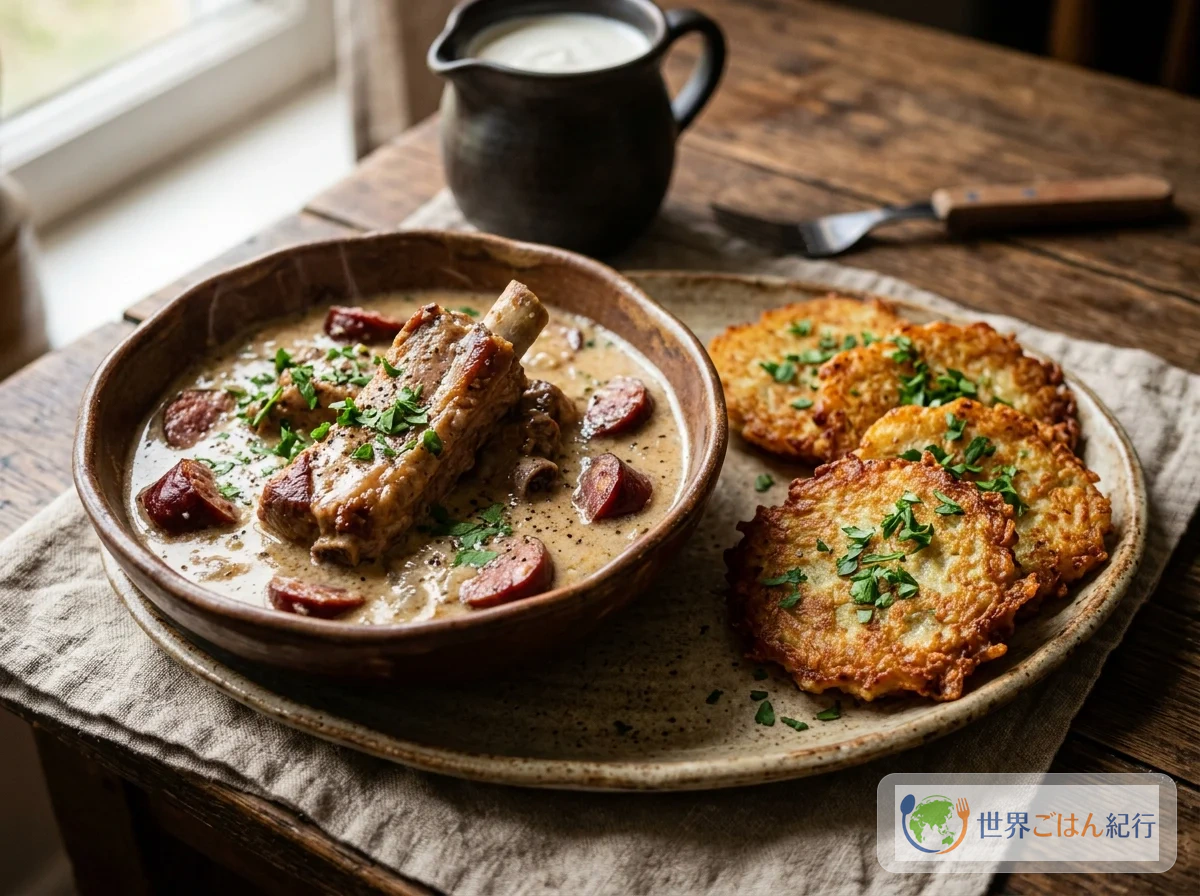
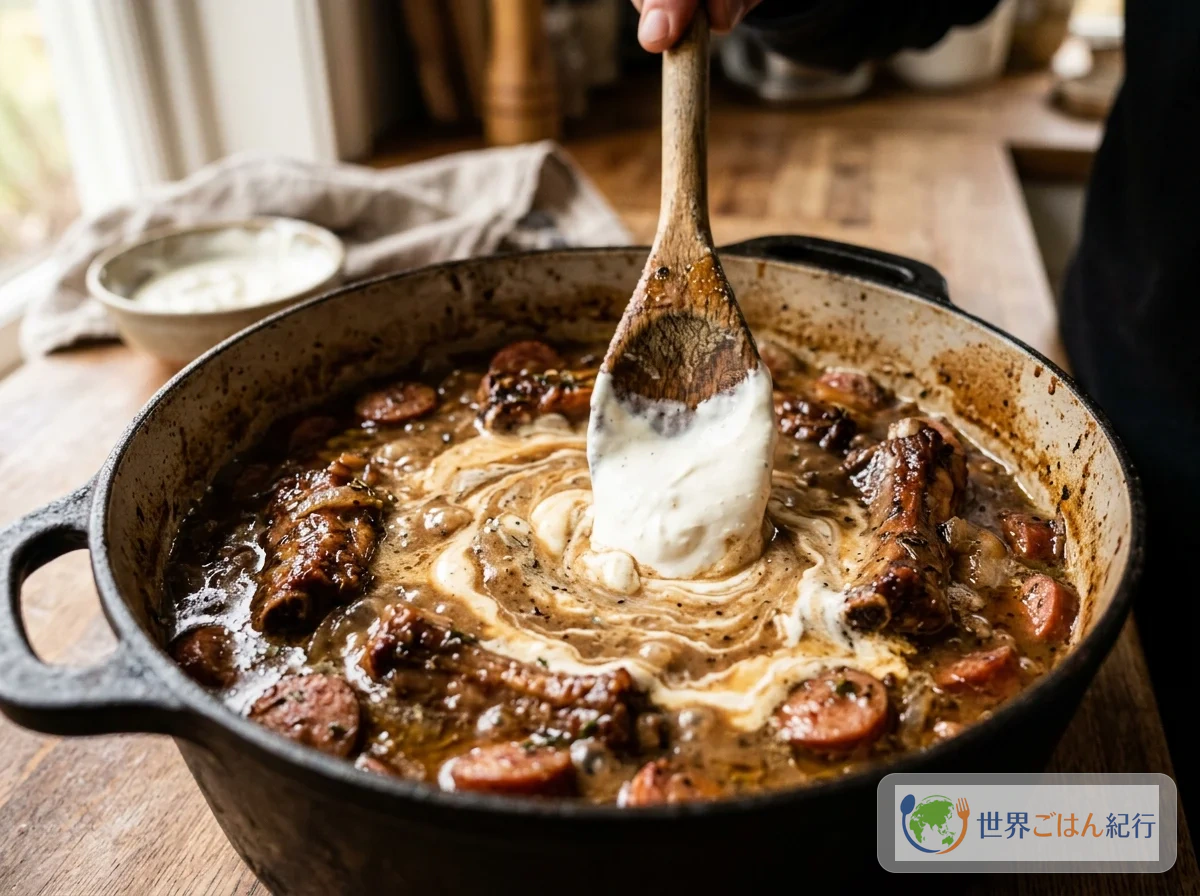
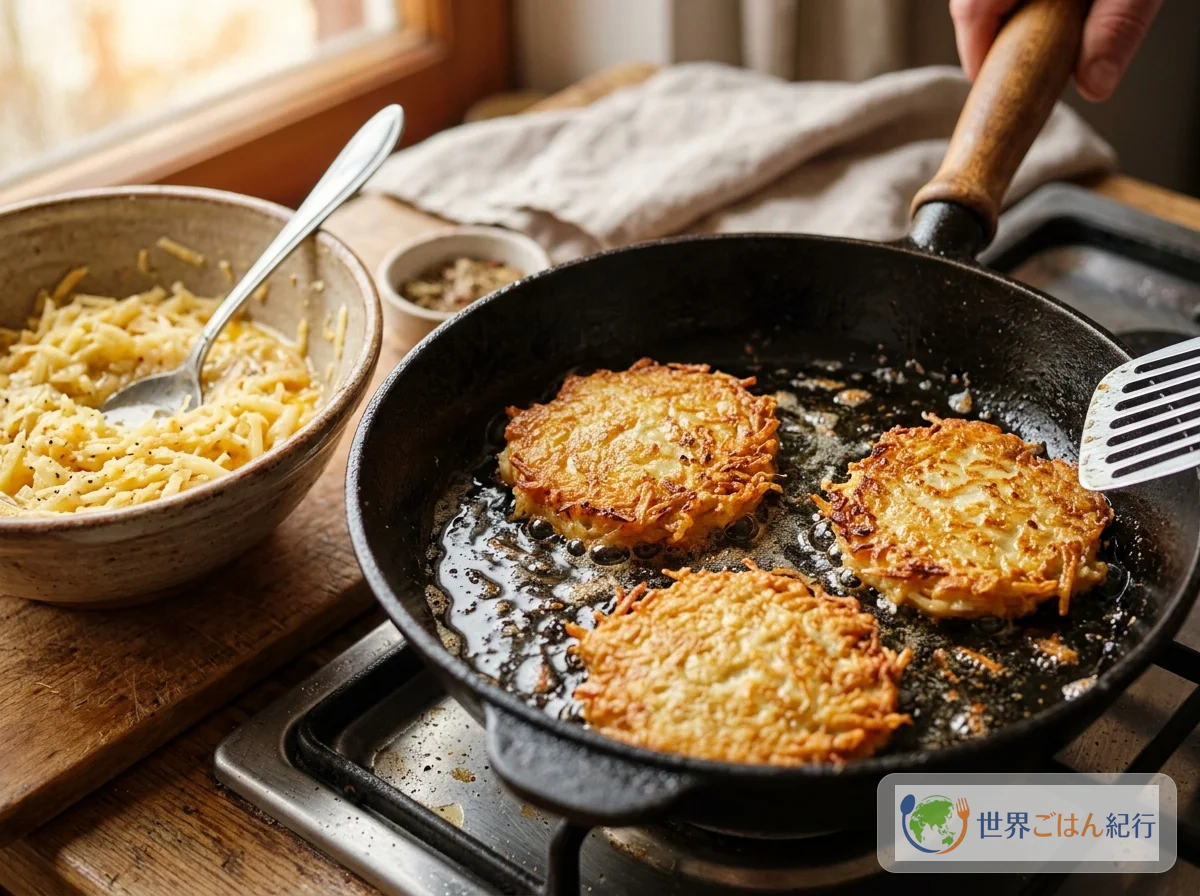
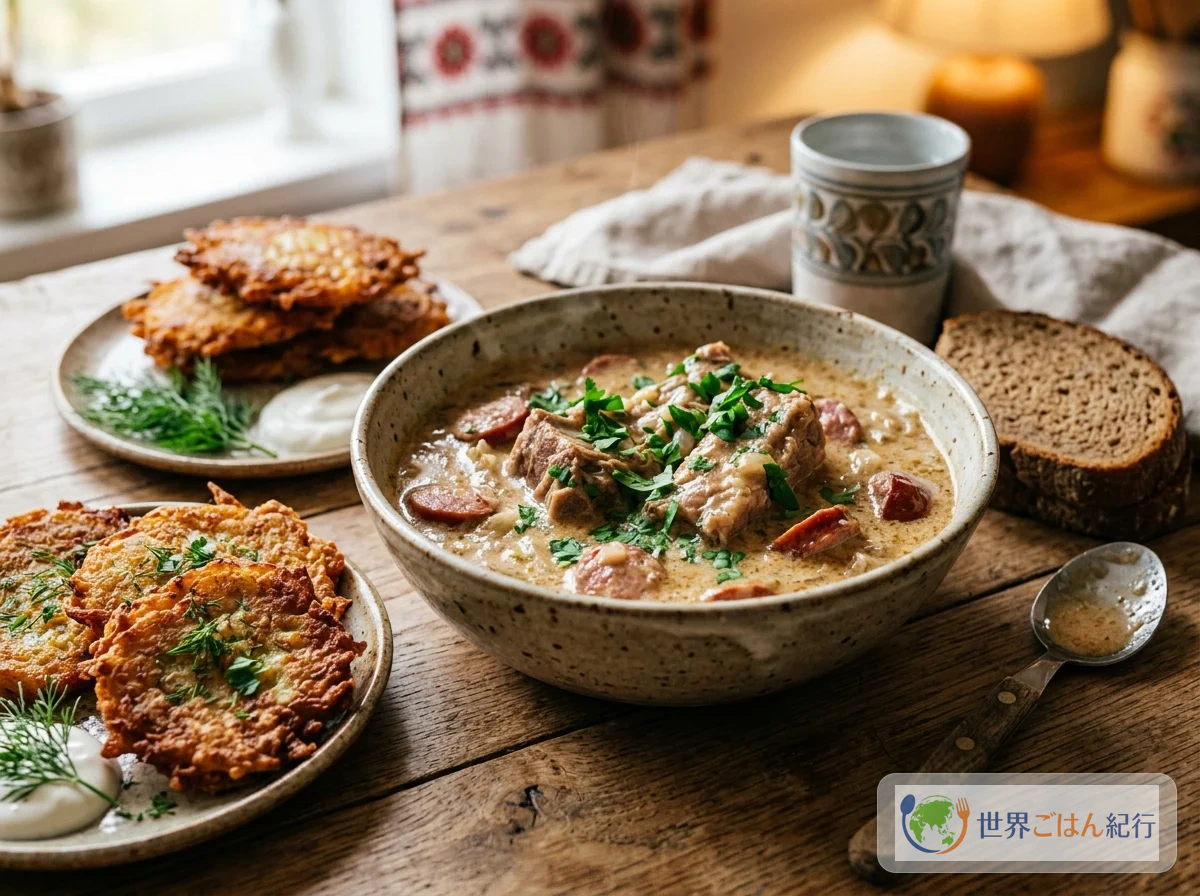
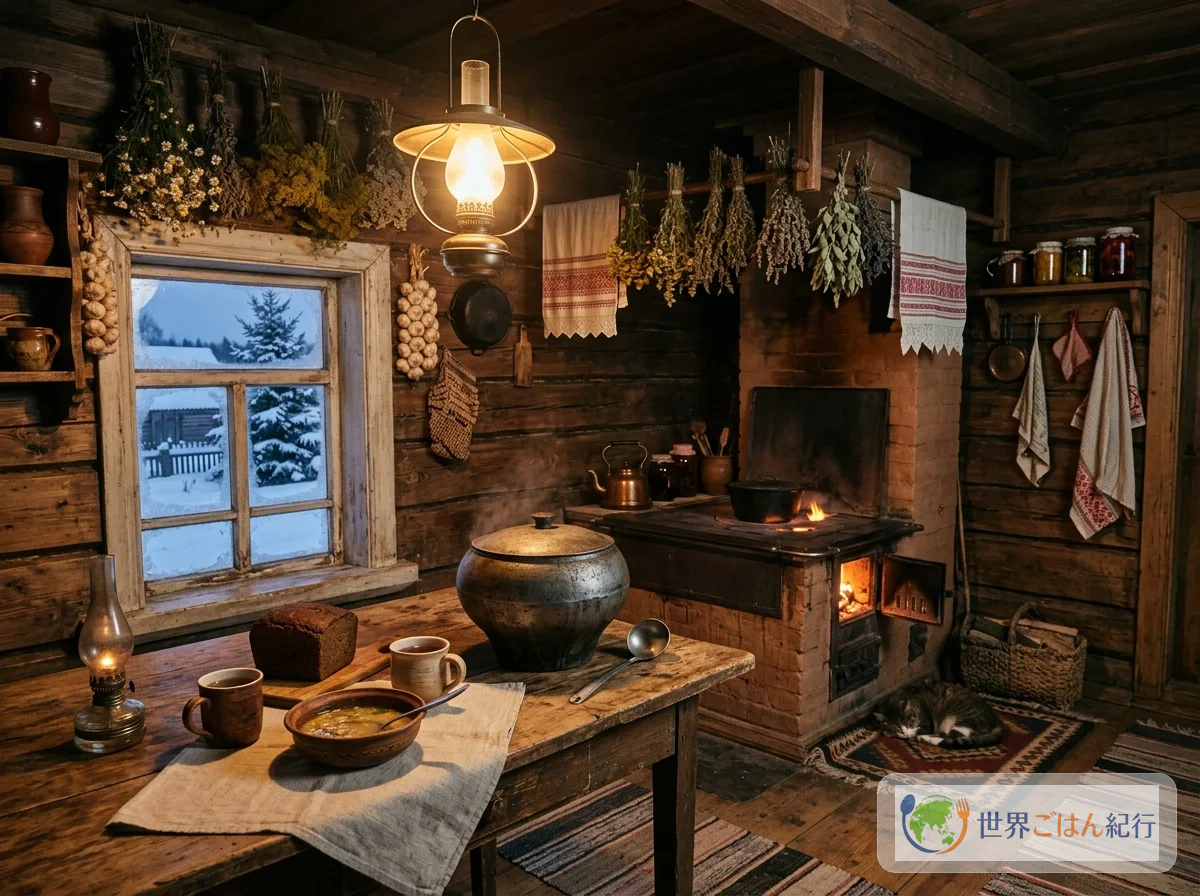
Winters in the Belarusian countryside are long and hard. Temperatures fall below minus 20 degrees, and families gather around the stove in houses closed in by snow. In the kitchen, homemade sausage made in autumn and scraps of pork simmer slowly in a sour cream gravy, and potato pancakes are "dipped" into it as you eat. That is machanka (Мачанка / Machanka).
Machanka takes its name from the Belarusian verb "machatsi" (мачаць), meaning "to dip." Pork trimmings (spare ribs, belly, cheek and the like) and homemade sausage are simmered in a sour cream-based gravy, and chewy potato pancakes called draniki (драники) or blinchiki (thin crêpes) are dipped in it as you eat. It is a winter staple of Belarus.
Machanka (Machanka / Мачанка) is a traditional winter stew of Belarus. The name comes from "to dip" (мачаць) and refers to dipping pancakes or crêpes into the stew. It came out of countryside wisdom of using up every scrap left after a pig is slaughtered: trimmings, meat on the bone, offal and sausage. It is eaten across Belarus, but the thickness of the gravy, the cuts of meat and the accompaniments differ by region. The usual accompaniments are draniki (potato pancakes) or blinchiki (thin crêpes), depending on the region and household. Similar dishes exist in western Ukraine and eastern Poland.
It sits among the home dishes of the Slavic world, alongside Ukraine's borscht (in Japanese) and Moldova's mamaliga (in Japanese). If you have leftover potatoes and sour cream, the Eastern European Jewish knish (in Japanese) is another dish easy to make from the same shopping. This is a complete guide based on English-language and Belarusian-language sources.
Ingredients (serves 4)
This dish contains wheat (the gravy thickener and the draniki binder), dairy (sour cream and butter) and egg (the draniki binder). Some sausages may contain meats other than pork or spices. If you have an allergy, always check the ingredient labels.
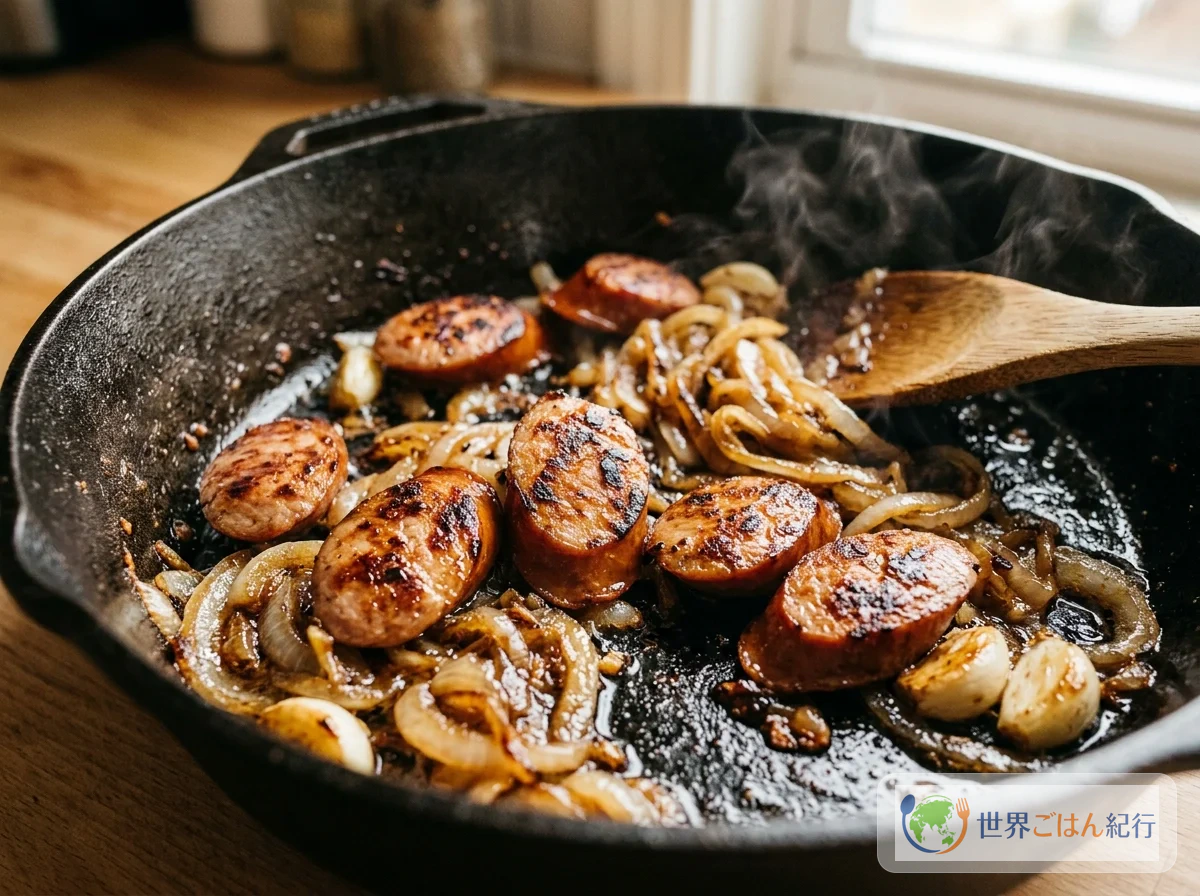
Authentic Belarusian machanka uses "damashnyaya kaubasa" (домашняя каўбаса / homemade sausage). The closest widely available choice is Polish kielbasa. If you can't find kielbasa, substitute coarse-ground German-style smoked sausage (thick and coarse, not a thin snappy-skinned type). Thin breakfast sausages are too slender and mild in flavor for machanka.
Cooking Tips
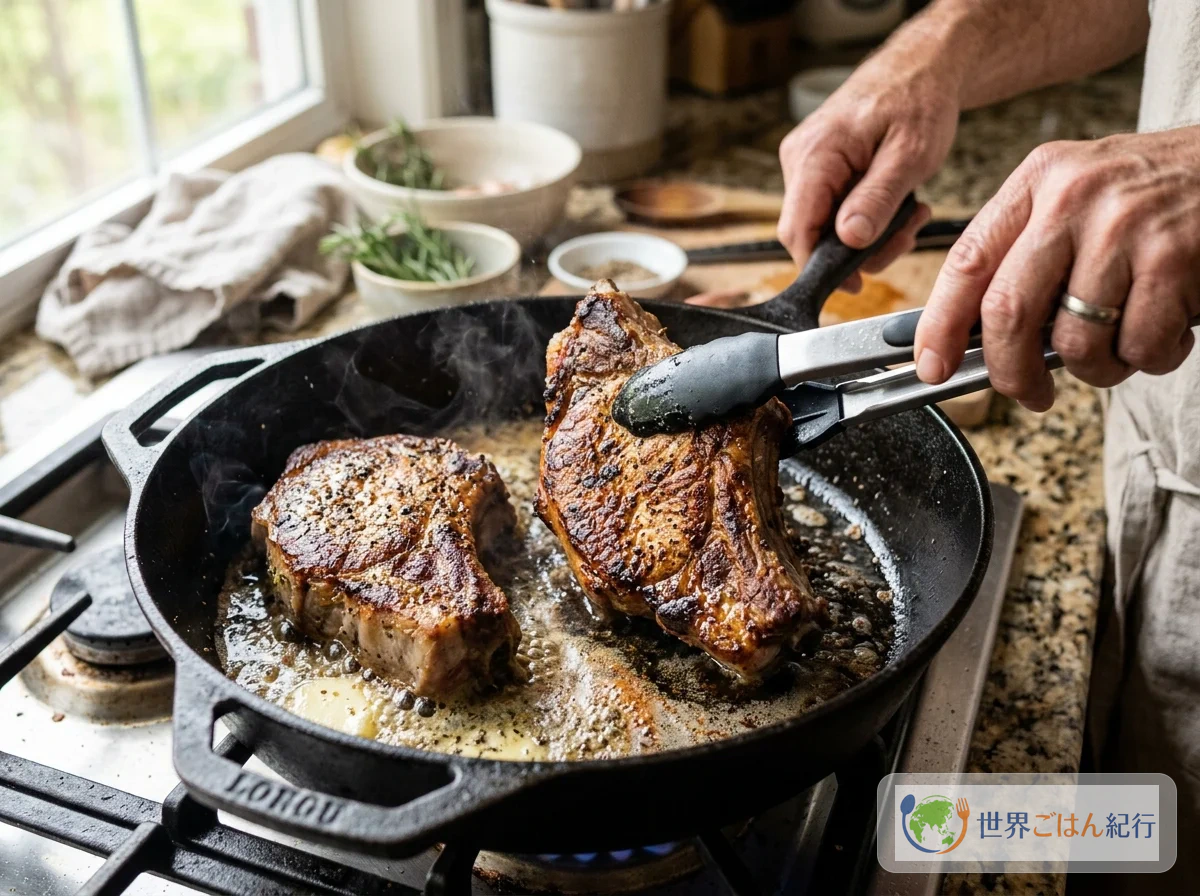
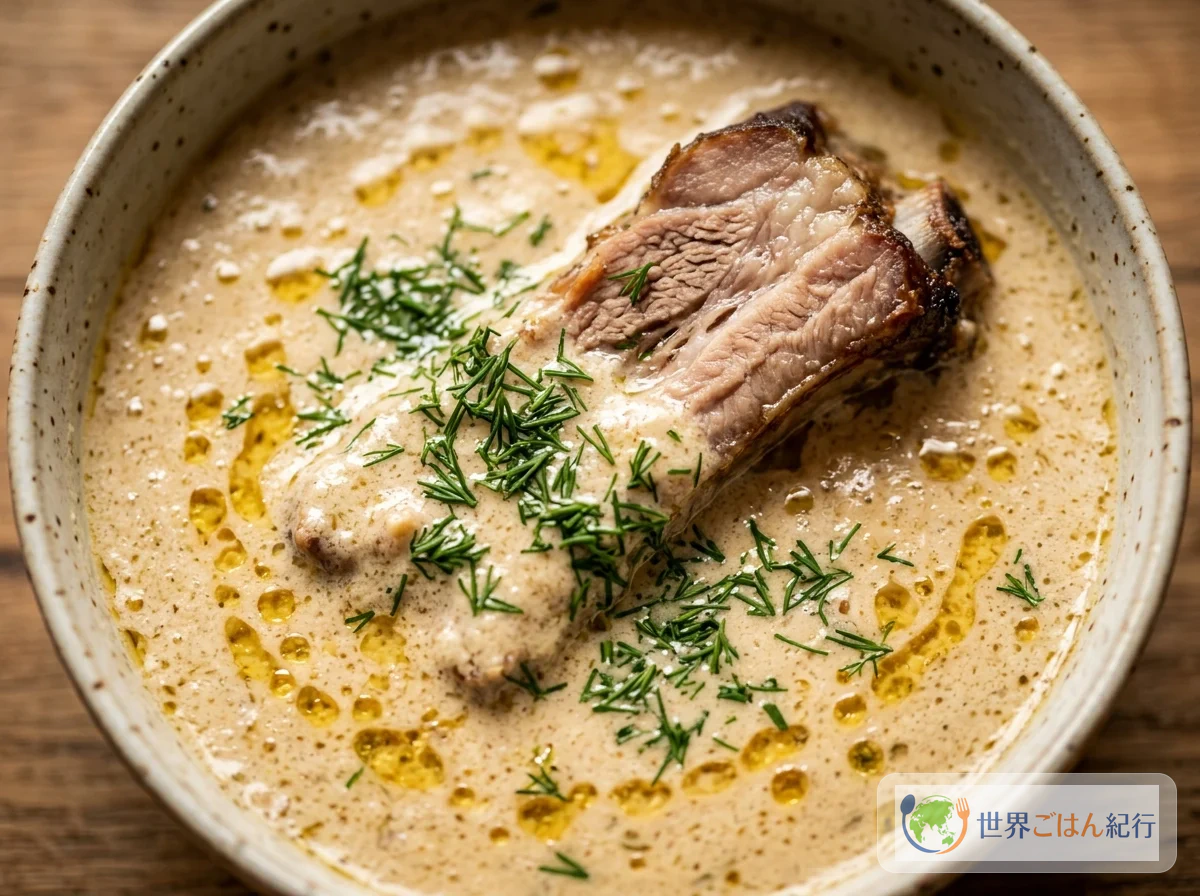
In the Belarusian countryside, machanka was born as a dish that uses up the scraps left after slaughtering a pig. Spare ribs, cheek (jowl), neck, the ends of the belly, ear cartilage: putting in whatever there is is the spirit of machanka. The combination of pork spare ribs (the bones release gelatin that gives the gravy body) and a block of pork belly (the sweetness of the fat suits the sour cream) is the most suitable of the cuts easily available at the shop.
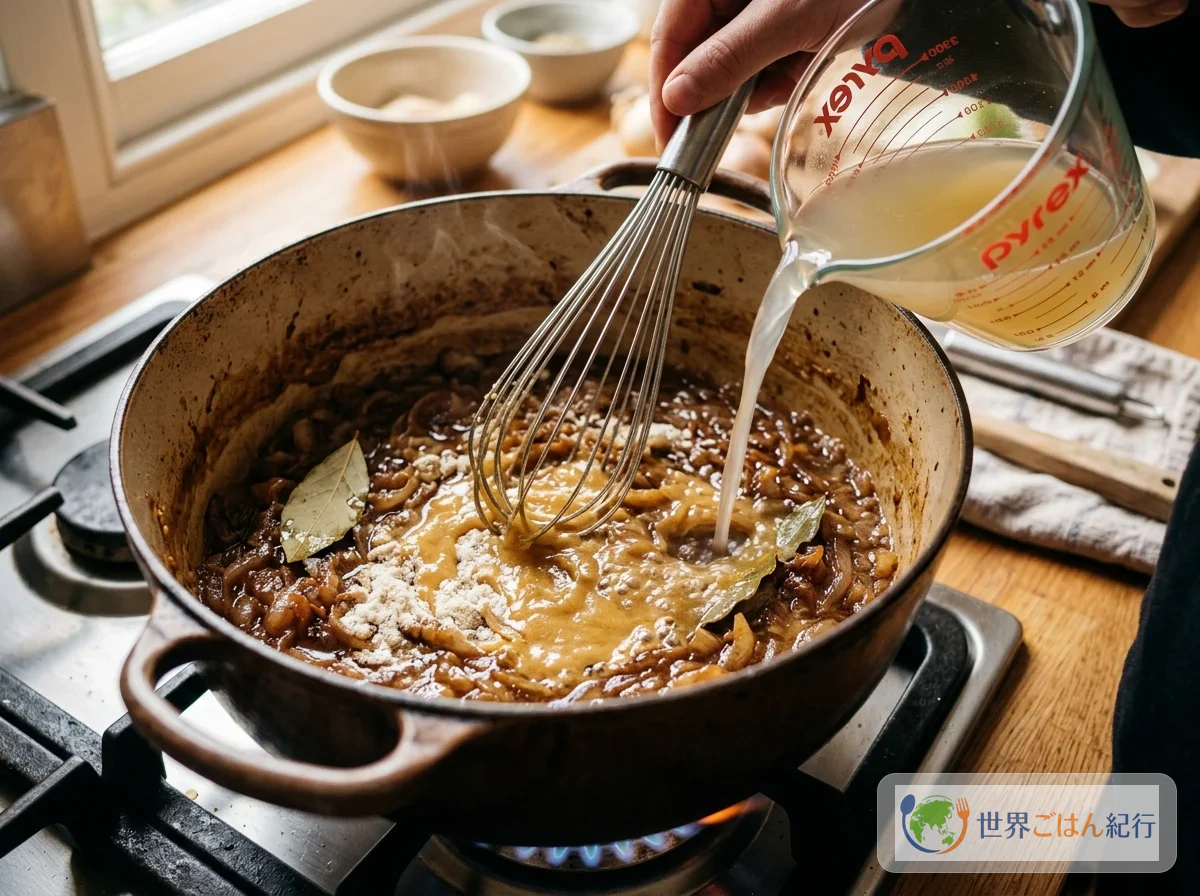
The flavor of the gravy depends greatly on the fat content of the sour cream. Choose a full-fat sour cream of 20% or more; a low-fat sour cream (10% or less) separates easily and lacks richness, so avoid it.
The biggest reason draniki come out soggy is moisture left in the grated potato. After grating, don't skip wrapping it in a cloth or cheesecloth and squeezing with all your strength. The starch that settles at the bottom of the squeezed-out liquid, put back into the batter after pouring off the clear liquid on top, acts as a binder and makes them even crisper. This is Slavic wisdom also used in making the dough for Polish pierogi (in Japanese).
Variations
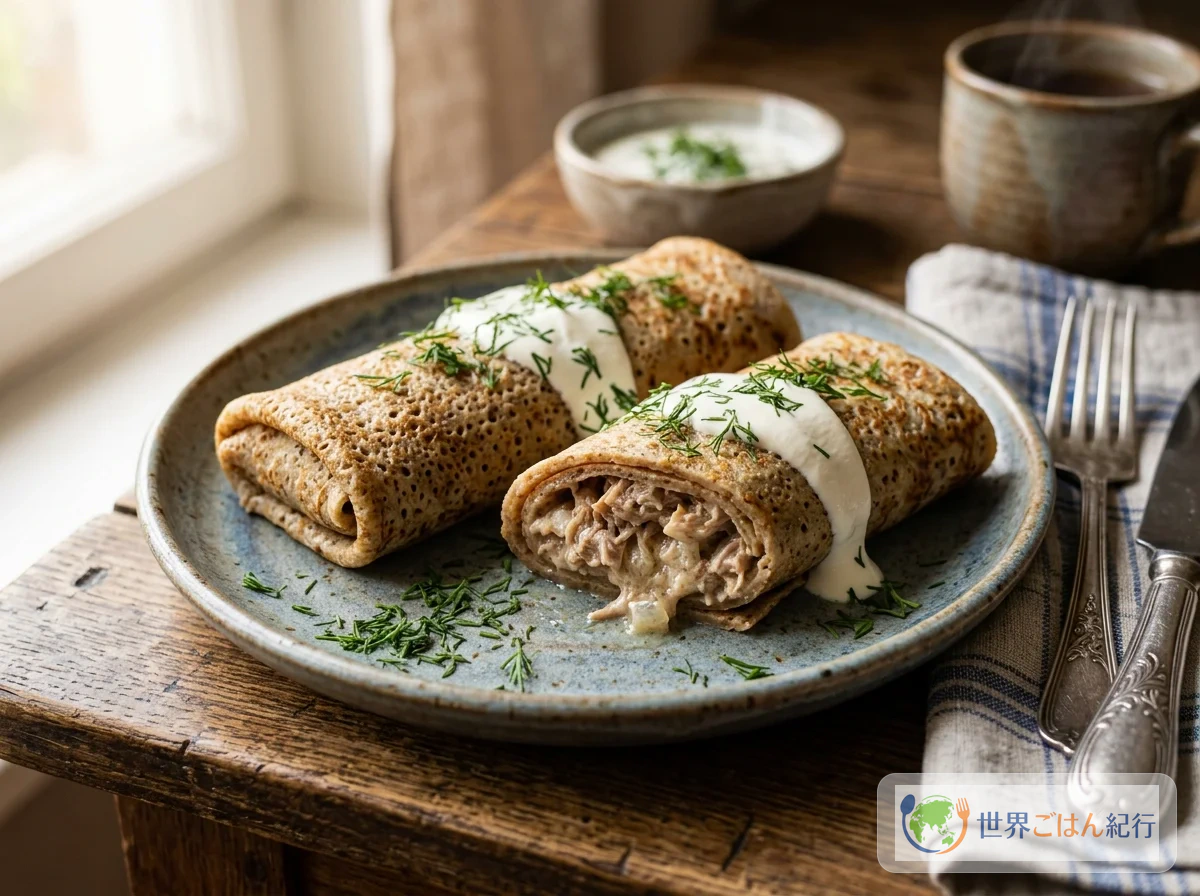
Blinchiki version (Polesie-style)
In the Polesie region of southern Belarus, buckwheat blinchiki (thin crêpes) are dipped in machanka in place of draniki. A batter of 100 g buckwheat flour and 50 g all-purpose flour mixed with 200 ml milk and 1 egg is cooked thin in a frying pan, and the machanka is wrapped in it. The toasty flavor of buckwheat goes superbly with the sour cream gravy.
Machanka with mushrooms (autumn forest version)
For an autumn forest machanka, soak 30 g dried porcini in water for 30 minutes and add them to the stew. The savor of the mushrooms joins the pork gravy and gives a deep earthy flavor.
Chicken version (a lighter machanka)
A light variation uses 400 g bone-in chicken thighs in place of the pork. Reduce the sour cream to 150 ml and shorten the simmering time to 20 minutes.
Beer-braised version
A variation in which half of the water or broth in the gravy is replaced with dark Belarusian beer (or a dark lager). The faint bitterness of the beer and the sweetness of the malt make an unexpected harmony with the sour cream. Just as Belgian carbonnade braises beef in beer, this is a modern arrangement.
Background of the Dish
Using Every Scrap: The Wisdom of the Countryside
Machanka is not a dish of poverty but a dish of not wasting anything. The countryside ethic of eating a pig down to the last piece lies at the root of this dish. This use of trimmings is a food culture seen across Eastern Europe.
Sour Cream: The Common Foundation of Slavic Cooking
Sour cream (smetana / сметана) is a dairy product that forms the foundation of cooking in the Slavic countries. It appears not only in machanka gravy, but throughout Slavic cooking: as the topping of Ukrainian borscht (in Japanese), a sauce for pelmeni and an accompaniment to Moldovan mamaliga (in Japanese). In the Belarusian countryside, the original form was to use cream that had soured naturally from milk left standing ("kislae malako" / кіслае малако) in machanka.
Draniki: The Companion of Machanka
Draniki (драники), the partner of machanka, are Belarus's unofficial national dish. Potatoes occupy the center of Belarusian food culture, and the pairing of machanka and draniki is the standard of the "Belarusian winter table."
Belarus has historically been under the influence of Poland, Lithuania and Russia, and food culture has played an important role in establishing its own cultural identity. Dishes such as machanka, draniki, salo (lard), mushroom soup and kholodnik (cold beet soup) have come to symbolize Belarusian food traditions. Machanka is often recognized as a set with draniki, and this pairing is loved as the standard of the "Belarusian winter table."
Also Worth Reading
Machanka is an entrance to Slavic countryside cooking. Do try the traditional dishes of neighboring countries.
- Borscht (Ukraine) (in Japanese): a crimson beet soup
- Mamaliga (Moldova) (in Japanese): a cornmeal porridge of Slavic cooking
- Pierogi (Poland) (in Japanese): Poland's chewy dumplings
- Goulash (Hungary): the signature paprika stew of Eastern Europe
For Caucasus dishes from a similar fermented-dairy culture, take a look at these too.
- Satsivi (Georgia) (in Japanese): cold chicken in walnut sauce
- Piti (Azerbaijan): a mutton and chickpea clay-pot soup
Also Worth Making
- Introduction to Georgian cuisine (in Japanese): the ingredients and aromas of the same region can be reused.
- How to make fergese (in Japanese): the ingredients and aromas of the same region can be reused.
- How to make piti: the ingredients and aromas of the same region can be reused.
- How to make chanakhi: the ingredients and aromas of the same region can be reused.
Frequently Asked Questions
Is there anything I can use instead of sour cream?
Crème fraîche is the closest substitute. It has a high fat content and does not separate easily when heated, so it can even be easier to use than sour cream. Plain unsweetened yogurt also works, but because of its lower fat it separates easily and the sourness is somewhat stronger. If you use yogurt, always temper it (as described above) and never boil it. Homemade sour cream, made by adding lemon juice to heavy cream and letting it ferment overnight, also gives a good result.
Can I eat machanka without the draniki?
A Belarusian would tell you "that's only half of machanka," but dark rye bread, boiled potatoes or mashed potatoes also make it delicious. Since the name machanka comes from "to dip," you need something to dip.
Does it taste better after resting overnight?
Yes. Like Greek fasolada, machanka is a dish that is best the next day. The sour cream gravy soaks into the meat and the spice flavors blend and mellow. When reheating, warm slowly over low heat and don't let it boil, so the sour cream does not separate. Draniki turn soggy when reheated, so it is best to cook them fresh just before eating.
Nutrition (per serving, of 4)
Machanka is a winter dish high in protein and fat. It has functioned as a source of calories for keeping warm in the Belarusian cold. Together with Ukrainian borscht (in Japanese), it completes a Slavic winter table.
| Nutrient | Amount |
|---|---|
| Energy | 620 kcal |
| Protein | 38 g |
| Fat | 42 g |
| Carbohydrate | 22 g |
| Fiber | 2 g |
| Sodium | 780 mg |
| Vitamin B1 | 0.8 mg |
| Zinc | 4.5 mg |