Åland Pancake: A Thick, Cardamom-Scented Bake Built on Porridge
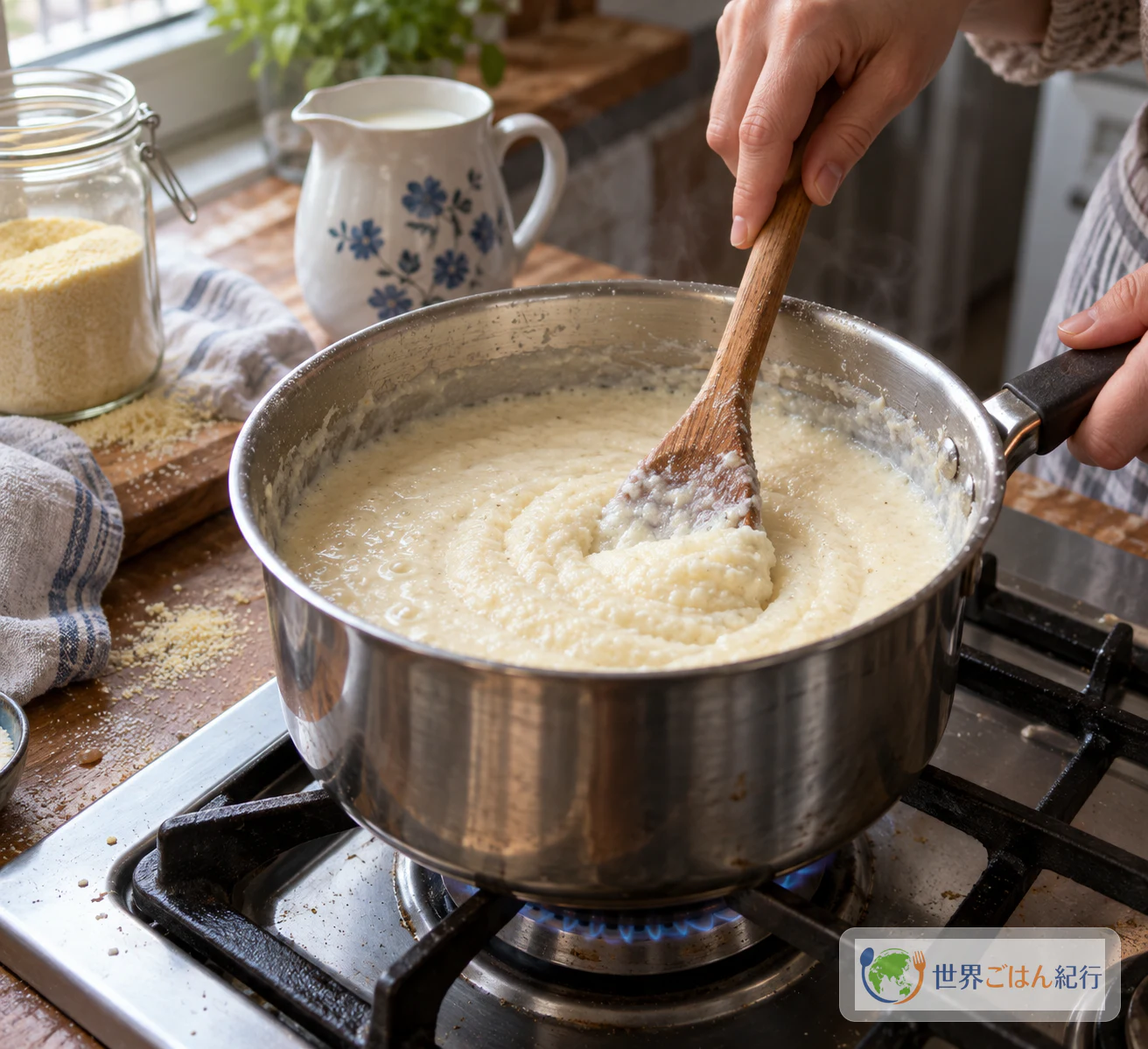
Start from a real porridge of milk and semolina, let the cardamom carry the aroma, and bake it thick, about 2 cm, rather than thin. Serve it slightly cooled with prune cream and whipped cream.
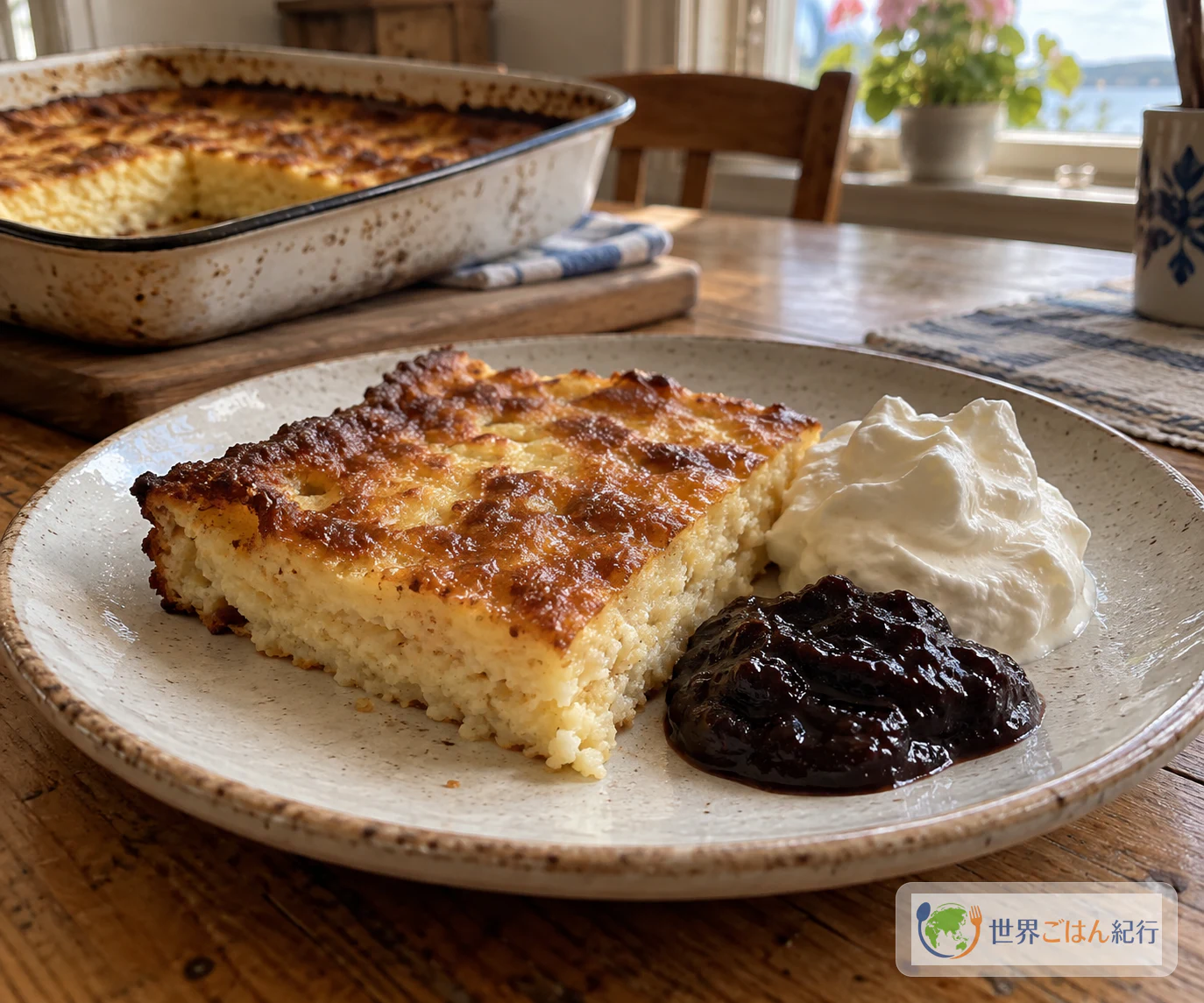
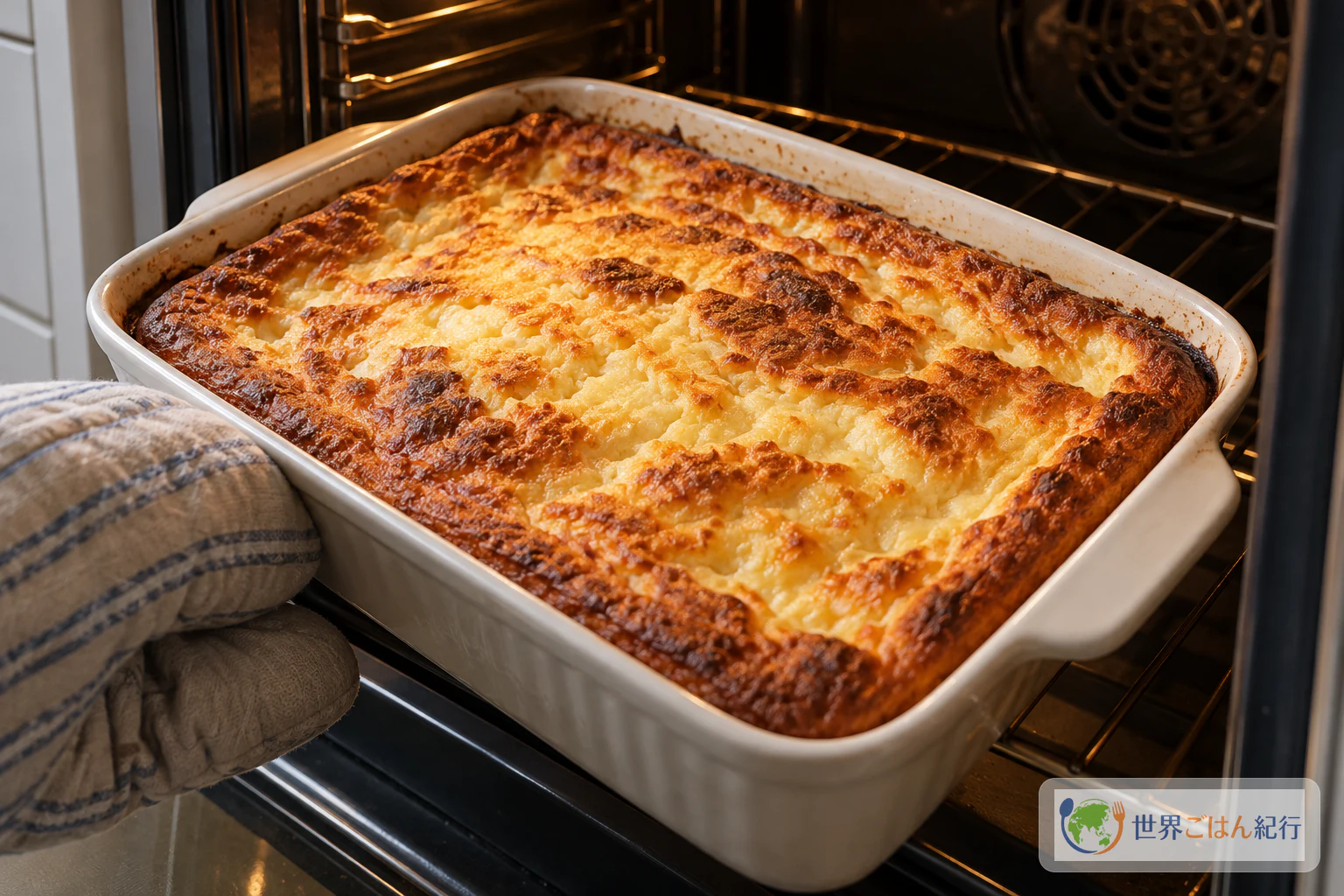
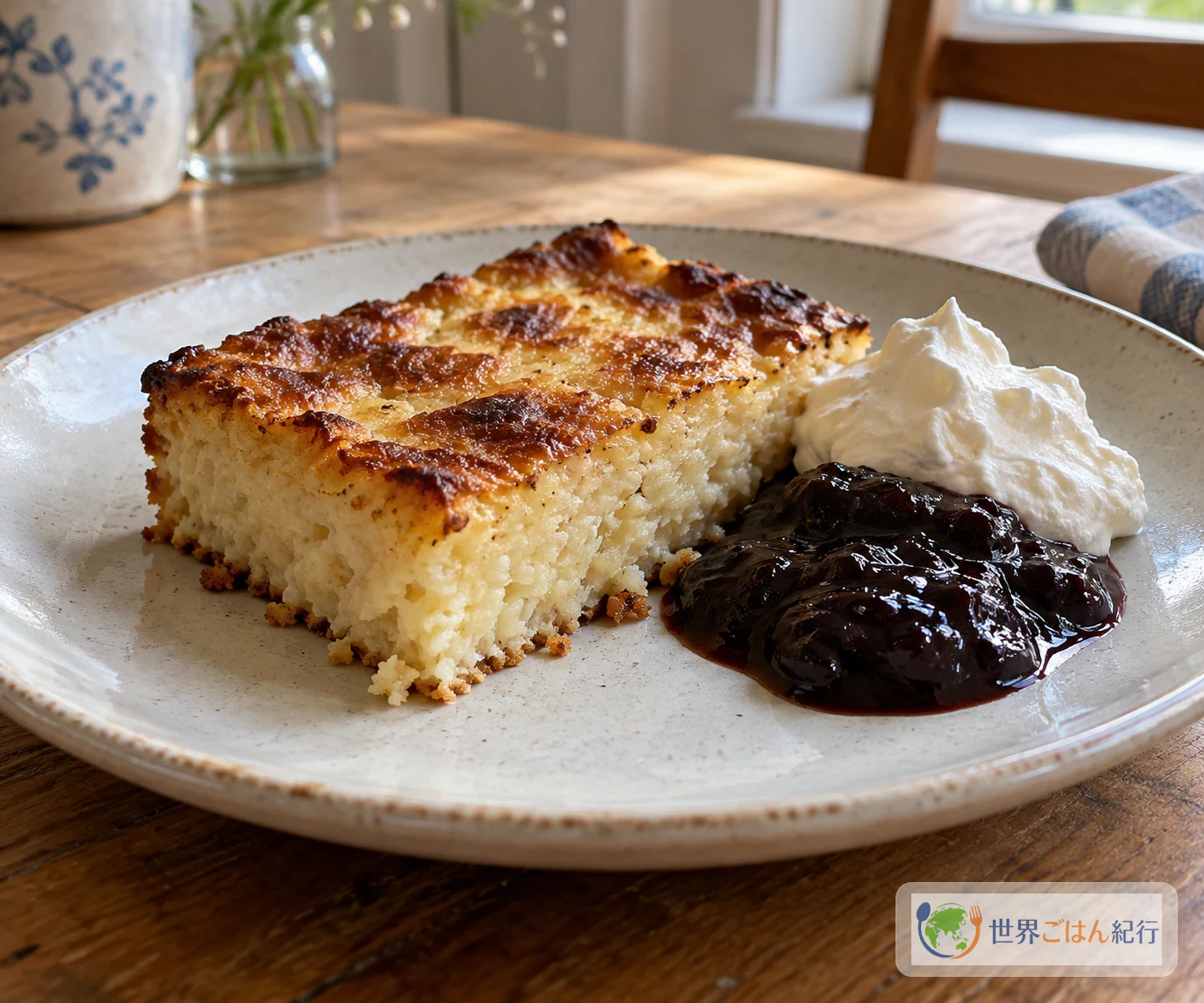
A broad dish comes out of the oven with an uneven golden top. Once it has cooled a little, it is cut into pieces, and the cardamom becomes noticeable as the knife goes through a dense, tender interior. Each piece goes on a plate with a spoonful of dark prune cream and a soft cloud of whipped cream. This is Ålandspannkaka, the Åland pancake, served the way Visit Åland, the islands' tourism organization, recommends: slightly cooled, with prune cream and whipped cream.
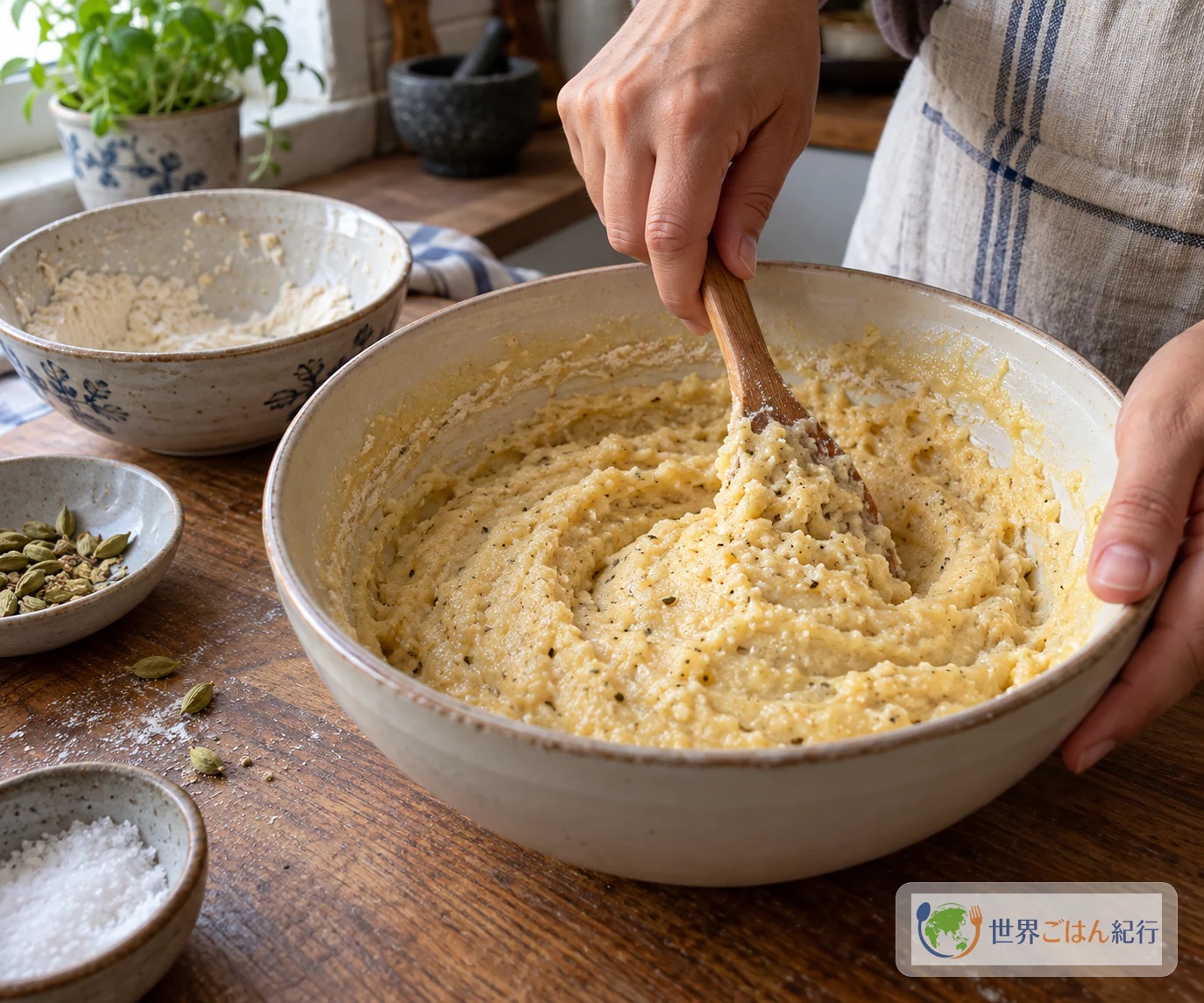
Despite the name, this is not a thin crêpe-style pancake or a stack of griddle pancakes. The batter starts as a porridge of milk and semolina (or rice, in another version). Eggs, sugar, flour, salt and cardamom are mixed in, and the whole thing is spread about 2 cm deep in a greased dish and baked. The result is thick and filling.
Visit Åland describes it being eaten on ordinary days and at celebrations, served in cafés, and offered on Åland Self-Government Day, 9 June, in the square in Mariehamn. It also lists the pancake among the islands' iconic local foods, served as a filling snack or as a dessert.
This recipe follows the semolina version published by Visit Åland, with its own prune cream, using the amounts as given. It has not been kitchen-tested by Sekai Gohan.
A Pancake Made from Porridge: Origins and Local Versions
The account Visit Åland gives is a practical one: leftover morning porridge was likely sweetened, flavored and baked into a pancake, and the dish likely comes from Åland's eastern archipelago. The tourism organization presents both as the likely story, not as established history, and that is how they are best read.
There is no single fixed recipe. Ålands Marthadistrikt, a local home-economics association, publishes its own Åland pancake as a classic, citing a 2002 cookbook of traditional Åland food. Its version names both rice and semolina, and its sugar is given as a range rather than one amount. A contemporary Swedish recipe from ICA uses a smaller amount of semolina and its own baking dish and times, and one of its readers commented that the porridge stayed loose rather than thick. These are separate recipes. This article does not mix their amounts into the Visit Åland version.
Semolina and rice are both genuinely local choices. Here semolina is the base recipe, and rice is treated as a different version of the same dish rather than a quick swap (see the variations section below).
The whipped cream served alongside has a name of its own: Visit Åland notes the old Åland word snömos for it.
Ingredients for the Semolina Version and Prune Cream
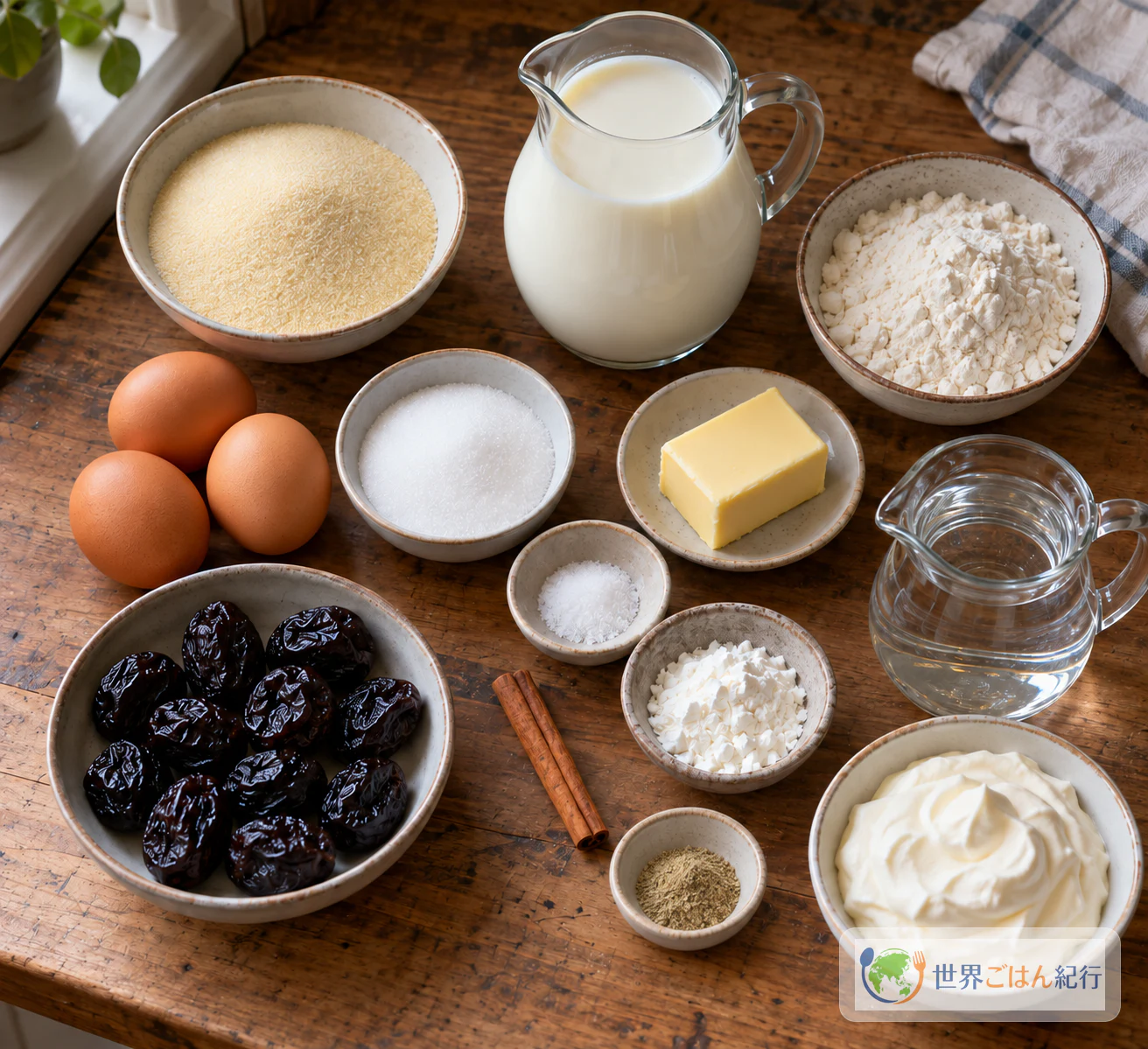
The amounts below are those of the Visit Åland recipe, kept in the original units (liters, deciliters, teaspoons, tablespoons and grams). The source does not state how many servings this makes or what size dish to use, so no yield is given here.
Equipment
- A medium saucepan for the porridge
- A bowl and a whisk for the eggs and sugar
- A wooden spoon or spatula
- An ovenproof dish, greased, that lets the batter sit about 2 cm deep (the source does not give a size)
- An oven
- A small saucepan and a bowl for soaking the prunes
- A small cup for the starch slurry
- A serving bowl for the prune cream
Choosing Ingredients and What You Can Swap
Semolina. Look for ordinary semolina in the baking, pasta or international aisle. It is made from wheat. The Visit Åland recipe does not say fine or coarse, so use what you can find and judge by the porridge rather than by the label.
Cardamom. The source asks for 2 tsp of cardamom without saying ground or crushed seeds. Ground cardamom is the simplest to find; crushing seeds from the pods yourself is also an option. Either way, it is the aroma that defines the dish, so use the full amount.
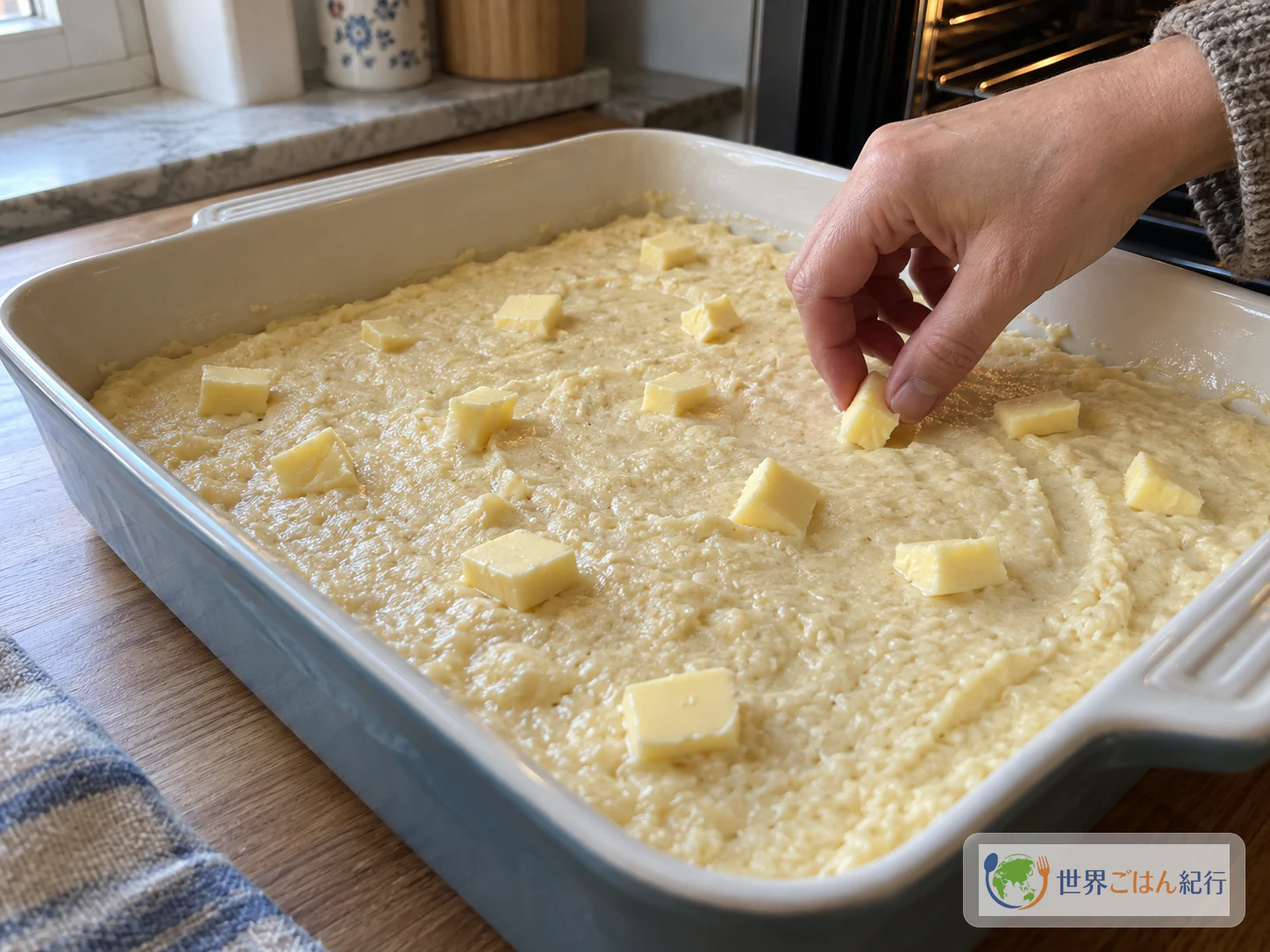
Butter or margarine. The source allows either. It goes on top of the batter in small pieces, rather than being mixed into the batter.
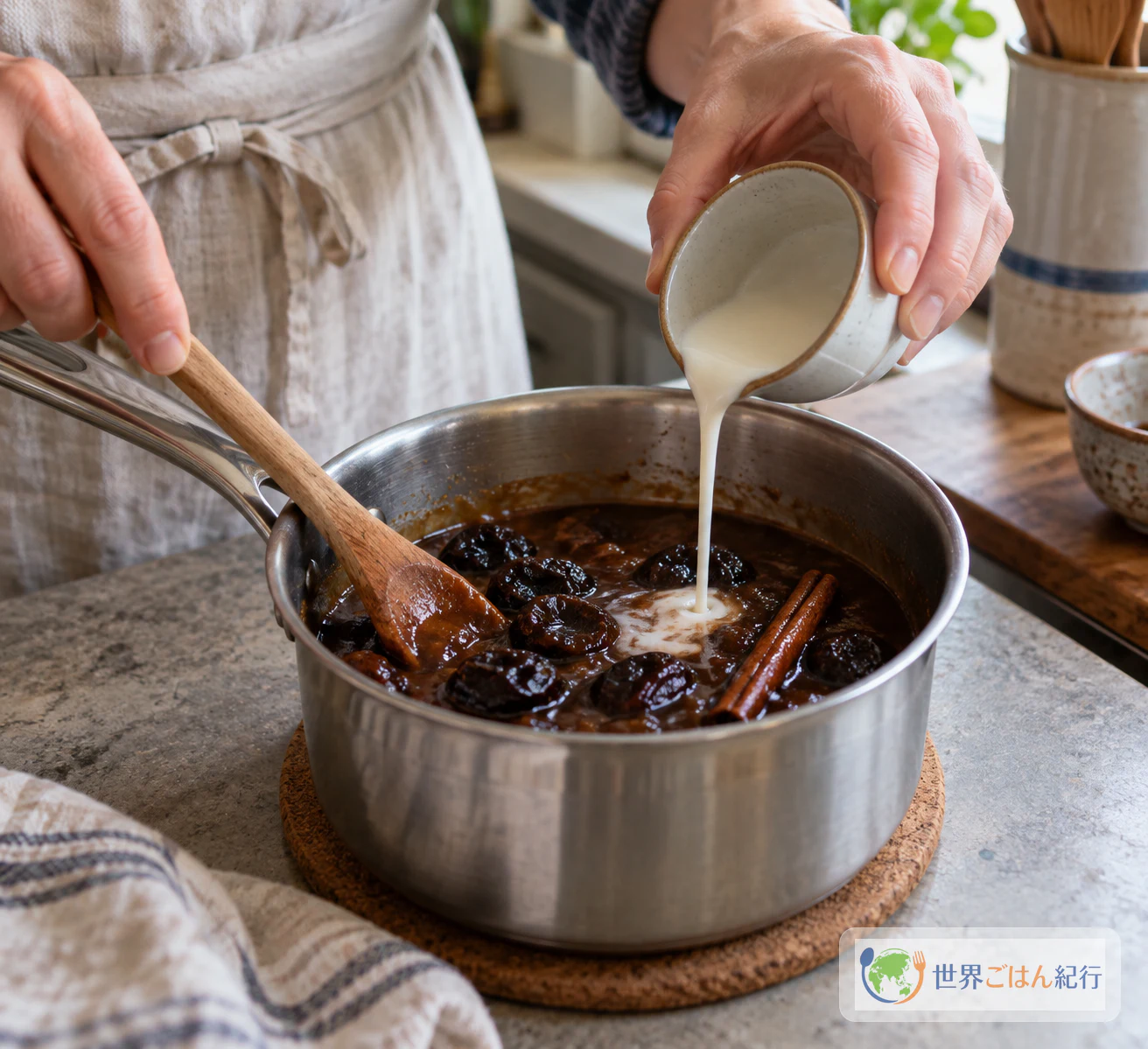
Cornstarch or potato starch. Either one, 1 tbsp, thickens the prune cream. Use one, not both.
Jam instead of prune cream. Visit Åland mentions that some people serve the pancake with raspberry or strawberry jam instead of prune cream. That brings a brighter, fruitier taste than the traditional prunes. No amount is given; serve it on the side as you would the sauce.
This recipe contains milk, eggs and wheat (in both the semolina and the wheat flour). Making the rice version does not make it wheat-free, because the recipe still includes 1 dl wheat flour. Check the labels of butter or margarine, starch and any jam you use.
How to Make Åland Pancake
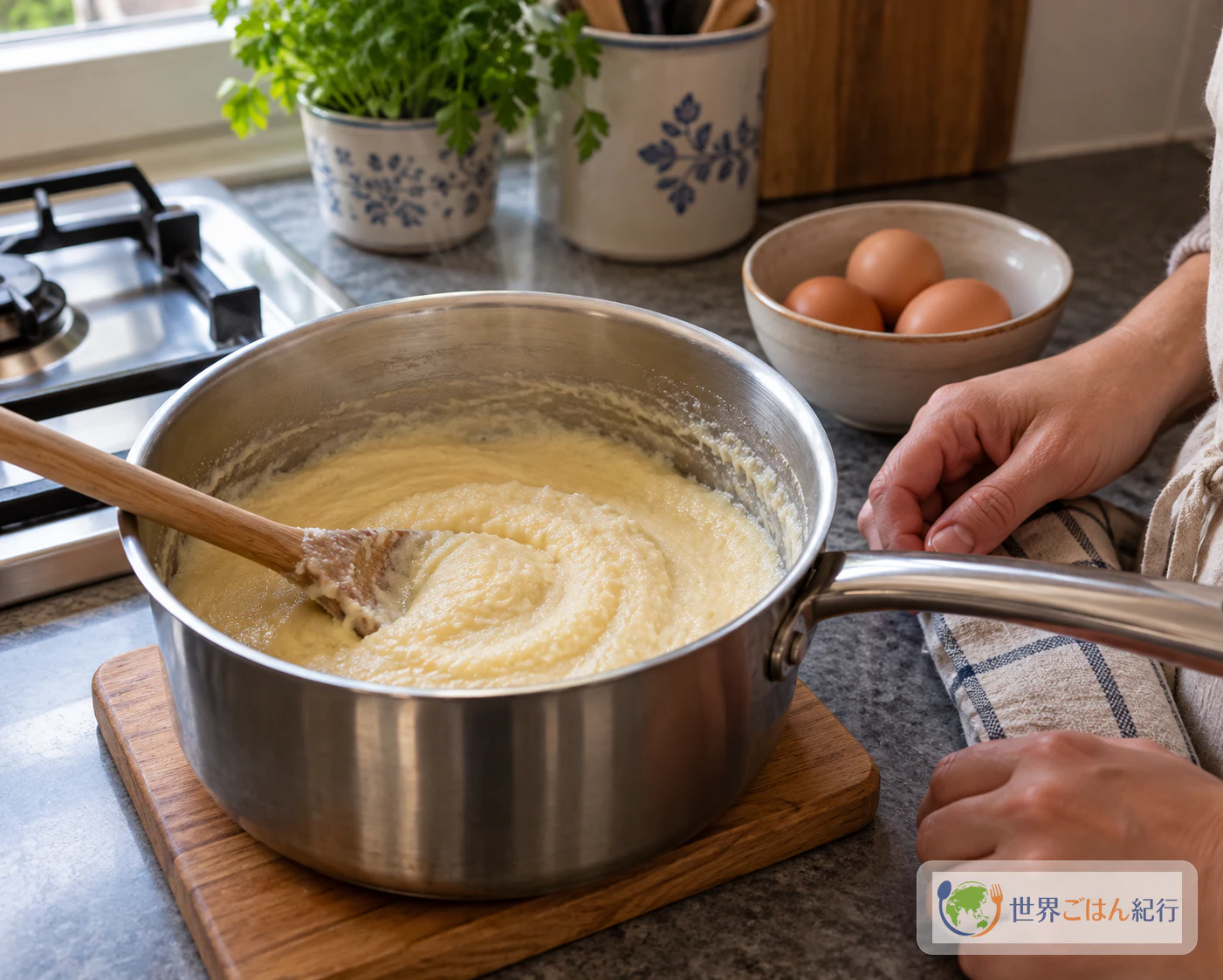
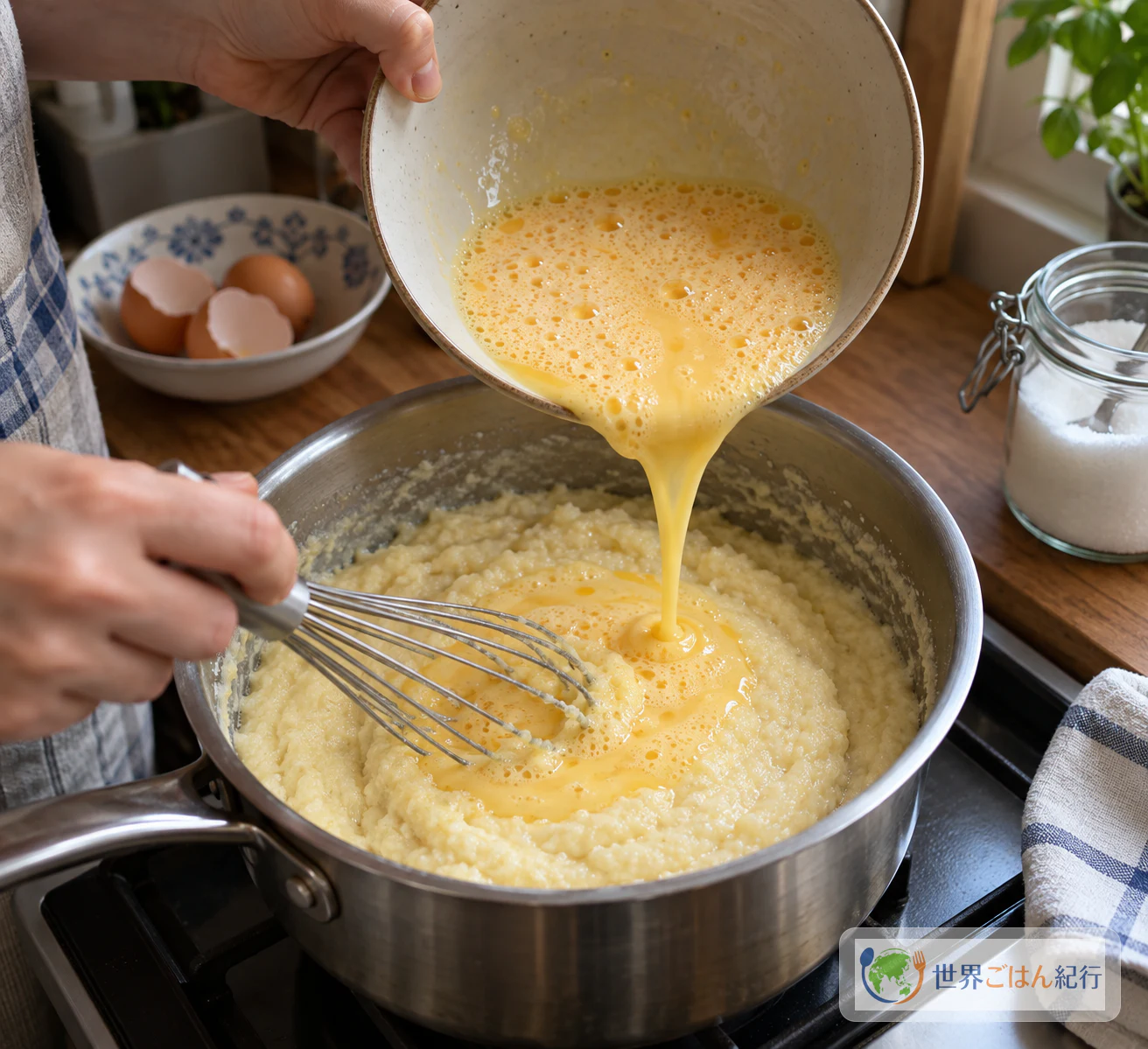
The prunes for the sauce soak for a few hours, so if you want the prune cream ready when the pancake comes out, set them soaking first (step 7). The source gives no cooking time for the porridge; move on by how it looks, not by the clock.
Troubleshooting
| Problem | Likely cause | What to do |
|---|---|---|
| The batter is runny, like a thin pancake batter | The milk and semolina were not cooked into a real porridge | Next time, keep cooking in step 1 until the mixture has clearly thickened. The dish depends on a porridge base |
| Small bits of cooked egg in the batter | The eggs went into porridge that was still very hot | Let the porridge cool a little longer in step 2 before adding the eggs |
| The center is still liquid after 40 minutes | The batter is deep, or the oven runs cool | Use the full 40–60 minute range and check the center again before taking it out |
| The pancake is thin and dry at the edges | The batter was spread over too large a dish | Use a dish that keeps the batter about 2 cm deep |
| The butter disappeared into the batter | It was stirred in rather than dotted on top | Dot small pieces on the surface just before baking |
| The prune cream is thin | The sauce did not come back to a boil after the starch went in | Return it to the heat and bring it briefly to a boil |
Variations
The rice version. Both Visit Åland and Ålands Marthadistrikt give a version made with 1 dl rice instead of 1.5 dl semolina. That is uncooked rice, not cooked leftover rice. It is a whole recipe of its own, not a swap you can make partway through these steps: the rice porridge is cooked differently, and the pictures and timings here are for semolina. Use one grain or the other, never both.
Sugar to taste in other local recipes. The Marthadistrikt version gives its sugar as a range, which shows how much household recipes vary. This article keeps Visit Åland's 1 dl.
Jam instead of prunes. Raspberry or strawberry jam is an alternative that some people serve instead, according to Visit Åland. Prune cream remains the traditional pairing.
Frequently Asked Questions
Is this the same as an ordinary pancake?
No. The batter is built on a cooked porridge, flavored with cardamom and baked thick in the oven, about 2 cm deep. The result is a dense, tender slice rather than a thin or fluffy pancake.
Can I make it with rice?
Yes, as a separate version. The sources give 1 dl uncooked rice in place of 1.5 dl semolina. Don't combine the two grains, and don't use cooked rice.
How many people does it serve?
The Visit Åland recipe does not say, and it gives no dish size, so no serving count is given here.
Can I make it wheat-free?
Not with this recipe. Semolina is made from wheat, and both the semolina and rice versions also contain 1 dl wheat flour. Choosing rice alone does not make it wheat-free.
How should I store leftovers?
The sources used for this recipe give no storage guidance or storage period, so none is given here. Visit Åland does note that the pancake is best eaten slightly cooled rather than cold from the refrigerator.
Sources
- Visit Åland, "Åland Pancake – A Delicious Tradition." The recipe used here: the semolina version (and the rice alternative), the method and baking at 200°C for 40–60 minutes, the prune cream, serving with whipped cream, cafés and Åland Self-Government Day, and the likely leftover-porridge and eastern-archipelago origin. https://visitaland.com/en/experience/culinary-aland/aland-pancake/
- Ålands Marthadistrikt / Finlands Svenska Marthaförbund, "Recept – Ålands Marthadistrikt (ÅlandsPannkaka med sviskonkräm)." A local association's recipe citing a 2002 traditional Åland cookbook, with rice and semolina alternatives and a different prune cream; used for comparison only. https://aland.martha.fi/recept/
- ICA / Buffé nr 4, 2024, "Ålandspannkaka | Recept ICA.se." A contemporary Swedish semolina adaptation served with plum compote and whipped cream, including a reader's comment on porridge consistency; used for comparison only. https://www.ica.se/recept/alandspannkaka-730341/
- Visit Åland, "10 Local Foods to Try in Åland." The pancake as one of the islands' iconic foods, served as a filling snack or dessert with whipped cream and prune compote, and the leftover-porridge account. https://visitaland.com/en/experience/culinary-aland/local-foods/