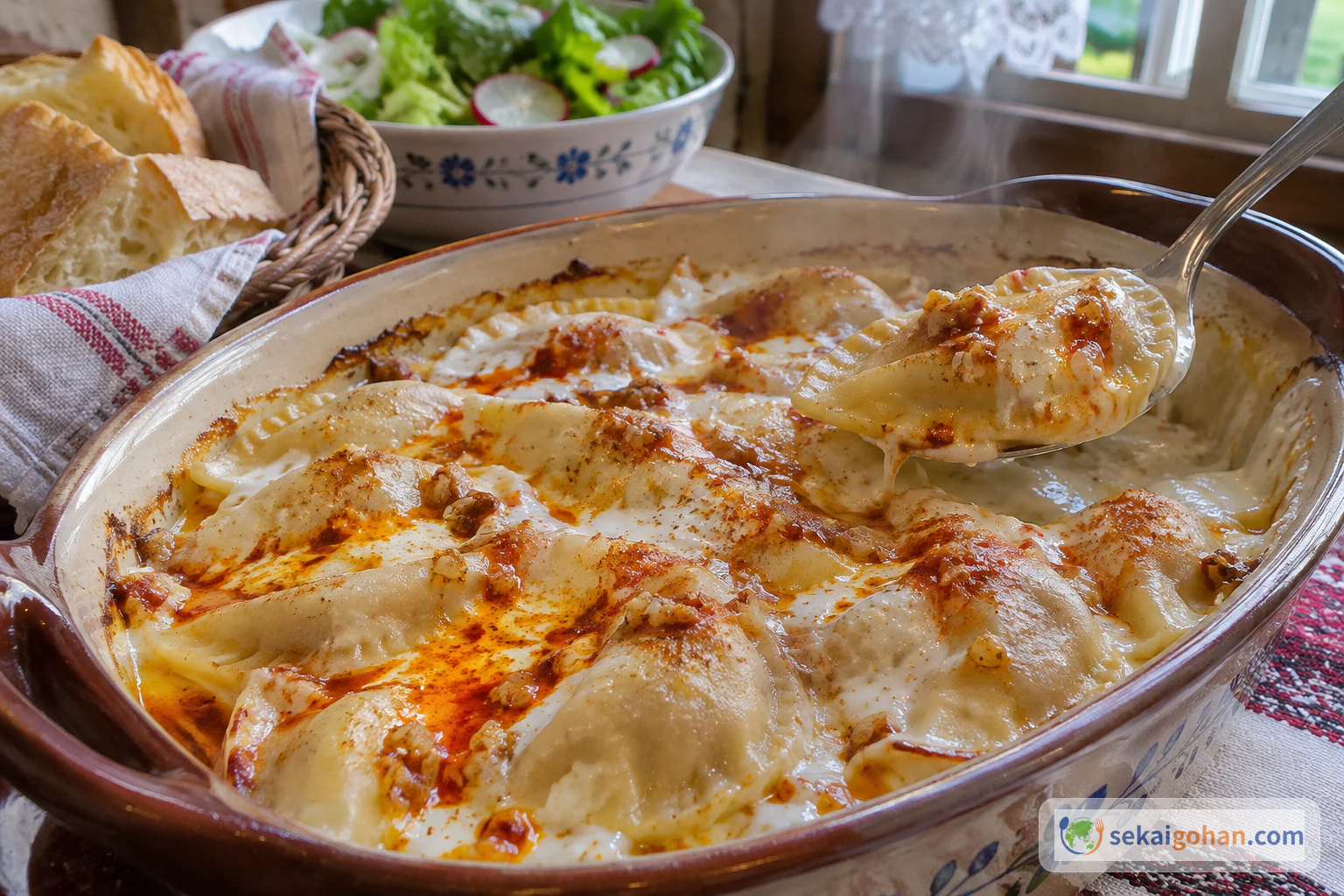
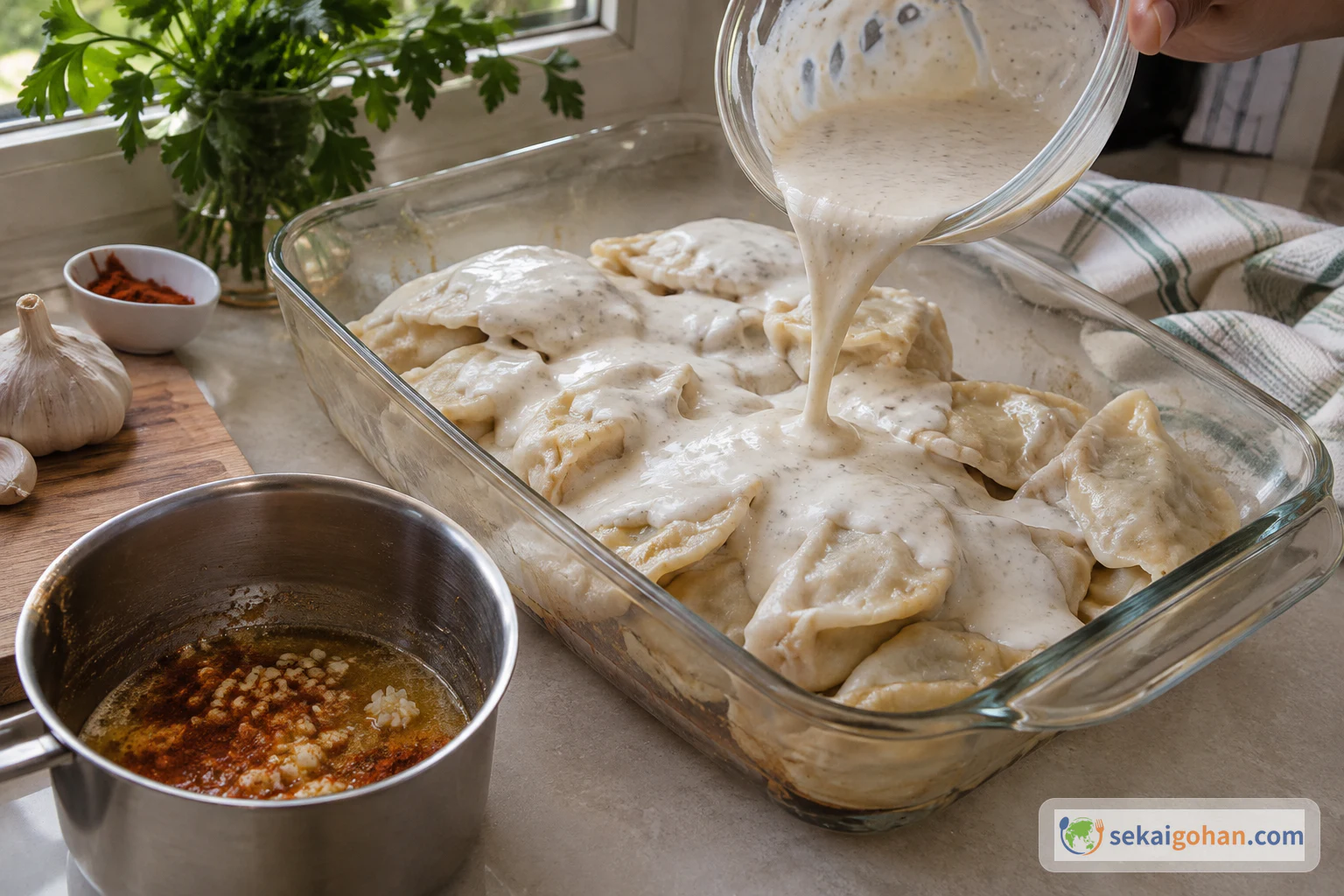
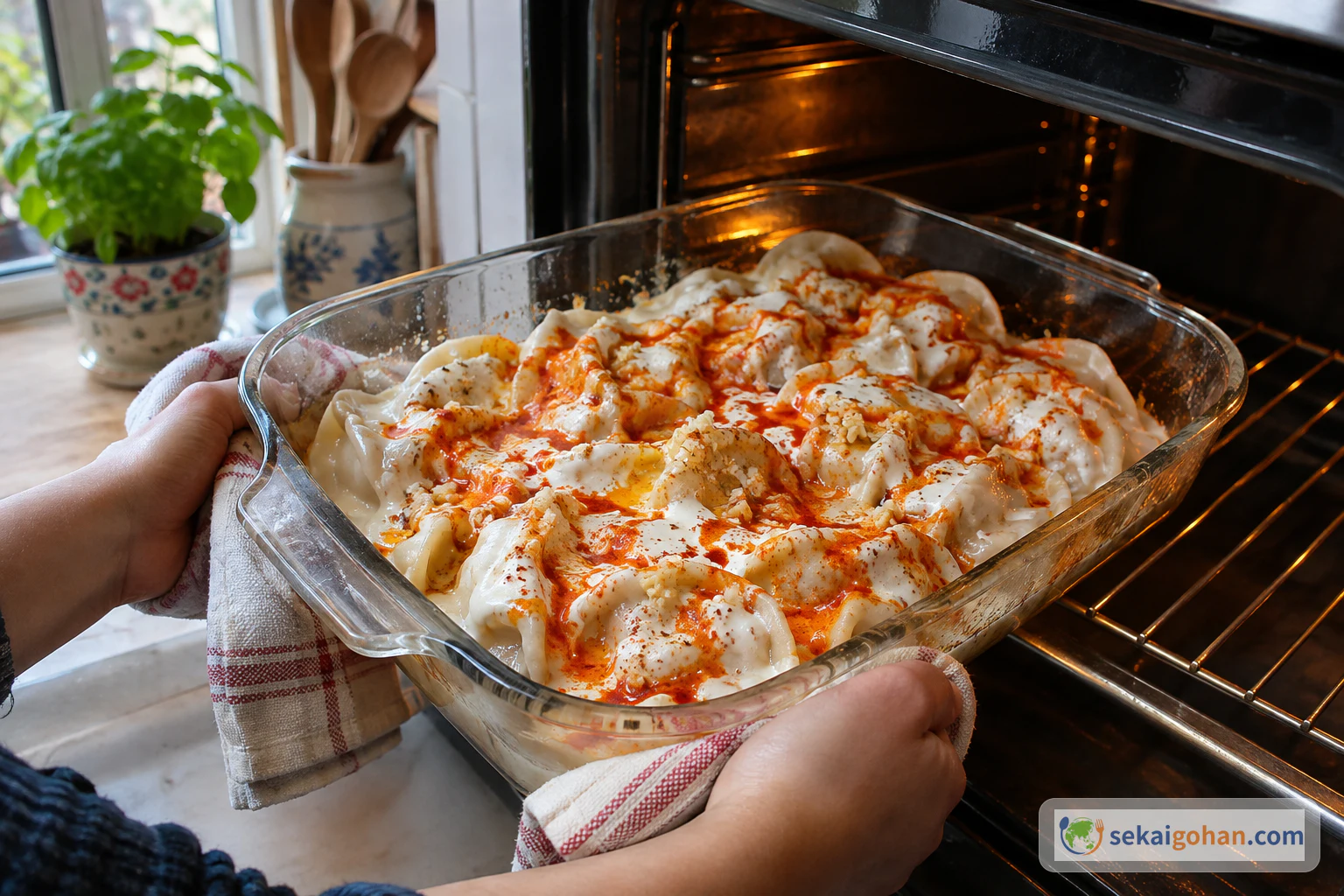
Garlic, paprika and butter warm together in a small pan until the butter turns red and smells of garlic. Then it goes over a dish of boiled dumplings already coated in white sour cream and cream, and the whole dish goes into a hot oven. Klepe are small Bosnian dumplings. A thin wrapper of flour, salt and water holds a peppery filling of ground beef and onion. They come to the table under a cool, tangy cream with streaks of red garlic paprika butter on top. Each bite gives you soft dough, savory meat, sharp cream and a warm garlic finish.
Klepe, Between Manti and Ravioli
Klepe are usually described as sitting between Turkish manti and Italian ravioli. They are larger than manti and folded into half-moons or triangles. Ravioli usually go under tomato, but klepe are finished with sour cream and garlic. The half-moon is the traditional look, and the triangle is common too. In Sarajevo, restaurants serve meat klepe under cream or sour cream with garlic, and some put them on a large mixed platter next to other dishes. Ask what a first-time visitor should taste in Bosnian cooking, and klepe comes up early.
Kitchens disagree about the dough. Some roll it very thin, and others use a flaky sheet closer to phyllo. Beef is the standard filling, but klepe are also made with cheese and spinach, or with pumpkin. At home they make a full meal with sliced bread and a green salad on the side. Where klepe began is not settled, and people argue about whether the dish is Bosnian at heart. In practice, it is one of the dishes people name first when they talk about eating in Bosnia and Herzegovina.
Klepe also go by kulaci, and in English they are often called "Bosnian ravioli." Search for both names when you look for shaping ideas or for local pictures.
Ingredients
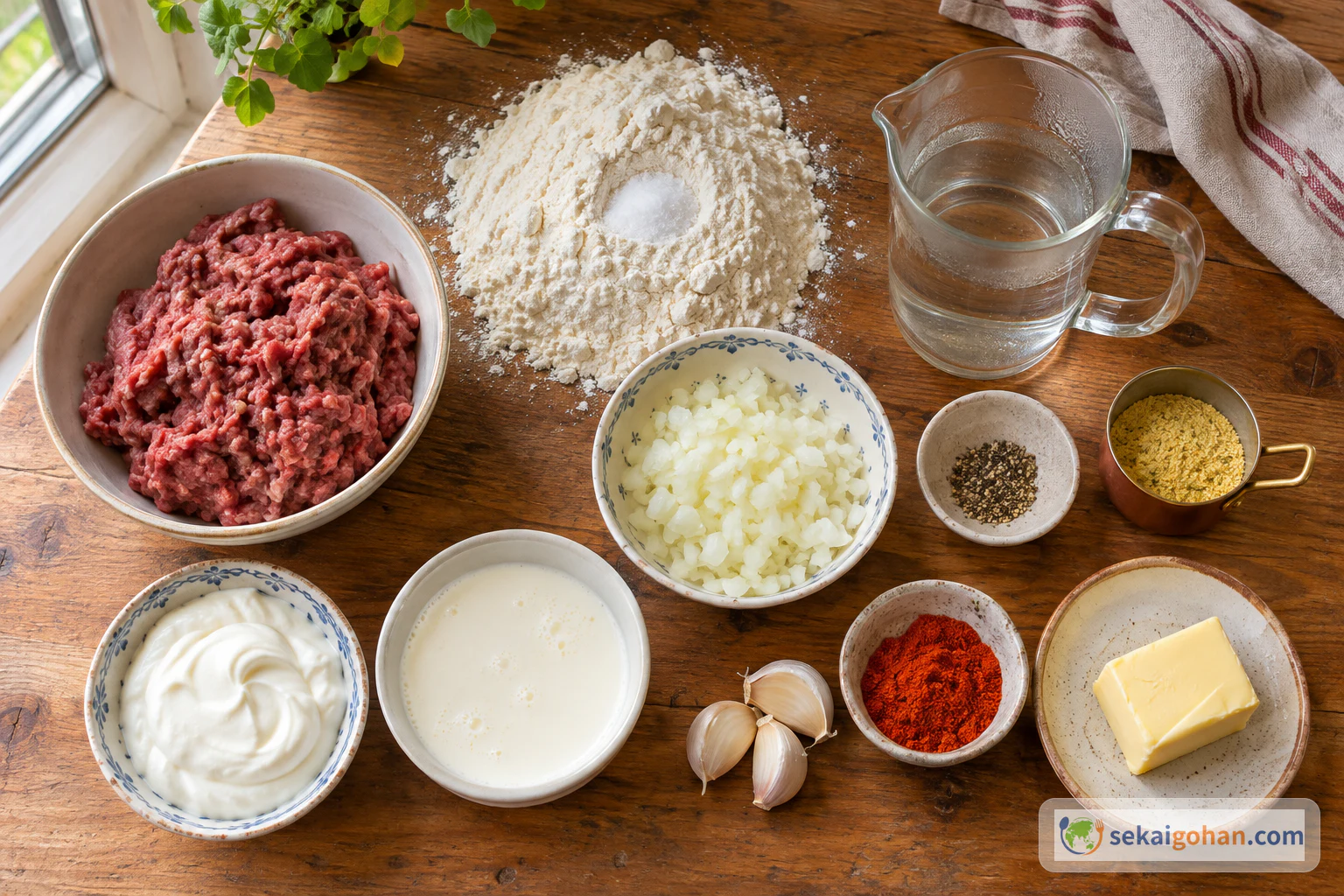
This batch makes one ball of dough, which gives 25 to 30 rounds. There is no egg in the dough and no garlic in the filling. All the garlic goes into the butter on top.
Klepe contain wheat (the dough), milk (sour cream, heavy cream and butter) and beef. The dough has no egg. Read the label on Vegeta or bouillon powder for any other allergens.
Equipment
- Mixing bowls for the dough and the filling
- Spatula
- Plastic wrap or a clean cloth
- Rolling pin and a large work surface
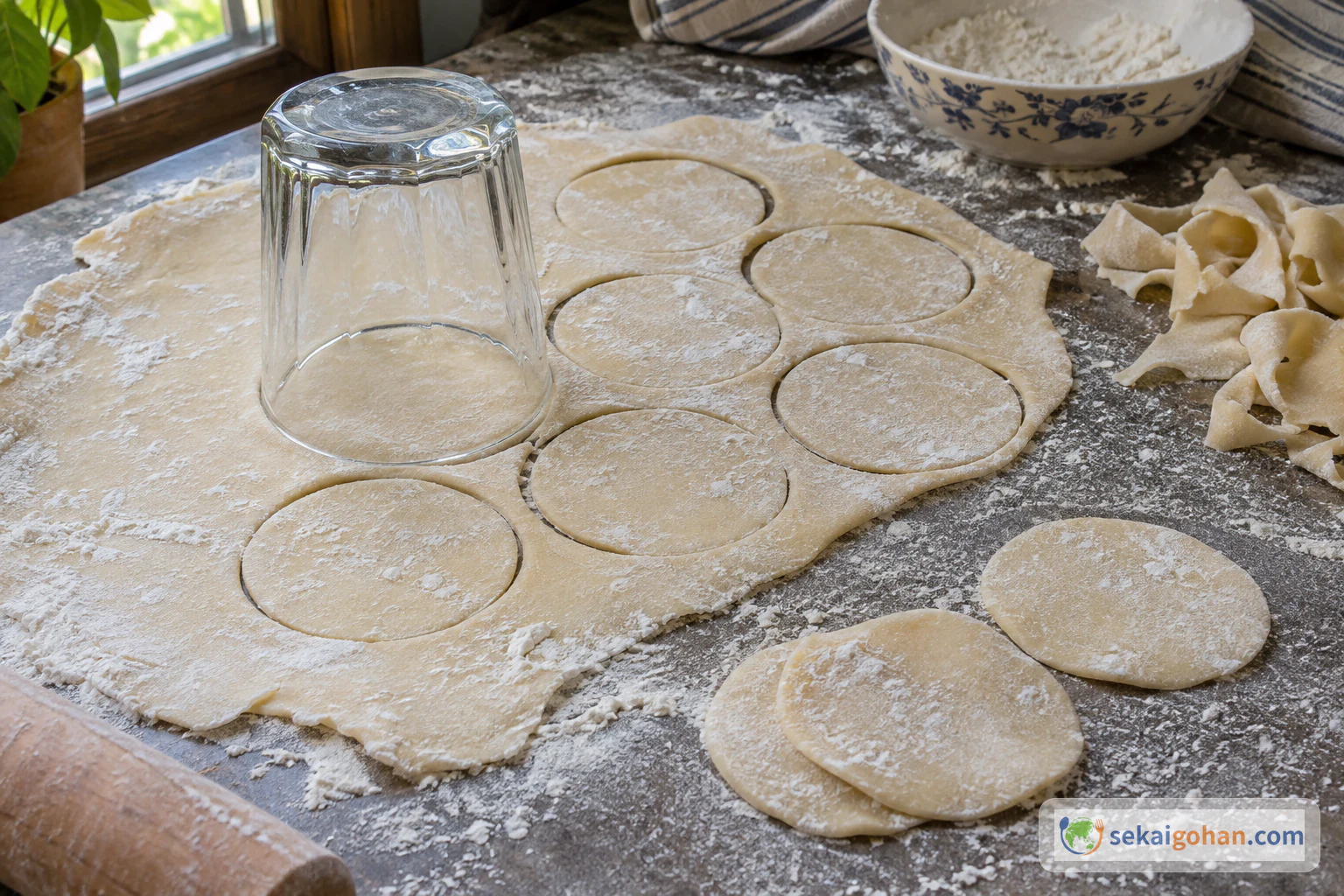
- A 3-inch (7.5 cm) round cutter or drinking glass
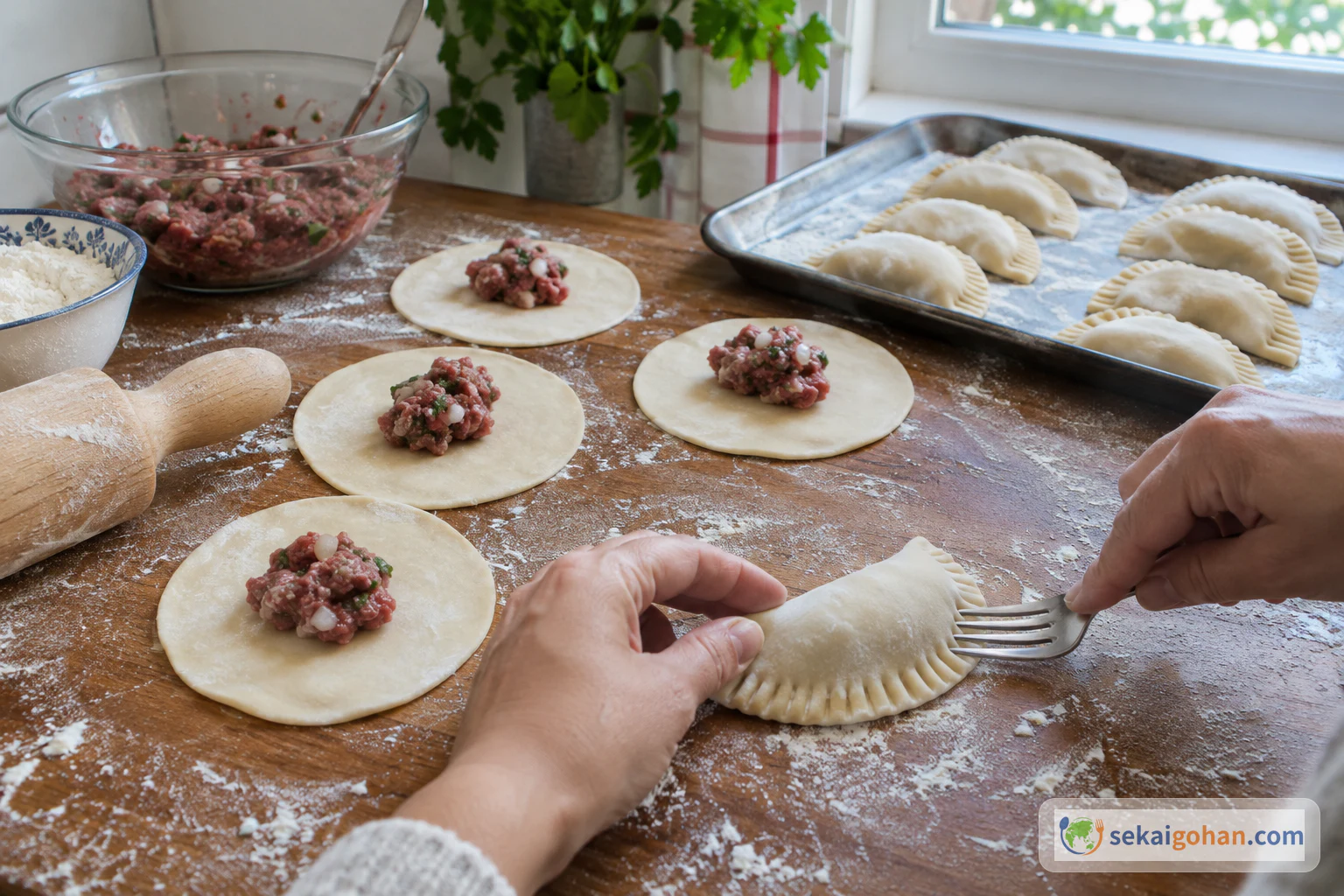
- Fork for crimping
- A tray dusted with flour
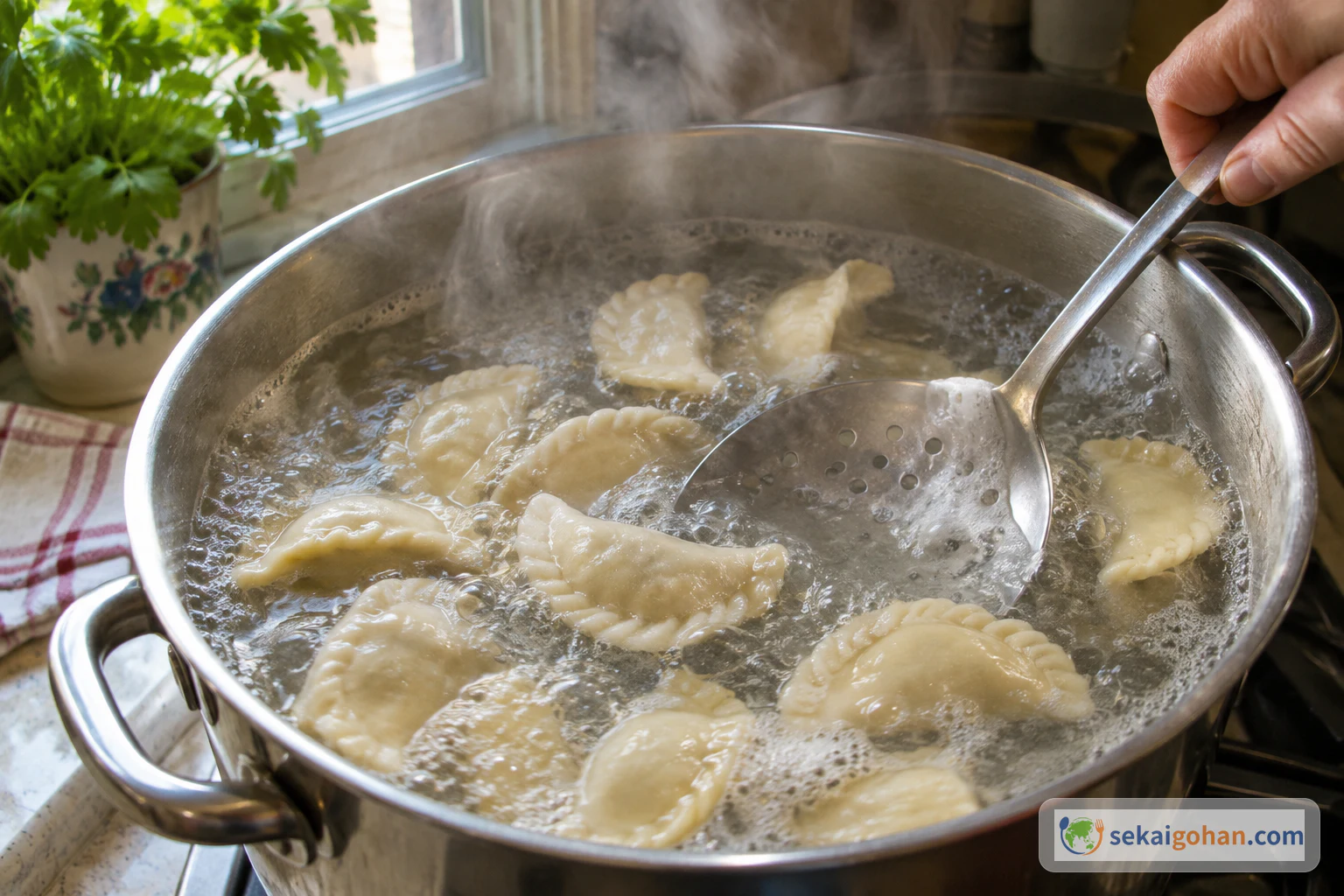
- Large pot and slotted spoon
- Ovenproof baking dish
- Small saucepan
Choosing and Substituting
Vegeta is a powdered seasoning from Croatia. Bouillon powder is the usual swap. It gives the filling the same savory backbone, but the flavor is not quite the same. For the flour, plain all-purpose flour works well.
For the cream sauce, use real sour cream and heavy cream. If you only have half-and-half, use two-thirds of the heavy cream amount and add a little more sour cream. The sauce will be lighter and a bit sharper. Low-fat sour cream also works, but it gives a thinner, less rich coating. For the butter sauce, check that the paprika is sweet, not hot. The red butter should add color and aroma without heat. Salted or unsalted butter both work.
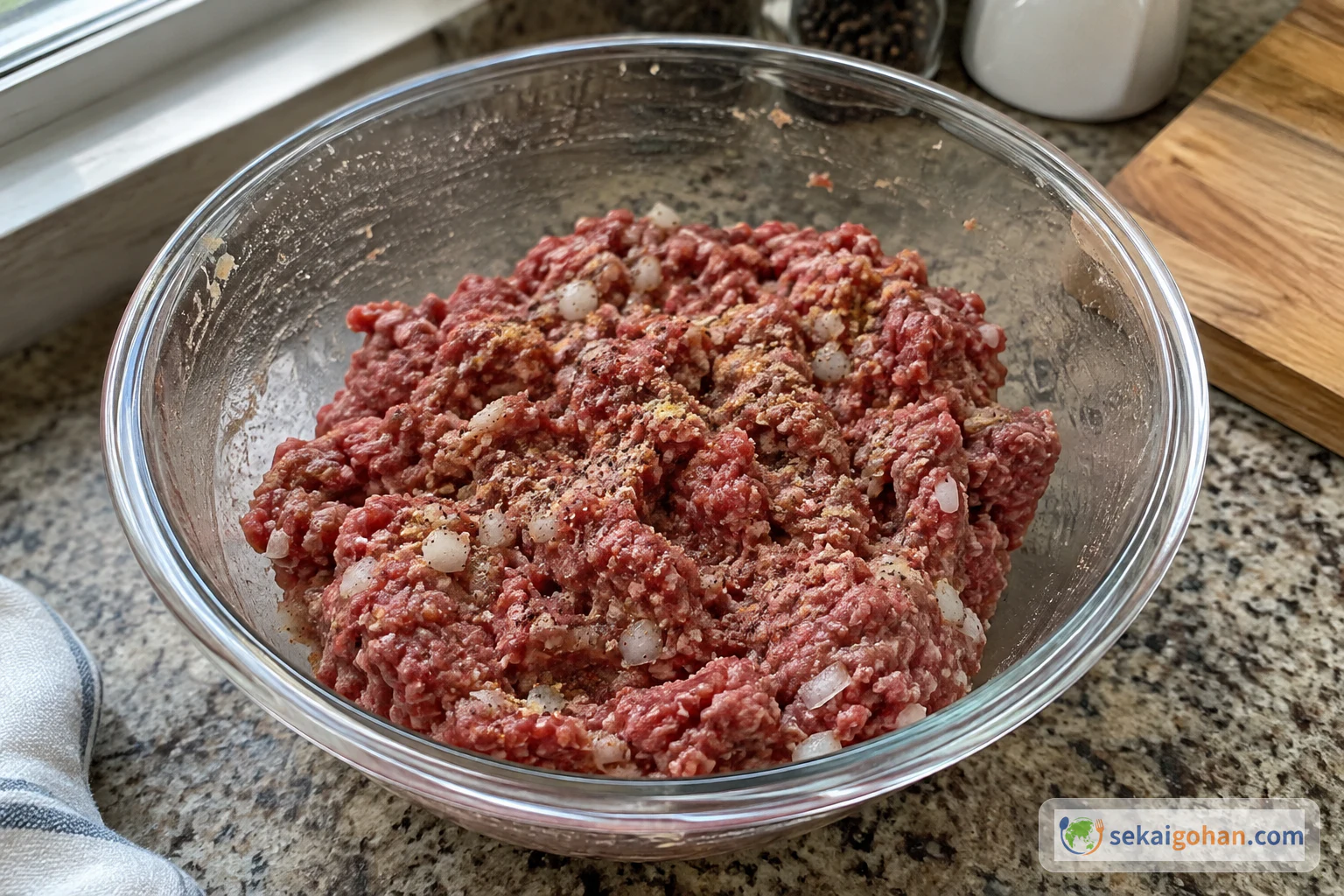
Grate or finely mince the onion, then squeeze out its juice before it goes into the beef. A dry filling stays in a neat mound on the wrapper. That leaves the edges clean, so they press shut.
Method
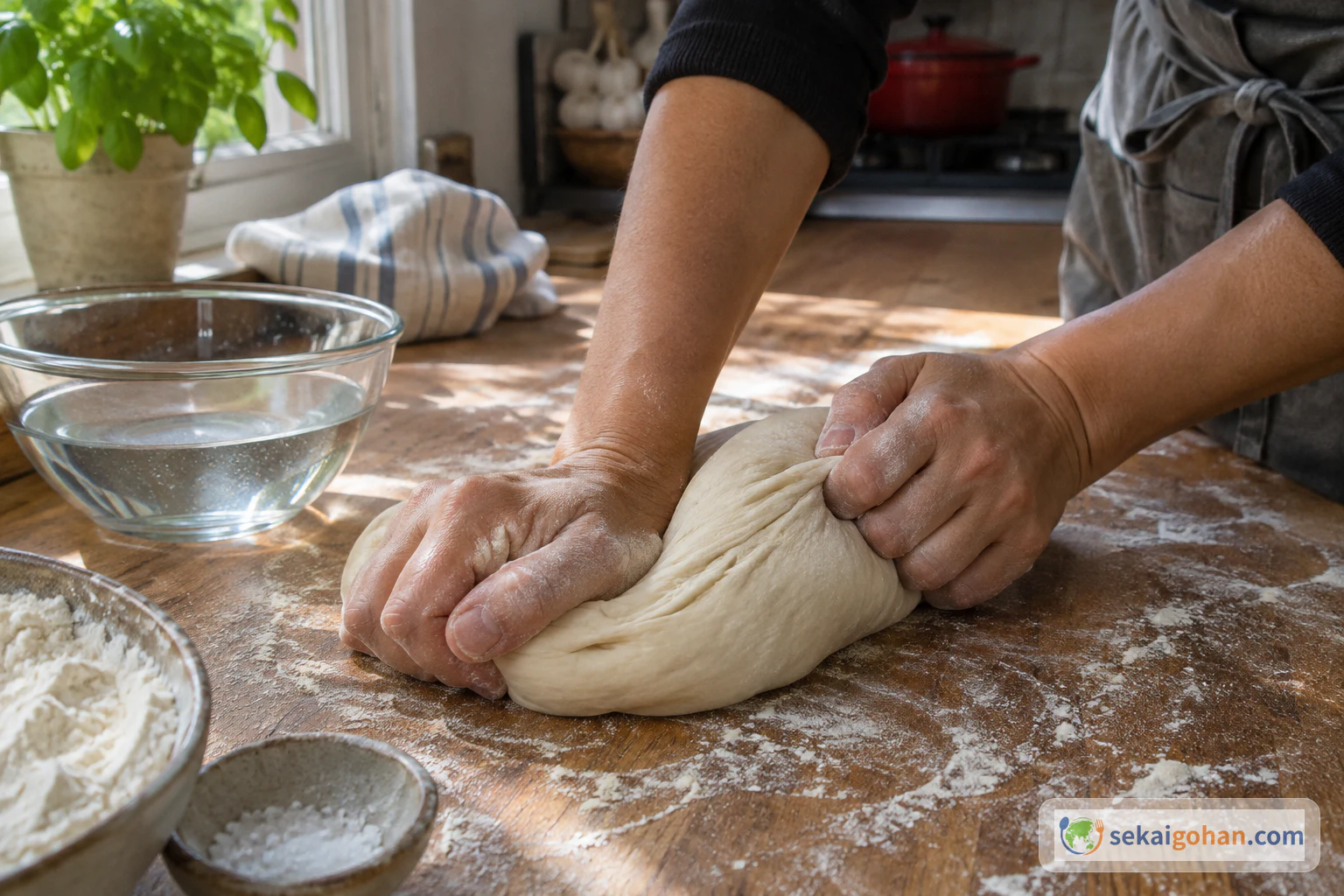
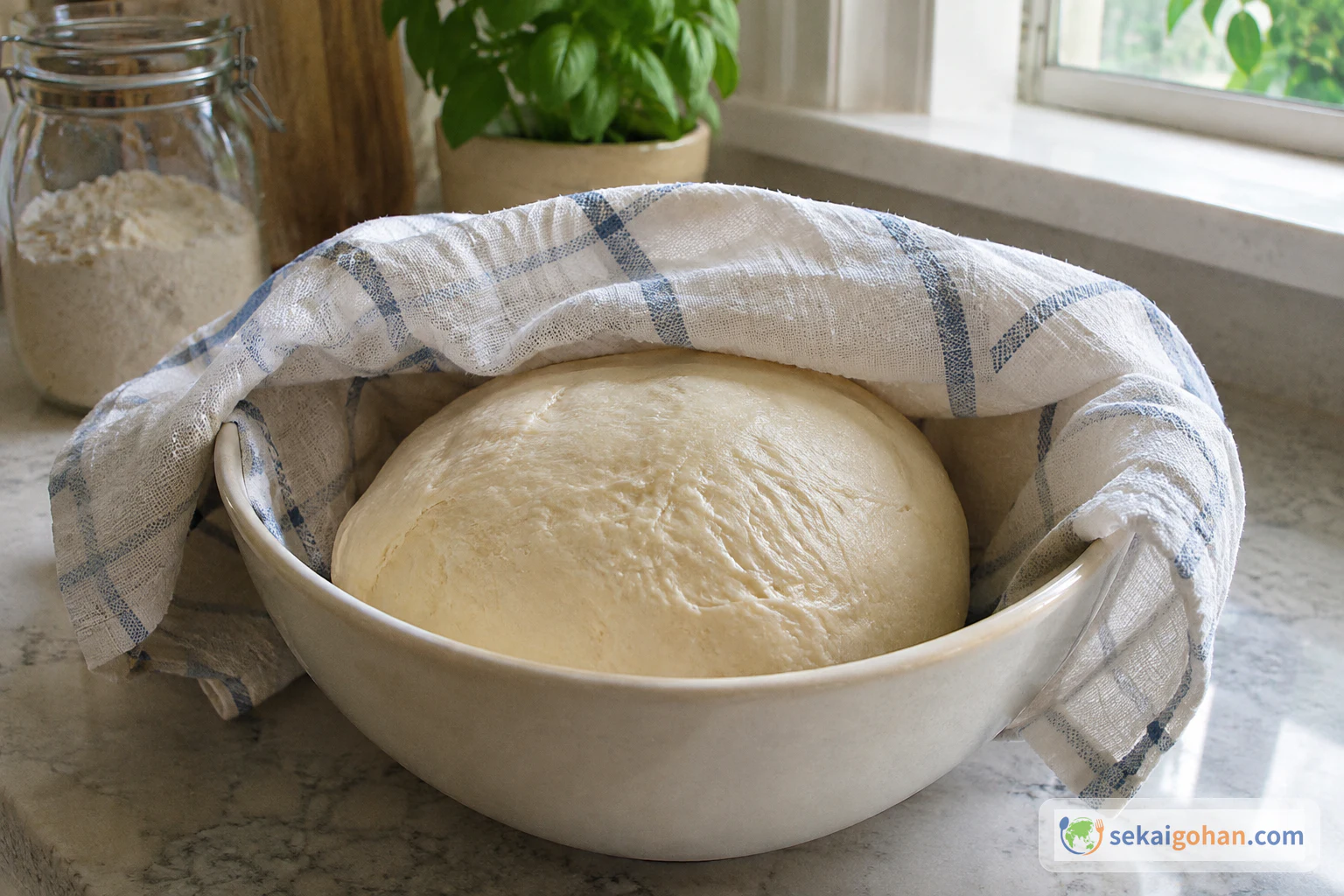
First make the dough, and mix the filling while it rests for at least 30 minutes. Rolling, cutting and folding take the most hands-on time, so clear a big surface before you start. The boiling and baking are short.
Roll the dough until it is about as thick as one or two coins stacked together. Use plenty of flour under it the whole time. If it is any thicker, the dough will feel heavy against the small amount of filling. If it is any thinner, it will tear when you fold it.
Use only about 1 tsp of filling per round, even if it looks like too little. Overfilled dumplings won't seal. They are the ones that burst in the pot, and the filling leaks into the water.
Lower the dumplings into the boiling water with a slotted spoon. The baking dish and the butter pan are very hot, so handle them with oven mitts. Always cut one dumpling open before serving. If you see raw meat, bake the dish longer until the filling is cooked through.
When It Goes Wrong
| What you see | Why | What to do |
|---|---|---|
| Dough sticks to your hands and the board | Too much water | Knead in flour a little at a time until it feels smooth |
| Dough is stiff and cracks | Too little water | Work in a few drops of warm water while kneading |
| Rounds tear when you fold them | Rolled too thin, or not enough flour | Gather and re-roll a little thicker with more dusting flour |
| Many dumplings burst in the pot | Too much filling, or edges not sealed | Use about 1 tsp per round, press the edges firmly and seal with a fork. A few splits are normal |
| Dumplings clump together in the pot | Too many at once | Boil smaller batches and stir once or twice |
| Filling is still raw at the center after baking | Not cooked long enough | Return the dish to the oven until the meat is cooked through |
Serving, Variations and Storage
At the table
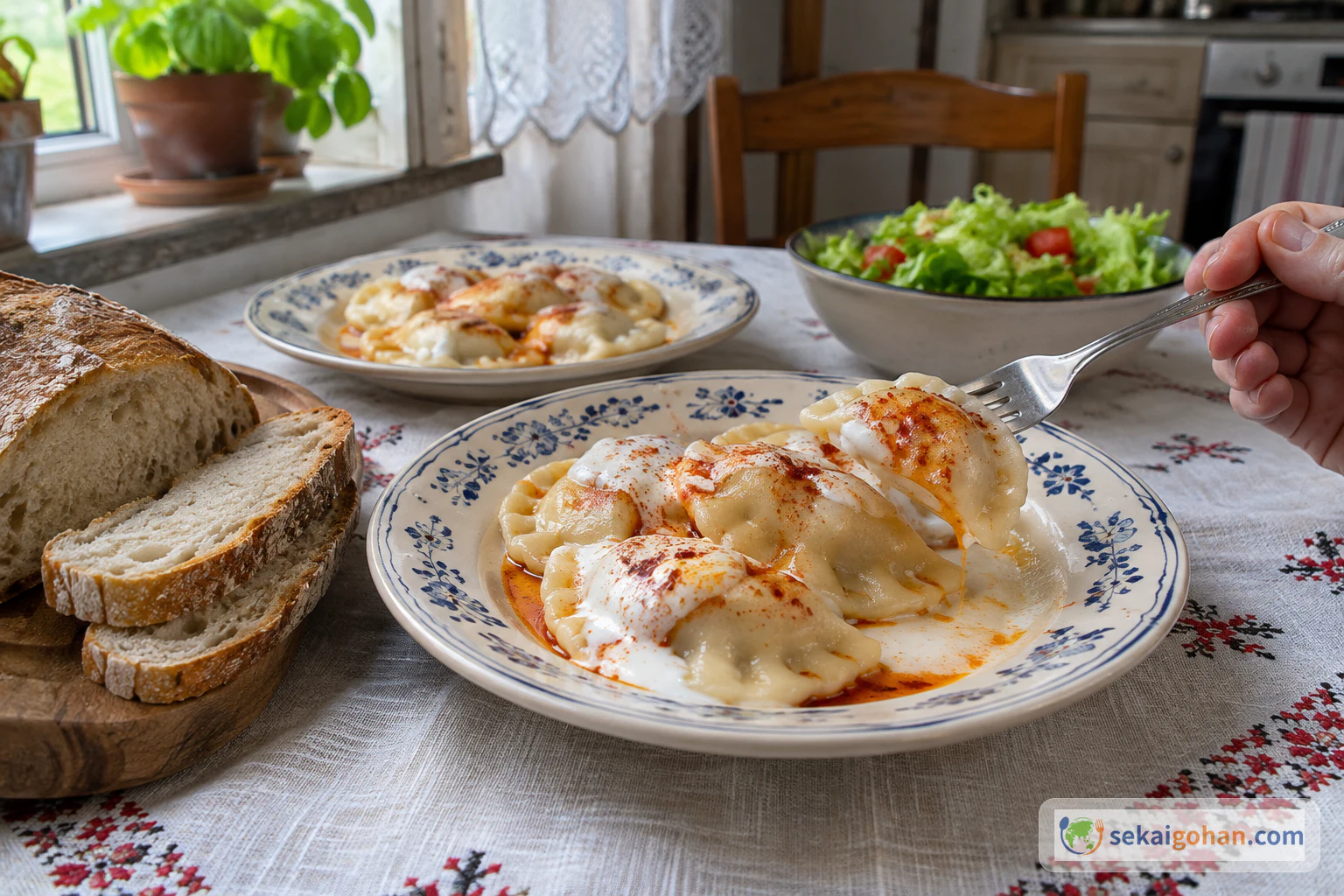
Bring the baking dish straight to the table while it is still hot and let everyone serve themselves. Bread and a green salad are all you need with it. The bread soaks up the cream and red butter, and the salad cuts through the richness. Klepe are a dish to make for friends or family, since folding a whole tray goes faster with more hands.
Variations
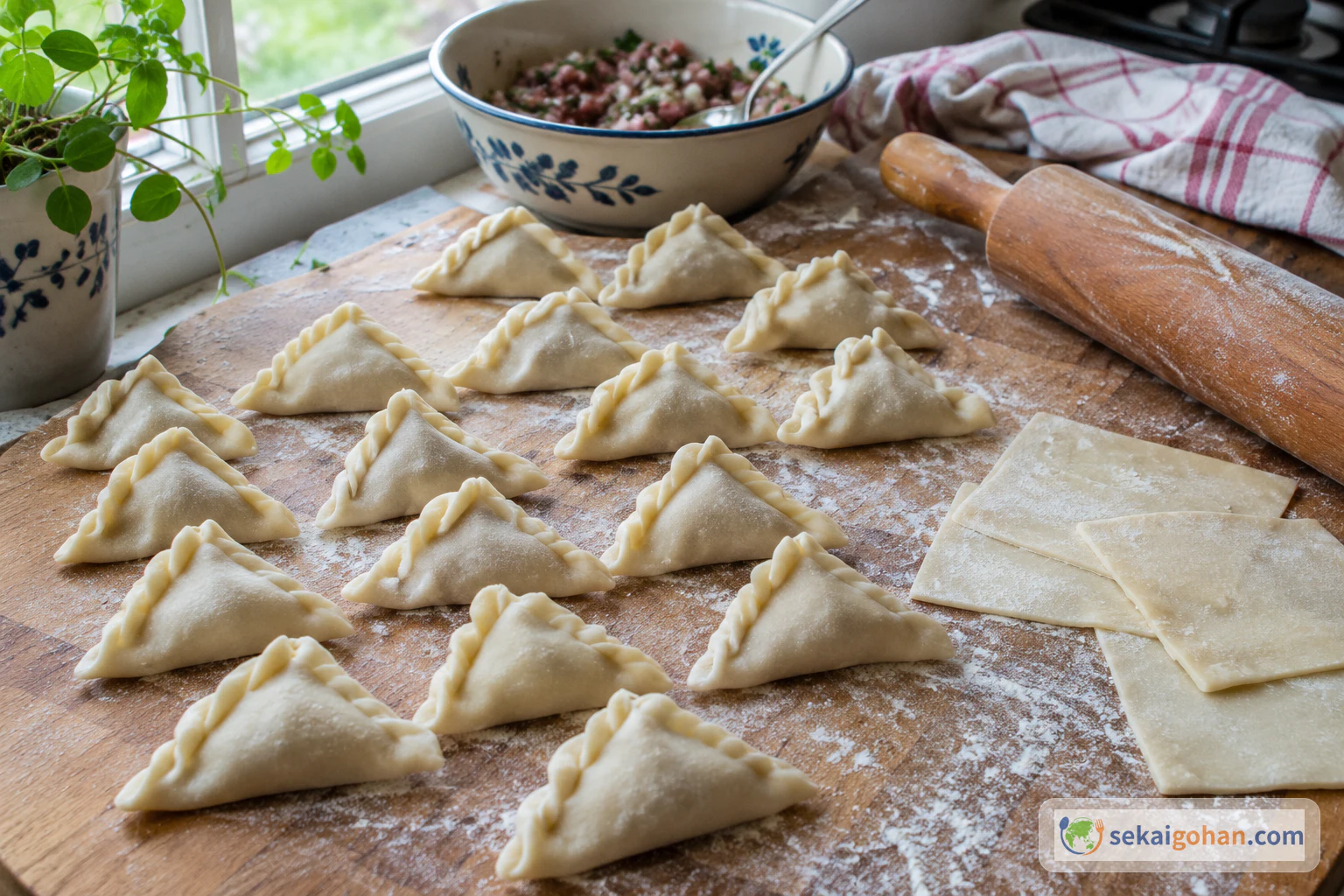
- Triangles. Roll the dough into a rectangle and cut it into strips about 2 inches (5 cm) wide. Cut the strips into 2-inch (5 cm) squares, fill them and fold them into triangles.
- Cheese and spinach filling. Use cheese and spinach in place of the beef. It gives a softer, milder dumpling under the same garlic cream.
- Pumpkin filling. Use pumpkin in place of the beef. It gives a sweeter dumpling that goes well with the sharp sour cream and the paprika.
- Butter finish. Skip the cream bake. Toss the boiled dumplings with butter and paprika, bake them at 350°F (180°C) for 5–10 minutes, and serve garlic sour cream on the side. The dumplings stay drier and glossier, and each person adds as much cream as they like.
Storage and making ahead
Refrigerate baked klepe and eat them within 24 to 48 hours. Reheat them only once, and add a little more cream if the sauce looks dry. Never refrigerate uncooked klepe. Freeze them instead. Spread the shaped, unboiled dumplings on a tray and freeze for 30–60 minutes, until firm. Then move them to a bag dusted with flour and keep them frozen for up to 3 months. Take them out of the freezer 10–15 minutes before boiling, then boil and bake as in the method.
Frequently Asked Questions
Should I add egg to the dough?
You can add one, but it is optional, and this dough works without it. Flour, salt and warm water make a firm, elastic dough that holds the filling well.
Can I put garlic in the filling too?
Yes. Garlic in the filling is optional. Here it goes only into the butter, so the garlic comes through as a warm aroma on top while the beef and pepper stay clean underneath. If you add garlic to the filling as well, mince it very fine so it doesn't break the thin wrapper.
How can I make the sauce lighter?
Use low-fat sour cream. The coating will be thinner and sharper, and the paprika butter still adds color and aroma. Keep the butter sauce as it is, because that is where the garlic and paprika flavor comes from.