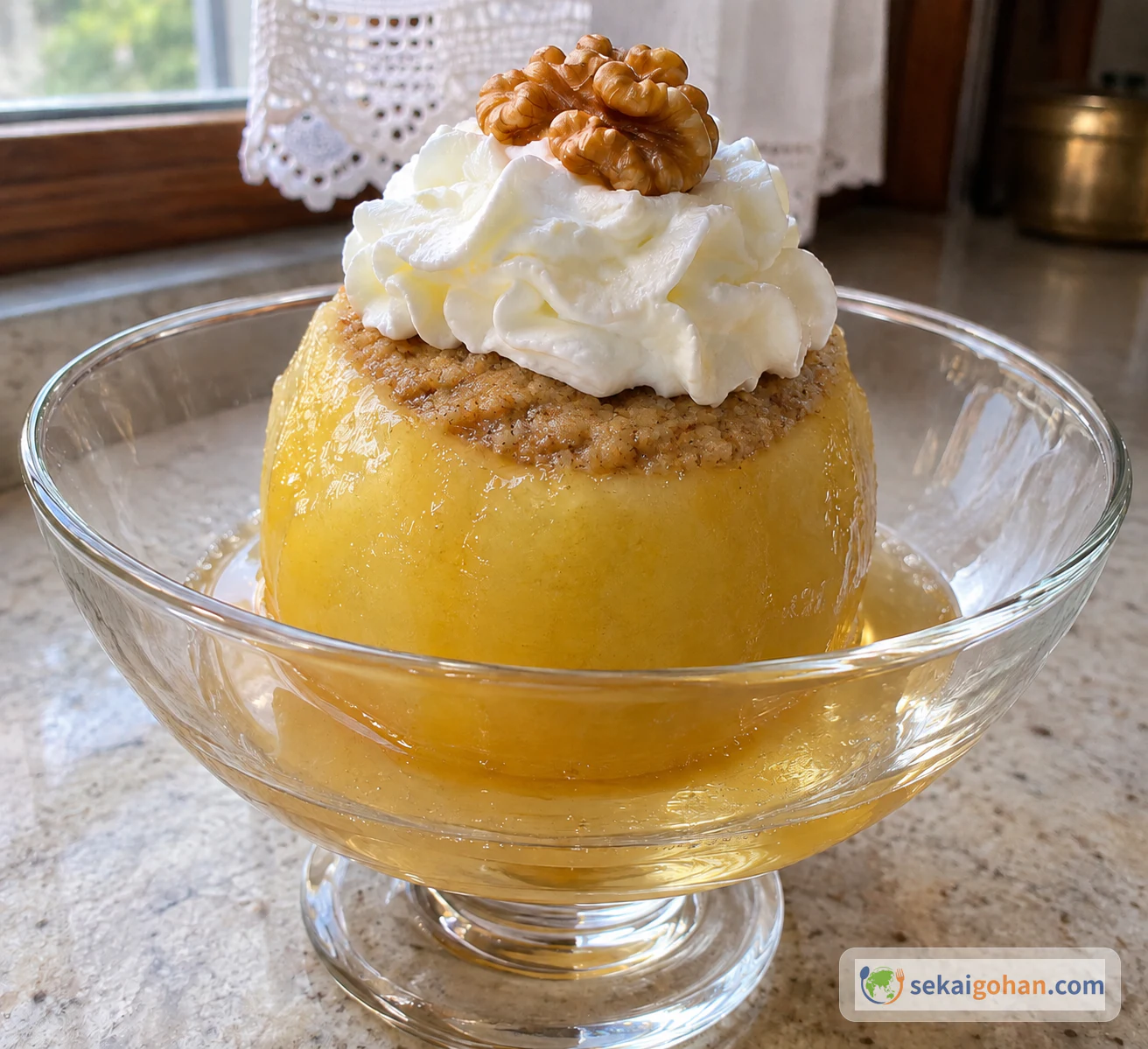
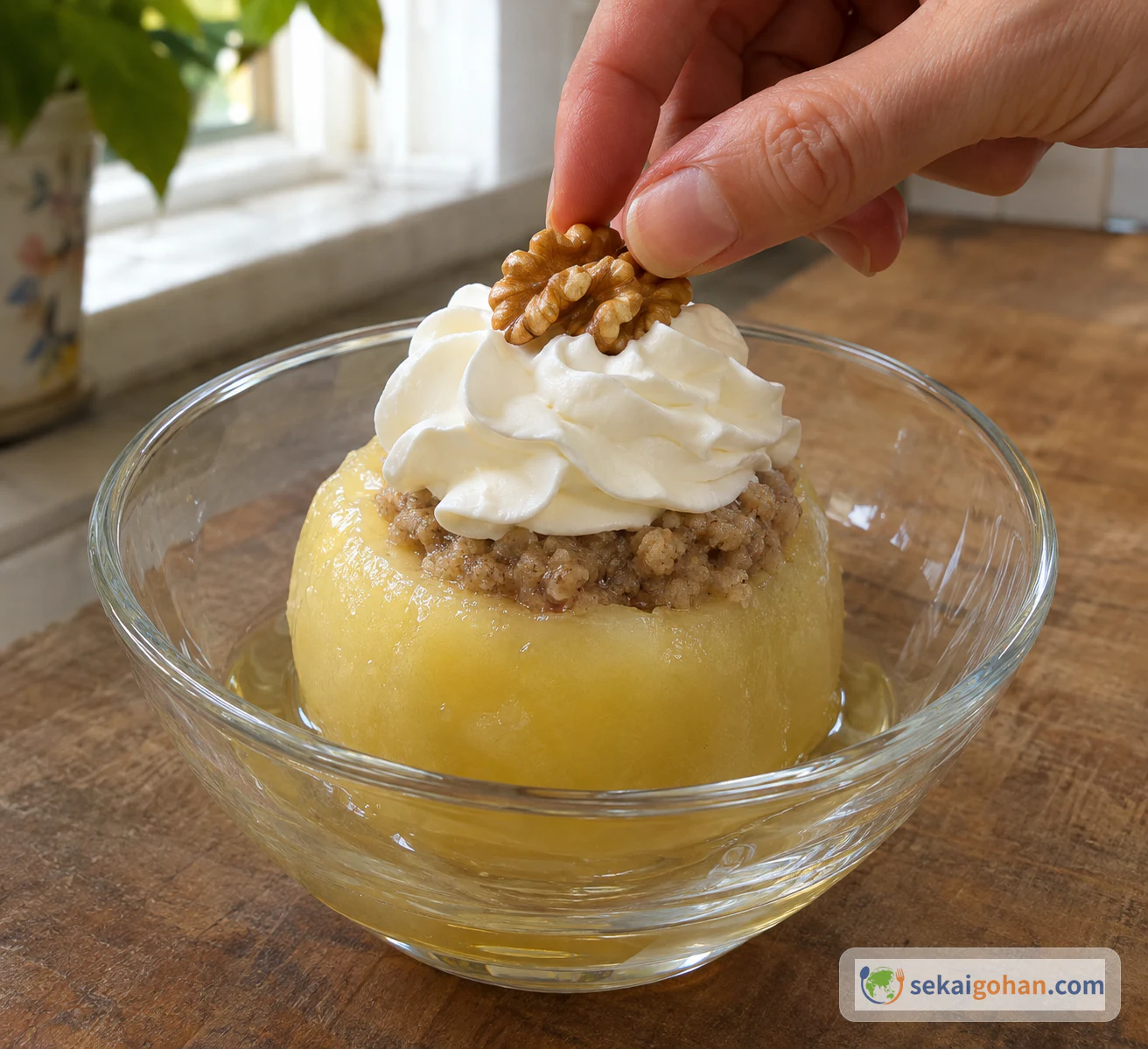
A whole apple sits in a glass. It has been peeled bare and poached until it turns a deep yellow, and a little pool of syrup lies around its base. The hollow middle is packed with ground walnuts, whipped cream covers the top and one walnut half sits on the cream. In Bosnia and Herzegovina this is tufahija, a pastry-shop sweet that is usually eaten with a cup of coffee. Your spoon goes through soft, tart apple into a dense, buttery walnut filling. The cold syrup is very sweet, and the cream and the sharp apple keep it in balance.
Apples, Syrup and Walnuts Across the Balkans
The name is usually traced to tuffaha, the Arabic word for apple, and the whole dish is built on that one fruit. The most common story says it came to the region in the Ottoman period. Others trace it further back to Persia. Where it was first made is not settled. The method fits the Ottoman sweet kitchen it is linked to: fruit poached in sugar syrup, then filled with nuts.
You will see the dish written as both tufahija and tufahije. Search under both when you look for photos of how it is served in Bosnia.
Tufahija is not a holiday dish. Bosnian pastry shops sell it all year round, next to the other sweets in the glass case. Along with baklava and Bosnian coffee, it is one of the first things a visitor is pointed to for a taste of the country's cooking. It comes in a large glass with its glaze of syrup and a cap of whipped cream, and coffee almost always goes with it. Start with the pastry shop's tufahija, then look around the rest of the food of Bosnia and Herzegovina.
How the neighbours make it
Versions are made in Croatia, Serbia and North Macedonia, and the dish is popular in Bulgaria as well. The topping is the quickest way to tell where you are. The Bosnian finish is whipped cream and a walnut half, while in other places a sour cherry sits on top. The filling also changes from region to region and from house to house. Some homes stretch the ground walnuts with ground biscuits. In Bulgaria, pechani yabalki (stuffed apples) are usually baked instead of poached, which makes them a different dessert.
Ingredients (serves 6)
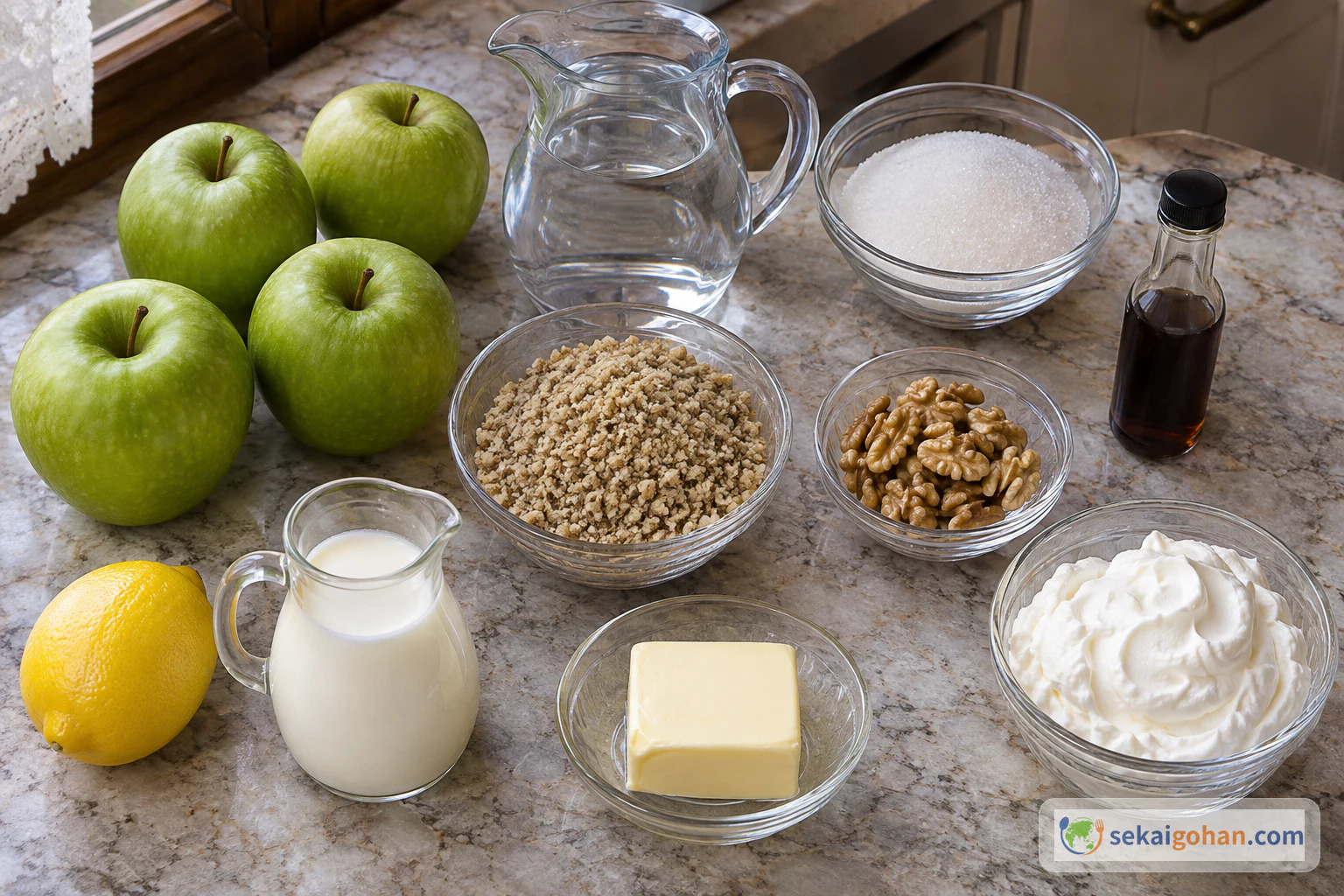
The ingredients split into three groups: the apples and their syrup, the walnut filling and the finish. The lemon goes into two places, so halve it before you start. One half is for the peeled apples and the other is for the syrup.
An apple can break through its wall while you core it or slump in the syrup. Buy one or two more than you need so a broken apple doesn't leave you one short.
Tufahija contains walnuts (tree nuts) and milk (in the milk, butter and whipped cream). Keep the whipped cream in the refrigerator until you use it.
Equipment
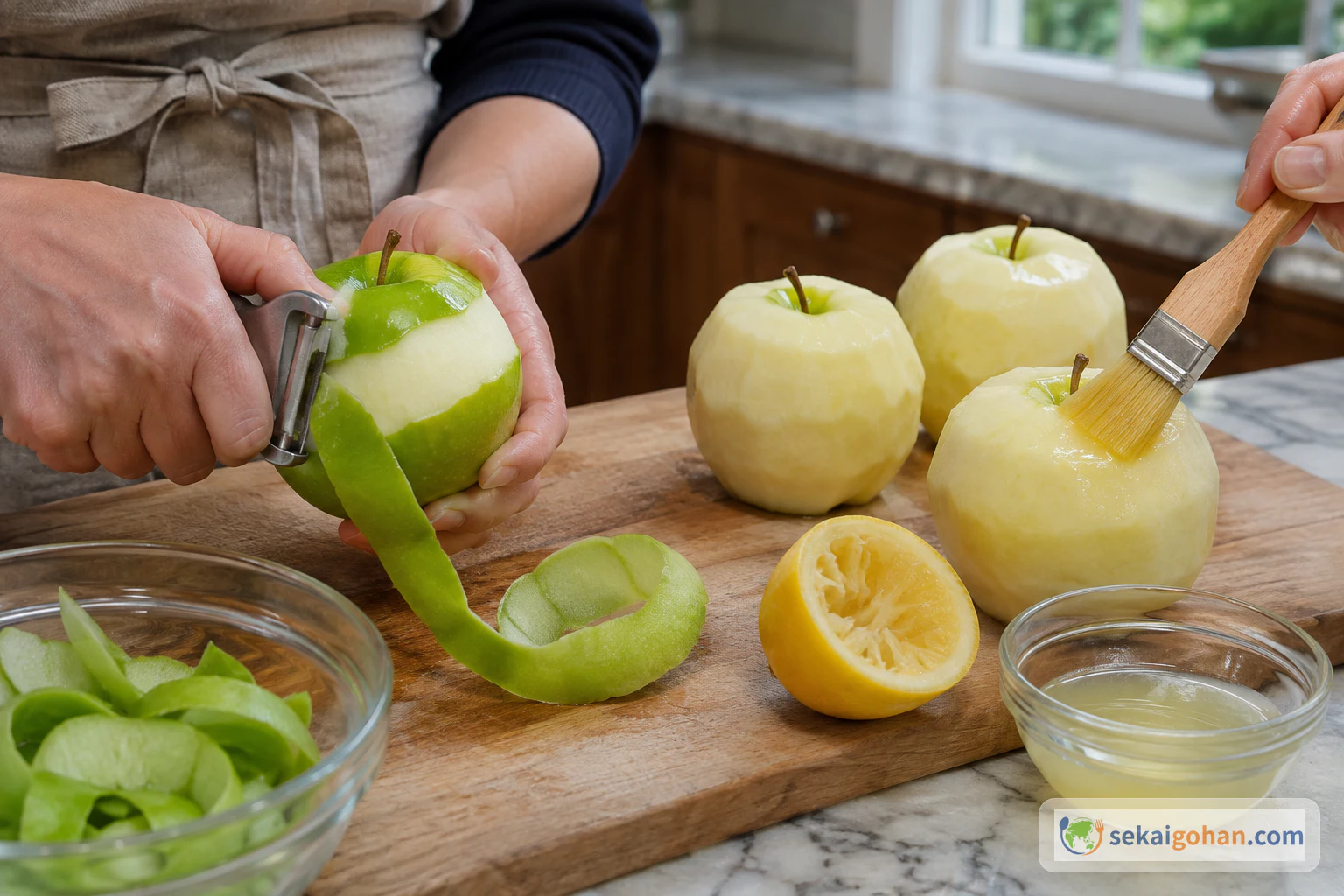
- Vegetable peeler or small paring knife
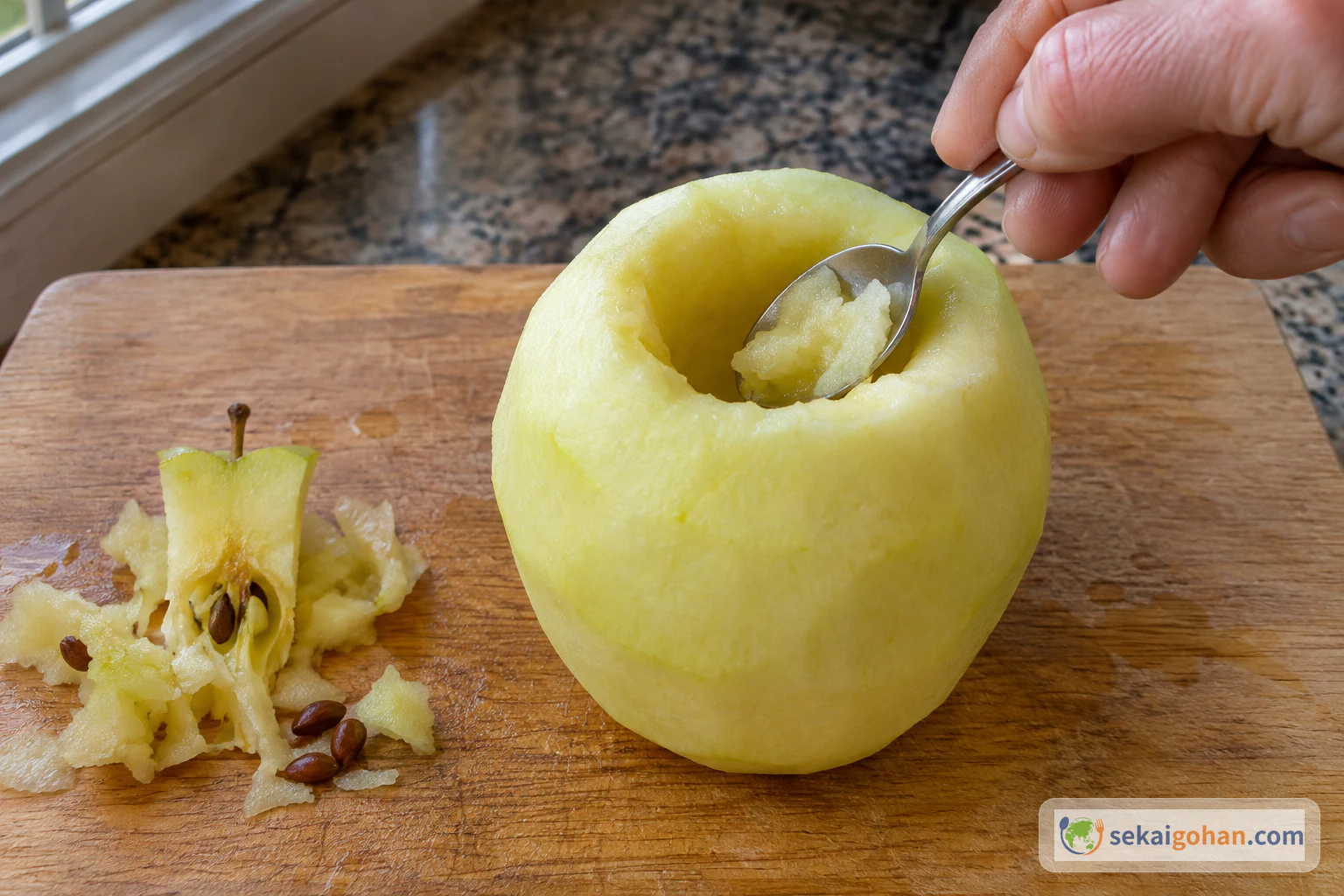
- Small spoon or apple corer, for hollowing the apples while keeping the walls thick
- Pastry brush, for the lemon juice
- Wide pot that holds all six apples in one layer
- Slotted spoon
- Fork, for testing doneness
- Deep dish, for cooling the poached apples
- Food processor or nut mill, for grinding the walnuts finely
- Mixing bowl and small saucepan
- Shallow container (or the poaching pot), for chilling
- Glass dessert bowls, for serving
Choosing Apples and Swapping Ingredients
The apple decides whether the dessert works. You need a firm, sour apple that holds its shape. Granny Smith is the first choice, and its sharpness also cuts through the syrup. Crispin, Pippin and Golden Delicious work as well, and Golden Delicious holds up very well in syrup. Do not use Gala, Fuji, Red Delicious or any mealy apple. Their bottoms fall apart in the pot and the filling ends up with nothing to sit in.
Vanilla extract and vanilla sugar are interchangeable at the amounts in the table. Use whatever whipped cream is easiest: canned, store-bought or whipped at home all work. Everything else comes from an ordinary supermarket, and none of it needs a specialty shop.
The topping is what makes it Bosnian. Keep the walnut half on the cream instead of a cherry. The syrup is very sweet, at more sugar than water. Serve only a little of it in each bowl and let the tart apple and plain cream balance it.
Method
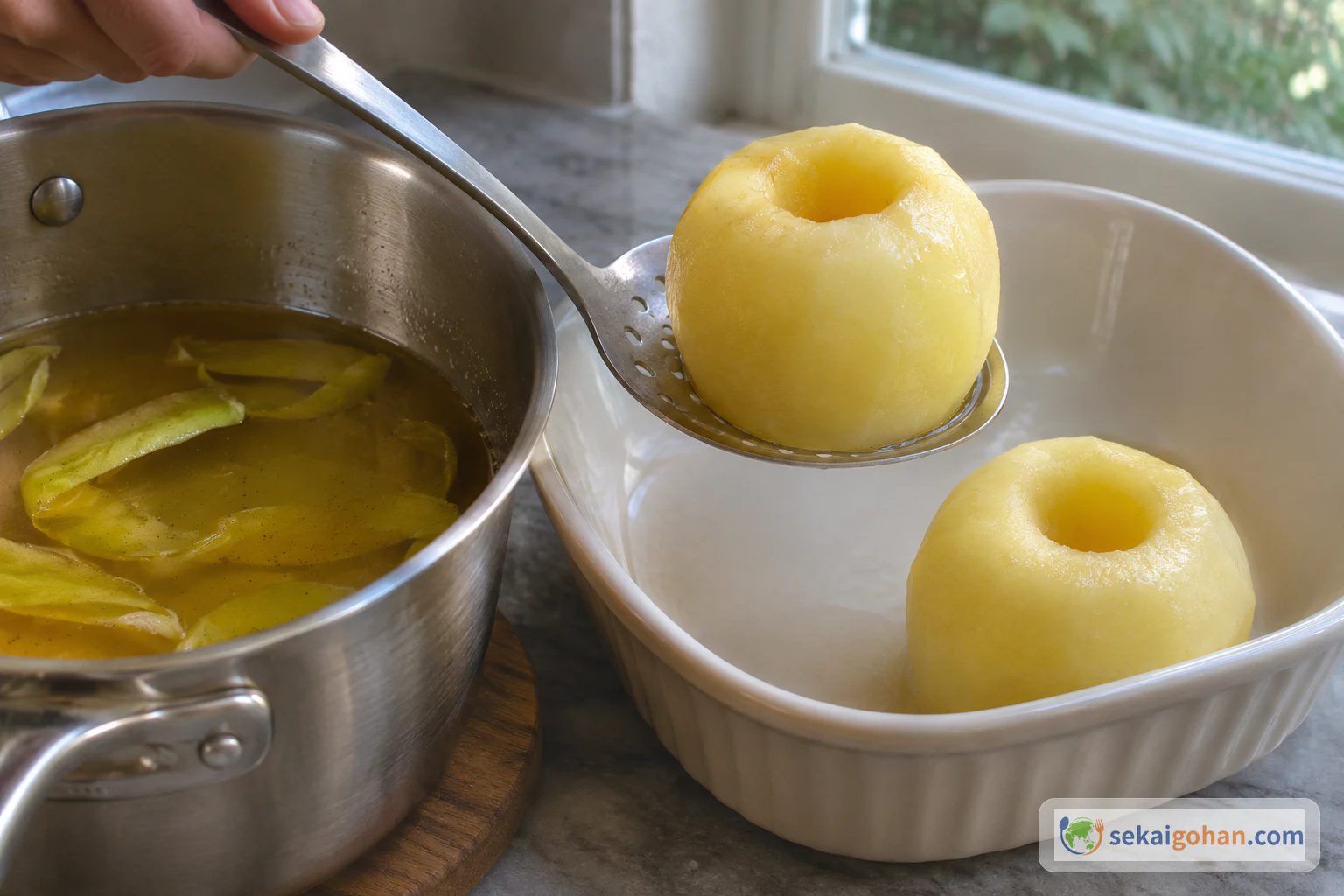
Do the apple prep first: peel all six, then core them, brushing lemon juice on as you go so nothing browns. The poaching itself is short and needs your full attention, because the apples go from done to falling apart quickly. Start soaking the walnuts while the apples are in the syrup. By the time the apples have cooled, the filling will be ready. The last stage is chilling in the refrigerator, which needs no work from you.
Boiling sugar syrup burns badly and sticks to skin. Lower the apples in and lift them out with a slotted spoon, and keep small children away from the stove while the syrup is hot.
When It Goes Wrong
| What you see | Why | What to do |
|---|---|---|
| The base of the apple collapses in the syrup | Poached too long, or the apple is a soft, mealy kind | Lift it out the moment the base starts to give. Next time use a firm, sour apple and keep a spare |
| A hole opens through the wall while coring | The scoops were too large | Use that apple's flesh elsewhere and switch to the spare. Take smaller bites and leave thicker walls |
| Brown patches on the peeled apple | Lemon juice went on late or missed the hollow | Brush lemon juice on right after peeling and again right after coring |
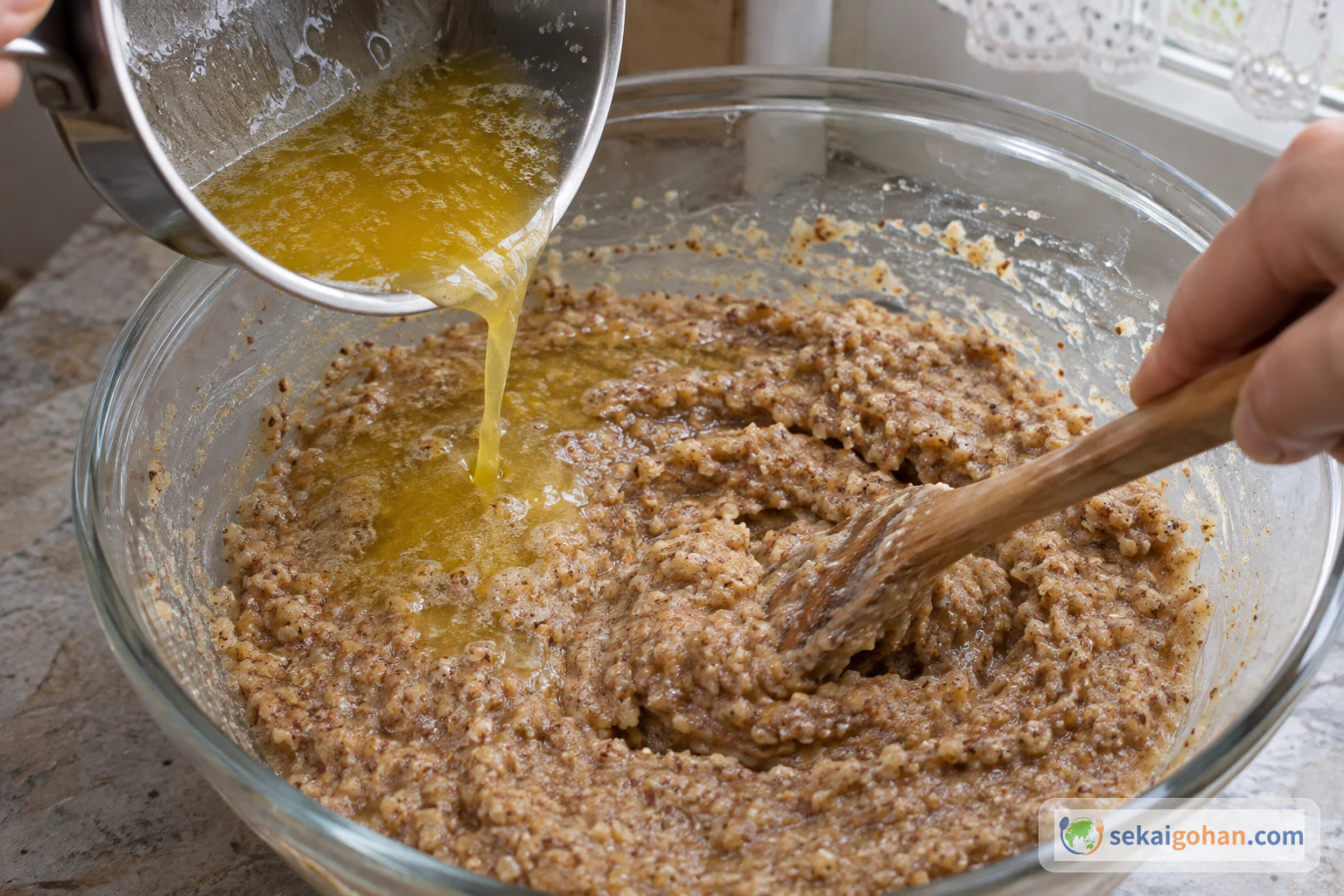
| The filling is crumbly and won't hold | The walnuts didn't soak up the milk, or the butter wasn't mixed in evenly | Let the walnuts soak the full 10 minutes and stir until the paste is uniform |
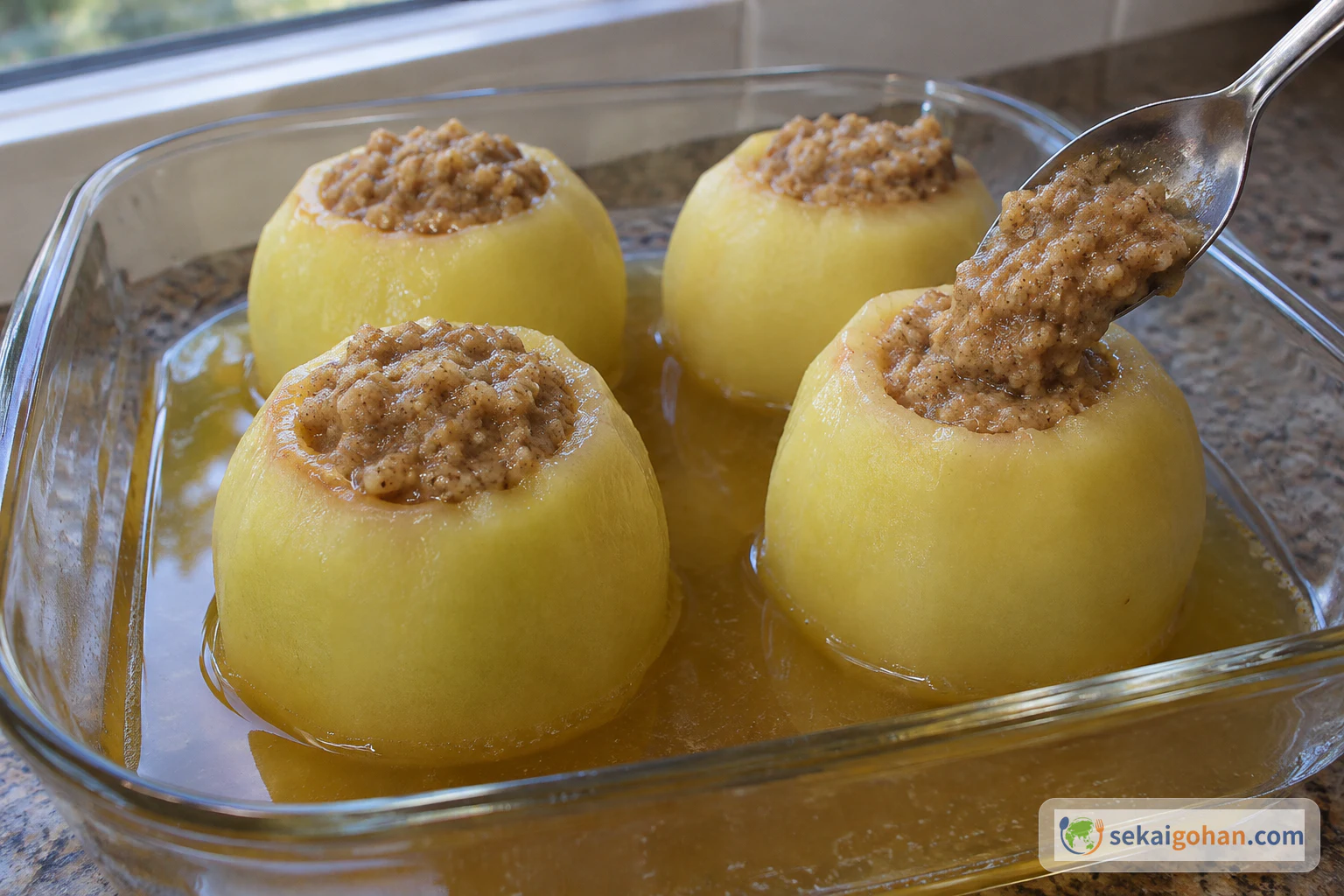
| The cream melts and slides off | The apple wasn't completely cold | Chill the filled apples in their syrup until cold through, then add the cream |
| It tastes too sweet | The heavy syrup | Serve less syrup in each bowl |
Serving, Variations and Storage
At the table
Serve tufahija cold in large glasses or glass bowls, with a little syrup in the bottom and coffee alongside, the way Bosnian pastry shops do. Make it whenever you want it, since it isn't saved for holidays.
Variations
- Sour cherry on top. Swap the walnut half for a sour cherry, as cooks outside Bosnia do. The cherry's sourness sits against the cream.
- Biscuit-stretched filling. Some households mix ground biscuits into the ground walnuts with vanilla sugar and hot milk. It is a different home version of the filling.
- A lighter syrup. Other households use much less sugar, down to 1 cup sugar to 2 cups water. The apple tastes tarter and the glaze is thinner.
Storage
Keep leftover tufahija in a covered container in the refrigerator and eat it within 3–4 days. Do not freeze it. Keep any extra whipped cream in the refrigerator too.
Frequently asked questions
Do I need an apple corer?
No, a small spoon is enough. A corer makes it faster to get the first opening straight down the middle. Either way, take the core out in small bites so the walls and base stay thick.
Can I use store-bought ground walnuts?
Yes, as long as they are finely ground, close to a powder. Coarse pieces keep the filling from turning into a smooth paste that holds together. If you only find walnut pieces, grind them in a food processor or nut mill until fine.
Why does apple peel go into the syrup?
The peel gives the syrup flavor and color. Peel from one apple is enough, so you can discard the rest. Let it simmer in the syrup with the apples.