Shopska Salata: A Bulgarian Vegetable Salad Covered in White Cheese
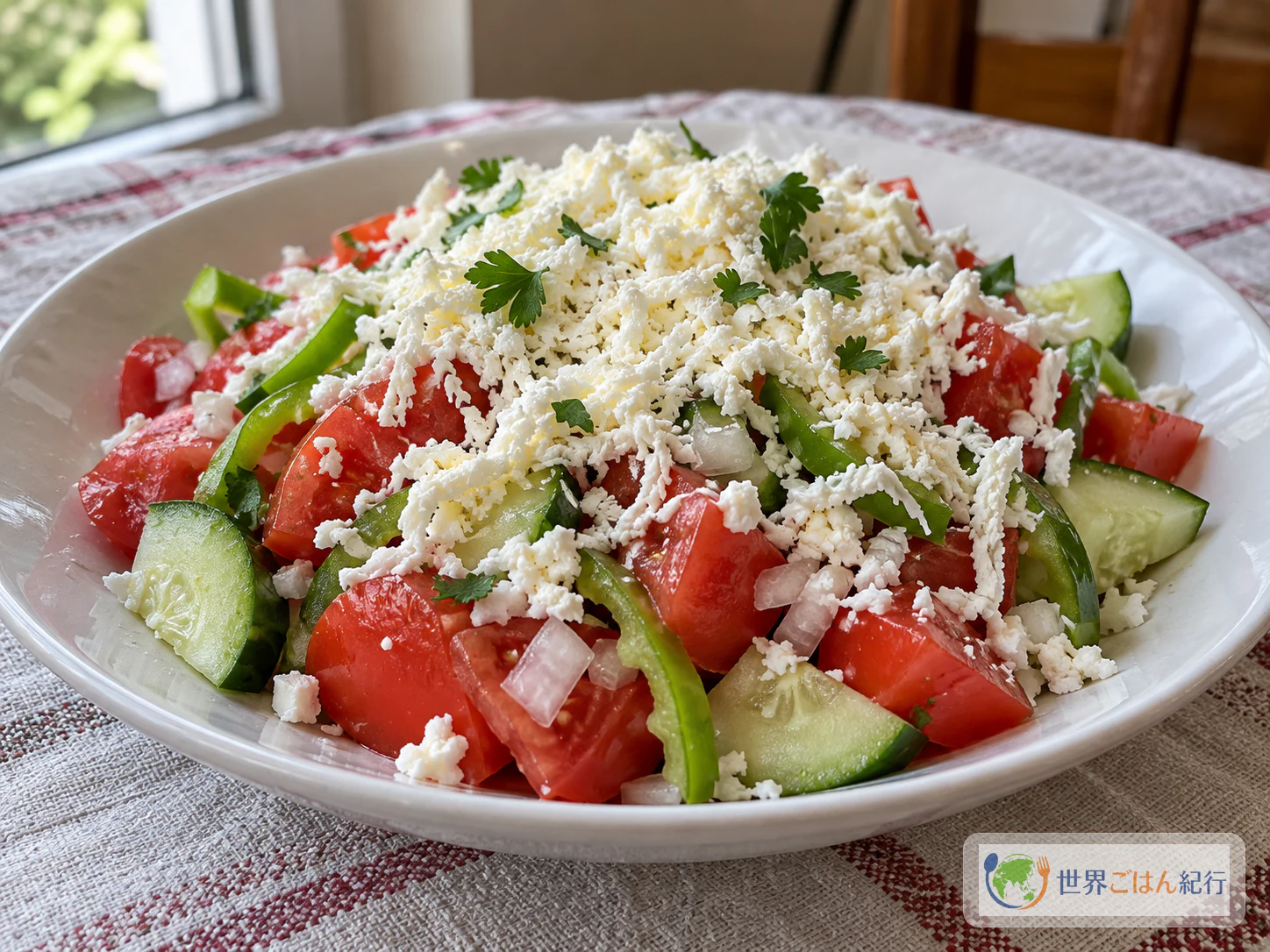
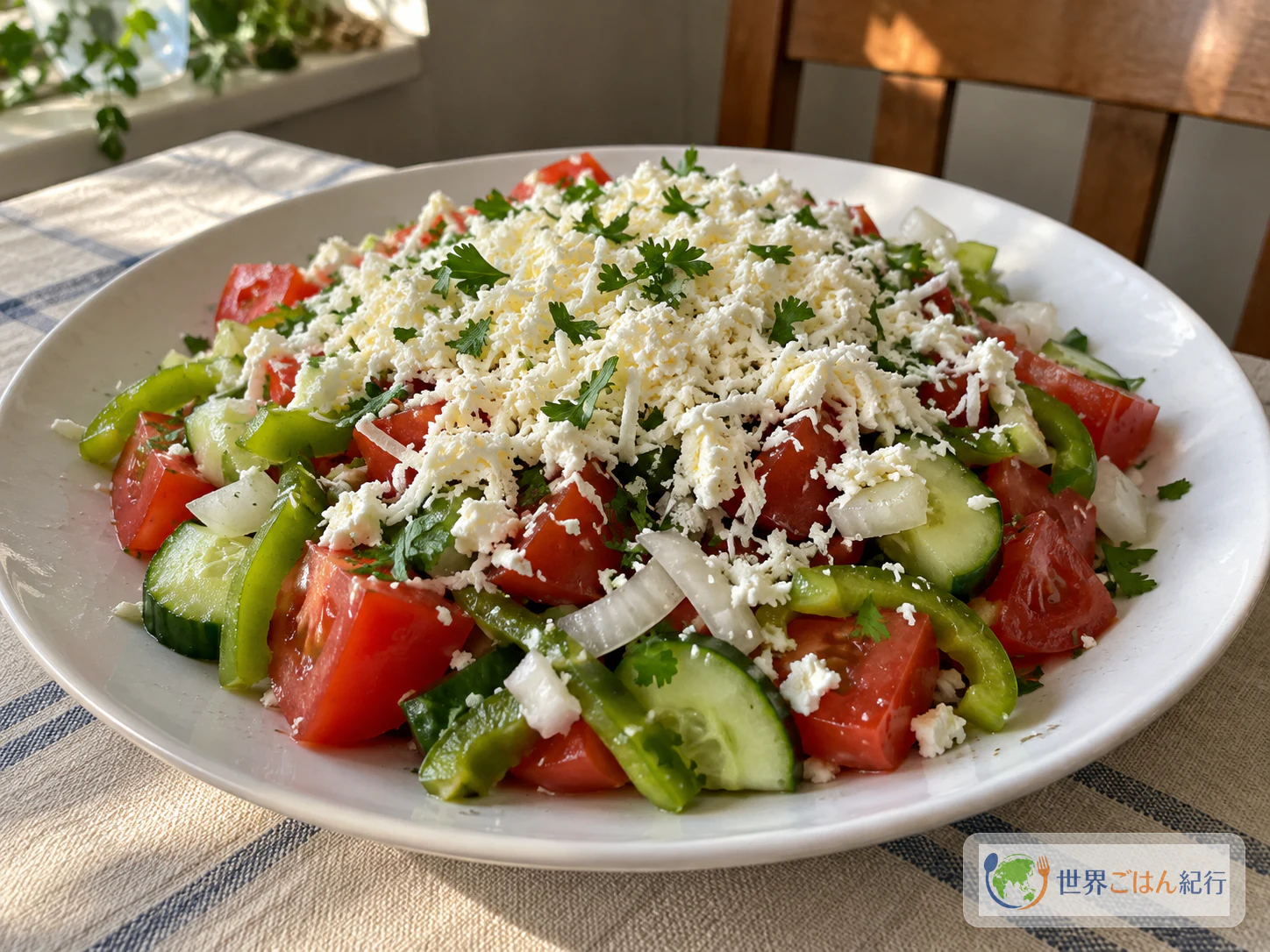
Large pieces of tomato, peeled cucumber and raw green pepper, lightly dressed, and white cheese grated over the top at the very end so it stays white.
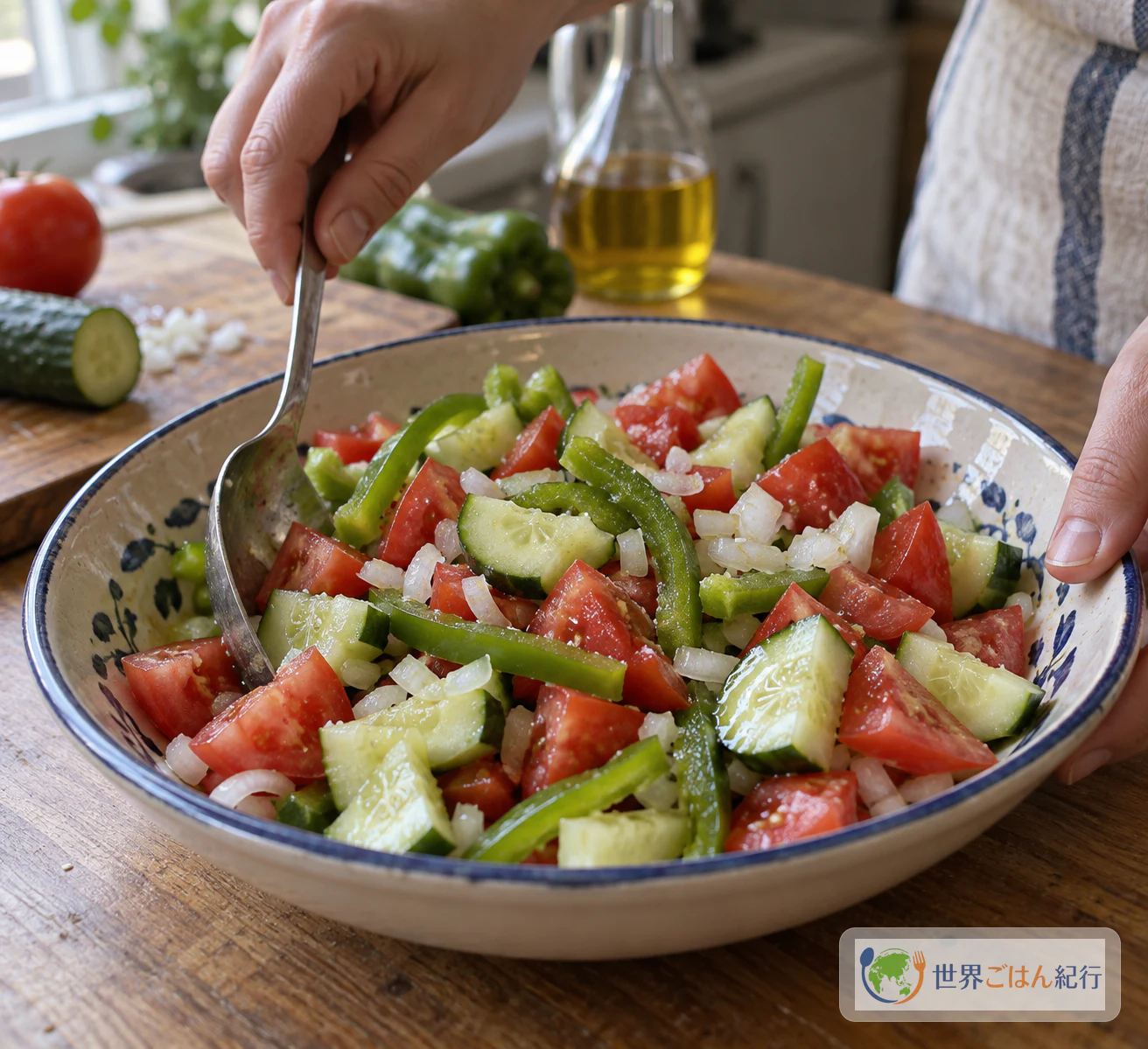
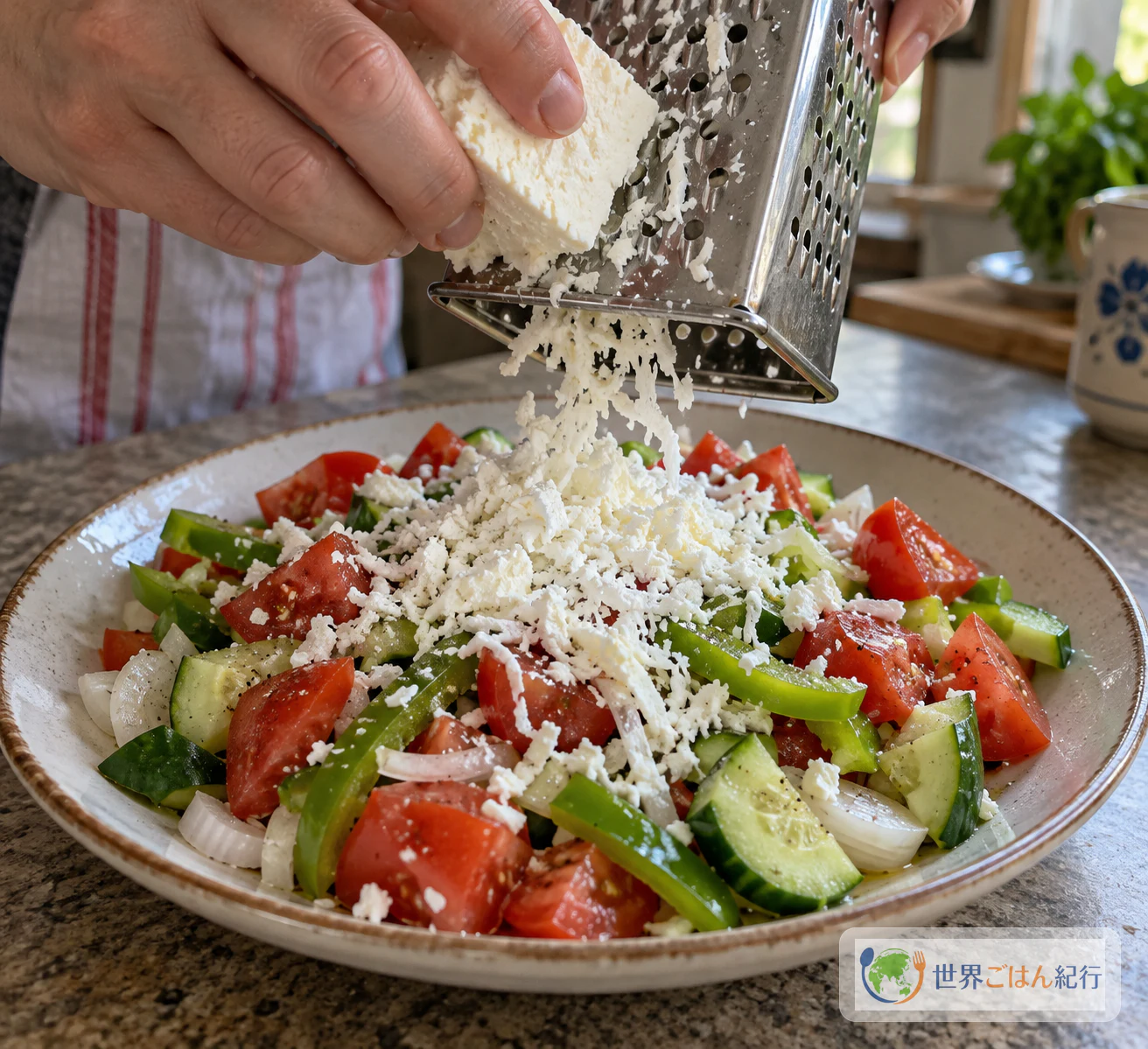
Red tomato cut into generous pieces, pale peeled cucumber, thin strips of raw green pepper and chopped onion sit together on one plate, and a layer of grated white cheese falls over them like fresh snow. That is shopska salata (Шопска салата), a cold salad of tomatoes, cucumbers, green pepper and onion finished with Bulgarian white cheese. Nothing is cooked; the vegetables are cut, seasoned and mixed, and the cheese goes on last.
A traditional-cuisine brochure produced by Bulgaria's Ministry of Economy, Energy and Tourism links the dish to the region around Sofia, the capital, and describes it as a popular starter now prepared throughout the country. The same brochure says it is served as a starter or as a side to grilled meat and oven-baked dishes. That is as far as the history goes here: the materials behind this article do not support a founding date or a more specific origin story, so none is given.
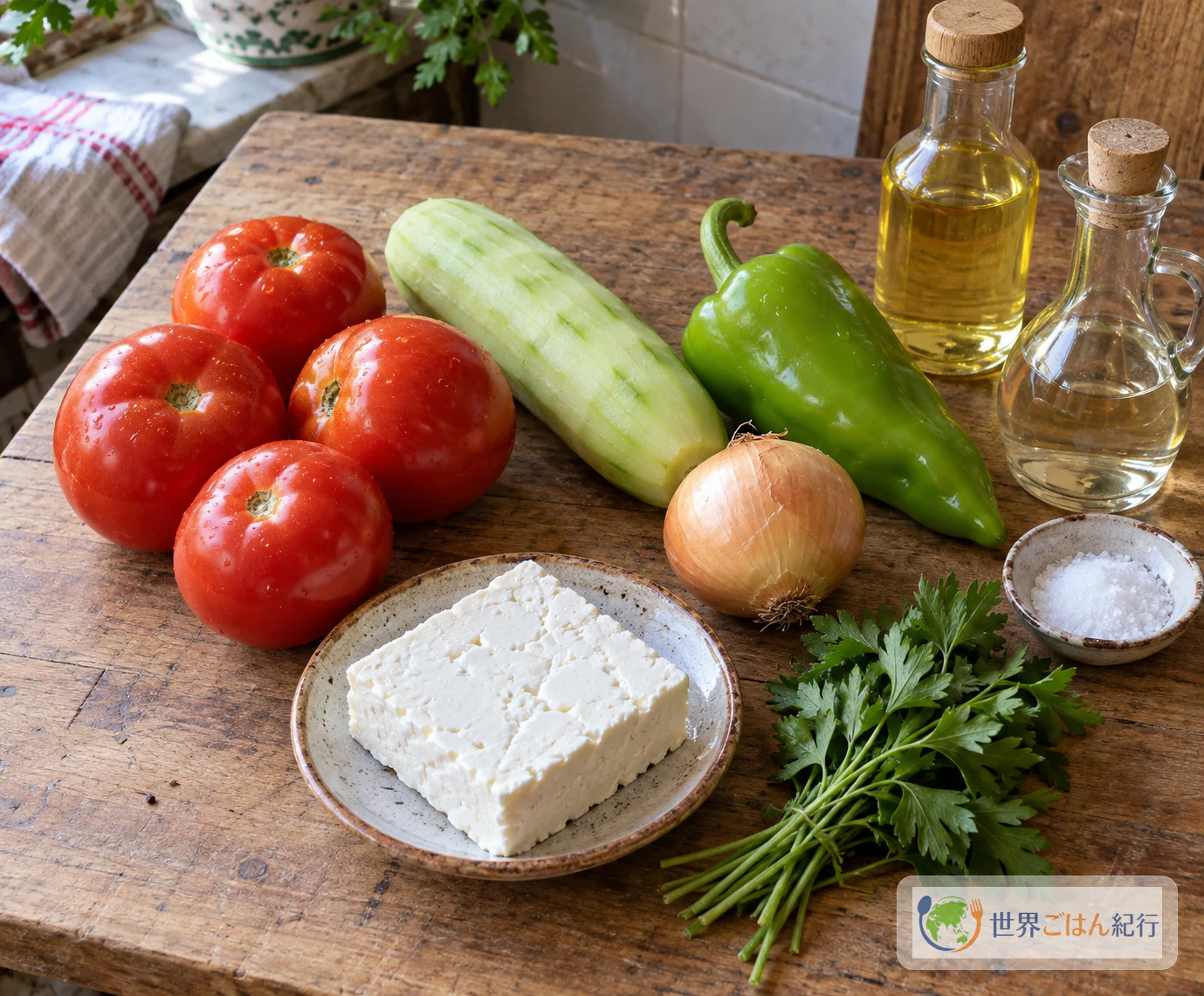
This article follows that brochure's recipe as its single master version: 400 g tomatoes, 250 g cucumbers, one green pepper, one onion or three spring onions, and 100 g white cheese, with parsley, vinegar, oil and salt left to the cook's taste. The brochure gives no number of servings. As an editorial guide only, the amounts are presented here as a side dish for about two people; that figure has not been measured, and this recipe has not been kitchen-tested by Sekai Gohan. If you want to explore more of the country's table, see Bulgarian dishes on Sekai Gohan.
Ingredients: Four Vegetables, White Cheese and a Simple Dressing
Equipment
- Cutting board
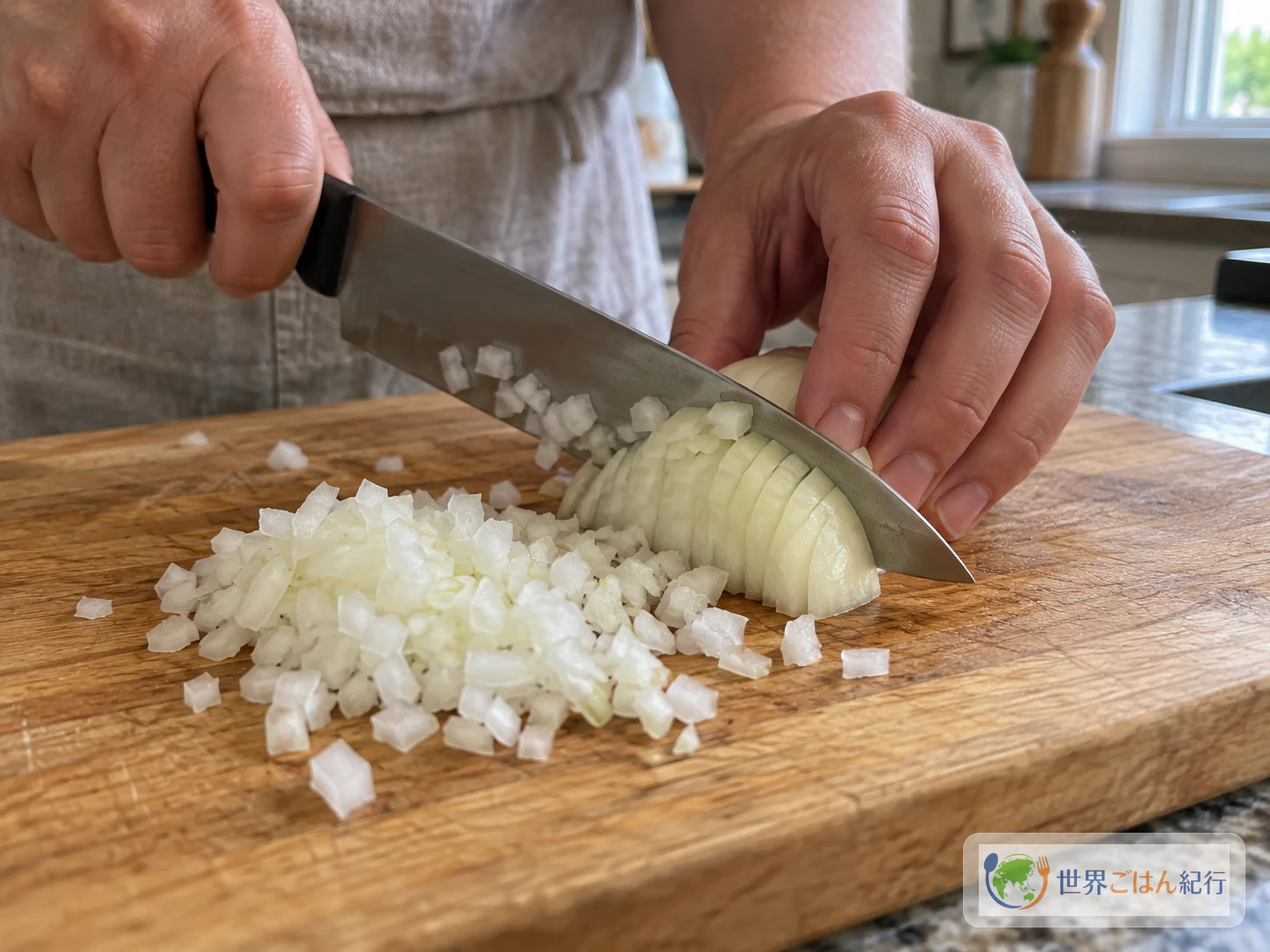
- Kitchen knife
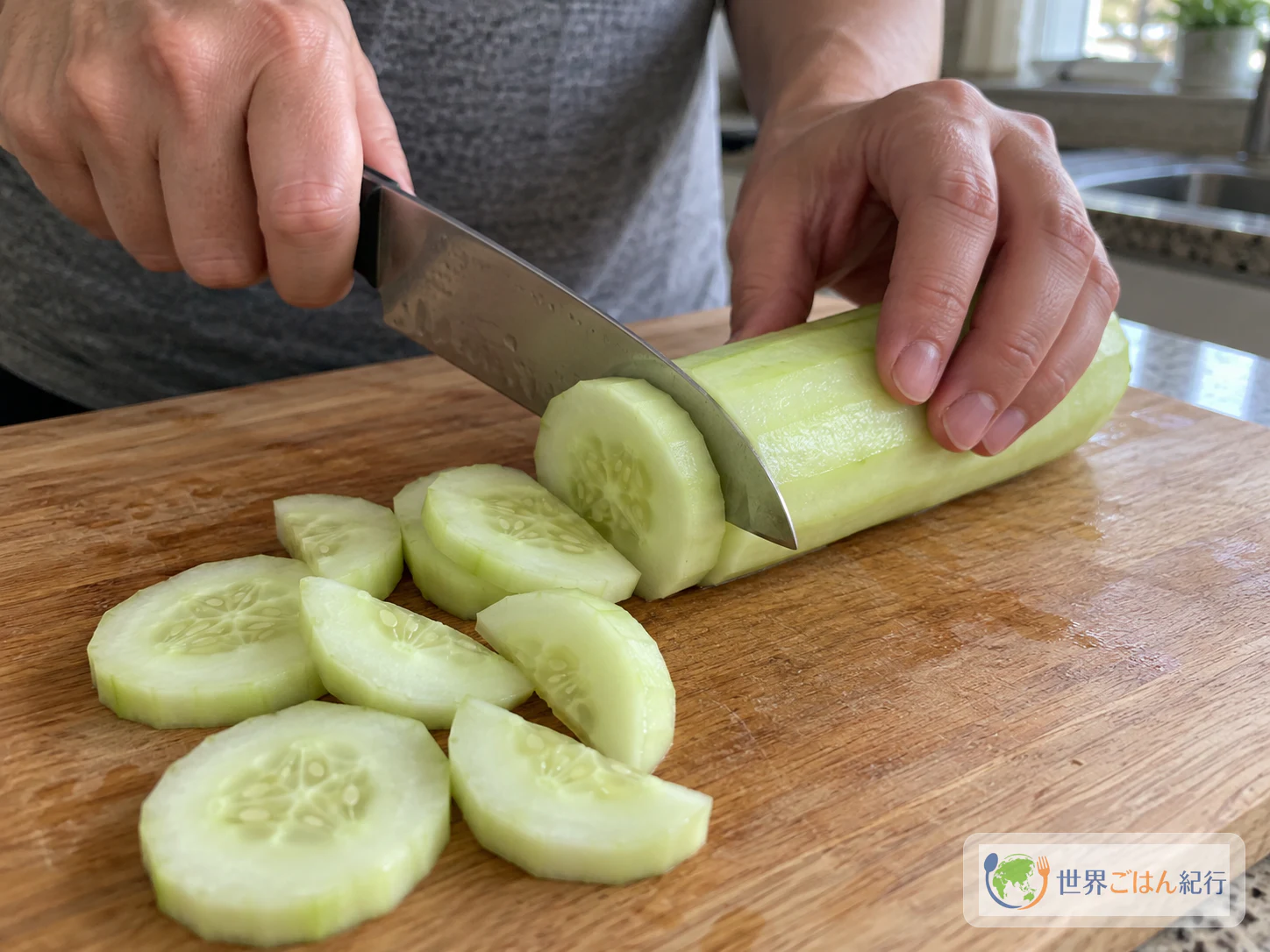
- Vegetable peeler (for the cucumbers)
- The plate or shallow dish you will serve the salad on
- Coarse cheese grater
Choosing the Cheese, Onion and Dressing
The cheese decides the finish. Bulgarian white brined cheese, sirene (сирене), is the first choice. If you cannot find it, feta is an alternative, but it is not the same cheese: saltiness and dairy flavor differ. Whichever you use, taste a crumb of the cheese before you salt the vegetables, and keep the salt light until the cheese is on.
Onion or spring onions, not both. Use one onion or three spring onions. Pick one.
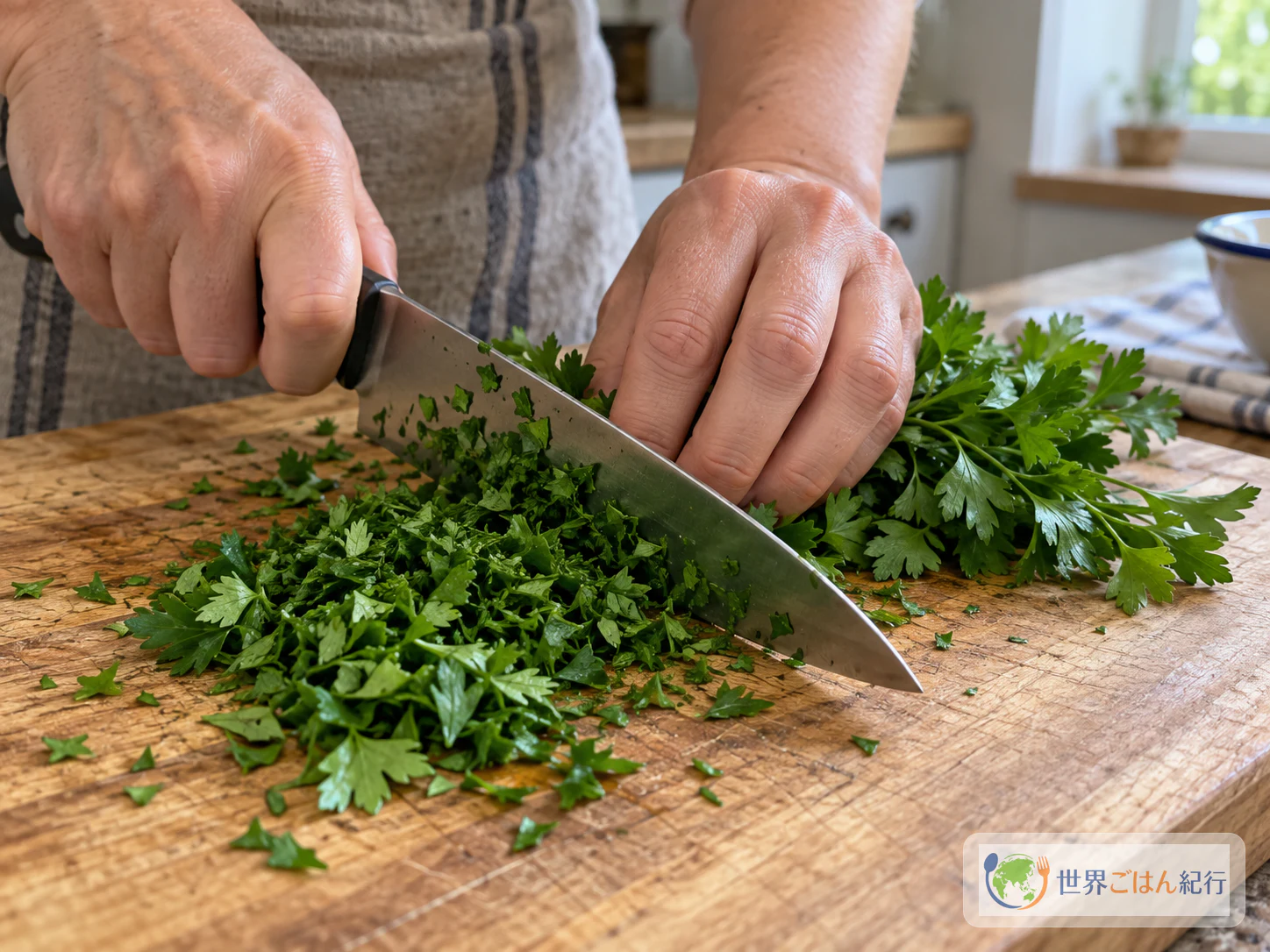
Oil: sunflower oil or olive oil both belong in this salad. Vinegar is optional; in some regions it goes in and in others it does not, so start with a small splash or leave it out. Salt and parsley have no fixed amount; season gradually.
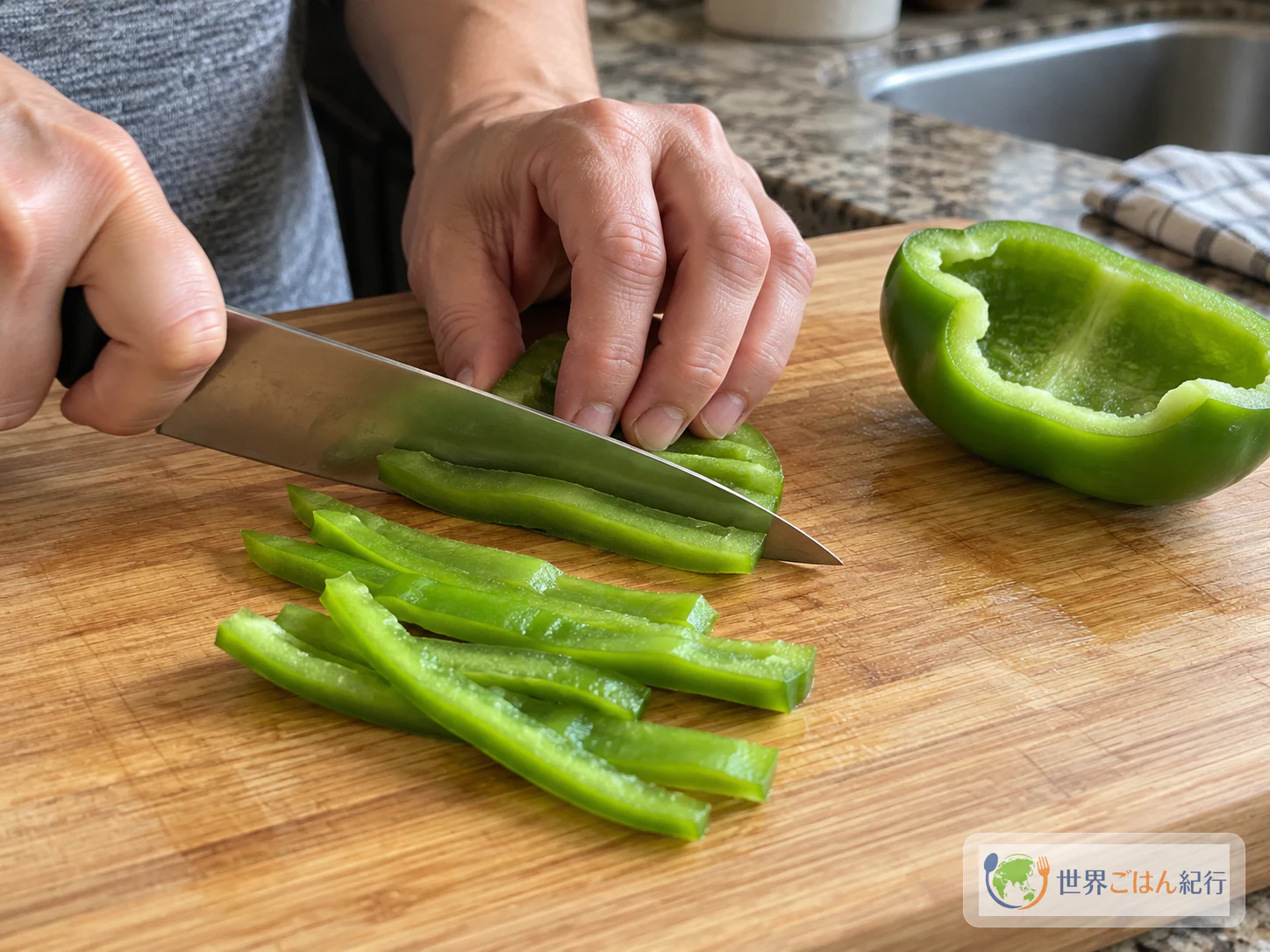
Peppers: use one raw green pepper. A red pepper or another sweet pepper changes the color and sweetness.
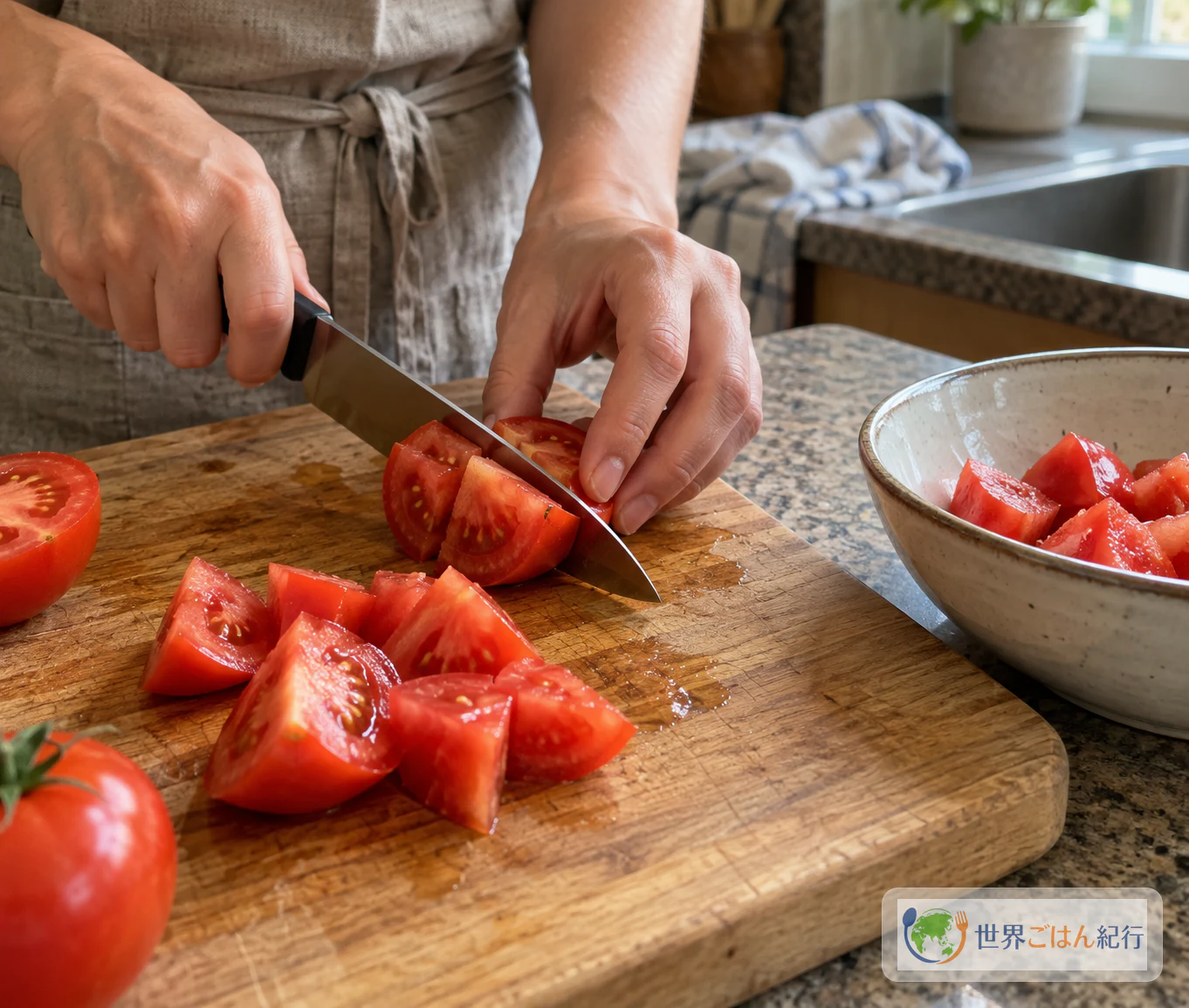
Tomatoes and cucumbers: ordinary supermarket tomatoes and cucumbers work. Very ripe tomatoes release more juice, so keep the pieces large.
How to Make Shopska Salata
There is no heat in this recipe. Cut each vegetable, dress them on the serving plate, then grate the cheese over the top and finish with parsley. Assemble it close to the time you plan to eat.
The white cheese (sirene or feta) contains milk. Wash the vegetables well, and use a clean cutting board, knife and grater, since everything is eaten raw.
Tips and Fixes: Watery Plates, Hidden Cheese, Too Much Salt
The cuts in this recipe, large tomato pieces and peeled cucumber, are what give the salad its texture, so keep them. Most problems come from timing and salt.
| Problem | Likely cause | What to do |
|---|---|---|
| A pool of liquid on the plate | Very ripe tomatoes cut small, or the salad dressed long before eating | Cut tomatoes into large pieces and dress the salad just before serving |
| The white top has disappeared | The cheese was mixed into the vegetables | Grate the cheese last, over the top, and leave it unmixed |
| Too salty | Salt added generously before the cheese, especially with a salty feta | Add no more salt. Next time, salt lightly at the start and taste again after the cheese |
There is no storage time given for this salad, and it is not one to hold: because the vegetables release liquid once dressed, eat it soon after it is plated.
How It Changes by Region and Household
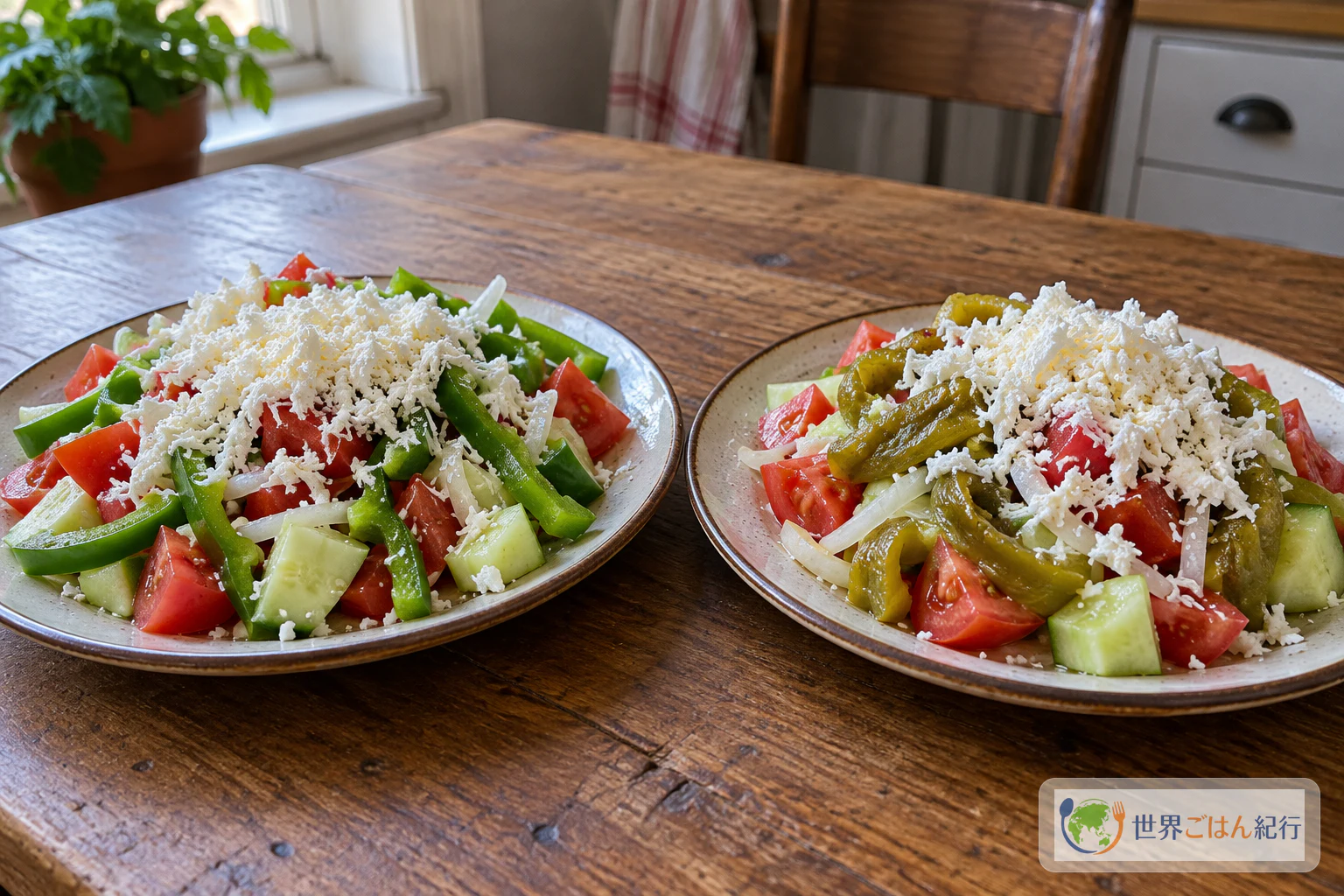
The Bulgarian Ministry of Tourism brochure notes that the salad is not fixed across the country: some regions include peppers and others do not, some add vinegar and others do not, and in some regions roasted peppers are added. The recipe on this page keeps the green pepper raw. A roasted-pepper version is a different regional or household style, so it is shown here only as a variation, without amounts.
Meaningful changes that stay within the documented range:
- Roasted, peeled peppers instead of raw strips, as a regional style.
- Three spring onions in place of one onion.
- No vinegar, letting the vegetables and cheese carry the flavor, as in regions that leave it out.
- Olive oil instead of sunflower oil; both are accepted.
- Feta instead of sirene when sirene is hard to find, with the salt adjusted to the cheese.
At the table
The brochure presents shopska salata as a starter, or as a side for grilled meat and oven dishes. Bulgaria Travel, a tourism guide, describes it as a starter, frames it as a light summer dish, and mentions eating it with rakia. Those descriptions come from travel material, so read them as common ways to serve the salad rather than a rule for every Bulgarian table.
Frequently Asked Questions
What if I can't find sirene?
Use feta. A 2007 Bulgarian-American community recipe published by the University of Florida Center for European Studies lists "sirene or feta" for the cheese topping. The two are similar brined white cheeses but not the same product; feta may taste saltier or different, so taste it first and keep the added salt light.
Should the pepper be raw or roasted?
In the recipe used here, the green pepper is raw, cut into thin strips. Roasted peppers also appear in some regions, according to the Bulgarian tourism brochure, and the University of Florida community recipe allows either raw or roasted. Treat roasted peppers as a variation rather than mixing them into the basic method.
Is vinegar necessary?
No. The tourism brochure notes that some regions add vinegar and others do not. Add a small splash if you like it, or leave it out.
How many people does this serve?
The brochure does not state a number of servings. On this page, the amounts are offered as a side dish for about two as an editorial estimate, not a measured yield. Rather than scaling the ingredients, choose a plate size that suits how you are serving it.
When does the parsley go in?
The brochure lists parsley as an ingredient but does not say at which point to add it. Scattering it on top at the end, after the cheese, is this article's suggestion for a clear, simple finish.
Can I make it ahead?
No storage time is given for this salad. Once dressed, the vegetables release liquid, so assemble it shortly before eating and eat it soon after plating.
Sources
- Ministry of Economy, Energy and Tourism of Bulgaria, "Traditional Bulgarian Cuisine: Recipe Shopska Salad." The master recipe on this page: amounts of tomatoes, cucumbers, green pepper, onion or spring onions and white cheese; parsley, vinegar, oil and salt to preference; peeling the cucumber, seasoning and mixing the vegetables, and grating the cheese last. Also the association with the Sofia region, its use nationwide as a starter and as a side to grilled meat and oven dishes, and regional differences in peppers and vinegar. It is an official tourism brochure, not a historical study, and gives no serving yield or time. https://visitbulgaria.com/wp-content/uploads/2016/publication_5658_2.pdf
- Bulgaria Travel, "Shopska salad: what it is, history and how to eat it." Used only for broad context: the salad as a starter, its summer framing and the rakia pairing. A tourism guide, not a culinary-history source. https://www.turismobulgaria.com/en/food-in-bulgaria/shopska-salad
- University of Florida Center for European Studies, "Celebrate Bulgarian and Romanian Accession: With Recipes from the CES Kitchen," 2007. A Bulgarian-American community recipe listing sirene or feta and raw or roasted peppers, with the cheese grated over the dressed vegetables. Used as supporting material for the feta option and pepper variation only; its quantities are a different formulation and are not used here. https://ces.ufl.edu/wp-content/uploads/sites/162/CESGazette_0402_Spring2007.pdf