Sheftalia: Minced Pork in a Lace of Caul Fat, Browned over Charcoal
Small, hand-shaped portions of fatty minced pork, onion, soaked white bread and parsley, each wrapped in its own thin net of caul fat and grilled over hot charcoal or under a preheated grill until browned outside and cooked through.
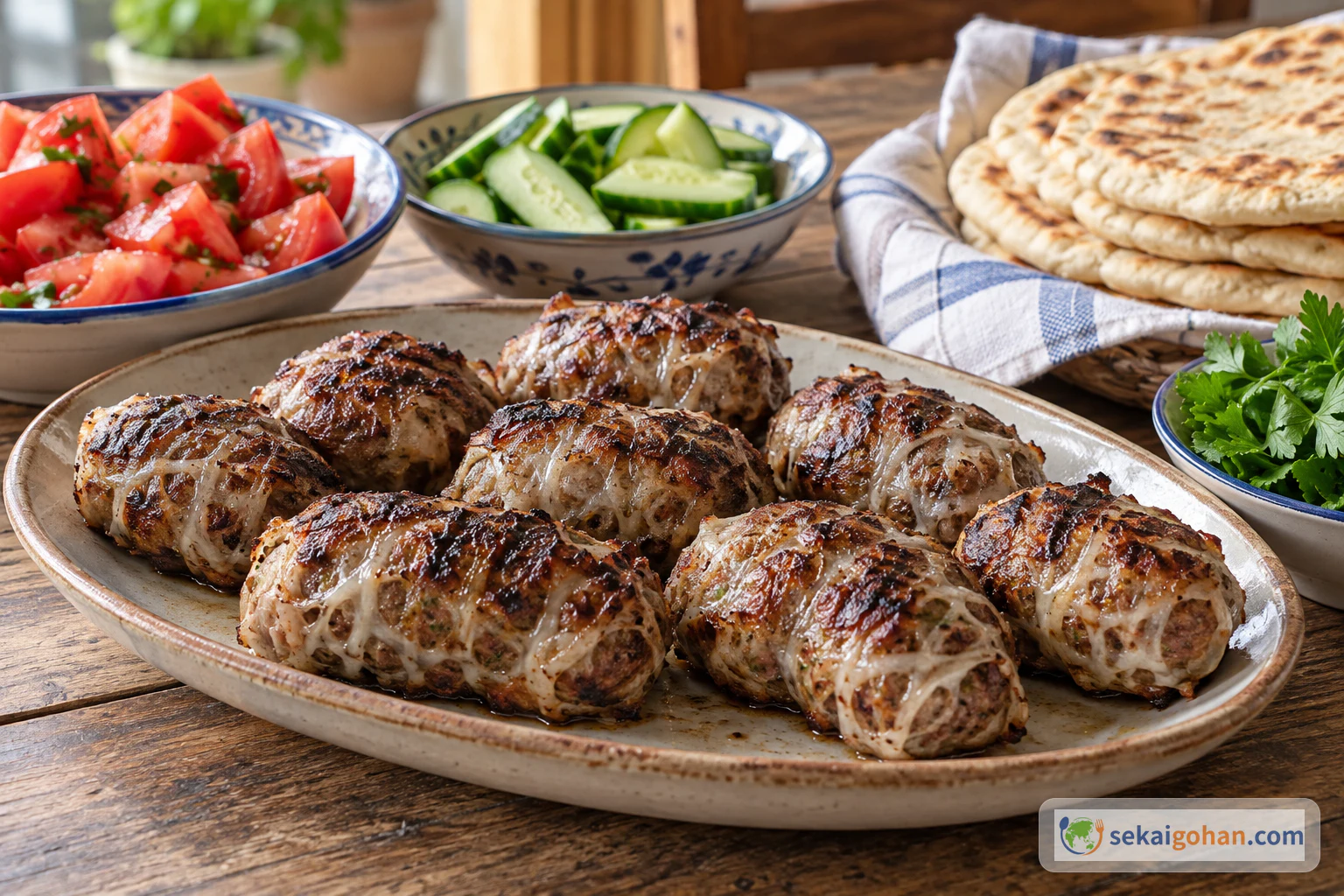
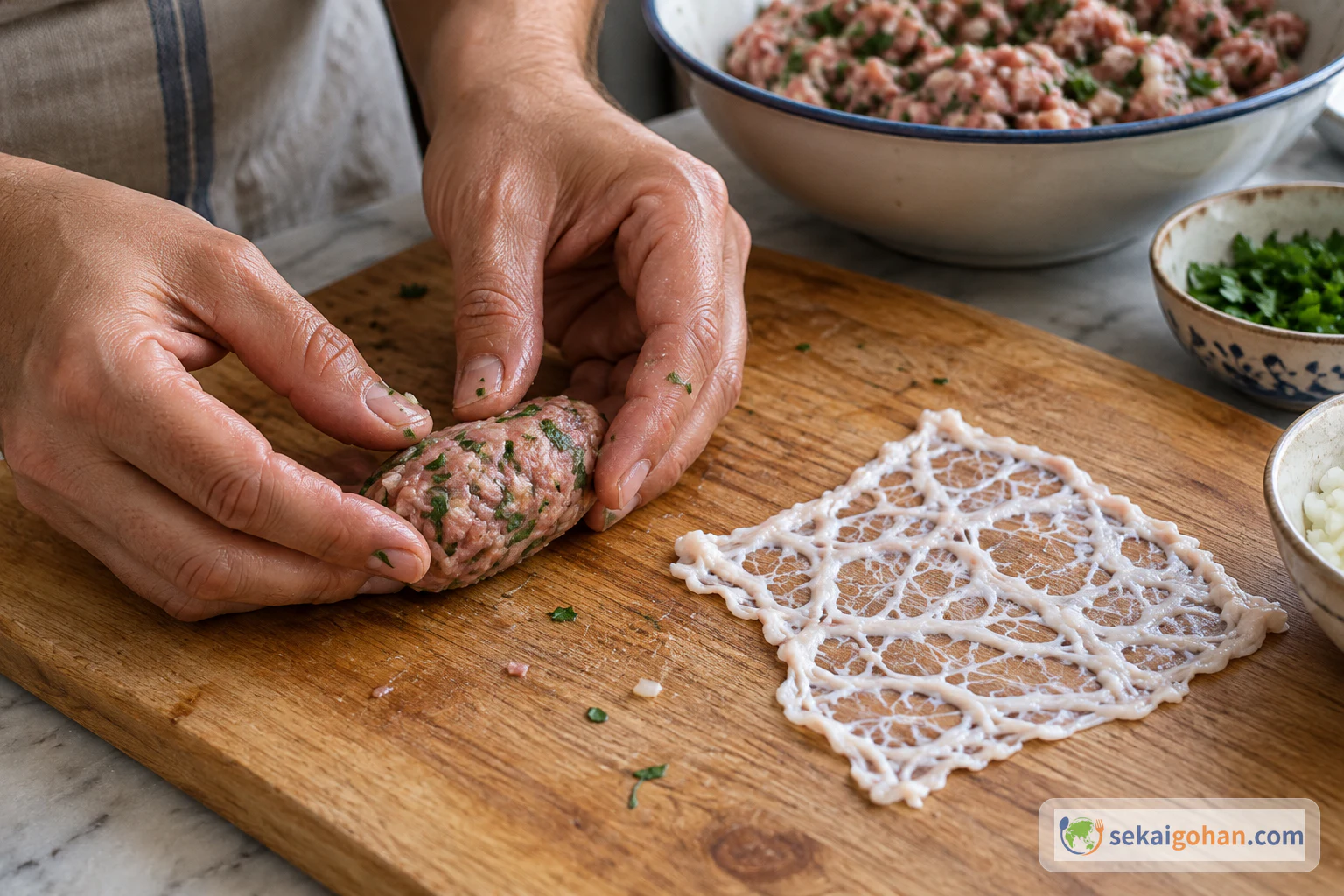
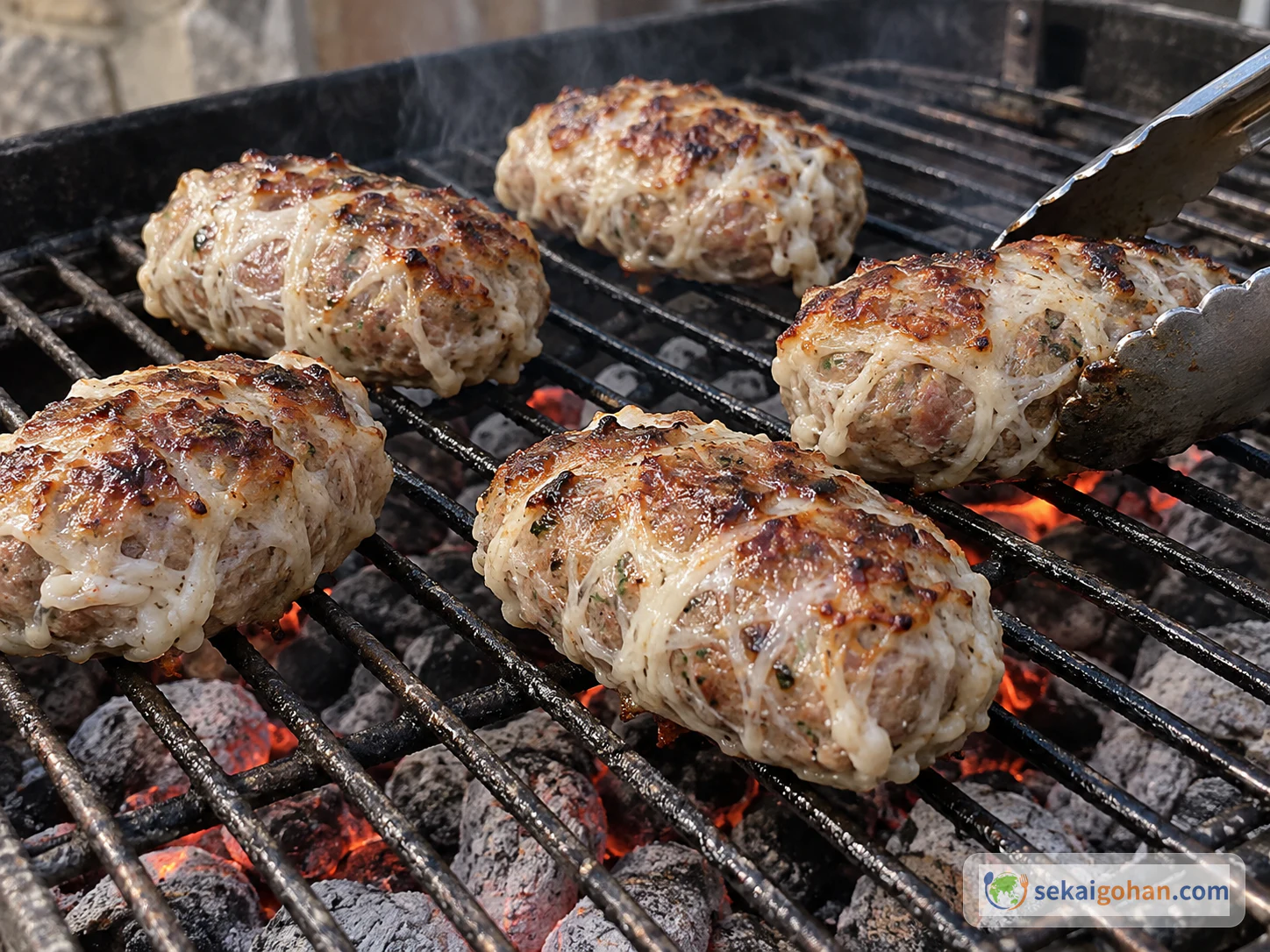
Sheftalia is a Cypriot dish of minced pork wrapped in caul fat, the thin, lace-like membrane of fat, and grilled, traditionally over charcoal. The cooked parcels are tucked into pita and served with souvlaki, salad, onion, tomato, cucumber and parsley. The Cyprus Virtual Food and Nutrition Museum describes it as a typical meat meze of modern Cypriot cooking.
It is easy to confuse with souvlaki, since both come off the same grill and often share a pita. But souvlaki is cubed meat threaded onto skewers, while sheftalia is minced meat shaped by hand and wrapped in caul fat, with no skewer and no sausage casing. For more dishes from the island, see Cypriot food.
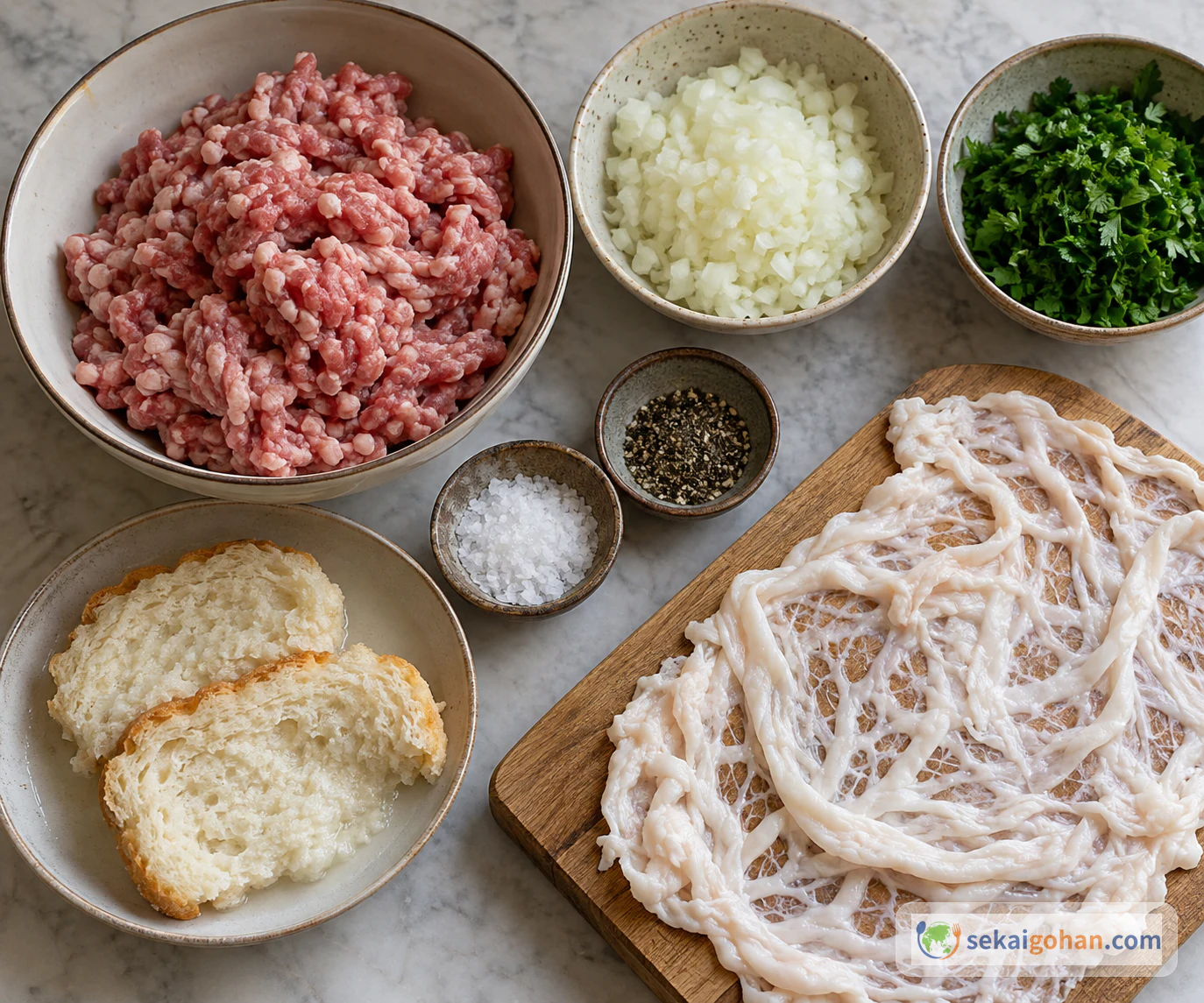
The recipe below follows the version printed in Traditional dishes of Cyprus, a publication of the Republic of Cyprus Press and Information Office: 1 kg of fatty minced pork, onions, white bread soaked in water and squeezed dry, parsley, caul fat, sea salt and black pepper. The quantities give about 25–30 parcels. This recipe has not been kitchen-tested by Sekai Gohan. The first thing to settle before you start is whether you can get caul fat; it is part of the structure of the dish, not a garnish.
What Sheftalia Is: A Caul-Fat Parcel from the Cypriot Grill
The museum's entry defines sheftalia as minced meat wrapped in pork caul fat and charcoal-grilled, and places it among the meat mezé of modern Cypriot cooking. The parcels are small, shaped one at a time, and cooked directly on the grill grate.
In English you will see Sheftalia and the plural Sheftaliés, as well as the spelling Shieftaliés. The museum gives the Cypriot forms S̆eftalià (singular) and S̆eftaliés (plural). The name may come from the Turkish word şeftali, meaning peach, but the museum presents this only as a possibility, not a settled origin.
The museum also cites historical records that sheftalia was made mainly in souvlaki shops and was eaten at breakfast as well. That is a record of how it was eaten in the past, quoted by the museum, rather than a description of everyday habits today.
Ingredients: Fatty Pork, Soaked Bread and Caul Fat
Choosing and Sourcing: Caul Fat and White Bread
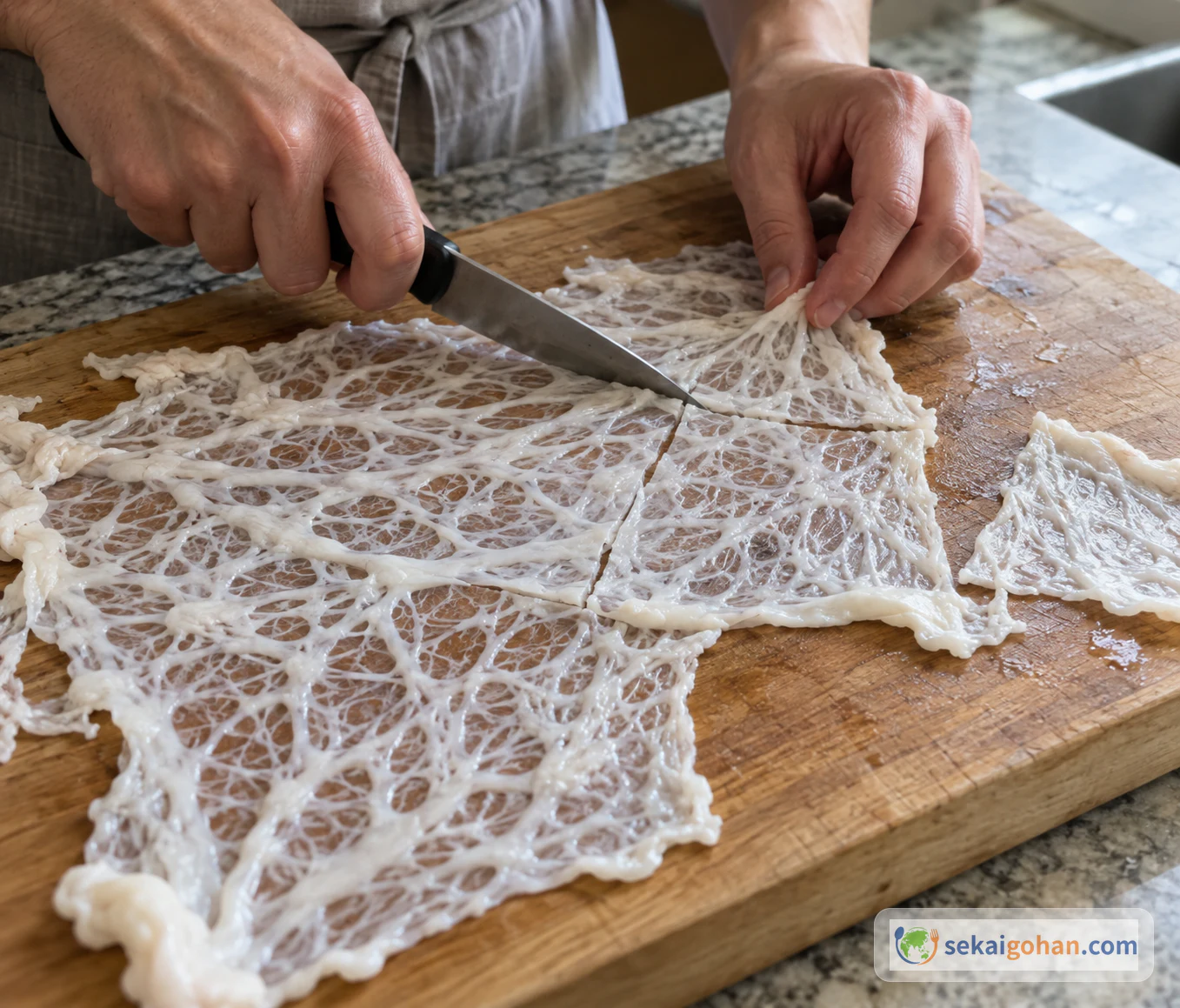
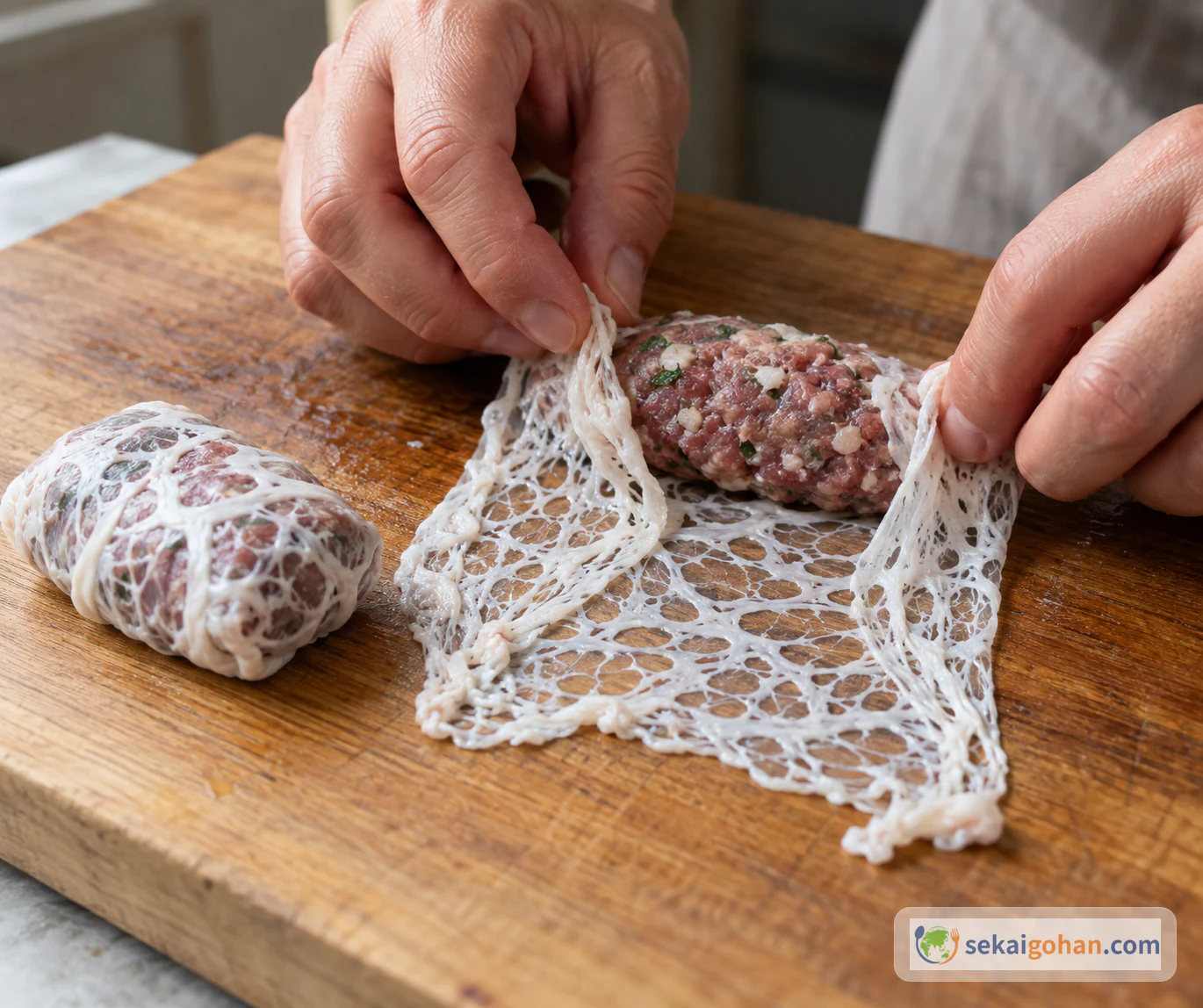
Caul fat is a thin, net-like membrane of fat, not intestine and not a sausage casing. Ask a butcher for "pork caul fat" or "pig's caul." It holds each portion of meat together on the grill, so it cannot simply be replaced. If you cannot find it, wrapping the meat in something else that only looks similar makes a different dish, and it should be treated as a separate recipe rather than as sheftalia.
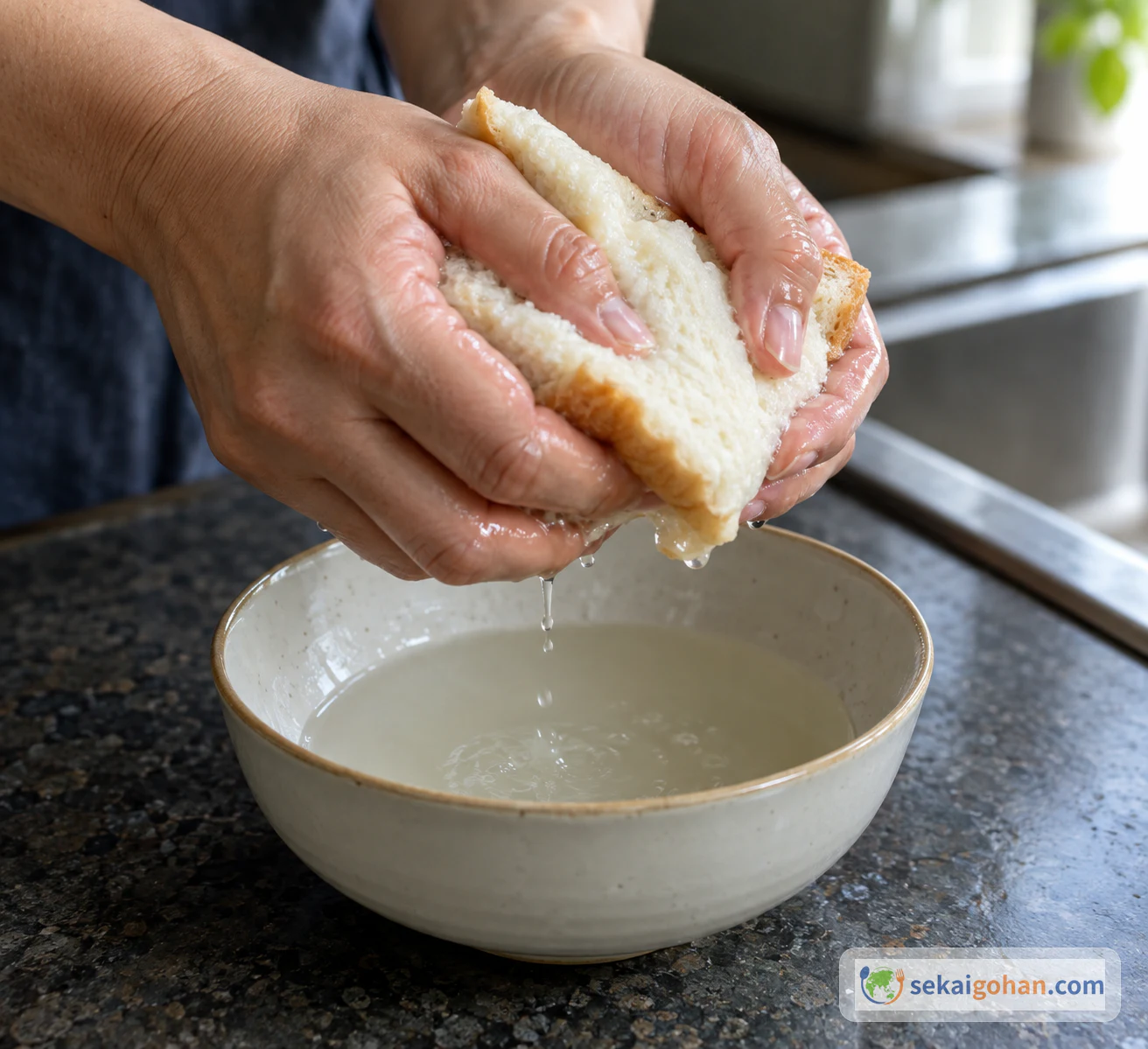
White bread is used as slices soaked in water and squeezed out, not as dried breadcrumbs. Ordinary sliced white sandwich bread works. Dry breadcrumbs behave differently in the mixture, so don't swap one for the other.
Pork with its fat matters too. Shoulder or belly mince gives the fat that the dish is built around; switching to very lean mince changes how the fat renders during grilling.
Equipment
- Small bowl for soaking the bread
- Cutting board and knife
- Large mixing bowl
- Tablespoon
- Charcoal grill, or a grill you can preheat
- Tongs for turning
Method: Mix, Wrap and Grill
Get the caul fat ready close to the time you shape the parcels, and handle it gently so the net stays whole. Judge the end of grilling by the browning outside and by checking that the center is cooked through, not by the clock alone.
When Things Go Wrong
| Problem | What to check | What to do |
|---|---|---|
| The caul fat tears while wrapping | The net was stretched or pulled hard | Handle it gently, keep it damp from rinsing, and cut a fresh square if a piece is badly torn |
| The bread leaves wet lumps in the mixture | The bread was not squeezed or crumbled enough | Squeeze it again firmly and crumble it finely before mixing |
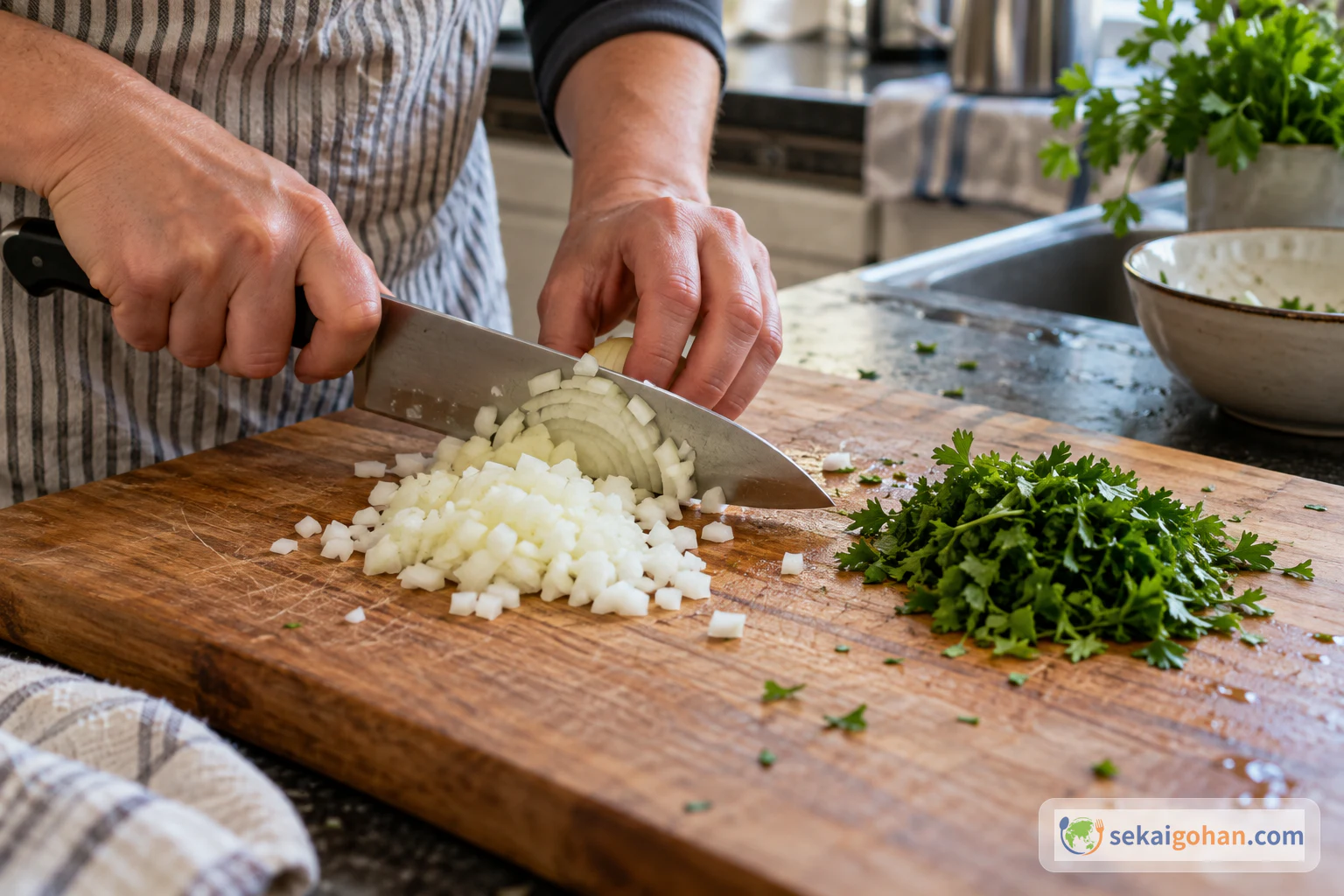
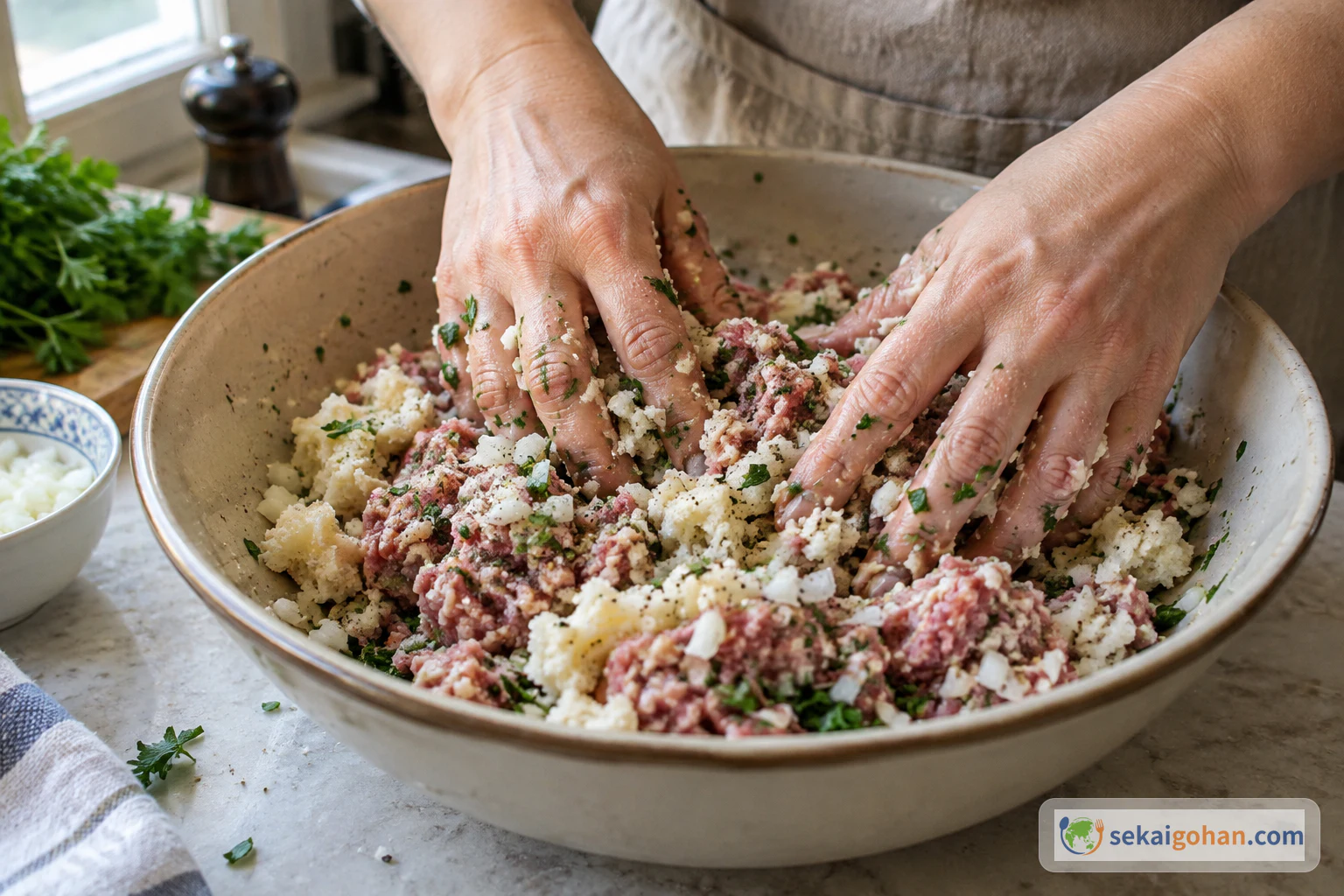
| Onion or parsley is patchy through the meat | The mixture was not kneaded long enough | Keep kneading until it looks even throughout |
| Browned outside but not cooked in the center | The fire was hot, or the parcels were large | Keep grilling and turning until the center is cooked through; timing changes with the heat and equipment |
| You get more or fewer than 25–30 parcels | Portion size and caul fat pieces vary | That number is a guide, not an exact count; keep each portion to about 1 tablespoon |
Serving: Pita, Souvlaki and Fresh Vegetables
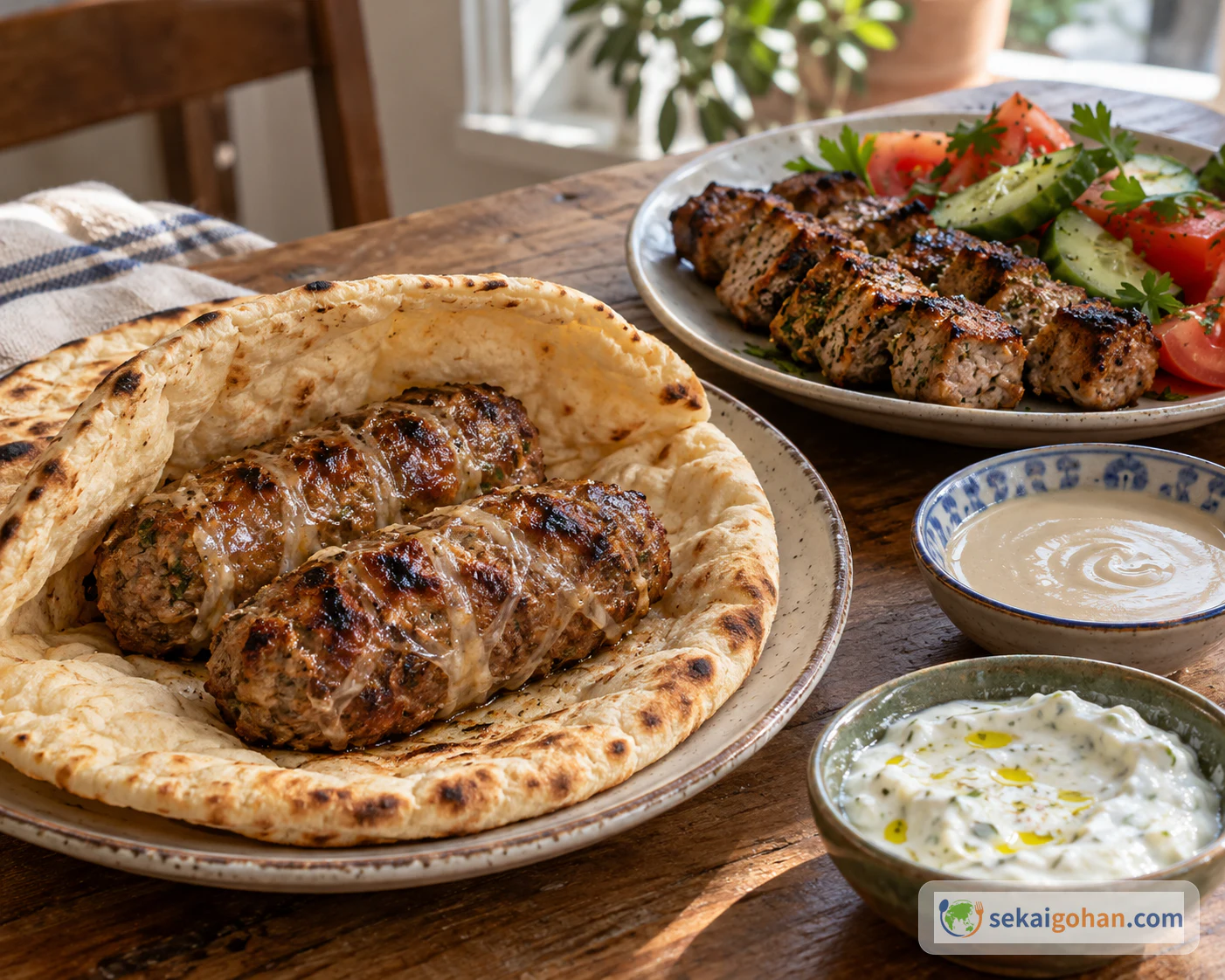
Tuck the grilled sheftalia into pita and serve it with souvlaki, salad, onion, tomato, cucumber and parsley. Tahini or talatouri can go on the side for anyone who wants them. Because the parcels are small and shaped individually, they also sit easily on a meze table among other small dishes.
Another Cypriot Version: Where Recipes Differ
Visit Cyprus, the site of the Cyprus Deputy Ministry of Tourism, publishes a different sheftalies recipe. It uses 800 g of minced pork with 1/3 tsp cinnamon, 1 onion, half a bunch of parsley and 2–3 tbsp of breadcrumbs as an option. The caul fat (from pork or lamb) is washed with water and vinegar, the meat is rolled into egg-sized balls and wrapped individually, and the parcels are grilled over charcoal or on a grill, turned regularly so they cook evenly. That page suggests about 5 per person, eaten in pita with kebab or on their own, and also mentions minced chicken as an option.
This article follows the government publication's version and does not mix the two: there is no cinnamon, vinegar wash, egg, garlic or breadcrumbs in the recipe above, and its bread is soaked and squeezed rather than dry. If you want to try the cinnamon-and-breadcrumb style, cook it as its own recipe from its own quantities rather than blending its ingredients into this one.
Frequently Asked Questions
Is sheftalia a sausage?
No. It is not stuffed into a casing. The museum describes it as minced meat wrapped in caul fat and grilled, and each parcel is shaped and wrapped by hand.
What is the caul fat for?
It wraps each portion of meat and is part of what makes the dish sheftalia. It is a thin fat membrane rather than a skin you remove, and it browns on the grill with the meat.
Can I make it without charcoal?
Yes. The government publication gives hot charcoal or a preheated grill. Charcoal is the traditional way, but timing can change with any setup, so check the browning and that the center is cooked through.
Can I use breadcrumbs instead of the white bread?
The version here uses white bread soaked in water and squeezed dry. The Visit Cyprus recipe uses optional dry breadcrumbs, but it is a different recipe with different proportions, so the two are not interchangeable.
How many does this make?
The government publication gives about 25–30 parcels for this amount. It is a guide rather than an exact count, and it changes with how big you make each portion.
Is there a version without pork?
The Visit Cyprus page mentions minced chicken, but it gives no quantities for it, so no chicken recipe is offered here.
Does the name mean "peach"?
It may come from the Turkish şeftali, meaning peach, but the Cyprus Virtual Food and Nutrition Museum presents this only as a possibility.
Sources
- Republic of Cyprus, Press and Information Office, "Traditional dishes of Cyprus, p. 36: Shieftaliés." Ingredients and quantities, about 25–30 parcels, cutting caul fat into about 8 × 8 cm squares, shaping 1 tablespoon to about 6–7 cm, grilling over hot charcoal or a preheated grill for 15–20 minutes while turning, and serving in pita with souvlaki, vegetables, and tahini or talatouri. https://publications.gov.cy/en/assets/user/publications/2026/2026_31/HTML/36/
- Visit Cyprus (Deputy Ministry of Tourism, Cyprus), "Sheftalies." A different recipe with 800 g pork, cinnamon, optional breadcrumbs and caul fat washed with water and vinegar; egg-sized parcels; about 5 per person; serving in pita with kebab or on their own; mention of minced chicken. https://www.visitcyprus.com/discover-cyprus/food-drink/local-recipes/sheftalies-2/
- Cyprus Virtual Food and Nutrition Museum, "S̆eftalia, S̆eftalin." The dish as a typical meat meze of modern Cypriot cooking, wrapped in pork caul fat and charcoal-grilled; Cypriot singular and plural forms; the possible origin of the name in Turkish şeftali (peach); records of it being made mainly in souvlaki shops and eaten at breakfast. https://www.cyprusfoodmuseum.com/en/sylloges/trofima/seftalia-seftalin