The morning the bread loosens into crumbs: migas begin the night before
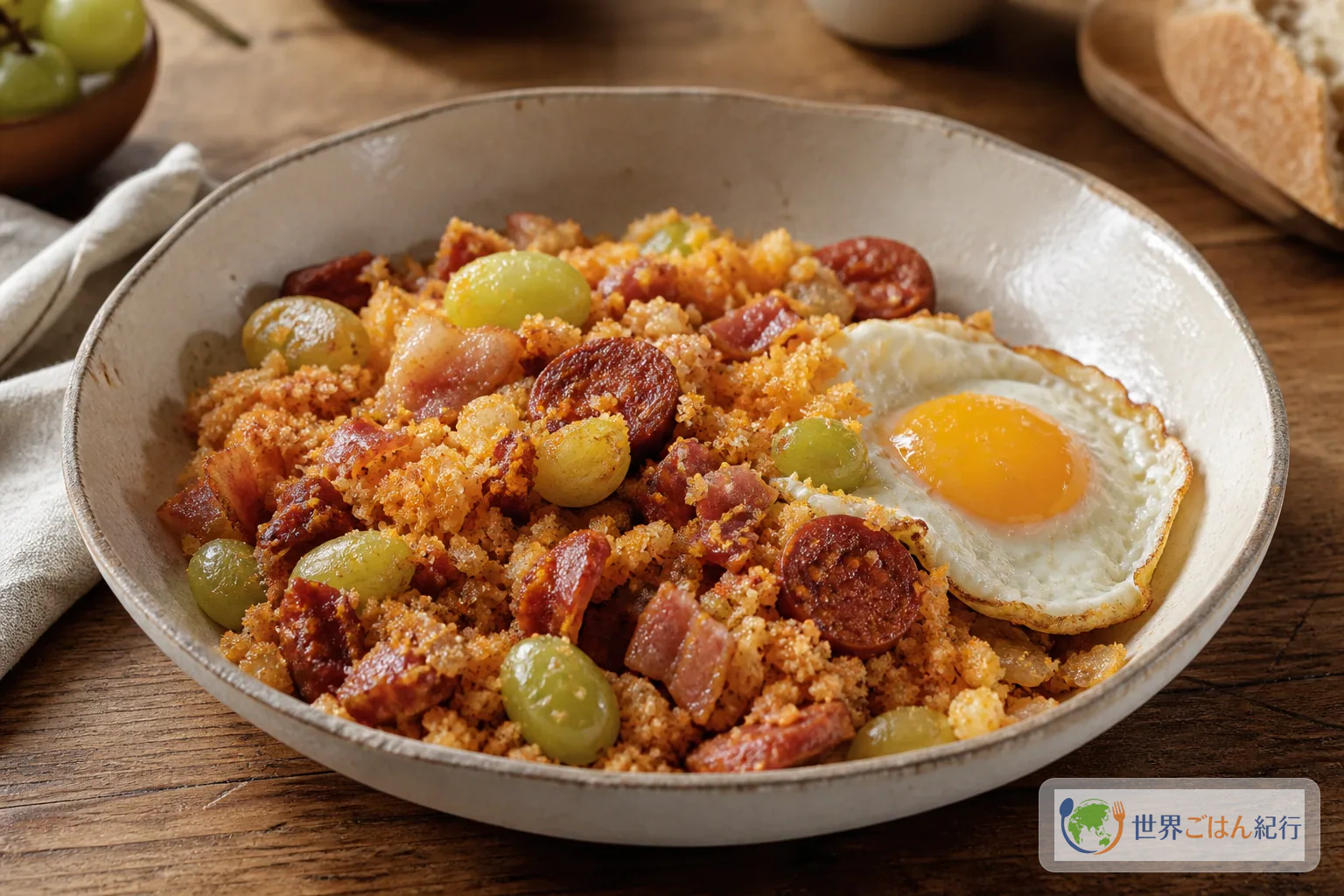
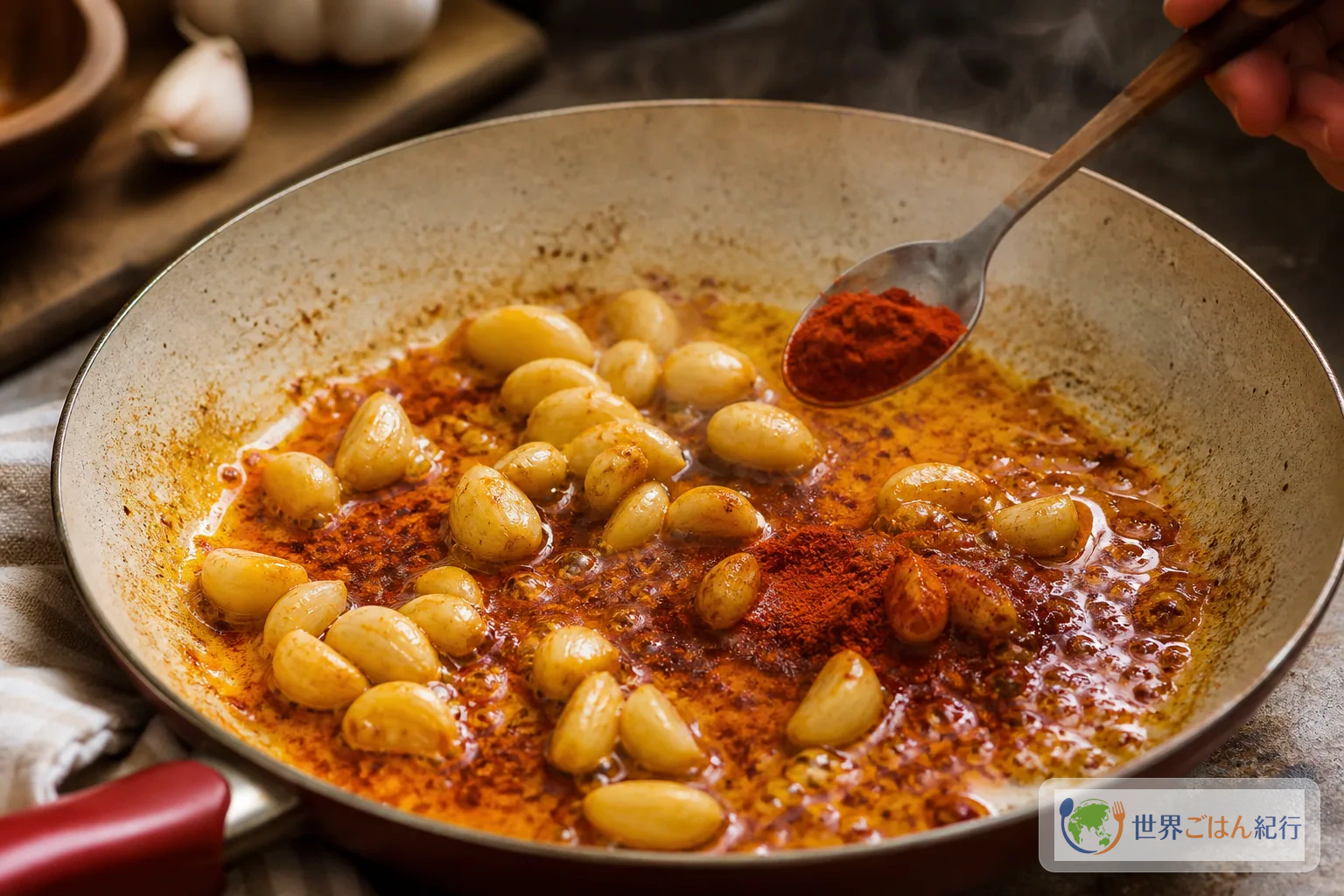
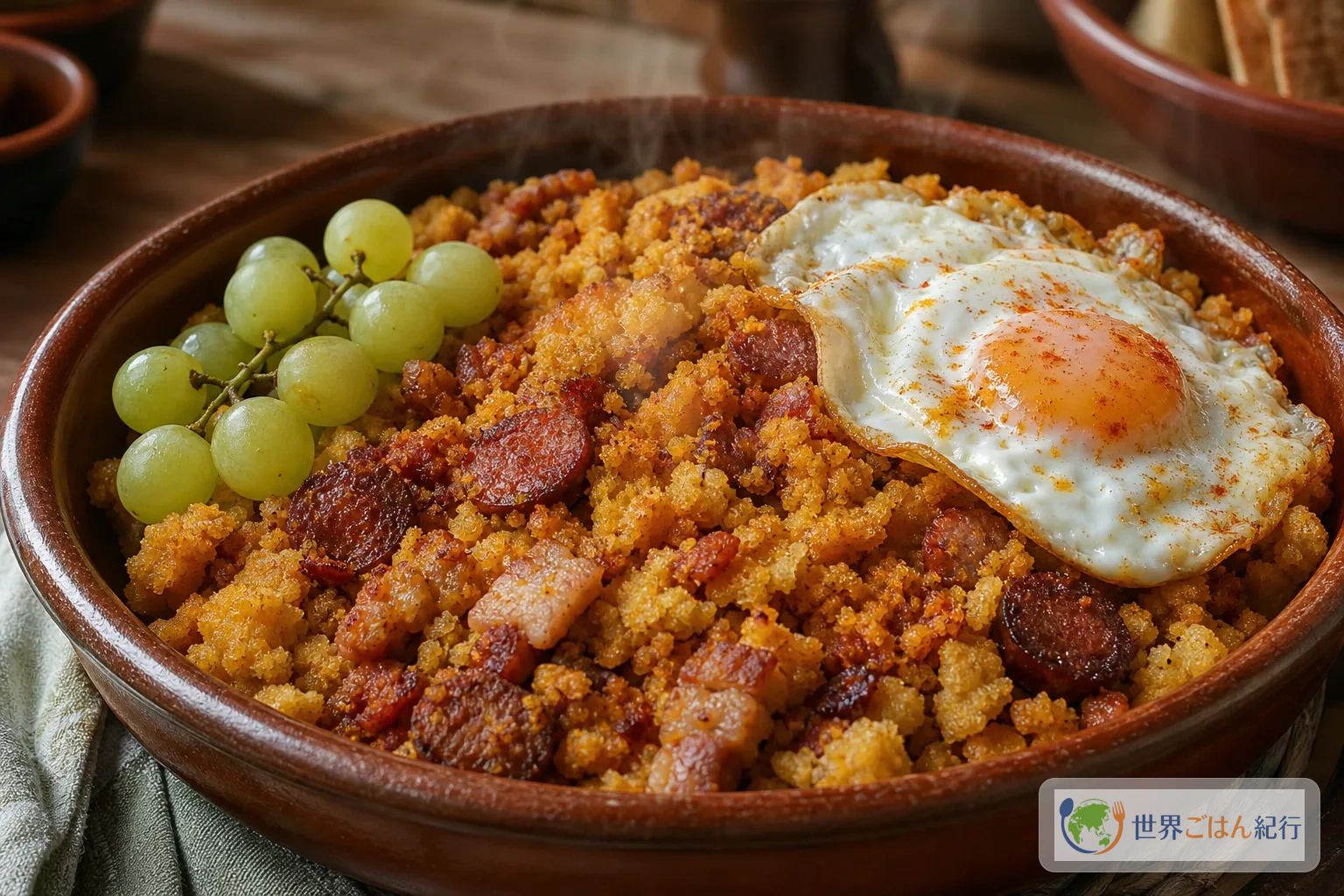
Shake the pan and the bread crumbs move with a soft rustle. Garlic comes first, then the red sweetness of paprika and the smoke of grilled chorizo follow after. At the edge of the plate sit a few glossy grapes. Migas is a dish that turns familiar bread into a different kind of food.
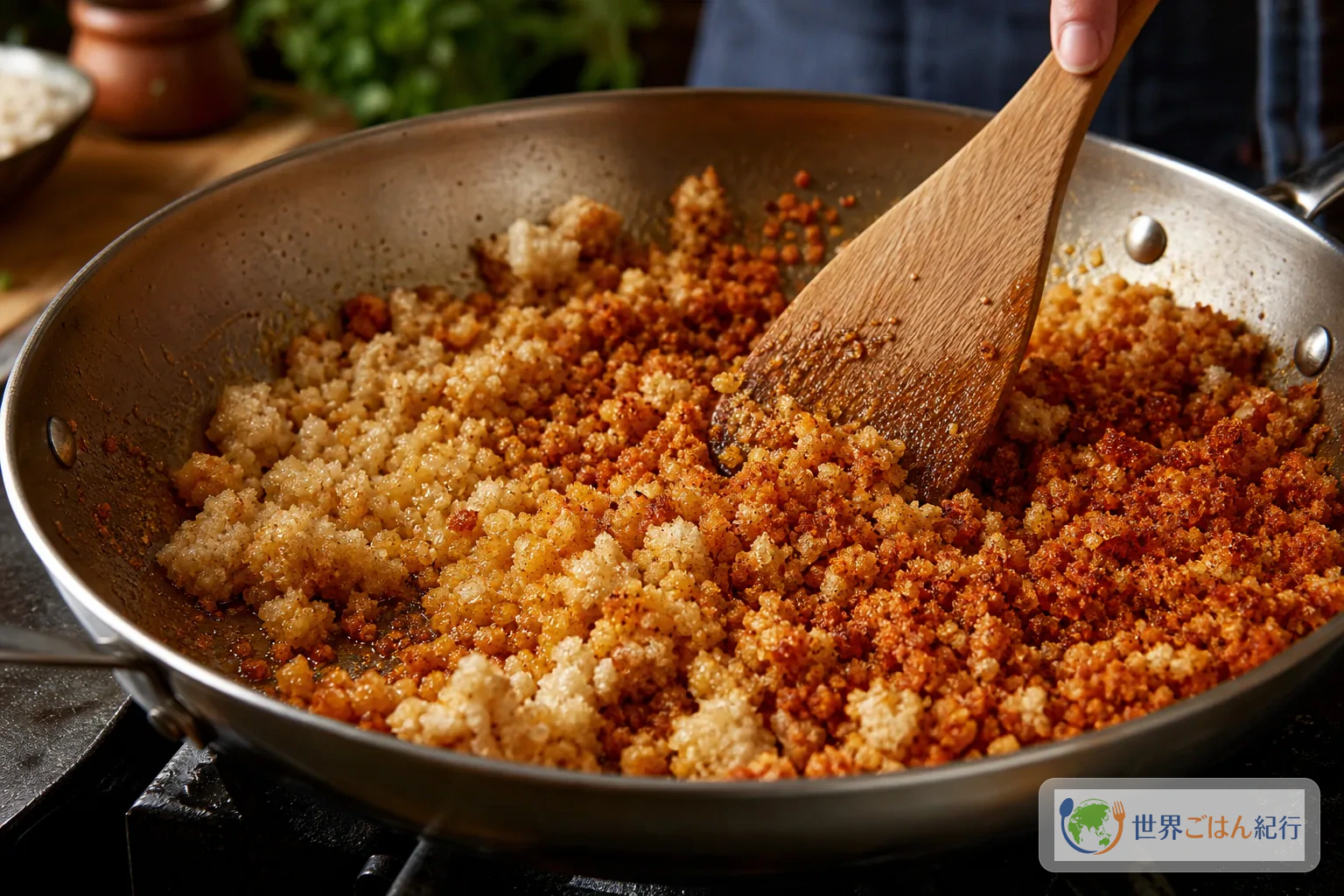
The Spanish word migas means "crumbs." But this is not a dish of frying fine breadcrumbs. You chop hard bread into small pieces, add a little moisture, and keep it moving patiently in oil until the outside is light and toasty and the inside is not dry.
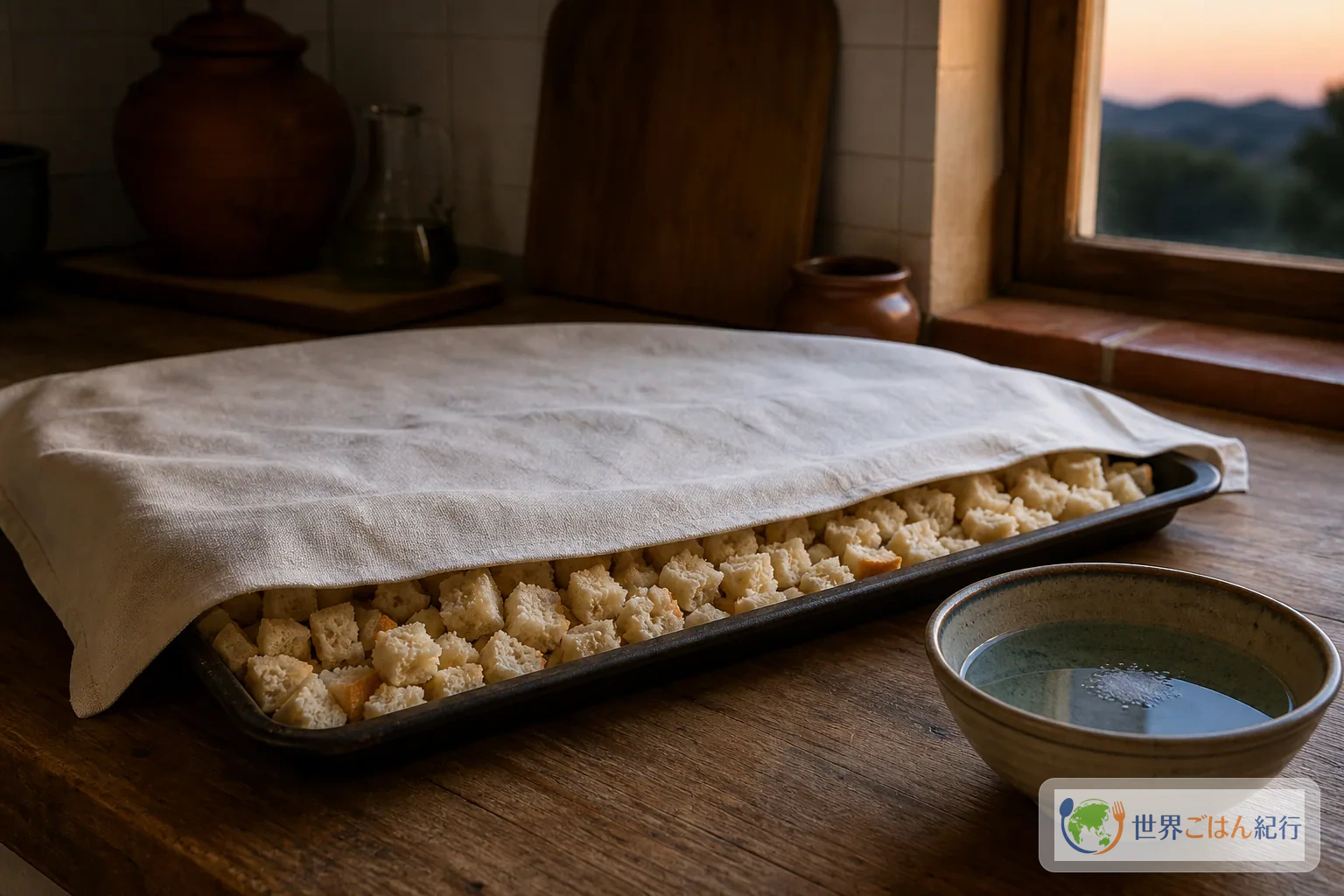
What you judge is the state of the bread. Do not use soft sandwich bread bought this morning; use a close-textured loaf that has dried out for two or three days. Dampening it the night before is not about soaking it. It is to return moisture to the center of each piece so it can be dried and loosened in the pan the next day.
This recipe takes its framework from Castilla-La Mancha: "hard bread, garlic, olive oil, paprika, chorizo, pancetta and grapes." Like the Extremaduran method, it follows the same flow: chop and dampen the bread the night before, then keep it moving constantly on the day to separate the crumbs. The Spain Tourism Board's Extremaduran version and the Castilla-La Mancha tourism recipe also record the idea of using hard bread and layering garlic, oil and paprika.
The core of the flavor is releasing the moisture, more than browning the bread
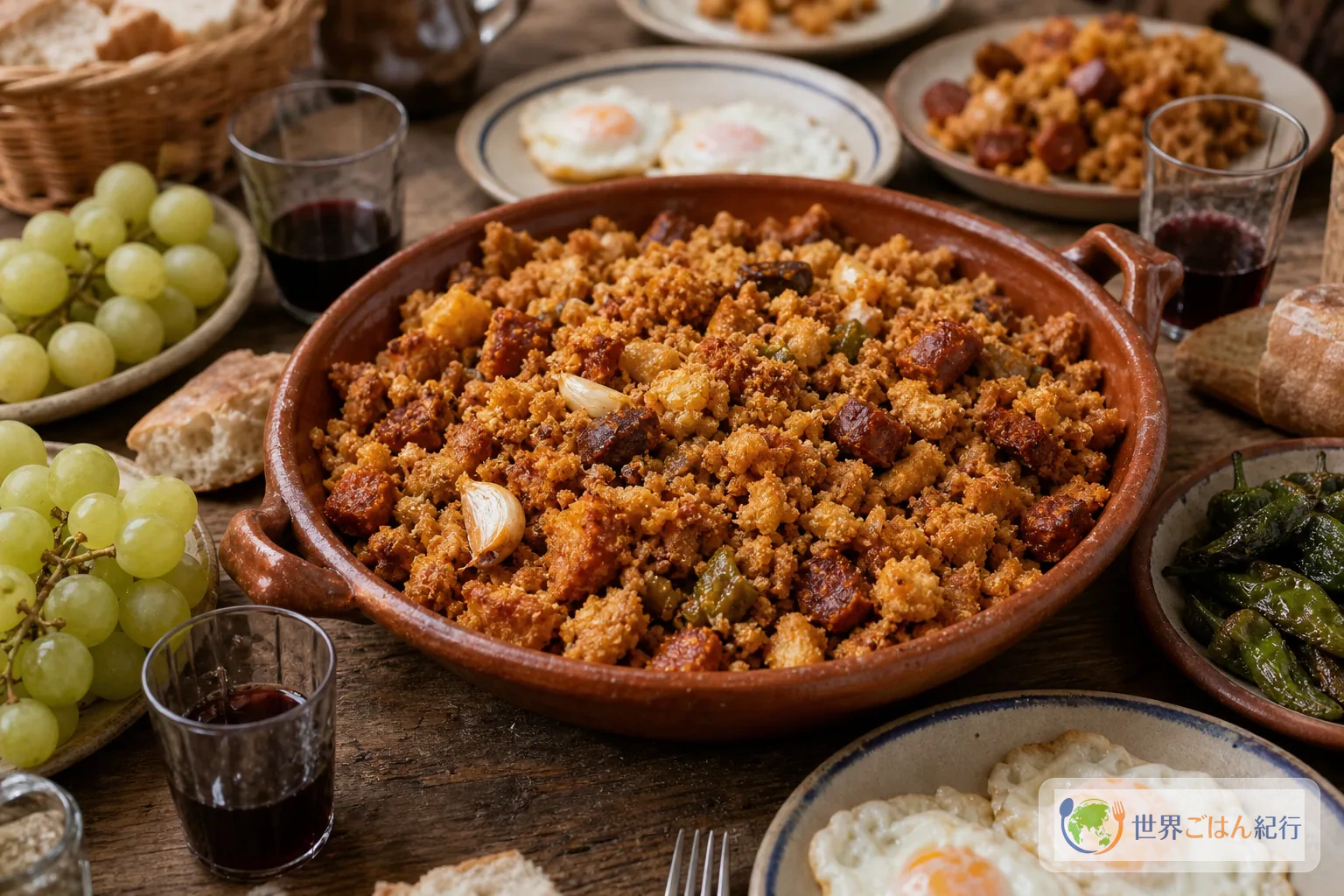
Adding more fillings does not bring you closer to the original. Three things should remain on the plate.
- The round aroma of garlic and olive oil
- The red sweetness of paprika and the saltiness of browned meat
- The toasty outside of each crumb and the moist chew at the center
If you soak the bread too much, it turns into dumplings even when fried in the pan. If there is too little water, only the surface hardens and it crumbles powdery in the mouth. The baseline is water at 36% of the weight of the bread, that is 180 ml for 500 g bread, scattered gradually over the whole with a spray bottle or spoon.
Looking at how other regions make it shows what is worth keeping. Aragonese migas uses close-textured bread, bacon, chorizo, garlic and paprika, and is presented with grapes or an egg alongside. The Spain Tourism Board's Aragonese version also lists "migas canas," made by soaking the bread in milk and leaving out the meat and paprika. Rather than a single fixed recipe, migas offers a range of ways to eat bread crumbs well, according to the place and what you have.
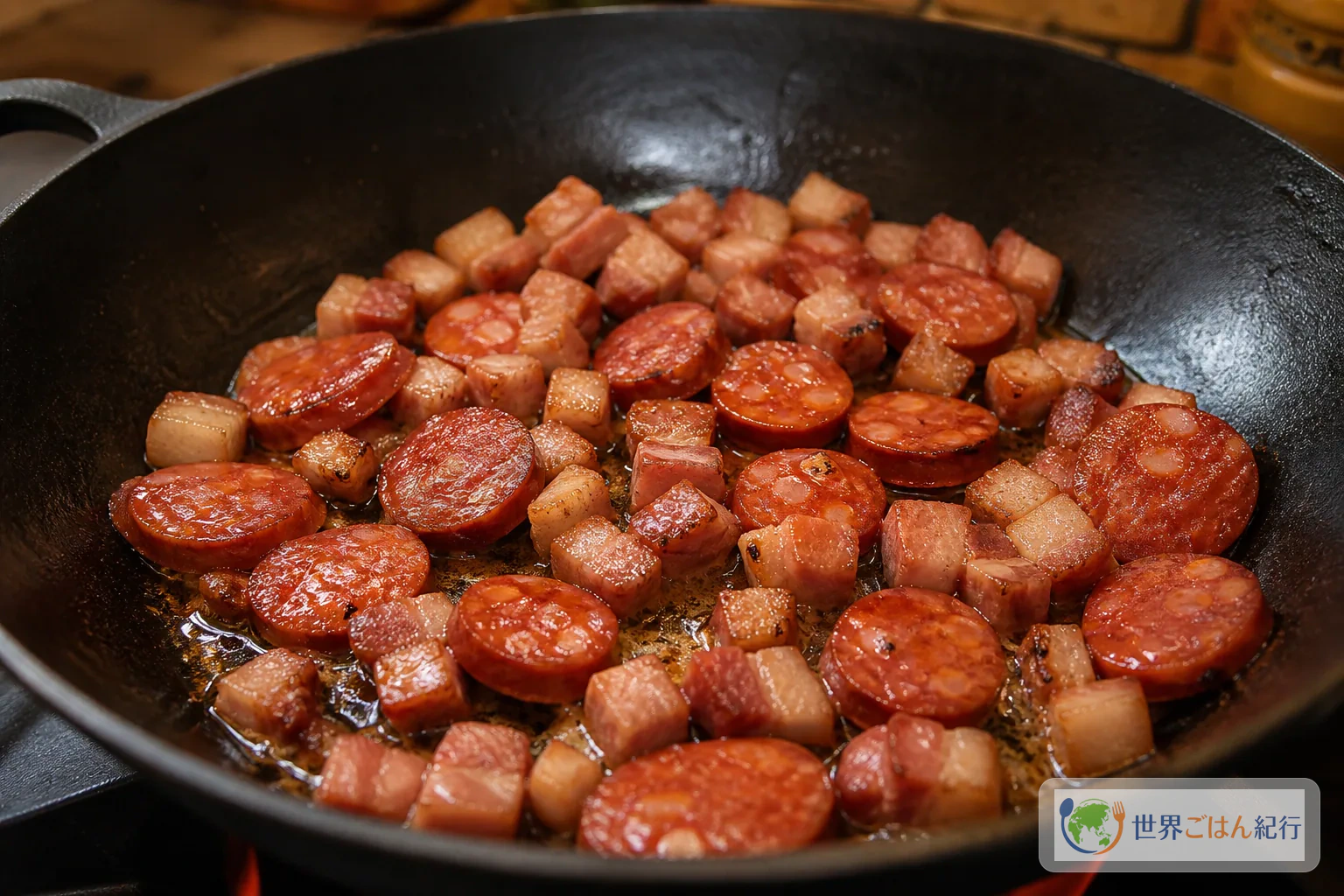
When recreating it elsewhere, you do not need to go to great lengths to find chorizo. A mild Spanish chorizo gets you closer to the aroma, but a thick smoked sausage plus pancetta can also carry the meat aroma into the oil. Replacing the bread with breadcrumbs is not recommended. The grains become too uniform and the "eat while loosening" feel of migas disappears.
Ingredients and shopping
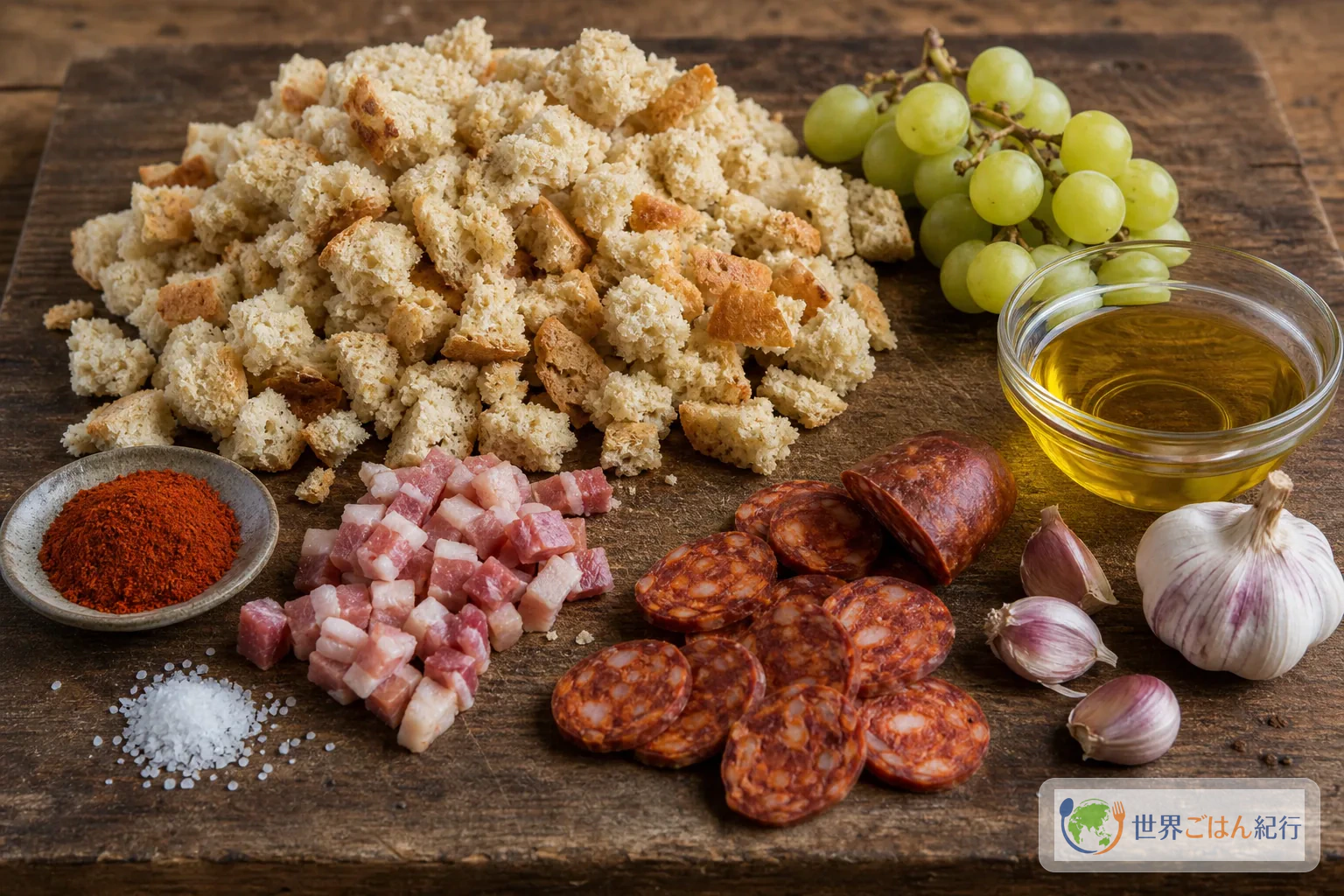
Things you can check in person at the local store, such as bread, garlic, grapes and eggs, need no particular guidance. If you are unsure which kind of paprika you have, want to compare aromas, or want to try sweet migas canas too, an online order can be worth it. Prices and stock change, so check the current size, ingredients and contents before buying.
For paprika, first confirm that it is a "non-hot" powder. What this pan needs is the red color and sweet aroma, not the heat of chili. If you already have ordinary paprika at home, you need not buy more for the first batch.
If you want to try the dry aroma of cumin, add only 1/2 tsp at the finish. It is not a spice to put in the lead, but one that passes a dry thread of aroma between the meat and the bread. If someone in the family dislikes heat, you can try it on a separate serving rather than in the whole pan. On days you do not use it, do not buy it.
Migas canas is a white variation made by soaking the bread in milk and leaving out the meat and paprika. For sweet, a little sugar and cinnamon; for savory, just garlic. For the ordinary savory migas it is unnecessary, so only those who will try the milk version need check the cinnamon.
What shows the difference first when reaching toward the original is not an unusual meat but "the hardness of the bread" and "the aroma of the paprika." The first time you cannot find chorizo, a thick smoked sausage from the neighborhood is enough. If you have paprika at home, do not buy it. Cumin and cinnamon are only for those who want to try a change of aroma or the milk version.
Method: dampen the night before, and do not stop the pan on the day
Before cooking, have ready a large skillet or heavy shallow pot, a wooden spoon, and a bowl to spread the bread. If you stop in the middle, migas tends to brown only on the surface while the center turns into lumps. Brown the meat first and remove it, drive off moisture while frying the bread, then return the meat at the end. With this order you can lower the heat when it is about to burn.
Tips for rescuing problems: do not fix water and heat at once
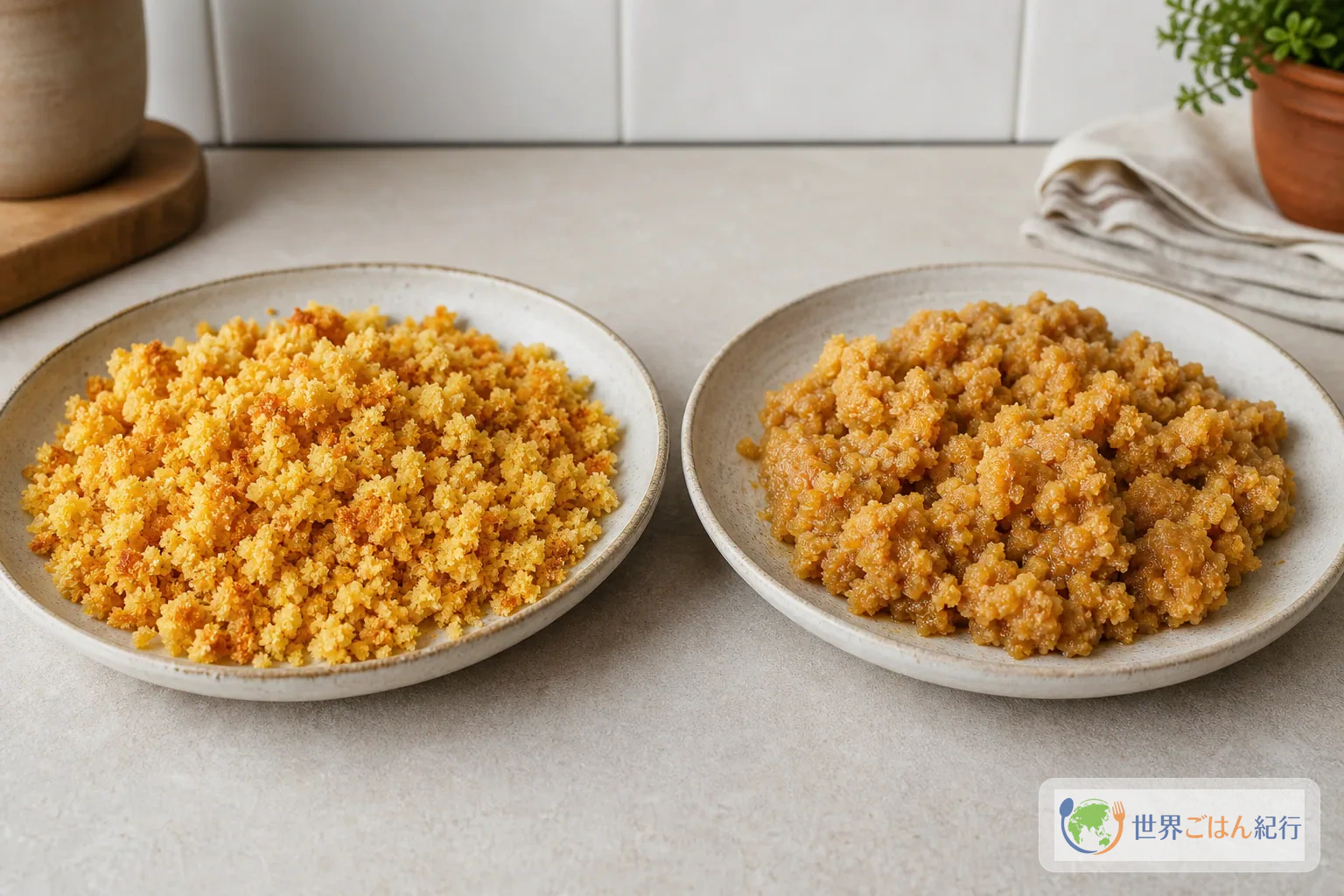
If it turns sticky, spread it out before raising the heat
If you used a lot of water, or chopped the bread too fine, the crumbs clump like dumplings. Cooking over high heat all at once scorches only the outside, so spread it thinly on the bottom of the pan and, over medium-low heat, break up the clumps with the wooden spoon for 3 minutes at a time. If it is still heavy, give it 5 more minutes. Adding oil comes last.
If it is dry, add only 1 tbsp hot water
When the center of the crumbs is dry, lower the heat and pour 1 tbsp hot water around the edge of the pan. Cover for just 30 seconds to let it take on steam, then remove the lid at once and stir. Adding water in a lump takes you back to the first failure, so limit it to 1 tbsp at a time.
If the paprika is bitter, do not try to rescue the whole pan
The bitterness of scorched powder cannot be erased with sugar or salt. For mild bitterness, add 50 g of unfried bread and 1 tsp oil to dilute it. If the bitterness is strong or black specks appear, do not force yourself to eat it, and next time go back to the order of adding the powder after turning off the heat.
Without a large skillet, fry in half batches
Pushing 500 g bread into a small skillet keeps the moisture from escaping and brings it close to steamed bread. A shallow pan of 24–28 cm is ideal; if you do not have one, divide the bread into 250 g portions and use half of the oil and paprika oil each time. Brown the meat all at once at the start and combine the two batches of bread at the end, and the flavor stays consistent.
Differences by region and table: the same migas looks different by what goes alongside
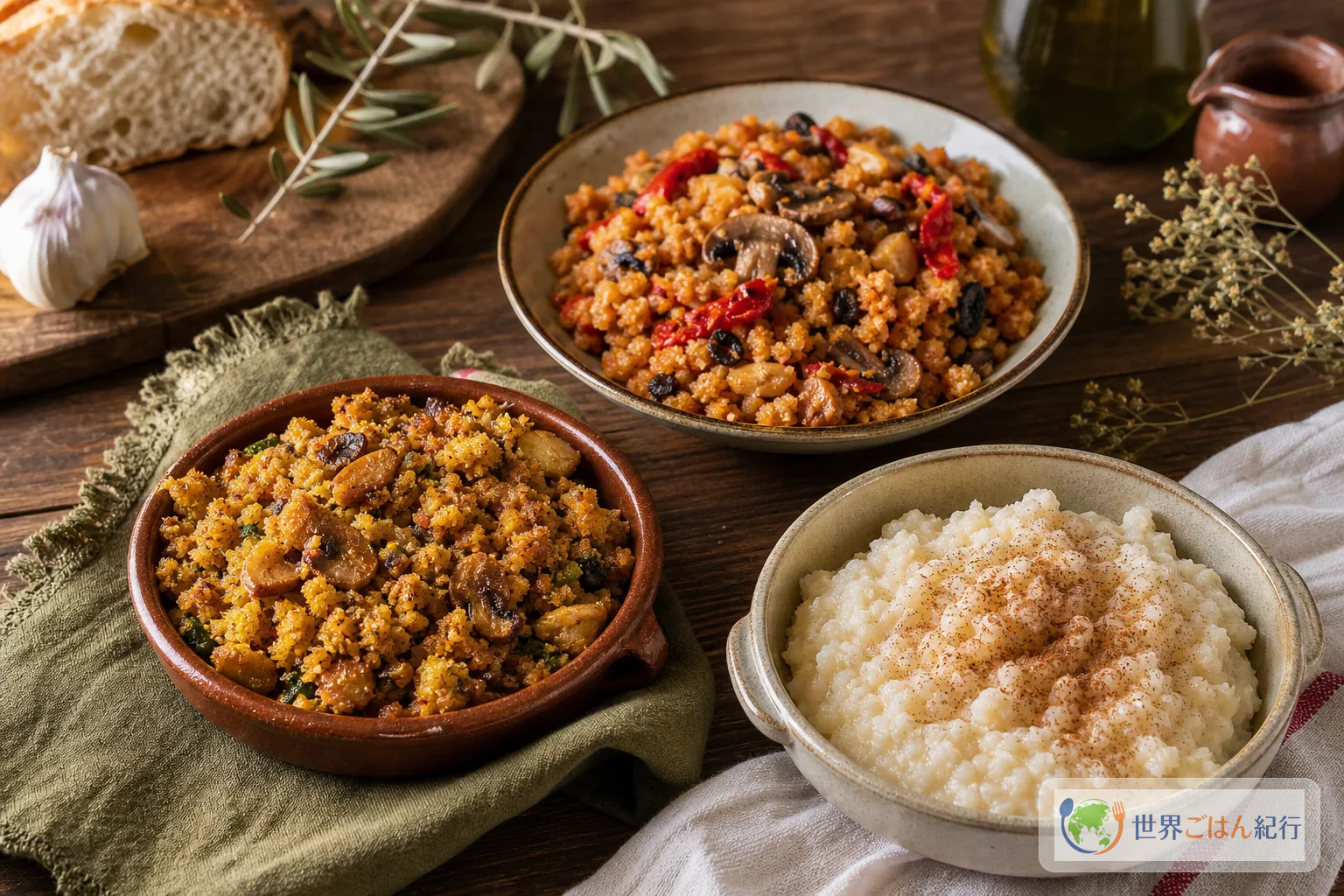
Migas is not a dish confined to one region of Spain. The Castilla-La Mancha tourism board presents it as a "humble but strengthening dish" that uses hard bread, combining bread, garlic, oil and paprika with chorizo, pancetta and grapes. The official Extremaduran recipe has you chop pan candeal finely, wrap it in a damp cloth and fry it the next day. The Aragonese version is described as leaving close-textured white bread for 3 days, combining it with bacon and chorizo, and serving grapes alongside when there is no meat.
These differences are not wavering in the recipe but adjustments to the table of each place. On a cold morning, to take up meat fat, eggs or chorizo. If fruit is close at hand in harvest season, grapes or melon. If you have bread and milk, migas canas with the paprika and meat removed. With different things at hand, the same technique of turning bread into crumbs and frying them produces a different plate.
If you do not stop at calling it "food of the poor," the feel of this dish becomes clearer. As the official description from Castilla-La Mancha says, hard bread was not thrown away; it was turned into a filling plate from few ingredients and eventually became a dish for gatherings with meat and grapes alongside. It holds not only thrift but the order in which people eat around a pot and the skill of recombining what is at hand.
In Japan, making migas for breakfast may feel a little grand. But it is just right as a weekend lunch that uses up old bread and goes to the table in the pan. On days you want to continue a Spanish table, setting it beside the potatoes and eggs of tortilla española, the browned noodles of fideuà and the stew of cocido madrileño shows the differences between "frying," "cooking in a pan" and "simmering" within the same country.
Variations: days to move toward the original, and days to use up the bread on hand
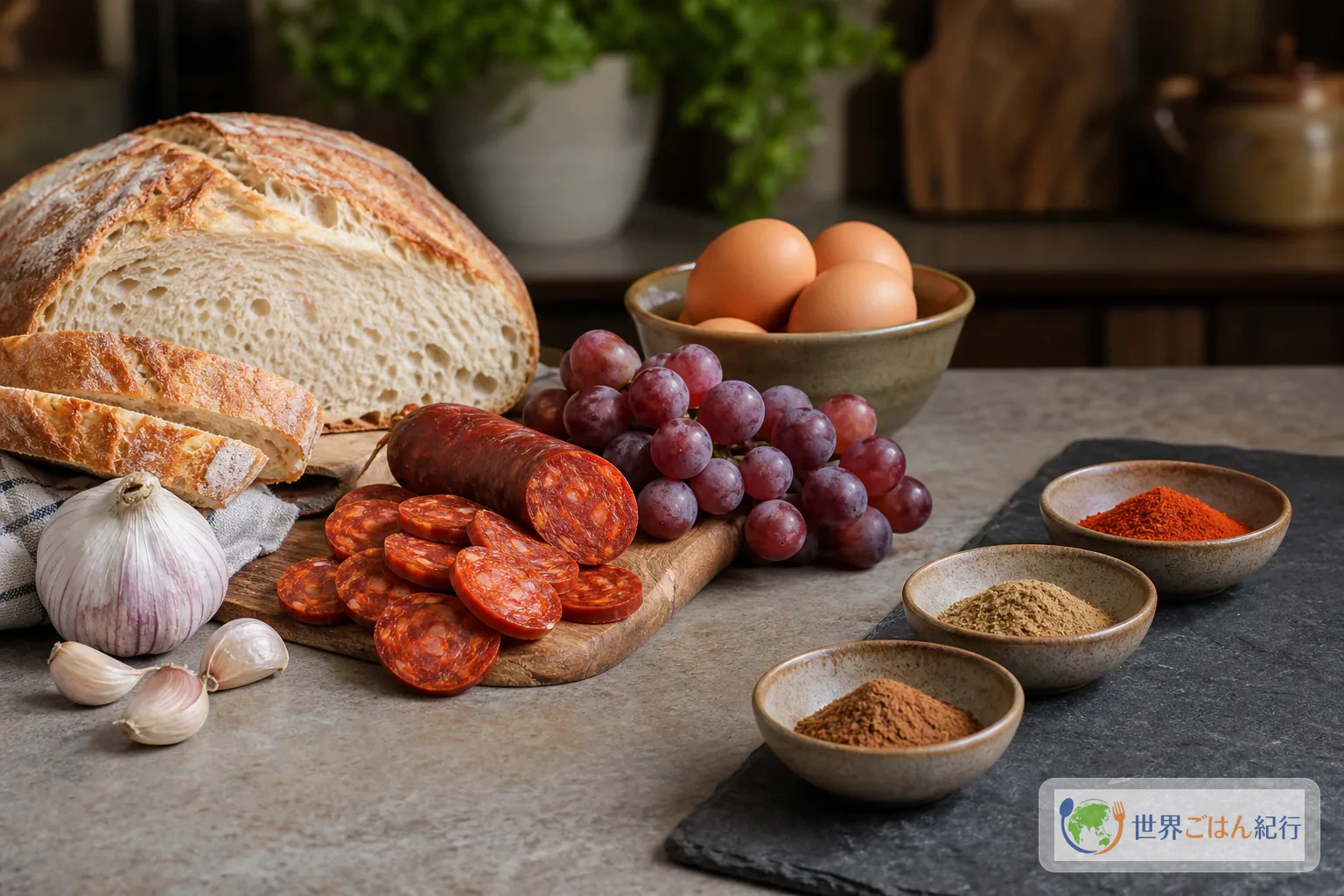
A day to add cumin at the finish
Add 1/2 tsp cumin in the last 2 minutes after returning the meat. This proportion keeps the dry aroma better than frying it hard in the oil from the start. If you want to add the sweetness of dried red pepper as well, rehydrate seeded dried peppers briefly in hot water, mince them and mix them in with the meat. This is not a recipe for adding more hot chili.
Meatless: mushrooms and roasted pepper
Leave out the pancetta and chorizo and cut 120 g mushrooms and 80 g red bell pepper into 7 mm cubes. First cook them 6 minutes in 2 tsp oil so the moisture is driven off, and take them out. Return them after finishing the migas, and the vegetables do not stew and the toasty bread aroma remains. The meat fat is gone, so increase the olive oil by 15 ml and decide on the salt at the end.
Sweet migas canas: white, with milk and cinnamon
In a separate pot, dampen 400 g bread with 250 ml milk, leave out the paprika, pancetta and chorizo, and fry in 1 clove garlic and 30 ml butter or olive oil. When the crumbs loosen, add 25 g sugar, turn off the heat and sprinkle a little cinnamon. The Spain Tourism Board's Aragonese version also introduces migas canas, soaked in milk with the meat and paprika left out. With chocolate or grapes alongside, it becomes a different breakfast from the savory migas.
Reheating the next morning: break an egg in
Warm refrigerated migas in a skillet with a little oil over medium-low heat for 5 to 6 minutes. When it has loosened, drop an egg in the center, cover and cook 3 to 4 minutes. When the white is set and the yolk is as firm as you like, add grapes or pickles. Raising the toasty surface works better as a next-day dish than adding water to return it to porridge.
Storage and FAQ: decide what to do afterward too
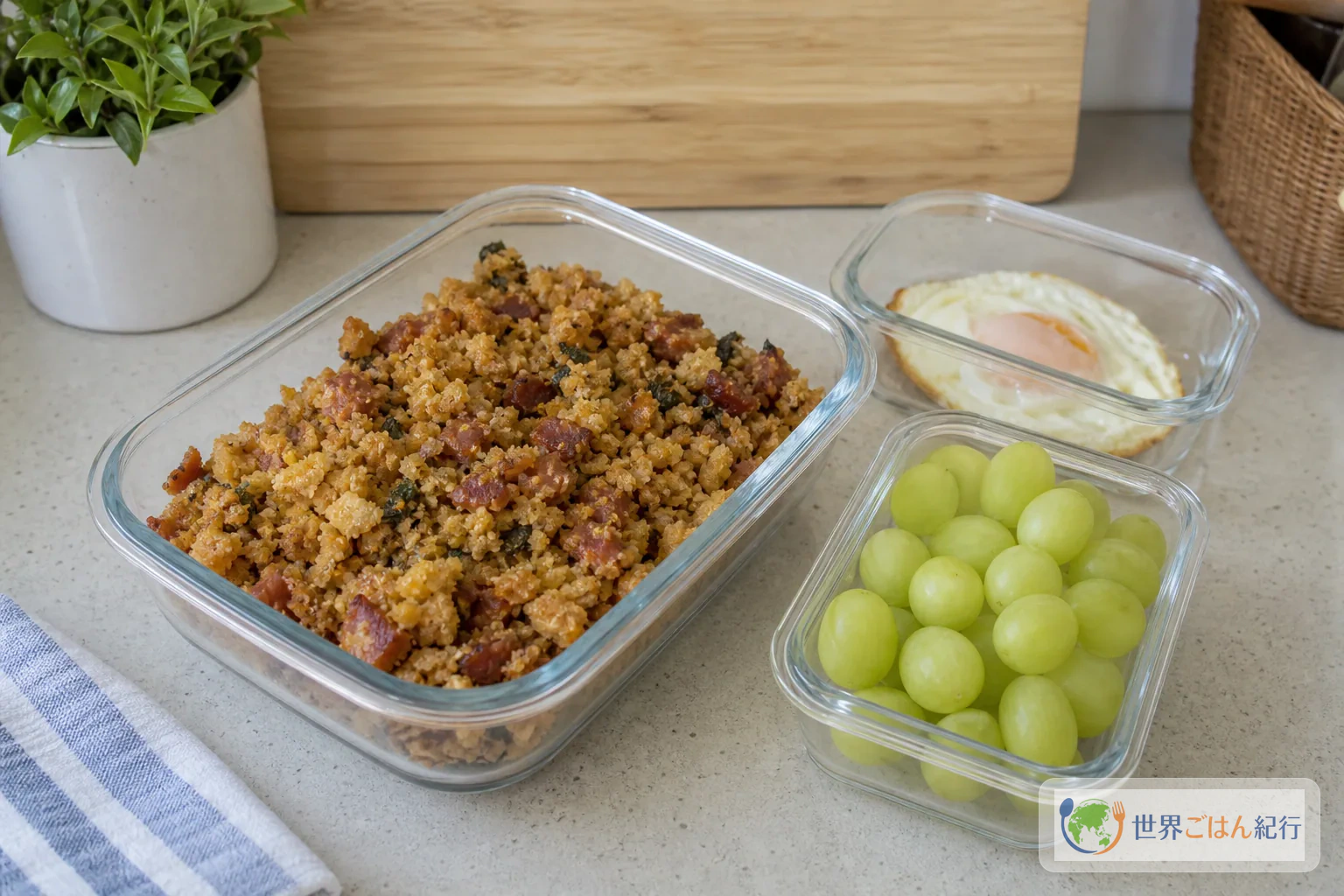
Can migas be refrigerated?
Yes. For migas with meat, move leftovers to a shallow storage container with clean utensils and refrigerate promptly once the steam has settled. Japan's Ministry of Health, Labour and Welfare also advises storing leftover food with clean utensils and dishes and refrigerating foods that need it promptly. After checking its six points for preventing food poisoning at home (in Japanese), this article takes the safe side and uses the next day to the second day as a household guide. Keep the grapes and eggs separate, and reheat only what you will eat in a pan until it is hot through the center. It can be frozen, but the crumbs break down a bit, so try a small amount first.
I cannot chop the bread the day before. Can I make it with the bread I have now?
Yes. Cut it into 5–8 mm cubes and dry them in a 120°C oven for 20 to 30 minutes, turning once halfway. The aim is to remove moisture from the center without scorching the surface. Cool completely, then sprinkle in the salted water gradually and let it stand 30 minutes. Commercial breadcrumbs are fine-grained and depart from the texture of migas, so think of them as an emergency substitute.
I have neither chorizo nor pancetta.
You can make it with just a thick smoked sausage. Use 120 g of meat in total, increase the oil slightly and build up browned bits. For a fully meatless version, the mushroom and red pepper method above is suitable. Without the fat and saltiness of meat, though, do not raise the salt from the start; decide on the seasoning once the bread has loosened.
Is migas the same as the Mexican dish?
The name is the same, but the Spanish migas here is a dish of hard bread. It differs in main ingredients and method from the dish of eggs and tortillas called "migas" in Mexico and Tex-Mex. Searching brings up both, so when looking for the bread dish, adding a region name such as "migas españolas," "migas extremeñas" or "migas manchegas" keeps you from getting lost.
What if there are gluten, pork or dairy allergies?
Because it uses bread it contains gluten, and the basic version contains pork from the pancetta and chorizo. Even for the meatless version, check the ingredients if you use sausage or bouillon. Migas canas uses milk, so if you avoid dairy, replace it with plant-based milk or choose the savory meatless version. Substituting the bread changes the texture, so it is safer to explain the dish name and the substituted version separately.
What goes well alongside?
At first, one of grapes, a fried egg or roasted pepper is enough. Adding sweet fruit to strongly salty migas switches the flavor with every bite. For drinks, a light red wine or sparkling water, or for non-alcoholic, a tart grape juice, is easy to match. Keeping the contrast between hot crumbs and cold fruit makes the table come together better than adding too many things.
Sources
- Spain Tourism Board, "Migas extremeñas": checked the ingredients of the Extremaduran version, dampening the night before, 30 minutes of cooking and accompaniments (accessed July 2026)
- Spain Tourism Board, "Perolico breadcrumbs": checked the Aragonese version's hard bread, bacon, chorizo, grapes and the regional difference of migas canas (accessed July 2026)
- Castilla-La Mancha Tourism, "Migas manchegas": checked the pastoral origin, ingredient amounts, the method of dampening the bread before frying and the pairing with grapes (accessed July 2026)
- Real Academia de Gastronomía, "MIGAS": checked the ingredient makeup as a recipe for all of Spain and the slow-stirring method (accessed July 2026)
- The Guardian, "Bread head: why you need migas in your life": checked its place as a use-up-the-bread dish seen from the English-speaking world and the differences in fillings by region (accessed July 2026)
- Ministry of Health, Labour and Welfare (Japan), "Six points for preventing food poisoning at home": checked storing leftovers and the idea of chilling foods that need refrigeration promptly (accessed July 2026; in Japanese)
Because this is a dish whose ingredients and names change by region, the text builds its framework on recipes from public tourism bodies and the Real Academia de Gastronomía, and adjusts the amounts to suit a home skillet. Do not fix a single home version of migas; finish it by looking at the hardness of the bread and the state of its moisture.