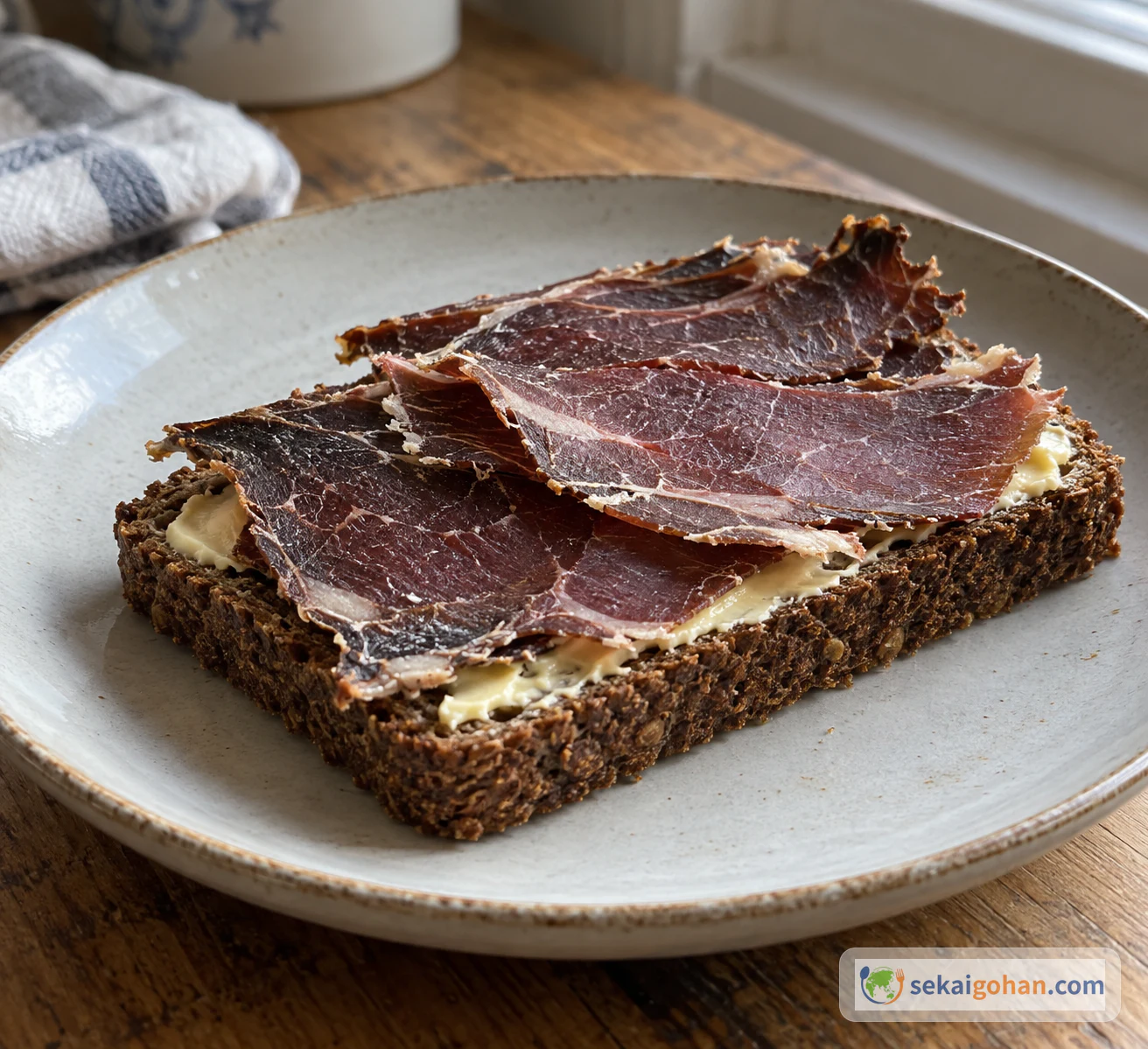
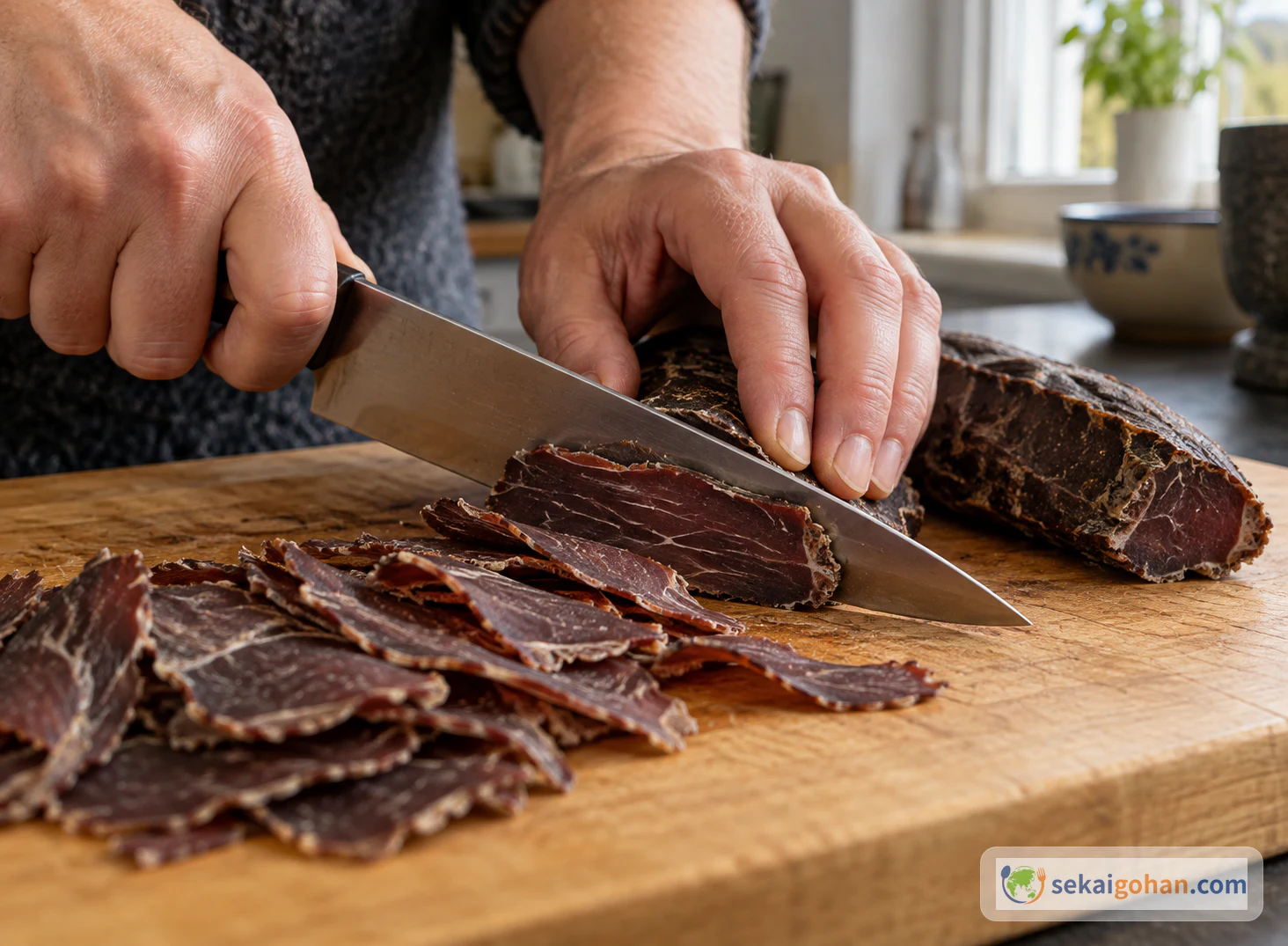
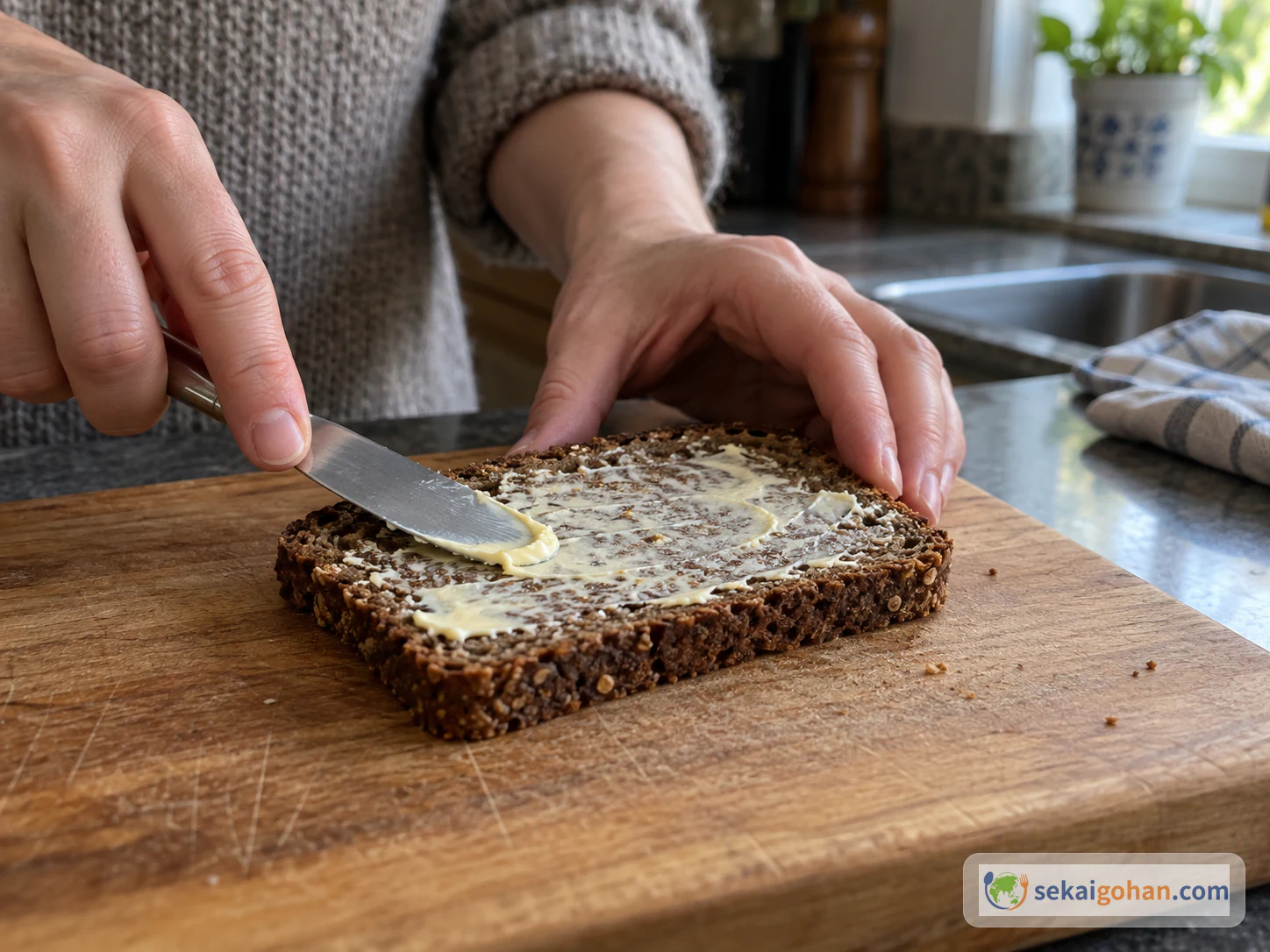
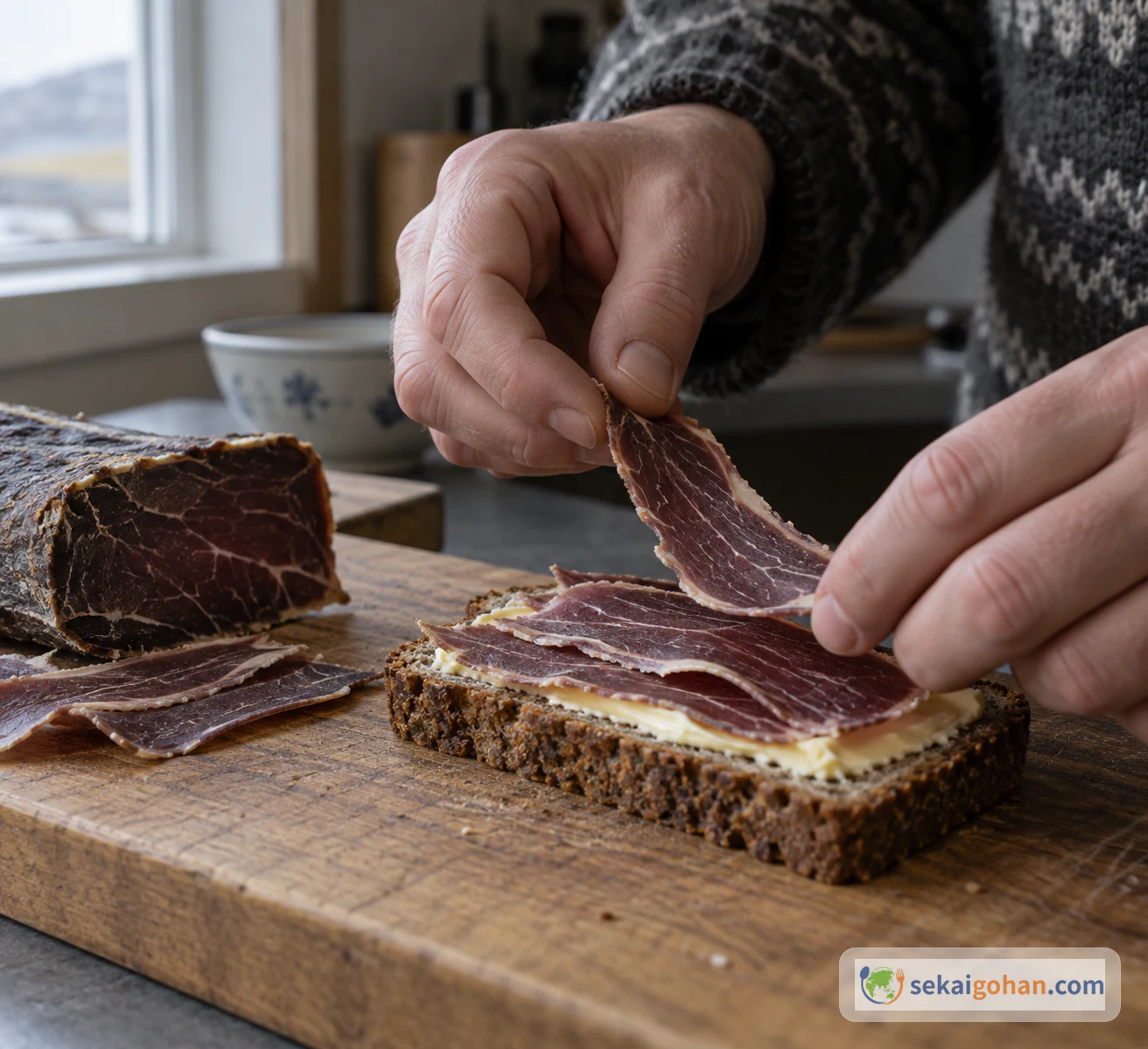
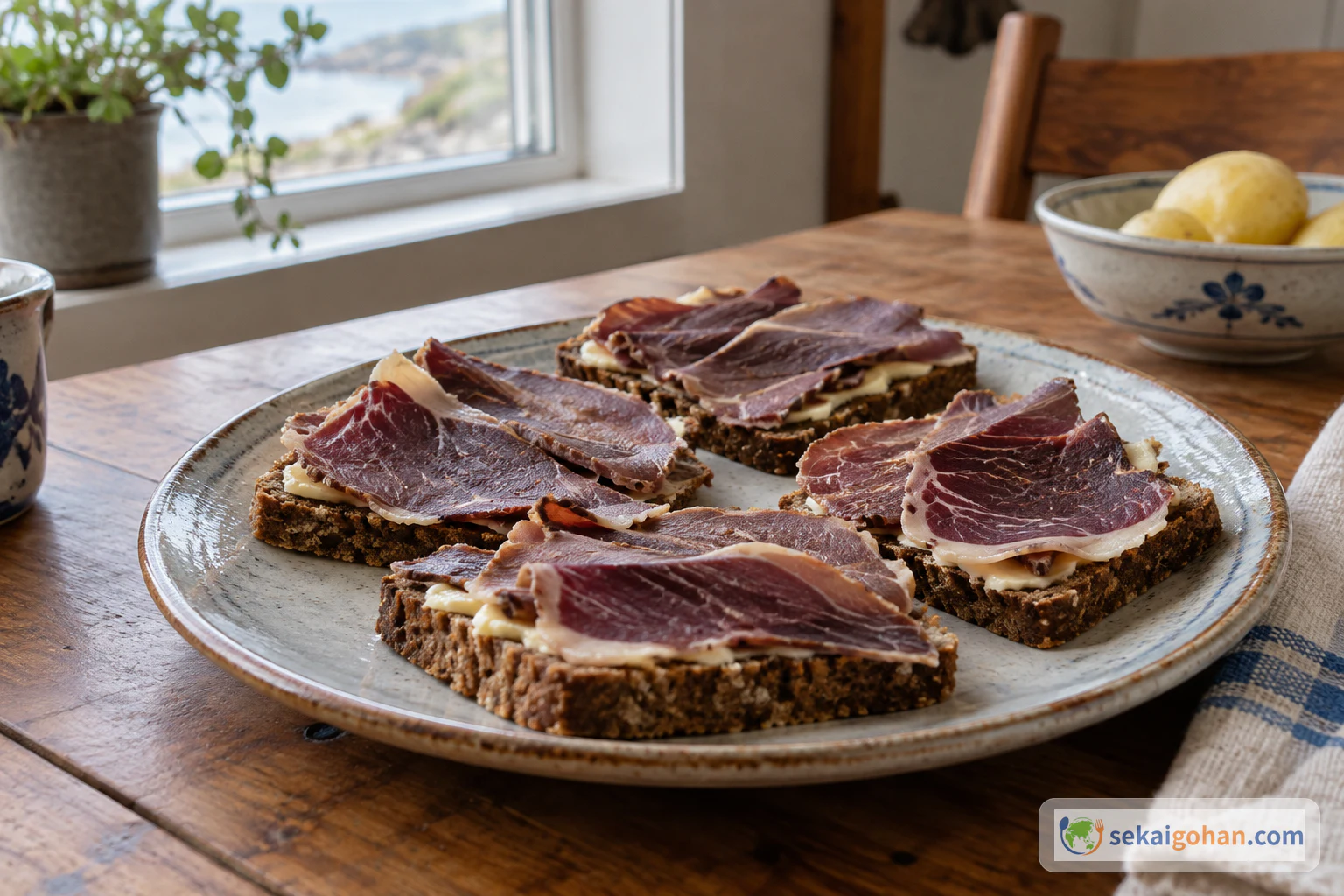
On a festive platter in the Faroe Islands, the mutton is cut so thin that light shows through the dark mahogany edges of each slice. Each slice goes onto a piece of dense, buttered rye bread. The meat has hung for months in a hjallur, a wooden shed with slatted walls. There, the wind off the North Atlantic dries it, and the slow maturing the islanders call ræst gives it a deep, strongly aged aroma and a salty bite. Skerpikjøt is the fully dried form of this mutton, and it is eaten uncooked and cold. At home, the whole skill is buying a well-made piece and slicing it as thin as your knife allows.
Wind, Months and a Wooden Shed
How the meat is made
The hjallur sits at the centre of skerpikjøt. Its walls are built of slats with gaps between them, so the salty sea wind passes straight through the hanging legs of mutton. The meat usually stays there for five to nine months. During that time it dries and matures in the open air. Each household relies on its own shed, and on knowledge handed down about when and how to hang the meat. The aroma and flavour shift from one shed to another and from one year to the next.
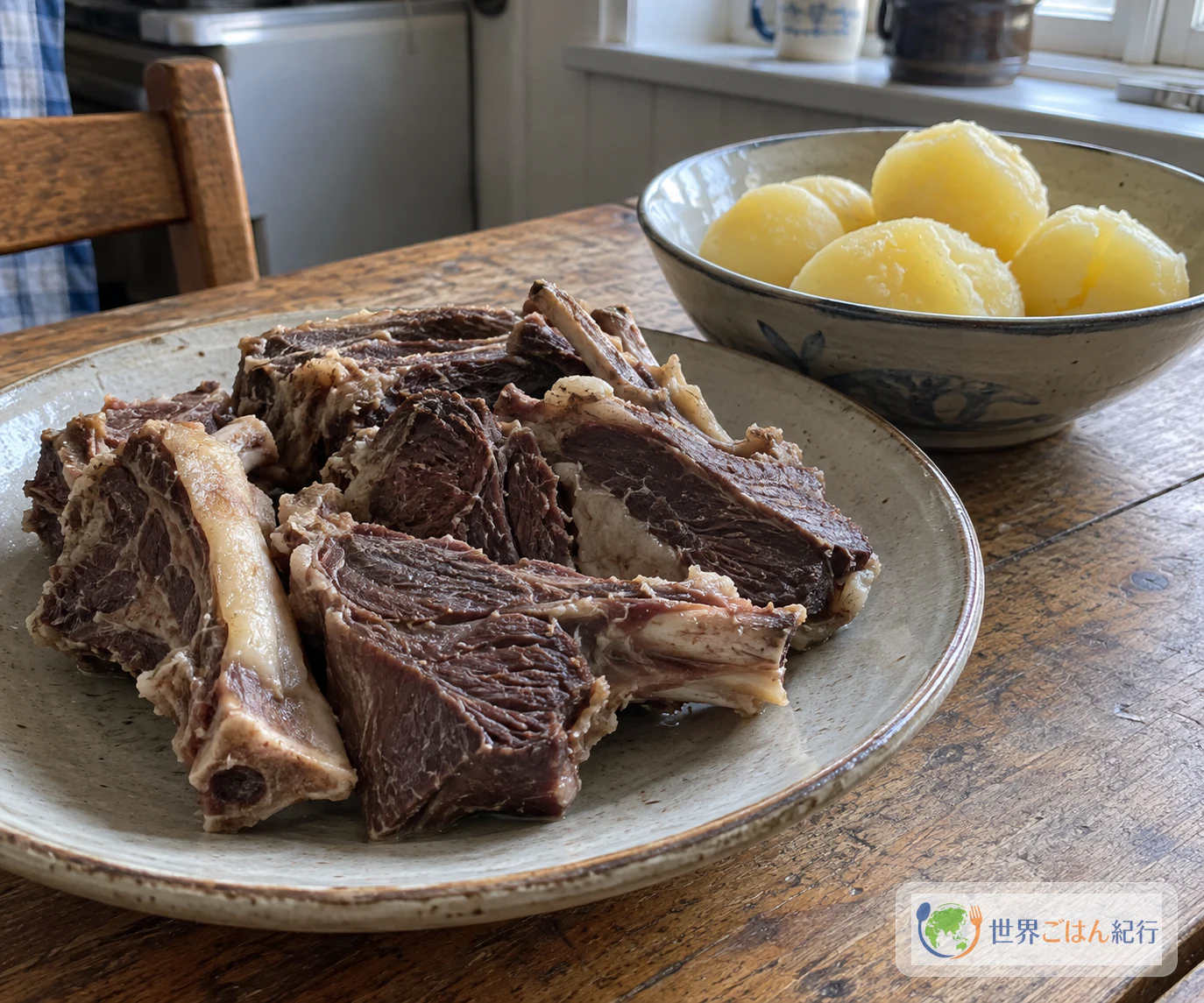
Ræst is the Faroese name for this kind of fermenting and maturing, and it covers more than one food. Mutton passes through stages known as visnaður, ræstur and turrur. Ræstur kjøt is the younger, half-matured meat, and it is boiled before eating. Skerpikjøt belongs to the dry end. It is traditionally eaten uncooked. Skerpikjøt and ræst kjøt are different foods with different ages and different ways of eating, so keep them apart when you shop and when you serve.
Visnaður, ræstur and turrur name the stages of wind-dried mutton, and the terms are not used identically everywhere. Turrur, the dry stage, is the one sliced thin and laid on rye bread. The younger ræst meat goes into the pot.
Where it is eaten
Drying and maturing were once one of the ways the islands kept meat through the year. Today skerpikjøt is still mostly made at home and eaten within the household. Sheep are often slaughtered at home too, and a few grocers in the capital sell finished pieces. It appears at celebrations and on family tables. There, it is sliced onto platters and eaten with sourdough rye bread, and it is bound up with how Faroese people see their own food and their place. Where the habit of drying mutton first began is not settled.
The pairing of thin meat and dark bread will feel familiar from Danish smørrebrød, although skerpikjøt on rye is its own plate. Across the water in Norway, mutton goes the opposite way in fårikål, where fresh meat is stewed with cabbage. For more of the islands' cooking, see the Faroe Islands page.
Ingredients (serves 4 as a starter)
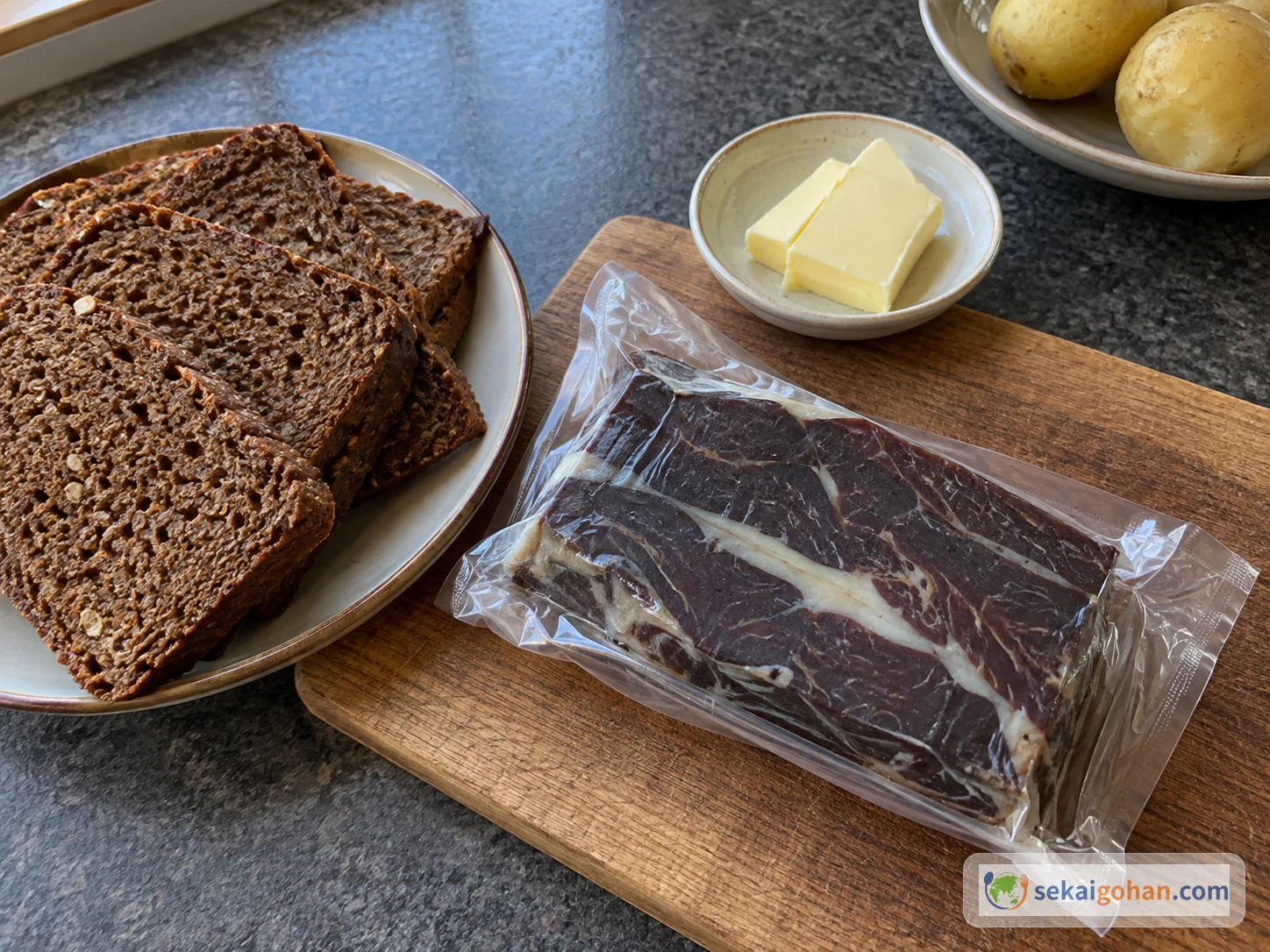
The plate contains mutton. Rye bread often contains wheat, and butter is a dairy product. Check the labels on the meat and the bread for additives and for shared-facility statements.
Equipment
- A very sharp, thin-bladed knife or a meat slicer
- A clean cutting board kept only for this meat
- A butter knife
- A serving plate or small platter
Buying the Meat and Choosing the Bread
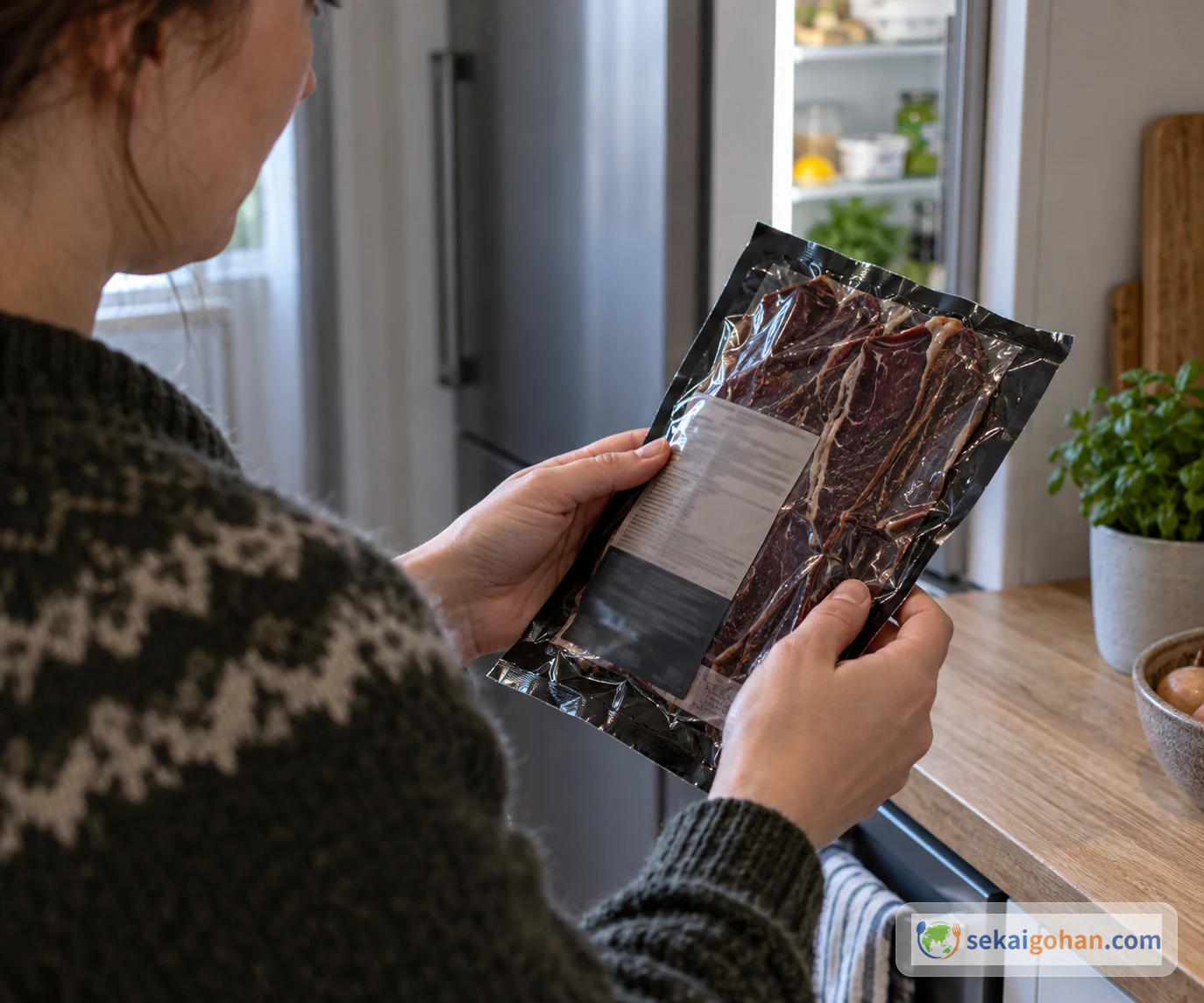
Buy only a finished skerpikjøt sold as food, with a label that gives storage and serving instructions. A piece you slice yourself just before serving keeps more aroma than ready-cut slices. On the islands, it comes from household makers and a few shops in the capital. Elsewhere it is hard to find. Faroese meat, apart from small exceptions, is not exported to the EU. Meat products carried home as souvenirs fall under animal-quarantine rules. Japan, for example, refuses dried and cured meat without an inspection certificate from the exporting country's government, and limits international post as well.
Raw mutton, ordinary salted lamb, prosciutto and other cured hams are different foods. Skerpikjøt comes only from the hjallur, so treat any other cured meat as a different dish, eaten on its own plate. Do not dry fresh mutton yourself to imitate it.
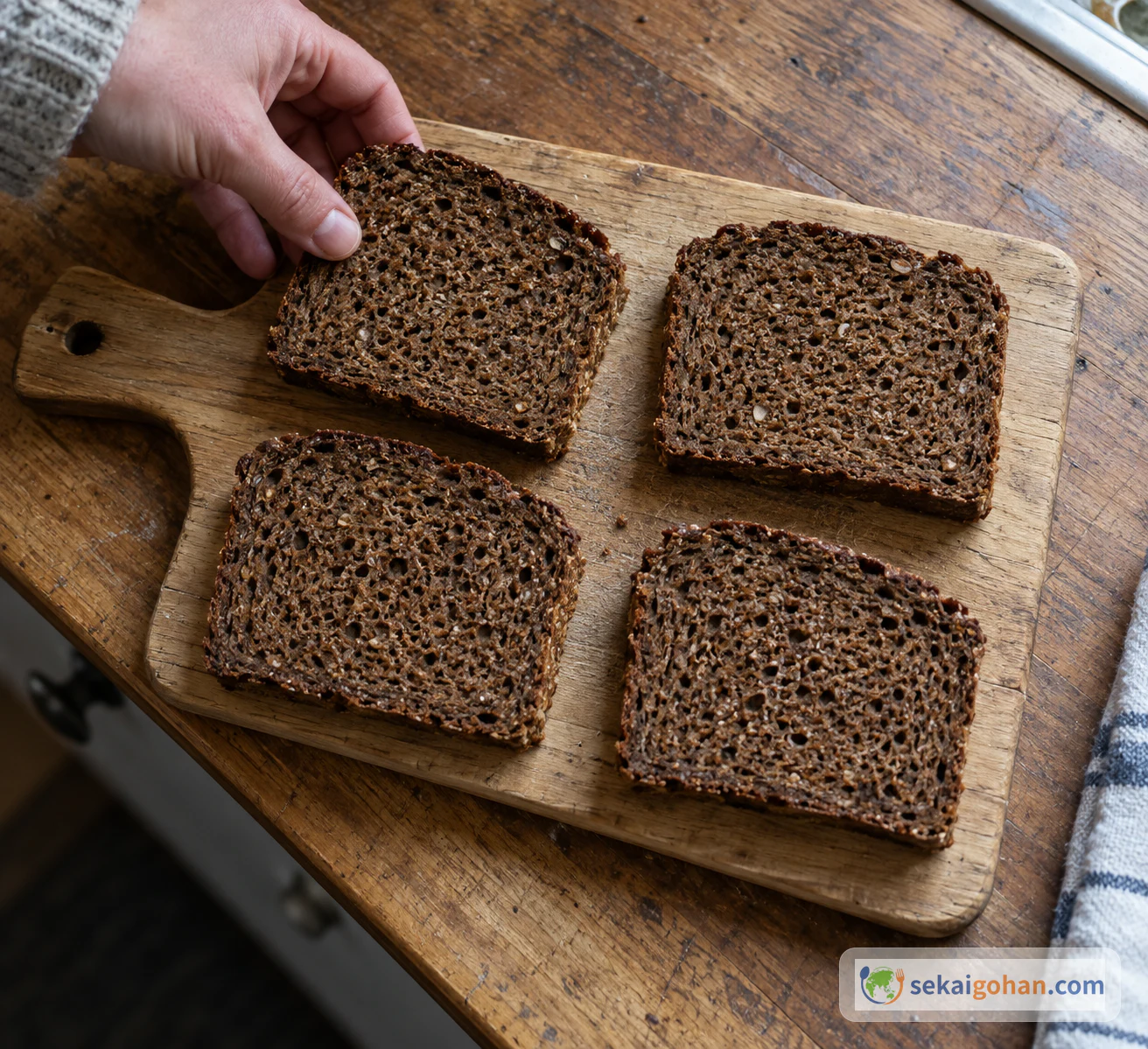
The bread is where you have room to choose. A dense, dark sourdough rye with a coarse crumb is closest to the Faroese table. A high-rye loaf from a good bakery comes next. It is a little less sour, and the meat tastes rounder on it. A soft white sandwich loaf works on a day when nothing else is to hand, but its sweetness and softness pull the plate away from the islands. Salted butter adds to the meat's salt, and unsalted butter lets it stand alone.
A rye that feels heavy for its size and smells sour holds a thin slice of meat without bending. If the bread tastes sweet, use less butter so the mutton still comes through.
Method
Nothing here is cooked, so the work is short and the order is simple. Keep the meat in the fridge until the bread and board are ready. Then slice, butter, assemble and carry the plate to the table straight away. If you are serving potatoes, boil them in a separate pot before you start slicing.
Skerpikjøt is eaten uncooked, so treat it like any ready-to-eat cured meat. Buy a finished product sold as food from a trusted shop or butcher, and follow its label. Keep it cold and eat it the same day you open it; listeria can still grow in the fridge and in salty food. Use a clean board and knife kept apart from other food. People who are pregnant, elderly, very young or have weakened immunity should skip it: toxoplasma can be present in sheep meat that is not cooked, and it is not established whether drying and fermenting kill it.
When It Goes Wrong
| What you see | Why | What to do |
|---|---|---|
| Slices tear or crumble | The knife is dull, or the cut runs along the grain | Sharpen the knife, turn the meat to cut across the fibres, and keep it cold while you slice |
| The meat is chewy and the flavour hits too hard | The slices are too thick | Cut thinner; a translucent slice softens on the tongue and the aroma spreads gently |
| The bite is too salty | Salted butter or extra salt added to an already salty meat | Switch to unsalted butter, skip the salt, and use smaller pieces of meat on each slice |
| The bread is all you taste | A sweet loaf or a heavy layer of butter | Use a denser, sourer rye and butter it more thinly |
| The plate has been sitting out | The meat was cut too early or left on the table | Slice just before serving and keep the rest wrapped in the fridge, following the label |
Serving and Variations
Skerpikjøt goes on the table as a starter or as part of a cold platter, and on the islands it belongs to celebrations as well as family meals. A plate of four open sandwiches feeds four as a starter, and the strong aroma makes small portions satisfying. Not everyone takes to the flavour of ræst on the first bite, so offer it as a taste, not a main course.
- A small tasting plate. Cut just one or two slices per person. The rest of the piece stays wrapped and cold, and first-timers meet the flavour gently.
- Two breads side by side. Serve a very sour, dense rye next to a milder high-rye loaf. The sour bread sharpens the meat's edge. The milder one makes it taste rounder and sweeter.
- A plain slice first. Taste one thin slice on its own before the bread. You meet the aroma and salt at full strength, then find how much the rye and butter soften them.
- Salted against unsalted butter. Butter two pieces of bread differently. Salted butter makes the plate bolder, and unsalted butter lets the meat's own salt lead.
- With boiled potatoes. A bowl of plain boiled potatoes turns the starter into a fuller plate. Their mild starch eases the salt between bites.
Frequently Asked Questions
Can I make skerpikjøt at home from fresh mutton?
No. The meat depends on the hjallur, the island wind and skills handed down within households. Without them, dried meat carries a real risk of botulism. Drying slows bacteria but does not destroy them or their toxins, and commercial makers have to prove their process controls them. Between 1988 and 2007 the islands recorded nine cases of botulism, two of them fatal; where mutton was involved, the contamination is thought to have come from fish products.
Should I warm or cook it before eating?
Skerpikjøt is traditionally eaten cold and uncooked, sliced straight onto bread. If the label on your pack says to cook it, follow the label. The younger ræst meat is the one that goes into the pot.
Can I swap in prosciutto or another cured ham?
You can serve them, but call them by their own names. Prosciutto and similar hams are cured differently and lack the aged aroma of ræst. They make a different open sandwich, so put them on a separate plate if you want to compare.