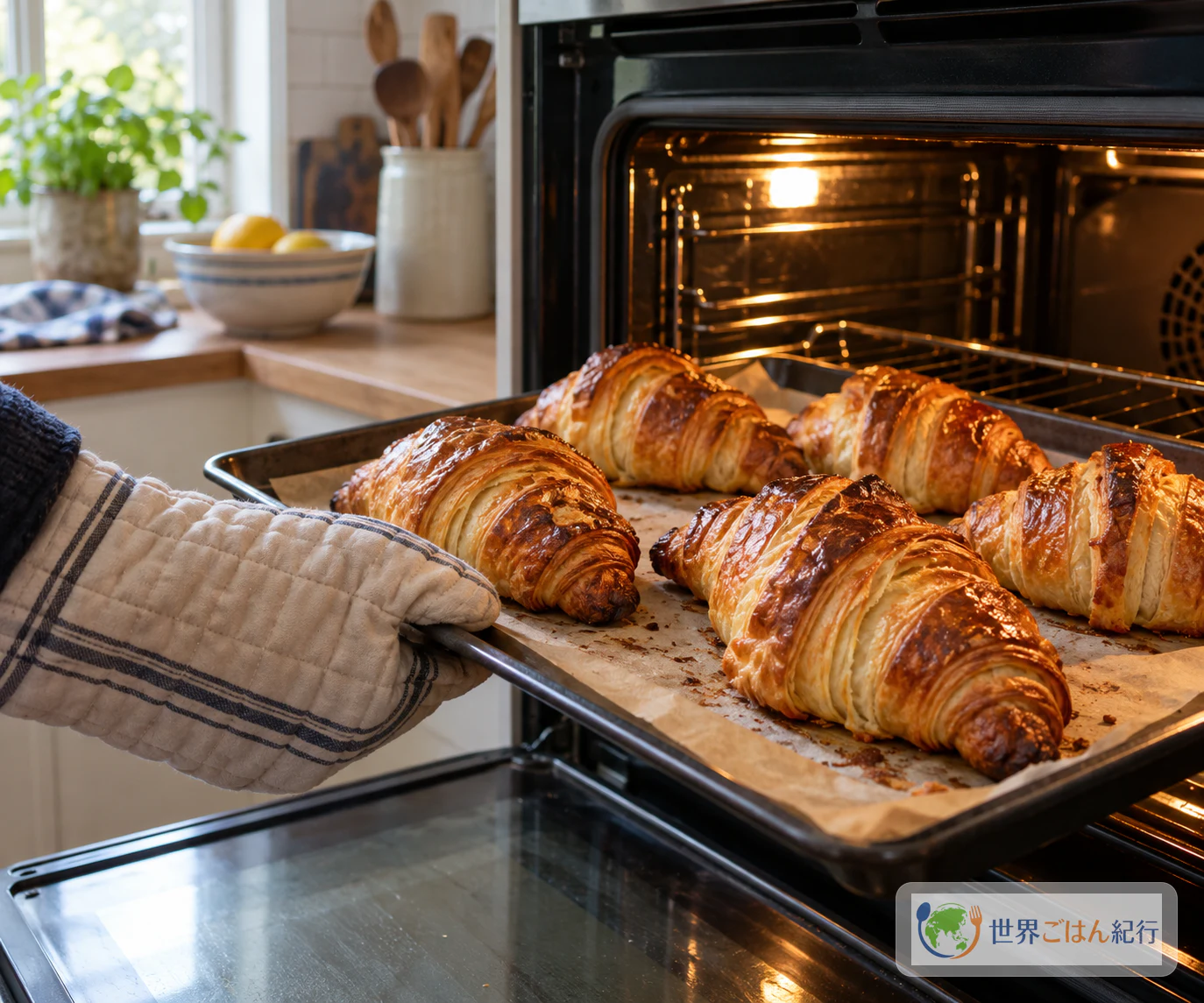
Croissants: Thin Layers That Flake Away Around a Soft Center
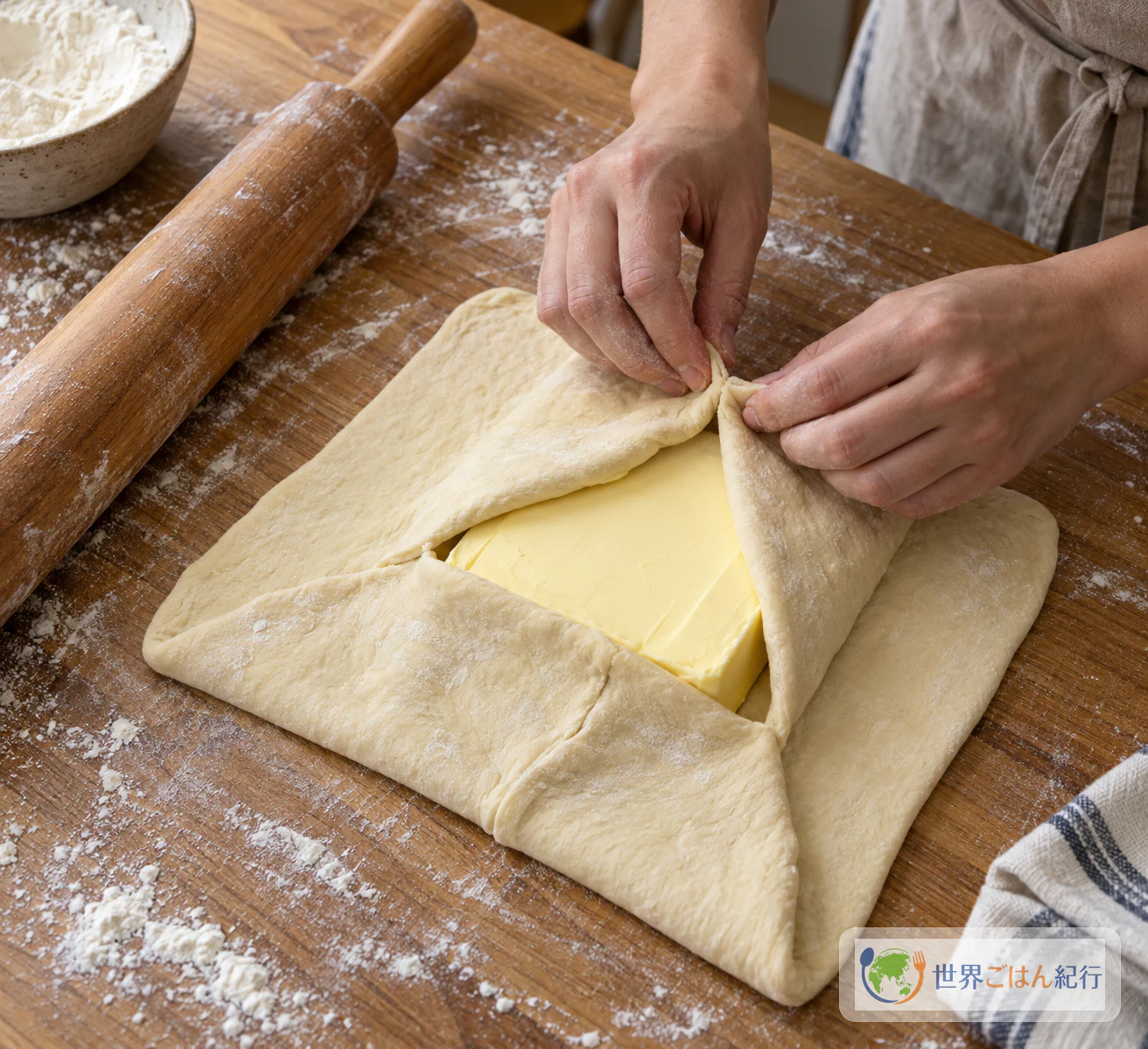
Keep the butter solid inside the dough from the first fold to the oven. Dough and butter should feel close in firmness, and the dough rests between folds.
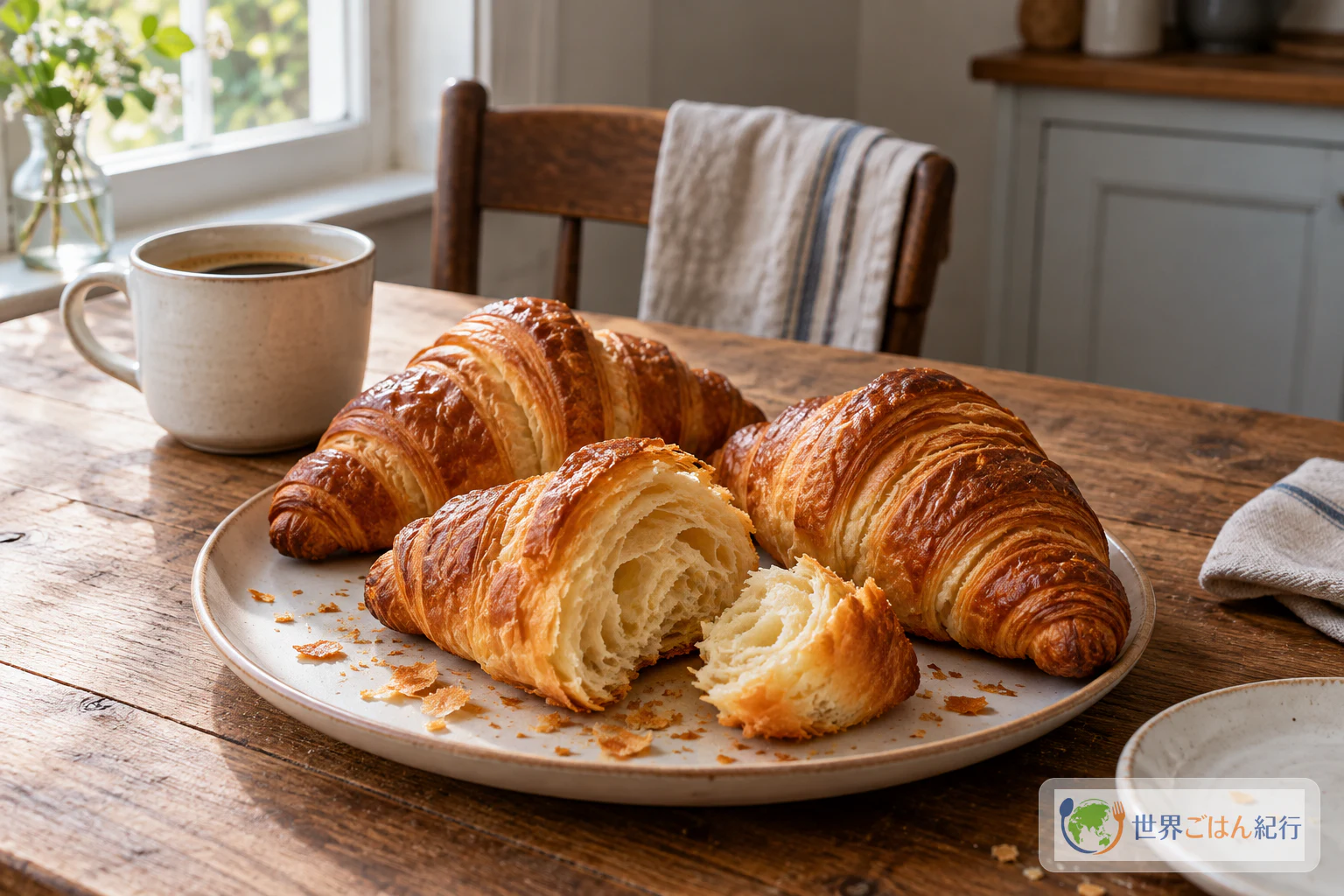
When you break open a croissant from France baked to a deep golden brown, the thin outer layers flake apart and reveal a tender, open center. France.fr describes the croissant as a common sight in French boulangeries and a favorite snack. The baker it quotes, Lauren Duchêne, names a crisp, flaky exterior, the aroma of butter and a tender interior as the signs of a good one.
At home, success depends less on kneading skill than on getting the sequence right. You keep the dough and the butter at a similar consistency, and you let the dough rest between folds. This recipe follows Le Cordon Bleu Australia's formula for 12 croissants. It starts with a long cool rest of about 10 hours, so plan your baking day around it before you begin.
Where the Layers Come From
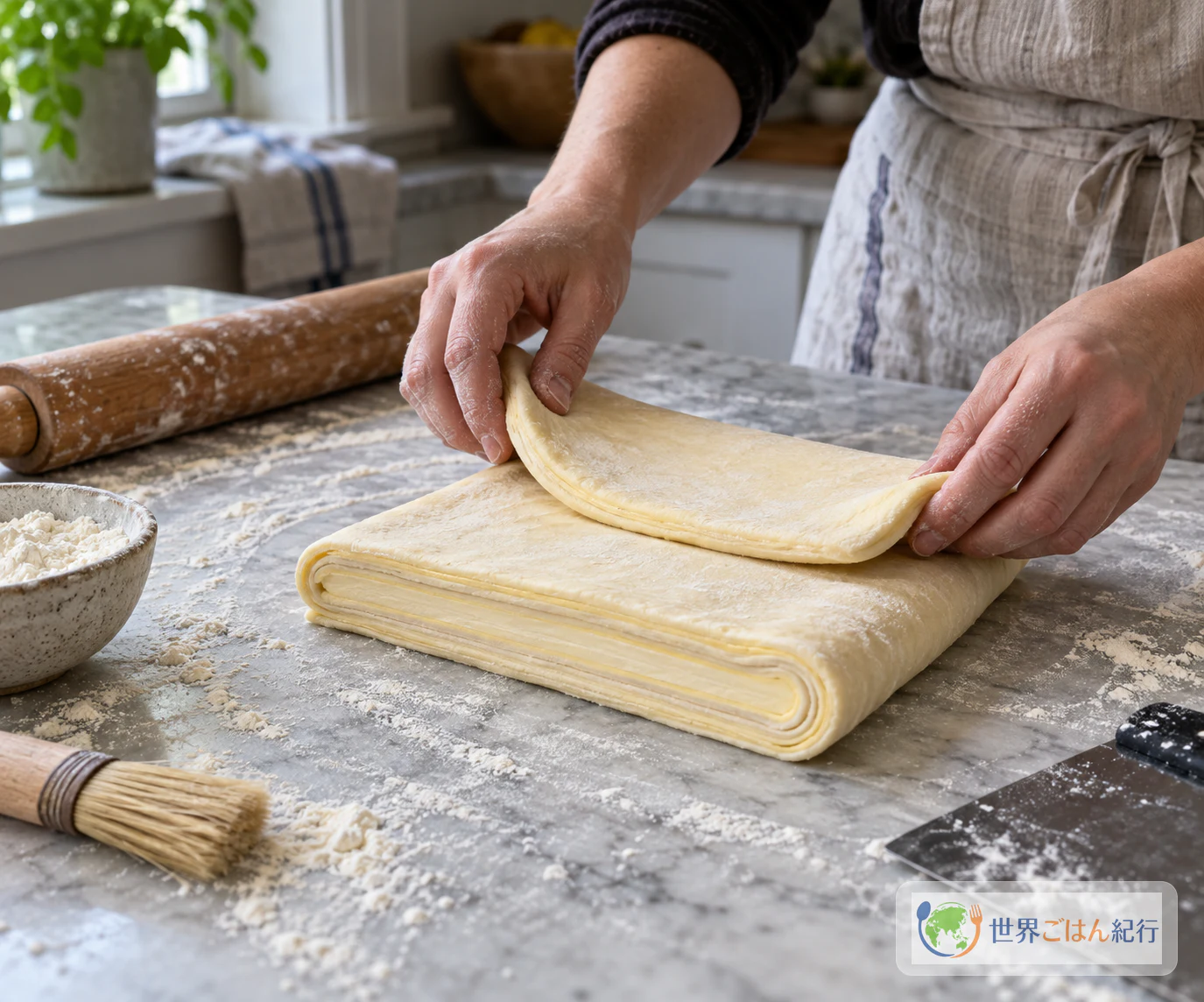
Croissant dough is a yeasted dough laminated with butter. A block of butter is wrapped in the dough, then rolled and folded so that thin sheets of dough and butter alternate, and those layers lift in the oven. France's national bakers' confederation describes the croissant as a risen puff pastry made with a generous amount of butter. It is not plain puff pastry: the dough is leavened with yeast and proofed before baking.
Le Cordon Bleu stresses that both the quality of the butter and its temperature, or pliability, matter. King Arthur Baking makes the same point in a different way: the dough and the butter should have a similar consistency so they roll out together.
The aim is the one French bakers describe: crisp, flaky outer layers, a soft interior and the scent of butter. The croissant's crescent shape is well known, but its origins are far less certain. The culture section below covers what can and cannot be said about them.
Ingredients (12 Croissants)
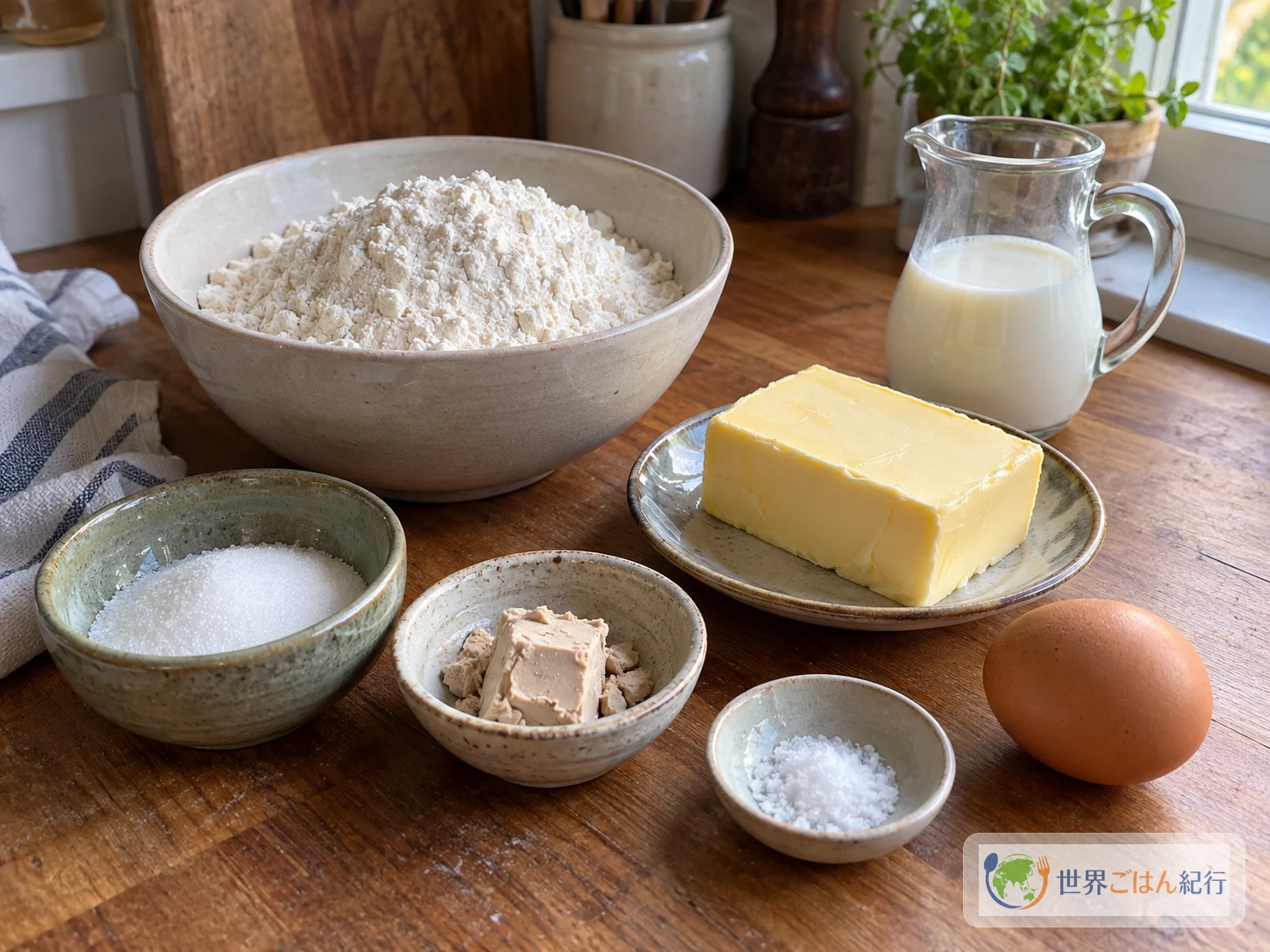
These amounts are unchanged. Two things are worth knowing before you start.
- Milk. The ingredient list gives 150 ml of lukewarm milk, but the method says to add the remaining milk only as needed. Flours absorb liquid differently, so add it gradually and judge by the dough rather than pouring in the full amount at once.
- Yield. The recipe makes 12 pieces of about 50 g each, but the ingredients do not add up to that by simple arithmetic. Keep the amounts and simply divide the dough into 12. Do not increase the ingredients to reach 50 g per piece. No finished weight is claimed for the croissants.
Choosing Flour, Butter and Yeast
Flour. Use bread flour as your base. Le Cordon Bleu recommends a high-protein flour but does not give a protein percentage. Brands absorb liquid differently, which is another reason to add the milk a little at a time.
Butter. The recipe calls for 100 g of unsalted butter. The school describes the right state as "firm but pliable." In practice, that means the butter is cold enough to hold its shape but still bends and can be pressed out with a rolling pin. Cultured butter is an option if you want a different aroma. However, the formula specifies unsalted butter, so treat cultured butter as your own choice rather than a tested substitute.
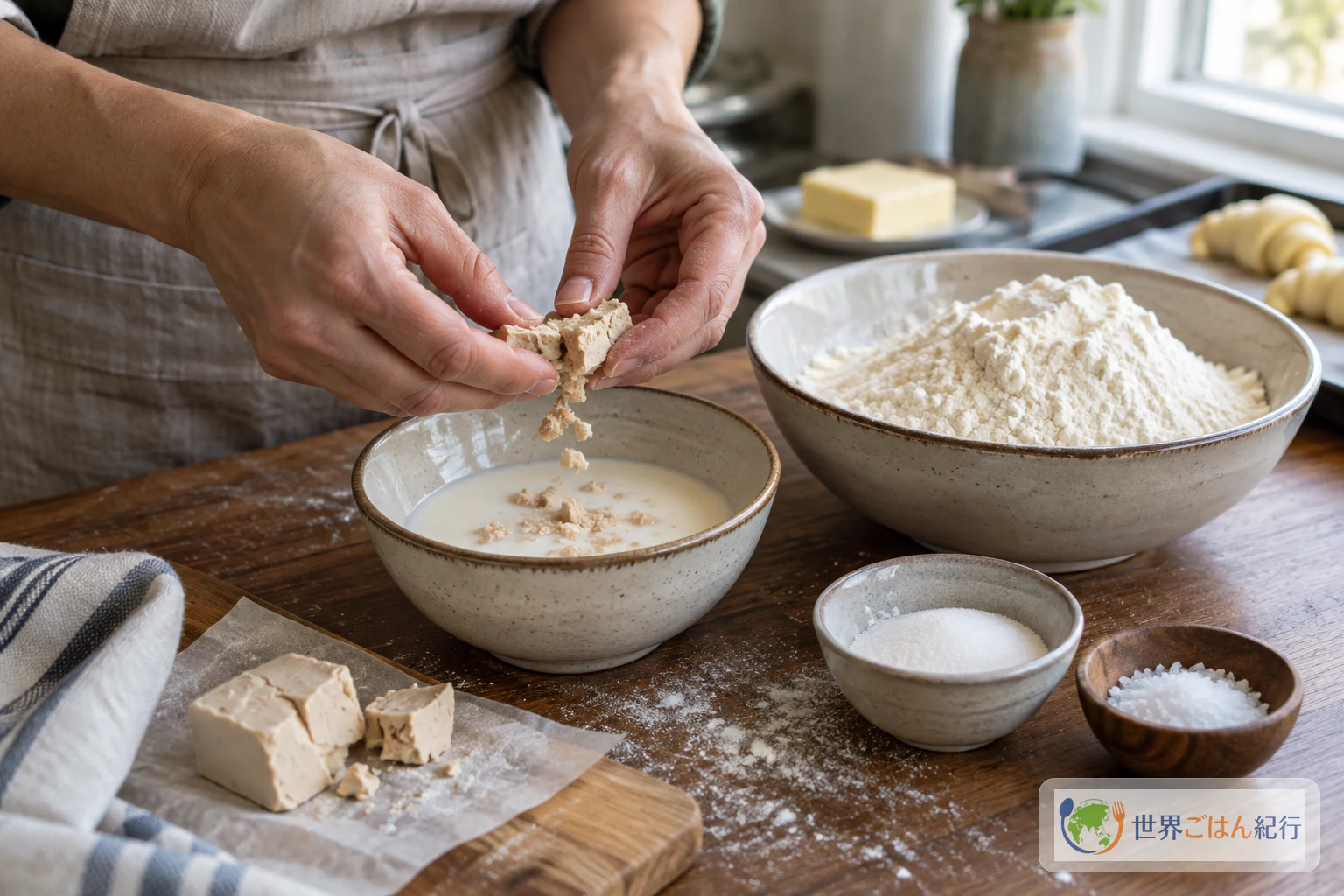
Fresh yeast. It is not always easy to find. If you use dried yeast instead, follow the conversion guidance from the product you buy. This recipe does not give a fixed conversion.
Sugar. You can reduce it, but the sweetness and the bake color will change.
Salt and egg wash. A pinch of salt, and enough egg to brush the tops.
Equipment
- Mixing bowl
- Worktop or large cutting board
- Rolling pin
- Bench scraper or knife
- Ruler
- Baking tray
- Parchment paper
- Pastry brush
- Clean cloth or plastic wrap
- Refrigerator
- Oven
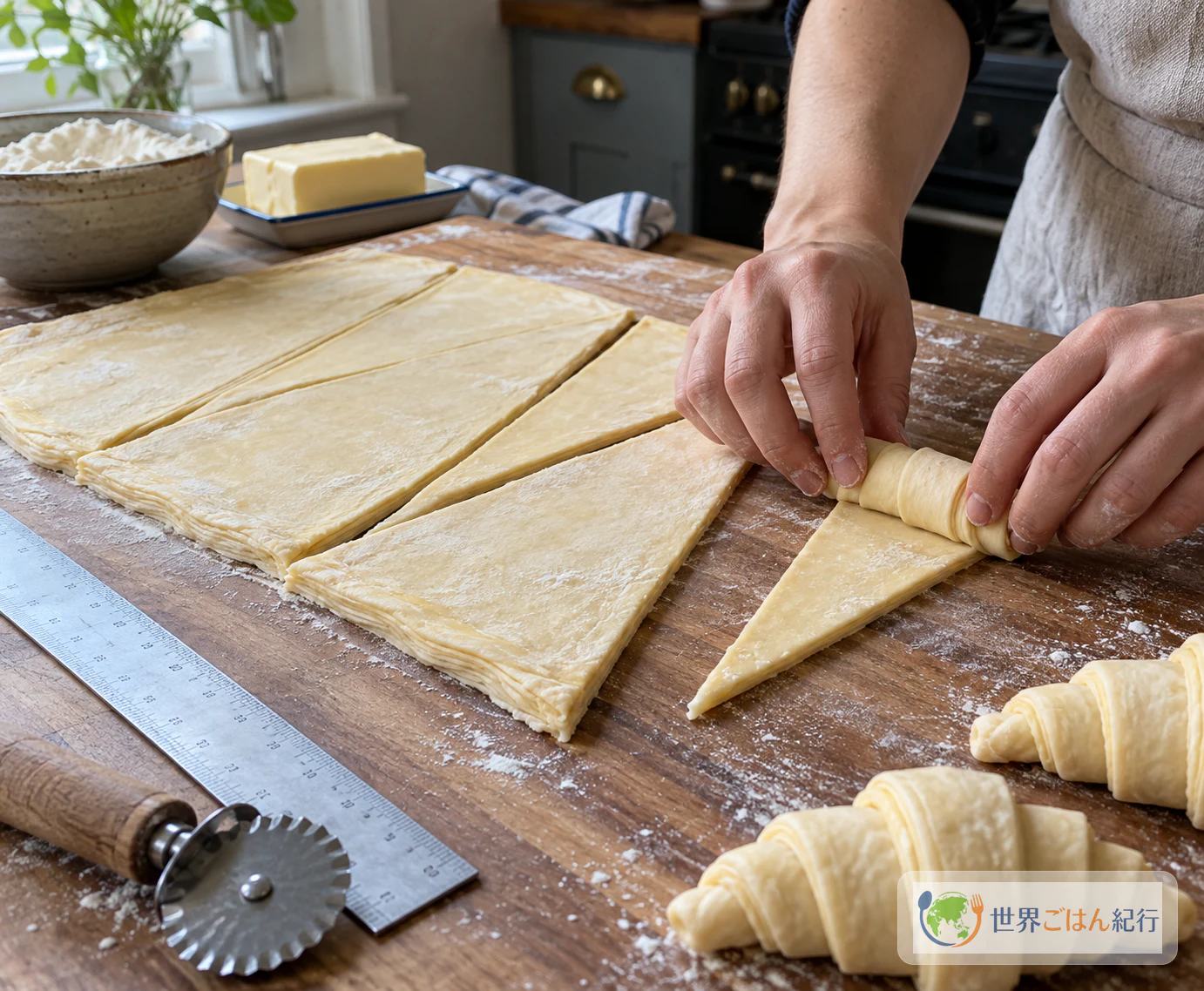
A thermometer is not required. The ruler and bench scraper help you keep the thickness and the triangle widths even.
Method: Folding the Butter In Three Times, with Rests Between
Hands-on work alternates with waiting:
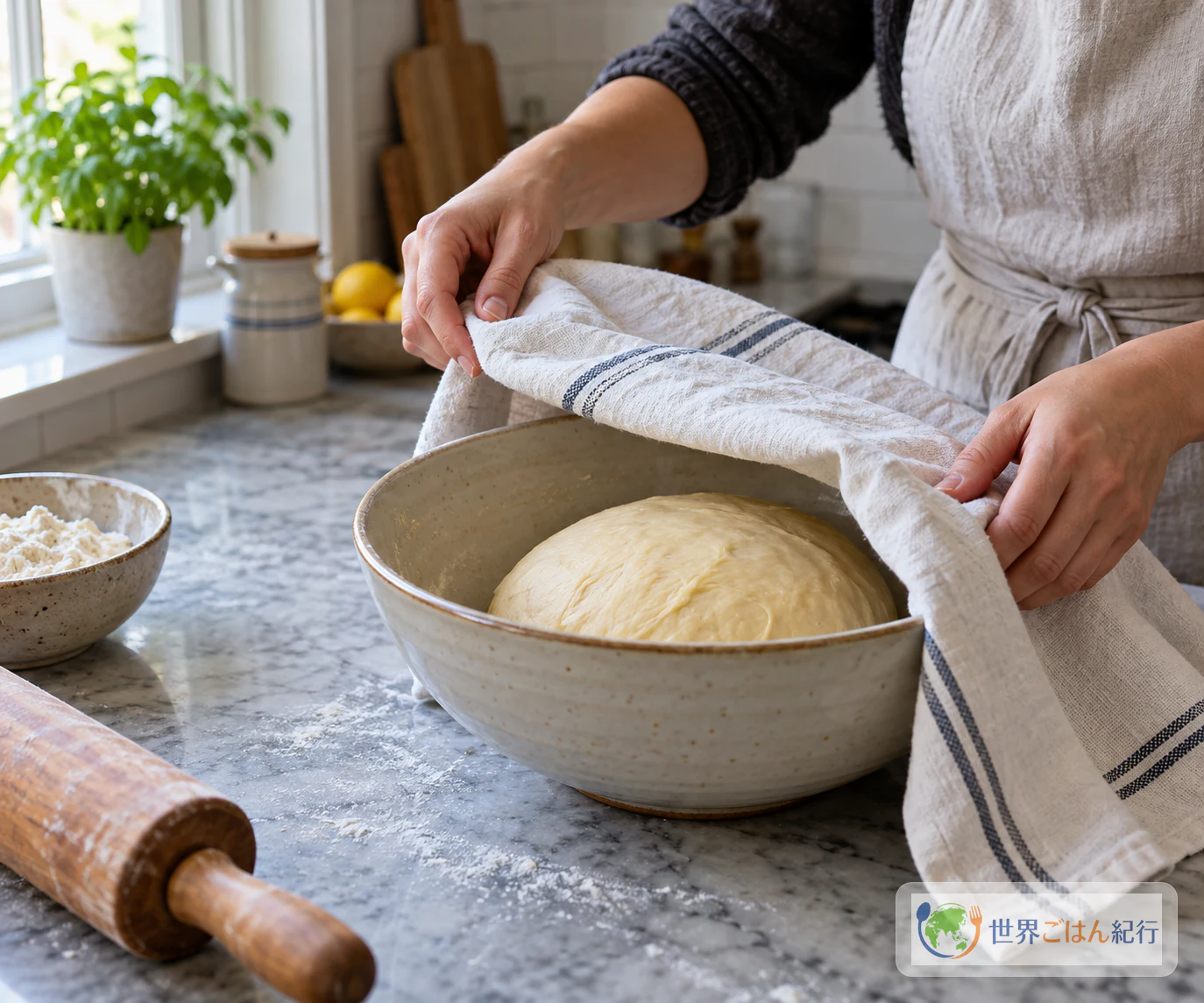
- about 10 hours for the first cool rest
- 15 minutes between the second and third turns
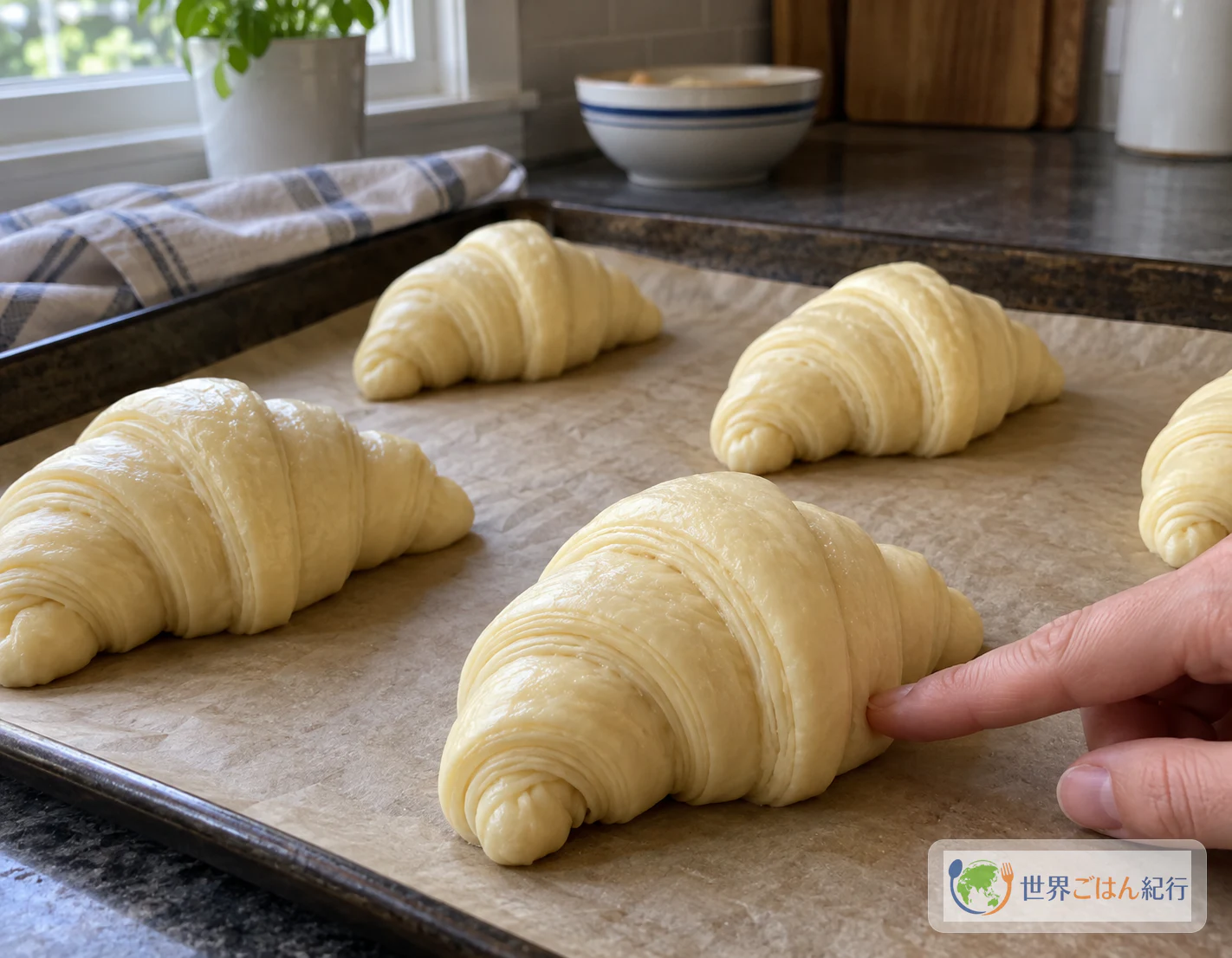
- 1.5–2 hours for the final proof
- 15 minutes in the oven
The other rests have no set time, so judge them by how the dough and butter feel.
Once baked, the thin outer layers and the soft crumb inside are what you have been working toward through every fold and rest.
Cracks, Leaks and Pale Tops: Fixing Common Problems
Most problems trace back to a mismatch between the firmness of the dough and the butter. Butter that is too hard cracks. Butter that is too soft oozes out. The causes below are likely candidates, not certainties.
| Problem | Likely cause | What to do |
|---|---|---|
| Butter cracks and tears holes in the dough | The butter is harder than the dough | Bring the two closer in firmness. Let the butter become just a little easier to work, and don't force the rolling |
| Butter oozes out at the edges | The butter got too soft, or the work went on too long | Stop folding and chill the dough in the refrigerator. Resume when it feels firm again, not after a set time |
| Layers are uneven and the crumb is dense | Misaligned folds, under-proofing, or pressing too hard | Line up the edges of each fold, and check for clear expansion during the final proof |
| Pale color | Oven not fully preheated or oven differences; egg wash | Preheat fully to 220°C, start from 15 minutes and watch the color. Any extra time depends on your oven |
| Dough is slack after adding milk | Differences in flour absorption; all the milk added at once | Next time, add milk a little at a time. Remember that 150 ml is the listed amount and the method says to add as needed |
Judge the proof and the bake color by eye as well as by the clock. Use the recipe's times as your starting points rather than replacing them with numbers of your own.
Variations Worth Considering
- A different bread flour. Another brand may absorb liquid differently and stretch differently. Add the milk gradually and go by the feel of the dough.
- Cultured butter. This can shift the aroma. The source specifies unsalted butter, so treat this as your own experiment rather than a proven swap.
Pain au chocolat and other pastries made from the same dough have different shapes and are separate products. This recipe sticks to the classic crescent.
A Crescent from the French Boulangerie
France.fr presents the croissant as a standard item in French boulangeries and a favorite snack. It is often associated with breakfast and light meals. That does not mean everyone in France eats one every morning. It means the croissant is a familiar presence in the country's bakeries.
Its origins are harder to pin down. France.fr points to the influence of the Austrian kipfel and to the story of August Zang as competing accounts, and it calls the origin murky. The bakers' confederation's exhibit also repeats well-known legends linking the croissant to Vienna and to Marie Antoinette, but it shows no evidence for them. These stories are best read as legend, not settled history.
The confederation also says that its national croissant competition judges the bake, the shape, the flavor and aroma, and the texture. At home, you don't need to hold yourself to competition standards. The same points still make a good checklist: crisp outer layers, the scent of butter and a soft interior.
Frequently Asked Questions
Most answers come back to two things: keep the butter solid and close in firmness to the dough, and judge the proof by sight and touch.
Can I use a flour other than bread flour?
Le Cordon Bleu recommends a high-protein flour. Nothing in this recipe supports switching to a mostly low-protein flour, so start with bread flour.
Do I melt the butter for the folds?
No. The butter goes in cold and holding its shape, but pliable enough to roll out. Melted butter cannot form layers.
Is the proofing time always the same?
The source gives 1.5–2 hours in a moderately warm place but does not give a temperature. Check for clear expansion and a fingertip indentation that stays.
Did the croissant come from Vienna or France?
The sources used here do not settle it. France.fr presents the kipfel and August Zang as competing origin accounts and describes the origin as murky.
Can I make the dough the day before?
The recipe includes a cool rest of about 10 hours but gives no exact temperature. An overnight refrigerator rest is not part of this recipe, and none of the sources here supports one.
What if the butter leaks out while folding?
Stop, chill the dough until it feels firm again, then continue with the next turn. The goal is to bring the butter and dough back into balance.
Sources
- Le Cordon Bleu Australia, "Recipe: Our Chef Leaks the Secrets to the Perfect Croissant." The base formula and method: yield of 12 pieces of about 50 g, ingredient amounts, the 10-hour cool rest, three turns with a 15-minute rest, shaping dimensions, a 1.5–2 hour proof, and baking at 220°C for 15 minutes. Also the importance of butter quality and pliability in lamination. https://www.cordonbleu.edu/news/croissant-recipe-chef-secrets/en
- King Arthur Baking, "Baker's Croissants Recipe." Used only as a technical cross-check, not for amounts or timings: matching dough and butter consistency, refrigeration rests, the proof cue (noticeable expansion and a lasting finger indentation), bake doneness (deeply golden with no raw dough at the overlaps), and the tip-under shaping used here. https://www.kingarthurbaking.com/recipes/bakers-croissants-recipe
- France.fr, "The magic of the croissant." The croissant as a common French boulangerie pastry and favorite snack; the kipfel and August Zang as competing, uncertain origin accounts; baker Lauren Duchêne's signs of quality. https://www.france.fr/en/article/croissants-france-favorite-snack/
- Confédération Nationale de la Boulangerie et Boulangerie-Pâtisserie Française, "The croissant," Google Arts & Culture. The croissant as risen puff pastry with substantial butter; the qualities valued by French artisan bakers; the national competition's judging criteria. The legends in this exhibit are not used as history. https://artsandculture.google.com/story/le-croissant/MQXhoPJBiV0Fxg