
Njeguški Pršut: A Ham Defined by Its Villages, Salt, Smoke and Time
This is a plate for enjoying a finished, ready-to-eat ham. No cooking and no home curing are involved. Read the label, slice or fold the ham, set the cheese beside it, and let the ham taste of itself.
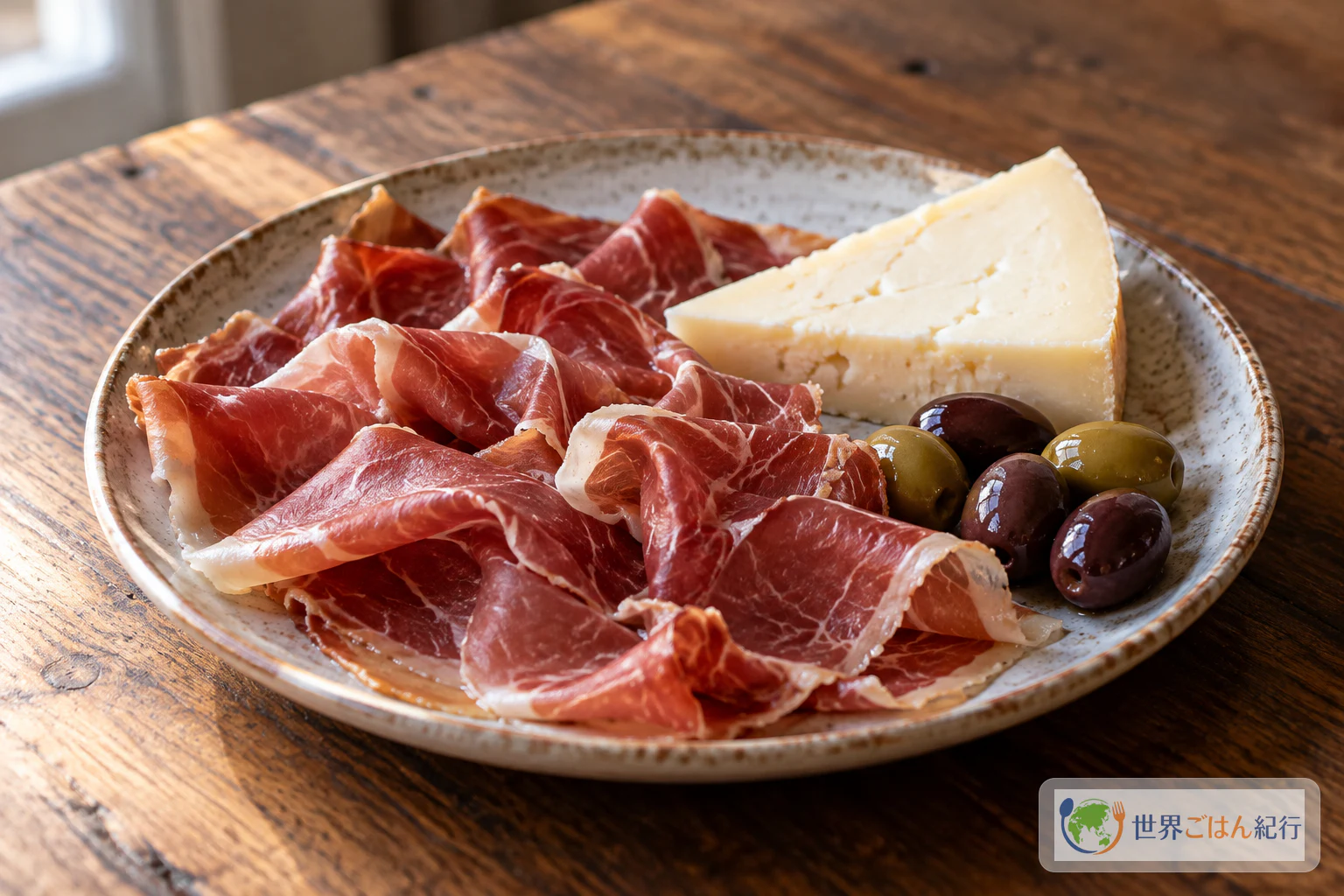
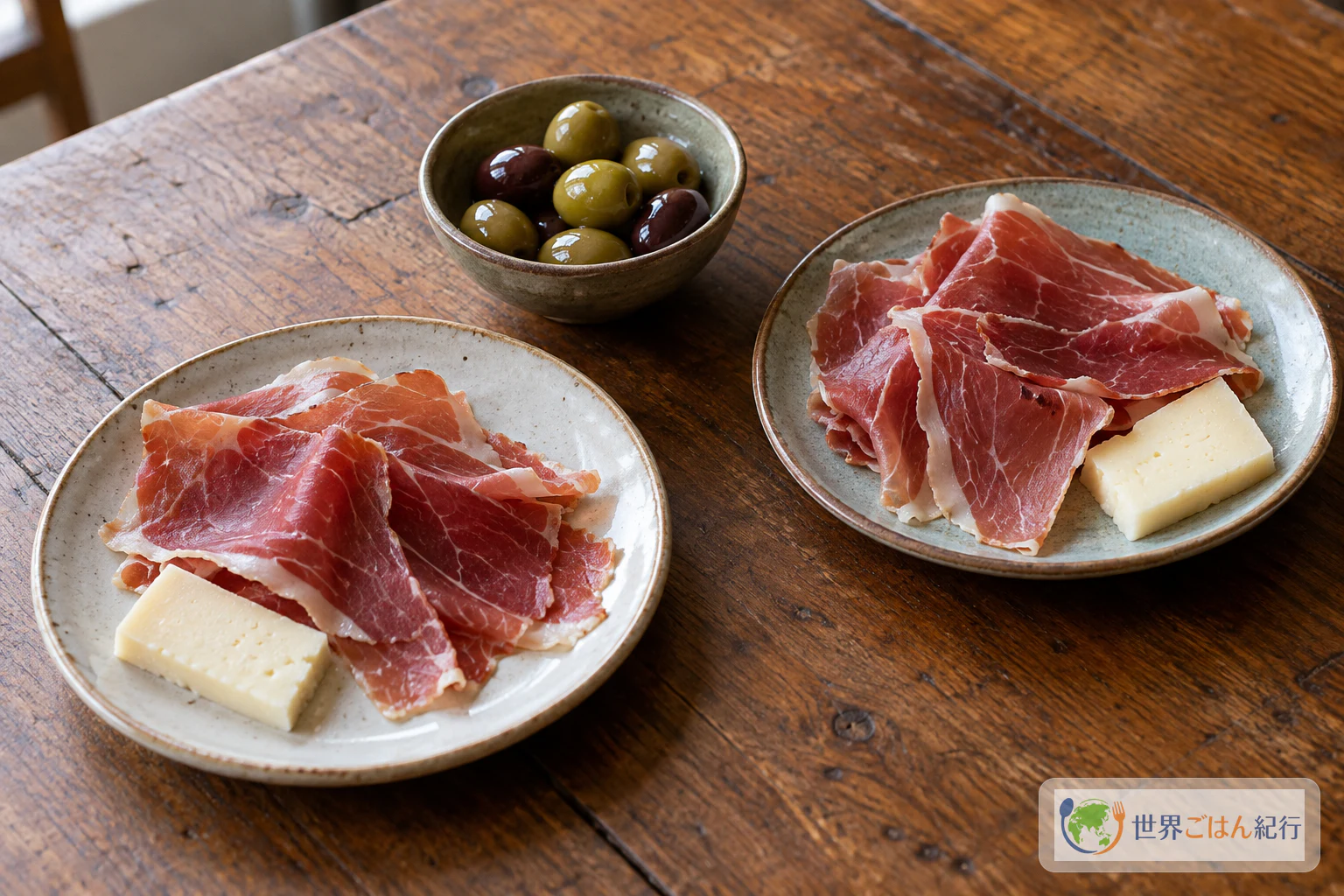
On tables in Njeguši, thin slices of pršut sit next to pieces of Njeguški sir, the local cheese. Travel writing about the area describes this pairing as a common one. It also describes household breakfasts where fritters come with cheese and ham, and village konobas where pršut, cheese and olives arrive together. Njeguški pršut (његушки пршут) is a dried, smoked pork leg made in the Njeguši villages of Montenegro, and it is served sliced thin.
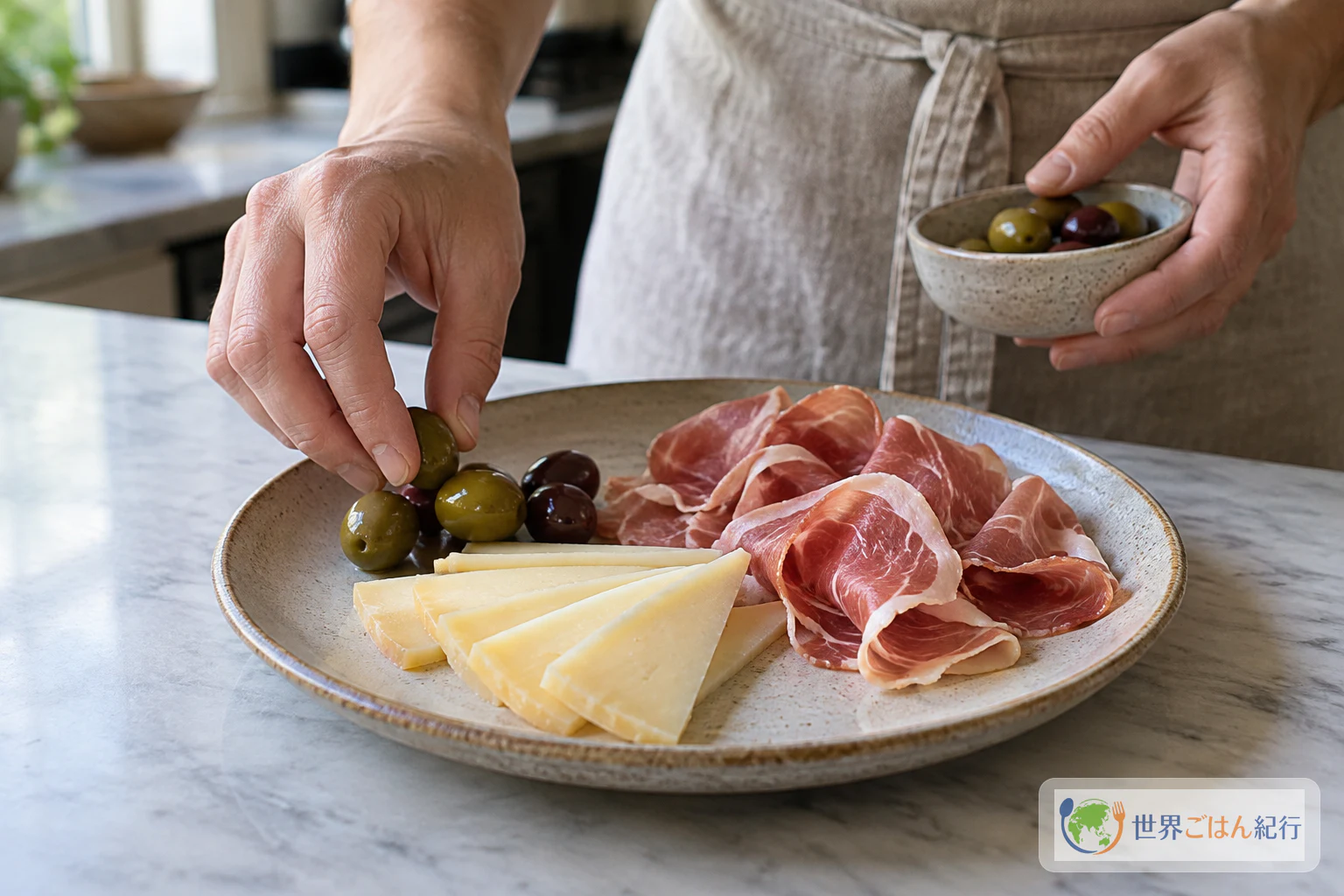
This article does not teach you to make the ham. Under its protected name, it can only come from a specific area and must follow a production specification that includes at least nine months of drying and maturing. What you can do at home is buy a genuine finished product and arrange it in a way close to a Montenegrin table: ham, local cheese and a few olives, shared between two people.
What Is Njeguški Pršut?
Njeguški pršut is an air-dried, smoked pork hind leg, eaten in thin slices. According to the Montenegrin Ministry of Agriculture, the protected geographical indication "Njeguški pršut" may only be used for ham produced within the Njeguši villages that meets the official description.
It is also important not to confuse it with Crnogorski pršut ("Montenegrin pršut"). That is a separate protected name with its own definition. When you shop, the name Njeguški pršut and its place of origin are what tell you which product you are holding. A cured ham that is simply "from Montenegro" is not automatically Njeguški pršut.
The Land of Njeguši and the Protected Name
Njeguši sits on the slopes of Mount Lovćen. Travel to Montenegro describes it as a place where air from the sea meets air from the mountains, and producers point to that wind, together with beech smoke, as part of what gives the ham its character. This is how producers explain the flavor, not a scientific finding, and it is best read that way.
The official description is precise. The ham is made from a pork hind leg with the foot and the pelvic bone removed, while the bone, skin and subcutaneous fat are kept. The leg is dry-salted with sea salt, smoked over slow-burning dry beech wood, and dried and matured for at least nine months. Travel coverage of the area also mentions pressing as part of the process. These steps belong to a protected regional specification. They are not a shortcut that can be copied in a home kitchen, and a ham made by imitating the surface of the process would not be the same product.
Legend and documented history
The ham is often said to go back to the fifteenth century. The Ministry of Agriculture presents that origin as tradition rather than established fact. The firmer documentary trail begins in the nineteenth century: the ministry cites a record of the ham being sold in 1838 and travel writing from 1841. It is fair to say that the story reaches back to the fifteenth century, and that the written record reaches back to the 1830s and 1840s. Those are two different kinds of claim.
Flavor and the Montenegrin Table
Salt and smoke are the two things to look for, and how strongly each comes through will differ from product to product. There is no detailed tasting profile to rely on here, so let the label and your own first bites guide you rather than any fixed description.
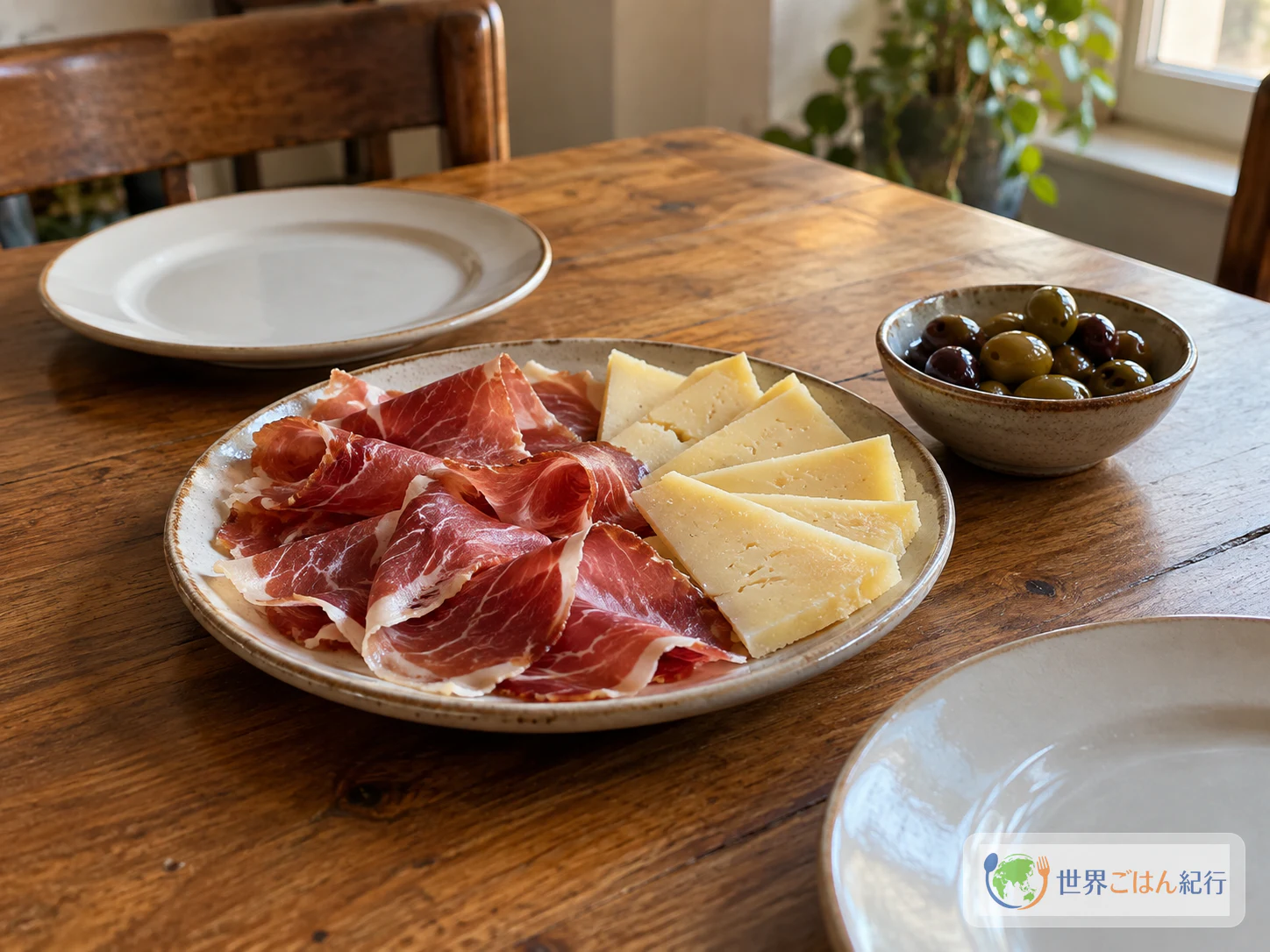
On the table, the pairing that comes up again and again is Njeguški sir, the cheese from the same area. Travel to Montenegro describes ham and cheese at home breakfasts with fritters, and pršut, cheese and olives brought out at local konobas. These are examples of how people eat it, not a rule followed in every household.
A different dish: Njeguški steak
The ham also goes into cooked dishes. Restoran Bar Desetka publishes a recipe for Njeguški stek, in which veal is folded around Njeguški pršut and Njeguški sir, seasoned with thyme, and grilled or pan-seared. Their list gives 200 g veal, 60 g pršut, 60 g cheese, 150 g potatoes and 30 g kajmak, with salt, thyme and oil, but it does not say how many people it serves. It is a separate dish built around the ham, not a description of how the ham itself is made.
A Two-Person Appetizer Plate at Home
The amounts below are a suggested starting point for two people sharing a starter. They are not a local standard, a measured yield, or figures taken from Montenegrin sources, and this appetizer recipe as a whole has not been kitchen-tested by Sekai Gohan. Adjust freely to how much you have and how salty your ham is.
Ingredients: Ham, Cheese and a Few Olives for 2
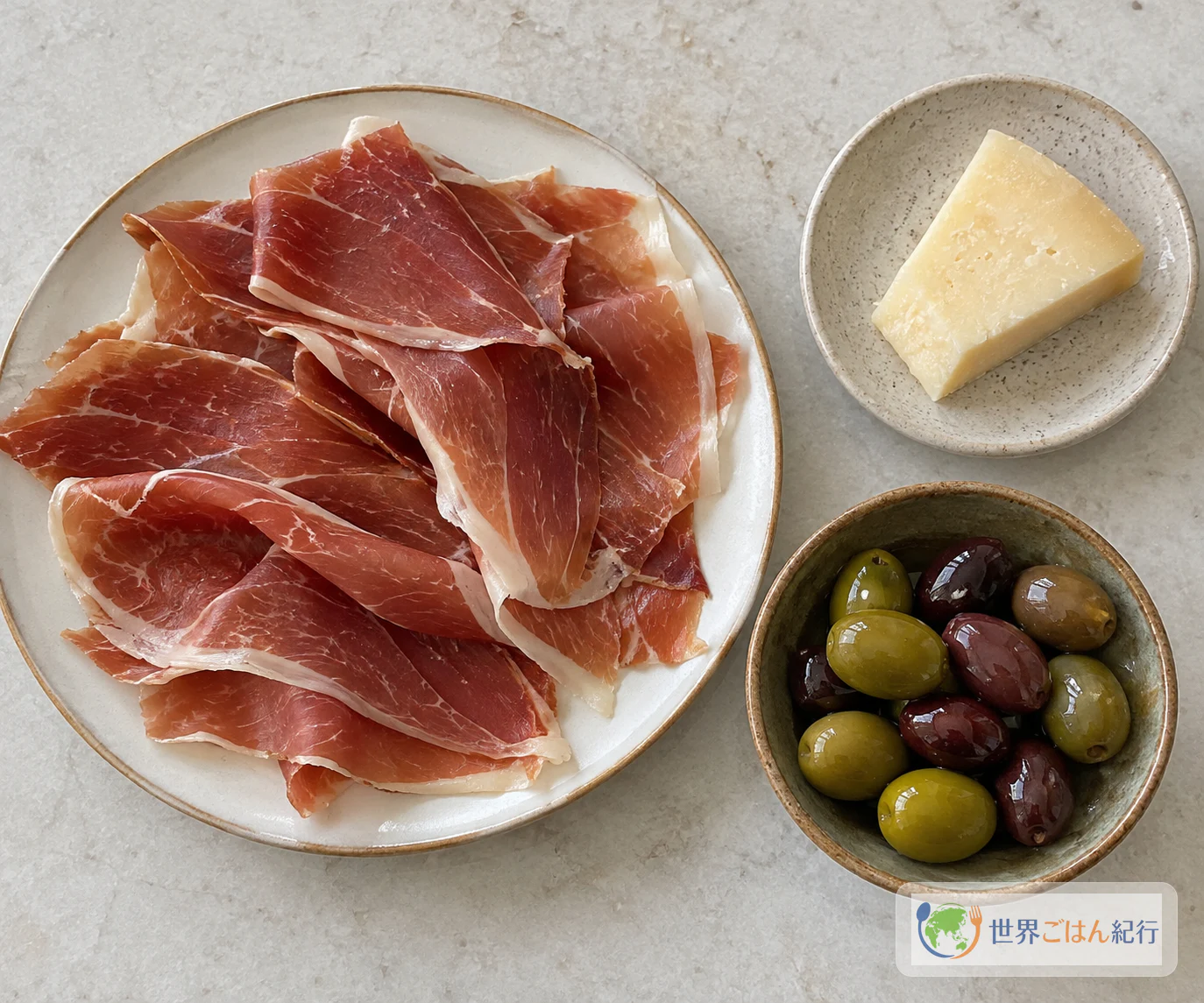
This plate contains pork and dairy (milk in the cheese). Check the ingredient list on the cheese when you buy it.
Equipment
- A serving plate
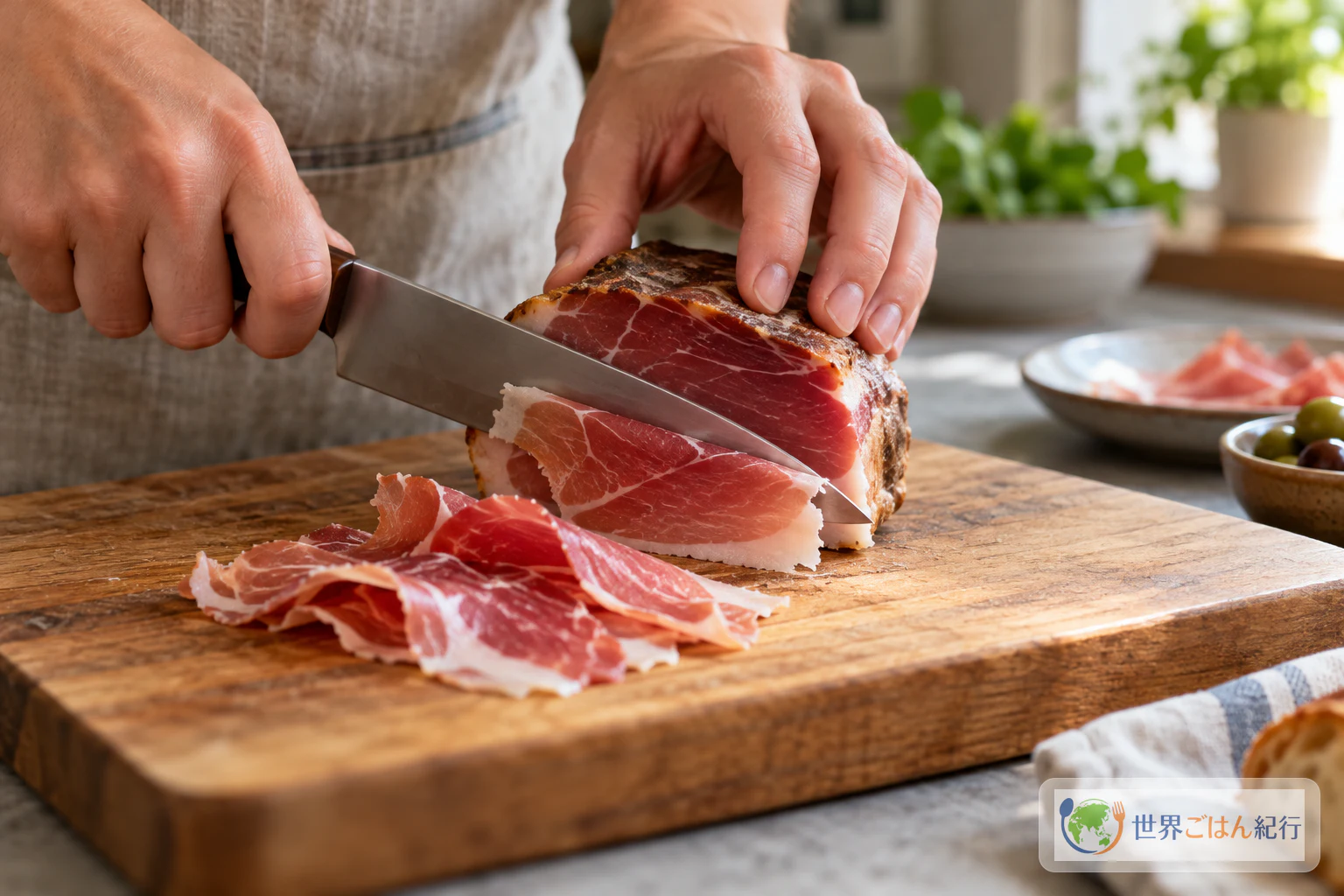
- A sharp knife you already own and a clean cutting board, only if your ham comes as a piece rather than pre-sliced
Choosing the Ham and Cheese, and Honest Substitutes
For the ham, look for the protected name and the place of origin on the package. A finished product where you can confirm both is the ideal choice. If you cannot find it, another cured pork ham can stand in, but call it what it is, for example a Montenegrin cured ham or simply cured ham, and do not call the plate Njeguški pršut.
For the cheese, choose Njeguški sir if you can get it. Any other cheese will differ in saltiness, aged aroma and texture. That is fine as a substitute, but it is a different plate, not a recreation. Start with a small amount so you can see how it sits next to the ham.
Availability of these products outside Montenegro varies, so no specific shops or brands are suggested here.
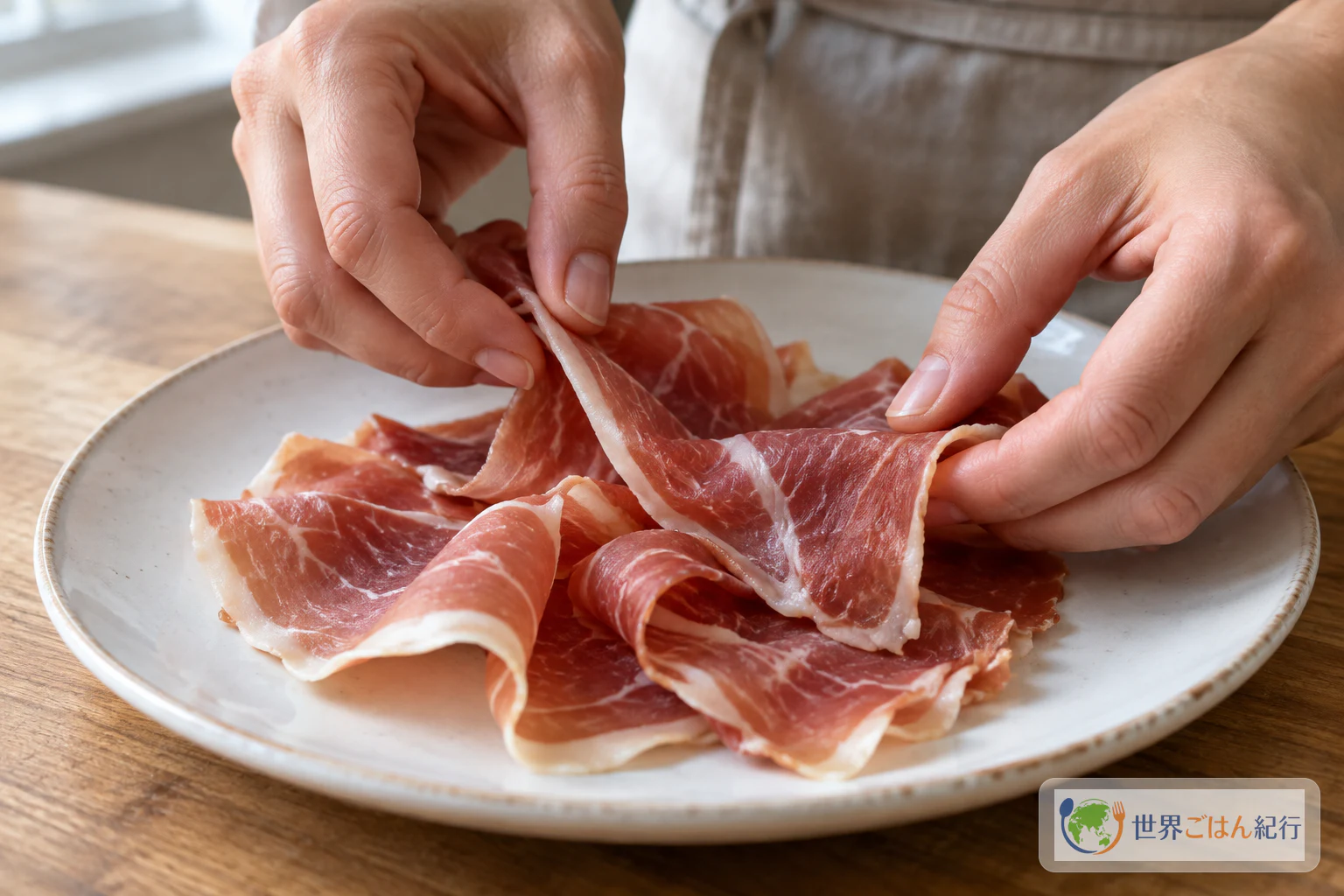
Method: Read, Slice, Fold, Arrange, Share
Every step uses a finished product. Nothing is cooked, and the ham is never salted or smoked at home.
When the Plate Doesn't Feel Right
| Situation | Likely reason | What to do |
|---|---|---|
| The label doesn't show the name or origin | It may be a different cured ham | Enjoy it, but call it by what the label says rather than Njeguški pršut |
| The plate tastes too salty | Ham, cheese and olives are all salty | Leave out the olives, and don't add salt or seasoning |
| The substitute cheese overwhelms the ham | Another cheese has a different saltiness, aroma and texture | Use less of it, and set it apart from the ham |
| You want something warm | This plate is meant to be served cold | Look at Njeguški steak as a separate, cooked dish rather than heating the ham on this plate |
Ways to Explore the Plate
- Read the origin first. Put Njeguški pršut and Crnogorski pršut side by side in your mind, or on the table, and use the labels to tell them apart.
- Taste in order. Try the ham alone, then with the local cheese, then with olives, and notice how the salt and smoke change with each partner.
- Use a substitute cheese honestly. If Njeguški sir isn't available, name the replacement plainly and add it in small amounts.
- Cold plate and cooked dish. Treat this appetizer plate and Njeguški steak as two different ways the ham reaches the table, one cold and one cooked.
- Legend and record. When you tell the story of the ham, keep the fifteenth-century tradition and the nineteenth-century records as separate claims.
Frequently Asked Questions
Is Njeguški pršut the same as prosciutto?
It belongs to the broad family of dry-cured hams, but Njeguški pršut is its own protected name. The Montenegrin Ministry of Agriculture defines it by its area of production in Njeguši and its specification: a pork hind leg with bone, skin and fat retained, dry-salted with sea salt, smoked over dry beech wood, and dried and matured for at least nine months.
Can I make it at home?
This article does not give a home-curing method. The protected product has to be made in the Njeguši area to its official specification, including at least nine months of drying and maturing. A home version that copies only part of the process would not be Njeguški pršut, so this plate uses a finished, ready-to-eat product instead.
What is it eaten with?
Travel to Montenegro names Njeguški sir, the local cheese, as a common partner. It also describes ham and cheese at home breakfasts with fritters, and pršut, cheese and olives served at local konobas.
What is Njeguški steak?
It is a separate cooked dish. In the recipe published by Restoran Bar Desetka, veal is folded around Njeguški pršut and Njeguški sir with thyme, then grilled or pan-seared. The recipe does not state the number of servings.
How long does it keep after opening?
Follow the producer's package label and refrigeration instructions. FoodSafety.gov's cold storage chart groups cured meats by general category and packaging, but it does not specifically classify Njeguški pršut, so its generic rows should not be applied to this product.
Sources
- Government of Montenegro, Ministry of Agriculture, "Zaštićena geografska oznaka 'Njeguški pršut'." The protected-name definition (pork hind leg with bone, skin and subcutaneous fat retained; sea salt; slow-burning dry beech smoke; drying and maturation for at least nine months; production in the Njeguši villages), the 1838 sale record and 1841 travel writing, and the fifteenth-century origin as tradition. https://www.gov.me/clanak/167818--zasticena-geografska-oznaka-njeguski-prsut
- Travel to Montenegro, "Njeguški Pršut: The Smoked Ham of Njeguši." The Njeguši setting on Lovćen and producers' account of sea and mountain air, sea salt, pressing, beech smoke and long maturation, the pairing with Njeguški sir and table examples, and the distinction from Crnogorski pršut. https://traveltomontenegro.com/en/dining/njegusi-prosciutto
- Restoran Bar Desetka, "Njeguški stek." A restaurant recipe for Njeguški steak using Njeguški pršut, Njeguški sir and thyme, as an example of a separate cooked dish. https://desetka.co.me/recepti/njeguski-stek/
- FoodSafety.gov, "Cold Food Storage Chart." General refrigeration guidance by product category and packaging; it does not specifically classify Njeguški pršut. https://www.foodsafety.gov/food-safety-charts/cold-food-storage-charts