Quiche Lorraine: Smoky Pork Held in a Soft Custard
Smoky, salty pork; a custard of eggs and cream set just enough to slice; and a crisp, unsweetened pastry shell. Nothing else goes into the basic version.
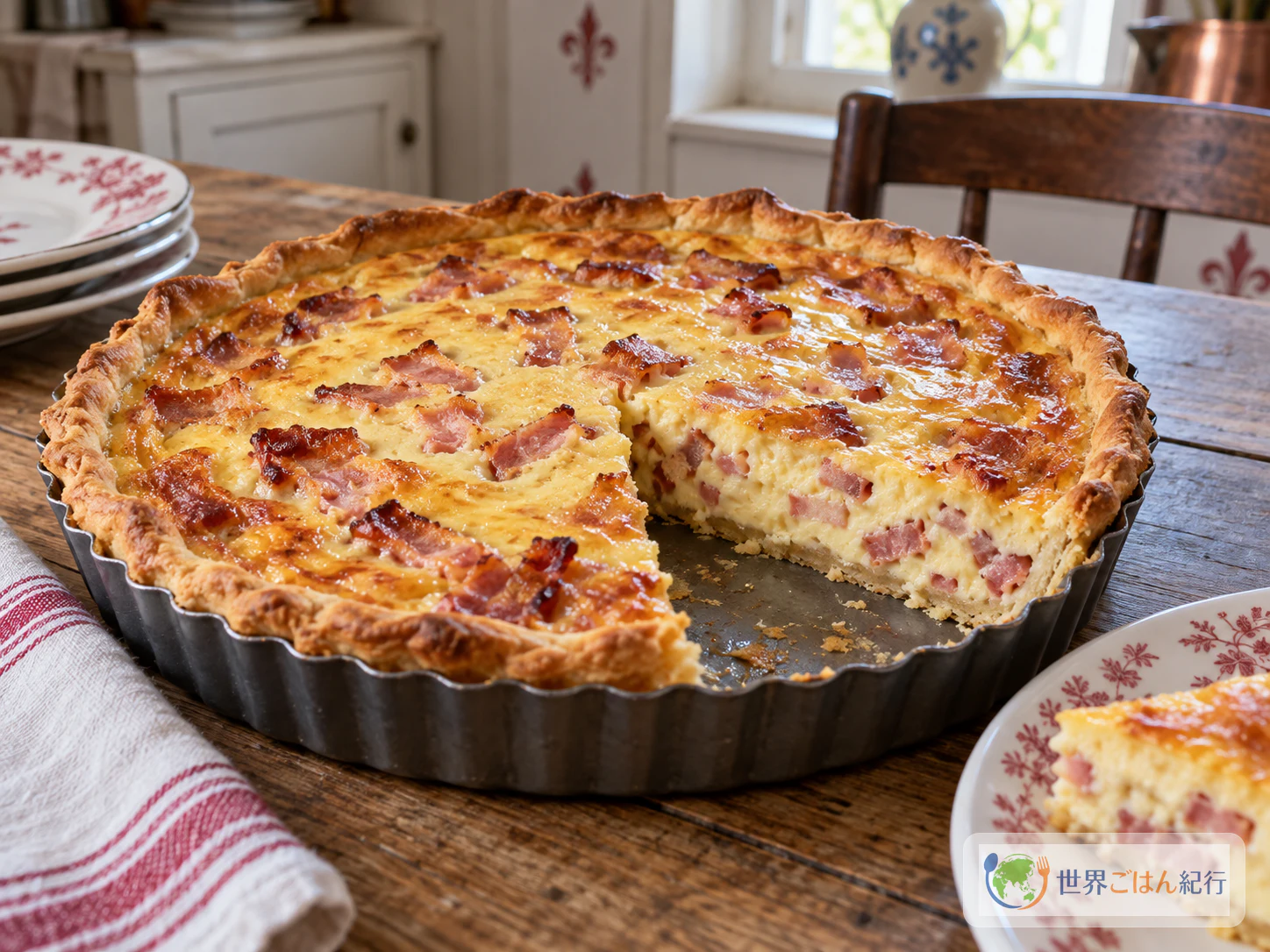
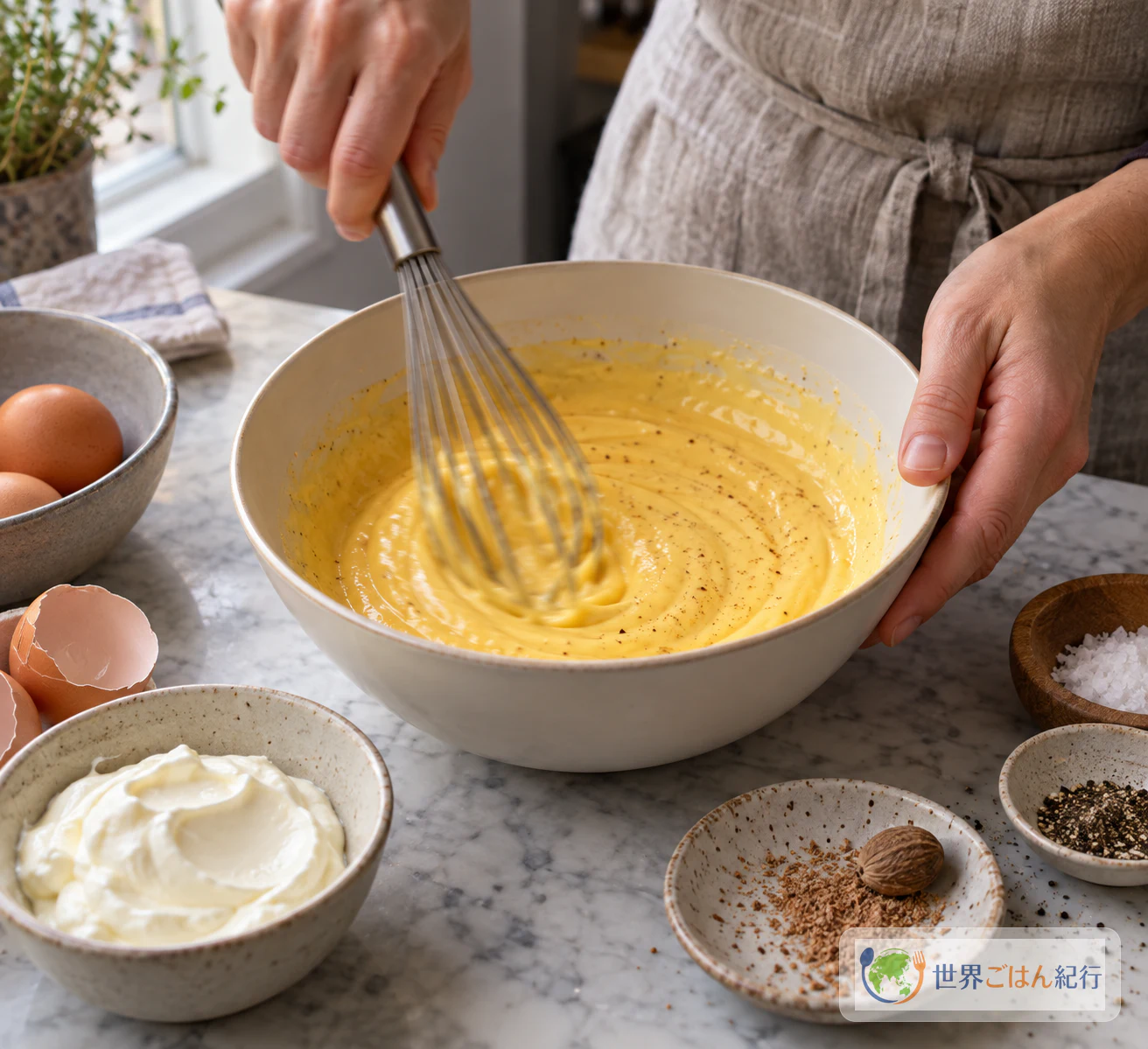
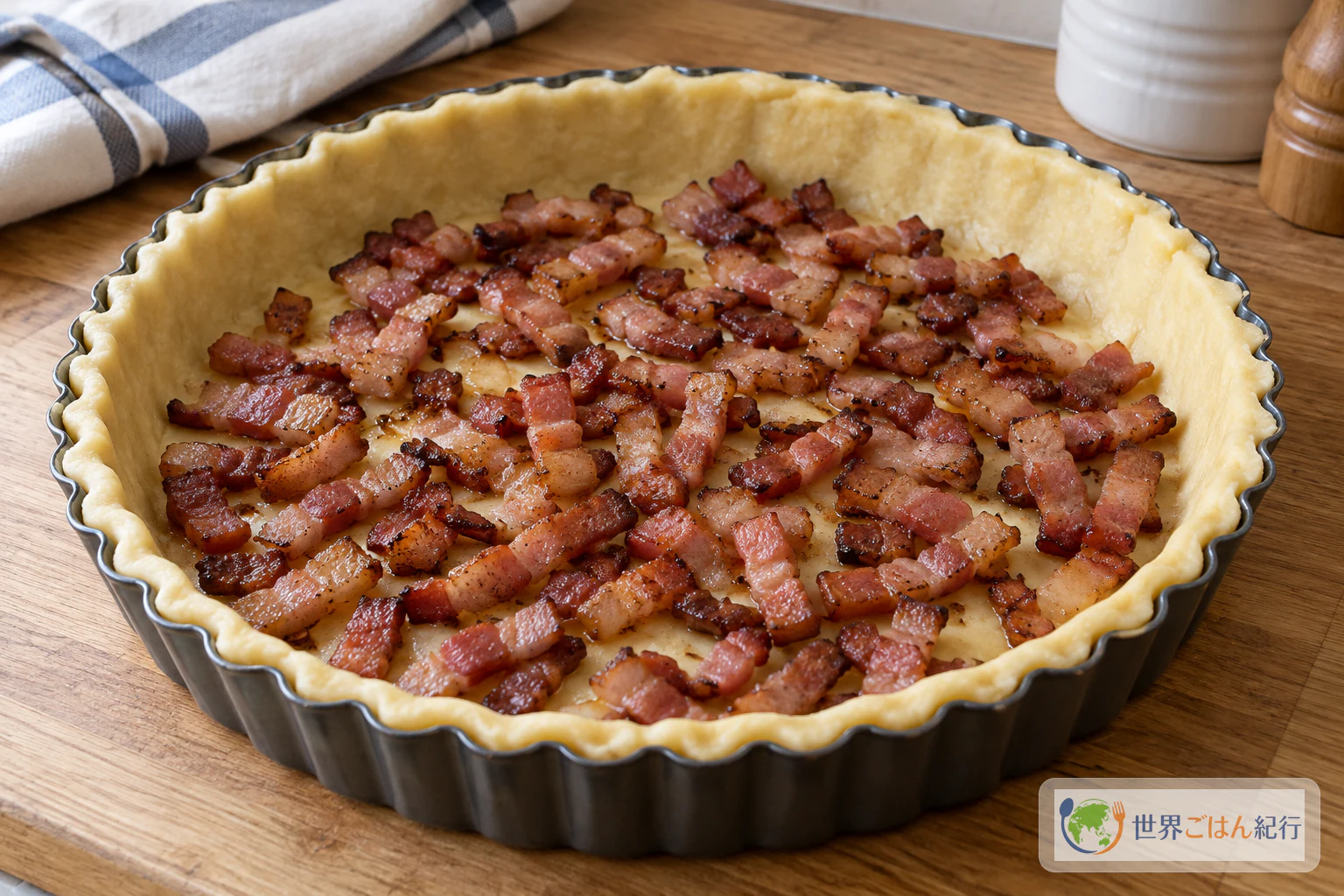
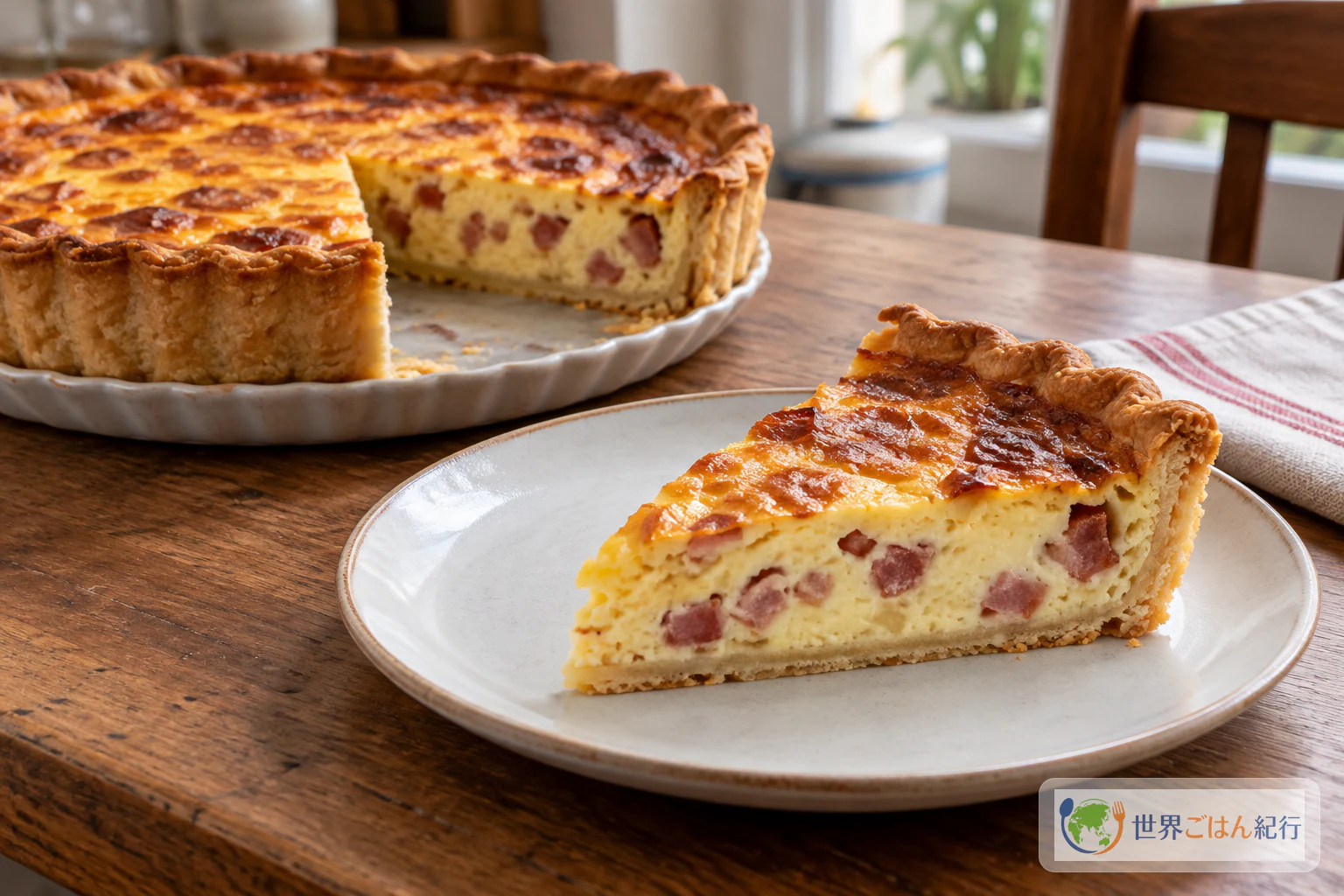
A quiche lorraine comes out of the oven with a golden top. Cut into it while it is still warm and the slice shows small pieces of smoked pork suspended in a pale, soft custard of eggs and crème fraîche, all inside a thin shortcrust shell. The recipe followed here, published by Éditions Larousse, uses six components. The pastry is a ready-rolled pâte brisée. The lardons are smoked. The custard is whole eggs, extra yolks and crème fraîche, seasoned with salt, pepper and nutmeg. Larousse suggests serving it hot or warm.
Three questions tend to come up before the first try. Do you need cheese? Can you use ordinary bacon? Do you have to blind-bake the crust? The answers, in short: this version has no cheese, smoked bacon cut into sticks is a close stand-in for lardons, and the pastry goes into the oven raw with the filling. The sections below explain each point.
What Is Quiche Lorraine? The Basic Form Without Cheese
Many savory tarts are called "quiche," with all kinds of vegetables, cheeses and meats. Quiche lorraine is narrower than that. The Larousse recipe is built on just the ingredients above. The Metz tourist office (Inspire Metz) publishes its own regional recipe with the same core: pâte brisée, lean smoked pork (lard fumé maigre), eggs, crème fraîche and nutmeg.
A Lorraine association, the Syndicat National de Défense et de Promotion de l'Authentique Quiche Lorraine (SNDPAQL), goes further. It defines the authentic quiche lorraine as eggs, smoked pork, cream and an all-butter pâte brisée, with pepper and nutmeg, and explicitly without cheese. This is the firm position of a group that exists to defend the dish, not a rule every household in the region follows. Recipes that add Gruyère or Emmental are easy to find. In this article they are treated as a separate, cheese-added variation and kept out of the basic recipe.
Published recipes don't agree on the details, even under the same name. The Metz tourist-office version uses four eggs and "a bowl" of crème fraîche. It browns the pork in butter and bakes the quiche in a hot oven for about 25 minutes, without giving the size of the pan or the oven temperature. The Larousse version gives exact amounts, a 26 cm pan and a two-stage oven temperature. This article follows Larousse alone and does not blend the two recipes.
The Lorraine Table and the Story Behind the Name
The tourist board of Meurthe-et-Moselle, a département in Lorraine, presents quiche lorraine as one of the area's savory specialties. Its gastronomy page dates the dish back to the 16th century. It also links the name to the German Kuchen ("cake").
The SNDPAQL makes a more specific claim. It traces the dish to 1586, at the table of Duke Charles III of Lorraine, and connects the name to the Lorraine dialect word kichen and to German Kuchen. These dates and word histories come from a tourism page and an advocacy group. They are not confirmed by dictionary or academic sources, so it is fairest to say the dish is sometimes presented as dating to the 16th century, and that some groups explain the name this way.
If you want to cook more of the country's regional dishes, you'll find them on the France page.
Ingredients: One 26 cm Tart, 4 Servings (Larousse)
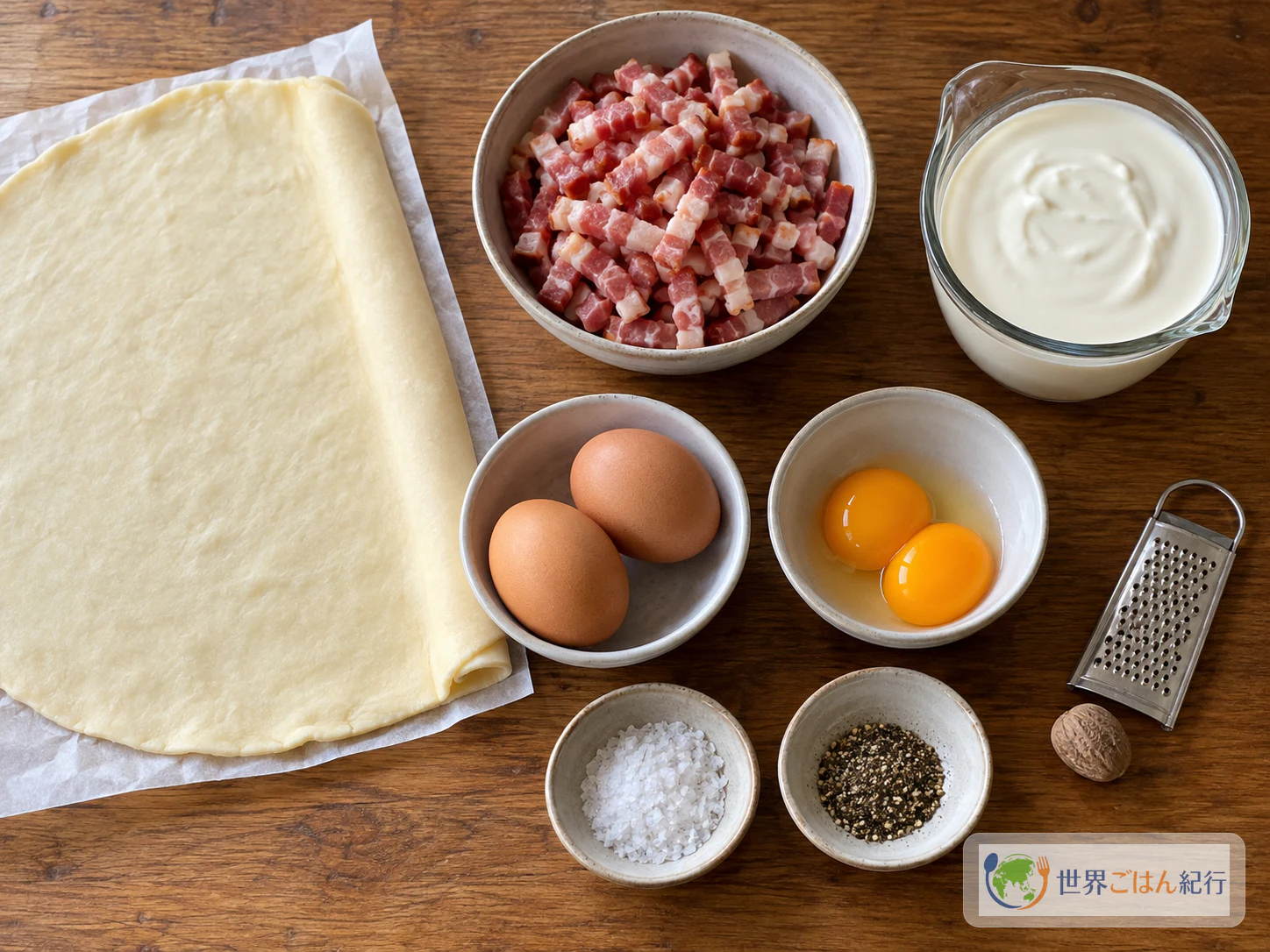
These amounts are for a 26 cm tart serving 4. Season lightly with salt, pepper and nutmeg and adjust to the saltiness of your bacon.
You'll have 2 egg whites left over. Don't take the 2 yolks from the 2 whole eggs, or the custard will come up short.
This recipe contains wheat (pastry), egg, milk (crème fraîche, and butter if your pastry contains it) and pork. Check the labels on store-bought pastry and bacon one by one, since their ingredients vary by product.
Choosing and Substituting: Pastry, Cream and Smoked Pork
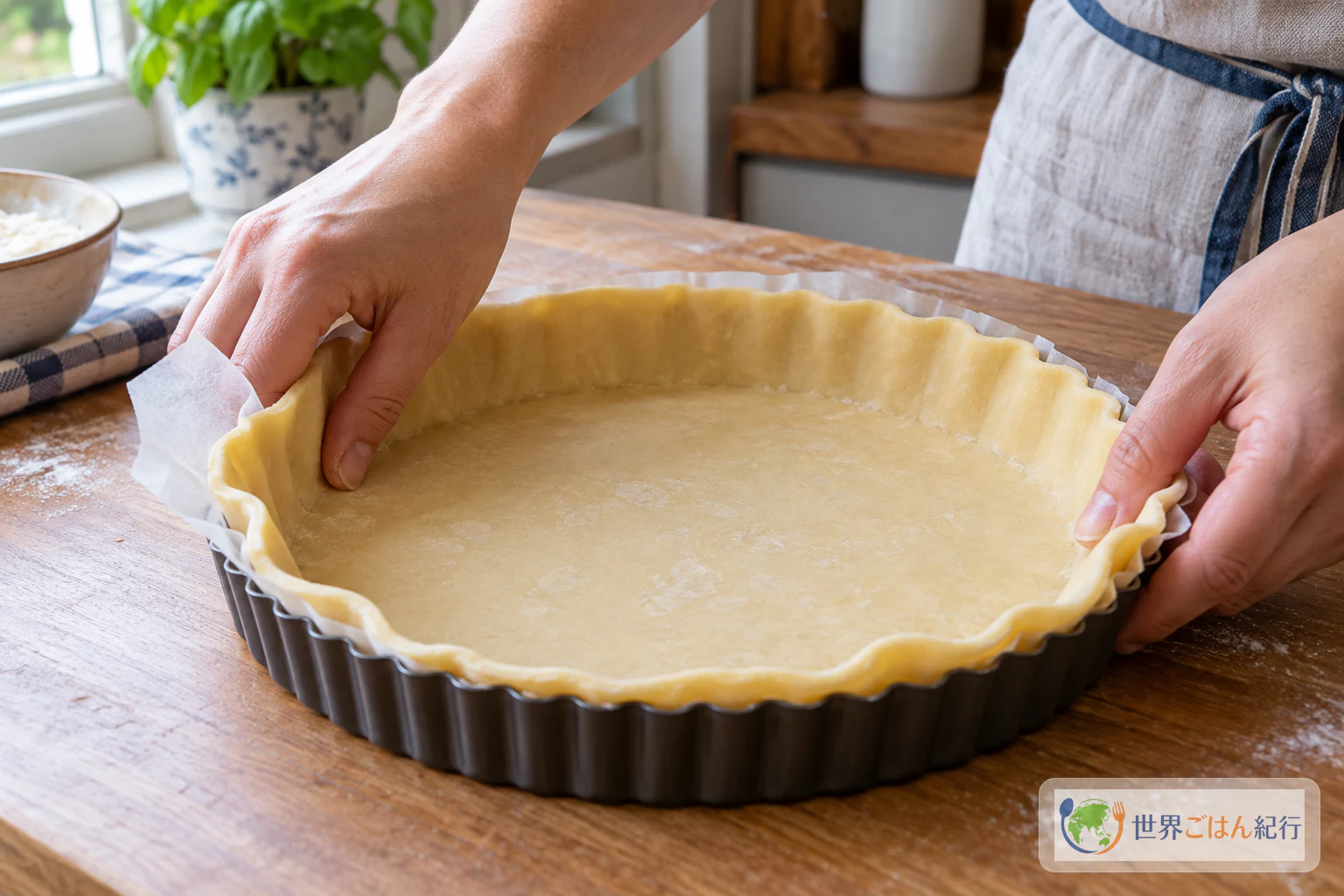
Pastry. The recipe calls for one 230 g sheet of unbaked, ready-rolled pâte brisée. If you can't find one, an unsweetened store-bought tart dough is the next thing to look for. Puff pastry will work in a pinch, but it changes the texture of the crust, so treat it as a different result.
Crème fraîche. Use a product sold as crème fraîche; products differ in fat content and thickness, so they may not all bake alike. Unsweetened heavy cream is easier to find in many places and is the usual substitute. It has less tang and a different thickness, though, so it is not an equivalent swap, and the bake may not turn out the same. The basic recipe adds no lemon juice or other acid to make up for it.
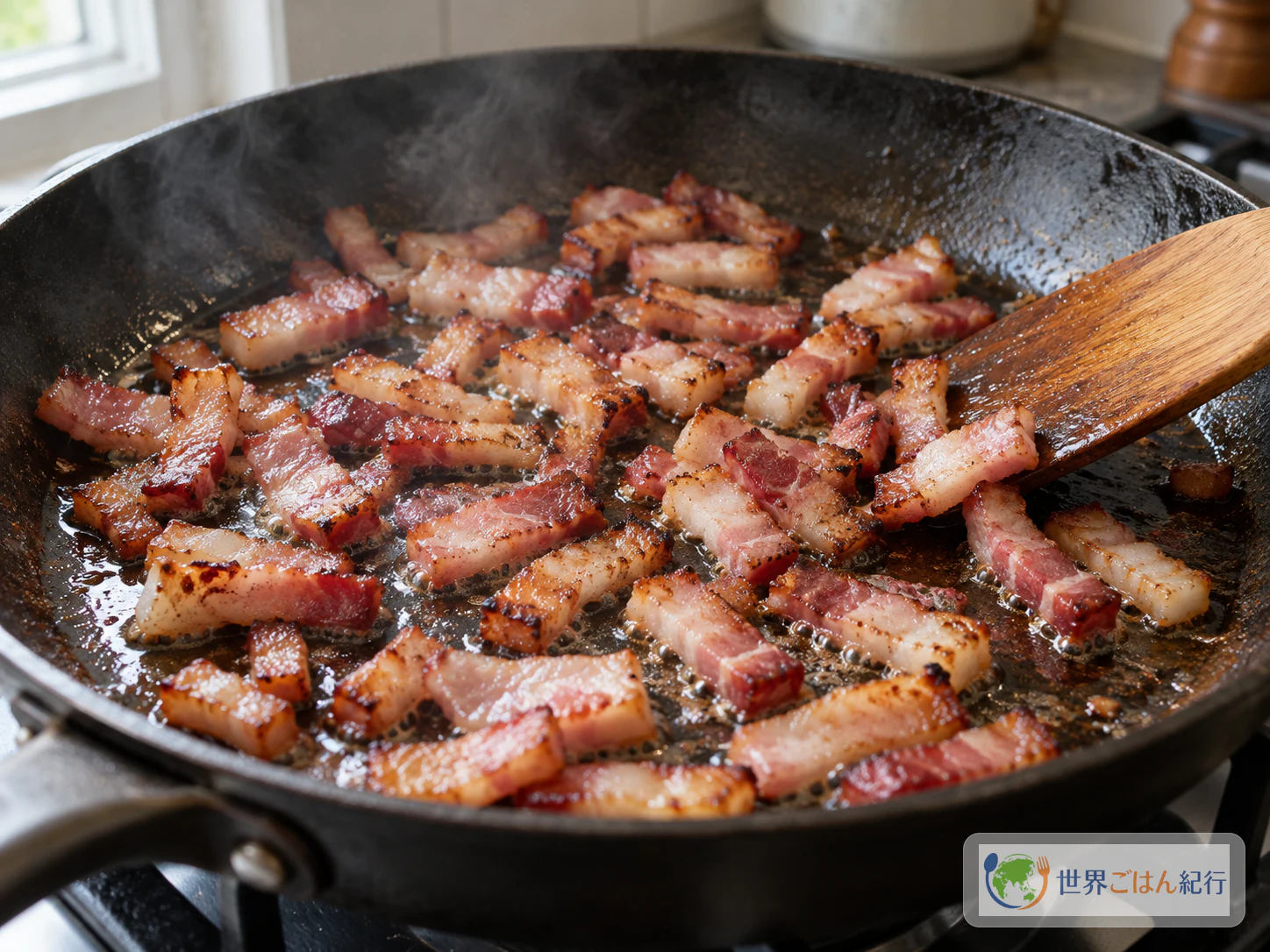
Smoked lardons. Lardons are short sticks of smoked pork belly. Thick-cut smoked bacon cut into sticks is a close stand-in, and it keeps more bite than thin rashers. Smokiness, salt and how much fat renders out all vary from product to product.
Equipment
- 26 cm tart pan
- The baking paper supplied with the pastry sheet, if it comes with one
- Mixing bowl and whisk
- Frying pan
- Plate lined with paper towels
- Nutmeg grater (or use a little ground nutmeg)
- Oven mitts
- Food thermometer, for checking the center of the custard
- Oven thermometer (optional), to see how your oven compares with its dial
Method: Line, Mix, Brown, Fill and Bake
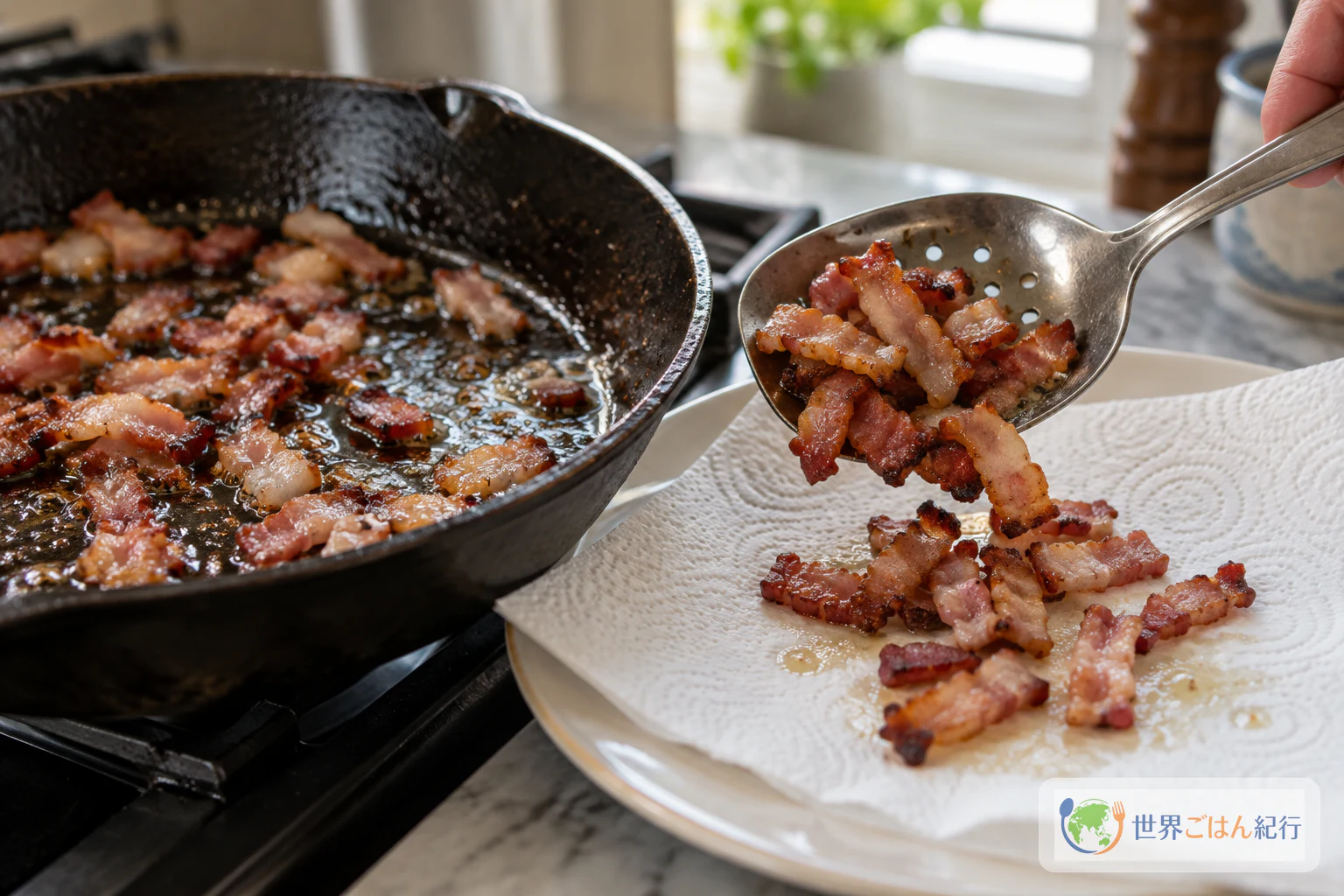
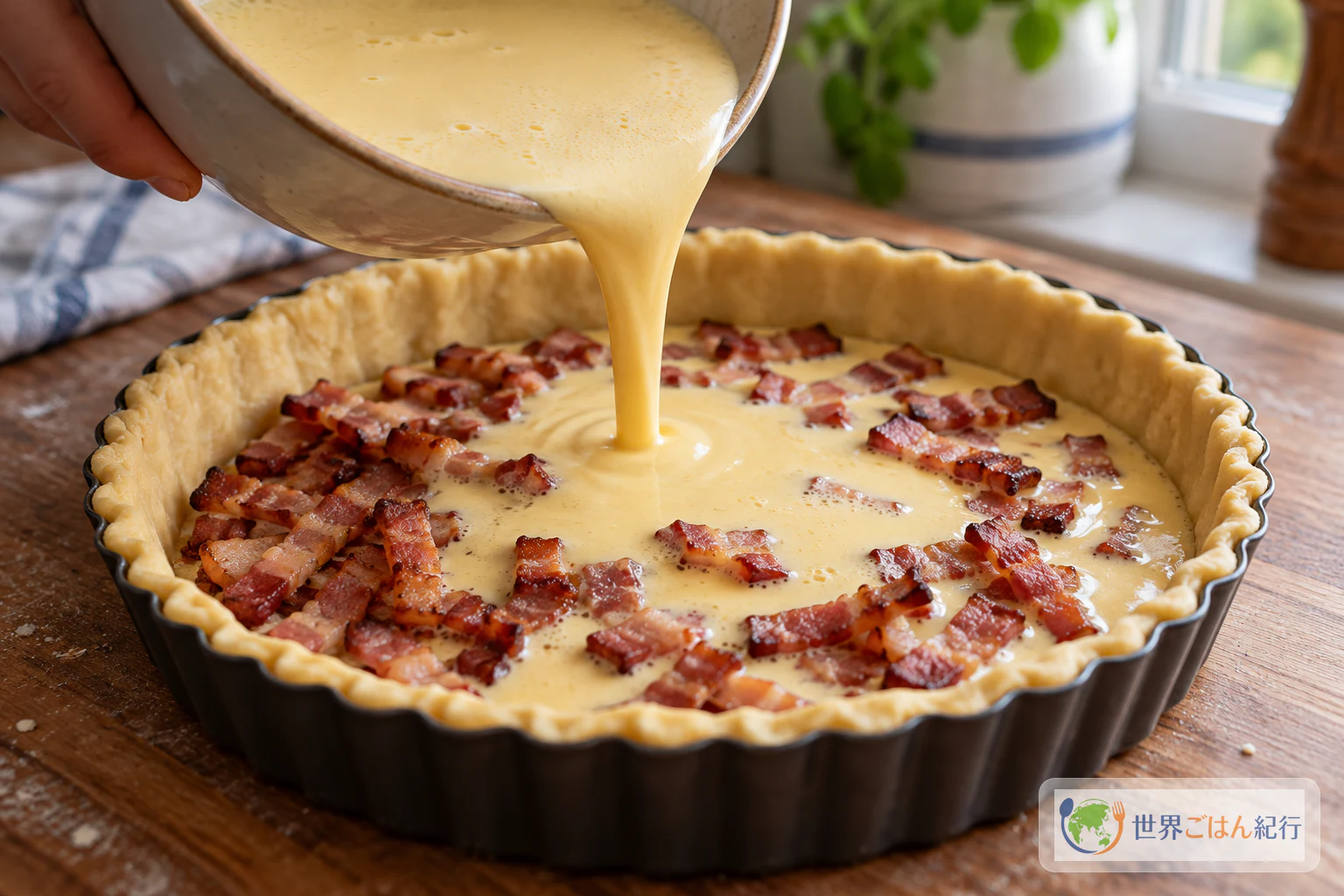
In the Larousse recipe the raw pastry, lardons and custard go into the oven together. The steps below do not add blind-baking or pricking the pastry.
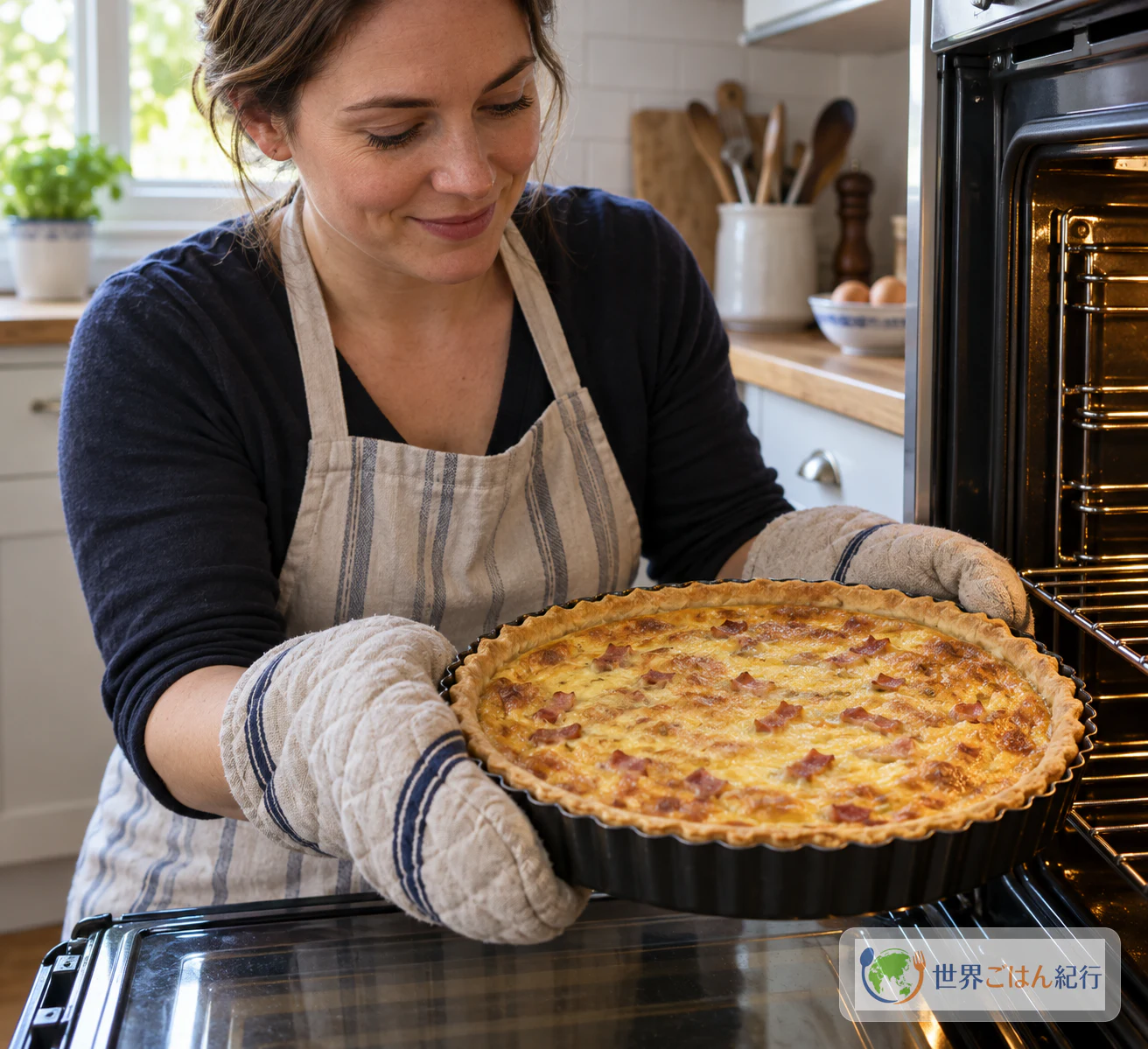
The baking times are a guide for a home oven. Ovens vary, so judge the end of baking by the custard itself, not only the clock.
Troubleshooting: Runny, Soggy, Salty or Torn
| Problem | Likely cause | What to do |
|---|---|---|
| The pastry tears or lifts away from the pan | The dough got too soft at room temperature, or was stretched into the corners | Don't let the sheet sit out too long before lining the pan. Patch tears with trimmed-off scraps of dough rather than adding a blind-baking step |
| The custard is still runny in the center | Oven running cool, a different pan size, or changed amounts | Keep to the 26 cm pan and the listed amounts. After the set time, check the center, and keep baking until it is set and reaches 71°C |
| The base is soggy | The lardon fat wasn't drained | Always drain the browned lardons on paper towels before they go into the shell |
| Too salty | Salty bacon plus salt in the custard | Bacon saltiness varies by product. Add salt to the custard sparingly, and adjust next time based on your bacon |
Don't rely on appearance alone to decide if the quiche is cooked. A thermometer reading at the center is the surest check.
Variations
Each of these changes the result, and none is part of the Larousse recipe. Make the basic version first so you know what you are changing.
- Individual tarts. Small tart pans make single servings, but the amount of custard per pan and the baking time would have to be worked out separately. They are not verified here.
- Homemade pâte brisée. You can make the pastry yourself, but this article has no sourced pastry formula to give you. The basic recipe uses one 230 g store-bought sheet.
- Different smoked pork. Try different smoked bacons or lardons to compare smokiness and saltiness. Adjust the custard's salt each time.
- Heavy cream instead of crème fraîche. Use the same amount of unsweetened heavy cream. Expect a milder, less tangy custard with a different texture. This version is untested.
- With cheese. A cheese-added quiche is a modern variation, not the basic form that the SNDPAQL defends. Make it as a separate recipe rather than adding cheese to the ingredient table above.
Storage and Reheating
These guidelines come from general food-safety advice. They are not measurements taken on this particular quiche.
According to FoodSafety.gov, put leftovers in the refrigerator within 2 hours of cooking, or within 1 hour if the air temperature is above 32°C. The 2-hour limit is the time until it goes into the refrigerator. Keep the refrigerator at 4°C (40°F) or below, eat leftovers within 3–4 days, and reheat them to at least 74°C.
Japan's Ministry of Health, Labour and Welfare gives similar general guidance for home cooking. It recommends heating food so the center reaches 75°C for at least 1 minute, dividing leftovers into shallow containers so they cool quickly, and reheating them to at least 75°C.
Frequently Asked Questions
Does quiche lorraine need cheese?
Not in this recipe. The Larousse version has no cheese, and the SNDPAQL holds that authentic quiche lorraine is made without it. Cheese-added versions are common, though, and you can treat them as a separate variation.
Can I use bacon instead of lardons?
Yes. Thick-cut smoked bacon cut into sticks is a close stand-in. Its fat, smokiness and saltiness vary by product, so salt the custard sparingly.
Do I need to blind-bake the pastry?
Not in this recipe. The raw pastry is filled and baked straight away, starting at 210°C for 5 minutes and then 180°C for 25 minutes. Other recipes with a blind-baking step use a different method, and the two shouldn't be mixed.
Can I eat it cold?
Larousse suggests serving it hot or warm. For leftovers, refrigerate within the times in the storage section above, keep them at 4°C or below, and reheat to at least 74°C.
What if I can't find crème fraîche?
Unsweetened heavy cream is the easiest substitute to find. It is less tangy and has a different thickness, so the custard won't be identical.
Sources
- Éditions Larousse, "Quiche lorraine." The recipe followed in this article: 4 servings, a 230 g ready-rolled pâte brisée, 2 eggs plus 2 yolks, 25 cl crème fraîche, 200 g smoked lardons, nutmeg, salt and pepper, a 26 cm pan, 210°C for 5 minutes then 180°C for 25 minutes, served hot or warm. It is one published recipe, not the single formula of every Lorraine household. https://www.editions-larousse.fr/recette/quiche-lorraine/
- Agence Inspire Metz / Office de Tourisme de Metz, "Espace recettes, à tester ! — Quiche lorraine." The Metz tourist office's regional recipe (pâte brisée, lean smoked pork, eggs, crème fraîche, nutmeg), used here only for comparison. It does not specify pastry or cream weights, pan size or oven temperature. https://www.tourisme-metz.com/fr/decouvrir-metz/espace-recettes
- Meurthe & Moselle Tourisme, "Gastronomie — Meurthe-et-Moselle." A departmental tourism page presenting quiche lorraine as a local savory dish, with the 16th-century dating and the Kuchen explanation of the name. A tourism overview, not a historical study. https://tourisme-meurtheetmoselle.fr/accueil/lessentiel/gastronomie/
- Syndicat National de Défense et de Promotion de l'Authentique Quiche Lorraine (SNDPAQL), "Quiche Lorraine — L'authentique, sans fromage." An advocacy association's definition of the dish without cheese, and its claims about the dish's origin and name. Presented as the position of an interested party. https://www.quiche-lorraine.org/fr/
- FoodSafety.gov, "Cook to a Safe Minimum Internal Temperature." The 71°C safe minimum internal temperature for egg dishes, including quiche, and checking with a thermometer. https://www.foodsafety.gov/food-safety-charts/safe-minimum-internal-temperatures
- FoodSafety.gov, "Game Day Food Safety Tips." Refrigerating within 2 hours (1 hour above 32°C), a refrigerator at 4°C (40°F) or below, leftovers within 3–4 days, and reheating to 74°C. https://www.foodsafety.gov/blog/game-day-food-safety-tips
- Ministry of Health, Labour and Welfare (Japan), "家庭でできる食中毒予防の6つのポイント" (Six points for preventing food poisoning at home). General Japanese home-hygiene guidance: heating to 75°C at the center for at least 1 minute, dividing leftovers into shallow containers, reheating to 75°C or above, and keeping raw meat away from cooked food. https://www.mhlw.go.jp/stf/seisakunitsuite/bunya/kenkou_iryou/shokuhin/syokuchu/01_00006.html