
Lift the pot lid and the cabbage takes on the look of a main
On the day you grill sausages, the side of the plate can feel a little bare. Potatoes alone are heavy. A salad alone is cold. At such times, slowly sweeten white cabbage in a pot and tighten the aroma with vinegar and caraway, and you have a warm side dish that can sit beside a meat dish.
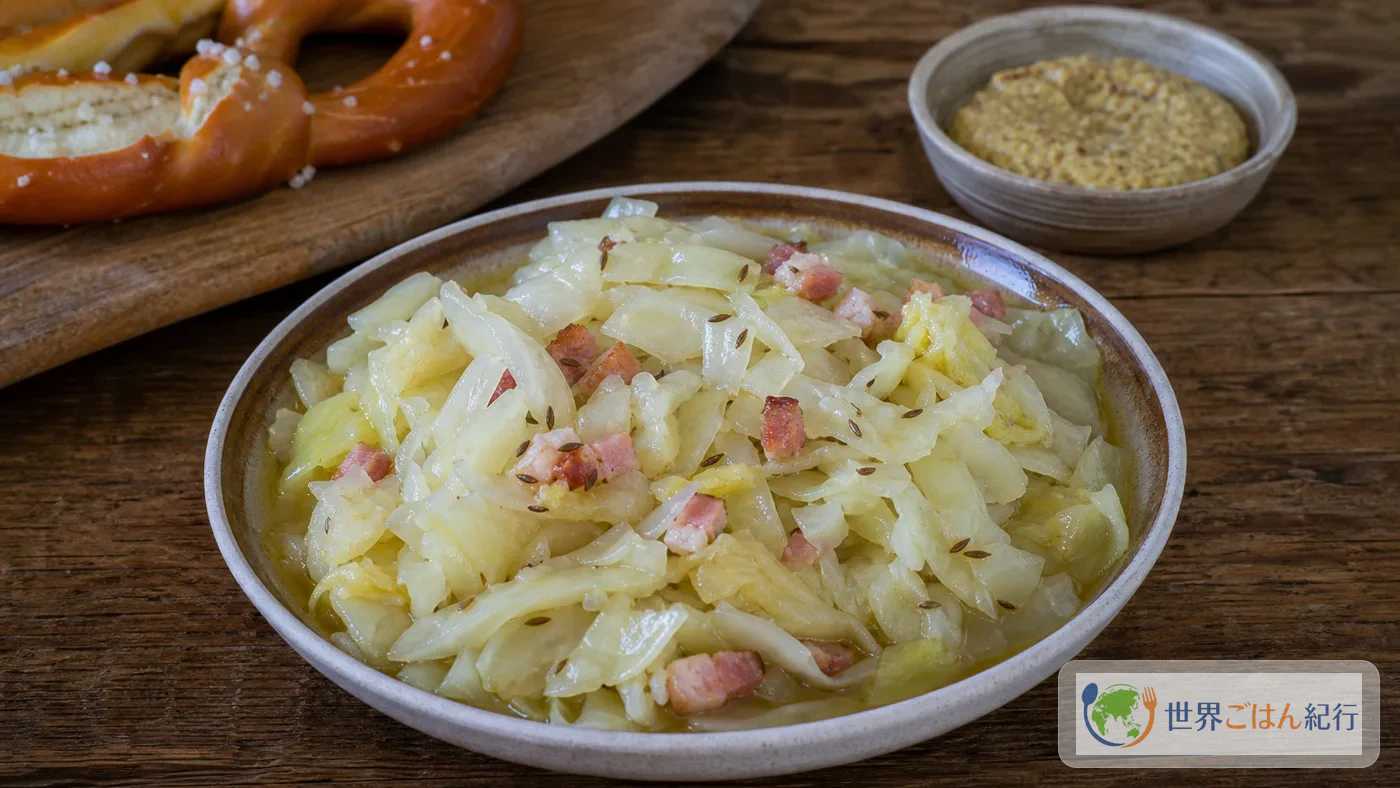
Bayrisch Kraut (Bayrisch Kraut / Bayerisch Kraut) is a braised white cabbage eaten in Bavaria, in southern Germany. It is not fermented cabbage like sauerkraut; raw white cabbage is braised with onion, bacon, vinegar, sugar, caraway, and the like. There is acidity, but not the sharpness of fermentation: a soft acidity that holds the sweetness of apple and onion.
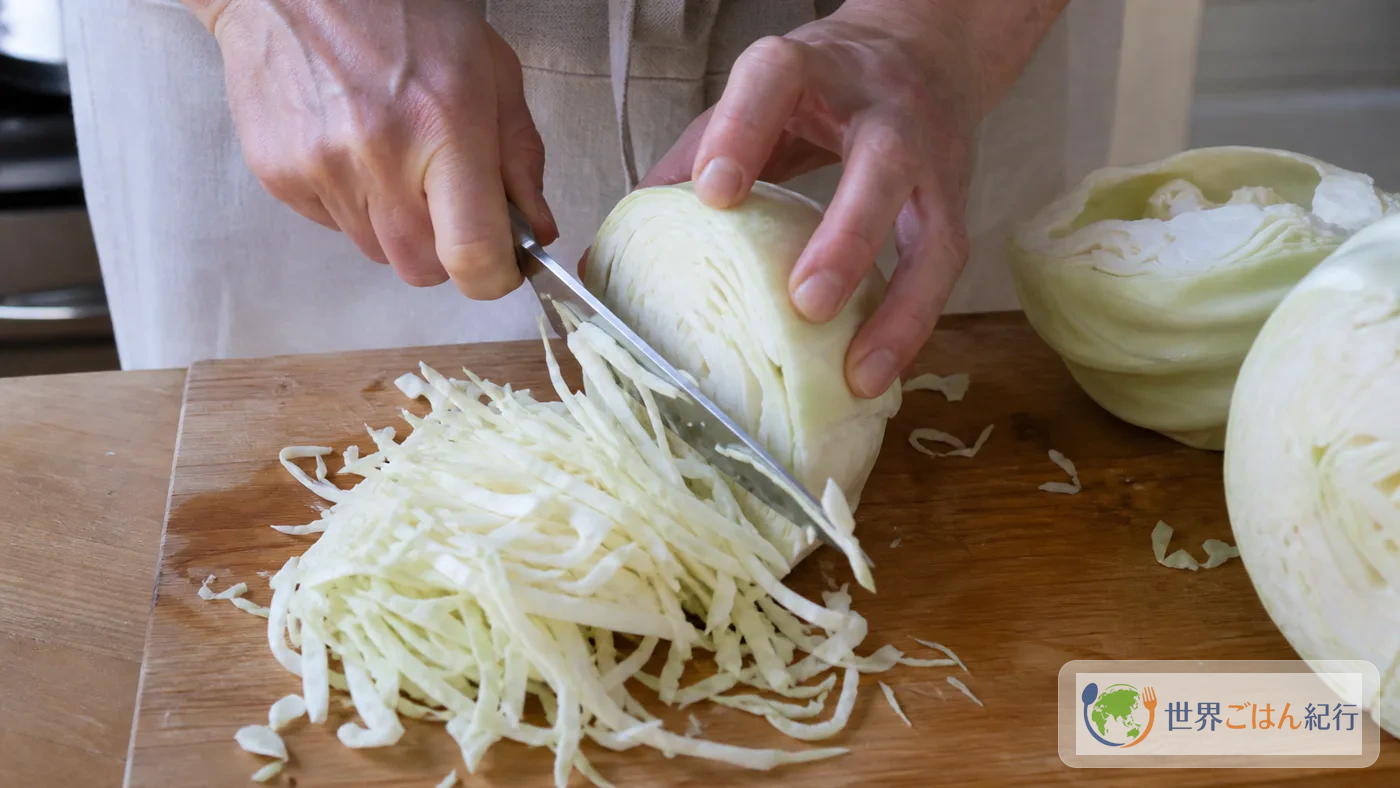
The crux when making it is not finding ingredients. White cabbage, bacon, and onion are all ordinary. What matters is not cutting the cabbage too fine, not making the vinegar too strong from the start, and not making the caraway a lead like curry powder. Keep to these, and even in a home pot the character of a warm Bavarian side dish comes through.
For another European cabbage dish, Norway's fårikål layers lamb and cabbage and simmers them. France's pot-au-feu (in Japanese) sinks vegetables into a clear meat broth. Bayrisch Kraut is somewhere between, a dish that puts the meat in the lead while the cabbage pulls the plate's flavor together.
Sauerkraut is cabbage fermented with lactic acid. Bayrisch Kraut is not fermented; raw white cabbage is braised sweet in a pot. Because the acidity comes from vinegar, you can eat it the day you make it.
Ingredients (serves 4)
This amount is for 4 as a side to sausage or pork dishes. If you eat it generously like a main, it serves 2 to 3. Cabbage shrinks to less than half its volume when cooked, so use a large pot.
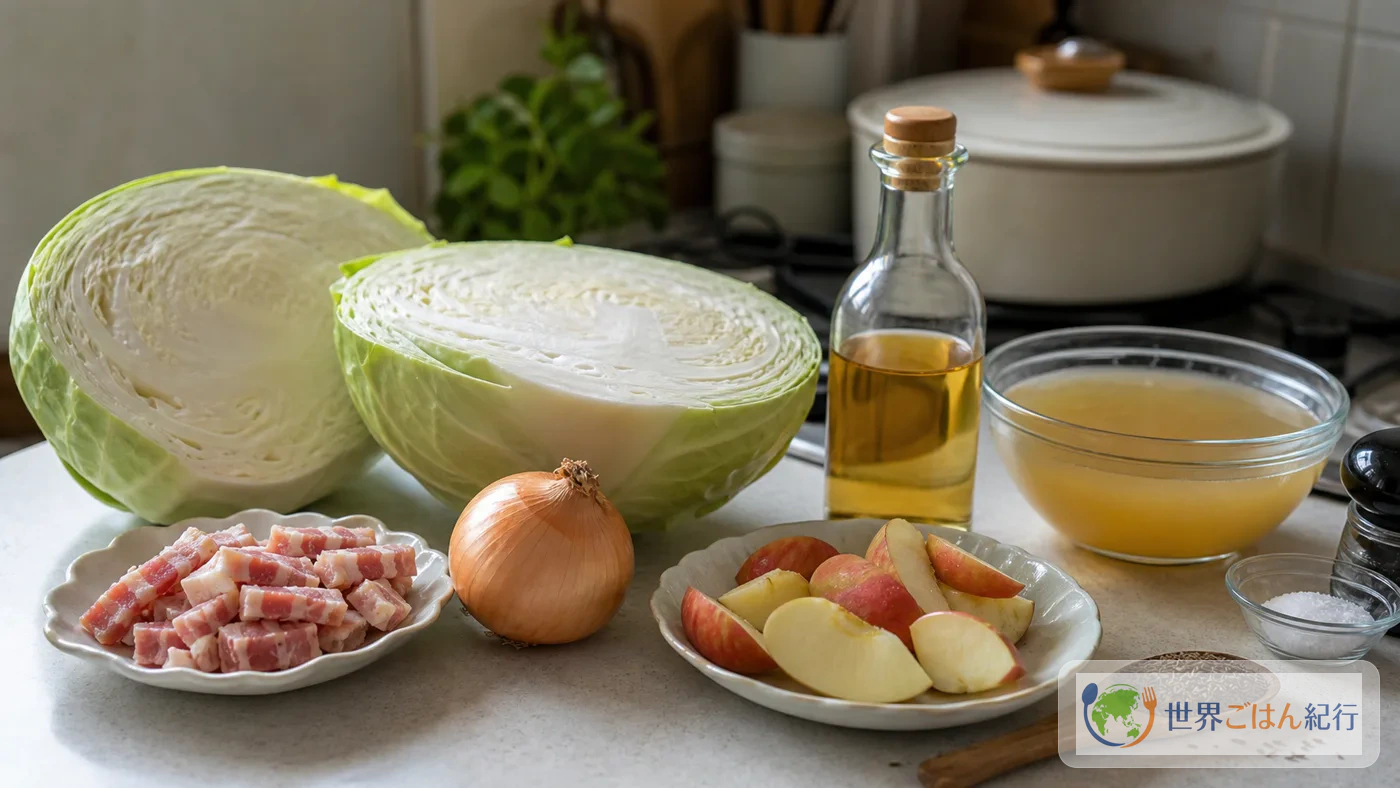
This recipe uses pork and dairy. Bacon and bouillon may contain wheat, milk, egg, or soy, so check the product labels. To make it vegetarian, leave out the bacon, replace the butter with vegetable oil, and use vegetable bouillon.
Substitutes and how to think about shopping
Because Bayrisch Kraut is a cabbage dish, you do not need expensive imported ingredients. Caraway alone, however, is worth looking for. It looks like cumin, but its aroma is cooler, in a direction that suits bread, potatoes, cabbage, and pork. Substituting cumin suddenly turns the aroma toward the Middle East or India, so it is safer to treat that as a different dish.
| Role | Ingredient to keep | Possible substitute | What changes |
|---|---|---|---|
| Cabbage sweetness | White cabbage | Spring cabbage, savoy cabbage | Spring cabbage holds more water, so shorten the braise by 5 minutes |
| Acidity | White wine vinegar | Apple cider vinegar, distilled white vinegar | Distilled vinegar has sharp edges, so start with less |
| Aroma | Caraway | Make without | Less German character. Substituting cumin is not recommended |
| Sweetness | Apple | Increase sugar by 1 tsp | Less fruit aroma but still holds together as a home side dish |
| Fat and savoriness | Bacon | Pancetta, a little salt pork | If strongly salted, move the salt to the end |
If you look online on the first go, the order is caraway, white wine vinegar, auxiliary whole spices, and a heavy pot. Buy the cabbage, bacon, and apple at a nearby supermarket, and supplement only the aroma, the acidity, and a tool that braises easily, and nothing is wasted. For cutting cabbage, a knife is enough at first. A too-fine slicer tends to make it fall apart when cooked, so prioritize being able to keep a 5 mm width.
Caraway is the small seed that decides this dish's aroma. It is also used for sauerkraut, rye bread, and potato dishes, so a bag is handy if you keep making German and Central European food. When you find it in the spice shelf of an import store or a large supermarket, check that the label says caraway, not cumin.
White wine vinegar makes the acidity of this dish the cleanest. You can make it with distilled white vinegar, but the first steam tends to be sharp, so starting from 1 1/2 tablespoons is less likely to fail. If you keep making warm German and Austrian cabbage dishes, a bottle makes adjusting acidity easier.
Juniper berries have an aroma that goes with pork, but you use only a little and some households find it medicinal. If you cannot find them, putting in just 2 whole allspice berries does not make the same thing, but adds a warm aroma that suits sitting beside a meat dish. Use whole, not ground, and take them out before eating.
The pot is part of the flavor. Bayrisch Kraut fries the cabbage and then braises it in little liquid, so a thin pot tends to scorch only on the bottom and leave the cabbage on top watery. With a heavy cast-iron pot or thick two-handled pot, even medium-low heat warms the whole pot and brings out the sweetness of the cabbage.
How to make it: bring out the sweetness, then add the acidity
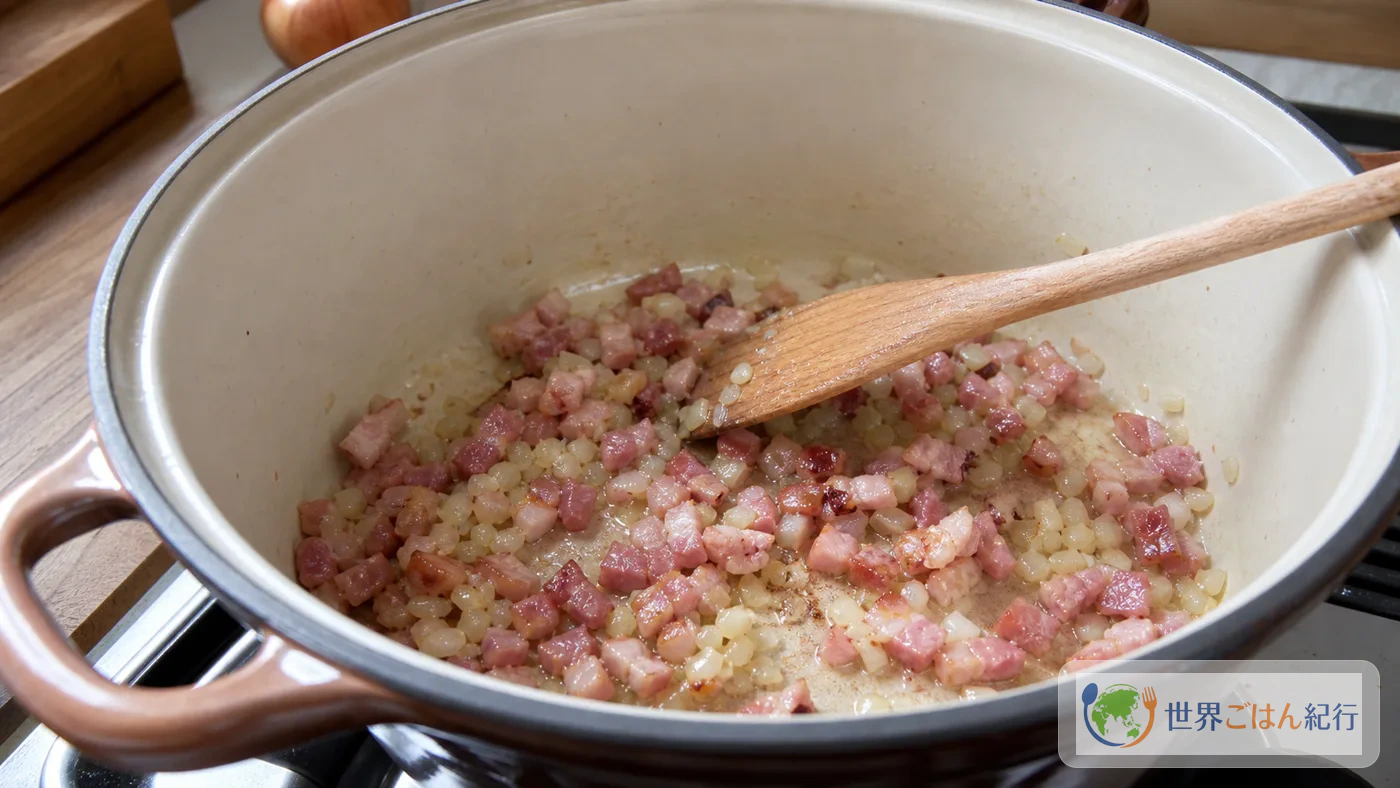
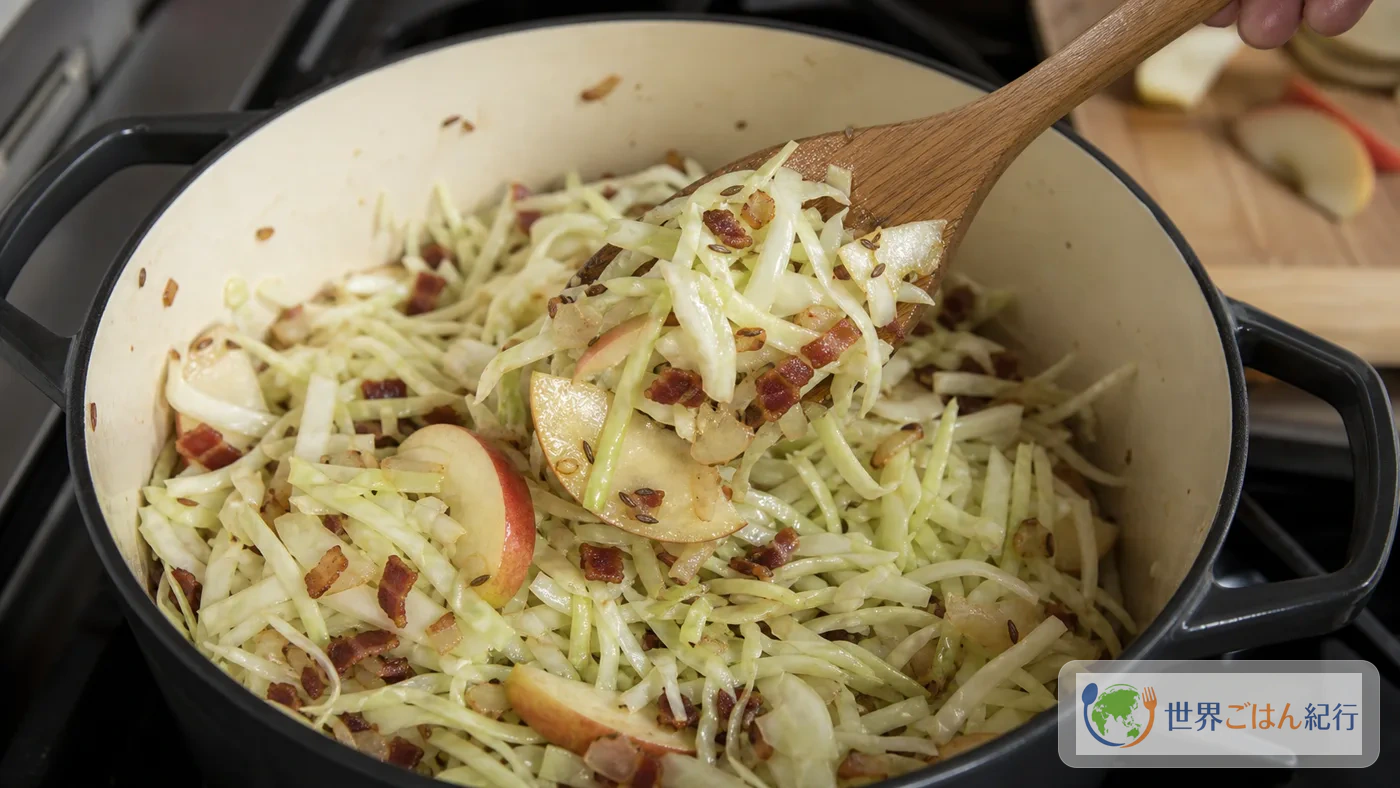
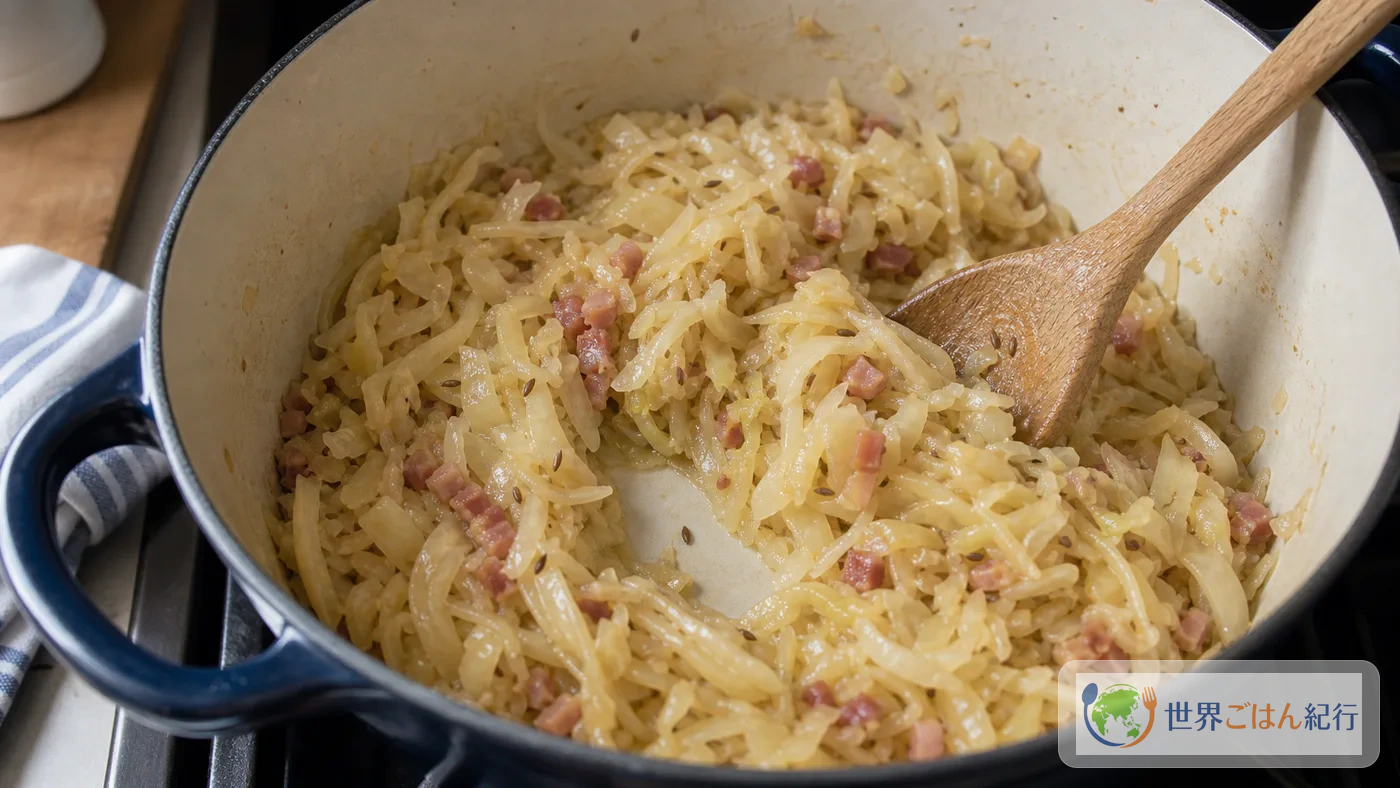
If this dish is simmered with vinegar from the start, the acidity comes too far forward. First build a sweet base with bacon and onion, wilt the cabbage, and then braise with vinegar and bouillon. At the end, take off the lid and stop with a little liquid remaining, and the cabbage does not turn watery.
Where it tends to go wrong, and fixes
Because Bayrisch Kraut has few ingredients, adjusting acidity and moisture is easy to see. If you taste only once at the end, it ends up too sour, too sweet, or watery.
| What happened | Cause | Fix |
|---|---|---|
| Too sour | Lots of vinegar from the start, not reduced enough | Add 1/2 tsp sugar and 2 tbsp bouillon and warm 3 minutes over low heat |
| Too sweet | Sweet apple, too much sugar | Add 1 tsp vinegar and a pinch of salt and simmer 1 minute |
| Watery | Spring cabbage holds a lot of water, finished with the lid on | Take off the lid and reduce 5 minutes over medium heat |
| Cabbage falls apart | Cut too fine, cooked too long | Next time cut 5 mm wide and check the firmness at 20 minutes |
| Aroma like curry | Cumin was substituted | Do not use cumin; look for a little caraway |
| Bacon too salty | Used a lot of smoked bacon or pancetta | Serve with boiled potatoes and move the salt to the end next time |
The first time, it is fine to start with 1 1/2 tablespoons of vinegar. If it lacks acidity at the table, you can add a few drops of vinegar on the plate, but it is harder to rescue a pot that is too sour. Distilled grain vinegar in particular has sharp edges, so starting with less than white wine vinegar or apple cider vinegar is less likely to fail.
How it is eaten locally, and the menu
Bavarian cooking has a strong image of pork, sausage, potatoes, bread, and beer, but the one working beside them on the plate is cabbage. Grilled meat alone is heavy with fat, and potatoes alone dry out the mouth. When acidity and caraway go into warm cabbage, it takes on the saltiness of the meat and moves you to the next bite.
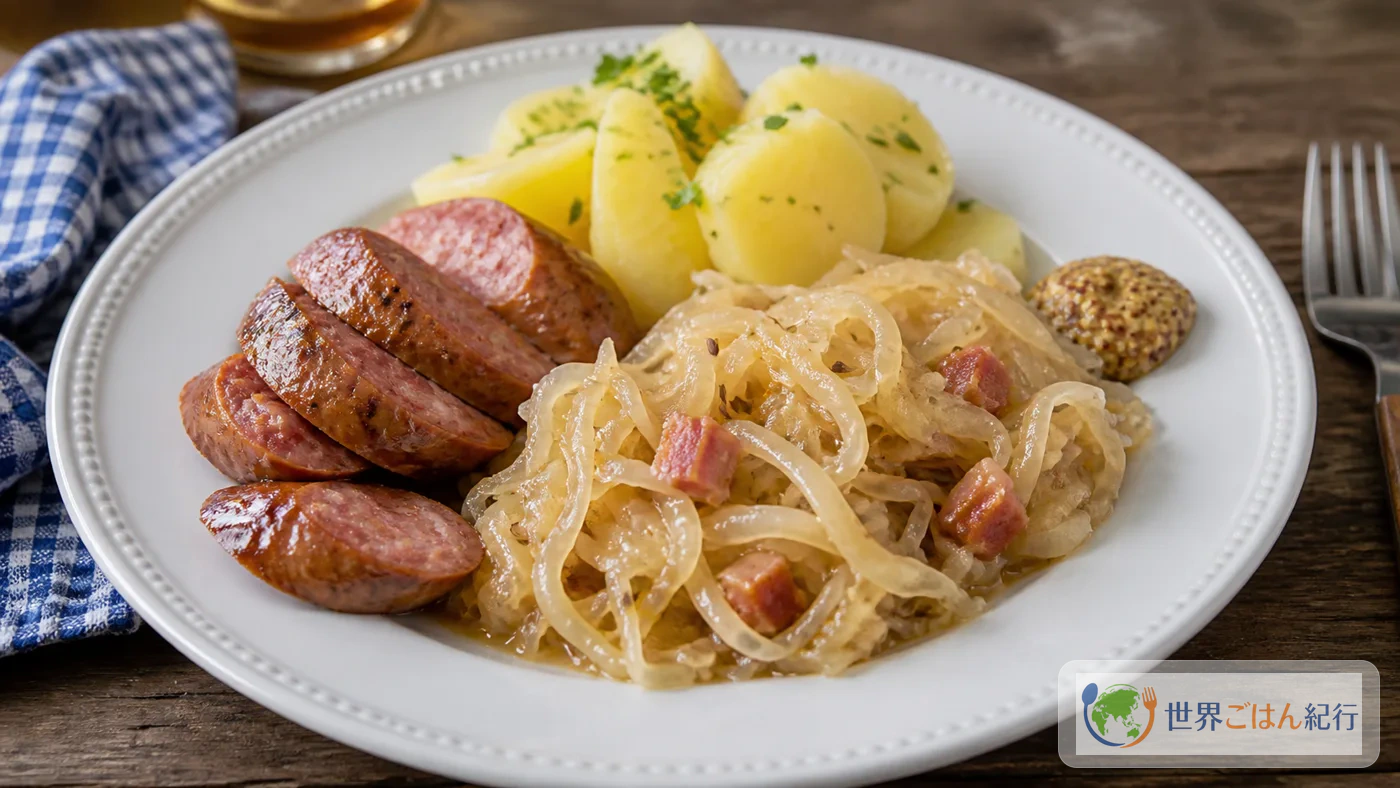
Easy pairings at home are grilled sausage, pork sauté, roast pork, and boiled potatoes. You could also increase the thick-cut bacon a bit to make it closer to a main and serve with toast in place of rye or dark bread. Like raclette, with its melted cheese, or crozets de Savoie, with baked buckwheat pasta, its appeal comes out when served as a warm dish on a cold day.
On the other hand, acidic cabbage served just as it is with white rice can sit a little apart. To bring it closer to rice, serve it with stir-fried pork pieces or grilled sausage and add a little mustard. Treating it as a warm side dish that cuts the fat of meat, rather than a "Western-style vinegared cabbage" beside rice, makes it hold together.
Storage and reheating
After cooling about 20 minutes, move it to a shallow container and refrigerate. Allow 3 days in the refrigerator. Packed warm into a deep container, the center is slow to cool and the smell of cabbage gets trapped. Spread it flat to cool if you can.
To reheat, put the portion in a small pot, add 1 to 2 tablespoons of bouillon or water, and warm over low heat for 4 to 5 minutes. In a microwave, allow 1 minute 30 seconds at 600 W, stir, and 30 seconds more. It can be eaten cold, but warm brings back the aroma of caraway and apple.
It can be frozen, but the cabbage fibers get a little softer. If freezing, wrap it in single portions and finish within 2 weeks. After thawing, liquid comes out, so uncover and cook off the moisture for about 2 minutes over medium heat before plating to bring it back.
Background of the dish
Koch-Wiki's Bayerisch Kraut shows a method of adding the cabbage, mixing well, and cooking in bouillon, vinegar, and apple juice. Wikipedia's list of German dishes also treats Bayrisch Kraut as one German dish, and Britannica's explanation of sauerkraut confirms that sauerkraut is fermented white cabbage.
What matters here is that it is not fermented cabbage. When people hear "German cabbage," they tend to jump to sauerkraut, but Bayrisch Kraut is a warm side dish made the same day. You need no equipment to ferment cabbage and no weeks of storage. Rather, it is a dish that tastes best steaming beside grilled meat.
Regional differences include households that use a lot of bacon, households that leave out the apple, households that use more caraway, and versions that add a little white wine. In a home kitchen, rather than cramming everything in as it is locally at first, keeping to the axis of white cabbage, onion, vinegar, and caraway and bringing it toward easy eating with apple and bacon is easier to reproduce.
Frequently asked questions
Can I substitute sauerkraut?
You can, but the character of the dish changes. Sauerkraut has a strong fermented sourness and is already finely cut, so it tends to turn soft when cooked. If you use it, rinse it lightly with water, add no vinegar, and treat it as a different dish, warmed about 10 minutes with a little bouillon.
What should I put in if I do not have caraway?
Better to leave it out. Cumin changes the direction of the aroma greatly. If you really want to add aroma, use 1 bay leaf and a little more black pepper. If you want a German character, it is worth looking for caraway for next time.
Is the apple required?
Not required. If you leave out the apple, increase the sugar by 1 teaspoon and go a little lighter on the vinegar. But with the apple, the sharp edges of the acidity round off and it is easier to eat even with ordinary white cabbage. If you only have a sweet apple, reduce the sugar to 1 teaspoon.
Can I make it without bacon?
Yes. If you leave out the bacon, increase the butter to 20 g or use 1 tablespoon of vegetable oil. The savoriness is weaker, so make the vegetable bouillon a little stronger and increase the black pepper at the end. For a vegetarian version, rather than cover it with a bacon-flavored seasoning, adjusting the balance of cabbage sweetness and vinegar is cleaner.
What else goes with it besides sausage?
It goes with pork sauté, roast chicken, grilled salmon, and potato dishes. When serving with fish, halve the bacon and make the vinegar slightly stronger so it does not feel heavy. On a day of European braises, it suits beside a salty grilled dish better than beside a cream-based meat dish like svíčková (in Japanese).
Is it good made the day before?
Yes. If making it a day ahead, leave a little more of the finishing liquid and refrigerate. The next day, warm it in a small pot, taste, and add a few drops of vinegar. The acidity rounds a little in the refrigerator, and the aroma of caraway returns when warmed.