
Currywurst: Sliced Sausage, Red Sauce and a Dusting of Curry Powder
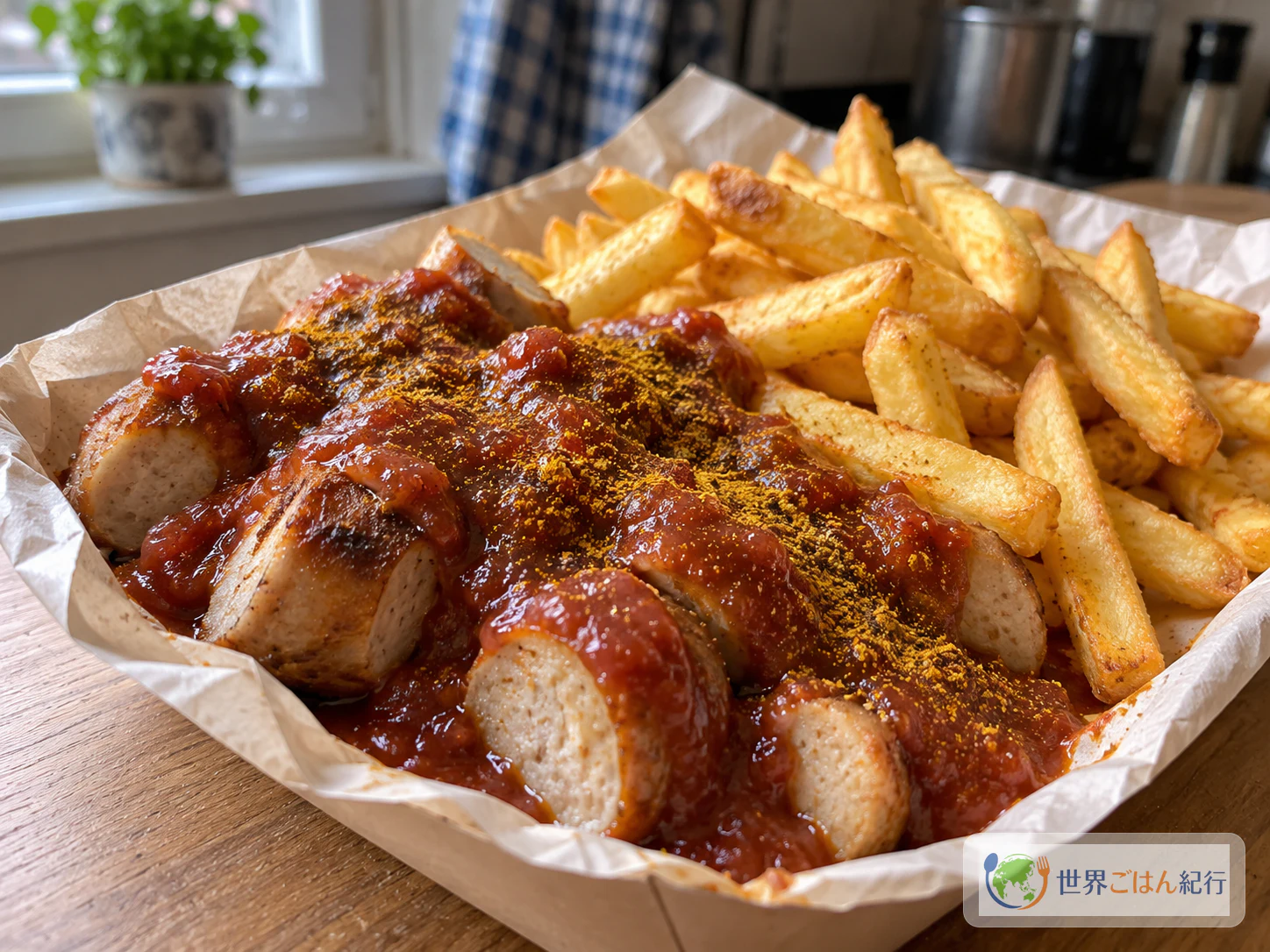
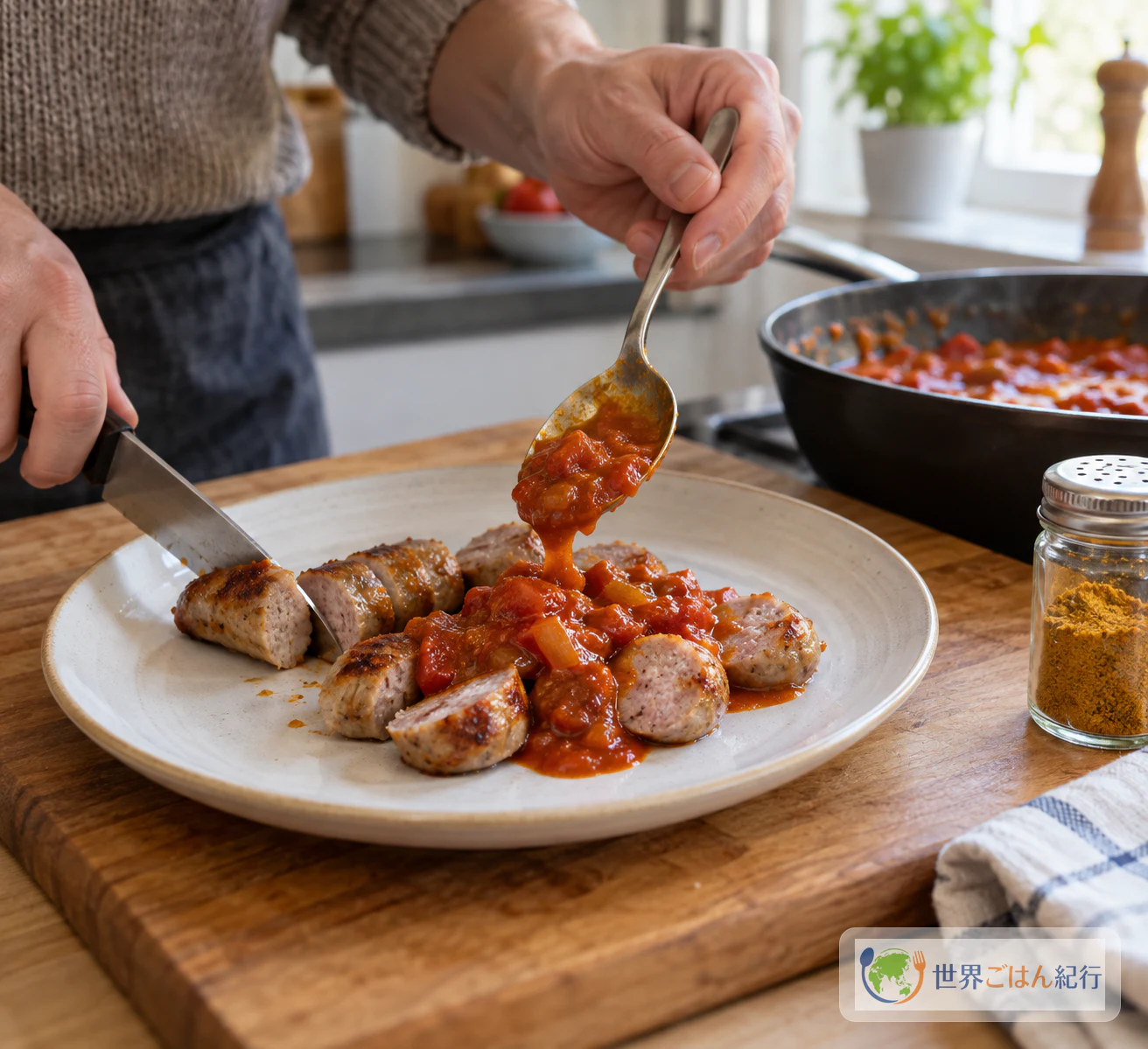
A sausage browned in the pan, a sauce that balances tomato, sweetness, vinegar, chili and the scent of curry powder, and a last sprinkle of curry powder on top. Exact spice levels vary from stand to stand. This recipe gives one home version.
At a Berlin Imbiss, a snack stall, a hot sausage is cut into pieces and covered in the stand's own curry sauce. It is dusted with curry powder and eaten from a paper plate with a small fork. Berlin's official city portal presents Currywurst as one of the city's well-known specialties: grilled sausage with a curry-flavored tomato sauce, with the heat level differing from stand to stand.
There is no single "authentic" formula. Sausages come with skin or without, and sauces can lean sweet, hot or fruity depending on the stand and the region. This article uses a home recipe by Fabian Timmer, published by WDR, a broadcaster in Germany, as its base. It makes about four servings with skinless sausages and a fruity, spicy sauce. No extra spices from other recipes are mixed in. Where a substitution changes the result, the text says so.
Where It Comes From: Berlin's Claim and Open Questions
Currywurst is strongly linked with Berlin, but its origin is debated. The German Patent and Trade Mark Office (DPMA) states in a background article that who really invented it cannot be established. Other cities have their own claims as well.
What Berlin commemorates is set out on a memorial plaque. It honors Herta Heuwer and the date 4 September 1949 for creating her curry sauce. This is the event Berlin chose to honor. It is not a settled answer to who came first.
The DPMA article also describes two Berlin styles, with skin and without skin (mit Darm / ohne Darm). It explains the skinless type with a shortage of sausage casings in East Berlin. That account belongs to the DPMA's telling of Berlin's story. Not every Currywurst carries this history, and it does not mark a fixed divide between East and West Germany as a whole. Elsewhere, the German supermarket chain EDEKA notes that both sausage and sauce vary by region.
Across these differences, the shared core stays the same: a sausage, tomato and curry. That is where the ingredients start.
Ingredients for About 4 Servings
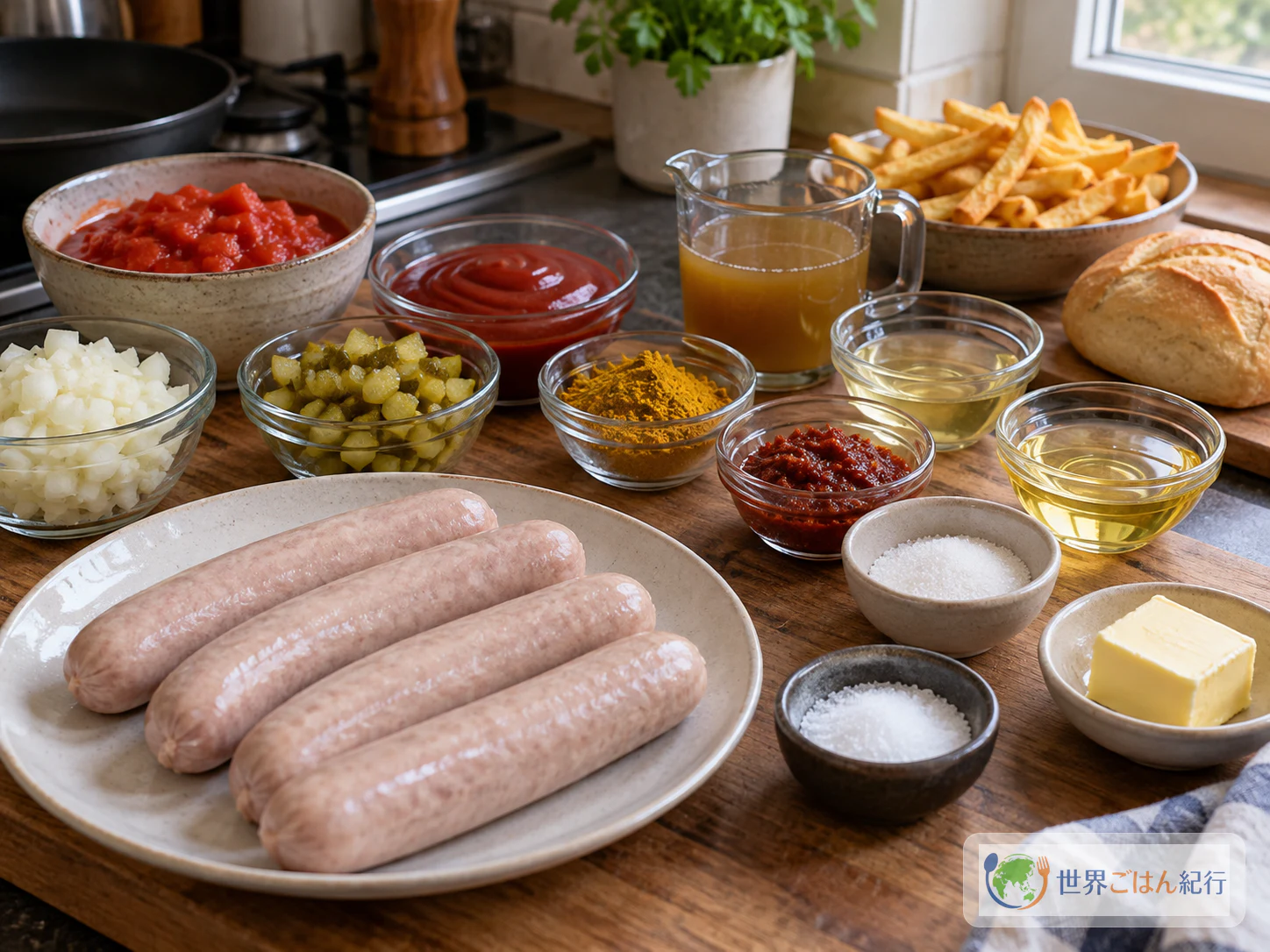
These amounts follow the WDR recipe. The sauce recipe makes a generous batch, so adjust how much goes on each plate as you taste.
Equipment
- Knife and cutting board
- Saucepan or deep pan for the sauce
- Frying pan for the sausages
- Wooden spoon
- Tongs for turning the sausages
- Stick blender (optional, only for the smooth-sauce variation)
Choosing and Substituting: What Changes the Flavor
Sausage. The WDR recipe calls for skinless sausages. If you can't find them, a thick pork bratwurst works. It has a casing with a different snap and a different meat mix, so it makes a skin-on home version, not the Berlin skinless style itself. For any sausage, follow the cooking instructions on the package.
Curry powder. An ordinary supermarket curry powder makes a good sauce. Its blend and aroma will not necessarily match a German Currypulver.
Ketchup. Ketchups vary by brand. Don't add extra sugar or vinegar to compensate before you have tasted the finished sauce.
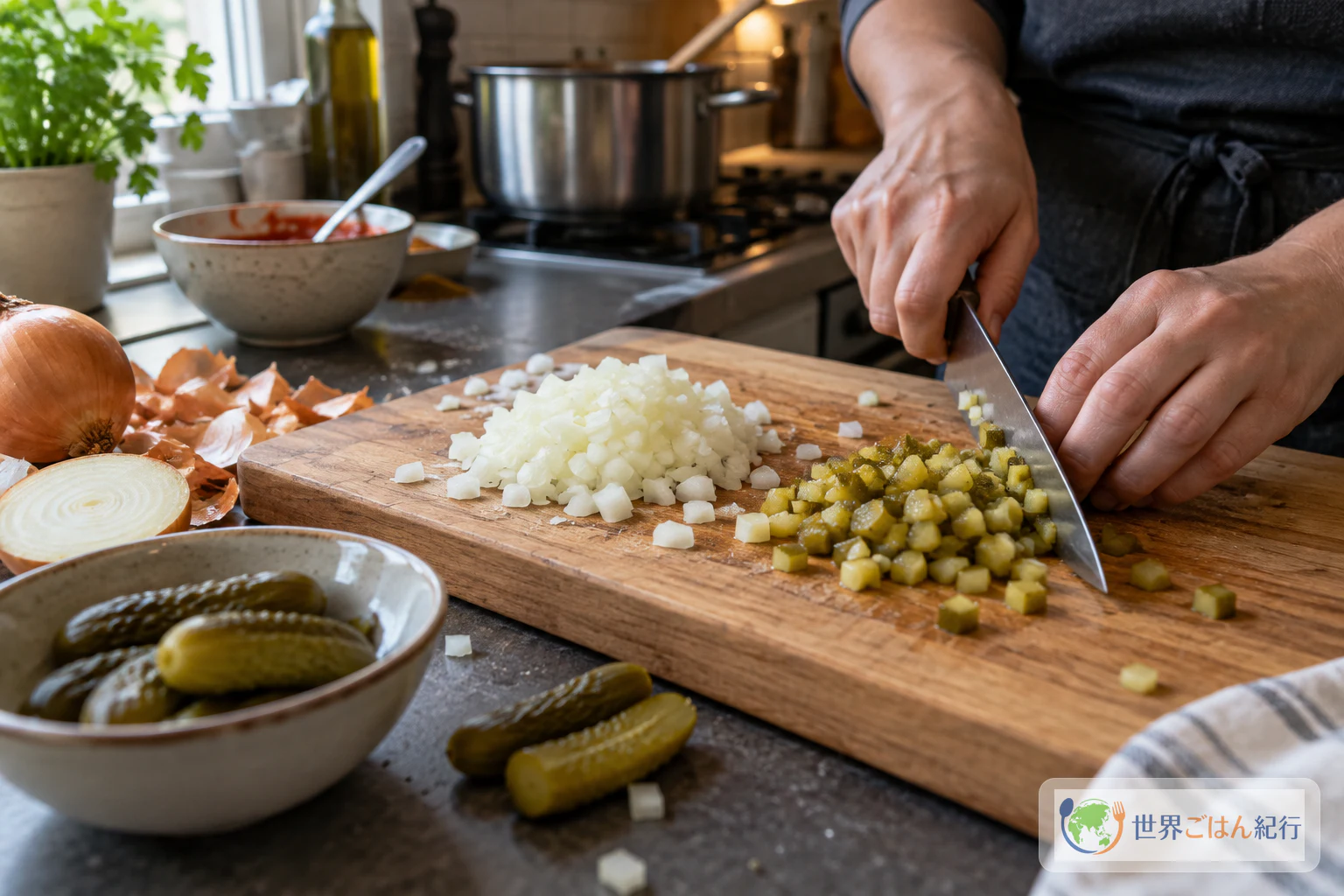
Pickles. Use sour gherkins. Sweet pickles push the sauce toward sweetness.
Sambal oelek. If you don't have it, use a plain red chili paste and add it a little at a time. Doubanjiang (Chinese chili bean paste) adds a fermented flavor, so the sauce will not taste the same.
Fruit vinegar. Apple cider vinegar is a fine substitute. Plain white or grain vinegar tastes sharper, so start with less and add to taste.
Salt. The 5 g comes from the recipe. Salt levels in pickles, ketchup and broth vary by product, so lowering the salt at home is your own adjustment, not a change to the recipe.
The butter in this recipe contains milk. Check the ingredient labels on the sausages, broth, curry powder, ketchup and pickles. Wheat, soy, milk and other allergens may or may not be present depending on the product. Always confirm on the individual package.
Method: Sauce First, Then the Sausages
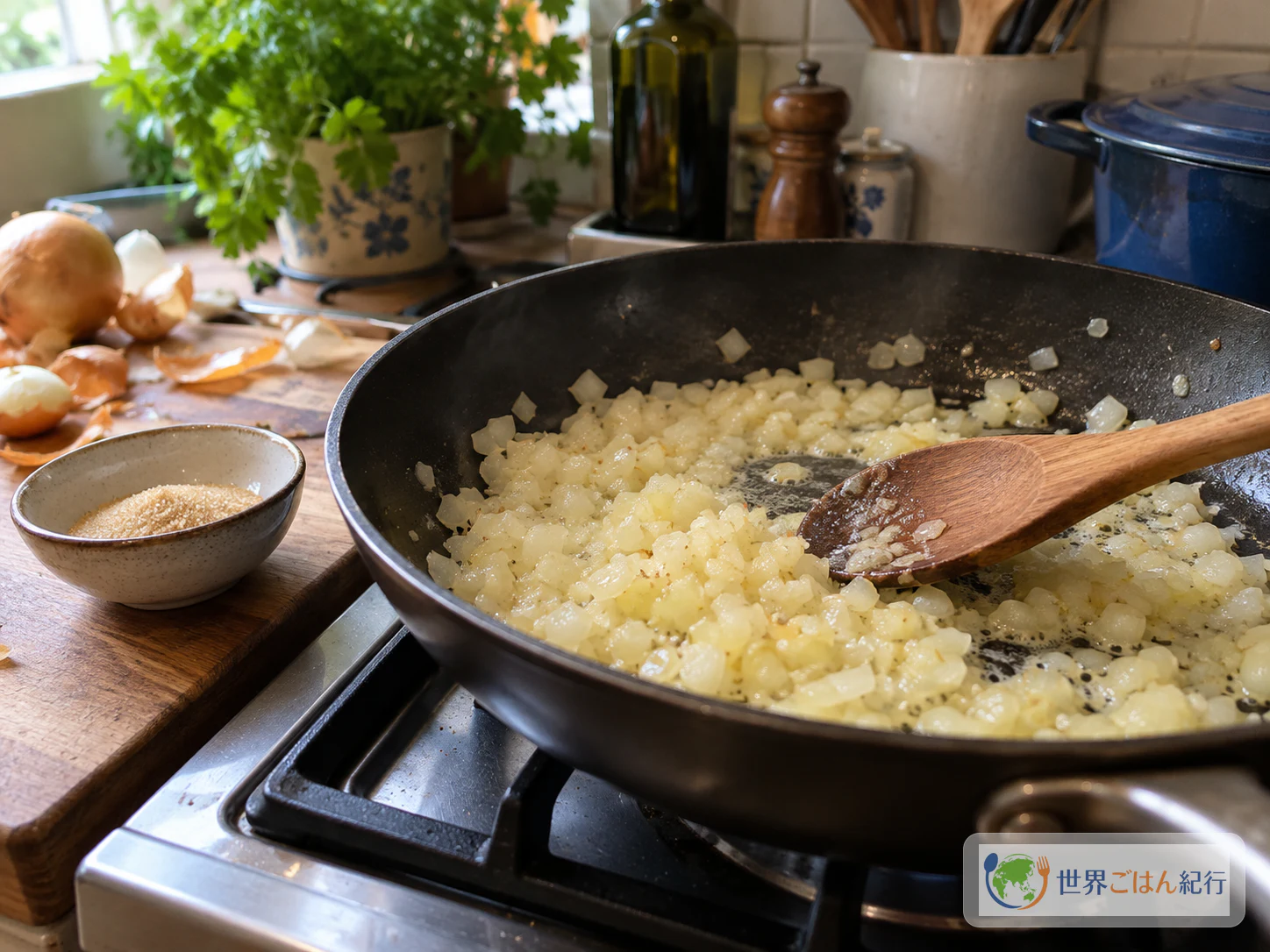
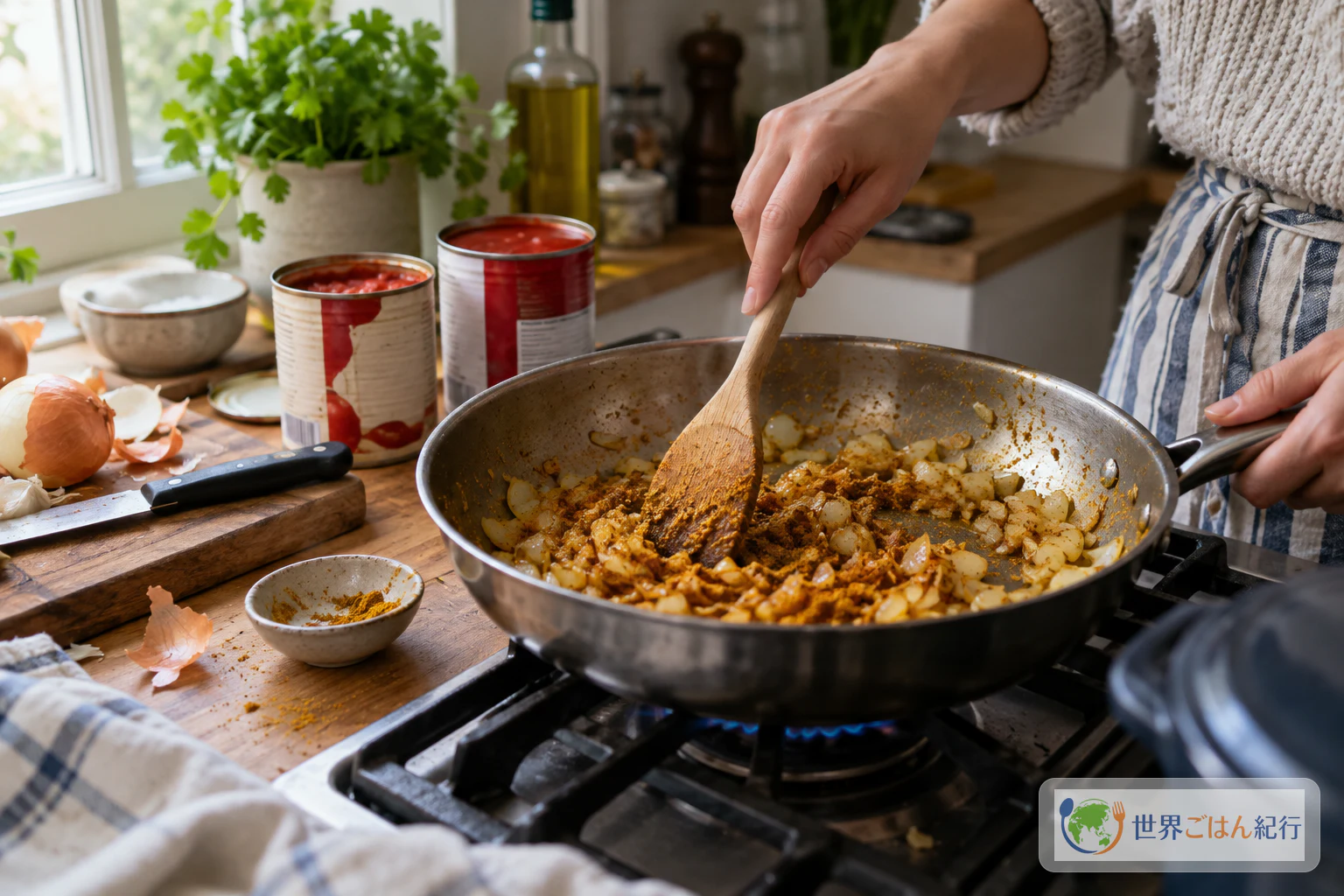
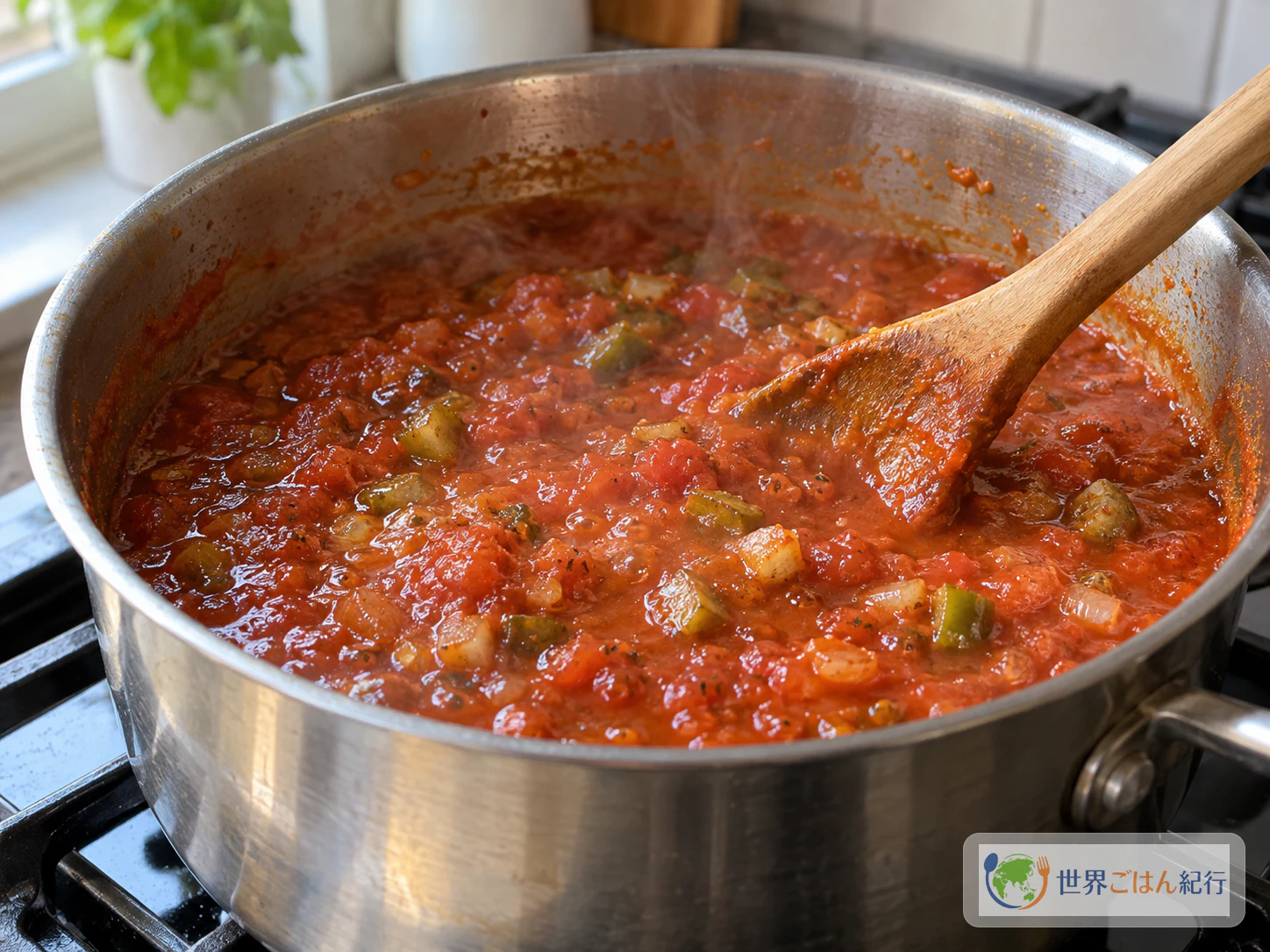
The sauce follows a set order: onion, then sugar, then curry powder, then tomato and ketchup, then pickles, sambal and salt, then broth, with vinegar at the end. The WDR recipe gives no cooking times, so judge each stage by how it looks and smells.
Troubleshooting
| Problem | Likely cause | What to do |
|---|---|---|
| Sauce tastes bitter or burnt | Curry powder cooked too long | Next time, add it right after the onion and pour in the tomatoes as soon as the powder coats the onion |
| Sauce is too sour | Extra vinegar or pickles added early | Start from the recipe amounts and taste. Adjust acidity only with the vinegar, at the end |
| Sauce is too sweet or too hot | Ketchup or chili paste from a different brand | Taste before adjusting. To tame the heat, change the sambal a teaspoon at a time |
| Sauce is watery | Not simmered long enough | Keep simmering gently until it coats a spoon thinly |
| Sausages split or dry out | High heat without turning | Don't leave them on high heat; turn them as they brown. Skin-on substitutes can be lightly scored. Skinless sausages don't need this |
Variations
- Milder: Start with half the sambal oelek and add more only if you want it.
- Hotter: Sprinkle a little extra curry powder and chili over each plate just before eating.
- Skin-on sausage: Use a thick pork bratwurst. It has a different texture, so treat it as a home version, not the Berlin skinless style.
- Smooth sauce: Blend the sauce briefly once it has finished simmering. This softens the texture of the chopped pickles from the original recipe.
- Snack-stall style: Serve in a paper-lined tray with fries. This is presentation only, not a format shared by every stand.
How to Eat It, and Storage
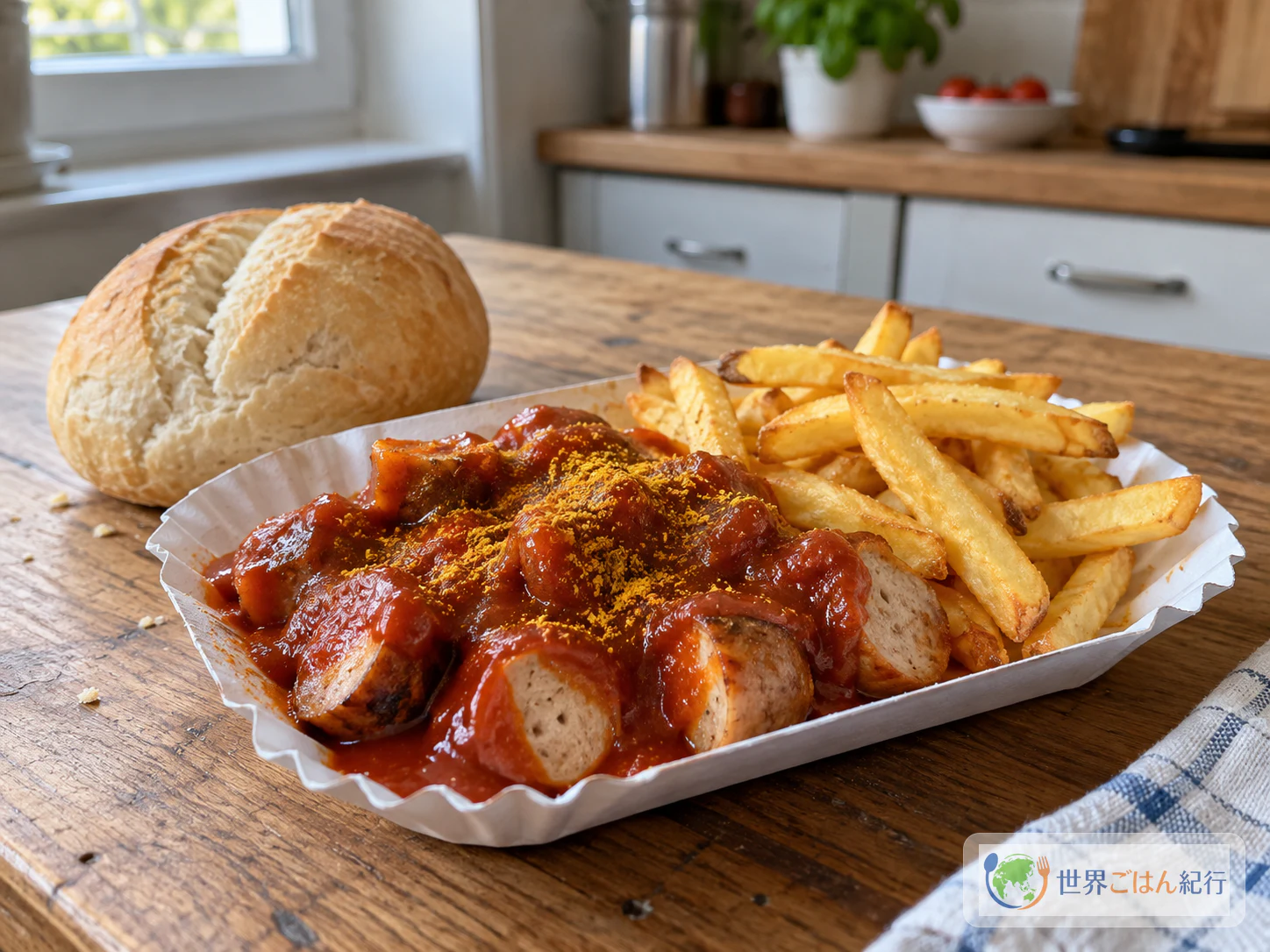
EDEKA notes that fries or a bread roll are common accompaniments. Whether you choose skinless or skin-on sausages, and whether the sauce goes over the slices or beside them, is up to you.
Store the sausages and sauce separately. There is no safe storage period given here. For chilling, keeping and reheating, follow the sausage manufacturer's label and official food-safety guidance.
Frequently Asked Questions
Which sausage should I use?
It varies by region and stand. This recipe follows WDR and uses skinless sausages. If those are hard to find, a thick pork bratwurst works. Expect a casing with more snap and a different texture.
How spicy is Currywurst?
It depends on the stand. Berlin's city portal notes that spice levels differ from place to place. At home, change the amount of sambal oelek to set the heat.
Was Currywurst invented in Berlin?
Berlin has a well-known claim. A memorial plaque there honors Herta Heuwer and 4 September 1949. The DPMA states, however, that the true inventor cannot be identified.
What do you serve with it?
Fries or a bread roll, as EDEKA notes.
Sources
- Deutsches Patent- und Markenamt (DPMA), "The Spirit of Currywurst." Supports that the inventor cannot be identified, the Berlin plaque honoring Herta Heuwer and 4 September 1949, and the account of Berlin's skinless style and its East–West Berlin background. A background article, not a definitive origin study. https://www.dpma.de/dpma/veroeffentlichungen/hintergrund/essentrinken/currywurst/index.html
- Berlin.de, "Berlin Delicacies You Have to Try." Supports Currywurst as a Berlin snack-stall staple, grilled sausage with curry tomato sauce, and spice levels that vary between stands. https://www.berlin.de/en/tourism/insider-tips/5150899-5766508-berlin-specialties-must-try.en.html
- Westdeutscher Rundfunk (WDR), "Currywurst mit fruchtig-scharfer Currysoße," recipe by Fabian Timmer. Basis for the ingredient amounts for about four servings and the order of cooking. Gives no cooking times or internal temperatures. https://www1.wdr.de/verbraucher/rezepte/currywurst-mit-fruchtig-scharfer-currysosse-100.amp
- EDEKA, "Currywurst." Supports regional variation in sausage and sauce, and fries or a bread roll as common accompaniments. Its quantities and house spice blend are not used here. https://www.edeka.de/rezeptwelt/rezepte/currywurst/
- Currywurst Country Berlin, "Was ist original Berliner Currywurst?" (Rezept 2021 handout). A trade group's description of Berlin sausage styles and its suggestion to serve the sauce beside the sausage to keep the surface crisp. An industry handout, not a neutral historical source. https://currywurst-berlin.com/media/59/3f/4d/1615406545/Rezept%202021%20handout.pdf