Crème Brûlée: A Cold, Smooth Custard and a Crust That Cracks
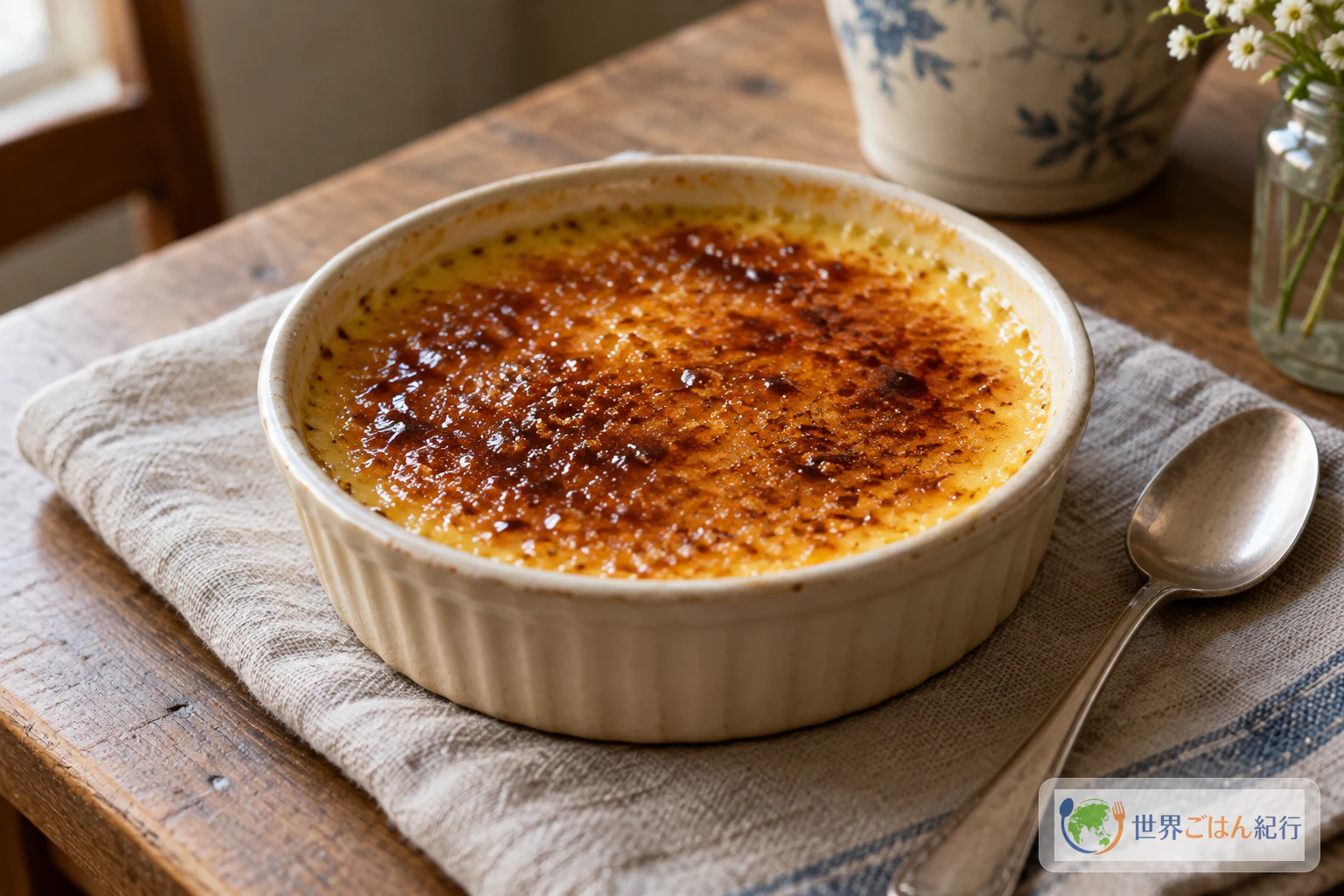
A custard that is set at the edges but still soft at the heart, served cold, and a layer of sugar caramelized only at the last moment, so thin it breaks under the spoon.
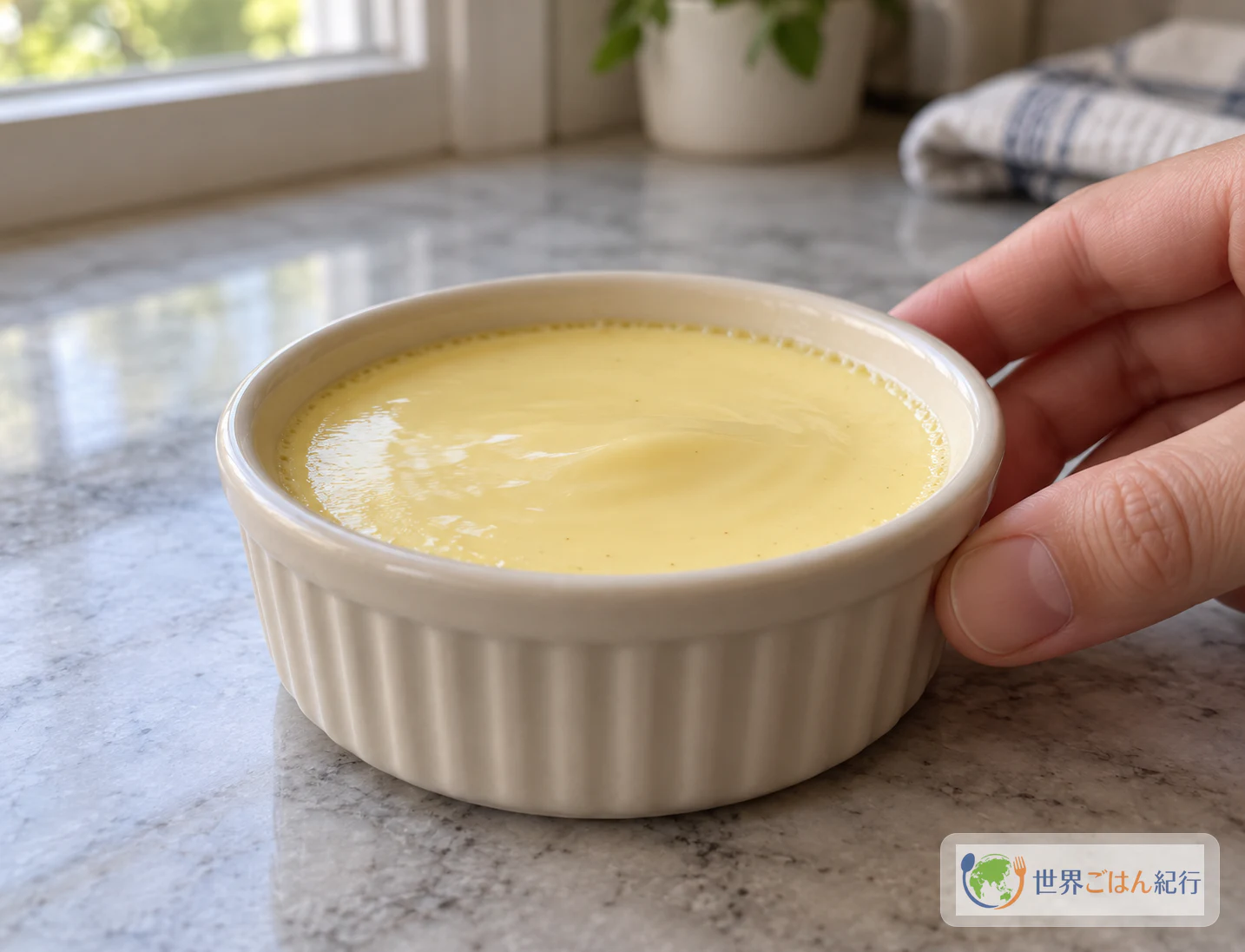
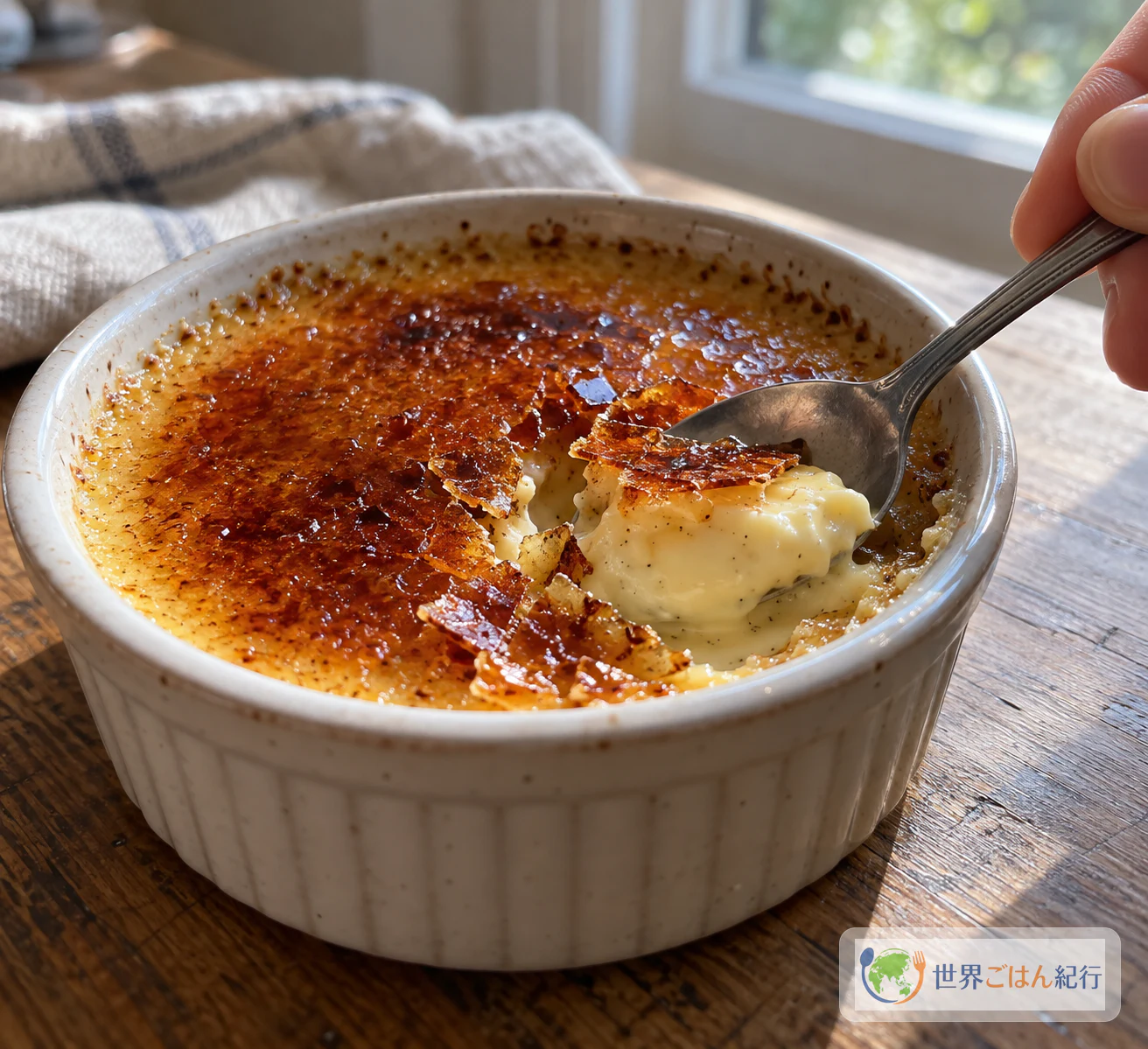
Tap the surface with a spoon and the amber sugar gives way in a thin sheet, revealing cool, smooth vanilla custard underneath. That contrast is what crème brûlée is about: a baked egg-yolk custard flavored with vanilla, topped with sugar that has been burnt into a fragile caramel shell. The French name means "burnt cream."
The custard itself is simple, so what decides the result is how gently it is cooked and when the sugar is finished. This recipe bakes the custard slowly in a water bath, chills it thoroughly, and caramelizes the top just before serving. Each of those stages has its own signs to watch for, and the steps below point them out.
Crème brûlée is presented here as a dessert from France, but the recipe followed in this article is the one published by the Fédération des producteurs d'œufs du Québec (the Quebec egg producers' federation). It is one well-documented home version, not the single standard formula for all of France. Other published recipes use different ingredients and oven temperatures; some of them are compared further down.
Ingredients for 4 Ramekins
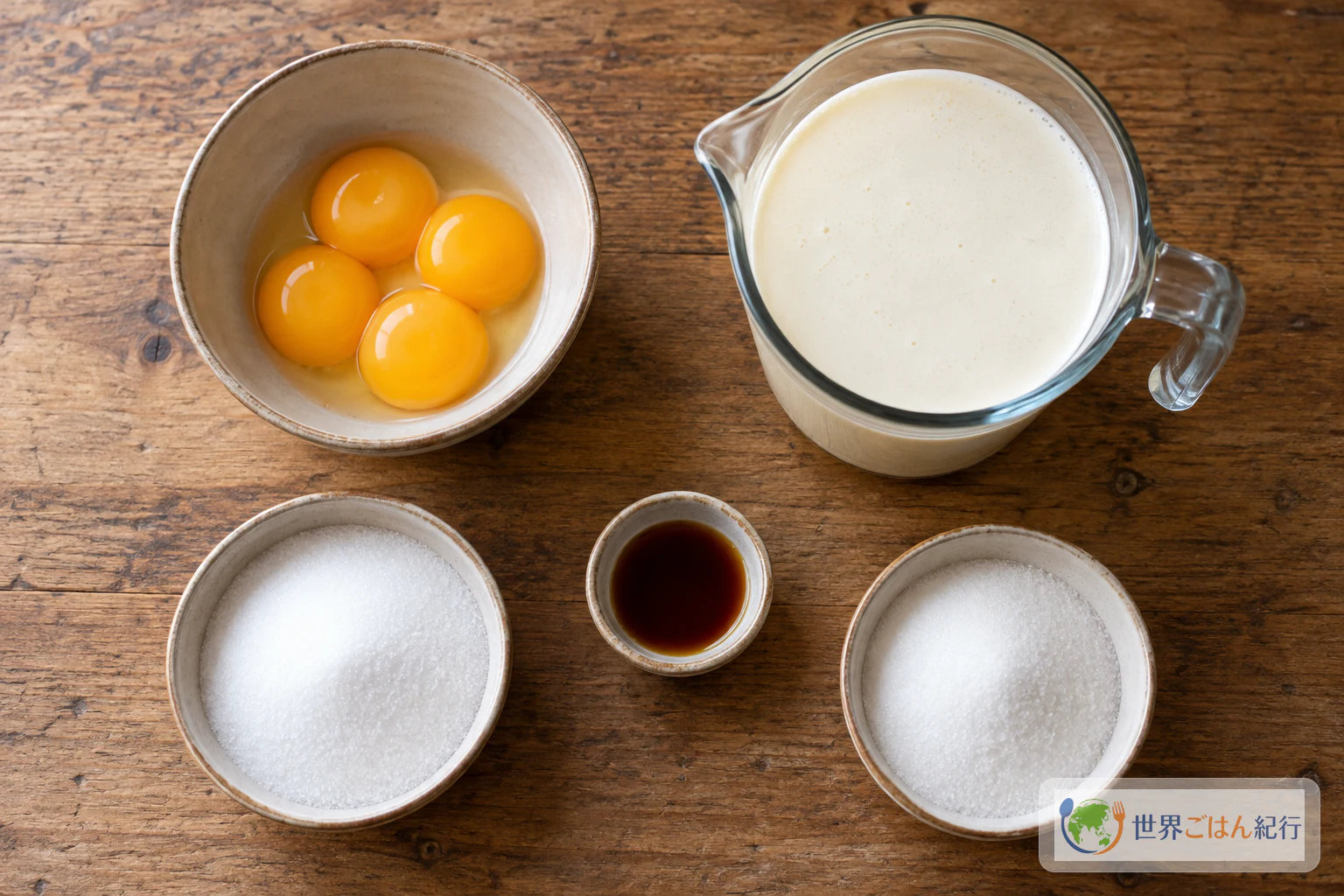
Measure the sugar by volume (ml) with ml measuring spoons or a measuring cup rather than converting it to a weight.
This dessert contains egg and milk (cream). Check the labels of the cream and vanilla extract you buy if you are cooking for someone with allergies.
Equipment
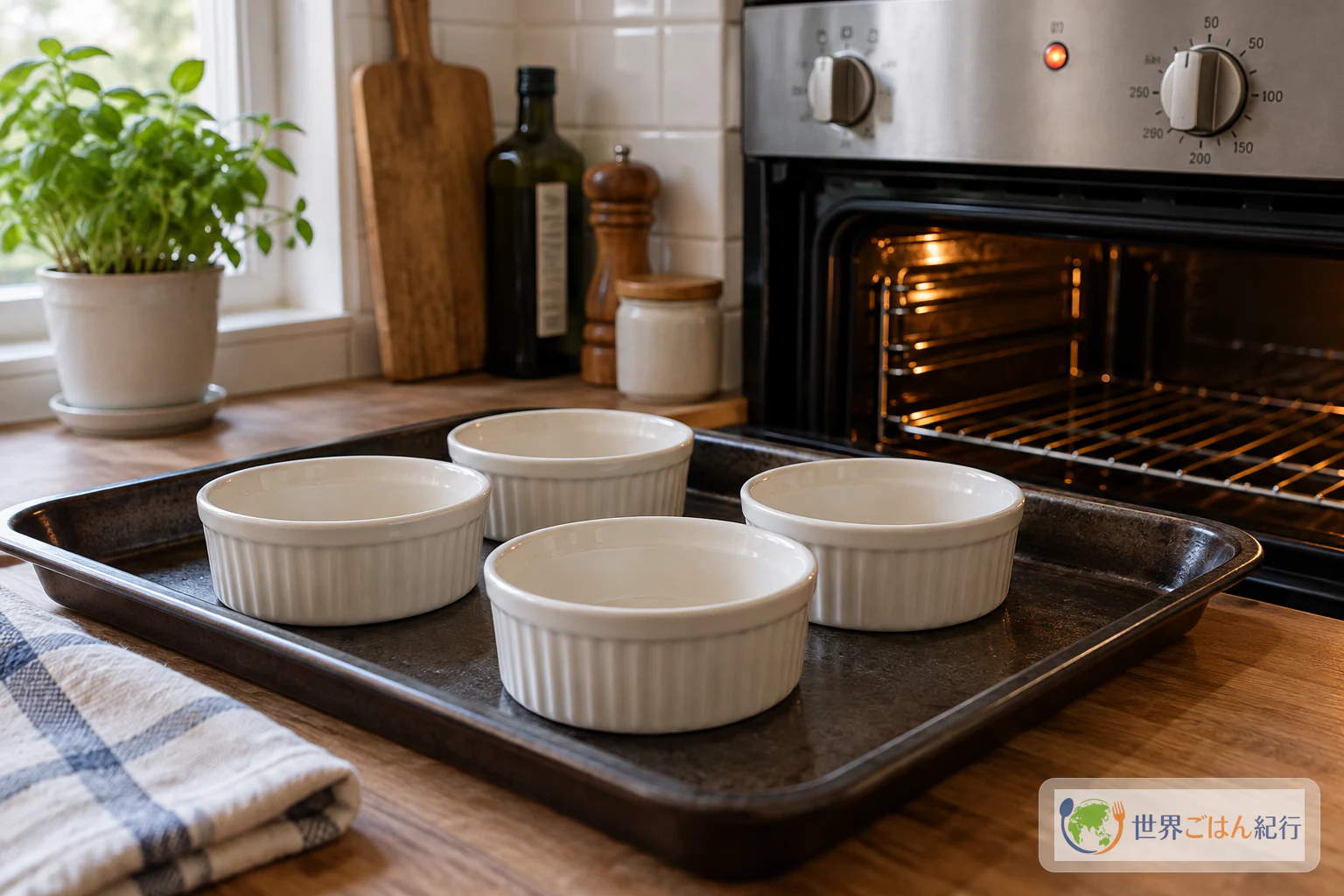
- 4 heatproof ramekins, 125 ml each (shallow ones are pictured here)
- A deep baking tray or roasting pan that holds all four ramekins
- A small saucepan
- A mixing bowl and a whisk
- A fine sieve for straining the custard
- A kettle or pot for hot water
- A wire rack for cooling
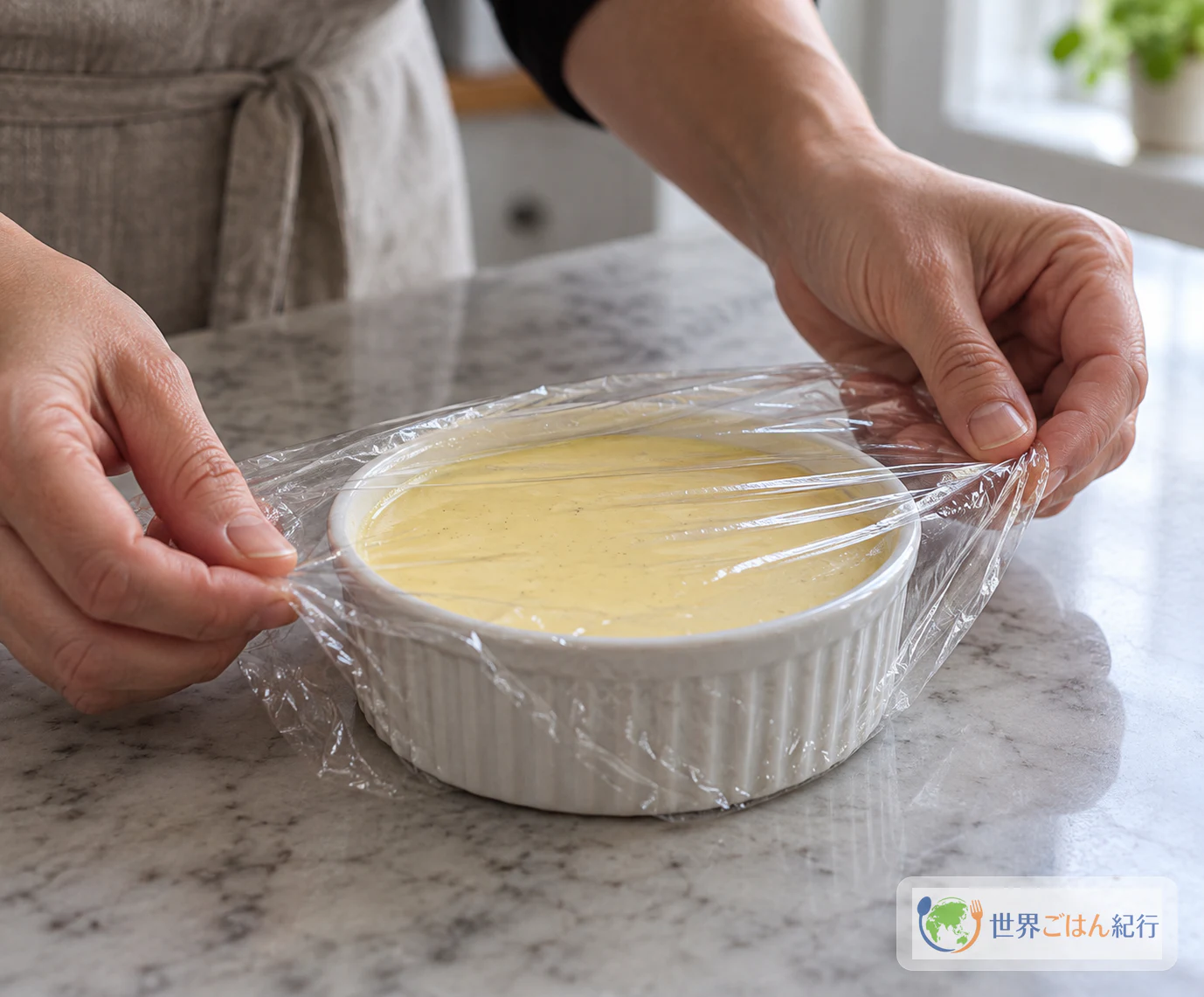
- Food wrap or covers for the ramekins
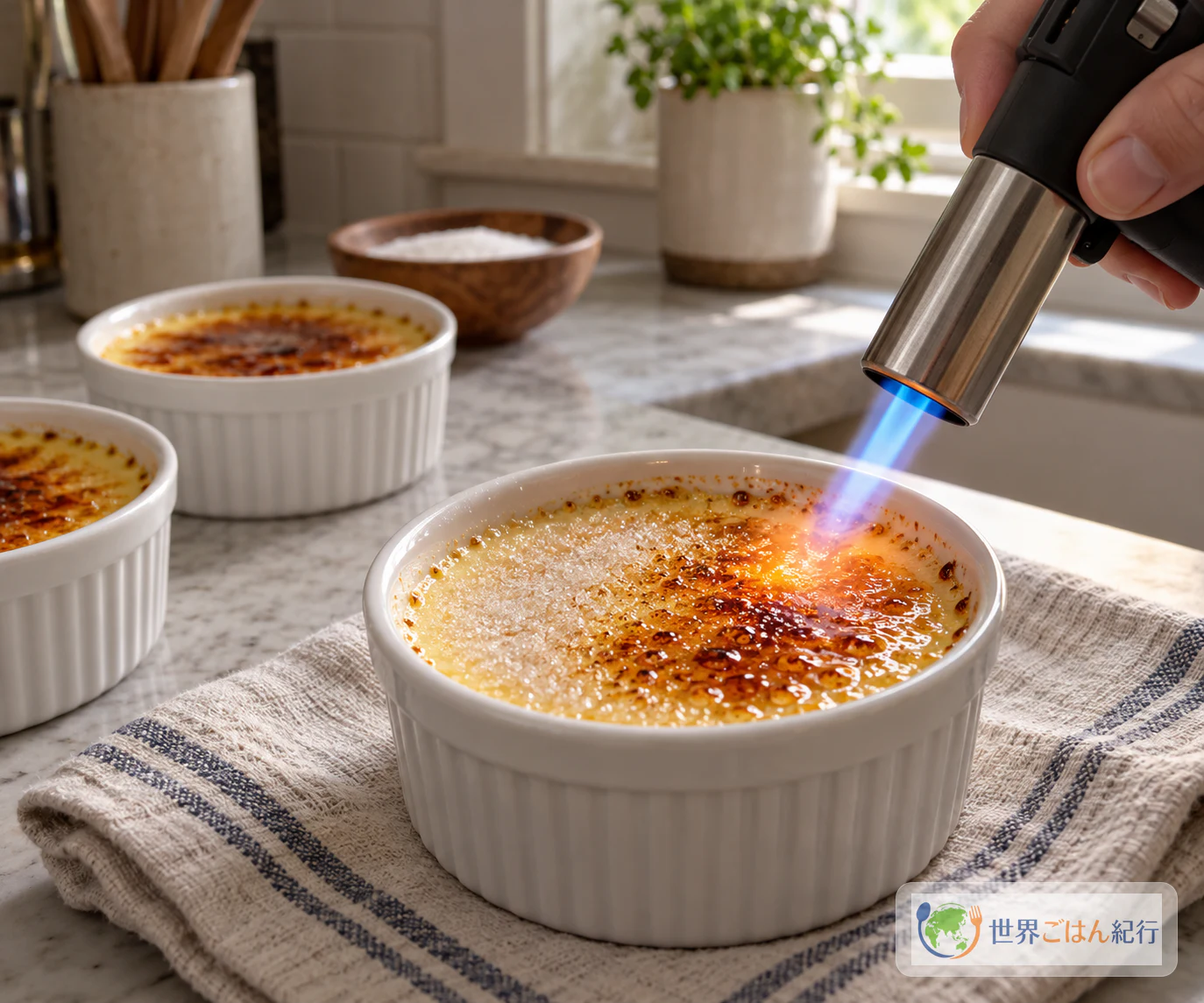
- A mini kitchen torch, or an oven with a grill (broiler) setting
Choosing Ingredients and What Not to Swap
Cream. The recipe calls for 35% whipping cream. Fat content and labeling differ from country to country, so look for a cream close to that figure. Recipes that are mostly cream, like this one, tend to give a denser, richer custard, while versions that include milk tend to feel lighter. If you want this recipe's texture, keep to the cream alone and to the amount listed; replacing part of it with milk makes a different custard, and the texture can't be promised to match.
Vanilla. This recipe uses vanilla extract, stirred in after the cream and yolks are combined. It does not infuse a vanilla pod in the cream. Some other recipes use a pod, but that belongs to a different method.
Sugar. Granulated sugar is used for both the custard and the topping. The type of sugar on top changes the flavor of the caramel, so a different sugar will taste different, not just look different.
What stays out. No milk, no liqueur, no vanilla pod and no starch are added to this base recipe.
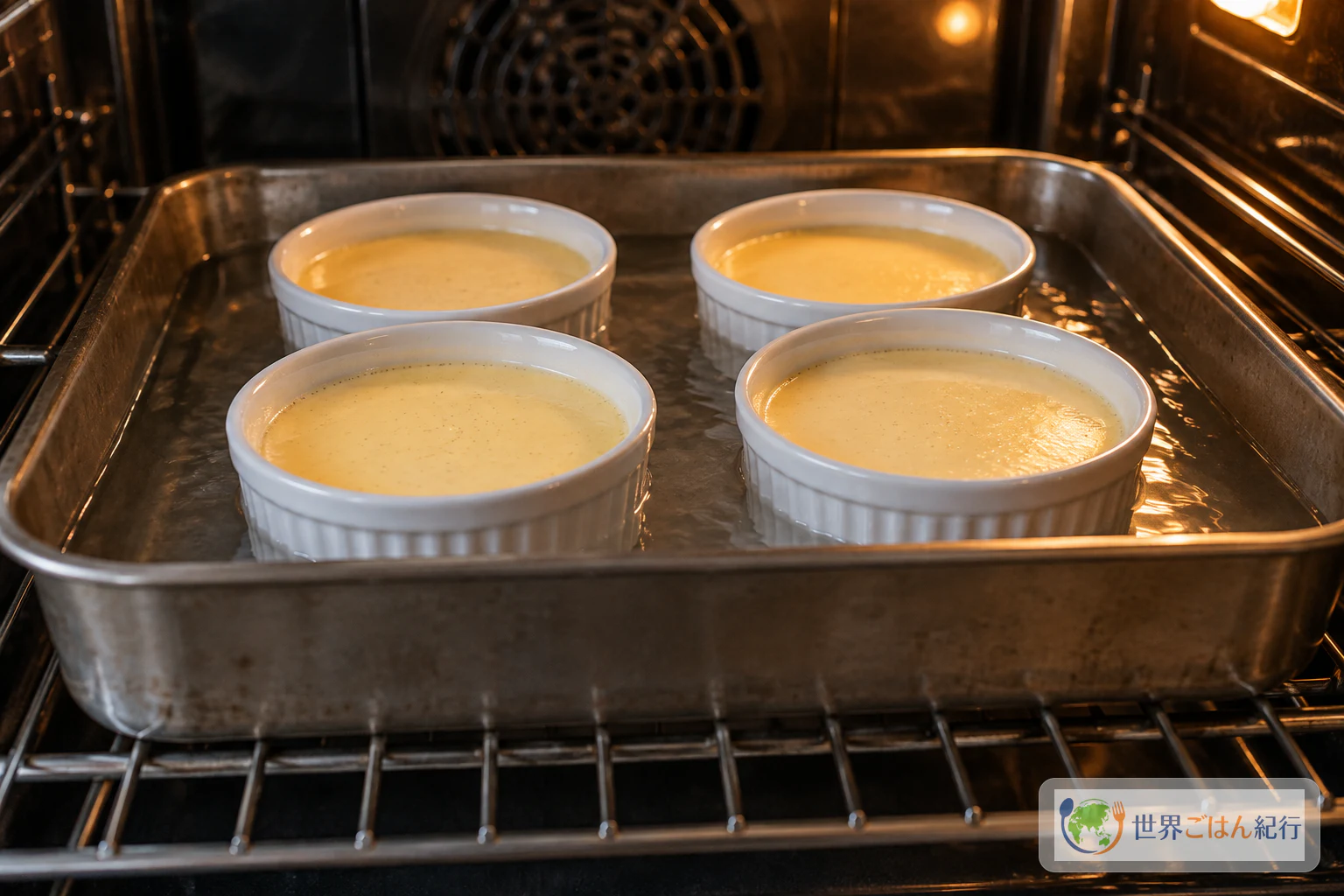
Ramekins. Four 125 ml ramekins hold the custard. How deep they are changes the baking time, so note whether yours are shallow or deep (about 5 cm) before you start; step 5 gives the time for each.
Method: Gentle Heat, Cold Custard, Last-Minute Sugar
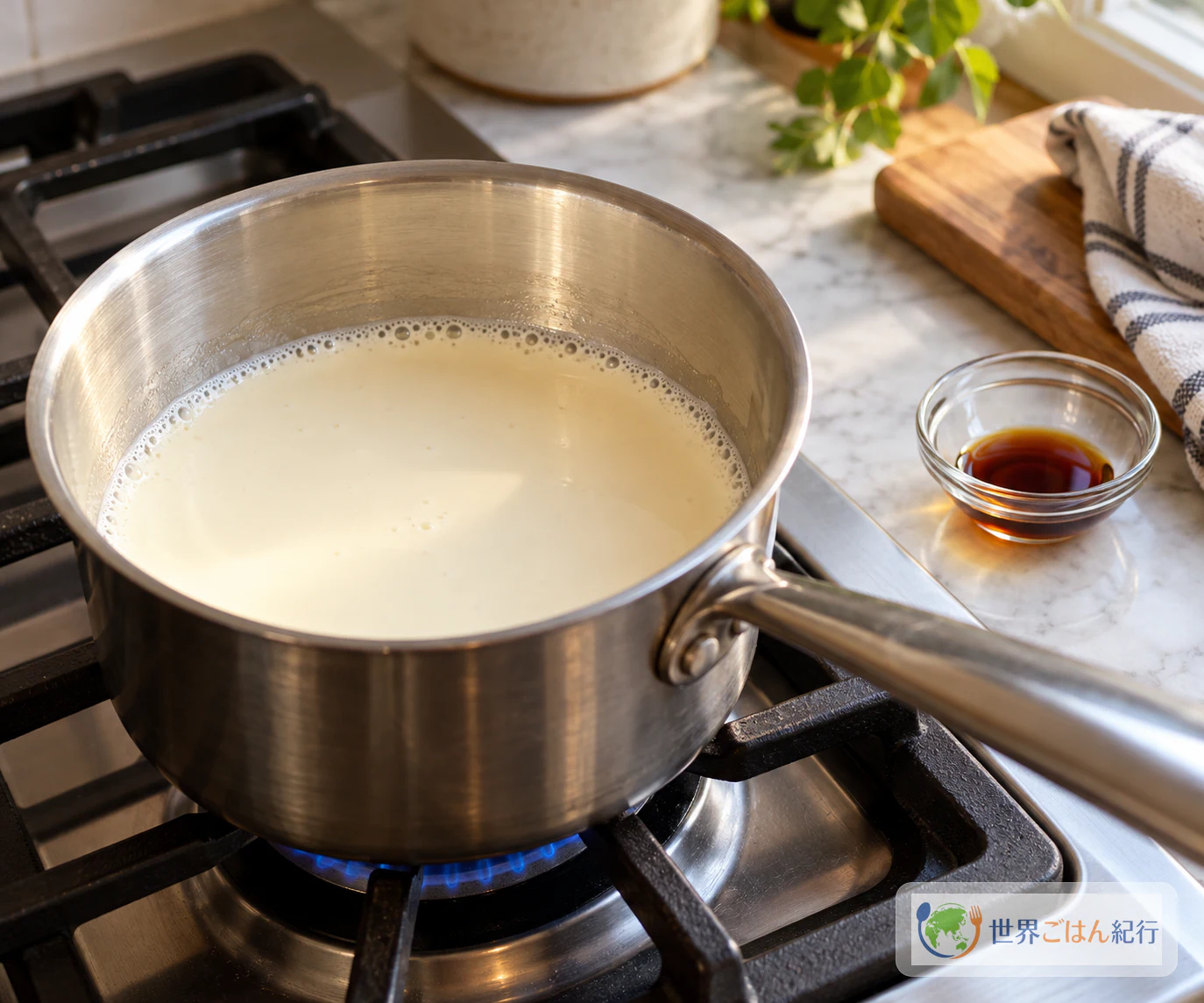
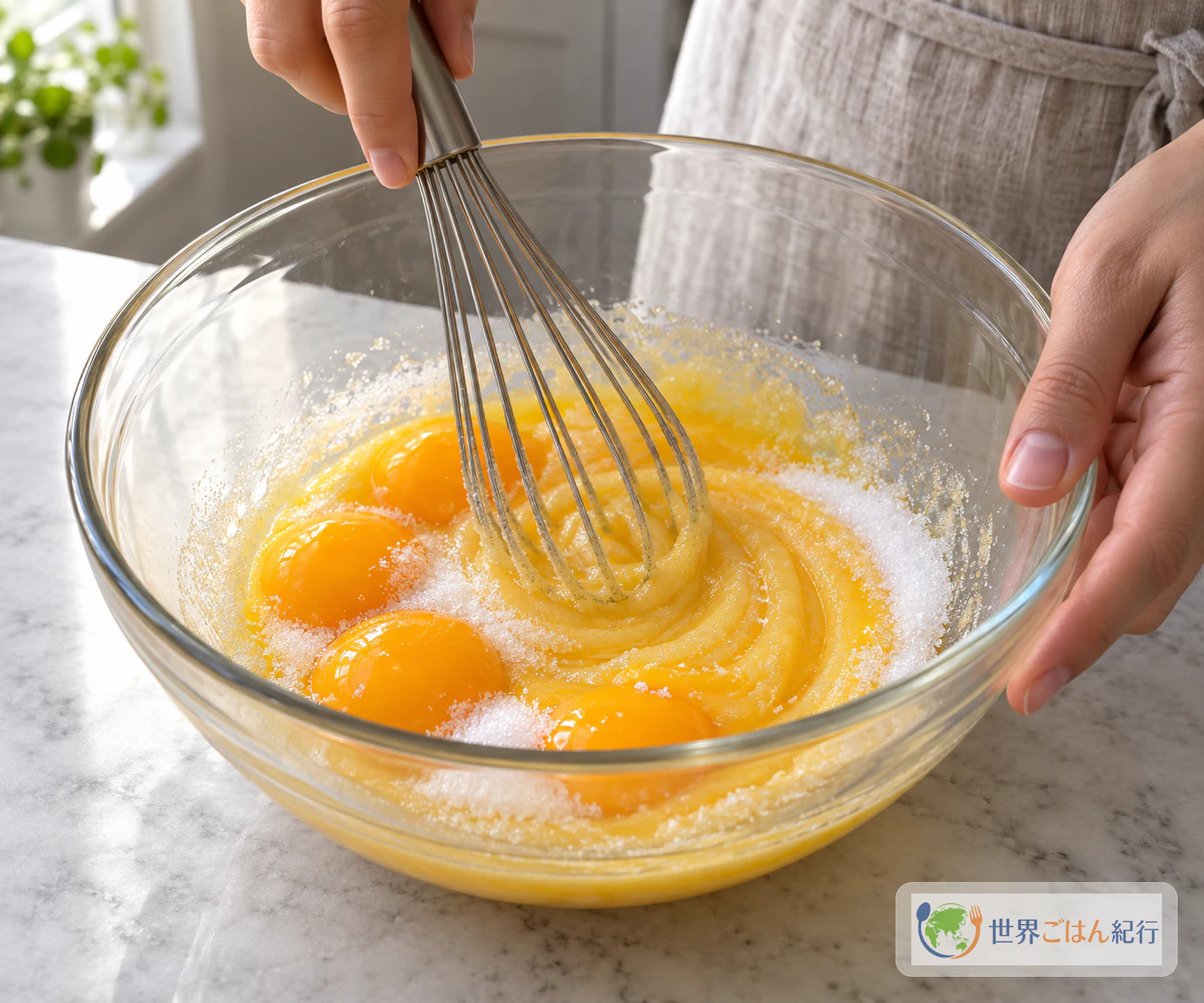
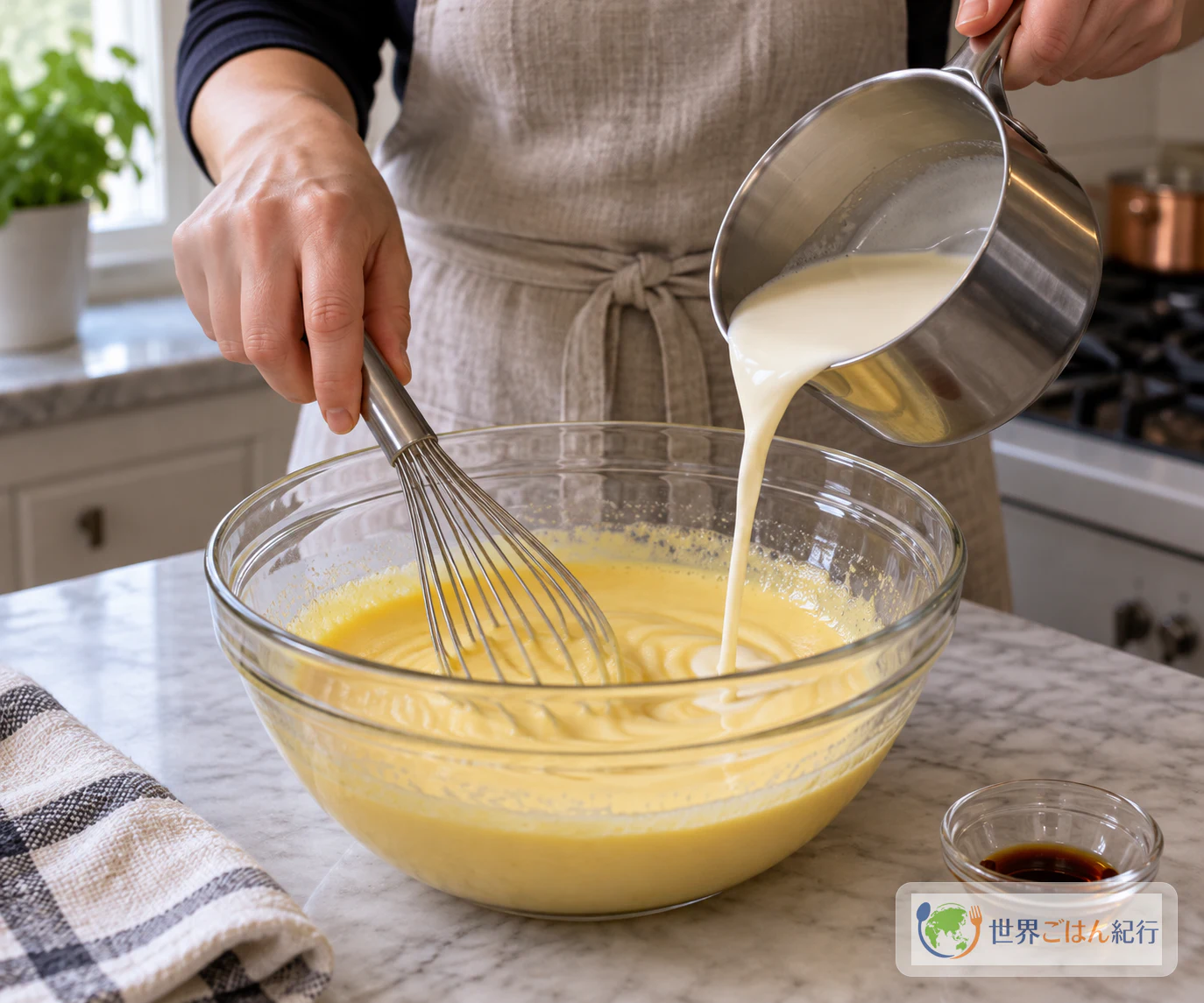
The times in step 5 depend on the depth of your ramekins. Use them as a range, and decide when to take the custards out by looking: set at the edges, with a slight movement at the center.
Grainy, Runny, Bitter, Soggy: What Went Wrong and What to Do
| Problem | Likely cause | What to do |
|---|---|---|
| The custard has small holes or a grainy texture | Oven too hot, baked too long, or a deep dish | Keep the oven at 160°C and judge the end of baking by the wobble. Overbaking is what makes custard grainy, so take the ramekins out while the center still moves slightly. Shallow ramekins also help next time |
| Only the center is still liquid | Underbaked, a deep dish, or differences between ovens | Return the custards to the water bath and check their state again in roughly 5-minute intervals. There is no fixed extra time; watch the edges and the wobble |
| The top is bitter and hard | Sugar layer too thick, or the flame held in one place | Spread the sugar thinly and evenly, keep the flame moving, and stop as soon as it turns amber |
| The crust has gone soft by the time you eat | Left standing too long after caramelizing, or moisture from the fridge | Chill the custard first and caramelize just before serving. A finished crust is not something to store |
| No torch | No special equipment | Use the oven grill with the ramekins on one tray, and watch the color of the sugar closely |
Making Ahead and Storing
Use clean equipment, and once the custards are out of the water bath, let them cool and then refrigerate them. The Quebec recipe gives a chilling time of at least 2 hours and says the custards can be kept refrigerated for up to 2 days. That is the recipe's own guidance, not a safety guarantee for every kitchen; keep them in a stable part of the fridge rather than in the door, where the temperature fluctuates more.
Crème brûlée suits making ahead because the custard and the crust are made at different times. Bake and chill the custards first, keep them covered and plain, and caramelize the sugar only when you are about to serve. Once the sugar is torched, eat it; the crust will not stay crisp in the fridge.
Other Ways to Make It: Different Recipes, Not Corrections
Crème brûlée recipes vary widely in ingredients, oven temperature and whether a water bath is used. Each of the versions below is a complete recipe of its own; mixing their amounts or steps into this one would produce something that matches none of them.
| Source | What it uses | How it bakes |
|---|---|---|
| Fédération des producteurs d'œufs du Québec (this article) | 35% whipping cream, egg yolks, sugar, vanilla extract | 160°C in a water bath; 25–35 minutes depending on dish depth |
| Éditions Larousse | A vanilla pod, egg yolks, milk, crème fraîche, and orange liqueur | About 30 minutes at 150°C; chilled, then sugar caramelized under the grill. No water bath is specified |
| Trinity College Oxford | Whole eggs plus a yolk, whole milk, double cream, vanilla | 150°C in a water bath halfway up the ramekins, about 30 minutes or until set; then torch or hot grill |
| Ferrandi recipe (via The Good Life France) | Cream, egg yolks, sugar, a vanilla pod, powdered whole milk, brown sugar topping | The custard is first cooked in a saucepan to 83°C, then baked at 100°C |
Using whole eggs, as the Trinity College version does, or adding milk, as in the Larousse and Trinity recipes, changes the texture. Neither approach is more "authentic" than the other; they are simply different custards. If you want the result described in this article, stay with the yolk-and-cream recipe above.
Chef Raphael Francois, interviewed by the MICHELIN Guide, describes crème brûlée as a classic learned early in professional kitchens. His technique advice lines up with the steps here: whisk the yolks and sugar until pale, add the warm cream gently, prefer shallow dishes, take the custard out at a slight jelly-like wobble, and avoid overbaking, which makes it grainy. He also mentions both a torch and a hot grill for the top.
The Name and an Early Printed Recipe
"Crème brûlée" is French for "burnt cream," a plain description of the scorched-sugar top. The Good Life France reports that a printed recipe under the name crème brûlée appears in François Massialot's Le Cuisinier Royal et Bourgeois, published in 1691.
That is best read as one early record of the name in print. It does not prove where the dessert was invented, and it does not mean the recipe looked then as it does today. Other places lay claim to related custards finished with burnt sugar, and the question of origin is not settled by this record alone.
If you are putting together a French-themed meal at home, you could pair this dessert with savory dishes such as pot-au-feu or tarte flambée.
Frequently Asked Questions
Do I need a water bath?
For this recipe, yes: it is baked at 160°C with hot water halfway up the ramekins. Other recipes differ. Larousse's version does not specify a water bath, while Trinity College's uses one at 150°C. Pick one recipe and follow its temperature, time and method as a set rather than combining them.
Can I caramelize the top without a torch?
Yes. The source recipe gives the oven grill as an alternative to a mini torch. Put the chilled ramekins together on a tray, slide it under the grill, and watch the sugar the whole time, taking it out as soon as it turns amber.
Can I make it the day before?
You can bake and chill the custards ahead. The Quebec recipe calls for at least 2 hours in the fridge and says they can be kept refrigerated for up to 2 days. Add and caramelize the topping sugar only just before serving.
Can I make it with whole eggs?
Some recipes do; Trinity College's uses whole eggs along with a yolk, plus milk and double cream. That is a different recipe with a different texture, so don't swap whole eggs into the yolk-only recipe here.
Why doesn't my crust stay crisp?
Check the thickness of the sugar, any moisture on the custard's surface, and how long it waited after caramelizing. A thin, even layer of sugar torched just before serving gives the best chance of a crust that cracks.
Sources
- Fédération des producteurs d'œufs du Québec, "Crème brûlée." The four-serving recipe followed in this article: 375 ml 35% whipping cream, 4 egg yolks, 60 ml sugar, 5 ml vanilla extract and 20–30 ml topping sugar; four 125 ml ramekins in a 160°C water bath for 25–35 minutes depending on dish depth; the nearly-set doneness cue with slight movement at the center; chilling for at least 2 hours and up to 2 days; caramelizing just before serving with a mini torch or the oven grill. https://oeuf.ca/recettes/creme-brulee/
- Éditions Larousse, "Crème brûlée." Comparison recipe using a vanilla pod, egg yolks, milk, crème fraîche and orange liqueur, baked at 150°C for about 30 minutes, chilled, and finished under the grill. https://www.editions-larousse.fr/recette/creme-brulee-0/
- Trinity College Oxford, "Crème brulée." Comparison recipe using whole eggs and a yolk, whole milk, double cream and vanilla, baked at 150°C in a water bath, then caramelized with a torch or hot grill. https://www.trinity.ox.ac.uk/creme-brulee
- MICHELIN Guide, "The Ultimate Crème Brûlée Guide." Chef Raphael Francois on pale yolk-and-sugar mixing, gentle tempering, shallow dishes, a slight wobble at doneness, overbaking that makes custard grainy, caramelizing with a torch or hot grill, and how sugar type changes flavor. https://guide.michelin.com/en/article/dining-in/creme-brulee-recipe-guide-raphael-francois
- The Good Life France, "Easy recipe for Crème Brûlée." Reports the printed recipe named crème brûlée in François Massialot's 1691 Le Cuisinier Royal et Bourgeois, and presents a Ferrandi recipe with powdered whole milk, a saucepan-cooked custard and baking at 100°C. Not used as proof of the dessert's origin. https://thegoodlifefrance.com/easy-recipe-for-creme-brulee/