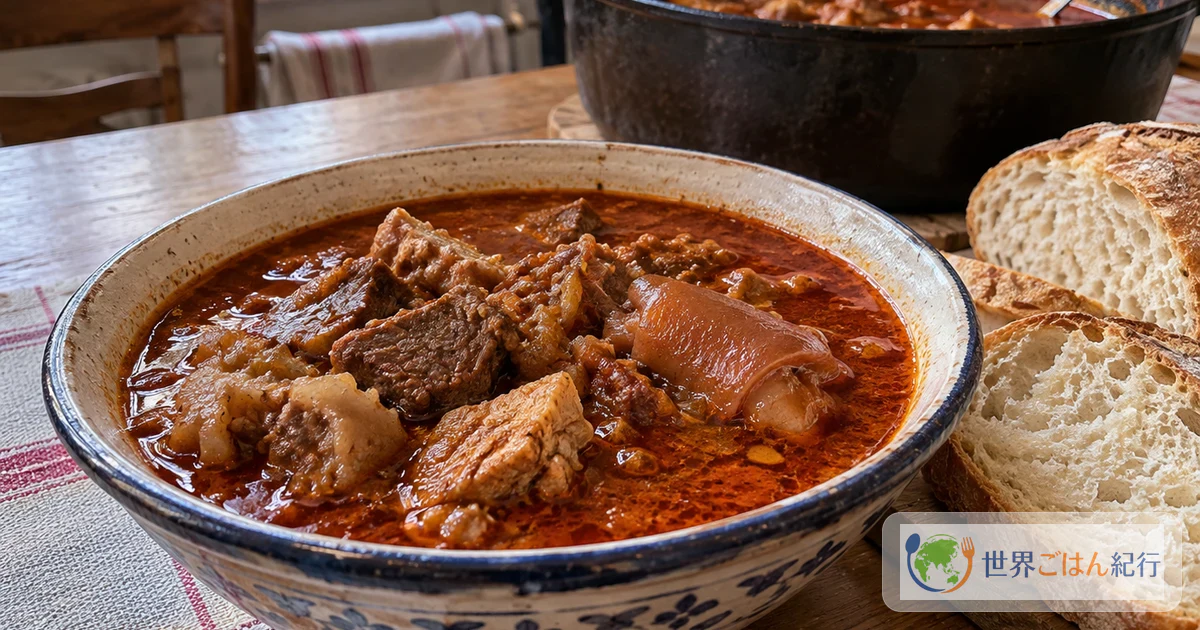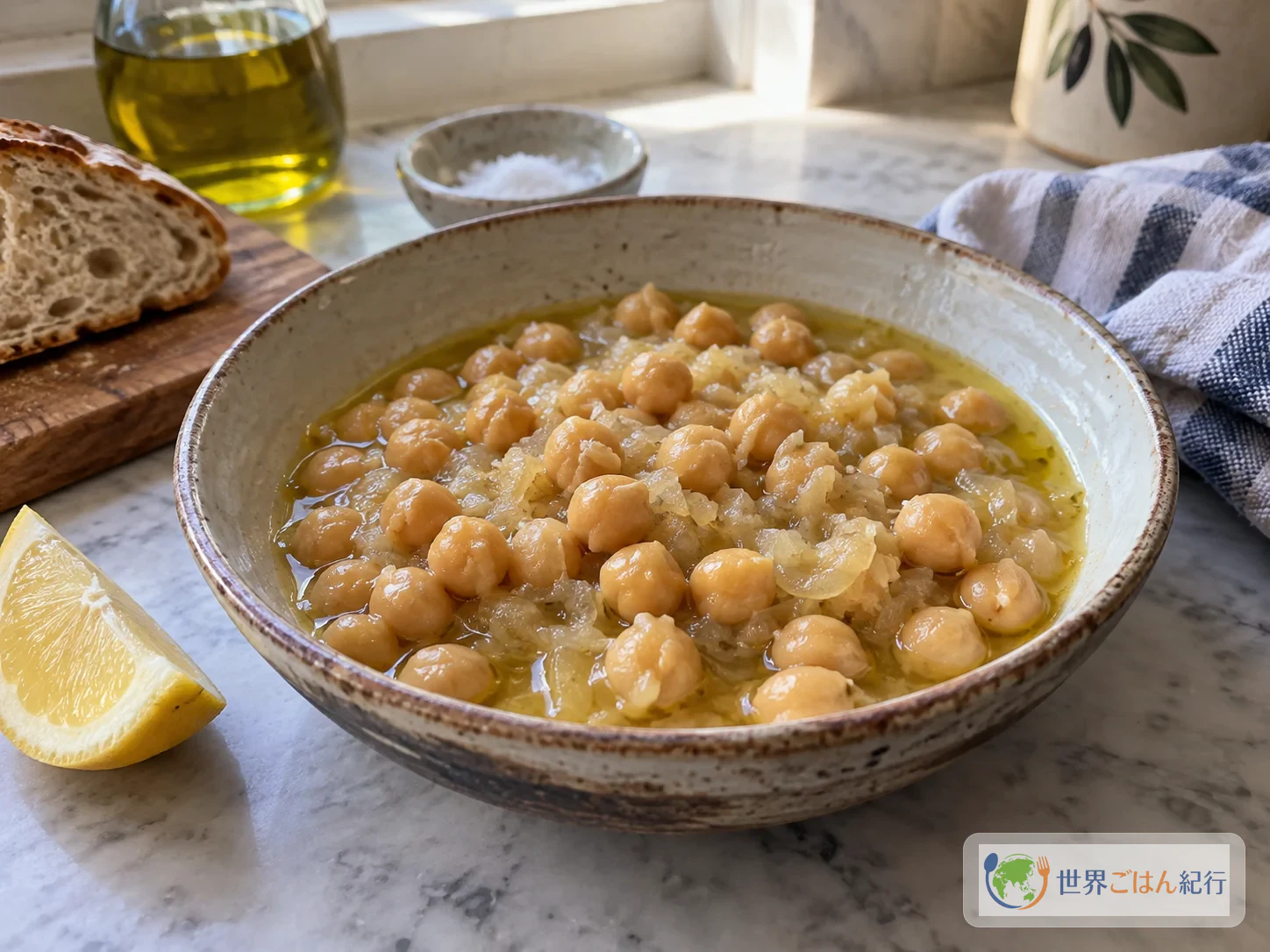
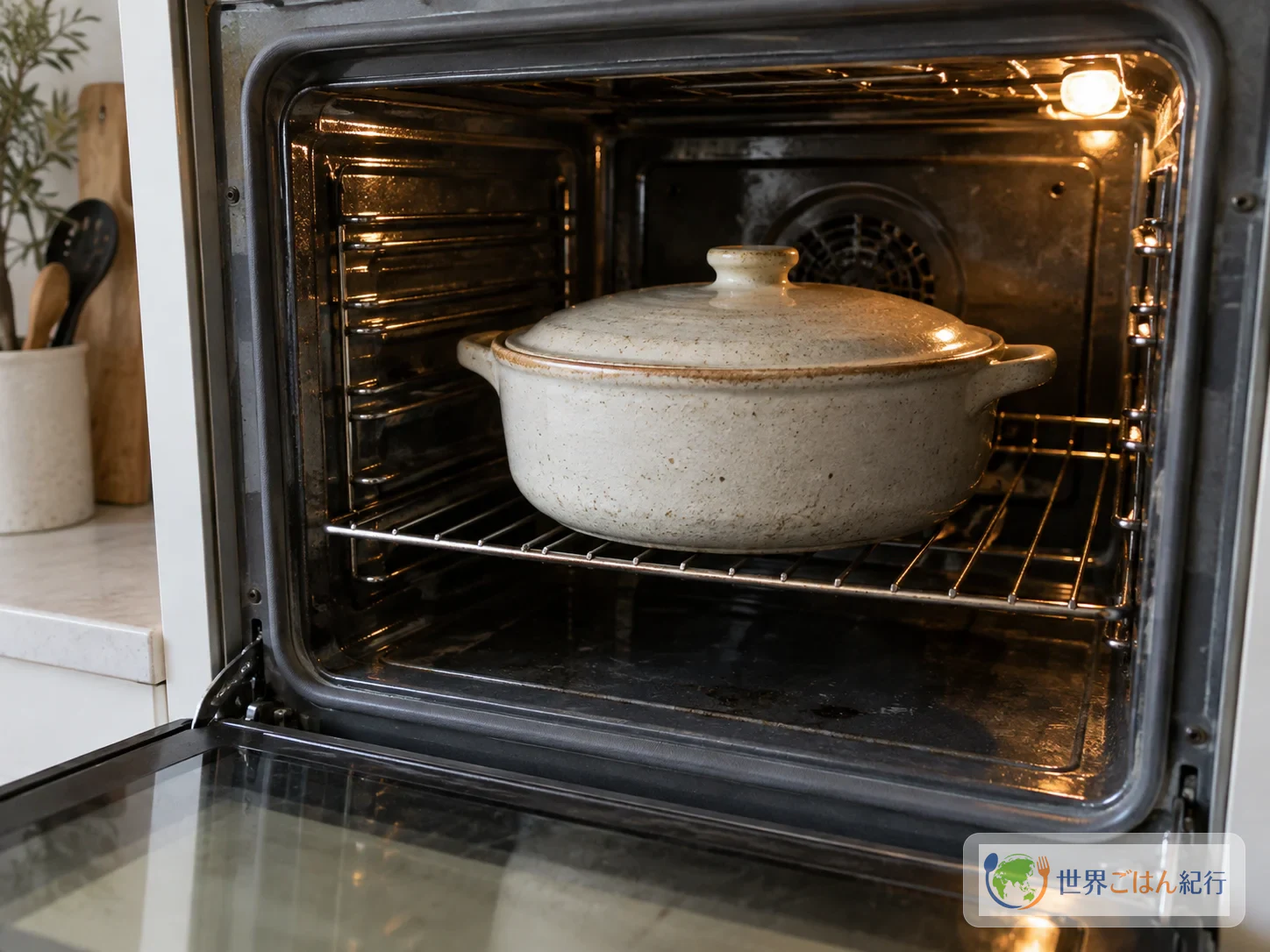
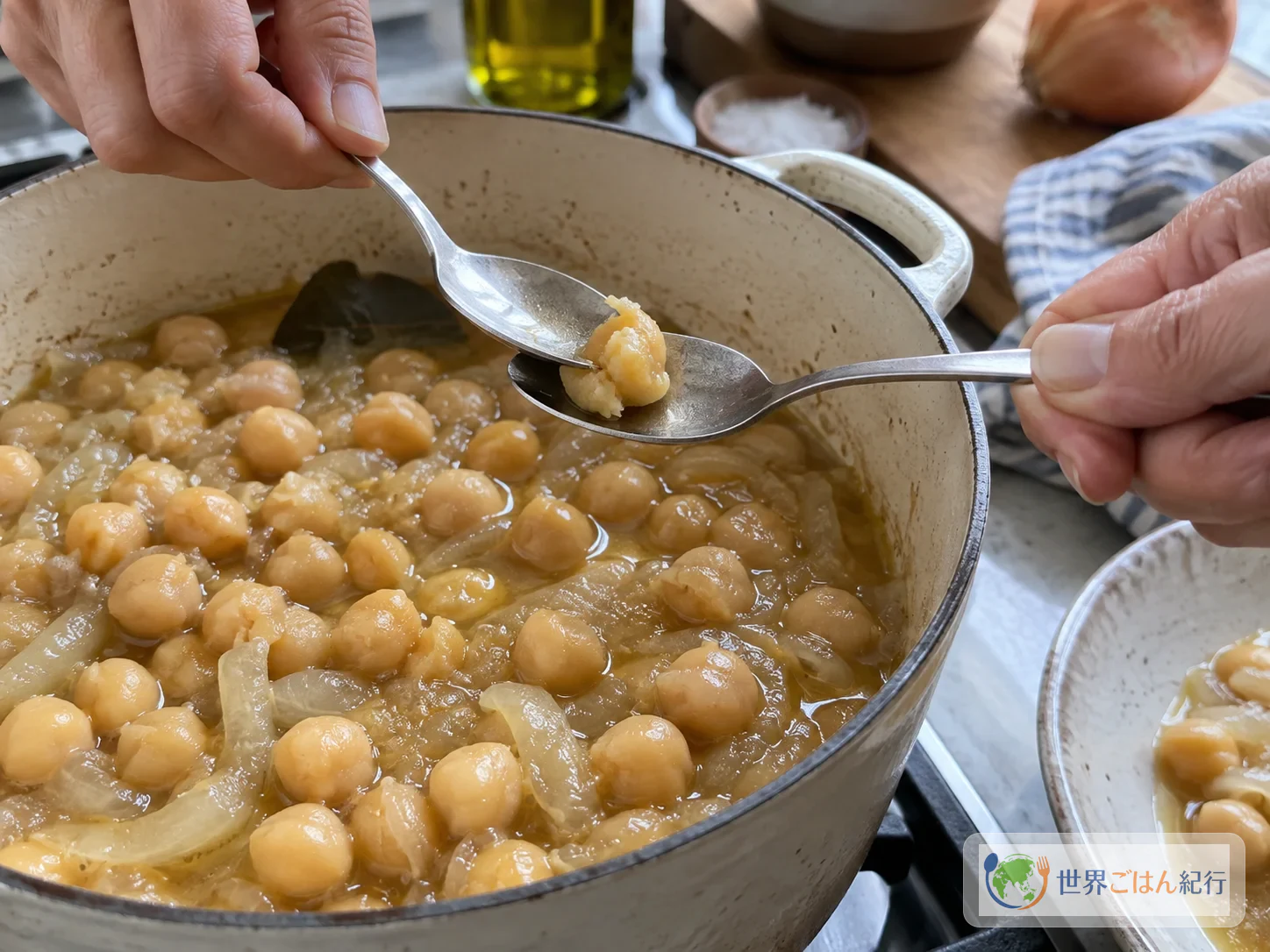
On a Sunday morning, the lid of an earthenware pot is lifted. Along with the steam rises the sweet smell of olive oil and onions. In the Sifnos tradition, chickpeas set up on Saturday night are eaten on Sunday morning. Picture the table: the lid comes off, and chickpeas stewed with onions and olive oil are ladled into bowls. This is revithada. Chickpeas, onions, and olive oil are slowly cooked together, and lemon is added at the end. Chickpeas eaten on a Sunday morning are plain, yet they hold the island's rhythm of life exactly as it is.
It is a dish where your time at the stove is short and the oven's working time is exceptionally long. The main recipe in this article is adjusted for home cooks to serve 4: 300 g dried chickpeas and 225 g onions baked in a 150°C oven for about 6 hours. An 8–12 hour soak is needed separately. Prep, including the baking soda treatment, takes about 40 minutes, and cooking takes about 6 hours 40 minutes in total. The overnight soak and the preheating are not included in that total. There is little hands-on work, but the oven runs for a long time. The guide is not the clock but the tenderness of the beans, not the time. Bake until the raw core of a bean is gone and it crushes when pressed with a spoon.
The Saturday-night oven prepares the Sunday table
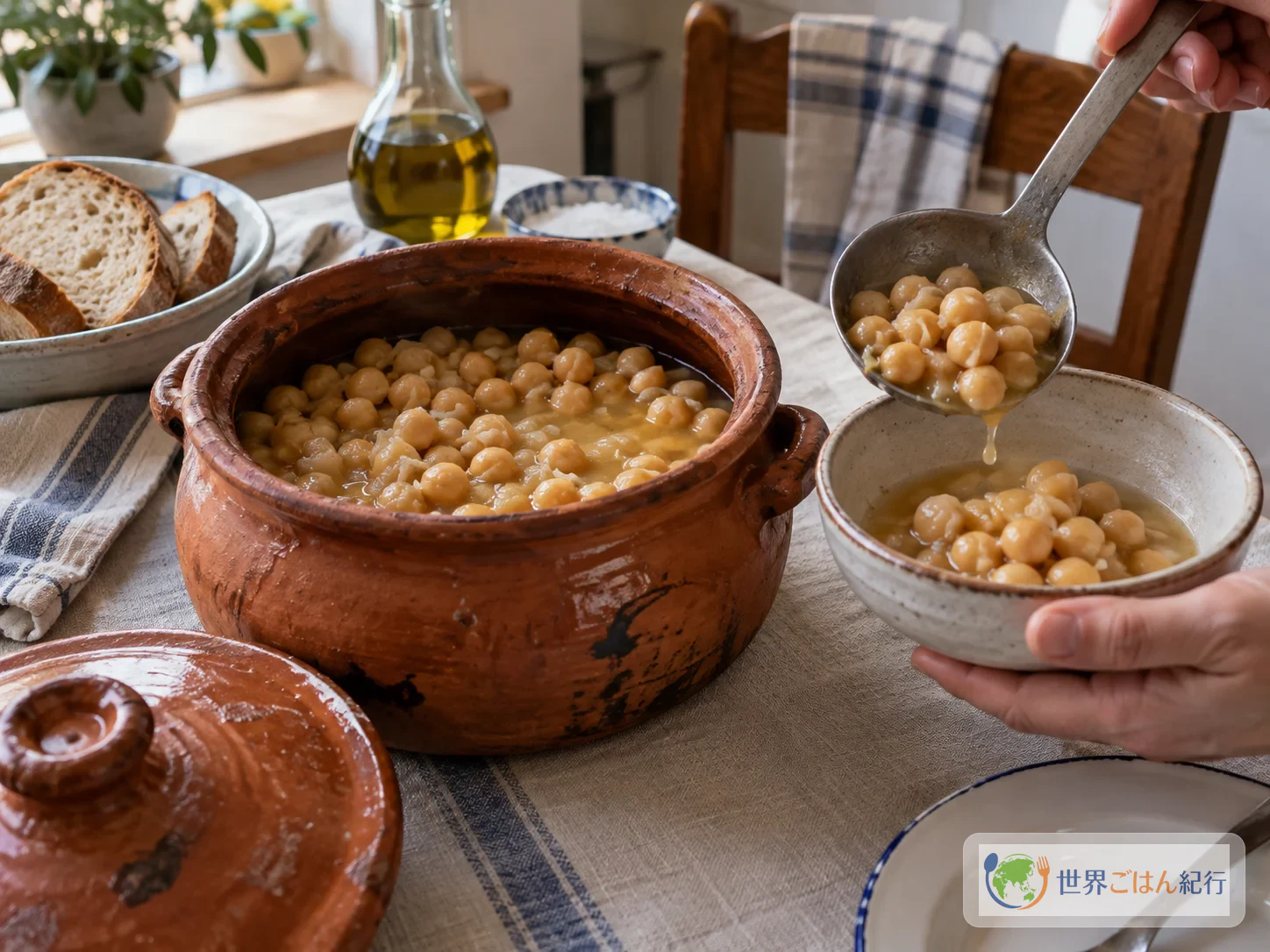
Sifnos is an island in the Cyclades of the Aegean Sea. The island's food culture is closely tied to pottery, local ingredients, and olive oil. Revithada is baked in a traditional lidded clay pot called a skepastaria. The old custom is to set it up on Saturday, bake it slowly overnight, and eat it on Sunday morning. The earthenware skepastaria, where heat reaches the food quietly under the lid, is truly the stage of this dish.
The basic Sifnos formula is chickpeas, onions, olive oil, salt, pepper, and water. Lemon is added when eating. There are no tomatoes and no meat, and it still stands as a dish. What you taste is the combination of bean broth, onions, and oil. In the local recipe baked about 6 hours in a wood-fired oven, some households seal the gap between the lid and the pot with a dough of flour and water. Home cooks do not need to reproduce the dough seal. What matters is that the pot suits your oven and that the lid keeps the moisture in.
On neighboring Paros, too, revithada is eaten on Sunday. There is a custom of taking the pot prepared at home on Saturday to the village bread oven and collecting it the next morning. Examples of Paros formulas include garlic, bay leaf, rosemary, and oregano. Herbs and the tenderness at the end differ from household to household. When the island changes, the herbs change. So let's not treat the plain Sifnos formula as the one right answer across all of Greece.
Revithada also leads to the next day's dish. The revithokeftedes of Sifnos are fried chickpea balls, which households used to make from leftover revithada from the day before. Some of today's tavernas cook the ingredients for the balls from scratch, so not every ball is made from leftovers. Still, a culture of using leftovers is a separate matter from safe storage. It does not mean it is fine to leave food out at room temperature until the next day. Storage is covered in the questions near the end.
Ingredients (serves 4)
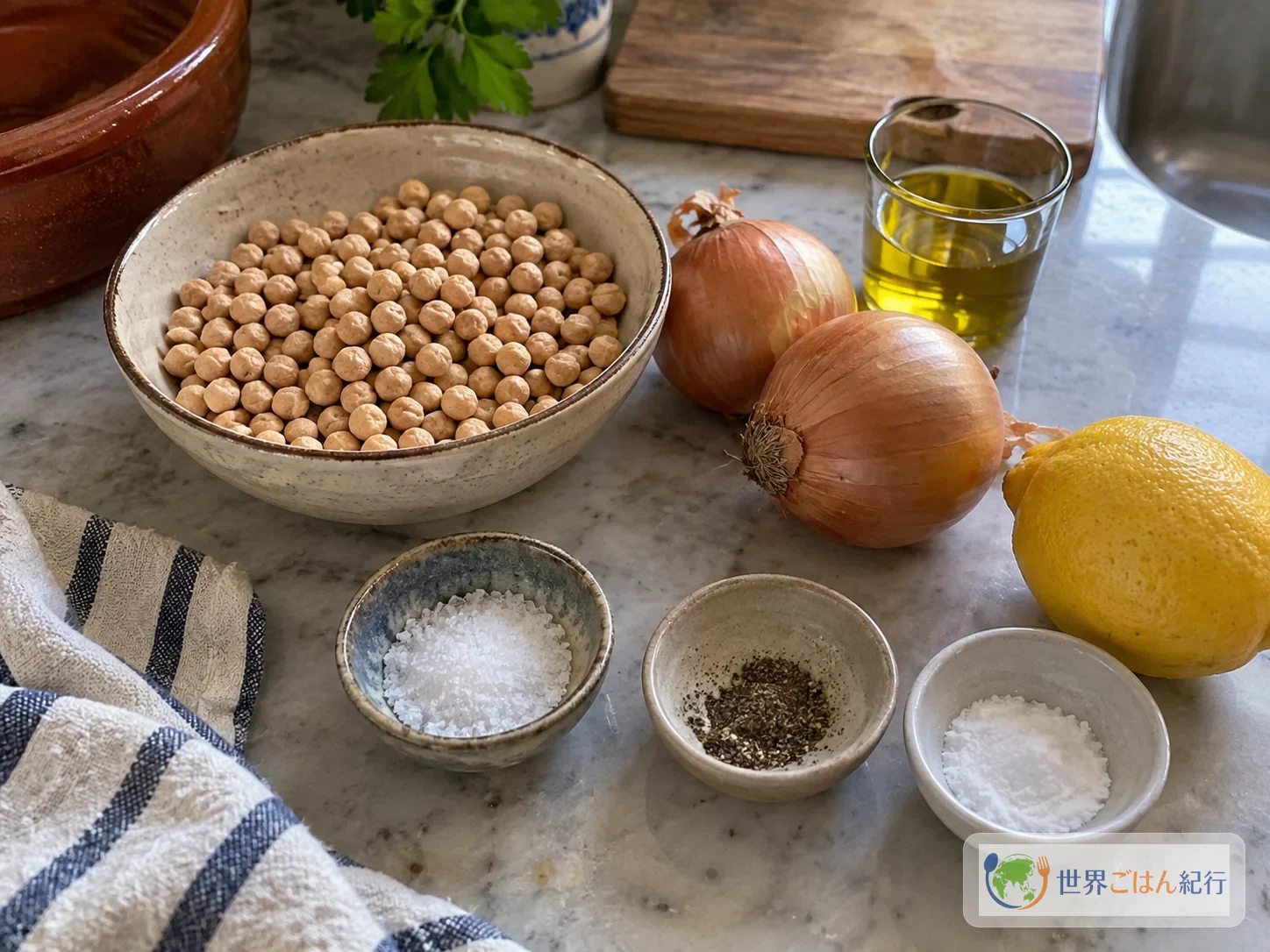
When shopping, look for packages labeled chickpeas or garbanzo beans, and check the label to see whether they are dried or canned. The main recipe here starts from dried chickpeas, which are soaked the night before and baked for a long time. Canned chickpeas are already cooked, so the steps and times change. Onions and lemon are easy to pick up with your regular shopping.
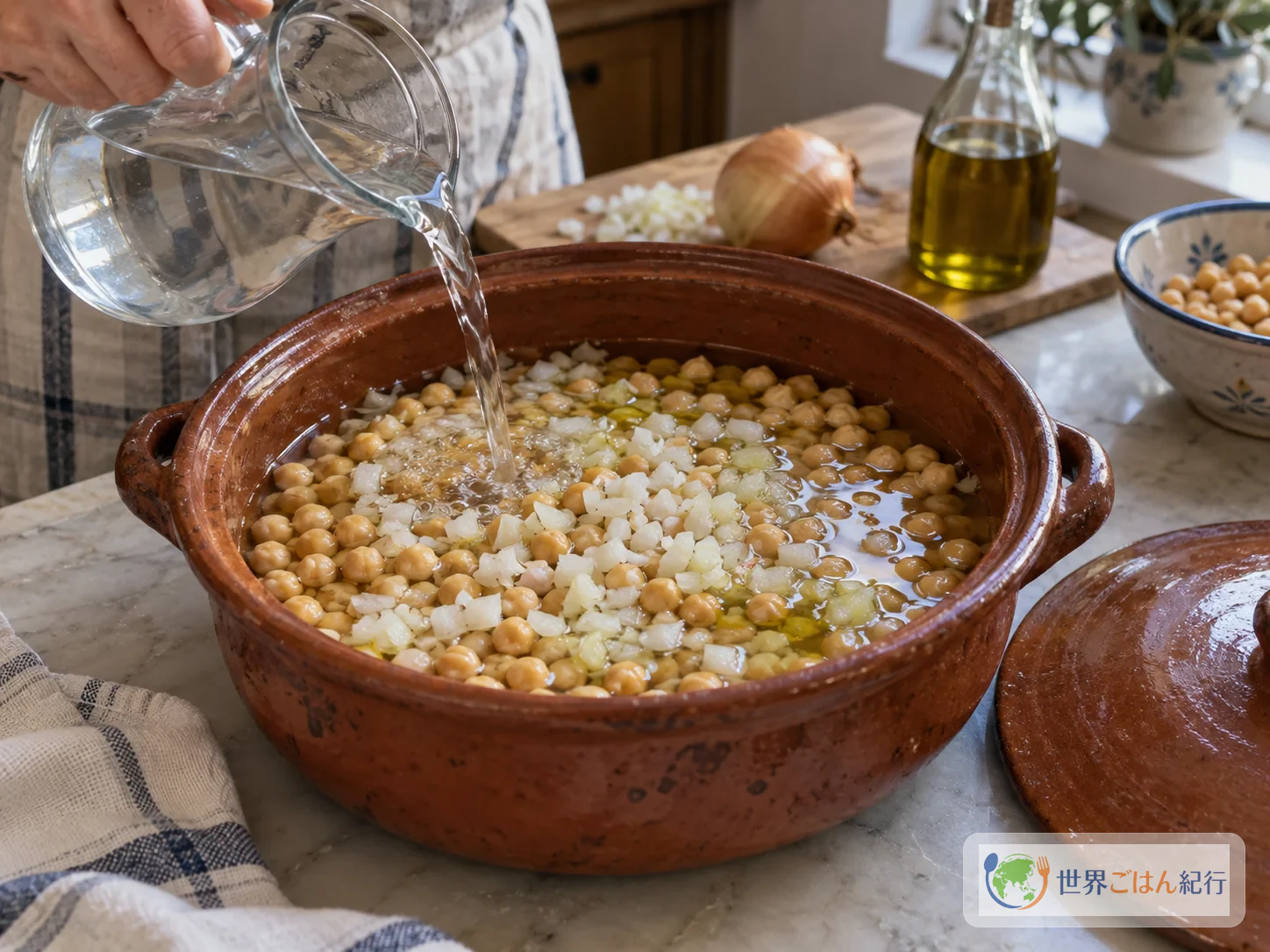
The amounts scale the local ratio of 1 kg chickpeas to 750 g onions down to 300 g and 225 g. The 60 ml of oil, 900 ml of water, and 4 g of salt are measurements set for home cooking. 900 ml of water is a starting point: use a pot of about 2.5 L capacity, in which the rehydrated beans are covered by 1–2 cm of water and there is room to prevent boil-over. Fill the water to above the beans. Choose a pot whose lid and handles are rated for 150°C in the oven. An ordinary clay pot whose oven suitability you do not know is not recommended.
Do not sauté the onions first; put them into the pot together with the beans. If you chop them fine, big lumps are less likely to remain. There is no step of browning the onions to caramel, and no stock, in this recipe. The aim is not the aroma of scorched onions but to draw out the sweetness of the beans and onions themselves.
Nutrition estimate
The approximate values per serving are 391 kcal, 15.6 g protein, 17.5 g fat, and 50.9 g carbohydrate. They divide the component values of the three main ingredients by 4: 300 g dried chickpeas, 225 g onions, and 60 ml olive oil taken as 54 g. These are estimates, not measured values. Changes from soaking and cooking are not corrected. Lemon, seasonings, and any bread or cheese served alongside are not included, and the figures also vary with the amount of oil used.
Method
Before you start, get the day's schedule in your head. Soak the night before, do the 30-minute baking soda treatment the next morning, and then heat for about 6 hours in a preheated oven. It suits a day when you are at home and can keep an eye on it, such as a day off. About 6 hours at 150°C is the oven setting, not the internal temperature of the beans. Depending on the oven and the beans, you may need to extend the baking time.
Following the local method, add the lemon when eating. That way you can change the sourness bowl by bowl. First get the saltiness of the beans and broth right, then add lemon little by little. Do not let sourness cover up underseasoning or undercooking.
The pot and lid straight from the oven are extremely hot. Use dry oven mitts and do not bring your face close when lifting the lid. Follow the pot's label for heat resistance and stovetop suitability. Oven-safe and stovetop-safe are not the same, so follow the manufacturer's stated temperature limits and cautions.
Without a wood oven, beans and onions still stew slowly
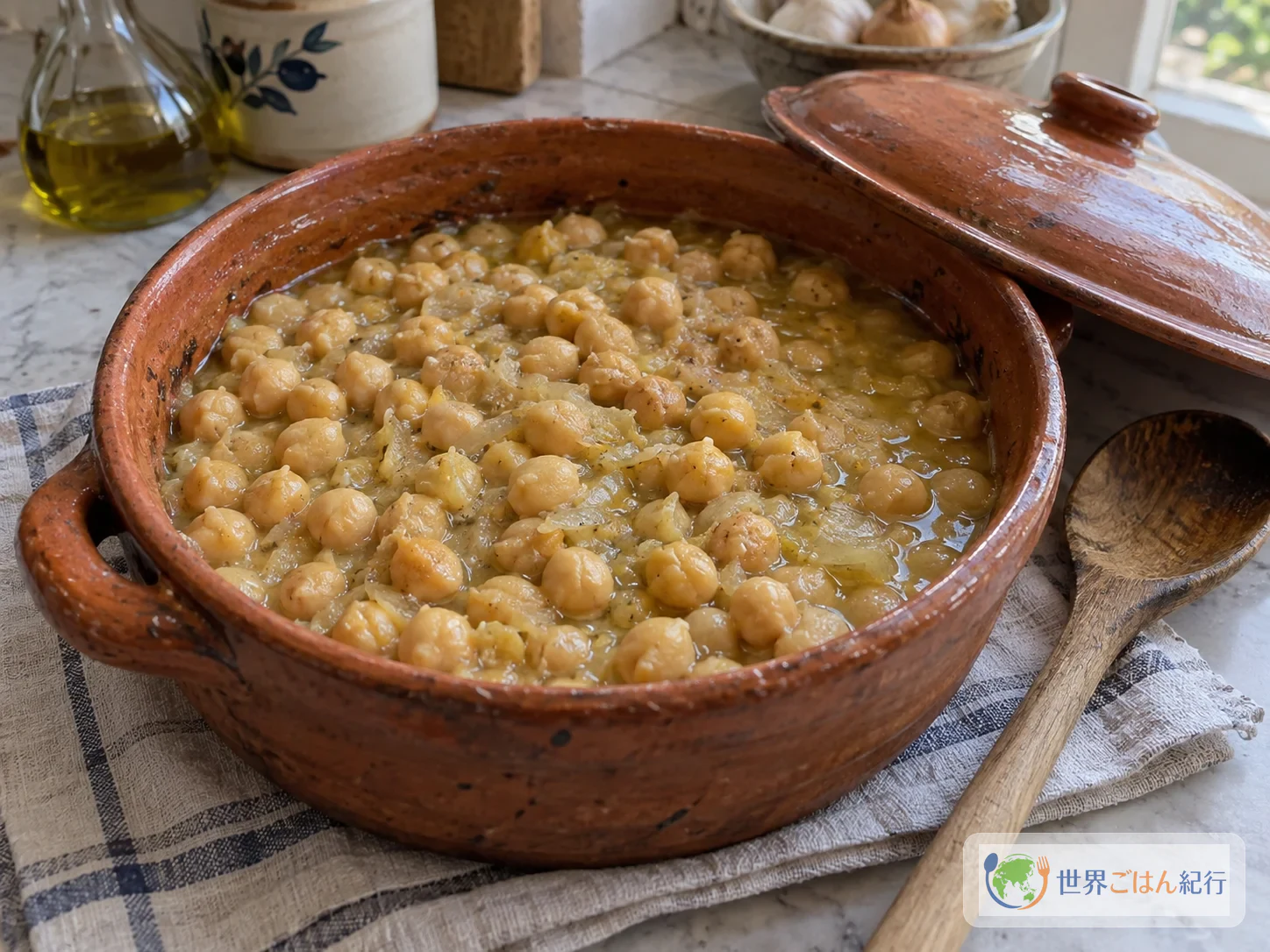
You can make this dish in an electric oven at 150°C for 6 hours. It will not necessarily taste the same as one baked in a wood-fired oven, though. In a home kitchen, you recreate the combination of beans, onions, and oil with a suitable lidded pot and oven. It cannot be claimed that the wood-fire aroma is the same. Keeping the moisture in with the lid is your main support in a kitchen without a wood oven. There is no need to go out and buy a clay pot that is not oven-safe. Check the temperature rating on the pots you already have.
A shortcut for days you use canned beans
For days when you are short on time, there is a home shortcut. Canned beans are handled by a separate method. Use 700 g canned chickpeas after draining, 225 g onions, 60 ml olive oil, 400 ml water, 2 g salt to start, and 0.3 g black pepper. Put the onions, oil, and water in an ordinary pot and simmer over medium-low heat for 15–20 minutes until the onions are soft. Add the canned beans, set the lid slightly ajar, and cook over low heat for 20–30 minutes. If the water runs low, add 100 ml at a time. To finish, adjust the salt 0.5 g at a time and the 30 ml lemon juice per bowl. Check the product label for the salt left in canned beans. With canned beans, you skip the soaking, the baking soda treatment, and the 6-hour bake. For that reason, it will not have the same flavor or depth as the main recipe, which builds the broth from dried beans.
Restoring moisture and tenderness
| Problem | Likely situation | How to fix it |
|---|---|---|
| Core still hard after 6 hours | The beans have not absorbed or cooked enough | Check the water level, add 100 ml boiling water, cover, and extend at 150°C in 30-minute steps |
| Bean surface is dry | Moisture escaped through gaps at the lid | Add 100 ml boiling water and cover. Check that the pot's lid fits properly |
| Watery and thin | Beans are soft but there is a lot of liquid | Remove the lid and give it 10–20 minutes at 150°C. Do not let the beans dry, and adjust salt last |
| Burnt on the bottom | Not enough liquid, or localized heating of the pot | Do not scrape the burnt bits; move the top portion to another container. If a strong burnt smell has spread throughout, do not force yourself to eat it |
| Too sour | Too much lemon added at once | Add unseasoned beans or broth if you have any. Adding water alone dilutes the salt too, so rebalance |
If you want a thicker broth, once the beans are completely soft, take out only 2 tbsp. Mash them with a spoon and return them to the broth, and it becomes mellower while the rest of the beans keep their shape. Do not thicken with flour. Do not mash hard beans to hide undercooking either. This is a home adaptation.
A table with bread, and the fun of changing the herbs
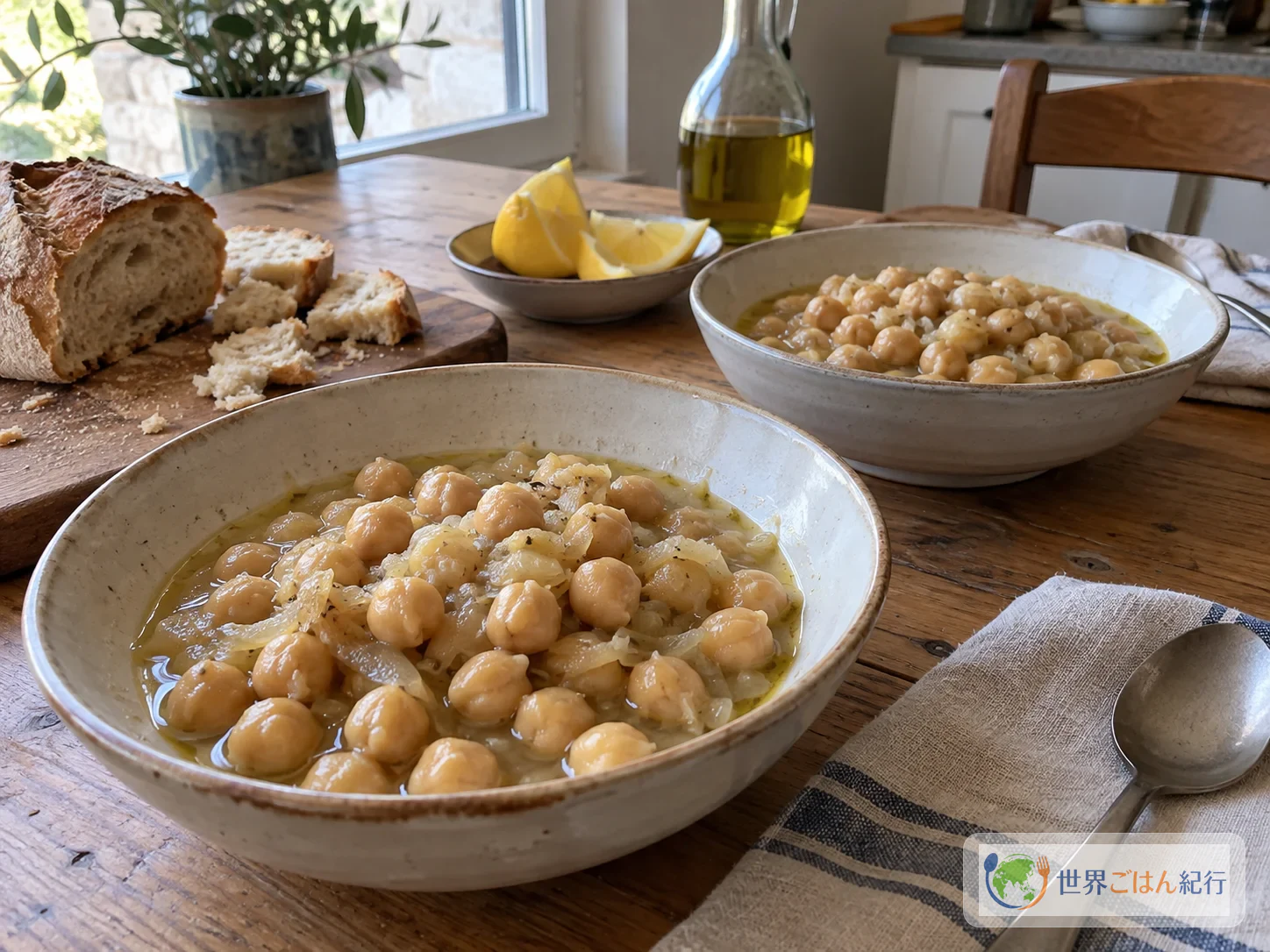
For home serving, ladle the beans and broth into deep bowls and put the bread on the side. The lemon is added by each person on their own plate. When you eat the broth together with the bread, the sweetness of the beans and the aroma of the olive oil are complete in one dish. The main recipe contains no meat. Serving bread or cheese is a separate choice and is not counted as a required ingredient. If you want to pair a bean dish with raw vegetables, try this Greek salad too.
How to make Greek salad (in Japanese)
If you want to make another Greek bean dish, there is fasolada, made with white beans. It is a separate recipe from this oven-baked chickpea dish. When you change the type of bean, do not carry over these 6 hours as is; follow the prep and steps for that bean.
How to make fasolada, the white bean soup
Five ways to change the flavor little by little
| Variation | How to add it for 4 servings | Flavor change and where it fits |
|---|---|---|
| Rosemary | 1 sprig when baking, removed before eating | An herb seen in Paros formulas. Start small so the beans' flavor remains |
| Bay leaf | 1 leaf when baking, removed before eating | A mild aroma seen in Paros formulas |
| Garlic | Add 1 crushed clove with the onions | A small home variation inspired by the Paros formula |
| Oregano | Add 1/4 tsp dried oregano at the end | Inspired by the Paros use of herbs. Do not add a lot from the start |
| Lighter lemon | Try from 15 ml juice in total, adjusting at the bowl | A home adjustment to hold back the sourness and taste the beans and onions |
Rather than adding all five at once, I recommend trying one herb at a time. The small amounts shown are home suggestions. If you make the basic formula first and add herbs afterward, you can clearly compare how the aroma sits on the beans and onions.
Frequently asked questions and storage
Can I make it ahead?
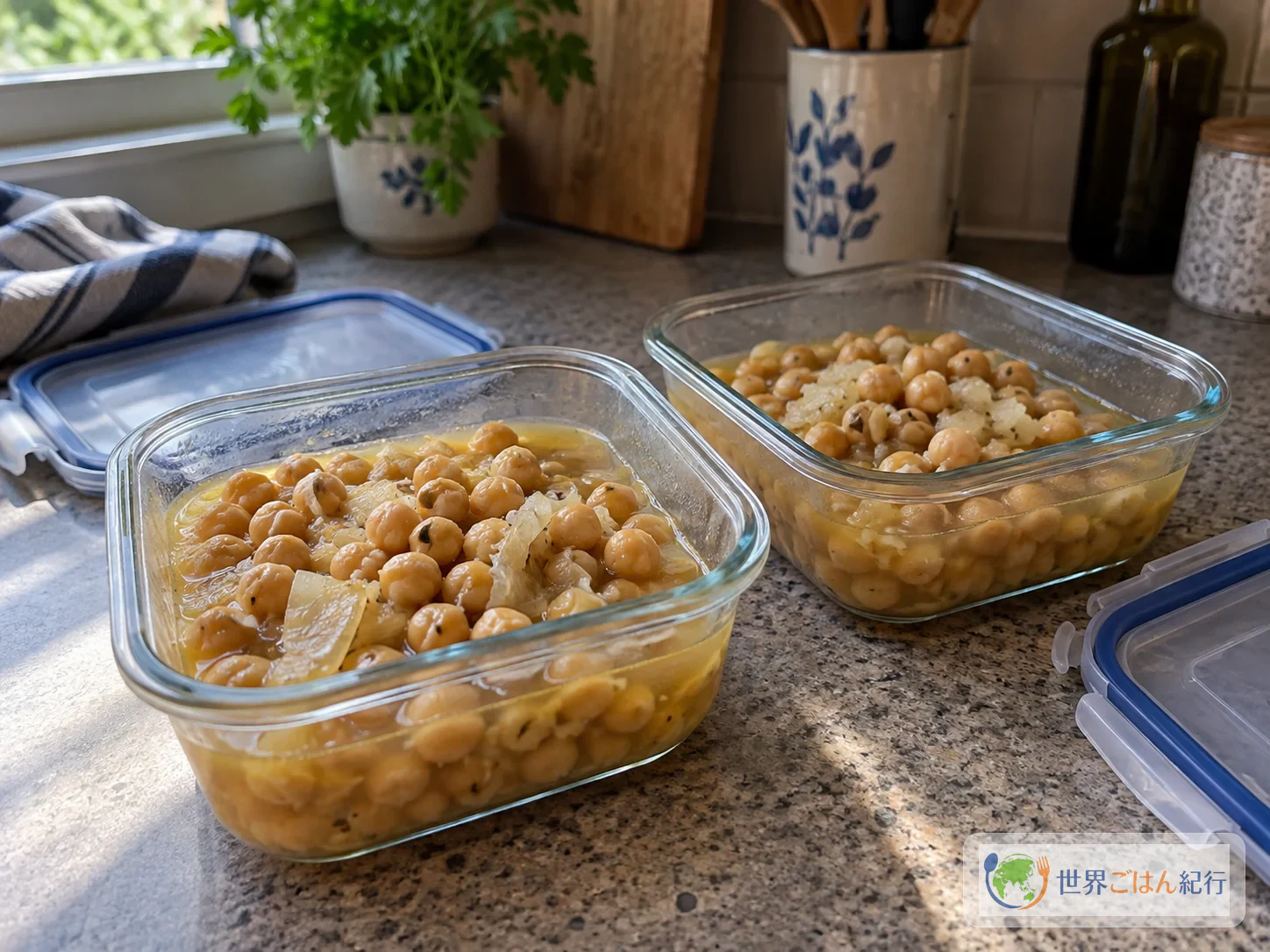
Put what you cannot finish into shallow containers in portions with a clean utensil, cool it quickly, and refrigerate. Do not leave the whole pot at room temperature overnight. Manage the refrigerator at 10°C or below as a guide and eat it up soon. No storage period specific to this dish has been confirmed, so I cannot promise how many days it keeps. For reheating, the guide is that the center reaches 75°C or higher. Heat the liquid, stirring, until it boils. If the moisture has reduced, add 1–2 tbsp water.
If you have even slight doubts about spoilage, do not eat it; throw it out. Food with an off smell is not always made safe by heating. Refrigeration and freezing do not kill bacteria either. Do not assume a dish baked for a long time can be kept at room temperature.
Can I make it without baking soda?
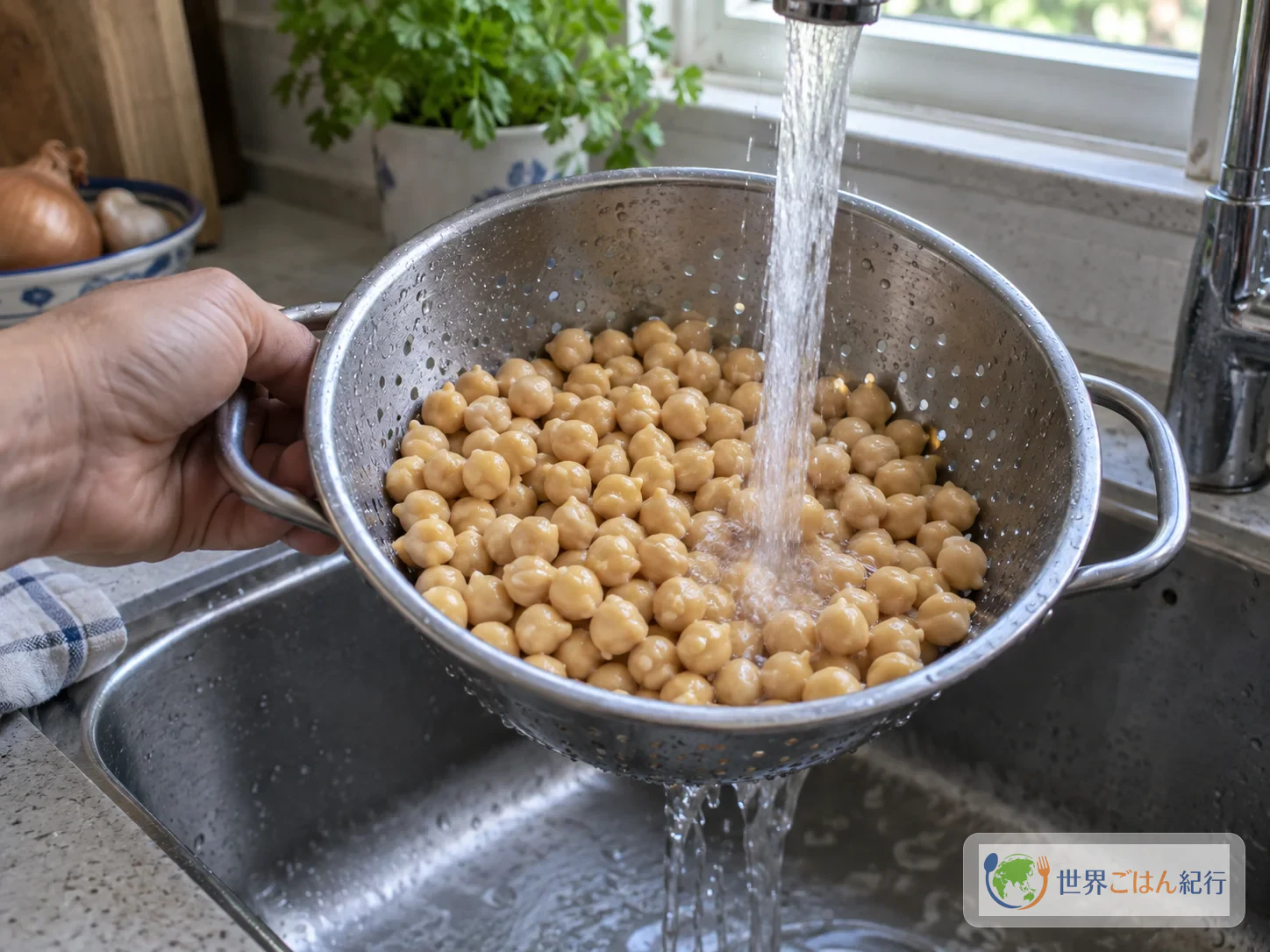
On Paros, both households that use baking soda and ones that do not are described. If you leave it out, soak the beans thoroughly and extend the heating while checking tenderness. Without baking soda you can skip the additional 30-minute treatment. However, it cannot be said that the beans will necessarily become tender in the same baking time. In the main recipe, which uses baking soda, rinse 3–4 times after the treatment. Do not keep adding baking soda to the stewing pot.
What if I have no oven?
The main step of this dried-bean recipe is oven heating. Without an oven, you can choose the stovetop method with canned beans described earlier. A rice cooker's keep-warm setting cannot stand in for 150°C heating. Do not apply the same water amount and time directly to a pressure cooker; follow the appliance manual. Think of the traditional baked stew and the pot-made shortcut as dishes with different results.
I am concerned about heat and allergies
The main recipe contains no chili, and the black pepper is 0.3 g. If you want to hold back on pungency, you can leave out the black pepper. People with allergies to ingredients used, such as chickpeas, should not eat it. Check the ingredient labels of processed items such as canned goods too. Serving bread adds wheat, and serving cheese adds dairy. Accompaniments that are not in the main recipe should be checked too. Check the label of the bread you serve before putting it on the table.
Sources
- e-sifnos — The traditional recipes of Sifnos: the ratio of chickpeas to onions, the baking soda treatment, the skepastaria, 6 hours at 150°C in an electric oven, and lemon at serving. Accessed and checked 7 October 2026.
- Visit Greece (Greek National Tourism Organisation) — The Gastronomy of Sifnos: Sifnos pottery and food culture, and revithada made from Saturday night into Sunday morning. Accessed and checked 7 October 2026.
- Greek Gastronomy Guide — Revithada of Paros: the Paros communal-oven custom, garlic and herbs, and differences in formula between households. Accessed and checked 7 October 2026.
- Greek Gastronomy Guide — Chickpea meatballs of Sifnos: fried balls made from leftover revithada, and how they are made now. Accessed and checked 7 October 2026.
- Ministry of Health, Labour and Welfare (Japan), Six Points for Preventing Food Poisoning at Home. https://www.mhlw.go.jp/stf/seisakunitsuite/bunya/kenkou_iryou/shokuhin/syokuchu/01_00006.html: cooling in portions, refrigerator temperature control, and reheating leftover food. Accessed and checked 7 October 2026.
- Tokyo Metropolitan Consumer Affairs Center, microwave oven product test materials, labeling and instruction manual entries. https://www.shouhiseikatu.metro.tokyo.lg.jp/anzen/test/documents/temph2.pdf: the high temperature of containers after oven heating and the caution to use mitts when removing them. Accessed and checked 7 October 2026.
- Ministry of Education, Culture, Sports, Science and Technology (Japan), Standard Tables of Food Composition database: dried chickpeas https://fooddb.mext.go.jp/details/details.pl?ITEM_NO=4_04065_7, raw onions https://fooddb.mext.go.jp/details/details.pl?ITEM_NO=6_06153_7, olive oil https://fooddb.mext.go.jp/details/details.pl?ITEM_NO=14_14001_7. Used for the nutrition estimate from the three main ingredients. Each accessed and checked 7 October 2026.