Nièr Beurre: A "Black Butter" With No Butter in It
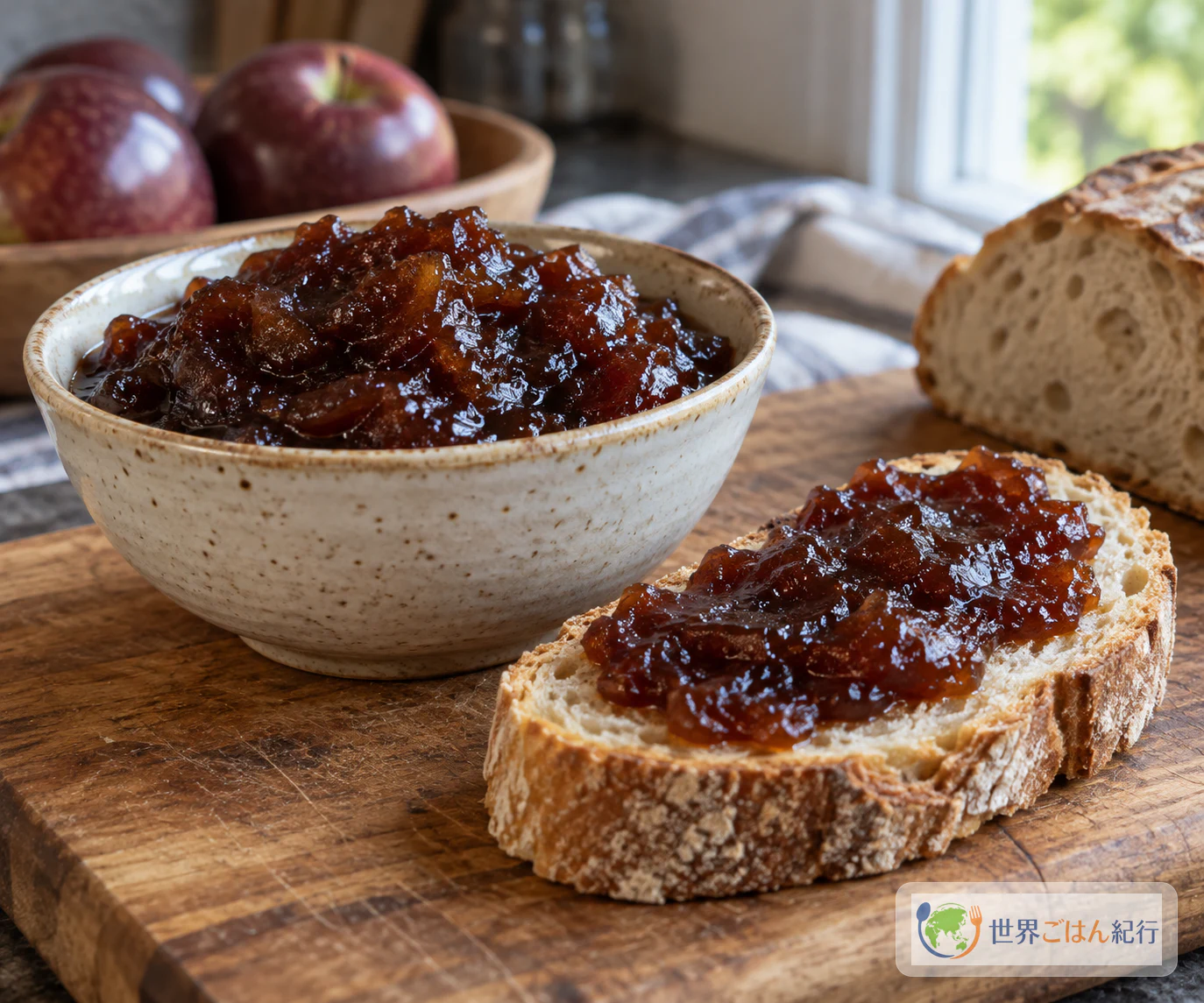
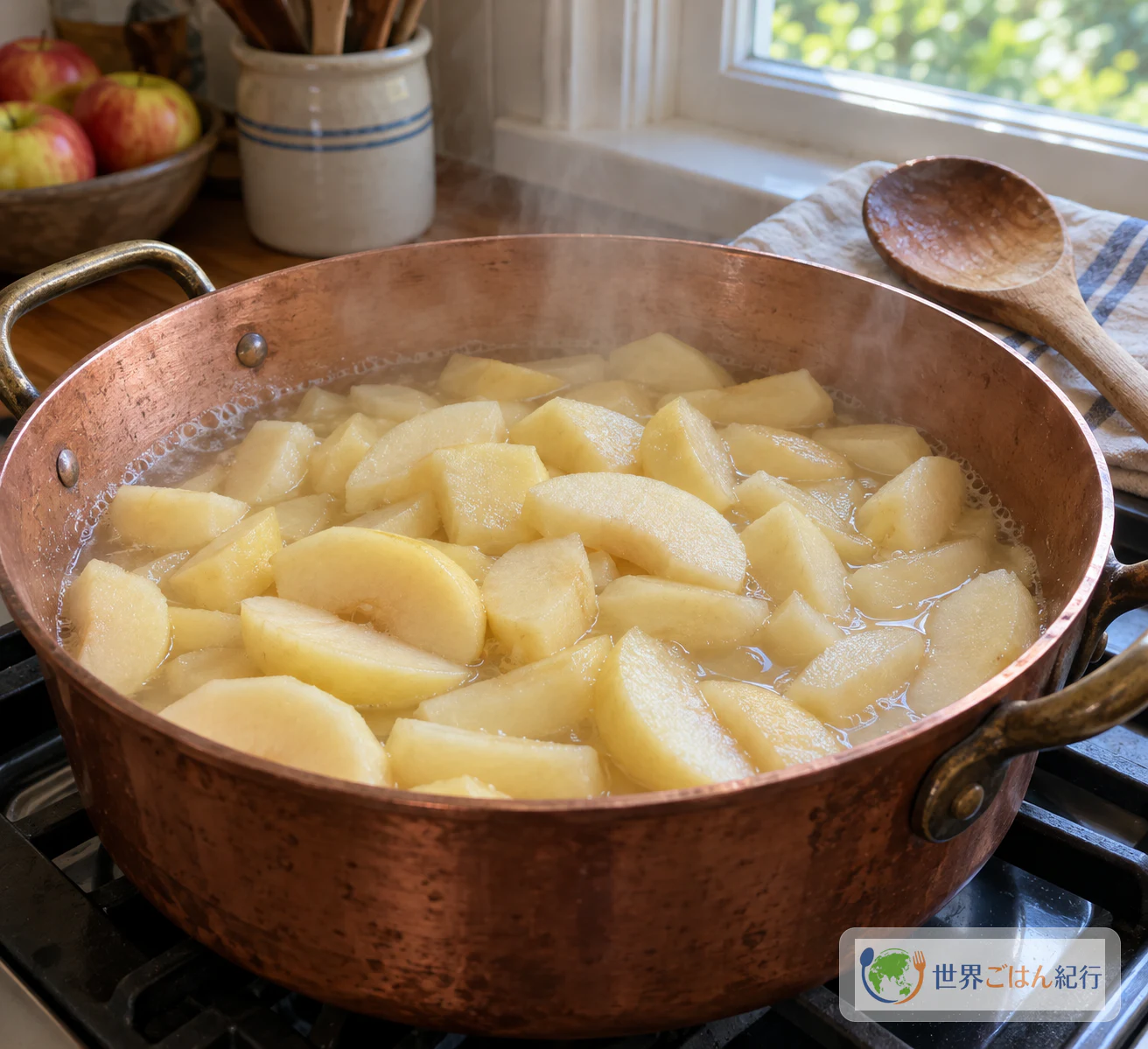
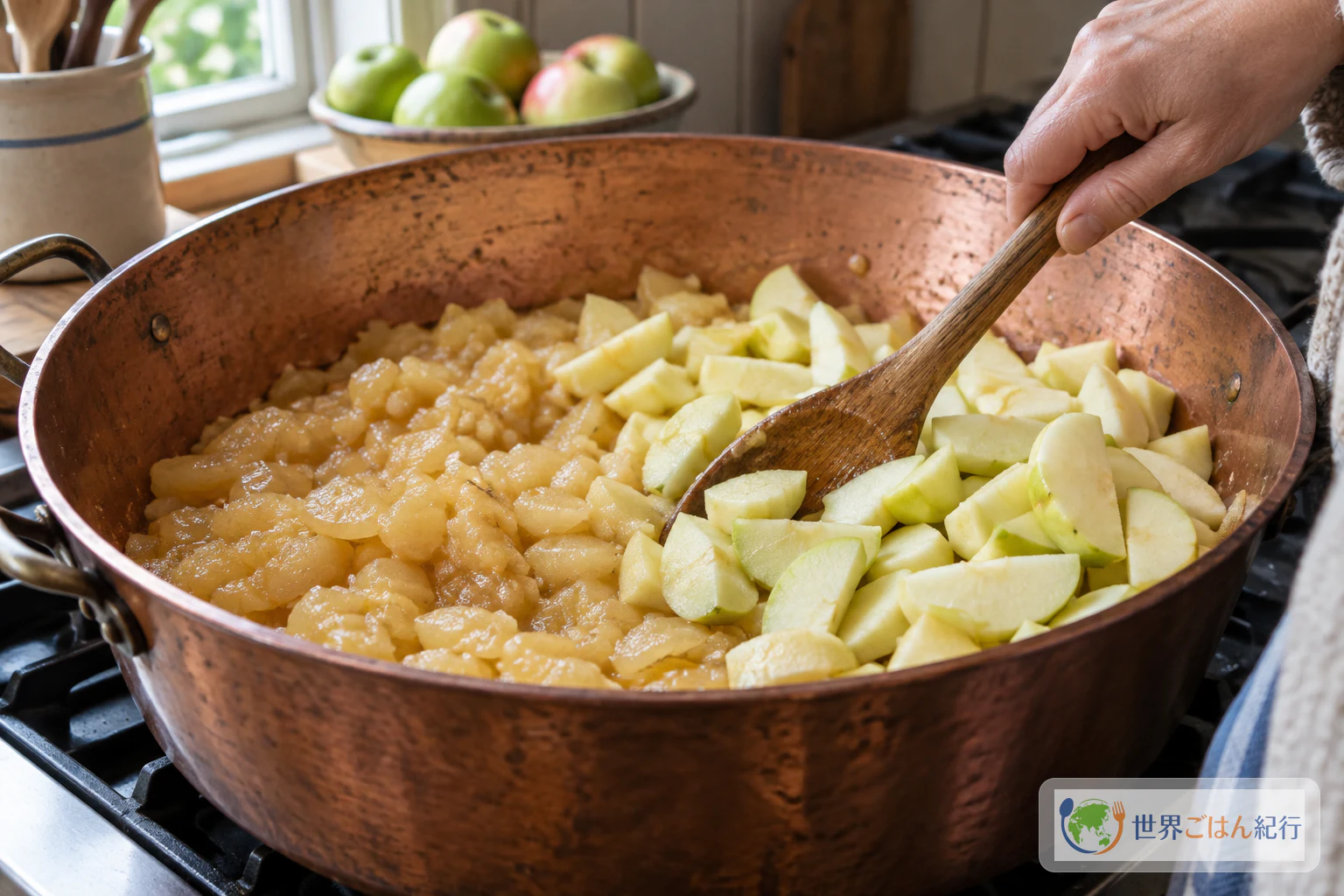
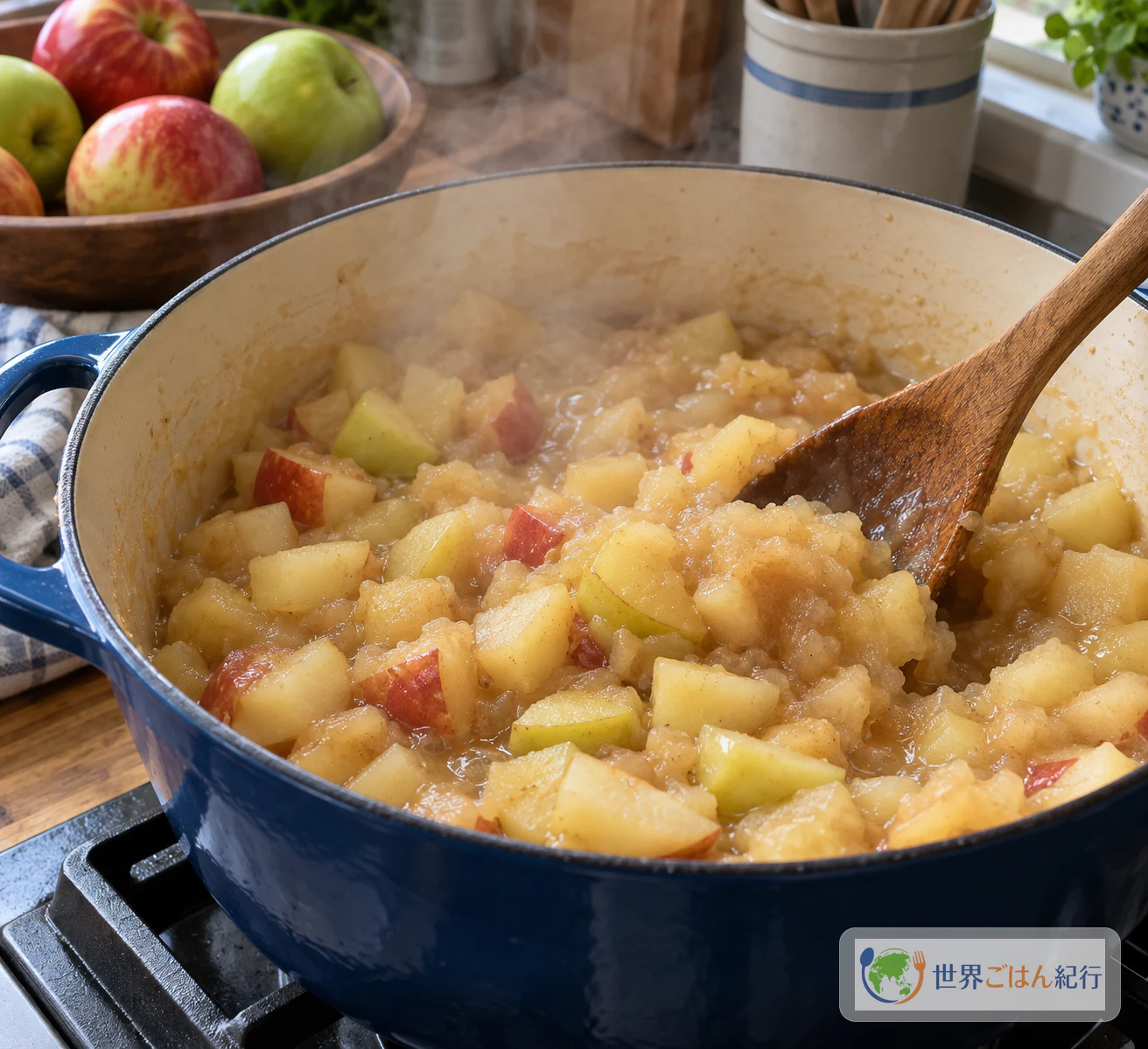
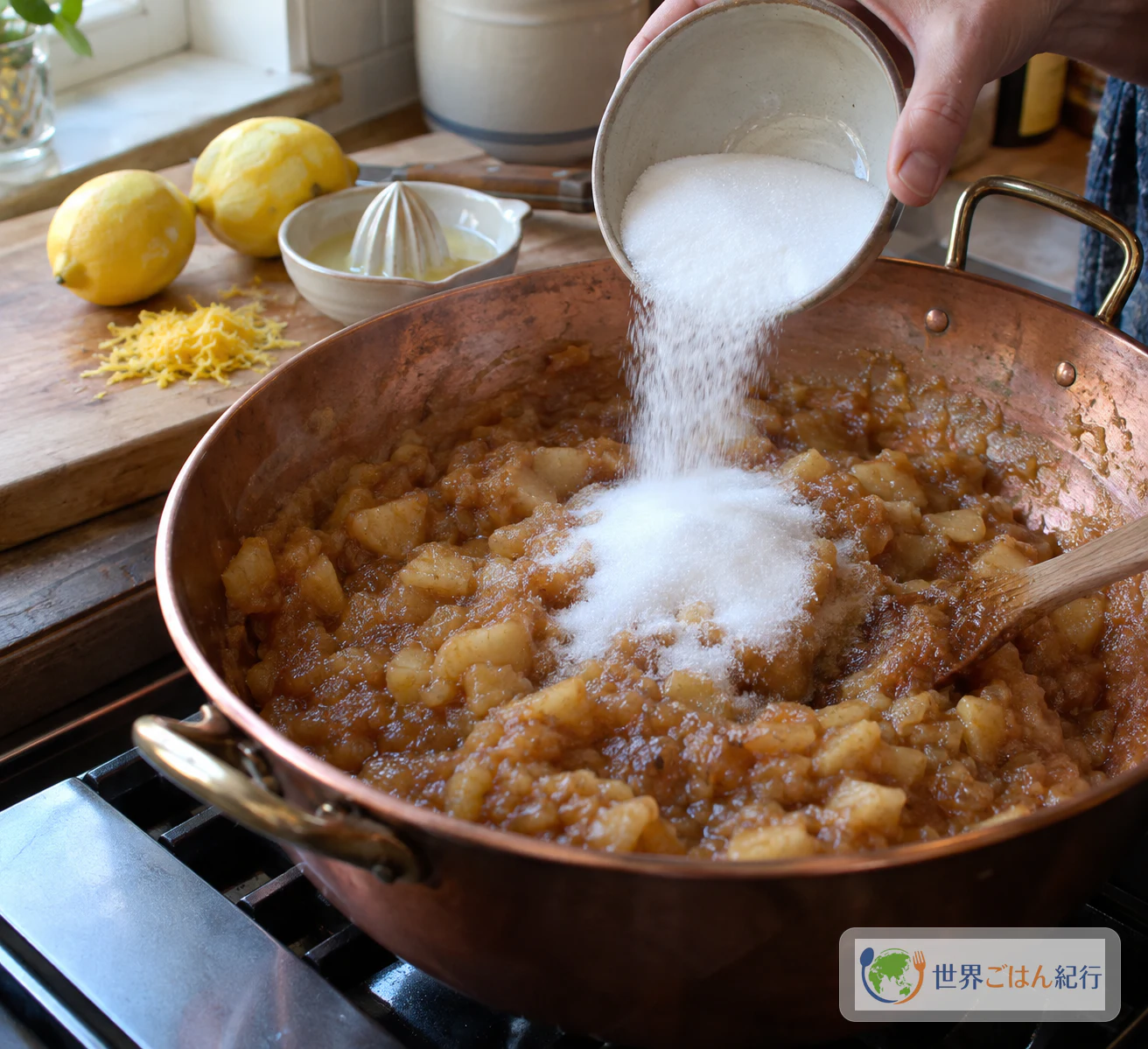
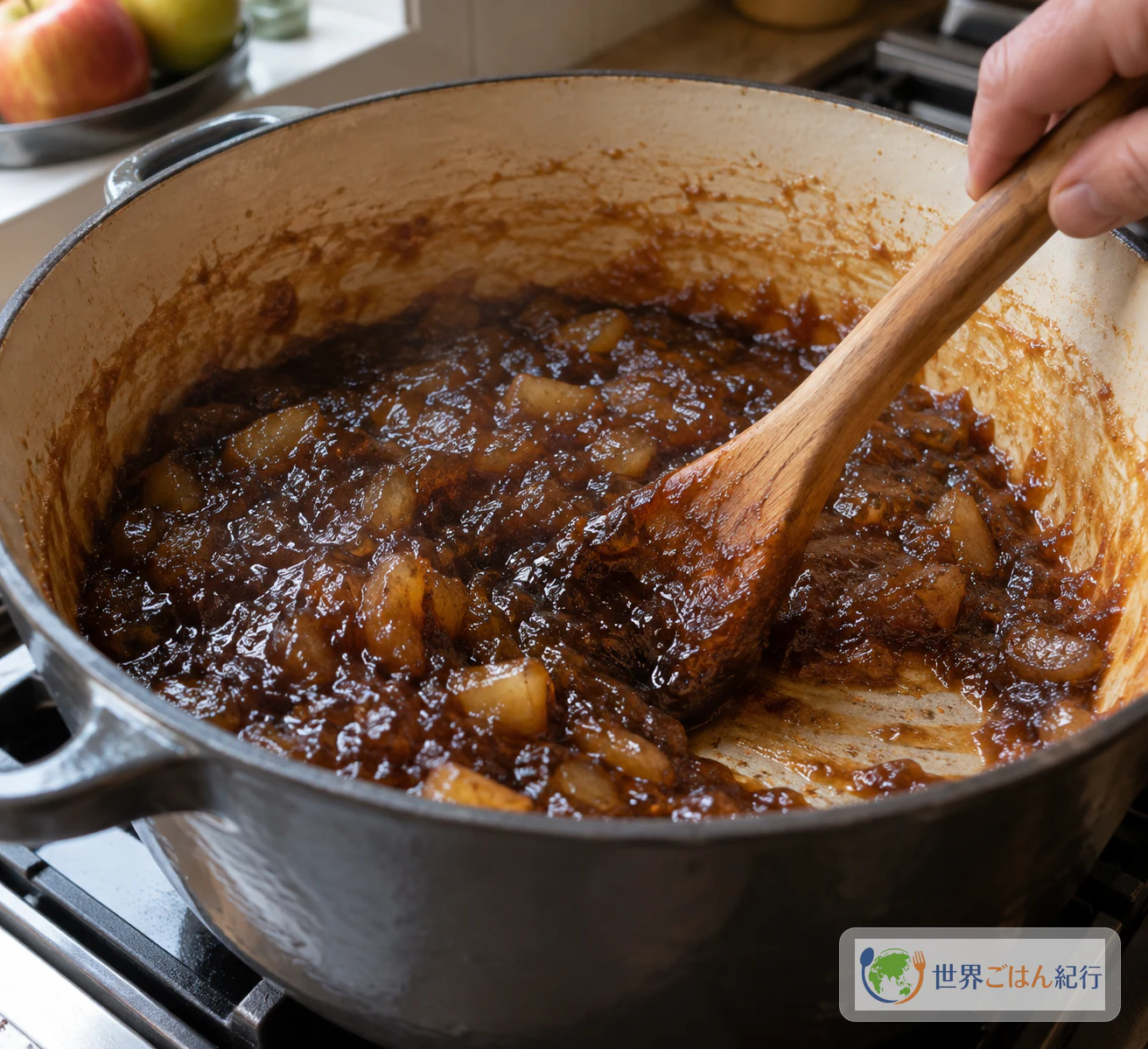
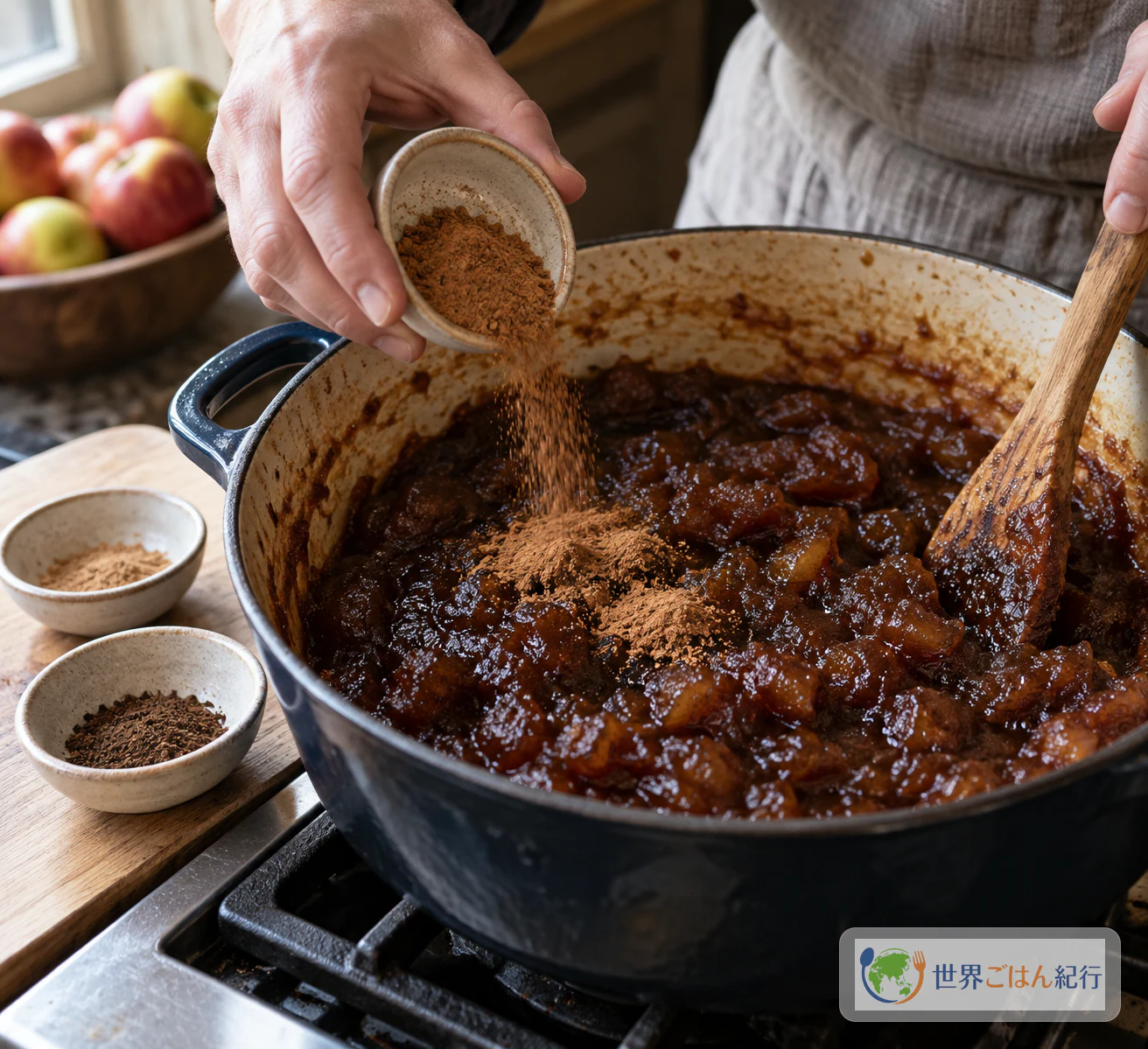
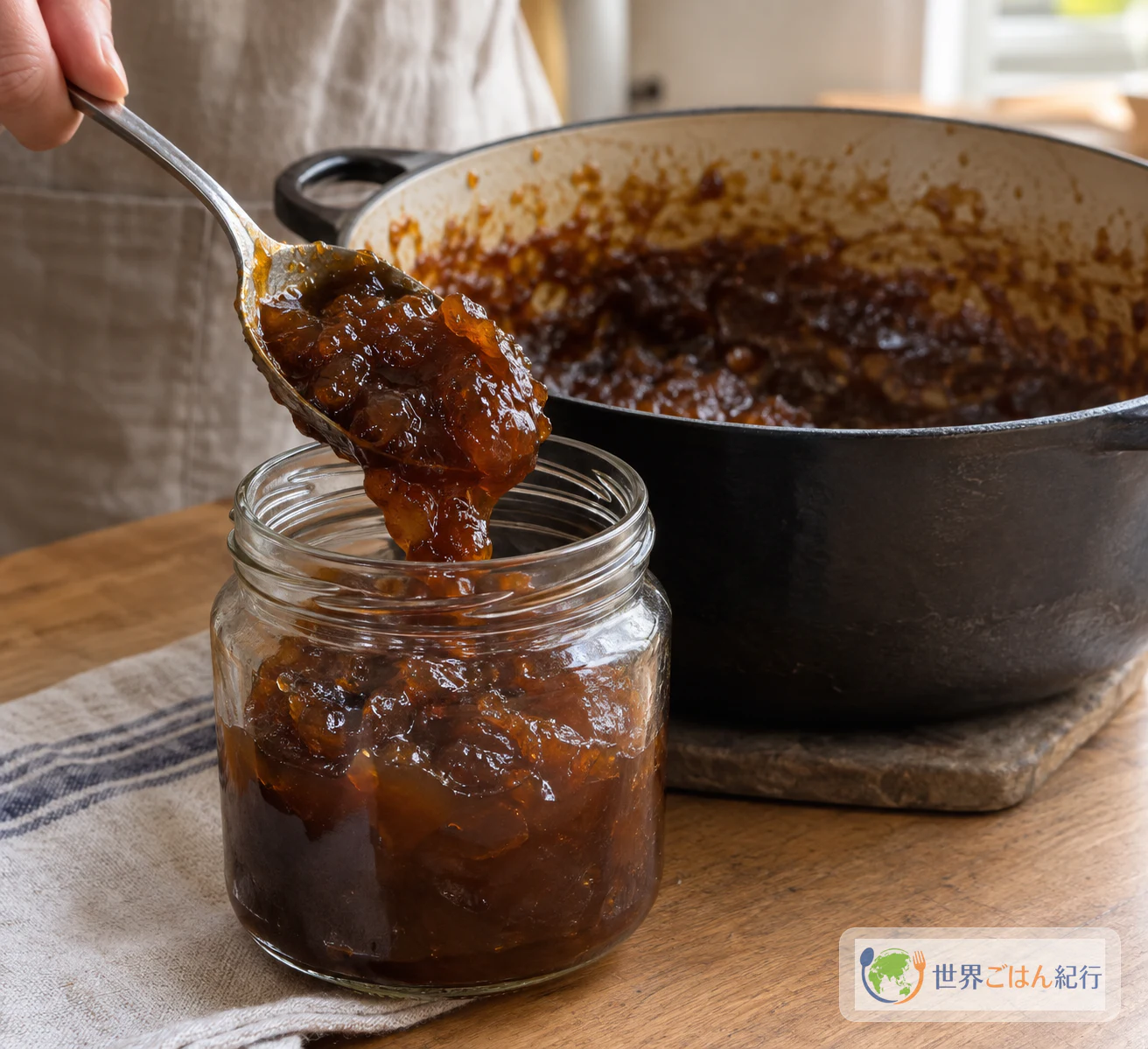
Soften the sweet apples first, add the sharp apples later, and hold back the sugar and lemon until the fruit has reduced considerably. The spices go in last. Finish when the preserve is very thick, deeply colored and glossy.
On Jersey's black butter nights, neighbors peeled hundreds of pounds of apples, reduced cider, and took turns stirring a great pan through the night. Delicious Jersey describes that scene alongside a far smaller recipe: one heavy pan in a home kitchen, made with water, apples, sugar, lemon and three spices.
The name is the surprise. In Jèrriais the preserve is Lé Nièr Beurre, or Nièr beurre, and Slow Food in the UK records the form Beurre Nièr. It translates as "black butter," but Delicious Jersey and Slow Food both describe a concentrated, spiced apple preserve rather than a dairy product. The recipe here contains no butter or dairy of any kind. Its dark color comes from long reduction, as water cooks away and both color and flavor deepen.
This article uses one recipe: the Delicious Jersey home version made with water, based on a Jersey Women's Institute cookbook, which yields about 6–8 jars. It is not a scaled-down version of the communal cauldron, and it should not be confused with the cider-and-liquorice versions described later.
Sekai Gohan has not test-cooked this recipe. Delicious Jersey gives no cooking times, temperatures, finished weight or home storage period, so none appear here. The jar-processing times in step 8 come from general apple butter guidance from the National Center for Home Food Preservation. They were not tested on this recipe and do not guarantee its safety.
Ingredients: Two Kinds of Apple, Sugar, Lemon and Three Spices
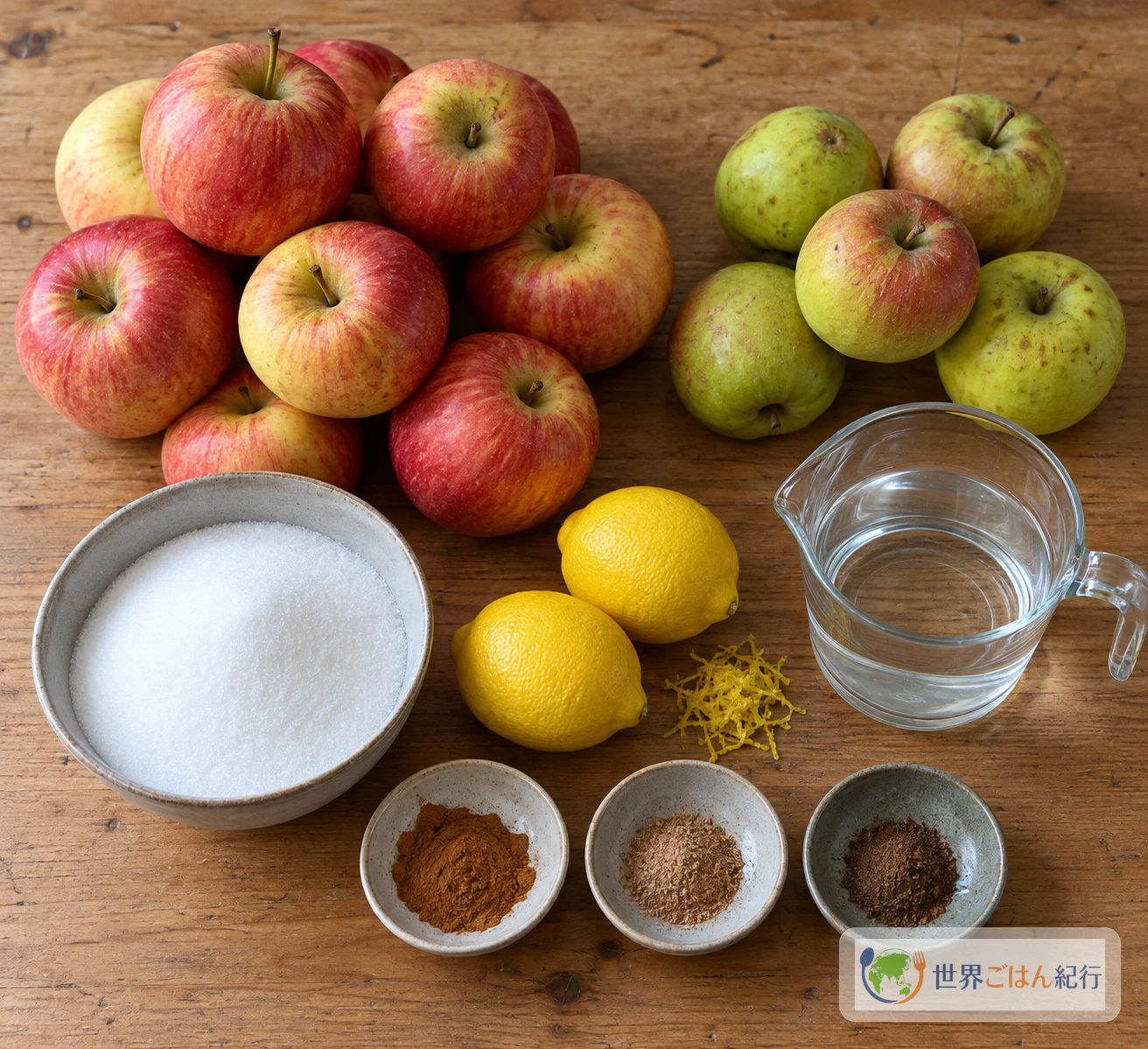
Makes about 6–8 jars.
Choosing Apples, Sugar and Spices
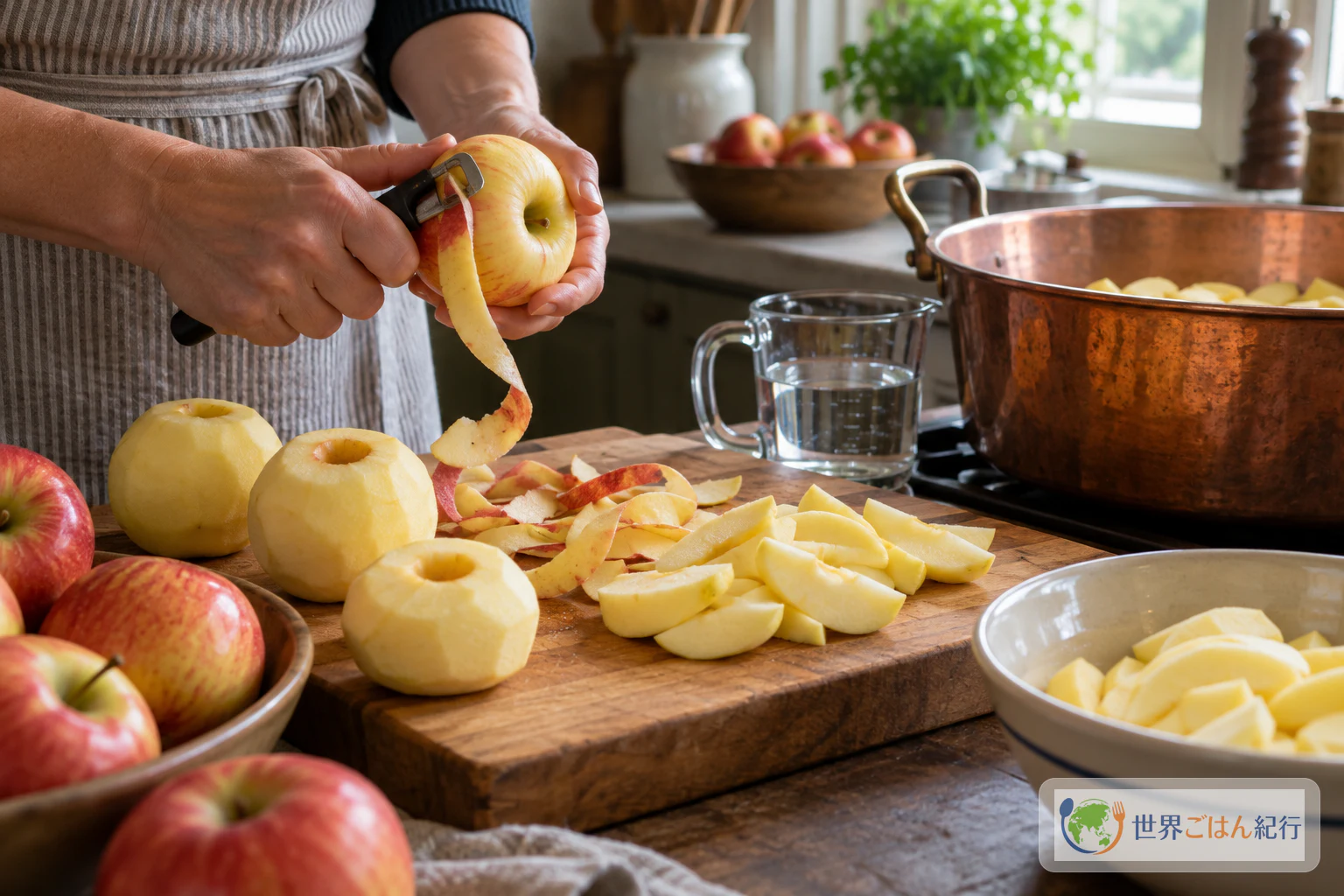
Apples. Two types of apple are used rather than named varieties, and the difference between them matters. Sweet apples form the soft base, while sharp cooking apples keep the finished preserve from being only sweet. Use whichever sweet and sharp apples you can buy. In Japan, Kōgyoku is one possible sharp apple, though we do not claim it is an exact match for any variety.
Sugar. Stay within 1.25–1.5kg.
Lemon. Use the yellow part of the zest, then add the juice.
What stays out. Cider and liquorice root belong to a separate, more traditional option, so they are not part of this recipe. See the variations below if you want to explore them.
Allergens. No major allergen is deliberately included, but check the labels on your sugar and spices for cross-contact information.
Equipment
- Large, deep, heavy-bottomed pan
- Long-handled wooden spoon
- Peeler, knife and cutting board
- Zester or grater and a citrus juicer
- Jars with lids
- Boiling-water canner, for processing the jars
Method: Reducing Slowly Over Low Heat
Thick, sugary fruit paste can spit as it bubbles. Use a deep pan and a long-handled spoon, and keep your face away from directly above the pot. Heavy pans and low heat also help prevent scorching, which is most likely near the end.
Judge each stage by how the pot looks rather than by the clock. Expect a long cook and don't rush it with higher heat.
Storage: What Is and Isn't Confirmed
Delicious Jersey says to pot the hot preserve into clean, sterilized jars and seal them, but it gives no processing time, temperature or storage period. To fill part of that gap, step 8 follows the National Center for Home Food Preservation's general procedure for apple butter.
That procedure is not a test of this recipe, so following it does not guarantee the safety of this specific mix. The apple butter guidance also gives no storage period, and we could not confirm one elsewhere, so this article does not state a number of days or months. The sugar, lemon and long reduction are not, on their own, proof that the preserve is safe at room temperature. If you skip processing, refrigerate it and eat it soon.
Fixing Problems in the Pot
| Problem | Likely cause | What to do |
|---|---|---|
| The bottom is catching or smells scorched | The heat is too high, the pan is thin, or the mixture is thick and not being stirred enough | Lower the heat and scoop from the bottom more often. Use a heavy pan next time, since scorching brings bitterness |
| The mixture is spitting | It is thick, sugary and bubbling | Lower the heat, use a long-handled spoon, and keep your face away from directly above the pot |
| It is still pale and loose | It hasn't reduced enough | Keep cooking over very low heat and stirring. Go by the thick, deep, glossy finish, not the clock |
| It tastes too sweet | The apples and sugar ran sweet together | Next time, choose the low end of the sugar range |
Variations and Ways to Serve
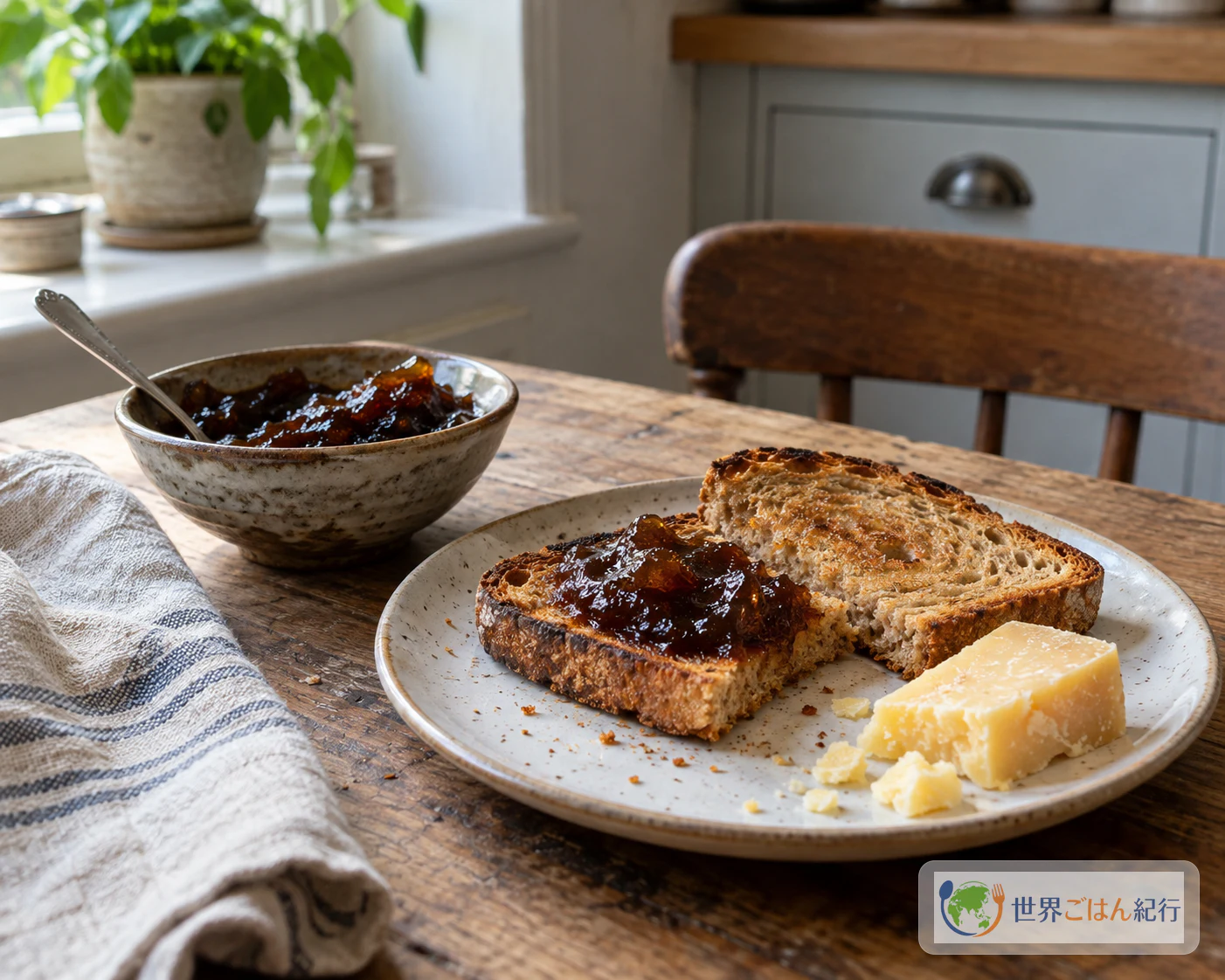
Start by tasting the preserve on its own for its sweet-sour balance and spice, then try it with other foods.
- Change the balance of apples. Using more or fewer sharp apples is a departure from the recipe above and has not been tested, so no alternative amounts are given here.
- Use Jersey cider. Delicious Jersey mentions replacing some or all of the water with Jersey cider for a more traditional version. How this changes the sweetness, acidity and remaining alcohol has not been verified.
- Add liquorice root. The same page suggests a small piece of liquorice root as part of that traditional option. It has a distinctive aroma, and it may take some searching to find.
- Spread it on toast. This is the serving suggestion from Delicious Jersey, and it is the simplest way to start.
- Pair it with savory food. Delicious Jersey also suggests mature cheese, roast pork, and gravies or stews, where it adds sweetness and acidity. Start with a small amount.
For another European apple dish, try Austria's apfelküchle.
From Black Butter Night to the Home Pan
Black butter belongs to Jersey's autumn. Visit Jersey describes heritage apple varieties harvested in the season and lists cider and black butter among their uses. Slow Food in the UK treats it as a traditional preserve of the cider season.
Making it has long been a communal job. Atlas Obscura describes the séthée d'nièr beurre as a shared effort of autumn and winter, stirred for hours with a long-handled wooden tool called a rabot. Visit Jersey describes a three-day Black Butter Festival at The Elms, run by the National Trust for Jersey, where neighbors gather around a large pot over a wood fire to cook apples, sugar, liquorice and lemon. The dates can change from year to year, so check the current schedule if you hope to attend. Accounts of these gatherings also mention song and conversation, so the tradition is as much about the occasion as the recipe.
The difference in scale is huge. Slow Food's example lists 14 cwt of apples, 113 gallons of cider and 30 lbs of sugar, plus liquorice, cinnamon and spices, stirred for 24–30 hours in a giant communal pot. The home recipe makes about 6–8 jars with water instead of cider. It is a separate recipe rather than a proportional reduction, so neither its amounts nor its timing should be converted from the cauldron version.
Frequently Asked Questions
The recipe has not been kitchen-tested, and the answers below only cover what could be confirmed.
Does nièr beurre contain butter?
The recipe in this article contains no butter or other dairy. "Black butter" refers to the dark, spreadable preserve, which Delicious Jersey describes as dairy-free.
Are cider and liquorice required?
Not for this home recipe. Delicious Jersey presents them as an option for a more traditional version, and the communal cauldron versions also use them.
How many hours does it take?
The home recipe gives no set time, so judge it by the finish: very thick, deeply colored and glossy. The 24–30 hours reported by Slow Food refers to a giant communal pot and doesn't apply to a home pan.
How many jars does it make?
Delicious Jersey says about 6–8 jars, but it does not give the jar size or a finished weight. Treat that number as a rough guide only.
Can I store it at room temperature?
We can't promise that. Delicious Jersey describes filling and sealing jars, and the National Center for Home Food Preservation gives general processing times for apple butter, but neither confirms a storage period for this recipe. If you don't process the jars, refrigerate the preserve and eat it soon.
Sources
- Delicious Jersey, "Recipe: Jersey Black Butter." The home recipe's ingredients, amounts, method and yield of about 6–8 jars; the name Lé Nièr Beurre and dairy-free description; black butter nights; and the optional cider and liquorice root version. https://www.deliciousjersey.com/inspire/BlackButter
- Visit Jersey, "Jersey's autumn table / Autumn Food Breaks in Jersey." Jersey's autumn heritage apple varieties, their use for cider and black butter, and the Black Butter Festival at The Elms. https://www.jersey.com/inspire-me/inspiration/autumn-food-breaks-in-jersey/
- Slow Food in the UK, Ark of Taste, "Jersey Black Butter." The concentrated, spiced apple preserve, the spelling Beurre Nièr, its link to the cider season and communal work, and the large-scale cauldron quantities and 24–30 hours of stirring. https://www.slowfood.org.uk/ark-product/jersey-black-butter/
- Atlas Obscura / Gastro Obscura, "Jersey Black Butter." The communal séthée d'nièr beurre, the long-handled rabot, and the additions used in the large-pot method. https://www.atlasobscura.com/foods/black-butter-nier-beurre-jersey
- National Center for Home Food Preservation, "Apple Butter (Canning Fruit)." General procedure for apple butter: hot filling, 1/4 inch headspace, and boiling-water processing times by jar size and altitude. This is not a test of the recipe in this article, and the page gives no storage period. https://nchfp.uga.edu/how/can-fruit/apple-butter/