Irish Stew: Lamb and Potatoes Settling Together in One Covered Pot
Lamb that is tender all the way through, potatoes and carrots that still hold their shape, and a broth that stays a broth. Season at the very end, once the stock has done its work.
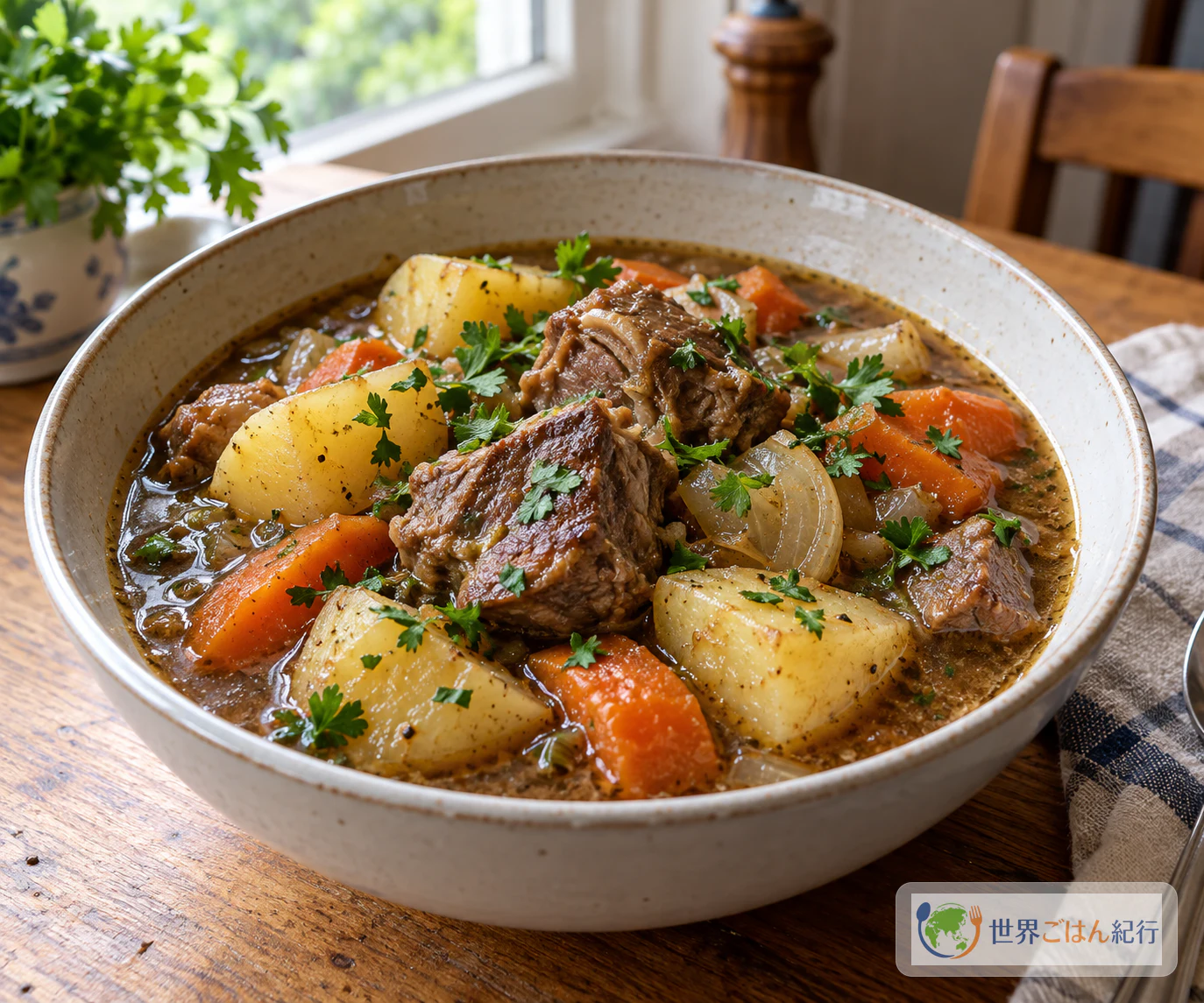
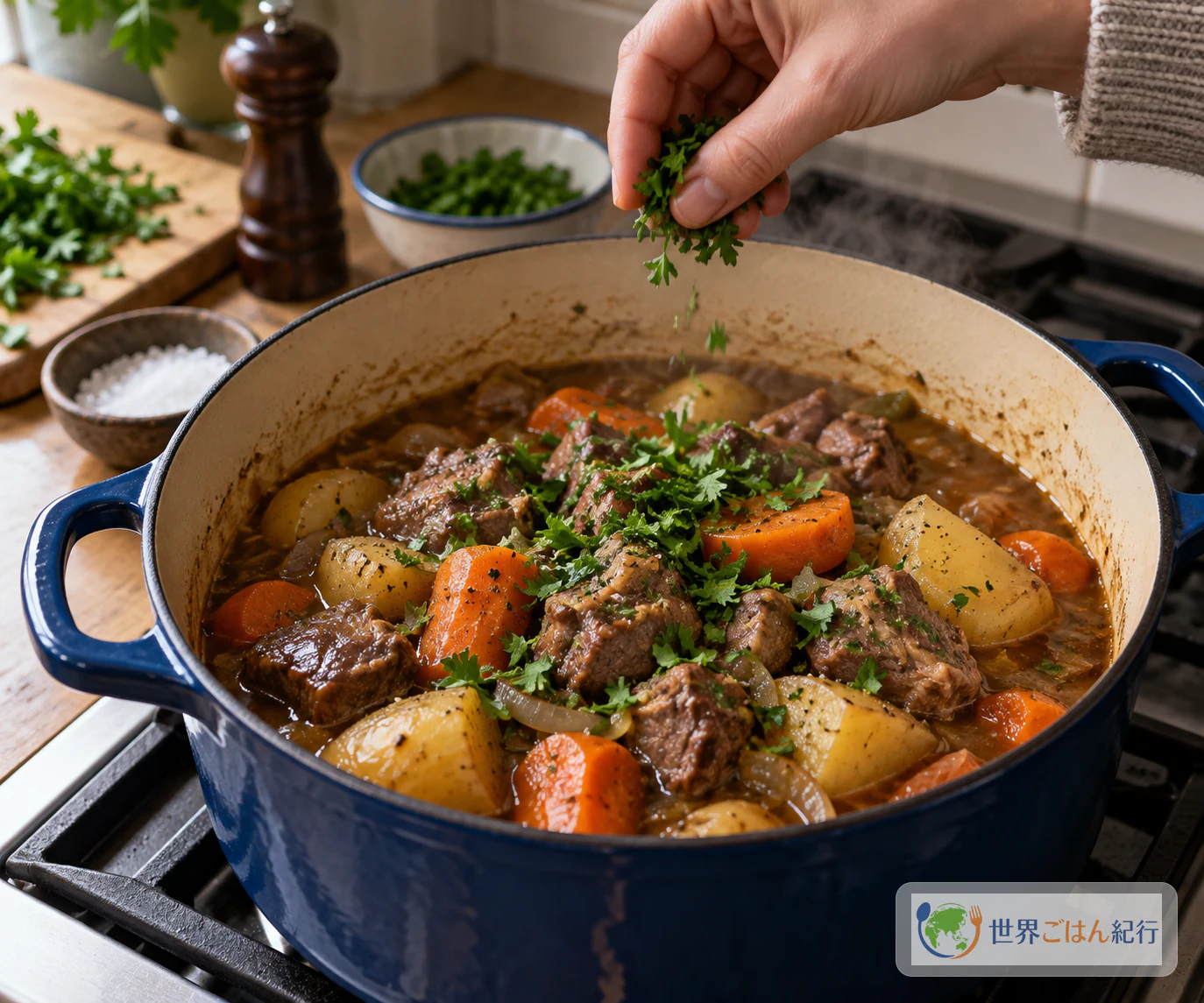
A deep bowl, steam rising from it, holds chunks of lamb, soft quartered potatoes and pieces of carrot sitting in their own savory liquid, with a scattering of chopped parsley on top. Irish stew is a home dish built on meat, potatoes and onion cooked slowly together in one pot, and served with the broth they have made.
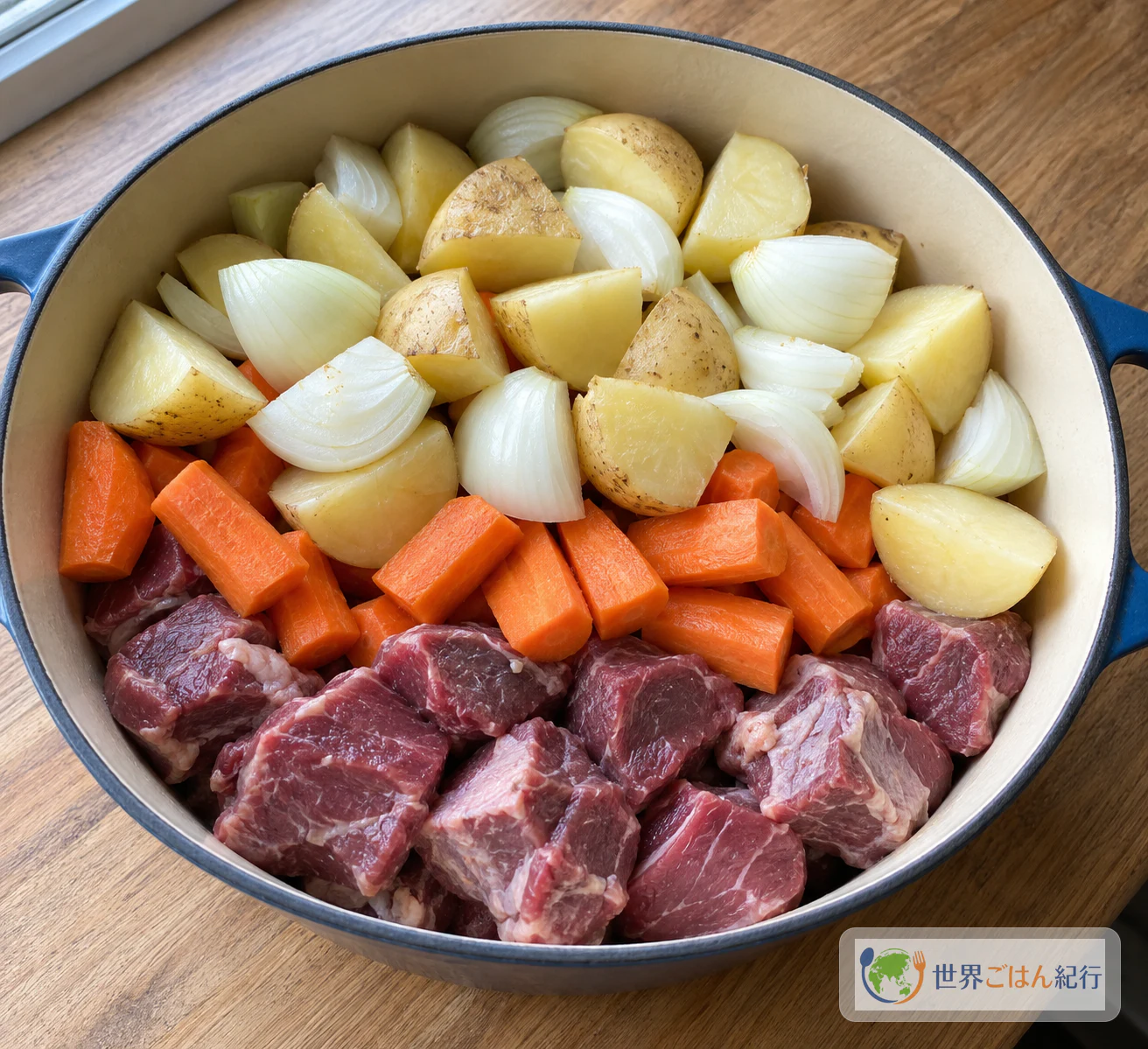
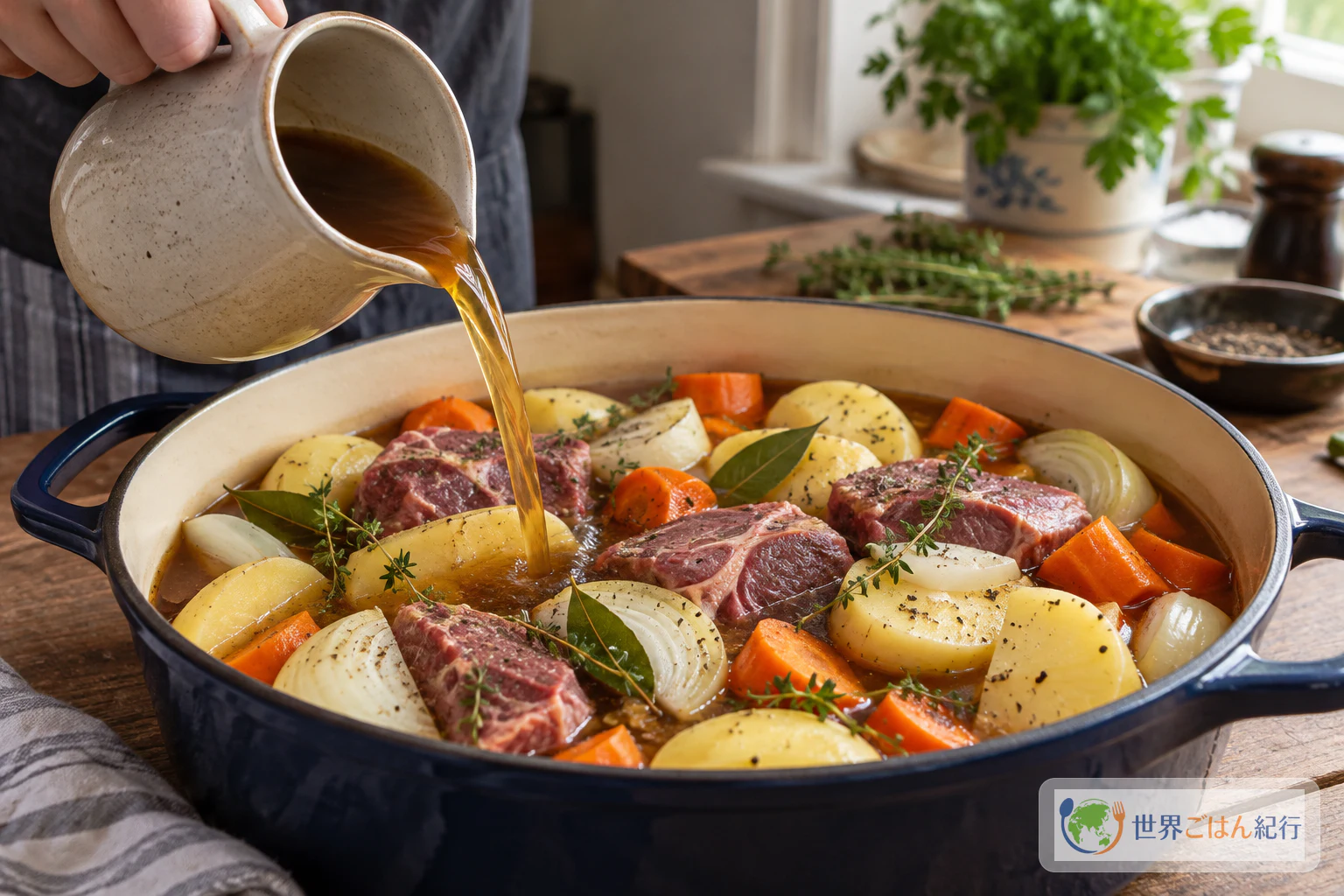
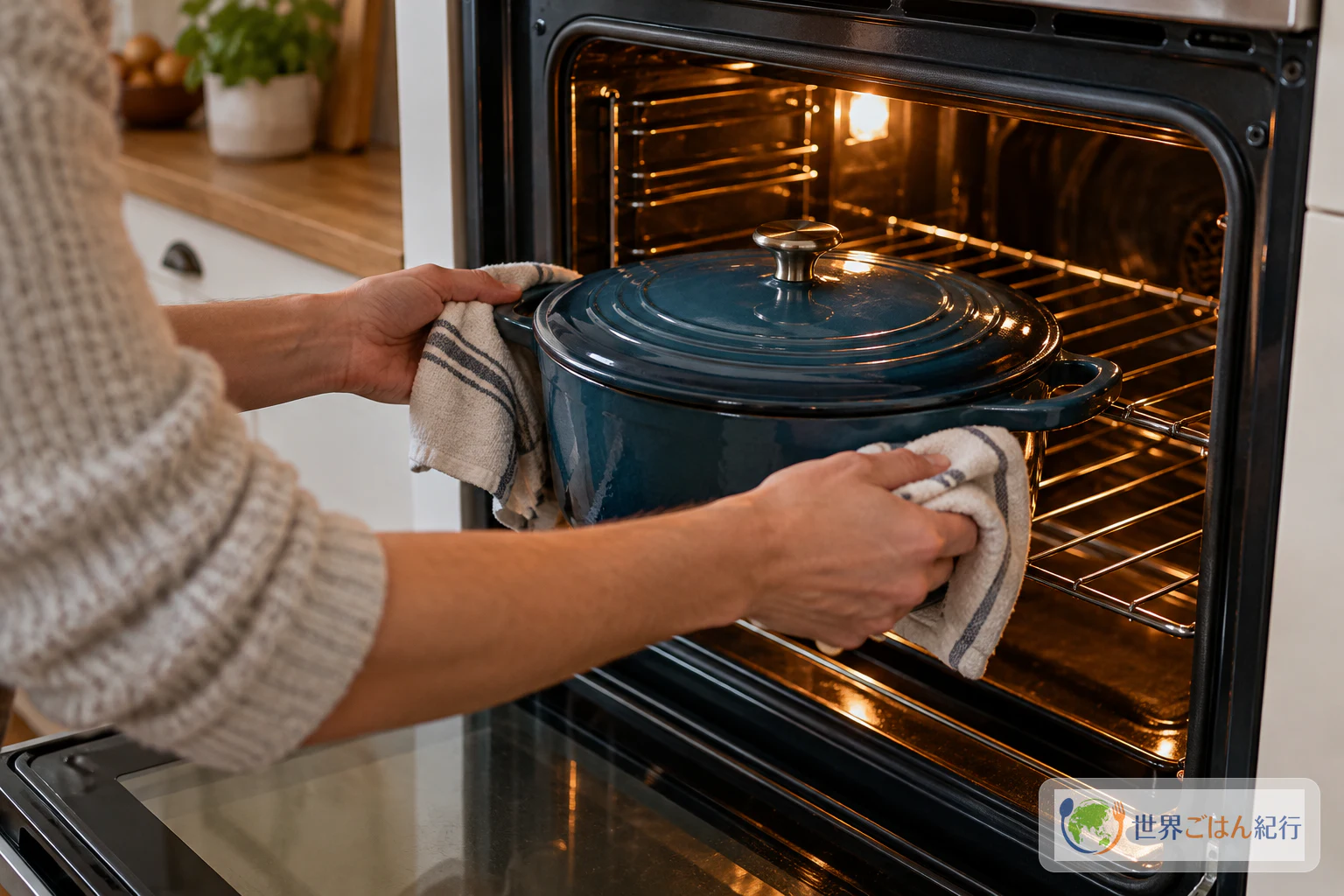
This recipe follows a four-portion version published by Mayo Ireland, a regional site for County Mayo in the west of Ireland, which gives the dish's Irish name as Stobhach. In this version the lamb is browned first, layered with potatoes, onion and carrots in a lidded casserole, covered with beef stock and braised in a 180°C oven. It is one regional recipe among many, not the single official form of the dish. Other Irish stews leave out the browning, use water instead of stock, or add different vegetables, and those differences are described further down.
If you are looking for the other well-known one-pot dish from Dublin, built on sausages and bacon, see Dublin coddle. It is a separate dish, not a variation of this stew.
Why Irish Stew Has More Than One Shape
There is no single fixed recipe for Irish stew. The Associated Press describes the basic form as a simple stew of meat, potatoes, onion and water, and notes that some cooks simmer the meat in the same pot without browning it at all. The same article mentions that cooks add root vegetables such as carrots, parsnips or turnips, and that what goes into the pot varies from one cook to the next.
The Mayo Ireland recipe sits on one side of that range: it uses carrots and beef stock, browns the lamb, and finishes the stew in the oven rather than on the stovetop. A recipe published on the Ireland page of the EU's "Europe on a plate" series goes further still, using lamb, potatoes and carrots together with celery, cabbage, leeks and pearl onions, and cooking the meat and vegetables in stages.
Rather than deciding which of these is "the real one," it helps to read them as different households' pots built around the same core of meat, potatoes and onion. This article keeps the Mayo proportions intact and does not mix in amounts or ingredients from the other recipes. Origins, specific historical dates and claims about the dish's social history are left out here, because the sources used do not establish them.
Ingredients: Serves 4, Following the County Mayo Proportions
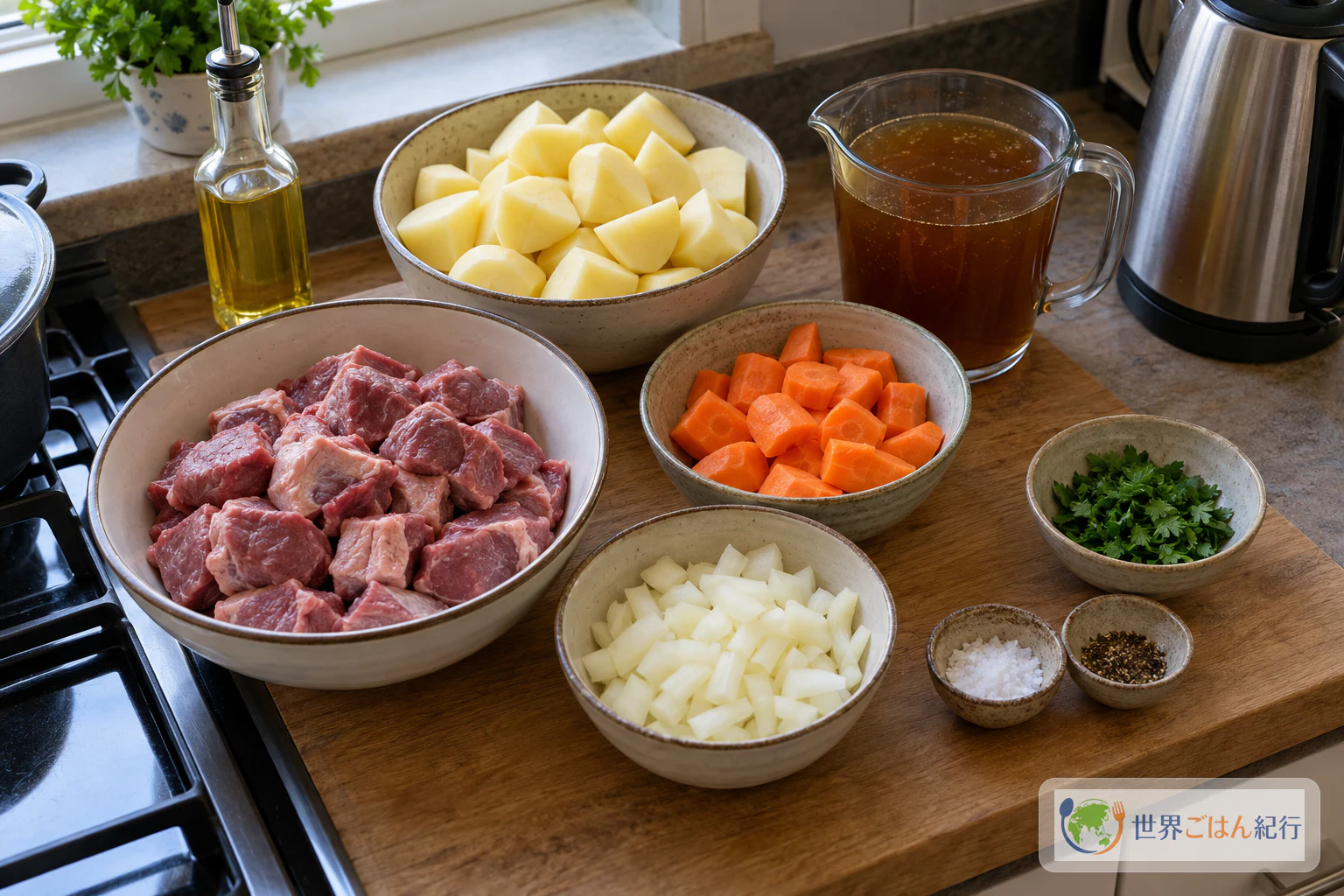
These amounts make four portions. Adjust the parsley, salt and pepper at the end. The hot water is not a measured ingredient; it only keeps the ingredients covered with liquid during cooking.
Check the label of any ready-made beef stock or stock cube for wheat, milk, celery and other allergens, as well as shared-facility statements. Keep the knife and board you use for raw lamb separate from those for other foods, or wash them before reuse. Japan's Ministry of Health, Labour and Welfare advises heating food so that the center reaches 75°C for at least 1 minute; for this stew, check the center of the lamb rather than relying on tenderness or cooking time alone.
Choosing the Lamb, Potatoes and Stock
Lamb. The recipe calls for 800 g of lamb cutlets with the bone removed, so the 800 g is the weight of the meat you will actually eat. If boneless lamb is hard to find, ask a butcher for lamb suitable for stewing and tell them you need 800 g of edible meat. Do not simply buy 800 g of bone-in lamb: once the bone is gone, the amount of meat will be smaller, and the balance against the potatoes and stock will shift.
Potatoes. Waxier potatoes tend to keep their shape through a long braise, while floury potatoes tend to break down at the edges and thicken the broth. Either is fine; choose by whether you want distinct pieces or a slightly thicker liquid.
Beef stock. If you use stock cubes or concentrate, make it up according to the package. Ready-made stocks vary in saltiness, which is why salt is added only at the end.
If you want to use beef instead of lamb. Beef can be cooked the same way, but it changes the flavor at the center of the dish. Treat it as a home adaptation, not as the Mayo recipe or a traditional version.
Equipment
- Large frying pan
- Lidded ovenproof casserole or heavy oven-safe pot
- Oven
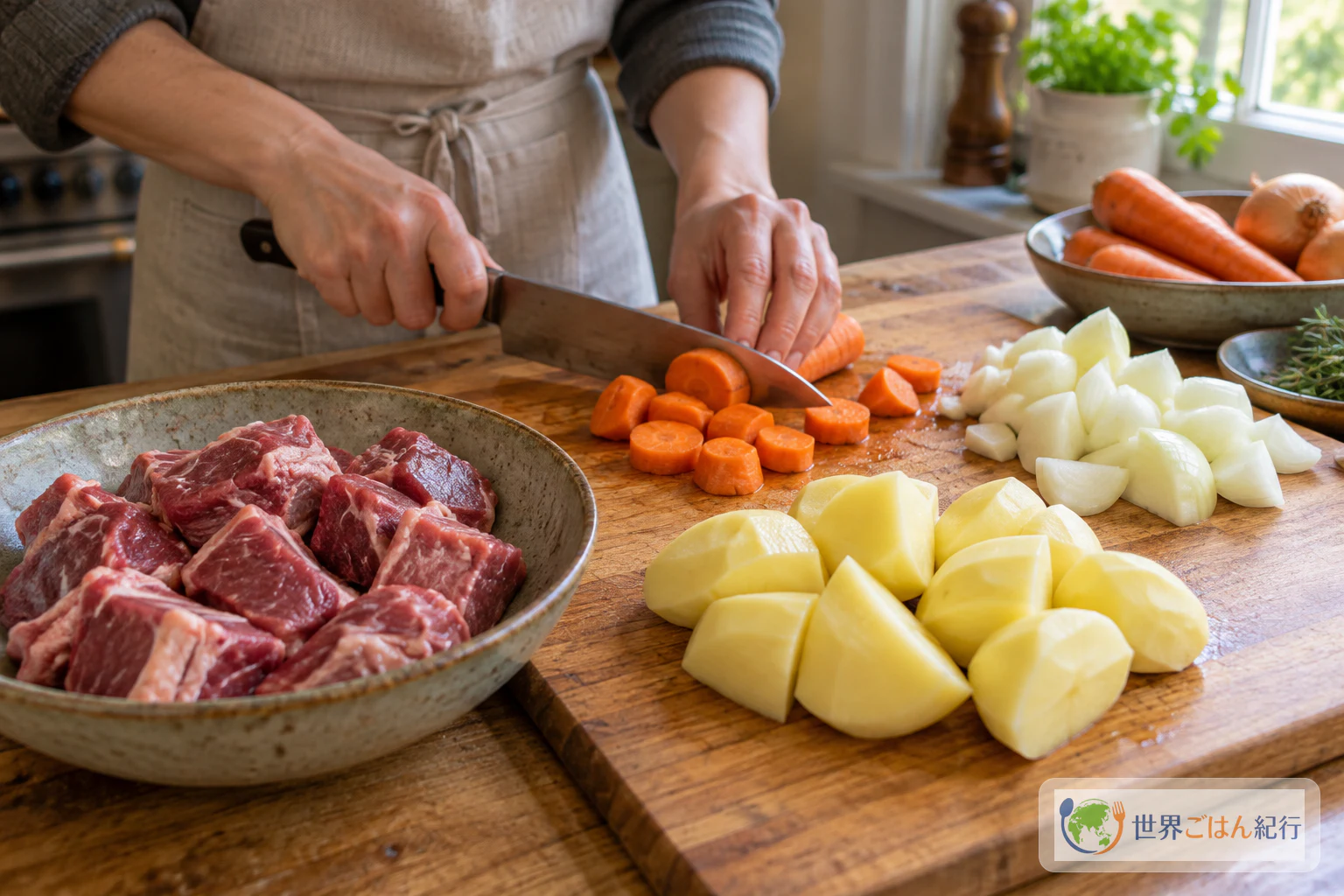
- Knife and cutting board (keep one set for raw meat)
- Tongs
- Kettle or jug for hot water
- Food thermometer, for checking the center of the lamb
Method: Brown, Layer, Cover and Braise
Mayo Ireland's page lists 20 minutes of preparation and 2 hours 20 minutes of cooking, but the method itself does not say how many minutes the casserole stays in the oven. Ovens and pots differ, so use the listed time as a guide only. The stew is done when the lamb and vegetables are tender and the center of the lamb has reached 75°C for at least 1 minute.
Troubleshooting: Dry, Tough, Broken or Too Salty
| Condition | Likely cause | What to do |
|---|---|---|
| The top layer is above the liquid | Liquid reduced during cooking, or the pot is wide and shallow | Add a little hot water until the ingredients are covered, then replace the lid |
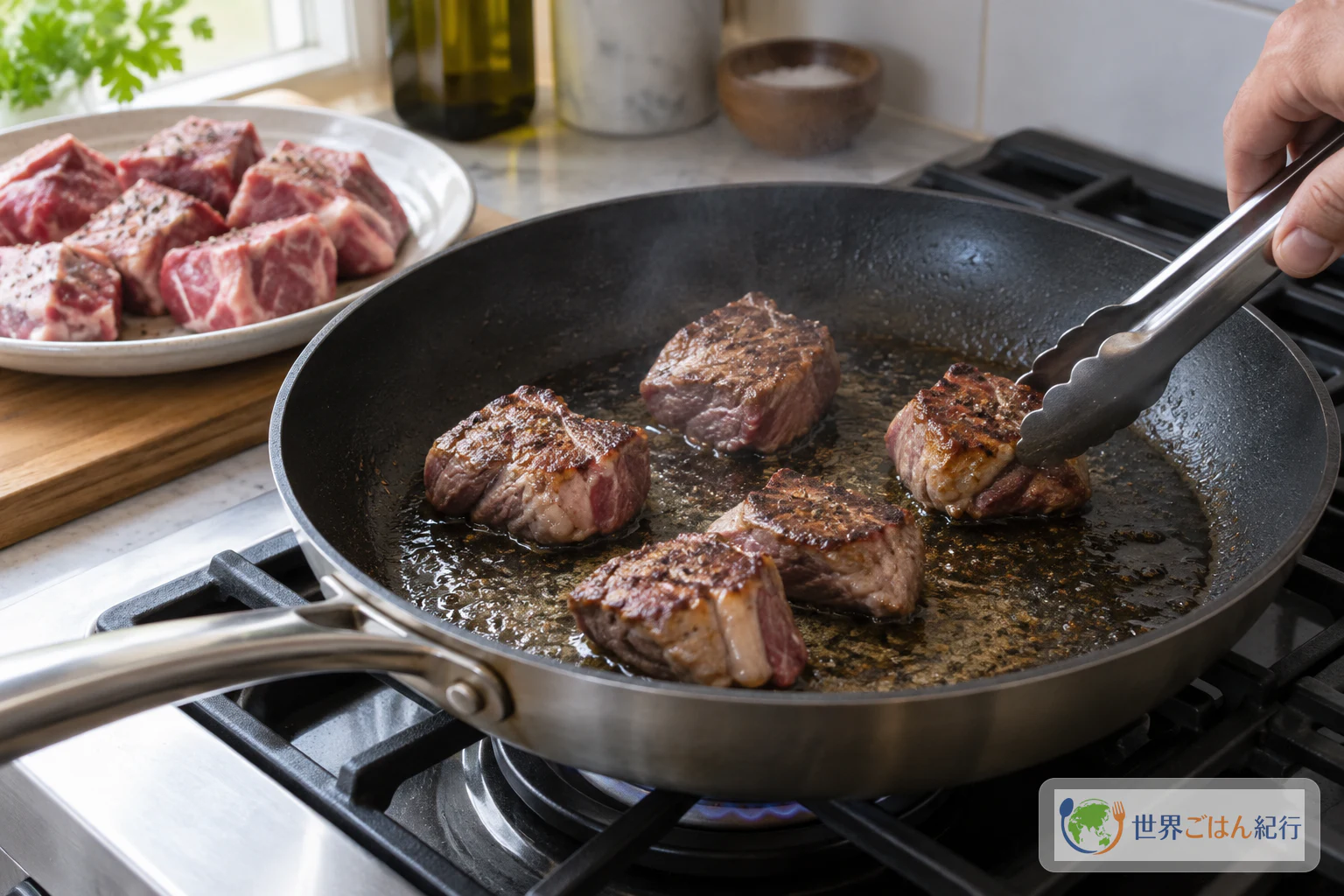
| The lamb didn't brown in step 2 | Too much meat in the pan at once | Brown in two batches as written, leaving space between the pieces |
| The lamb is still firm | Not cooked long enough for your oven and pot | Keep braising under the lid and check again; the listed time is a guide, not a guarantee |
| The lamb is tender but you haven't checked the temperature | Tenderness alone was used as the sign | Check the center of the thickest piece reaches 75°C for at least 1 minute |
| The potatoes have broken down | A floury variety, or the stew was stirred | Move the pot gently and serve with a ladle. Next time, choose a waxier potato if you want distinct pieces |
| The broth is too salty | Salty stock, or seasoned too early | Add salt only at the end and taste first. Next time, use a less salty stock |
| The broth feels thin | This is a broth-style stew | The recipe doesn't thicken it with flour or cornstarch. Floury potatoes will naturally thicken the liquid a little |
Serving and Leftovers
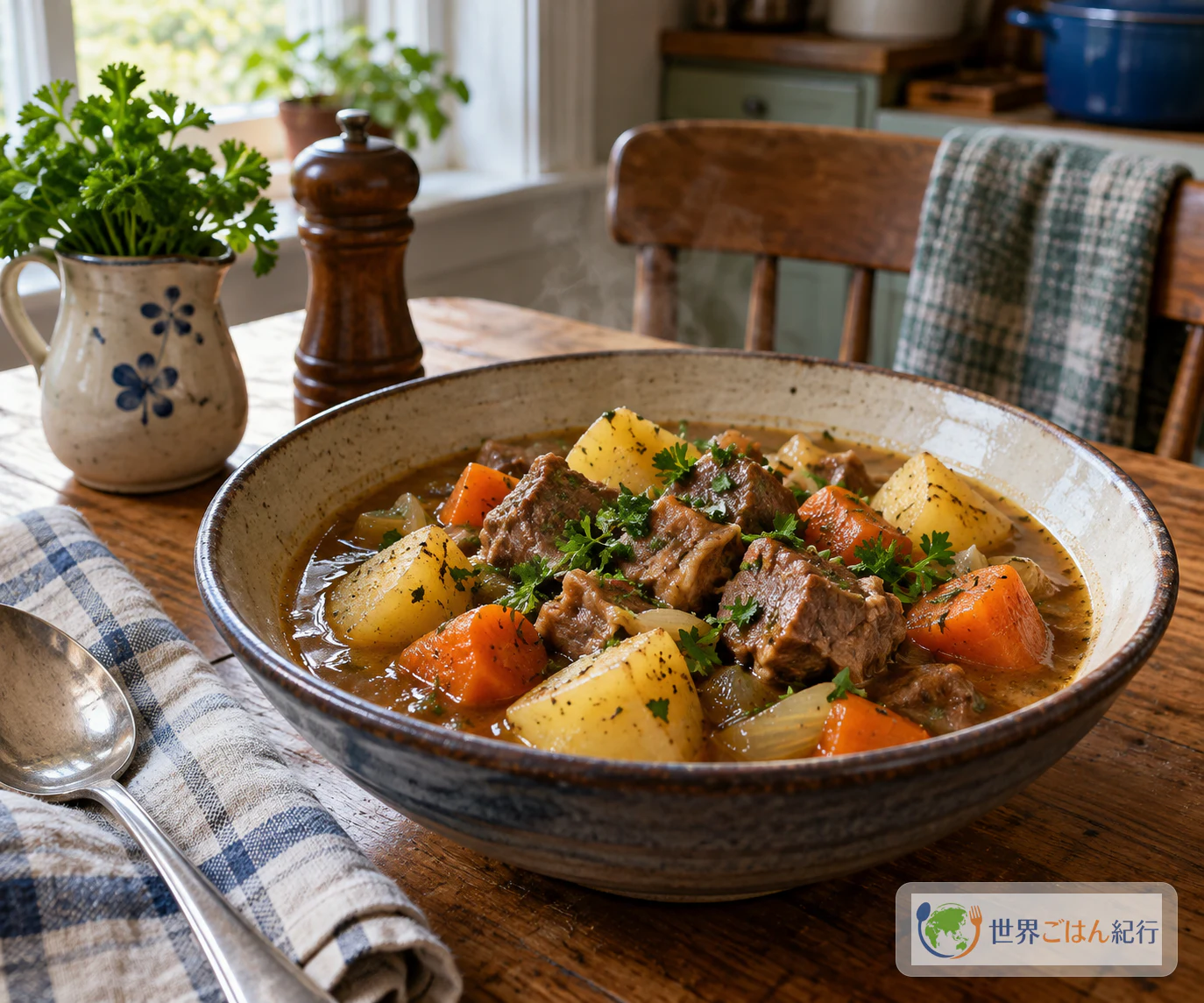
Ladle the stew into deep bowls with plenty of broth, so each portion gets lamb, potatoes and carrots together. The Mayo recipe does not call for a side dish. Anything you serve alongside is your own choice, not a required part of the dish. The Associated Press presents lamb stew as a familiar dish for winter and for St Patrick's Day tables, but it is not limited to a particular occasion.
For leftovers, follow general home food-safety guidance from Japan's Ministry of Health, Labour and Welfare: divide what remains into shallow containers so it cools quickly, and refrigerate it rather than leaving it at room temperature. When reheating, heat until the center reaches 75°C. That guidance is general, not specific to this stew, and no specific storage period is given here.
Other Irish Stews: Variations Worth Knowing
These are different recipes, not adjustments to the amounts above. If you try them, treat each as its own pot.
| Variation | Where it appears | How it differs from this recipe |
|---|---|---|
| Simple, unbrowned stew | Associated Press | Meat, potatoes, onion and water at the core; the meat can be simmered in the pot without browning |
| More root vegetables | Associated Press | Carrots, parsnips or turnips added by some cooks |
| Many-vegetable stew | EU "Europe on a plate – Ireland" | Lamb, potatoes and carrots with celery, cabbage, leeks and pearl onions, cooked in stages |
| With beer | Associated Press | Mentioned as a separate variation; replacing all or part of the stock with beer changes the flavor. Not part of the Mayo recipe |
| With beef | Home adaptation | Changes the central flavor; not the Mayo recipe or a traditional version |
If you want something closer to the simplest form, cook it as its own recipe from a source that gives that method, rather than removing the browning and stock from this one. Mixing steps from different recipes tends to leave a stew that matches none of them.
Frequently Asked Questions
What's the difference between lamb and mutton for this stew?
Both appear in Irish stews, but they are not the same meat, and they don't cook or taste identically. This recipe follows the Mayo version, which uses boneless lamb. If you use mutton or another cut, judge doneness by tenderness and the 75°C core check rather than by the listed time.
Do I have to brown the lamb?
In this recipe, yes. Browning in two batches is part of the Mayo method. Some Irish stews skip browning entirely and simmer the meat directly in the pot, as the Associated Press describes, but that is a different style of stew, not a shortcut for this one.
Are carrots traditional?
Carrots are part of the Mayo recipe, and the Associated Press mentions carrots, parsnips and turnips as additions some cooks make. Other versions keep to meat, potatoes and onion. Neither choice is the only correct one.
Can I use beer instead of beef stock?
The Associated Press describes beer as one variation of Irish stew, but the Mayo recipe uses beef stock and no beer. Replacing all or part of the stock with beer changes the flavor and makes it a different recipe, so it is not included in the ingredients here.
How is Irish stew different from Dublin coddle?
Irish stew is built on lamb (or mutton), potatoes and onion, here with carrots and beef stock. Dublin coddle is a Dublin dish centered on sausages and bacon. They are separate dishes.
Why doesn't the method give an exact oven time?
The Mayo page lists 2 hours 20 minutes of cooking, but its method only says to braise covered in the oven until done. Oven performance, pot size and the cut of lamb all affect the time, so use the listed time as a guide and check tenderness and the 75°C core temperature.
Sources
- Mayo Ireland, "Irish Stew, Recipes of County Mayo in the West of Ireland." The Irish name Stobhach; the four-portion ingredients and proportions; browning the lamb in two batches, layering with vegetables, braising covered at 180°C, topping up with hot water to keep the ingredients covered; the listed preparation and cooking times. https://www.mayo-ireland.ie/en/about-mayo/food-drink/food-irish-stew.html
- Associated Press, "For an Irish feast, traditional lamb stew is simple, hearty." The simple form built on meat, potatoes, onion and water; stews where the meat is not browned; root vegetable additions; variation between cooks, including beer. https://apnews.com/article/be4b39bfc1f7a49a81c7b520b67a405b
- European External Action Service, EU Delegation to Zimbabwe, "Europe on a plate – Ireland." A separate Irish stew recipe with lamb, potatoes, carrots, celery, cabbage, leeks and pearl onions, cooked in stages; used for comparison only. https://www.eeas.europa.eu/delegations/zimbabwe/europe-plate-ireland_en
- Ministry of Health, Labour and Welfare (Japan), "家庭でできる食中毒予防の6つのポイント" (Six points for preventing food poisoning at home). General home guidance on heating to 75°C at the center for at least 1 minute, keeping utensils separate, cooling in shallow containers and reheating; not specific to Irish stew. https://www.mhlw.go.jp/stf/seisakunitsuite/bunya/kenkou_iryou/shokuhin/syokuchu/01_00006.html