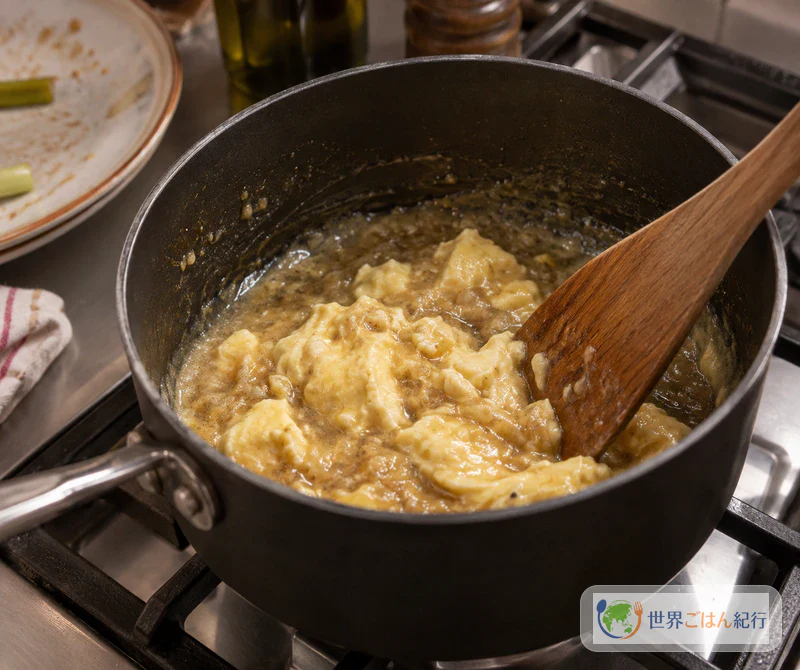
One piece of vegetable at a time, into the hot sauce
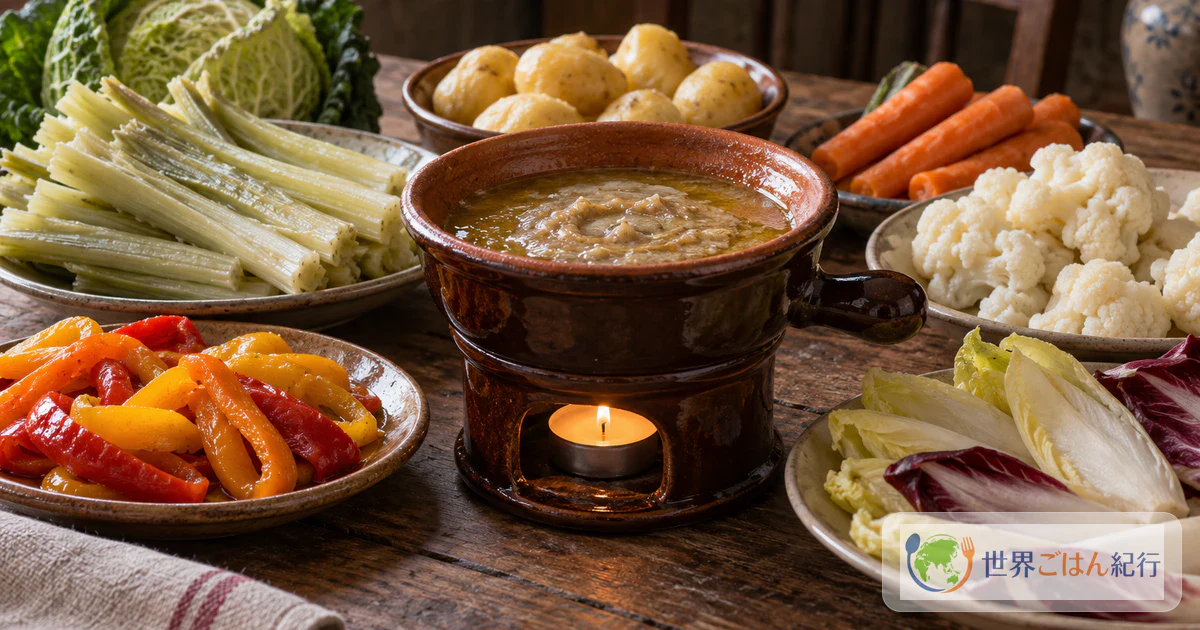
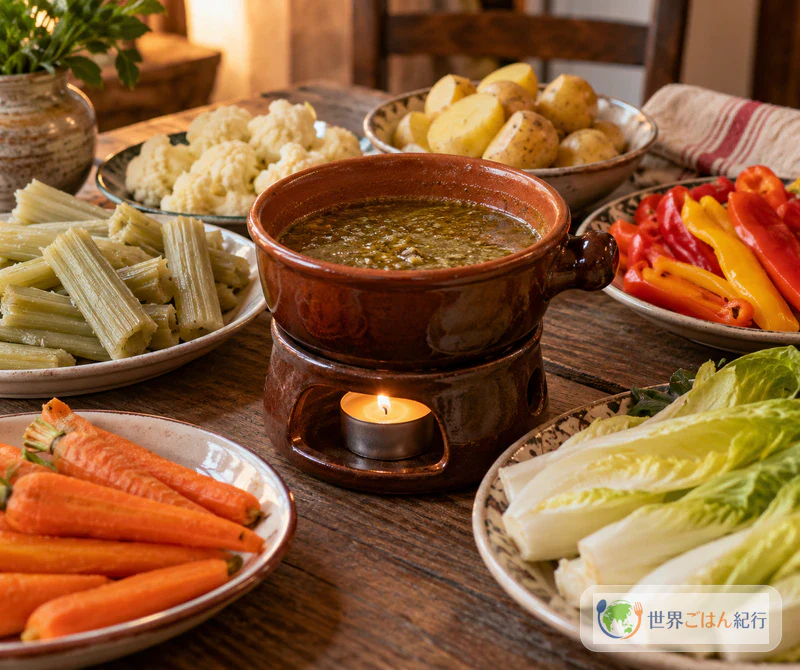
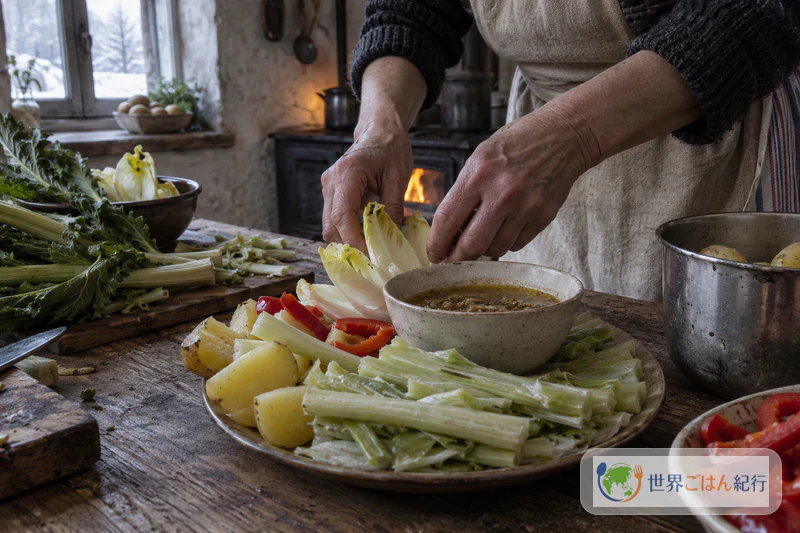
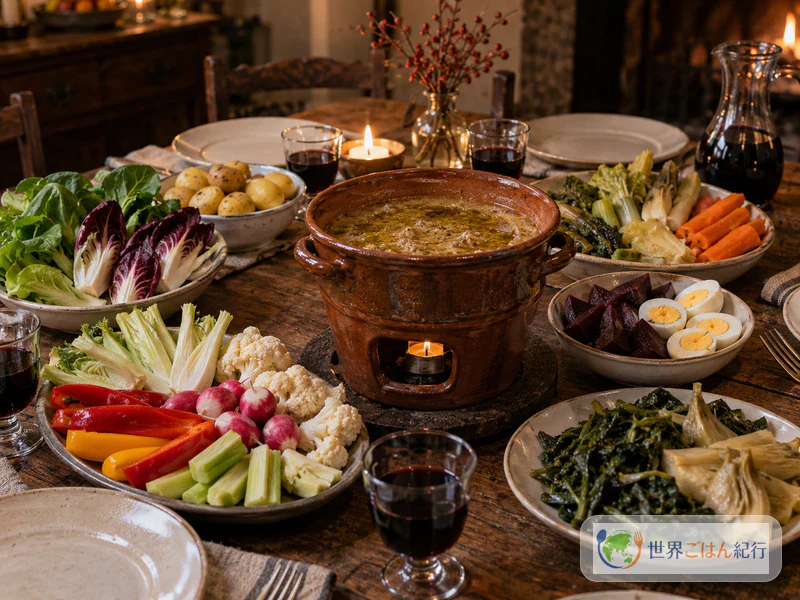
A winter table in Piedmont. In a low dish, a pale brown sauce warms slowly over a small flame. Around it are red bell peppers, raw celery, boiled potatoes, and cardoon. Whoever reaches out takes a piece of vegetable, dips it gently into the sauce, and carries it to the mouth. Not pouring it on, but dipping each piece of vegetable into the hot sauce. Bagna cauda is a dish where people gather around a sauce that does not cool and work through vegetables bit by bit.
Bagna cauda is a traditional warm sauce of Piedmont, written in Italian as Bagna càuda or Bagna caoda. The name means "hot sauce" or "hot bath," and garlic, anchovy, and olive oil are the core. Some versions add butter. It is presented as an autumn and winter dish eaten with a mix of raw and cooked vegetables. There are two hard points when recreating it in a home kitchen: balancing the saltiness of the anchovy, and softening the garlic without coloring it. Let the sweetness of the vegetables meet the saltiness of the anchovy, and be generous with the vegetables.
Bagna càuda is the Piedmontese name meaning "warm sauce." It is enough to remember that, as the name says, it is a dish eaten warm.
The road the anchovy took, and the origin in landlocked Piedmont
Piedmont is a region with no coast. Yet anchovy is a lead player in this dish, and it is explained that this is because there was a trade route along which salt was carried from Provence across the Alps, and anchovies arrived by the same distribution path. What the AIFB material tells is limited to the point that anchovies caught in the Golfo del Leone (Gulf of Lion) were carried in barrels together with salt. There is also a story that it was smuggling, but that cannot be treated as established fact. Fish from the sea traveled the salt road to the mountain kitchen. A dish that catches the strongly salted preserved fish with local vegetables and oil was born this way.
The regional material of the Piedmont region lists garlic, salt-cured anchovy, olive oil, and butter as basic ingredients. According to the same material, garlic was a crop whose cultivation was required by medieval statutes and rural proclamations. Olive oil, on the other hand, was not produced in large amounts in the region. It is not that using fish in a landlocked place is strange; the paths of salt, preservation, and trade, and a table that eats vegetables, happened to overlap. Thinking this way, the combination makes sense.
The sources do not allow us to gather the origin into the story of a single inventor. Material from the regional government presents it as a country dish celebrating the bottling of the new wine in late autumn. AIFB also touches on the possibility that it changed from Provençal anchoïade, so there are several explanations of the origin. What all of them share, though, is the picture of 19th-century farmers gathering around a pot on long winter nights. A communal winter dish around the end of the harvest is quietly connected to today's home cooking.
According to AIFB, the "ancioè" mountain people of Val Maira went from house to house selling anchovies in the cold season. Door-to-door selling, where even a small amount could be bought, is said to have spread the fish to each household.
A table of vegetables and dishes that reflects regional differences
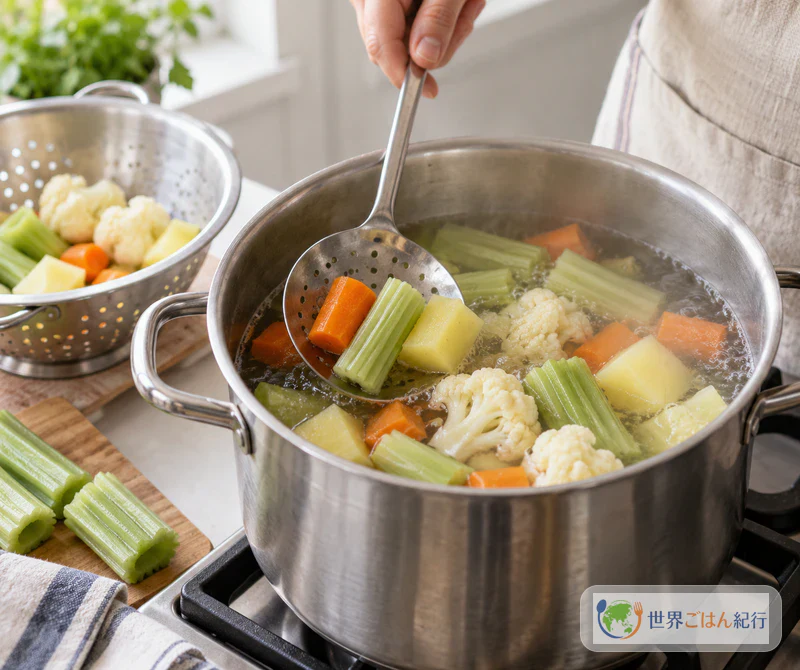
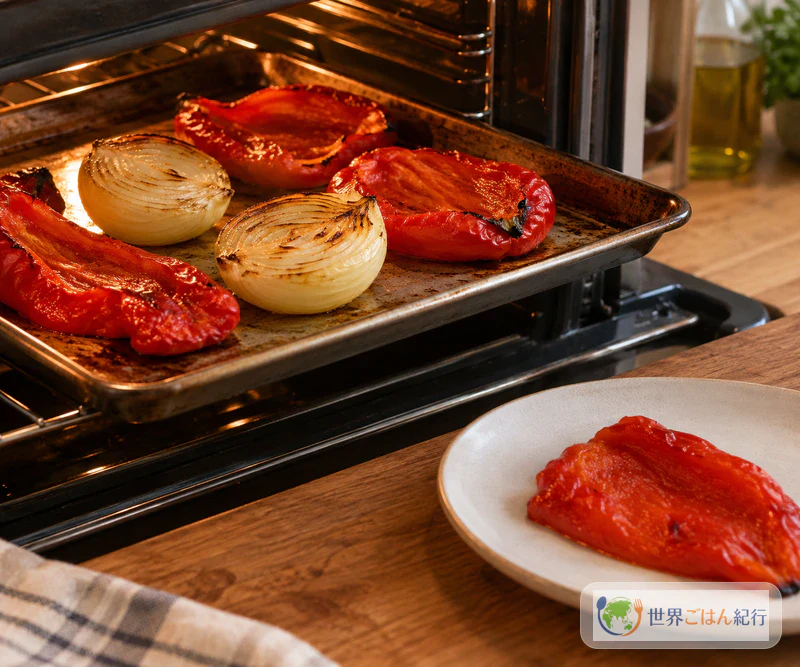
The traditional combination is cardoon, Jerusalem artichoke (topinambur), cabbage, endive or escarole, celery, carrot, and peppers. Among the cooked ones are potatoes, onions, beets, cauliflower, and roasted peppers. It is interesting that the names and places of origin of the vegetables, like the "cardi gobbi" of Nizza Monferrato or the cardoon of Chieri, create regional differences at the table. Putting raw crunch and the sweetness of cooked vegetables on one plate makes the expression in the mouth change constantly, even with the same sauce.
In Piedmont, a terracotta fujot (fojòt) holds the sauce for each person, and a flame below keeps it warm. According to AIFB's explanation, there are also manners for eating: do not double-dip a vegetable on the side you have bitten, do not scoop only the thick part of the contents, and do not make bread the main dipping vehicle. For a home kitchen, you can keep it warm in a small pot even without a dedicated fujot. Keep a heavy small pot over low heat and move small amounts into a hot dish. Setting a candle or open flame under an ordinary dish is not recommended. Even when using a dedicated item, always check that it sits stably and never take your eyes off the flame.
The star is not the sauce but the time spent eating autumn and winter vegetables little by little. Thinking of it as a sauce for eating winter vegetables makes the form of the dish easier to grasp. La Cucina Italiana also presents a cold summer version from Villanova d'Asti as "bagna fèrgia." The warm winter version cannot be called the only form. Cardoon and Jerusalem artichoke are hard to gather, so candidates that make up the texture, such as celery, cabbage, and lotus root or burdock, are introduced separately in a table later.
Ingredients (serves 4)
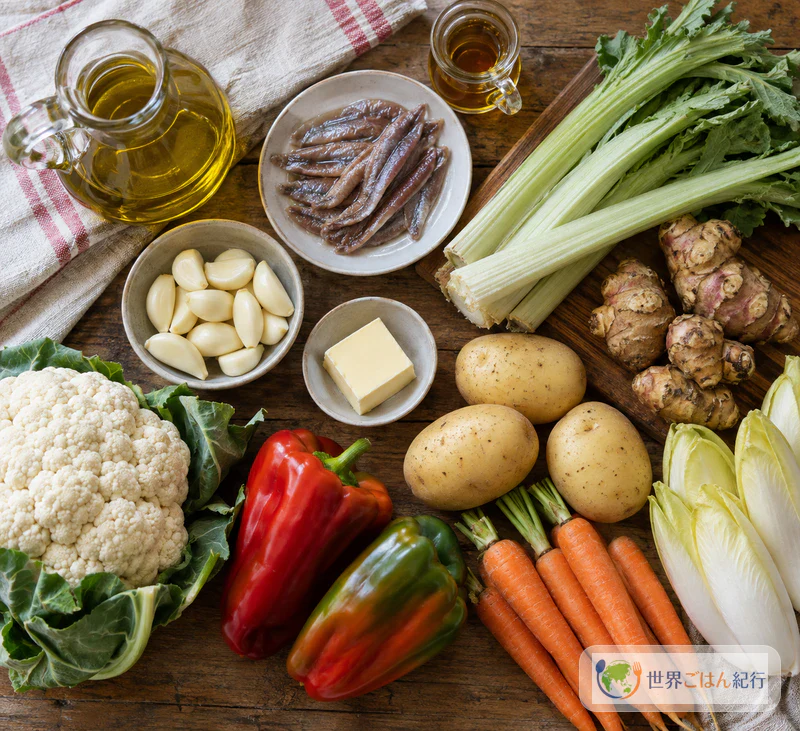
The formula for 12 people registered in 2005 by the Italian Cuisine Academy's Asti delegation in Costigliole d'Asti uses garlic, olive oil, walnut oil if possible, and salt-cured anchovy. The 4 servings here do not mechanically reproduce those ratios. Scaled to an amount that is easy to handle in a home pot, it is based on 6 cloves garlic, 150 g salt-cured anchovy, 240 ml olive oil, and 30 g butter. Saving the sauce is not assumed; it is designed so that you prepare plenty of vegetables and finish everything at the table.
Anchovy contains fish and butter contains dairy, so do not serve it to anyone with those allergies. Wash vegetables to be eaten raw under running water. If you use the same cutting board as for the cooked ones, separate the order of use and wash each time. A sauce of garlic mixed with oil is not a dish to bottle and keep at room temperature. Warm only what you will eat at the table, cool the rest quickly, and refrigerate.
Shopping: only what changes the outline of the flavor
Garlic, olive oil, potatoes, celery, bell pepper, and cabbage are things you can get nearby, and the skeleton of the dish can be made with them. The one shopping candidate that is distinctive to this dish is the anchovy. As the ingredient list says in generic terms, look for the fillet form. Salt-cured fillets are the form in which the step of breaking up the fish and dissolving it into the oil is easiest to read. With oil-packed fillets, add no salt and use them while watching the saltiness of the product. Start by looking for fillets.
The local fujot is a dish that warms one person's sauce, but in a home kitchen a heavy small pot on a low tabletop burner is enough to reproduce it. At the table put keeping warm first, and avoid treating it as if the heat of a candle will bring the oil to a simmer. More than a dedicated vessel, what matters is being able to keep it warm without scorching.
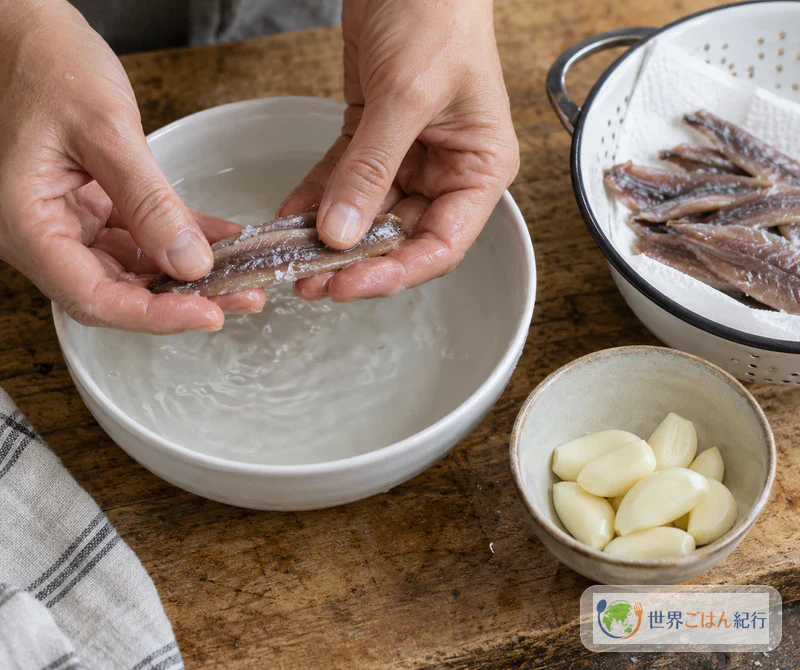
Check the label to see whether the anchovy is described as "fillet," "salt-cured," or "oil-packed." Paste is convenient because it has no pieces, but saltiness and acidity differ by product, so do not simply substitute it for the 150 g in the ingredient list. Rinse salt-cured fillets in water or red wine to remove surface salt before use.
How to make it
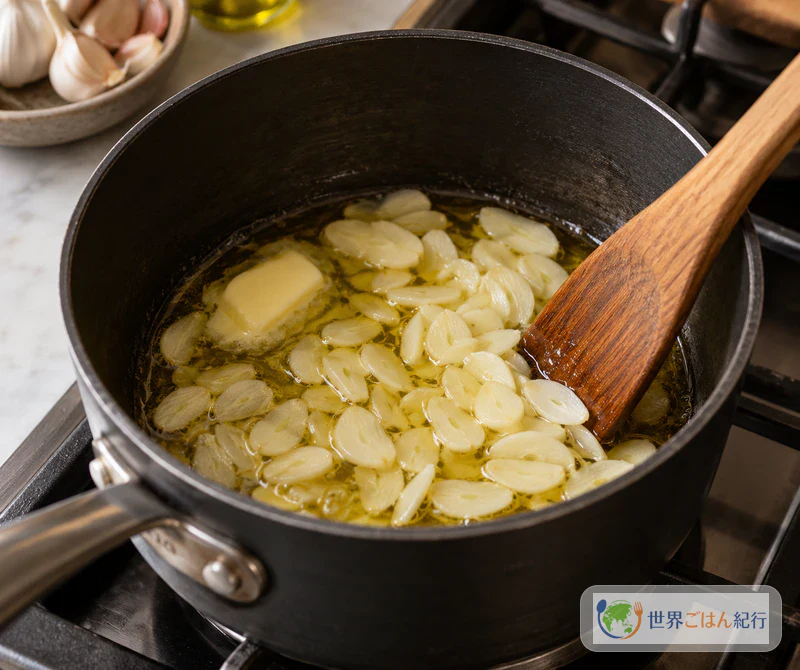
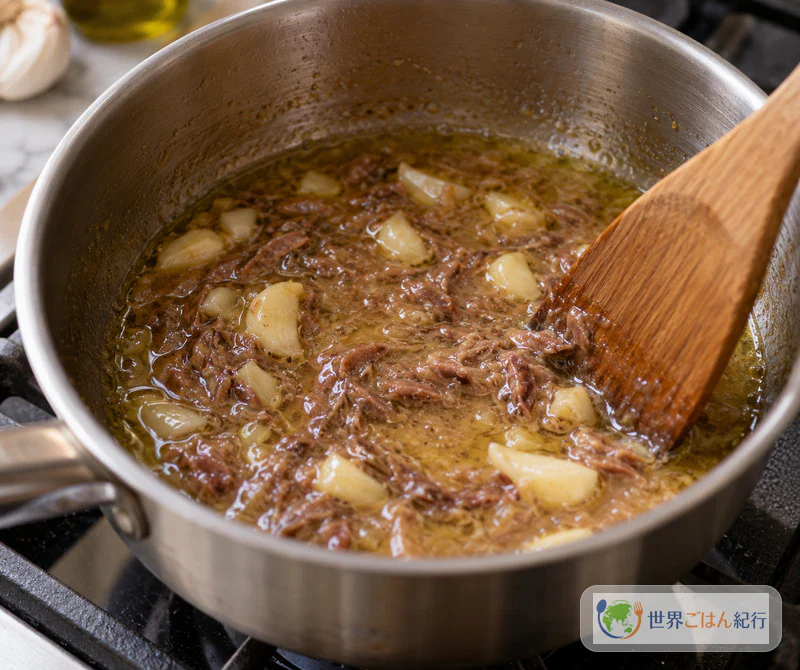
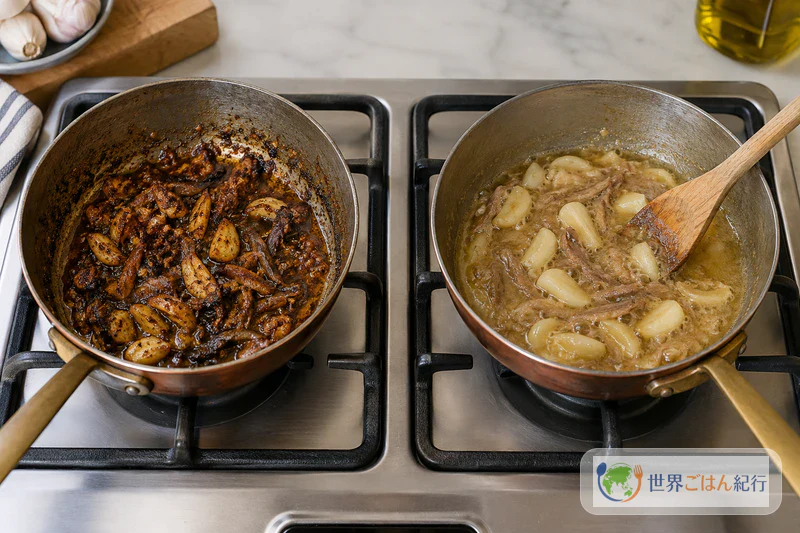
Bagna cauda is not a dish where you emulsify the sauce. It is a dish in which garlic and fish are melted slowly into oil over low heat. A good result is garlic that has not colored and is soft, anchovy that does not remain in pieces, and a flowing brown sauce. Dissolve, do not fry, is the central condition of the registered recipe, so watch the sound at the bottom of the pot and the color of the garlic rather than the heat itself. Mix raw and cooked vegetables to keep a difference in texture.
Vegetables you may substitute, and flavors to keep
Cardoon carries bitterness and a fibrous quality, and Jerusalem artichoke the crumbly texture of a root vegetable. Choosing by role works better than looking for the same vegetable name. Celery and cabbage cores make up the fibrous quality of cardoon, and lotus root or burdock make up the texture and earthy scent of Jerusalem artichoke in another form. Red beet is mainly for color and earthy sweetness, and swapping in red turnip makes both color and sweetness milder. Replace vegetables by texture, not by name. Replacing the anchovy, garlic, or oil with another seasoning makes it a different dish, however, so keep those three.
| Local ingredient | Candidate that is easy to get | What changes |
|---|---|---|
| Cardoon | Thick celery, cabbage cores | Bitterness and fibrous quality weaken. Do not overboil, to keep the bite |
| Jerusalem artichoke (topinambur) | Lotus root, burdock | Lotus root is crisp, burdock has a strong aroma, and neither has the sweetness of Jerusalem artichoke |
| Red beet | Cooked red turnip | Color is paler and the earthy sweetness is lighter |
| Endive, escarole | Chicory, outer lettuce leaves | The strength of bitterness changes. The sauce is strong, so choose tender leaves |
| Fujot | Heavy small pot, tabletop burner | Heat retention for one person drops, so move small amounts to keep the temperature |
Variations that go beyond the basic form, combining what is in local sources and what is easy to try in a home kitchen, can be organized as follows. Walnut oil adds toastiness in line with the registered recipe, and the basic form works without it. Garlic soaked in milk is a preparation from regional sources that softens the sharpness of garlic, but the milk used for soaking is not used. The Piedmont region material also lists adding a little cream to make it "milder." The taste of oil and fish becomes weaker, however. Bagna fèrgia is introduced as a cold summer version from Villanova d'Asti, a separate way of eating, and it is not made at the same temperature as the winter version. The warm winter version and the cold summer version are separate ways of eating. In addition, regional material explains that it can also season spaghetti. In that case, thin it with the pasta water and add no salt. Polenta, which AIFB lists as a finish at the table, takes the place of using bread to soak up all the sauce. Finishing with egg is a local custom of eating up the sauce at the bottom of the pot, but it is not stored half-raw.
| Variation | What changes | Taste and when to use |
|---|---|---|
| Add walnut oil | Replace 15 ml of the olive oil | Adds toastiness. A small amount is enough at first |
| Soak garlic in milk | Soak peeled garlic for 2 hours and dry it | Milder sharpness. Do not put the milk in the sauce |
| Add a little cream | Add 1 to 2 tbsp at the finish | Rounder flavor, but the outline of oil and anchovy also weakens |
| Make it bagna fèrgia | Cool the sauce and combine with raw vegetables | Nearly a separate dish, as the summer version of Villanova d'Asti |
| Use with pasta | Toss a little with boiled spaghetti and thin with pasta water | A plate for days when it is hard to serve vegetables. Taste before adding salt |
| Serve with polenta | Put fried polenta on a separate plate | Soaks up the sauce less than bread, and becomes the staple of the table |
| Finish with egg | Add egg at the end of the meal and set it completely | Does not waste the sauce at the bottom of the pot. Do not store it |
Scorched, too salty, watery vegetables
When the garlic has turned brown, the bitterness cannot be fully removed, so remove the scorched parts. If bitterness remains, make it again in a separate pot from low heat with new garlic. Since scorching cannot be undone, lowering the heat is the best prevention. If the anchovy remains in pieces, do not raise the heat; crush it with a wooden spoon and keep heating at low temperature. Even if the oil looks separated, bagna cauda is a flowing sauce by nature, so there is no need to treat that as abnormal. Stir gently before serving. If it is too strong, add warmed olive oil a little at a time, and if it is too salty, add no salt and increase the amount of vegetables.
| Condition | What is happening | How to fix |
|---|---|---|
| Garlic is brown and bitter | Heat is too high and it fried in the oil | Remove the brown parts. If bitterness remains, make new garlic in a separate pot, and do not mix in the scorched sauce |
| Anchovy pieces remain | Heating was short, or the pieces were large | Do not raise the heat; crush with a wooden spoon and heat in 5-minute steps |
| Oil looks like it is floating | The sauce has cooled, or the ingredients have little moisture | Warm it over low heat before serving and stir slowly. Do not thin it with a lot of water |
| Too salty | Anchovy was not desalted enough, or salt was added | Add no salt; add a little unsalted vegetables and olive oil |
| Garlic is too sharp | Preparation was short, finished before it softened | If it is not scorched, soften it over very low heat. Next time use the milk soak |
| Vegetables release water | Boiled vegetables were stacked into the hot sauce | Drain the vegetables well and let them cool before putting them on the plate. Do not return water to the sauce |
| Cardoon is hard | Strings remained, or cooking time was short | Remove the strings again and boil more. Do not make people chew the fibers |
In the finished sauce, the garlic crushes under a wooden spoon, no pieces of anchovy can be seen, and it flows slowly when you tilt the spoon. A burnt smell, smoke, or boiling bubbles are not signs of completion. Ideally, when you dip a vegetable, the sauce clings thinly to the surface and enough flow remains for it to drip onto the plate.
Back to the Piedmont winter table
The crunch of raw celery, carrot, cabbage, and endive, and the sweetness of boiled potato, cardoon, and cauliflower. As you carry them to your mouth by turns, you end up comparing the seasons of vegetables with one sauce. In local accounts, autumn and winter vegetables and young red wine, especially young Barbera, are tied to the memory of this table. Do not pack the vegetables for 4 onto the plate at once. Add only the amount that does not lower the temperature of the sauce, each time.
The regional material says leftover sauce can go to spaghetti, polenta, or a fully cooked egg. Wiping the bottom of the pot with bread cannot be written up as traditional manners. If you finish it, choose egg or polenta. Pass the leftovers on to egg or polenta. If you are curious about dishes that let rice absorb a sauce, take a look at risotto, which treats northern Italian rice dishes. If you are looking for another Italian dish that uses up raw vegetables, Tuscan panzanella is a related plate.
The custom of gathering the thick part left at the bottom of the pot with egg is described as a local way of eating it all. At home, do not leave the egg half-raw; set it completely and eat it on the spot.
Frequently asked questions
Can I make it without a fujot?
You can. Set a heavy small pot on low heat on a tabletop burner and keep the temperature without boiling. Do not leave a large pot out on the table; move only what you will eat into the small pot. Do not hold a non-candle-safe vessel over a flame.
Can I substitute anchovy paste?
You can. But saltiness and acidity vary greatly between products, so do not think of it as the same amount as 150 g of fillets. Add in teaspoon amounts, adding oil little by little, and adjust by tasting. The closest to this recipe's method of melting fillets at low temperature is salt-cured or oil-packed fillets.
Can I make the garlic smell milder?
Soaking it in milk for 2 hours and wiping it dry reduces the sharpness. In modern practical recipes, there are cases of using less garlic than the registered large-batch formula. Reducing the garlic makes the sauce lighter in body, however. Do not try to make up for that by increasing the anchovy.
Can I serve all the vegetables raw?
You can eat it with raw vegetables only. Mixing in cooked vegetables such as potato, cardoon, onion, beet, and cauliflower gives the table range. So as not to bring the moisture of the vegetables into the sauce, drain boiled ones well before plating. Hard vegetables should be sliced thin or cooked before serving.
Can I eat leftover sauce the next day?
Warm only what you will eat, move the rest into a shallow clean container, and refrigerate within 2 hours of cooking. Do not store it at room temperature. Do not keep it bottled at room temperature or leave garlic submerged in oil for long periods. When eating, reheat it thoroughly, and do not eat it if there is anything off in smell or appearance. The Ministry of Agriculture, Forestry and Fisheries of Japan advises reheating prepared food thoroughly before eating and washing ingredients well. FoodSafety.gov advises putting cooked food in shallow containers and refrigerating within 2 hours.
Is it wrong to serve bread?
In the traditional way of eating introduced by AIFB, bread is avoided as a dipper because it soaks up too much sauce. It does not forbid putting bread on a separate plate for the convenience of the person eating; the point is that the center of the tradition is the vegetables. If you use bread, do not use so much that it soaks up everyone's sauce.
Sources
- PiemonteIS-Eccellenza Piemonte, "BAGNA CAODA" — regional government material. Ingredients, low-temperature cooking, origin, combinations of vegetables. Accessed and checked 2 October 2026.
- Associazione Italiana Food Blogger, "La Bagna Caoda" — the salt road, anchovy distribution, regional differences, table manners, introduction of the registered recipe. Accessed and checked 2 October 2026.
- Cucina Regionale Italiana, "Bagna Caoda – ricetta depositata alla Camera di Commercio" — ingredients and steps of the 2005 registered recipe, notes on modern garlic amounts. Accessed and checked 2 October 2026.
- La Cucina Italiana, "Bagna Càuda: The Traditional Recipe" — English-language introduction of the registered recipe, the step of melting at low temperature, vegetables, egg at the bottom of the pot. Accessed and checked 2 October 2026.
- VisitPiemonte, "Fruits and Vegetables" — Piedmont's vegetables and the seasonality of bagna cauda. Accessed and checked 2 October 2026.
- Ministry of Agriculture, Forestry and Fisheries of Japan, "Clostridium botulinum (bacteria)" — cautions on reheating prepared food, washing ingredients, and room-temperature storage. Updated 17 October 2025. Accessed and checked 2 October 2026.
- FoodSafety.gov, "Bacteria and Viruses" — storage guidance on moving cooked food to shallow containers and refrigerating within 2 hours. Accessed and checked 2 October 2026.