The moment the heat goes off, the egg becomes a sauce
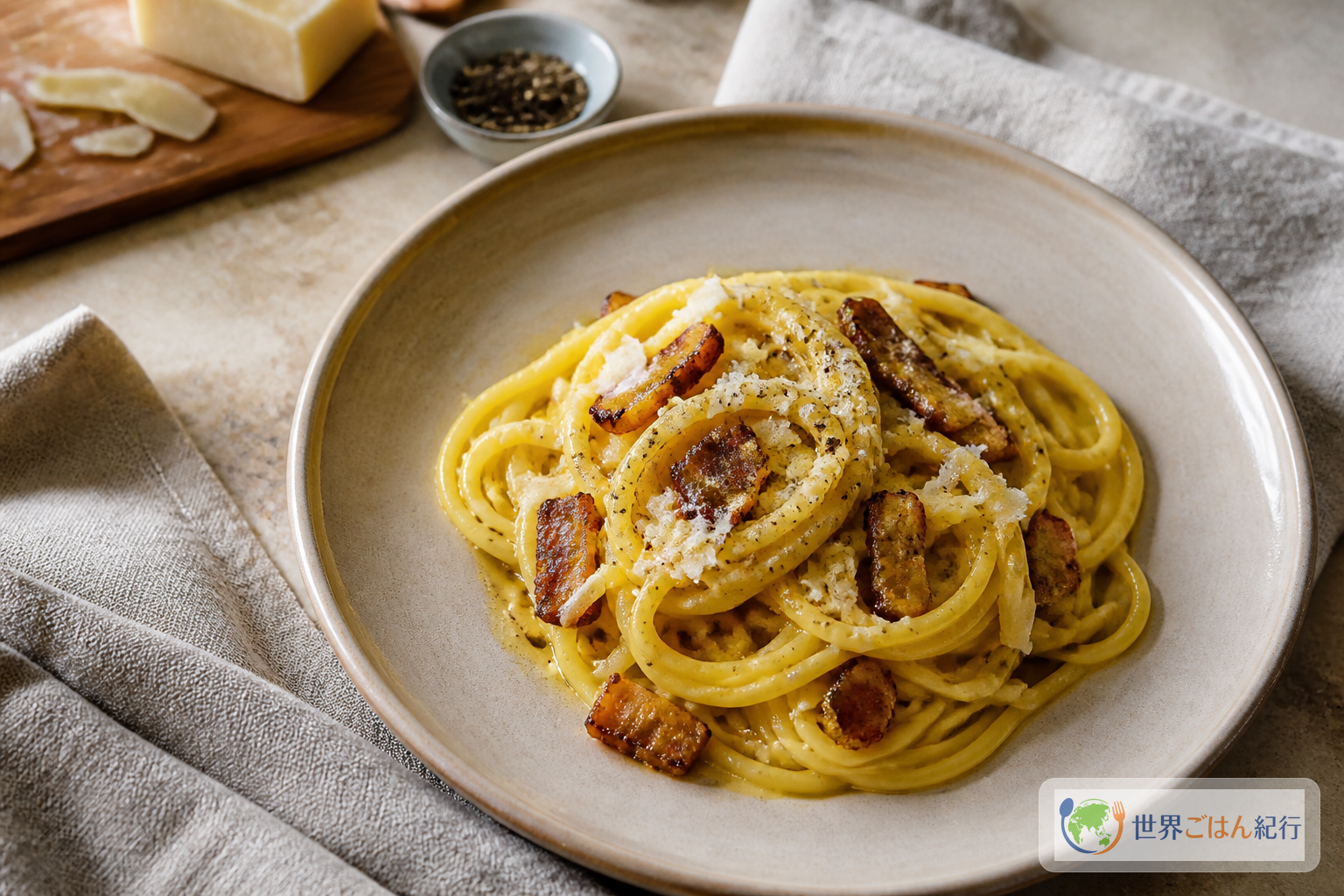
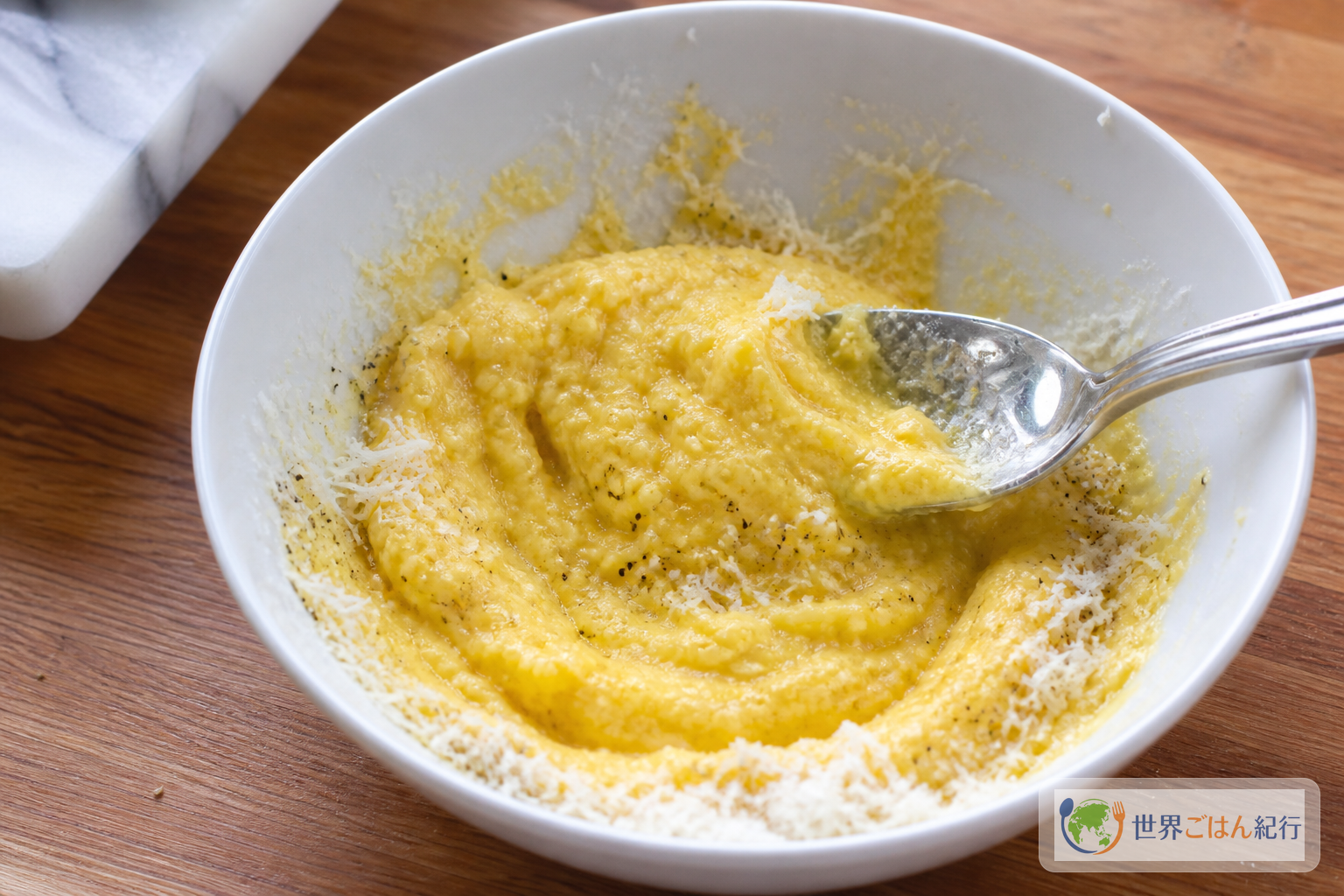
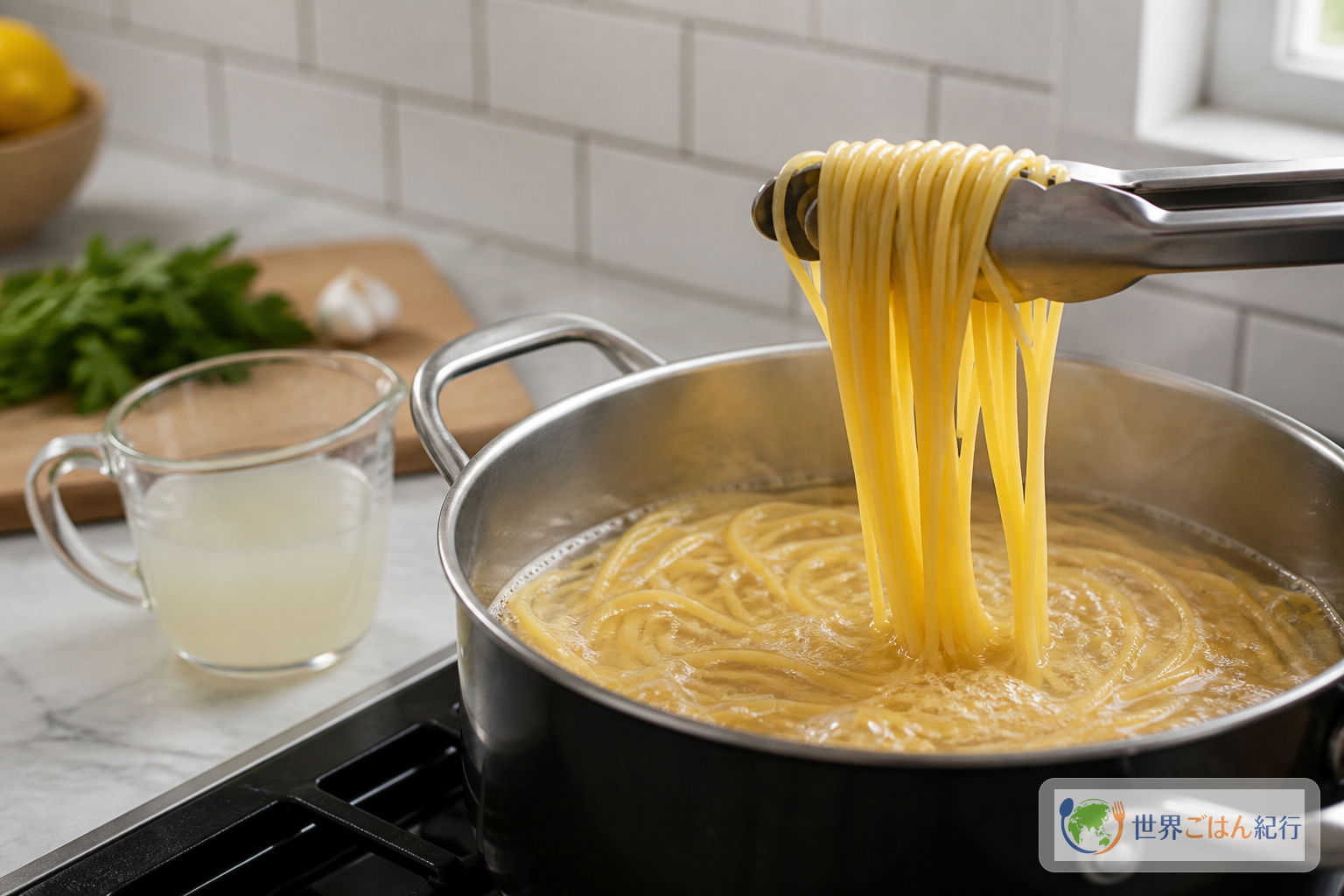
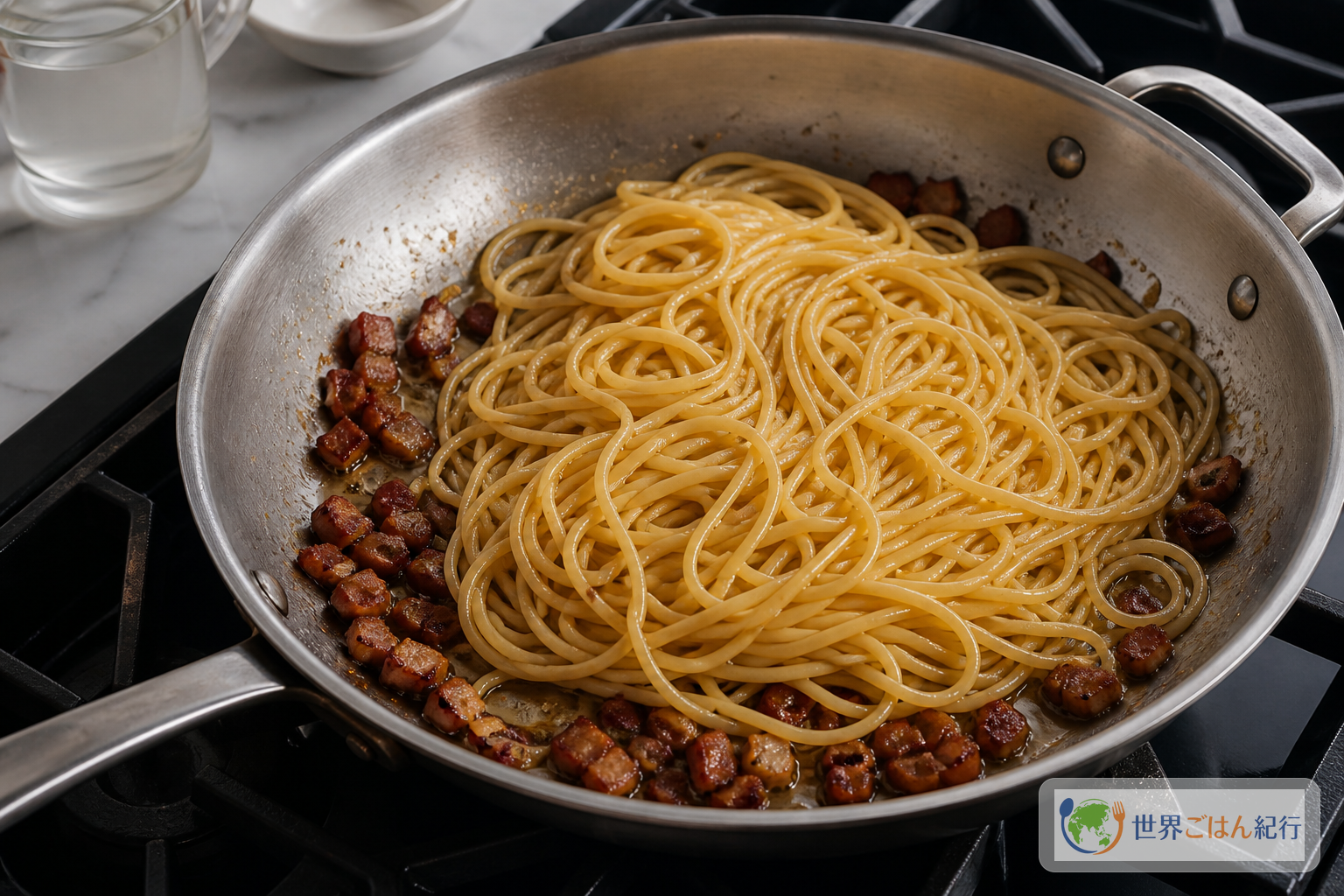
Drain the spaghetti and move it into the skillet where the pork fat is waiting. The egg doesn't go in yet. First the noodles take on the pan's residual heat, with the burner off, and the moisture of the pasta water, and only then do you add the paste of egg yolks and cheese.
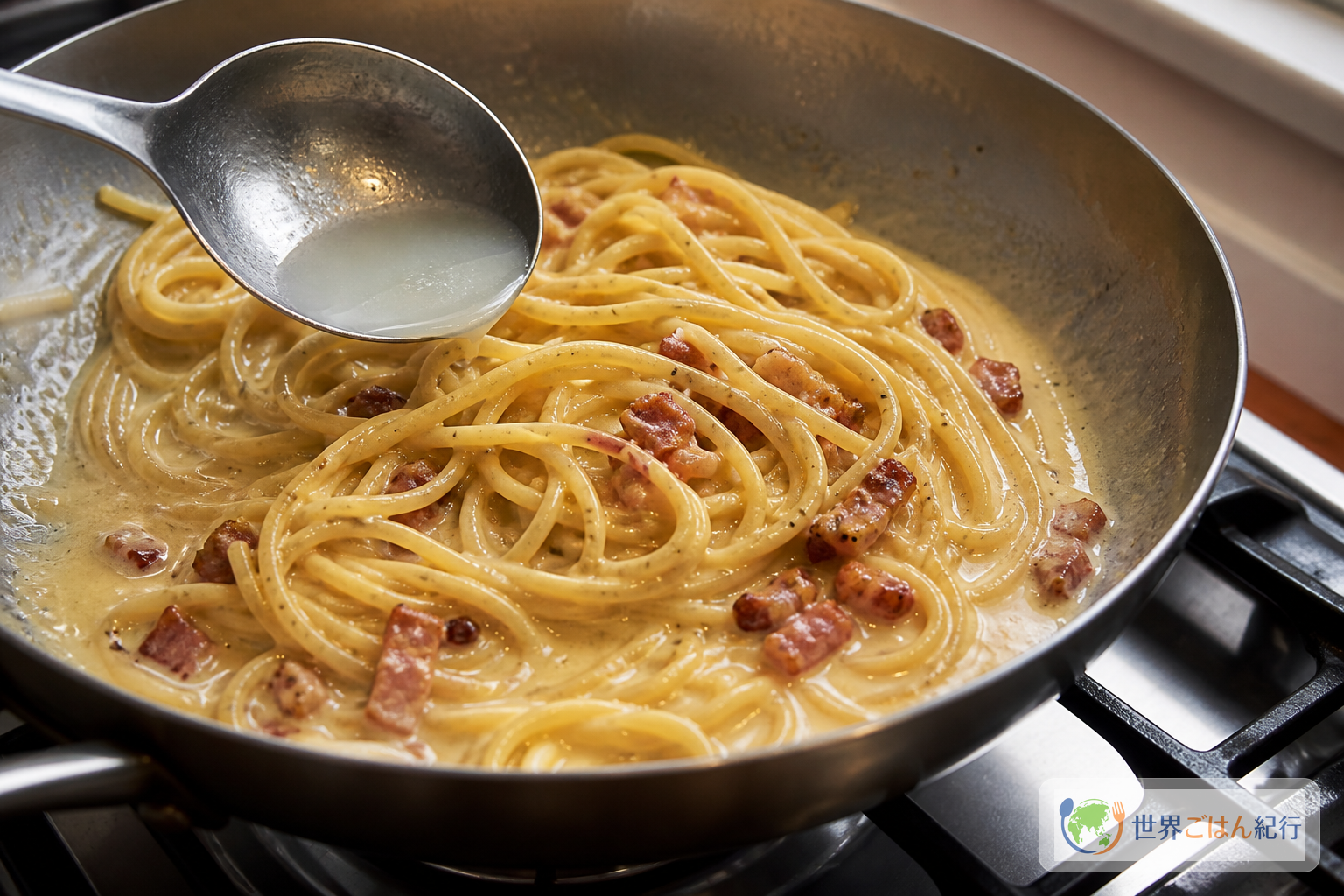
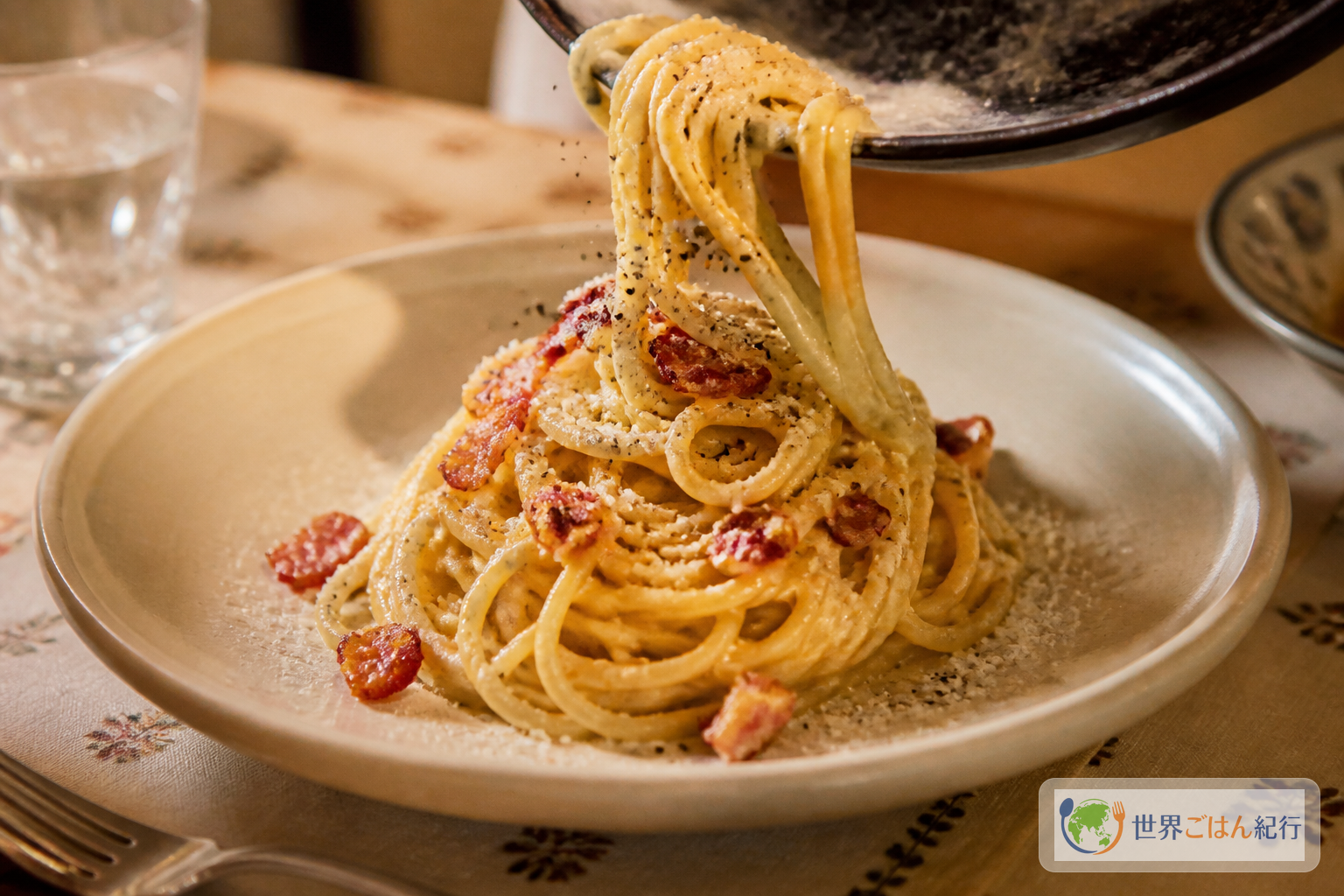
Keep the tongs moving without a pause, and the yellow egg doesn't turn into curds; it spreads thinly over the surface of the noodles. The saltiness of the cheese, the fat rendered from the pork and the aroma of black pepper come together, and even after plating, the sauce stays thick enough to cling as you lift the noodles. Carbonara isn't a dish where you cook the egg. It's a dish where you let heat escape little by little, bind fat and water, and turn the egg into a sauce.
Here the combination eaten in Rome is reworked into amounts that are hard to get wrong in a home kitchen. If you can find guanciale, the flavor gets one step closer, but pancetta works too as long as you render the fat properly. The salt of Pecorino Romano, whole black pepper, and pasta water added at the end: choose these three carefully, and you can keep the dish's backbone even with ingredients from the local store.
How simple ingredients became a dish at the Roman table
The origin of carbonara has never been pinned down to one story. Rome's tourism office presents two theories: that it evolved from an older dish of eggs and cheese, and that it was born during World War II when Roman cooking met American army rations. The available records aren't enough to declare either one correct.
Even in the written record, today's familiar version wasn't fixed from the start. Material from the Accademia Italiana della Cucina cites the earliest mention in 1950 and a recipe printed in a Chicago guidebook in 1952. That recipe used tagliarini, pancetta or bacon, eggs and Parmigiano. A different formula appeared in La Cucina Italiana in 1954, and only in later years did the version centered on guanciale, egg yolks and pecorino come to be seen as the standard.
That doesn't mean home cooking with pancetta is "wrong." If anything, it shows how the dish absorbed whatever pork and cheese were at hand as it traveled beyond its region. Since guanciale isn't always available, it's more honest to know the range of substitutions and explain what changes.
Roman cooking shows what a few ingredients can do in combination. Carbonara, made with guanciale, Pecorino Romano, black pepper and egg, is easy to understand alongside the other pastas that share its table. Gricia combines guanciale and pecorino with black pepper and no egg. Add tomato and you have amatriciana. Cacio e pepe uses neither meat nor egg, binding cheese and black pepper with hot water and fat. None of them tastes the same; each one's outline changes depending on what remains when one ingredient is taken away.
There are several theories about carbonara's origin, including that it evolved from an older dish of eggs and cheese, and that it was born during World War II when it met American army rations. It appears in print from around 1950.
Choosing the fat, the salt and the aroma, in that order
Guanciale and pancetta
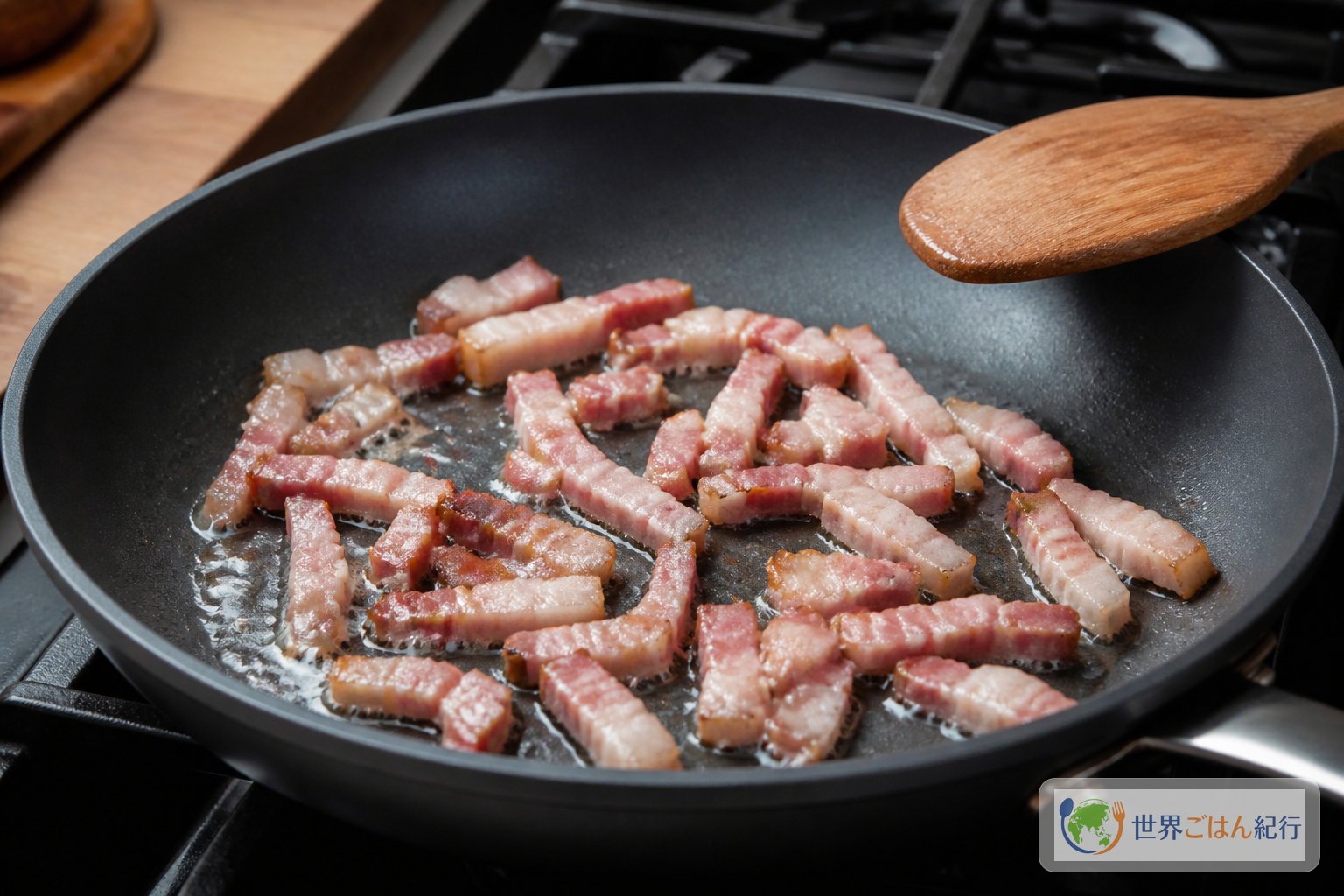
Guanciale is salt-cured pork cheek and jowl; pancetta is salt-cured pork belly. Guanciale is fattier and readily releases clear fat when warmed over low heat. Pancetta keeps more lean meat, and the browned parts stay a little chewy. Choose unsmoked meat, and you won't drastically change the aroma of the carbonara.
Thin-sliced supermarket bacon puts salt and smoke up front. It's not unusable, but it isn't the substitute to pick on a day you want to recreate the Roman combination. A block of pancetta lets you cut fat and lean together into pieces about 7 mm (1/4 inch) thick, so the reason to buy a block isn't the amount of meat but being able to control the fat left in the pan and how it browns. For these 2 servings you'll use 80 g; portion the rest and freeze it, and it's easy to use in your next dish.
When buying, check that it's a block, how much it weighs, and whether it's sold chilled or frozen. There's no need to buy it on days you're substituting smoked bacon or cooking without meat.
Pecorino Romano carries the salt and the aroma of sheep's milk
Pecorino Romano is a hard cheese made from sheep's milk, and the "Romano" in its name ties it to traditional production that includes Rome. Today, though, the DOP production area extends beyond Lazio to Sardinia and the province of Grosseto in Tuscany. Being a Roman dish doesn't mean the cheese is made only within Rome.
Freshly grated, it is fragrant, and when mixed with the yolks its salt becomes the core of the sauce. For 2 servings, grate 50 g finely. If your cheese is very salty, you can split it into 35 g pecorino and 15 g Parmigiano-Reggiano. Using only Parmigiano brings the sweetness of milk forward for a milder sauce, but the sharp Roman saltiness fades. Substitution here isn't about getting closer to the original; it's a way to adjust for the eaters' taste and for what you can find.
If you use pre-grated cheese, choose one that's finely grated and not damp. Coarse shreds don't dissolve easily into the yolks and tend to remain as little lumps midway through emulsifying.
Buy black pepper for aroma, not heat
The black pepper in carbonara isn't a garnish shaken on at the end. It cuts the richness of the egg and cheese and lifts the aroma of the pork. Warm whole peppercorns in a dry skillet for about 30 seconds before grinding, and the aroma blooms. Take them out before they scorch, add half to the yolks and cheese, and save the rest for serving.
Pre-ground pepper works too, but adding a lot of pepper that has lost its aroma after opening leaves only the heat. Whole peppercorns are worth buying if you use pepper every day, or in meat dishes and soups beyond carbonara. In this recipe, use no more than 4 g, and if you don't like heat, start with 2 g.
The key tool is a wide skillet that lets heat escape
You need a bowl to mix the yolks and cheese, a fine grater, a wide skillet, tongs and a pot to boil the pasta. If the skillet is small, the noodles pile up and you can't toss as fast after adding the yolks. Anything around 26 cm (10 inches) that spreads 2 servings out is fine; there's no need to buy a special pan.
If you grind pepper from whole each time, a small mill is useful. It isn't a tool for grinding a lot at once with force, but for cracking just the amount you need at the end. If you already have a mill, you don't need another. If you buy one, check that you can turn it with one hand, that the grind size is adjustable and that the inside dries easily after washing.
Ingredients (serves 2)
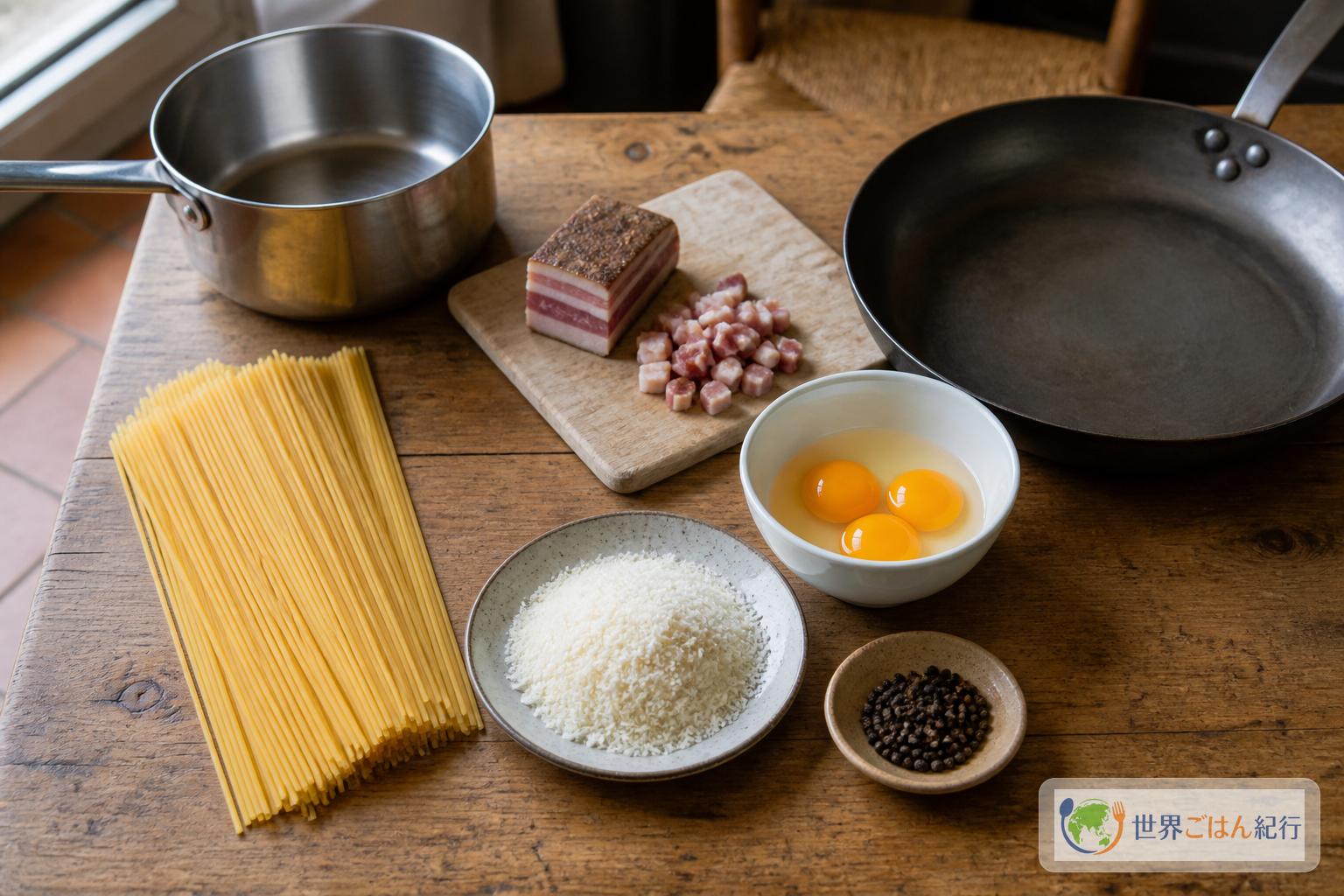
Use refrigerated eggs and don't leave them cracked at room temperature for long. This dish is eaten with the yolks close to half-cooked, so check how the eggs were stored after purchase and their use-by date. If young children, older adults, pregnant people or anyone feeling unwell will be eating, it's safer to choose a different dish where undercooked egg can be avoided. Japan's Ministry of Agriculture, Forestry and Fisheries also warns about Salmonella food poisoning from undercooked eggs, meat and similar foods, and recommends handwashing, refrigeration and using foods promptly.
Method: don't set the egg; bind fat and water
The pasta water is your final adjusting liquid. Before lifting the pasta out of the pot, always set aside about 150 ml (2/3 cup). Sauce too stiff, cheese clumping, egg about to set: in every one of those situations, having water to add a little at a time makes recovery easy.
Always add the egg mixture after turning off the heat, and toss quickly while adding pasta water a little at a time. If it feels like it's about to set, don't keep heating; loosen it with pasta water. That's the key to a smooth finish.
When it goes wrong, fix it by cause
The egg turned into curds
The cause is adding the yolks before turning off the heat, or setting the paste in a hot skillet. As soon as small curds start to appear, take the pan off the heat right away and add pasta water 1 tbsp at a time, tossing vigorously. The curds may disappear back into the sauce.
If it has turned into large lumps of scrambled egg, there's no bringing it back to a smooth state. Don't try to hide it and serve it; either accept the texture and eat it as a different egg-and-pork pasta, or discard it if you have food-safety concerns. Next time, don't skip coating the noodles in fat before adding the yolk paste.
The cheese is grainy
This happens when the pecorino is grated coarsely, the yolks and cheese weren't mixed into a paste first, or there wasn't enough pasta water. Take the skillet off the heat and add pasta water 2 tsp at a time, tossing for 10 seconds each time. If the cheese lumps have cooled and set completely, don't try to melt them by adding heat. The egg will set first, and things will get worse.
Next time, grate the cheese finely and add it to the yolks before making the paste. If you use pre-grated cheese straight from the fridge, break it up with your fingertips in the bowl so no large grains remain.
The sauce is loose and runs to the bottom of the plate
You may have added too much pasta water at once, or too much liquid while the pancetta fat was still hot. With the skillet still off the heat, toss with tongs for 30 seconds. Adding a little more cheese thickens it, but it also adds salt, so taste first.
Don't fix the amount of pasta water by numbers alone. Stop when it thinly coats the surface of the noodles and the sauce doesn't run right away when plated. This isn't a dish that keeps moisture in reserve for reheating the next day, so judge by its thickness just before plating.
Too salty, or too heavy with fat
If you salt the pasta water heavily without considering the salt in the pancetta and pecorino, it's hard to undo. If it's too salty, the most natural fix is to toss in a little extra pasta cooked in unsalted water. Adding only water makes the sauce runny before it dilutes the flavor.
If it's too heavy with fat, reduce the fat you leave in the skillet after cooking the pancetta from 2 tbsp to 1 tbsp. Guanciale tends to release more fat, so don't keep all of it from the start. There's no need to add olive oil or butter.
Knowing regional differences makes substitutions easier
The difference in meat shows in the amount of fat more than the aroma
Guanciale brings forward the sweetness of its fat and a soft texture. Pancetta keeps more lean meat and tastes meatier when crisped. Smoked bacon adds the aroma of smoke, taking a dish built on binding egg and cheese in a different direction.
The easiest to work with at home is block pancetta. If you can't find it, make it with thick-cut bacon and compare it with pancetta the next time you have it. Adjusting the rendering time and salt does more for the flavor than hiding the fact that you substituted.
The difference in cheese shows in the angle of salt and aroma
Pecorino Romano has a strong sheep's-milk aroma and saltiness. Parmigiano-Reggiano is made from cow's milk, with milder savoriness and sweetness. Half and half is easier for many people to eat, but the sharpness of pecorino alone fades.
Adding too many cheese substitutes changes how you read salt and moisture. Cheeses that melt very differently, like powdered cheese, sliced cheese or mozzarella, shouldn't be swapped in at the same amount. If you use whatever cheese you have, try just 30 g first and hold back on salt in the pasta water to adjust.
Pasta shape changes how the sauce stays on
In Rome, short tubes like rigatoni, bucatini and tonnarelli are chosen as well as spaghetti. Long pasta lifts the sauce easily, while tubes tend to hold fat and cheese inside. Thin pasta gets soft easily if overcooked, so pulling it 1 minute before the package time matters.
If you're unsure at the store, start with spaghetti about 1.6 mm thick. Seeking out thick bucatini or tonnarelli is worth it if you want to compare textures, or if you prefer the way short tubes hold the sauce. Whatever the shape, the emulsifying sequence that keeps the egg from setting stays the same.
Why there's no cream, and where to draw the line if you use it
Adding cream stabilizes the sauce and makes the egg less likely to set. It's an obvious way to reduce failures at home, but it tastes different from the Roman combination made only with yolks, cheese, pasta water and pork fat. A food-history article in La Cucina Italiana also notes that carbonara recipes with cream have existed at various times.
So there's no need to call a dish with cream "fake." If you want to lighten the richness of the egg, cut the pepper and salt for children, or want something closer to make-ahead convenience, it's more natural to rebuild the amounts as a cream pasta with milk or cream. On a day you want to explore the Roman ingredients, try this method's emulsion of yolks and pasta water first, and it will be clear what you've changed.
Getting it to the table is part of the flavor
Carbonara doesn't keep. The yolk and cheese sauce tightens as it cools, and reheating tends to curdle the egg. When you're feeding more people, don't toss a large batch of noodles at once; finishing 2 servings at a time makes heat and moisture easier to manage.
If there are leftovers, don't leave them at room temperature; move them promptly to a shallow container and refrigerate. Since it uses half-cooked egg, it's better to make only what you can finish than to microwave it at length the next day trying to restore the texture. If you reheat it, heat it through to the center so the egg isn't undercooked.
A tangy leafy salad or one with bitter greens goes well alongside. This isn't a fixed Roman side so much as a home cook's choice for finishing a plate of fatty, salty pasta. Some tables add bread to wipe up the sauce, but the star is always the emulsified sauce clinging to the noodles.
If you want to set dishes from other Italian regions next to carbonara, try panzanella (in Japanese), a Tuscan salad that tosses stale bread with tomatoes and vegetables, or a basic risotto (in Japanese) from northern Italy, where rice is cooked a little at a time and bound with cheese. The fewer the ingredients, the clearer it becomes that where you turn off the heat and how you add liquid decide the flavor.
FAQ
Can I make it with whole eggs?
You can, but the water in the whites adds moisture and makes it set more easily with heat. Make it with 3 yolks the first time, and if you prefer a lighter texture, switch to 2 yolks and 1 whole egg next time. Even with whole eggs, the order of turning off the heat before mixing stays the same.
Is guanciale essential?
It's the ingredient to use if you want to get closer to the Roman standard, but it isn't always available. Pancetta comes from pork belly, and while the fat and texture differ, it substitutes without adding a smoky aroma. Bacon carries smoke, so treat it as a different flavor rather than a substitute.
What if the Pecorino Romano is too salty?
Rather than cutting the amount sharply, replace part of the pecorino with Parmigiano and go easy on the salt in the pasta water. Don't rinse the cheese with water; the aroma washes away too. Also check the saltiness once the pancetta is cooked.
What about serving it to children?
Even if you leave out the black pepper and adjust the pancetta and cheese, the egg is still undercooked. If someone in the groups Japan's Ministry of Agriculture, Forestry and Fisheries warns about will be eating, switch to a different pasta in which the egg is fully cooked. It's better to put safety first than to keep the egg half-cooked for the sake of a carbonara-style emulsion.
What do I do with the leftover egg whites?
Refrigerate the whites and use them the same day or the next in another cooked dish. The sauce is rich precisely because it uses only yolks, so the whites aren't suited to going back into the carbonara pan to thin it.
Sources
- Turismo Roma "Spaghetti alla carbonara" (accessed and checked 19 August 2026)
- Turismo Roma "La cucina romana e giudaico-romanesca" (accessed and checked 19 August 2026)
- La Cucina Italiana "La storia della carbonara, la pasta che ha sedotto gli Stati Uniti e non solo" (accessed and checked 19 August 2026)
- La Cucina Italiana "Carbonara classica" (accessed and checked 19 August 2026)
- Accademia Italiana della Cucina "La carbonara: storia e ricette" (accessed and checked 19 August 2026)
- Consorzio per la Tutela del Formaggio Pecorino Romano DOP "Technical procedure" (accessed and checked 19 August 2026)
- 農林水産省「サルモネラ食中毒」 (Japan's Ministry of Agriculture, Forestry and Fisheries, "Salmonella food poisoning"; accessed and checked 19 August 2026)