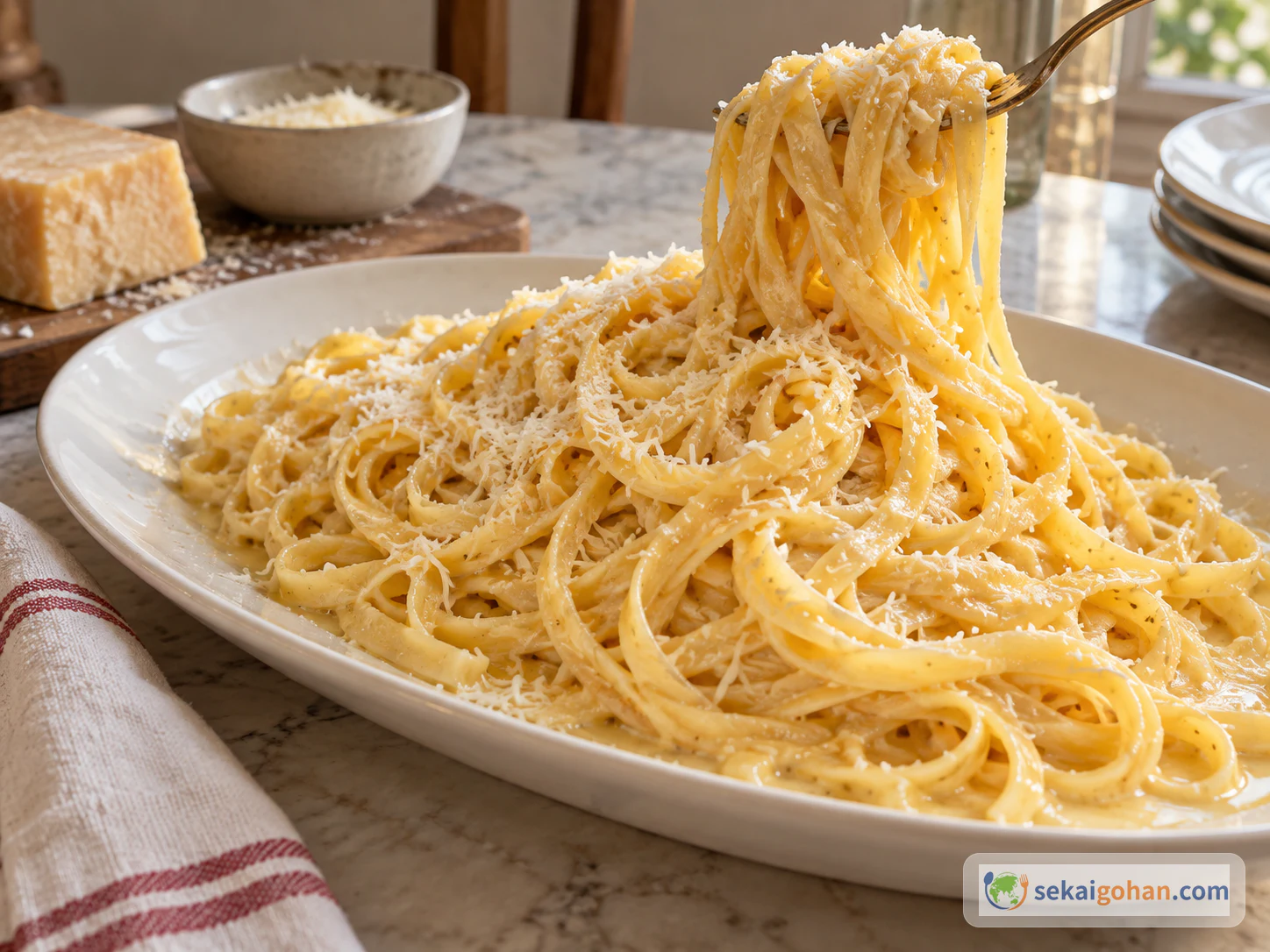
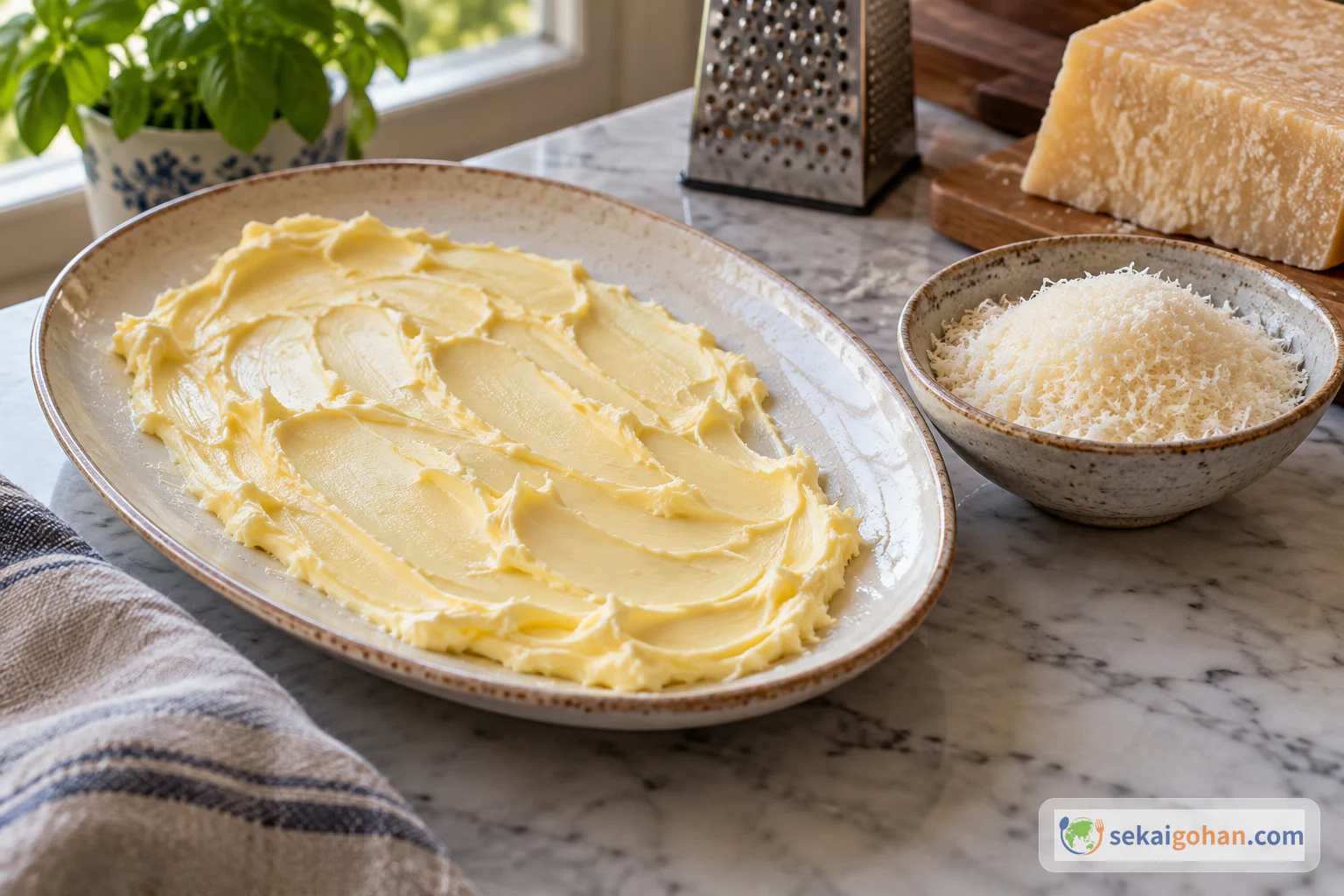
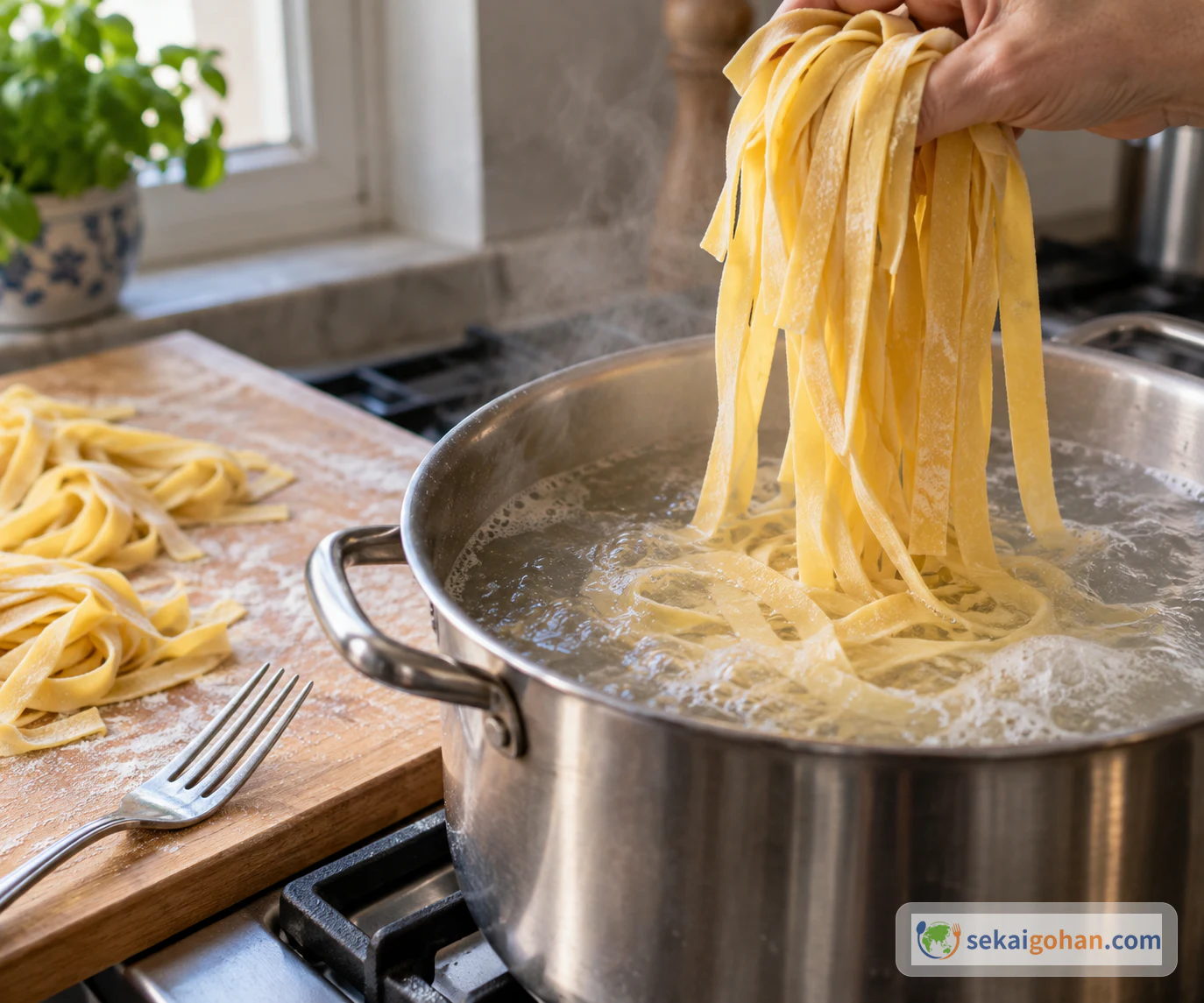
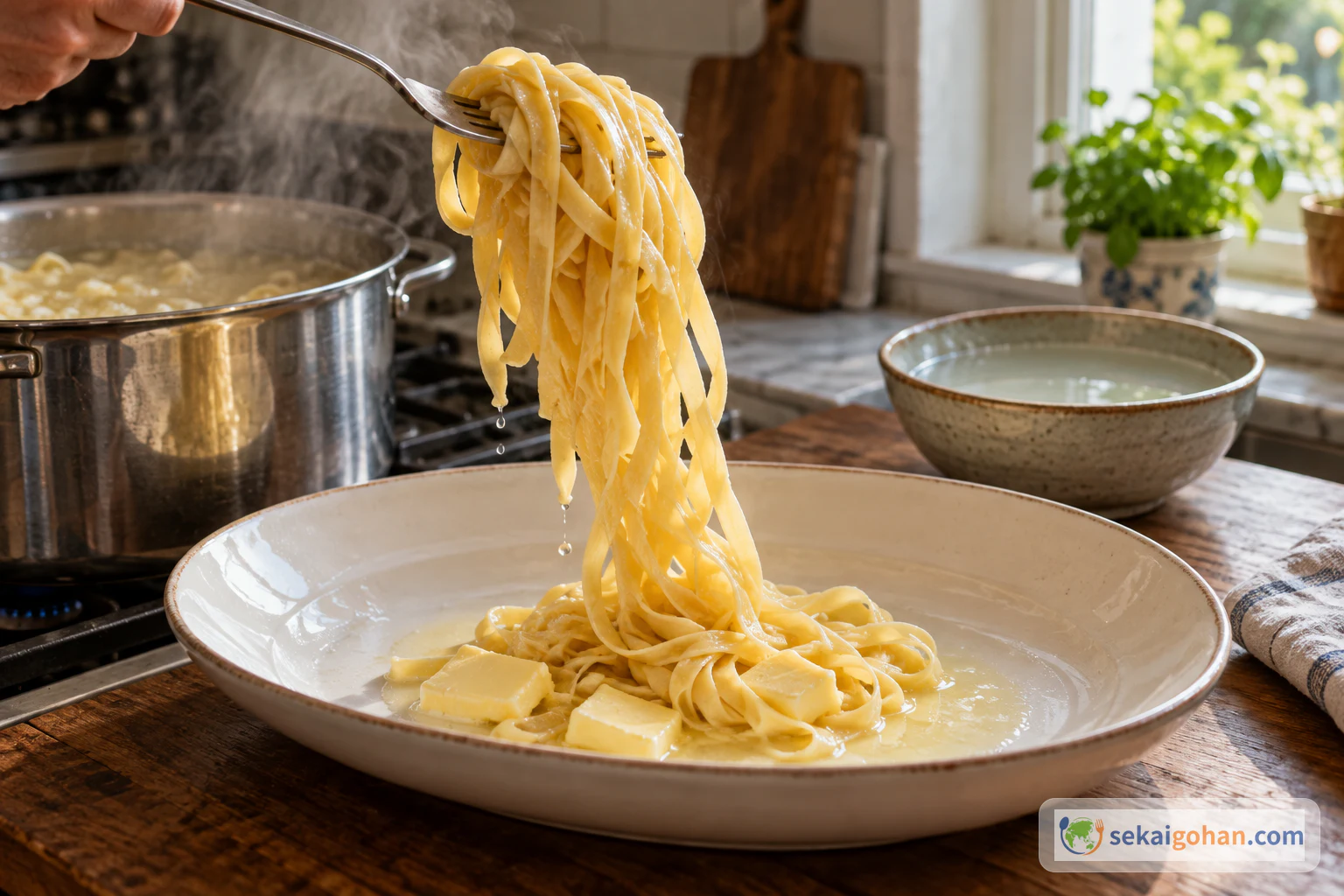
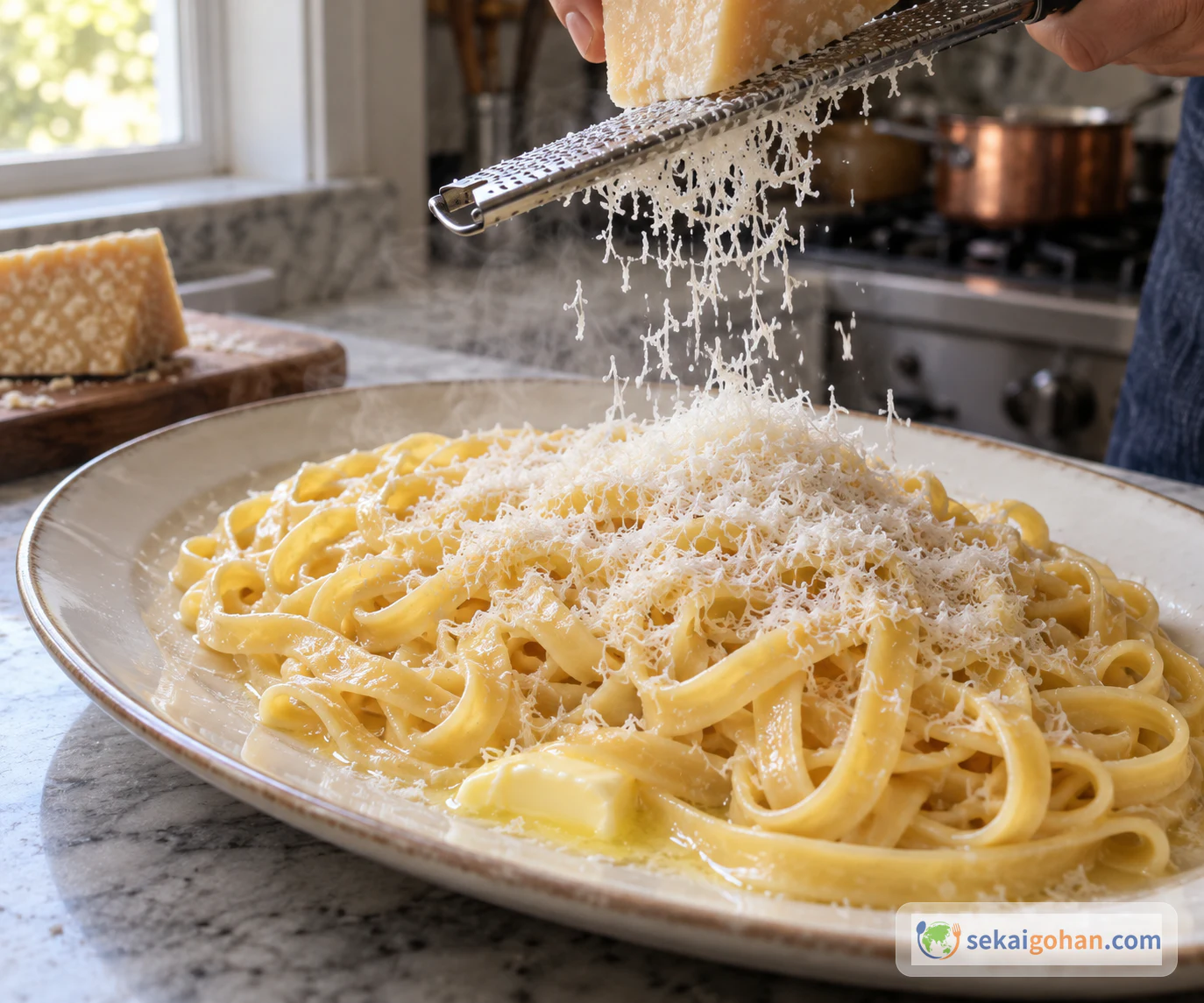
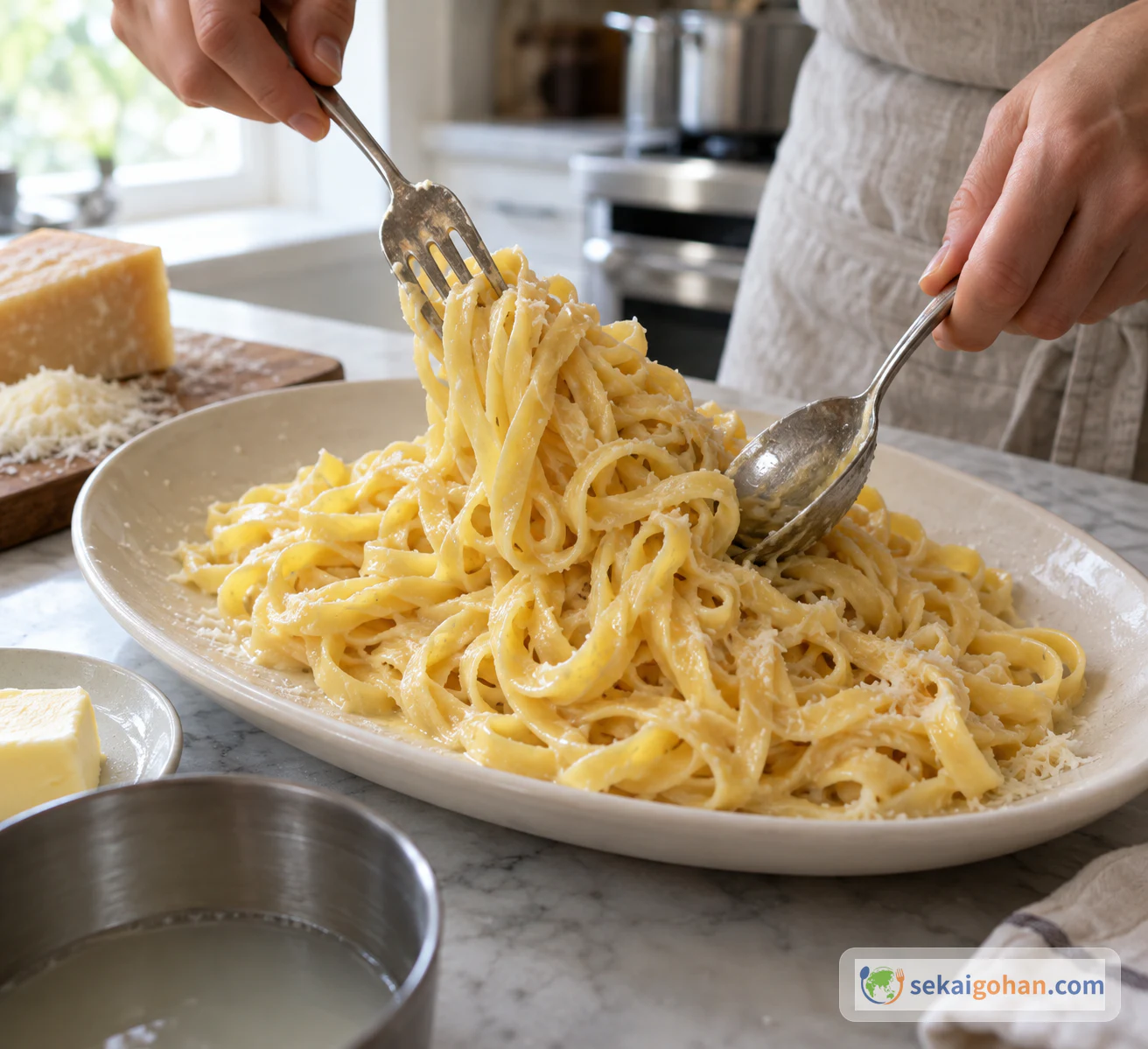
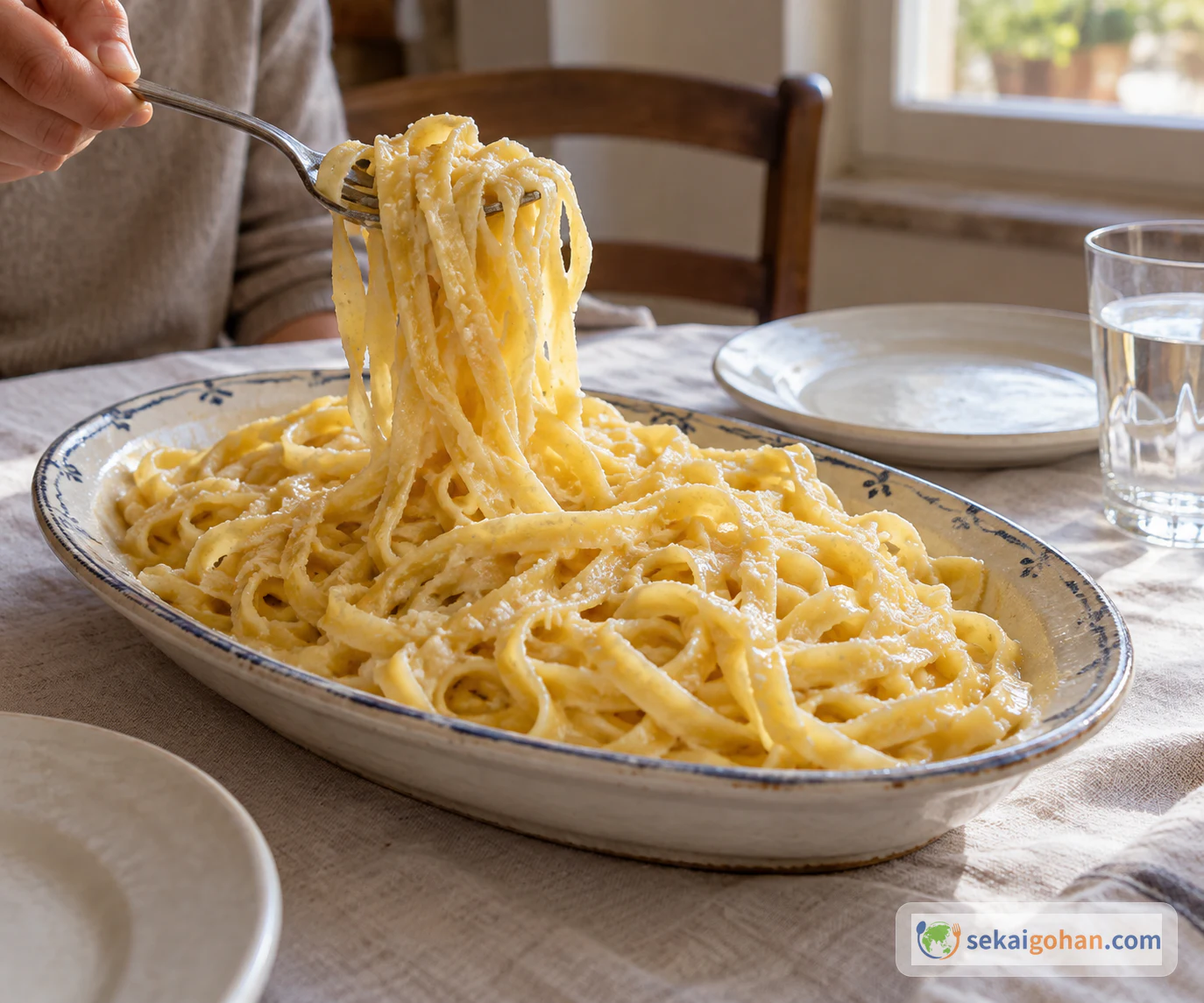
Steaming ribbons of fresh egg pasta go straight from the pot onto a wide plate where soft butter is already waiting. Finely grated Parmigiano Reggiano goes on top, and the pasta is lifted and turned until butter, cheese and clinging water become a pale, shining coat. In Rome, that last step often happens at the table, in front of the diners, and it's part of the appeal. So how can Alfredo be creamy without cream? The silkiness comes from the heat of the just-cooked pasta and the water on its surface, with butter and cheese fine enough to melt into them. No sauce is cooked separately on the stove.
Fettuccine Alfredo in Rome and Abroad
The Roman dish uses only very thin fresh egg pasta, soft unsalted butter, finely grated aged Parmigiano Reggiano and a little of the pasta's cooking water, worked together until every ribbon is glossy. It has no cream, no garlic and no chicken. For more of the country's cooking, see our Italy page.
The story told in Rome is that in 1908 Alfredo Di Lelio created the dish for his wife, Ines, after she gave birth. Accounts of the dates, and of how the Alfredo restaurants developed, vary. Today two Rome restaurants carry the Alfredo name, each with its own history.
The American actors Mary Pickford and Douglas Fairbanks visited, and the dish's fame abroad grew afterwards. Fettuccine Alfredo is now better known outside Italy than in it. In North America it developed into a richer style made with cream and other ingredients:
| Roman style (this recipe) | Style that spread in North America | |
|---|---|---|
| Base | Fresh egg pasta, butter, Parmigiano Reggiano, pasta water | Pasta with a sauce that adds cream and other ingredients |
| Texture | A light, glossy coat on thin ribbons | A richer, heavier sauce |
| Where it's finished | On the plate, often in front of diners | Each kitchen's own choice |
Neither is a fake of the other. They are two developments under one name.
Ingredients for 4 Servings: Matching the Pasta and the Cheese
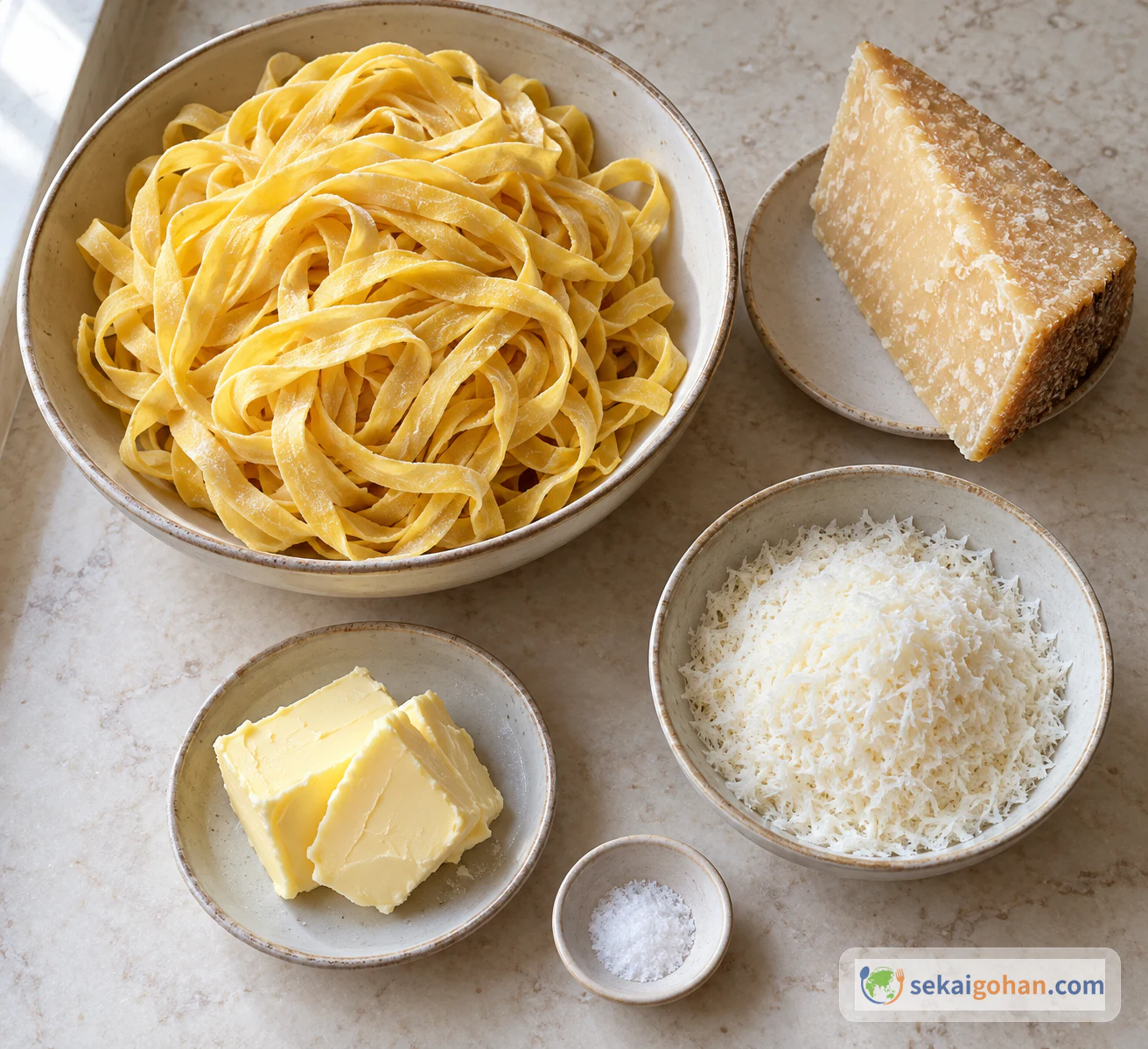
The amounts below make 4 servings. The cheese is given per person; add the pasta water and salt as the steps describe.
This dish contains wheat, egg and milk. Check the labels of the fresh pasta, butter and cheese you buy for allergen information.
Equipment
- A large pot for boiling the pasta
- A wide, shallow serving plate (an oval platter works well)
- A fine grater for the cheese
- A fine sieve for sifting the grated cheese
- A large fork (a spoon alongside helps with lifting and turning)
Choosing Pasta, Cheese and Butter for Alfredo
Pasta. You want very thin fresh egg fettuccine. Look in the fresh pasta section and check that the label lists egg. Thickness varies between brands, so compare the package's cooking time with the one in this recipe.
Cheese. Use Parmigiano Reggiano PDO aged 24 months. A generic "parmesan" or pre-grated cheese gives a different flavor, saltiness and melt. Whatever you use, grating it finely matters more than anything else for a smooth result.
Butter. Use unsalted butter. The aged cheese already brings salt, and salted butter can tip the dish into too salty.
Method: Bringing Everything Together on the Plate
There is no separate cooking time for the sauce. It forms on the plate from the hot pasta, its water, the butter and the cheese. Have everything ready before the pasta goes in, because the pasta cooks in under a minute.
Smooth Alfredo: Common Problems and Fixes
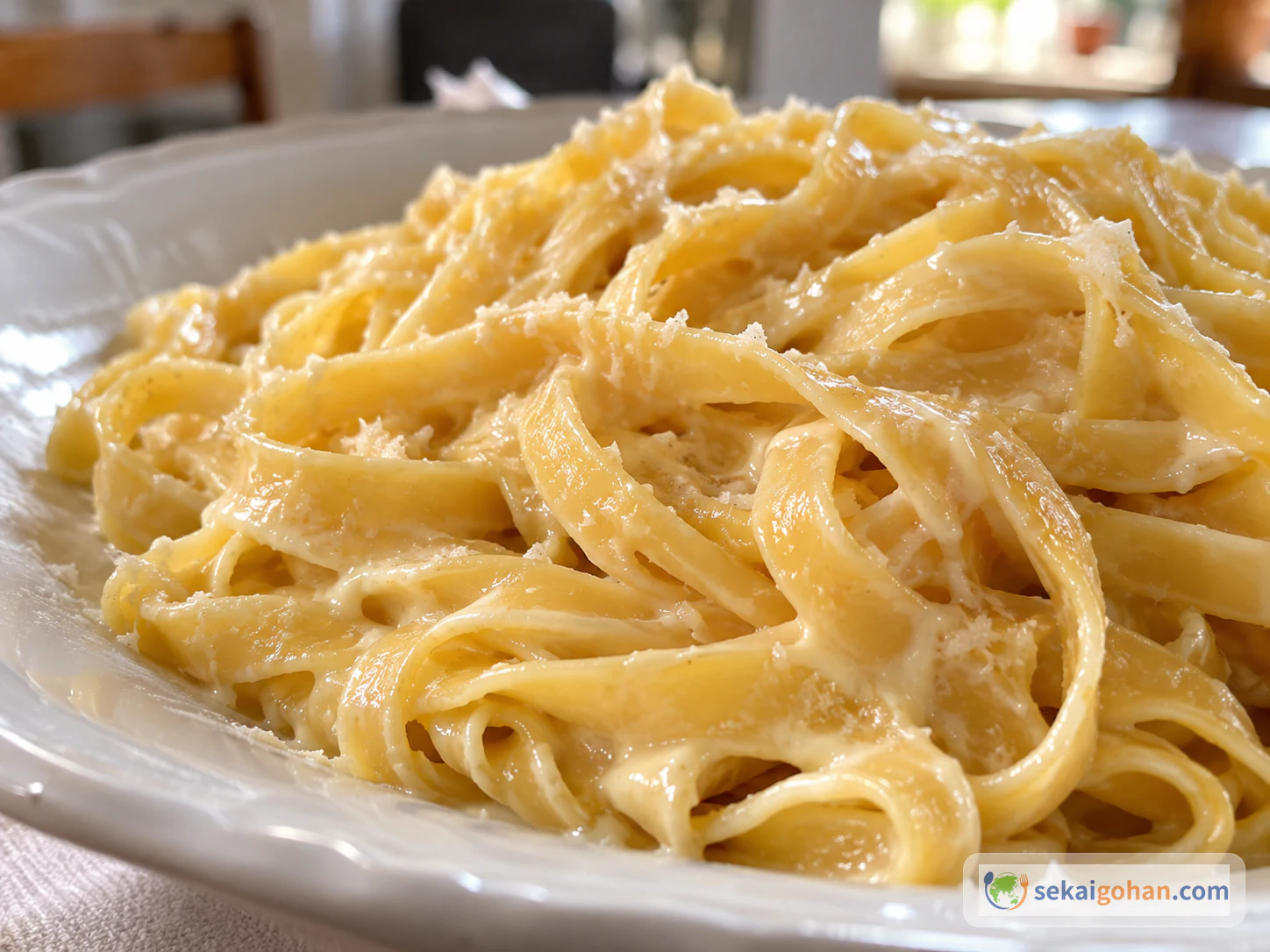
You're aiming for a light, shining coat through which you can still see each ribbon. If it isn't coming together, the cause is usually one of these.
| Problem | Likely cause | What to do |
|---|---|---|
| The cheese forms clumps | Cheese grated too coarsely, or too much heat | Grate finely and sift. Add water little by little and mix straight away. Let the plate's heat do the work rather than a burner |
| The sauce is heavy or the pasta looks dry | Too little water, or the pasta was drained | Keep the cooking water and add small amounts, checking the shine each time. Don't decide on a fixed amount in advance |
| The sauce looks thin | Too much water at once | Work in the cheese you held back, and add further water more slowly |
| Too salty | Salted butter, or heavily salted water | Use unsalted butter, and start with less salt in the water, since the cheese brings its own |
Adding cream changes the dish into a different style rather than fixing this one. If the sauce misbehaves, adjust the water and cheese first.
Serving and Homemade Pasta
Alfredo is best eaten the moment it comes together, so make only what you will eat.
If you want to make your own egg fettuccine, that means kneading, resting, rolling and cutting the dough. Those recipes use their own proportions for dough and sauce, so treat them as a guide to the pasta only, not to the amounts here.
Frequently Asked Questions
Does Alfredo need cream?
Not the Roman version. It comes together with butter, cheese and the pasta's own cooking water. Versions with cream are a separate style that developed in North America.
Can I make it with dried pasta?
You can, as a home adaptation. Dried pasta cooks for a different time and holds a different amount of water, so it needs its own method rather than a straight swap into this one.