A scent of meat from deep in the chocolate: Modica's half-moon pastry
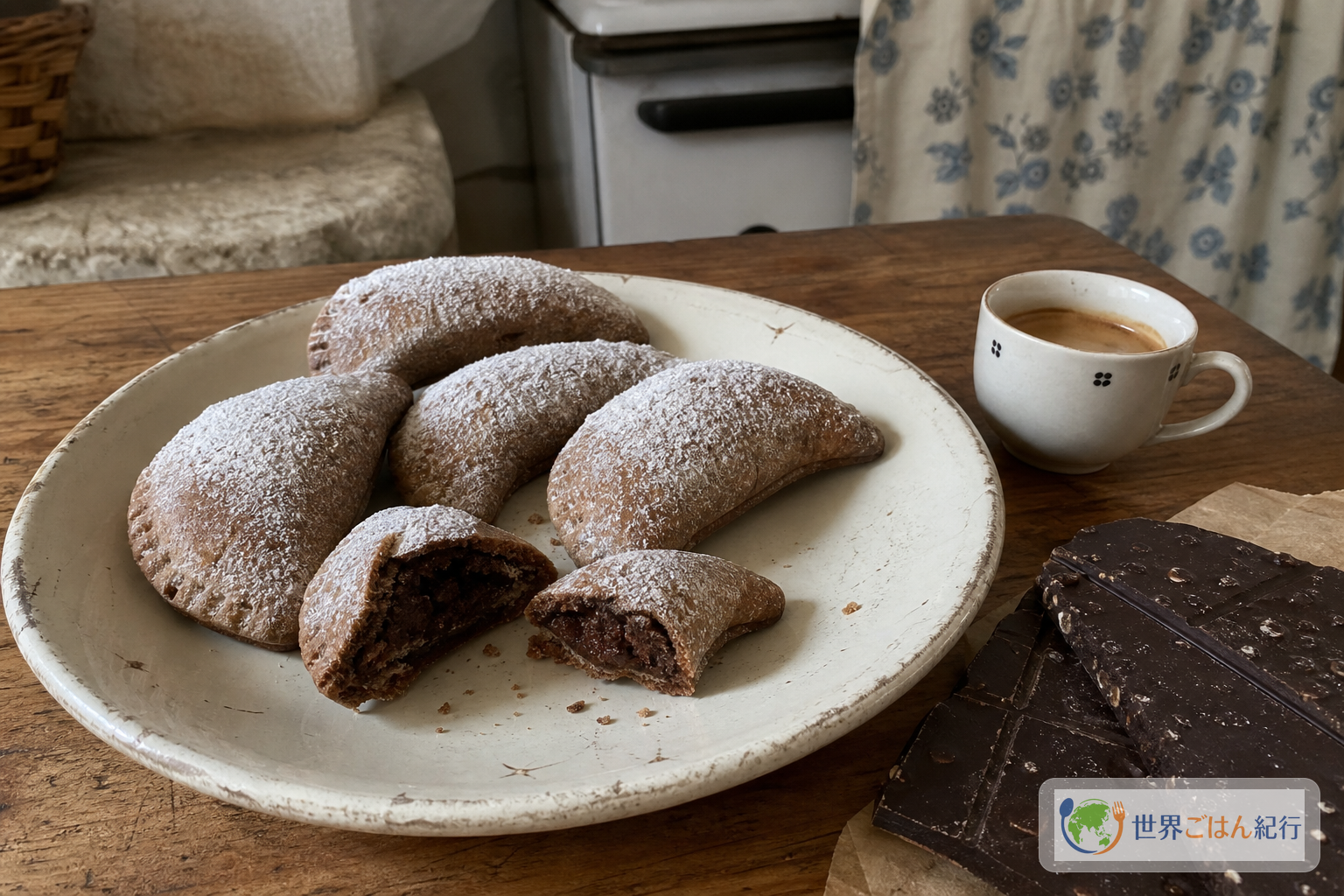
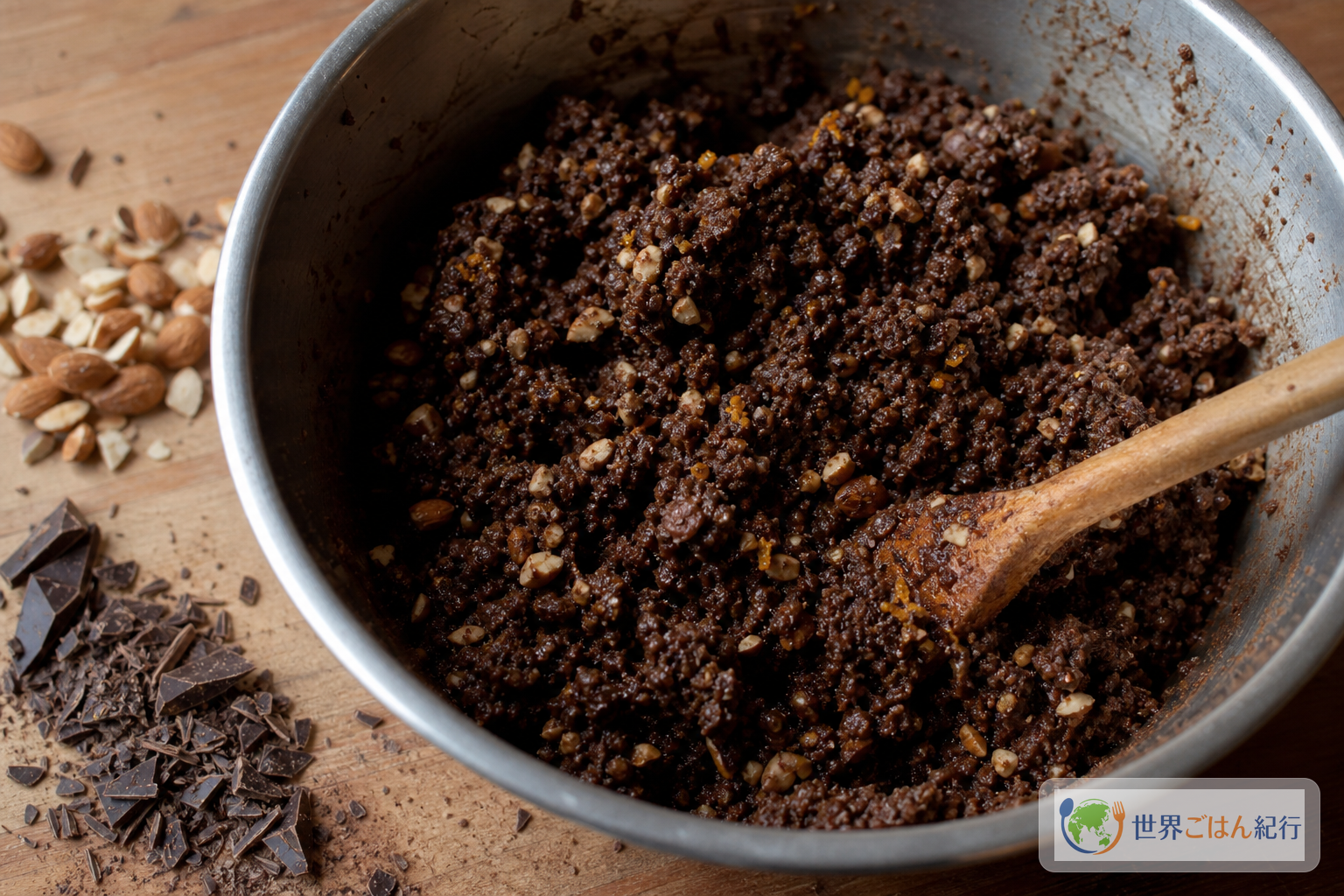
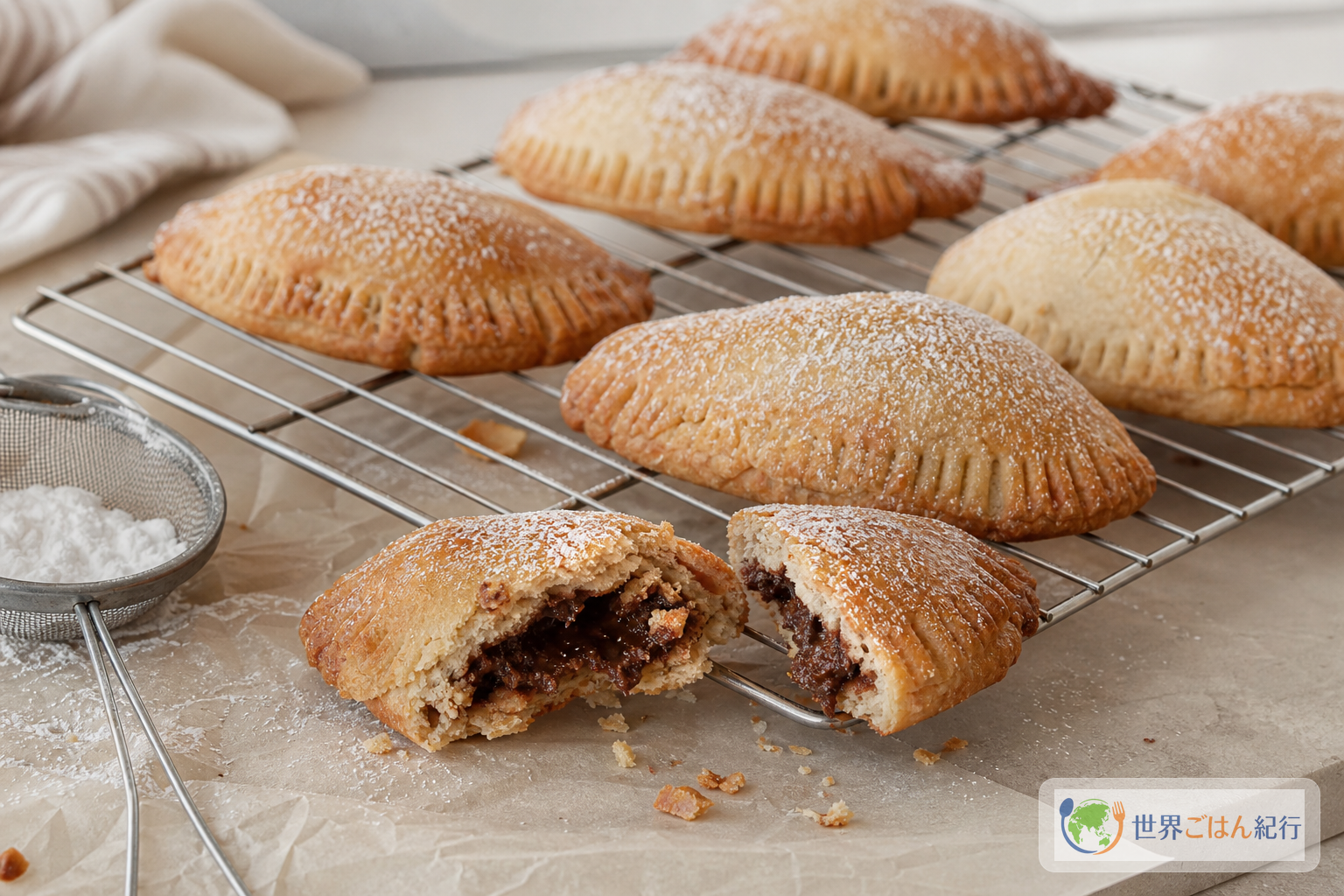
Dust the baked half-moon with powdered sugar and it looks like a plain chocolate pie. Break it open, though, and the dark filling holds finely cooked beef, almonds, cinnamon, and citrus zest. For the person standing in the kitchen, it is a combination that makes you brace a little at first. But when you cook the meat well, keep the chocolate from scorching, and let the spices work finely, it is not a merely sweet baked sweet but a deep Sicilian pastry that keeps company with coffee.
Mpanatigghi ('Mpanatigghi / mpanatigghi) is a traditional sweet of Modica in southeastern Sicily. Small half-moons of dough enclose chocolate, beef or veal, almonds, sugar, and spices, and are baked. The Italianized form of the name is impanatiglie, and locally it is sometimes described as "meat sweets."
What makes the dish interesting is not only its oddness. Modica is known for its grainy chocolate, and Cioccolato di Modica IGP is characterized by a gritty mouthfeel from the sugar crystals left in it. There are several tellings of the origin: hiding meat in sweet chocolate, a link to the empanada of the Spanish era, a way to improve keeping. At home, rather than asserting a legend, it fails less if you hold on to this role: "don't let the meat assert itself, and add toastiness to the chocolate and nuts."
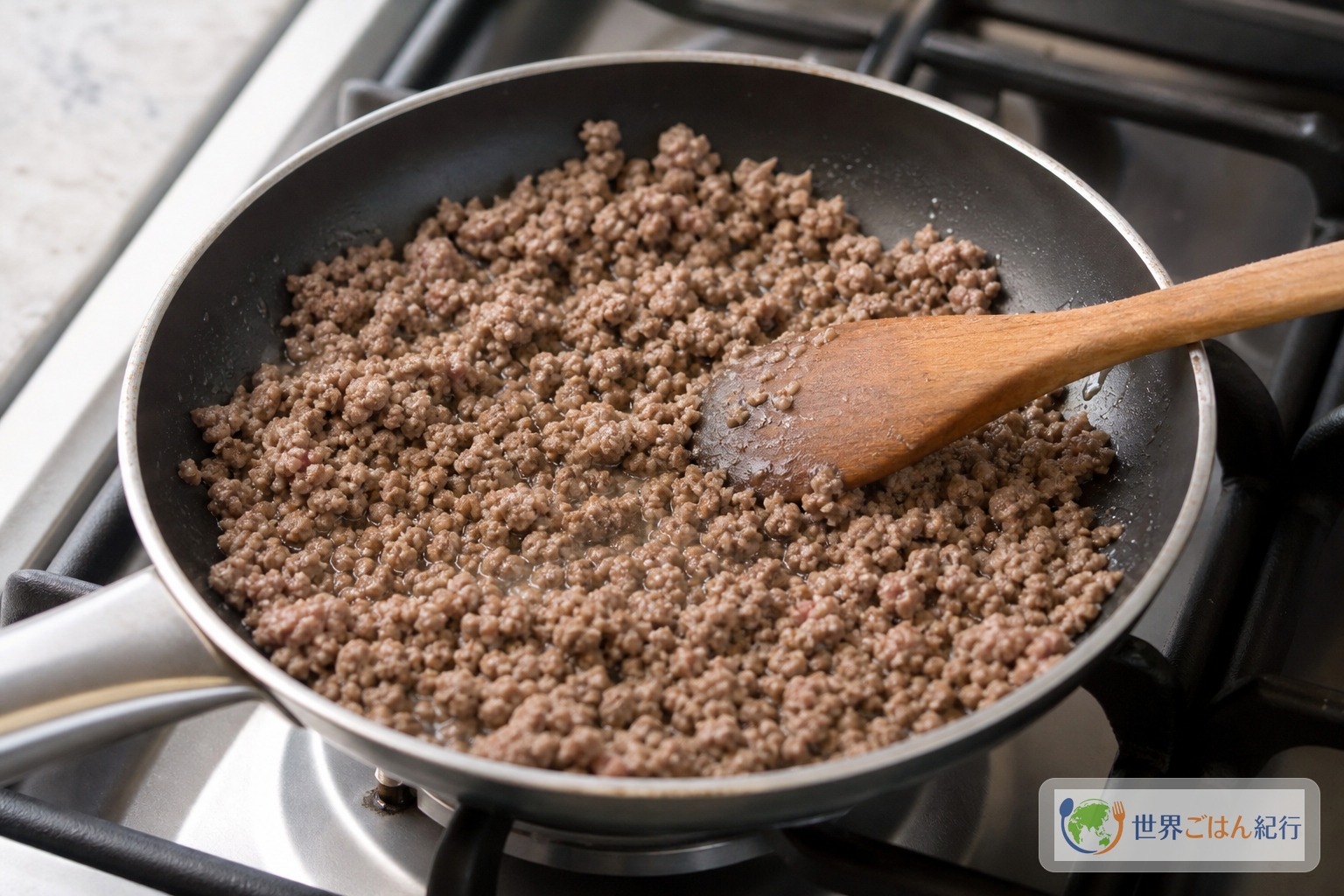
Unlike a dish such as risotto where you watch the state of the pot all the time, mpanatigghi is decided by prep and shaping. Cook the ground meat dry and fine, and stop the chocolate where it begins to melt at low heat. Roll the dough thin and seal the edge firmly. If you keep to these three, even with ingredients from an ordinary supermarket you can get close to a Modica-like sweet that is "sweet, yet with just a little depth of meat."
The veal and lard in local recipes can be hard to buy on some days. This recipe uses lean ground beef and unsalted butter, and brings the outline closer with Marsala, dark chocolate, almonds, and cinnamon. The meat is treated not as the star of a sweet filling but as an ingredient that adds toastiness and density.
Ingredients (makes 12)
With this amount you cut 12 cm circles and make 12 fairly large half-moons. It is a little larger than the local small pastry shop size, but in a home kitchen it is easy to fill and you can see the state of the filling. To make them smaller, cut 9 cm circles and cut the filling to about 12 g each, which yields about 18.
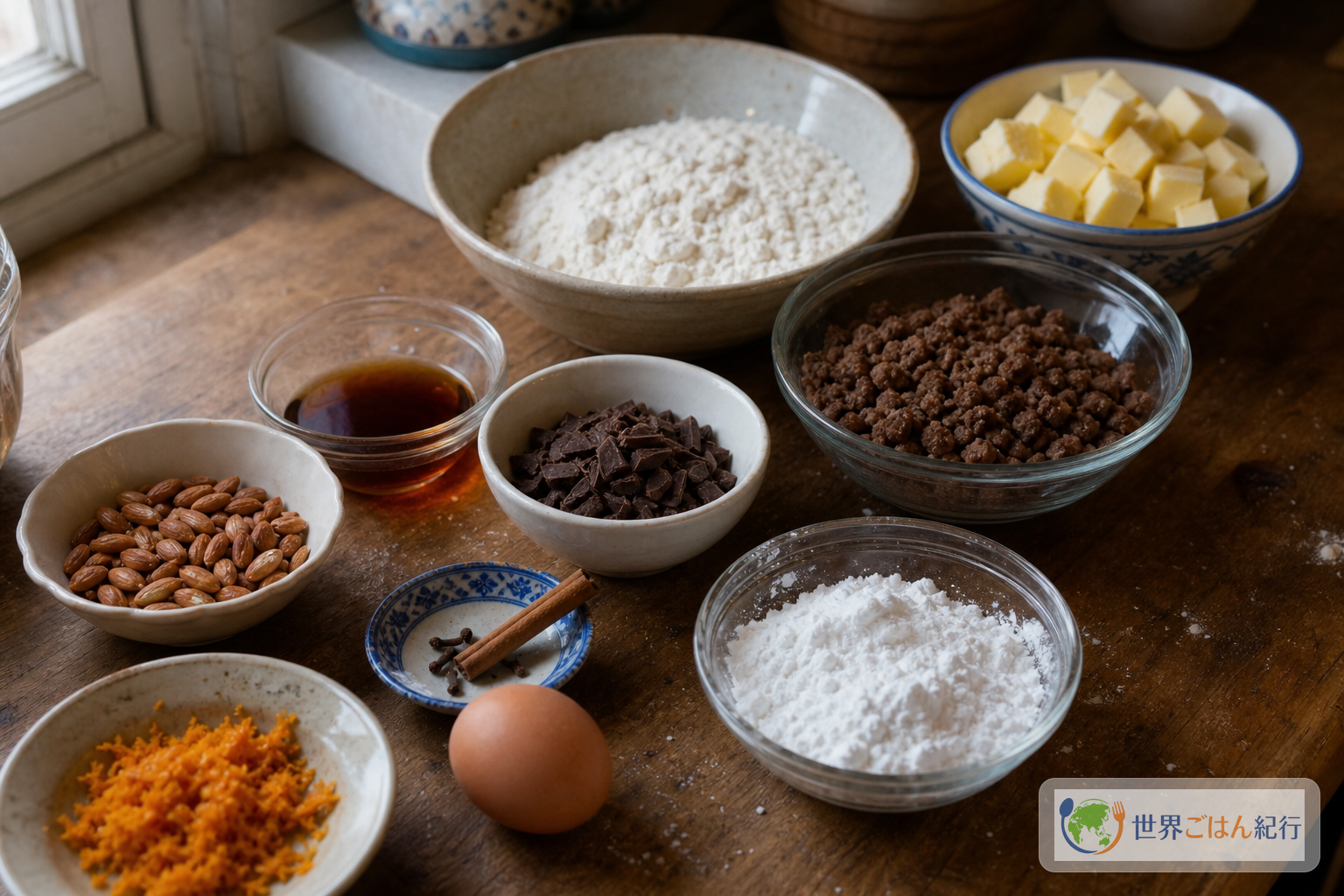
This recipe uses wheat, egg, dairy, almonds, beef, and alcohol. The Marsala is cooked, but if you want to avoid alcohol entirely, use 30 ml white grape juice and 10 ml lemon juice in the dough and 1 tbsp white grape juice in the filling. Because it is a sweet containing meat, do not leave it long at room temperature; refrigeration is the basis for storage.
Ingredients and tools that give you pause when shopping
What is worth putting effort into for mpanatigghi is not the meat or butter. It is strongly scented spices that are hard to get nearby, a tool to roll the dough thin and even, a cutter to cut equal sizes, and a brush to apply a thin layer of egg white. You can start with a high-cacao bar of chocolate, but if the cinnamon aroma is weak, the oddness of "chocolate with meat" comes forward.
Start by getting cinnamon sticks in a small size. Choosing a stable, fragrant one meant for baking and cooking gives the filling a clearer outline than powder alone.
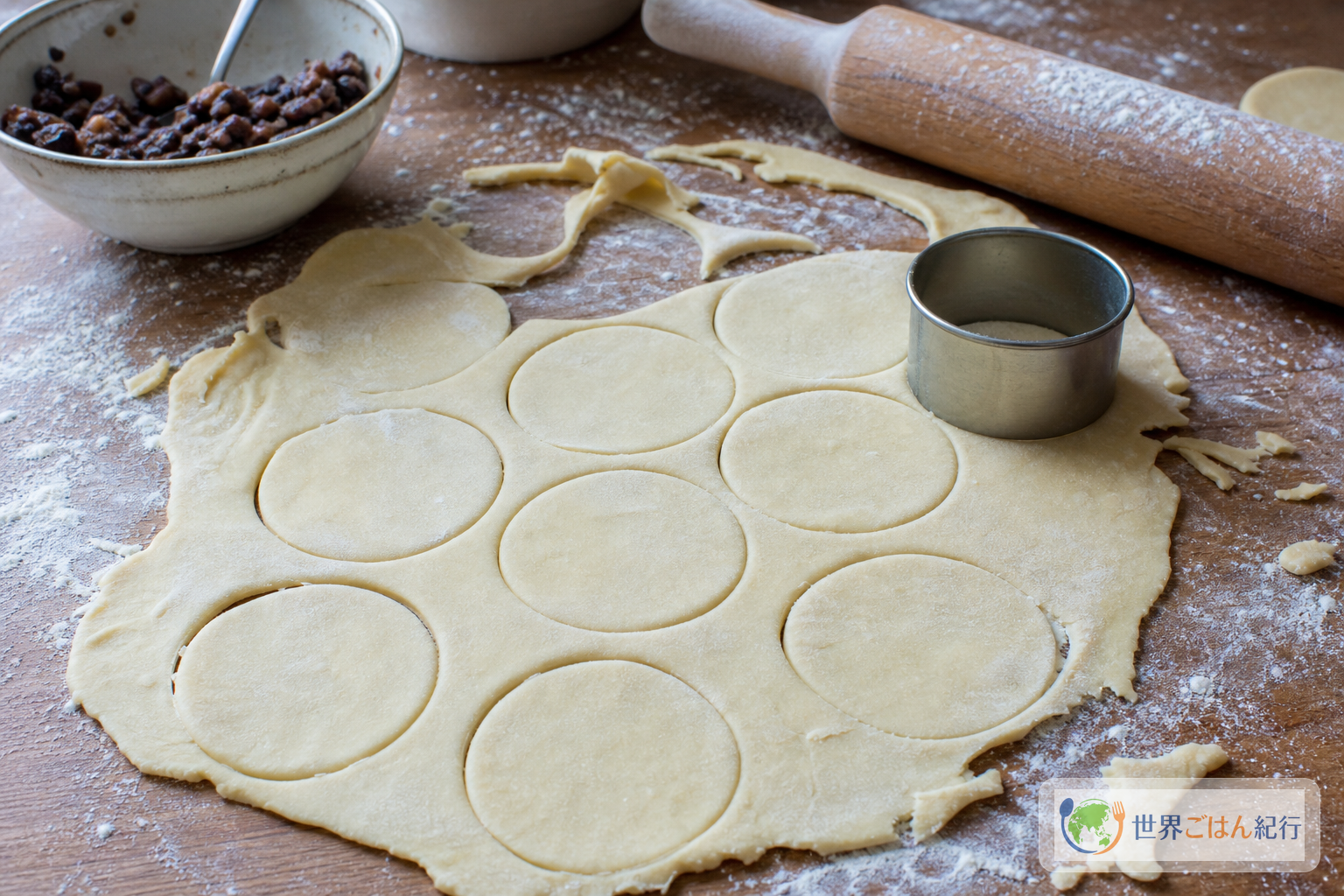
A rolling pin of about 30 cm and a ring cutter of 12 cm diameter are the guide. If you do not have specialty items, a clean bottle or the rim of a plate can substitute, but on days you want the dough thin and even, having the tool changes how easily the edge closes.
A brush only applies a thin layer of egg white, so it is a low priority to buy. A folded paper towel is enough at home.
| Priority | What to prepare | What to look for | Substitute |
|---|---|---|---|
| High | Chocolate around 70% cacao | One where cacao aroma comes ahead of sugar | Sweet baking chocolate |
| High | Cinnamon stick | One with a strong sweet scent when scraped | 1/2 tsp ground cinnamon |
| Medium | Rolling pin around 30 cm | Easy to roll the dough thin and even | Roll with a clean bottle |
| Medium | Ring cutter 12 cm across | Cuts the same size every time | Trace around the rim of a plate about 12 cm across |
| Low | Heatproof brush | Applies a thin layer of egg | Fold a paper towel and apply |
What to keep and what you may change in a home kitchen
Mpanatigghi is a sweet where, if only the words "chocolate with meat" come first, it is unclear what to hold on to. When making it at home, rather than increasing the meat to make it obvious, pushing a small amount of meat to be thoroughly fine and dry and toasty comes closer to the impression of the local version.
| Element | What to protect | Realistic landing point at home |
|---|---|---|
| Meat | Leave no moisture or fat, make it fine and mix it into the chocolate | Dry lean ground beef over medium to low heat |
| Chocolate | Use bitterness and aroma more than sweetness | Chop a bar of around 70% cacao |
| Spices | Round off the smell of the meat with cinnamon and citrus | Add cinnamon, cloves, and citrus zest in small amounts |
| Dough | Keep it a half-moon that is not too thick | 2 mm thick, 12 cm across for easy filling |
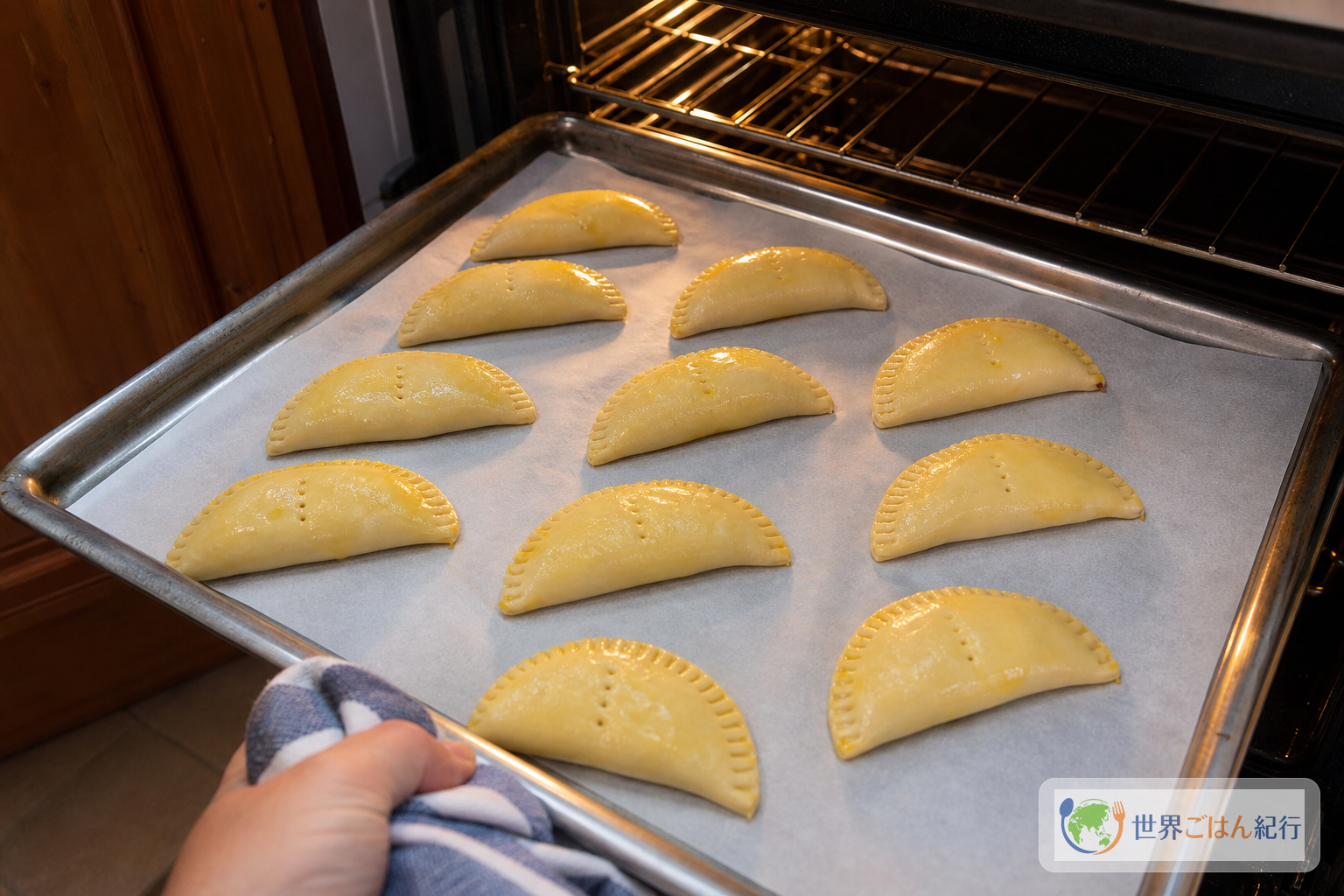
| Baking | Do not scorch the chocolate; color only the dough lightly | 180°C for 18 to 20 minutes, no deep browning |
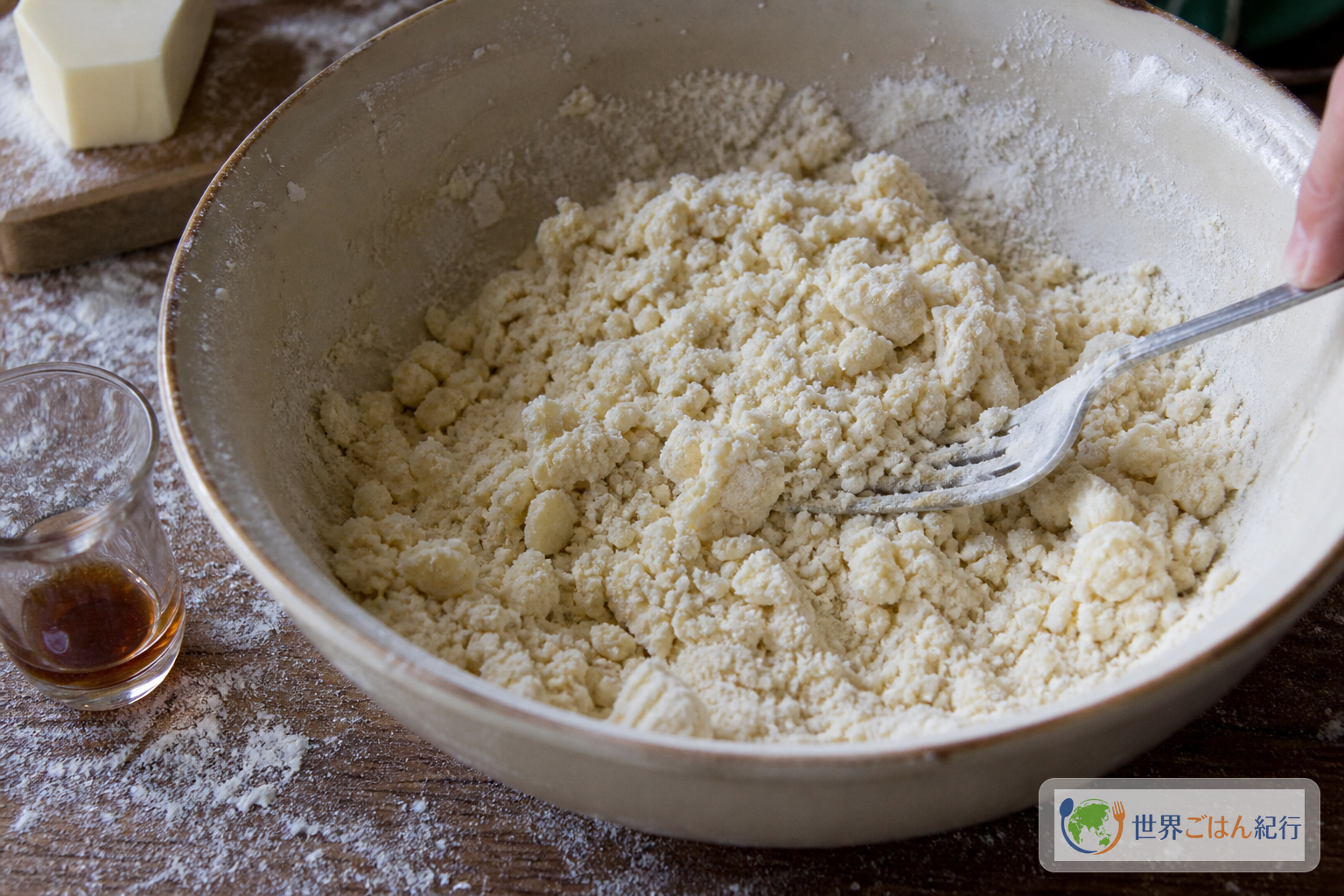
Dough made with lard is crumbly and has the local lightness. At home, though, the aroma can come through strongly, so for the first time unsalted butter is easier to handle. If you have no Marsala, a mix of 35 ml unsweetened white wine and 5 g honey at least brings the direction of the aroma closer.
Where it goes wrong
| What happened | Cause | How to fix next time |
|---|---|---|
| Smell of meat stands out | Moisture and fat left in the meat | After the red is gone, dry it over low heat for 2 minutes and blot off the fat with paper |
| Filling runs | Chocolate is too hot, too much egg white | Cool the meat 5 minutes before mixing, and stop the egg white at 30 g |
| Dough is hard | Overkneaded, trimmings rolled many times | Only press it together, and use the trimmings once |
| Color is dark and bitter | Oven temperature too high | Keep to the middle rack at 180°C and stop before deep brown |
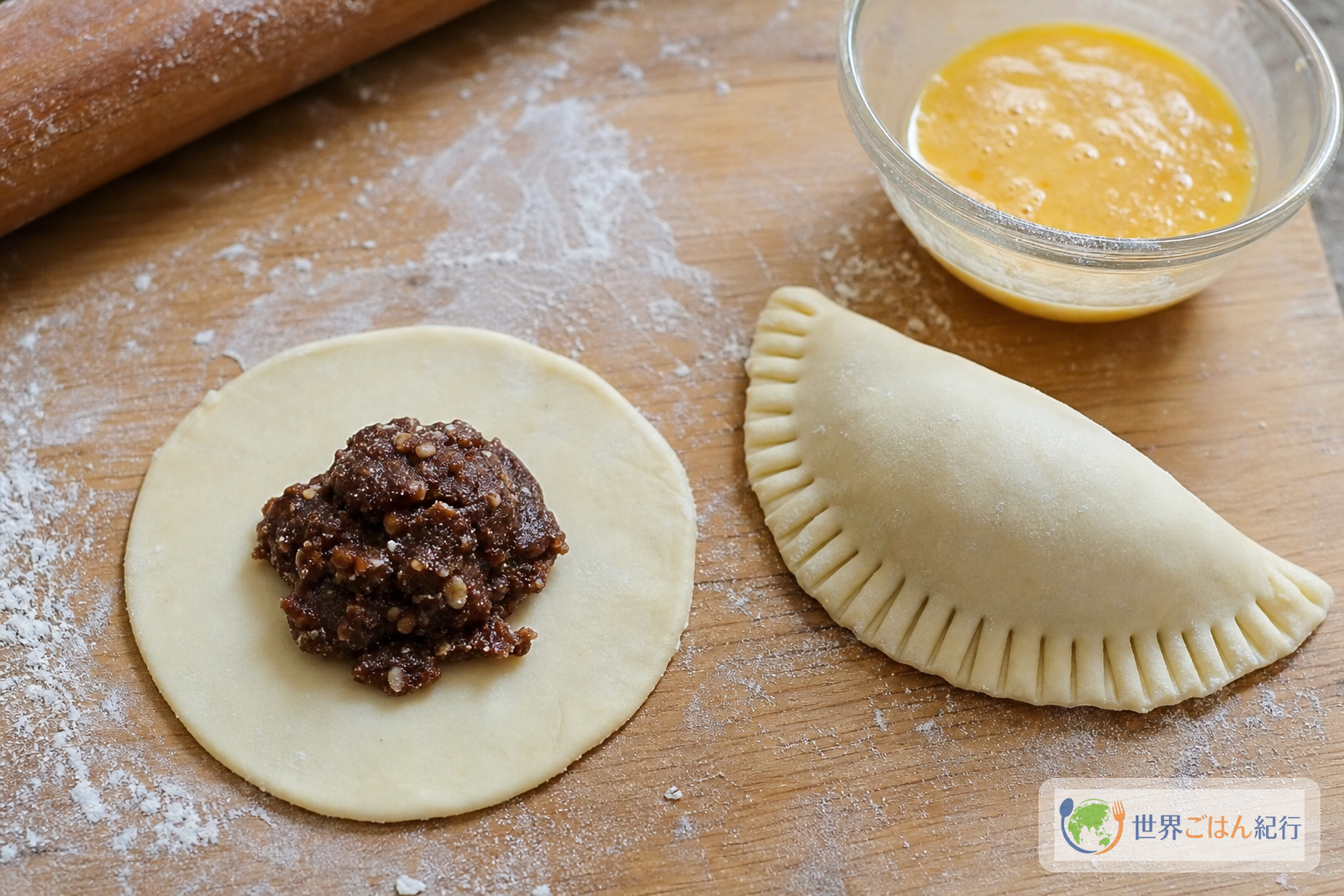
| Edges open | Border too narrow, air left in | Leave an 8 mm border and let the air out before folding |
The most common failure is increasing the meat to "show" it. The stronger the presence of the meat, the more the coherence as a sweet breaks down. The meat is just right when it supports toastiness deep behind the chocolate and almonds, and when afterward you can tell "now that you mention it, there is meat."
Modica chocolate and the background of mpanatigghi
Modica chocolate is known for a gritty texture from the sugar crystals left in it, unlike ordinary smooth chocolate bars. The Qualigeo description of Cioccolato di Modica PGI also outlines a process that combines cocoa mass and sugar and is processed at low temperature, with graininess from the sugar crystals as the characteristic. This graininess suits the filling of mpanatigghi as well. It is not a perfectly smooth ganache, because the meat, nuts, sugar, and cacao each remain a little as grains.
Regarding the origin, there are several tellings: a link to the Spanish-style empanada, stories tied to convents and Lent, and the idea that chocolate helped with keeping. Saveur presents, from Modica pastry shops and chocolate makers, that the half-moon meat-and-chocolate sweet is treated as specific to Modica, and that the combination of meat and chocolate is told in connection with preservation and religious food customs.
What matters when making it is not to stop at novelty. Only with the grain of Modica, Sicilian citrus, nuts, spices, and thin wrapping dough together does beef turn from something odd into depth. Among Sicilian baked sweets as well, nzuddi, made with coarse almonds and citrus, are dry sweets that wrap nothing, and the way they bring out aroma is quite different from mpanatigghi. Seen as southern European sweets, there are also points of contact: the richness of nuts and sugar in baklava (in Japanese), the warm scent of cinnamon that goes into moussaka (in Japanese), and the culture of wrapping in empanadas.
Storage and serving
Because mpanatigghi contain meat, think carefully about storage. Once completely cool, wrap each one in parchment, put them in an airtight container, and eat within 3 days refrigerated. Do not leave them long at room temperature even in a cool season; serve within 2 hours at the table.
If freezing, wrap each one before dusting with powdered sugar, put in a freezer bag, and keep about 2 weeks. Move to the refrigerator the day before eating, and on the day warm in a 160°C toaster oven for 4 minutes, cool on a rack for 10 minutes, and then dust with powdered sugar, and the crispness of the edge returns. Warming only in a microwave softens the dough and brings the oil of the filling forward.
Good drinks are unsweetened espresso, strong tea, and a dry-leaning Marsala. They are sweet, but the finish has meat and chocolate, so bitter drinks go better than sweet drinks heavy with milk. After a meal, one per person is enough. If you serve them cut small, cut just before eating, since the cut face dries easily.
Right out of the refrigerator, the butter and chocolate are firm and the aroma is closed. For guests, take them out of the refrigerator 30 minutes before eating and let them return to room temperature on a plate. Dust with sugar after that, and it is less likely to get damp and stays white on the surface. When rewarming too, stopping at the point where the center is just slightly softened, rather than piping hot, keeps the meat aroma from coming forward too strongly and leaves a clean finish of chocolate and citrus.
Frequently asked questions
Can I make it without meat?
Without meat it still becomes a chocolate-and-almond half-moon sweet. It loses much of what makes it mpanatigghi, though. If you want to avoid meat, adding 20 g toasted almonds and 5 g cocoa powder brings the density closer, but it is more natural to think of it as a different thing from the dish named in this article.
Can I use pork or a pork-beef mix instead of beef?
For the first time, lean ground beef is easiest to handle. Pork and mixed ground meat have more fat, and the fat flavor tends to stay once cool. If you use them, choose lean cuts and blot off the fat thoroughly with paper after cooking.
Can't I make it without Modica chocolate?
You can. Modica chocolate would bring the grain and aroma closer, but it can be hard to find. Chop dark chocolate of around 70% cacao fine and make up the grain with cocoa powder and almonds, and it holds together well enough as a home version.
What can substitute for Marsala?
In the dough, use 35 ml white wine and 5 g honey, and in the filling, 1 tbsp white wine. To avoid alcohol, use white grape juice and lemon juice. The aroma is lighter, but if you work chocolate, cinnamon, and citrus in carefully the flavor still holds together.
What does done look like?
The edges and bottom of the dough are a light golden brown, and the surface is dry but not deep brown. It has worked if, when broken open, the filling does not run, the chocolate holds together dark, and the pieces of meat and almonds look even. The aroma settles better once cool than when freshly baked.