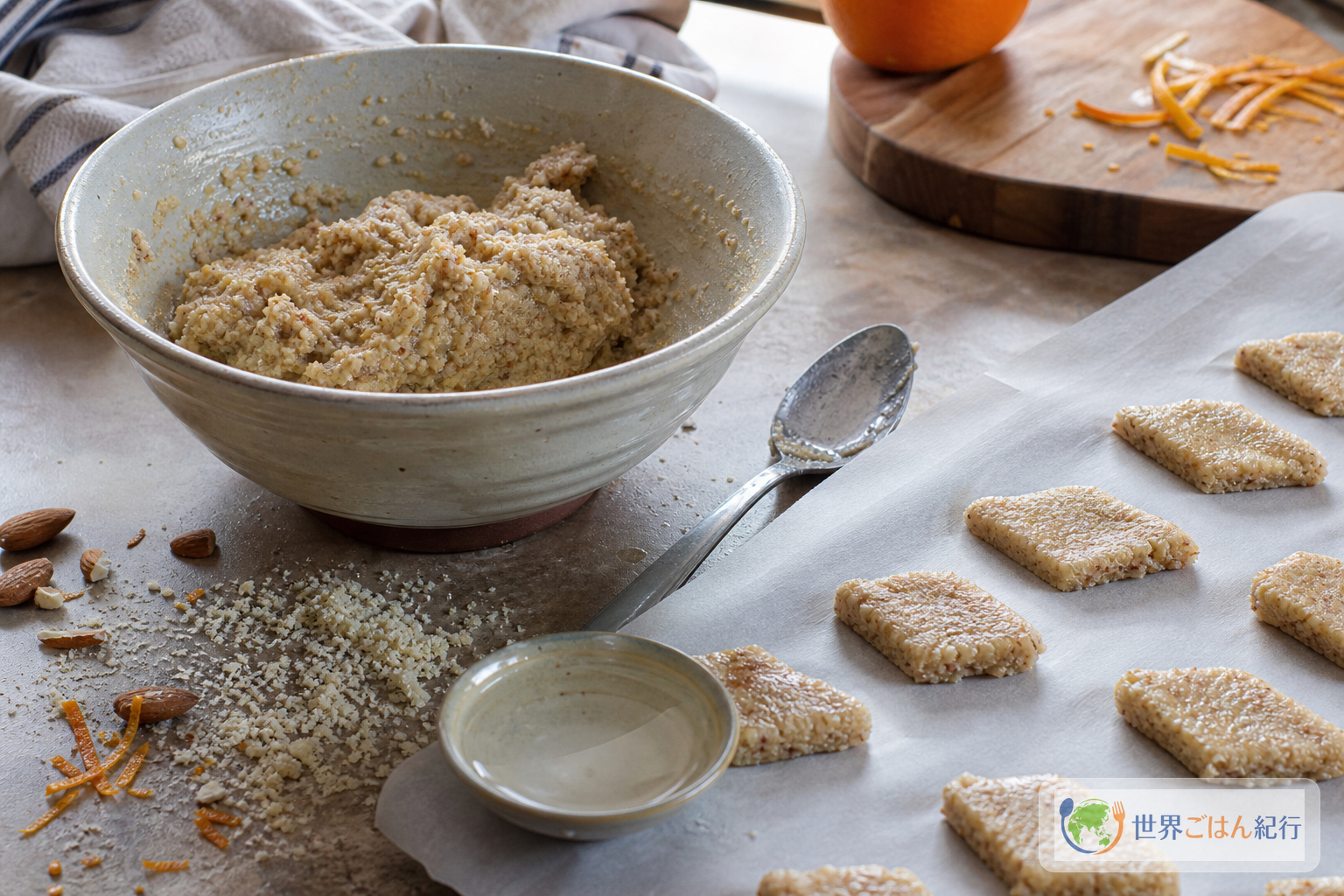
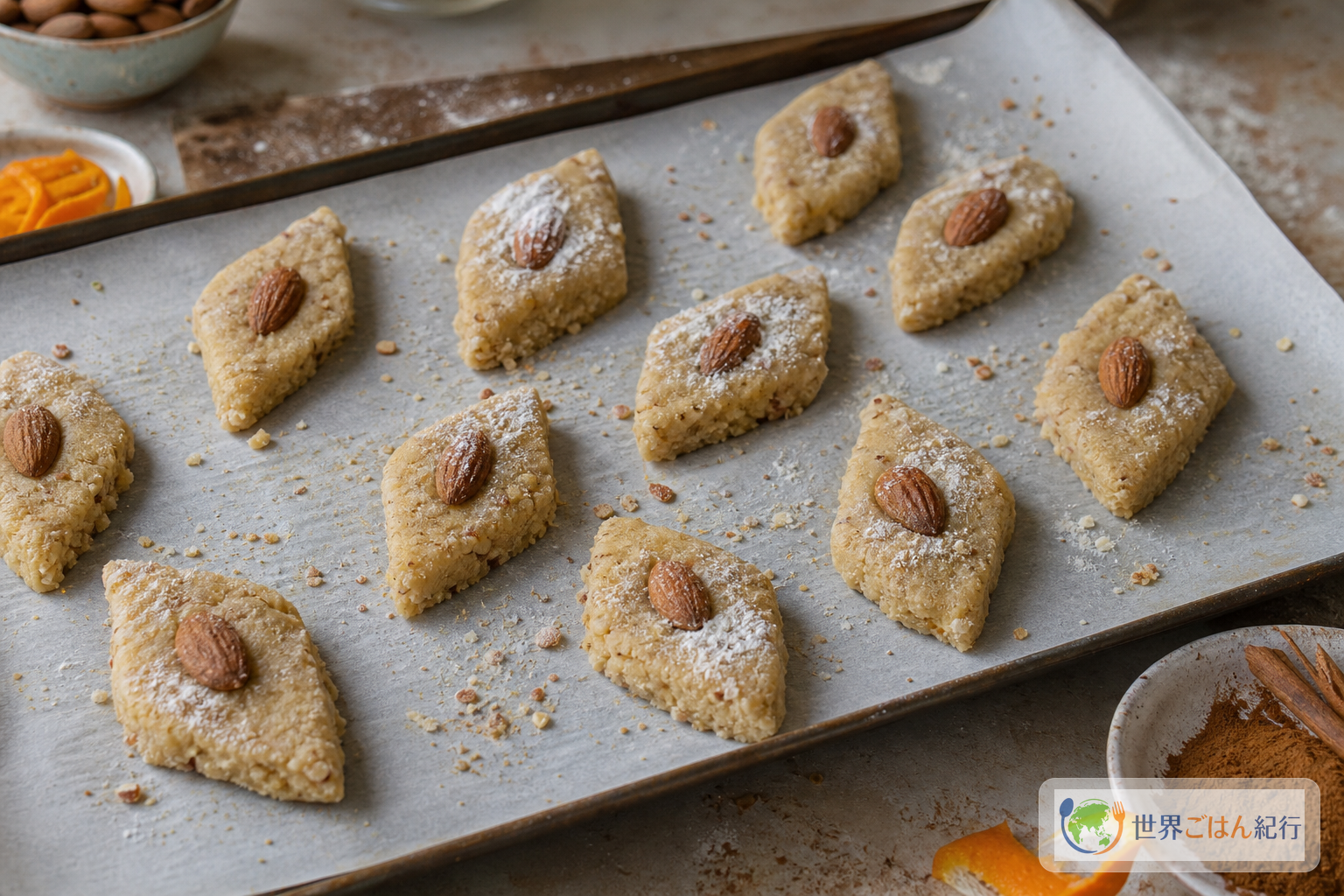
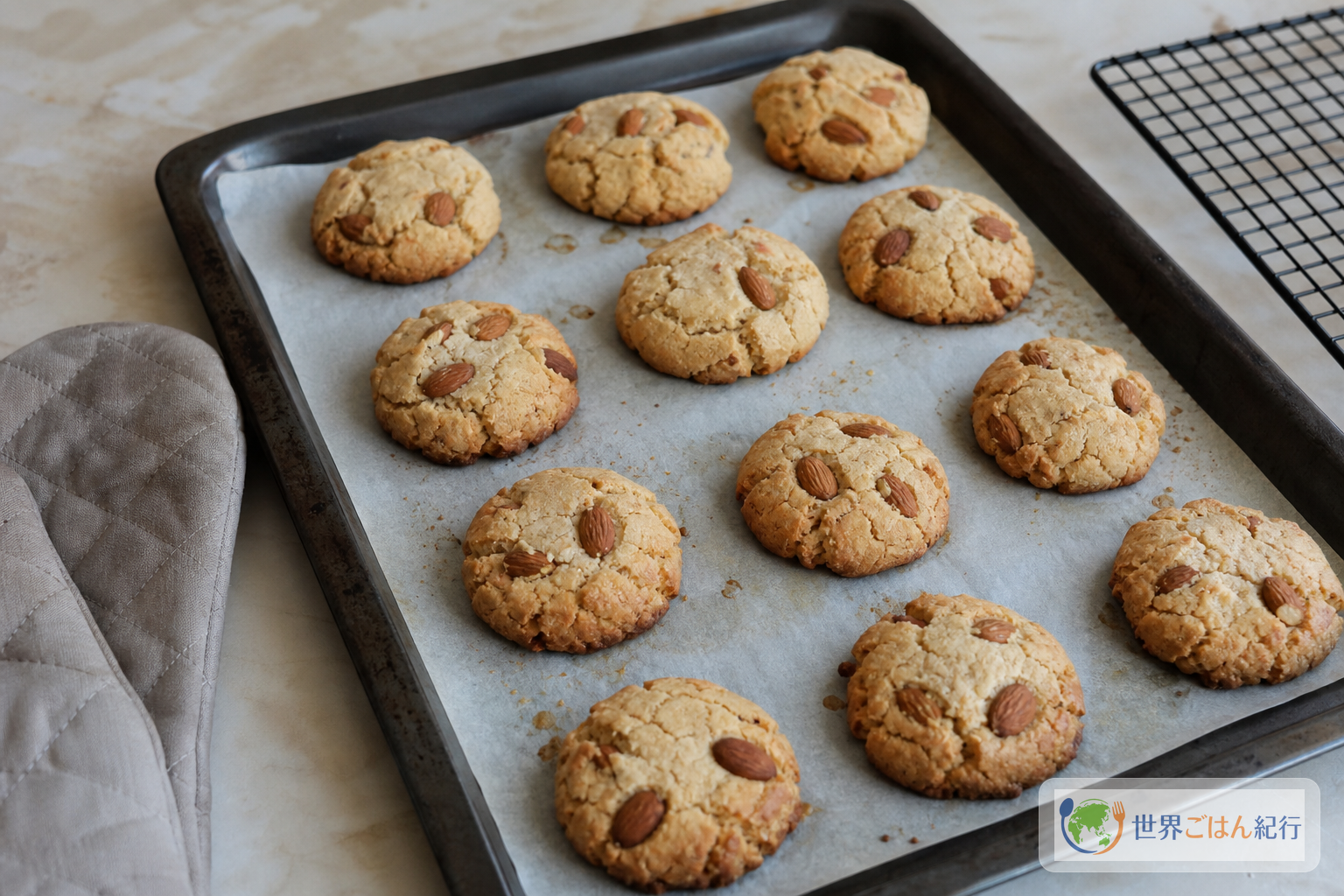
Sicilian fragrance rises in a kitchen where almonds have been ground
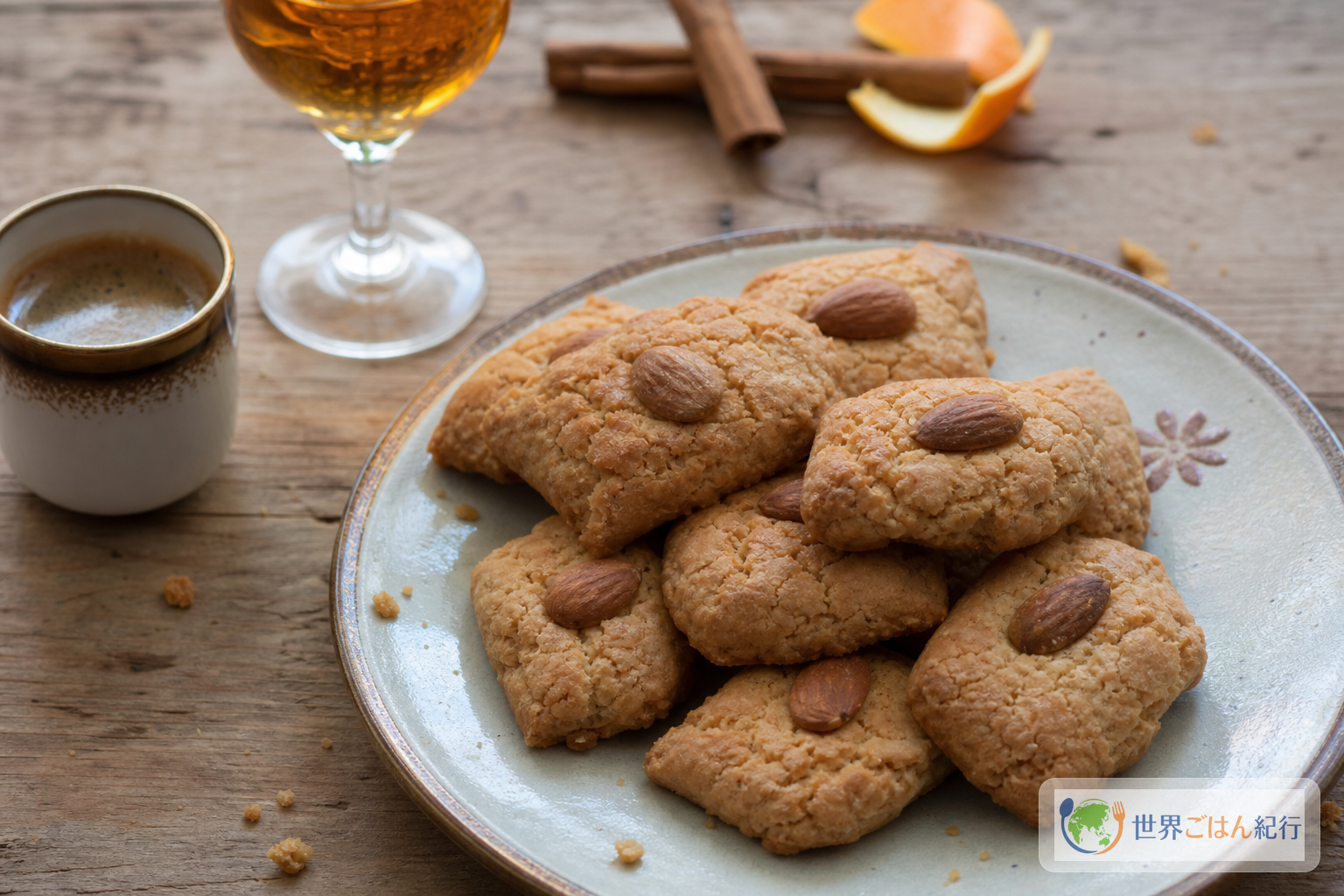
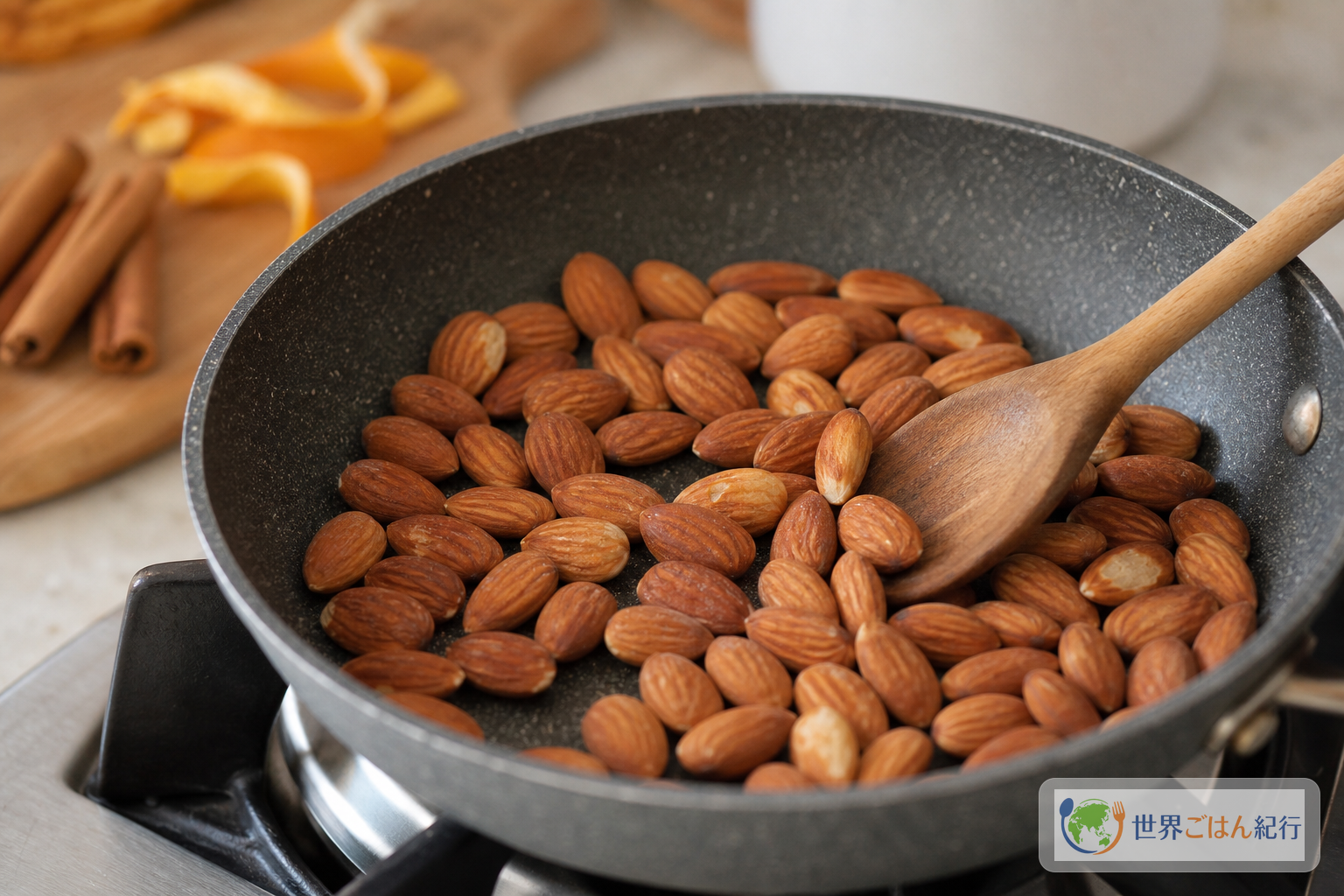
Crush dry-toasted almonds and the result is not so much powder as a mix with small stone-like grains. Add orange zest, cinnamon, and cloves, and even before baking it smells a little like a pastry shop on a trip. 'Nzuddi ('Nzuddi / Nzuḍḍi) is the eastern Sicilian almond sweet baked with that coarseness left in.
The official tourism page of the city of Messina explains that 'nzuddi were originally sweets of the Vincenziane nuns, and that the name is a shortening of "Vincinzuddu," the Messina dialect pet name for Vincenzo. The shape is square and slightly flat, golden, and the ingredients are flour, chopped almonds, whole almonds, cinnamon, sugar, butter, honey, baker's ammonia, and egg white. They were once made for the feast day of Messina's patron, the Madonna della Lettera, on 3 June, and today they are said to be found in pastry shops all year.
What gives pause in a home kitchen is the baker's ammonia. It is used as a leavening agent in old Italian baked sweets, but it is hard to find, and the smell during baking can be worrying the first time. This article keeps the backbone of the fragrance, which is almond, citrus, cinnamon, and honey, and shifts only the leavening toward baking powder. Rather than fully reproducing the hard, dry texture of the local version, it is designed to land in a home oven at "crisp outside, slightly moist at the center."
Unlike a surprising Sicilian sweet such as mpanatigghi (in Japanese), 'nzuddi look plain from the ingredient names alone. But get the way the fragrance comes out wrong and you have just a hard almond cookie. Use cinnamon sparingly, but never old powder. Do not grind the almonds to a flour; leave a coarseness so you feel the pieces when you bite. Do not bake to too dark a color. With these points held, you get a small sweet that goes with espresso or sweet wine.
The baker's ammonia in the local formula is hard to buy reliably, so for the first time this recipe uses baking powder. The fragrance is brought closer with cinnamon, cloves, orange zest, and honey, and the almonds are left coarse to give the chew typical of Messina sweets.
Ingredients (makes 18)
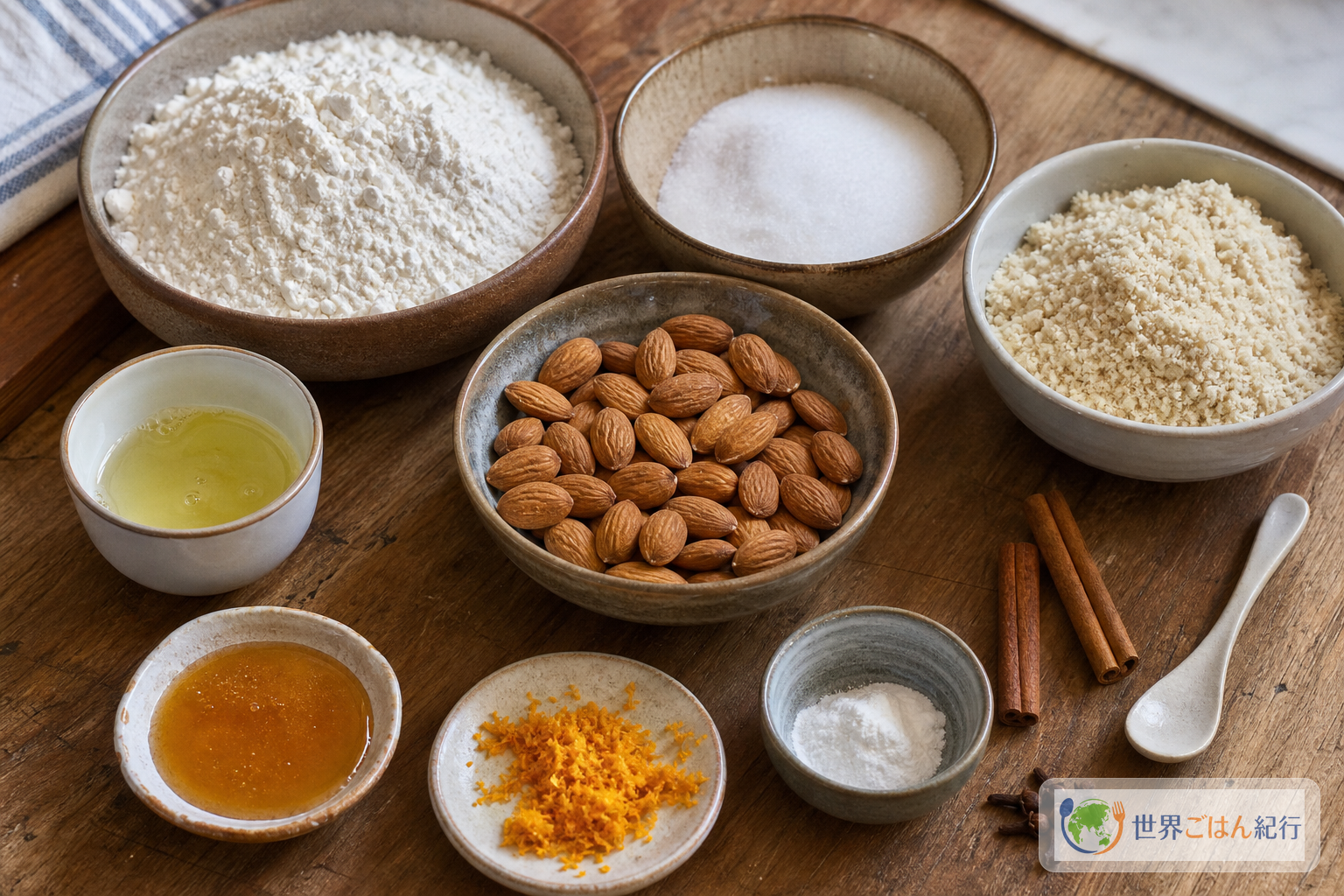
Local 'nzuddi can be large and baked hard. For home, to make them easy to finish, make flat sweets of about 30 g each, 5 to 6 cm across after baking. Thick ones are heavy in the center and too thin ones are just hard, so aim for 1 cm thick when shaping.
Substitutes and cautions
| Ingredient in question | Closer to local | Realistic option for a home kitchen | What changes |
|---|---|---|---|
| Leavening | Baker's ammonia | Baking powder, 4 g | Milder aroma, slightly softer texture |
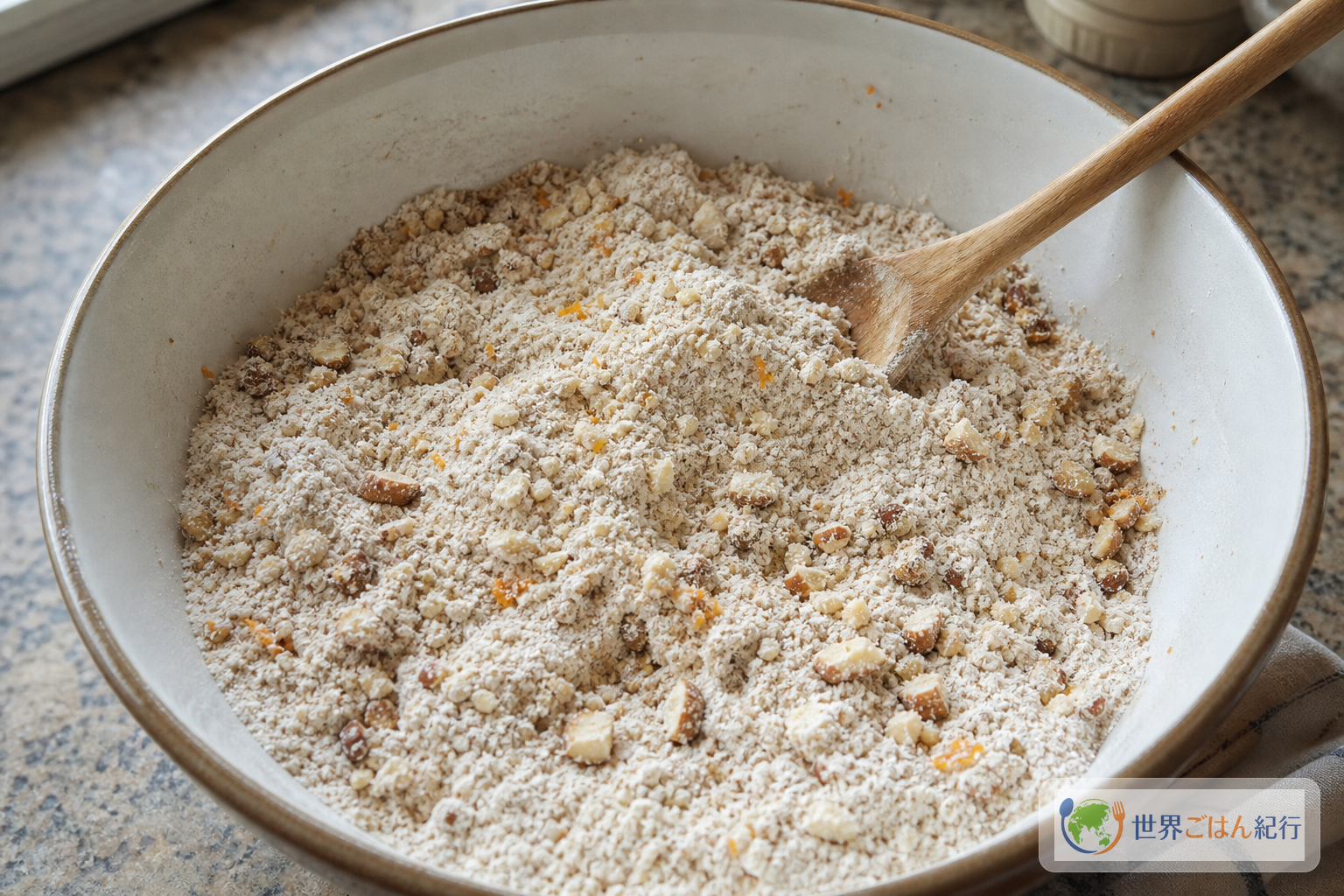
| Almonds | Skin-on almonds chopped coarsely | Dry-toast whole almonds and grind coarsely in a food processor | The more grains remain, the more chew |
| Citrus | Candied orange peel | Candied orange peel, or grated zest | Peel leaves a sweet fragrance |
| Fat | Some formulas include butter or lard | Not used in this recipe | Leans toward a plain crunch rather than lightness |
| Drink | Malvasia delle Lipari or Moscato di Pantelleria | Espresso, strong tea, sweet wine | Meeting the sweet finish with bitterness makes it harder to tire of |
This recipe uses wheat, egg, and almonds. If you have a nut allergy, do not substitute; choose a different sweet. Because it contains honey, do not give it to infants under 1 year old.
Scents and tools worth looking for when you shop
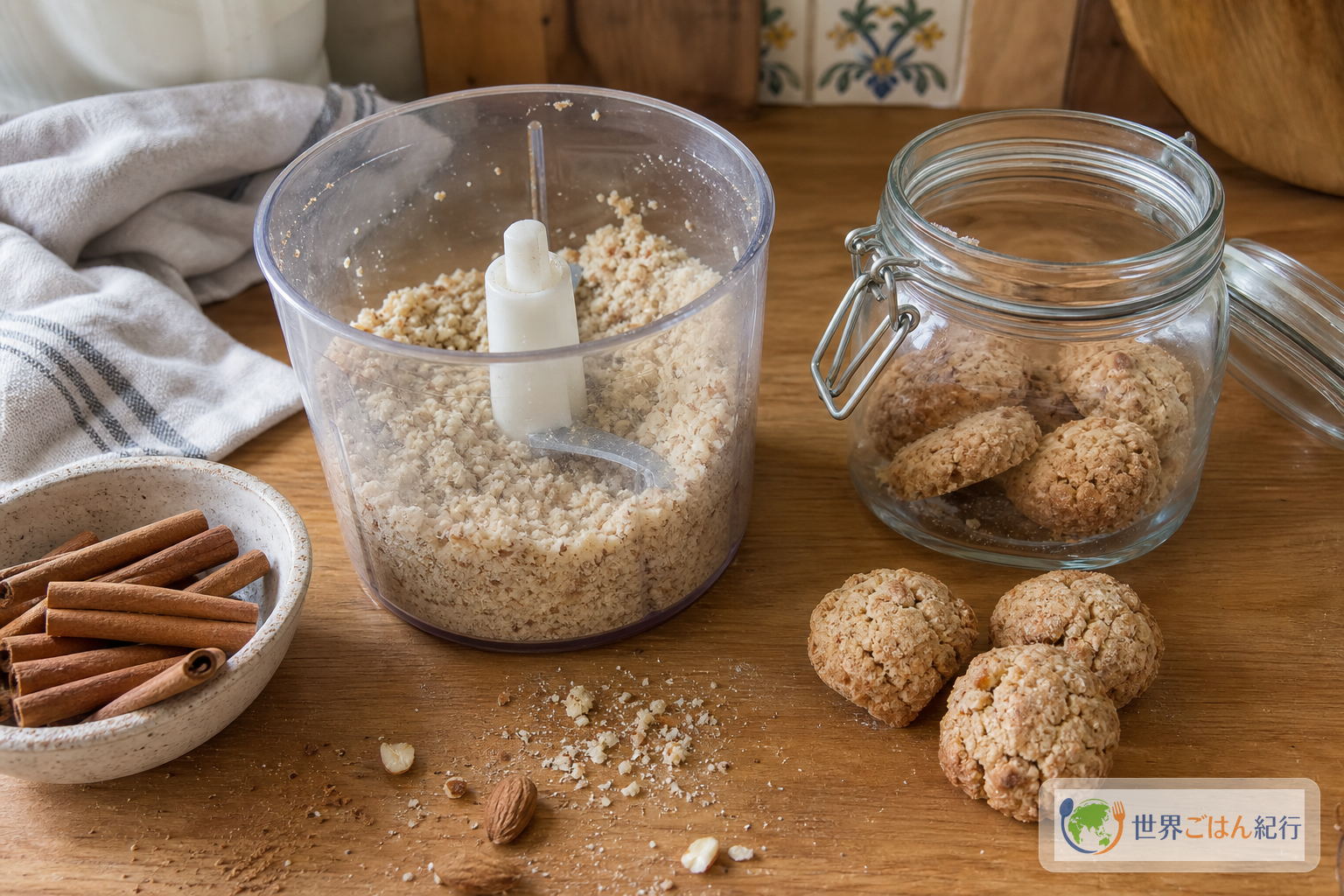
What is worth investing in for 'nzuddi is less the almonds themselves than what keeps the fragrance and coarseness consistent. Almonds, flour, sugar, and eggs are fine from an ordinary supermarket. What makes the difference is freshly opened cinnamon, a small food processor that does not grind the pieces to powder, and a container that protects from moisture after baking.
With cinnamon, a small amount of one that still has its fragrance holds together better than more of it. A generous amount of old powder only pushes forward a floury taste, so choose a small size you can use up.
Almonds can be chopped with a knife, but in large amounts the size becomes uneven. When you want to leave 2 to 4 mm pieces without grinding to flour, short pulses in a small food processor are steadier.
Baked sweets sealed before they are fully cool develop droplets inside and the surface turns heavy. Cool them completely, then put them in a small airtight container with a sheet of parchment between layers, and the fragrance settles by the next day.
How to make them: grind coarsely, bake flat
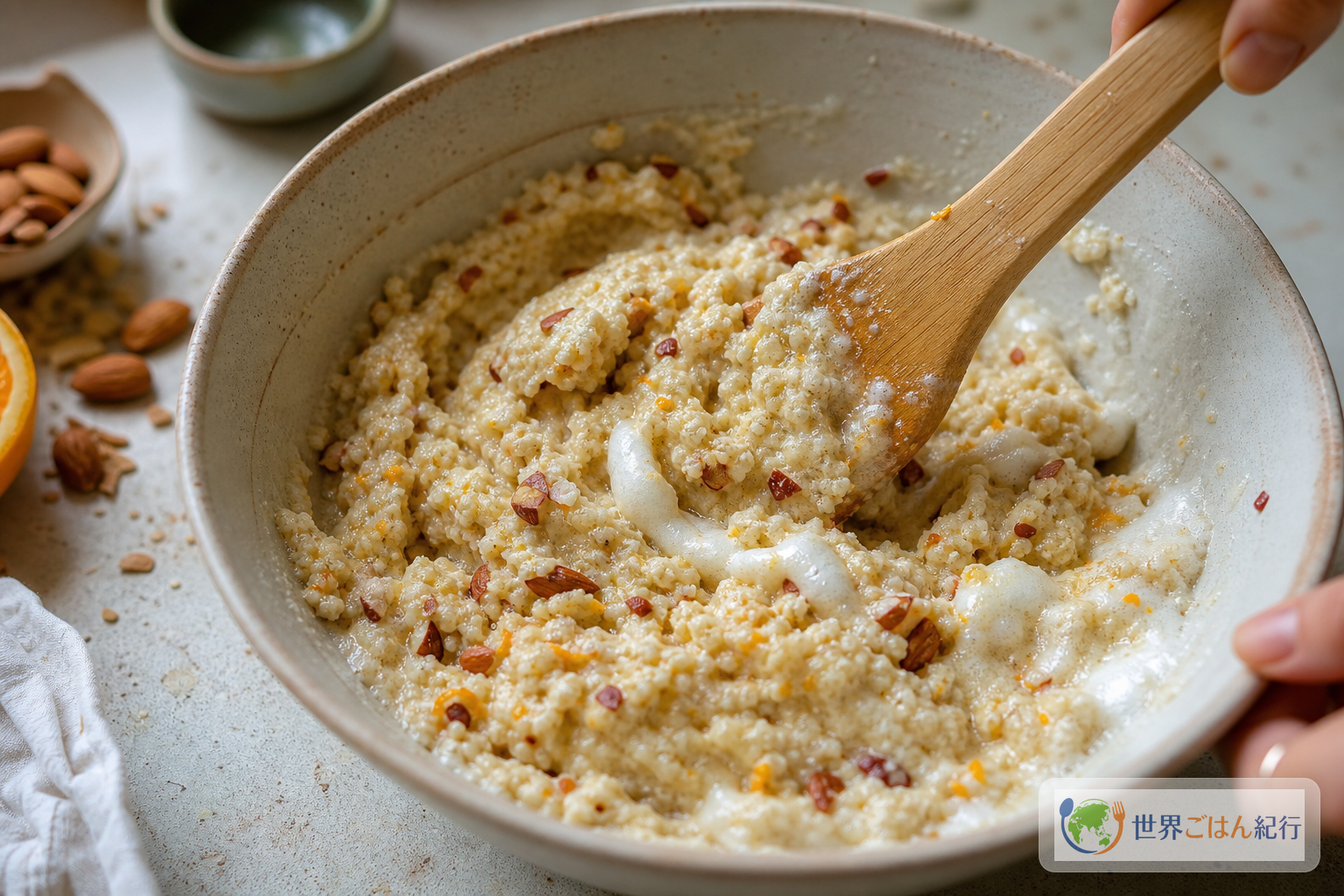
The work itself is not hard. What separates success from failure is not making the almonds too fine, not loosening the dough with too much water, and not baking to too dark a color. They puff up a little round while baking, so leave space between them on the tray.
Rather than baking them through until dry and hard like biscotti, at home it is easier to eat them when they are crisp outside once cool and keep a slightly moist density at the center. They firm up the next day, so for the first batch lean toward baking less.
Where it goes wrong and how to fix it
Failures with 'nzuddi show up less as dramatic collapse than as "the fragrance is blurred," "too hard," or "heavy inside." It is a sweet of flour and sugar, so tasting along the way tells you little about the finished texture. Deciding the firmness of the dough before baking and where to stop the color keeps it consistent.
| What happened | Cause | How to fix next time |
|---|---|---|
| Just a hard cookie | Ground the almonds too fine, or baked too long | Leave 2 to 4 mm pieces and stop at 180°C when the edges are a light color |
| Weak fragrance | Old cinnamon, too little orange zest | Use cinnamon that was opened recently and use the zest of 1 orange without the white pith |
| Dough spreads | Added the water all at once, too much egg white | Add water 1 tsp at a time. Stop when it holds its shape squeezed |
| Floury center | Shaped too thick, not rested enough | Make them 1 cm thick and 5 to 6 cm across, and rest 15 minutes so moisture spreads through the flour |
| Almond comes off | Pressed in too shallowly, surface dry | Wet your fingertips and press about 2 mm into the center |
The baking powder version has a gentler aroma than the local baker's ammonia version, and the texture is a little rounder. If you want a harder, drier texture, stop the water at 10 ml, then after baking turn off the oven, open the door slightly, and dry them on residual heat for just 5 minutes. Drying too much from the first batch makes them hard to bite the next day, though, so try the basic bake first.
Why they are eaten in both Messina and Catania
'Nzuddi are a sweet talked about in both Messina and Catania. English Wikipedia also classes them as a cookie typical of the provinces of Messina and Catania. In recipe-type sources such as Siciliainfesta and Siciliafan, there are also explanations that they are made in Catania as a sweet for the Day of the Dead and All Saints' Day. The Messina official page, on the other hand, focuses on the feast of the Madonna della Lettera on 3 June, the Vincenziane nuns, and the Messina dialect name.
In other words, it is easier to see them as a dry almond sweet of eastern Sicily than to look for a single "correct recipe." A square with rounded corners, or a slightly flat round. Chopped almonds mixed into flour and sugar, spices added, and a whole almond placed in the center. The amounts of fat, egg, and baker's ammonia vary by region and household, but toasted almonds and citrus fragrance are at the center.
Even within Sicily, Modica's mpanatigghi (in Japanese) are half-moon sweets wrapped around chocolate and meat, while 'nzuddi are dry almond sweets that wrap nothing. Read them as close to the culture in which almonds become small after-meal sweets like Catalonia's catànies, or as a sweet that closes a meal with nuts and fragrance like the Maghreb's mhancha (in Japanese), and the links between Mediterranean sweets come into view.
Storage and serving
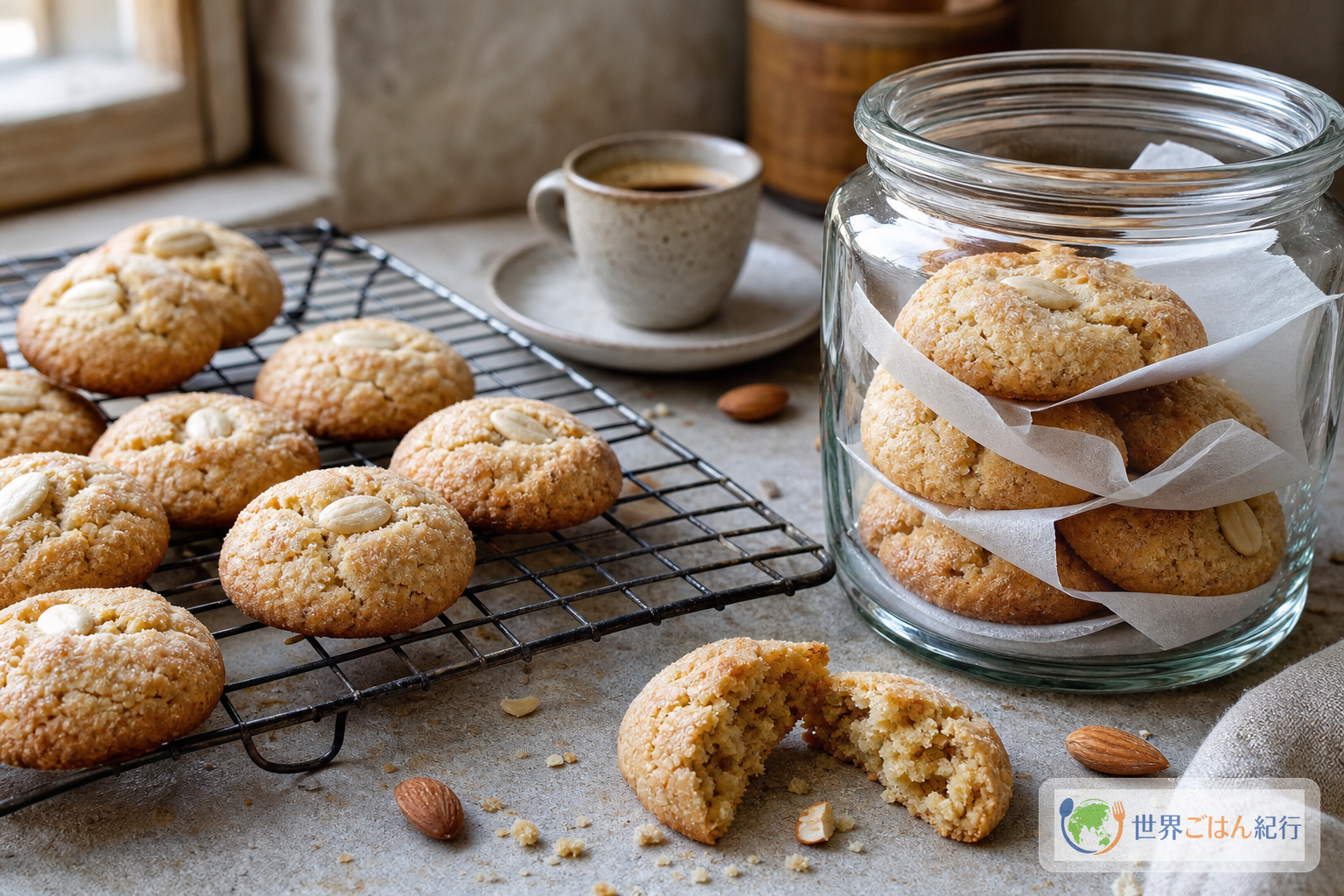
Fully cooled 'nzuddi go into an airtight container with parchment between layers. In humid weather put them in the refrigerator, and take them out 15 minutes before eating to bring them to room temperature so the aroma opens up. The next day, the almonds, citrus, and cinnamon blend better than when freshly baked. This article gives no number of days for room-temperature or frozen storage, because no basis for one could be confirmed.
If you freeze them, wrap each one and put them in a freezer bag. Move to the refrigerator the day before eating, and on the day warm for 3 minutes in a 160°C toaster oven and cool on a rack for 10 minutes before serving. Warming only in a microwave dampens the center, and the crisp surface does not come back easily.
Unsweetened espresso, strong tea, and sweet wine go well with them. The Messina official page presents eating them with Malvasia delle Lipari or Moscato di Pantelleria. At home, rather than serving a large dessert after a meal, setting one or two per person on a small plate is just right.
Also watch for humid seasons. When the surface gets damp, the crisp edges of the day they were baked soon turn heavy. If bringing them to a gathering, put each in a paper cup after they are fully cooled, and lay dry paper towel on the bottom of the container. A cold pack touching directly causes condensation, so even if you chill them, wrap the container in a cloth and open the lid just before serving.
Frequently asked questions
Can't I make these without baker's ammonia?
You can. This recipe substitutes 4 g baking powder. The aroma is milder than in the formula using baker's ammonia, and the texture is slightly softer. For the first time, it is safer to make it with baking powder and get a sense of the firmness and color.
Can I make it with almond flour only?
You can, but the coarse chew typical of 'nzuddi is weaker. If you use only almond flour, adding 20 g of plain roasted almonds chopped coarsely with a knife makes the texture less monotonous.
Don't they include butter or lard?
Some formulas do. FraGolosi's Messina version presents a formula using lard or butter. This article uses no fat so that it is easy to handle at home, and holds it together with egg white and honey. If you want a crumbly softness, melt 25 g unsalted butter, add it with the egg whites, and reduce the water by 10 ml.
Which is correct, square or round?
The Messina official page describes them as square and slightly flat. Recipes closer to Catania also show round flat ones. At home you can make them either as a square with rounded corners or as a flat round. What matters is keeping the thickness to about 1 cm.
What is a good dish to serve them after?
They are small after-meal sweets to go with coffee or sweet wine. Thinking in the flow of an Italian meal, serving a small amount after panzanella or risotto keeps things from getting heavy. Making them alongside the Sicilian sweet mpanatigghi (in Japanese) on this site shows how differently fragrance goes even on the same island.
What if they harden the next day?
Rather than moistening them, warm them lightly to bring back the fragrance. Warm in a 160°C toaster oven for 2 to 3 minutes and set on a rack for 10 minutes, and the surface comes back. Adding moisture for storage makes the surface heavy, so if you dunk them in a drink, do it just before eating.