Poffertjes: Yeasted Batter, a Dimpled Pan, Butter and Sugar While Hot
A light batter raised with yeast and whipped egg white, cooked in small wells until golden on both sides, and eaten warm with butter and powdered sugar.
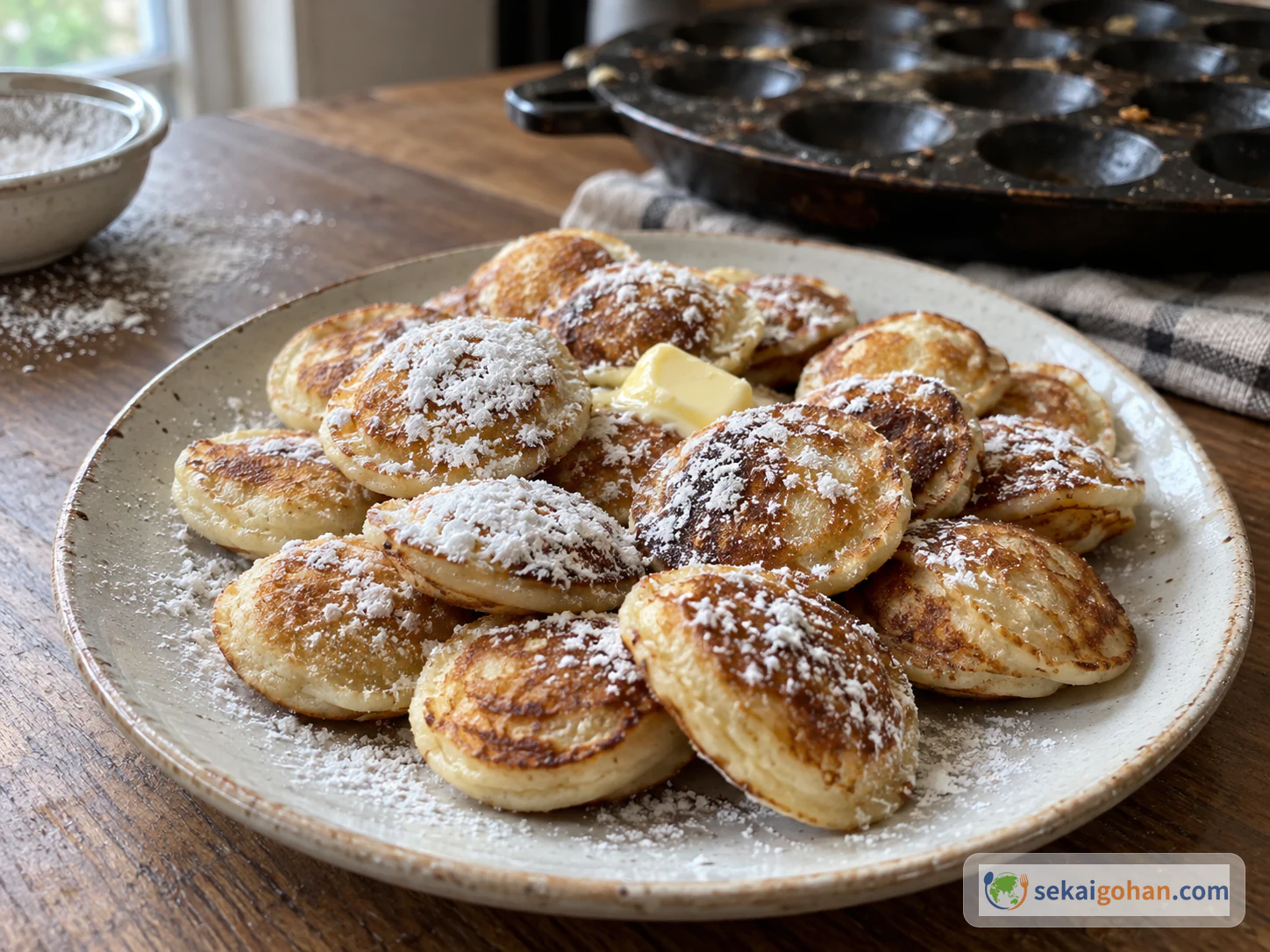
At Dutch markets, some stalls sell poffertjes: small pancakes served with butter and powdered sugar. Calling them "mini pancakes" is accurate, but it leaves out what makes them their own thing. The batter is leavened with yeast, it is cooked in a heavy pan full of shallow round wells, and the butter and sugar go on while the pancakes are still hot enough to melt the butter.
This recipe follows one specific version: the poffertjes recipe by Anja Tanas published by the German broadcaster WDR alongside a report on food on the island of Texel. That report sets poffertjes next to the much larger Dutch pancakes, pannenkoeken, and mentions places on the island that serve them. Texel is used here as a doorway into the dish, not as its birthplace, and this is one cook's formula rather than a single national standard.
For more Dutch dishes and background, see the Netherlands country guide.
In Dutch the dish is written poffertjes (singular poffertje). Where the name comes from is not covered here, because it could not be confirmed.
Poffertjes Are a Yeasted Batter Cooked in Small Wells
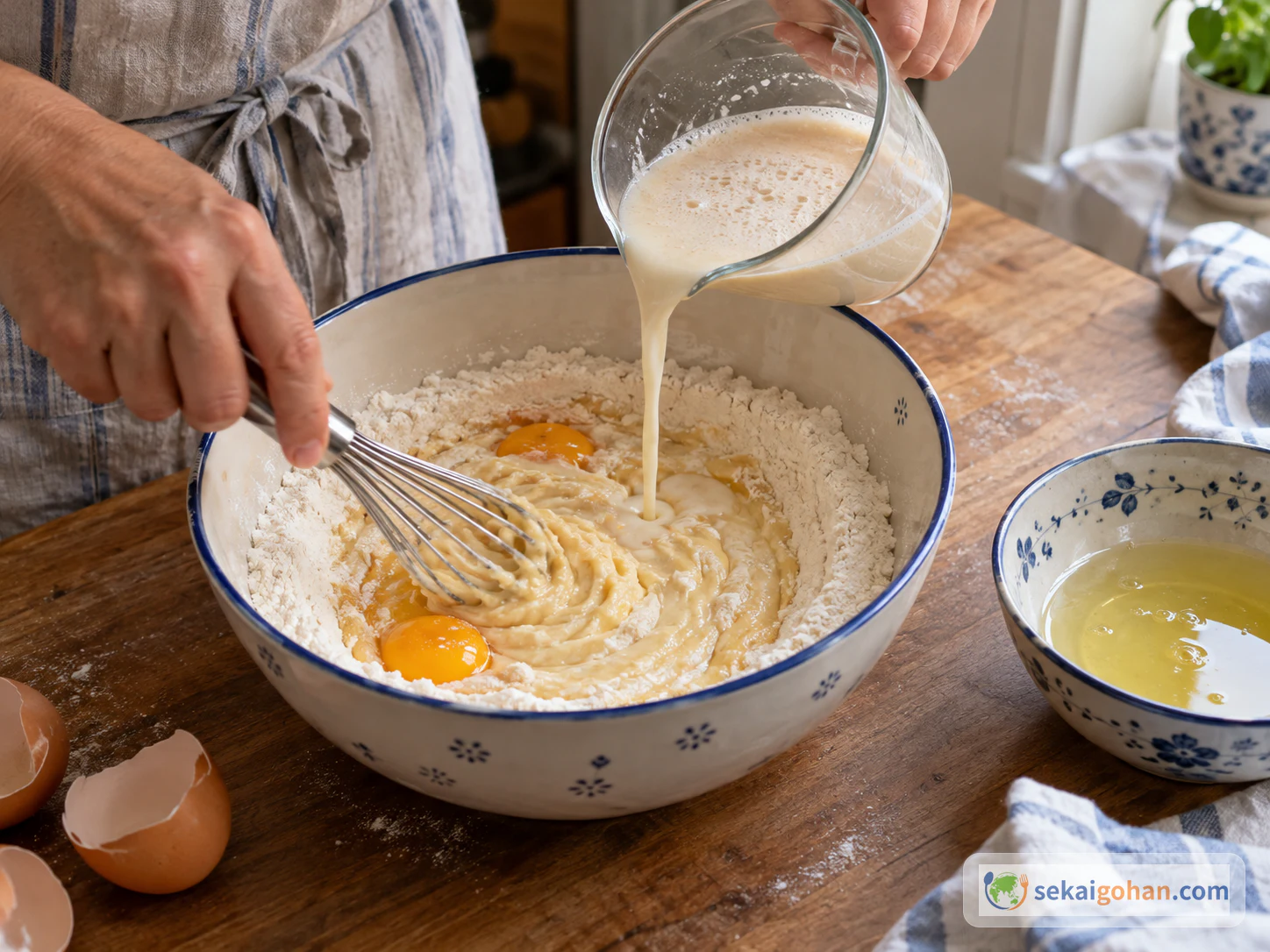
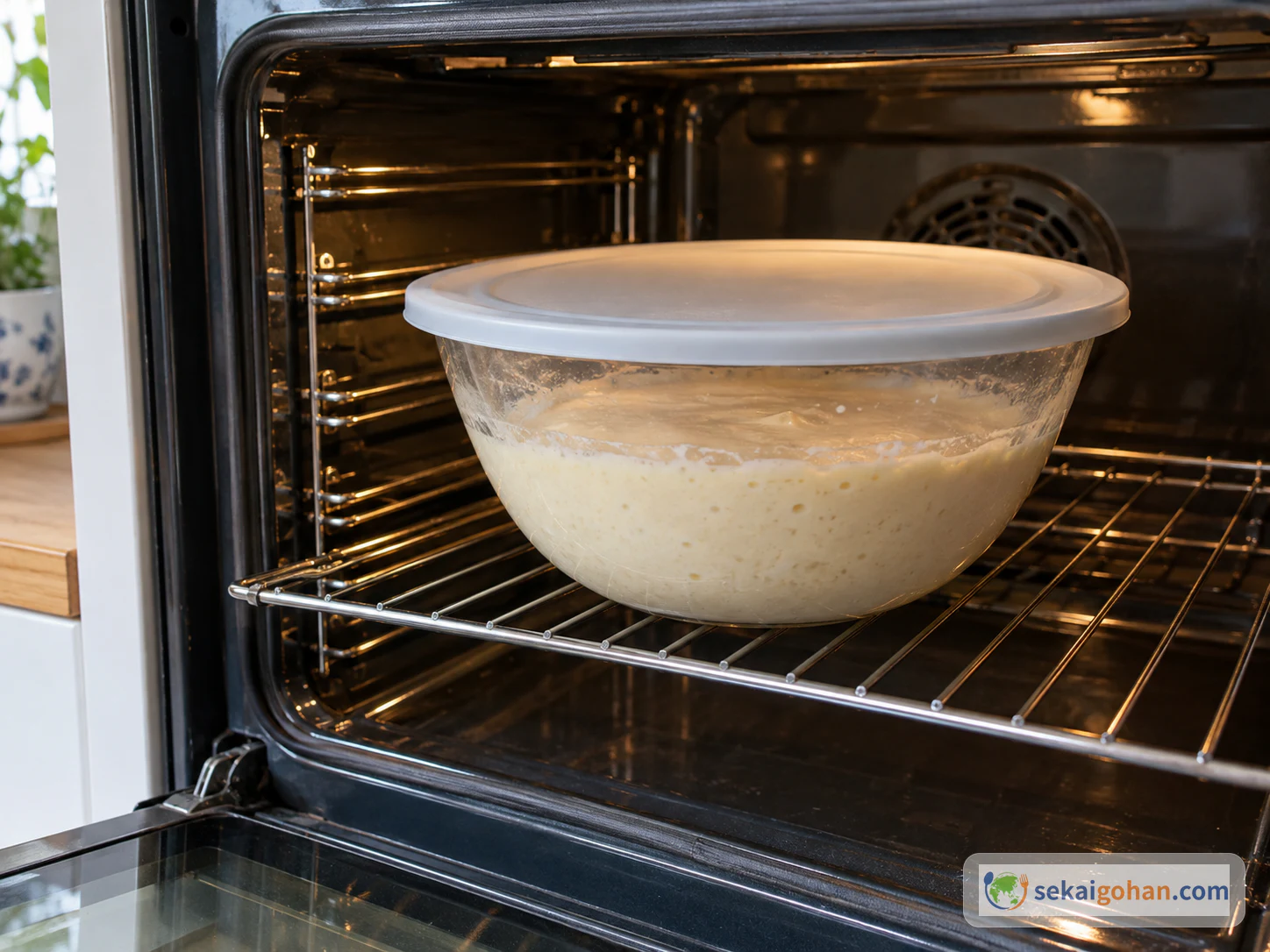
The difference from a pannenkoek is size and leavening. A Dutch pannenkoek is a large, flat pancake. Poffertjes are small, puffy rounds, and in this version the batter rises twice: first the yeast is woken up in warm milk, then the finished batter, lightened with whipped egg white, rests somewhere warm before cooking.
Market stalls are one documented setting. Work in NL, a Dutch government-backed guide for people living in the Netherlands, describes stalls selling poffertjes at markets and serving them with butter and powdered sugar. That is a good picture of the dish, though it is not a claim about how often anyone eats them at home.
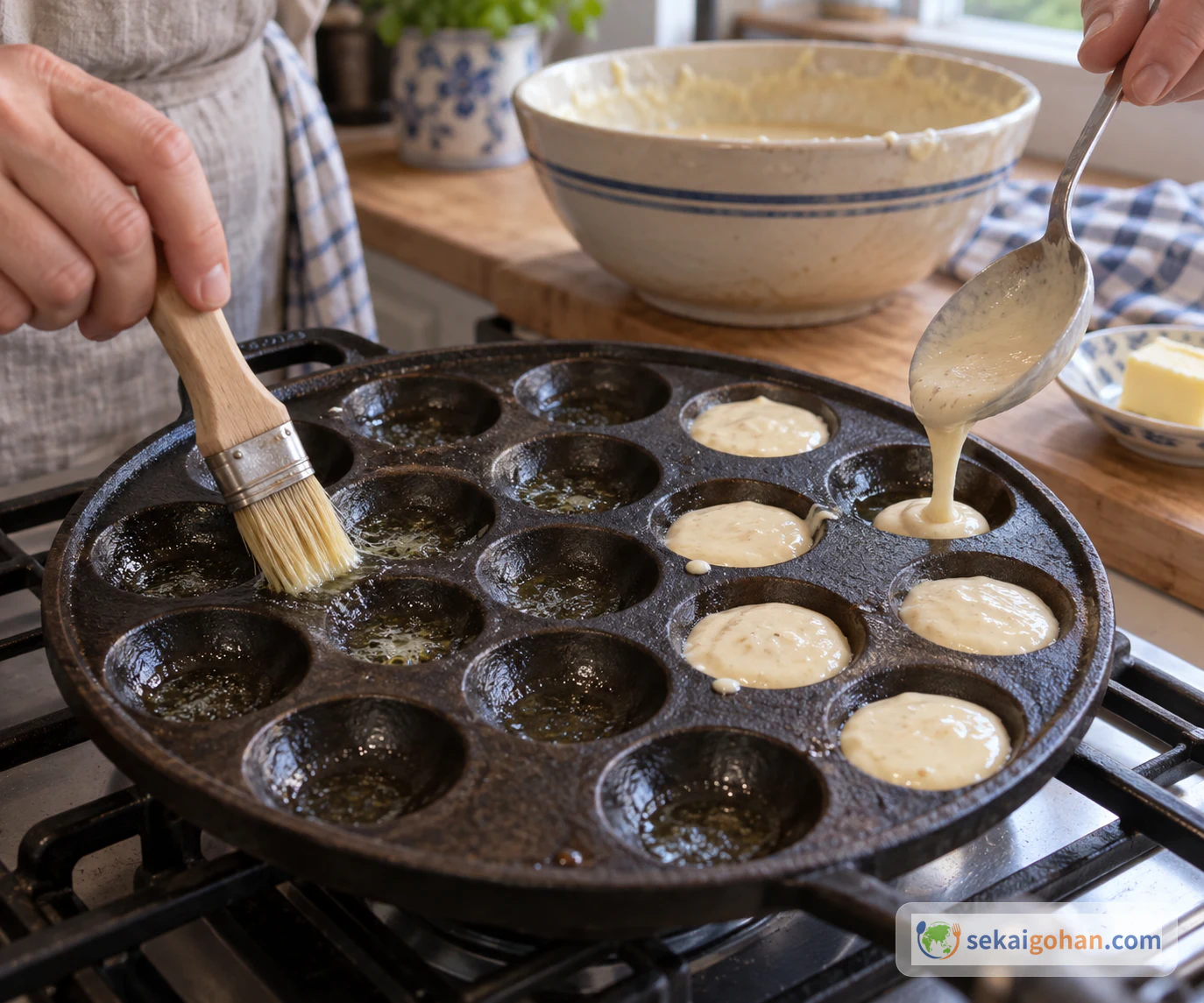
So do you need a special pan? A poffertjes pan, with its shallow round wells, gives the familiar shape most closely. The WDR recipe also offers a fallback: drop small balls of batter, about 3 cm across, into an ordinary frying pan and cook them on both sides. The result is not the same round puff, but it is the same batter and the same way of eating.
This recipe as a whole has not been kitchen-tested by Sekai Gohan.
Ingredients (Serves 4–6)
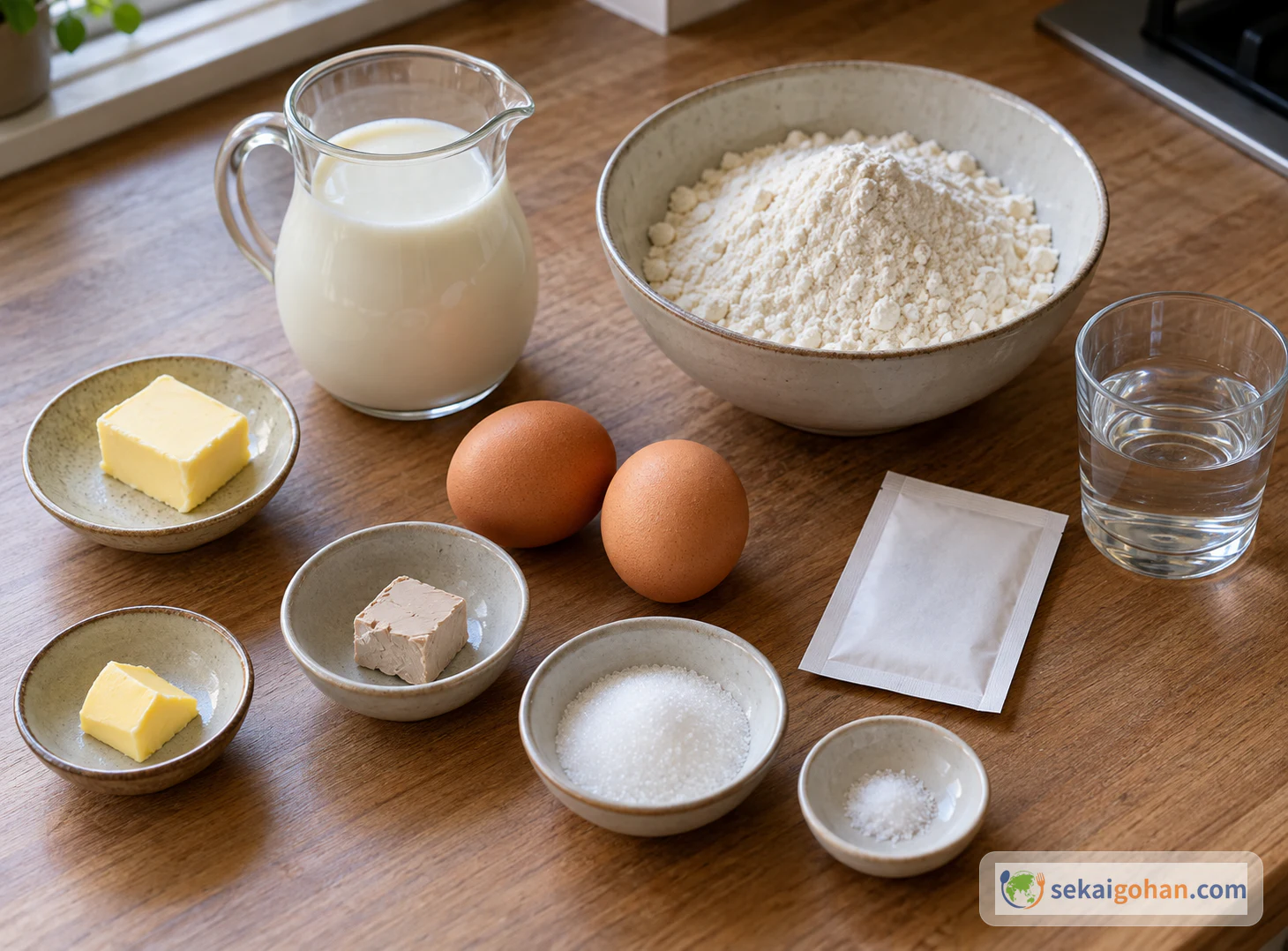
Keep the butter for the batter separate from the butter for greasing the pan. Add the water only if the batter is too thick.
This recipe contains wheat, milk and egg. If you try a version with buckwheat flour, keep buckwheat allergy in mind.
Equipment
- Poffertjes pan (a heavy pan with shallow round wells), or an ordinary frying pan
- Small saucepan for warming the milk
- Whisk
- Mixing bowl for the batter, plus a clean bowl for the egg whites
- Wooden spoon for folding
- Cover for the bowl
- Oven that can hold a low warmth of about 50°C
- Spoon for filling the wells
- Pastry brush for buttering the wells (optional)
Choosing and Substituting
Fresh yeast. Use half a cube of fresh yeast. If your fresh yeast comes in a different format, check the product's own information before measuring.
Vanilla sugar. Use one sachet.
Buckwheat. Use wheat flour only for this batter. Swapping in buckwheat changes how the batter absorbs water and behaves; a buckwheat version needs a separately verified formula.
No poffertjes pan. An ordinary frying pan works for small batter balls about 3 cm across, cooked on both sides. They come out flatter than pan-cooked poffertjes.
Method: Wake the Yeast, Lighten the Batter, Cook Both Sides
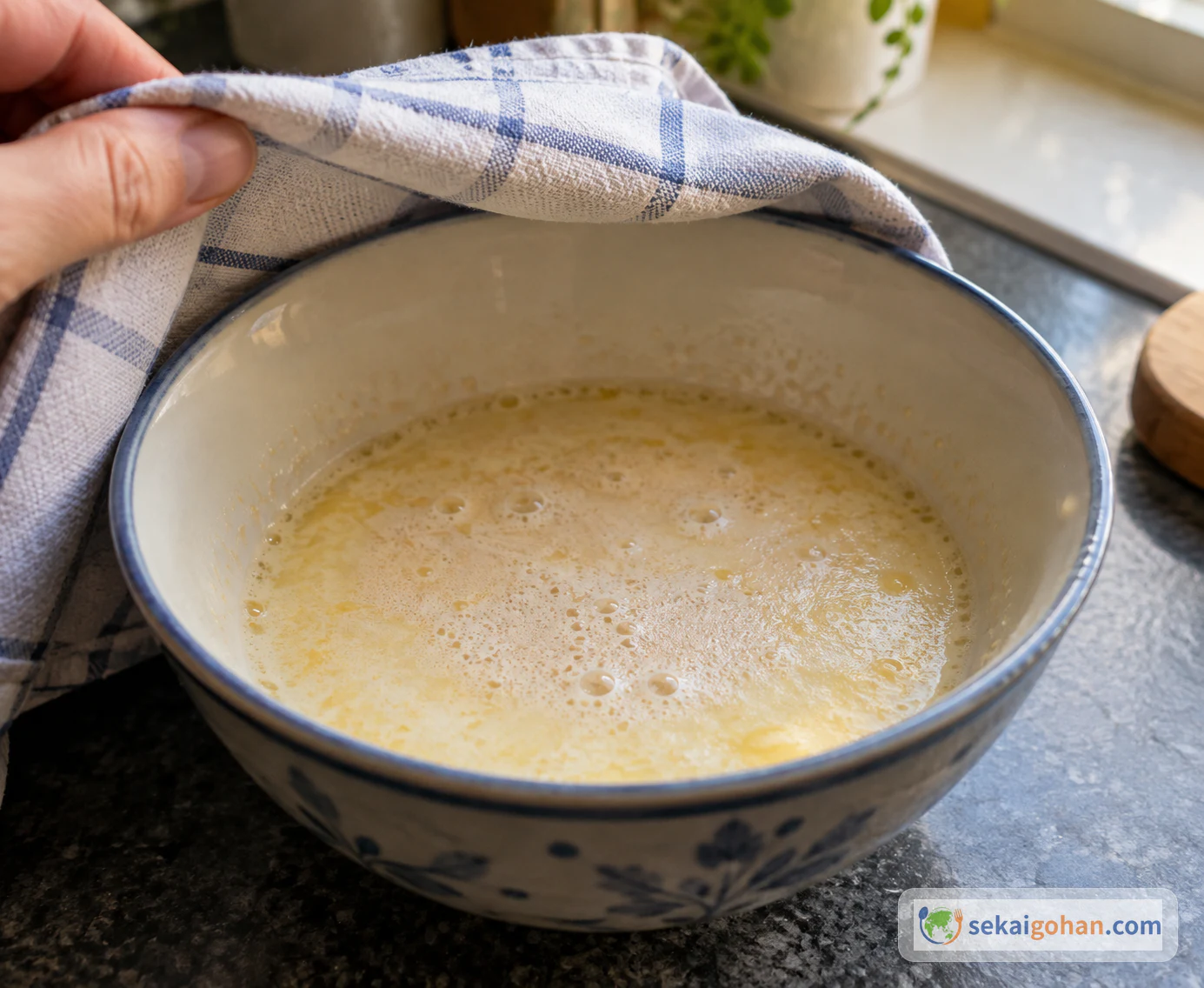
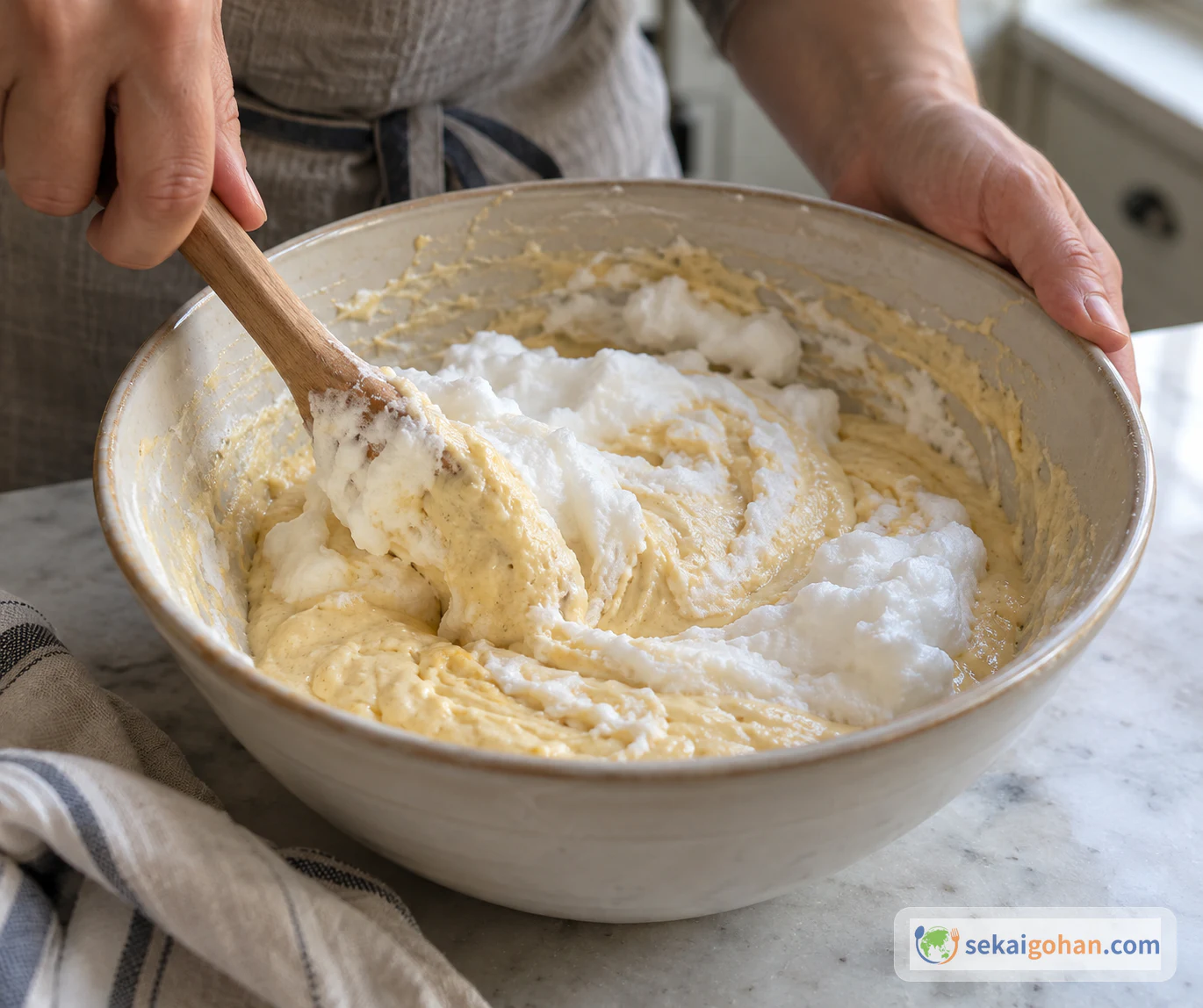
The yeast mixture rests for 15 minutes. After that, judge the rise by how the batter looks: visibly risen, with bubbles.
Butter and Powdered Sugar, While They Are Warm
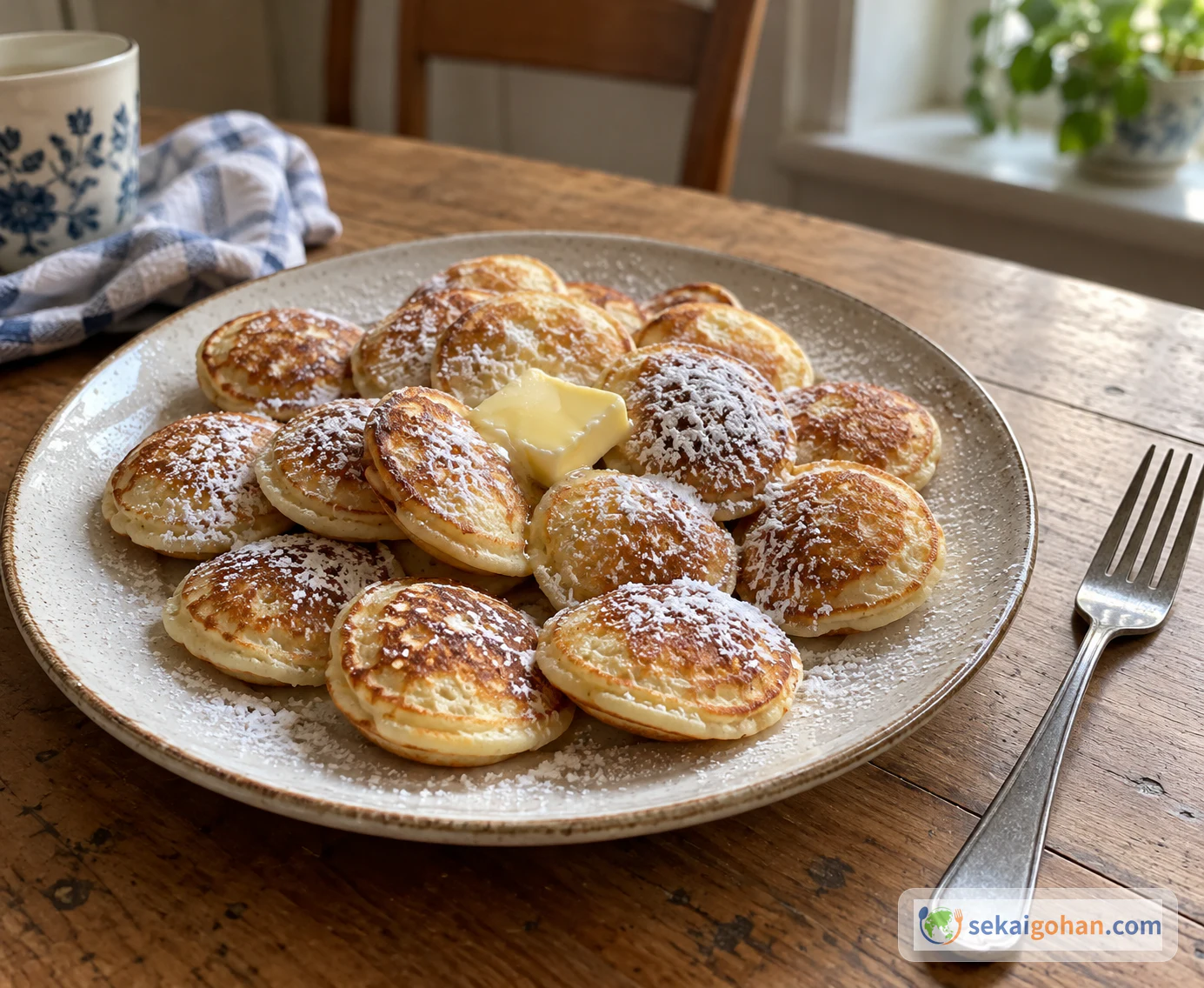
The classic finish is the one sold at market stalls: a piece of butter among the hot poffertjes and a dusting of powdered sugar over the top. Add both while the pancakes are warm, so the butter melts and the sugar clings to it.
If you want something different, there are other toppings to choose from:
| Variation | How to serve it |
|---|---|
| Syrup | Pour over the warm poffertjes in place of, or along with, the powdered sugar |
| Fruit | Serve on the side alongside the warm pancakes |
| Whipped cream | Add a spoonful just before eating |
| Chocolate sauce | Drizzle over the top |
| Frying-pan poffertjes | Small batter balls about 3 cm across, cooked on both sides; flatter than pan-cooked ones, eaten the same way |
When Things Go Wrong
These notes are general cooking judgment, not part of the recipe itself.
| Problem | Likely cause | What to do |
|---|---|---|
| No bubbles on the yeast mixture | Milk too hot, or yeast past its best | Start again with lukewarm milk and fresh yeast |
| Batter too thick to spoon | Flour absorbs differently | Add water a little at a time, up to about 50 ml |
| Batter is flat and dense after folding | Egg whites knocked down | Fold more gently next time, lifting rather than stirring |
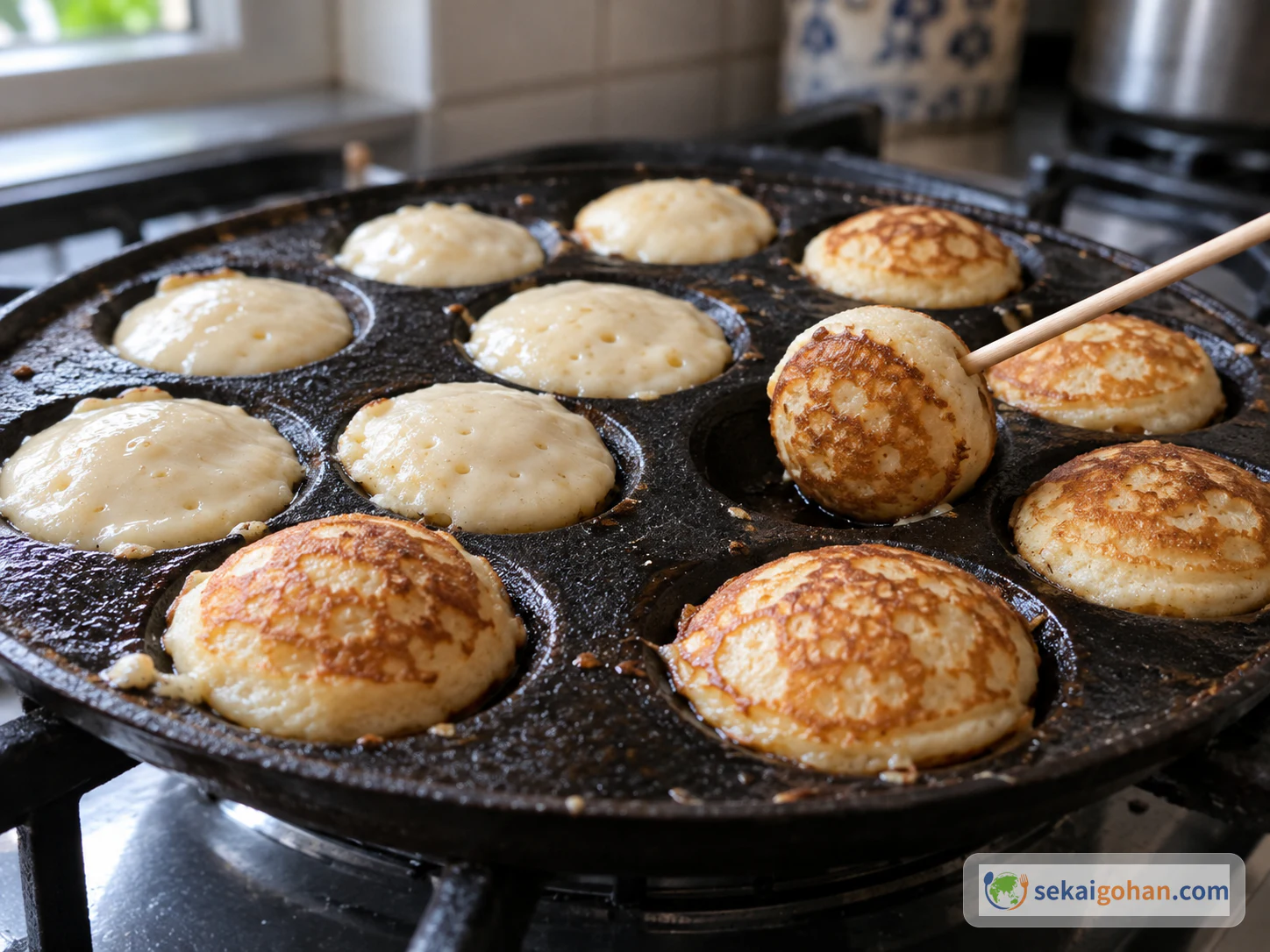
| Outside dark before the inside is done | Pan too hot | Lower the heat and let the pan settle before the next batch |
| Slow to color | Pan not hot enough | Give the pan more time to heat before filling the wells |
| Batter overflows the wells | Wells filled to the rim | Fill each well only partway |
From Market Stalls to a Local Tradition
Holland.com, the Netherlands' official tourism site, lists poffertjes among familiar traditional Dutch foods and describes Dutch food culture as full of regional specialties tied to local places and seasons. That fits the WDR Texel report, which shows poffertjes as something you can find on the island, rather than presenting them as the island's own dish.
One very specific local custom is recorded by the Dutch Knowledge Centre for Intangible Heritage (KIEN). In Breukelen, every year on 3 October, poffertjes are handed out to the local primary school children. A local poffertjes stall has kept this going since 1915, and it is funded through a legacy fund. This is a tradition of one town, not a national holiday, but it shows how a market snack can become part of a place's calendar.
Where poffertjes first came from is not covered here; no source used for this article settles that question.
Frequently Asked Questions
Can I make them without a poffertjes pan?
Yes. The WDR recipe suggests dropping small balls of batter, about 3 cm across, into an ordinary frying pan and cooking both sides. They won't be the same round puffs that the dimpled pan gives, but the batter and toppings are the same.
Can I use buckwheat flour?
The WDR recipe notes that poffertjes are traditionally made with half buckwheat flour, but it gives no measured buckwheat version, and this article does not invent one. The recipe here uses wheat flour only. If you experiment with buckwheat, treat it as a separate recipe to work out, and keep buckwheat allergy in mind.
How many poffertjes does this make?
The recipe is given for 4–6 servings and does not state a number of pieces. The count also depends on the size of your pan's wells, so no figure is given here.
How long should the batter rise in the oven?
The recipe gives the oven warmth, about 50°C, but no rising time. Go by the batter: it should be visibly risen with bubbles on the surface.
Can I store or reheat leftovers?
None of the sources used for this article cover storing or reheating poffertjes, so no storage times or methods are given here. They are eaten warm, straight from the pan, with butter and powdered sugar.
Sources
- Westdeutscher Rundfunk (WDR), "Poffertjes" (recipe by Anja Tanas, presented with a report on food on Texel). The ingredients, amounts and 4–6 serving yield; the method of warming the milk with butter, dissolving the yeast and sugar and resting 15 minutes until bubbly, using the yolks in the batter and folding in whipped whites, rising covered at about 50°C, filling the wells short of the rim and cooking both sides golden; the frying-pan option; the note on traditional half-buckwheat flour; optional toppings; and the comparison with pannenkoeken. https://www1.wdr.de/verbraucher/rezepte/alle-rezepte/poffertjes-100.html
- NBTC / Holland.com, "The hidden gems of Dutch cuisine." Poffertjes as mini pancakes among familiar traditional Dutch foods, and the regional variety of Dutch food culture. https://www.holland.com/global/tourism/getting-around/interests/dutch-food-and-cuisine
- Work in NL, "Cuisine." Market stalls selling poffertjes, served with butter and powdered sugar. https://www.workinnl.nl/en/living-in-nl/culture/cuisine/default.aspx
- Kenniscentrum Immaterieel Erfgoed Nederland (KIEN), "Poffertjesdag." The annual 3 October distribution of poffertjes to primary school children in Breukelen, kept up since 1915 by a local stall and funded through a legacy fund. https://www.immaterieelerfgoed.nl/nl/page/1128/poffertjesdag