Tarator: A Cold Bulgarian Cucumber Soup Thinned to the Thickness You Like
Fresh cucumber, a clear note of dill, a gentle edge of garlic, and yogurt loosened with cold water into a soup you can sip or spoon. The walnuts go on at the very end.
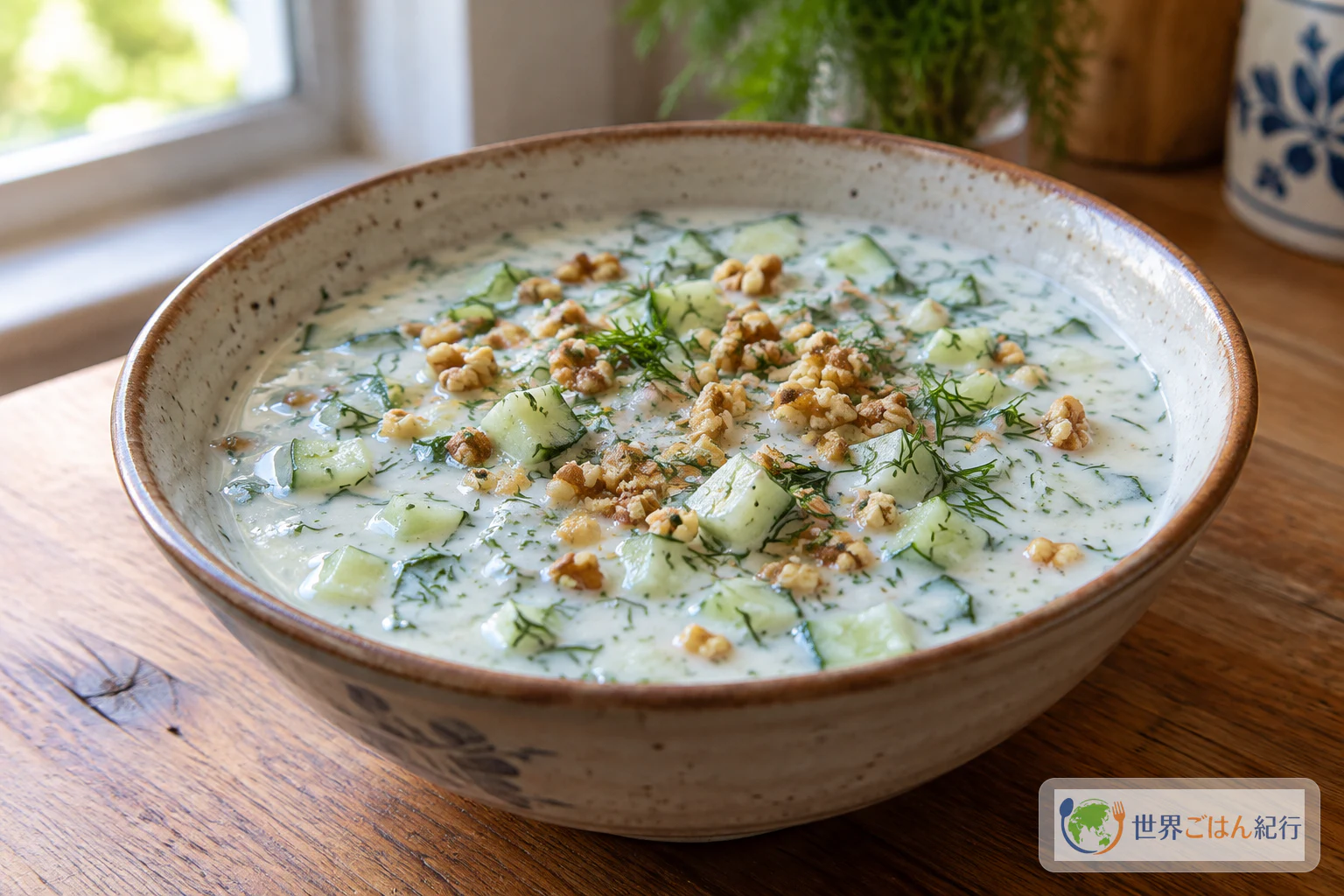
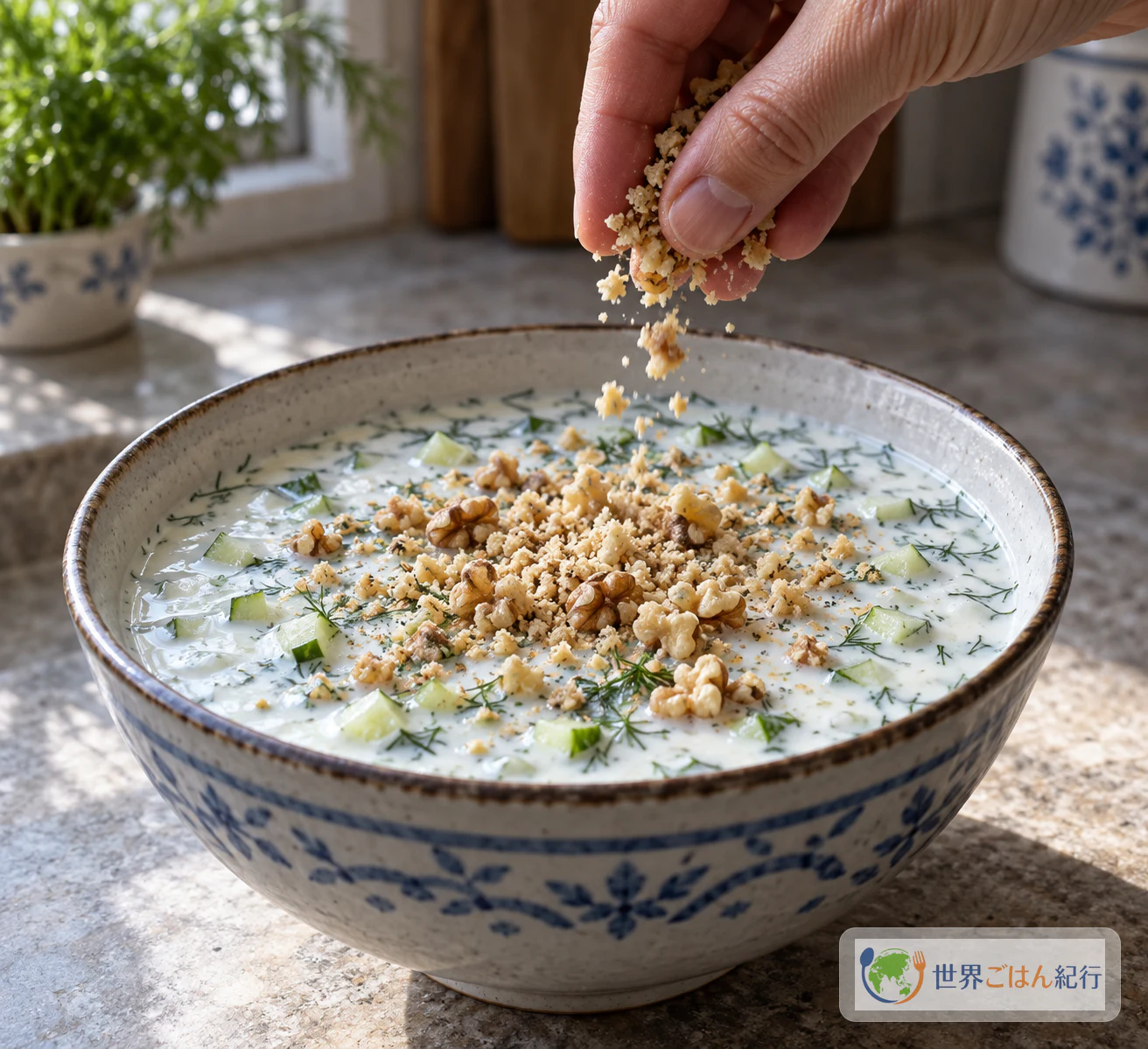
Picture a hot afternoon. A bowl of pale, cold soup comes to the table: small pieces of cucumber, flecks of chopped dill, and a scattering of crushed walnuts on top. The sourness of the yogurt and the water from the cucumber make something closer to a drink than a meal, cool from the first spoonful. That is tarator (таратор).
Bulgaria's tourism ministry lists tarator among the country's popular appetizers and describes it through yogurt, cucumber, dill, crushed walnuts and spices. It is a dish eaten in Bulgaria, but it is not presented here as having a single birthplace or one fixed "correct" formula. A Bulgarian tourism brochure notes that recipes vary across the country, so the version below is one clear, documented recipe rather than the only way to make it.
The recipe in this article follows a version by Mate Kitchen published on Visit Bulgaria, the official tourism site. That page lists it as 4 portions with a time of 20 minutes. It also calls for chilling without giving a duration, so the 20 minutes should not be treated as a confirmed total elapsed time. The page does not state the size of its cup, the weight of the cucumbers, or how much water to add: the water is meant to be added until the soup reaches the thickness you want. Those gaps are left as they are in the recipe below rather than filled with guesses.
Sekai Gohan has not kitchen-tested this recipe as a whole. Cucumbers and yogurts differ in how much water they hold, so taste and adjust the thickness with your own eyes and spoon.
For more dishes from the same country, see Bulgaria.
Ingredients: Cucumber, Yogurt and Dill, With Water to Finish
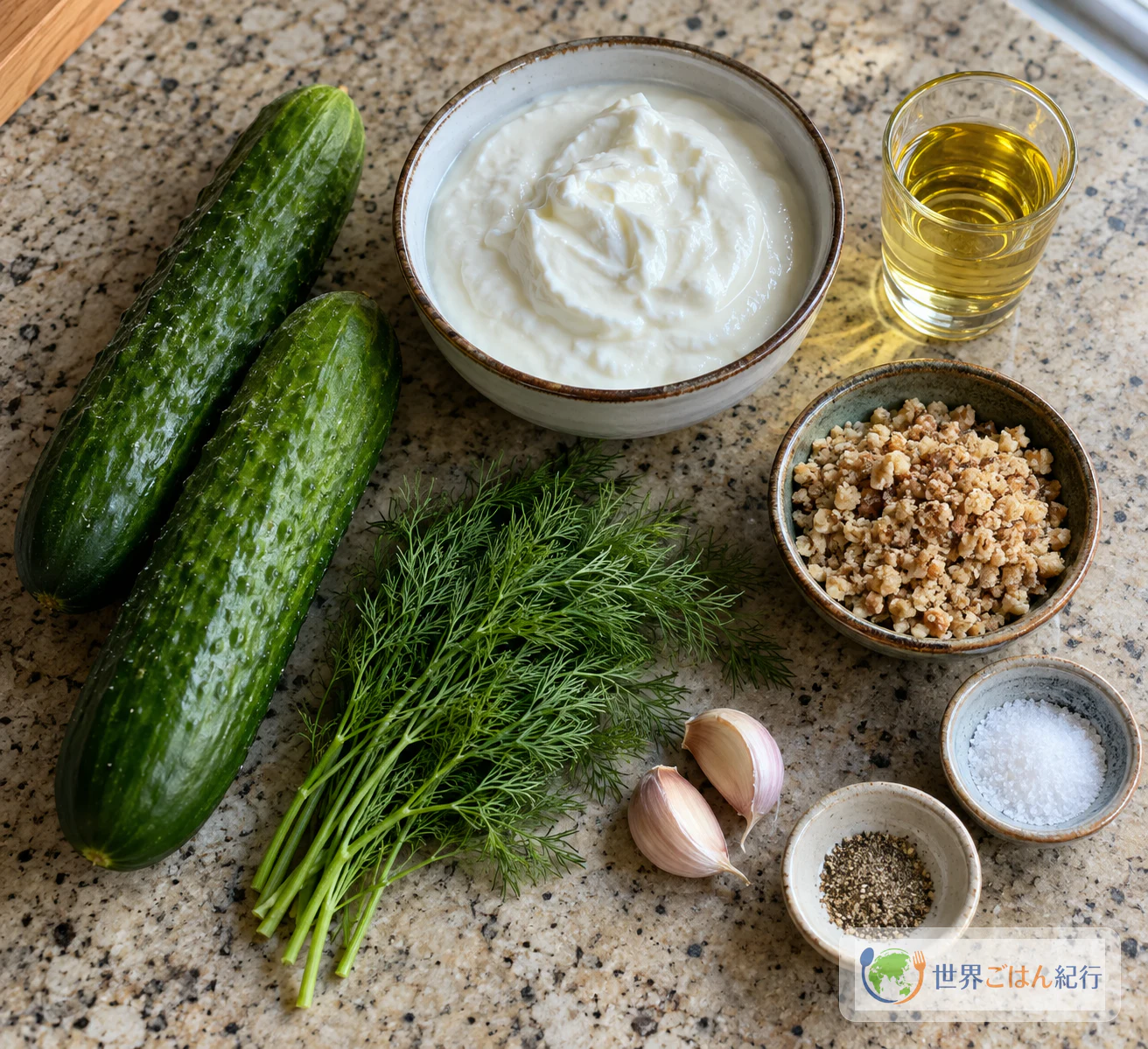
Cucumbers vary in how much water they release, so let the water you add at the end decide the final thickness rather than a fixed number.
This soup contains milk (yogurt) and tree nuts (walnuts). Check the labels on your yogurt and walnuts for allergen and shared-facility information. Tarator is made with uncooked dairy: keep it in the refrigerator, serve it cold, and do not leave it standing at room temperature for long.
Choosing Yogurt, Dill, Oil and Walnuts
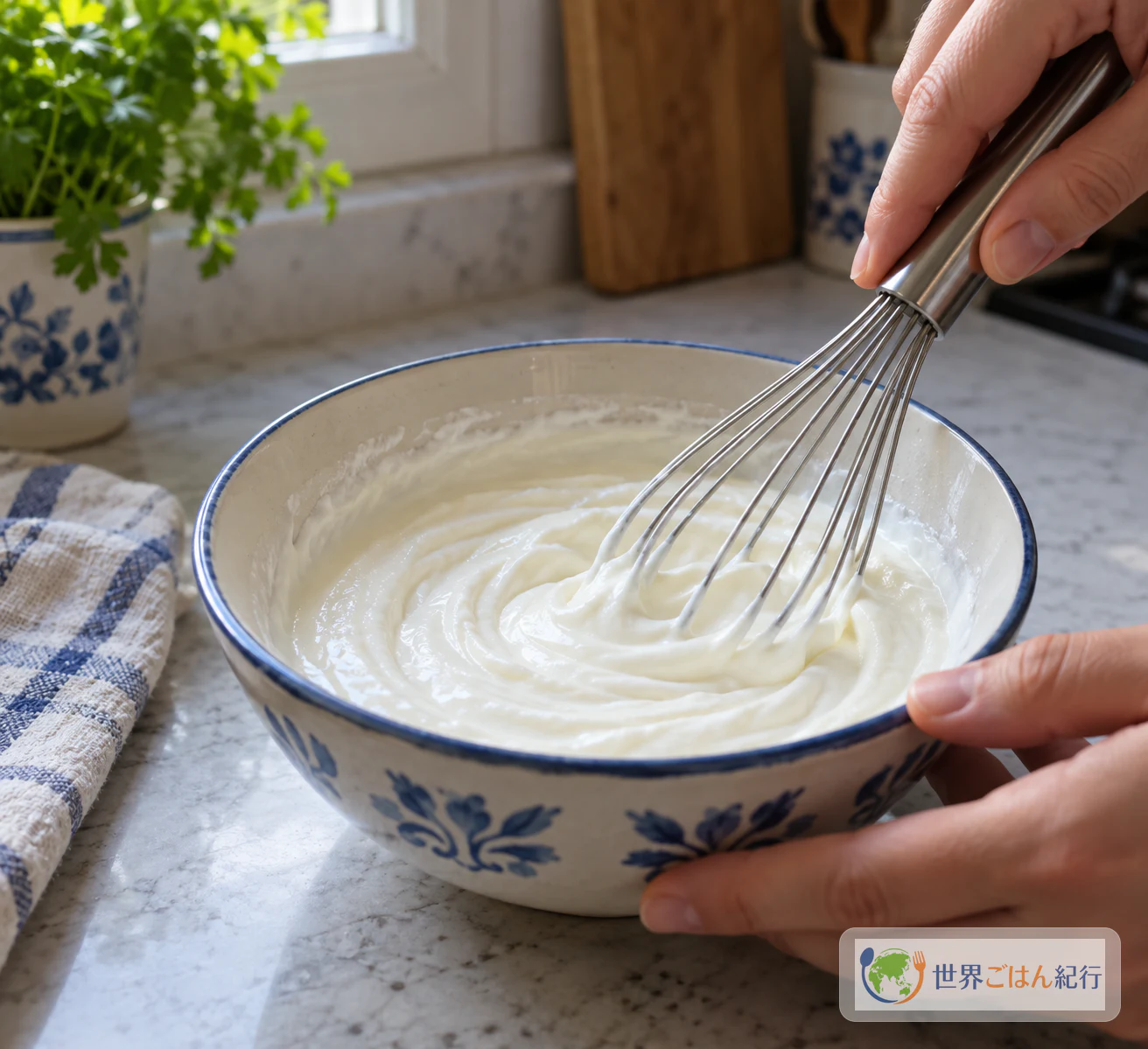
Yogurt. Use plain, unsweetened yogurt. Bulgarian-style yogurt suits the dish well, but you do not need a specific brand to make it. If you choose a strained, thick yogurt, it will need more water to reach a soup, so add water a little at a time.
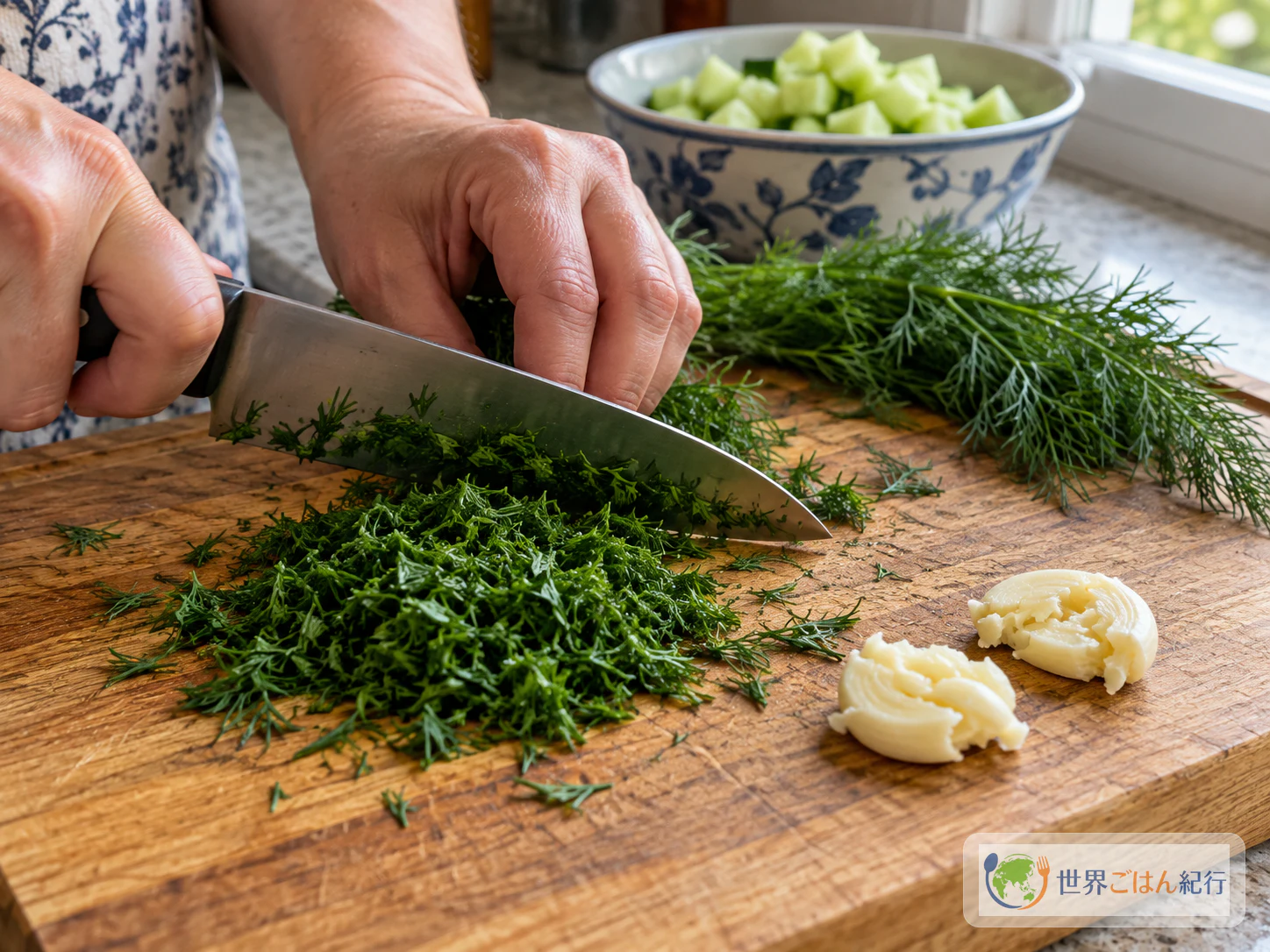
Dill. Fresh dill gives tarator its outline. Dried dill has a different aroma, so do not swap it in at the same amount.
Sunflower oil. Sunflower oil is what this recipe uses. If you cannot find it, a neutral-tasting oil is a reasonable substitute, but expect a slightly different aroma. Olive oil changes the flavor more noticeably, so treat it as a different choice, not an equal swap.
Walnuts. Choose shelled, unsalted walnuts. They are a finishing topping, not something stirred through the whole bowl.
Garlic. Two cloves is the standard amount here. How finely you crush it also changes how strong it tastes.
Equipment
- Cutting board and knife
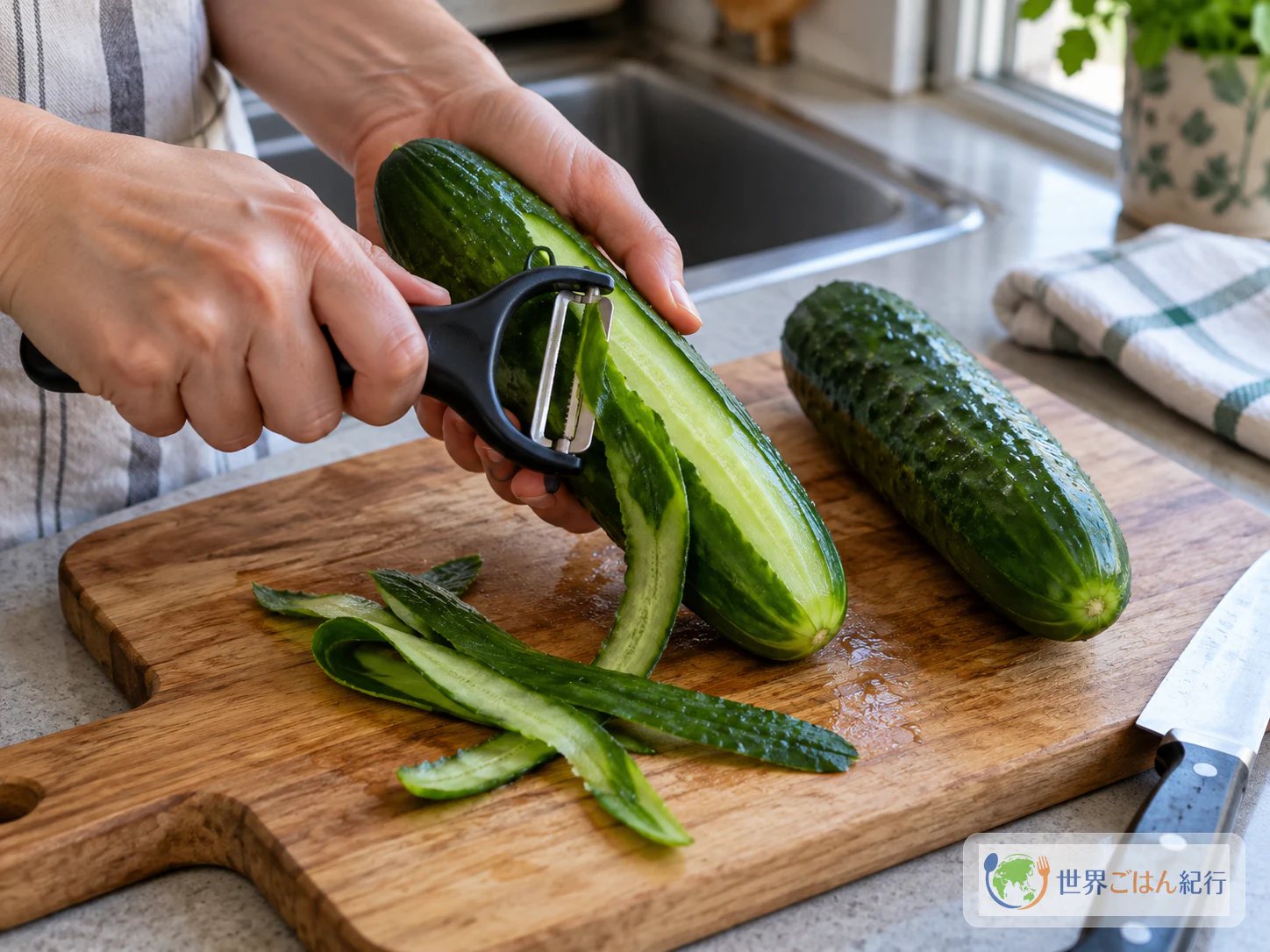
- Vegetable peeler (or the knife)
- Coarse grater, only if you are grating the cucumber instead of dicing it
- Garlic crusher (or the flat of a knife)
- Measuring spoons
- A deep mixing bowl and a separate small bowl
- A whisk or spoon for smoothing the yogurt
- Serving bowls or glasses
Method: Setting the Cucumber Texture and the Soup's Thickness
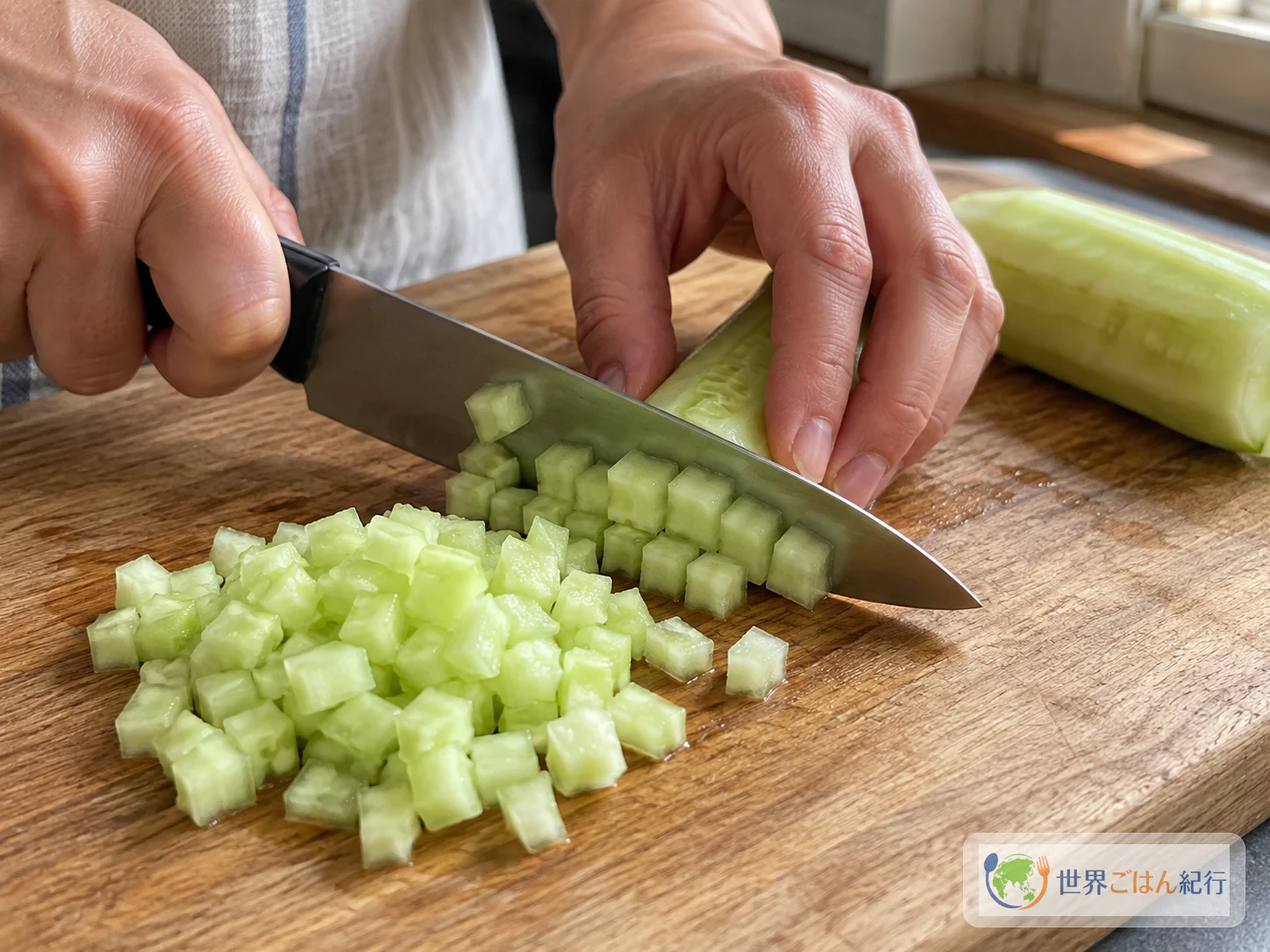
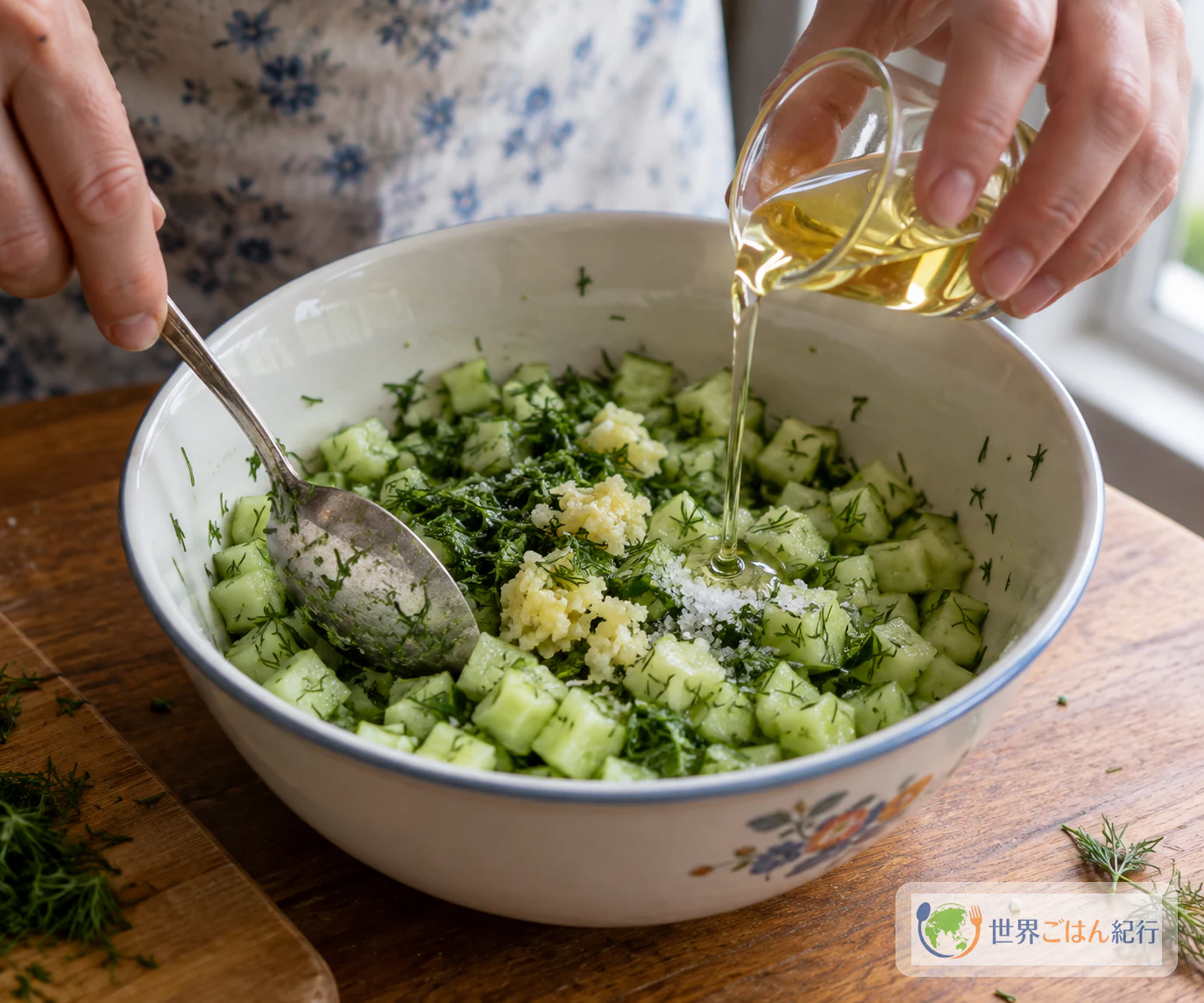
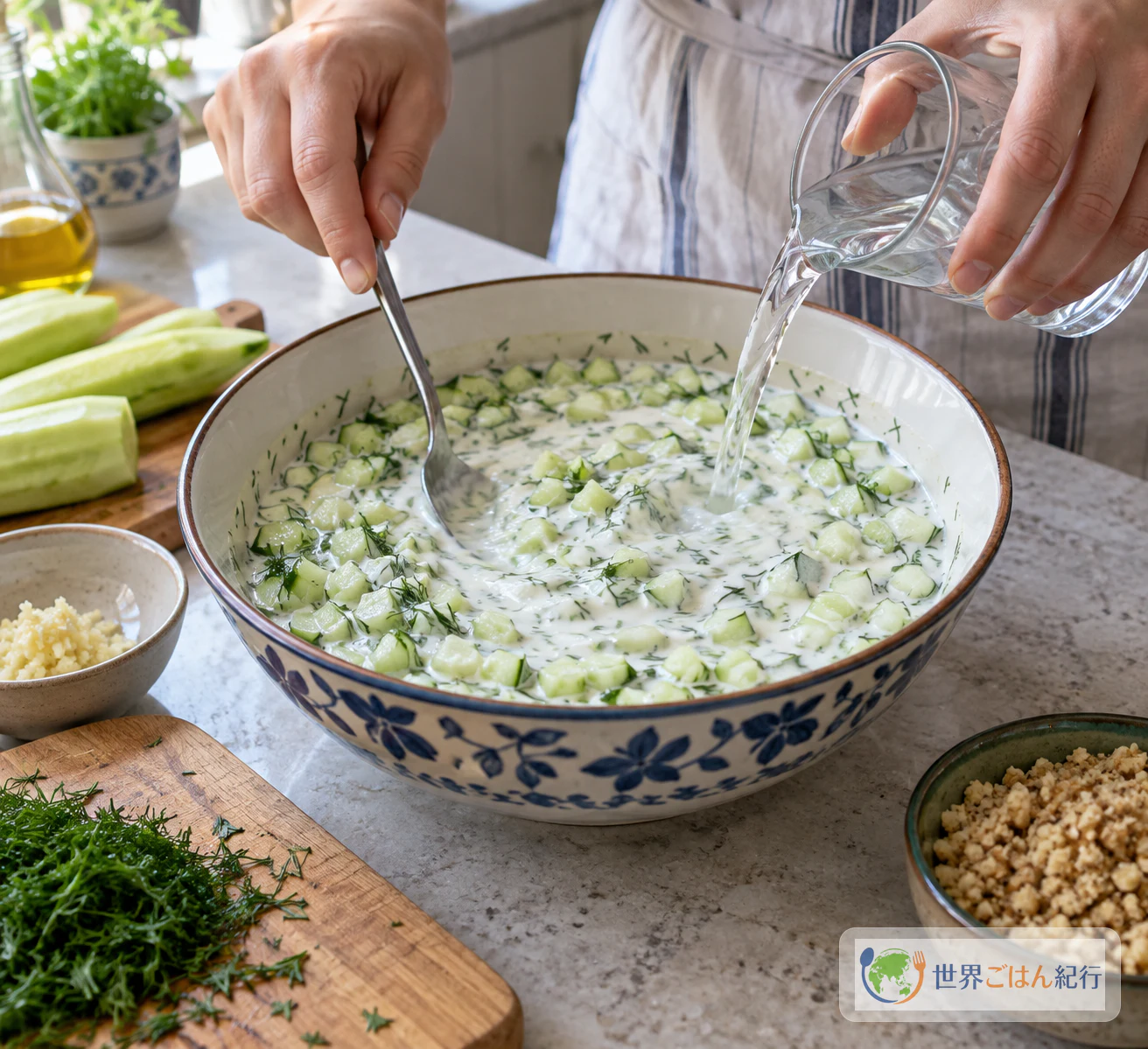
First decide how the cucumber should feel: tiny cubes keep a crunch, coarse grating blends it into the soup. Then decide how thick the soup should be: thinner for drinking from a glass, thicker for eating with a spoon.
Too Thick, Too Thin, Too Much Garlic: Fixing the Bowl
| Condition | Likely cause | What to do |
|---|---|---|
| Too thick | Not enough water, or a thick yogurt | Add cold water a little at a time and stop while the cucumber still holds its shape. A large splash at once dilutes the flavor |
| Too thin | Too much water added, or very watery cucumbers | Stir in a little more yogurt. This shifts the balance of the bowl, so add only what you need |
| Garlic too strong | Garlic crushed very finely, or strong cloves | Next time use less garlic, or crush it more coarsely |
Variations: Texture and Thickness
- Diced for crunch. Very small cubes keep each piece of cucumber distinct.
- Grated for a smoother soup. Coarsely grated cucumber blends into the yogurt and makes a softer, more uniform bowl.
- Thinner for a glass, thicker for a spoon. Adjust only the water: more for a soup you drink from a glass, less for one you eat with a spoon from a bowl.
Tarator on the Bulgarian Table: Summer, Seasons and Regional Differences
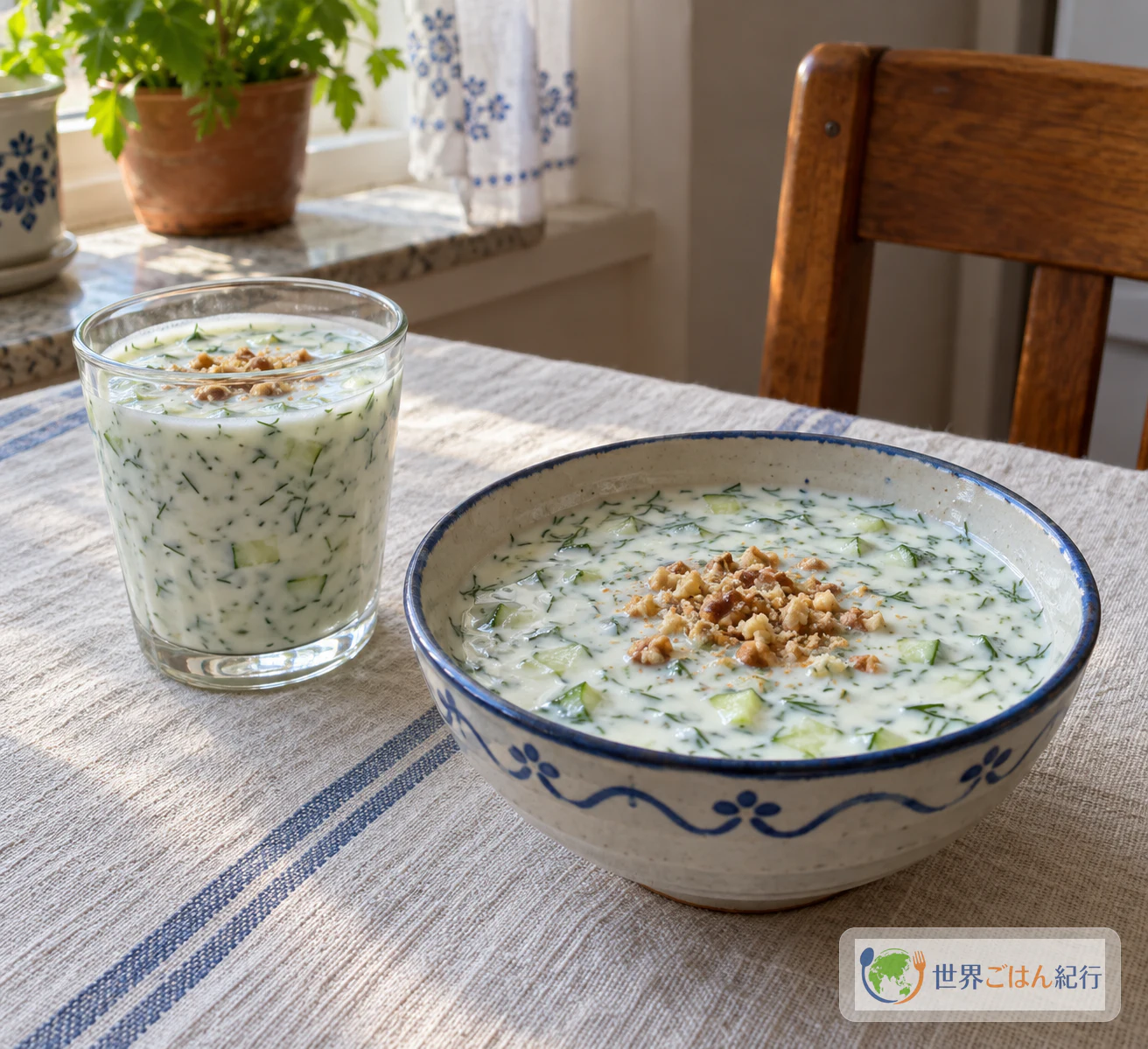
The Mate Kitchen recipe on Visit Bulgaria presents tarator as a summer cold soup and appetizer, served before the meal, in a glass or a bowl, or eaten alongside a main dish. A Bulgarian tourism brochure describes it as especially common in summer while still eaten year-round, and notes that recipes vary across Bulgaria. The same tourism material also gives yogurt and white brine cheese a notable place in Bulgarian food culture.
The Mate Kitchen page also mentions seasonal versions: lettuce in spring and pickles in winter. It does not give amounts for either, so they are mentioned here as ideas that page describes, not as recipes or as a fixed national habit.
The same page states that yogurt entered tarator relatively recently, around the mid-20th century, and that the soup was earlier based on vinegar and water. That claim appears only on that recipe page and was not confirmed by the other sources used here, so it should be read as that page's account rather than settled history.
Other published versions differ noticeably in their proportions. A recipe by Kamelena uses its own amounts of yogurt, cucumber and water, and the tourism brochure uses a much higher proportion of garlic to yogurt than the recipe above. Those versions are not mixed into this one; they simply show how much room there is within the dish.
How tarator differs from similar dishes
- Snezhanka. Also Bulgarian and also built on yogurt and cucumber, but snezhanka removes water to make a thick salad. Tarator goes the other way, adding water to make a soup.
- Raita. Raita also combines yogurt and vegetables, but it plays a different role on the table as a side dish.
- Turkish piyaz. The word tarator also appears as the name of a tahini sauce used with piyaz, an Antalya-style bean dish. It is a different dish from the Bulgarian cold soup.
Frequently Asked Questions
How much water should I add?
The Mate Kitchen recipe does not give an amount; water is added until the soup reaches the thickness you like. Add cold water a little at a time, and keep a note of how much you used so you can repeat it.
Can I grate the cucumber instead of dicing it?
Yes. The recipe allows either very small cubes or coarse grating. Diced cucumber keeps a crunch; grated cucumber gives a smoother soup.
How long should I chill it?
The recipe says to serve it chilled but does not specify a time. The listed 20 minutes is not a confirmed total elapsed time; allow for the separate chilling step.
What size is the cup of yogurt, and how big are the cucumbers?
The recipe page does not state the cup size or the cucumber weight. Use ordinary cucumbers and adjust the thickness with water at the end.
Can I leave out the walnuts?
You can leave them out, for example because of a nut allergy, but the finished soup will taste and feel different from the standard version.
How should I keep leftovers?
Tarator is made with uncooked dairy, so keep it in the refrigerator and do not leave it at room temperature for long. No storage period is given here.
Sources
- Mate Kitchen, "Tarator (Bulgarian cold cucumber soup)," Visit Bulgaria / Bulgaria Ministry of Tourism. The recipe followed in this article: 4 portions, ingredients and method, serving in a glass or bowl as a summer appetizer or alongside a main dish, and the spring lettuce and winter pickle versions. Its historical statement about yogurt is reported here only as that page's own account. https://visitbulgaria.com/recipe/tarator-bulgarian-cold-cucumber-soup/
- Bulgaria Ministry of Tourism / Visit Bulgaria, "Traditional Cuisine." Tarator as a popular Bulgarian appetizer with yogurt, cucumber, dill, crushed walnuts and spices, and the place of yogurt and white brine cheese in Bulgarian food culture. https://visitbulgaria.com/about-bulgaria/traditional-cuisine/
- Kamelena / Elena Kam, "Tarator — step-by-step recipe with photos." An independent version used for comparison of method and proportions; its amounts are not combined with the recipe above. https://kamelena.com/en/recipe/Tarator
- Bulgaria Ministry of Economy, Energy and Tourism, "Traditional Bulgarian Cuisine: Recipe Tarator" (brochure hosted by Visit Bulgaria). Tarator as especially common in summer but eaten year-round, with recipes varying across Bulgaria. https://visitbulgaria.com/wp-content/uploads/2016/publication_5866_2.pdf