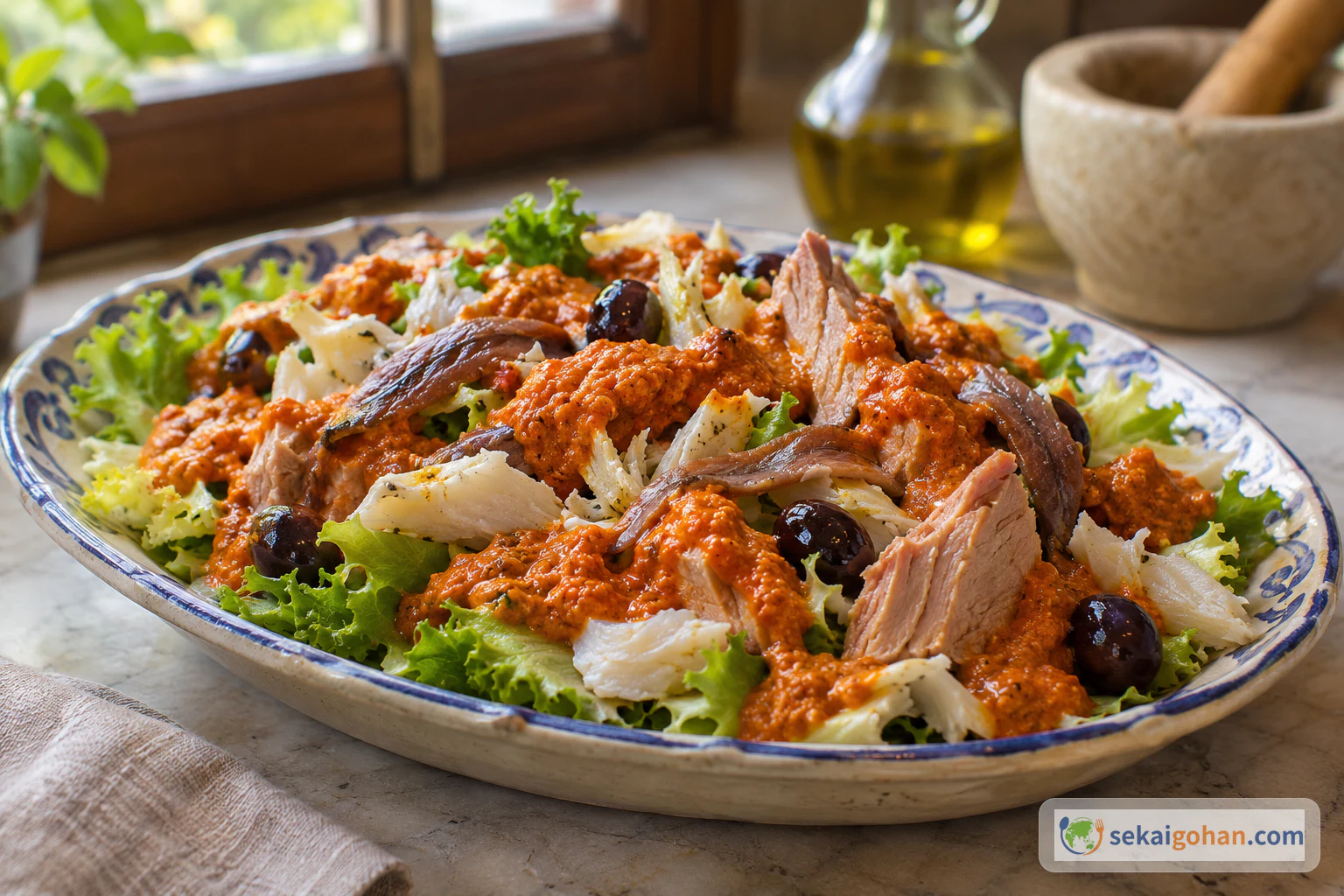
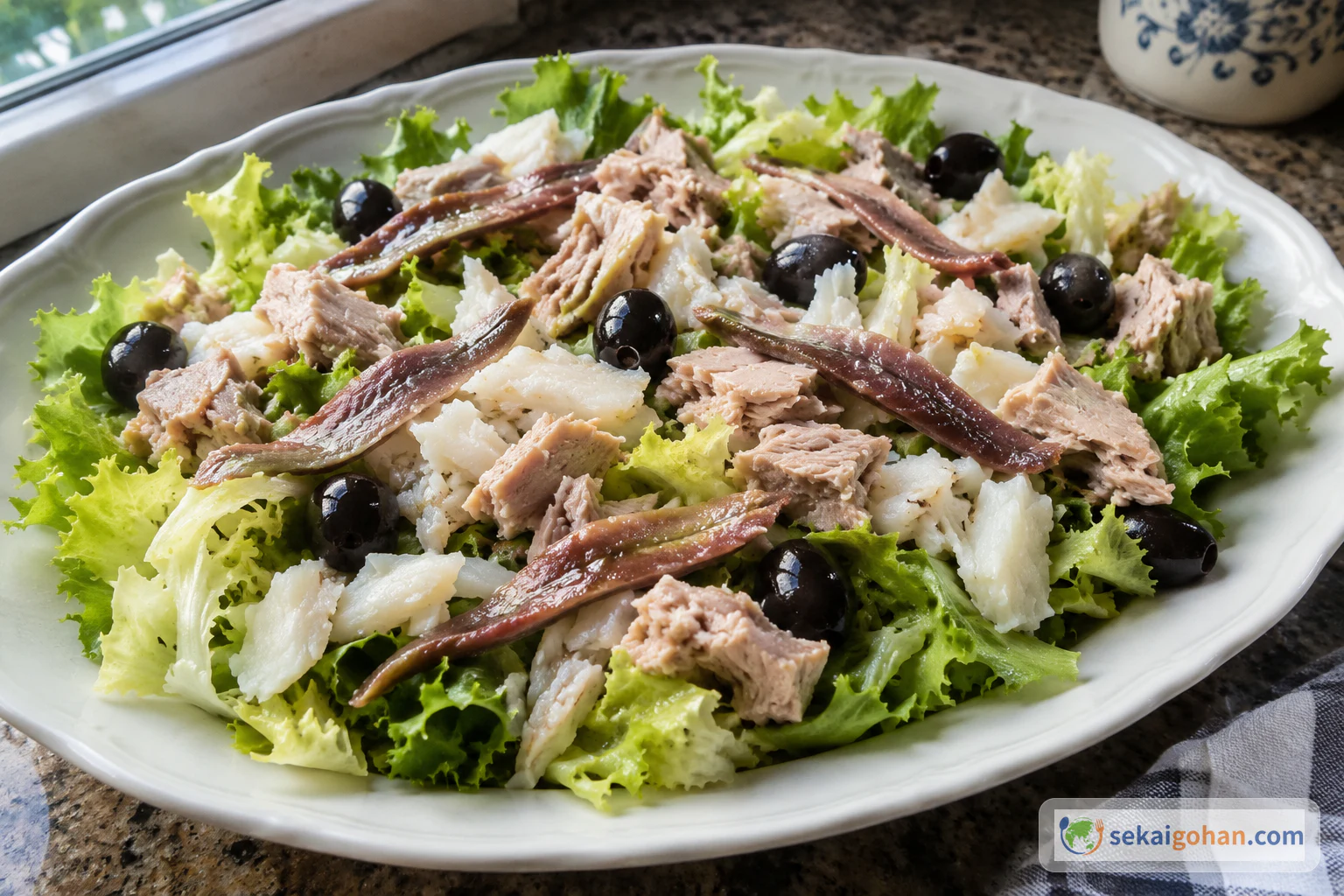
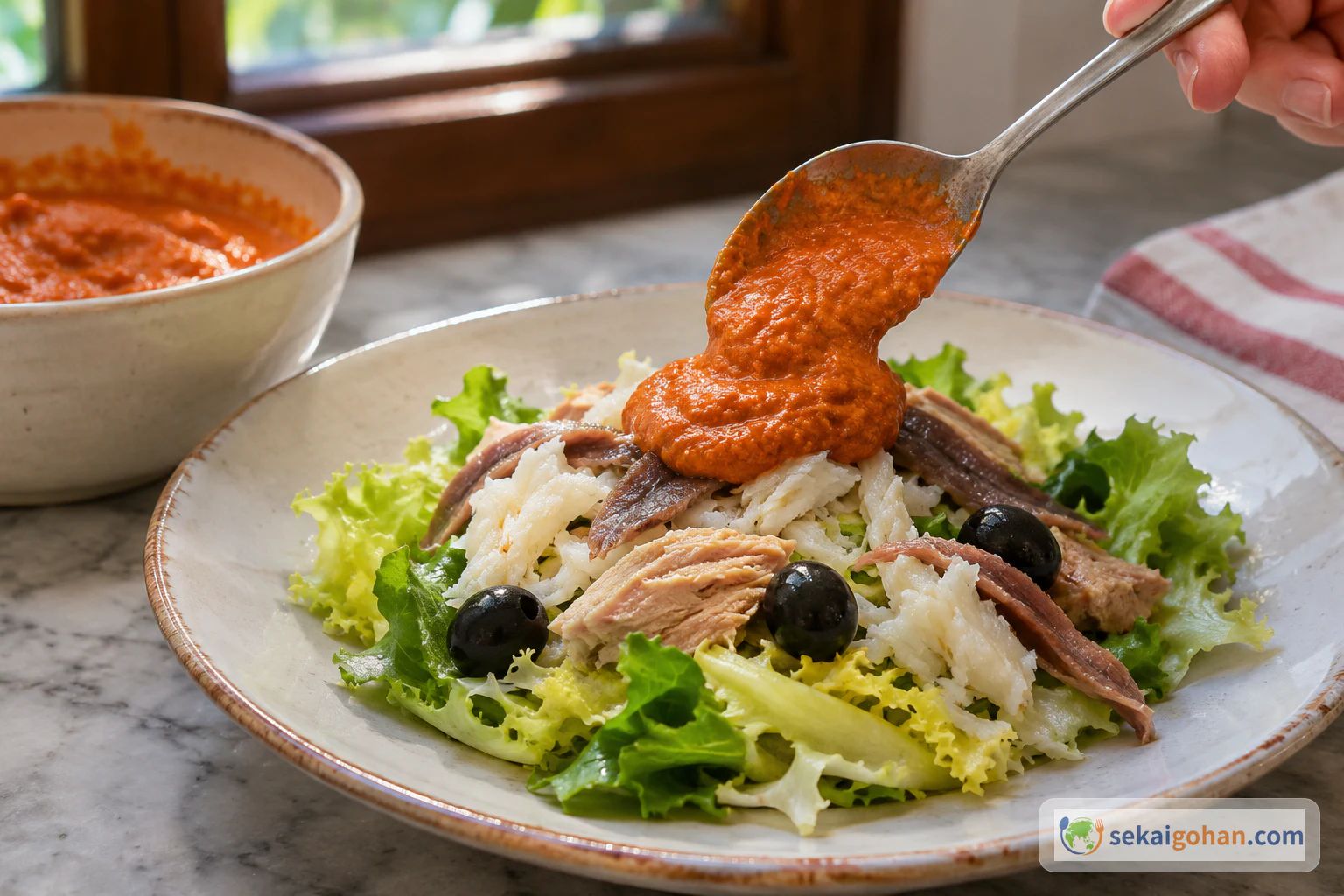
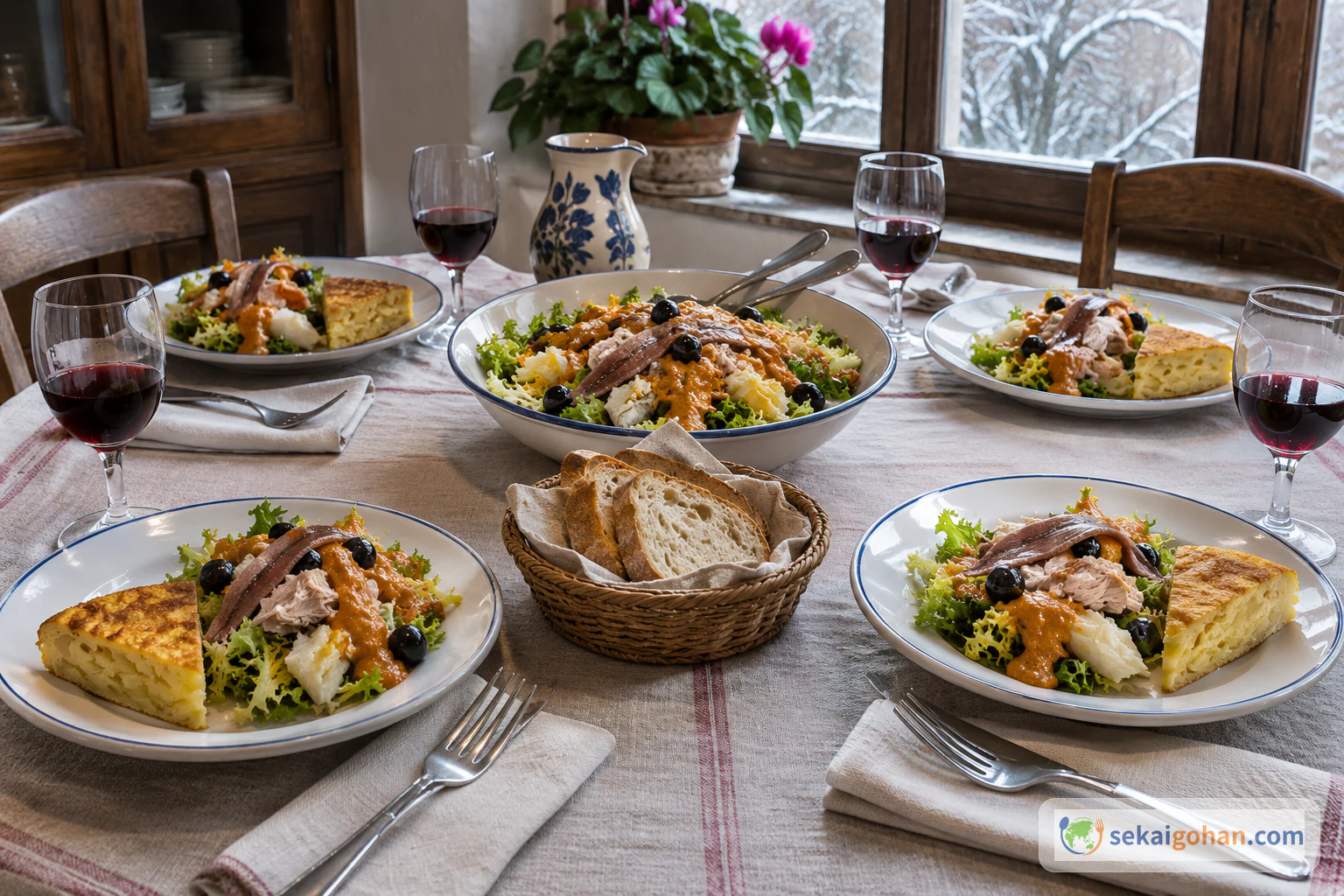
A spoonful of thick, orange-red sauce lands on a heap of pale, frilly escarole. Under it lie torn flakes of salt cod, anchovy fillets, chunks of tuna and black olives. Someone at the table turns it all over a few times with the servers, and the sauce smears into the bitter leaves. That first forkful is crisp, bitter, salty and nutty at once, with a slow sweetness from the dried nyora pepper and a sharp edge of raw garlic. Xató is the winter salad of the Penedès and the Garraf coast in Catalonia, and its sauce matters as much as anything on the plate.
Five Towns, One Sauce, and a Long Winter of Xatonades
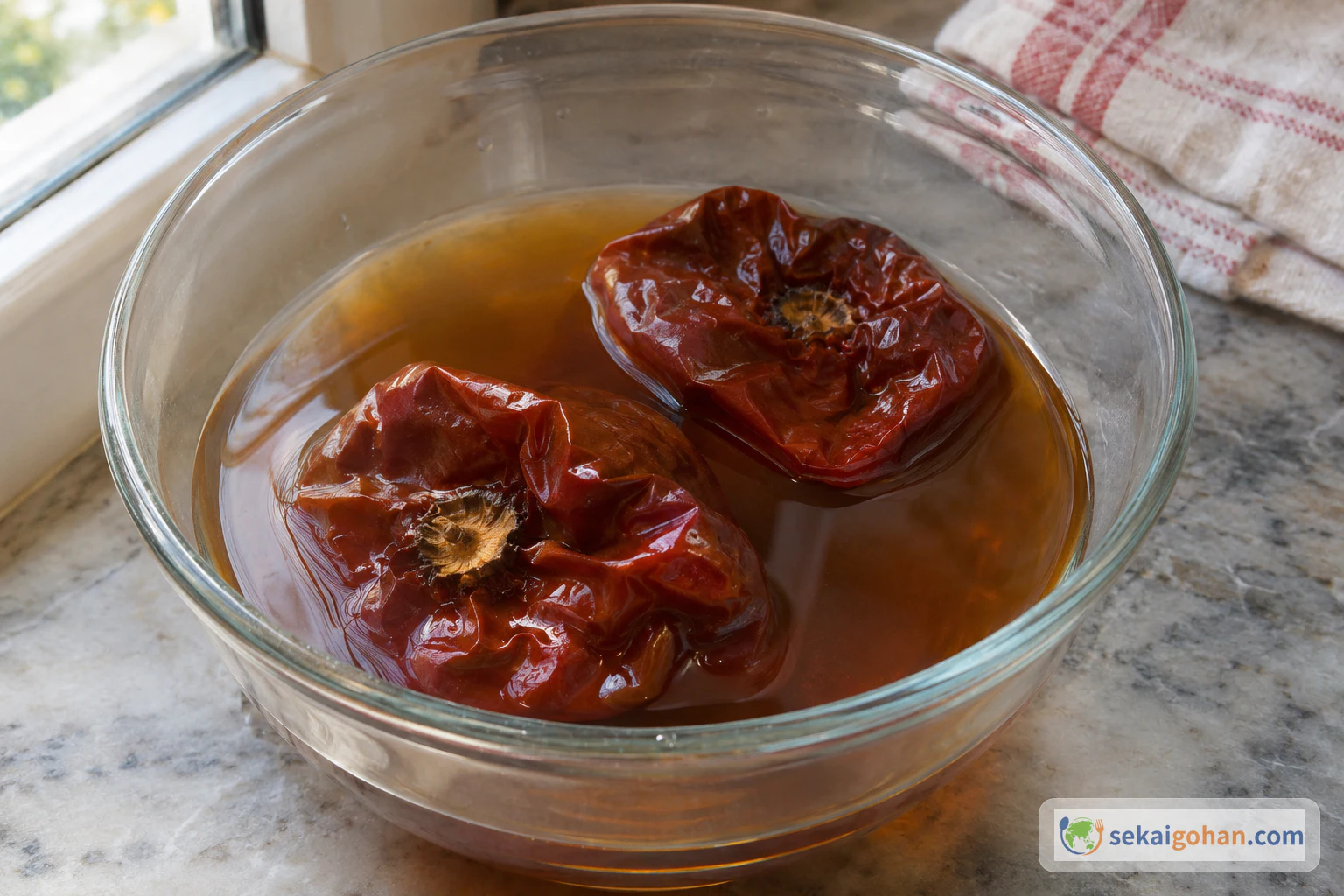
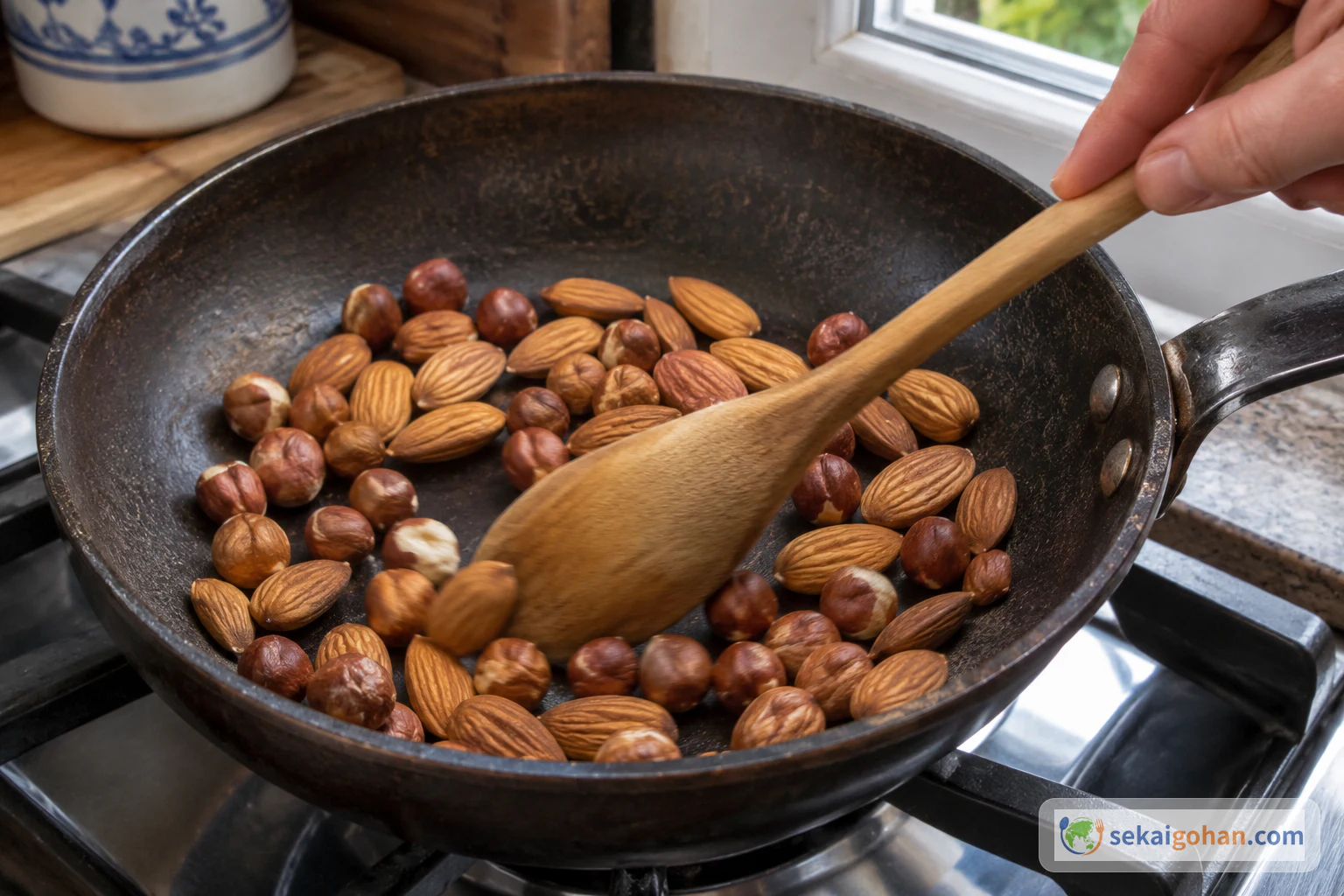
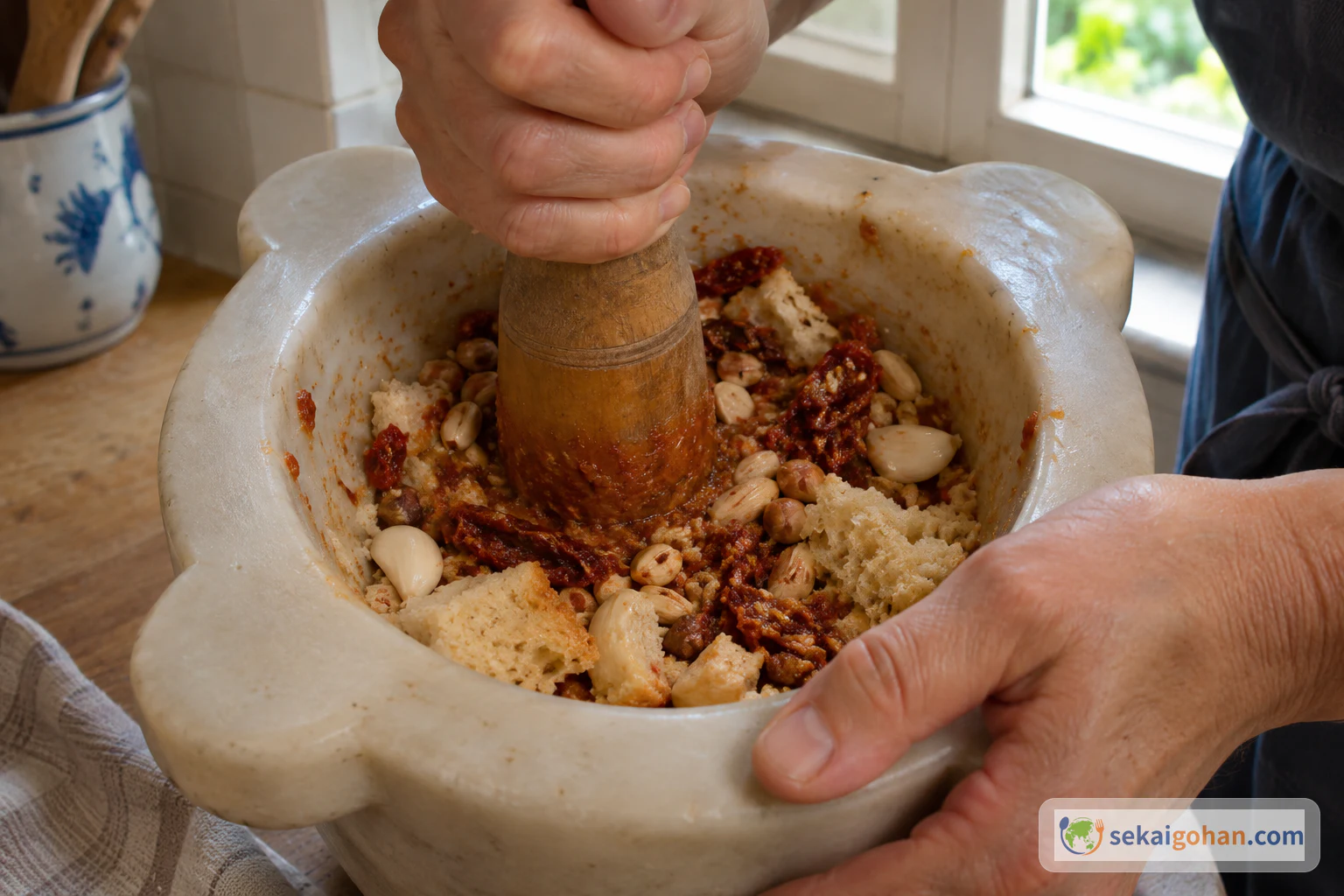
The sauce belongs to the romesco family, but it is thicker and built on nyora, a small, round dried pepper with a sweet, slightly smoky flavour. Pounded almonds and hazelnuts give it body, day-old bread binds it, and olive oil and a little vinegar bring it to a paste that clings to the leaves instead of running off them. The salad underneath depends on the season. Escarole is a winter leaf, while salt cod, anchovies and tuna keep all year, so xató turns up on tables as the weather turns cold.
Where it began is not settled. Vilanova i la Geltrú is often named as its home, and that claim is argued over. The dish is usually linked to feasts held when the new wine was tapped from the barrel. The name is most often traced to aixeta, the Catalan word for a barrel tap, though other explanations exist. Five towns lay claim to it today: Sitges, Calafell, El Vendrell, Vilafranca del Penedès and Vilanova i la Geltrú. Each one defends its own version.
Xató is the dish. A xatonada is the gathering where people eat it, a shared meal among family and friends that often turns into a contest over whose sauce is best. In Sitges, xatonades fall during Carnival week and Lent.
The festival season
The towns have built a calendar around the dish. The Ruta del Xató links them, and six winter festivals run from late November to mid-March, each town taking its turn. The route's ambassador tradition dates from 1988, with Ferran Adrià. Between festivals, xató is a home dish. Once escarole is in the markets, a cook makes a mortar of sauce and puts a platter in the middle of the table. For the wider picture of the country's food, see Spain.
How each town makes it
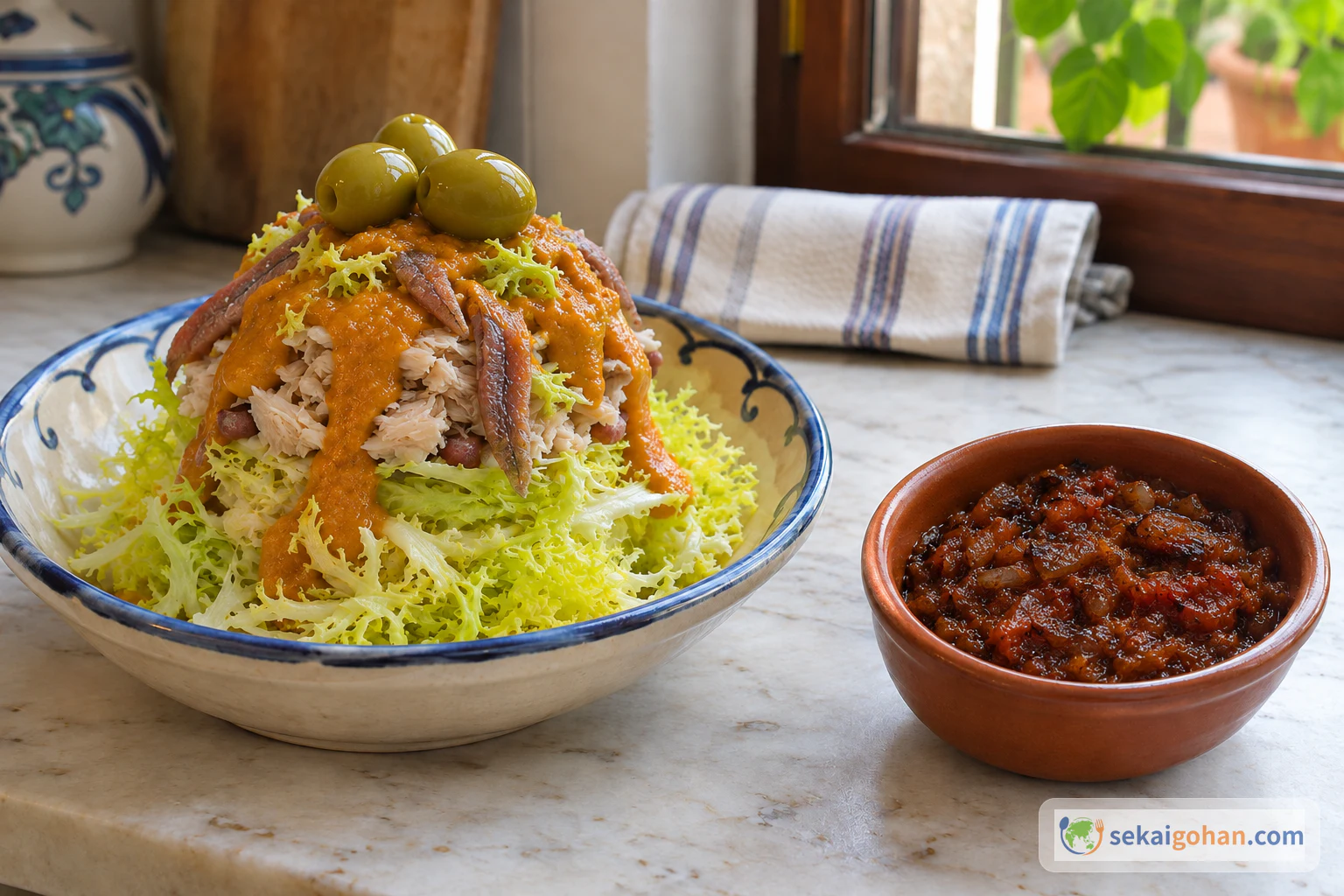
The differences sit mostly in the sauce, and in how long the salad waits after it is dressed.
| Town | Sauce | On the plate |
|---|---|---|
| Sitges | Raw garlic only, crushed by hand with almonds and nyora pulp; olive oil; vinegar used sparingly | Salted herring with the escarole, which is piled up like a castle |
| Vilanova i la Geltrú | Garlic, salt, nuts, nyora, bread soaked in vinegar, olive oil | Escarole with tuna, cod, herring and olives; Arbequina olives are preferred |
| Vilafranca del Penedès | Raw and roasted garlic, plus María biscuits | The sauce is made the day before |
| El Vendrell | Roasted onion, tomato and fried bread | The salad sits in the sauce for 30 minutes to 2 hours |
| Calafell | Romesco peppers | The leaves are dressed first and rested for several hours |
Fish amounts vary a lot from plate to plate. Some cooks heap on more cod and tuna than the recipe below, and a Vilanova-style platter uses cooked cod instead of soaked salt cod. The method below dresses the salad at the table, so the leaves stay crisp.
Ingredients (serves 4)
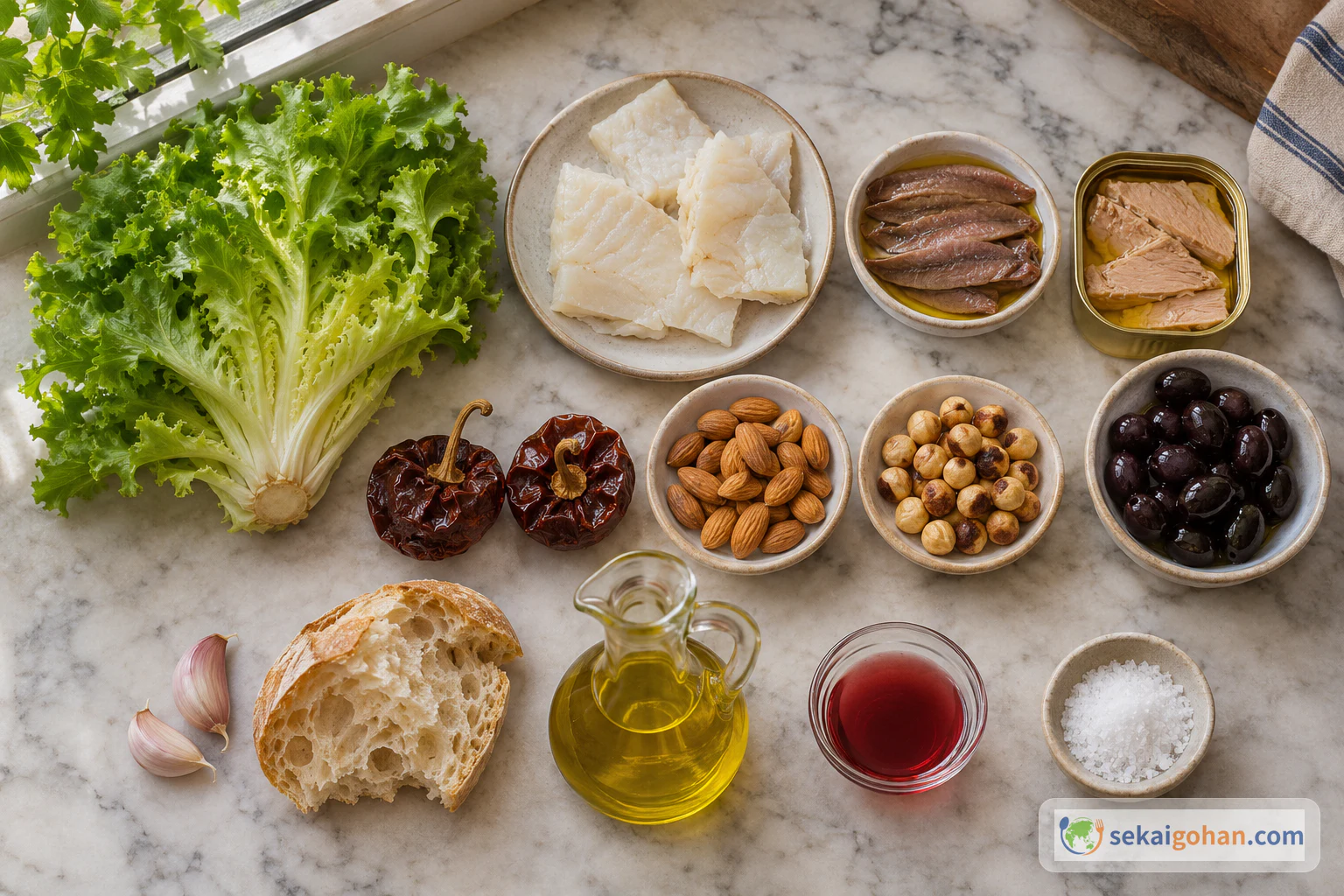
This dish contains tree nuts (almonds and hazelnuts) and fish (salt cod, anchovies and tuna). The bread contains wheat. Check the labels on canned and jarred fish for anything else added.
Equipment
- Large bowl for soaking the salt cod, with room in the refrigerator
- Small saucepan and a small bowl with a lid or plate for the nyoras
- Small dry skillet
- Mortar and pestle, or a food processor
- Colander or salad spinner
- Wide serving platter and salad servers
Choosing and Substituting
A good xató rests on three things: a bitter leaf, salty fish and a thick nut-and-nyora sauce. Keep those three and the salad tastes like itself even far from Catalonia.
- Nyora peppers. These are the one thing worth tracking down at a Spanish grocer or online, sold whole and dried. Sweet paprika with a pinch of crushed dried chili stands in, but the sauce loses the round, raisin-like sweetness and gets flatter and sharper.
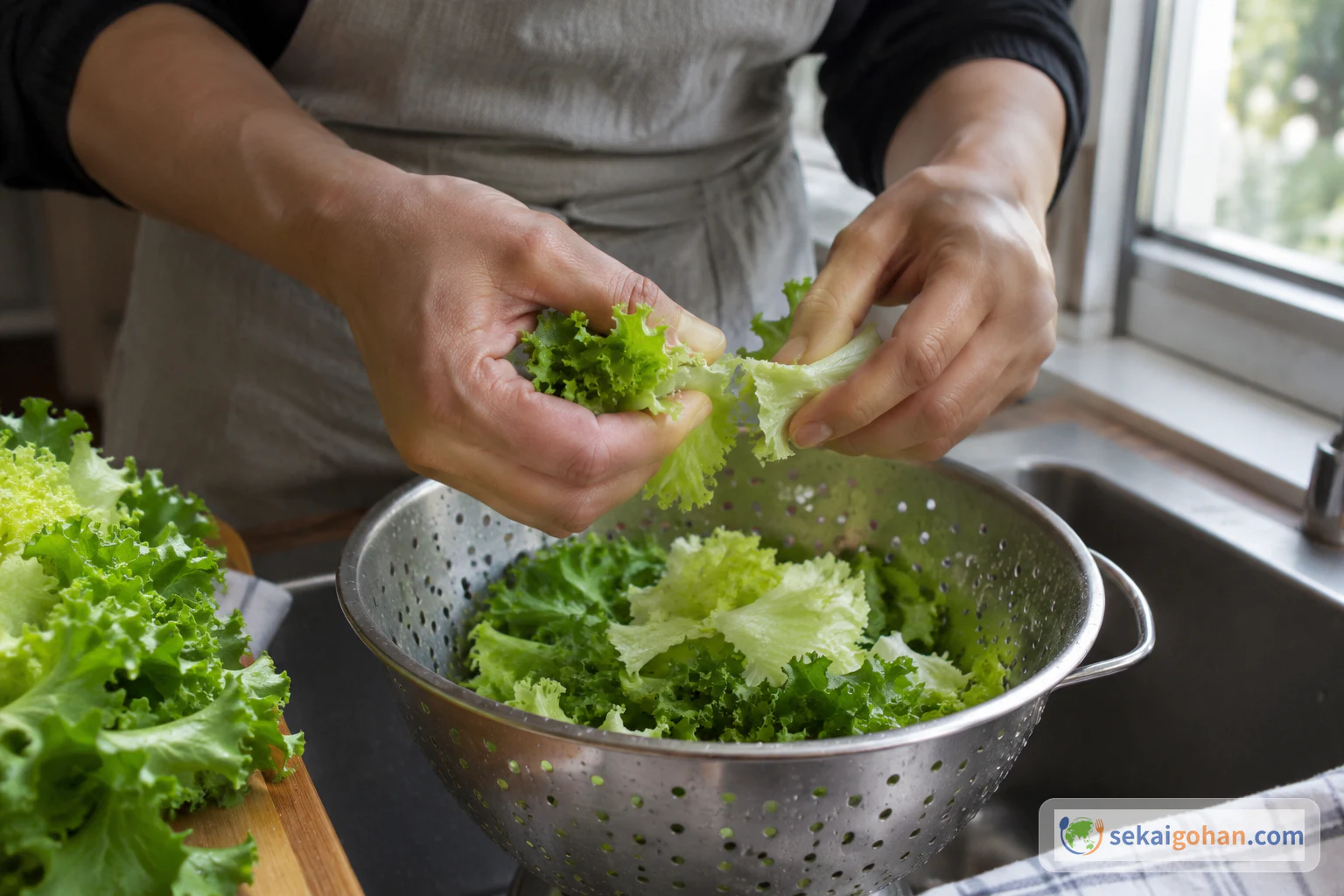
- Escarole. Curly endive (frisée) does the same job. Frilly lettuce with a little chicory works if you cannot find either, but the salad comes out sweeter and softer.
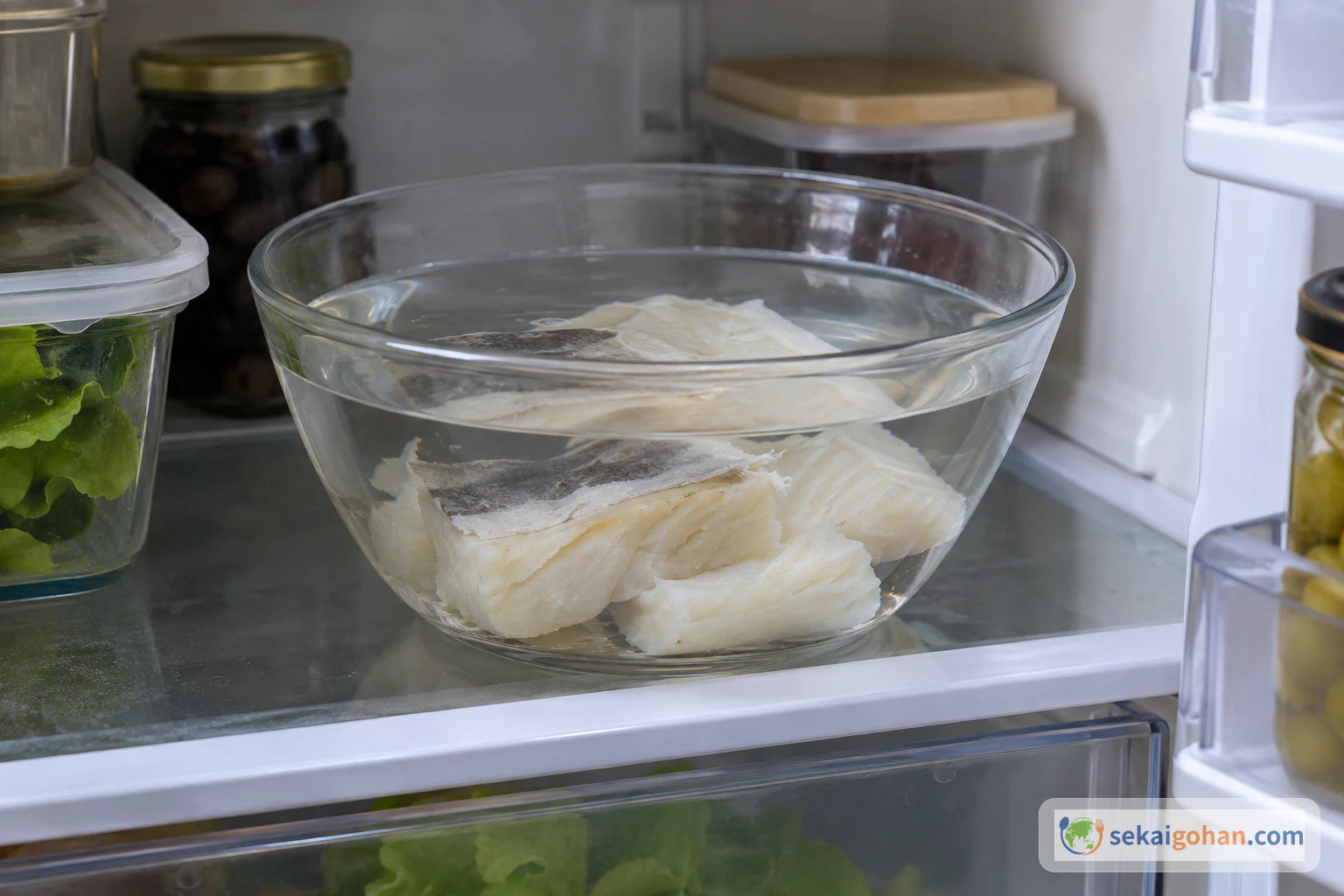
- Salt cod. Buy dried salt cod and soak it yourself, or buy cod sold already desalted. Desalted cod saves a day and lets you start at step 2.
- Anchovies and tuna. Choose good oil-packed anchovies and tuna in olive oil. Tuna belly is softer and richer than standard chunk tuna, and you notice the difference here because the fish is eaten as it is.
- Mortar or machine. A mortar gives a coarser, more textured sauce. A food processor is faster and gives a smoother paste.
Anchovies, olives and salt cod all bring salt. Leave the salt out of the sauce until you have tasted it next to a flake of cod and an anchovy.
Method
Start the salt cod a day ahead, because it soaks in the refrigerator for about 24 hours. On the day itself there is no real cooking. The nyoras boil briefly and then sit for half an hour, and that is when to toast the nuts and pound the garlic. The leaves are torn and the fish laid out just before serving, so everything stays cold and crisp.
When It Goes Wrong
| What you see | Why | What to do |
|---|---|---|
| Too salty | The cod needed more soaking, or the anchovies are strong | Return the cod to fresh cold water in the refrigerator for another change. Use fewer anchovies on the platter |
| Sauce too stiff to spoon | Too little oil for the bread and nuts | Work in more olive oil a little at a time until it drops from the spoon |
| Sauce slides off the leaves | Wet escarole is thinning it | Dry the leaves thoroughly before they go on the platter |
| Too bitter | Mostly dark outer leaves, or too little salt | Add a pinch of salt to the sauce and use more of the pale inner leaves |
| Garlic burns harshly | The green sprout was left in | Remove the sprout next time. Today, pound in a little more toasted nut and bread to soften it |
Serving, Variations and Make-Ahead
What goes on the table
Xató is a shared dish, set in the middle of a winter meal. It goes well with Spanish potato tortilla, spinach, eggplant, black sausage and beans. In Sitges a xatonada might also bring a beef stew, oranges, coca de llardons (a flatbread with pork crackling) and a glass of the local Malvasia. Given the dish's link to the new wine, a young red also belongs on the table.
Variations
- Sitges style. Use raw garlic only and crush everything by hand. Add salted herring and pile the escarole high like a castle. The sauce is sharper and coarser, and the platter looks festive.
- El Vendrell style. Add roasted onion, tomato and fried bread to the sauce, and leave the dressed salad for 30 minutes to 2 hours. The sauce turns darker and sweeter, and the leaves soften and soak it up.
- Calafell style. Make the sauce with romesco peppers and dress the leaves several hours ahead. The result is a soft, fully coated salad.
- Vilafranca style. Use part raw and part roasted garlic and add a María biscuit to the sauce. The sauce comes out mellower with a faint toasty sweetness.
Making ahead
The sauce can be made the day before, as it is in Vilafranca. Cover it and keep it in the refrigerator, then tear the leaves and lay out the fish on the day. Keep the soaked cod covered in the refrigerator until you assemble the salad.
Frequently Asked Questions
Do I need to cook the salt cod?
No. In this version the cod is desalted in the refrigerator and eaten as it is. Some cooks in Vilanova use cooked cod instead. That works too and gives softer, milder flakes.
Can I make the sauce in a food processor?
Yes. Pulse the garlic and nuts first, then add the nyora pulp, bread and vinegar, and pour in the oil gradually with the motor running. Stop while the sauce is still thick, because a processor can turn it thin and smooth very quickly.
How much salt should go in the sauce?
Often very little. The fish and olives carry most of the salt, so taste the sauce with a flake of cod and an anchovy before adding any. Add it a pinch at a time.
Can I use fresh cod instead of salt cod?
Fresh cod has to be cooked before it goes on the platter, and its flavour is gentler. Salt cod gives the firm texture and seasoned taste that make the salad. If you use cooked fresh cod, expect to add more salt to the sauce.