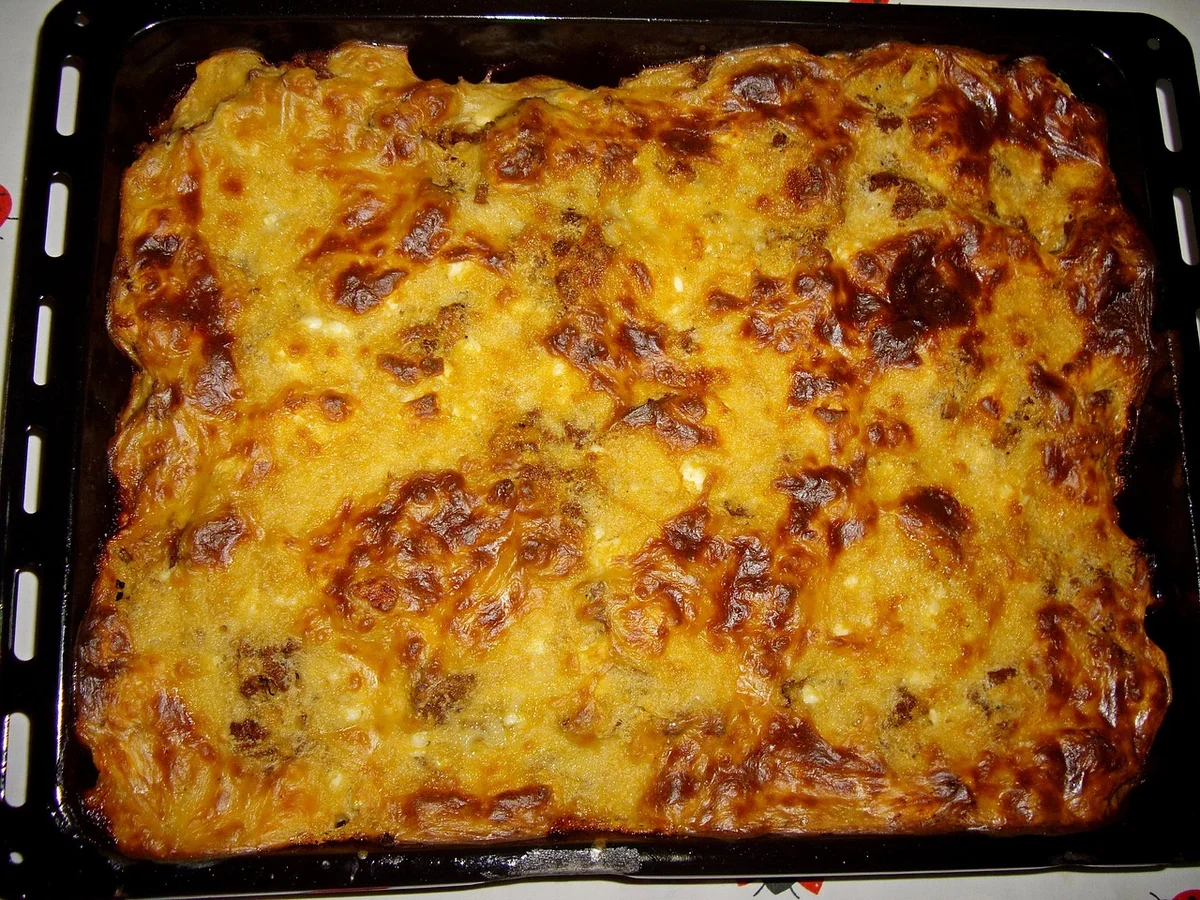
A Three-Layer Masterpiece Carried on the Mediterranean Wind
Walk the back lanes of Plaka, Athens' old quarter, and you catch the toasty smell of baked béchamel and the sweet aroma of cinnamon. In the display case of a local taverna, cut portions of moussaka (μουσακάς / Moussaka) sit proudly. This baked dish of eggplant, meat sauce and béchamel in three layers is, for Greeks, "grandmother's cooking" and "the Sunday feast."
It is sometimes introduced as "Greek lasagna," but it is in fact a dish that looks like lasagna and is not. It uses eggplant in place of pasta, layers a cinnamon-scented meat sauce in place of tomato sauce, and then pours rich béchamel on top and bakes it in the oven. When you taste it, the melting texture of the eggplant spreads through your mouth. The savor of spiced meat lies over it. Creamy béchamel wraps around all of it. The experience of the three elements melting together in the mouth is quite different from lasagna.
The name moussaka is said to derive from the Arabic "musaqqa'a" (chilled), and the dish was originally a cold eggplant dish of the Ottoman period. The present Greek-style moussaka (the style topped with béchamel) was established by the Greek chef Nikolaos Tselementes, who trained in France. In the 1920s he fused French gratin technique with Greek traditional cooking, and the present three-layer structure was born.
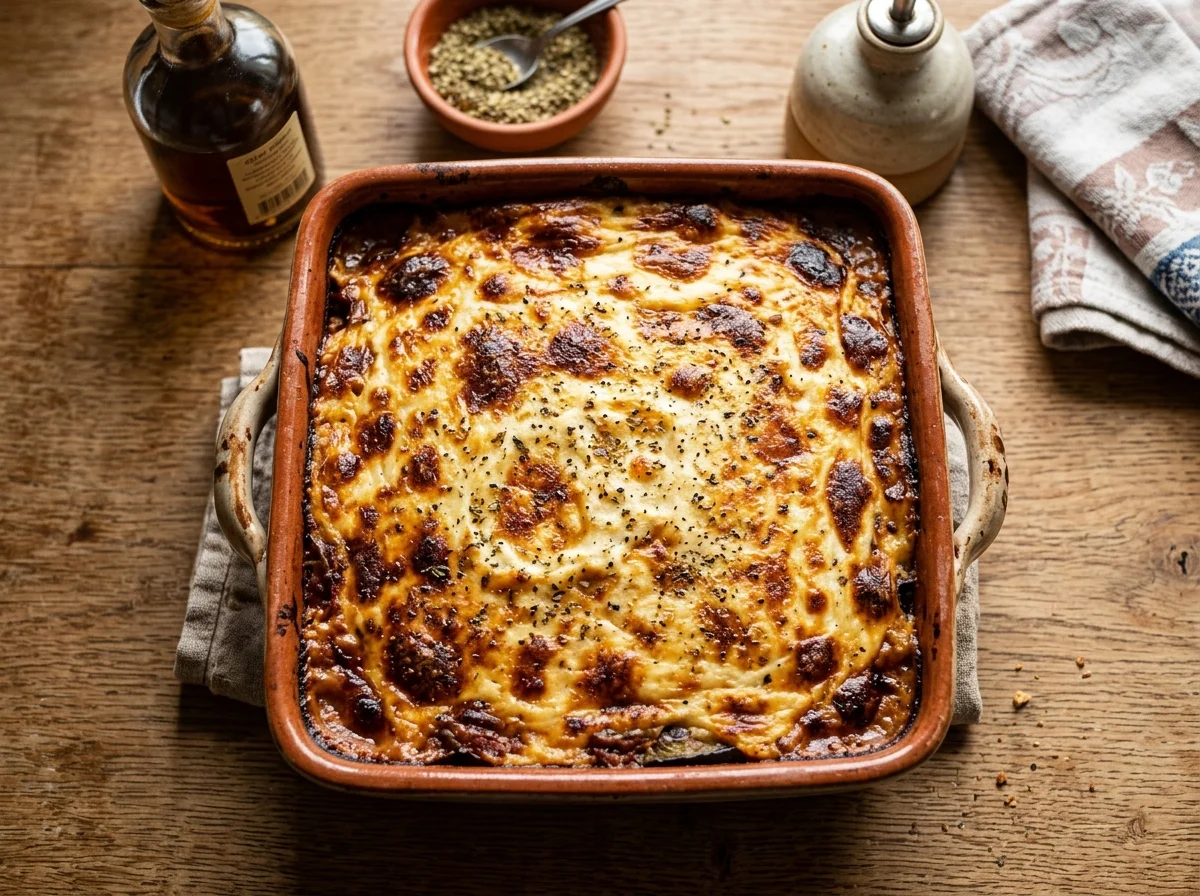
Ingredients (serves 6, one 26 cm baking dish)
In Greece ground lamb is the standard, but it can be hard to find in some supermarkets. A mixed ground beef and pork does very well. For those who dislike the gamey smell of lamb, the mixed mince may actually be easier to eat. If you want to use ground lamb, buy it at a halal food shop, a butcher or online. All-beef mince also works, but a mixed mince, with the fat of pork added, finishes juicier.
In Greek cooking cinnamon is used not just in sweets but often in meat dishes. Without cinnamon in the meat sauce, moussaka "isn't Greek cooking," Greek chefs say. An oriental sweet aroma not found in an ordinary meat sauce defines the character of moussaka. Cinnamon is also used in kofte, a spice shared by the meat dishes of the former Ottoman world.
Nutrition and Health
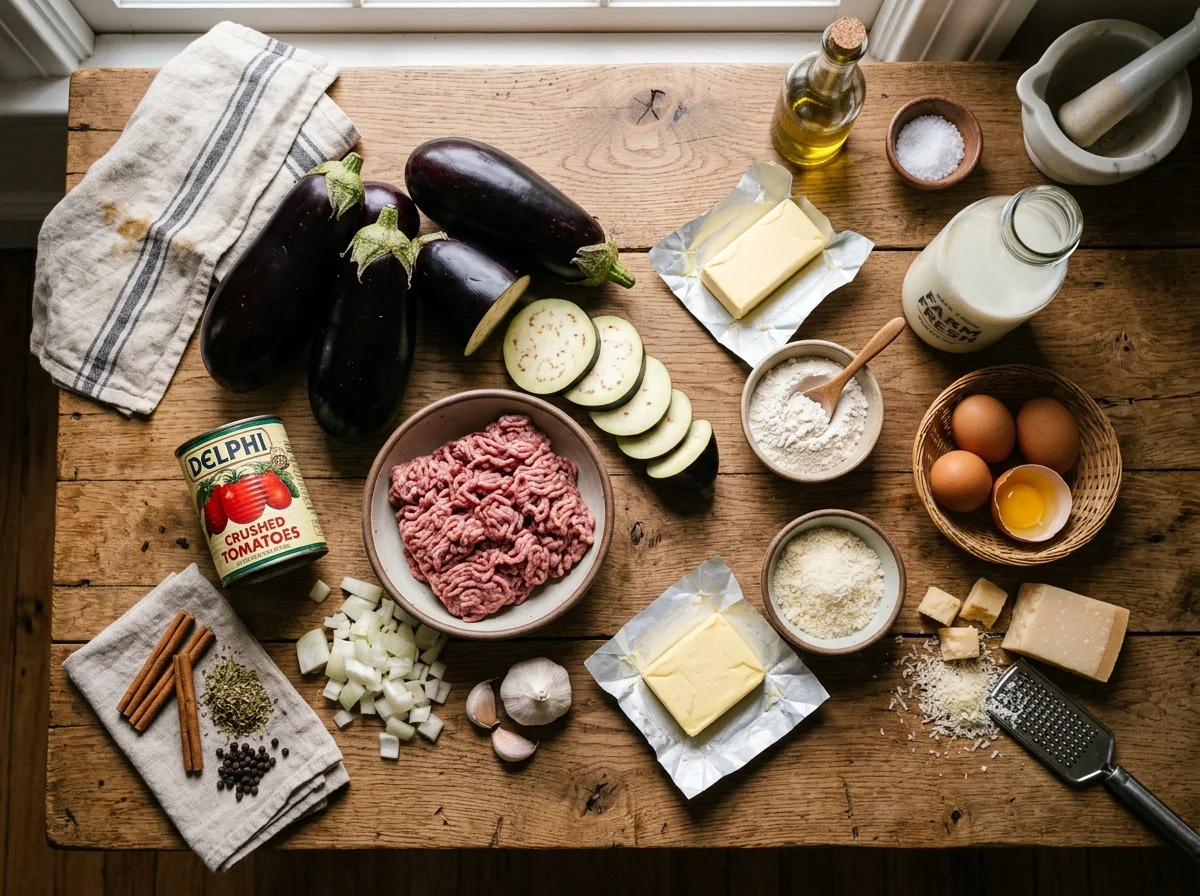
One serving of moussaka (one of six pieces) is about 480 kcal. The nutrient profile takes the benefits of the Mediterranean diet: the fiber of eggplant, the lycopene of tomato and the oleic acid of olive oil. It is a representative dish of the "Mediterranean diet," inscribed on UNESCO's Intangible Cultural Heritage list in 2013, and an association with lower risk of heart disease has been shown in research from the Harvard School of Public Health.
The butter and milk of the béchamel push up the fat. Thinning the béchamel layer can cut about 20 percent of the calories. If you are dieting, switching the oil-fried eggplant to grilling (about 3 minutes per side under a broiler) saves a further 100 kcal or so.
The main allergens are dairy (butter, milk, cheese), egg and wheat (flour). As a dairy-free, wheat-free substitute for the béchamel you can use soy milk and rice flour, but the taste and texture change considerably. For those allergic to egg, omit the yolks and add 2 tbsp more Parmesan to make up the binding.
Method
Step 1: Prepare the eggplant (15 min + 30 min resting)
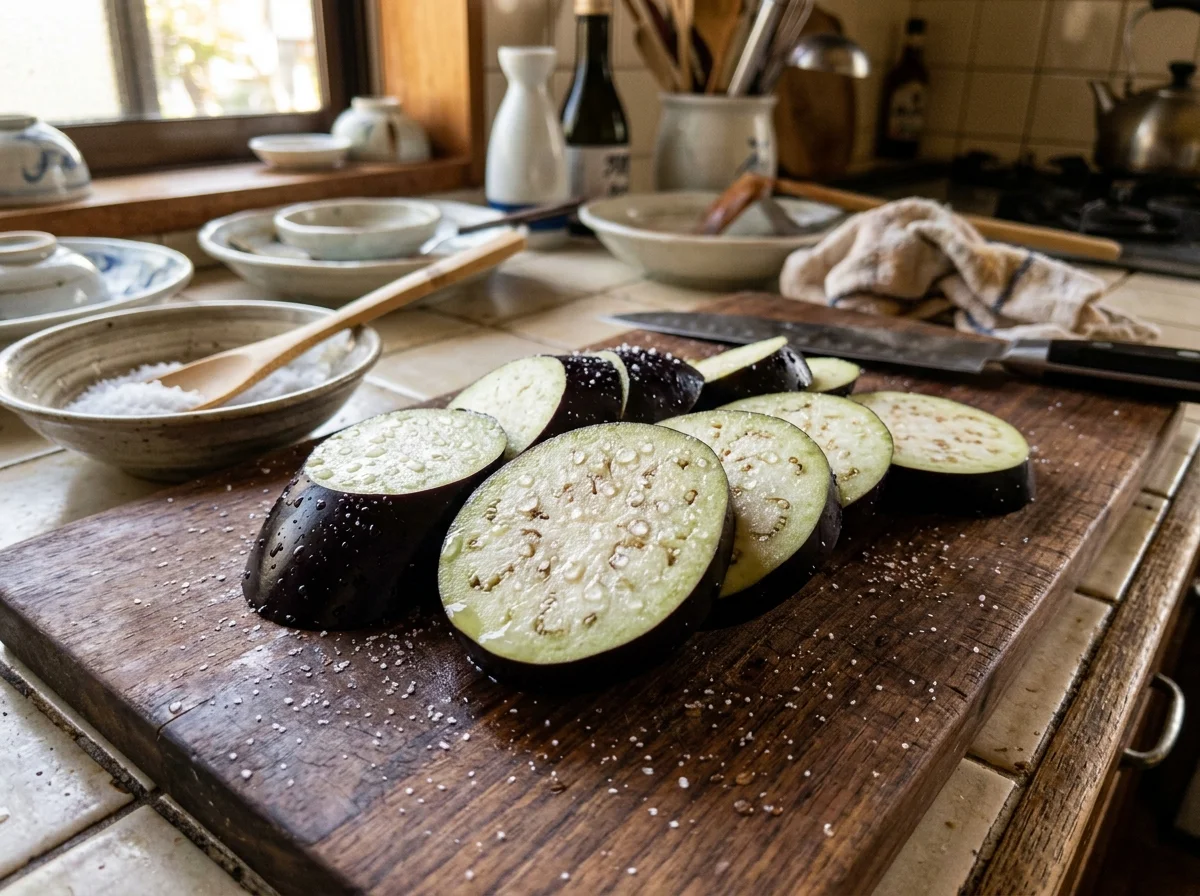
Cut the stem off 4 eggplants and slice them lengthwise 7–8 mm thick. Arrange in a bowl, sprinkle 1 tbsp salt all over and leave for 30 minutes.
This salting has three purposes. First, to draw out the bitterness. Second, to bring out the eggplant's moisture so that it doesn't absorb too much oil when fried. Third, to leave a moist texture when baked. After 30 minutes, fine droplets should have appeared on the surface and the eggplant should look slightly wilted.
After 30 minutes, carefully wipe the moisture that came out of the eggplant with paper towels. If you skip this, water collects on the bottom when it is baked in the oven and the layers fall apart.
Step 2: Cook the eggplant (15 min)
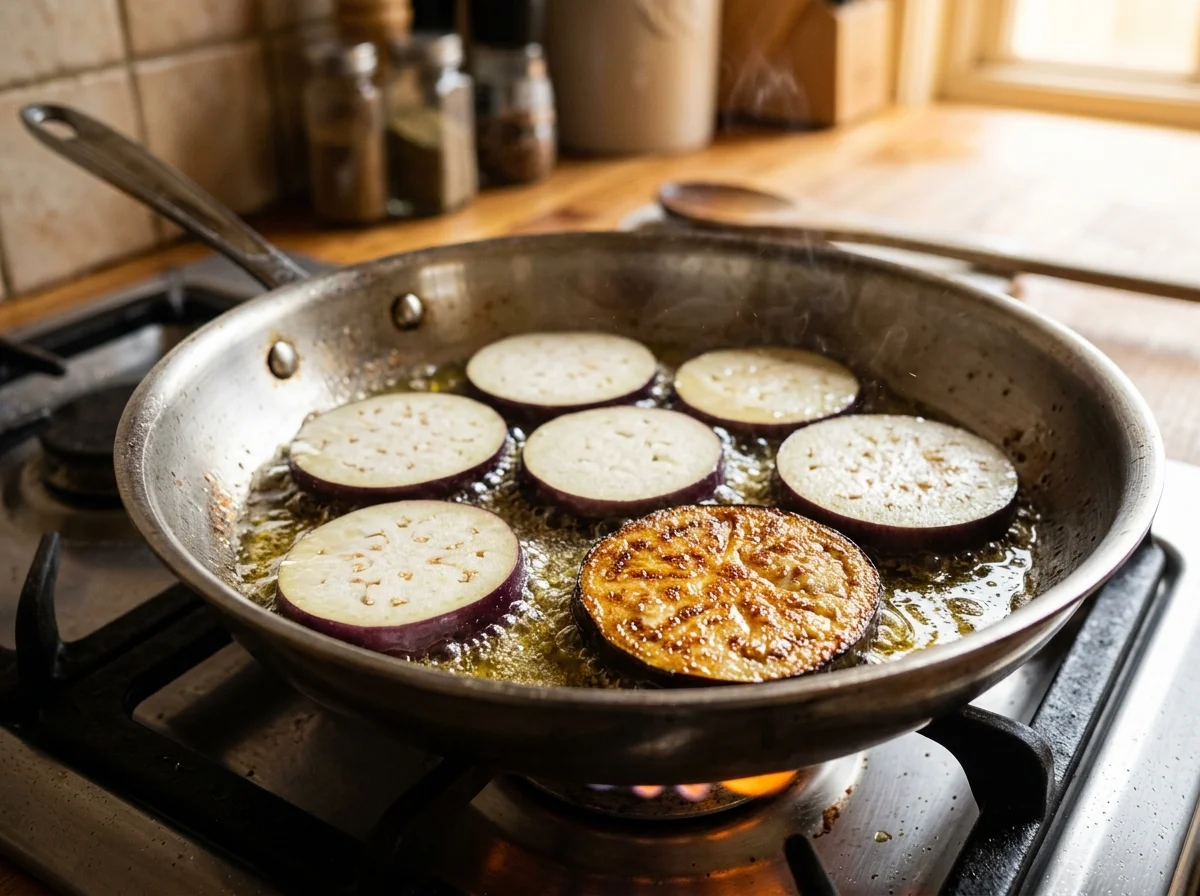
Heat 2 tbsp olive oil in a skillet over medium heat, lay in the eggplant slices and cook 2–3 minutes per side until lightly browned. They won't all fit at once, so cook in 2–3 batches. Arrange the cooked eggplant on a tray lined with paper towels to drain.
Frying in a skillet uses a lot of oil and takes time. Instead, lay the eggplant on a baking sheet lined with parchment, brush lightly with olive oil and bake at 200°C for 15 minutes, and you can use less than half the oil. It doesn't brown as much as in a skillet, but this is recommended if you are watching calories.
Step 3: Make the meat sauce (25 min)
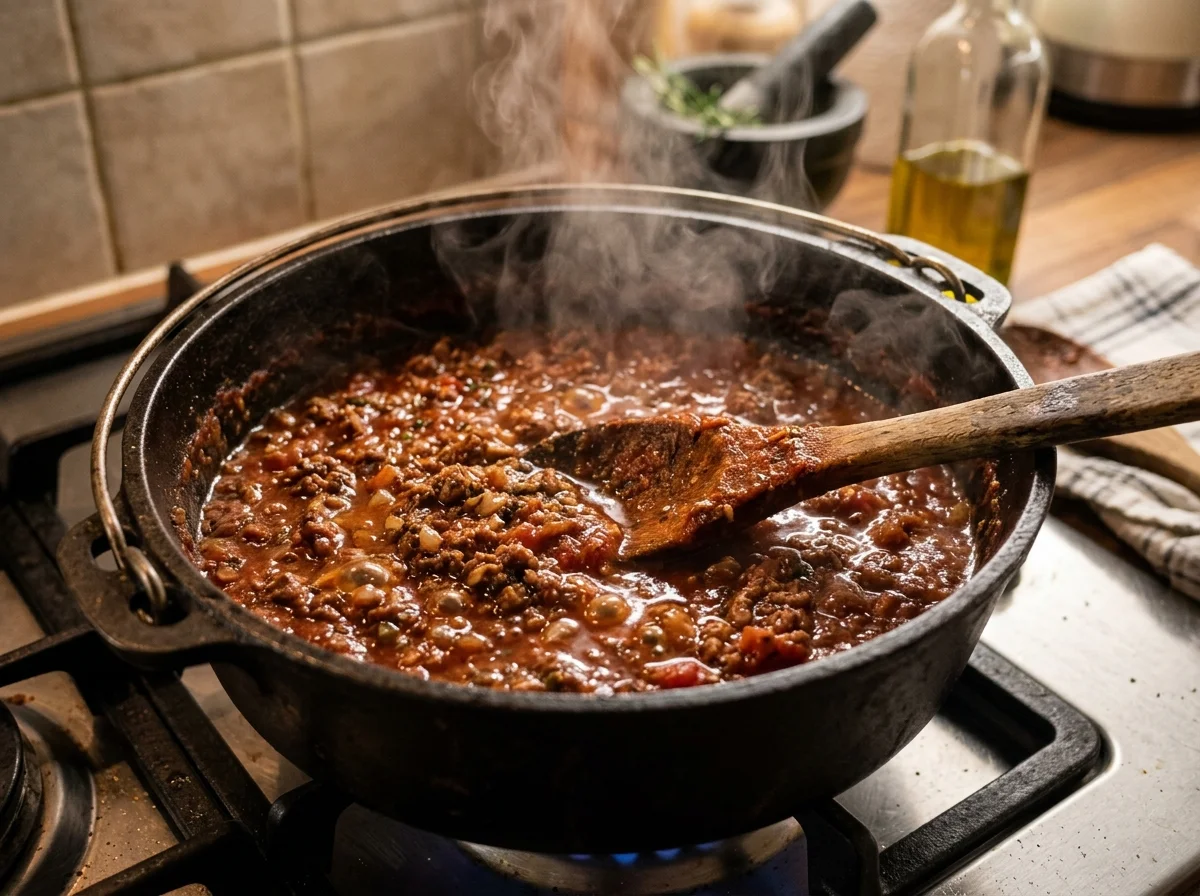
Heat 2 tbsp olive oil in a large skillet over medium heat, and cook the finely chopped onion for 5 minutes until translucent. Add the 3 cloves of finely chopped garlic and cook 1 minute, and when fragrant add 500 g ground lamb (or mixed mince).
Break the meat up with a wooden spatula and cook it completely through over 8–10 minutes. If a lot of excess fat comes out, soak it up with paper towels. Lamb in particular is fatty, and this fat removal decides how heavy the sauce is.
Once the meat is cooked, pour in 100 ml red wine and cook off the alcohol (2 minutes over high heat). Add 400 g canned tomatoes and 2 tbsp tomato paste, then 1/2 tsp ground cinnamon, 1 tsp dried oregano, 1/4 tsp nutmeg, 1.5 tsp salt, 1/2 tsp black pepper and 1 bay leaf.
Lower the heat and simmer 15 minutes without a lid. It is done when the moisture has cooked off and the sauce is thick enough that, when you trace the bottom of the pan with a wooden spatula, it doesn't flow back in. Finally remove the bay leaf.
Step 4: Make the béchamel (10 min)
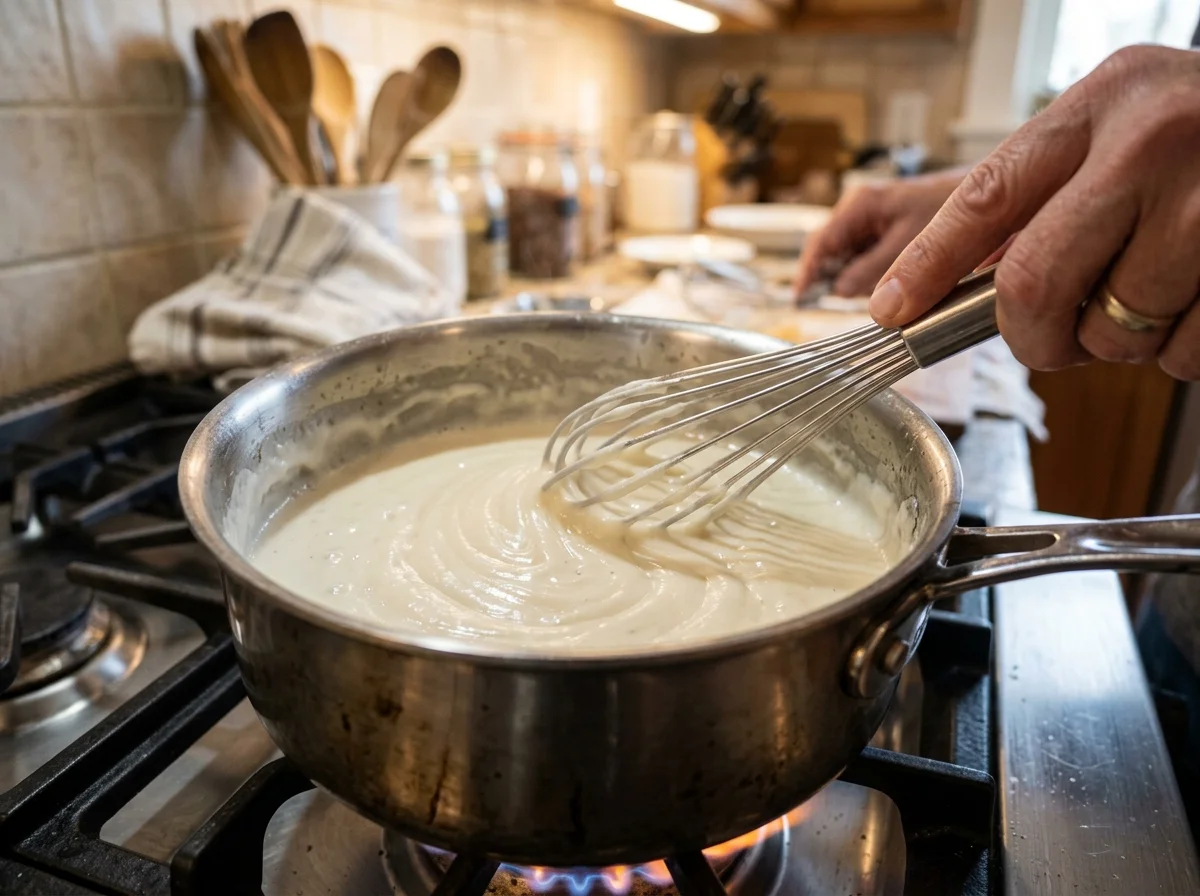
In a separate pot, melt 60 g unsalted butter over low heat, add 60 g flour and stir with a wooden spatula for 2 minutes. When the floury taste is gone and the roux is foaming and pasty, add cold milk a little at a time.
How you add the milk is the biggest point. At first add 2 tbsp at a time, and repeat 5–6 times, adding the next 2 tbsp only after it is completely blended. When the roux has absorbed the milk and turned smooth, pour in the rest of the milk in three portions and whisk quickly.
Raise the heat to medium and keep stirring, and in 5–6 minutes it thickens. The ideal consistency is one that, when scooped with a wooden spatula and dropped, flows slowly down in a ribbon. Turn off the heat and add 1/4 tsp nutmeg, 1/2 tsp salt and a little white pepper.
After cooling about 1 minute, add 2 egg yolks and stir quickly. To keep the yolks from setting, always add them after the temperature of the sauce has dropped a little. Finally stir in 3 tbsp Parmesan.
The cause of lumps in béchamel is "pouring hot milk all at once into a cold roux." If you follow the steps of first adding milk in small amounts to loosen the roux and then pouring in the rest, you won't get lumps. If lumps do form, you can recover by straining through a fine sieve.
Step 5: Assemble the layers
Preheat the oven to 180°C.
Lightly butter (extra butter) the inside of a baking dish about 26 cm across (at least 6 cm deep).
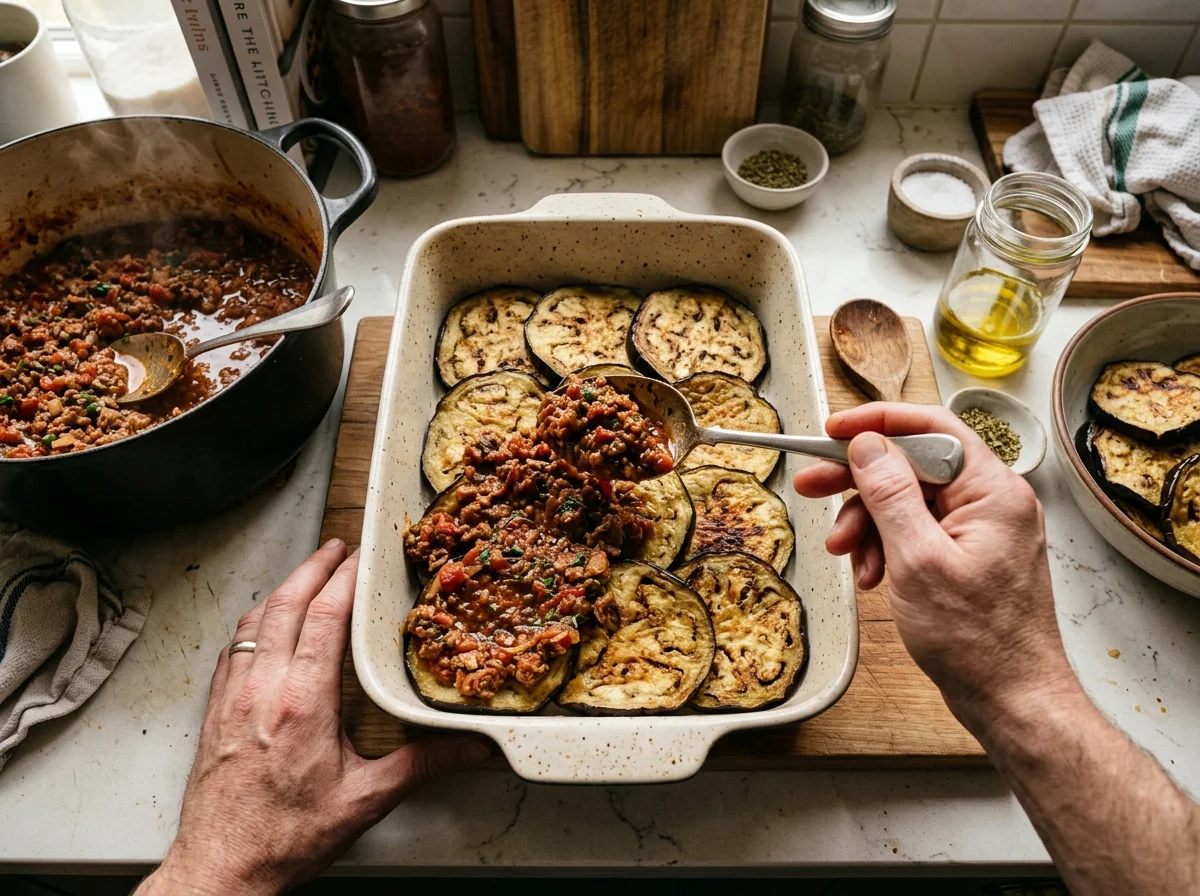
Layer 1: Arrange the eggplant slices on the bottom of the dish with no gaps. Slightly overlapping is ideal.
Layer 2: Spread all of the meat sauce evenly.
Layer 3: Lay the remaining eggplant on top.
Layer 4: Pour béchamel over the top and level the surface with a rubber spatula. To finish, sprinkle 1 tbsp Parmesan (extra) over the surface.
Step 6: Bake in the oven (45 min)
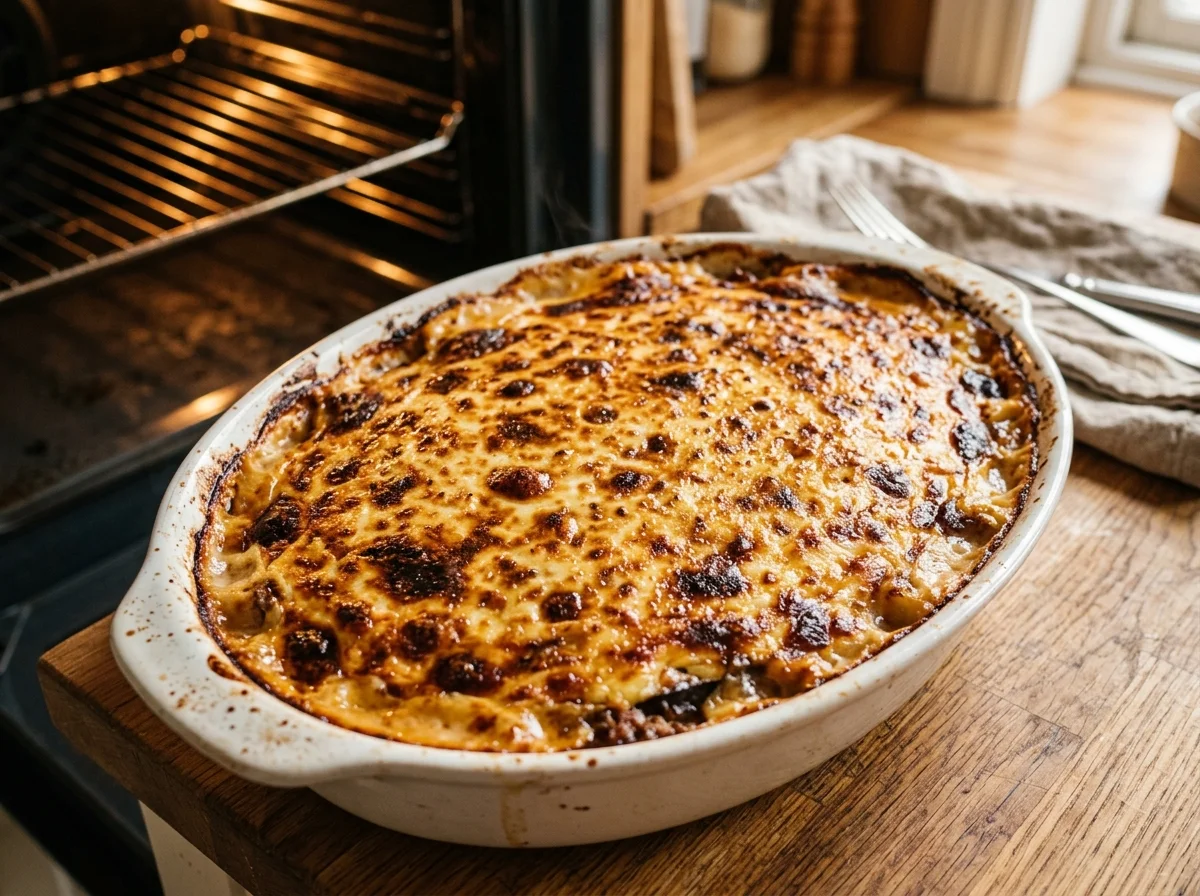
Put it on the middle rack of the 180°C oven and bake 45 minutes. It is done when the surface has turned golden with dark brown spots here and there.
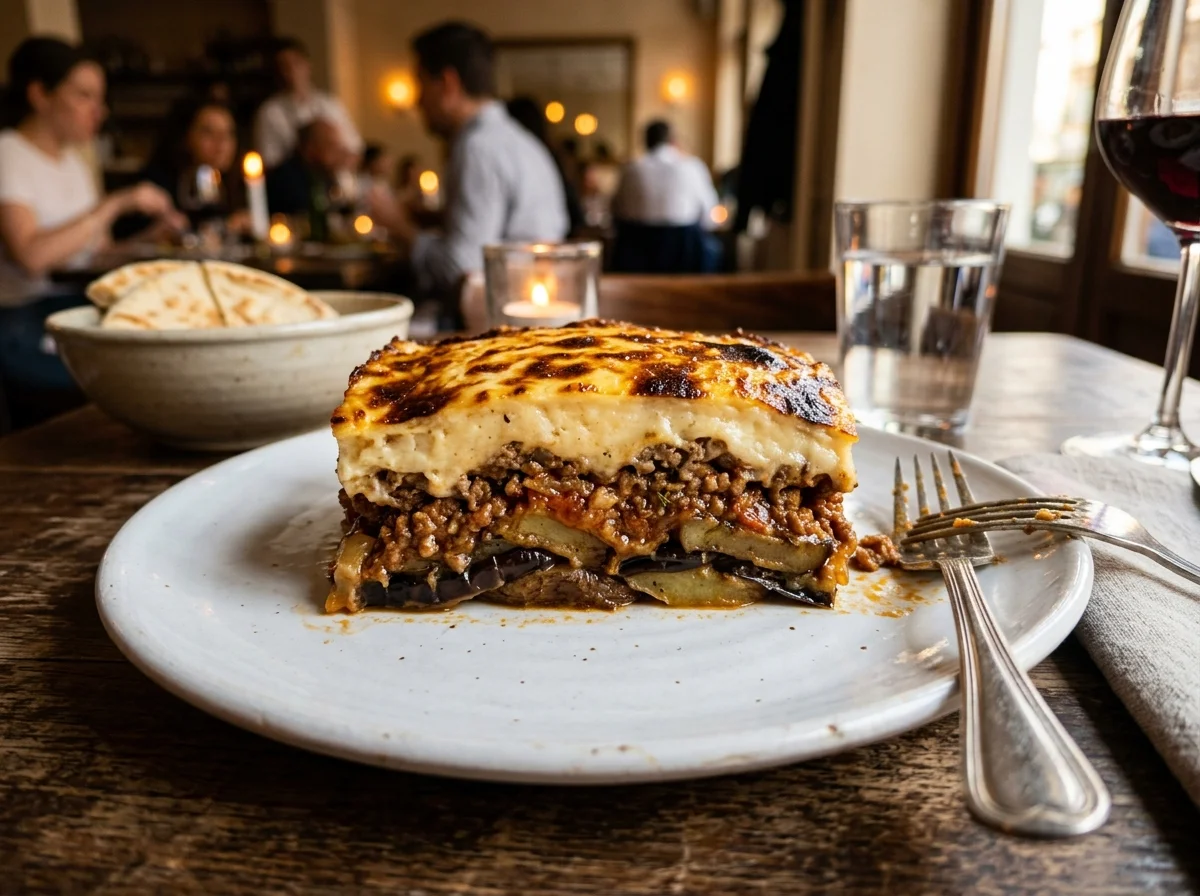
When it comes out, always rest it at least 15 minutes before cutting a portion into 8–10 cm squares. Cut at once and the layers collapse and liquid sauce runs out. It is common to rest it from 30 minutes to 1 hour after baking, and part of moussaka's appeal is that it is delicious both warm and cool.
The eggplant soaks up the savor of the meat sauce overnight in the refrigerator, and the layers settle and become less likely to collapse. Just warming it 15 minutes in a 170°C oven before eating gives a matured flavor different from freshly baked.
Cooking Tips: A Greek Grandmother's Wisdom
Too thick and it doesn't cook through; too thin and it turns flimsy when baked and fails as a layer. 7–8 mm balances the melting texture of eggplant with structural strength.
If moisture remains in the meat sauce, steam comes out when it is baked in the oven and the béchamel turns watery. Reduce it until you can see the bottom of the pan. The standard is a meat sauce stiff enough to heap on a spoon.
Béchamel can be made without egg yolks, but with yolks the surface sets like a custard when baked and keeps the layers clean. Add the yolks once the sauce has cooled a little. Added hot, they turn into scrambled egg.
In a shallow dish the béchamel risks overflowing. A deep oval Pyrex or Le Creuset is ideal, but if you have none, an ordinary gratin dish works too if you reduce it to 4 servings.
Variations
Papoutsakia (eggplant "little shoes")
Cut the eggplant lengthwise in half, scoop out the flesh, fill with meat sauce, cover with béchamel and bake: the "eggplant boat" style. In Greece it is called papoutsakia and is a more casual home dish than moussaka. Each portion can be plated individually, so it also looks good for entertaining.
Potato moussaka
A version that uses potato (thinly sliced and parboiled 5 minutes) in place of eggplant. It gives more bulk than eggplant. There is also a "full version" using both eggplant and potato, in which case the four layers are eggplant, potato, meat sauce and béchamel.
Vegan moussaka
Replace the ground meat with lentils (100 g dried, boiled 20 minutes) and add 50 g finely chopped walnuts. Make the béchamel with 300 g silken tofu and 1 tbsp miso, run through a food processor as a "tofu béchamel." The taste of the canned tomato and spices is the same, so the finish is surprisingly satisfying.
Turkish-style moussaka (no béchamel)
In Turkey, béchamel is not used for moussaka. It is a simple style that layers eggplant and meat sauce and bakes it under tomato sauce. It is recommended for those who dislike béchamel or want a lighter finish. Making a Turkish-style table together with kofte is also fun.
A fusion twist: miso-meat moussaka
Add 2 tbsp miso to the meat sauce and use 1 tsp grated ginger in place of the cinnamon. Mix 1 tbsp white miso into the béchamel. The pairing of eggplant and miso is proven in Japanese cooking, and adding the Western béchamel to it creates a new East-West flavor.
Background: The Culture and History of Moussaka
The "layered eggplant bake" that spread from the Arab world to the Balkans
The cooking method of layering eggplant and meat and baking is said to originate in the medieval Arab world. As the Ottoman Empire (1299 to 1922) expanded, this kind of dish spread across the Balkans, North Africa and the Levant. It evolved independently in each place, and moussaka of different styles exists in Turkey, Lebanon, Egypt, Serbia and Bulgaria.
The Tselementes revolution: merging French technique
The Greek-style moussaka of today (the style topped with béchamel) was established by the Greek cookbook author Nikolaos Tselementes. He advocated bringing French culinary technique into Greek traditional cooking, and a moussaka recipe topped with béchamel appeared in his cookbook published in the 1920s, after which it spread throughout Greece.
This "Frenchification" is a subject of debate even within Greece. The criticism that it spoiled the purity of the traditional cooking and the praise that it raised Greek cooking to a world standard still cross today. Like the argument over where hummus is "truly from," the authenticity of food culture is an eternal theme.
Moussaka in modern Greece
In modern Greece, moussaka is a home dish and also a dish that symbolizes "Greekness," closely tied to the tourism industry.
Greek Sides to Eat Alongside
Horiatiki salad (Greek salad)
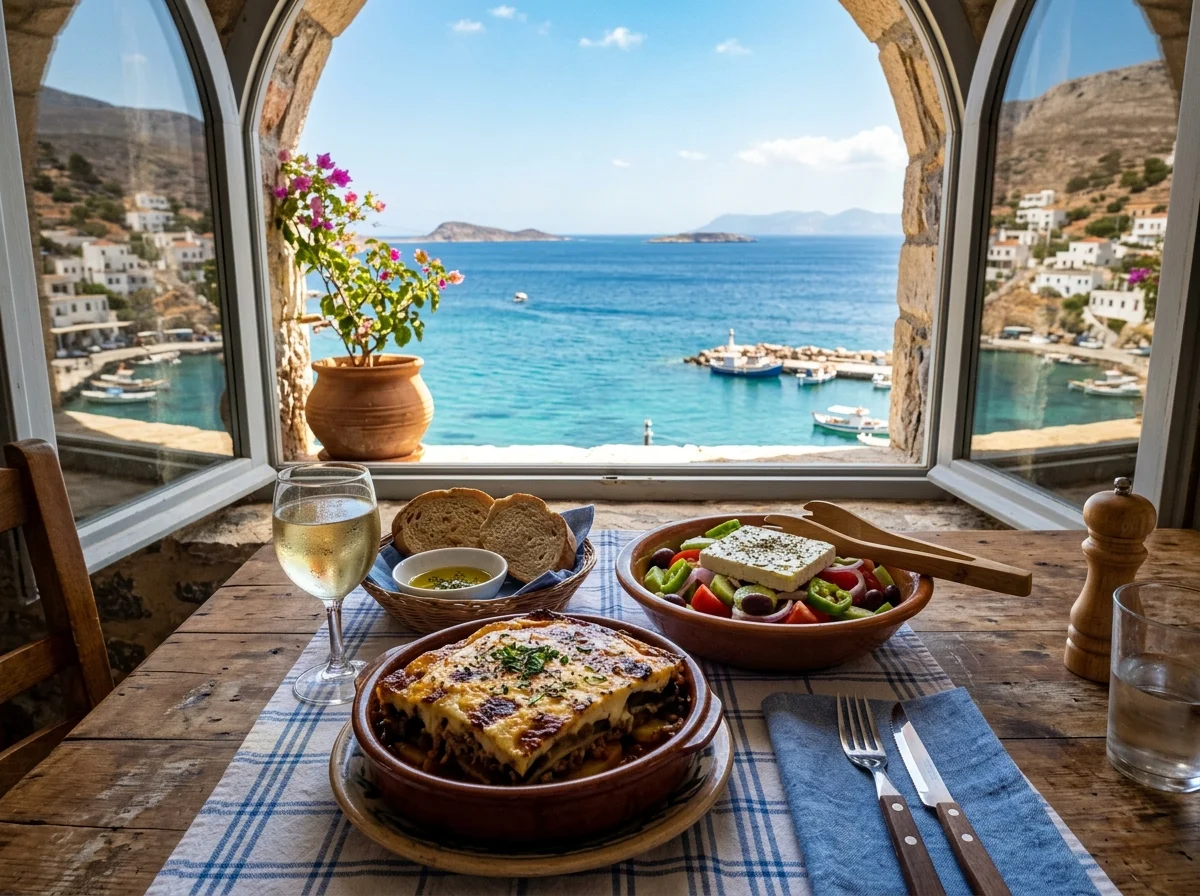
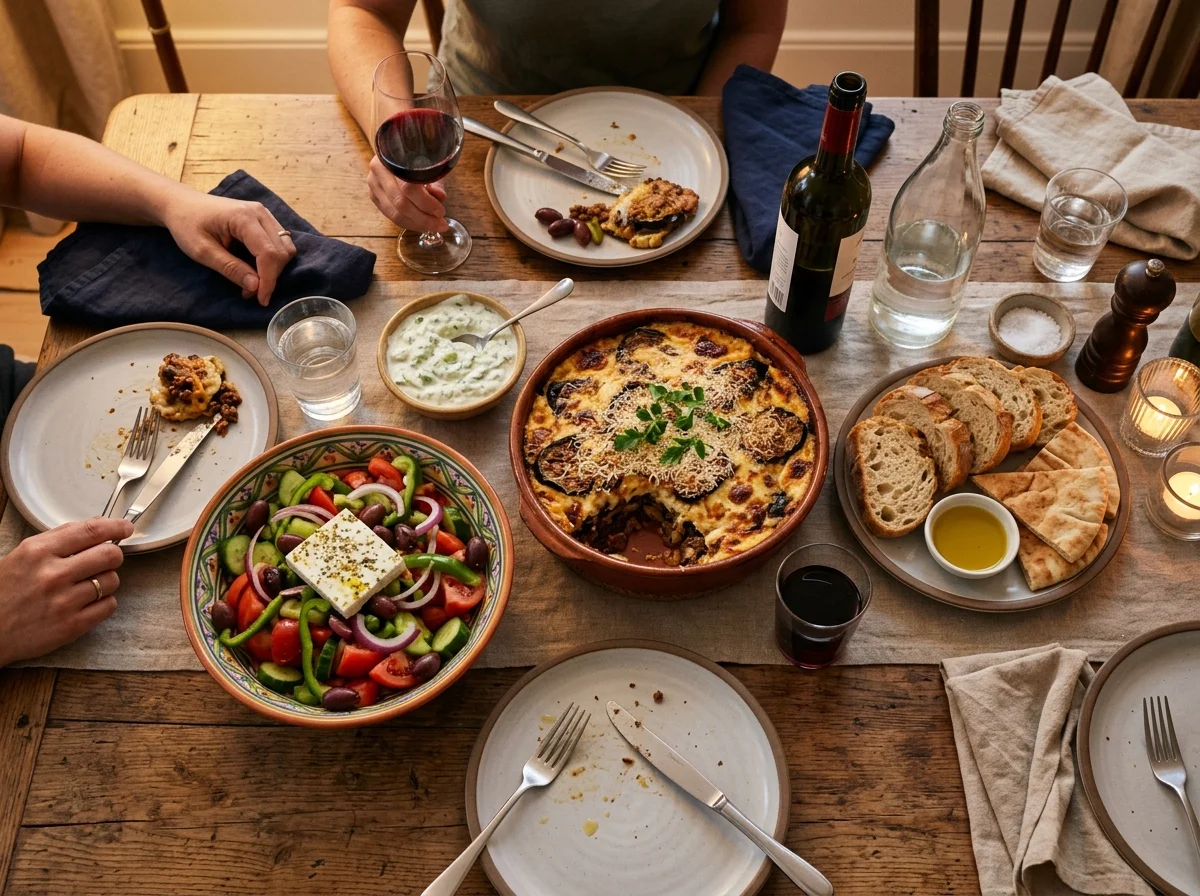
Roughly chop tomato, cucumber and red onion. Top with Kalamata olives and a slab of feta. Dress only with olive oil and oregano, an unfussy salad. The refreshing salad offsets the richness of moussaka so you don't tire of it to the end. If you can't get feta, cottage cheese with a little salt can stand in.
To add one more dish using the same tomato, oregano and feta, Crete's dakos (in Japanese) is handy. It uses no heat, only hard bread soaked with tomato juice, so you can widen the table while the oven is busy with the moussaka.
Tzatziki (yogurt dip)
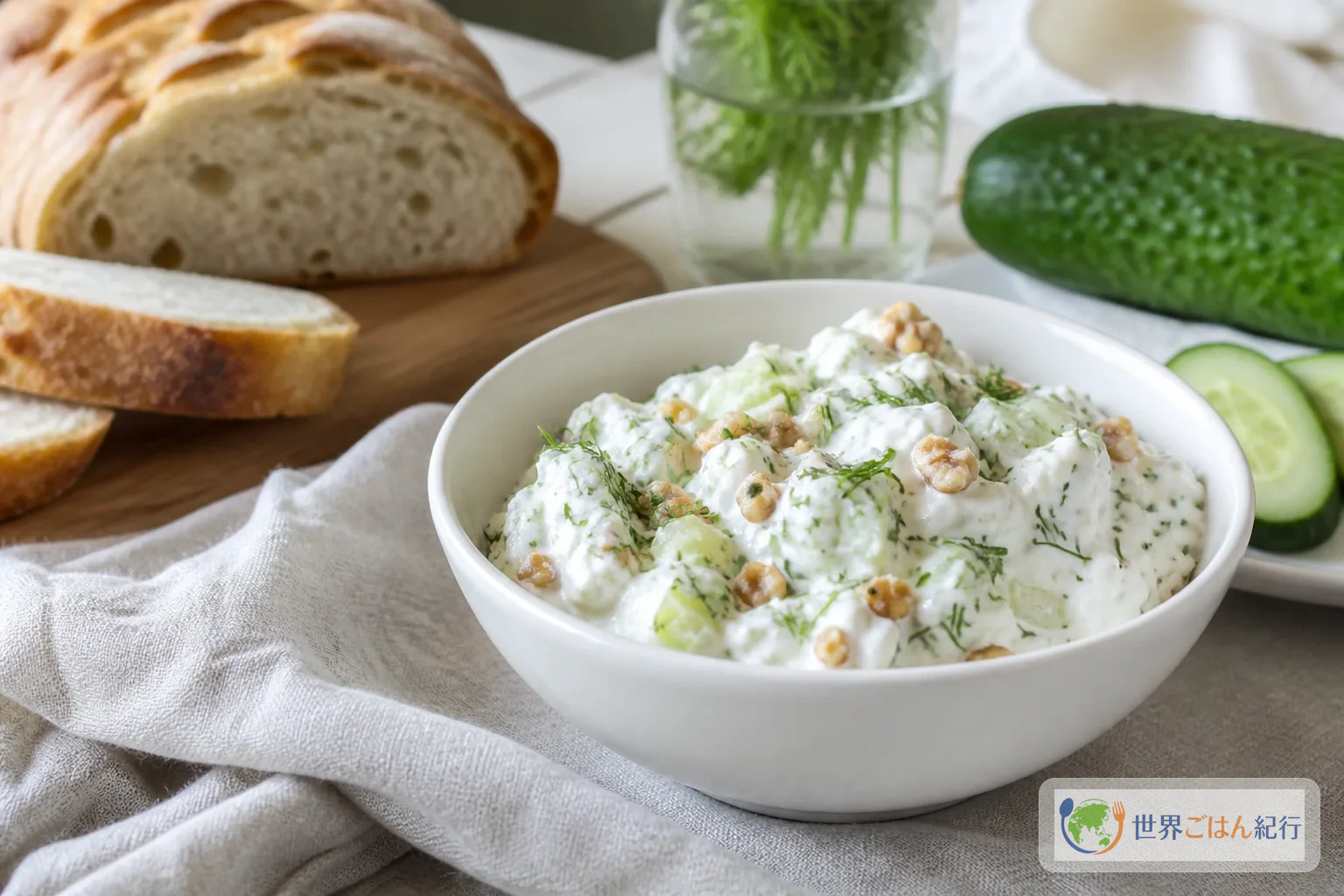
Mix 200 g Greek yogurt, 1/2 grated cucumber (squeezed dry), 1 clove grated garlic, 1 tbsp olive oil, 2 tsp lemon juice, 1/2 tsp salt and 1 tbsp chopped dill. Like the raita served with biryani, a yogurt-based side dish is ideal for refreshing the palate after a heavy dish. It is also excellent on pita or baguette. Serving tzatziki with falafel is likewise a standard pairing in the Middle East.
On a day when moussaka alone is a little heavy, adding the aroma of lemon and oregano with souvlaki, Greek grilled skewers is an easy pairing. Because you can share the tzatziki, a grilled dish and an oven dish can sit side by side at the same table without strain.
Frequently Asked Questions
Q1. Is moussaka good cold?
Yes, it is a dish that can be eaten cold. In Greece "room-temperature moussaka" is served as a matter of course. To eat refrigerated moussaka the next day, warm it 15 minutes in a 170°C oven or heat it in a microwave (600 W) for 3–4 minutes. It keeps 3 days in the refrigerator, or 1 month frozen.
Q2. Can I use zucchini instead of eggplant?
Yes. Zucchini has less water than eggplant, so you can skip the salting. Just slice it 5 mm thick and cook both sides in olive oil. The result is lighter than with eggplant.
Q3. Should the cinnamon in the meat sauce really go in?
Put it in. Moussaka without cinnamon "is not moussaka," as Greeks would tell you. The amount is modest at 1/2 tsp, so there is no worry about its becoming sweet. The warm aroma of cinnamon softens the gamey smell of the meat and harmonizes with the acidity of the tomato. Once you eat moussaka with it, you may not be able to go back to moussaka without cinnamon.
Q4. Can I use store-bought béchamel?
You can, but homemade is overwhelmingly better. If you use a commercial white sauce, mix 1 egg yolk and 2 tbsp Parmesan into 1 can (290 g). Adding a little nutmeg brings it nearer to the original. If you don't mind the effort, making your own sauce is well worth it.
Q5. Six servings is too many for living alone. Can I make half?
You can halve the ingredients and make it in a small baking dish about 20 cm across. Shorten the baking time to 35–40 minutes. Or make the six servings, cut them and freeze each piece wrapped in plastic wrap, which is a smart way. On a busy day you can eat it just by warming it in the microwave. As with borscht (in Japanese) and feijoada, stew-type dishes taste better after settling overnight.
Sources
- Harvard T.H. Chan School of Public Health. "Mediterranean Diet." https://www.hsph.harvard.edu/nutritionsource/healthy-weight/diet-reviews/mediterranean-diet/