Döner Kebab: Thin Slices, Browned Edges, Warm Pide
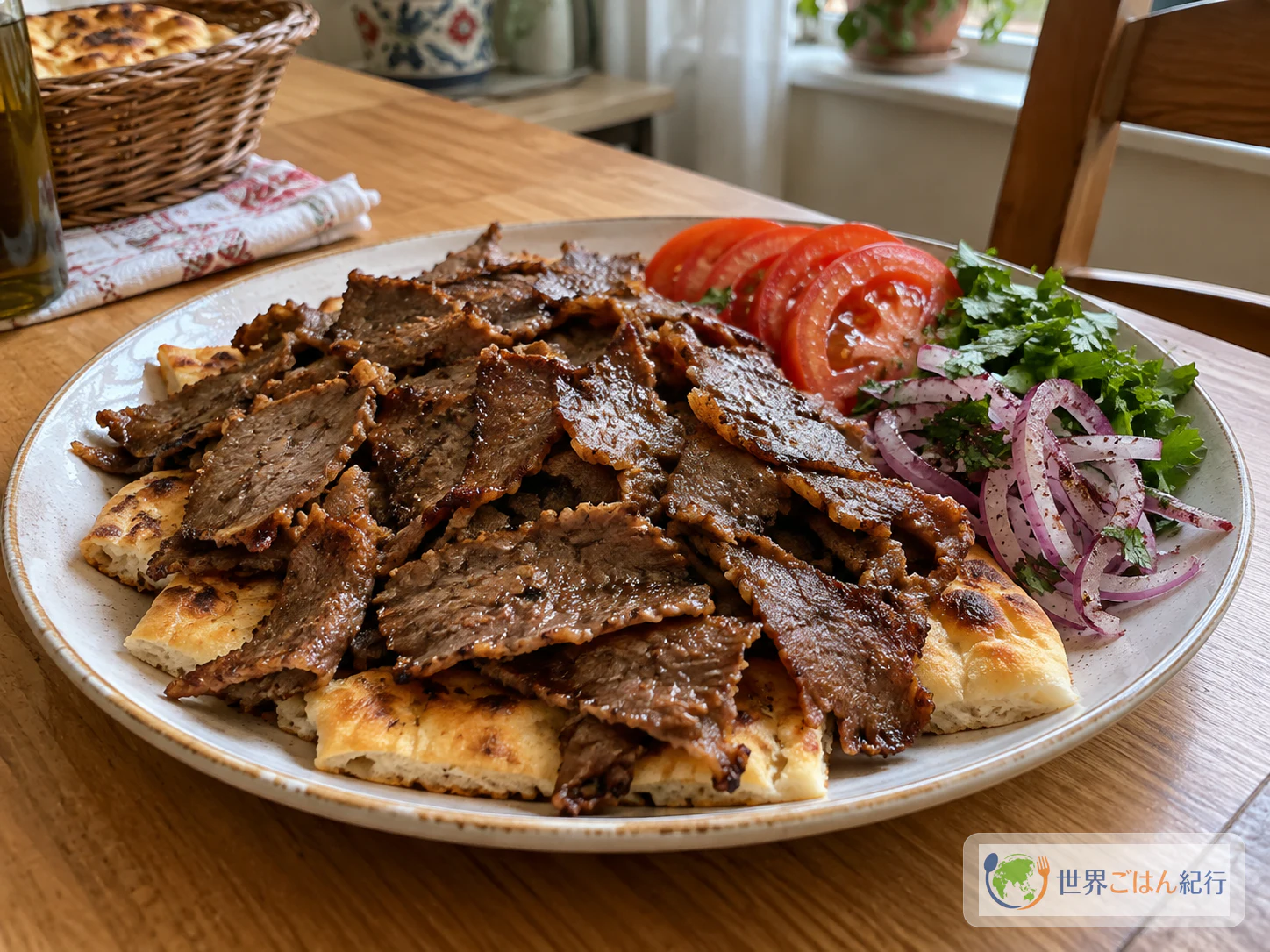
Thin, even slices of marinated meat, seared in small batches until the edges brown and cooked through to 75°C. It does not copy a vertical rotisserie; it brings the texture of thin-sliced döner into an ordinary kitchen.
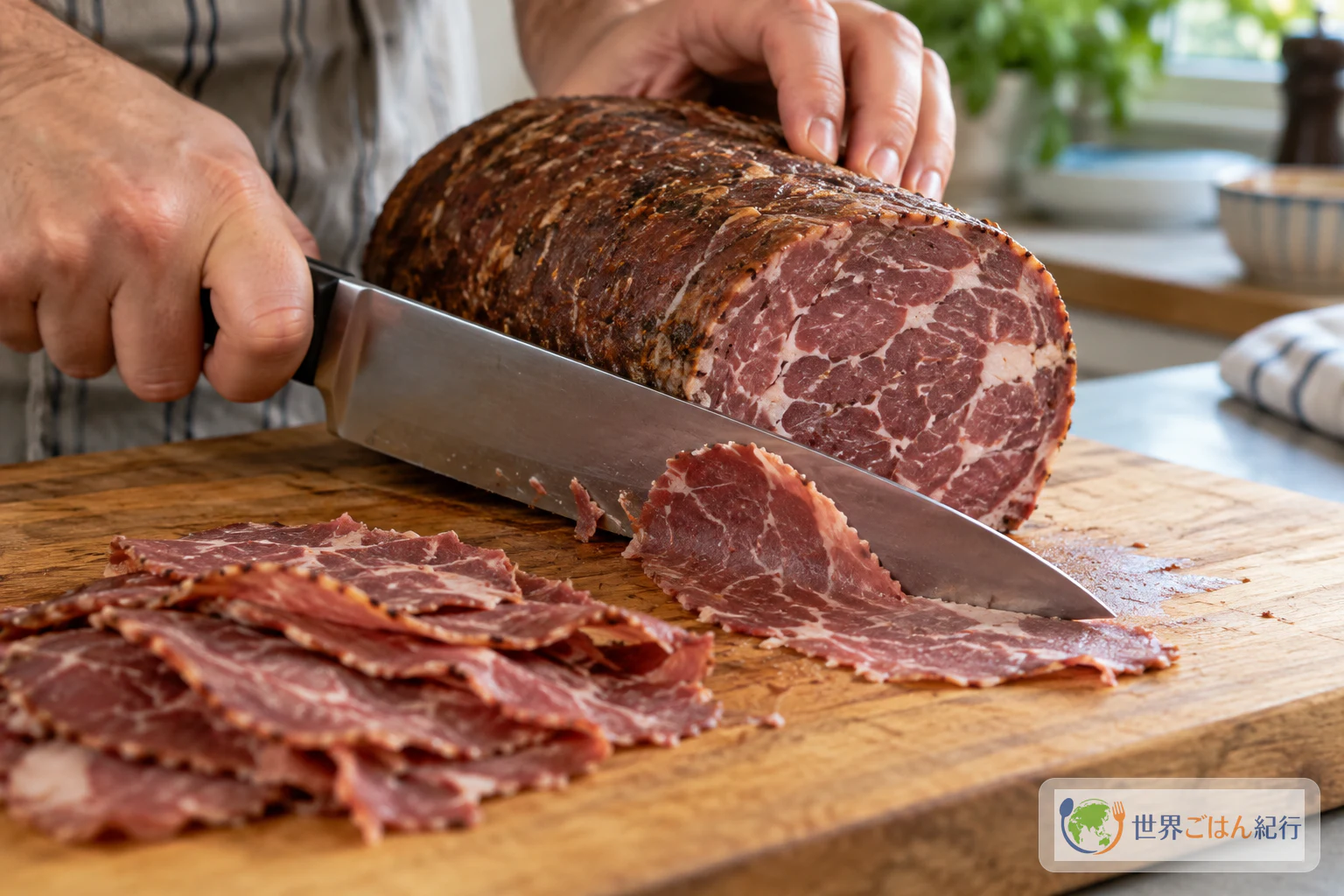
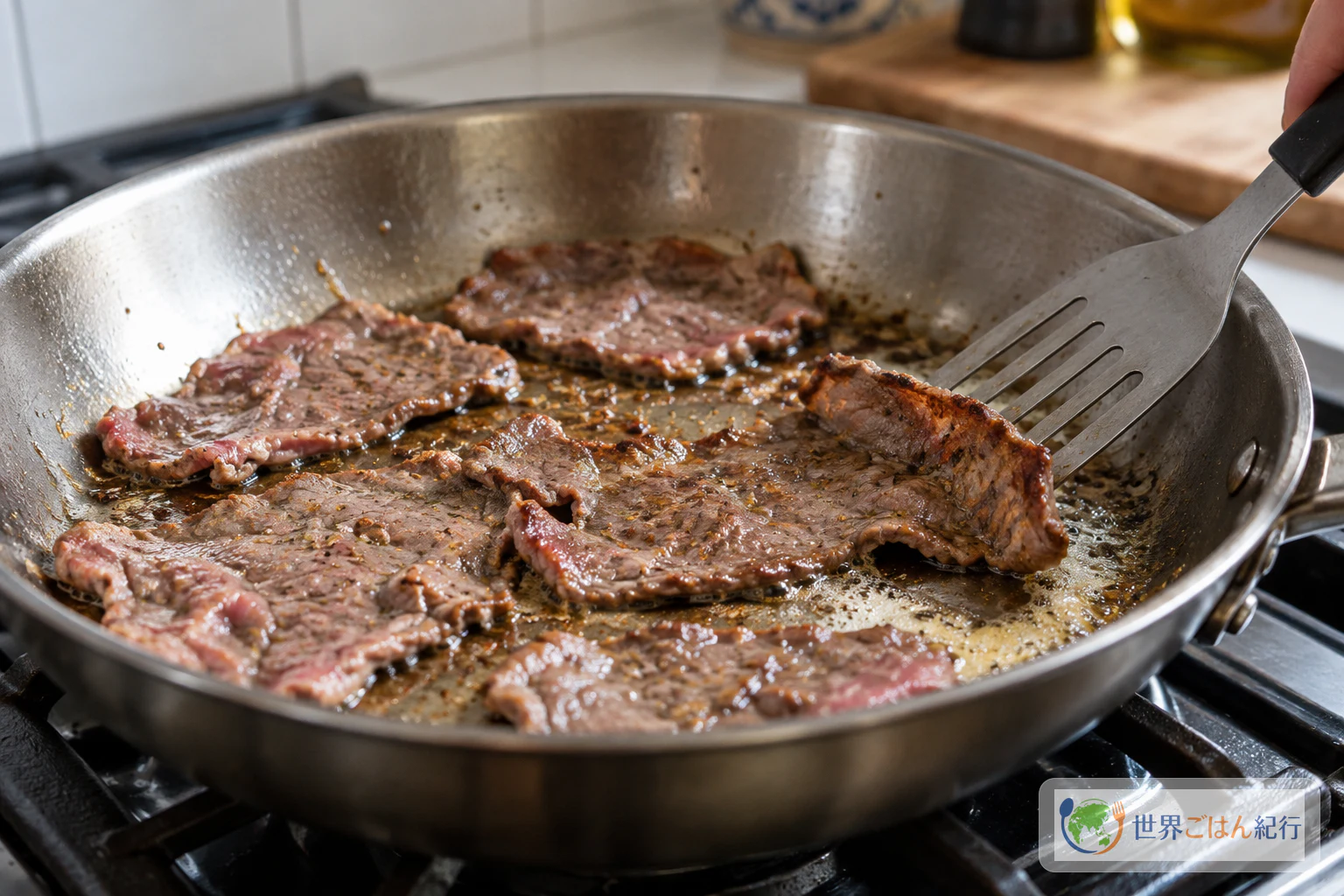
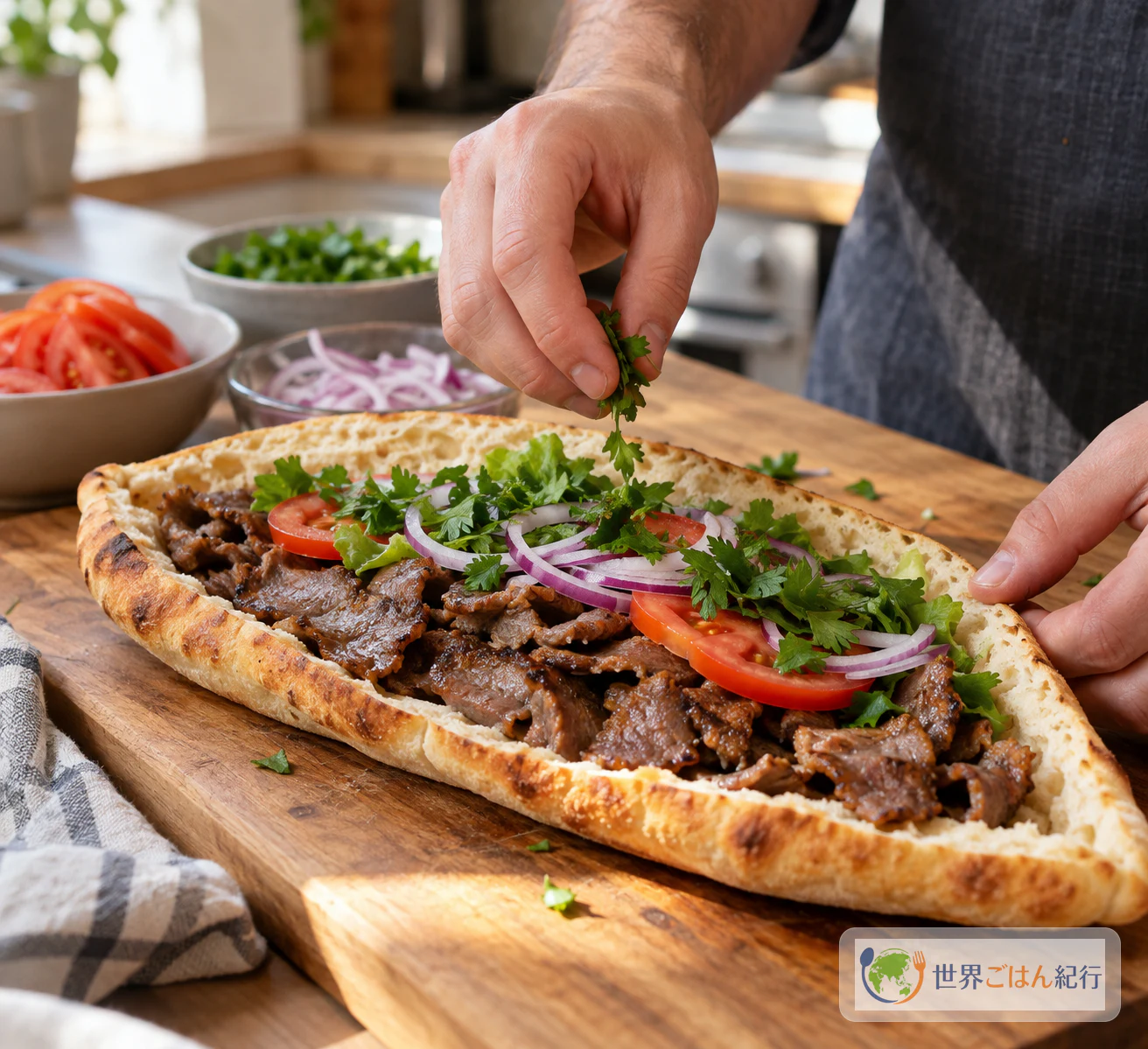
A small handful of very thin, marinated slices hits a buttered skillet, gives up its moisture, and then starts to brown at the edges. Turned a few times and lifted out, the meat goes onto warm pide with tomato, onion and a few leaves. That is the scene this recipe builds toward: no spit, no rotisserie, just a knife, a cold roll of layered meat and a pan.
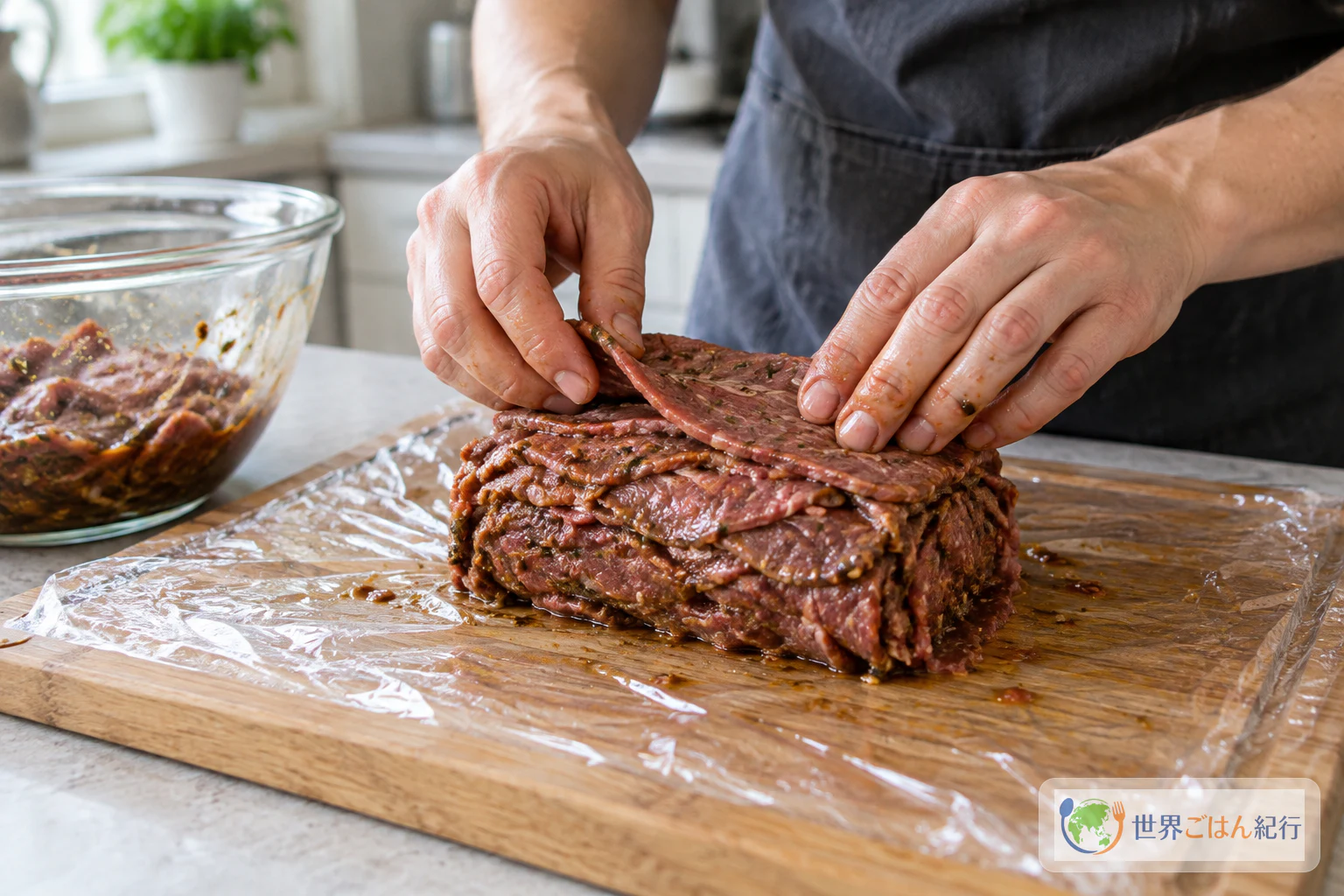
Döner kebab from Turkey (Turkish: döner kebap) is seasoned meat stacked into a cylinder, cooked on a vertical rotating spit, and sliced thinly from the browned outside. The NSW Food Authority points out that this is different from shish kebab, where pieces of meat are threaded onto a skewer. The method below does not reproduce the vertical spit. Instead, you marinate the meat, stack it into a roll, chill it firm, slice it thin and cook it in a skillet: a home approximation, not the same thing as the turning cone in a döner shop.
For skewered kebabs such as Adana and shish, see the kebab recipe. For another way of roasting meat on a spit and slicing it, this time horizontally, see cağ kebabı.
What Döner Is: Meat That Turns, Sliced from the Outside
The word itself points at the motion. In its 2024 report, the Associated Press explains döner as coming from dönmek, "to turn." Meat is stacked on an upright spit, the spit rotates in front of the heat, and the cook shaves off the outer layer as it browns, so every serving is a pile of thin slices with crisp edges.
A home kitchen cannot recreate that outer char over a moist interior exactly. What it can do is get the meat thin. The steps that follow are all in service of that: a long marinade, a firm, cold roll you can slice evenly, and a hot pan that browns each batch.
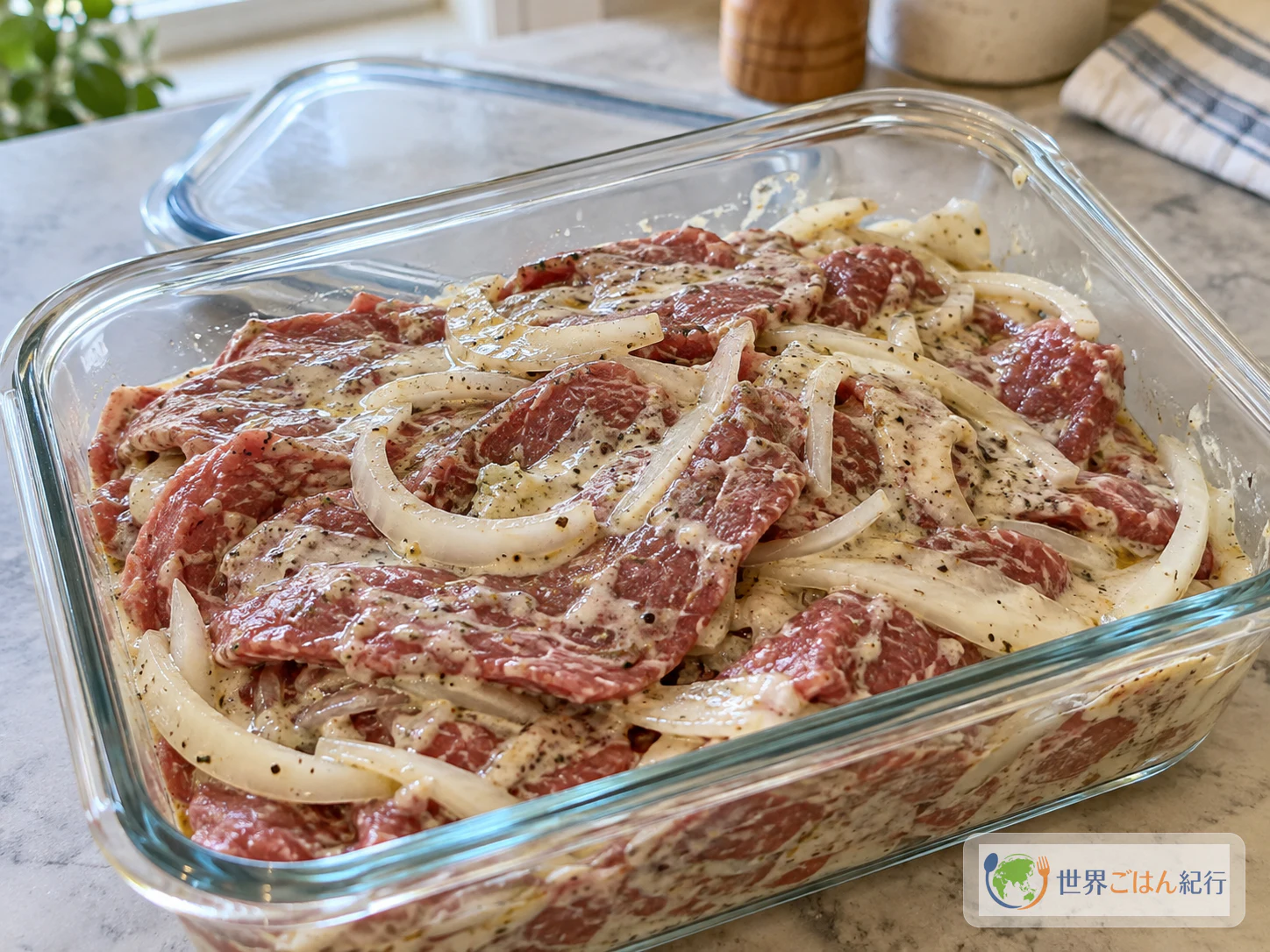
This recipe is prepared one day and cooked the next day or later. The meat marinates in the refrigerator for at least 6 hours (ideally overnight), is stacked and frozen overnight, and is then thawed in the refrigerator before slicing. The hands-on work is short; most of the time is waiting in the fridge and freezer. Plan the waiting time separately from the work.
Ingredients for 2 Servings: Meat, Marinade and Butter for the Pan
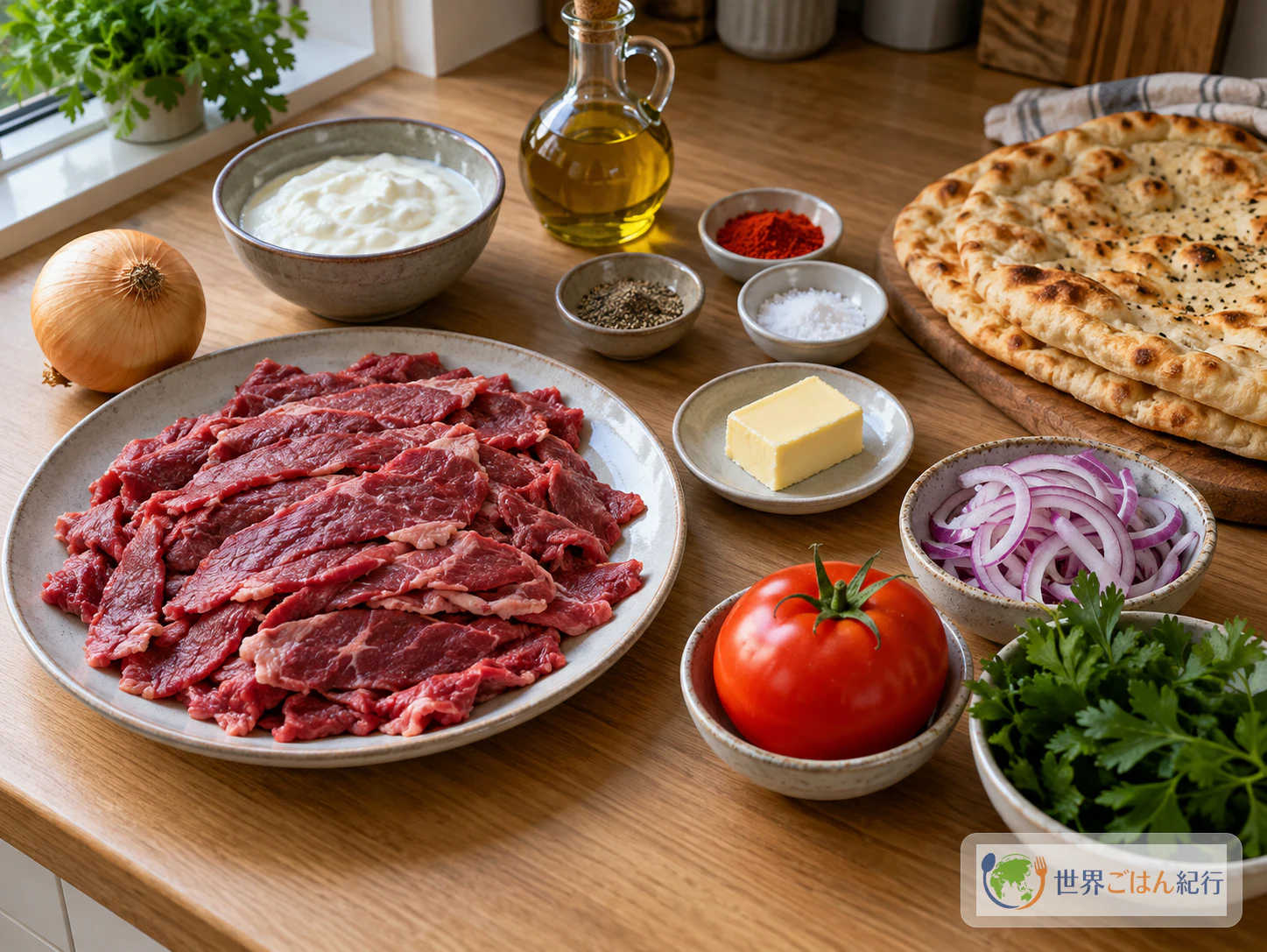
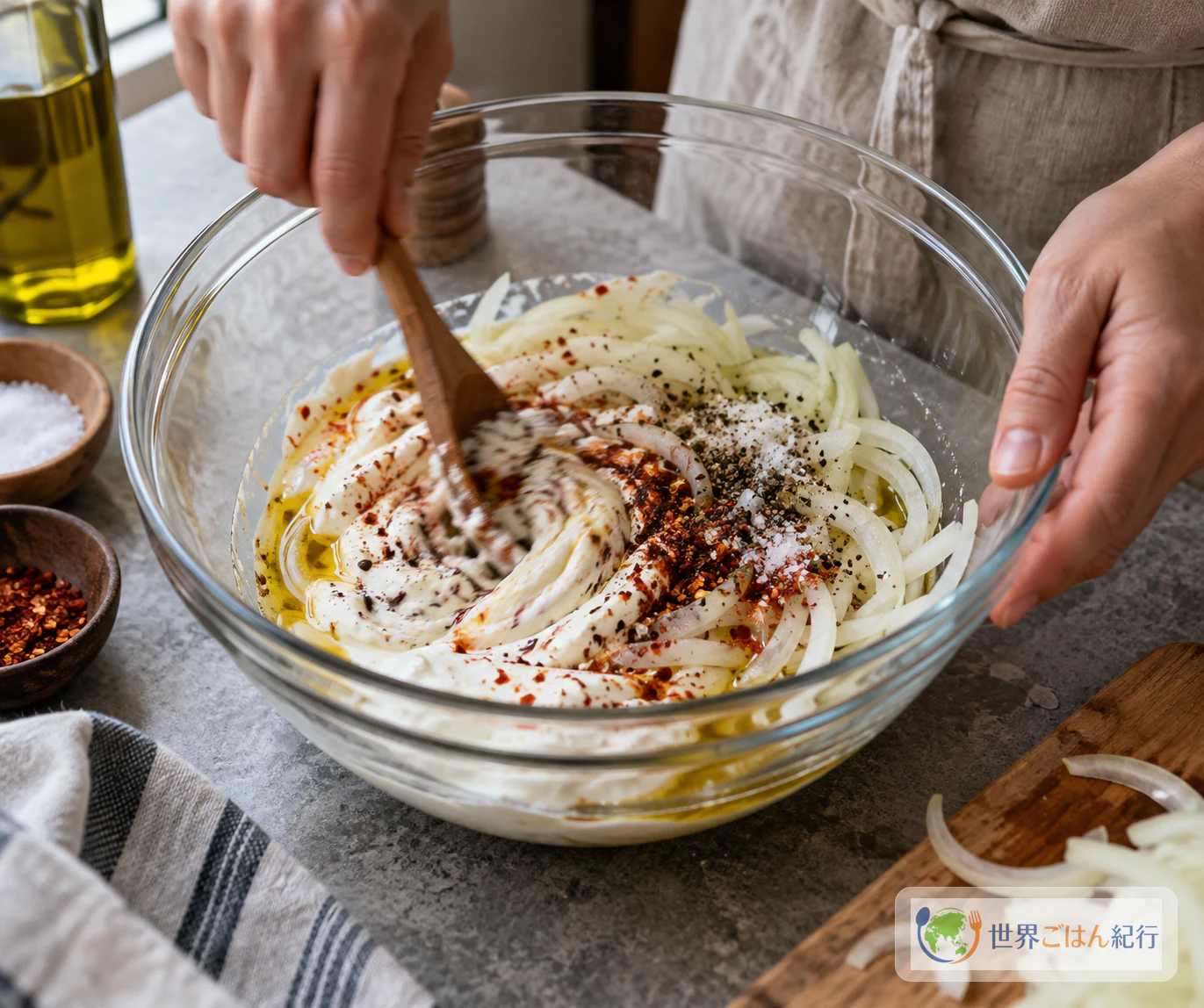
These amounts follow the two-serving home recipe published by Türkiye Today. Choose one meat; the source gives no different amounts for beef or lamb. The butter is kept back for cooking, not mixed into the marinade.
The serving items are optional accompaniments and are not part of the recipe's base amounts.
Yogurt and butter contain milk, and pide or other bread very likely contains wheat and may contain milk. Check product labels, and watch for cross-contact on shared tools. Keep the tomato, onion and greens you will eat raw on a clean board and in a clean container, prepared before you handle raw meat. Never serve the marinated onion raw.
Equipment
- A sharp chef's knife
- A cutting board that does not slip, plus a separate clean board for raw vegetables and cooked meat
- A glass or other container with a lid, for marinating in the refrigerator
- Food-safe plastic wrap, for forming the roll
- A skillet and a spatula
- A cooking thermometer, to confirm the meat reaches 75°C
- A clean plate for the cooked meat (not the one that held raw meat)
Choosing the Meat, Fat and Pepper
Beef round or beef ribeye. Round has little fat, so the result is lean and clean-tasting; keep the slices thin and avoid overcooking. Ribeye brings more fat and a sweeter, richer bite.
Lamb. Lamb gives a distinctly different aroma from beef. It moves the dish toward Turkey's lamb-based styles, such as the Ankara döner described further down, but it is a different flavor, not an equal swap.
Butter versus tail fat. In Ankara's regional döner, lamb tail fat (kuyruk yağı) is layered into the meat. Butter in a skillet is not a full substitute for that: tail fat would give a stronger lamb aroma. Because it is hard to find, this home version does not require it.
Ground red pepper. Use ordinary ground red pepper. Red peppers vary widely in heat, and this recipe does not assume ground red pepper is the same as pul biber. Start modestly and add more at the table if you like.
Yogurt. It is only 1 tbsp, but leaving it out changes the flavor and how the surface of the meat behaves. It will not taste the same without it. Keep the marinade yogurt separate from any yogurt you serve as a sauce.
Method: From Marinade to Thin, Browned Slices
Marinate and thaw only in the refrigerator, never on the counter. Never cook the roll while it is still frozen. Keep raw-meat tools away from vegetables and cooked meat. Judge doneness by temperature, not by the clock.
In Bread or on a Plate: The Wrap and the İskender Style
The wrap in step 6 is the simplest way to eat home döner. You can also skip the bread and serve the meat on a plate with tomato, onion and greens.
A more elaborate plated option is İskender kebap. Turkish Food Travel describes it as pide topped with thin-sliced döner meat, tomato sauce and yogurt, with grilled tomato and peppers and butter. İskender is its own dish, not the standard way döner meat is served. If you borrow its layering for this recipe, think of it as a different serving style, not as the definition of döner. That source's own döner meat, which alternates sliced and ground meat for six servings, is a separate recipe and is not mixed into this one.
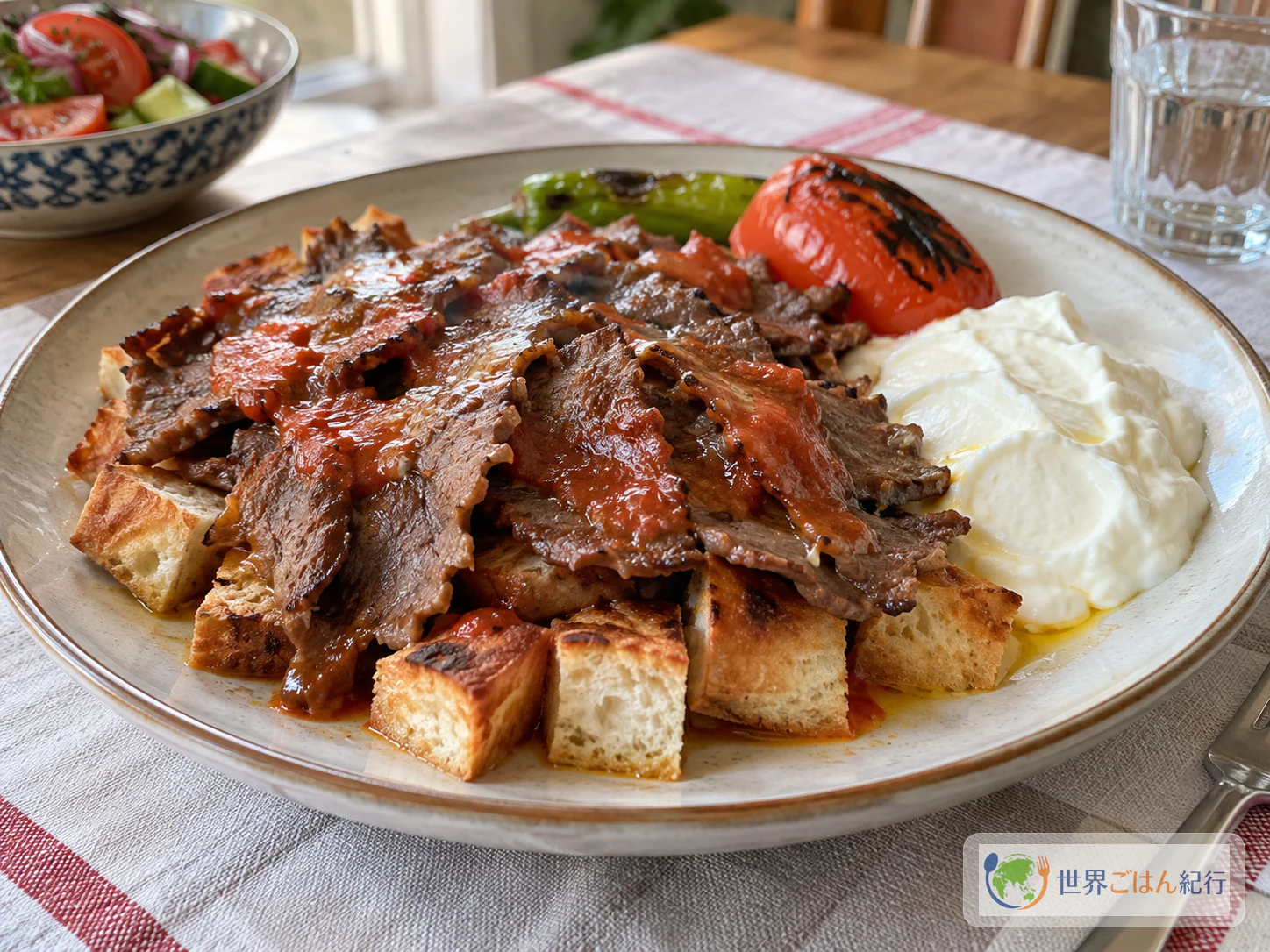
For more Turkish sauces to set on the table, see kebab sauce. It is one option among many, not a fixed "döner sauce."
When It Goes Wrong: Fixes for Slicing and Searing
| Problem | Likely cause | What to do |
|---|---|---|
| The roll won't slice | Too soft after thawing | Return it to the freezer briefly to firm up. Don't force a knife through fully frozen meat; use a sharp knife and a board that doesn't slip |
| Slices are thick and chewy | The roll wasn't firm enough when cut | Don't try to re-cut the cooked slices. Next time, adjust the chilling so the slices come out thinner and more even. Home slicing will not fully match a shop's shaved döner |
| The meat looks boiled | Too much in the pan at once | Cook smaller batches with space between the slices. Let the moisture evaporate, then don't move the meat too much until it browns |
| Dry, lean result | Beef round has little fat | Next time use ribeye or lamb. Treat it as a difference between cuts rather than adding lots of extra oil |
| Too spicy | Ground red pepper varies in heat | Use less in the marinade next time and add more at the table |
| No thermometer | — | Slice thinly and evenly and cook the slices in batches, not as a thick block. Color alone cannot confirm 75°C, so a thermometer is strongly recommended |
Holding, Leftovers and Food Safety
The simplest approach at home is to cook only what you will eat and serve it straight from the pan. Do not leave cooked or raw meat at room temperature, and do not carry the thawed raw roll over to another day.
Safe Food Australia, a guide published by Food Standards Australia New Zealand, notes that döner meat can support the growth of harmful bacteria under the wrong conditions. For döner meat, the guide recommends cooking to 75°C, holding it at 60°C or above after cooking, and giving it a second cook just before serving. If cooked meat is to be kept, it recommends cooling it quickly—from 60°C to 21°C within 2 hours, then from 21°C to 5°C within a further 4 hours—and refrigerating it at 5°C or below. These are recommendations from an Australian and New Zealand guide written with food businesses in mind; here they serve as home kitchen guidance.
The NSW Food Authority also advises keeping raw meat refrigerated, keeping cold sauces in the refrigerator until needed, and keeping them apart from raw meat and cooked foods. At home, keep the yogurt-based marinade and any yogurt sauce chilled, and use separate tools and containers for raw meat and anything eaten raw.
Variations: Changing the Cut, the Fat and the Plate
- Lighter, with beef round. Lean and clean-tasting. Prioritize thin slicing and avoid overcooking.
- Richer, with beef ribeye. More fat and sweetness. Start with less butter in the pan and see how much fat the meat releases.
- Aromatic, with lamb. Lamb shoulder or similar brings an aroma quite different from beef. There is no need to add more red pepper.
- On a plate, without bread. Serve the meat with tomato, onion and greens. Adding rice works as a home menu idea, but it is not presented here as a local standard.
- İskender-style plate. Layer pide, tomato sauce, the sliced meat, yogurt and melted butter. This borrows the serving style of a separate dish.
Ankara, Berlin and the Shape of Döner
Ankara's yaprak döner. Türkiye's Ministry of Culture and Tourism's Kültür Portalı, citing a 2012 Ankara provincial publication on local food, describes Ankara döner made with 10kg of lamb hind leg, 1kg of tail fat, 1kg of tomato and salt. The meat is opened into thin sheets, seasoned overnight with tomato and salt, stacked on the spit with tail fat between the layers, and turned in front of a charcoal fire. These are amounts for a large spit, not something to scale down for a home kitchen, and they show how far a regional style can differ from the small frozen roll above.
From plate to bread. In a 2024 Associated Press report, a Berlin shop owner explains that in Turkey the dish was eaten as lamb on a plate, and that Turkish immigrants in 1970s Berlin adapted it into a sandwich in bread. This is one person's account as reported by AP, not a settled single origin. The same report describes differing views between Turkey and Germany on how döner should be made and served, which is a reminder that the bread, vegetables and sauces around the meat vary from place to place.
A neighbor on the vertical spit. Shawarma, a Levantine dish, is also cooked on an upright spit, but its name, seasoning and table are its own. For that dish, see shawarma.
Frequently Asked Questions
What is the difference between döner kebab and shish kebab?
Döner is meat cooked on a vertical rotating spit and sliced thin from the outside. Shish is smaller pieces of meat threaded onto a skewer and grilled. The cutting and the way heat reaches the meat are different.
Can I make döner without a vertical rotisserie?
Not the spit-roasted original itself. But by stacking marinated slices into a roll, chilling it firm, slicing it thin and searing it in a skillet, you can make a home version with thin, browned slices.
Can I use only beef?
Yes. Türkiye Today's home recipe uses beef ribeye or round, or lamb. Round is lighter, ribeye is richer, and either tastes different from lamb-based regional styles such as Ankara's.
Can I cook the frozen roll straight from the freezer?
No. Thaw it in the refrigerator first, then slice it while it is still cold, and cook every slice through to 75°C. Food safety guidance on döner meat advises thawing frozen döner meat in the refrigerator before cooking.
Can I eat leftover cooked meat the next day?
Only if it was cooled quickly and refrigerated as described in the food safety section, and then reheated thoroughly. Do not leave leftovers at room temperature for long. At home, the easiest path is to cook only what you will eat.
What sauce goes with it?
For a wrap, add sauce a little at a time so it doesn't hide the meat. Tomato sauce, yogurt and butter together belong to İskender kebap, which is a separate plated dish.
Sources
- Türkiye Today, "How to make authentic Turkish doner kebab at home?" The two-serving home recipe: meat marinated with onion, yogurt, olive oil and peppers, refrigerated for at least 6 hours, formed, frozen, sliced and cooked in a skillet. A simplified home method, not a representation of the traditional vertical spit. https://www.turkiyetoday.com/lifestyle/how-to-make-authentic-turkish-doner-kebab-at-home-117527
- T.C. Kültür ve Turizm Bakanlığı, Kültür Portalı, "Ankara Döneri" (citing Ankara Valiliği İl Kültür ve Turizm Müdürlüğü, Ankara Yemekleri, 2012). Ankara's regional döner with lamb hind leg, tail fat, tomato and salt, seasoned overnight and turned before a charcoal fire. Large-scale amounts, not scaled for home use. https://kulturportali.gov.tr/turkiye/ankara/neyenir/ankara-yaprak-doneri
- NSW Food Authority, "Doner kebabs." Döner as meat cooked on a rotating spit and sliced thin, distinct from shish kebab; refrigeration of raw meat, hot holding, second cooking, and keeping cold sauces apart from raw meat and cooked foods. https://www.foodauthority.nsw.gov.au/consumer/eating-out/doner-kebabs
- Food Standards Australia New Zealand, "Safe Food Australia: A Guide to the Food Safety Standards, Appendix 4: Foods requiring special care." Recommendations for döner meat: cooking to 75°C, holding at 60°C or above, a second cook before serving, rapid cooling and refrigeration at 5°C or below. https://www.foodstandards.gov.au/sites/default/files/2024-11/Appendix%204.pdf
- Turkish Food Travel, "İskender Kebab Recipe." İskender kebap as a plated dish of pide, thin-sliced döner meat, tomato sauce, yogurt, grilled tomato and peppers, and butter. A home cook's recipe, not an official standard. https://www.turkishfoodtravel.com/2022/01/21/iskender-kebab-recipe/
- Associated Press, "Turkey wants to regulate Germany's beloved döner kebab street food" (2024). The meaning of döner, a Berlin shop owner's account of the move from plates in Turkey to bread in 1970s Berlin, and differing Turkish and German views on how döner should be made. https://apnews.com/article/germany-turkey-doner-kebab-45c9582057c544935420e917c305f15a