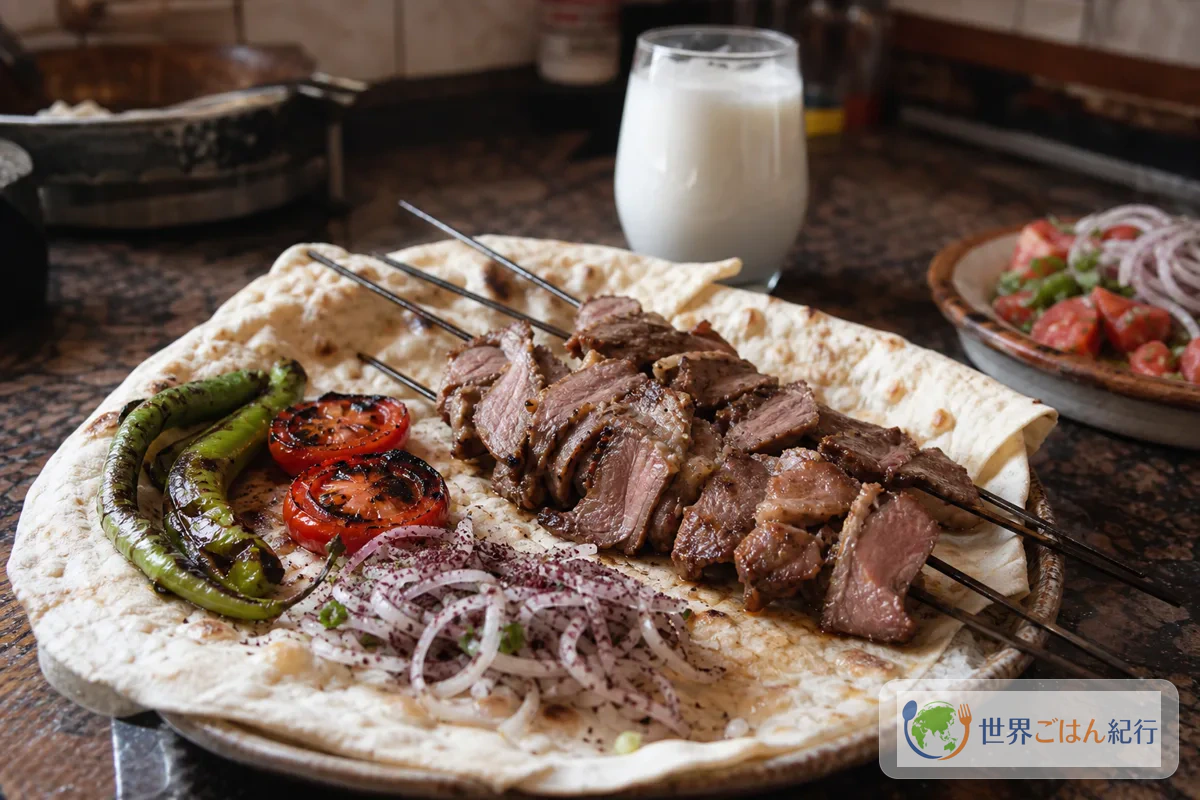
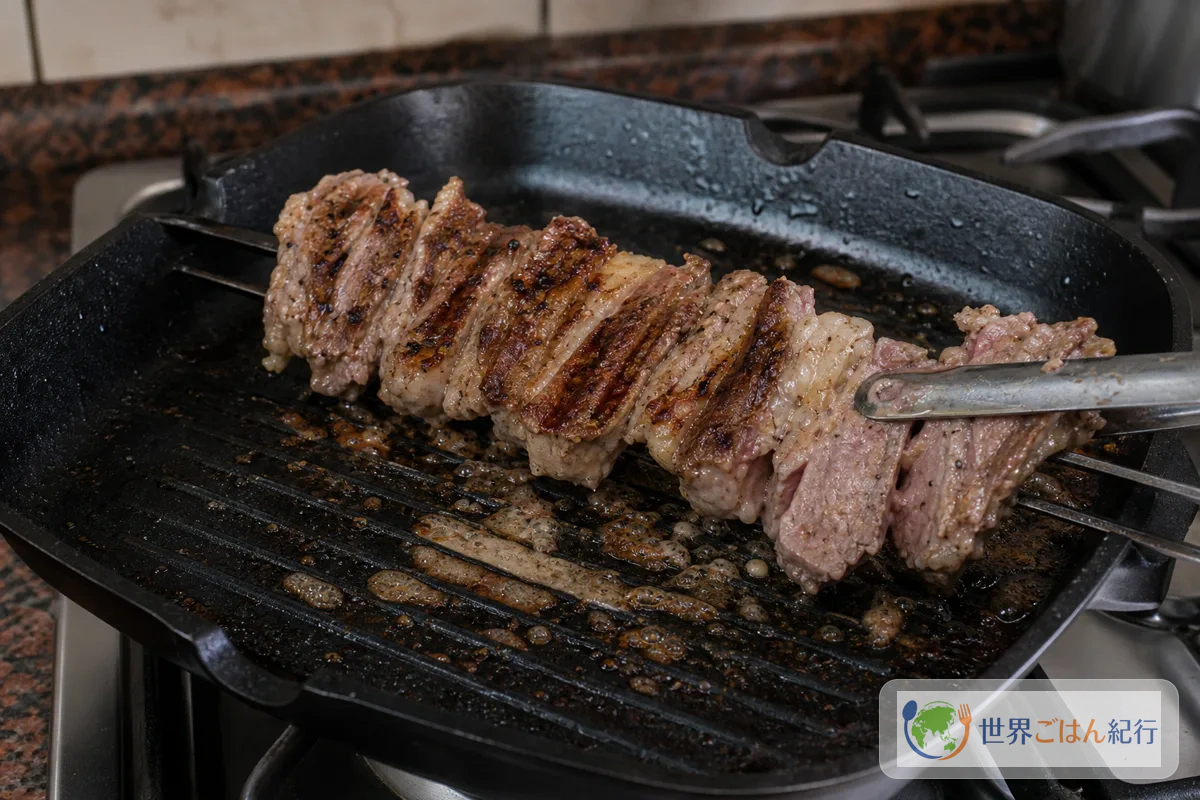
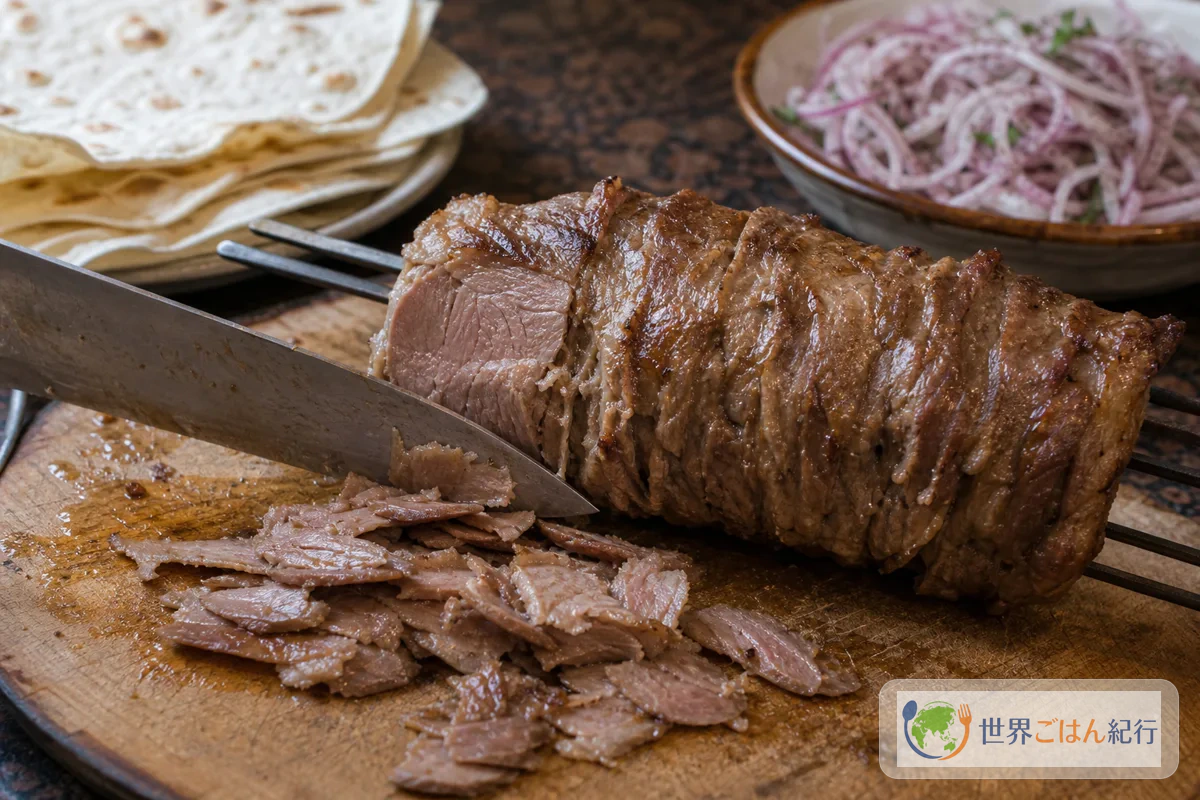
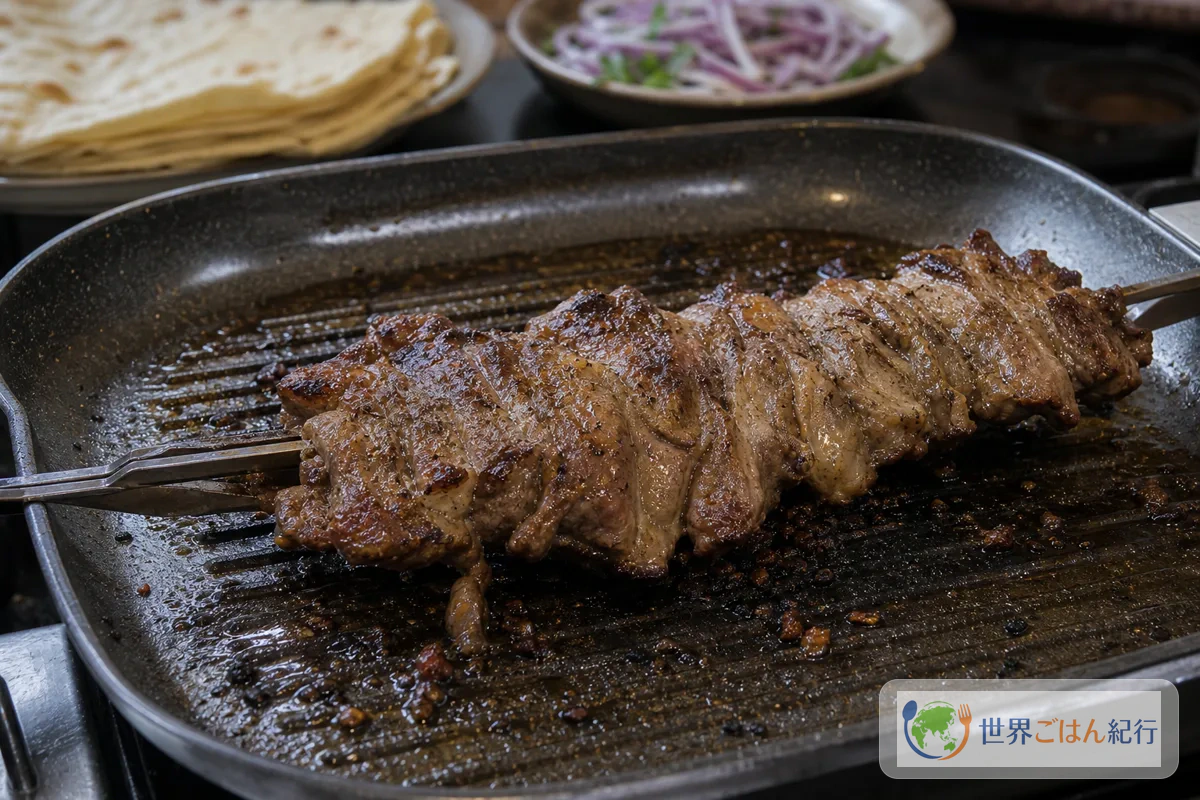
A lamb skewer cooked sideways and cut at the table in Erzurum
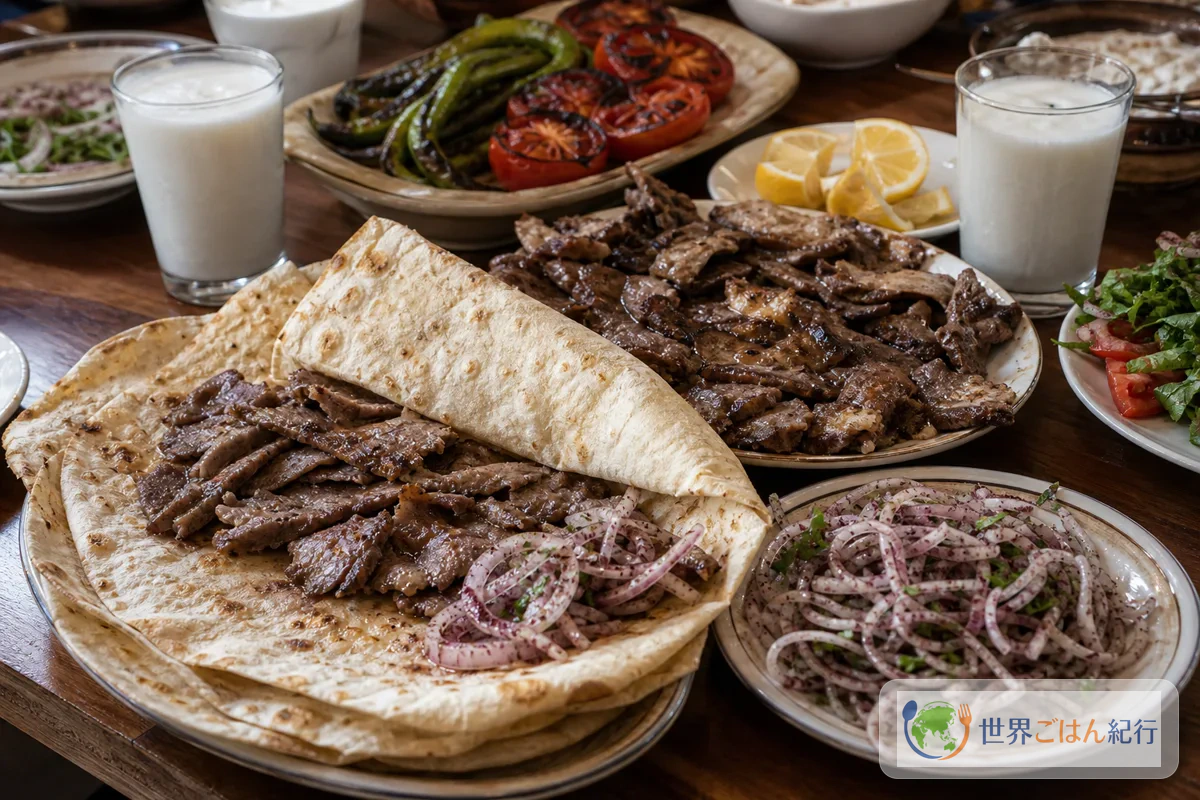
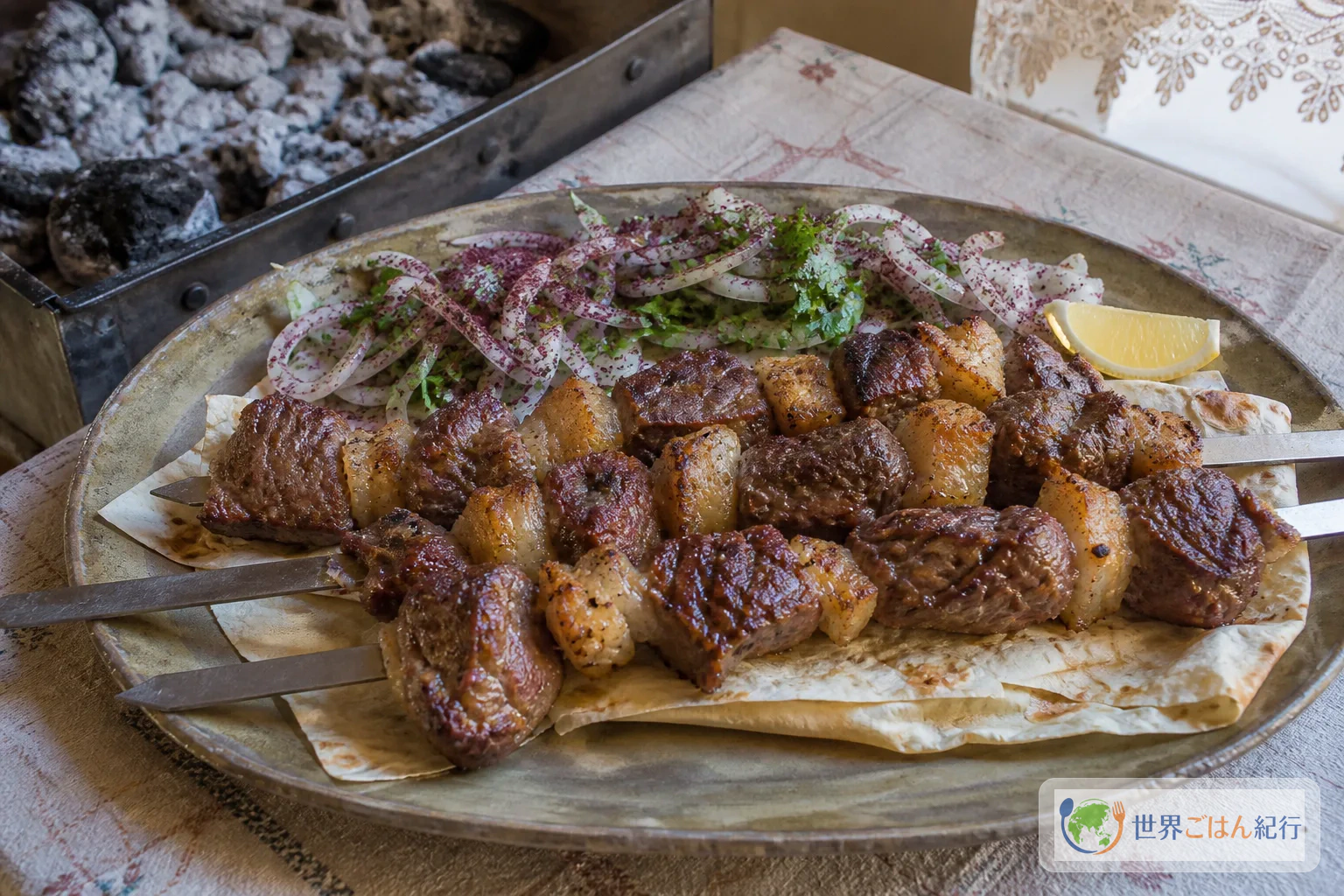
Grate an onion in the kitchen and your eyes sting a little. But rub that juice into lamb and leave it in the refrigerator, and a few hours later the meat's sharp edges soften, and the moment it hits the heat a sweet aroma rises. Cağ kebabı (Cağ kebabı) is an eastern Turkish lamb dish that carries that aroma onto a horizontal skewer, cooks it, and has the cooked outside shaved off in thin slices.
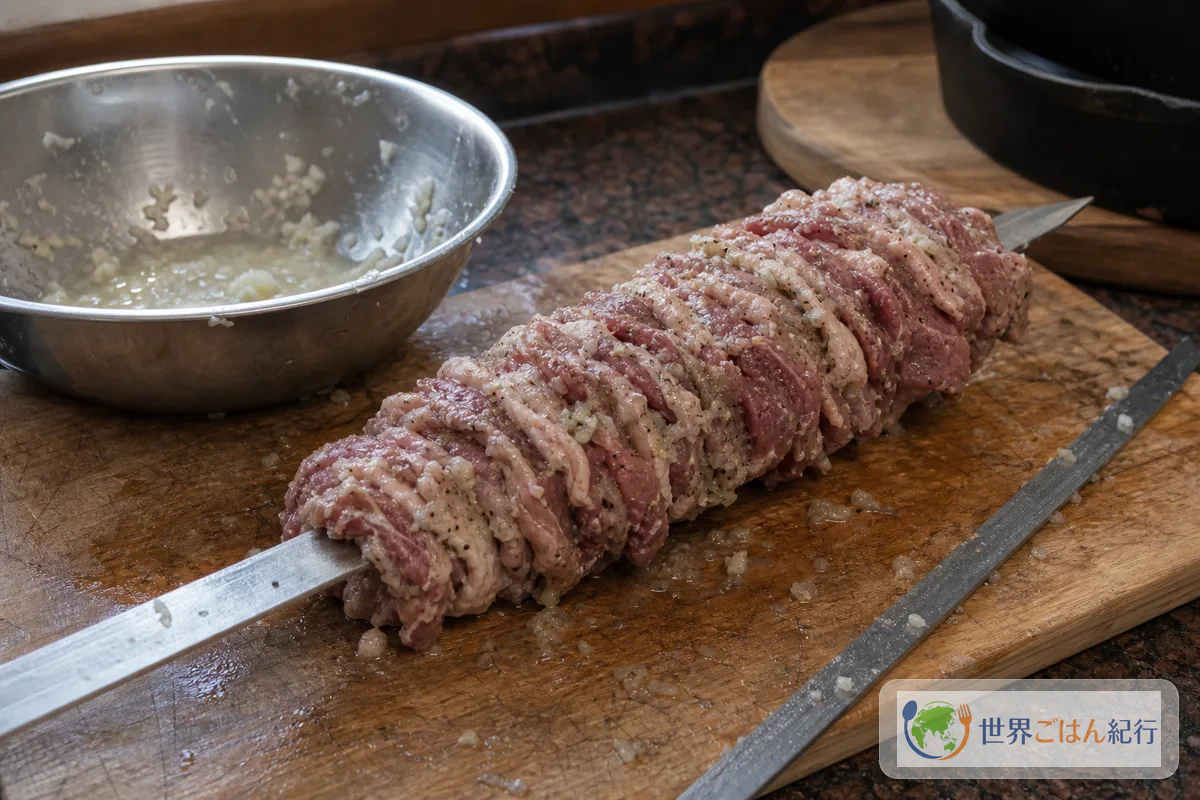
Say "kebab" and most people picture a vertical spinning döner or the minced-meat adana kebab pressed onto a skewer. Cağ kebabı is a little different. Lamb is stacked in thin layers on a flat skewer and grilled sideways, and the cooked outside is shaved off with a knife. You do not eat the raw center in one go; you slice the cooked layer, cook again, and slice again.
Even among flat skewers, it cooks differently from adana kebab, where ground meat and fat are worked together and pressed onto the skewer. With cağ kebabı you take off the layers of sliced meat as they cook; with adana kebab the whole meat mixture sticks to the skewer and cooks as one. Seeing this difference before you buy lamb makes it easier to decide between sliced meat and ground meat with fat. For other Turkish meat dishes, köfte (ground meat), lahmacun (meat on thin dough), and the kebab recipe (several skewers gathered for a home kitchen) show how cutting and cooking meat differ.
It is known as a specialty of Erzurum, especially around Oltu. A home kitchen cannot have a true horizontal rotating setup. So this article replaces it with a flow of "cook the outside, slice thin, re-grill the exposed surface": lamb shoulder loin or leg, layered thin, on a cast-iron grill pan or under a broiler.
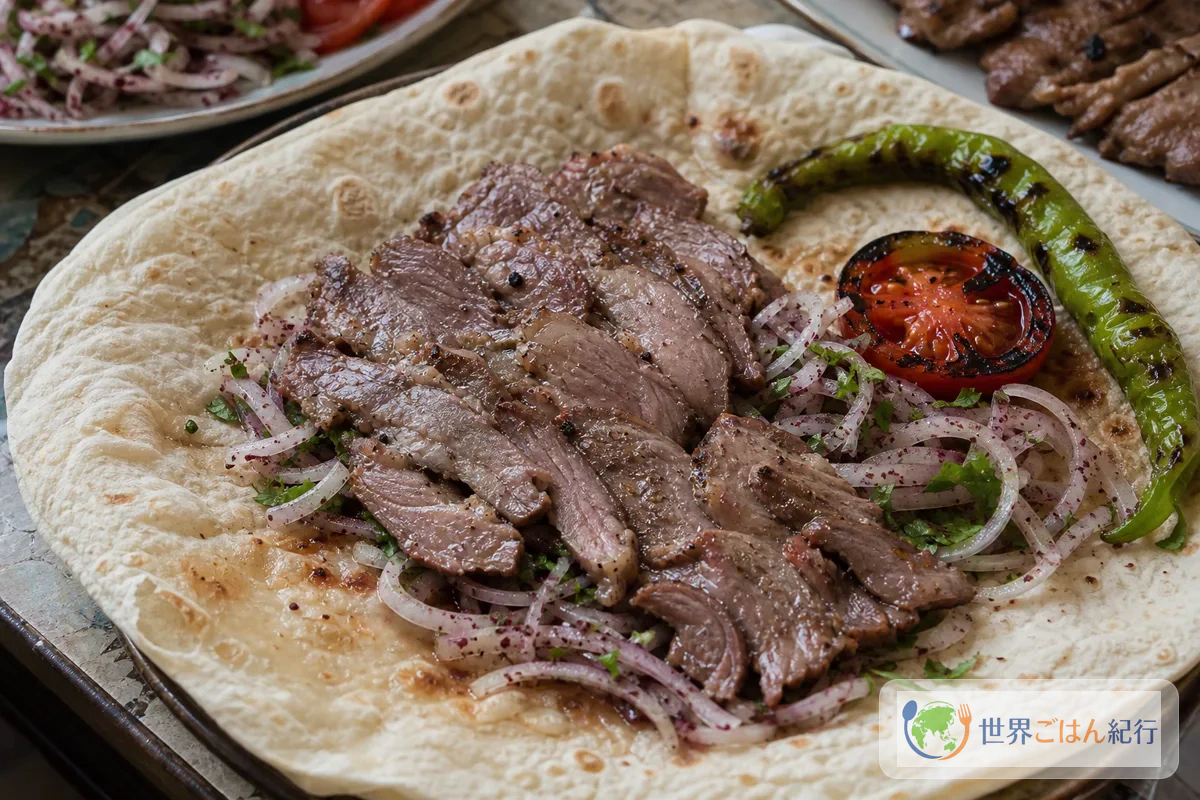
When thinking about the table in Erzurum, it is closer to see cağ kebabı not as "a dish where meat alone is grilled boldly" but as a dish eaten quickly, piece by piece as it cooks, with warm bread and onions close by in a cold land. Rather than piling it on a platter and admiring it, you spread out lavash, lay the sliced meat on it, cut the fat with sumac onions, and wrap it while hot. Keep this order of eating at home and the dish keeps its backbone even without a horizontal rotating roaster.
It is often described under the name of Oltu, but a home version does not need to carry over the conditions of a geographical indication. Rather than hunting for local sheep tail fat or a dedicated roaster, you have a better chance of success if you cut a fatty lamb shoulder loin slightly thick, rest it in onion juice, and cook the surface over strong heat. What you may substitute is the equipment and some of the fat. What you should not substitute too much is the thin layered form, the motion of slicing off the cooked layer, and the sumac onions. Draw that line and you can serve it as cağ kebabı rather than just grilled lamb.
In Turkish it is written Cağ kebabı. Cağ is treated as a word related to the skewer or the way of cooking in the dish's name, and in Japanese the transliteration varies. In this article we use "cağ kebabı" throughout for readability.
Ingredients: onion takes the edge off the lamb
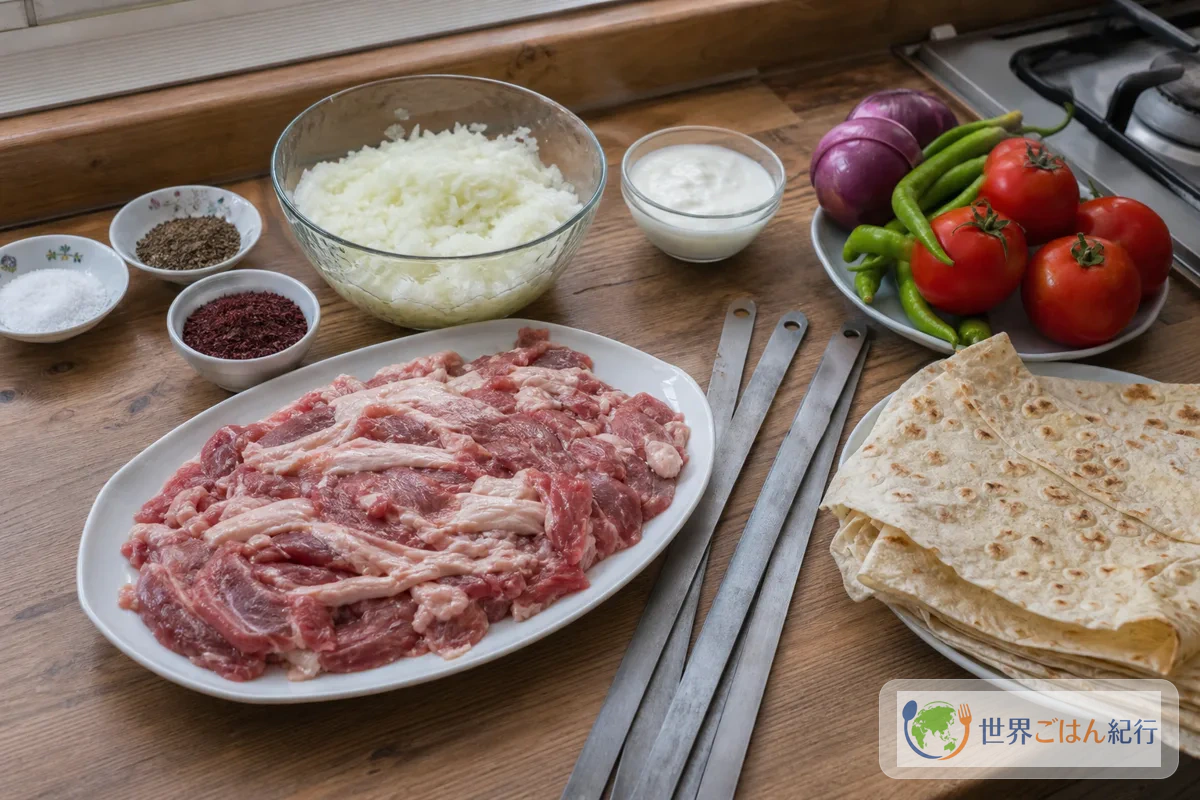
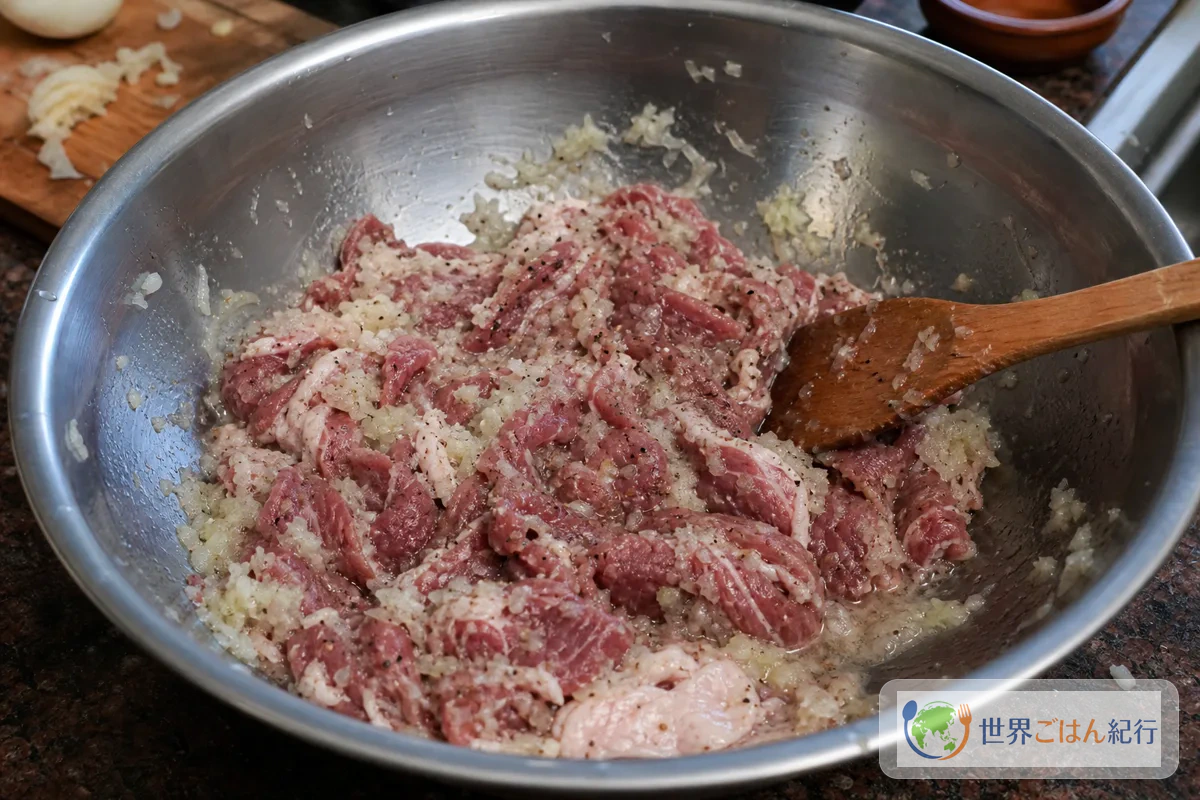
The seasoning for cağ kebabı is not about covering the meat with strong spices. Lamb, onion, salt, and black pepper are the core. Plenty of cumin or paprika would make a tasty home kebab, but it moves away from the outline of the Erzurum style. Here the meat is seasoned lightly, and the sumac onions add acidity at the table.
Lamb shoulder loin is the easiest to work with. Made only with very lean leg, the meat tends to dry out before you cook and slice the outside. If you use leg, tuck a thin layer of beef tallow or lamb fat between the pieces of meat. Sheep tail fat is hard to find outside its home region, so rather than forcing a search, choosing a fatty shoulder loin is more realistic.
If you are unsure at the store, choose slightly thick lamb for grilling or a block rather than paper-thin lamb slices. Meat that is too thin is easy to layer on a skewer, but heat reaches the whole piece before you slice off the outside, and the "taking off the cooked layer" feel of cağ kebabı is harder to get. If you buy a block, partly freeze it and cut it 5 to 7 mm thick; the knife goes in easily and the layers come out even.
Ingredients (serves 4)
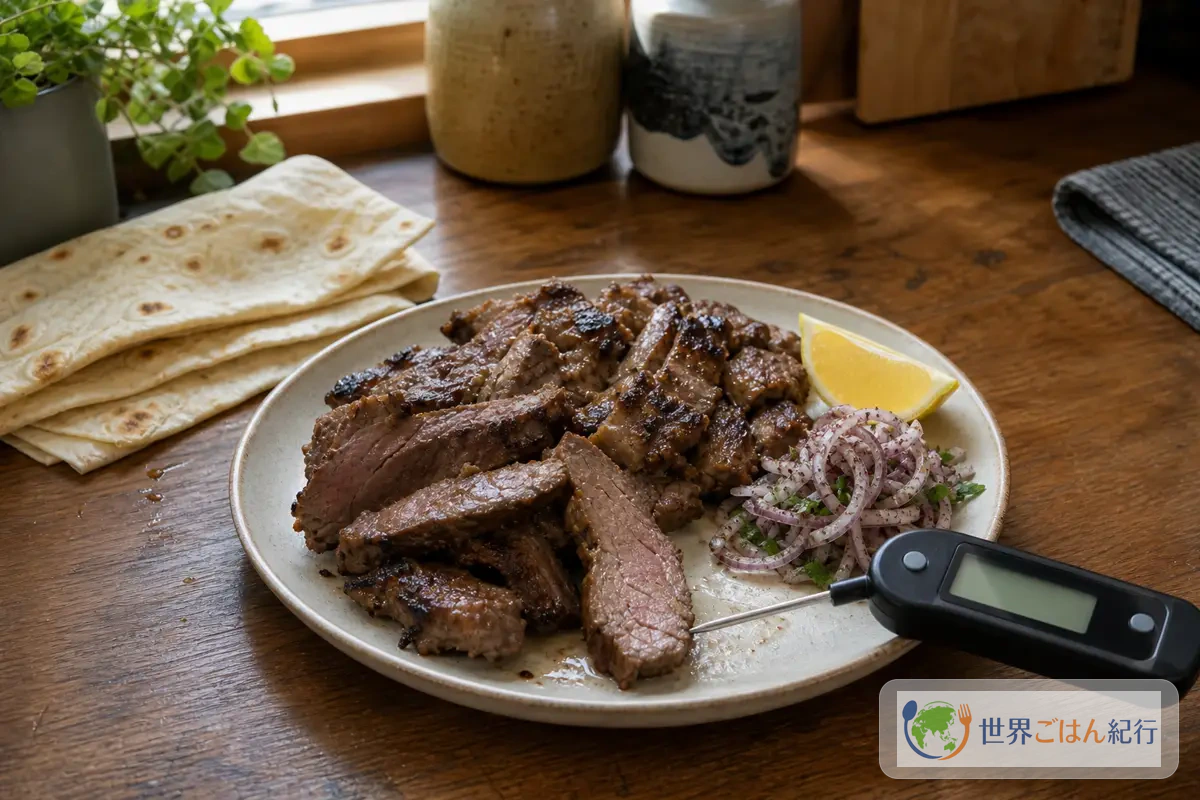
This dish uses lamb. Lavash and tortillas contain wheat. Keep the onion juice, bowl, cutting board, and tongs that touched raw meat separate from those used for the cooked meat. At home, it is easiest to judge when the center of a thick slice has reached at least 63°C and is then rested for 3 minutes. Use 70°C or higher as your target when serving children or older adults, when the pieces are cut thick, or when substituting pork.
Shopping: settle the flat skewers and sumac before the meat
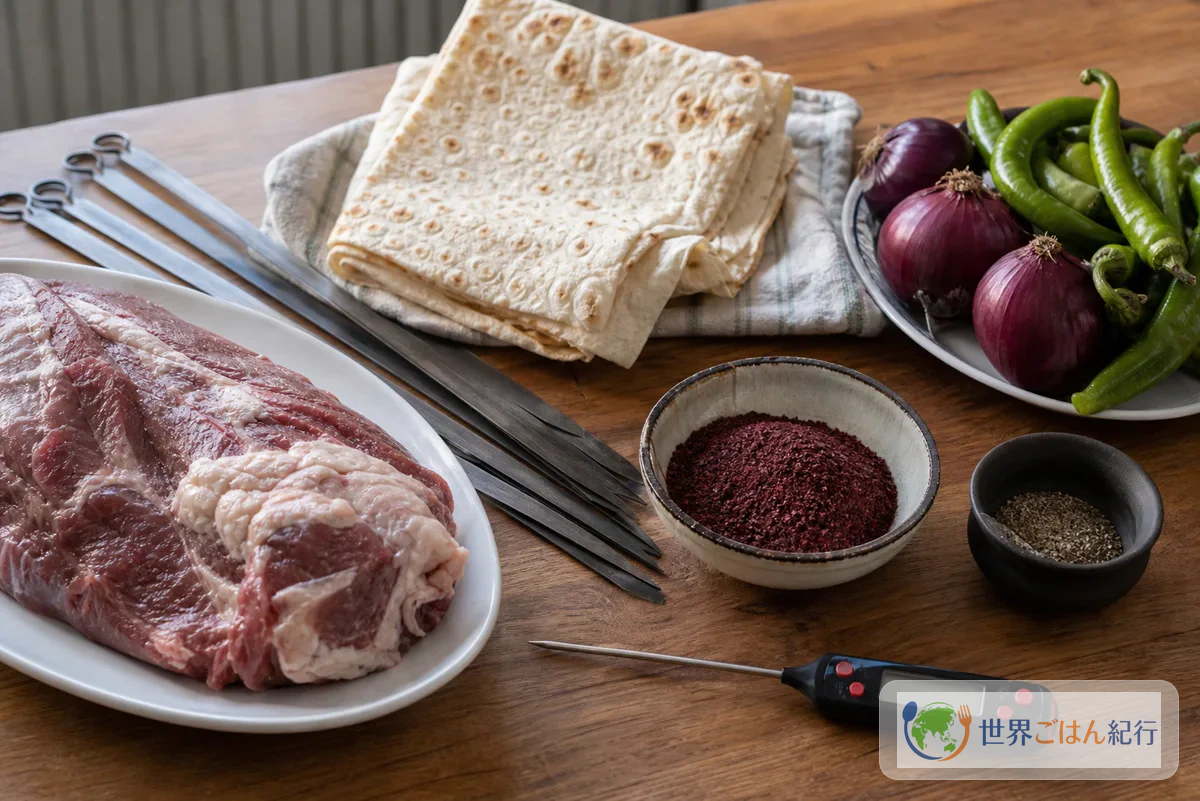
Lamb can come as meat for grilling, thin slices for Mongolian-style grilling, or a block. Very thin slices are easy to layer but cook through before you slice them off, so choose pieces at least 5 mm thick. What to settle first when shopping is the flat skewer, not the meat itself. On round or bamboo skewers, the lump of meat spins around and it is hard to turn it so the cooked surface faces where you want.
Sumac is not a spice you mix into the cağ kebabı meat in quantity. It is the acidity you sprinkle on onions to eat with fatty lamb. You can make it with lemon alone, but when sumac's dry red sourness comes in, wrapping it in lavash suddenly feels like a Turkish table.
An instant-read thermometer is peace of mind with thick meat. In the traditional horizontal method you cut while watching the cooked layer, but on a home grill pan the heat does not land evenly. Checking the temperature at the thickest part of a cut slice keeps you from being fooled by browning.
What is worth ordering online are tools and aromas that are hard to substitute at an ordinary grocery store. Meat, onions, and lemons are fine from your neighborhood. With flat skewers, sumac, and a thermometer, your hands do not stall while cooking, and even the first time you can confirm "is this right?" as you go.
| What to buy | Priority | Why | Substitute |
|---|---|---|---|
| Flat metal skewers | High | The meat does not spin, and you can turn it to the cooked surface | Two thick metal skewers side by side |
| Sumac | High | Adds dry acidity and a red aroma to the onions | Lemon juice and a little dried red shiso |
| Instant-read thermometer | Medium | Do not judge doneness by browning on the outside alone | Cut a thick slice and check the center |
Method: cook, slice, and cook again
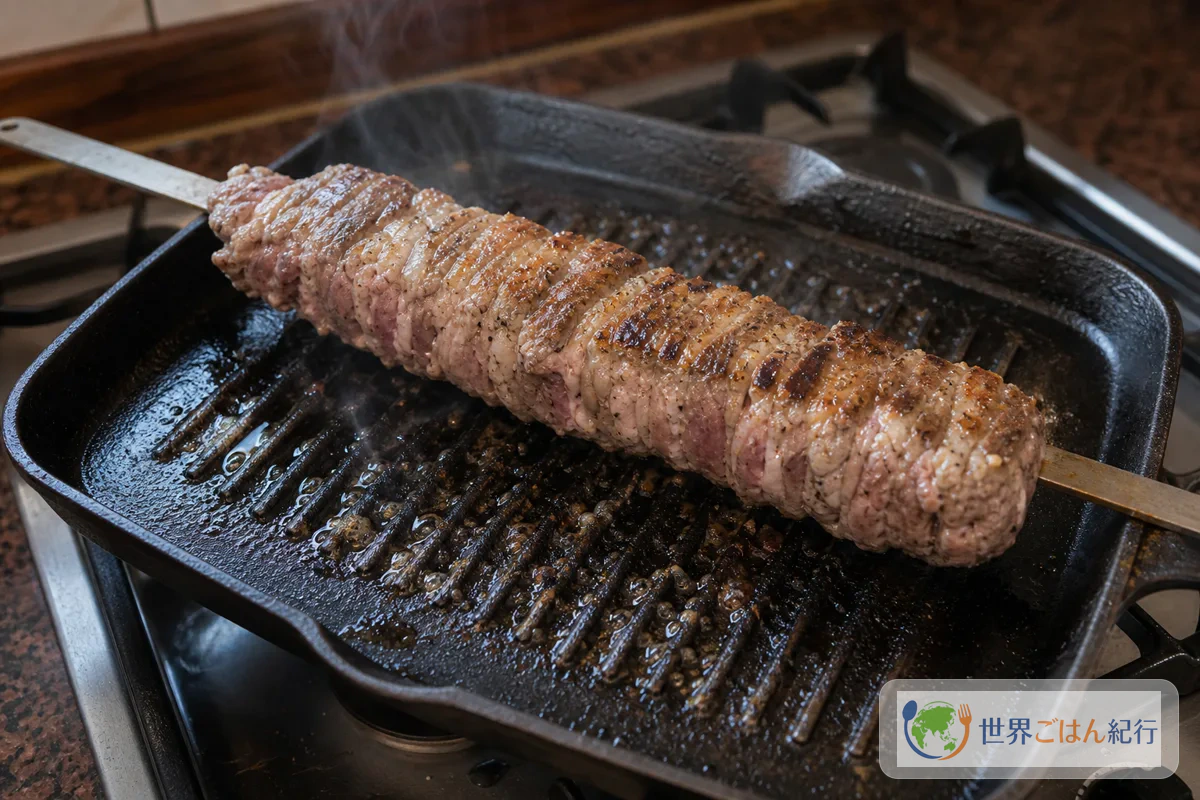
A real horizontal rotating roaster is not something a home has. In the home version, treat the lamb stacked on the flat skewer as one small block and build the outside over the strong heat of a grill pan. If you try to cook everything through from the start, the outside dries out. Think of it as slicing off the cooked layer thinly and then cooking the remaining block again, and you get the cağ kebabı character.
Troubleshooting: moisture and waiting before you slice
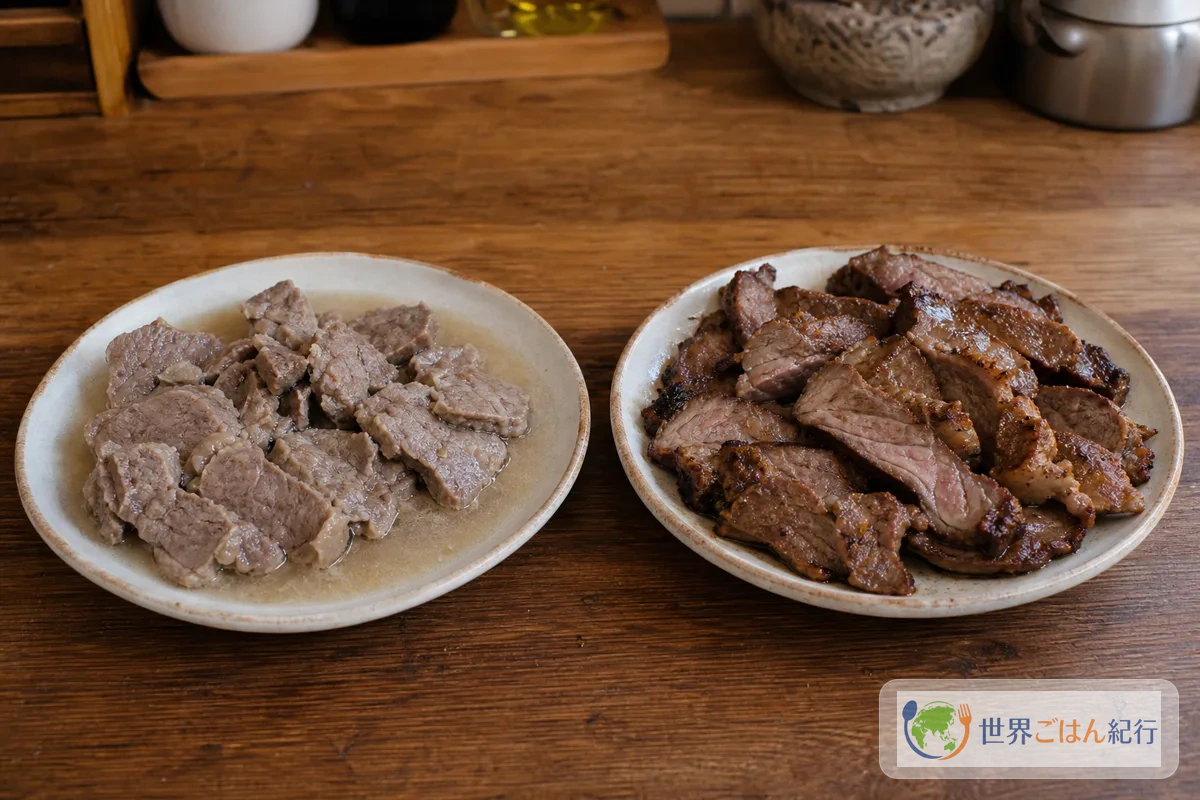
Cağ kebabı fails more on moisture management than on which seasonings you use. You want the onion to soften the meat, but if you coat it with too much juice it stews on the grill pan. Rush the browning and only the surface burns, leaving the inside of what you slice cold. For the home version, the order matters: coat with onion, wipe before cooking, build the outside over strong heat.
| Problem | Cause | Fix |
|---|---|---|
| Meat is gray and watery | Too much onion, pan not preheated enough | Wipe the onion off before cooking and preheat to 220 to 240°C |
| Surface is bitter | Burned onion cooked again and again | After slicing, wipe the bottom of the pan and re-grill over medium heat |
| Meat is dry | Made with lean leg alone | Choose shoulder loin, or tuck thin fat between the layers |
| Falls apart when sliced | Skewer layering is loose | Fold the meat and press by hand into a block 6 to 7 cm in diameter |
| Center is lukewarm | Judged by the outside alone | Check a thick slice for 63°C or more, and re-grill if short |
| Turkish sourness is weak | Eating with onion alone | Mix 2 tsp sumac and lemon juice into the onion |
What home cooks wonder about most is how close to the original to go. You do not need the horizontal rotating roaster, sheep tail fat, or authentic local lavash. But there are things to protect: layering the meat thinly, slicing off the cooked layer and re-grilling, and catching the fat with sumac onions. Keep those three and you can serve it as cağ kebabı rather than plain grilled lamb.
As an aside, among lamb skewers, shashlik of Central Asia and the Caucasus is a dish of cubed meat marinated in acid and put on skewers. Cağ kebabı is not cubed; thin layers are stacked and the cooked outside is sliced. Get this wrong and, however tasty, the character of the dish changes.
When you make it under a broiler, the causes of failure are almost the same. The space is small, so only the top surface nearest the heat browns first while the underside tends to steam in onion juice. Lift the skewer slightly off the rack, dry the surface in the first 2 minutes, and return it after slicing off only the cooked face, and you get less smoke than with the grill pan. The aroma is lighter by the amount of fat that drips away, but if you keep the way of catching it with lavash and onions, even a home kitchen can approach the form of cağ kebabı.
Storage and next-day ideas
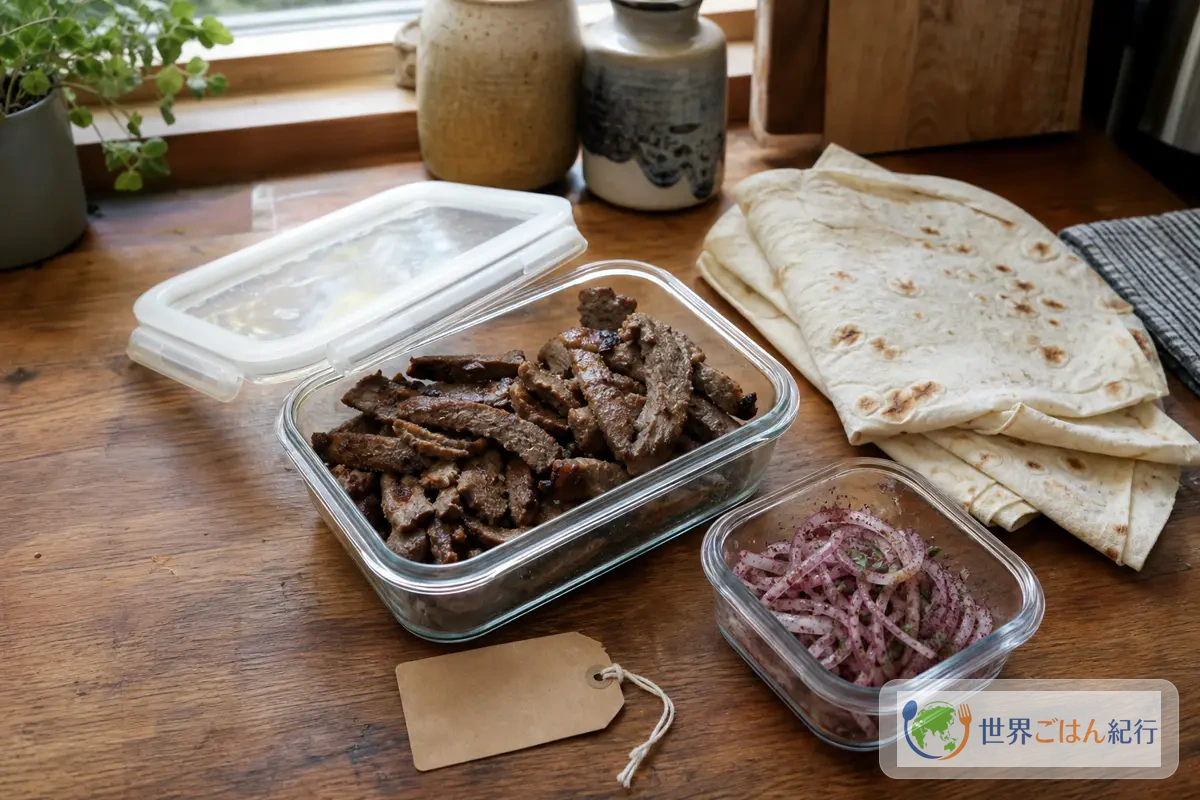
Keep the cooked cağ kebabı, lavash, and sumac onions separate. Spread the meat in a shallow container, cover once it has cooled slightly, and refrigerate. The storage guideline is 2 days. Sumac onions release water, so finish them by the next day. Grilled tomatoes and green chilies lose aroma easily, so it is better to eat them the same day than to keep them.
Do not finish reheating in the microwave alone. Spread the meat on a heatproof plate, sprinkle 1 tsp water, cover loosely with plastic wrap, and heat at 600 W for 40 to 50 seconds. Then put it in a skillet over medium-low heat and turn it for just 1 minute. If you reheat over high heat from the start, the onion on the outside burns and turns bitter before the center warms. Warm first, then bring back the aroma.
The next day it is also good over warm rice or bulgur rather than wrapped in lavash. Cut the meat thin, add a little fresh sumac onion, and squeeze on lemon to cut the heaviness. If you serve yogurt, use unsweetened yogurt with just a touch of garlic. Move toward sweet yogurt or mayonnaise and the aroma of lamb and onion you worked for gets blurred.
If you are building a Turkish menu, serve the red lentil mercimek çorbası first and set dolma (in Japanese) beside the meat, and the fatty main is balanced by vegetables and beans. If you lean toward a sweet finish, go as far as baklava (in Japanese) for a restaurant-like flow.
A small amount of leftover meat also suits the next morning's bread. Slice it thin, warm it over medium-low heat, put it on lavash or thin sandwich bread, and add the leftover sumac onions and lemon. Adding egg or cheese turns it into a different dish, though the aroma becomes rounder. If you want to keep the cağ kebabı character, cutting fresh onion to bring back the acidity works better than adding more meat.
Frequently asked questions
Can I make it with beef for family members who dislike lamb?
You can, but as a dish it becomes a cağ-style beef skewer. Cut beef shoulder loin or round 5 mm thick and rest it the same way in onion, salt, and black pepper. Beef has a milder aroma than lamb, so adding plenty of sumac onions and grilled tomatoes keeps it from being monotonous. If you make it with pork, cook it through to the center, with 70 to 75°C as the target.
Does it work with round or bamboo skewers?
It does, but the meat spins easily when you turn it and it is harder to aim the cooked face. If you use bamboo, thread the meat onto two thick bamboo skewers side by side so it does not spin. They scorch easily over long strong heat, so soak them in water for 30 minutes and cover the parts near the handle with aluminum foil.
Can I slice the onion instead of grating it?
Grating suits the marinade. Sliced onion stays in the gaps of the meat and burns on the grill pan. Grate it so only the onion aroma transfers and you can wipe it off before cooking. The onion for eating is sliced separately and tossed with sumac and lemon.
Can I cook it with only an oven or broiler?
Yes. Under a broiler, preheat on high for 2 minutes, put the skewer in for 4 minutes on one side, turn and give 3 minutes, slice off the cooked outside, and cook another 2 to 3 minutes. In an oven, preheat to 240°C, set it on a rack for 8 minutes, then turn for 6 minutes as a guide. Appliances vary a lot, so check the temperature of the thick part of the sliced meat and re-grill briefly if short.
Is it unsatisfying without sumac?
You can eat it with lemon alone. But with sumac's dry acidity, the fat of the lamb feels much lighter. As a substitute, mix 1 tbsp lemon juice, 1/2 tsp dried red shiso seasoning, and 1/4 tsp salt into sliced onion. More shiso pushes it too far toward Japanese, so use only enough to give color.
Can I marinate from the day before?
Yes. If marinating from the day before, reduce the salt to 1 tsp, take it out of the refrigerator 30 minutes before cooking, and lightly wipe the onion off the surface. Beyond 24 hours the onion aroma becomes too strong and the meat surface tightens. The first time, cooking after 4 to 6 hours makes it easier to balance the lamb aroma and the onion's sweetness.
Sources
- Erzurum Valiliği, "Cağ Kebabı." https://www.erzurum.gov.tr/cag-kebabi (accessed 2026)
- Wikipedia contributors. "Cağ kebabı." https://en.wikipedia.org/wiki/Ca%C4%9F_kebab%C4%B1 (accessed 2026)
- Turkish Patent and Trademark Office, "Oltu Cağ Kebabı" geographical indication record. https://ci.turkpatent.gov.tr/ (accessed 2026)
- FoodSafety.gov, "Safe Minimum Internal Temperatures." https://www.foodsafety.gov/food-safety-charts/safe-minimum-internal-temperatures (accessed 2026)