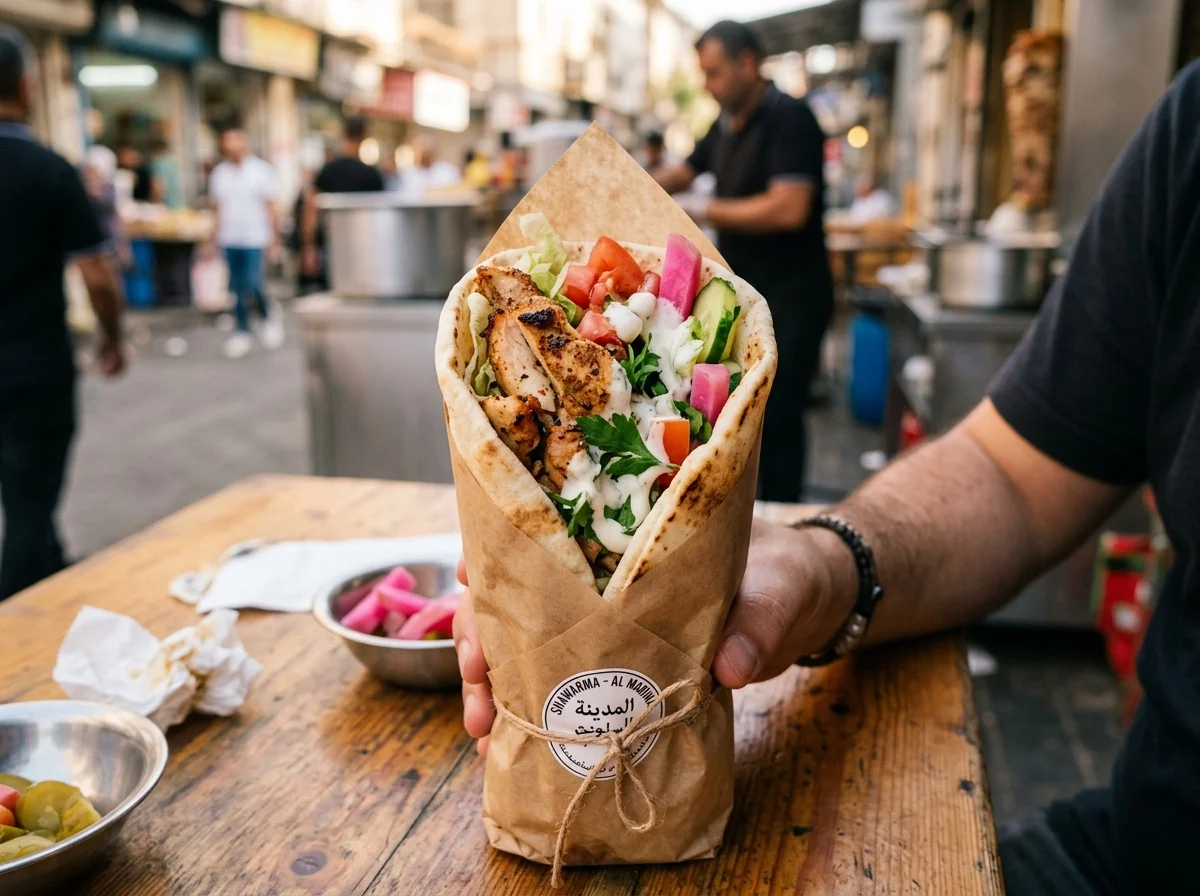
A Tower of Turning Meat: The Middle East's Gift to Fast Food
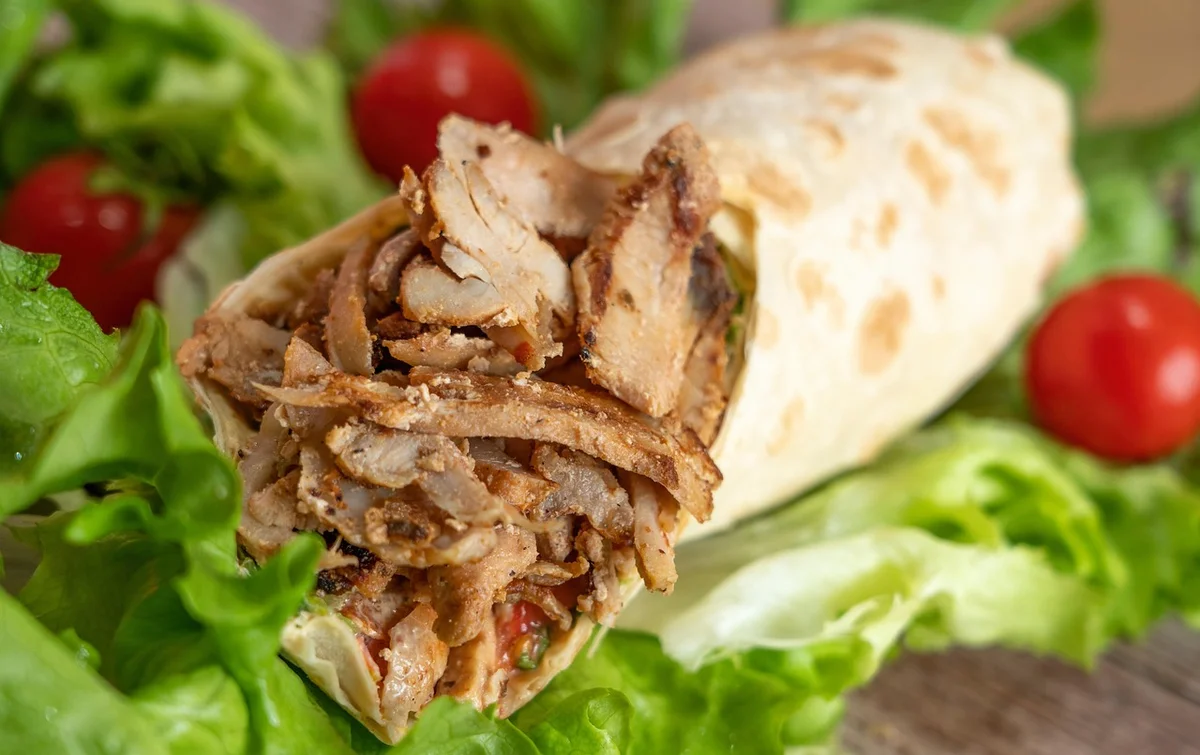
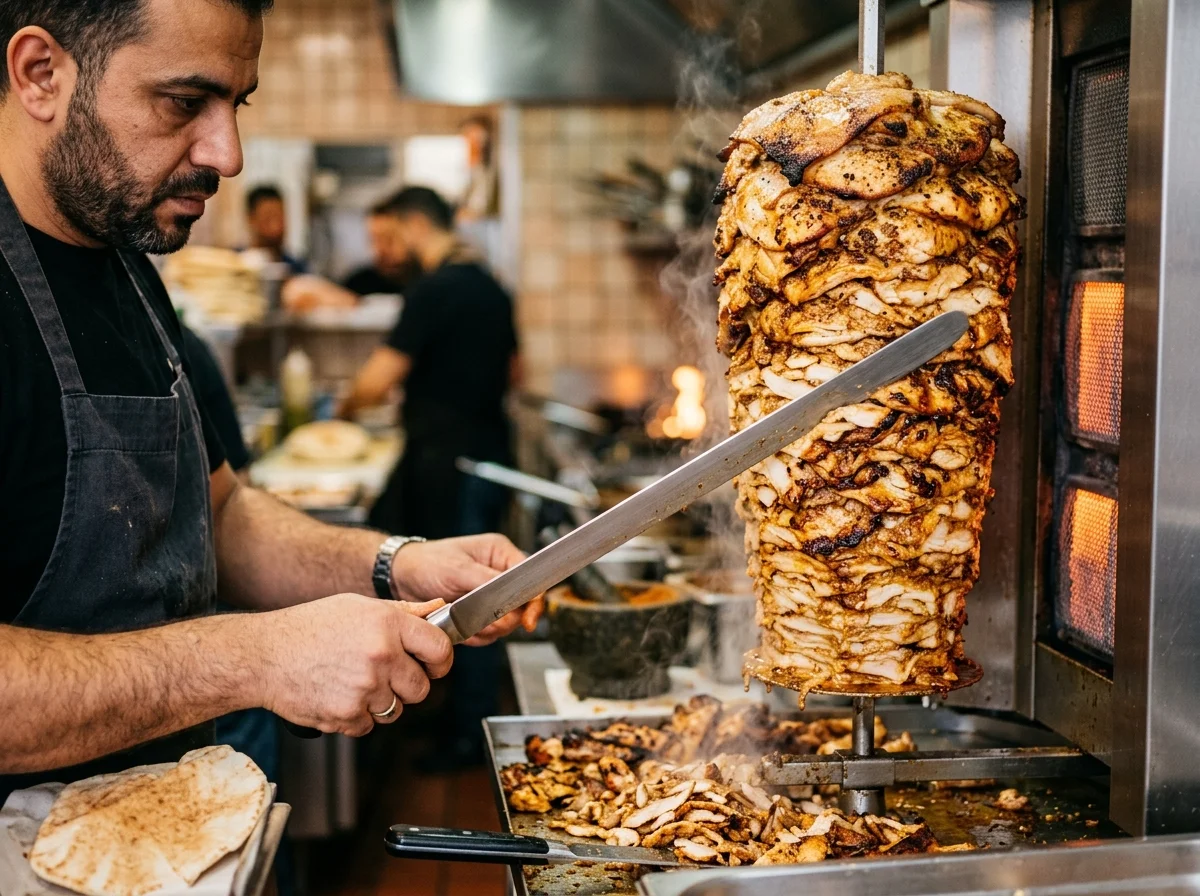
From the old quarter of Istanbul to the Beirut waterfront, from Tahrir Square in Cairo to street corners all over the world, plenty of people have watched a great mass of meat turn slowly on a vertical spit. Layers of seasoned meat rotate, and thin slices are shaved from the outside. That is shawarma (شاورما).
The name is generally traced to the Turkish çevirme, "turning," and the vertical rotating spit is said to have been developed in 19th-century Ottoman Bursa. The technique is called doner kebab in Turkey, gyros in Greece, and shawarma in the Levant (Lebanon, Syria, Jordan and Palestine).
Is it the same dish under different names? Not quite. Lebanese shawarma stands apart for the complexity of its spice marinade and the finesse of its sauce. Chicken steeped in more than ten spices, including cumin, cardamom, cinnamon, nutmeg and coriander, then finished with garlic sauce (toum) and pickles: this is the version many food lovers call the best shawarma.
A Middle Eastern street food rooted in the vertical-spit roasting technique developed in the Ottoman era. Spice-marinated meat (chicken, lamb or beef) is stacked and roasted, shaved thin, and wrapped in pita or khubz. It is considered to come from the Levant (Lebanon, Syria, Jordan and neighbors) and has spread around the world.
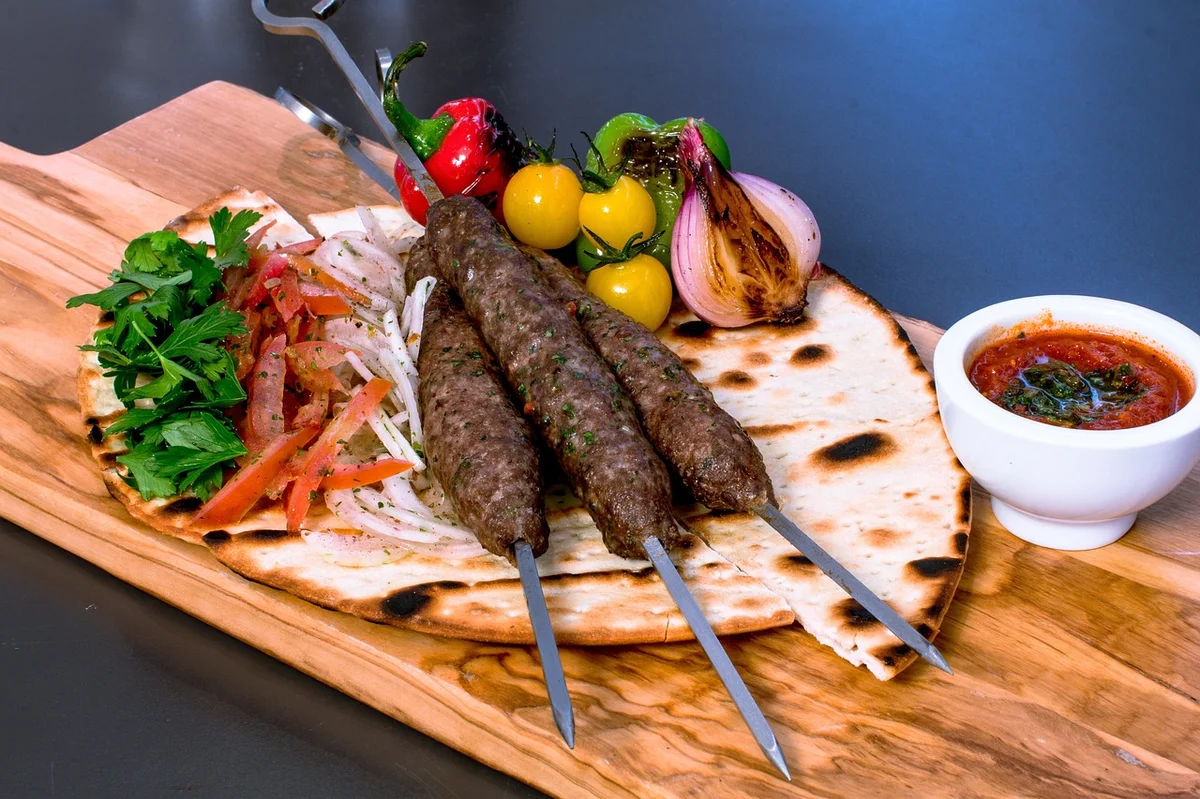
Ingredients (serves 4)
Cumin, coriander and paprika are easy to find in any supermarket. Cardamom and nutmeg are available in well-stocked grocery stores, spice shops and online. Ready-made shawarma spice blends are sold too and save you the measuring.
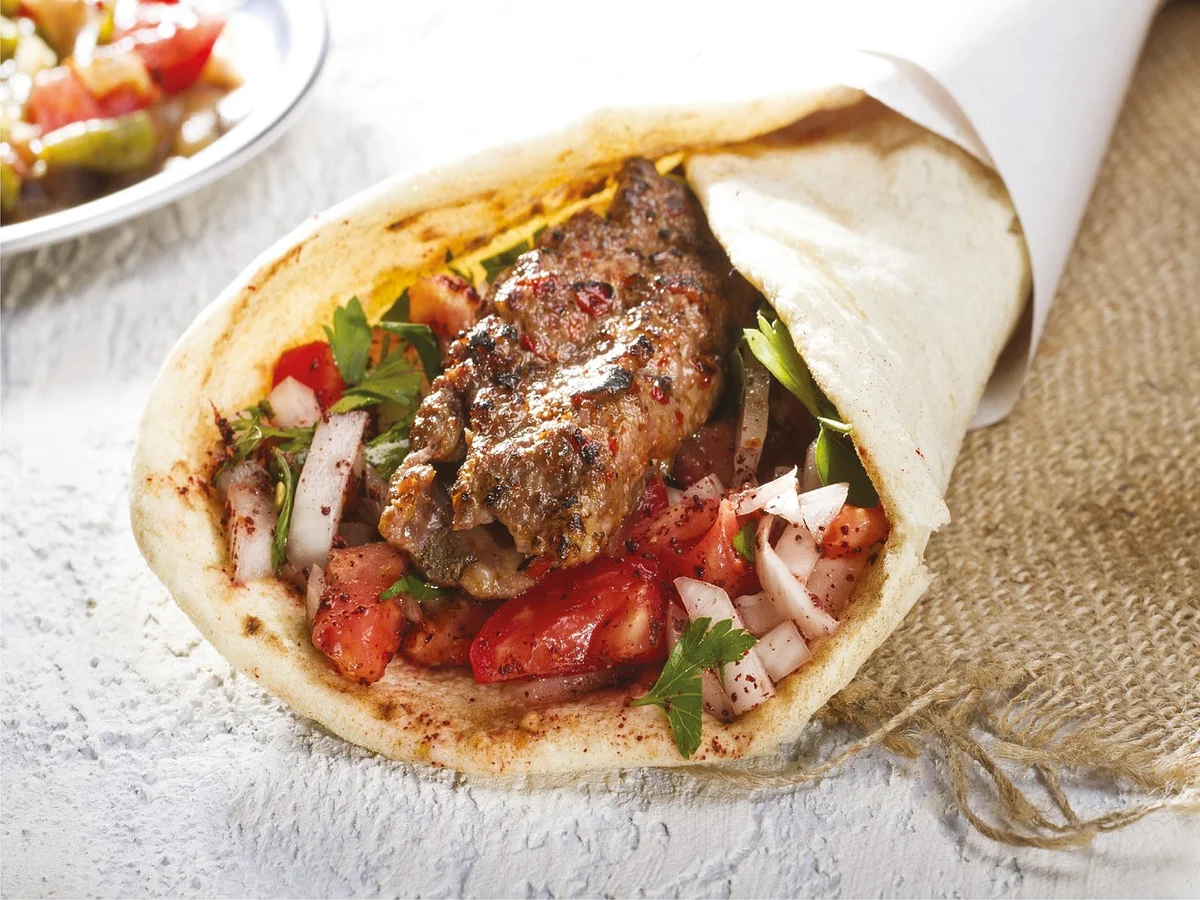
Method
Marinade (best done the day before)
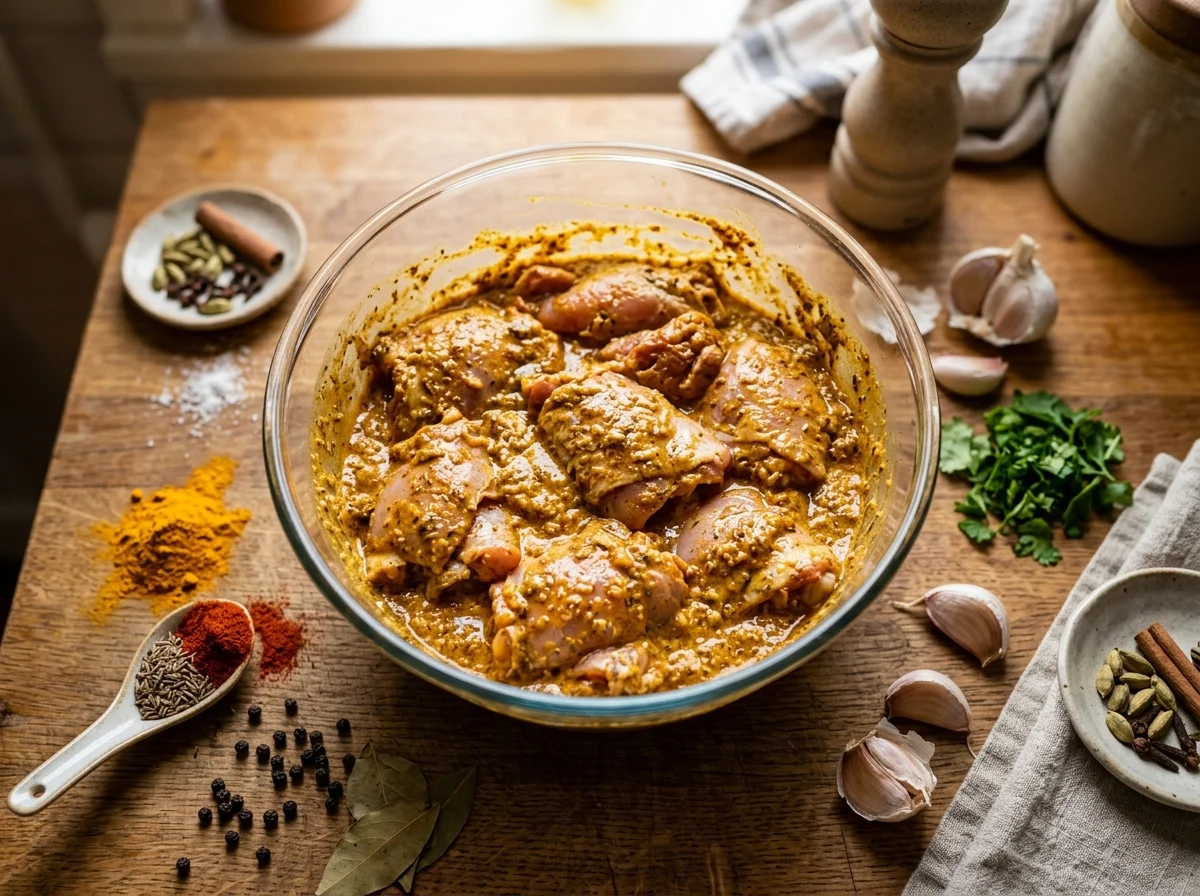
The marinade accounts for about 80 percent of shawarma's flavor. Marinate for at least 2 hours, ideally overnight (8–12 hours).
Even out the thickness of the thighs by slicing into the thick parts and opening them up, or by pounding between sheets of plastic wrap to about 1.5 cm (1/2 in). Even thickness means even cooking and juicier meat.
In a bowl, mix the yogurt, olive oil, lemon juice, garlic and all of the spices, add the chicken, and massage it in so the marinade coats every surface.
Transfer to an airtight container or a zip-top bag and refrigerate for at least 2 hours (overnight if you can).
The lactic acid in yogurt gently breaks down protein and tenderizes the meat. But marinating for more than 24 hours breaks the fibers down too far and leaves the meat dry. 2–12 hours is ideal. Lemon juice acts the same way, but on its own it is too acidic, so the yogurt acts as a buffer.
Cooking
Authentic shawarma is roasted on a vertical rotisserie; at home, an oven or a skillet stands in. The key is high heat that crisps the surface. At Middle Eastern shawarma shops, the shaved meat is commonly seared again on a griddle for extra savoriness.
Toum (Garlic Sauce): The Soul of Shawarma
What decisively shapes shawarma's flavor is toum (تويم), the Lebanese garlic sauce. It is sometimes called "the Middle Eastern aioli," but it uses no egg: garlic, oil and lemon juice alone form a remarkably creamy emulsion.
How to make toum
- Put the 8 cloves of garlic and the salt in a food processor and process until finely chopped (about 30 seconds).
- With the processor running, add the neutral oil in a very thin stream, starting a few drops at a time.
- When about a third of the oil is in, add 1 tbsp of the lemon juice. The mixture starts to turn white all at once.
- Alternate the remaining oil and lemon juice in small additions, processing until you have a thick, white paste.
- Finally, add the 2 tbsp ice water and pulse briefly for a fluffy finish.
Toum sometimes "breaks" and turns thin and oily. The cause is adding the oil too fast. The emulsion works on the same principle as mayonnaise, so in the early stage always add the oil a few drops at a time. If it breaks, process 1 fresh garlic clove in the food processor and add the broken toum a little at a time; this can sometimes re-emulsify it.
Toum keeps in the refrigerator for up to 2 weeks. As days pass, the garlic's bite softens and mellows. Beyond shawarma, it is a versatile dip for grilled chicken, French fries and roasted vegetables.
Along with hummus (in Japanese), it is a sauce found in practically every Lebanese home refrigerator.
Regional Variations: Each Country's Character
Even under the single name "shawarma," the meat, sauce and wrapping differ widely across the Middle East.
| Country | Meat | Sauce | Characteristics |
|---|---|---|---|
| Lebanon | Chicken is the mainstay | Toum (garlic sauce) | Fries inside; pickles essential |
| Syria | Chicken, lamb | Tahini sauce | Sometimes with a drizzle of pomegranate molasses |
| Jordan | Chicken, lamb | Hummus, tahini | Home of mansaf (in Japanese), so a yogurt note appears too |
| Egypt | Beef, lamb | Tahini plus hot sauce | Wrapped in aish (Egyptian bread) |
| Turkey | Beef, veal | Yogurt sauce | Called doner kebab; see kebab |
| Israel | Turkey, chicken | Hummus plus tahini plus amba (mango sauce) | Home of shakshuka (in Japanese) |
| UAE | Chicken | Garlic plus chili sauce | Often sold as a combo with fruit juice |
Lebanese shawarma is defined by toum and the fries inside. Putting fries in a wrap may be unfamiliar if you did not grow up with it, but crisp potato combined with the richness of the chicken and the creaminess of the toum is surprisingly satisfying.

In Berlin, the doner kebab brought by Turkish immigrants has become a city soul food, and in Britain a stop at the kebab shop after the pub on a Friday night is an established custom. Shawarma and doner have spread so far around the globe that they are among the world's best-known street foods.
History: From the Ottoman Empire to the World's Streets
The history of shawarma leads back to the 19th-century Ottoman Empire.
The invention of vertical roasting
The technique of stacking meat on a vertical skewer and roasting it while it turns is said to have been devised in Bursa (now northwestern Turkey) in the 1860s. The most commonly cited inventor is Hajji Iskender Efendi, whose "Iskender kebab" is considered the prototype of vertical-spit roasting.
Before that, grilled meat in the region was mostly the horizontal "shish kebab." Stacking meat vertically cooks the outside gradually while the inner meat steams, a clever method. Its advantage is that, as customers order, only the cooked outer layer is shaved off while the inside keeps cooking slowly, so you can always serve it freshly cooked.
Spreading to Lebanon and the birth of "shawarma"
After the Ottoman Empire's collapse in the 1920s, the technique spread through the Levant (today's Lebanon, Syria, Jordan and Palestine). Lebanese cooks greatly upgraded the relatively simple Turkish spicing into a compound marinade of cumin, cardamom, cinnamon, nutmeg and more. They also created their own sauce, toum (garlic sauce), establishing a "Lebanese shawarma" clearly distinct from Turkish doner kebab.
Spread by the diaspora
The Lebanese civil war (1975-1990) scattered Lebanese emigrants around the world, and they opened Lebanese restaurants in places as varied as Brazil, Australia, West Africa and Mexico. São Paulo, in particular, is home to a very large Lebanese-descended community, and shawarma is part of Brazil's everyday street food.
From the 2000s on, growing demand for halal food helped carry shawarma still further.
Lebanon's population is about 6 million, while the number of people of Lebanese descent living abroad is widely said to be even larger. This vast diaspora carried Lebanese cooking everywhere: hummus (in Japanese), falafel (in Japanese), tabbouleh, and shawarma. For such a small country, Lebanon's influence on world food culture is immeasurable.
Sourcing Ingredients
Spices
Cumin, paprika, turmeric, cinnamon and nutmeg are easy to find in ordinary supermarkets. Coriander and cardamom are most reliable at well-stocked grocery stores, Middle Eastern or Asian markets, and online. If you want to save effort, a ready-made shawarma spice blend (Lebanese or Turkish) is a good shortcut.
Choosing pita, and substitutes
The pita (Arabic bread) used for authentic shawarma is a thin bread with a hollow inside. Look for it at supermarkets, Middle Eastern and halal markets, or online; it is sold both fresh and frozen, under names like pita, pocket pita, khubz or Arabic bread.
If you cannot find pita, flour tortillas are the best substitute for both ease of rolling and taste. Choose ones 25 cm (10 in) or larger in diameter so you can fill them generously.
Tips for Shop-Style Flavor at Home
Finish in a skillet for double the savoriness
Chicken cooked only in the oven falls a little short of the savoriness of a rotisserie. Professional shawarma shops re-sear the meat shaved from the spit on a griddle. This "double cooking" is the single biggest technique you can reproduce at home.
After slicing the roasted meat, heat a skillet over high heat with no oil, spread the meat out, and cook it 30 seconds to 1 minute. When the surface is crisp with Maillard-reaction browning, it is done. This small step brings home shawarma much closer to street-stall flavor.
The marinade needs kneading
Simply pouring spiced marinade over chicken will not make the flavor penetrate. Massage it in by hand for 30 seconds or more so the yogurt's lactic acid clings to the meat and the spice aromas soak in. Doing it in a zip-top bag is efficient and keeps your hands clean.
Slicing technique
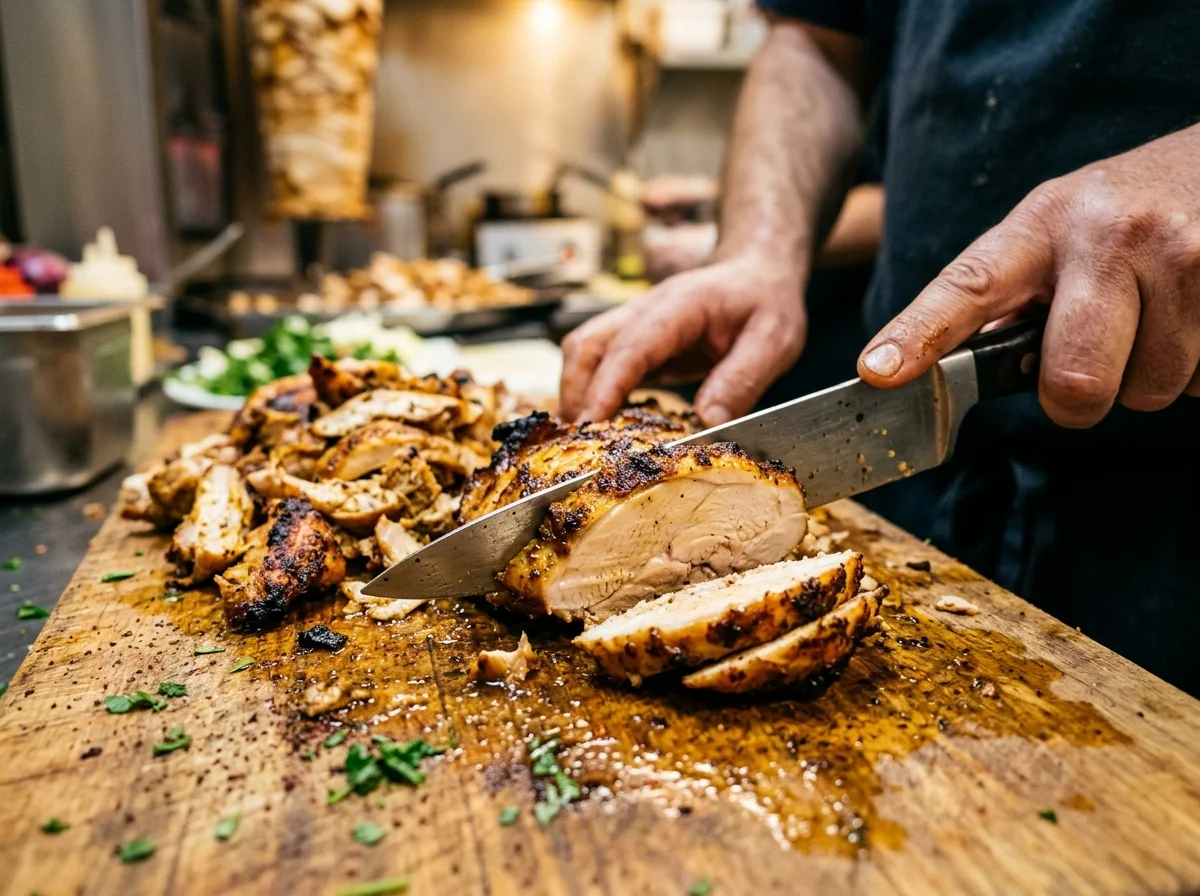
The rule is to slice the meat as thin as you can. On a real rotisserie, the shavings are about 0.5-1 mm. At home, 2-3 mm is realistic; a sharp knife makes thin slicing easier.
Freshly cooked meat is too tender to slice thin, so rest it for 5 minutes before cutting. If you are in a hurry, 3 minutes in the refrigerator firms up the surface so it cuts more easily.
Variations
Lamb shawarma
At high-end shawarma shops in Lebanon, lamb shawarma is the signature. Lamb shoulder is available at halal or Middle Eastern butchers. Adding 1 tsp rosemary and 1/4 tsp allspice to the marinade brings out the lamb's flavor while softening its gaminess.
Shawarma rice bowl
A "shawarma bowl," with the meat, toum, vegetables and pickles over rice instead of pita, is a popular menu item at Middle Eastern chains in the United States such as CAVA and The Halal Guys. It is easy to make at home and packs well for lunch. Saffron rice or buttered rice suits the shawarma spices better than plain white rice.
Vegan version: cauliflower shawarma
Cauliflower marinated in the same spice mix and roasted in the oven is a favorite in Western vegan circles. Roasting gives cauliflower a nutty savoriness that pairs very well with the spices. Toum contains no egg, so it can be used as is.
Japanese-style shawarma
Marinate chicken thighs in 1 tbsp miso, 2 tbsp yogurt and 1 tsp cumin, then sprinkle with shichimi togarashi (Japanese seven-spice chili blend) after cooking. Wrap in sandwich bread or a tortilla instead of pita, adding shredded cabbage and mayonnaise, for a fusion shawarma.
Shawarma platter (for parties)
The most impressive format for a party is "build your own shawarma." Lay out the roasted meat, warmed pita, toum, hummus, assorted vegetables and pickles on a large platter and let guests assemble their own wraps.
For a crowd (double the 4-serving recipe):
Main ingredients: 1 kg marinated chicken thighs and 12 pitas.
For sauces and sides, prepare the following.
- Toum: 200 ml
- Hummus (in Japanese): 300 g
- Tabbouleh: 2 cups
- Tomato, lettuce, red onion, pickles: about 100 g each
- French fries: about 200 g
Everything can be prepared ahead, and you only need to roast the meat before serving, which keeps the host's workload light. Guests can adjust the heat and the fillings to their own taste, so everyone from children to spice lovers is satisfied.
Shawarma vs. Doner Kebab vs. Gyros
"Shawarma," "doner kebab" and "gyros" are often mixed up, but there are clear differences.
| Shawarma | Doner kebab | Gyros | |
|---|---|---|---|
| Region | The Levant (Lebanon, Syria, etc.) | Turkey, Germany | Greece |
| Meat | Chicken, lamb | Beef, veal, chicken | Pork, chicken |
| Seasoning | Compound spices plus yogurt | Simple (mostly salt and pepper) | Mostly oregano and thyme |
| Sauce | Toum (garlic) | Yogurt sauce | Tzatziki (cucumber yogurt) |
| Bread | Pita, khubz | Ekmek (Turkish bread) | Pita (thicker) |
| Sides | Pickles, fries | Salad, chili peppers | Tomato, onion, potato |
The biggest difference is the sauce. Lebanese toum is 100 percent garlic with an assertive punch. Turkish yogurt sauce is mild, with the gentleness of dairy in front. Greek tzatziki is refreshing with cucumber. Simply tasting the three side by side gives you a sense of the diversity of eastern Mediterranean food culture.
Another major difference is pork. Shawarma and doner in the Muslim world do not use pork, while in Greece pork is the norm. This religious dietary rule has created entirely different food cultures from the same cooking method.
Storage and Shelf Life
| State | Storage | Keeps | Notes |
|---|---|---|---|
| Marinated raw meat | Refrigerator | 1-2 days | Keep it marinated and cook just before eating |
| Marinated raw meat | Freezer | 1 month | Store flat in a zip-top bag; thaw overnight in the refrigerator |
| Cooked meat | Refrigerator | 3-4 days | Reheat in a skillet; the microwave dries it out |
| Cooked meat | Freezer | 2 weeks | Freeze sliced; thaw only what you need |
| Toum | Refrigerator | 2 weeks | The garlic's bite mellows over time |
| Assembled wraps | — | Not recommended | The vegetables go limp. Wrap just before eating |
The best storage strategy is to keep marinated chicken in the freezer. Marinate in bulk on the weekend and freeze in portions; on a weeknight, thaw, cook and wrap, and shawarma is ready in 15 minutes. A generous batch of toum can double as a dip for grilled chicken or fries.
Nutrition
| Nutrient | Per serving (1 of 4) | Role |
|---|---|---|
| Calories | about 520 kcal | — |
| Protein | about 35 g | High-quality protein from chicken thighs |
| Fat | about 22 g | From the olive oil and toum |
| Carbohydrates | about 45 g | From the pita and fries |
| Vitamin B6 | Present | Abundant in chicken; supports protein metabolism |
| Niacin | Present | Abundant in chicken; supports energy metabolism |
| Allicin | Present | From the garlic in toum; studied for antibacterial and antioxidant properties |
What stands out nutritionally is the balance of high protein (35 g) and moderate fat.
Garlic's allicin has been studied for antibacterial and antioxidant properties (see the Journal of Nutrition reference below). The live cultures in yogurt marinade do not survive cooking, but the lactic acid itself remains.
Adding fries raises the fat and carbohydrates. If you are watching your diet, a "light version" swaps the fries for extra pickles and uses half a pita. Using hummus (in Japanese) instead of toum cuts fat further.
FAQ
An oven (or skillet), a food processor (for toum) and a knife. No special equipment is needed.
Q. Can I make authentic shawarma without a rotisserie?
Yes. Oven roasting plus a pan re-sear reproduces it well. The rotisserie's advantage is cooking from the outside in, but a hot oven (220°C / 425°F) gives comparable browning, and crisping the surface in a skillet at the end brings it close to street-stall flavor.
Q. Can I use chicken breast?
You can, but it dries out more easily than thighs. If you use breast, marinate longer (overnight recommended) and shorten the roasting time by 5 minutes. Do not forget the 5-minute rest before slicing.
Q. My toum broke. How do I fix it?
Process 1 fresh garlic clove in the food processor, then add the broken toum 1 tbsp at a time while continuing to process. It can sometimes re-emulsify. If that fails, it is more reliable to use the broken toum as a dressing and start a fresh batch from the beginning.
Q. Collecting all the spices is a hassle. What is the minimum?
Cumin and paprika give you a baseline shawarma flavor. If you can, add ground coriander. Those three cover most of the flavor.
Q. I cannot find pita.
Flour tortillas are the easiest substitute to roll. Naan, chapati or sandwich bread also work; for sandwich bread, trim the crusts and flatten it with a rolling pin. Large tortillas (about 30 cm / 12 in) are especially good for holding plenty of filling.
Q. What can I do with leftover marinated chicken?
It is versatile beyond shawarma: skewer and grill it for shish-kebab-style chicken, dice and stir-fry it for shawarma fried rice, or put it on a salad for a shawarma salad. The marinade already seasons it well, so little extra seasoning is needed.
Related Recipes
Alongside shawarma, explore Lebanon's celebrated mezze (appetizer) culture.
Among Lebanese dishes, hummus (in Japanese), falafel (in Japanese) and tabbouleh are the three essential mezze. Serve shawarma with hummus and tabbouleh and your kitchen becomes a Lebanese street-food stand. An overview of Middle Eastern cuisine (in Japanese) introduces the diversity of Middle Eastern food, mezze culture included.
Neighboring Jordan's mansaf (in Japanese) is a yogurt-based lamb dish that shows another side of Middle Eastern flavor. Turkey's kofte (in Japanese) and Israel's shakshuka (in Japanese) are also good entry points to the depth of Middle Eastern cooking.
Sources
- Wikipedia. "Shawarma." https://en.wikipedia.org/wiki/Shawarma (accessed 11 April 2026)
- Serious Eats. "The Best Chicken Shawarma Recipe." https://www.seriouseats.com/the-best-chicken-shawarma-recipe (accessed 11 April 2026)
- J. Kenji López-Alt. "How to Make Toum (Lebanese Garlic Sauce)." Serious Eats, 2020. https://www.seriouseats.com/traditional-toum (accessed 11 April 2026)
- Anissa Helou. "Feast: Food of the Islamic World." Ecco, 2018.
- Claudia Roden. "The New Book of Middle Eastern Food." Knopf, 2000.
- The Guardian. "How the doner kebab became Berlin's favourite fast food." https://www.theguardian.com/cities/2015/sep/28/doner-kebab-berlins-favourite-fast-food (accessed 11 April 2026)
- Journal of Nutrition. "Allicin in garlic: chemistry, bioavailability, and health effects." 2006; 136(3 Suppl): 716S-725S.