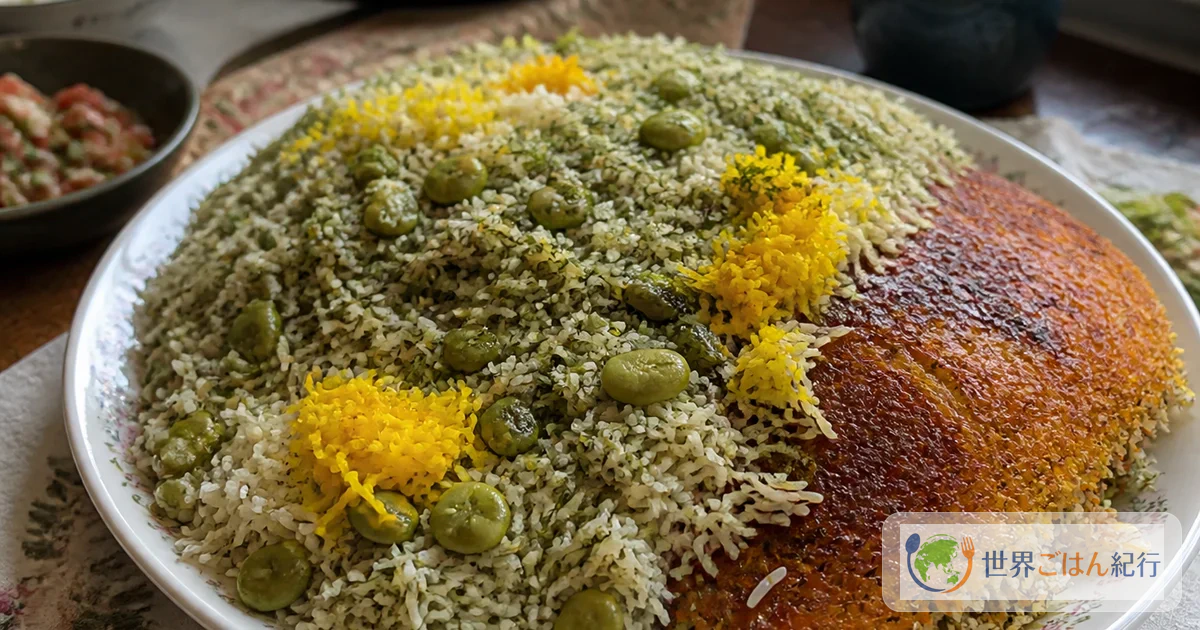
Green fava beans and dill loosen in the steam of the rice
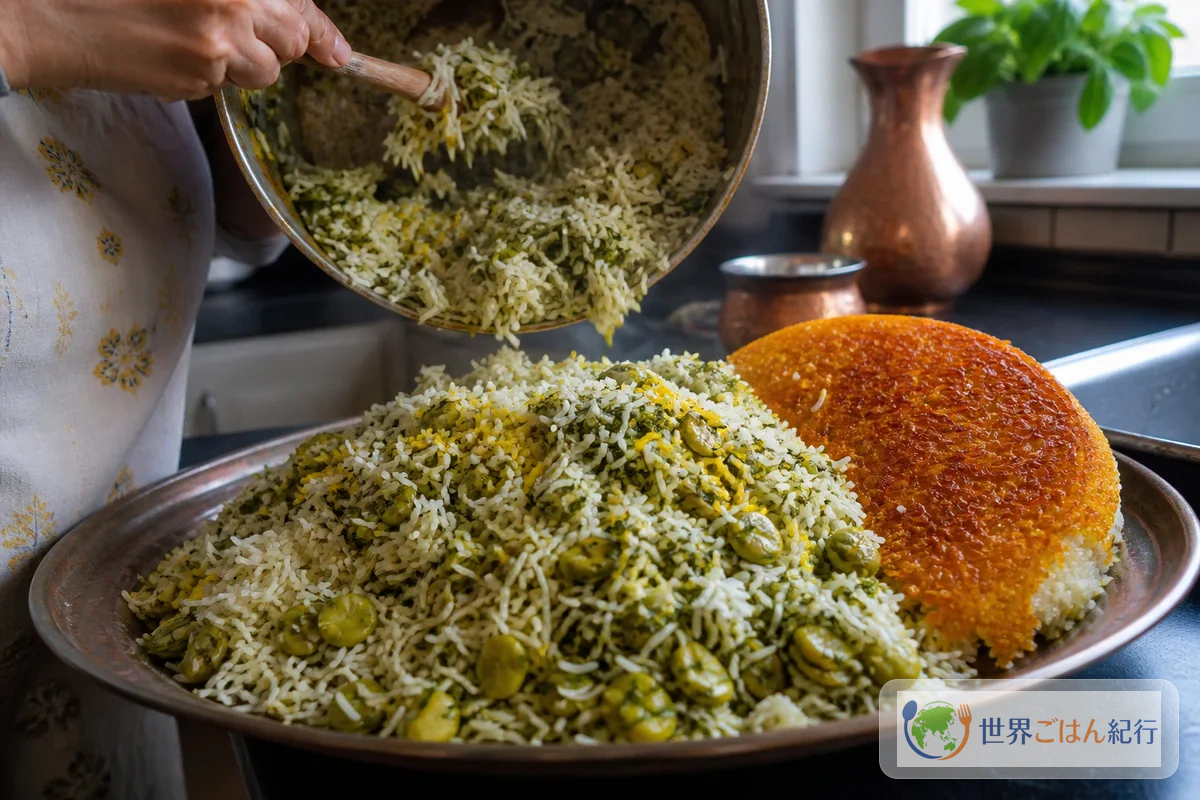
The moment you lift the lid, thin steam rises from the white mound of rice, and the scent of green fava beans and dill reaches your nose first. At the bottom, rice that has soaked up oil has set to a pale golden crust, and when the spatula goes in, the grains above are light and the sheet below answers with a crackle. Baghali polo is the Iranian polow in which fava beans and dill are layered with long-grain rice and steamed.
It is not a dish like Japanese takikomi gohan, where the ingredients and rice are cooked in the same water from the start. The rice is parboiled in salted water, drained once, then layered with the filling and steamed, so the dill keeps its leafy aroma and the fava beans hold their green. At the bottom of the pot forms a savory layer called tahdig. The pleasure of this dish lies in tasting, on one plate, the rice mixed with the green filling, the white steamed rice and the crust at the bottom of the pot.
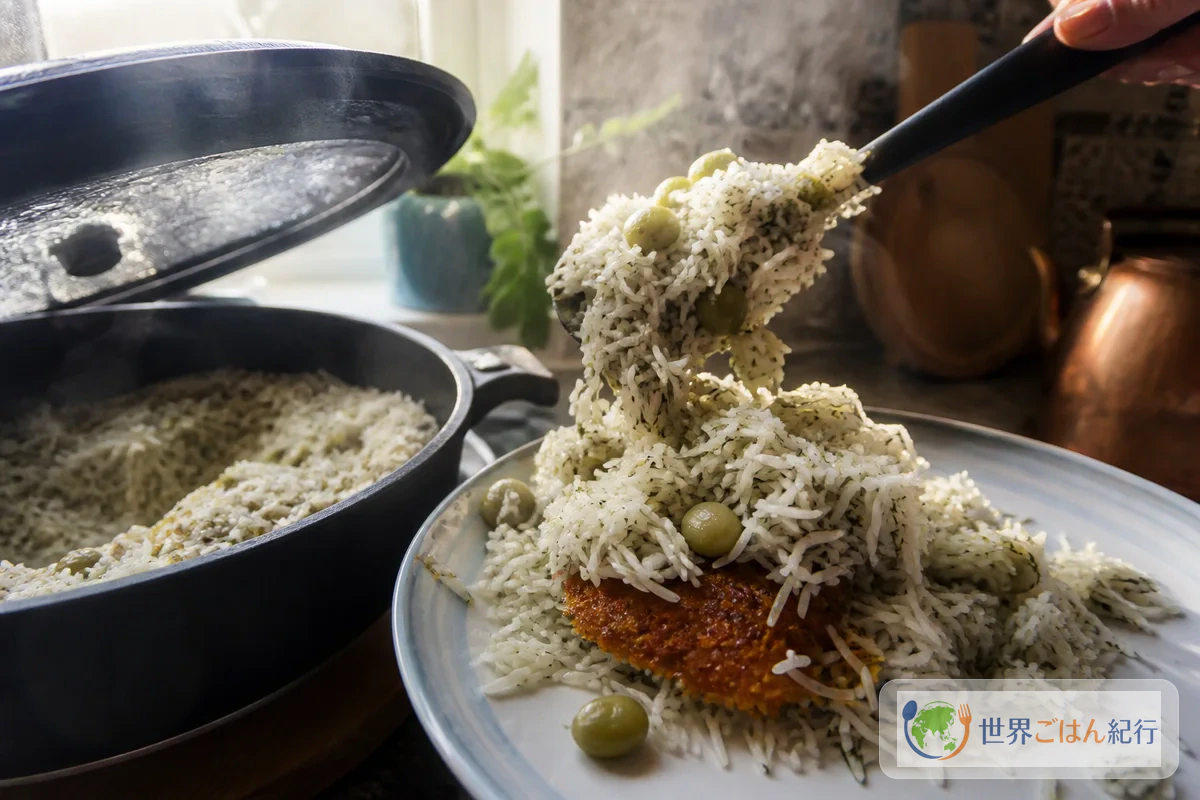
Serves 4, made in a heavy pot about 22 cm across. As a guide: soak the rice 40 minutes, parboil 5–6 minutes, steam 45–50 minutes. Rather than the time alone, turn off the heat by the white core left in the center of the parboiled rice, the amount of steam and the color of the tahdig.
On the Iranian table, baghali polo is a dish that celebrates by layering rice
In Persian, bāqlī means fava beans and polow means a rice dish finished by layering the filling or spices with rice. The spelling wavers (baghali, baqali), but when you search, entering both "baghali polo" and "fava bean dill rice" tends to lead to information closer to the ingredients.
Iranian rice dishes include chelow, relatively plain white rice served with meat and stews, and polow, in which meat, vegetables, beans and fruit are layered with the rice. The technique of parboiling long-grain rice in plenty of salted water, draining it and then steaming it with fat is the foundation for keeping each grain distinct. Records show that rice was in use as a staple in Iran by the Sasanian period, and it is explained that in the food culture from the Safavid period on, the distinction between chelow and polow became clear. However, it cannot be said that today's plate was invented by a particular royal court or a single cook. It is more natural to see it as the pattern of parboiling and steaming settling into homes while cookbooks and regional eating habits overlapped.
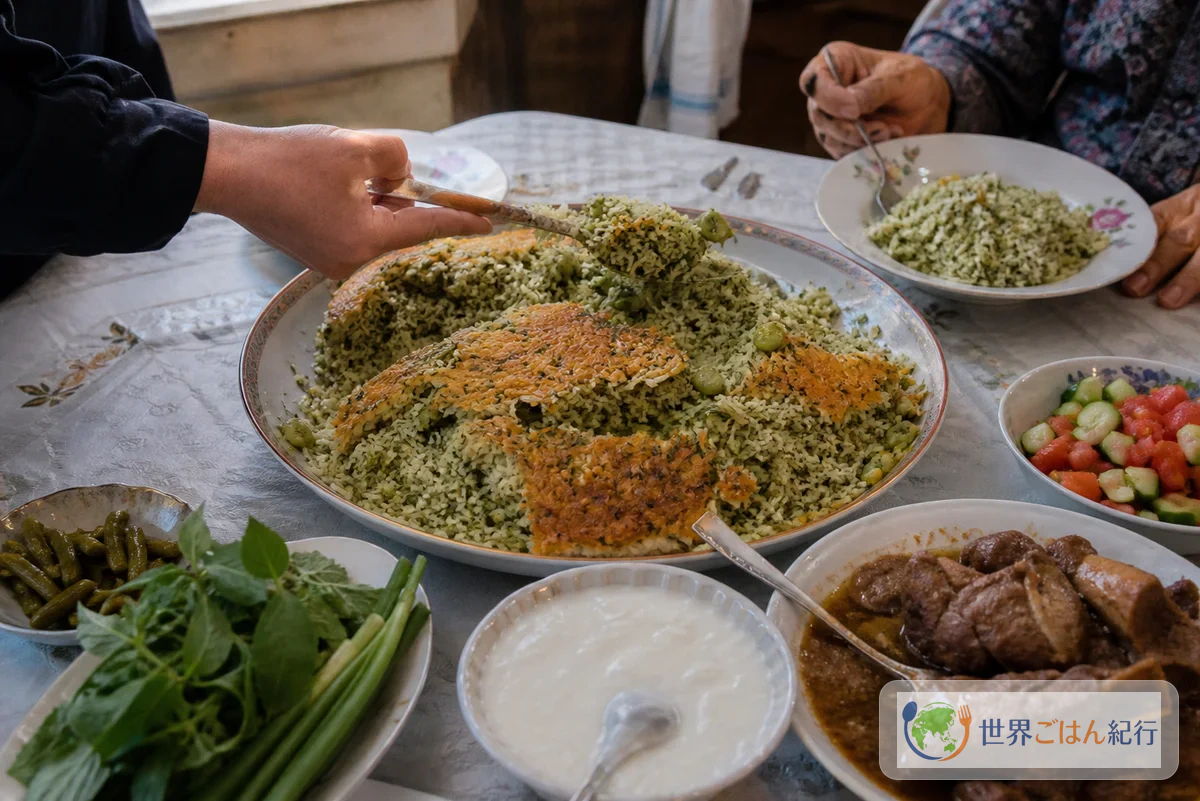
Baghali polo appears both as a home dish that makes the most of spring fava beans and dill, and as a festive plate served with lamb shank or chicken. At family gatherings and feasts, the meat is often stewed separately and arranged around the mound of rice. In Gilan on the northern Caspian coast, on the other hand, rice itself is the center of daily meals, and a table developed that pairs it with sour stews, fish and greens. Gilan's fava bean dish bāqāla qātoq (a dish with fava beans, herbs and egg) is a different dish from baghali polo, but it is a clue to the background of northern flavors that use fava beans and green fillings.
In the dry highlands, bread and wheat dishes also hold a large place, and the same rice dishes are not eaten with the same frequency across Iran. How much dill, whether the fava beans are split small, and where the saffron is scattered also vary by household and region. So when cooking at home, rather than chasing a single "right answer," it is better to keep the technique of finishing long-grain rice with steam, the green of the beans, the green scent of dill and the savoriness of the bottom crust. This recipe is built as a rice dish without meat, in a form to which people who want to serve lamb or chicken at the table can add it later.
The workings of tahdig and the idea of pairing white chelow with meat dishes connect to how to make tahdig (in Japanese) and how to make chelow kabab (in Japanese). If you want to serve a sour stew, the table of how to make ghormeh sabzi (in Japanese) is also a useful reference.
The trouble of double-peeling fresh fava beans can be cut greatly with frozen peeled fava beans. Keep the order of basmati rice, dill, saffron and tahdig, and only if you use short-grain rice, cut the parboiling short. When serving meat, combine already cooked lamb or chicken on a separate plate, and do not mix raw meat into the rice pot.
Ingredients (serves 4)
A rice-centered formula. It does not include a meat stew, so that you can first check the aroma of fava beans and dill, the shape of the rice grains and the texture of the tahdig.
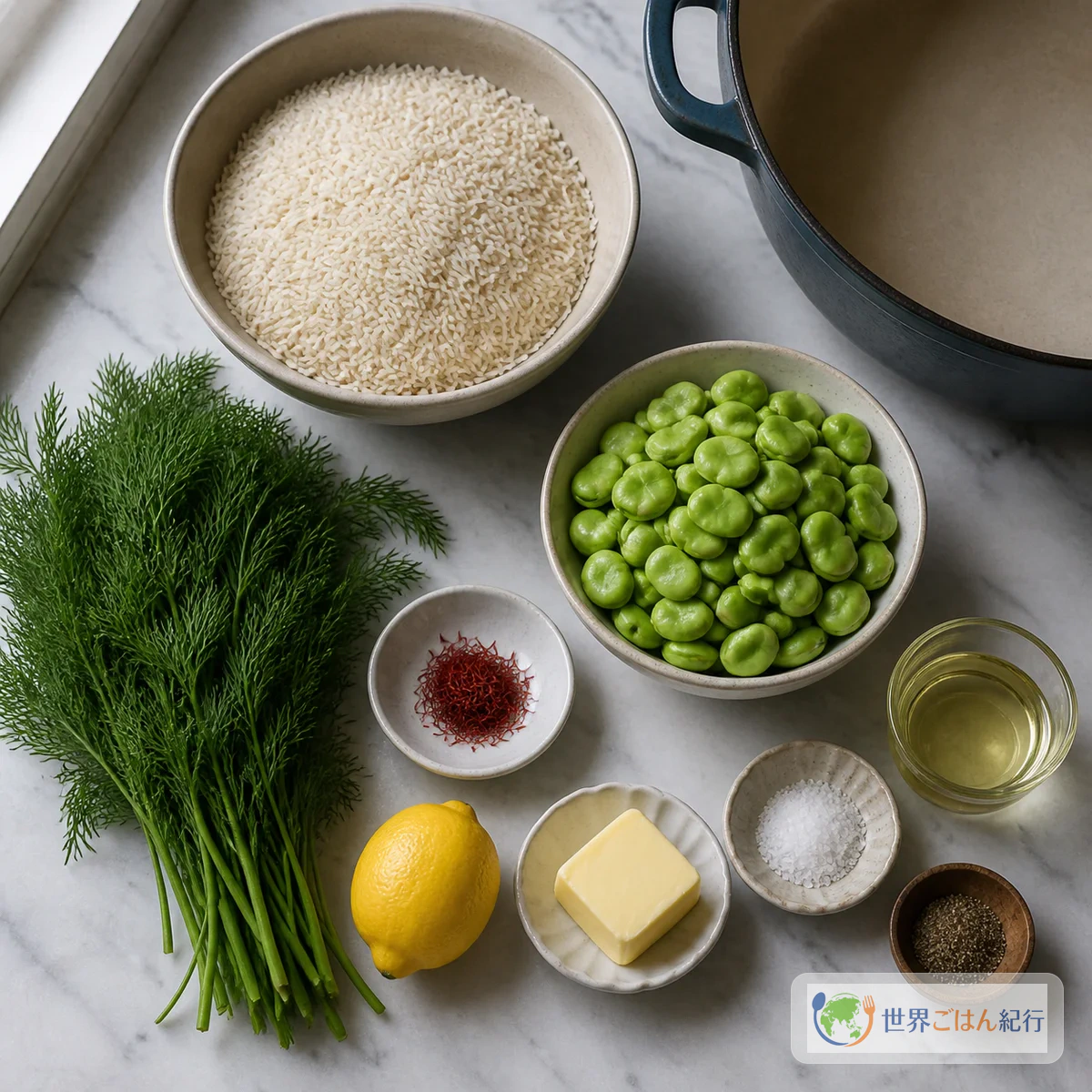
Rice and filling
Soaking and parboiling
Equipment and cautions
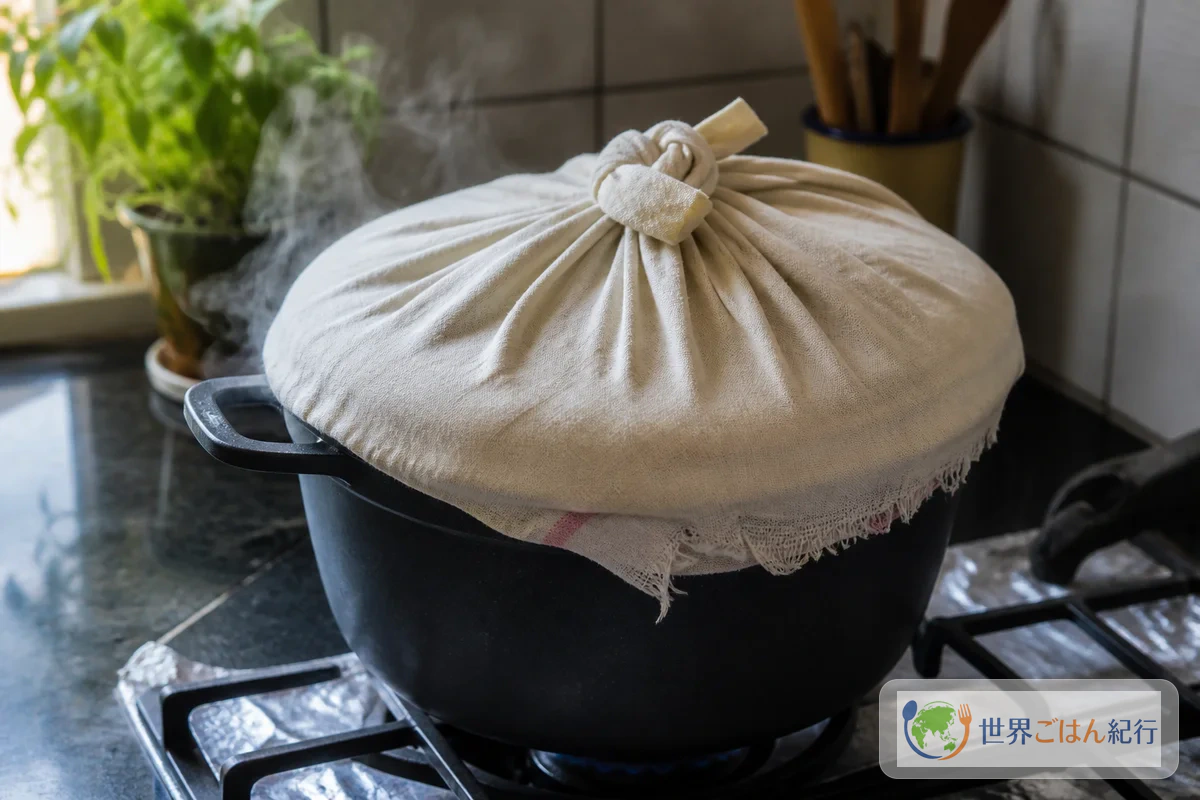
Prepare a heavy pot about 22 cm across, a lid with few gaps, a fine-mesh colander, a clean thick kitchen towel and cooking chopsticks. If the bottom of the pot is of even thickness, once you lower the heat, one part is less likely to blacken first. Wrap the towel around the inside of the lid, at a length so the ends do not hang over the flame or the vent. Check the packaging labels for fava beans, butter and any yogurt you serve alongside, and prepare a different dish for anyone with an allergy to legumes or dairy. Wipe fresh dill thoroughly dry after washing and chop the leaves coarsely. Chopped too fine, it tends to clump in one place in the steam.
Because butter is used, to avoid dairy use the substitution in the ingredient table. If you serve yogurt, a meat stew or a ready-made soup, check the labels individually for dairy, wheat and other allergens. Secure the towel to the handle of the lid so that it never touches the flame.
If you are unsure whether you will keep using long-grain rice, for this once try it on a small scale with rice you have, and buy basmati when you want grains that stay distinct.
Decide on tools for crushing saffron by how you will use them
If you want to keep grinding saffron and whole spices finely, a mortar with a pestle that fits well steadies your hand. For this one dish a small dish and the back of a spoon will do, so not buying one is also an option, considering where it would be stored and how often it would be used. When buying, check that it is granite and that the pestle is included.
Choosing ingredients: what to get nearby, and what to look for
For frozen peeled fava beans, fresh dill, lemon and butter, first check the season and stock at a larger supermarket. Fresh fava beans shrink in volume once you remove both the pod and the skin, so on days when you want to be sure of 250 g of peeled beans, frozen is easier to plan around. Wipe off the water that comes out when frozen beans thaw, and keep the heat short, and the green stays.
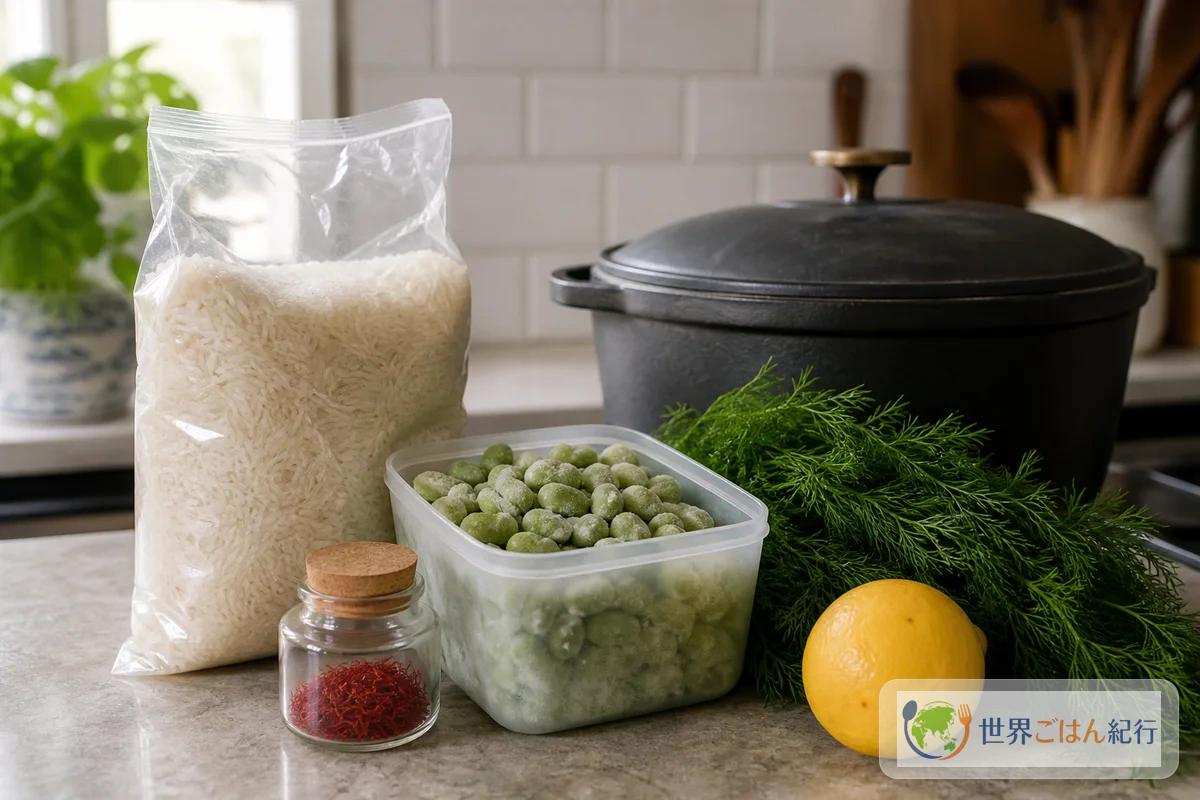
Dill is the axis of this dish's aroma. With 100 g of fresh dill, a green scent rises when you bring the rice to your mouth; with 30 g of dried, the aroma is concentrated and tends to feel a little earthy. Swapping to dried when fresh isn't available still makes the dish, but the same amount of dried as fresh is too strong, so stop at 30 g first.
The reason to choose basmati is that even after parboiling and steaming, the length and aroma of the grains remain, and when plated with fava beans and dill it is less likely to be buried by the filling. You can make it with short-grain rice, but it becomes sticky, the layers tend to merge, and it breaks easily when you turn out the bottom of the pot. If you want to recreate the state where the grains are loose, choosing long-grain rice is the first fork in the road. If you don't expect to use up 1 kg and are only trying it this once, it's fine to make a small batch with long-grain or short-grain rice you have and buy later. Even when using a rice specialist or online, checking that it is long-grain and the size lets you measure the 360 g in the ingredient table without waste.
Saffron is not a spice you use in large amounts. When threads are opened in a little hot water, only part of the white rice becomes a reddish golden color, and the green of the dill is easier to tell apart. If you only want to add yellow, there is a method of using a little turmeric without buying saffron, but the aroma is different. If you buy saffron, check that it is in threads and whether the amount is 1 g, and if you don't want to seek a difference in aroma just for this once, you can pass.
Method: keep the green of the beans and the grains of rice
Not breaking the order of parboil, drain, layer and steam decides the result. Measure the ingredients, chop the dill and make the saffron liquid first, so that you can cut down the number of times you open the pot and keep your hands from stopping.
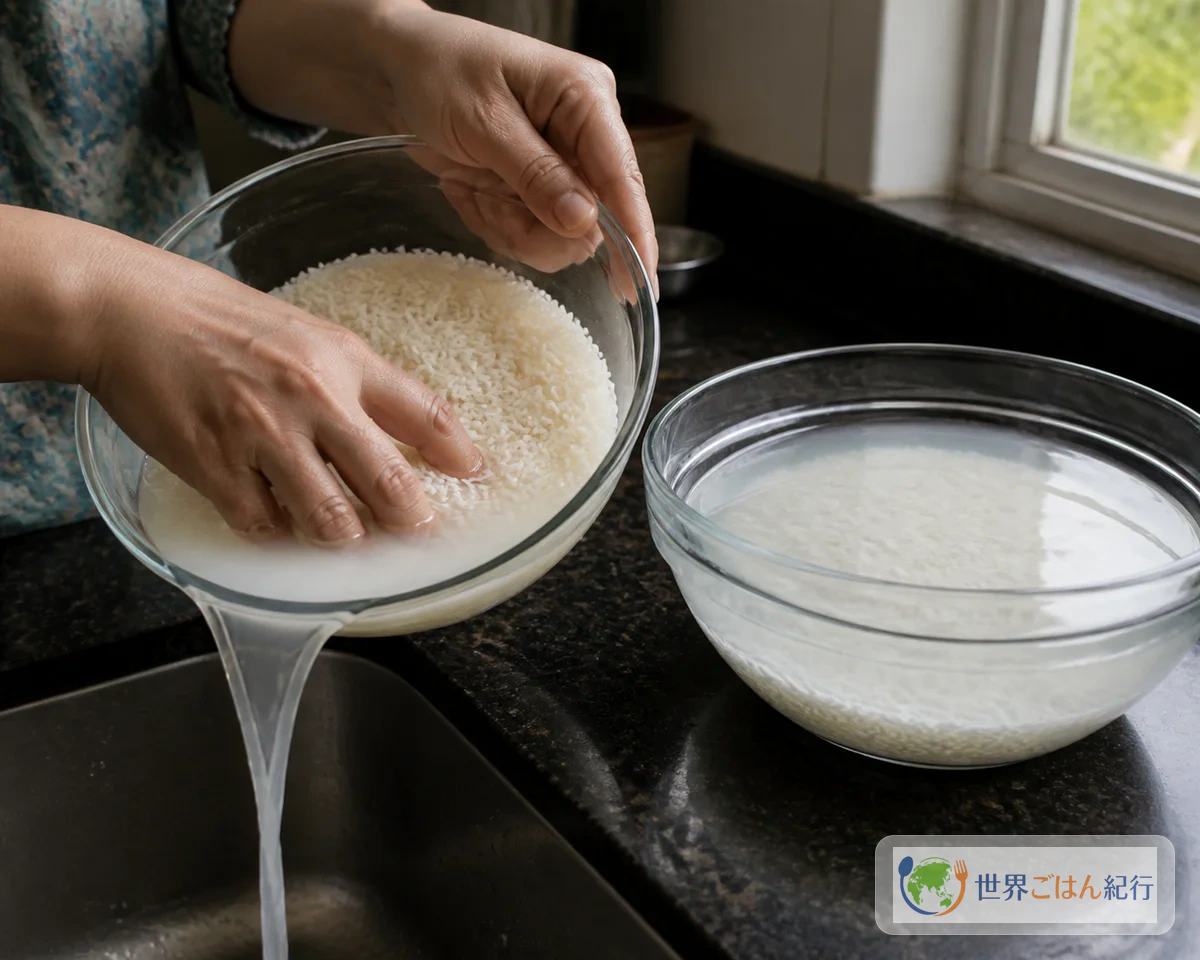
STEP 1: Wash and soak the rice (40 min)
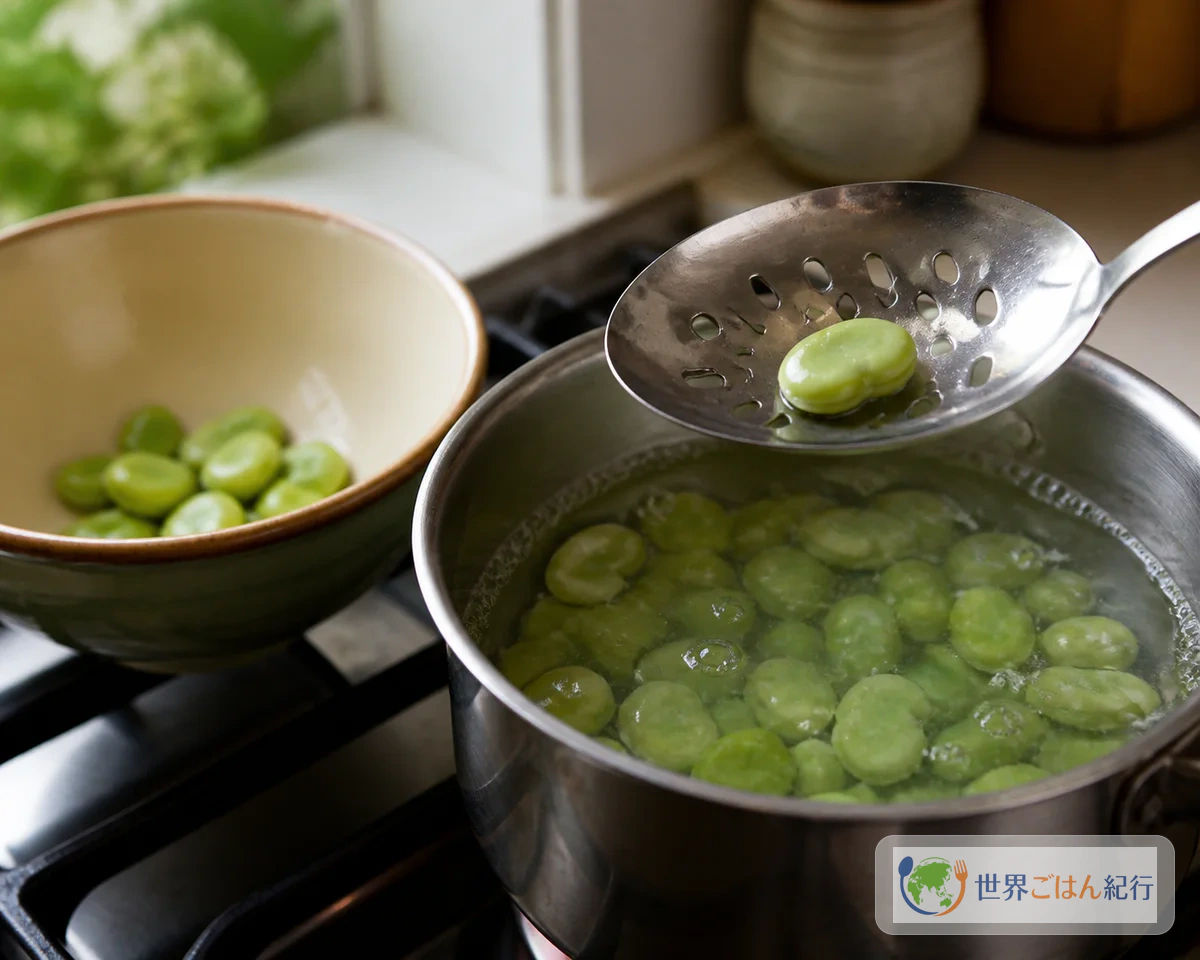
STEP 2: Prepare the fava beans (5 min)
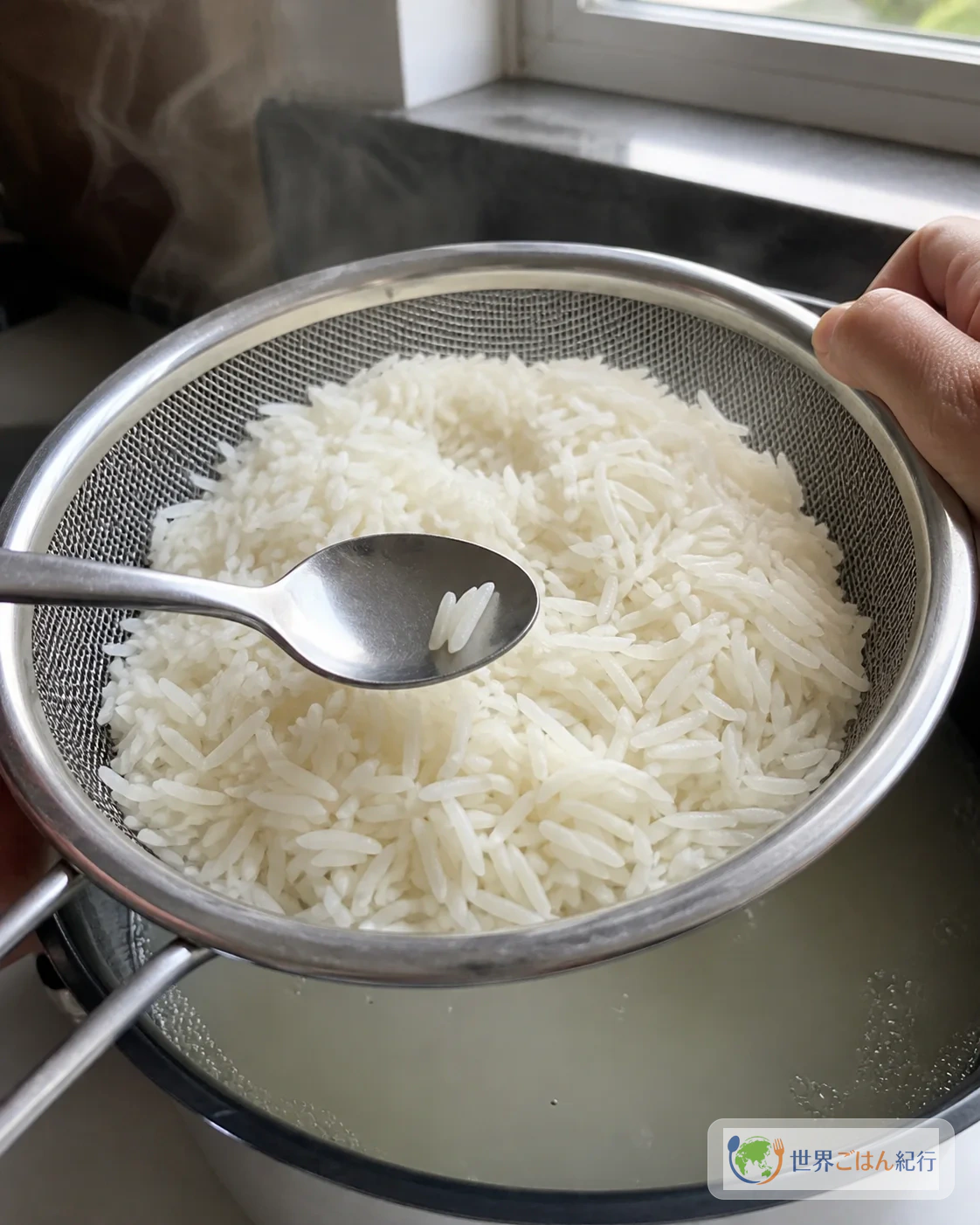
STEP 3: Parboil the rice and drain (8 min)
STEP 4: Bloom the saffron (10 min)
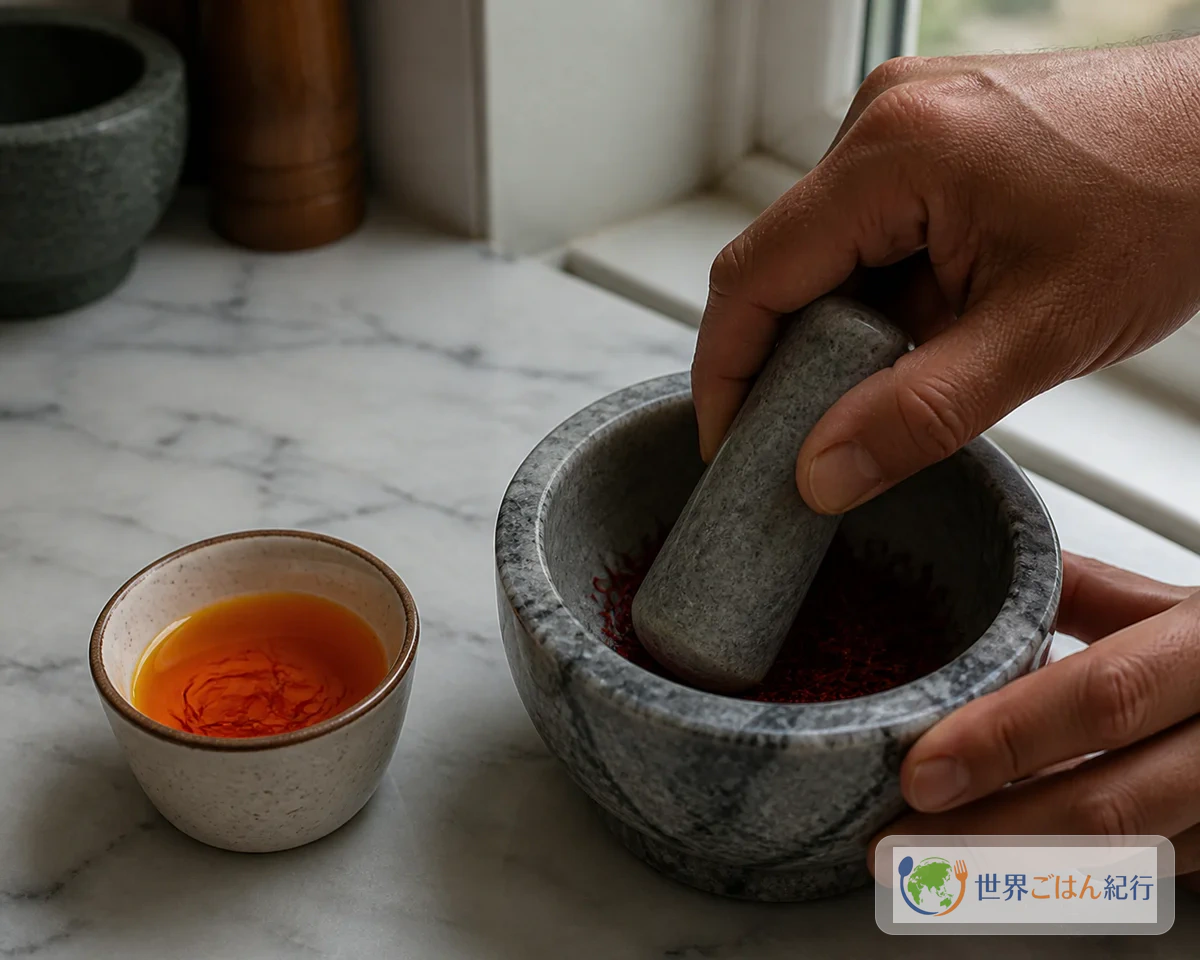
If you will not use up the saffron in one go and want to keep grinding whole spices and seasonings finely, there is reason to choose a mortar. If you only make this once, press lightly with a small dish and the back of a spoon before adding hot water, and not buying a dedicated tool is also a decision you can make. When buying, check that it is granite and that the pestle is included.
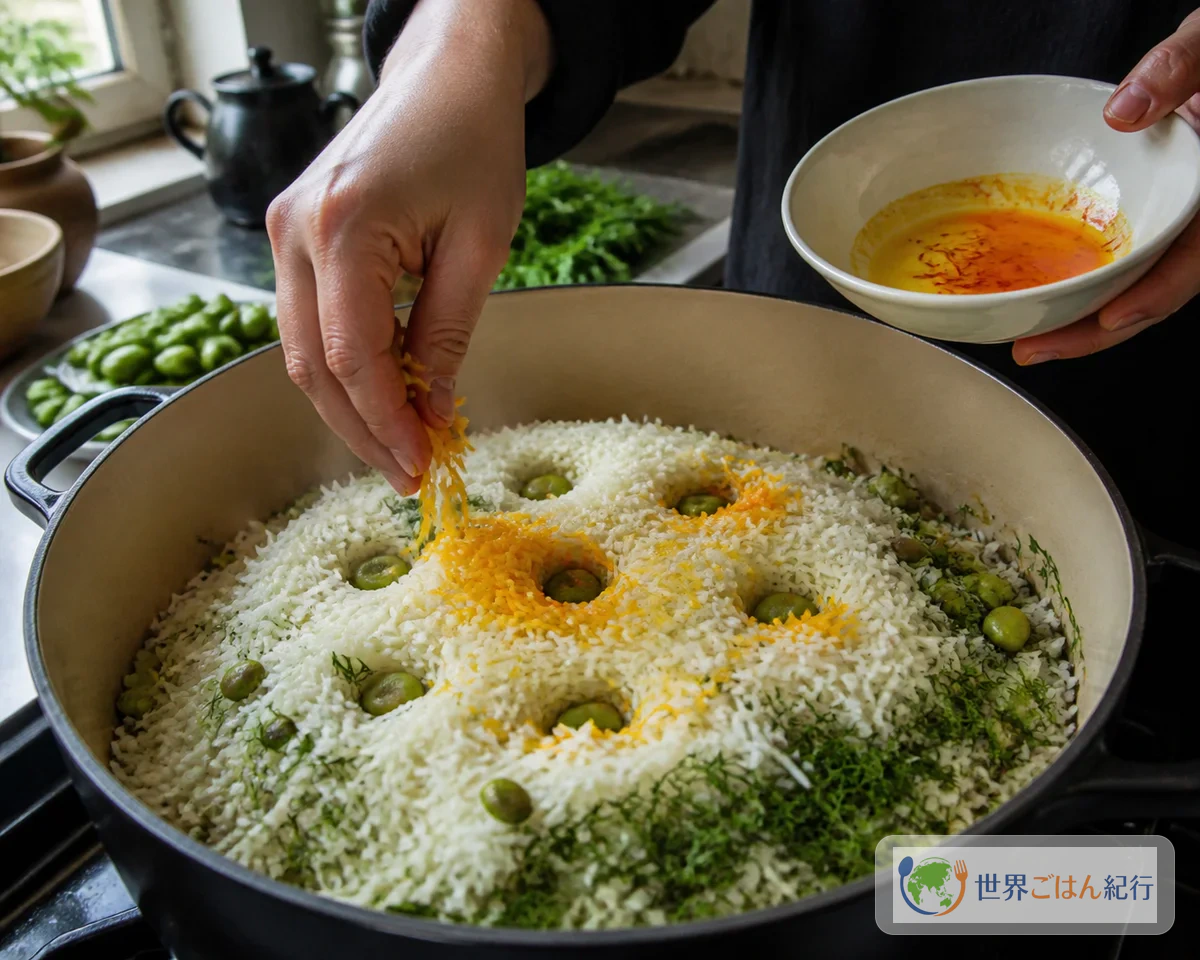
STEP 5: Layer the filling and rice in the pot (10 min)
STEP 6: Cover with a towel and steam over low heat (50 min)
STEP 7: Rest and serve (10 min)
How to recover from a failure
If the center of the rice is still hard, pour 30 ml of hot water around the edge of the pot, put the towel-wrapped lid back and add 10–15 minutes over low heat. Trying to mix the rice to spread the water throughout will crush the grains on top and the layers won't come back, so supply only steam.
If the rice turns sticky and forms one mass, the point at which you stopped the parboil may have been late. It is difficult to return it fully to separate grains, so it is easier to eat if you spread the top rice thin, add a little butter and use it like fried rice. Next time, drain at the point when a thin white core remains in the center, and rinse briefly with cold water to remove the surface starch.
If a strong scorched smell comes from the bottom early, take the pot off the heat and, without scraping the bottom, move only the rice on top to another pot. If the tahdig is a deep golden brown it can be eaten as savoriness, but don't keep the black, bitter parts. Next time switch to a heavier pot or shorten the medium heat before lowering it.
If the fava beans fell apart, the first blanch was too long or the layers were mixed too much. Set aside a few beans that kept their shape for the top, and treat the broken ones as the green filling scattered through the rice, and the flavor is still put to use. If the dill turned black, wipe the water off after washing and cook it by steam only, without boiling it in water.
Building it at the table, and five ways to expand it
Serving a little sour yogurt, herbs, a cucumber and tomato salad or pickles lets you switch in the mouth between the fat and the sweetness of the rice. When serving meat, do not put raw meat in the rice pot; cook lamb shank or chicken fully in a separate pot and set it beside the plate.
- Serve with lamb shank: to bring it closer to a festive table, combine tender stewed lamb on a separate plate.
- Serve with chicken: grill chicken thighs with salt and lemon, in an amount that doesn't hide the dill aroma.
- Make a potato tahdig: lay thin slices on the bottom of the pot without overlapping and layer the rice on top. It gives a fluffy savoriness different from a rice bottom.
- Make it with dried dill: in seasons without fresh dill, use 30 g and reduce by 10 g at a time while checking the aroma.
- Serve without meat: raise the fava beans to 300 g and add yogurt and herbs for a lunch centered on rice and beans.
Storage and frequently asked questions
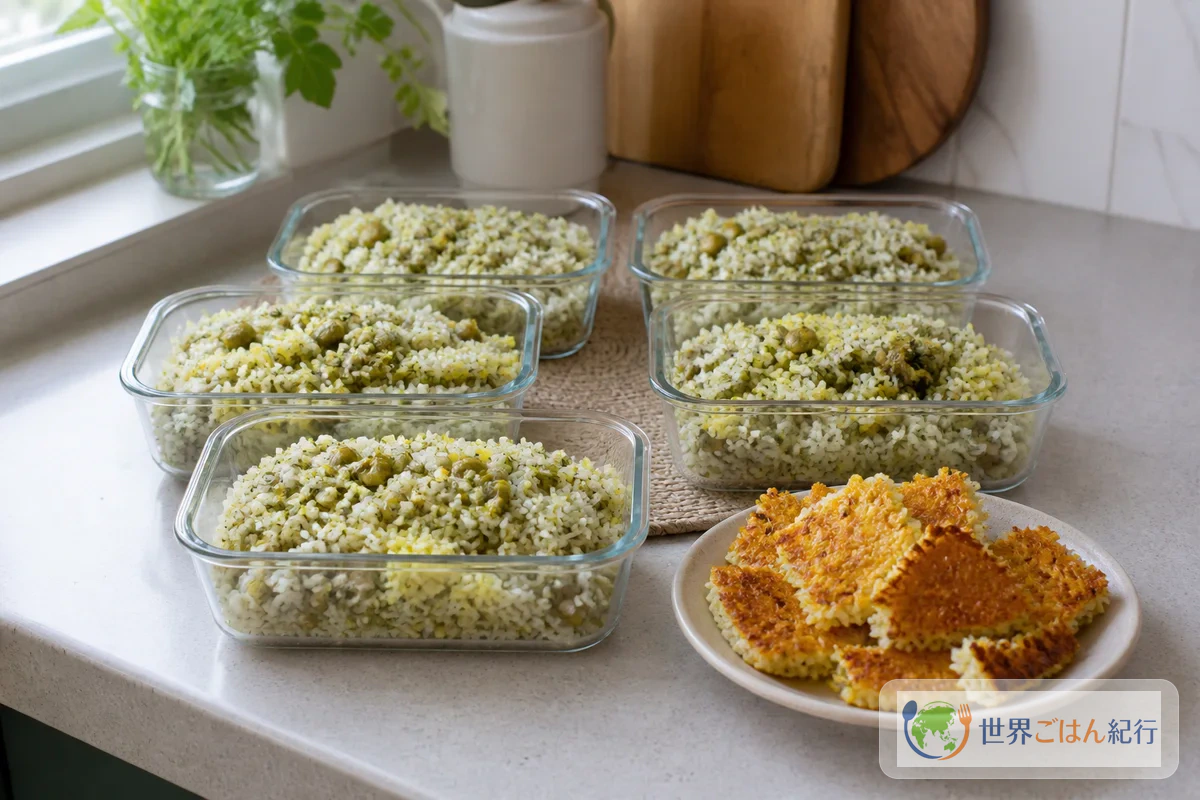
Do not keep cooling cooked rice in the pot. After eating, spread it in shallow containers one serving at a time and refrigerate without leaving it at room temperature for more than 2 hours. Eat refrigerated baghali polo within 3–4 days as a guide, and when reheating, warm it until steaming so the center reaches 74°C. Tahdig loses its crispness when refrigerated, so set it aside separately from the rice, and just before eating, put it in a dry skillet over low heat to bring back the surface. It can also be frozen, but the crisp texture of the tahdig does not come back easily, so if freezing, seal only the rice in single servings and use it soon.
Can I make it with short-grain rice?
You can, but cooking it with the same amount of water will make it sticky. Soak 300 g of washed short-grain rice for only 15 minutes, boil it in boiling salted water for 3–4 minutes, check one grain, and drain when a white core remains in the center. Because it breaks more easily than long-grain, it is safer to place the filling in layers without mixing it, not to turn the pot over, and to serve the top rice and the tahdig on separate plates.
How are fresh and frozen peeled fava beans different?
Fresh fava beans are removed from the pod and then the skin, so you can enjoy the aroma of the prep. Frozen peeled fava beans are easy to measure and can be used after a 1–2 minute blanch, so there are fewer failures the first time. In either case, stop when the center of the bean is a little soft and it holds its shape when pressed with a finger.
What if I don't have fresh dill?
Use 30 g of dried dill as the standard, and begin with 20 g if the product is strongly aromatic. Dried dill holds no moisture, so when layering it into the rice, don't clump it in one place; scatter it evenly through the three layers. Replacing it with parsley alone makes a green aroma, but moves away from the dill direction that makes it baghali polo.
Can I substitute turmeric for saffron?
For color alone you can use about 0.5 g of turmeric. But the dry floral aroma peculiar to saffron and the look of threads bloomed in hot water cannot be reproduced. For an everyday lunch where aroma is not the star you can substitute, and for a festive plate where you want to keep the aroma, buying a small amount of saffron is an easy way to split it.
What if I want to avoid butter or yogurt?
The core of this recipe is rice, fava beans, dill, oil and saffron. The butter can be replaced with 15 ml of vegetable oil, and if you serve yogurt it can be replaced with a soy yogurt or similar after checking the label. For packaged frozen fava beans, saffron and vegetable oil, also check the allergen labeling, including the production line.
I want to check the steps I followed once more
The skeleton of this dish is the order: parboil the rice in salted water, drain it, layer it with the filling, and put a towel-wrapped lid on over low heat. Checking separately the core of the parboiled rice, the firmness of the beans and the color of the bottom crust shows you where to adjust even if you swap ingredients. When pairing with a meat dish, you can also serve a stew such as fesenjan (in Japanese) on a separate plate.
Sources
- Encyclopaedia Iranica, "Berenj (Rice) iii. In Cooking": history of rice in Iran, chelow/polow, parboiling and steaming, tahdig, regional notes on baghali polo. Accessed and checked 27 August 2026. https://www.iranicaonline.org/articles/berenj-rice/berenj-rice-iii-in-cooking/
- Encyclopaedia Iranica, "Cooking": the basics of Persian rice dishes, parboiling long-grain rice in salted water and steaming it with fat after draining. Accessed and checked 27 August 2026. https://www.iranicaonline.org/articles/cooking/
- Encyclopaedia Iranica, "Gilan xxi. Cooking": rice eating in Gilan, fava bean dishes, greens, and the northern table using sourness. Accessed and checked 27 August 2026. https://www.iranicaonline.org/articles/gilan-xxi-cooking/
- SBS Food, "Iranian rice with broad beans and dill (Baghali polo)": blanching the fava beans, parboiling the rice, and the steps for layering and steaming. Accessed and checked 27 August 2026. https://www.sbs.com.au/food/recipe/iranian-rice-with-broad-beans-and-dill-baghali-polo/vo66jtrzn
- The Mediterranean Dish, "Baghali Polo": home feasts, saffron, dill, fava beans, tahdig and pairing with lamb shank. Accessed and checked 27 August 2026. https://www.themediterraneandish.com/baghali-polo-persian-dill-rice-with-fava-beans/
- Iran Front Page, "Baghali Polo": handling saffron, potato tahdig, steaming over low heat, and eating with meat or chicken. Accessed and checked 27 August 2026. https://ifpnews.com/baghali-polo/
- FoodSafety.gov, "People at Risk": public guidance on storage and reheating, moving cooked food to shallow containers and cooling it quickly, refrigerating for up to 4 days, and reheating to 74°C. Accessed and checked 27 August 2026. https://www.foodsafety.gov/people-at-risk