The trail on the bottom of the pot decides the fesenjan
Trace the bottom of the pot with a wooden spoon. The trail stays for about a second, and the sauce slowly closes back in. Whether you can wait until that thickness is the first fork in the road that keeps fesenjan from ending as "a pomegranate-flavored chicken stew."

Fesenjan, a Persian dish name also written Fesenjan or Fesenjoon in English, is a khoresh made with pomegranate and walnuts. Khoresh is the family of stews served over rice, and besides chicken it can be made with duck or meatballs. The meat is not the star. The star is a sauce that links the oil and fine grains from the walnuts, the sourness of pomegranate, and white rice in a single bite.
What is interesting is the range of flavor within the same dish name. In the Encyclopaedia Iranica's explanation of Gilan cooking, Gilan-style fesenjan is presented as using pomegranate, walnuts, and poultry, richer and more sour, with no sugar added. On the other hand, The Mediterranean Dish's home recipe adds a little sugar to the chicken to make it match rice more easily. This is not a story of the sour one being right and the sweet one wrong. It is a dish that you do not decide on as sweet from the start; after stewing, you match it to your own rice and side dishes.
Furthermore, fesenjan was never a single fixed recipe. The Encyclopaedia Iranica entry explains that a cookbook of 1881 records ten kinds, using walnuts, almonds, eggplant, beans, fruit, fish, and more by turns. That a traditional duck version and a home chicken version sit side by side is also the result of the dish changing within daily life.
What to decide first is whether to buy pomegranate molasses or substitute juice. How finely you can make the walnuts also affects the flavor. Once that is settled, even if you use chicken thighs instead of duck, the axis of the flavor does not collapse. Set out white basmati rice, unsweetened yogurt, and small plates of cucumber and tomato, and you have a table that can take the thick sauce.
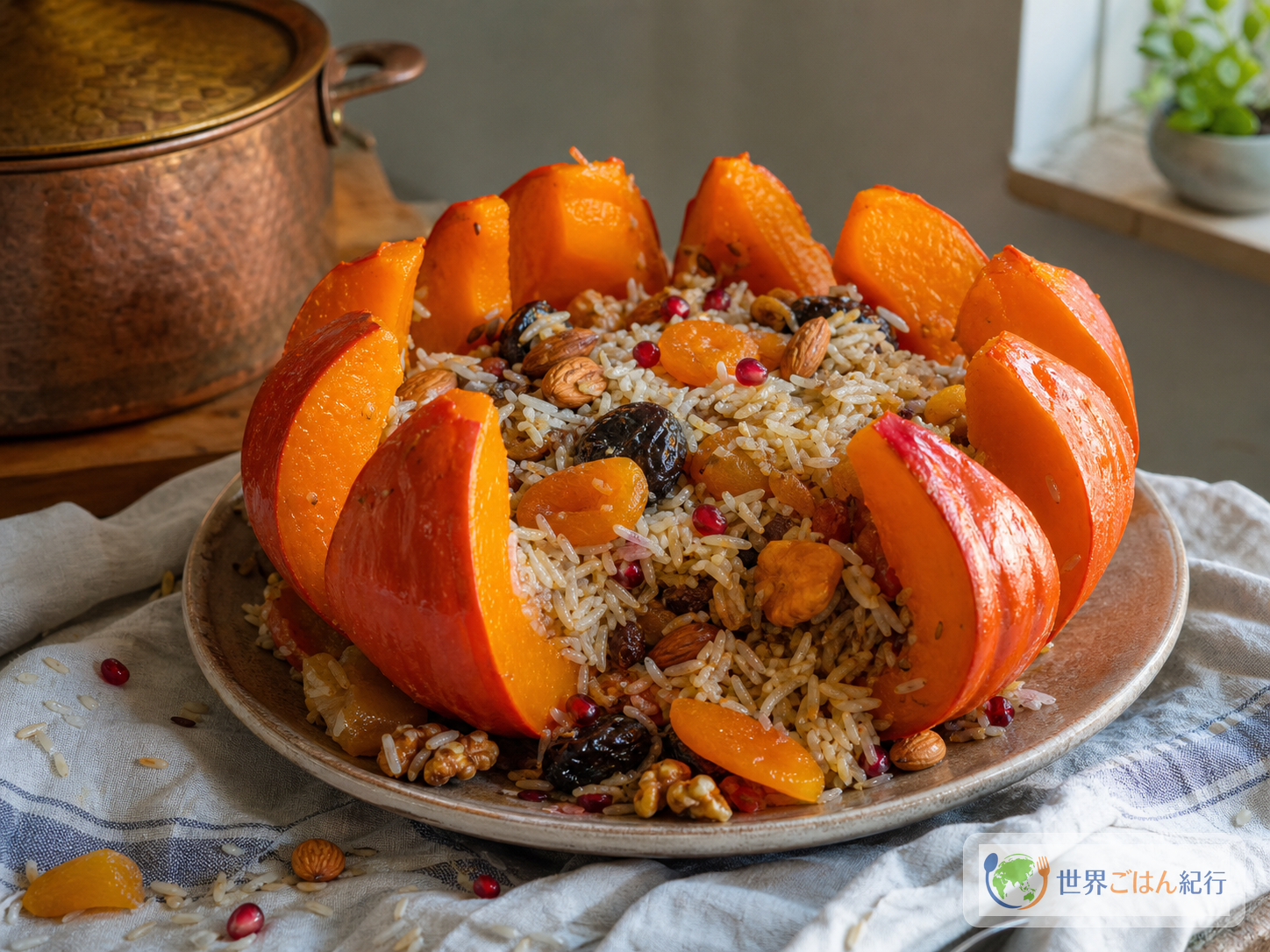
Set beside the golden rice dish tahchin (in Japanese), you can see how, even within Iranian cooking, a plate that makes rice the star differs from one that makes the sauce the star. Adding borani (in Japanese), grilled eggplant with yogurt, is also a pairing that puts coolness after the sourness.
In English there are several spellings, such as Fesenjan, Fesenjoon, and Khoresh Fesenjan. In Japanese we standardize on "fesenjan," but when looking for products or recipes from abroad, "pomegranate walnut stew" is also a search term.
This recipe uses 220 g of walnuts. It is not suitable for people with a nut allergy. If you serve store-bought pomegranate molasses, stock, or yogurt alongside, check each one's ingredient label as well.
Ingredients (serves 4)
There are not many ingredients, but two have roles that are hard to replace. Walnuts give the sauce its oil and body, and pomegranate molasses is the core of the sourness. The chicken, onion, and rice can be put together from ordinary ingredients.

Reduce 300 ml of nearly unsweetened pomegranate juice in a small pot to about 100 ml, then add 2 tsp lemon juice and 1 tsp sugar. It has less astringency than store-bought molasses, but you can match the direction of the sourness. If the drinking juice has a lot of sugar, taste before adding any sugar.
What is worth looking for when shopping
What is worth buying for fesenjan is what is hard to judge by name alone at an ordinary grocery store. Pomegranate molasses decides the axis of the sourness and walnuts decide the body of the sauce. Neither needs to be an expensive one chosen without question. Look at the ingredients, the size, and the shipping, and decide whether it is worth it for this one pot.
If you buy pomegranate molasses first, check whether a 14-ounce size is one bottle or a two-bottle set, the ingredients and price, and the stock and shipping cost, including international shipping. Brand sites may offer different sizes, so do not treat a product as identical to another just because the label size is the same.
Walnuts need not be imported. The conditions for buying are that they be unsalted, have no stale-oil smell when the bag is opened, and that you can get 220 g at once. If only roasted ones are available, shorten the dry-toasting to about 1 minute. For someone who will also use a small amount in baking and salads, a 200 g package labeled as raw walnuts is a choice.
The recipe works without buying a special rice. The conditions for choosing basmati are that you want to catch the thick sauce lightly and can use 1 kg for things beyond fesenjan. For just one pot, cooking ordinary rice with a little less water is the more reasonable purchase. If you buy it, check the country of origin, the size, whether there is any certification, and the current price.
Method
Fesenjan is not a dish made by driving off moisture over high heat. You draw out the walnuts' oil, simmer the pomegranate sourness until it rounds, and finally bring it to a thickness that clings to rice. The peaks of the work are making the walnuts fine and not scorching the bottom of the pot.
Step 1: Grind the walnuts fine and dry-toast them (10 minutes)

Grind 220 g walnuts finely in a food processor. The target is slightly finer than breadcrumbs, grains that hold together moistly when pinched. Turning them to a paste tends to make the sauce heavy, so pulse a few seconds at a time and check.
For a single pot, you can also put them in a heavy bag and crush them with a rolling pin or chop them with a knife. Even if some grains remain, the dish works if simmered over low heat.
Put a skillet over medium-low heat and dry-toast the walnuts for 3–4 minutes. They do not need to darken. Turn off the heat when the aroma rises and the surface has loosened a little. Scorched bitterness does not disappear in the stew, so watch the aroma rather than the color.
Step 2: Sear the chicken (8 minutes)

Season 700 g chicken with 1/2 tsp salt, a little black pepper, and 1/2 tsp turmeric. Put 1 tbsp neutral oil in a heavy pot and warm over medium heat. Add the chicken skin side down or surface first and sear 3 minutes per side.
It does not need to cook through to the center. Take it out when the surface has a light browning. The browning on the bottom of the pot becomes the base of the sauce, but black scorching turns to bitterness, so remove it here if you find any.
Step 3: Combine the onion and walnuts (12 minutes)

In the same pot, put 1 finely chopped onion and cook over medium-low heat for 7–8 minutes. When it turns translucent and gives off a sweet aroma, add the dry-toasted walnuts and 1/4 tsp cinnamon.
Add 100 ml water and mix, tracing the bottom of the pot with a wooden spoon. Walnuts suddenly get heavy once they absorb water, so lower the heat if the bottom looks about to dry out. Move on when the onion and walnuts move like damp sand rather than one thick paste.
Step 4: Add the pomegranate molasses and water (5 minutes)

Add 5 tbsp pomegranate molasses and 500 ml water or chicken stock. Mix from the bottom, breaking up the lumps of walnut. It is fine when the sauce is an even pale brown, flows smoothly off the spoon, and no large lumps remain.
When it boils, lower to low heat so that only the edge of the pot trembles slightly. The sourness may be strong at this point. If you increase the sugar first, it becomes hard to judge the thickness after stewing.
Step 5: Return the chicken and simmer (60–75 minutes)

Return the seared chicken to the pot. With the lid slightly ajar, simmer 60–75 minutes over low heat. Every 10–15 minutes, stir gently from the bottom. When turning the chicken too, do not break the meat; just guide the wooden spoon along the bottom.
If the liquid reduces so far that you can see the bottom, add water 2–3 tbsp at a time. The finish is not a soup but a sauce that slowly clings to rice. Move on to the final adjustments when the thick parts of the chicken are cooked through and a little walnut oil floats on the surface.
Step 6: Adjust sweetness, sourness, and salt (10 minutes)

Add 2 tsp sugar and taste. Only if the edge of the sourness remains, increase by 1 tsp at a time, with 1 tbsp as the upper guide. Do not add the remaining 1 tsp salt at once; add it a pinch at a time.
Trace the bottom of the pot with the wooden spoon: if the trail stays about a second, it is done. If too thick, add water 1 tbsp at a time; if thin, remove the lid and reduce a few minutes at a time. Scatter with pomegranate seeds and spoon over saffron rice or white basmati.
The grains of walnut sink to the bottom of the pot easily and scorch first over high heat. If a burnt smell appears, do not scrape the bottom; move only the sauce and chicken above into another pot. Stir the blackened part back in and the bitterness will beat the sourness.
Buying ingredients and substitutes
What is easy to replace in a home kitchen is changing duck to chicken and using your usual rice. What is hard to replace is the sourness of pomegranate and the step of moving walnut oil into the sauce. When shopping, look at these two roles rather than rarity.

For pomegranate molasses, look at the ingredients and size
"Pomegranate molasses," "pomegranate syrup," and "pomegranate molasses" may look the same but differ in sweetness and thickness. For fesenjan, choose one with pomegranate juice or pomegranate concentrate at the top of the ingredients, one that falls slowly off a spoon and is not a runny drink. If only a sweet syrup is available, omit the sugar in the recipe and adjust at the end.
Al Wadi's official all-natural product page describes a 350 g product made of 100% pomegranate juice. But sizes can differ between a brand's official page and what is sold elsewhere, so check each time the product name, size, ingredients, price, stock, and shipping at the link where you buy.
If you substitute juice, choose one that is nearly unsweetened rather than a sweetened drink, and reduce to about 100 ml. Add lemon juice 1 tsp at a time at the end. Reduce it too far and it scorches easily in the pot, so let the substitute liquid cool before measuring it.
For walnuts, prioritize freshness and grain size
If, the moment you open the bag, there is a smell like stale frying oil, do not use them. 220 g looks like a lot, but this is a dish whose thickness comes from the walnuts alone, so if you reduce too much, adding liquid will not bring it back. Unsalted raw walnuts are the standard.
If you use roasted ones, shorten the dry-toasting in Step 1. Salted ones make the final salt hard to read and the saltiness is unevenly distributed when finely crushed, so it is easier to judge if you avoid them the first time.
Whether to buy something to grind walnuts
Buy a food processor only if you regularly chop walnuts or aromatic vegetables in quantity. A large, commercial-leaning model takes storage space, so consider your storage and other uses first. For one pot, a bag and rolling pin or a knife lets you skip it.
Chicken or duck
In Gilan's food culture, combinations of duck and other poultry with pomegranate and walnuts are described. Duck skin renders fat, giving the sauce more body than the chicken version, but you have to read the amount of fat and how it cooks. Chicken thighs for four on a weekday, skin-on duck legs for special days: this is a choice that balances ease of buying with the character of the dish.
Choose rice for the lightness it adds
Basmati rice, whose grains stay separate, goes well with a thick sauce. If you would be left with 1 kg for one pot, ordinary rice cooked with a little less water is enough.
If you serve the rice as the star, comparing with a dish that scents it like tahchin (in Japanese) shows why the sauce's sourness comes forward in fesenjan.
Tips and causes of failure
Failure in fesenjan comes less from the direction of the flavor than from rushing the thickness. If thin, rice cannot take the sauce; if reduced too far, the walnuts scorch on the bottom. Before fixing the taste, look at the trail of the wooden spoon and the state of the bottom of the pot.

When it is too sour
First simmer 10 minutes over low heat. The sourness of pomegranate changes in impression once the walnut oil and liquid blend in. If it is still sharp, add sugar 1 tsp at a time. Stop at an amount that rounds the edge of the sourness, not one that turns it into a sweet dish.
When it is too sweet
Add lemon juice or pomegranate molasses 1 tsp at a time, add a pinch of salt, and then judge. Increasing only the sourness can make the flavor thin, so check at the same time whether it lacks salt.
When graininess remains
The walnut grains may have been too coarse. Stirring the whole pot hard would break up the chicken, so take out just one ladleful of the sauce, make it smooth with an immersion blender, and return it. Next time, grind a little finer, within the range of not making a paste.
When oil doesn't float
If the surface oil is simply low, it is not a failure. How much comes out changes with the type, roasting, and grain size of the walnuts. If the sauce clings slowly to rice and the sourness and salt are balanced, it is done. Before adding oil, remove the lid and simmer just 10 minutes over low heat.
As fesenjan cools, the sourness and walnut oil blend. If making it the day before, cool slightly and refrigerate, then the next day add 2–4 tbsp water and warm over low heat. After warming, recheck the sugar and salt.
Variations and regional differences
Fesenjan changes its expression not only in whether it is sweet or sour but in what the sauce holds. Whether you take the sour Gilan style as the standard or move toward a weeknight meal with chicken and a little sugar: decide this first and a variation is not merely a swap of ingredients.

A rich, northern-leaning version with duck
With duck legs, the oil of the walnuts and the fat of the duck combine. Sear the skin side first, and if a lot of fat comes out, leave about 1 tbsp and discard the rest before simmering. Since this is a dish that enjoys the flavor of waterfowl, it comes together better if you do not hide the pomegranate's sourness too much with sugar.
A shareable form with meatballs
Mix onion, salt, and pepper into ground beef or a beef-and-pork mix, make small meatballs, and put them in the sauce. The doneness is easier to see than with chicken, and it is easy to portion. But so the meatballs do not fall apart, do not drop them vigorously into a boiling pot; lower the heat first and then arrange them.
A walnut and fruit stew with eggplant
There is also a form without chicken, in which thickly cut eggplant is grilled and added. Grilling the eggplant first keeps it from turning watery and lets it absorb the sauce. Without the savor of meat, the onion has to be cooked to a golden brown.
The sweet and sour branch
This amount leans toward a middle point that is easy to match to rice and unsweetened yogurt. To go sour, hold the sugar to 1 tsp and add 2 tsp more molasses. Even for sweeter, keep sugar to 1 tbsp and taste at the end before stopping. Make it sweet first and you misread the flavor after the walnut oil comes out.
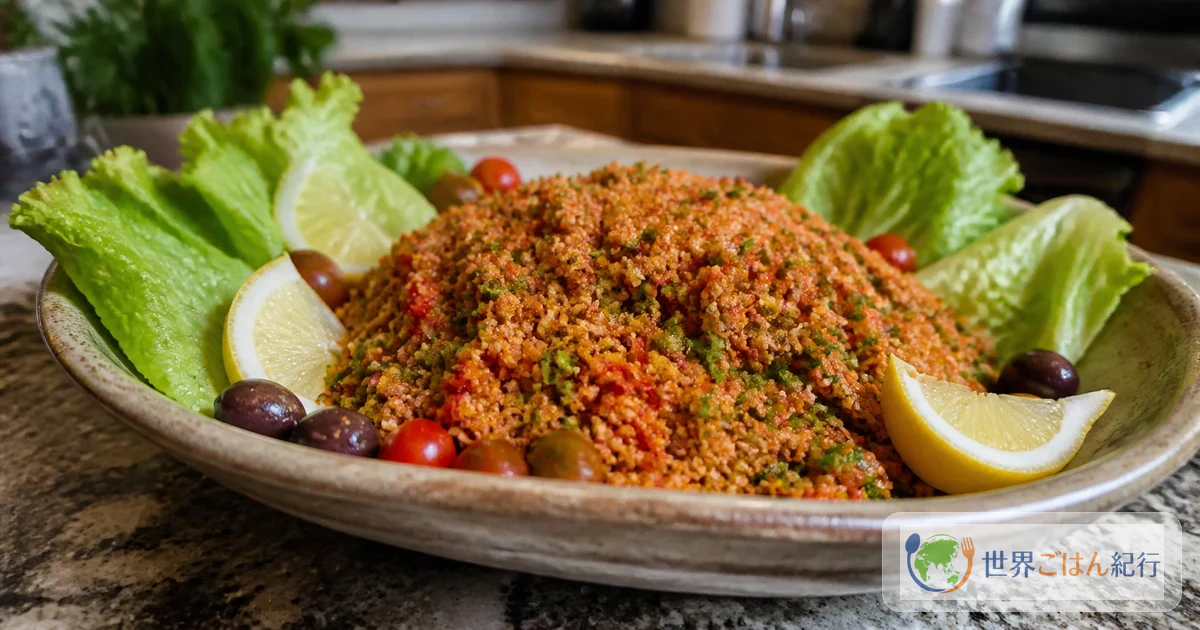
Beside a thick stew, set a salad of cucumber, tomato, and onion tossed with lemon and salt, unsweetened yogurt, and herbs. If you add one more dish to the table, a small sour, herby dish such as tabbouleh catches the heaviness of the sauce.
A northern Iranian table with pomegranate, walnuts, and rice
If you see fesenjan only as "an unusual sweet-and-sour stew," it is hard to see why the sauce is reduced this far. At the Iranian table there is a way of building a meal by serving khoresh alongside rice, and the sauce is less something that wraps the meat than a layer of flavor passed to the rice. The oil of walnuts, the sourness of pomegranate, and the aroma of rice link in a single plate.

The Encyclopaedia Iranica's explanation of Gilan cooking describes the tendency of Gilan cooking to favor sourness and the form of a table where khoresh accompanies rice. The Gilan style of fesenjan uses pomegranate paste, walnuts, and poultry, rich and sour and traditionally without sugar. That is why, when you spoon a sugar-light pot in small amounts over basmati, the sourness comes up before the chicken.
On the other hand, this version with chicken thighs is adapted for home cooks who cannot always have duck. That does not mean the traditional form cannot be reproduced. There is a range in the dish that can extend to chicken, meatballs, and eggplant, and the landing point of the flavor can be changed to suit the household's ingredients. Reading regional differences as options of sourness and ingredients rather than a search for the right answer makes them more usable in the kitchen.
Pomegranate also appears on the table of Yalda, which falls on the winter solstice in Iran. UNESCO's explanation of Yaldā and Chella describes the custom of family gathering at an elder's home around red fruits such as pomegranate and watermelon, nuts, and dried fruit. There is no need to decide that fesenjan is a dish only for Yalda. But this is the reason the combination of pomegranate and walnuts is easy to imagine as a dish for a festive table or a long night.
| Axis of eating | What happens in the pot | Judgment at home |
|---|---|---|
| Gilan-leaning | Stronger sourness, less sugar | A day you can get duck or poultry; cook the rice lightly |
| Home chicken version | Chicken thighs and a little sugar for roundness | Weeknight for four, with yogurt alongside |
| Eggplant form | No meat; grilled eggplant absorbs the sauce | A day you don't buy meat; cook the onion longer |
Set beside the golden color of tahchin (in Japanese) and the green of ghormeh sabzi (in Japanese), which uses dried lime, the differences in color and sourness in Iranian cooking come into view. The brown of fesenjan may look plain, but it is the color that becomes the center of the table when spooned over white rice.
Storage and reheating
As fesenjan cools, the walnut oil and the pomegranate sourness blend. If making it ahead, keep just two things: keep the sauce and rice apart, and do not suddenly put it over high heat.

Once cooled slightly, move it to a shallow storage container and finish it within 2–3 days in the refrigerator as a guide. Put the rice in a separate container. Together with the sauce, the rice absorbs moisture and keeps a heavy texture even after reheating.
To freeze, portion by serving and take 2–3 weeks as a guide. Thaw in the refrigerator, move to a small pot, and add 2–4 tbsp water or chicken stock. When using a microwave, too, stir once partway and check that heat has returned to the center.
Cold sauce looks stiff but loosens when warmed. Don't add a lot of water from the start; add 1 tbsp at a time while warming over low heat. At the end taste for sourness, salt, and thickness, and if needed add a pinch of sugar.
Leftover sauce can also be used on grilled eggplant, steamed pumpkin, and roasted chicken. Extending it into other dishes also eases the worry of whether you can use up the pomegranate molasses after buying it.
Frequently asked questions
Fesenjan allows ingredient swaps, but the results of swapping show easily in the flavor. Here are the points that need a decision the first time.

Q1. Can I make it without pomegranate molasses?
Yes. Reducing nearly unsweetened pomegranate juice to about 100 ml and adding a little lemon juice and sugar is the closest way. Balsamic vinegar alone or blueberry jam alone changes the axis of the sourness and aroma, so if you substitute, keep pomegranate juice.
Q2. Can I reduce the walnuts?
You can adjust down to about 180 g, but the sauce loses some body. Halved, the thickness is hard to get even if you cut the liquid, and the oil layer characteristic of fesenjan is also harder to see. Keeping the amount of walnuts is more natural for the flavor than making up the thickness with flour.
Q3. Can I make it with chicken breast?
Yes. After searing, take it out, simmer only the sauce for about 45 minutes, then return the chicken breast for the last 20 minutes. It cooks more easily than thigh, so stop when it is cooked through to the center. The first time, thigh stands up better to the thick sauce.
Q4. What do I do when eating with children?
The recipe uses no chili, but the sourness of pomegranate and the richness of walnuts leave an impression. Increasing the sugar slightly and serving more rice and unsweetened yogurt makes it easier to adjust. It contains walnuts, so do not serve it to anyone with a nut allergy.
Q5. What should I serve with it?
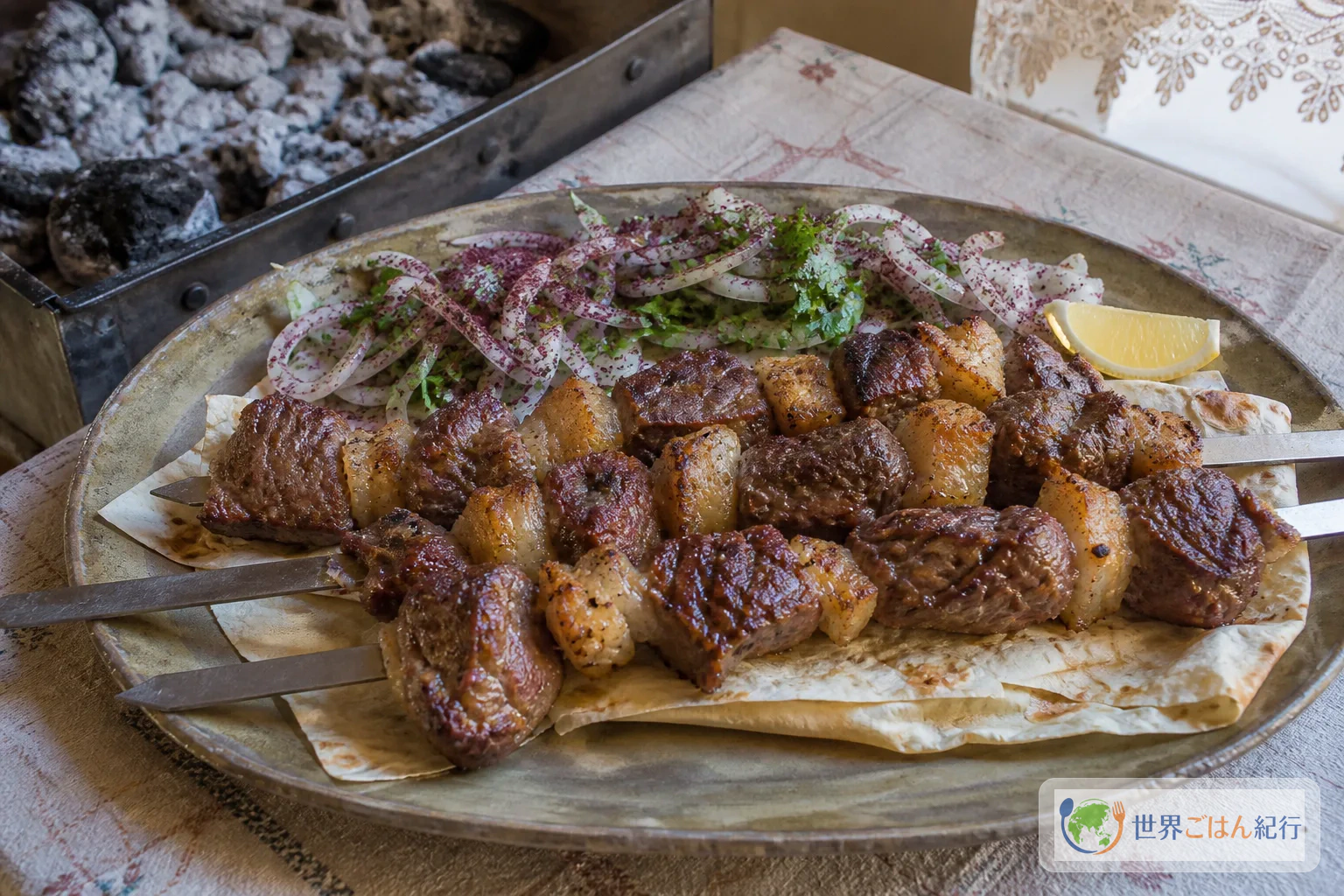
White long-grain rice, unsweetened yogurt, and a cucumber and tomato salad are the basics. Put hummus (in Japanese) as an appetizer, kebab as a savory meat dish, and machboos for comparing rice dishes, and you also see the regional differences in rice and stews.
Summary

Fesenjan is an Iranian stew that passes the oil of walnuts and the sourness of pomegranate to rice. To lean toward the sour Gilan style, hold back the sugar; for a weeknight chicken version, add sweetness 1 tsp at a time at the end. Regional differences are not a matter of right and wrong in taste but clues to choose where your pot lands.
If you are unsure whether to buy, check the ingredients and size for pomegranate molasses, freshness for walnuts, and an amount you can use up for rice. A food processor is for people who regularly chop walnuts or aromatic vegetables in quantity. For one pot, a bag and rolling pin or a knife lets you skip it and the dish still works.
At the end, look at the trail of the wooden spoon and confirm a thickness that slowly clings to rice. If you can wait that long, the red of pomegranate, the aroma of walnuts, and the white rice settle together on one plate. Set beside tahchin (in Japanese) or ghormeh sabzi (in Japanese), you can keep enjoying the differences in fruit, rice, and herbs in Iranian cooking.
Sources
- Encyclopaedia Iranica, "FESANJĀN" https://www.iranicaonline.org/articles/fesanjan-/ (accessed July 2026)
- Christian Bromberger, Encyclopaedia Iranica, "GILĀN xxi. Cooking" https://www.iranicaonline.org/articles/gilan-xxi-cooking/ (accessed July 2026)
- The Mediterranean Dish, "Fesenjan (Persian Pomegranate Walnut Stew)" https://www.themediterraneandish.com/fesenjan-persian-pomegranate-walnut-stew/ (accessed July 2026)
- UNESCO, "Yaldā/Chella" https://ich.unesco.org/en/RL/yald-chella-01877?RL=01877 (accessed July 2026)
- Al Wadi Al Akhdar, "Pomegranate Molasses All Natural" https://www.alwadi.com/english/products/-all-natural-pomegranate-molasses (accessed July 2026)