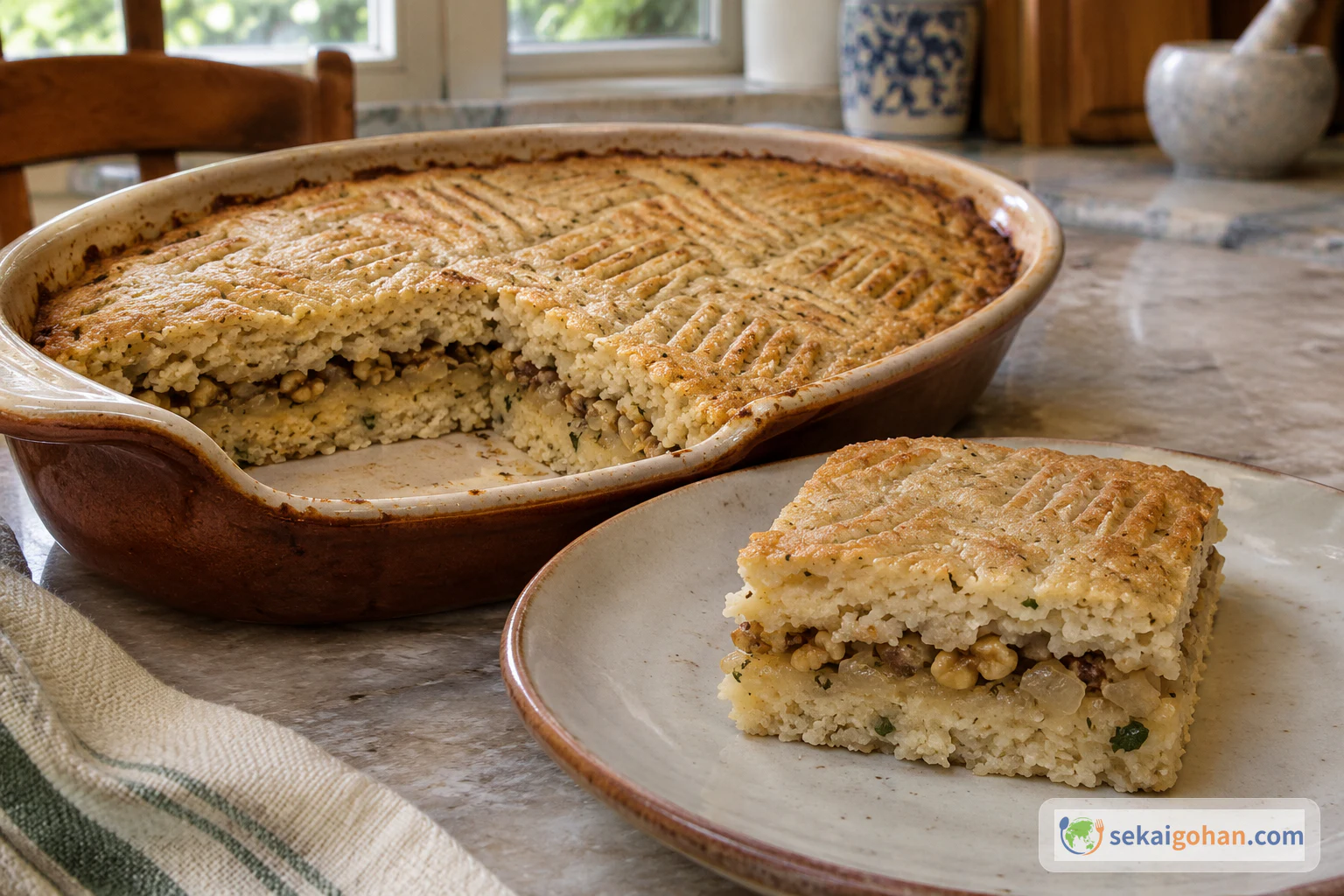
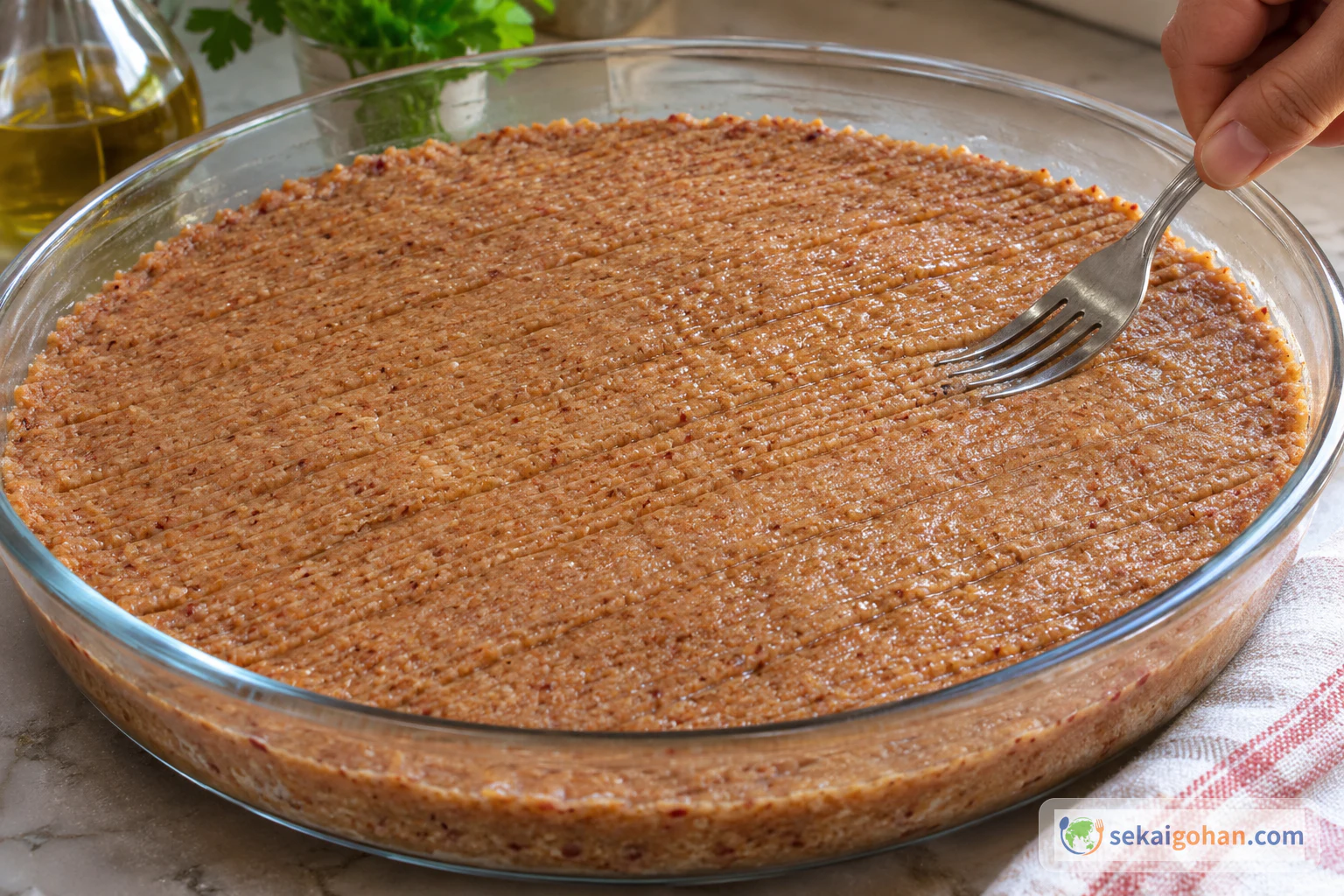
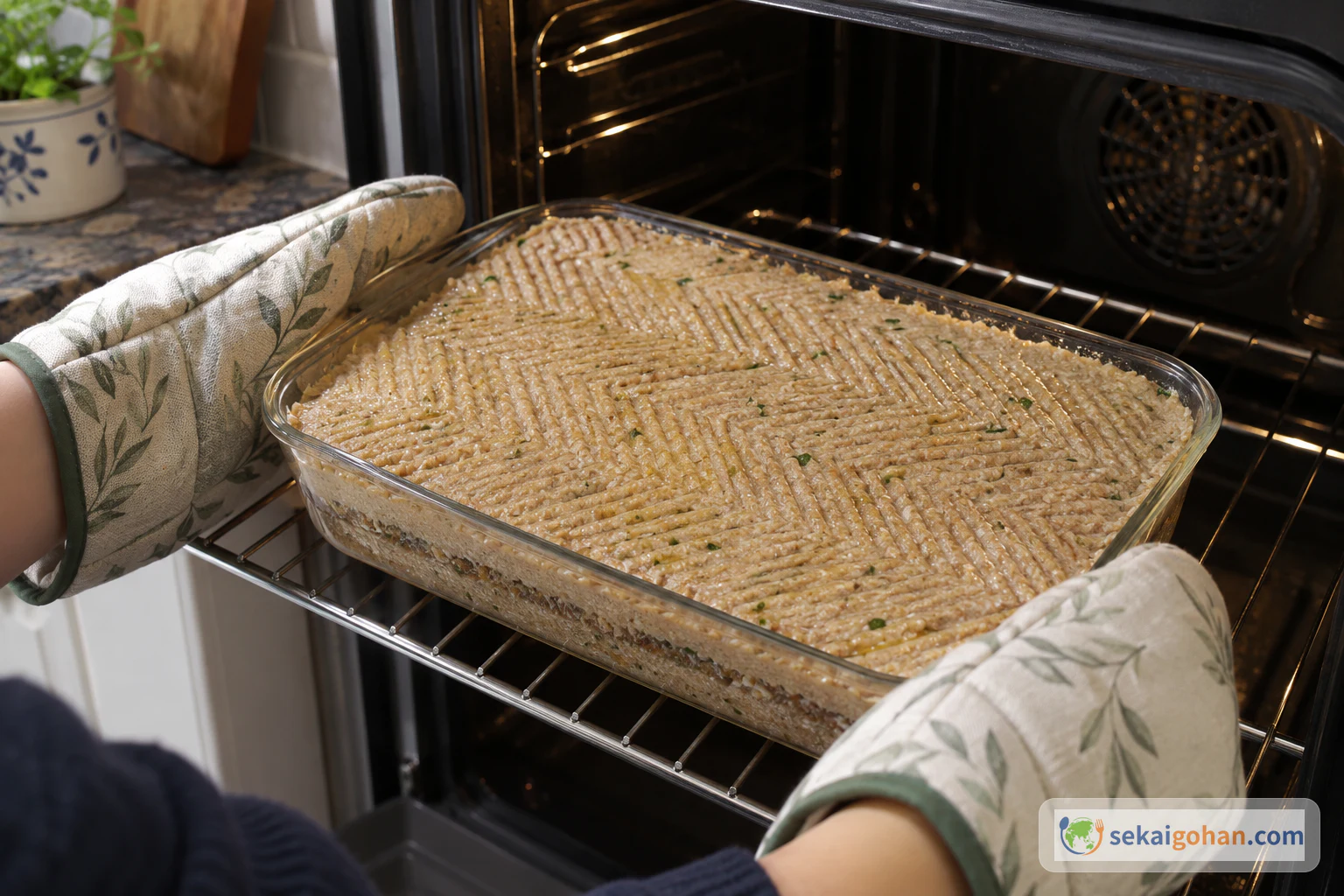
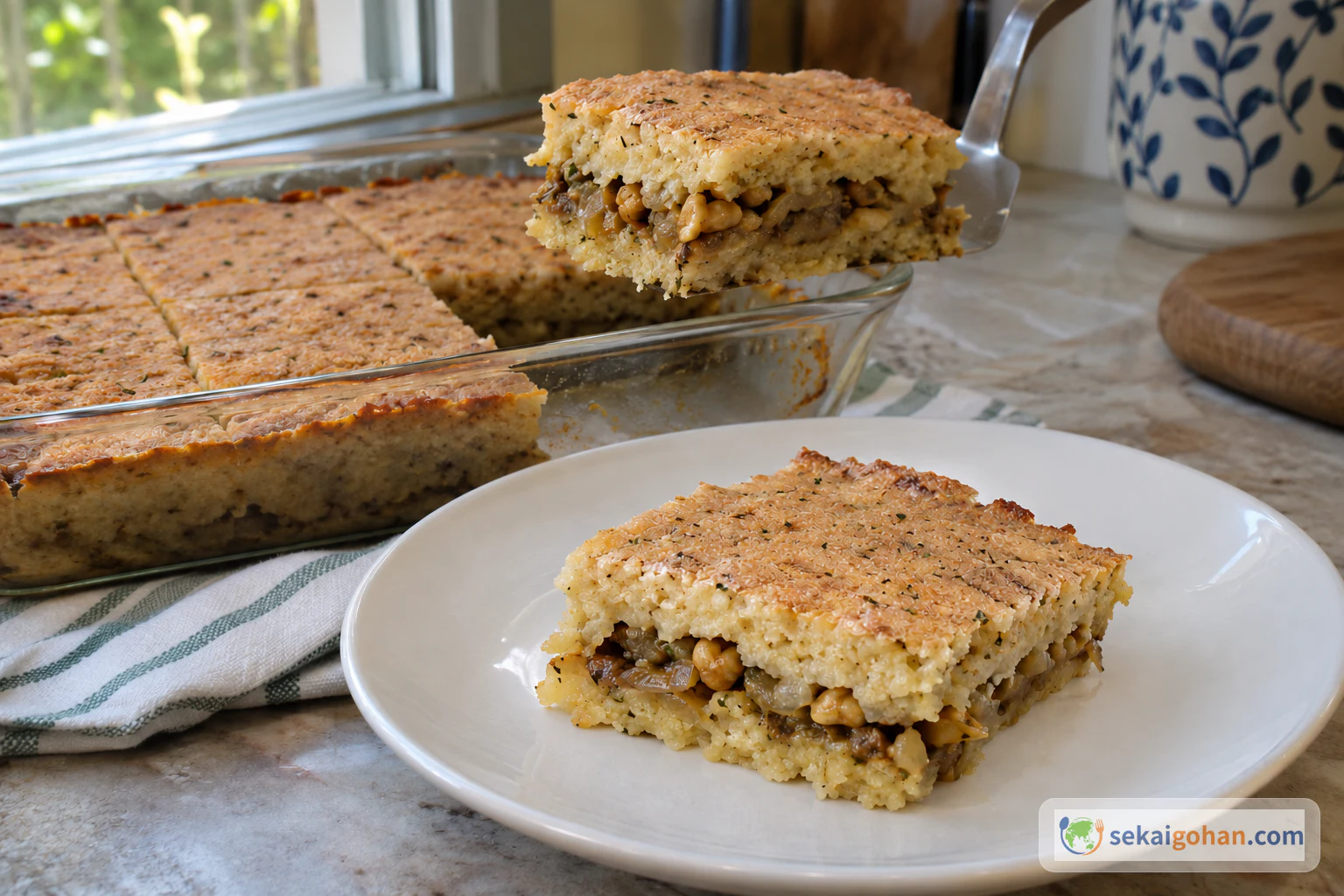
The last move before the oven is the quietest one. A fork draws shallow lines across a pale, lightly oiled top, and underneath it a layer of soft onion and walnuts sits sealed between two sheets of dough. Kibbeh samak is Lebanon's fish kibbeh. In this coastal form the fish goes into the dough itself, kneaded raw with fine bulgur, ground onion, dried mint, cumin, allspice and a breath of cinnamon.
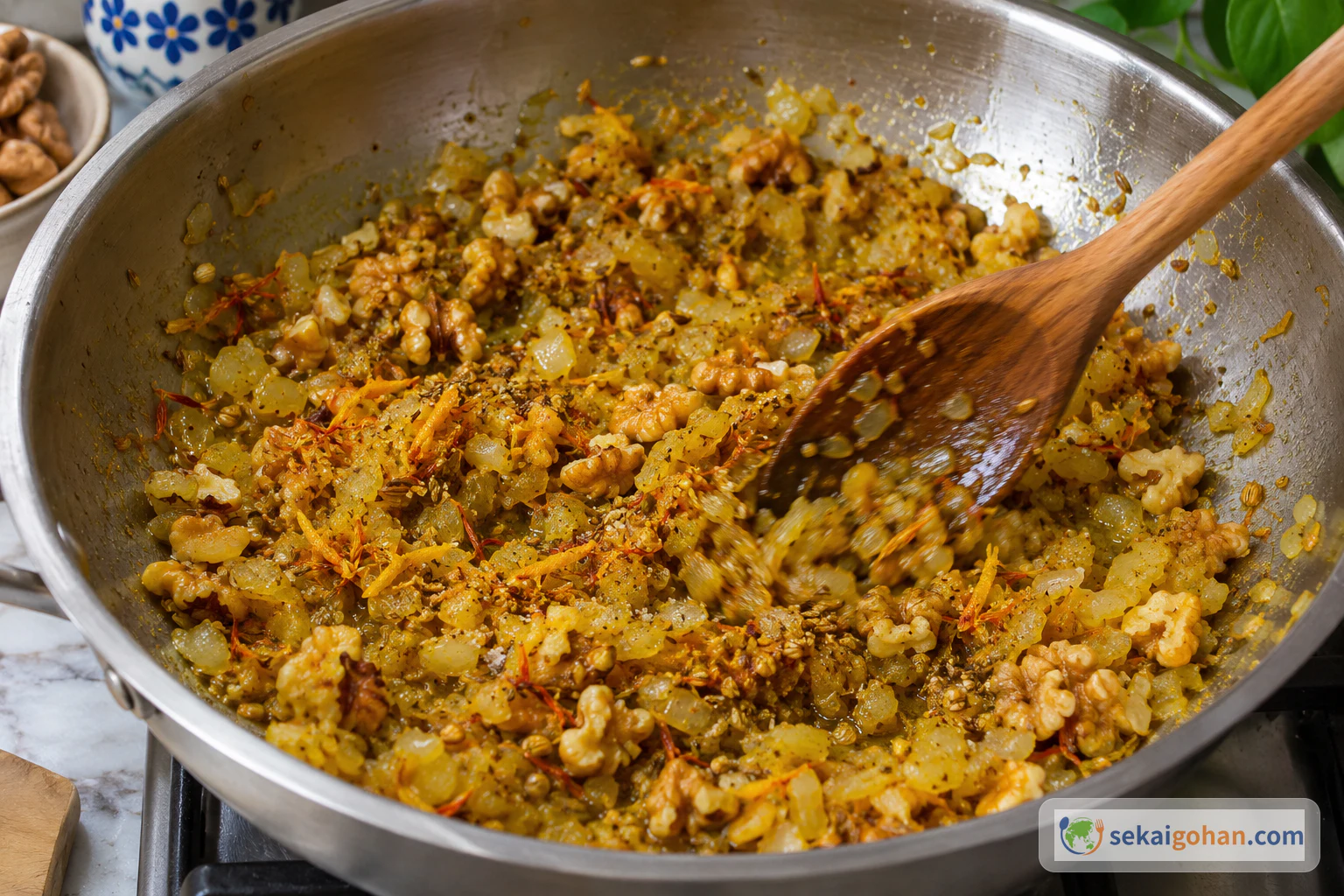
The filling is sweeter and warmer: onions cooked soft in oil with walnuts, turmeric and orange-red safflower. Out of the oven the tray cuts into neat pieces, each with a golden middle line between two pale layers. Two kinds of citrus zest in the dough keep the fish tasting bright.
Fish in the Shell: A Kibbeh From the Coast
Across Lebanon, kibbeh means bulgur worked together with something else. That partner can be meat, fish or vegetables, and the shape changes with the region and the cooking method. Most cooks abroad know the meat versions first. One is the torpedo-shaped shell that is stuffed and deep-fried, and another is the meat tray of kibbeh bil sanieh, pressed into a pan and baked. Kibbeh samak keeps the logic of both and changes the main ingredient. The shell itself is fish.
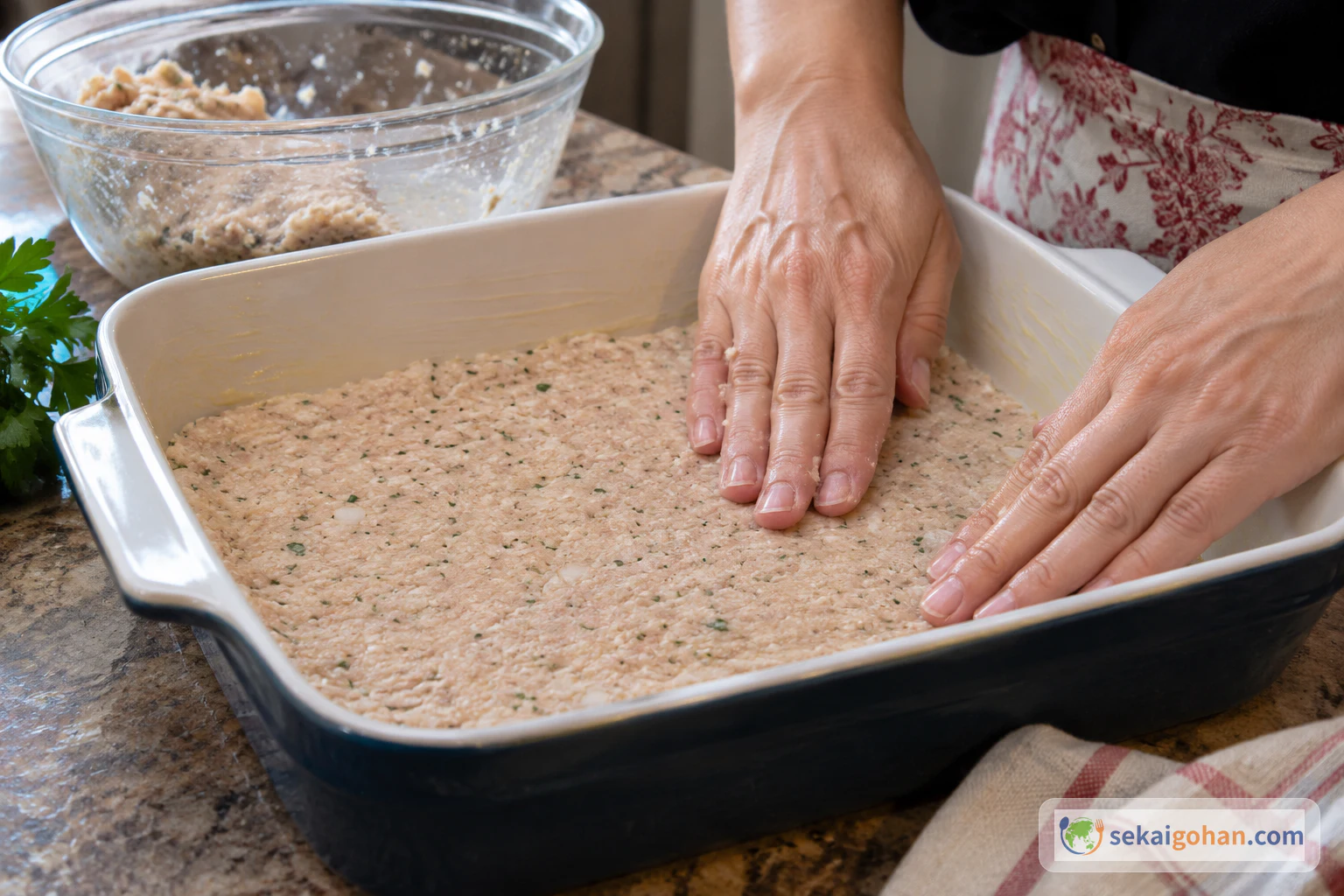
This is a dish of the coast, cooked where fish and citrus are close at hand. The coastal kitchen works well-chilled fish into fine bulgur with coriander, orange rind and spices, and stuffs it with onion and nuts. The stuffed kibbeh is then either shaped into patties and deep-fried or spread in a dish and baked. The tray version here spares you hollowing out shells one by one. Half the dough goes down, the filling goes on top, the rest of the dough closes it in, and the whole thing is cut at the table like a pie.
In Arabic it is كبة السمك, and you will see it written kibbeh samak or kibbet samak. Samak means fish, so the name says plainly what has replaced the meat. Searching for both spellings turns up coastal recipes and ingredients more easily.
What the spices are doing
The two layers are seasoned differently, and that contrast is the point. The dough carries mint, cumin, allspice and cinnamon along with the fish and citrus zest, which gives a cool, fragrant shell. The filling leans on cumin, turmeric, dried coriander and safflower cooked into the onions, which makes it rounder, deeper in color and slightly sweet. Keep the two spice sets apart as you measure. Mixing them flattens the difference you taste in each bite. For more of the country's cooking, browse other dishes from Lebanon.
Ingredients
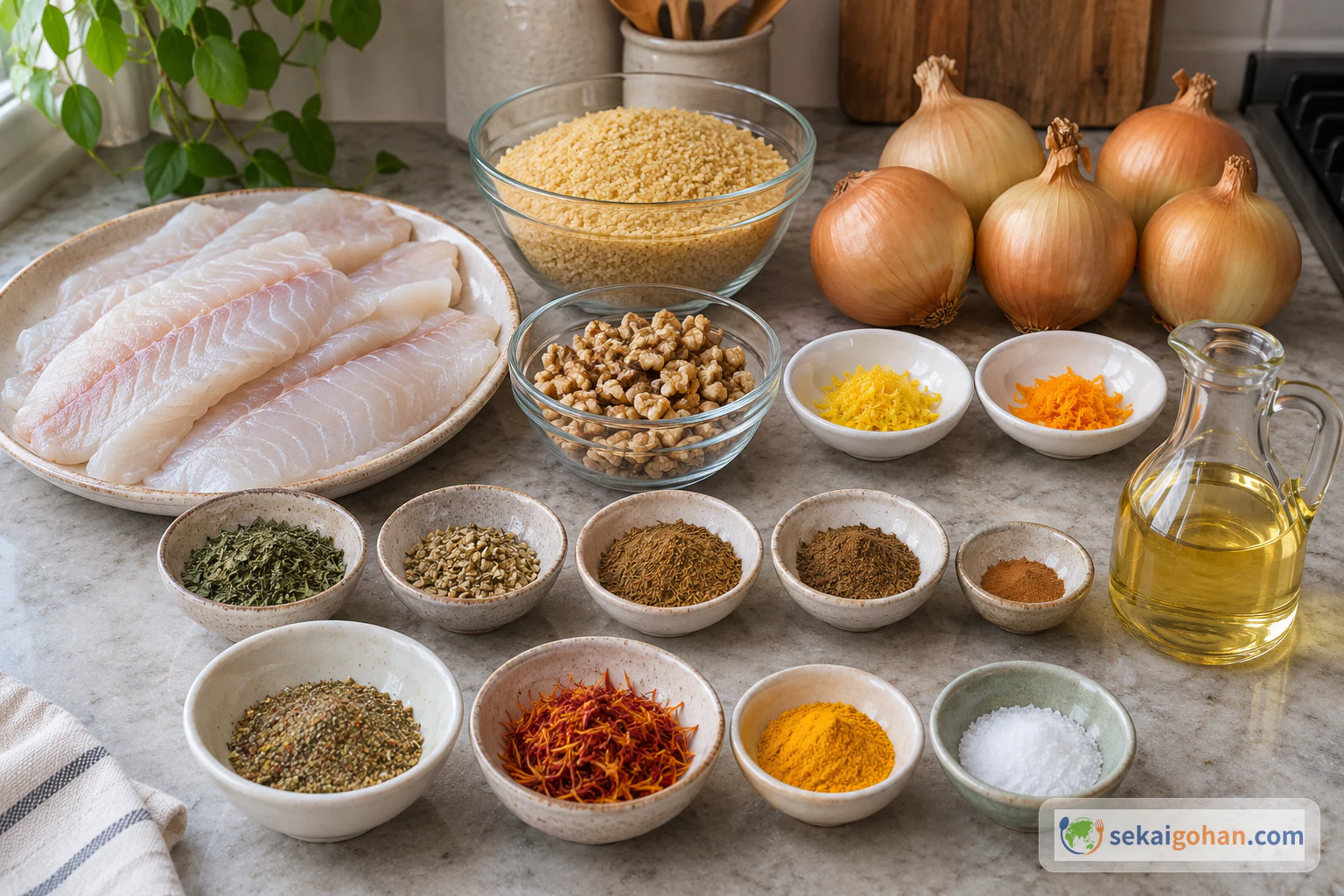
This dish contains fish, wheat (bulgur, which contains gluten) and tree nuts (walnuts). Fish spice blends are sometimes mixed with other ingredients, so read the label for allergens before you buy.
Equipment
- Skillet for the filling
- Fine strainer and a bowl for the bulgur
- Food processor or meat grinder
- Wide mixing bowl
- Cutting board and knife kept only for the raw fish
- Shallow ovenproof baking dish
- Fork
- Food thermometer
- Oven mitts
Shopping and Substitutions
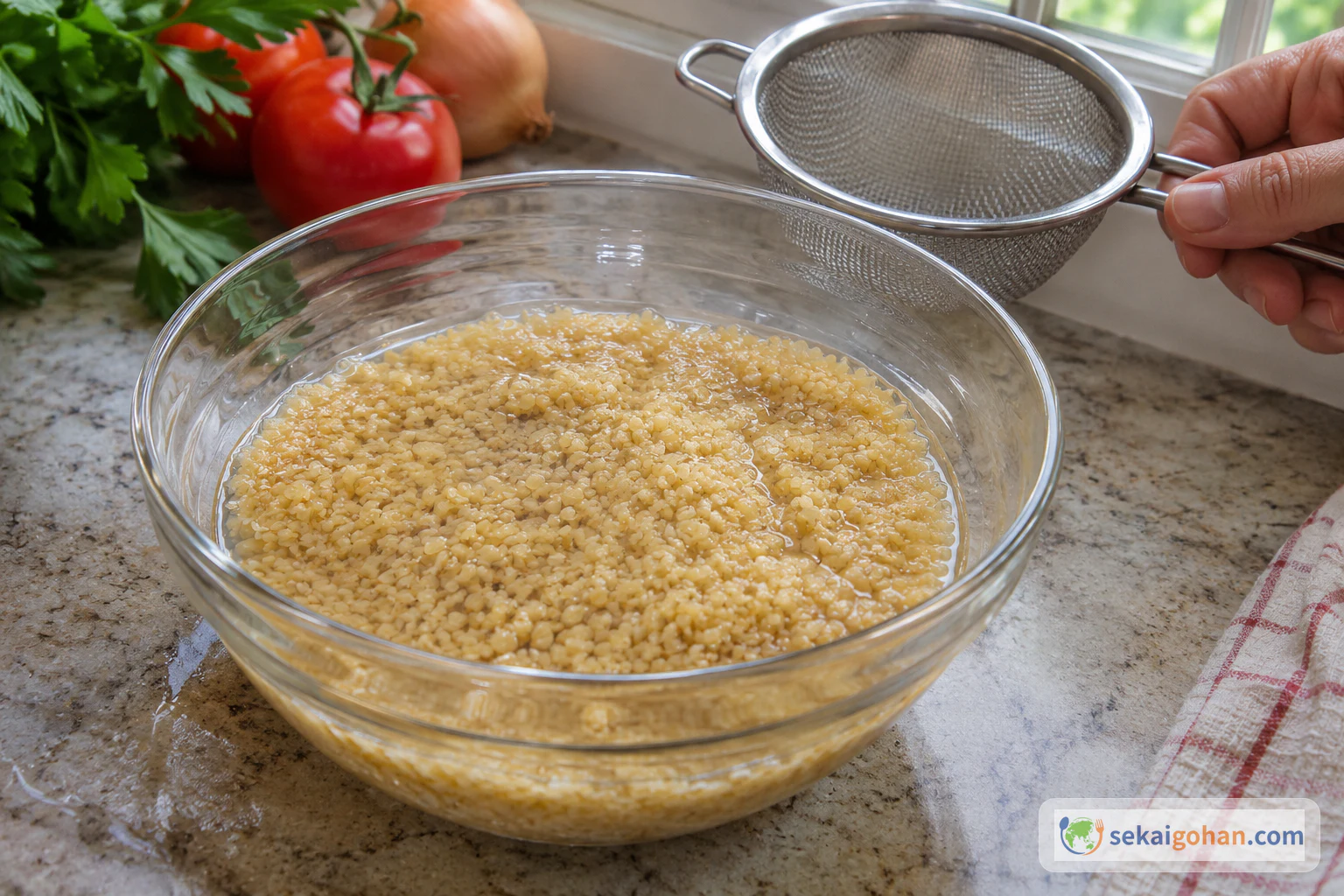
Fine bulgur decides the texture of the shell. Look for cracked wheat labeled "fine" at Middle Eastern grocers or online. The fine grind softens in a short soak and binds with the fish into a smooth dough, which is why the soak here takes only minutes.
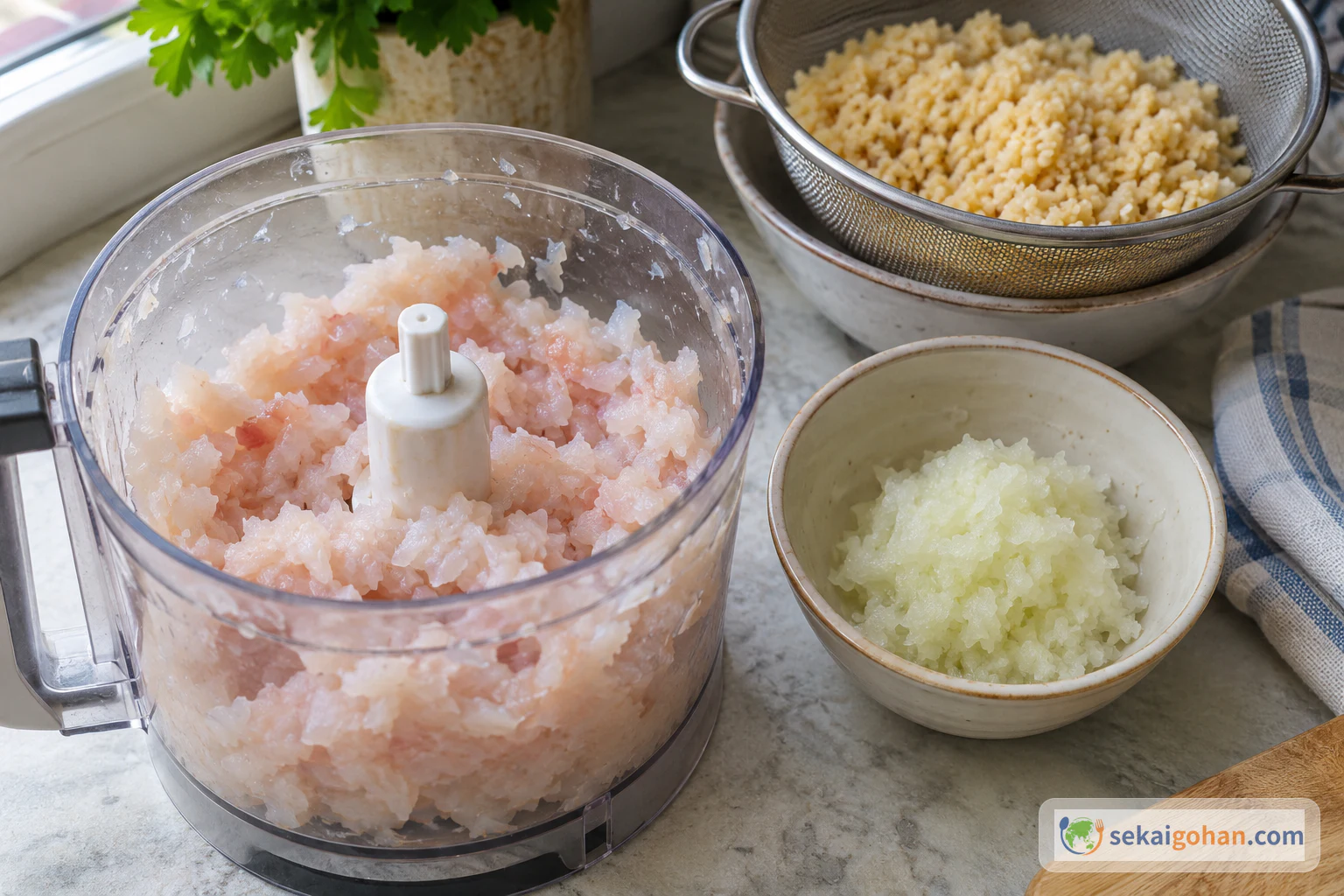
For the fish, buy boneless white fish fillet from a trusted fishmonger or a counter you know turns its stock over quickly. The species is your choice. Keep it in the refrigerator until the moment you grind it, because cold fish grinds cleanly and holds together in the dough.
Safflower, عصفر (usfur) in Arabic, is sold as dried orange-red petals at Middle Eastern grocers and online. It is a different spice from saffron, so use safflower, not saffron, in the 1 teaspoon listed. Buy only petals sold as food. Never use ornamental or wild-picked flowers, safflower oil or animal-feed products.
The dough takes two zests, حامض (hamed) and ليمون (laymoun), in separate amounts. Ask for each by its Arabic name at a Middle Eastern grocer and grate only the colored skin of fruit sold for eating. Keep both zests, in their separate amounts, for the bright citrus note in the shell.
For the fish spice blend, choose any ready-made fish seasoning from a Middle Eastern grocer whose label you like, and use the measured teaspoon. Walnuts are the nut here; use them alone.
Method
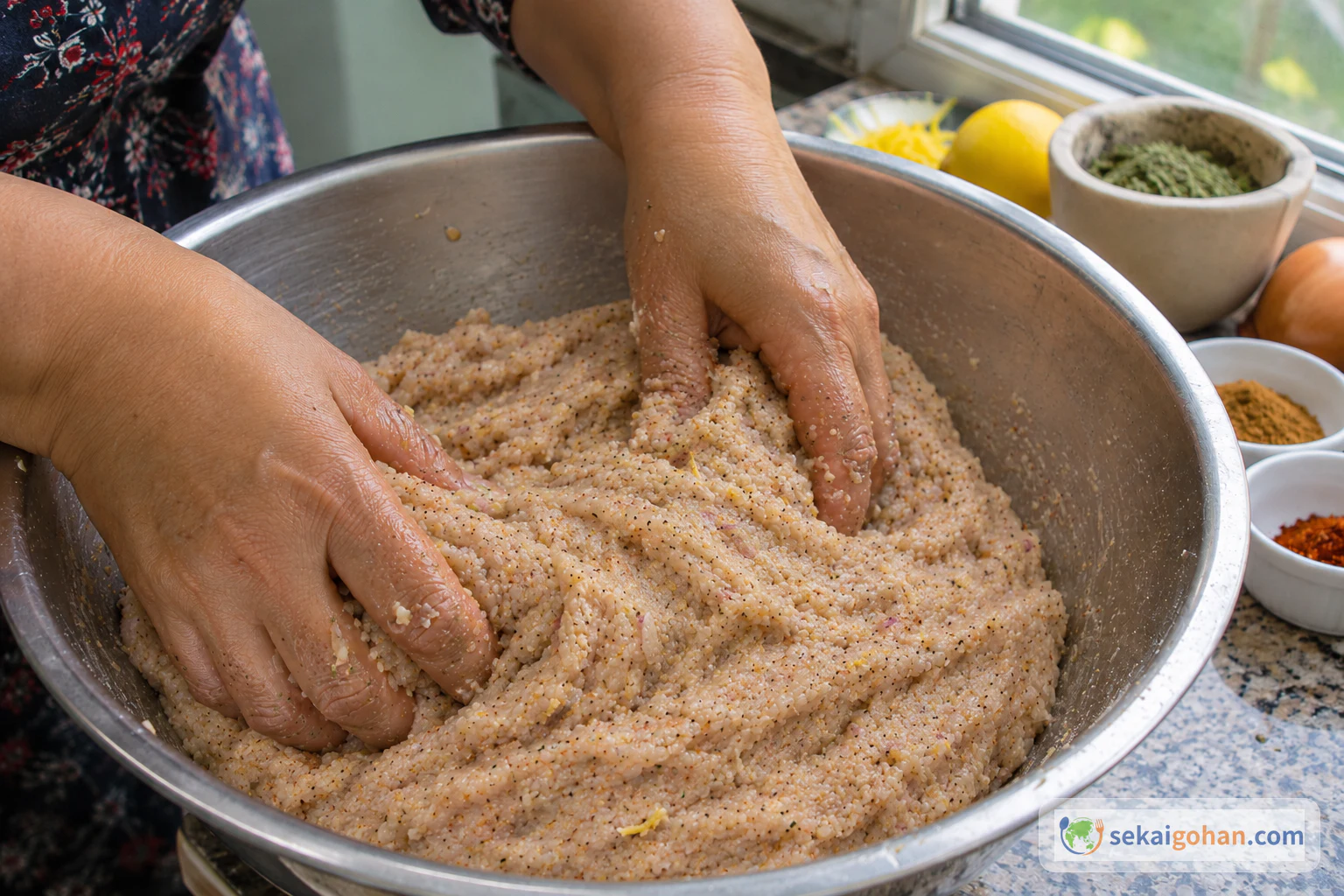
The work runs in three tracks before it comes together. Cook the filling first so it has time to cool completely. While it cools, soak the bulgur and grind the fish, and keep the fish cold right up to the kneading. Assembly is quick, and the oven does the rest. The thermometer decides when the tray is done.
When It Goes Wrong
| What you see | Why | What to do |
|---|---|---|
| The dough crumbles and will not hold together | The fish is coarsely ground, or the dough was mixed too briefly | Grind the fish until it is a fine mince and knead longer until a pressed pinch keeps its shape |
| The dough is wet and slack | The bulgur went in still dripping | Drain the bulgur longer in the strainer and shake it well before it meets the fish |
| The top layer cracks open and filling shows | The patches were pressed too thin, or the seams were left open | Pinch a little spare dough over the gap and smooth it before oiling and scoring |
| The layers slide apart when you cut | The filling was spread unevenly, or the tray was cut straight from the oven | Spread the filling level, and let the tray settle in its dish before cutting |
| The center reads below 165°F (74°C) after 18 minutes | The layer is thick, or the dish holds heat slowly | Return it to the oven and keep baking, checking again until the center reaches 165°F (74°C) |
Serving and Variations
At the table
Kibbeh samak comes to the table in its baking dish and is cut into squares or diamonds there, so everyone sees the layers as the first piece lifts out. It is a full dish in its own right. The fish and bulgur shell is filling, and the onion-walnut layer brings the richness that other dishes would otherwise have to supply.
Variations
- The fried coastal form. Along the coast, the same stuffed dough is also shaped into patties around the onion and nut filling and deep-fried. Frying gives a crisp shell on every piece, while the tray stays soft and sliceable.
- The Bekaa style. Inland in the Bekaa, fish kibbeh is also baked in a pan. That version leans much more heavily on fish and white bulgur than on onion, and it uses fresh green coriander and olive oil with citrus zest. The result is greener and grassier than the dried-spice coastal tray here.
Frequently Asked Questions
Which fish should I buy?
Any boneless white fish fillet works. Choose whatever is freshest at a fishmonger you trust, and make sure the bones and skin have been removed. The spices and citrus carry the flavor, so a firm, mild fish lets them come through.
How do I get the salt right if I can't taste the dough?
Season the dough by measure as you knead, then judge the result after baking. The cooked filling can be tasted and adjusted before it cools, which balances the tray. Note how a finished piece tastes and adjust the dough salt the next time.
Can I use a different-sized dish?
Yes. A deeper dish gives thicker layers, and those take longer to heat through. Bake for 18 minutes, then go by the thermometer and keep baking until the thickest center reaches 165°F (74°C).
Can I replace the bulgur with coarse bulgur, couscous or breadcrumbs?
Keep fine bulgur. The 5-minute soak is for fine bulgur, and coarse bulgur, couscous or breadcrumbs would behave differently, so this dish does not use them. Fine bulgur is easy to order online if local shops do not carry it.