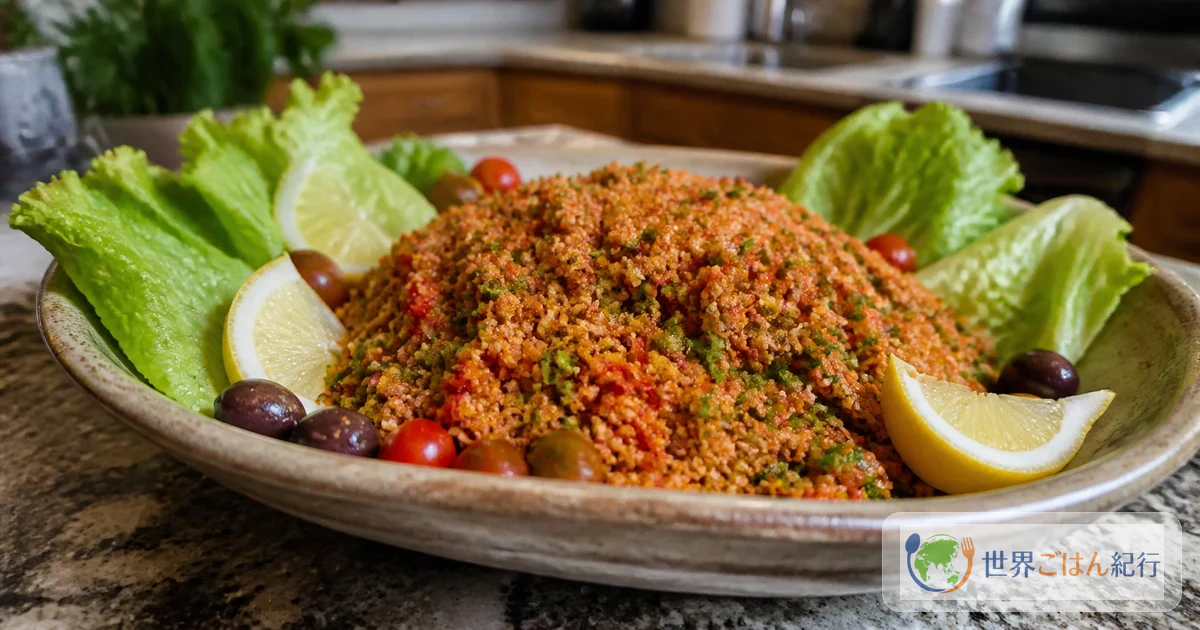
The Story of Kabsa: Rice That Smells Wonderful the Moment You Lift the Lid
There is a dish where, when you open the dinner pot, cardamom and dried lime rise out of the steam. It is not as heavy as curry or as light as pilaf. Long grains of rice are dyed orange, topped with browned chicken. Put a red tomato sauce beside it and the air at the table moves toward the Middle East.
That is kabsa, written كبسة in Arabic, a Saudi Arabian platter of rice. Chicken or lamb is simmered with aromatics, tomato, and spices, and the rice is cooked in that broth. It is a dish you see often at home and at feasts.

When you cook it elsewhere, the hesitation is not the spices but the handling of the rice. Basmati, or is ordinary rice fine? Should the chicken be browned, or just simmered? Is the dried lime called loomi required? Leave these vague and the aroma may be Middle Eastern, but the texture becomes mixed rice.
This article reduces a Saudi home chicken kabsa to steps that are easy to reproduce in a home kitchen. It cooks in one pot while protecting three things: do not crush the grains of rice, move the savory flavor of the chicken into the broth, and keep the sourness of loomi from clouding. Compared with Bahraini machboos and Jordanian mansaf, kabsa is closer to a home-table rice dish. It looks showy, but the work comes down to "simmering" and "cooking." Make it once on a weekend and the uses for long-grain rice multiply.
Kabsa is widely known as a representative rice dish of Saudi Arabia. But in 2023 jareesh was selected as the Saudi national dish and maqshush as the national dessert. This article treats kabsa not as an officially chosen national dish but as a representative platter of rice loved at Saudi homes and feasts.
This recipe uses chicken and almonds (tree nuts). Commercial kabsa spice mixes may be made in a facility that handles wheat, milk, nuts, or sesame, depending on the product. If you have allergies, check the ingredient label.
Ingredients (serves 4): Shopping for Kabsa
The ingredients of kabsa are less special than they look: chicken, onion, tomato, rice, spices. The question is how far to go toward the original. For a first time, it is realistic to search out only basmati rice and loomi, and build the rest from supermarket ingredients.

Main ingredients
Loomi is a dried lime. It gives not only sourness but a slightly smoky bitterness and a dry aroma. Lemon juice can add sourness, but the aroma is a different thing. Because loomi can be reused in kabsa, machboos, and Iranian and Gulf stews, it is worth buying a small bag if you will keep cooking Middle Eastern food.
What is worth looking for when shopping
The finish of kabsa depends on the rice and loomi. You do not have to gather all the spices from the start, but these two bear directly on the dish's outline. Look for basmati rice, dried lime (loomi), and kabsa spice mix, available at Middle Eastern grocery stores and online.
Method: Cook the Rice in the Chicken Broth
Kabsa is not a dish where the rice is cooked separately and topped with ingredients. Because the broth in which the chicken was simmered is absorbed by the rice, the aroma goes into the inside of each grain. The common failures are adding the rice too early and using too much liquid.
Serving Daqoos: Red Sourness That Keeps the Rice Moving
The red sauce beside kabsa is not just heat. Called daqoos (or daqous), this tomato sauce cuts the sweetness and oil of the spiced rice. On a Japanese table it plays the role of pickles beside takikomi gohan.

Daqoos ingredients
| Ingredient | Amount | Substitutes & notes |
|---|---|---|
| Tomatoes | 2 (about 300 g) | 200 g canned diced tomatoes also work |
| Garlic | 1 clove | The raw aroma suits it |
| Green chili | 1/2 | Omit for mild |
| Lemon juice | 1 tbsp | Lime also works |
| Salt | 1/3 tsp | Adjust to taste |
| Ground cumin | A pinch | Do not overdo |
| Cilantro | A small amount | Omit if you do not like it |
The method is easy. Pulse the ingredients lightly in a blender and simmer 3 minutes in a small pot. You can eat it raw, but a little heat softens the edges of the garlic and makes it easier to put on the rice. Too much heat makes the loomi and cardamom of the kabsa disappear, so use less green chili the first time.
Rather than pouring it over the whole plate first, spooning it on a little at a time just before eating works better. Poured directly on the rice, the moisture weighs the grains down as time passes. On days when you serve it on a platter, add a small spoon so each person can add some with each bite.
When adjusting the taste, look at sourness before heat. On days when the tomatoes are sweet, add 1 tsp lemon juice; on days when they are too sour, add only a pinch of salt. Adding sugar easily moves it toward ketchup, so keep sweetness low for a sauce set beside kabsa. Leftover daqoos also suits a plate of shawarma, but used as a palate-refreshing side at the end rather than as a sauce rubbed into the meat, the aroma stays clear.
The aroma of tomato and garlic is the star, so refrigerate it for about 2 days at most. If any remains, put a little beside roast chicken, a fried egg, or hummus to use it up.
Cooking Tips: Branches for Keeping the Rice Light
Success with kabsa is decided by the lightness of the grains. More spices do not make it more authentic. If the rice gets sticky, loomi and cardamom sink. When the rice is light, the savoriness of the chicken and the sourness of the tomato stand out grain by grain.

If making it with Japanese rice, cut the water boldly
You can make it with Japanese rice. But at the same liquid amount it turns sticky. If using 2 cups of Japanese rice, wash it and use it immediately without soaking, and keep the broth between the same level as the rice surface and 5 mm above it. The result is a kabsa-style mixed rice. It is delicious in its own way, but different from the grain definition of the original.
Do not break the loomi too much
Crushing loomi into the pot gives a strong aroma but also strong bitterness. The first time, just poke holes with a skewer. Taste at the end of simmering, and if the sourness is lacking, add 1 tsp lemon juice. Adding sourness at the end is less risky than putting in 2 loomi from the start.
Do not stop at simmering the chicken
Simmered chicken laid on the rice is edible as is. But kabsa is a platter dish where looks matter too. Crisping the skin in a fish grill or toaster oven at the end brings back the roasted aroma. Trying to brown it in the pot with the rice burns the rice easily, so treat them separately.
If using a spice mix
Commercial kabsa spice is convenient. If using it, put in 1 tbsp in place of the cumin, coriander, turmeric, black pepper, and cayenne. But some products contain salt. Keep the first salt to 1 tsp and adjust in the broth before cooking the rice.
If the rice is too soft when cooked, do not stir; remove the lid and heat on low for 2 minutes to drive off moisture. If it is still heavy, spread it on a large platter for 5 minutes. Turning it over repeatedly with a paddle breaks the grains and makes it heavier.
Regional Differences and How It Is Eaten: Kabsa, Machboos, and Mandi
Middle Eastern rice dishes can have similar names but differ in where the weight of the cooking lies. Kabsa is a cook-in rice dish well known in Saudi Arabia and the Arabian Peninsula. Machboos is a close relative spread across the Gulf, overlapping in the use of dried lime and spices. Mandi is a Yemeni-style dish in which meat is cooked as if smoked and steamed, and the rice takes on that aroma.

| Dish | Main region | Core of flavor | Crux when making it at home |
|---|---|---|---|
| Kabsa | Saudi Arabia, the Arabian Peninsula | Tomato, kabsa spices, chicken or lamb broth | Managing the liquid in the rice |
| Machboos | Bahrain, Qatar, Kuwait, etc. | Loomi, bezar-type spices, meat broth | Dried lime and rice aroma |
| Mandi | Yemen, the Gulf | Smoky meat aroma, fat, long-grain rice | How to make up for the smoke at home |
| Biryani | South Asia, the Middle East | The aroma of layered rice and meat, saffron | Par-cooking the rice and layering |
If you have made machboos, kabsa will feel a little easier. Both use long-grain rice and spices, but kabsa unifies easily around a tomato and chicken broth. It has less of the tension of layering rice and meat and steaming as with biryani, and is easier to bring to a home pot.
On a Saudi table, kabsa is often served on a large platter with daqoos, yogurt, chopped vegetables, and sometimes dates and Arabic coffee beside it. You do not have to reproduce all of it at home. For the first time, kabsa, daqoos, cucumber and tomato, and yogurt. These four make a sufficient meal.
Jareesh is a dish of cracked wheat simmered with meat and dairy, with wheat rather than rice as its star. Kabsa is a platter dish using long-grain rice. Both matter in discussing Saudi food culture, but the one a home cook is likely to be able to make first is kabsa, whose ingredients are easier to gather.
Storage and Reheating: Separate the Rice and the Chicken
Kabsa smells best fresh, but it can be eaten the next day too. Because it is a rice dish, how you store it makes a difference. Do not leave it long on the platter; once it has cooled slightly, move it to a shallow container early.

Plan on 2 days of refrigeration. Rice and chicken are easier to handle separately. If you chill the chicken buried in the rice, the rice keeps absorbing fat and moisture and turns heavy when reheated. Put the daqoos in a separate container too.
To reheat, sprinkle 2 tsp water on the rice and warm it in a microwave. Return the chicken's skin in a toaster oven for roasted aroma. If reheating in a frying pan, do not press the rice; cover on low heat for 3 minutes, and then leave the lid off for 1 minute to let excess steam out.
To freeze, spread the rice thinly in single-meal portions and finish within 2 weeks. Frozen bone-in chicken heats unevenly, so it is easier to remove the meat before storing. Use daqoos up early in the refrigerator rather than freezing it.
Leftover kabsa can become a fried-rice-style dish the next day with a little daqoos and an egg. But adding soy sauce or sauce moves it toward Japanese chahan. Restoring with lemon, yogurt, and herbs keeps the kabsa character.
Frequently Asked Questions
The four places people get stuck the first time are rice, loomi, spices, and meat. If you settle these before shopping, you avoid most failures.

Q1. Can I make it without basmati rice?
You can, but the characteristic lightness of kabsa is weaker. With jasmine rice it comes quite close. If using Japanese rice, do not soak it, reduce the liquid, and enjoy it as mixed rice. For the first time, using even a small amount of basmati makes it easier to see where the dish should land.
Q2. What can I substitute for loomi?
The simplest is adding 1 tbsp lemon juice at the end. But the dry bitterness and fermented aroma of loomi cannot be reproduced. Search online or at halal grocery stores under dried lime, black lime, or loomi.
Q3. Is boneless chicken thigh all right?
Yes. With boneless, shorten the simmering time from 20 minutes to 12. The savoriness of the broth is a little lighter, so using a thin chicken stock makes up for it. Chicken breast dries out easily, so it is better to return it at the end and cook briefly.
Q4. Is it a spicy dish?
Basic kabsa has a strong aroma but is not extremely hot. Adjust heat with the cayenne and the daqoos. If children or people who dislike heat are eating, omit the cayenne from the pot and put the daqoos on a separate dish.
Q5. What should I serve with it?
Daqoos, yogurt, and a cucumber and tomato salad are the minimum. To widen it into a Middle Eastern meal, add hummus as a starter, tabbouleh as an herb side, and shawarma as a meat comparison, and the heaviness is spread out. For comparing rice dishes, tahchin and mansaf are interesting too.
Summary: Kabsa Is a Dish for Protecting the Lightness of the Rice

Kabsa is a fragrant chicken and rice dish that represents the Saudi table. It looks special, but what you do in the pot is make a chicken broth and cook rice in it. The difficulty is not in unusual spices but in the amount of liquid.
For the first time, the points to keep are: soak the basmati rice for 30 minutes and drain, do not break the loomi too much, make the broth slightly strong before adding the rice, and do not over-stir the cooked rice. With these four, kabsa becomes quite stable.
If you continue with Middle Eastern rice dishes, compare the use of loomi in Gulf cooking with machboos next, or move on to tahchin, where rice is set and baked, and the fun of long-grain rice becomes visible. Once you buy a bag of basmati, do not stop at kabsa; travel through rice dishes of different aromas.
Sources
We checked the following English-language and overseas-published food culture information and recipes, and rebuilt the amounts for a home pot, bone-in chicken thighs, and basmati rice and loomi that can be bought online.
- Saudipedia "What is the Most Famous Saudi Dish?" https://saudipedia.com/en/article/2743/society/food-and-drinks/what-is-the-most-famous-saudi-dish (accessed May 2026)
- Saudi Press Agency "Culinary Arts Commission Announces Selection of Jareesh as the Saudi National Dish and Maqshush as the Saudi National Dessert" https://www.spa.gov.sa/w1838683 (checked for the context of the national dish selection, accessed May 2026)
- The Mediterranean Dish "Kabsa Saudi Chicken and Rice" https://www.themediterraneandish.com/kabsa-saudi-chicken-and-rice/ (accessed May 2026)
- Chef Tariq "Chicken Kabsa" https://www.cheftariq.com/recipe/chicken-kabsa/ (accessed May 2026)
- Amira's Pantry "Chicken Kabsa" https://amiraspantry.com/chicken-saudi-kabsa/ (accessed May 2026)