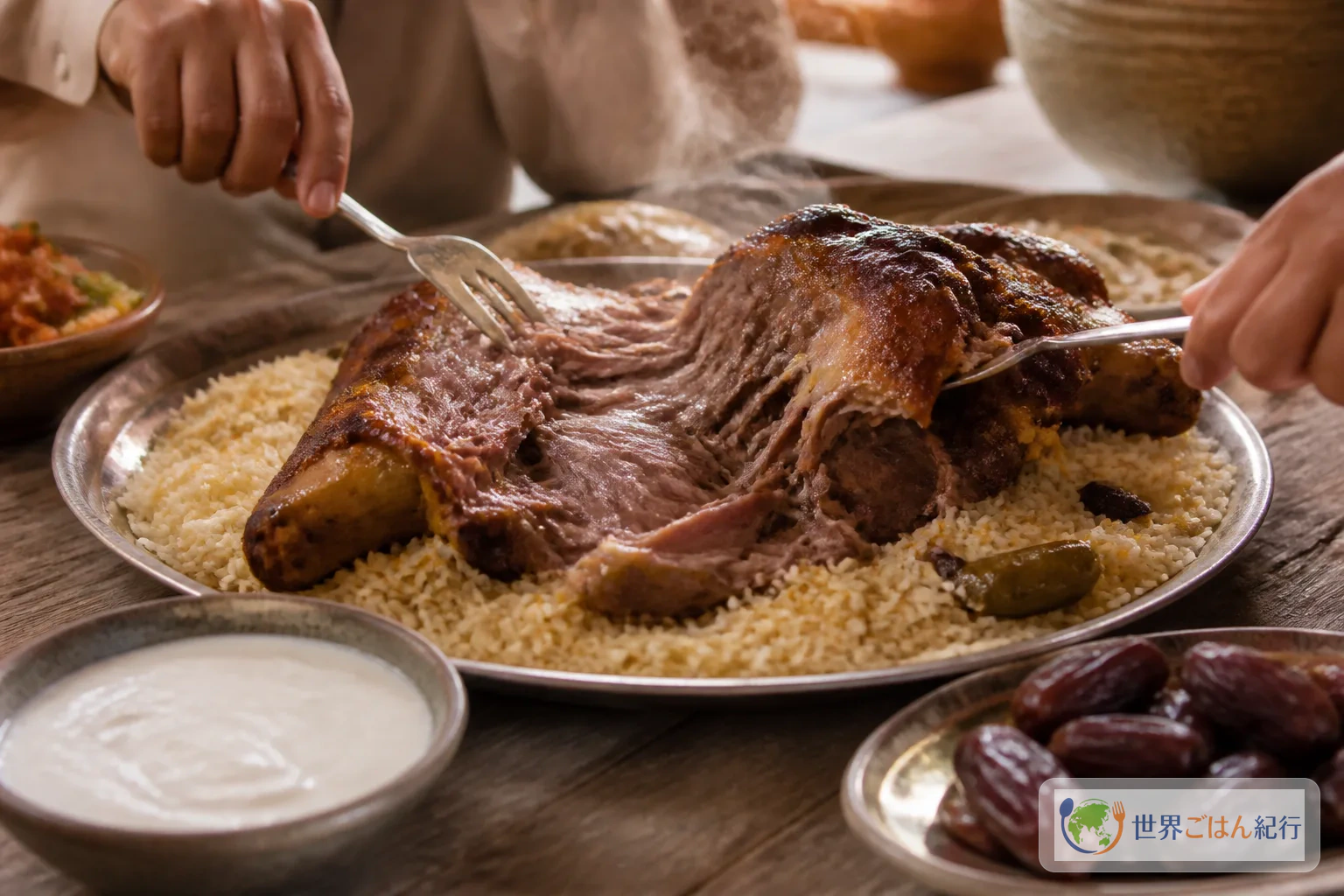
The moment the parcel opens: lime and roasted spices rise
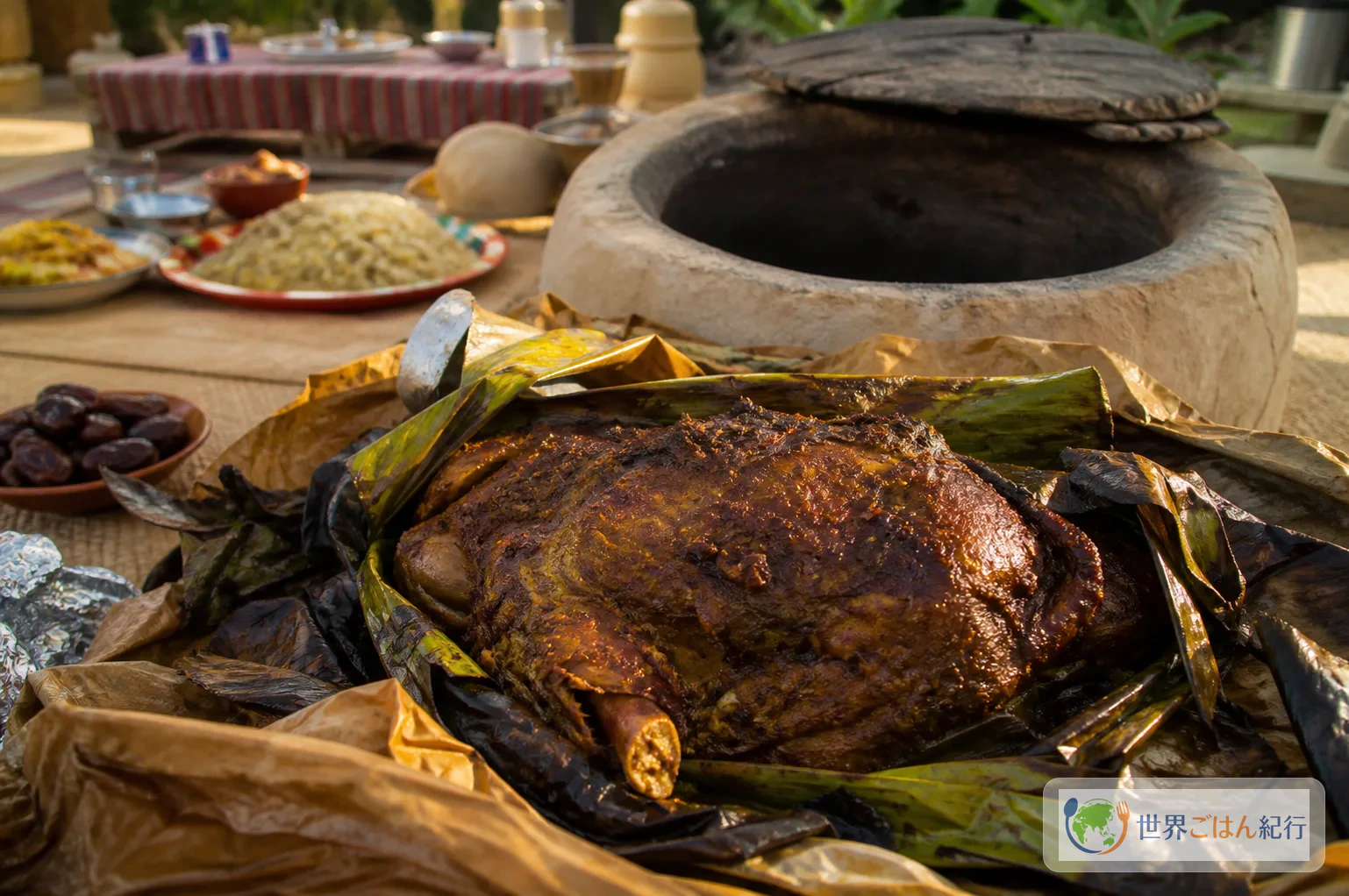
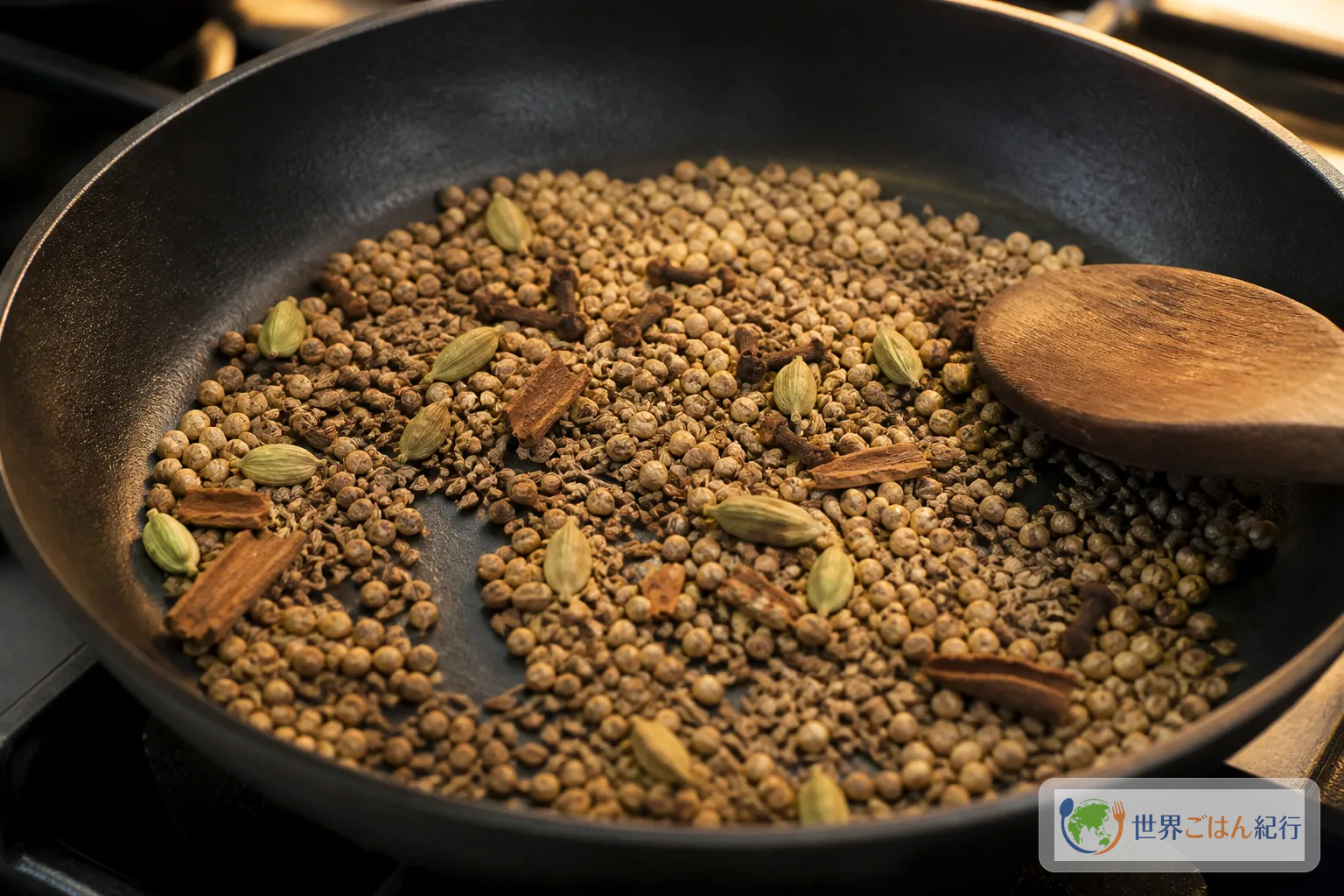
When you open a parcel of shuwa (Shuwa), what comes first is not the lamb itself but the scent of black pepper, cardamom, cinnamon, and dried lime. Meat cooked this long is not sliced thin with a knife; you pull the fibers loose from around the bone. Drip a little of the juices onto basmati rice on a large platter, add yogurt and salad, and you have a dish that can take on that deep aroma.
Omani shuwa is a dish in which lamb, goat, or other meat is marinated in spices and acid, wrapped in leaves and a bag of palm fiber, and cooked a long time in an underground oven (tanour) or in charcoal. A home kitchen has no underground oven, but toasting the spices without scorching them, not overdoing the dried lime, and wrapping the meat to hold in moisture can all be kept in an oven too.
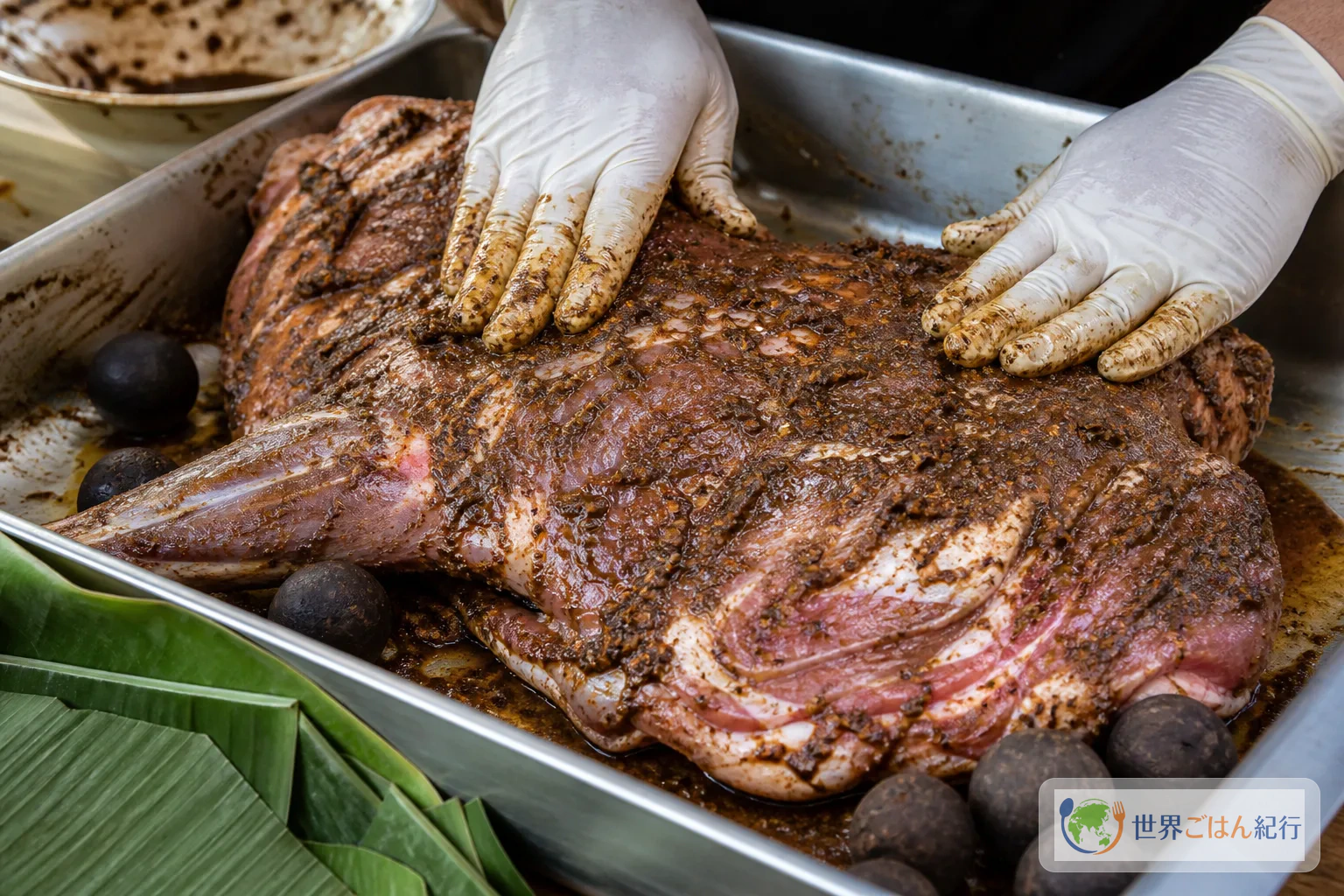
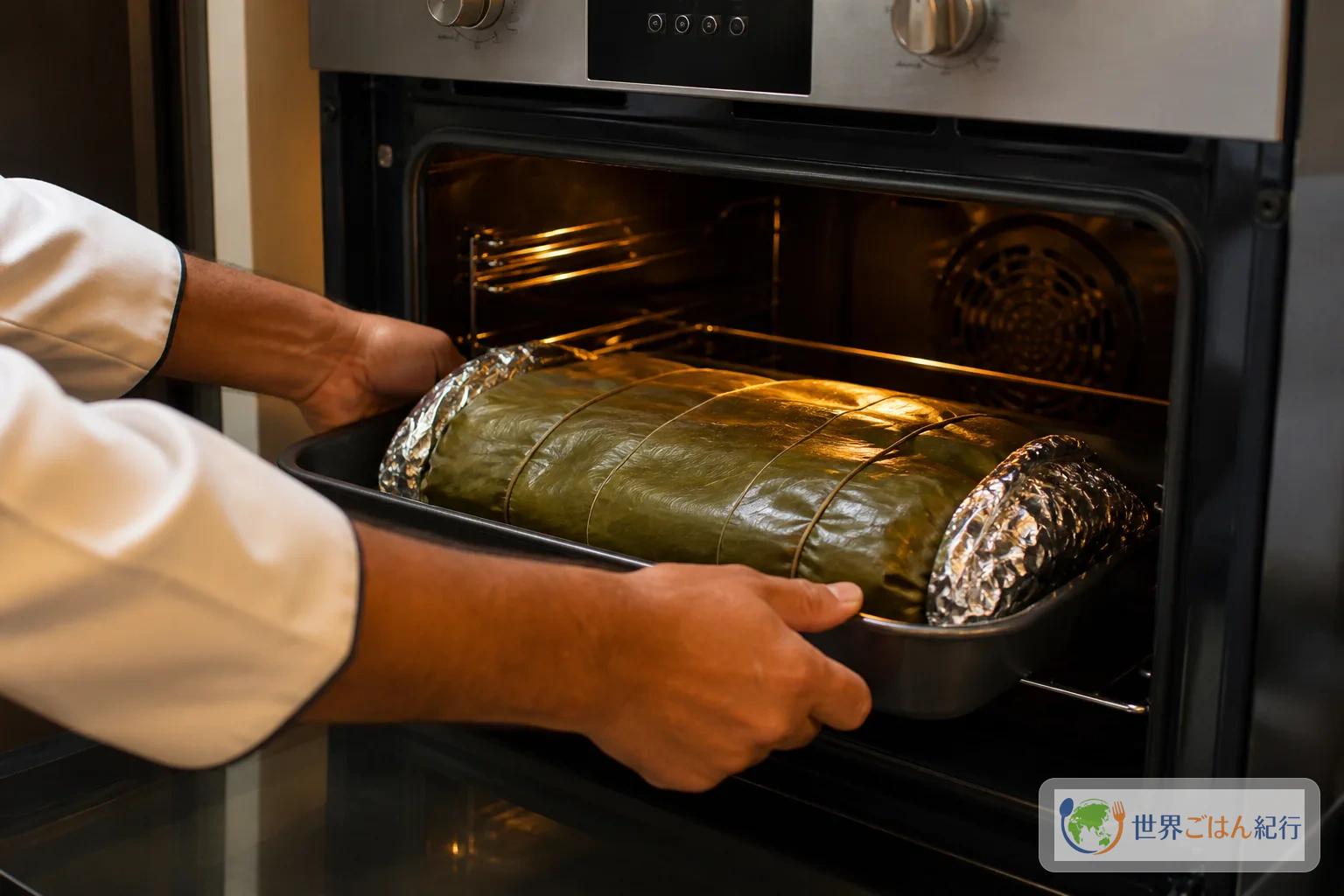
In this recipe, 1.2 kg of bone-in lamb shoulder is marinated 12–24 hours in white vinegar, red vinegar, garlic, ginger, dried lime, and spices. If you have banana leaves, layer them on the inside; if not, double-wrap in parchment and aluminum foil and bake at 150°C for about 5 hours 30 minutes. The smoke and earth of an underground oven will not be the same. Not hiding that, and keeping only the core of flavor a home kitchen can reproduce, is how to make shuwa without strain.
Shuwa is the spelling we use. In some regions the same dish is called Mashwi, a name used in places such as North Al Batinah. In this article we call the dish as a whole shuwa.
Meat that goes into the underground oven links Oman's festivals and its table
Shuwa is not a meat dish for putting together a regular dinner quickly. In Oman it is known as a dish eaten with family and community on festival days such as Eid. A large quantity of meat is prepared, rubbed with spices, wrapped in leaves, and put into the oven. During the long cooking, other dishes and preparations for guests proceed, and at the end the parcel is opened and moved to a big platter; this use of time is part of the dish.
In the local method, seasoned meat is wrapped in banana leaves or leaves called shoa, then put into a bag woven from date palm leaves. The bag is sewn with palm fiber, set in the hot coals of a tanour, and covered with a metal lid or mud to shut out air. It cooks for 12–24 hours, or 24–48 hours in some sources, so the meat is not a dish that is browned only on the surface; it steams inside its parcel and falls apart.
But households across Oman do not all make the same shuwa. In the north many people regard shuwa as a national dish, while it is not eaten with the same frequency in every inland or southern region. In parts of North and South Al Batinah, shuwa is sometimes called mashwi. The difference in names is not just spelling variation; it is regional memory, layered with the spices and kinds of meat a family uses and the time in the oven.
Oman's food culture also keeps the traces of exchange across the sea. In the north and inland, knowledge of meat and preserved foods stands out, while along the coast, dishes with fish and coconut are familiar. Spices traveled through Indian Ocean trade, and some dishes feel linked to East Africa. The combination of black pepper, clove, cardamom, cinnamon, chili, and lime in shuwa has a range that cannot be bundled into a single "Middle Eastern spice."
There are also dishes that cook meat over hot stones, like the muthbe (Muthbe) presented from southern Dhofar. This differs in how heat is applied from the underground oven cooking of shuwa, showing that even among Omani meat dishes, the heat source and the result change from place to place. The oven version here does not mix several dishes into one; its guide is the northern and inland-leaning shuwa, in which wrapped meat is cooked a long time in an underground oven.
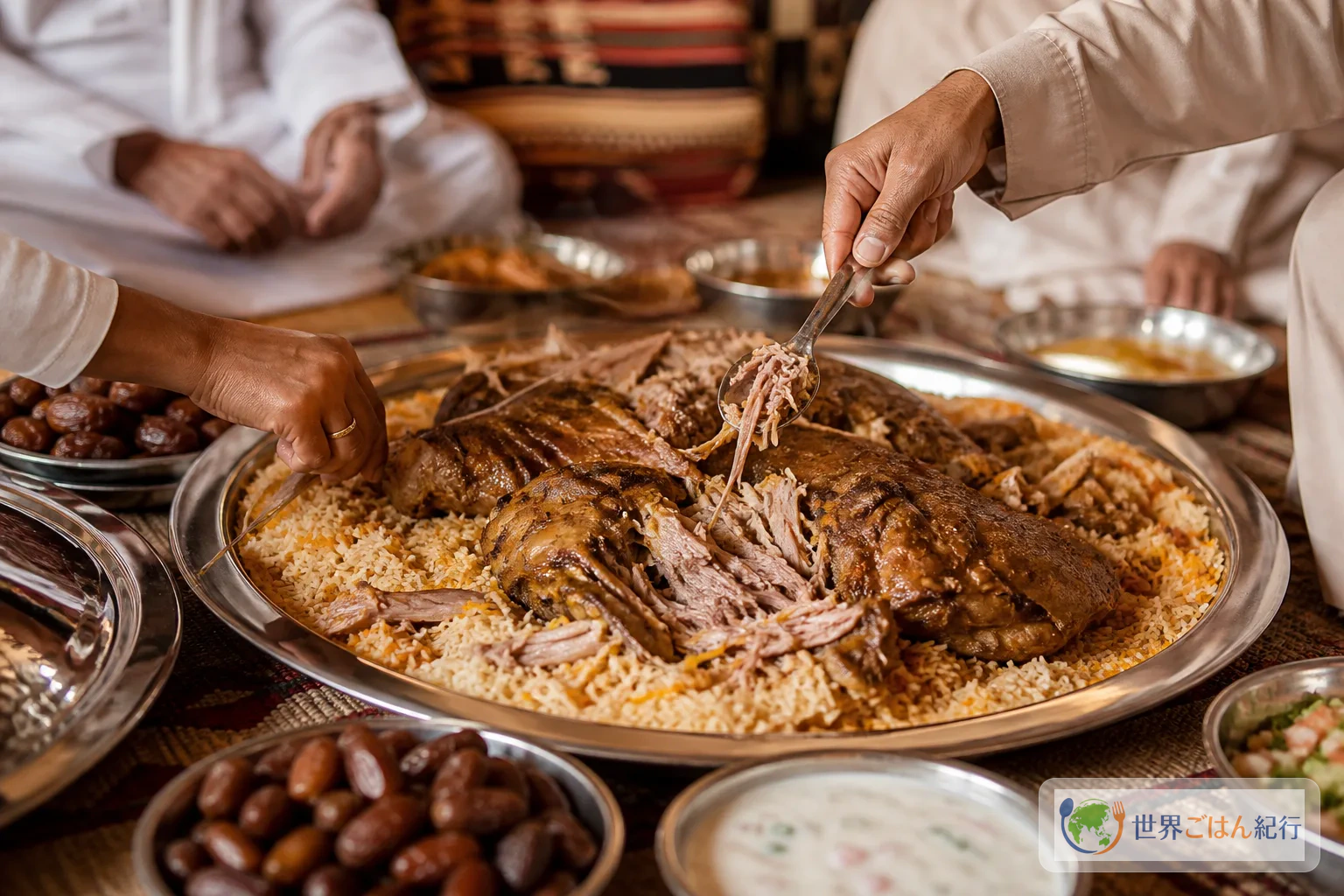
At the table, a custom has been described in which the family gathers around a big platter of meat and rice and takes a little at a time with the right hand. Coffee, fruit, and sweets may be served before or after the meal, so shuwa alone does not complete a festival table. When you make it at home too, rather than plating the meat individually and spooning sauce over it, putting it on a large platter with cooked rice and letting each person decide the ratio of meat to rice brings you closer, background included.
The flavor to protect in a home oven, and the heat to replace
An underground-oven shuwa cannot be fully duplicated at home. The coals of the oven, the mud lid, the aroma of palm leaves, and hours of waiting outdoors are not inside an oven cavity. Rather than adding ingredients to add smoke, we put first a parcel in which the meat is moist and falls apart, and the way the spices stand out.
| Axis that decides flavor and texture | Meaning in an underground oven | Substitute in a home kitchen |
|---|---|---|
| Sourness and spices | Carry flavor into a large mass of meat and balance the weight of fat | White vinegar, red vinegar, lime, dried lime, spice paste |
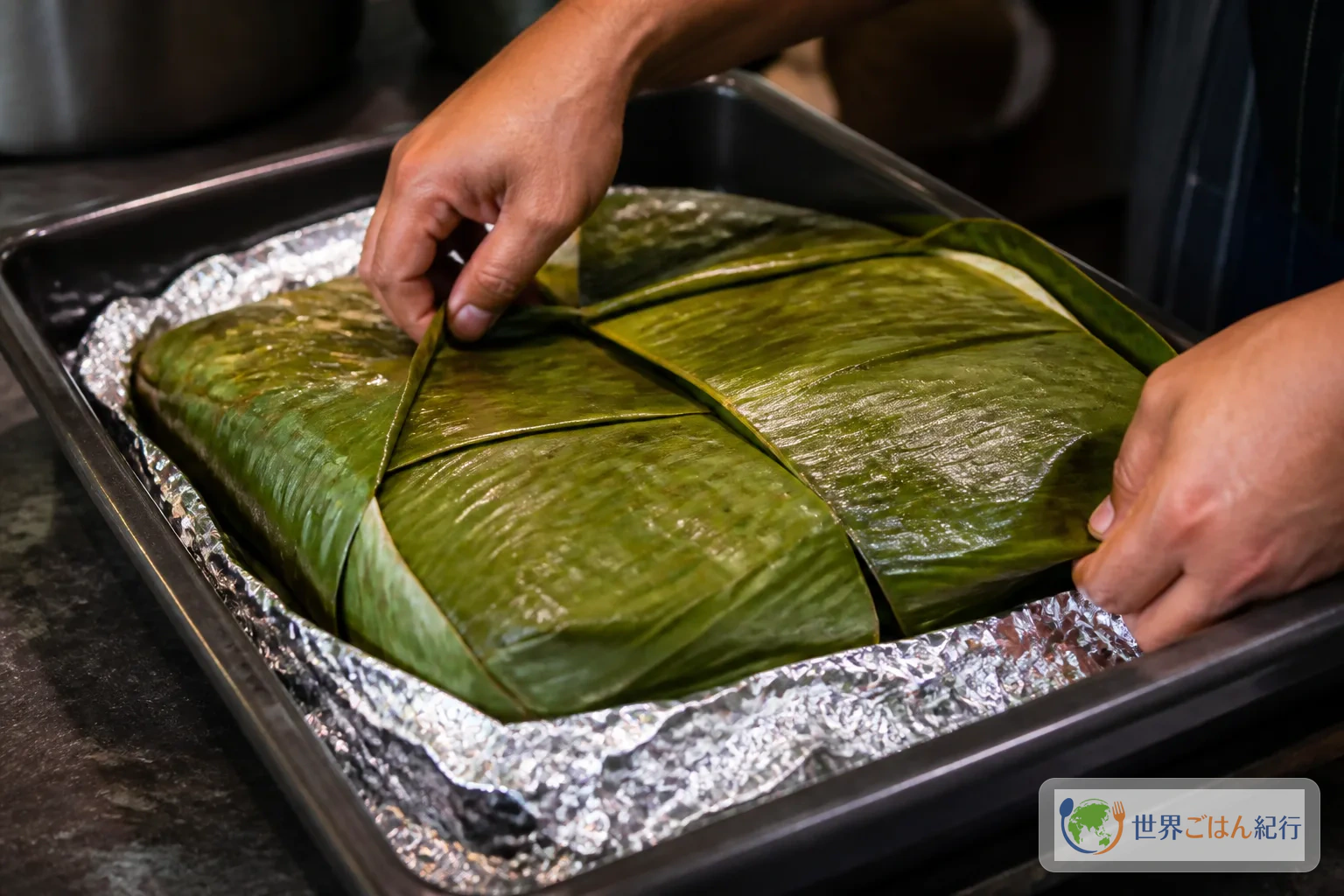
| Wrapping | Keeps the meat off direct contact with coals and earth and holds moisture | Banana leaf + parchment + aluminum foil |
| Long cooking | Sends heat to the center of thick meat and loosens the fibers | Heat the oven to 200°C, then 150°C for about 5 hours 30 minutes |
| Eating from a platter | Festival meat shared with family and guests | Serve basmati rice, yogurt, and salad separately |
Banana leaves add aroma, but if you cannot find them you do not need to hunt for them. Press parchment tight against the meat and double-wrap the outside with foil and the steam-roasting function is kept. If you wrap in foil alone, add one more sheet of parchment inside so corners and bone tips do not poke holes.
Do not put charcoal directly into the oven to add smoke unless your oven's manual says it is allowed. Rather than reproducing the smoke, aim for the moment you open the parcel and the spices and the sweet aroma of the meat rise. Adding smoked salt just before eating also tends to go in a different direction from the true aroma of shuwa, so it is easier to judge the differences in flavor if you leave it out at first.
Ingredients (serves 6)
1.2 kg of bone-in lamb shoulder makes 6 servings with rice and side dishes. If you cannot get bone-in shoulder, switch to 1.5 kg of bone-in leg of lamb. Leg has less fat and connective tissue than shoulder, so check doneness at the same time and, if it looks like drying out, extend 30 minutes at a time without opening the parcel.
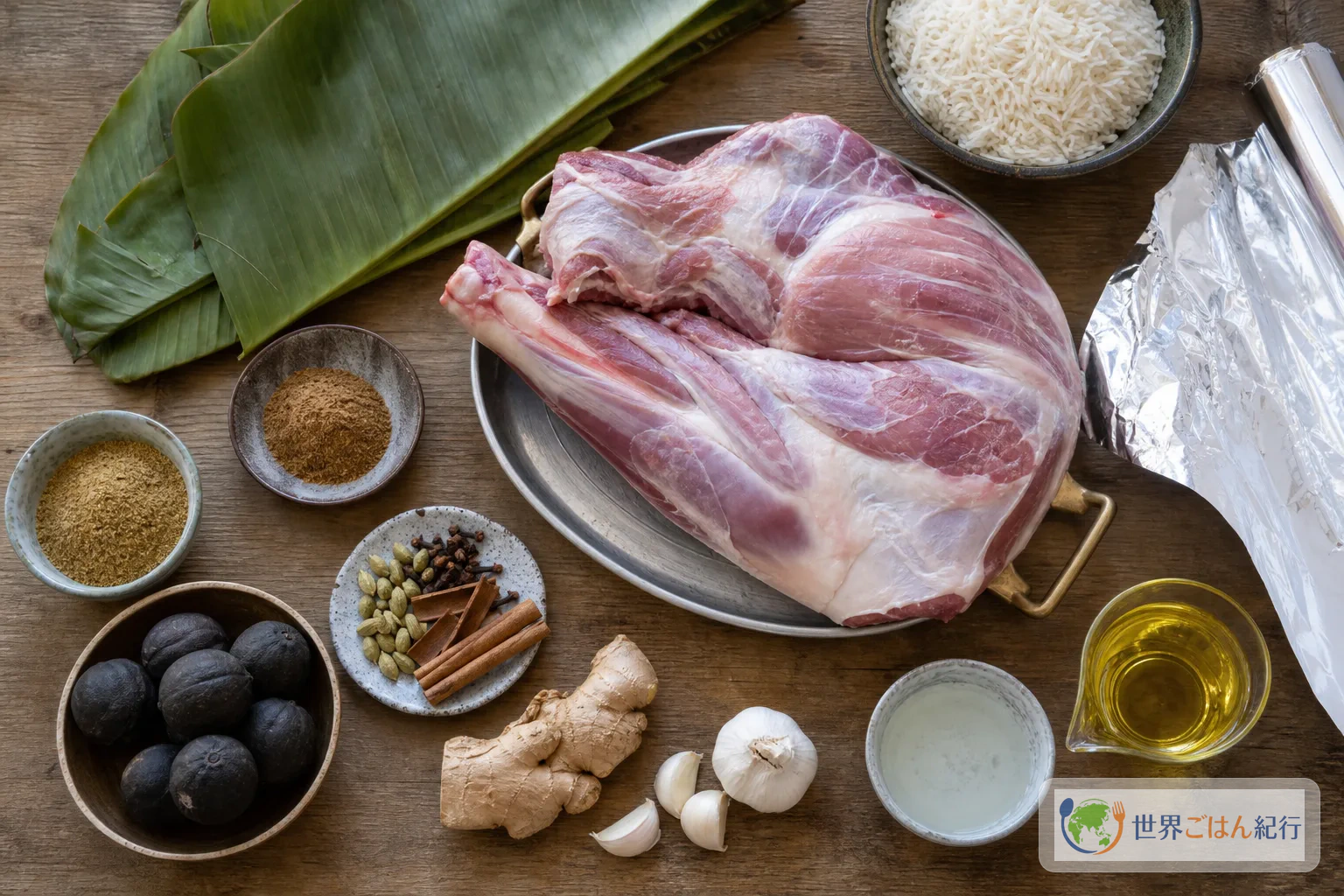
Marinate raw lamb in the refrigerator and do not leave it at room temperature for long. Because the marinade has touched raw meat, if you use what is left as a sauce, bring it to a boil first, and never serve it unheated. Do not eat the banana leaves; remove the wrapping before plating.
What is worth sourcing
Dried lime adds a dry citrus aroma and gentle bitterness that lemon juice alone cannot. Whole and powdered release their aroma differently, so with whole, pierce the surface in several places, and with powder, start at 2 tsp. If you cannot get it nearby, you can make up the acidity by increasing the lime juice, but the aroma of the dried peel will not remain. If you already have ground cumin, there is no need to buy more. If you buy it, choose cumin as the only ingredient, with the label making clear whether it is ground or whole.
Toasting and grinding cumin seeds makes the aroma build more noticeably than adding ground cumin straight. For your first time, ground cumin in a stated amount keeps the teaspoon conversions in the ingredient list from drifting. If you do not plan to use cumin in other dishes and already have a tool for grinding whole spices, you do not have to buy anything; use what you have.
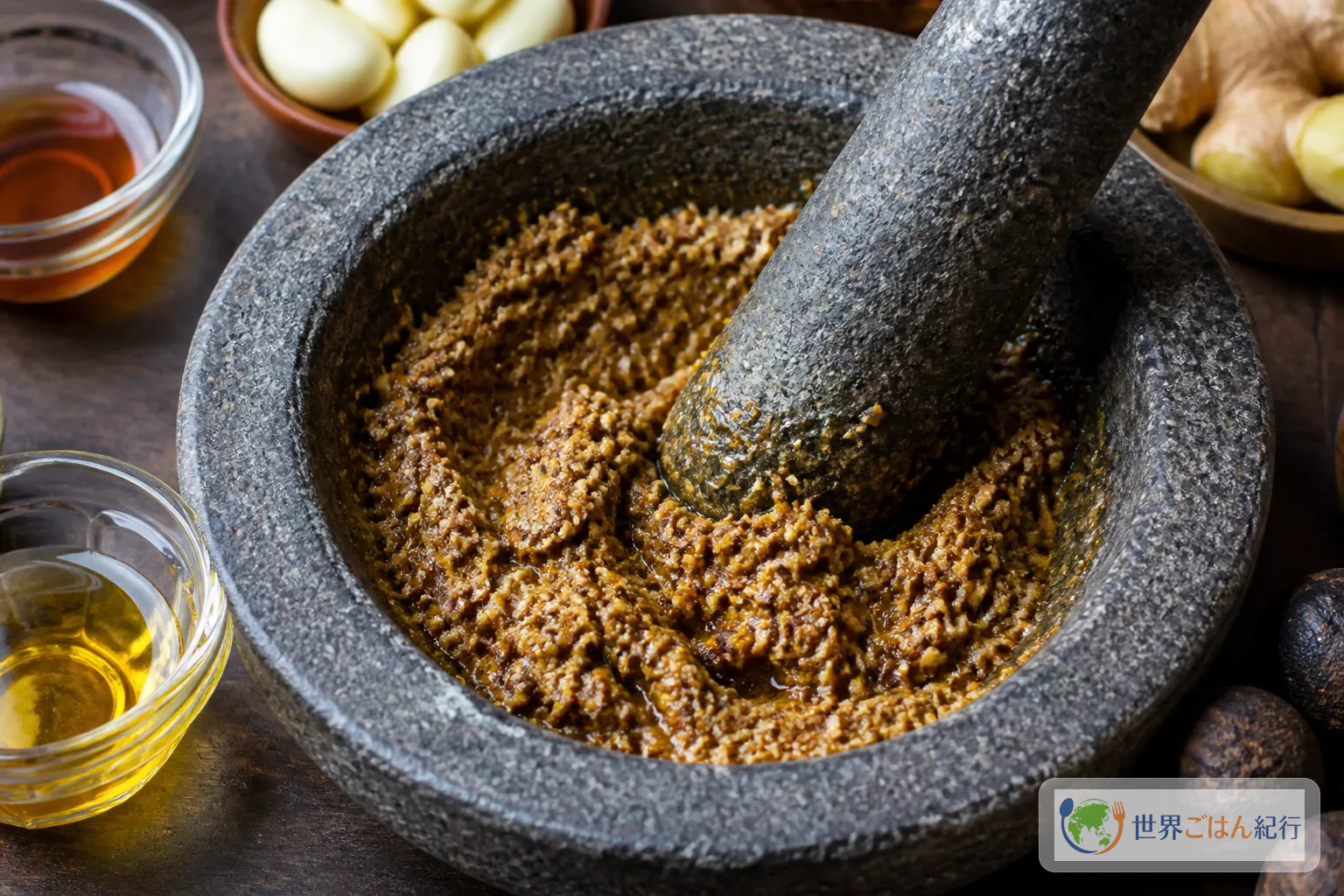
A mortar is not essential. You can crush the spices in a bag with a rolling pin. But if you will often crack black pepper and cardamom pods evenly and bring them together into a paste with vinegar and oil, a heavy granite mortar helps. Before buying, check the storage space, the mortar's inner diameter, and the pestle's length, and skip it if you already have a sturdy mortar.
Method: don't scorch the spices, steam in the parcel
With shuwa, flavor changes not only with the baking time but with the few minutes of toasting the spices and the way you close the parcel. Rather than the oven's temperature display, check in turn the aroma, the surface of the meat, and the seal of the parcel.
Bringing back dry, bitter, or tough shuwa along the way
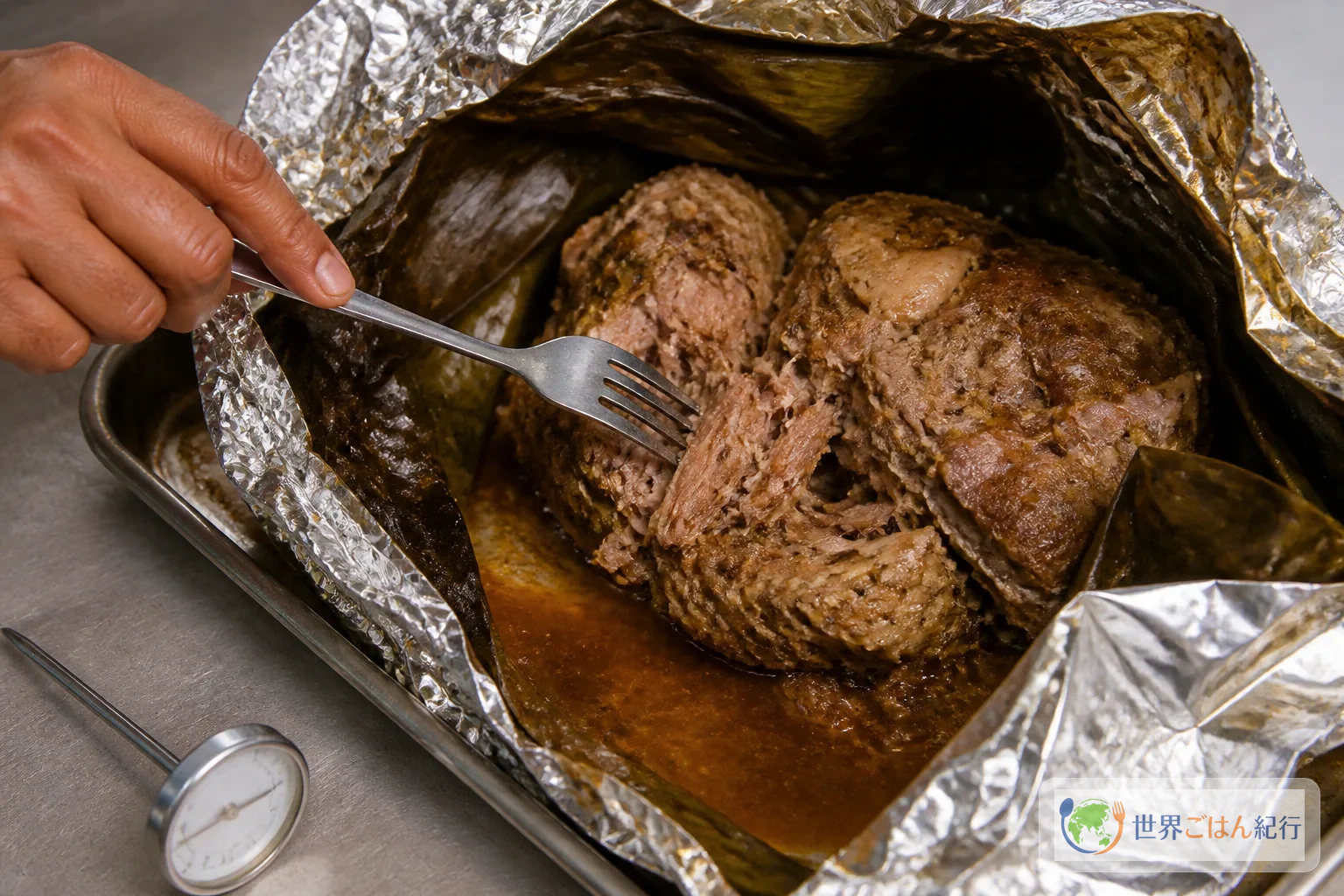
The meat is tough and the skewer stops partway
The connective tissue of the shoulder has not yet loosened. If juices remain, close the parcel again and extend at 150°C by 30–60 minutes. Only if there are few juices and the pan is dry, add 50 ml boiling water inside the parcel and close it. Pouring in cold water drops the oven temperature and tends to tighten only the surface of the meat.
The meat is dry
Steam may have escaped through a seam of the parcel, or leg may have been baked for the same amount and time as shoulder. If caught partway through the bake, do not pour water directly on the meat; add a little boiling water to the bottom of the parcel and reseal. After baking, combine the pulled meat gradually with the remaining juices and yogurt and eat it with lightly seasoned rice. Rather than trying to fully restore the dryness, it is more realistic to add fat and acid and balance it in the mouth.
The spices are bitter
The dry-toasting temperature may have been too high, or a lot of cracked dried lime may have been added. Bitterness cannot be removed after baking, so do not cover it with sugar. Serve with unsalted rice, plain yogurt, and cucumber, mixing in a little at a time. Next time, turn off the heat before the spices smoke, and limit dried lime to one whole pierced lime or no more than 2 tsp powder.
Juices leak from the parcel
A bone tip may have torn the foil, or the parcel may have been set with the seam down. Before baking, add foil outside the torn spot and turn the seam up. If you notice during baking, pull out the pan once and repair it. Let the juices collected in the pan cool before handling them, and do not return them hot to the bottom of the oven.
You cannot get banana leaves
You can make it with double parchment and double foil. What is lost without leaves is the leaves' green aroma, not their role in steaming and tenderizing the meat. There is no need to stack many leaves for aroma and make the parcel hard to open.
Rice and a large platter bring shuwa back from a single-serving roast
If you slice the meat thin and plate it individually, shuwa becomes easier to eat as a home roast. But if you cook it knowing the local table, it is a more interesting dish if the meat is not the only finished product. Put lightly seasoned rice, tangy yogurt, fresh vegetables, and dates on the same platter, and each person can choose between the rich parts and the rice-heavy parts.
Omani cooking also includes dishes like machboos, where the rice carries the aroma, and coastal dishes with fish. Compared with Saudi kabsa (in Japanese), shuwa is less about seasoning rice as the star and more about giving the meat time in its parcel and sharing its juices with the rice. Yemeni mandi also cooks meat and rice a long time, but the heat source and the context of serving differ. Put Iraqi masgouf (in Japanese), fish cooked over heated stones or charcoal, beside them and you see that even in the same region, how heat is applied changes between meat and fish dishes. If you do not lump similar platter dishes into a single "Arab-style rice pilaf," how each place uses fire comes into view.
The flow of serving dates and coffee at the start of the meal and following with sweets afterward is, like the time spent roasting a mass of meat, a food culture of not rushing guests. At home, it is fine to just serve a little coffee and dates after the meal. If, while explaining the name of the dish, the person pulling the meat apart, the person serving rice, and the person stirring the yogurt separate naturally, you feel that shuwa is not a recipe that is complete for one person.
Storage and reheating
Do not leave leftover lamb at room temperature in its parcel. Once the heat has largely dissipated, divide the meat and juices into shallow containers and refrigerate within 2 hours of cooking as a guide. Eat refrigerated meat within 3–4 days, taking out only what you will eat. To freeze, toss the pulled meat with a little of the juices and portion by serving.
To reheat, put the juices and a little boiling water in a pot or skillet, cover, and heat over low heat. Confirm that the center has reached 74°C before putting it on rice. Microwaving alone for a long time tends to harden the surface, so heat in short bursts, stirring, and finish with yogurt or cucumber to catch the fat. If you turn marinade that touched raw meat into a sauce for storage, always bring it to a boil before using it.
Frequently asked questions
Can it be called shuwa without an underground oven?
Because it does not use the smoke, charcoal, or palm-leaf bag of an underground oven, it does not turn out the same as shuwa in Oman. This article is a recipe that replaces the underground oven method with a home oven. We do not borrow only the name and claim it is the same; we reproduce the core of flavor in which a large wrapped piece of meat is baked a long time.
Can I use goat instead of lamb?
In Oman goat and camel are also used, but toughness varies greatly with the cut and age. Make it with lamb shoulder the first time, and when switching to goat, ask the seller about a cut suited to stewing. Do not fix the baking time at the same as lamb; judge by resistance to the skewer and center temperature.
Is there a substitute for dried lime?
Lime juice and a little lemon zest can make up the sourness and aroma, but the dry citrus aroma and bitterness peculiar to dried lime will not remain. For the first time, using one whole one and seeing whether the bitterness suits your taste is safe. If using powder, make 2 tsp the upper limit and decide on additions after seeing the result.
When is it ready to eat?
For lamb safety, the lower limit is the center reaching 63°C or more and resting 3 minutes. The shoulder-like way shuwa falls apart comes from baking longer than that. Stopping at the temperature alone may leave it tough, so look at the center temperature, how the skewer goes in, and how it comes away from the bone together.
Can I make shuwa that is not spicy?
Even reducing the chili flakes from 1 tbsp to 1 tsp, the aroma of black pepper, clove, cardamom, and dried lime remains. Rather than adding sweet seasoning to remove the heat, it is more natural to serve yogurt and lightly seasoned rice and dilute the layers of spice.
How many days ahead can I prepare it?
Marinate the meat in the refrigerator for 12–24 hours and bake the next day. Marinating for more than 2 days tends to bring the acidity out on the surface of the meat, so if preparing early, toast and seal only the spices and marinate the meat the day before baking.
Sources
- National Geographic, "Bahari: A Taste of Oman": regional differences, the festive character of shuwa, dried lime, table manners. (accessed and checked 2026-08-23)
- Times of Oman, "How to make Shuwa for Eid": the name mashwi, leaves and palm bag, cooking in the tanour. (accessed and checked 2026-08-23)
- Experience Oman, "The Wanderlust Oman": Omani spices and Indian Ocean trade, meat food culture. (accessed and checked 2026-08-23)
- British-Omani Society, "Insight: Gastronomy": the festive character of shuwa, spices, adaptation to oven cooking. (accessed and checked 2026-08-23)
- British-Omani Society, "Anglo-Omani Review 2020": reference for marinade, wrapping, oven temperature and time. (accessed and checked 2026-08-23)
- ITB Berlin, "Must-tries for foodies: Traditional Omani dishes": shuwa's communal place and how it differs from other southern meat dishes. (accessed and checked 2026-08-23)
- Gulf News, "Famed Omani shuwa recipe": ingredients, marinade, and serving for the home-oven version. (accessed and checked 2026-08-23)
- USDA FSIS, "Safe Minimum Internal Temperature Chart": minimum internal temperature and rest time for lamb. (accessed and checked 2026-08-23)
- USDA FSIS, "Leftovers and Food Safety": refrigeration of leftovers, storage time, reheating temperature. (accessed and checked 2026-08-23)