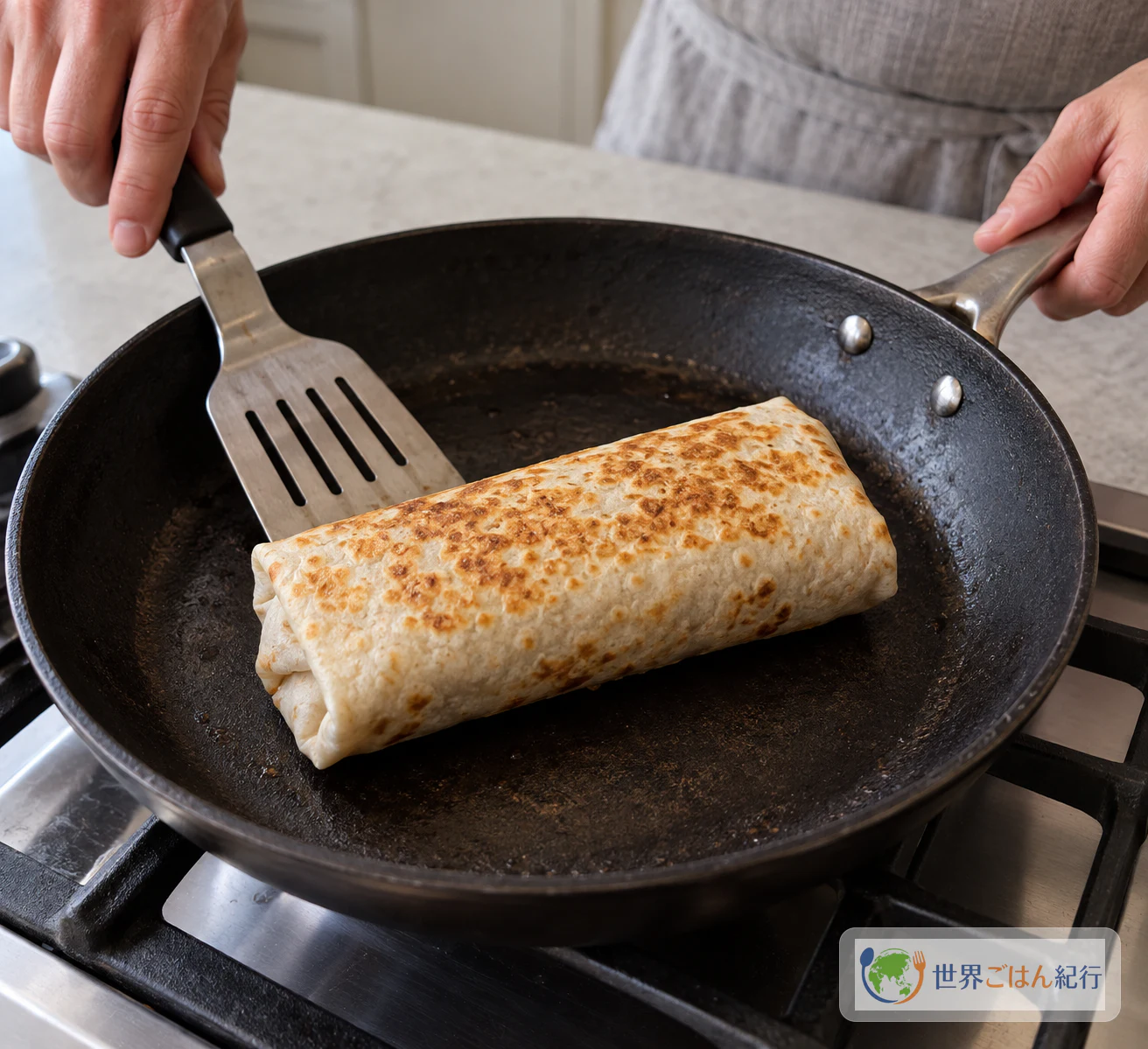
Burrito: Salty Shredded Beef, Set Egg and Green Chile in a Soft Flour Tortilla
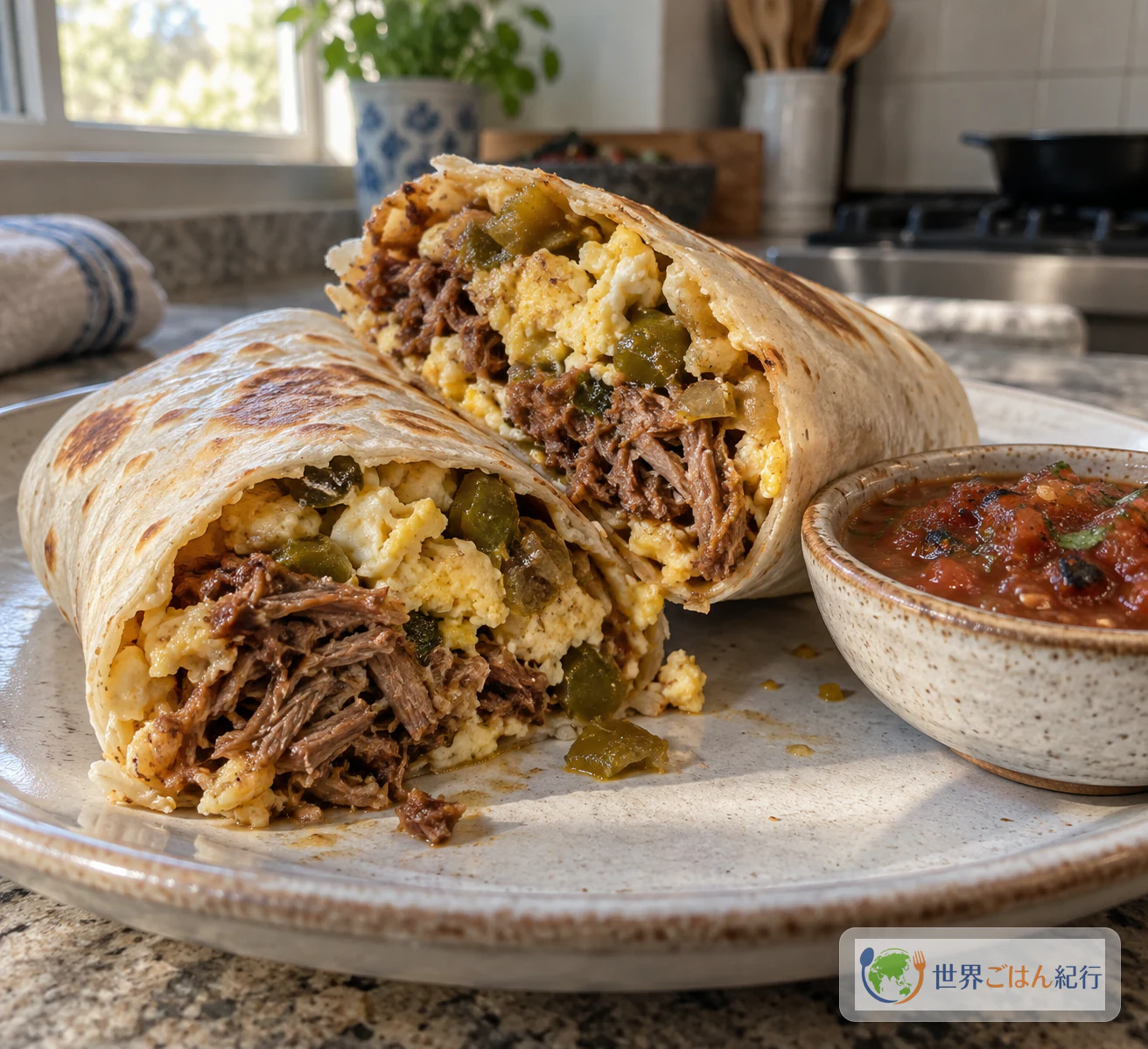
A soft, pliable flour tortilla; dried, shredded beef with its own saltiness and fibrous bite; and egg and green chile bound together with the meat. Nothing more needs to go inside.
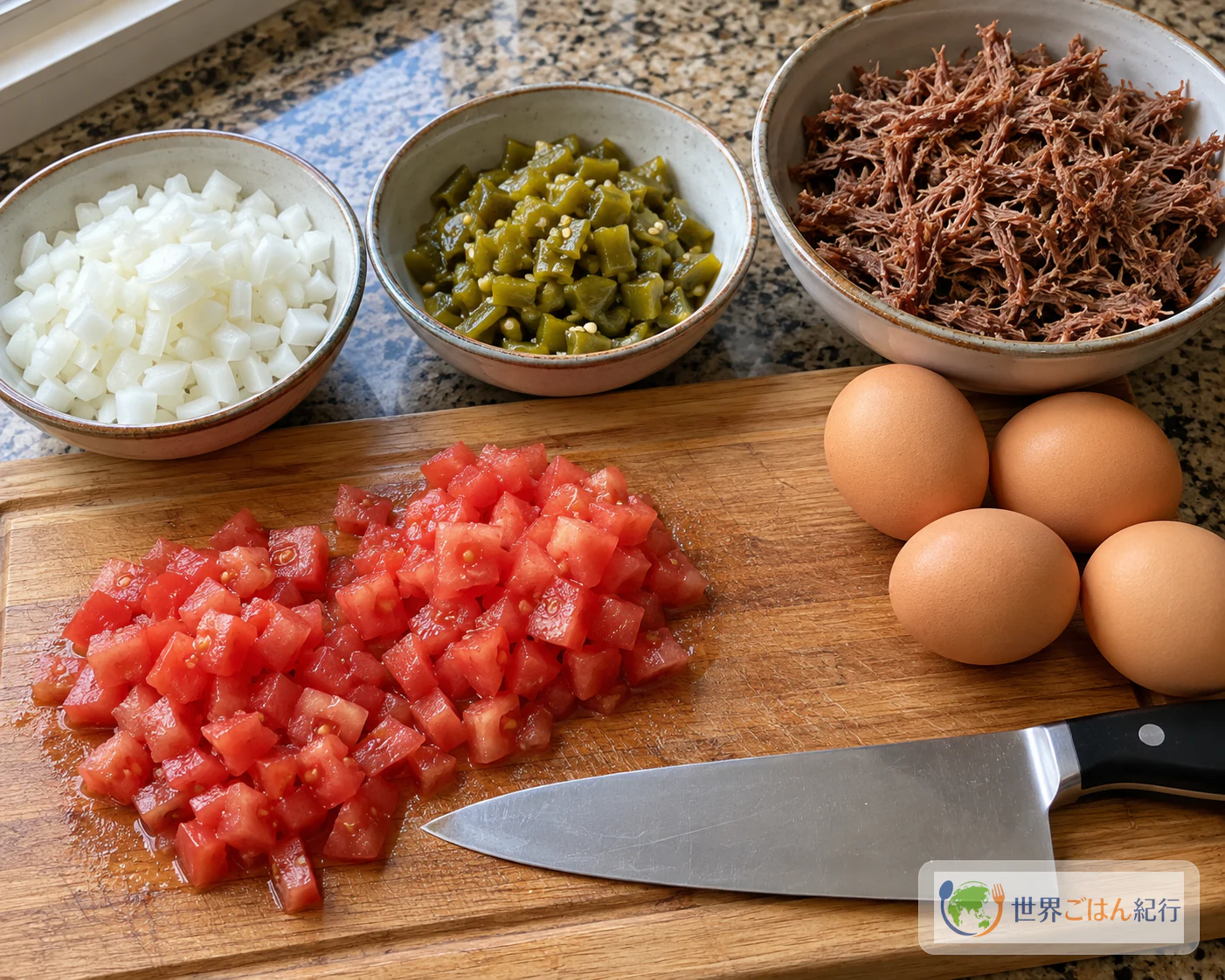
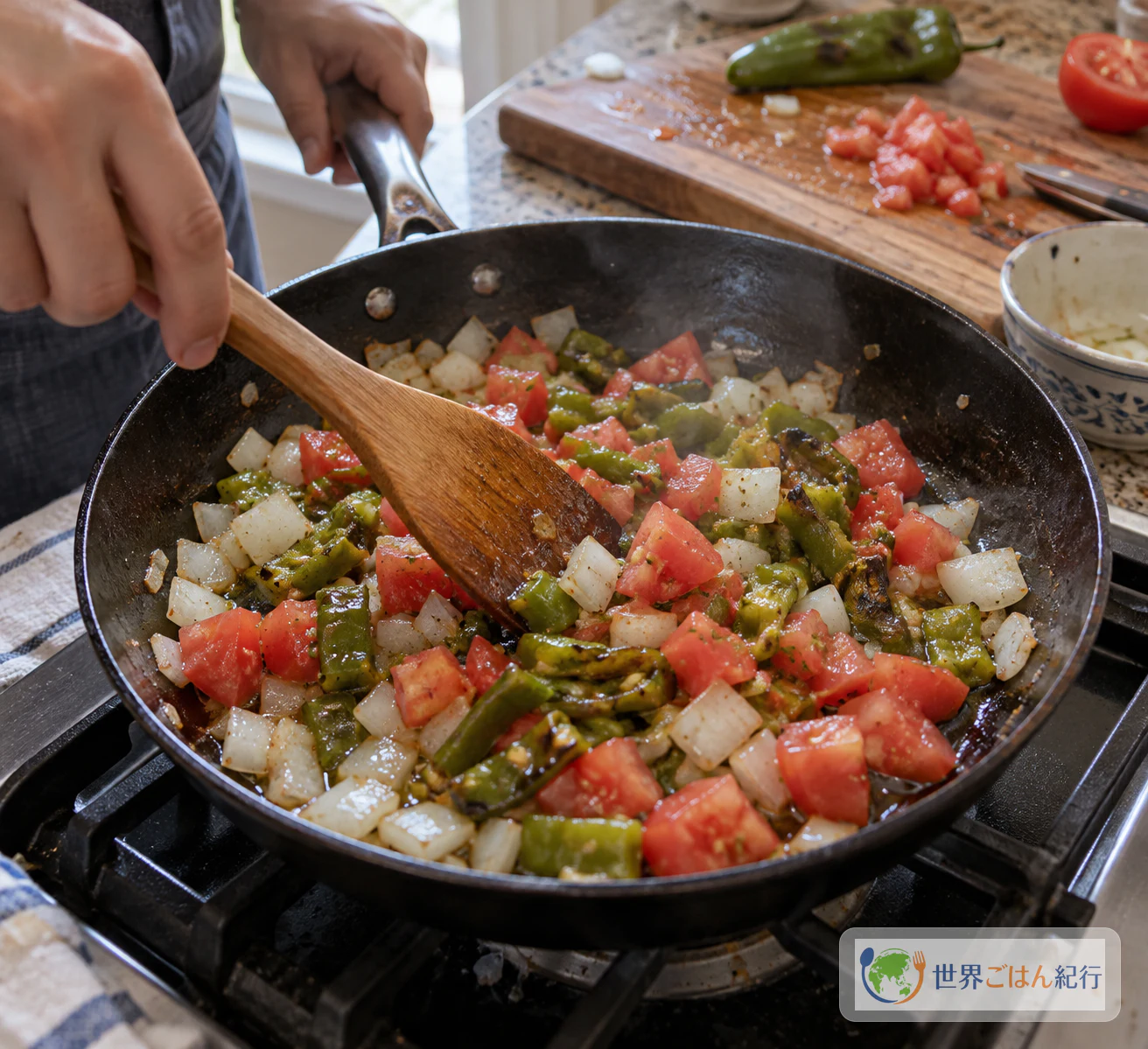
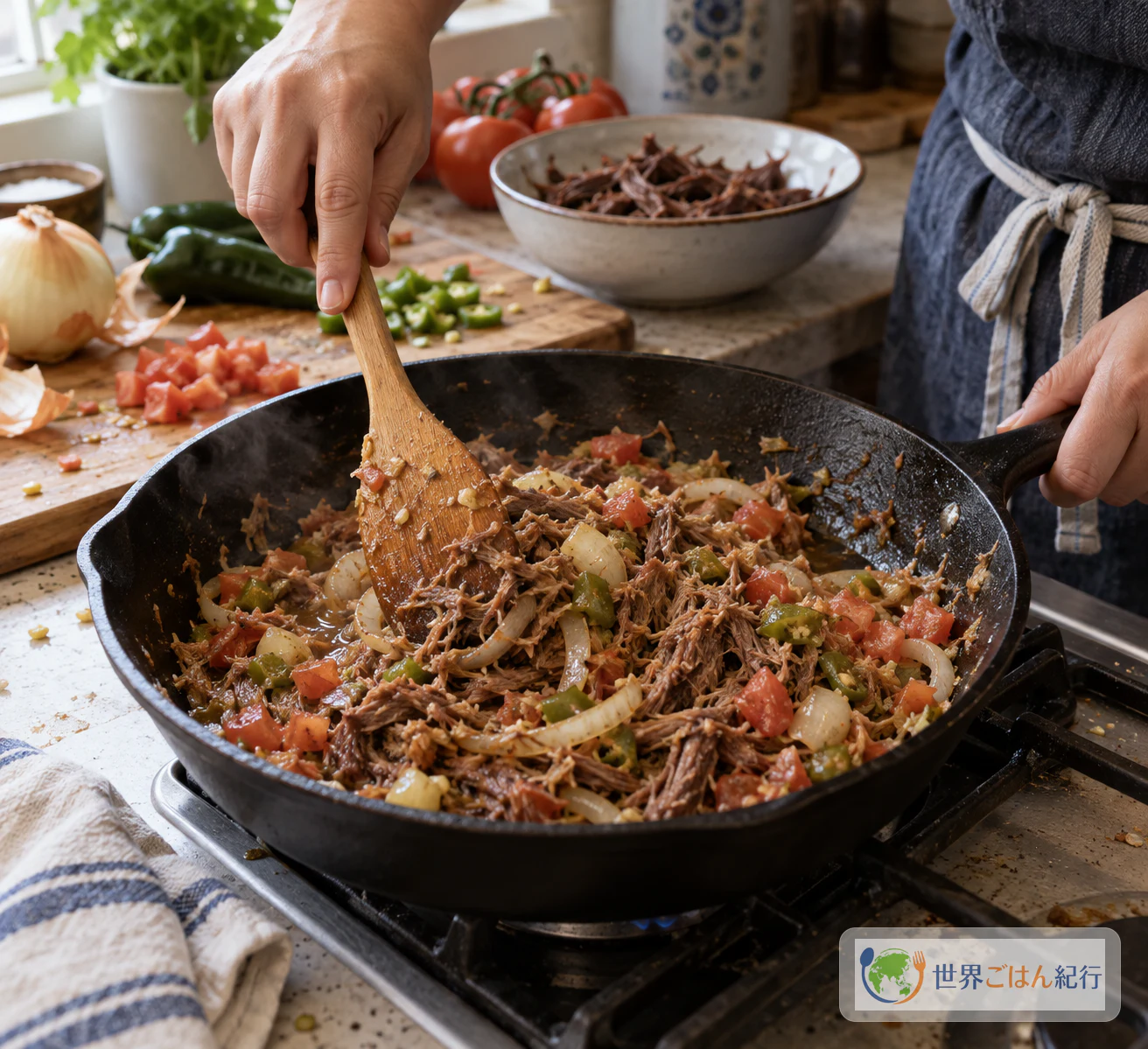
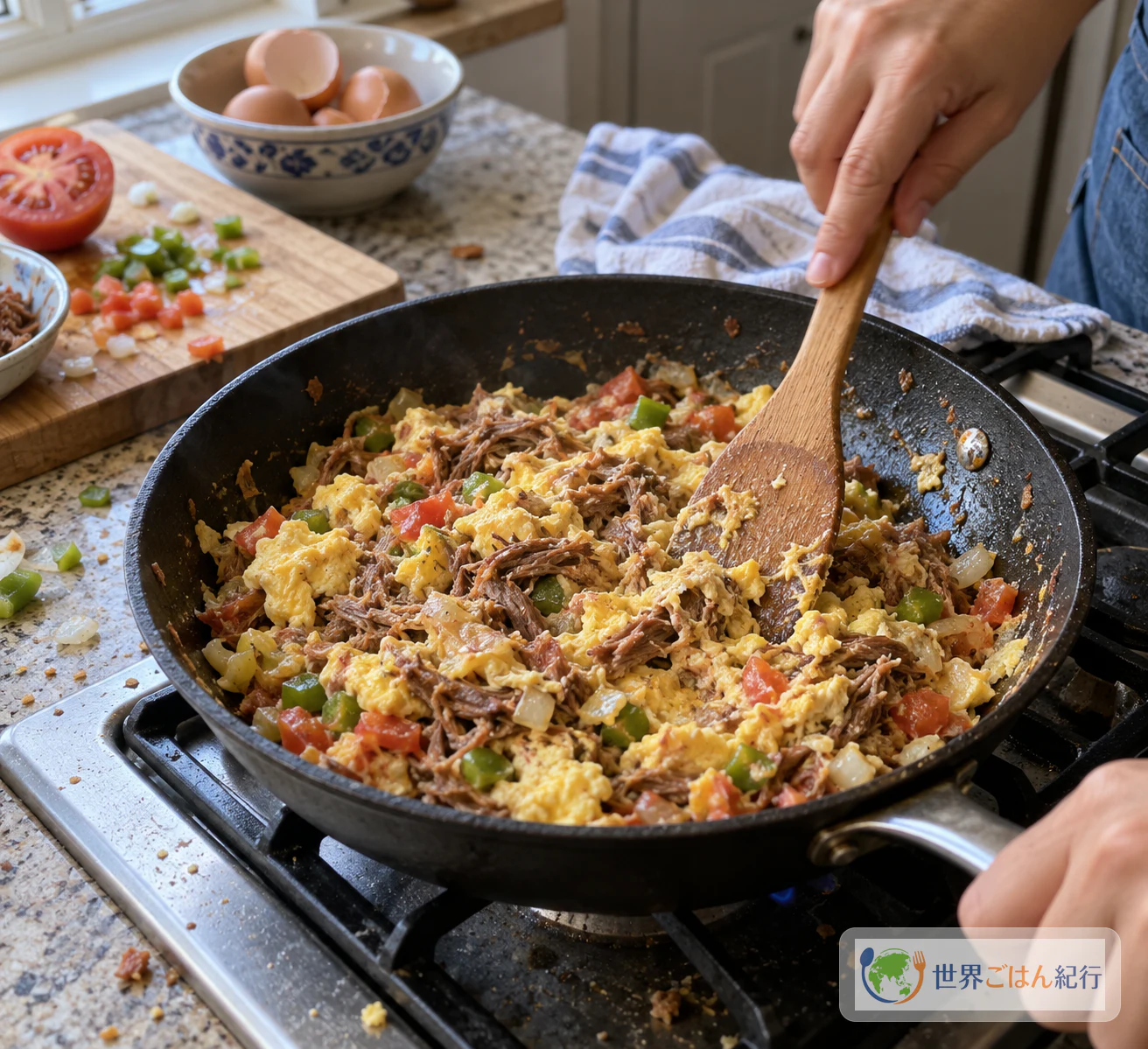
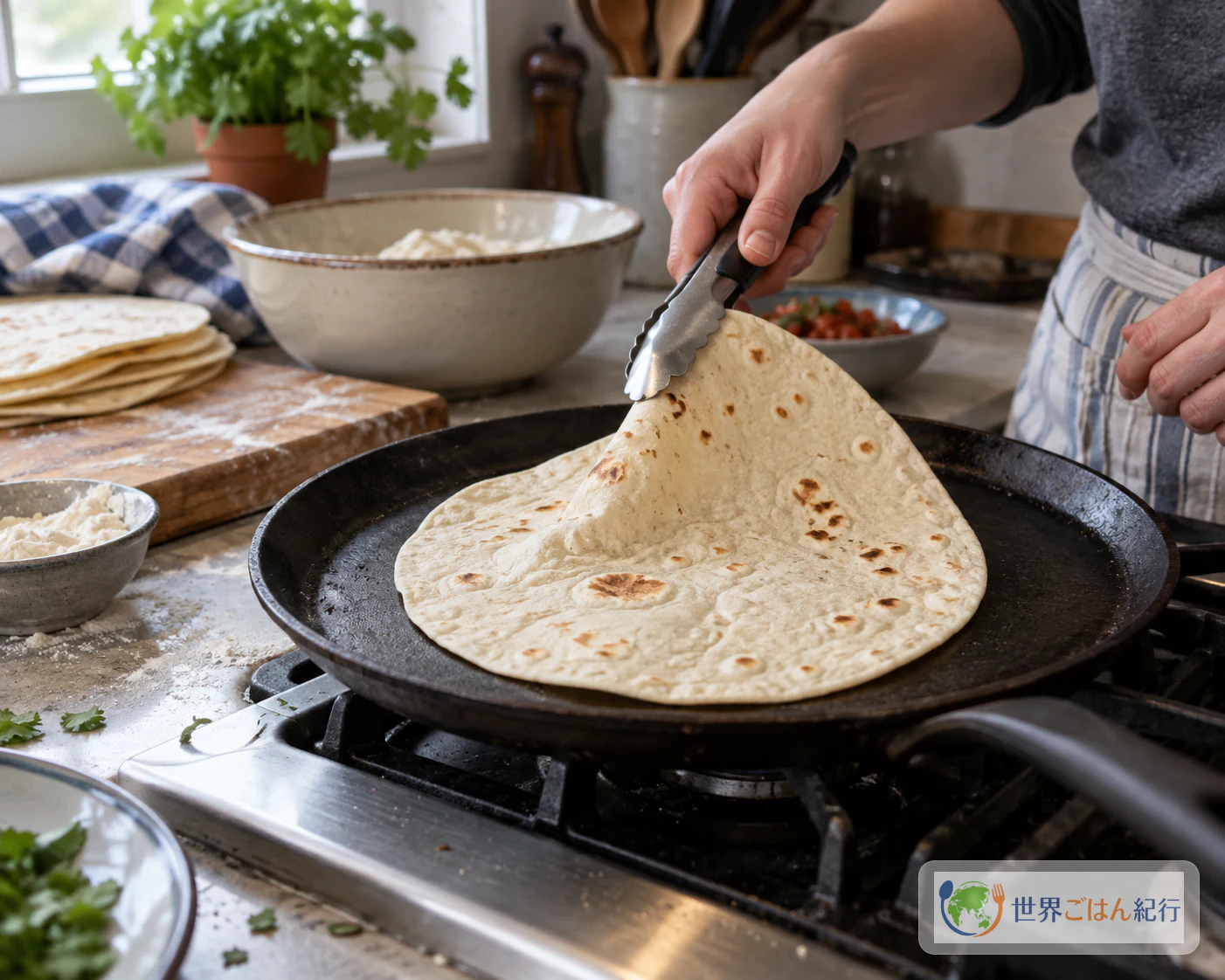
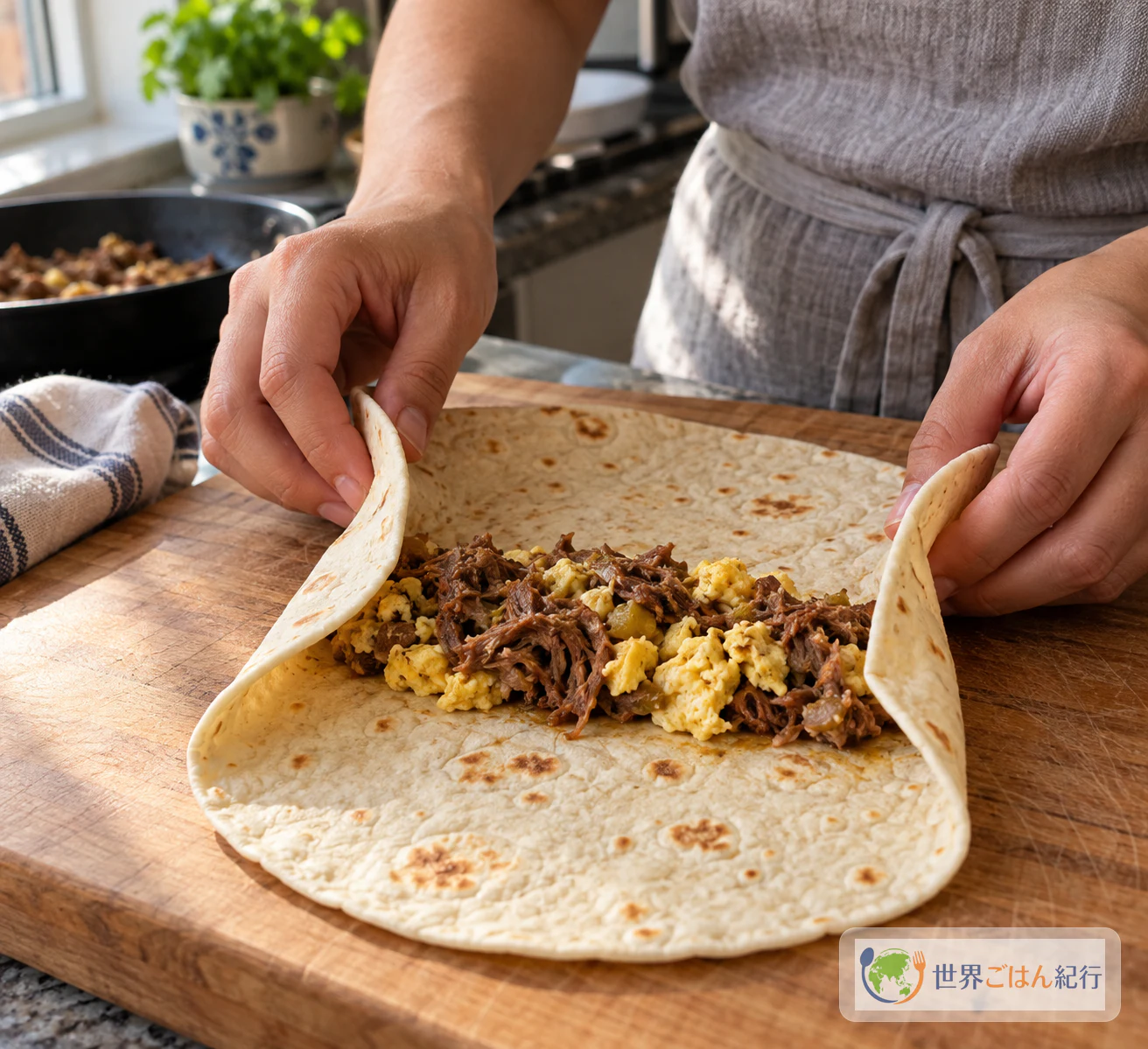
A large flour tortilla softens on a dry pan while onion, green chile and tomato hiss in the skillet beside it. Shredded dried beef goes in, then beaten egg, and the filling comes together into something you can fold up and carry in one hand. This is machaca con huevo, a Sonoran-style filling, wrapped as a burrito.
Many people hear "burrito" and picture a huge wrap packed with rice, beans and cheese. In northern Mexico, though, a burrito is often a flour tortilla rolled around a single cooked filling, and that filling changes from region to region. This recipe makes one of those regional examples: four burritos of beef machaca and egg, following the Sonoran-style recipe published by Recetas Mexas. It is not the only northern burrito, and it is not the standard for all of Mexico; it is one clear, simple version you can make at home.
Country guide: Mexico. For other ways tortillas appear on Mexican tables, see tacos and chilaquiles.
Ingredients: 4 Burritos, Set by the Machaca's Salt and the Tortilla's Size
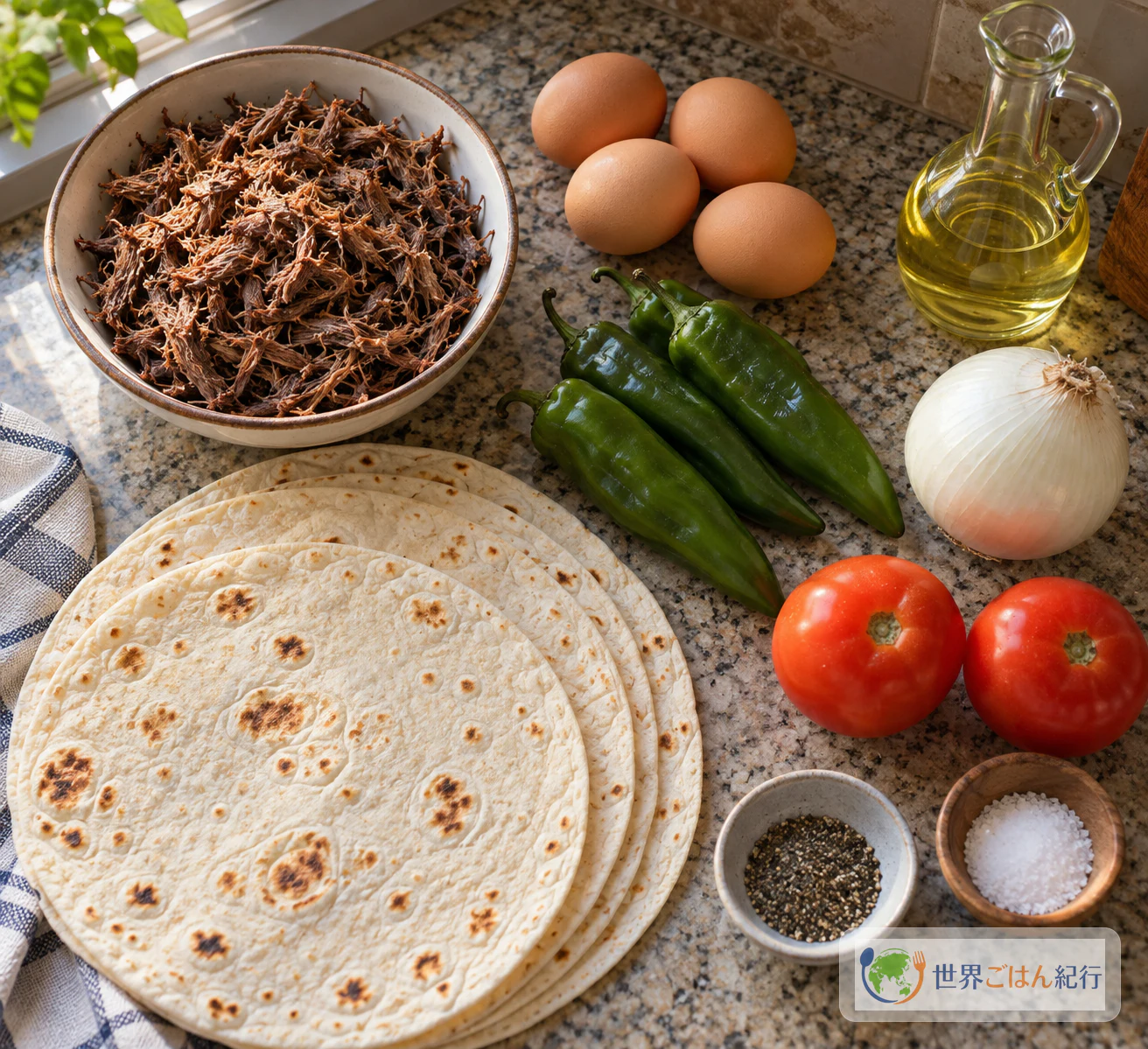
These amounts make 4 burritos. Machaca is dried meat, and its saltiness varies from product to product, so the salt is only a pinch and is decided at the very end.
The main allergens here are egg and wheat (in the flour tortillas). Machaca is a processed product: check its label for additives such as soy and for any shared-facility statements, and do the same for the tortillas.
Choosing and Substituting: Machaca Is Not Ground Beef or Jerky
Machaca. This is dried, shredded beef. It is not the same thing as ground beef, and it should not be treated as an equivalent of beef jerky. To look for it, search by its general names, such as machaca de res or beef machaca, at specialist or imported-food shops. Before you cook, read the product label for its salt content and for whether it needs cooking.
If you can't find machaca, stir-fried thinly sliced beef is a convenient stand-in, but be clear about what changes: the dried-meat saltiness and the fibrous chew are lost, and you end up with a different home-style filling rather than a reproduction of machaca con huevo.
Green chiles. If you can't get northern green chiles, use another green chile you can find and add it while tasting. The aroma and heat will not match, so treat the amount as something to adjust.
Tortillas. Choose large flour tortillas. Small or stiff ones crack more easily when you roll them. Corn tortillas don't give the same soft, wrapping texture, so they make a different way of eating this filling rather than this burrito.
Onion and tomatoes. An ordinary onion can stand in for white onion, though sweetness and moisture vary between onions. Tomatoes also differ in variety and size, so judge how far to cook them by eye rather than by the clock alone.
Equipment
- A large skillet (or a comal), roomy enough that the filling doesn't spill
- A flat, dry skillet for warming the tortillas and, if you like, lightly toasting the rolled burritos (the same skillet works once it's wiped clean)
- Knife and cutting board
- A bowl for beating the eggs
- A spatula
- A food thermometer, if you have one
Method: Cook the Filling, Warm the Tortillas, Roll
Allow 15 minutes of preparation and 15 minutes of cooking. Burners and pans vary, so use the times below as guides and watch the state of the onion, the tomato and the egg.
Cracked, Leaking, Salty, Watery: Fixing It in the Pan
| Problem | Likely cause | What to do |
|---|---|---|
| The tortilla cracks | It is cold or dry | Warm both sides right before wrapping until it bends easily |
| Filling leaks from the roll | Too much filling, or spread too far | Keep each portion small and compact near the center, and leave margins on all sides for folding |
| Too salty | Salt from the machaca | Taste the fully cooked filling before adding any salt; balance with the proportion of tomato, egg and tortilla |
| Watery egg | Tomato moisture not cooked off | Cook the tomato a little longer before adding the eggs, then cook until the egg is fully set |
| Dry filling | Machaca fried too long | Don't keep frying after the machaca goes in; set the egg fully, then stop before the filling dries out |
Serving and Leftovers
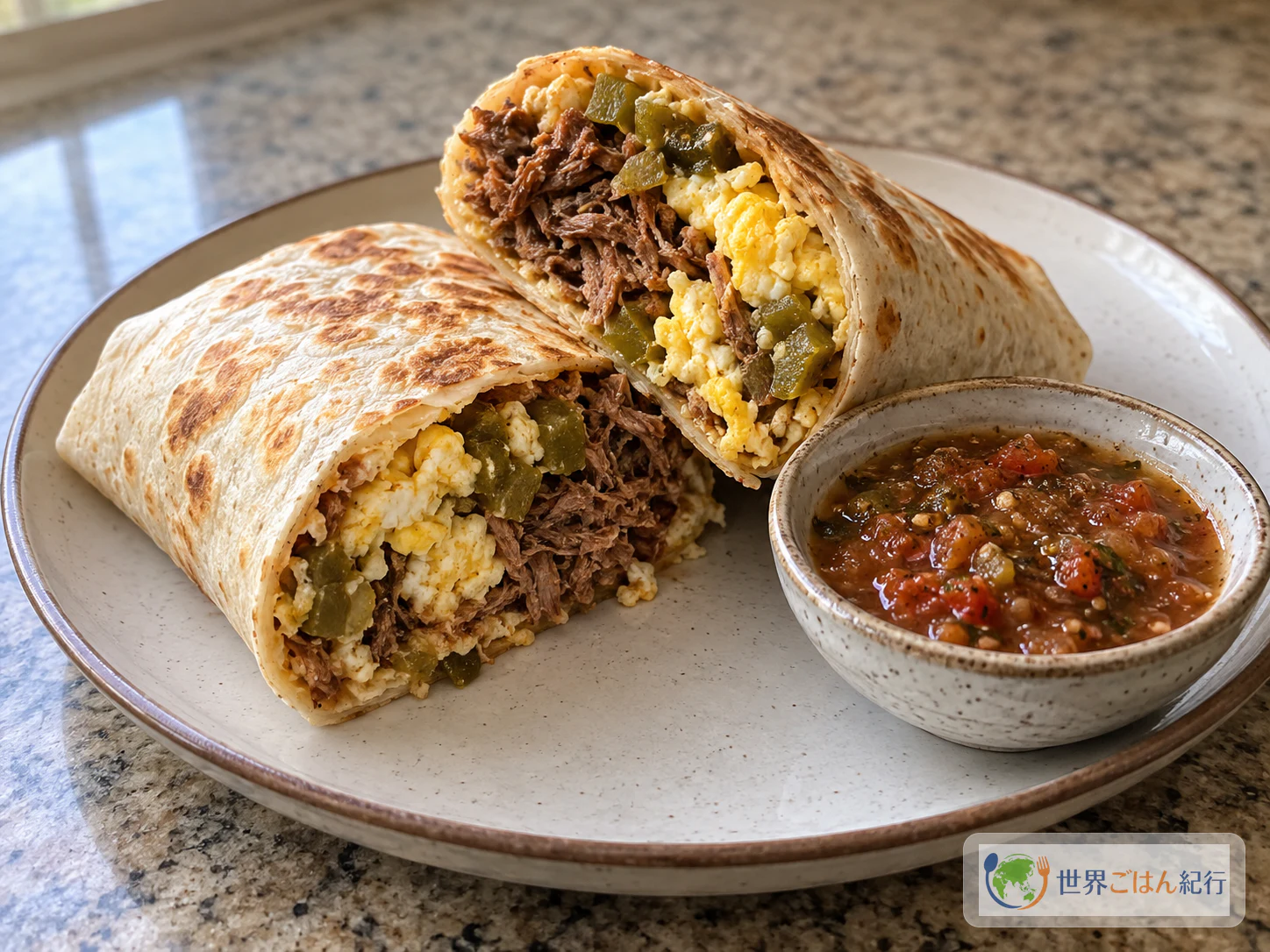
The burrito is complete on its own. A small bowl of salsa on the side is optional and not part of this base recipe; TV Azteca's separate machaca burrito recipe serves salsa alongside.
Don't leave egg-based filling sitting at room temperature. If you have filling left over, divide it into shallow, clean containers and refrigerate it quickly, then reheat it thoroughly before eating. How long it keeps depends on when you eat it and how it was chilled, so this recipe doesn't give a fixed number of days.
Variations: Changes Worth Making, Kept Separate from the Base
These change the character of the burrito, so make them deliberately rather than mixing them into the base recipe.
- Spread beans inside. TV Azteca's machaca burrito spreads refried beans on the tortilla. If you try this, start with a thin layer: the beans' moisture changes how easily the burrito rolls and makes it heavier.
- Add cheese. If you use a melting cheese, roll the burrito while the filling is hot. Cheese adds salt of its own, so be careful with extra salt.
- Use thinly sliced beef. Easy to find, but the dried saltiness and fibrous texture of machaca are gone. Treat it as a different arrangement.
- Adjust the chile heat. Add chile a little at a time. To tame the heat, remove the seeds and membranes, though the aroma weakens too.
- Make smaller wraps. Splitting the filling across smaller tortillas makes wrapping easier, but the filling-to-tortilla ratio and how filling each one is will differ from the large-tortilla version.
- Try a Juárez-style filling. Frijoles con queso, barbacoa, asado, or a red or green guisado are each separate fillings in their own right. Make them as different burritos rather than mixing them into the machaca.
A Northern Mexican Meal Built to Be Carried
At its core, a burrito is a flour tortilla wrapped around a guisado, a cooked or stewed filling, and carried in paper or foil. It needs no plate or cutlery, and it is described as a meal that people at work could take with them, which is part of how it settled into the way the north eats. Rice, beans and cheese are not required.
In Ciudad Juárez, burritos are part of the city's identity. The municipal government's report on the parade for the city's 363rd anniversary calls them a source of Juárez pride. The city also tells the story of Juan Méndez, a vendor who carried food by donkey, as the origin of the name. That story is local lore rather than settled history: there are other explanations of the origin, and some sources point to dictionary records of the word from before the Revolution-era donkey-vendor story, though those sources disagree on the year. Depending on the region, the dish is also called burro or burrita.
The fillings change across the north. Juárez accounts list frijoles con queso, barbacoa, asado, and red or green guisados. Sonora has machaca con huevo; machaca also appears in Chihuahua and Baja California; Sinaloa has chilorio. Sonora is also home to the tortilla sobaquera, a very large flour tortilla, and the burro percherón, a big wrap filled with meat, cheese, vegetables and more. The recipe on this page is the Sonoran-style machaca con huevo, one example among these, and not the standard Juárez burrito.
The large wrap packed with rice, beans, cheese and other fillings that became common in the United States is a development of the burrito in its own right. It is worth knowing, but it is not the template for every burrito in Mexico.
Frequently Asked Questions
Is rice normal inside a burrito in Mexico?
Not as a rule. Fillings vary by region, and the large style stuffed with rice and beans that spread in the United States is not the benchmark for northern Mexican burritos as a whole. This Sonoran-style version holds only machaca, egg and vegetables.
Can I use corn tortillas?
You can eat the filling with corn tortillas, but they don't have the flexibility of a large flour tortilla, so you won't get this wrapped form. It becomes a different way of eating the filling.
Is it settled that the burrito comes from Juárez?
No. Juárez tells its origin story strongly and with pride, but there are several explanations of where the dish and its name come from, and none of them can be stated as fact.
What should I do with leftover filling?
Move it promptly into shallow, clean containers and refrigerate it, then reheat it thoroughly before eating. There is no single safe number of storage days to give here.
What can I use if I can't find machaca?
Stir-fried thinly sliced beef is the practical option, but it is a different filling: it lacks machaca's dried-meat saltiness and fibrous texture. Ground beef and beef jerky are not equivalents either.
Sources
- H. Ayuntamiento de Juárez, "Los burritos, orgullo juarense y la Banda Municipal participaron en el Gran Desfile Conmemorativo por el 363 aniversario de la ciudad." The burrito as part of Ciudad Juárez's identity today, and the Juan Méndez origin story as told by the city, presented here as local lore. https://www.juarez.gob.mx/noticia/9624/los-burritos-orgullo-juarense-y-la-banda-municipal-participaron-en-el-gran-desfile-conmemorativo-por-el-363-aniversario-de-la-ciudad-
- El Financiero, "El origen de los burritos, sabor norteño que traspasó fronteras hasta el Super Bowl," 2022. Multiple origin explanations, regional differences in northern Mexico, Sonora's large flour tortillas and the burro percherón, the burrito as portable food for workers, and the distinction between northern burritos and the multi-filling style developed in the United States. Its dictionary date differs from other accounts, so no year is stated here. https://www.elfinanciero.com.mx/food-and-drink/2022/02/11/el-origen-de-los-burritos-sabor-norteno-que-traspaso-fronteras-hasta-el-super-bowl/
- Recetas Mexas / Edmond Bojalil, "Burros de Machaca." The Sonoran-style machaca burrito recipe for 4: ingredients and amounts, preparation and cooking times, the cooking order, the Anaheim/Hatch roasting and peeling instruction, and warming tortillas on a dry comal. One recipe example, not the only standard form in Sonora. https://recetasmexas.com/receta/burros-de-machaca
- TV Azteca, "Receta: Burrito de machaca | Cocineros Mexicanos." A separate machaca and egg burrito with refried beans spread inside, browned in a pan and served with salsa; used only for variations, not for the base recipe's amounts. https://www.tvazteca.com/azteca7/cocineros-mexicanos/recetas/notas/receta-burrito-de-machaca-cocineros-mexicanos
- Ministry of Health, Labour and Welfare (Japan), "家庭での食中毒予防" (Preventing food poisoning at home). The guide of 75°C at the center for at least 1 minute for foods cooked at home; not leaving cooked food at room temperature; cooling leftovers quickly in shallow containers; reheating thoroughly. https://www.mhlw.go.jp/stf/seisakunitsuite/bunya/kenkou_iryou/shokuhin/syokuchu/01_00008.html