Guacamole: Green Aromatics Ground Together, Avocado Left in Chunks
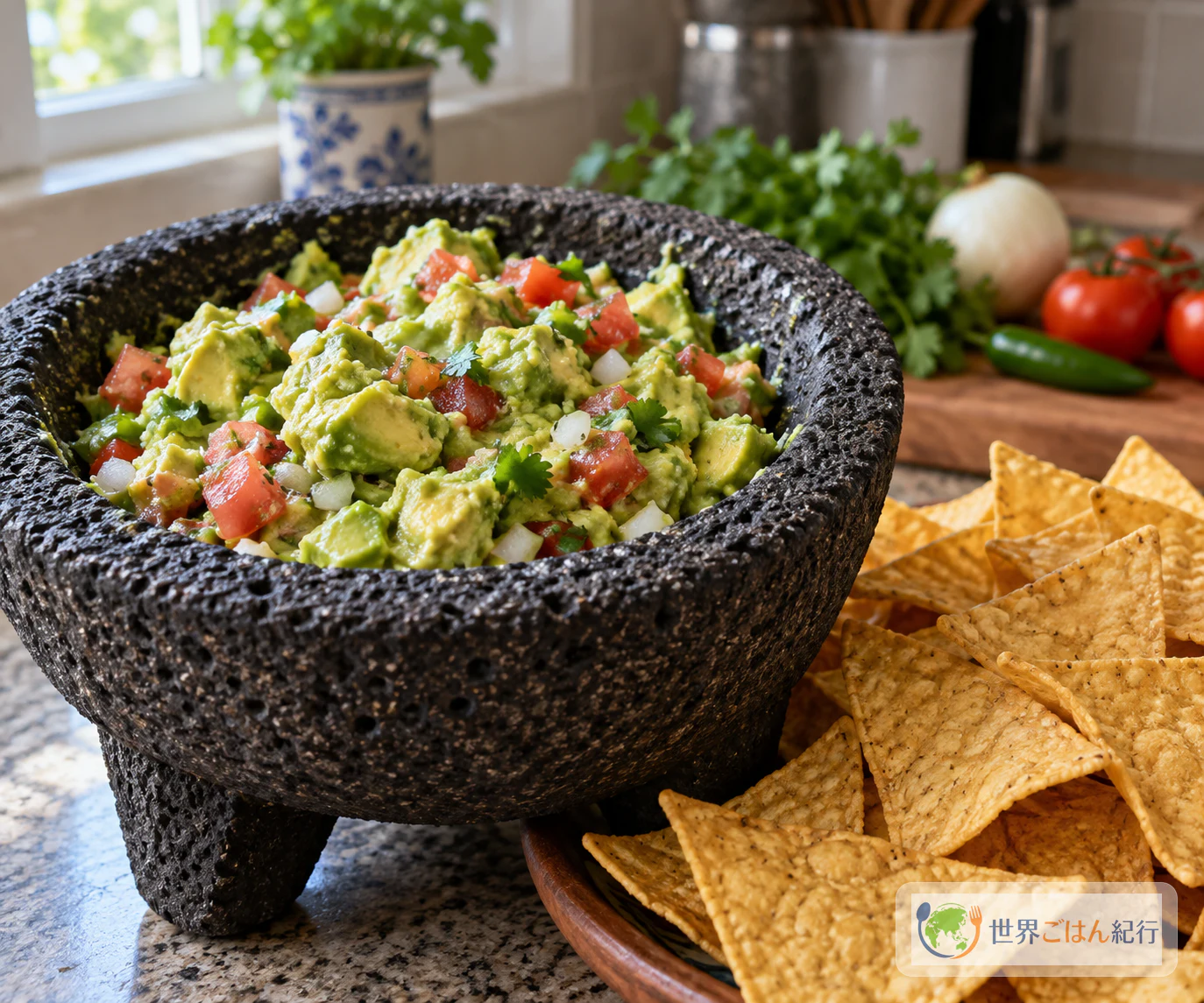
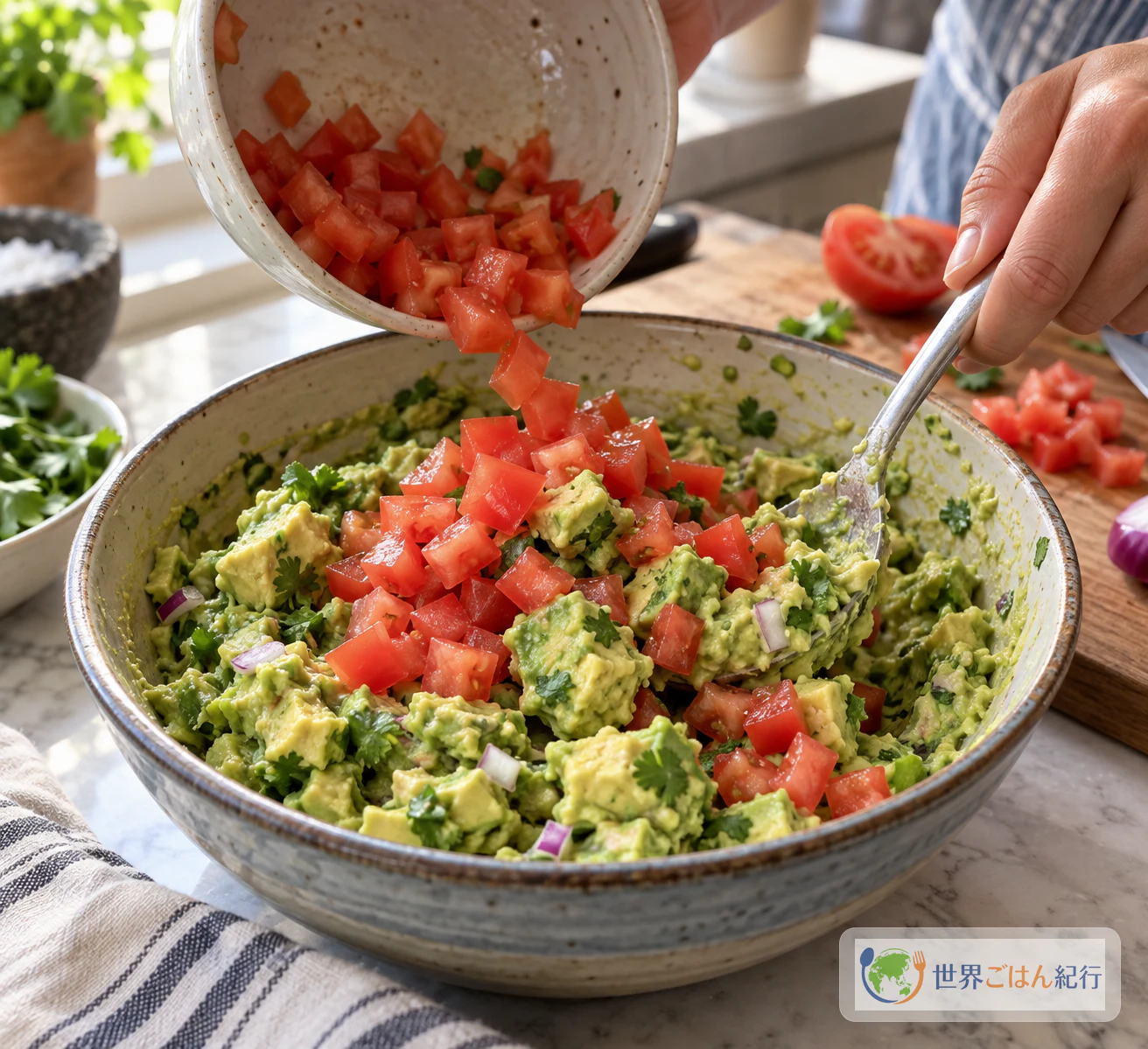
Ripe avocado mashed coarsely, not into a smooth purée. Salt to bring out the avocado, serrano for green heat, and onion and cilantro for aroma. Tomato goes in last and is not crushed.
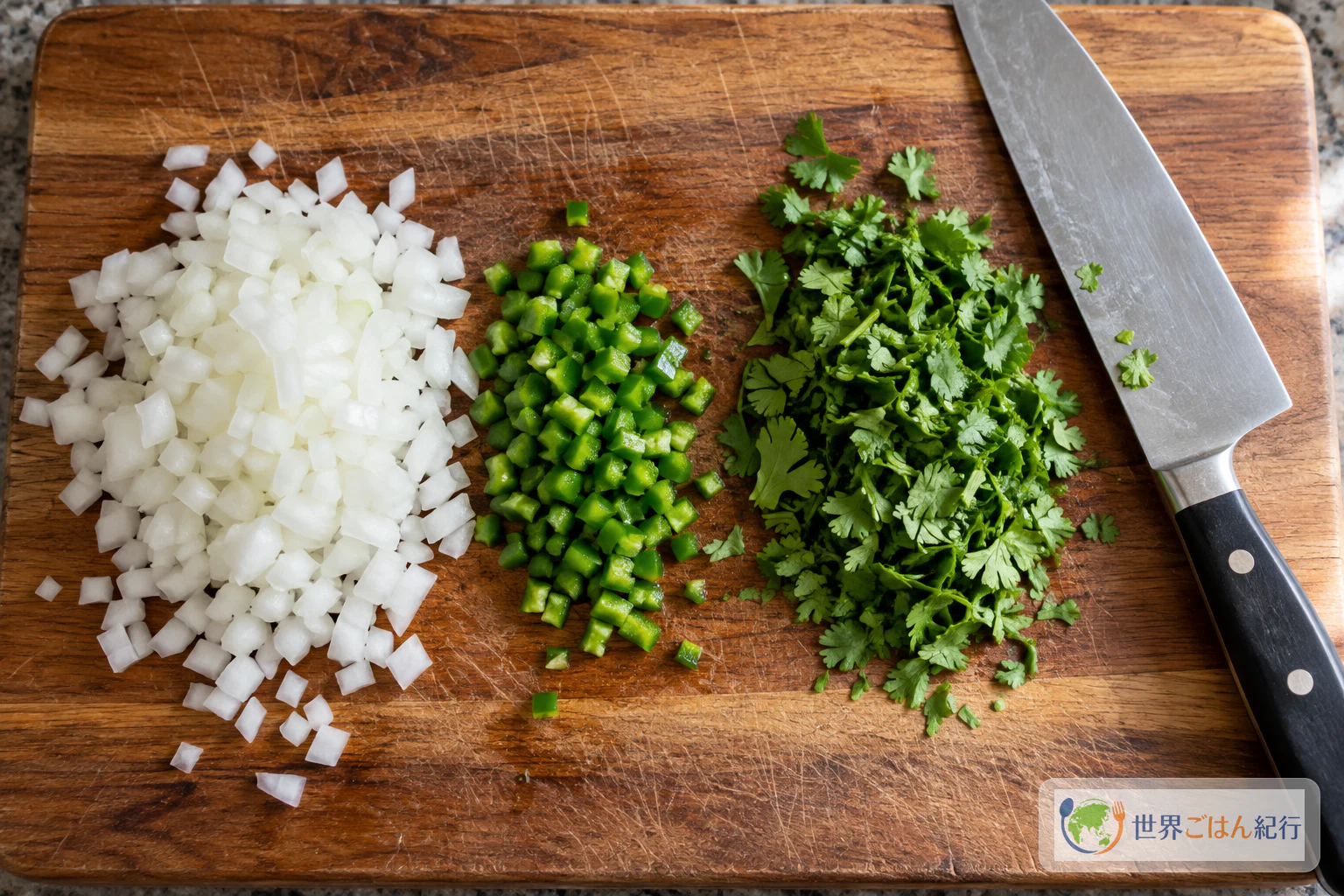
White onion, serrano chile, cilantro and salt are ground together in a stone molcajete until they turn into a moist, green-flecked paste. Then ripe avocado goes in and is worked just until it breaks down into rough pieces. Or, with no stone mortar at all, the avocado is mashed with the back of a fork in an ordinary bowl and the chopped aromatics are stirred through. Both ways appear in the recipe this article is built on, and both end at the table the same way: with corn tortilla chips, warm corn tortillas, or alongside grilled meat such as carne asada.
Mexico's national biodiversity commission, CONABIO, describes traditional Mexican cuisine as a living culture with historical continuity, carried on by communities. Guacamole sits comfortably in that picture as an everyday dish made in home kitchens, not a single fixed formula. Published recipes differ on whether to use tomato and whether to add lime or lemon. This version follows one recipe's base, with tomato and without citrus, and shows where you can steer it to your own taste.
Ingredients: Serves 4 as a Side
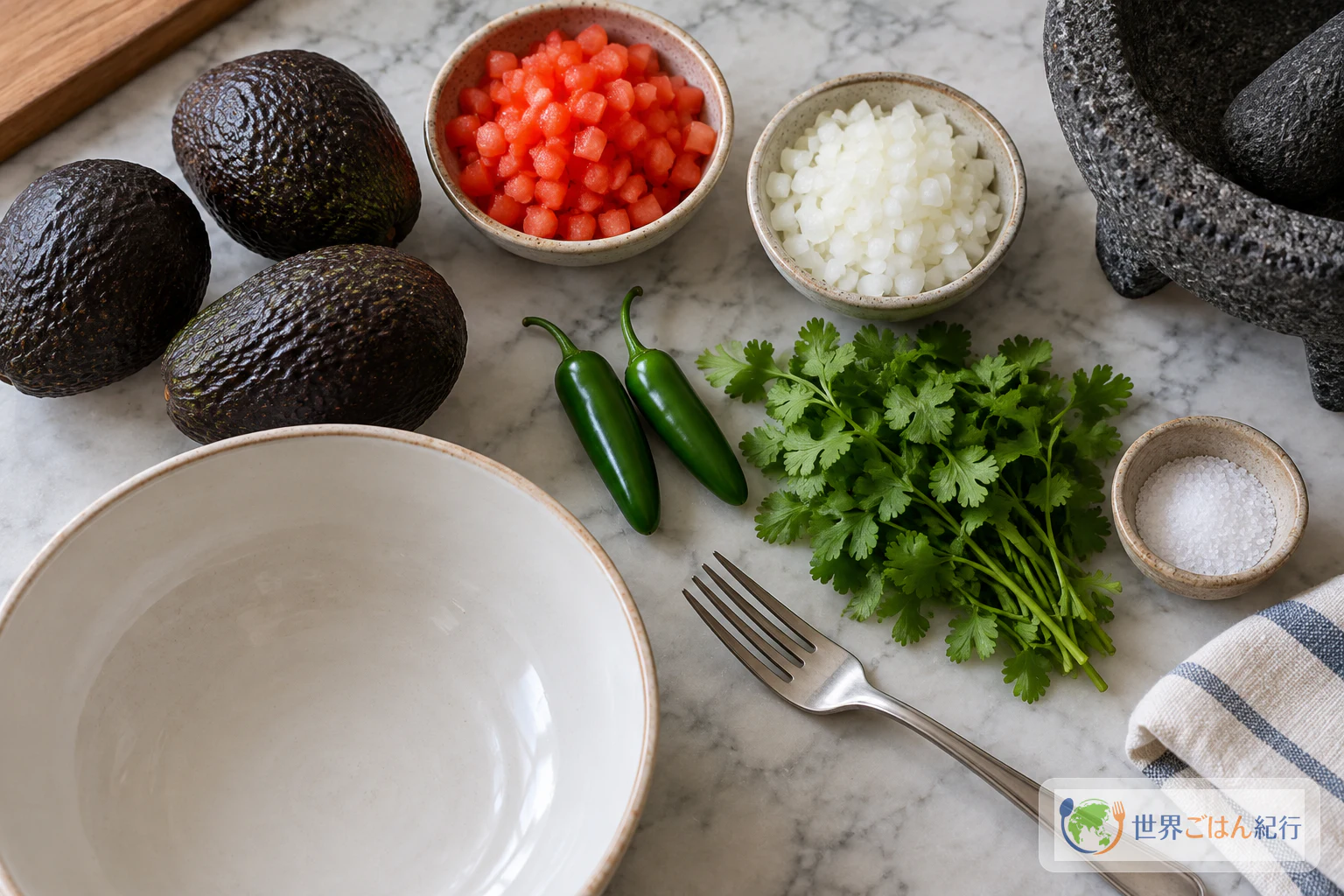
The amounts follow the Mexican Food Journal recipe and keep its own cup and spoon measures. Avocados and tomatoes vary in size, so taste as you go instead of measuring by weight.
Equipment
- Cutting board and knife
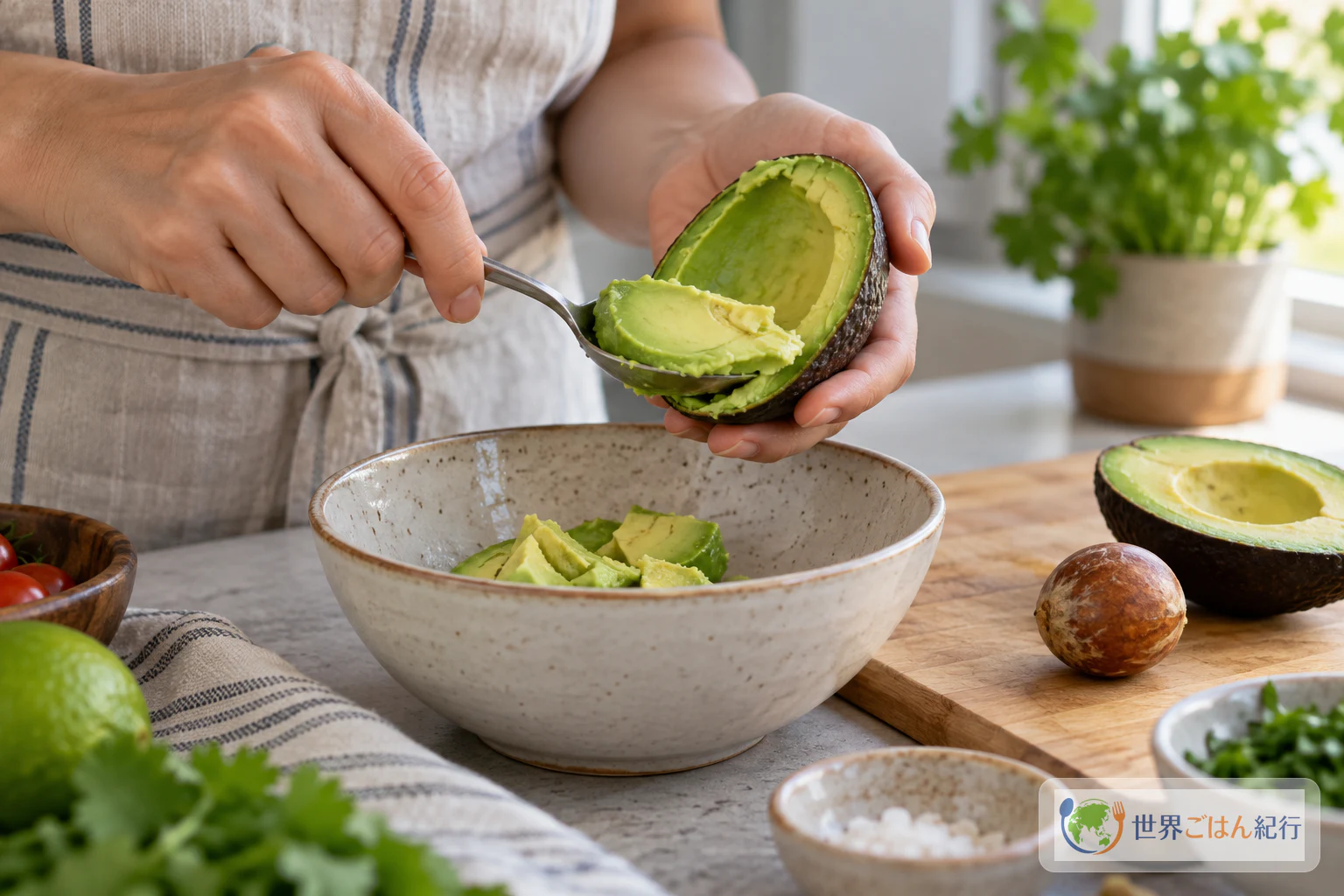
- Spoon, for scooping out the avocado flesh
- Bowl and a sturdy fork
- Optional: a molcajete and tejolote (stone mortar and pestle), if you want to use the molcajete method
You do not need to buy anything special. The bowl-and-fork method is the traditional way, not a shortcut.
Choosing and Substituting
Avocados. Pick avocados that yield slightly when you press them gently, without feeling overly soft. Touch them lightly so you don't bruise the fruit. Firm avocados are hard to mash and can leave a grassy, unripe taste.
Chiles. If you can't find serrano, use a small amount of another fresh green chile or jalapeño, starting with a little. The heat and the green aroma will not be the same as serrano.
Onion. An ordinary onion works in place of white onion; use a modest amount. If its bite is strong, you can soak the chopped onion briefly in water and drain it well.
Tomato. If Roma tomatoes aren't available, choose a firm fresh tomato. Removing the watery part around the seeds helps keep the guacamole from turning wet. The Larousse Cocina recipe also uses seeded tomato.
Cilantro. You can leave it out, but you lose a layer of aroma. Parsley gives a different flavor and is not a stand-in.
Lime or lemon. The base mix contains no citrus. The Mexican Food Journal recipe treats lime as optional and to be used sparingly, while the Larousse Cocina basic recipe includes lemon juice. If you want acidity, add a little after tasting, not before.
The main ingredients are avocado, cilantro, onion, chile and tomato. If you or your guests have allergies or sensitivities to any of these, check before making or serving.
Method: Keep It Coarse, Fork or Molcajete
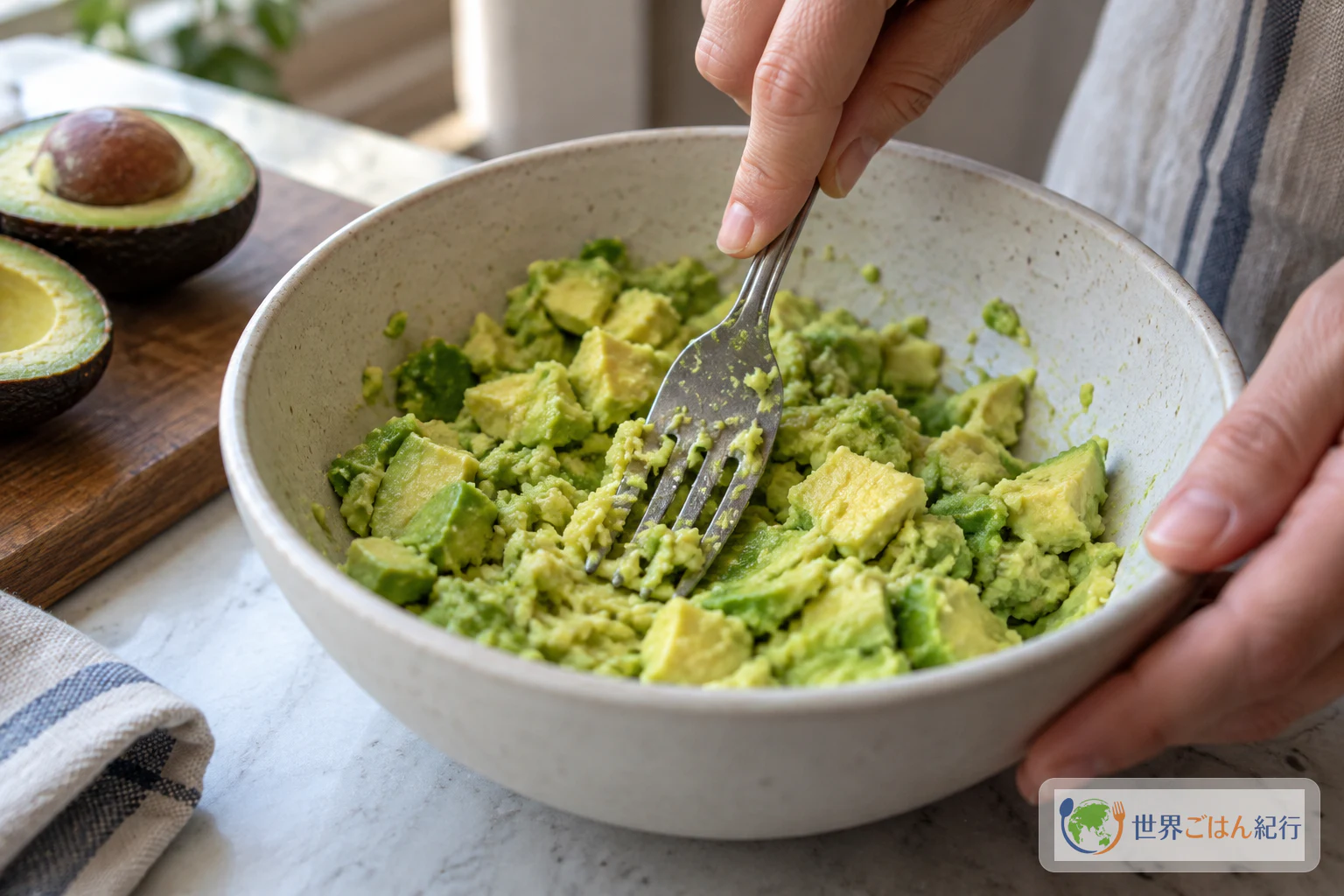
This is the bowl-and-fork method: mash the avocado, then mix in the other ingredients. If you'd rather use a molcajete, follow the separate method in the next section instead. Don't combine the two.
Guacamole is a raw, cold dish, so start with clean hands, a clean board and clean tools, and make it close to the time you plan to eat.
The Molcajete Method: Grind the Aromatics First
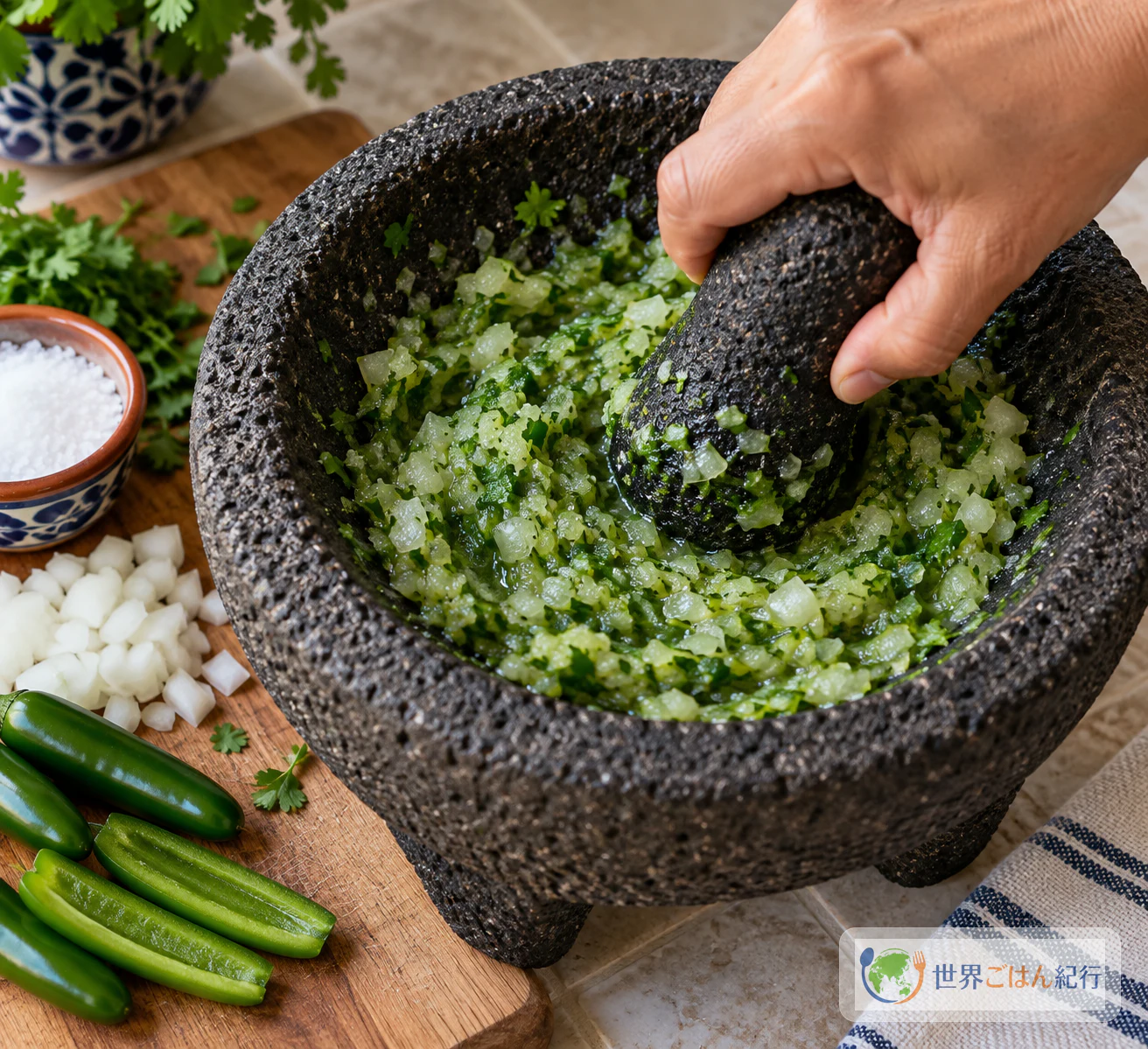
A molcajete and its stone pestle, the tejolote, are traditional tools for building flavor. The order is different from the fork method:
- Put the chopped onion, serrano, cilantro and salt into the molcajete and grind them into a paste.
- Add the avocado flesh and mash it coarsely into the paste, leaving chunks.
- Add the tomato last and stir it in without crushing it.
Use this sequence in place of steps 3 to 5 above, not in addition to them. Grinding the aromatics first spreads their aroma through the avocado. The source recipe's title calls its guacamole "authentic," but that is the author's wording and doesn't mean the molcajete is the only correct way. If you want to buy one, searching for "molcajete" or "Mexican stone mortar" is a good starting point, but a bowl and fork are enough.
Adjusting Heat, Acidity and Texture
Heat. The base recipe uses 2 serrano chiles. Starting with 1 is a home-kitchen adjustment, not the original amount. Removing the seeds and ribs also tames the heat. Change one thing at a time so you can tell what made the difference.
Acidity. The Mexican Food Journal recipe leaves citrus out, and the Larousse Cocina basic recipe uses lemon juice. Neither is wrong. Keep this base without citrus and add a little only if your tasting calls for it.
Texture. Coarse mashing is the base. For dipping chips, keep more of the shape; for spreading on a tortilla, you can mash a little finer if you like.
Fixing Common Problems
| Problem | Likely cause | What to do |
|---|---|---|
| Watery | Wet tomato, avocado mashed too much, tomato added early | Remove the watery seed area of the tomato, mash the avocado less, and fold the tomato in last |
| Flat-tasting | Not enough salt | Add a little salt first and taste again. Don't increase heat and acidity at the same time; adjust one thing at a time |
| Too spicy | Too much chile, seeds or ribs left in | Next time start with 1 serrano and remove the seeds and ribs. Keep the remaining chile whole on the side and add it only after tasting |
| Browning | Left standing after making | Make it close to serving time and serve immediately |
Variations
These each change one thing from the base. Try them one at a time rather than all together.
| Variation | What changes | How it differs from the base |
|---|---|---|
| Mild | Leave out the serrano; offer chile at the table | Each person adds their own heat |
| No tomato | Omit the tomato | An editorial variation that puts the avocado and aromatics at the center. Both recipes referenced here include tomato |
| With lime | Add a little lime juice | Brighter acidity and citrus aroma |
| Molcajete | Grind the aromatics first | The aromatics coat the avocado more evenly |
| By use | Coarser for chips, a little smoother for spreading on tortillas | The same mix with a different texture |
Serving: Chips and Warm Corn Tortillas
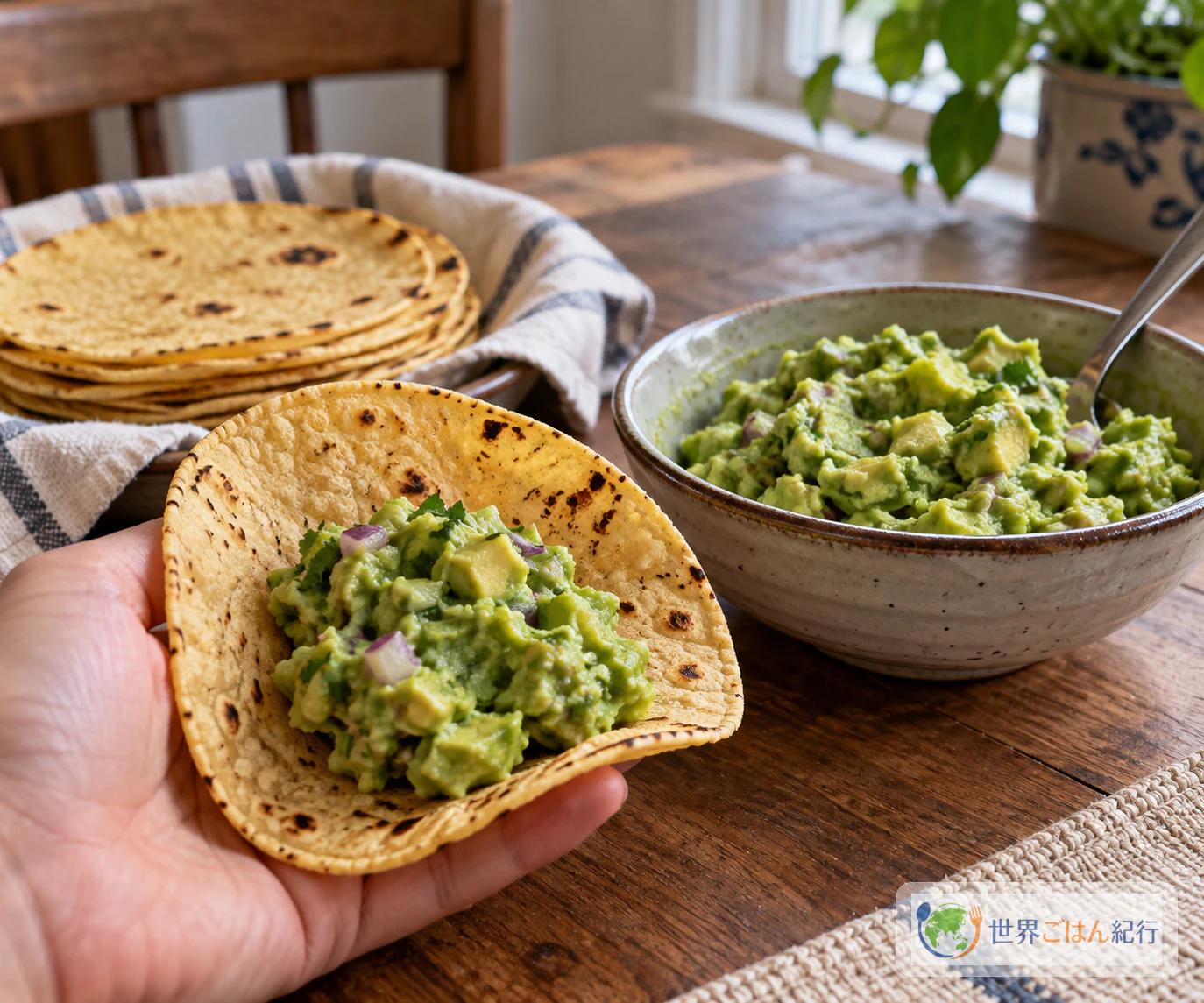
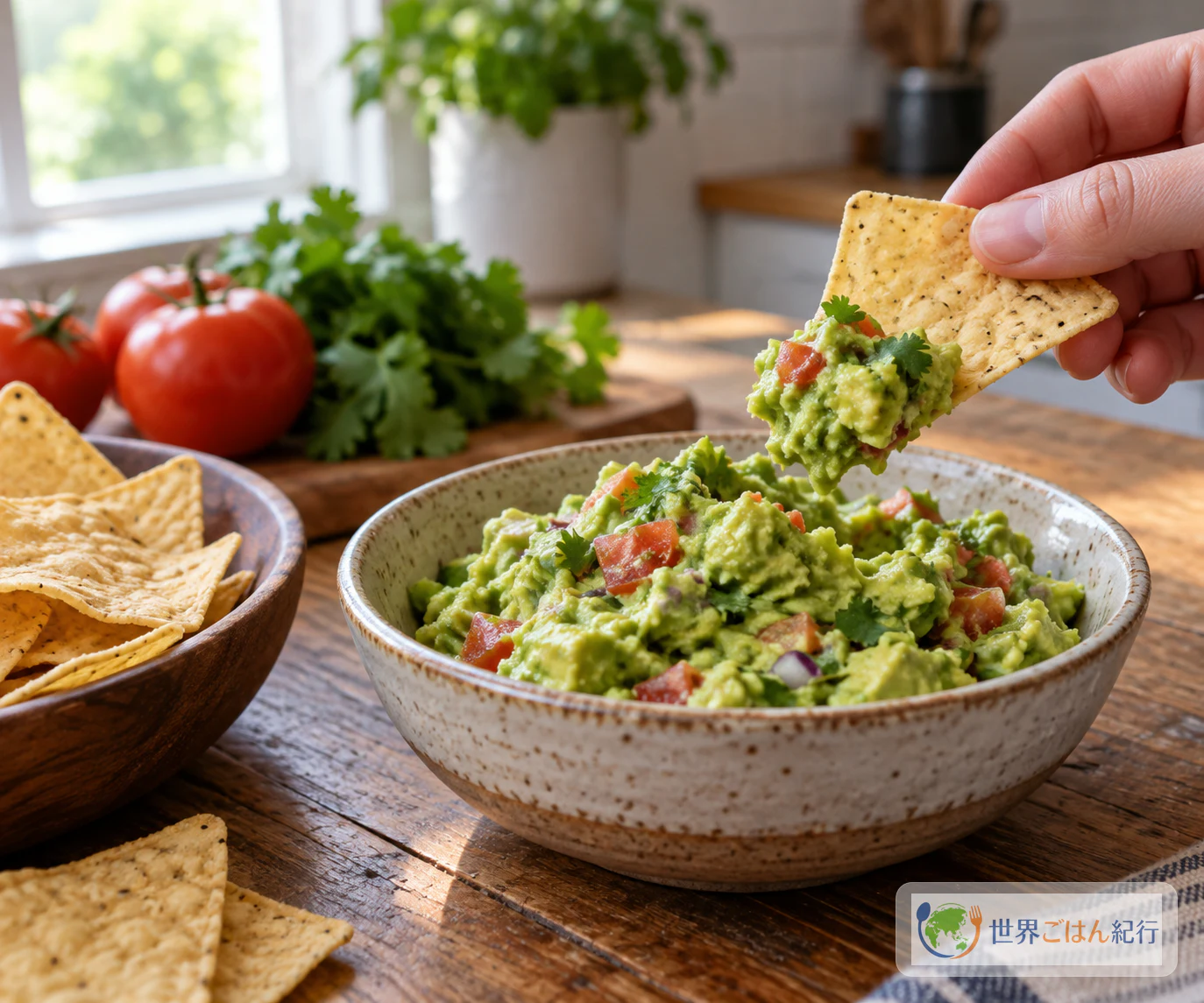
The Mexican Food Journal recipe suggests serving guacamole with corn tortilla chips, with warm corn tortillas, or alongside meat dishes such as carne asada. Spoon a little onto a warm tortilla and it becomes a simple bite of its own. If you're building a spread, it fits next to tacos; for a table that compares sauces, see mole poblano; and for another Mexican dish built on green chiles, see enchiladas verdes.
CONABIO lists the avocado among the crops domesticated in Mexico, and describes traditional Mexican cuisine as a living culture carried on by communities. The same page explains that the nomination of traditional Mexican cuisine to UNESCO was accepted in 2010. That is the broader context in which guacamole is made, but it does not date the dish or tie it to a particular region or celebration.
The Larousse Cocina recipe, from Larousse de la cocina mexicana, gives Mexico as the place of origin. It is built differently from the base here: it uses 5 avocados, mashes the flesh first with salt and lemon juice, then adds the other ingredients, and lists a yield of 2 cups. The two recipes illustrate how much room there is within the same name.
Make It, Then Eat It Soon
Guacamole browns quickly, and the source recipe recommends serving it right away. This article doesn't give a storage time or a method for keeping it green, because there isn't a reliable basis for one here. The simplest approach is to prepare the aromatics and tomato ahead, then cut and mash the avocado just before you eat.
Frequently Asked Questions
Do I need lime or lemon?
No. The base recipe here has no citrus, and the Mexican Food Journal recipe treats lime as optional. The Larousse Cocina recipe uses lemon juice. Both approaches exist, so add a little after tasting only if you want more acidity.
Do I need a molcajete?
No. The bowl-and-fork method is part of the same source recipe. A molcajete changes how the aromatics are worked in, but you can make good guacamole without one.
Is tomato required?
The base mix here includes tomato, and so does the Larousse Cocina example. Leaving tomato out is an editorial variation that changes the base. If you skip it, the guacamole becomes about the avocado and the aromatics.
How many days does guacamole keep?
This article doesn't give a number of days, because there isn't a reliable safe storage time to go on here. Guacamole browns quickly, so make it fresh and eat it right away.
How do I make it without heat?
Use less serrano or leave it out, and remove the seeds and ribs. You can also serve chopped chile on the side so each person adds their own.
Sources
- Douglas Cullen, "Authentic Guacamole Recipe," Mexican Food Journal. The base ingredients and amounts, the bowl-and-fork and molcajete methods, the coarse texture with tomato stirred in without crushing, the serving suggestions, the treatment of lime as optional, the recommendation to serve immediately, and the warning about hand injuries when removing the pit with a knife. One recipe author's version; it does not establish a single authentic form. https://mexicanfoodjournal.com/guacamole/
- Larousse Cocina, "Guacamole básico" (from Larousse de la cocina mexicana). A second Mexican recipe for comparison: Mexico as the stated origin, the use of lemon juice, seeded tomato, mashing the avocado with salt and lemon juice before adding the other ingredients, 5 avocados and a 2-cup yield. https://laroussecocina.mx/receta/guacamole-basico/
- Comisión Nacional para el Conocimiento y Uso de la Biodiversidad (CONABIO), "La cocina tradicional mexicana." Traditional Mexican cuisine as a living culture with historical continuity, the avocado among crops domesticated in Mexico, and the 2010 acceptance of the UNESCO nomination. Not a source for the specific origin or history of guacamole. https://biodiversidad.gob.mx/diversidad/alimentos/cocina-tradicionalmx